Wow in the World: Kids' Telescope & Astronomy Kit - Telescope Thames & Kosmos - Free user manual and instructions
Find the device manual for free Wow in the World: Kids' Telescope & Astronomy Kit Thames & Kosmos in PDF.


| Product Type | Children's Refractor Telescope and Astronomy Kit |
| Brand | Thames & Kosmos |
| Model | Wow in the World: Kids' Telescope & Astronomy Kit |
| Recommended Age | 6-12 years |
| Telescope Type | Refractor |
| Aperture | 50 mm |
| Focal Length | 400 mm |
| Magnification Range | 18x to 80x (with supplied eyepieces) |
| Eyepieces Included | Two: 20 mm (20x) and 6 mm (67x) (plus 2x Barlow lens) |
| Finder Scope | Reflex (red dot) finder |
| Tripod | Tabletop tripod with adjustable legs |
| Weight (approx.) | 1.5 kg |
| Dimensions (box) | 41 x 28 x 10 cm |
| Material | Plastic and glass optics |
| Power Source | None (manual operation) |
| Batteries Required | None |
| Included Accessories | Star chart, astronomy guide/activity book, manual (12 pages) |
| Cleaning | Use a microfiber cloth for lenses; avoid touching glass |
| Safety Warning | Never look directly at the sun through the telescope – permanent eye damage risk |
| Warranty | 1 year limited warranty (check manufacturer for details) |
| Customer Service Contact | Thames & Kosmos customer support (info included in manual) |
| Learning Topics | Astronomy, observation, science exploration |
Frequently Asked Questions - Wow in the World: Kids' Telescope & Astronomy Kit Thames & Kosmos
User questions about Wow in the World: Kids' Telescope & Astronomy Kit Thames & Kosmos
0 question about this device. Answer the ones you know or ask your own.
Ask a new question about this device
Download the instructions for your Telescope in PDF format for free! Find your manual Wow in the World: Kids' Telescope & Astronomy Kit - Thames & Kosmos and take your electronic device back in hand. On this page are published all the documents necessary for the use of your device. Wow in the World: Kids' Telescope & Astronomy Kit by Thames & Kosmos.
USER MANUAL Wow in the World: Kids' Telescope & Astronomy Kit Thames & Kosmos
WARNING! Not suitable for children under 3 years. Choking hazard — small parts may be swallowed or inhaled.
Keep the packaging and instructions as they contain important information.
Use caution when using the telescope outdoors, especially at night. Adult supervision is required. Be careful when observing wild animals. Always maintain a safe distance from wild animals.
WARNING! Never look directly into the sun — whether with your naked eye, or with the telescope or its lenses! You could blind yourself! Never inadvertently leave the telescope or lenses in the sun — it could start a fire!
Have any questions? Missing any parts? Want to tell us what cool things you looked at with the telescope? Our tech support team will be glad to help you!
Thames & Kosmos US
Email: support@thamesandkosmos.com
Web: thamesandkosmos.com
Phone: 1-800-587-2872
©2025 Thames & Kosmos, LLC, Providence, RI, USA
Thames & Kosmos® is a registered trademark of Thames & Kosmos, LLC. All rights reserved.
© 2025 Wondery LLC and Tinkercast, LLC
This work, including all its parts, is copyright protected.
Distributed in North America by Thames & Kosmos, LLC. Providence, RI 02903
Phone: 800-587-2872; Web: thamesandkosmos.com
The right to technical alterations is reserved.
Printed in China/Imprimé en Chine
The Wondery+ subscription offer is exclusively available to new, first-time Wondery+ subscribers who signed up via the QR code in this guide. Such new subscribers receive their first 3 months of Wondery+ at no cost, after which your subscription will automatically renew at the then-current price. The discount cannot be added retrospectively by you or our Customer Service team. Discounts are not valid for gift card purchases. Offer good while supplies last or until terminated by Wondery. Discounts cannot be combined. Taxes may apply to the full value of discounted subscription. If you violate any of these terms, the offer will be invalid. Wondery reserves the right to modify or cancel the offer at any time. Offer is non-transferable and may not be resold.
Android, Google Play and the Google Play logo are trademarks of Google Inc. Apple and the Apple Logo are trademarks of Apple Inc., registered in the USA and other countries. App Store is a service mark of Apple Inc.

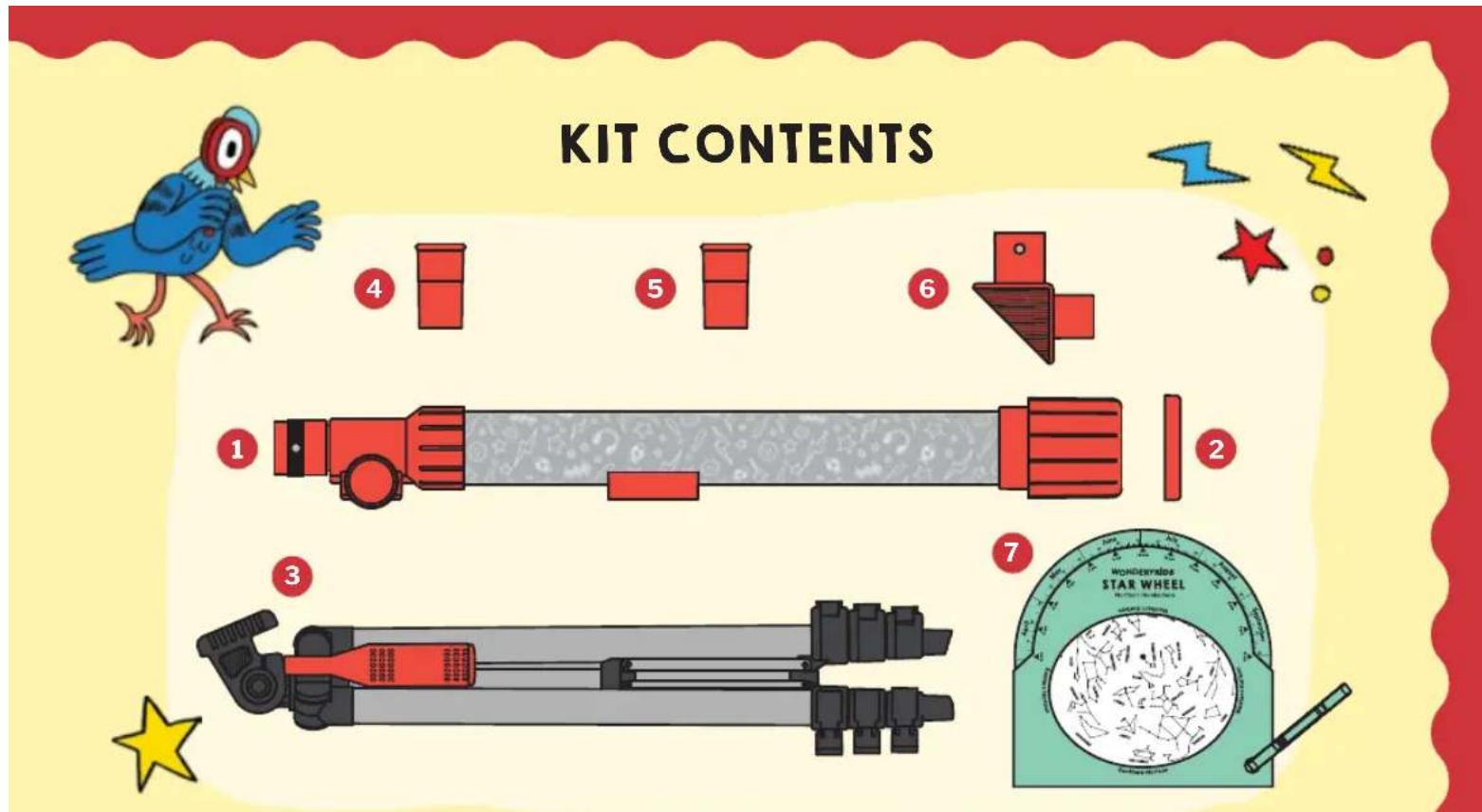
Part No. Description Quantity
| 1 Telescope tube 1 | ||
| 2 Objective lens cap 1 | ||
| 3 | Tripod with adjustable legs | 1 |
| 4 | Low-power eyepiece lens (20 mm) with caps | 1 |
| 5 | High-power eyepiece lens (10 mm) with caps | 1 |
| 6 Diagonal mirror | 1 | |
| 7 Star wheel with clip | 1 | |

KIT CONTENTS


Telescope specs
Focal length, objective: 500 mm
Focal length, low-power eyepiece: 20 mm
Focal length, high-power eyepiece: 10 mm
Aperture diameter: 40 mm
Magnification power, low: 25x
Magnification power, high: 50x

ASSEMBLING YOUR TELESCOPE
1
Carefully remove all of the parts from their cardboard boxes, lay them on a table, and check to make sure you have everything listed in the checklist on the previous page. The tripod holds the telescope and helps you keep it pointed at the part of the sky you want to look at. Spread the three legs of the tripod apart and gently slide the center ring holding the three support struts down the center pole until the struts are horizontal.
2
The telescope itself is the long tube with the clear lens at the front. Gently screw the telescope tube onto the screw sticking up from the tripod head by rotating the telescope around horizontally until it is firmly held in place.
3
Insert the diagonal mirror and one of the eyepiece lenses into the rear, narrower end of the telescope — which is the end you look into when using the telescope. To do this, loosen the small screw on the side of the focus tube by turning it counter-clockwise. Remove the plastic dust cap from the focus tube. Also remove the plastic dust caps from the diagonal mirror. Insert the shorter tube (the one without the screw) of the diagonal mirror into the focus tube so that the other tube is facing upward. Tighten the small screw on the side of the focus tube to hold the
diagonal mirror securely in place.
Remove the dust caps from the
eyepiece. Loosen the screw on the diagonal mirror by turning it counterclockwise.
Insert the eyepiece into the diagonal mirror. It is recommended that you start with the low-power eyepiece. Tighten the screw on the diagonal mirror by turning it clockwise to hold the eyepiece securely in place.


ADJUSTING YOUR TELESCOPE
The tripod has adjustable legs which enable it to be adjusted to any height, up to 48 inches tall. To adjust the legs, flip open the lever on a flip lock, slide the leg segment in or out, and flip the lever closed again to lock the leg segment in place. Repeat this with all of the leg segments until you achieve the desired height. You can also adjust the height of the center pole of the tripod by loosening the center pole lock knob, moving the pole up or down, and tightening the knob again.

2 To turn the telescope tube from side to side, loosen the horizontal motion lock knob and turn the telescope tube to the desired position. Then tighten the knob again.
3 To rotate the telescope tube up and down vertically, twist the altitude adjustment handle to loosen it. Then rotate the telescope tube to the desired angle and tighten the handle again.
4 To bring an object into the clearest-achievable focus with this telescope, use the focus adjustment knob, or focuser for short.


"Telescope teamwork"

USING YOUR TELESCOPE


"Moon magic"
Follow these tips for making astronomical observations in the night sky.
1 Take your telescope outside. Viewing objects through closed or open windows is not recommended. Your view can be distorted by reflections in the glass of a closed window or by air currents of differing temperatures passing through an open window.
2 Let your telescope adjust to the outside temperature. Your telescope will perform much better if the temperature of the lenses and the air inside the tube are the same as the outside temperature. It may take up to 30 minutes for the temperatures to equalize when the difference in temperatures is extreme.
3 Find a location far from glaring light. If you live in an urban area, your view will probably improve the farther you move away from the city lights. The light pollution of a town or city can dramatically reduce the telescope's performance and viewing capabilities.
4 Remove the large, round objective lens cap from the front of your telescope.
5 We recommend starting with the 20-mm eyepiece because it gives you the widest angle and brightest, sharpest views.
6 When possible, avoid sudden temperature changes, as the moisture in the air will condense on the objective lens. Should this occur after bringing your telescope inside, leave the lens cap off the objective lens, tilt the objective (front) lens face down, and allow the telescope to reach room temperature.
7 Looking through the eyepiece lens with one eye, move the telescope horizontally and vertically until you see your target object through the eyepiece. It may be blurry at first. Lock the telescope position and then carefully adjust the focuser to bring the object into focus.
Of course, you can also make terrestrial observations of things on Earth, day or night. Remember, objects viewed through the telescope are upside down. This is normal for all astronomical telescopes.

HOW A TELESCOPE WORKS


"Galileo's discoveries"

It's helpful to understand how your telescope actually works.
When humans are in the dark, our pupils grow larger in order to take in (or gather) as much light as possible. That's exactly what a telescope does — it gathers light — with the main differences being that its "pupil" (the objective lens) is a lot larger than our pupils and the objective's diameter always remains the same. The light reflecting off of an observation target enters the objective lens and is concentrated at the focal point. With the use of a second lens (the eyepiece lens) that functions like a magnifying lens, you can view the observation target's image created at the focal point.
If you divide the objective focal length by the eyepiece focal length, it gives you the telescope's magnification power. Bright observation targets, such as the Moon or planets, can handle greater magnification than fainter ones.
When you look through the eyepiece, you can only see a very small portion of the sky. The greater the magnification, the smaller that portion will be.
How to use the star wheel
Line up the current date on the wheel with the current time on the frame. The stars and constellations showing through the oval-shaped window represent what the night sky looks like at this date and time in the Northern Hemisphere. Face south and hold the star wheel so that its southern horizon is at the bottom of the star wheel. Look up and the star positions in the sky should match those on the wheel.

PEEP THE WOW: MOON AND PLANETS
PEEP THE WO
There is a whole universe of objects to view at night, so where do you start? Start with the brightest!


"Shiny stars"

The moon
Earth's moon is the easiest target to find at night. When the moon is full, it bathes the night with a silvery light that washes the sky of all but the
brightest objects. The best time to view the moon is not en it is full, but rather when it is less than half full. The dividing line between dark and light on the moon, called the terminator, shows the best detail in the craters and mountains.

Venus is covered with clouds so all that is visible is an extremely bright light, the brightest next to the moon. However, Venus, like the moon, goes through phases. As it travels around the sun, different areas of its surface are illuminated, producing crescent shapes of varying sizes.

Jupiter is the largest planet in our solar system and the second brightest next to Venus. Jupiter has many moons, four of which might be visible through your telescope if viewing conditions permit. Another great feature of Jupiter is its cloud belts. Jupiter is alive with weather activity and its clouds have formed over time into belts visible through telescopes in the right atmospheric conditions.
The planets
The planets in our solar system range in size and substance from moon-size rocky bodies to giant gas balls, which could hold Earth a thousand times over.
To find the planets, you will need information about when they are visible. An astronomy website or app will give you the locations of the planets as they change position from month to month. One way to spot planets is to follow the apparent arc that the sun travels in the sky — the ecliptic. Because Earth and the other planets orbit the sun in approximately the same plane, the planets appear to move on the ecliptic.
You may have looked up at the sky at night and seen some of the planets without even realizing it. A planet looks like a bright star but does not twinkle like a star does; it looks like a tiny ball. Venus, Mars, Jupiter, and Saturn are the easiest planets to view.

Saturn, the second-largest planet, is not as bright as Jupiter, and so its moons are not as visible through small telescopes. The large rings that encircle Saturn are spectacular to observe, however. The planet and its rings appear pale yellow. The major division in the rings, the Cassini division, is possible to see if you keep the telescope firmly in position.

Mars is the red planet. When it is above the horizon, it is noticeably red and stands out like a beacon in the night sky. The apparent brightness of Mars varies as the planet orbits around the sun. Throughout its period of visibility, it will look brighter or dimmer depending on its distance from Earth.

Free astronomy app!
Adults: Scan this QR code to download The Sky by Redshift, Thames & Kosmos's free astronomy app for iOS and Android. See app stores for details.

PEEP THE WOW: PEEP THE WOW: STARS AND CONSTELLATIONS STARS AND CONSTELLATIONS 7 "Connect"



Ursa Major (The Great Bear)
The most well-known part of Ursa Major is the Big Dipper, a group of stars often used for navigation and locating the North Star
Ursa Minor (The Little Bear)
Includes Polaris, the North Star, making it significant in navigation and folklore
Orion (The Hunter)
Easily identifiable by Orion's Belt (three bright stars in a row) and associated with various myths and stories from many cultures
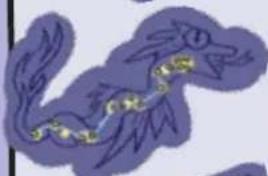
Draco (The Dragon)
A winding constellation often featured in mythology and fantasy stories
Cygnus (The Swan)
Known for the group of stars called the The Northern Cross, Cygnus is often associated with beauty and flight
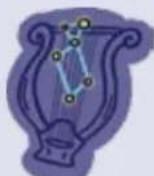
Lyra (The Lyre)
Home to the bright star Vega and part of the Summer Triangle

Cassiopeia (The Queen)
Recognizable by its "W" or "M" shape, depending on its orientation in the sky

Gemini (The Twins)
Recognized for its two bright stars, Castor and Pollux, and associated with zodiac mythology

Taurus (The Bull)
Contains the Pleiades star cluster (The Seven Sisters) and Aldebaran, a prominent bright star

Aquarius (The Water Bearer)
Though faint, it is a well-known zodiac constellation located in a part of the sky called the Sea due to all the water-related constellations there

Hercules
A large constellation in the northern sky that's named after the Roman mythological hero
TROUBLESHOOTING
How far can I see with a telescope?
If you stand outside and look up at the night sky on a clear evening, you can see hundreds of stars without the aid of your telescope. The telescope is a light-gathering instrument that magnifies the view — providing significantly more detail and unveiling more stars and celestial objects. With the aid of a telescope, you will be able to enjoy exciting views such as Saturn's rings, Jupiter's major moons, as well as various faraway things on Earth.
Why can't I see anything through my telescope?
A. If you see only gray or black when looking through your telescope, even after searching for an object to view, it is very likely that you are using an eyepiece that is too powerful. To solve this problem always start with the lowest power eyepiece first, and only insert the higher power eyepiece after you have located an object and have some more experience focusing. B. That, or ... the lens cap is still in place!
When I use my high-power eyepiece, everything looks much darker. Why?
As magnification in a telescope increases, brightness diminishes. Conversely, brightness increases when magnification is reduced. If an image appears too dark or unclear, use a lower-powered eyepiece. Views of small, bright objects are superior to those of large, dark, or blurry ones! Atmospheric conditions, air currents, as well as light and air pollution also affect viewing quality.
As I look through my telescope, objects in the sky appear to move. Why is that?
The constant rotation of the Earth makes things appear to move. Lower-power eyepieces will reduce this effect of movement considerably and allow you to observe an object for a longer duration before you have to readjust your telescope.

CARE AND CLEANING
The optical components of a telescope will get dirty over time. Dirt or dust on a lens should be removed with the utmost care. A considerable amount of dirt or dust would have to accumulate on the optical surface before your view would be compromised.
- Keeping dust caps on during storage and transportation will reduce dust accumulation.
-
Condensation may collect on the optical surfaces when the telescope is not in use. Remove the dust caps and allow the moisture to evaporate naturally. Point the telescope downward to minimize the accumulation of airborne dust.
-
Once all of the moisture has evaporated, replace the dust caps.
-
Filtered, compressed air may be used to remove surface dust from lenses and mirrors. Remove the dust cap. Once removed, point the can away from the lens and gently expel some air and any condensation or dust that has accumulated on the discharge tube. Spray the lens or mirror with short bursts of air to carefully remove the dust particles. Do not hold the trigger of the compressed air can for extended periods because propellant from the can might escape and damage the optical surface.
-
If, after several attempts, you cannot remove the particles, take the telescope to an optical professional for cleaning.
- If you keep the dust caps on your telescope when it is not in use and avoid handling the lenses or mirrors, only minimal optical maintenance of your telescope should be required. Extensive cleaning is usually only necessary every few years.

"Giant telescopes"
NEXT-LEVEL CHALLENGES
Try these experiments on your own!
- Observe the moon every day and make a sketch each day to record the moon's phases.
- Try to find a star in every constellation on the star wheel.
- Explore using your telescope for terrestrial (land-based) observations. What can you find?


Scan this QR code to KEEP THE WOW ROLLING with additional educational resources related to this item.
This kit was completed by:


Write your name(s) in the spaces below.


PLAY IT FORWARD!

When you are done playing and learning with this toy, we encourage you to pass it on to another curious kid!
Grown-ups, elevate your audio experience by trying WONDERY+


Discover exclusive podcasts made for the whole family.
Enjoy early access to new episodes and skip the ads on many of your favorite shows.
Have fun learning, spark conversations, and let imaginations soar!
Don't miss out – subscribe now and let the adventure begin!

Download on the App Store

GETITON Google Play
- KIT CONTENTS
- TELESCOPE SPECS
- ASSEMBLING YOUR TELESCOPE
- 1
- 2
- 3
- ADJUSTING YOUR TELESCOPE
- USING YOUR TELESCOPE
- HOW A TELESCOPE WORKS
- HOW TO USE THE STAR WHEEL
- PEEP THE WOW: MOON AND PLANETS
- PEEP THE WO
- THE MOON
- THE PLANETS
- FREE ASTRONOMY APP
- PEEP THE WOW: PEEP THE WOW: STARS AND CONSTELLATIONS STARS AND CONSTELLATIONS 7 "CONNECT
- URSA MAJOR (THE GREAT BEAR)
- URSA MINOR (THE LITTLE BEAR)
- ORION (THE HUNTER)
- DRACO (THE DRAGON)
- CYGNUS (THE SWAN)
- LYRA (THE LYRE)
- CASSIOPEIA (THE QUEEN)
- GEMINI (THE TWINS)
- TAURUS (THE BULL)
- AQUARIUS (THE WATER BEARER)
- HERCULES
- TROUBLESHOOTING
- HOW FAR CAN I SEE WITH A TELESCOPE
- WHY CAN'T I SEE ANYTHING THROUGH MY TELESCOPE
- WHEN I USE MY HIGH-POWER EYEPIECE, EVERYTHING LOOKS MUCH DARKER. WHY
- AS I LOOK THROUGH MY TELESCOPE, OBJECTS IN THE SKY APPEAR TO MOVE. WHY IS THAT
- CARE AND CLEANING
- NEXT-LEVEL CHALLENGES
- TRY THESE EXPERIMENTS ON YOUR OWN
- THIS KIT WAS COMPLETED BY
- GROWN-UPS, ELEVATE YOUR AUDIO EXPERIENCE BY TRYING WONDERY
Brand : Thames & Kosmos
Model : Wow in the World: Kids' Telescope & Astronomy Kit
Category : Telescope