
NR-BS701 - Refrigerator PANASONIC - Free user manual and instructions
Find the device manual for free NR-BS701 PANASONIC in PDF.


| Product Type | Refrigerator with Freezer |
| Brand | Panasonic |
| Model | NR-BS701 |
| Overall Dimensions (H x W x D) | 1830 mm x 900 mm x 750 mm |
| Weight | 100 kg |
| Power Supply | 220-240 V, 50 Hz |
| Power Consumption | 150 W |
| Energy Efficiency Class | A |
| Cooling System | Inverter Compressor |
| Temperature Control | Electronic with LED Display |
| Special Features | Multi-Air Flow, LED Lighting, Anti-Bacteria Filter |
| Defrosting | Automatic |
| Cleaning and Maintenance | Removable shelves, easy-clean interior |
| Safety Features | Child Lock, Door Alarm, High-Temperature Alarm |
| Spare Parts Availability | Available through authorized Panasonic service centers |
| Warranty | 2 years |
Frequently Asked Questions - NR-BS701 PANASONIC
User questions about NR-BS701 PANASONIC
0 question about this device. Answer the ones you know or ask your own.
Ask a new question about this device
Download the instructions for your Refrigerator in PDF format for free! Find your manual NR-BS701 - PANASONIC and take your electronic device back in hand. On this page are published all the documents necessary for the use of your device. NR-BS701 by PANASONIC.
USER MANUAL NR-BS701 PANASONIC
Operating Instructions
Refrigerator-Freezer
(Household use)
Model NO.NR-BS701GKAS/NR-BS701GKAE
Thank you for purchasing the Panasonic product
CONTENTS

* Picture is only for illustration

Introduction • Caring for the environment 2
• Safety instructions 2
Installation • Choosing the right location 5
- Removing the doors 6
• Levelling the refrigerator 7
Operation • Parts and their functions 8
- Freezer compartment 9
Refrigerator compartment 10
- Specification of product ....11
- Introduction of function 12
• Refrigerator & Freezer compartment ..... 14
• How to make ice 14
. Do and Don'ts 15
Appendix • When moving or transporting the refrigerator.....16
- Cleaning and maintenance 17
- Cleaning 17
-Replacement of lights in freezer and refrigerator 18
- When Shutting off the refrigerator 18
- Troubleshooting 19
- Specifications 21
- This appliance is intended to be used in household and similar applications such as
- staff kitchen areas in shops, offices and other working environments;
- farm houses and by clients in hotels, motels and other residential type environments;
- bed and breakfast type environments;
- catering and similar non-retail applications.
- Please read these instructions carefully and follow safety precautions before using this product.
- Please keep product purchase documents like invoice copy with this operating instructions manual for warranty claim purpose.
Caring for the environment
Disposing of the packaging

Please recycle where possible (e.g. cardboard, plastic bags, adhesive tape and polystyrene) and make sure you dispose of all other packing materials safely.
Keep the packaging out of the reach of babies and young children, to avoid injury or suffocation.
Before disposing of your old appliance
Please follow either the disposal instructions from the manufacturer of the old appliance, or local disposal regulations for the appliance. Where this is not available, please follow the three step instructions below.
- Remove the plug from the socket.
- Cut the supply cord off, and safely dispose of it with the mains plug still attached.
- Until the old appliance is collected, or you take it to a Recycling Centre, make sure it's out the reach of small children.
- Remove all sealing materials from the door and leave all the shelves and drawers in place. This way, children are less likely to climb in and become trapped.
Safety instructions
 Do not Do not |  Indicates the appliance must be earthed to prevent electric shock Indicates the appliance must be earthed to prevent electric shock |
 Make sure you do this Make sure you do this |  Do not take apart Do not take apart |
Indicates risk of death or serious injury.
This appliance is not intended for use by persons (including children) with reduced physical, sensory or mental capabilities, or lack of experience and knowledge, unless they have been given supervision or instruction concerning use of the appliance by a person responsible for their safety. Children should be supervised to ensure that they do not play with the appliance.

Do not use mechanical devices or other means to accelerate the defrosting process, other than those recommended by the manufacturer.
- This can cause damage to the interior of the refrigerator or cause an explosion. Do not use electrical appliances inside the food storage compartments of the appliance, unless they are of the type recommended by the manufacturer.

Make sure the supply cord and plug are not squashed or damaged.
- A damaged power plug or cord can cause short-circuit, fire or electric shock.
- If the supply cord is damaged, it must be replaced by the manufacturer, its service agent or similarly qualified persons in order to avoid a hazard. • DO NOT ATTEMPT TO REPLACE IT YOURSELF.

The refrigerant (R600a) used in the refrigerator and the gases in the insulation material (cyclopentane) are both flammable. They also require special disposal procedures.
- Before you dispose of the appliance, make sure none of the pipes on the back are damaged. Refrigerant or gas leaks can cause fire or explosion.
- Do not damage the refrigerant circuit.

Do not use a multiple socket adaptor and plug several appliances into the same socket adaptor.
- This can cause overheating, fire or short circuit.
Do not pinch, knot, or bend the supply cord, or place heavy objects on it.
- This increases the risk of fire or electric shock. If the supply cord or plug of the appliance is damaged, it must be replaced by the manufacturer, its service agent or similarly qualified person in order to avoid a hazard.
Do not unplug the refrigerator by pulling on the supply cord.
- This can damage the supply cord. Always grip the plug and pull firmly from the socket.
Do not place any water container on the top of the refrigerator.
- Water can damage insulation of electrical components and cause short circuit, fire or electric shock.
Do not spray inflammable gas near the refrigerator.
• This can cause explosion or fire.
Do not spray water onto or into the refrigerator.
• This can cause fire or electric shock.
Do not touch the power plug with wet hands.
• This can cause electric shock.
Do not install the refrigerator in a damp place, or where it may come into contact with water.
- Deteriorated insulation of electrical parts can cause short circuit, electric shock or fire.
Do not store volatile or flammable substances in the refrigerator.
- Flammable substances such as benzene, thinners, alcohol, ether and Liquid Petroleum Gas (LPG) can cause explosions.
Do not store pharmaceuticals or other temperature-sensitive products in the refrigerator.
- You should not store products that require strict temperature controls in the refrigerator.
Do not let children climb, swing or hang on the refrigerator door.
- This can cause serious injury, as well as damaging the refrigerator.
Do not operate the refrigerator in the presence of explosive fumes or flammable gas.
• This can cause explosion or fire.
Do not store petrol or other flammable liquids and vapours in the refrigerator, or use them near the appliance.
• This can cause explosion or fire.

Do not try to disassemble, repair or modify the refrigerator yourself.
- You may injure yourself – or others – with burns or electric shock, or damage the refrigerator. If your appliance needs alterations or repair, please consult authorized service centre.

Ensure that the refrigerator is plugged into an earthed mains socket. DO NOT plug into an unearthed mains socket.

Remove any dirt or dust from the plug's pins before connecting to the power supply.
- Dust build-up on the plug can cause insulation failure, especially in humid conditions. This can cause short circuit, fire or electric shock. Unplug the supply cord and wipe it with a dry cloth. Never use a wet or damp cloth.
Plug your appliance into the socket, making sure the connection is secure.
- A loosely connected power plug can cause fire or electric shock.
Unplug the refrigerator before cleaning and servicing.
- Failure to do this can cause electric shock.
If you smell burning or see smoke coming from the refrigerator, disconnect the power immediately and please consult authorized service centre.
LED RADIATION
DO NOT VIEW DIRECTLY WITH OPTICAL INSTRUMENTS CLASS 1M LED PRODUCT

Indicates risk of injury or damage to property.

Do not put glass bottles or containers in the freezer.
- When the contents freeze, the glass may break.
Do not touch the inside walls of the freezer or items stored in the freezer with wet hands.
- Your skin can become frozen onto the interior wall, or items stored in the freezer.

If there's a power cut, avoid opening the refrigerator frequently or putting unchilled food in it.
- This can cause the temperature in the refrigerator to rise and spoil food stored inside and can cause problem to health.
If you're not going to use the refrigerator for a long time, unplug it from the mains.
Also, be careful of the gap between the fridge and freezer doors, especially if they are both open at the same time.
• This may cause personal injury.
When opening the refrigerator, be careful not to pinch your fingers at the "pinch point" areas (gasket side).
- This can cause personal injury and can cause health problems.
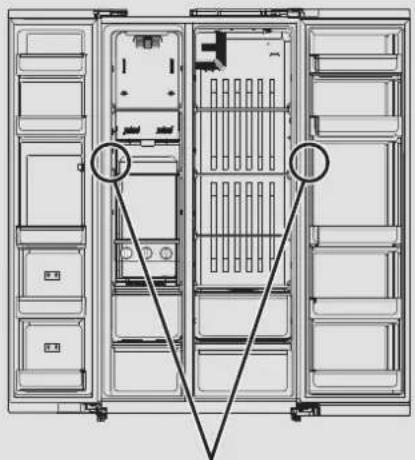
Potential pinch point (gasket side)
Picture is only for illustration.
Choosing the right location
Install the refrigerator in a location that satisfies the following criteria:
- Where the refrigerator will not be exposed to direct sunlight
- Where the refrigerator will be at a distance from heating appliances, cooking appliances, and other sources of heat • A location that is well-ventilated and dry • Where the floor is sturdy and level
Place a solid board underneath if the refrigerator is to be installed on top of a carpet or vinyl floor.
The board will protect the floor from becoming deformed and discolored.
Provide clearance to allow heat to dissipate
Residual heat is always being emitted from the refrigerator while it is operating.
Provide sufficient clearance around the refrigerator to allow this heat to dissipate so that its cooling ability is not impaired.
Dimensions (mm): W 890 x D 600 x H 1765 (without door)
Dimensions (mm): W 89.5 x D 690 x H 1788 (With Door)

When the doors are completely open
When the inside drawers have been taken out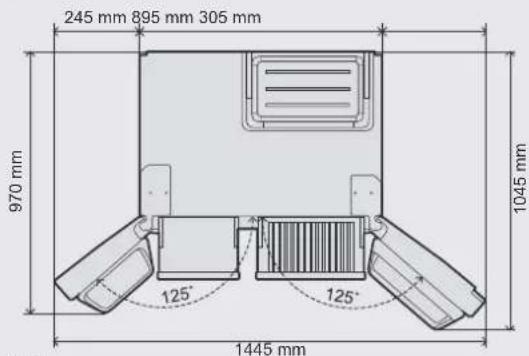
NOTE: All dimensions in mm (if not specified)
Removing the doors

If the refrigerator will not pass through a doorway or entrance, its doors can be removed.
Before removing the doors, be absolutely sure to check that the power of the refrigerator has been turned off.
When you want to remove the doors, please contact your dealer, an authorized service centre or access to our Web site (http://panasonic.net).
Note: Panasonic or its Authorized agent cannot be held responsible if you remove the doors by yourself.
WARNING: Do not locate multiple portable socket-outlets or portable power supplies at the rear of the appliance.
Levelling the refrigerator
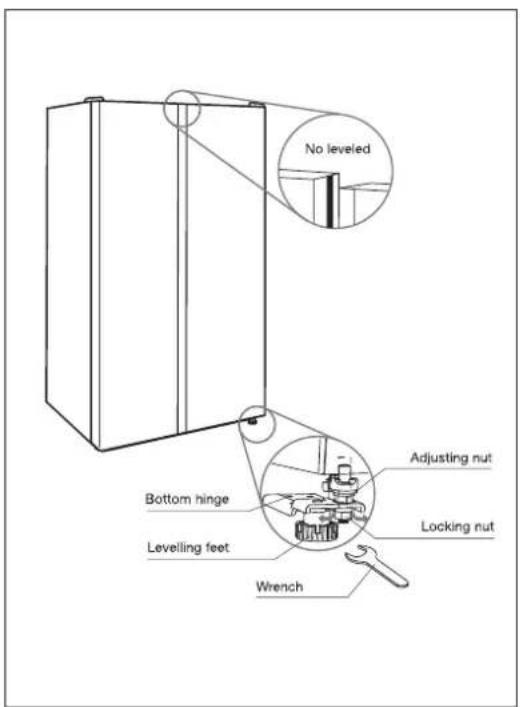
Turn the adjustable legs so that the refrigerator is installed flush with the floor.
If the left and right doors are not flush with each other, turn one of the adjustable legs, and bring the doors into alignment.
- Move the refrigerator into its final location. If necessary, open both doors to 90°.
- The two leveling feet are located on the brackets on each side of the product.
NOTE: Having someone push against the top of the refrigerator takes some weight off the leveling feet. This makes it easier to make adjustments.
- Turn the leveling foot to the left to raise that side of the product, or turn it to the right to lower that side of the product. NOTE: Both leveling feet should be snug against the floor, and the rollers should not touch the floor. This keeps the refrigerator from rolling forward when opening the doors.
- Open both doors again and check that they close as easily as you like. If not, tilt the refrigerator slightly more to the rear by turning the leveling feet to the left. It may take several more turns, and you should turn both leveling feet the same amount.
- Use a bubble level to check the leveling of the refrigerator.
NOTE: Whenever you need to move the refrigerator, turn the leveling feet to the right until they are no longer touching the ground. This will allow the refrigerator to roll more easily.
Preparing before using
- Remove all the packing materials and tapes.
- Wipe the inside of the refrigerator using a soft cloth which has been dipped in lukewarm water and then wrung out.
- Wash and completely dry the ice box before installing it. (Do not use a dish dryer, hair dryer or other appliance when drying.)
- Connecting the power plug to the power outlet
Notes:
- Cooling may take longer in the summer months or at other times when the room temperature is higher.
- The temperature display flashes to warn that the temperature has risen
- If you need to unplug the refrigerator, wait at least 10 minutes before you plug it back in again. You might damage the compressor.
Parts and their functions
Interior and foods stored

- Freezer door rack
- Adjustable Shelves
- Freezer compartment drawer
- Refrigerator compartment glass shelf
- Vegetable crisper
- Refrigerator door rack
- Ice Tray
- LED Lamp
- Adjustable Leg
Freezer compartment
The freezer compartment is for long-term food storage.
The temperature of the freezer compartment is very low, so it can keep food fresh for a long time. You'd better put food that needs to be stored for a long period in this space. However, you should comply with the storage time marked on the food packaging.
Recommendations for storage areas for all kinds of food

- The storage grilles on the door of the freezer room are used for short-term storage of food and ice cream.
- The storage grilles in the freezer room are used for the storage of frozen food.
- The glass shelves are used for the storage of frozen foods, such as fish, meat, and ice cream.
- The freezer drawer is used for the storage of fish, meat, and poultry with the food packaging.
Refrigerator compartment
Recommendations for storage areas for all kinds of food
As the air-conditioning cycle in the refrigerator makes the temperature of all areas different, different kinds of food should be placed in different temperature regions.

- Store pasta, canned goods, milk, etc.
- Store fast food, easily perishable foods, dairy products, etc.
- Store cooked meat and sausage, etc.
- Store fruits and vegetables, etc.
- Store easy-open tin cans, canned goods, spices, etc.
- Store all kinds of bottled drinks and food.
Product specifications
• Invariable fresh-keeping technology
- Separate air circulation system in the refrigerator compartment, independent temperature control, stable storage temperature, long-lasting freshness.
- Pre-cooling defrost
- Pre-cooling defrost technology aims to keep the temperature stable in the refrigerator, suitable for keeping food fresh.
- Adaptive defrosting
- Defrosting depends on usage frequency to save energy.
- Sliding shelves for convenient use
- The freezer and refrigerator racks are designed to slide and extend, making storage convenient.
- Intelligent adaptation
- Freezing effect is adjusted according to storage temperature and internal temperature by computer.
- Compact dimensions
- Ultra-thin design; ultra-large capacity; refrigerator compartment uses premium tempered glass shelves.
• CFC-free and no-frost design. Fast freezing.
- These refrigerators use the hydrocarbon-based R600a (isobutane) as their refrigerant and cyclopentane (foaming material) as their insulation. Non-chlorofluorocarbon/hydrochlorofluorocarbon refrigerants (R600a=isobutane) and non-chlorofluorocarbon/hydrochlorofluorocarbon foaming materials (cyclopentane) do not contain chlorine which depletes the ozone layer but are environmentally-friendly materials with a minimal impact on the earth in terms of global warming (*1).
• Automatic alarm of problem
- If any malfunction appears, the product is programmed to give an automatic alert by an alarm. Please contact Panasonic authorized Service Executive.
| Fault code | Corresponding circuit |
| E1 | Temperature detection circuit of cooler |
| E2 | Temperature detection circuit of freezer |
| E5 | Freezer defrosting temperature detection circuit |
| E6 | Communication fault |
| E7 | Ambient temperature detection circuit |
- Reliable compressor with good quality
- Product was equipped with hermetic sealed high speed compressor.
- Opening door alarm
- When PC door or FC door is kept open more than 2 minutes and above, unit will give beep sound.
Introduction of function

A. Refrigerator compartment temperature adjustment B. Freezer compartment temperature adjustment C. Super cool/Super FRZ. D. Vacation mode E. Lock/Unlock
2. Display
- Refrigerator compartment
- Freezer compartment
- Close Refrigerator compartment
- Lock icon
- Super cool mode
- Super FRZ. mode
- Vacation mode
3. Lock/Unlock
At non-lock state, press E key for 3 seconds, the refrigerator will go into the state of Locked and the 4 icon shows 1/2. Press E key for 3 seconds persistently at the Locked state, the 4 icon shows 1/2 and the Locked state releases.
The following functions must be in operation under the unlocked state. Press mode button (button C), you can choose running mode as the following.
Super cool —▶ Super FRZ. Super cool and FRZ. —▶ None

The following settings must be valid upon locking.
4. Vacation mode
Press D key to select Vacation mode, the 7 icon shows, then press E key to confirm, the refrigerator will be running according to Vacation mode.
5. Super cooling mode
Press key C to select Super cool mode, the icon 5 turns on. Upon the lock, the refrigerator will run under the Super cool mode.
6. Super FRZ. mode
Press key C to select Super FRZ. mode, the icon 6 turns on. Upon the lock, the refrigerator will run under the FRZ. cool mode.
7. Refrigerator compartment temperature settings
Press the key REF.TEMP (Key A). The refrigerator temperature area gives a prompt by flashing. Then, press the key REF.TEMP to adjust the setting temperature upon a beep. The temperature changes 1°C each press, ranging between 2 to 8°C.
Temperature adjustment is: 8°C - 7°C - 6°C - 5°C - 4°C - 3°C - 2°C - 8°C - 7°C ... Upon the temperature adjustment, the nixie tube flashes for 5s and the new setting temperature is effective upon the lock.
8. Freezer room temperature settings
Press the key FRZ.TEMP (Key B). The freezing temperature area gives a prompt by flashing. Then, press the key FRZ.TEMP to adjust the setting temperature upon a beep. The temperature changes 1°C each press, ranging between -16 to -24°C.
Temperature adjustment is: -16°C - 17°C - 18°C - 19°C - 20°C - 21°C - 22°C - 23°C - 24°C - 16°C - 17°C ... Upon the temperature adjustment, the nixie tube flashes for 5s and the new setting temperature is effective upon the lock.
Note: when the set temperature of freezer changes, if set relevant function mode (e.g. quick-cold mode, quick-freezer mode, quick-cold and freezer mode, vacation mode), the relevant function mode should be quitted or canceled at once.
Food storage tips
| Freezer | Frozen foods, meats, fish, ice cream, etc. | 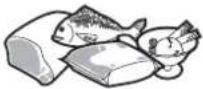 |
| Fridge | Butter, dairy products, eggs, drinks, seasonings, cooked foods, etc. |  |
| Meats, fish, ham, sausages, etc. |  | |
| Vegetables, fruits, etc. stored at low temperatures | 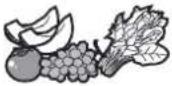 | |
| Vegetables, fruits, etc. |  |
Refrigerator & Freezer compartment
Put the food which are short-term storage or to eat at any time in the refrigerator compartment.
Although regulating temperature will enable average temperature of the majority preservation of food. Therefore, refrigerator compartment only use as a short-term food storage.
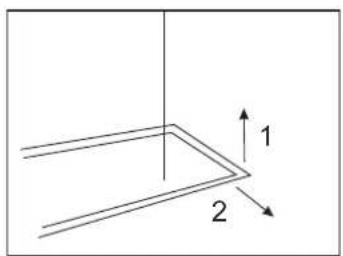
- Adjustment of adjustable shelves
According to the needs of food storage, you can adjust the shelf to proper position; To facilitate the use of it or adjustment the location, the shelf can be set to slip so that you can use and adjust it easily. When you want to clear the shelf, please move the shelf by the direction (1), pull out the shelf by the direction (2).
• Height adjustment and cleaning of rack.
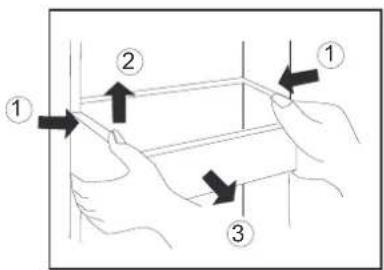
Push the rack by the direction ① from both side, lift the rack by the direction ② and then pull it out by the direction ③. After cleaning, install the rack by the opposite direction. You can also adjust the position according to the height of stored food.
How to make ice
- Gently pull out the ice tray and fill it with water up to the water level line. Then carefully place the ice tray back horizontally.
- When the ice cubes are ready, turn the knob clockwise (turn it to the end and release), and the ice cubes will drop from the ice tray into the ice box.

• Picture is for illustration only.
Notes:
- To make ice cubes quickly, set the freezer to the lowest temperature or select the Quick Freeze Mode. This will lower the freezer's temperature.
- Do not overfill with water. It may become difficult to remove the ice cubes from the ice tray, and any water trickling into the ice box will cause the ice cubes to freeze together.
- If the knob is turned before the ice cubes are ready, any remaining water will trickle into the ice box and cause the ice cubes to freeze together.
Do's and Don'ts
- The refrigerator uses alternating current supply of 220-240V / 50Hz. If voltage fluctuations are large (over the range of 198-264V), it may cause failures such as the refrigerator not starting, the main control board and compressor burning out, and the compressor working with abnormal noise. In such cases, you must install an automatic voltage regulator rated above 1000W. The refrigerator's power cord with a three-prong (grounding) plug complies with the standard three-socket (grounding) outlet. Do not cut off or remove the third pin of the power cord under any circumstances. After the refrigerator is installed, the plug should be easily accessible for use. The power plug must be firmly connected to the socket; otherwise, it may cause a fire.
- Do not grasp and drag the power cord to pull out the refrigerator plug. Hold the plug firmly and pull it directly from the socket. Do not let the power cord be pinched by the refrigerator or stepped on by people. Be careful when moving the refrigerator away from walls. Do not roll or damage the power cord. Do not use the power cord or plug if they are damaged or worn. Go to a service center authorized by the factory to replace the power cord if it is worn or damaged.
- If flammable gas leaks, such as coal gas, close the gas valve, open doors and windows, and do not unplug or plug in the refrigerator or other appliances.
- Do not store explosive substances such as aerosol cans with a flammable propellant in this appliance.
- Do not use flammable solvents near the refrigerator to avoid fire.
- To ensure safety, do not place power outlets, voltage regulated power supplies, microwave ovens, or other appliances on top of the refrigerator. Do not use other appliances inside the refrigerator (except recommended models) to avoid electromagnetic interference and other accidents.
- Do not let children climb into or onto the refrigerator. To avoid children being trapped inside or the refrigerator falling and injuring them.
- After the refrigerator has been running, do not touch the icy surfaces of the freezer with your hands, especially if your hands are wet, as this may cause frostbite.
- The gaps between the doors and between the door and the refrigerator body are very narrow. Be careful not to put your hands into these areas to prevent fingers from being injured. Do not let children near the refrigerator when opening and closing the doors.
- Do not spray or rinse the refrigerator with water, and do not install it in a wet place or where water or rain can splash onto it, so as not to affect the electrical insulation of the refrigerator.
- Never dismantle or modify the refrigerator yourself, and do not damage the cooling pipes. Maintenance must be carried out by qualified professionals.
- Do not put bottled beer or drinks in the freezer. The contents may freeze and break the bottle.
- Pull out the plug when there is a power failure or when cleaning. Wait for 5 minutes or longer before reconnecting the plug. Continuous starting may damage the compressor.
- Before disposing of your old refrigerator, take off the doors, remove the door seals, and place the doors and shelves in a safe position to prevent children from climbing inside and causing accidents.
- This product is intended for household use. According to government standards, household refrigerators are only for food storage, not for other uses such as storing blood, drugs, or biological products.
When moving or transporting the refrigerator:
Before moving or transporting the refrigerator:
Remove all food and ice from inside the refrigerator, and disconnect the power plug.
1. Raise the adjustable feet, and pull the refrigerator toward the front. 2. Drain off the water from the bottom of the rear panel (as shown in the figure).
Place a towel or napkin on the floor, then tilt the refrigerator toward the rear to drain the water from the back side of the refrigerator.
Note:
- Wipe the wet floor first before moving the refrigerator to prevent slipping.

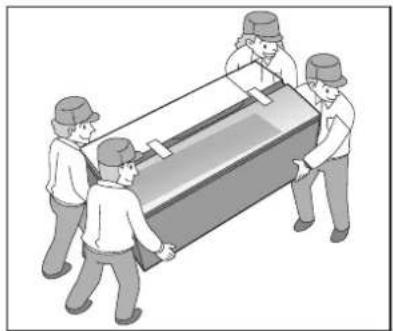
- Moving or transporting the refrigerator
The refrigerator must be transported by at least four persons.
• Each person takes hold of the refrigerator at one of its four corners. - Do not take hold of the doors. - Tape the doors completely shut so that they will not open. - Do not hold by handles while moving, lifting, or transporting the refrigerator.
Note:
- Bear in mind that water remaining inside the refrigerator may spill out.

Cleaning and maintenance
Conduct periodic cleaning and maintenance to ensure that the refrigerator will be kept clean and that it will continue to operate for a long time to come.

Before cleaning or conducting maintenance, be absolutely sure to disconnect the power plug from the power outlet. Do not connect or disconnect the power plug with wet hands. Doing so may result in an electric shock or injury.
Do not use the following items for cleaning:
- Alkaline cleaning agents (these may dissolve the plastic parts)
- Abrasive cleaners, soap powders, very hot or boiling water, brushes, acids, benzene, paint thinners, alcohol, etc. (these may mar the surfaces, paint, and plastic parts)
Cleaning
Wipe off easily removable dirt using a cloth dipped in lukewarm water.
Wipe off stubborn dirt using a cloth dipped in some diluted neutral detergent used in the kitchen.
Then take up the remaining detergent using a cloth dipped in lukewarm water.
To complete the cleaning, be absolutely sure to wipe the surfaces dry to take up the remaining moisture.
Do not use cleaning agents (containing abrasive cleaners, or chemical mixture), and wipe off food stains, seasoning or dirt on the door as soon as possible.
- Interior, door rack, adjustable shelf and vegetable case
Be absolutely sure to wipe off edible oils, butter and other types of fats and oils on the plastic parts. Otherwise, the plastic parts may be damaged. The door rack, adjustable shelf and vegetable case can be removed. If they are very dirty or smelly, remove and wash them.
- Door opening seal
A dirty or damaged seal will allow the cold air inside to escape. As soon as the seal becomes dirty, wipe off the dirt immediately.

• Exterior of refrigerator
If the exterior becomes dirty, wipe off the dirt. Also, allowing dust to accumulate on the power plug can cause a fire. At periodic intervals, remove the dust using a dry cloth, etc.
- Control panel
Wipe the panel using a soft cloth which has been dipped in lukewarm water and then wrung out.
The control panel is made from delicate materials.
As such, take care not to damage its surface.
Note:
- Do not wash the door rack, adjustable shelf, vegetable case, or other parts in a dishwasher. Doing so will cause the gilt on the parts or their plating to peel off or the parts to be damaged.
Checks after cleaning and maintenance
Is the supply cord damaged?
Has the power plug become hot?
Is the power plug firmly connected to the power outlet?
If the supply cord is damaged, remove the power plug from the socket and contact your dealer or an authorized Panasonic service centre.
Replacement of lights in freezer and refrigerator
- Specification: 12 V DC, LED
- Shut off the power
- As per the photo, remove the shade along the drive direction of the arrow, and then tighten the screws, remove the LED lights;
- Restore, replace anti-steps


If LED or LED cover is damaged or if anything appears questionable, contact your dealer or an authorized service centre. Do not attempt to repair, replace or disassemble any damaged parts, etc. yourself.
When shutting off the refrigerator
- When power failure
You should minimize the frequency of opening the door, and it is not appropriate to add fresh foods to the refrigerator.
- When discarding the refrigerator
Before you throw away your old refrigerator, make sure to take off the doors, so as to avoid children climbing inside and causing accidents.
Troubleshooting
If you feel that the refrigerator is not working properly, check the following points first.
If the trouble persists, disconnect the power plug and contact your dealer or an authorized service center.
General
| You hear unusual sounds from the refrigerator. | Has the refrigerator been installed on a sturdy and level floor?Have sufficient clearances been provided around the refrigerator?Is anything vibrating on the top of the refrigerator?It's normal to hear some noises when the refrigerator starts or stops operation. |
| You hear a sound after the compressor has shut down. | This is normal, and is often caused by refrigerant flowing back to the compressor. |
| You hear a sound after you have opened or closed the door. | This is normal, and is due to the difference in air pressure between the inside and outside of the refrigerator. |
| You hear the sound of air or water flowing after you have opened the door. | This is caused by refrigerant flowing the internal pipework. |
| You hear a clicking sound each time the refrigerator's power is turned on. | This is the sound made by the activation of the three-way valve, and is quite normal. |
| You hear a continuous whining sound. | This sound is heard while the fan for circulating the cold air is operating.Has the refrigerator been set to the Super Freeze Mode?In the Super Freeze Mode, the fan for circulating the cold air runs at high speed so it makes a loud noise.Has the food been packed too tightly together or is the room temperature high?In cases like these, the fan for circulating the cold air runs at high speed so it makes a loud noise. |
| The compressor is quite loud. | Has the refrigerator been set to the Super Freeze Mode?In the Super Freeze Mode, the compressor runs at high speed so it makes a loud noise.Has the food been packed too tightly together or is the room temperature high?In cases like these, the compressor runs at high speed so it's normal for the compressor to be louder. |
| The compressor has been running for a long time. | When the power plug has been connected for the first time, the compressor runs longer than usual in order to cool down the inside of the refrigerator until the set temperatures are reached.Has the refrigerator been set to the Super Freeze Mode?Have the doors been opened and closed frequently? Are the doors completely shut?Have the food items been packed too tightly together or is the room temperature high?When many food items are placed at a time, the compressor will need to run for a longer. |
| Condensation forms on the outside of the refrigerator. | Condensation may form when the humidity in the room is high and is normal. Wipe it off using a dry cloth. |
| The outside of the refrigerator feels hot to the touch. | Some heat is normal as the refrigerator incorporates a heat-dissipating pipe to prevent condensation. |
| The controls on the control panel cannot be operated. | Is the power to the refrigerator on?Has the refrigerator been set to the Child Lock? |
The LED light does not come on.
• Is the power to the refrigerator on?
The alarm alert sounds.
- One or both of the refrigerator's doors have been left ajar. Close the doors.
- Fridge and freezer
| The fridge is not chilling (and the freezer is not freezing). | Is the power to the refrigerator on? |
| The fridge is not chilling (and the freezer is not freezing) satisfactorily. | Is the set temperature too high?Is the refrigerator exposed to direct sunlight or positioned near a heating appliance?Have sufficient clearances been provided around the refrigerator?Have the food items been packed too tightly together or is the room temperature high?Have the doors been opened and closed frequently?Are the doors completely shut?Has the refrigerator been set to the Fridge Off Mode?When warm food is put inside the refrigerator, the temperature will rise temporarily.During the cold season or when the room temperature is low, it may feel as if the refrigerator is not chilling. |
| There is a difference between the set temperature and actual temperature. | Has the refrigerator been set to the Super Freeze Mode?When warm food is put inside the refrigerator, the temperature will rise temporarily. |
| Food in the fridge freezes. | Is the set temperature for the fridge too low?Has the food been placed at the back of the fridge?The area near the back wall is where the temperatures are coldest so avoid placing food which may freeze easily here. |
| Condensation forms in the fridge and drawers. | The fridge maintains a high humidity to keep vegetables and other food items fresh.Condensation may form when the door has been opened and closed frequently or when it has not been shut completely. Wipe off the condensation using a dry cloth. |
| It is hard to open the freezer door. | The difference in air pressure between the inside and outside of the freezer may sometimes make it hard to open the freezer door. Wait a few moments, and then try opening the door. |
| It smells inside the refrigerator. | Were any food items with strong odours sealed before they were placed in the fridge?Place the items inside a sealed container and store them or store them on the sealed case door shelf.Odours may stick to the surfaces inside the refrigerator. Wipe the surfaces using a soft cloth which has been dipped in lukewarm water. |
Tips for Energy Saving
- Install the refrigerator in a dry, cool, and well-ventilated location. The colder the ambient temperature, the better the efficiency. (Please refer to Page 5 for dimensions and clearance)
- The combination of door rack and adjustable shelf that results in the largest volume and the most efficient use of energy for the refrigerator.
- Remove the ice tray, ice box, and adjustable shelf in the freezer.
- All door racks and adjustable shelves are in the same position as shown under section "Parts and their functions"
- Remove the ice tray & ice box and adjustable shelf in the freezer.
- All door racks and adjustable shelves are in the same position as shown under section "Parts and their functions"
- Do not over fill the refrigerator to allow the air to circulate.
- Open the doors only when necessary and as briefly as possible.
- Occasionally clean the ventilation openings at the bottom of the refrigerator with a vacuum cleaner, etc. (Take care not to damage the refrigerant pipe at the back of refrigerator)
- When setting to "Super Freeze Mode", power consumption will be increased.
Specifications
| MODEL | NR-BS701GKAS | NR-BS701GKAE |
| FREEZER STAR RATING | ||
| TOTAL GROSS VOLUME 584 L | 584 L | |
| TOTAL STORAGE VOLUME 527 L | 527 L | |
| STORAGE FRIDGE VOLUME 344 L | 344 L | |
| STORAGE FREEZER VOLUME 183 L | 183 L | |
| PRODUCT DIMENSIONSWIDTH x DEPTH x HEIGHT | 895 mm x 690 mm x 1788 mm | 895 mm x 690 mm x 1788 mm |
| NET WEIGHT 105 kg | 105 kg | |
| RATED VOLTAGE 220 - 240 V ~ | 220 - 240 V ~ | |
| RATED FREQUENCY 50 Hz | 50 Hz | |
| REFRIGERANT R600a | R600a | |
| BLOWING AGENT Cyclo-Pentane | Cyclo-Pentane |
*This refrigerator's volume is calculated based on ISO 15502. * Country code AS: GCC AE: UAE


Panasonic Marketing Middle East & Africa FZE
Website : www.panasonic.com
M1217-1
Printed in China
16131000A28653

Potential loan point

Door sealing material


- OPERATING INSTRUCTIONS
- REFRIGERATOR-FREEZER
- (HOUSEHOLD USE)
- MODEL NO.NR-BS701GKAS/NR-BS701GKAE
- CONTENTS
- CARING FOR THE ENVIRONMENT
- DISPOSING OF THE PACKAGING
- BEFORE DISPOSING OF YOUR OLD APPLIANCE
- SAFETY INSTRUCTIONS
- INDICATES RISK OF DEATH OR SERIOUS INJURY
- INDICATES RISK OF INJURY OR DAMAGE TO PROPERTY
- CHOOSING THE RIGHT LOCATION
- PROVIDE CLEARANCE TO ALLOW HEAT TO DISSIPATE
- REMOVING THE DOORS
- LEVELLING THE REFRIGERATOR
- PREPARING BEFORE USING
- NOTES
- PARTS AND THEIR FUNCTIONS
- FREEZER COMPARTMENT
- REFRIGERATOR COMPARTMENT
- PRODUCT SPECIFICATIONS
- INTRODUCTION OF FUNCTION
- DISPLAY
- LOCK/UNLOCK
- VACATION MODE
- SUPER COOLING MODE
- SUPER FRZ. MODE
- REFRIGERATOR COMPARTMENT TEMPERATURE SETTINGS
- FREEZER ROOM TEMPERATURE SETTINGS
- FOOD STORAGE TIPS
- REFRIGERATOR & FREEZER COMPARTMENT
- HOW TO MAKE ICE
- DO'S AND DON'TS
- WHEN MOVING OR TRANSPORTING THE REFRIGERATOR
- NOTE
- CLEANING AND MAINTENANCE
- CLEANING
- CHECKS AFTER CLEANING AND MAINTENANCE
- REPLACEMENT OF LIGHTS IN FREEZER AND REFRIGERATOR
- WHEN SHUTTING OFF THE REFRIGERATOR
- WHEN POWER FAILURE
- WHEN DISCARDING THE REFRIGERATOR
- TROUBLESHOOTING
- TIPS FOR ENERGY SAVING
Brand : PANASONIC
Model : NR-BS701
Category : Refrigerator