
Clue Master - Board game ThinkFun - Free user manual and instructions
Find the device manual for free Clue Master ThinkFun in PDF.


| Type | Board game |
| Brand | ThinkFun |
| Model | Clue Master |
| Category | Logic puzzle game |
| Recommended Age | 8+ years |
| Number of Players | 1 player |
| Game Type | Deductive reasoning |
| Dimensions (Box) | Approximately 10.5 x 8.5 x 2 inches |
| Weight | Approximately 1.2 lbs |
| Power Source | None required (manual game) |
| Batteries Required | No |
| Included Components | Game board, challenge cards, tokens, instructions |
| Difficulty Level | Multiple levels (40 challenges) |
| Game Duration | 15-30 minutes per challenge |
| Language | English (instructions) |
| Safety Warnings | Choking hazard - small parts, not for children under 3 |
| Cleaning Instructions | Wipe with dry cloth; avoid moisture |
| Repairability | Not user-serviceable; contact manufacturer for replacement parts |
| Warranty | Limited warranty against manufacturing defects |
| Country of Origin | China |
Frequently Asked Questions - Clue Master ThinkFun
User questions about Clue Master ThinkFun
0 question about this device. Answer the ones you know or ask your own.
Ask a new question about this device
Download the instructions for your Board game in PDF format for free! Find your manual Clue Master - ThinkFun and take your electronic device back in hand. On this page are published all the documents necessary for the use of your device. Clue Master by ThinkFun.
USER MANUAL Clue Master ThinkFun
LOGICAL DEDUCTION GAME
Ignite Your Mind! AGES 8 to adult
AGES
8 to adult
single player
Welcome, Clue Masters!
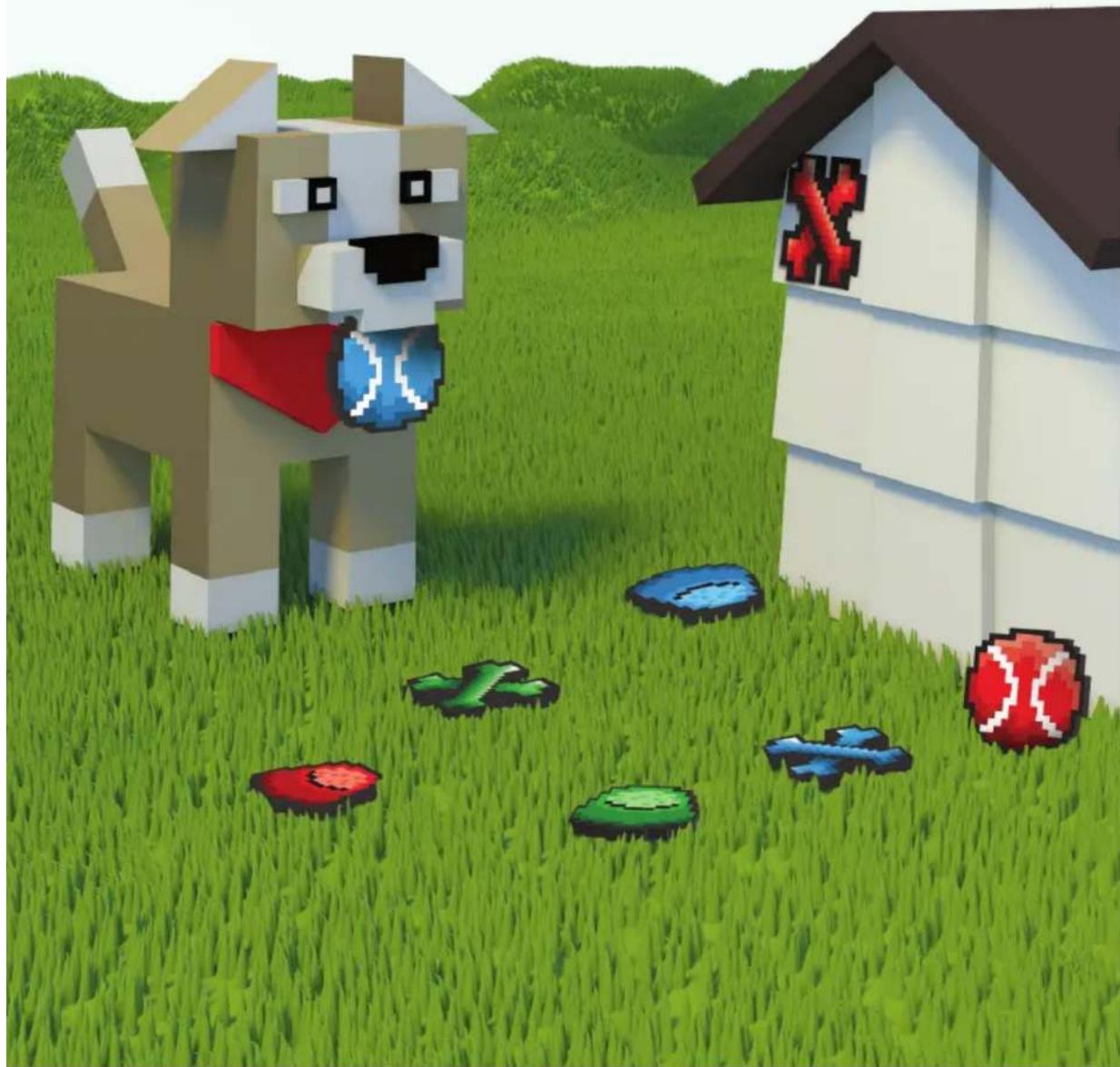
Tippy the dog needs your help to unlock a secret door and return to his dog house!
Tippy has uncovered all of his lost chew bones, tennis balls, and food bowls, but finding his lost treasures was only half the adventure. To unlock the secret door, you'll have to place all his treasures in the correct arrangement.
The 40 Sudoku-like challenges use symbols instead of numbers, and provide clues about the correct arrangement. You will use the clues and your deductive reasoning skills to unlock the secret door and help Tippy return home with his treasures.
natural_image
Pixel art scene with a brown dog standing on green grass, a white house, and scattered colorful blocks (no text or symbols)To Start:
Select a challenge. Each challenge starts with a hidden arrangement of nine tokens on a 3 x 3 grid.
Your Goal:
Use the visual clues given to place Tippy's treasures on the grid in the correct arrangement and unlock the secret door.
When your arrangement has all the clue patterns – YOU WIN!
You'll know you have the right solution when you can find all the clue patterns on your completed grid. You can also look on page 27 to verify your solution.
Clue Symbology:
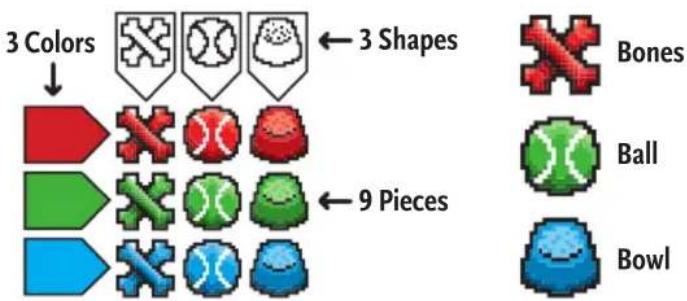
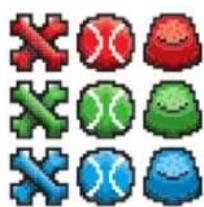
The Clue Master pieces come in three shapes and three colors. The combination produces nine unique pieces that form a complete mathematical set.
natural_image
Grid of pixelated icons representing sports and fitness concepts (no text or symbols)Token Symbols:
These symbols indicate a specific token shape and color.

Shape Symbols:
These symbols indicate a specific token shape, but not a specific color.

Color Symbols:
These symbols indicate a specific token color, but not a specific shape.
How to Solve a Clue Master Challenge:
Each of the first 20 challenges present a series of clues about how to arrange the tokens on the grid. Each clue shows a pattern that must appear on the game grid at least once. Only one solution fits all the clues.
Sample Challenge:
flowchart
graph LR
    A["Clue 1 Grid"] --> B["Clue 2"]
    B --> C["Clue 3"]
    C --> D["Final Grid"]
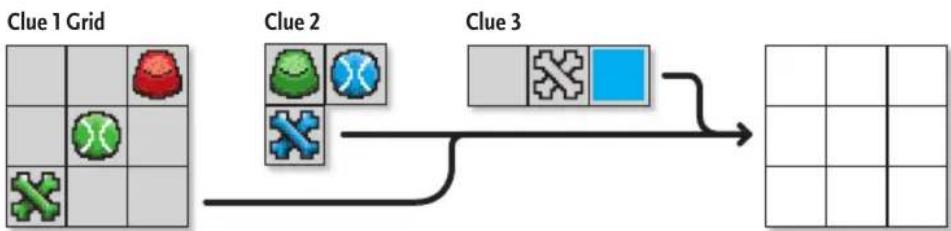
In the sample challenge above, the three Clues are three patterns that must appear on the grid at least once.
Each clue is a partial snapshot that gives you accurate but incomplete information about where the pieces belong on the grid. You'll need to use careful reasoning and logical deduction to find the arrangement of pieces that satisfies all the clues.
Here's how we use deduction to discover the solution:
First, we see that Clue 1 shows us the whole grid, but with some pieces missing. However, we are still able to determine the exact location of these three pieces.
Next, we see that Clue 2 shows us just a part of the grid. At first it looks like the clue can fit in several locations, but based on the information given in Clue 1, we can determine that Clue 2 must go in the upper left corner of the grid.
Lastly, we see that Clue 3 shows us just the shape of one piece, and just the color of another piece. This clue may not seem to provide much information on its own, but now that we've already placed 6 pieces on the grid, we can use Clue 3 to correctly place the 3 remaining pieces on the grid.


flowchart
graph LR
    A["Clue 2"] --> B["Grid"]
    B --> C["Pixelated Game Icon 1"]
    B --> D["Pixelated Game Icon 2"]
    B --> E["Pixelated Game Icon 3"]
    B --> F["Pixelated Game Icon 4"]
    B --> G["Pixelated Game Icon 5"]
    B --> H["Pixelated Game Icon 6"]
    B --> I["Pixelated Game Icon 7"]
    B --> J["Pixelated Game Icon 8"]
Placing Clue 2 in any other location would put two different pieces in the same spot. For example, if we put Clue 2 in the upper right corner, the blue bones would land in the middle of the grid, but Clue 1 already told us there is a green ball in the middle of the grid.
Clue 3 Grid

flowchart
graph TD
    A["Task"] --> B{Result}
    B --> C["Match"]
    B --> D["Pass"]
    B --> E["Bad"]
Clue 3 tells us that there have to be bones in the center of one row with a blue piece to the right of the bones. Clues 1 and 2 told us to put balls in the center of the top 2 rows, so we know Clue 3 is referring to the bottom row. Clue 3 tells us where to place 2 of the 3 remaining pieces, therefore we know to put the last piece in the only remaining spot.
Now that we've completely filled the Grid, we will confirm we have the correct solution by checking to make sure our arrangement contains all three clue patterns.
Solution
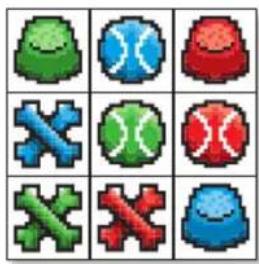
natural_image
Grid of nine pixelated icons including a helmet, baseball, and crossed-out Xs (no text or symbols)
flowchart
graph TD
    A["Clue 1"] --> B["Clue 2"]
    B --> C["Clue 3"]
    C --> D["Solution"]
    E["Clue 1"] --> F["Clue 2"]
    F --> G["Clue 3"]
    G --> H["Solution"]
    I["Clue 1"] --> J["Clue 2"]
    J --> K["Clue 3"]
    K --> L["Solution"]
    M["Clue 1"] --> N["Clue 2"]
    N --> O["Clue 3"]
    O --> P["Solution"]
Our solution is correct! All three clue patterns appear in our completed grid! When you understand how logical deduction was used to solve the sample challenge above, you're ready to start playing! As you play, remember the following tips:
- Clues do not have to be used in the order given.
- Shape information from one clue might combine with color information from another clue.
- Sometimes clues fit together like a jigsaw. You can rule out placements where the information from one clue would conflict with another clue.
- If you see the same piece on more than one clue, "lock" the clues together and reason about them as a single clue.
Proceed to Challenge 1, and stay tuned for an introduction to Negative Clues after you've solved Challenge 20. You'll soon be well on your way to becoming a Clue Master!
Clue Master was invented by Mark Engelberg.
Challenges by Serhiy Grabarchuk Jr.
ThinkFun's Mission is to Ignite Your Mind!®
ThinkFun® is the world’s leader in addictively fun games that stretch and sharpen your mind. From lighting up young minds to creating fun for the whole family, ThinkFun’s innovative games and mobile apps make you think while they make you smile.

www.ThinkFun.com






Brand : ThinkFun
Model : Clue Master
Category : Board game