
FOX Matrix 320x - Video matrix Extron - Free user manual and instructions
Find the device manual for free FOX Matrix 320x Extron in PDF.


| Product Type | Configurable Fiber Optic Digital Matrix Switcher |
| Model | FOX Matrix 320x |
| Brand | Extron |
| Inputs/Outputs | Up to 320 inputs x 320 outputs (expandable via 20 I/O boards, each 16x16) |
| Signal Types Supported | Fiber optic (singlemode/multimode), 3G-SDI, HD-SDI, SDI; RGB, DVI, composite video, S-video |
| Form Factor | Rack-mountable, 17U height (19-inch rack) |
| Dimensions (H x W x D) | Approximately 29.5" (74.9 cm) x 19" (48.3 cm) x 18" (45.7 cm) |
| Weight | Approximately 80 lbs (36.3 kg) fully loaded |
| Power Supply | Four hot-swappable redundant power supplies, 100-240 VAC, 50/60 Hz, 400W each |
| Cooling | Four hot-swappable fan modules |
| Remote Control Ports | Rear RS-232/RS-422 (9-pin D), Front RS-232 (2.5mm TRS), Ethernet (RJ-45) |
| Control Protocols | SIS commands, Extron Matrix Switchers Control Program, Telnet, embedded web pages, SNMP |
| Switching Flexibility | Any input to any output, quick multiple ties, rooming (up to 10 rooms), 64 global presets |
| Input Link Detection | Yes, via optical light detection for fiber inputs |
| Maintenance | Hot-swappable I/O boards, power supplies, and fans; field-upgradeable firmware |
| Safety | Class 1 laser product; rechargeable lithium battery; FCC Class A compliant |
| Warranty | 3 years limited warranty |
Frequently Asked Questions - FOX Matrix 320x Extron
User questions about FOX Matrix 320x Extron
0 question about this device. Answer the ones you know or ask your own.
Ask a new question about this device
Download the instructions for your Video matrix in PDF format for free! Find your manual FOX Matrix 320x - Extron and take your electronic device back in hand. On this page are published all the documents necessary for the use of your device. FOX Matrix 320x by Extron.
USER MANUAL FOX Matrix 320x Extron
Fiber Optic Matrix Switchers
FOX Matrix 320x
FOX Matrix 14400
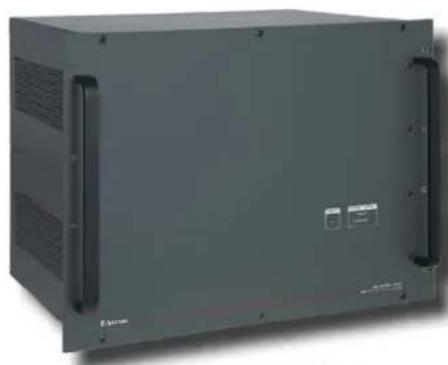
Configurable Fiber Optic Digital Matrix Switchers
natural_image
Exterior view of a gray server rack unit with ventilation grilles and indicator lights (no visible text or symbols)
natural_image
Front view of a black industrial electronic device with multiple ports and connectors (no visible text or labels)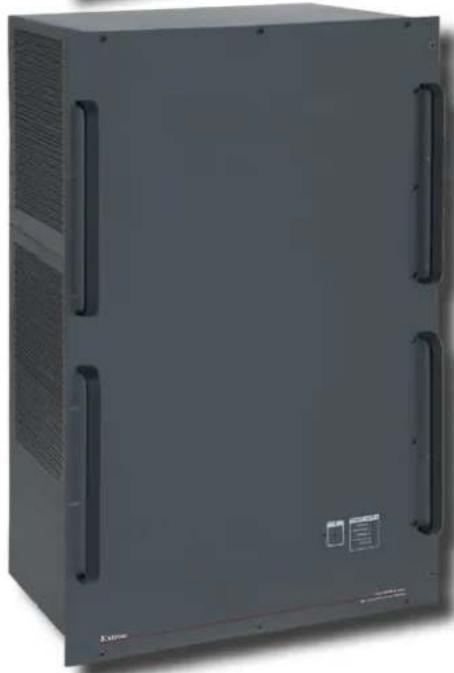
natural_image
Exterior view of a gray industrial control cabinet with ventilation grilles and side panels (no visible text or symbols)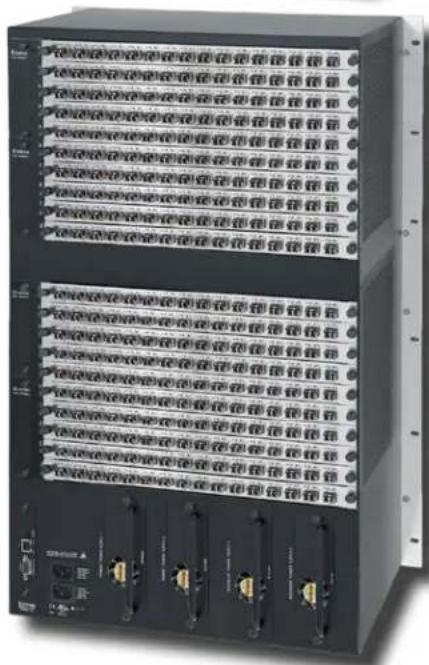
natural_image
Front view of a black server rack with multiple ports and indicator lights (no visible text or labels)Safety Instructions
Safety Instructions • English

WARNING: This symbol, 4 when used on the product, is intended to alert the user of the presence of uninsulated dangerous voltage within the product's enclosure that may present a risk of electric shock.
ATTENTION: This symbol, ⚠️, when used on the product, is intended to alert the user of important operating and maintenance (servicing) instructions in the literature provided with the equipment.
For information on safety guidelines, regulatory compliances, EMI/EMF compatibility, accessibility, and related topics, see the Extron Safety and Regulatory Compliance Guide, part number 68-290-01, on the Extron website, www.extron.com.
© 2008-2019 Extron Electronics. All rights reserved.
Trademarks
All trademarks mentioned in this guide are the properties of their respective owners. The following registered trademarks ^® , registered service marks ^SM , and trademarks ^TM are the property of RGB Systems, Inc. or Extron Electronics (see the current list of trademarks on the Terms of Use page at www.extron.com):
| Registered Trademarks ^ |
| Extron, Cable Cubby, Codec Connect, ControlScript, CrossPoint, DTP, eBUS, EDID Manager, EDID Minder, Flat Field, FlexOS, Global Configurator, Global Scripter, GlobalViewer, Hideaway, IP Intercom, IP Link, Key Minder, LinkLicense, LockIt, MediaLink, MediaPort, NetPA, PlenumVault, PoleVault, PowerCage, PURE3, Quantum, SoundField, SpeedMount, SpeedSwitch, System INTEGRATOR, TeamWork, TouchLink, V-Lock, VN-Matrix, VoiceLift, WallVault, WindoWall, XTP, and XTP Systems |
| Registered Service Mark ^SM : S3 Service Support Solutions |
| Trademarks ^TM |
| AAP, AFL (Accu-Rate Frame Lock), ADSP (Advanced Digital Sync Processing), Auto-Image, CableCover, CDRS (Class D Ripple Suppression), DDSP (Digital Display Sync Processing), DMI (Dynamic Motion Interpolation), Driver Configurator, DSP Configurator, DSVP (Digital Sync Validation Processing), eLink, EQIP, EverLast, FastBite, FOX, FOXBOX, HyperLane, IP Intercom HelpDesk, MAAP, MicroDigital, Opti-Torque, ProDSP, QS-FPC (QuickSwitch Front Panel Controller), Room Agent, Scope-Trigger, ShareLink, Show Me, SIS, Simple Instruction Set, Skew-Free, SpeedNav, StudioStation, Triple-Action Switching, True4K, Vector ^TM 4K , VideoLounge, WebShare, XTRA, ZipCaddy, and ZipClip |
FCC Class A Notice
This equipment has been tested and found to comply with the limits for a Class A digital device, pursuant to part 15 of the FCC rules. The Class A limits provide reasonable protection against harmful interference when the equipment is operated in a commercial environment. This equipment generates, uses, and can radiate radio frequency energy and, if not installed and used in accordance with the instruction manual, may cause harmful interference to radio communications. Operation of this equipment in a residential area is likely to cause interference. This interference must be corrected at the expense of the user.
NOTE: For more information on safety guidelines, regulatory compliances, EMI/EMF compatibility, accessibility, and related topics, see the "Extron Safety and Regulatory Compliance Guide" on the Extron website.
Battery Notice
This product contains a battery. Do not open the unit to replace the battery. If the battery needs replacing, return the entire unit to Extron (for the correct address, see the Extron Warranty section on the last page of this guide).
CAUTION: Risk of explosion. Do not replace the battery with an incorrect type. Dispose of used batteries according to the instructions.
Class 1 Laser Product
Any service to this product must be carried out by Extron Electronics and its qualified service personnel.
CAUTION: Using controls, making adjustments, or performing procedures in a manner other than what is specified herein may result in hazardous radiation exposure.
NOTE: For more information on safety guidelines, regulatory compliances, EMI/EMF compatibility, accessibility, and related topics, see the “Extron Safety and Regulatory Compliance Guide” on the Extron website.
Conventions Used in this Guide
Notifications
The following notifications are used:

WARNING: Potential risk of severe injury or death.
CAUTION: Risk of minor personal injury.
NOTE: A note draws attention to important information.
TIP: A tip provides a suggestion to make working with the application easier.
Software Commands
Commands are written in the fonts shown here:
^AR Merge Scene, ,0p1 scene 1,1 ^B51 ^W^C [01]R000400300004000080000600 [02] 35[17] [03]
Esc X13 *X18 *X26 *X29 *X27 CE
NOTE: For commands and examples of computer or device responses mentioned in this guide, the character "0" is used for the number zero and "0" represents the capital letter "0."
Computer responses and directory paths that do not have variables are written in the font shown here:
Reply from 208.132.180.48: bytes=32 times=2ms TTL=32
C:\Program Files\Extron
Variables are written in slanted form as shown here:
ping xxx.xxx.xxx.xxx-t SOH R Data STX Command ETB ETX
Selectable items, such as menu names, menu options, buttons, tabs, and field names are written in the font shown here:
From the File menu, select New. Click the OK button.
Specifications Availability
Product specification are available on the Extron website, www.extron.com.
Extron Glossary of Terms
A glossary of terms is available at http://www.extron.com/technology/glossary.aspx.
Contents
Introduction.... 1
About this Guide....1
About the FOX Matrix Switchers....1
Fiber Cable Transmission Modes 4
Definitions....4
Features 4
Installation....7
Setup and Installation Checklist 7
Get Ready 7
Configure the Matrix Switcher....7
Perform Physical Installation 7
Install Software 7
Rear Panel Boards, Cabling, and Features......8
I/O Boards....10
Remote Port 13
Ethernet Connection....14
Reset Button and LED....15
Power Supply Modules and Indicator LEDs .. 15
Cooling Fan Assemblies.... 15
Front Panel Features....16
Reset Operations....18
Performing Soft System Resets
(Resets 3, 4, and 5) 19
Programming Guide....20
Host Control Ports....20
Serial Ports 20
Ethernet (LAN) Port......21
Host-to-Switcher Instructions 22
Switcher-initiated Messages 22
Switcher Error Responses 23
Using the Command and Response Tables ..... 23
Command and Response Table for
SIS Commands 24
Command and Response Table for
IP- and SNMP-Specific SIS Commands ..... 32
Special Characters 35
Matrix Software....36
About this Program 36
Software Operation via Ethernet 36
Software Operation via a Serial Port......37
Installing the Software....37
Using the Matrix Switchers Control Program.....40
Starting the Program 40
IP Settings / Options Dialog Box......43
Updating Firmware 48
Uploading HTML Files....51
Windows Buttons, List Boxes, and
Trash Can....52
Windows Menus....52
Using Emulation Mode....56
Using the Help System 57
HTML Operation 58
Opening the Embedded Web Pages....59
Status Tab 60
System Status Page 60
Input Link Page.... 61
Configuration Tab 62
System Settings Page 62
Passwords Page.... 65
Email Settings Page....66
SNMP Settings Page 68
Firmware Upgrade Page 70
File Management Tab 71
File Management Page 71
Control Tab....72
Set and View Ties Page....72
Maintenance and Modifications....74
Mounting the Switcher....74
UL Guidelines 74
Mounting Instructions 75
Battery and Power Precautions 75
Removing and Installing an I/O Board or Blank Panel 75
Removing an I/O Board or Blank Panel......77
Installing an I/O Board or Blank Panel......77
Removing and Installing a Power Supply Module....78
Removing a Power Supply Module 78
Installing a Power Supply Module 79
Removing and Installing a Fan Module......80
Removing a Fan Module 80
Installing a Fan Module 81
Ethernet Connection 82
Ethernet Link 82
Ethernet Connection....82
Default IP Address 82
Pinging to Determine the Extron IP Address....83
Pinging to Determine the Web IP Address....83
Configuring the Switcher for Network Use via the ARP Command 84
Connecting as a Telnet Client....85
Telnet Tips 86
Subnetting — A Primer....87
Gateways 87
Local and Remote Devices 87
IP Addresses and Octets 88
Subnet Masks and Octets 88
Determining Whether Devices Are on the Same Subnet....88
Introduction
WARNING: The FOX matrix switcher outputs continuous invisible light (Class 1 rated), which may be harmful to the eyes; use with caution.
This guide contains installation, configuration, and operating information for the Extron FOX Matrix 320x Switcher and FOX Matrix 14400 Switcher. These customizable matrix switchers support up to 320 (FOX Matrix 320x) or 144 (FOX Matrix 14400) inputs and outputs.
NOTE: In this guide, "FOX matrix switcher" and "switcher" refer to either switcher model unless otherwise specified.
About the FOX Matrix Switchers
The FOX matrix switchers (see figure 1 on the next page for a FOX Matrix 14400 example) distribute optical and electronic input signals to one or more optical and electronic outputs. The matrix switchers can route multiple input and output configurations simultaneously. The switchers are configurable, assembled from individual input/output (I/O) boards, each of which supports 16 inputs by 16 outputs in a combination of the following types of board:
- Singlemode and multimode fiber optic 16x16 I/O boards — These non-pathologically compliant fiber optic boards route signals that are compatible with all Extron FOX 500, FOXBOX, and PowerCage FOX fiber optic product lines.
- FOX 3G I/O 1616 SM P board (available for FOX Matrix 14400 only) — This pathologically-compliant fiber optic board passes digital signals in broadcasting applications, while addressing the compatibility issues of passing pathological signals generated from 3G-SDI, HD-SDI, and SDI signals over fiber optic systems, including those defined by the RP 178 and RP 198 standards.
NOTE: This board is not available for the FOX Matrix 320x.
- BNC 3G/HD/SD-SDI 16x16 I/O board — This pathologically-compliant board supports and passes 3G-SDI, HD-SDI, and SD-SDI signals in their native (electronic) format.
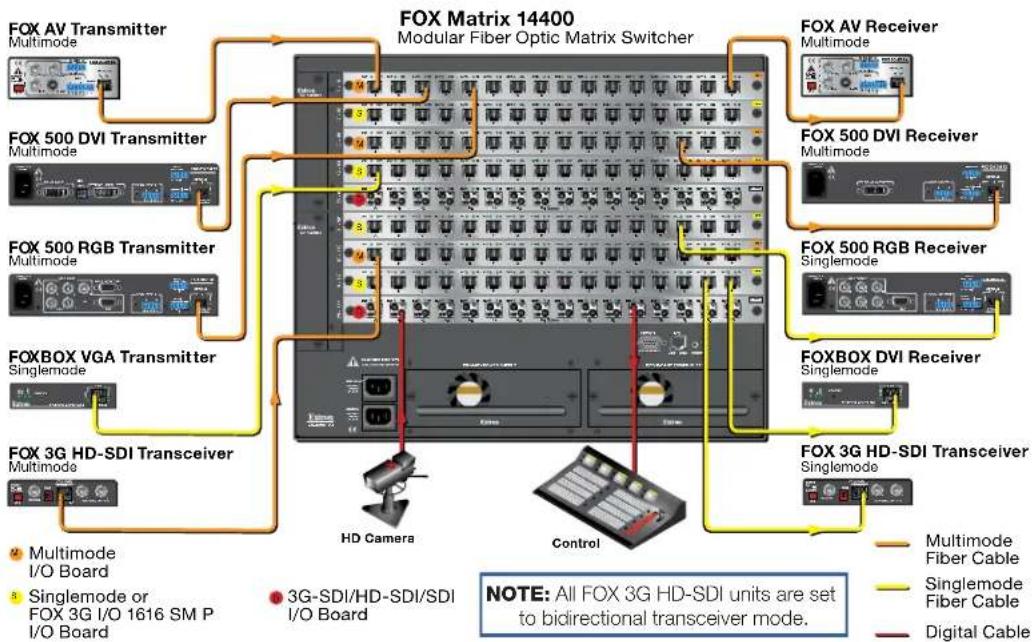
Figure 1. Typical FOX Matrix 14400 Application
NOTE: The non-pathologically compliant multimode and singlemode fiber optic I/O boards are physically and functionally identical, with the exception of the effective range of transmission. In this guide, any reference to fiber optic transmission applies to either transmission mode unless otherwise specified. The pathologically-compliant fiber optic I/O board is identified separately in this guide where appropriate.
By adding or removing I/O boards, the FOX matrix switcher is expandable and contractable within the following ranges:
- FOX Matrix 320x — Includes up to 20 I/O boards. It is expandable from a 16-input by 16-output matrix to a 320-input by 320-output matrix.
FOX Matrix 14400 — Includes up to 9 I/O boards. It is expandable from a 16-input by 16-output matrix to a 144-input by 144-output matrix.
The Extron proprietary fiber optic signal, generated by FOX 500, FOXBOX, PowerCage FOX, and FOX II transmitters, can include video, stereo audio, and transmitter-to-receiver RS-232 serial communications. The video component of the signal can be of a variety of formats, depending on the transmitter and receiver:
- RGB video
- Digital Visual Interface (DVI) video
• 3G-SDI, HD-SDI, or SDI video • Low resolution (composite video or S-video)
NOTES:
- Compatible optical signals are digital signals from 270 Mbps through 4.25 Gbps that are sent and received via fiber optic small form factor pluggable (SFP) modules with LC-type connectors. The FOX matrix switchers support all compatible optical signals, whether transmitted or received by an Extron fiber optic system component or not.
- The FOX 500, FOXBOX, and PowerCage FOX transmitter-to-receiver communications, including the serial link, occupy one matrix switcher input and output. This matrix switcher also supports the FOX 500 return (receiver-to-transmitter) serial communications, but returning this signal stream to the transmitter occupies a separate matrix switcher input and output.
The matrix switchers input and output the optical signals that they route on fiber optic transceiver modules and the 3G-SDI, HD-SDI, and SDI video signals on BNC connectors.
The switcher has four (FOX Matrix 320x) or two (FOX Matrix 14400) internal, hot-swappable, 100 VAC to 240 VAC, 50-60 Hz, 400-watt power supplies that provide worldwide power compatibility and reliability.
The matrix switcher is a single box solution to complex fiber optic and broadcast signal routing applications. Each input and output is individually isolated and buffered. Any input can be switched to any one output or all outputs with virtually no crosstalk or signal noise between channels.
The matrix switcher can be remotely controlled using either the Extron Matrix Switchers Control Program or the Simple Instruction Set (SIS) (see Programming Guide on page 20. Control is available via the:
• Rear panel Remote RS232/RS422 port
- Rear panel LAN port
• Front panel RS-232 serial Config (configuration) port
The SIS is a set of basic ASCII code commands that provide simple control through a control system or PC without the need to enter long strings of code. SIS commands can be entered via any of the ports listed above.
The switcher can be operated remotely by any of the following connected to a serial port or LAN port:
- Control system
PC computer - Extron FPC 6000 Front Panel Controller for FOX Matrix 320x and FOX Matrix 14400
• Extron MKP 2000 remote control panel
• Extron MKP 3000 remote control panel
(RS-232 or RS-422 only) Extron MCP 1000 remote control panel, an MKP 1000 remote keypad, or both
The matrix switcher is housed in a rack-mountable, metal enclosure with mounting flanges for standard 19-inch racks. The sizes are as follows:
• FOX Matrix 320x — 17U high
• FOX Matrix 14400 — 9U high
Fiber Cable Transmission Modes
Two versions of the non-pathologically compliant FOX matrix switcher fiber optic I/O board are documented in this guide. They are categorized by the type of fiber optic cable, multimode or singlemode, which defines the effective range of transmission:
- Multimode — Long distance, up to 300 m (985 feet)
- Singlemode — Very long distance, up to 30 km (18.75 miles)
NOTES:
- All transceiver modules on a fiber optic I/O board, as delivered from Extron, are configured the same: either all multimode or all singlemode.
- You can mix multimode and singlemode fiber optic I/O boards in a FOX matrix switcher, but ensure that you connect the proper transmission mode fiber cables to the board.
Definitions
The following terms, which apply to all Extron matrix switchers, are used throughout this guide:
- Tie — An input-to-output connection.
- Set of ties — An input tied to two or more outputs. (An output can never be tied to more than one input.)
- Configuration — One or more ties or one or more sets of ties.
- Current configuration — The configuration that is currently active in the switcher (also called “configuration 0”).
- Global memory preset — A configuration that has been stored. Up to 64 global presets can be stored in memory. When a preset is retrieved from memory, it becomes the current configuration. Presets can be saved and recalled via any of the serial ports or the LAN port.
- Room — A subset of outputs that are logically related to each other, as determined by the operator. The switchers support up to 10 rooms, each of which can consist of from 1 to 16 outputs.
- Room memory preset — A configuration that has been stored that consists of outputs in a single room. When a room preset is retrieved from memory, it becomes the current configuration. Up to 10 room presets can be associated with a room.
Features
- Fiber optic inputs and outputs — With fiber optic I/O boards, the switchers input and output fiber optic signals on SFP optical connectors. The fiber optic I/O boards support digital signals from 270 Mbs through 4.25 Gbps.
- SDI, HD-SDI, or 3G-SDI inputs and outputs — With 3G/SDI/HD-SDI I/O boards, the switchers input and output SDI and HD-SDI signals on BNC connectors. The 3G/SDI/HD-SDI I/O boards support multi-rate SDI at rates up to 2.97 Gbps, and comply with SMPTE 259M-C, 292M, 424M, and ITU digital video standards.
• Cross-format compatibility —
- An input on an 3G/SDI/HD-SDI I/O board can be tied to an output on a fiber optic I/O board or another 3G/SDI/HD-SDI I/O board.
-
An input on a fiber optic I/O board can be tied to an output on an 3G/SDI/HD-SDI I/O board or another fiber optic I/O board.
-
Switching flexibility — The switcher provides individually buffered, independent matrix switched outputs.
- Any input can be tied to any or all outputs.
- Quick multiple tie — Multiple inputs can be switched to multiple outputs simultaneously. This allows all displays (outputs) to change from source to source at the same time.
- Input link detection — In critical environments or unmanned, remote locations, it may be vital to know that sources are active and switching. The switcher confirms that input sources are active by detecting light. Link detection provides instantaneous feedback via the serial ports of the switchers or local-area network (LAN) port. The input information can be displayed on any control system or in a control program on a LAN or Internet (IP) connection.
- Rooming — The switcher can be programmed to group multiple outputs to specific "rooms," allowing them to have their own presets.
-
Operational reliability — The FOX matrix switcher can support round-the-clock operation in mission-critical applications, using a combination of hot-swappable components and redundant power supplies.
-
Field upgradable, hot-swappable modular design — You can repair, upgrade, reconfigure, or expand the matrix by simply installing a new I/O board or replacing a board of one type with one of another. Hot-swappable components let you replace any I/O board at any time without powering down the switcher.
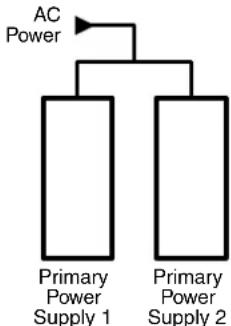
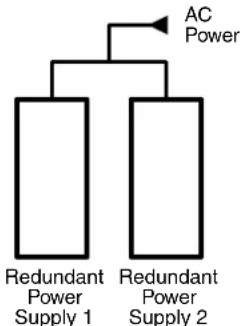
- Primary and redundant, hot-swappable power supplies — The hot-swappable, externally accessible redundant power supply is configured to automatically take over the load from the primary supply in the case of a failure.
The complete power circuit, from the plug, through the power supply, to the insertion of the power onto the power distribution plane, is separate and redundant (see figure 2). If the installation includes uninterruptible or completely separate power sources, the switcher remains powered up through any power interruption except a simultaneous loss of power on both power sources.

flowchart
graph TD
    A["AC Power"] --> B["Primary Power Supply 1"]
    A --> C["Primary Power Supply 2"]
flowchart
graph TD
    A["AC Power"] --> B["Redundant Power Supply 1"]
    A --> C["Redundant Power Supply 2"]
FOX Matrix 14400 FOX Matrix 320x
Figure 2. Redundant Power Supply Backs Up Primary
The hot-swappable redundant power supply means no downtime for the switcher and no loss of functionality should one power supply fail. Should a primary power supply fail, the redundant power supply immediately assumes the load of the failed primary supply. A failed power supply is easily replaceable from the rear at any time without powering down the matrix and with no tools required.
- Ease of maintenance — A failed power supply can be easily replaceable from the rear at any time without powering down the matrix, and with no tools required.
- Power supply status LEDs — Front panel and rear panel LEDs indicate the status of the primary and redundant power supplies.
- Hot-swappable fans — The hot-swappable, externally accessible fans allow quick replacement to avert overheating in the case of a failure. Fans can be replaced without powering down the switcher.
- Operational flexibility — Operations such as input and output selection and setting of presets can be performed via the Ethernet port or either serial port. The serial ports allow remote control via a PC or a control system. The Ethernet link allows multiple remote links with two levels of password protection. Remotely control the matrix switcher using one or more of the following:
- Windows ^ -based Matrix Switchers Control Program
• Simple Instruction Set (SIS) - Remote control panels and keypads
- SNMP support for remote monitoring — Supports the Simple Network Management Protocol (SNMP) internet-standard protocol, allowing IT personnel to manage devices on the IP network.
- Laser controls — Non-pathologically compliant fiber optic boards can be set, via SIS commands, to individually or globally disable the output laser drivers so that a driver does not output light. They can also be set, individually or globally, to automatic so that a driver turns on when a tie is made involving that driver or off when no tie is made.
- Upgradeable firmware — The firmware that controls all switcher operation can be upgraded in the field via either serial port or the Ethernet port, without taking the switcher out of service. Firmware upgrades are available for download at www.extron.com, and can be installed using the Matrix Switchers Control Program or the embedded HTML pages.
- Global memory presets — 64 global memory presets are a time-saving feature that lets you set up and store input/output configurations in advance. You can then recall those configurations when needed, with a few simple steps, via serial port or Ethernet control.
- Rack mounting — Rack mountable in any conventional 19-inch wide rack.
- Permanent, rechargeable battery — The matrix switcher has a rechargeable lithium battery to track time of day when power is disconnected.

WARNING: There is a danger of explosion if the battery is incorrectly replaced. Replace it only with the same or equivalent type recommended by the manufacturer. Dispose of used batteries according to the instructions of the manufacturer.
This section details the installation and configuration of the FOX matrix switchers, including:
- Setup and Installation Checklist
- Rear Panel Boards, Cabling, and Features
- Front Panel Features
- Reset Operations
Setup and Installation Checklist
Get Ready
□ Familiarize yourself with the matrix switcher.
☐ Obtain IP setting information for the matrix switcher from the local network administrator (see Ethernet Connection, beginning on page 82).
Configure the Matrix Switcher
☐ Install the desired I/O boards (see Removing and Installing an I/O Board or Blank Panel on page 75).
Perform Physical Installation
☐ If desired, install the switcher in a rack (see Mounting the Switcher on page 74).
☐ Cable input and output devices to the I/O ports (see I/O boards on page 10).
☐ As desired, connect computers, control systems, or both to the rear panel Remote port (see Remote Port on page 13), LAN port (see Ethernet Connection on page 14), and front panel Configuration port (see Front Panel Features on page 16).
☐ Connect power (see Power Supply Modules and Indicator LEDs on page 15).
☐ Test the switcher by creating a tie (see the Create ties SIS commands on page 25).
Install Software
☐ Install the Matrix Switchers Control Program (see Installing the Software on page 37).
Rear Panel Boards, Cabling, and Features
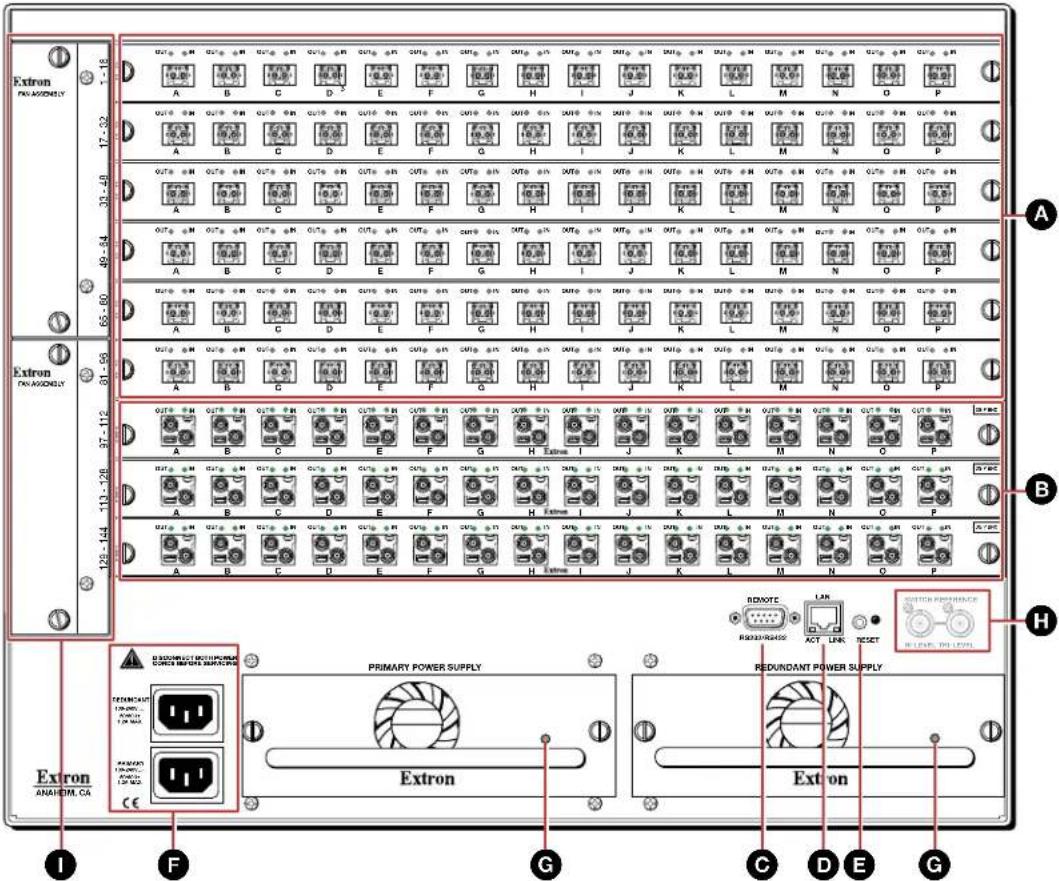
Figure 3. FOX Matrix 14400 Switcher Rear Panel
A Fiber optic boards with connectors and LEDs (see page 11)
B 3G-SDI, HD-SDI, and SDI boards with connectors and LEDs (see page 12)
Remote RS232/RS422 port (see page 13)
D LAN connector (Ethernet connection) (see page 14)
E Reset button and LED (see page 15)
F Primary and Redundant AC power connectors (see page 15)
G Power supply modules and indicator LEDs (see page 15)
Switch Reference BNCs — Present but not used on the FOX Matrix 14400. Not present on the FOX Matrix 320x.
1 Cooling fan assemblies (see Removing and Installing a Fan Module on page 80)

Figure 4. FOX Matrix 320x Switcher Rear Panel
ATTENTION:
As shown in figure 5, each I/O board is identified by the input and output numbers supported by the board position, which are printed on the side of each fan module (1 - 16, 17 - 32, and so on). The transceiver modules on fiber optic I/O boards and BNC blocks on the 3G/HD/SD-SDI are identified as A through P.

Figure 5. Arrangement of Inputs and Outputs on the I/O Boards
Each module, numbered from left to right, includes one of the outputs and one of the inputs supported by the board. For example, the input and output numbers supported by the I/O board in location 33 - 48 (slot 3) are as follows: A = 33, B = 34, C = 35, D = 36, E = 37, F = 38, G = 39, H = 40, I = 41, J = 42, K = 43, L = 44, M = 45, N = 46, O = 47, and P = 48.
NOTE: On each transceiver module, the output is to the left of the input.
| Slot Inputs and Outputs Slot Inputs and Outputs | |
| 1 1 through 16 11* 161 through 176 | |
| 2 17 through 32 12* 177 through 192 | |
| 3 33 through 48 13* 193 through 208 | |
| 4 49 through 64 14* 209 through 224 | |
| 5 65 through 80 15* 225 through 240 | |
| 6 81 through 96 16* 241 through 256 | |
| 7 97 through 112 17* 257 through 272 | |
| 8 113 through 128 18* 273 through 288 | |
| 9 129 through 144 19* 289 through 304 | |
| 10* 145 through 160 20* 305 through 320 | |
* FOX Matrix 320x only
Fiber optic boards

Figure 6. Fiber Optic Board
A Fiber optic board, connectors (see figure 3 on page 8 and figure 4 on page 9)—

WARNING: The FOX matrix switchers fiber optic I/O boards output continuous invisible light (Class 1 rated), which may be harmful to the eyes; use with caution. Plug the attached dust cap into the optical transceiver when the fiber optic cable is unplugged.
- Ensure that you use the proper fiber cable for your I/O board. Typically, singlemode fiber has a yellow jacket and multimode cable has an orange or aqua jacket.
- Unlike most Extron transmitters and receivers, which output an optical stream on one connector in a block and receive a return optical stream on the second connector in the same block, the FOX matrix switchers uses one connector on the block as an input and the second connector on the same block as a separate output.
- All transceiver modules on a fiber optic I/O board, as delivered from Extron, are configured the same: either all multimode or all singlemode.
- You can mix multimode and singlemode fiber optic I/O boards in a FOX matrix switcher, but ensure that you connect the proper transmission mode fiber cables to the board.
A1 Input connector and LED — For all one-way
video, audio, and serial communications output by a transmitter, connect a fiber optic cable to the Input LC connector (see figure 7).
Connect the far end of this fiber optic cable to the Optical Tx LC connector on a FOXBOX Tx transmitter or to any other compatible Extron fiber optic device.
NOTES:
- For a FOX 500 transmitter, connect this fiber optic cable to the Optical 1 LC connector.
• Alternatively, for the serial return, (receiver-to-transmitter) function, connect the far end of the cable to the Optical 2 connector on a receiver.
Input LED — See Fiber optic I/O board LED
indications on the next page.
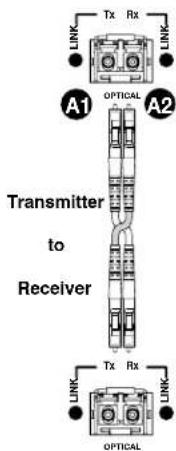
Figure 7. Optical Connections
A2 Output connector — For all one-way video, audio, and serial communications output to a receiver, connect a fiber optic cable to the Output LC connector (see figure 7, on the previous page).
Connect the far end of this fiber optic cable to the Optical Rx LC connector on a FOXBOX Rx receiver or to any other compatible Extron fiber optic device.
NOTES:
- For a FOX 500 receiver, connect this fiber optic cable to the Optical Rx LC connector.
- Alternatively, for the serial return, (receiver-to-transmitter) function, connect the far end to the Optical 2 connector on a transmitter.
Output LED — See "Fiber optic I/O board LED indications," below.
Fiber optic I/O board LED indications
On the fiber optic I/O boards, the input and output LEDs on the transceivers provide useful indications of the status of the lasers and the reclocking function (see the table below).
| Definition | OUT IN | ||
| Output LED indication | Input LED indication | Definition | |
| Reclocked at 4.25 Gbps On On Reclocked | ed at 4.25 Gbps | ||
| Not reclocked, laser off, or no signal Off | Off Not reclocked | or no signal | |
| Non-4G signal present or not reclocked | Fast blink Fast blink | Non-4G signal present or not reclocked | |
NOTE: If the reclocking feature is bypassed (see the Set output reclocker SIS command on page 26), the output LED is always on.
3G/HD/SD-SDI boards

Figure 8. 3G/HD/SD-SDI Board
B BNC connectors (see figure 3 on page 8 and figure 4 on page 9) — Connect inputs and output using the included DIN-to-female-BNC pigtail connectors, as follows:
NOTE: The pigtails are not installed on the board during shipment.
- To install the pigtails, press them onto the DIN connectors until they snap into place.
- To remove the pigtails, pull back on the knurled collar and pull the pigtail straight back from the DIN connector.
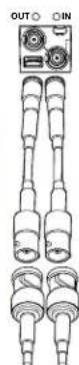
31 Multi-rate SDI Input connectors — Connect 3G-SDI, HD-SDI, or SDI video inputs to these BNC connectors.
32 Multi-rate SDI Output connectors — Connect digital displays to these BNC connectors.
Remote Port
Remote RS232/RS422 port (see figure 3 on page 8 and figure 4 on page 9) — Connect a host device, such as a computer or touchpanel control, to the switcher via this 9-pin D connector for serial RS-232 or RS-422 control (see figure 9).
| RS-232 FunctionPin F B Set 12 | ||||
| 1 | — | Not used | — | Not used |
| 2 | Tx | Transmit data | Tx- | Transmit data (-) |
| 3 | Rx | Receive data | Rx- | Receive data (-) |
| 4 | — | Not used | — | Not used |
| 5 | Gnd | Signal ground | Gnd | Signal ground |
| 6 | — | Not used | — | Not used |
| 7 | — | Not used | Rx+ | Receive data (+) |
| 8 | — | Not used | Tx+ | Transmit data (+) |
| 9 | — | Not used | — | Not used |
Figure 9. Remote RS232/RS422 Connector
See Programming Guide, beginning on page 20, for definitions of the SIS commands (serial commands to control the switcher via this connector) and Matrix Software, beginning on page 36, for details on how to install and use the control software.
NOTE: The switcher can support either the RS-232 or the RS-422 serial communication protocol, and can operate at 9600, 19200, 38400, or 115200 baud rates.
See the Command and Response Table for IP- and SNMP-Specific SIS Commands on page 33 to configure this port under SIS control.
If desired, connect any of the following to the Remote RS232/RS422 connector:
- Extron FPC 6000 Front Panel Controller for FOX Matrix 320x and FOX Matrix 14400 (see the FPC 6000 User Guide for details).
- MKP 2000 remote control panel (see the MKP 2000 Remote Control Panel User Guide for details)
- MKP 3000 remote control panel (see the MKP 3000 Remote Control Panel User Guide for details).
Ethernet Connection
D LAN port (see figure 3 on page 8 and figure 4 on page 9) — For IP control of the system, connect the matrix switcher to a PC or to an Ethernet LAN via this RJ-45 connector. You can use a PC to control the networked switcher with SIS commands from anywhere in the world. You can also control the switcher from a PC that is running the Extron Matrix Switchers Control Program or has downloaded HTML pages from the switcher.
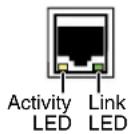
Link LED indicator — The green (link) LED indicates that the switcher is properly connected to an Ethernet LAN. This LED should light steadily.
Act LED indicator — The amber (activity) LED indicates transmission of data packets on the RJ-45 connector. This LED should flicker as the switcher communicates.
Cabling
It is vital that your Ethernet cables be the correct cable type and that they be properly terminated with the correct pinout. Ethernet links use Category (CAT) 3, 5e, or CAT 6, unshielded twisted pair (UTP) or shielded twisted pair (STP) cables, terminated with RJ-45 connectors. Ethernet cables are limited to a length of 328 feet (100 meters).
NOTES:
- Do not use standard telephone cables. Telephone cables do not support Ethernet or Fast Ethernet.
- Do not stretch or bend cables. Transmission errors can occur.
The cable used depends on your network speed. The switcher supports both 10 Mbps (10Base-T — Ethernet) and 100 Mbps (100Base-T — Fast Ethernet), half-duplex and full-duplex Ethernet connections.
- 10Base-T Ethernet requires CAT 3 UTP or STP cable at minimum.
- 100Base-T Fast Ethernet requires CAT 5e UTP or STP cable at minimum.
RJ-45 connector wiring
The Ethernet cable can be terminated as a straight-through cable or a crossover cable and must be properly terminated for your application (see figure 10).
- Crossover cable — Direct connection between the computer and the FOX matrix switcher
- Patch (straight) cable — Connection of the FOX matrix switcher to an Ethernet LAN

| Pin | End 1 End 2 Wire color | End 1 End 2 Wire color |
| 1 | White-green | White-orange |
| 2 | Green | Orange |
| 3 | White-orange | White-green |
| 4 | Blue | Blue |
| 5 | White-blue | White-blue |
| 6 | Orange | Green |
| 7 | White-brown | White-brown |
| 8 | Brown | Brown |
| Pin | Wire color | Wire color |
| 1 | White-orange | White-orange |
| 2 | OrangeOrange | |
| 3 | White-green | White-green |
| 4 | Blue | Blue |
| 5 | White-blue | White-blue |
| 6 | GreenGreen | |
| 7 | White-brown | White-brown |
| 8 | Brown | Brown |
Figure 10. RJ-45 Connector and Pinout Tables
Reset Button and LED
E Reset button (see figure 3 on page 8 and figure 4 on page 9) —

The recessed Reset button initiates four levels of matrix switcher reset. For four different reset levels, press and hold the button while the switcher is running or while you power up the switcher (see Reset Operations on page 18 for details).
- Hard reset (mode 1) — Restore the switcher to the default factory conditions and return the switcher to the default firmware that shipped with the unit.
NOTE: Hard reset does not clear the current configuration.
- Events (mode 3) reset — Toggle events monitoring on and off.
• IP settings (mode 4) reset — Reset the IP functions of the switcher.
NOTE: The IP settings reset does not replace any user-installed firmware.
- Absolute (mode 5) reset — Restore the switcher to the default factory conditions.
NOTE: Factory loaded firmware is active until it is replaced or the power is cycled.
Power Supply Modules and Indicator LEDs
F Primary and Redundant AC power connectors (see figure 3 and figure 4) — Plug standard IEC power cords into these connectors to connect the switcher to 100 VAC to 240 VAC, 50 or 60 Hz power sources.
NOTE: For the most reliable power, connect the a power cord from the Redundant power connector to either an uninterruptible power source or to a power source that is completely independent from the primary power source.
Primary and Redundant power supply indicator LEDs (see figure 3 and figure 4) — Green — Indicates that the associated power supply is operating within normal tolerances.
Red — Indicates that the associated power supply is operating outside the normal tolerances or has failed (see Removing and Installing a Power Supply Module on page 78 to replace the power supply).
Cooling Fan Assemblies
Primary and Redundant cooling fans (see figure 3 and figure 4) — Cool the equipment. If a fan has failed, replace it at your earliest opportunity (see Removing and Installing a Fan Module on page 80 to replace the fans).
Front Panel Features
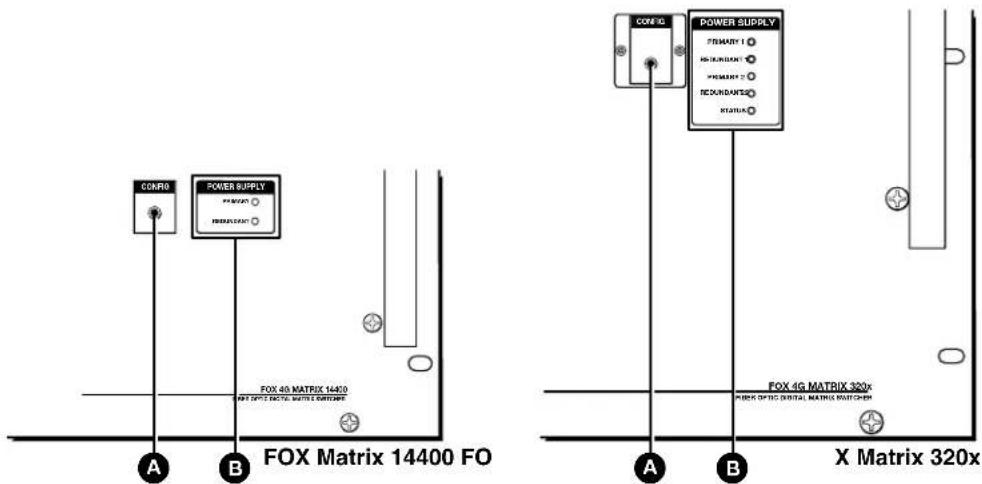
Figure 11. Front Panel Configuration Port and LED Indicators
A Configuration port — This 2.5 mm mini stereo jack serves the same serial communications function as the rear panel Remote port (although RS-232 only), but it is easier to access than the rear port after the matrix switcher has been installed and cabled. The optional 9-pin D to 2.5 mm mini jack TRS RS-232 cable (see figure 12), can be used for this connection.
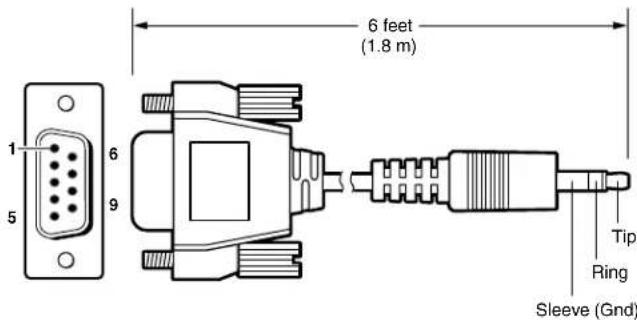
| 9-pin D | Connection | TRS Plug |
| Pin 2 | Rx line on the computer | Tip |
| Pin 3 | Tx line on the computer | Ring |
| Pin 5 | Signal ground on the computer | Sleeve |
Figure 12. Optional 9-pin TRS RS-232 Cable
NOTES:
- This port is independent of the rear panel Remote port and is not affected by changes to the protocol of the rear panel port. This front panel port protocol can be changed under SIS command control only (see the Serial Port Parameters SIS command on page 34 to configure this port under SIS control).
- A front panel Configuration port (RS-232) connection and a rear panel Remote port connection can both be active at the same time.
This port is RS-232 only, with its default protocols as follows:
9600 baud
- no parity
- 8 data bits
• 1 stop bit
- no flow control
NOTE: The maximum distance from the matrix switcher to the controlling device can be up to 200 feet (61 meters). Factors such as cable gauge, baud rates, environment, and output levels (from the switcher and the controlling device) all affect transmission distance. Distances of about 50 feet (15 meters) or less are typically not a problem. In some cases, the matrix switcher may be capable of serial communications via RS-232 up to 250 feet (76 meters) away.
B Power Supply and Status LEDs —
Primary and Redundant Power Supply LEDs —
- Green — Indicates that the associated power supply is operating within normal tolerances.
- Amber (FOX Matrix 320x only) — Indicates that AC power has been disconnected or the power supply has been removed.
- Red — Indicates that the associated power supply is operating outside the normal tolerances or has failed (see Removing and Installing a Power Supply Module on page 78 to replace the power supply).
Status LED (FOX Matrix 320x only) —
- Green — Indicates that the controller board is operating normally and that the temperature and backplane voltages are all within normal tolerances.
- Red — Indicates that either the controller board has failed or that temperature or backplane voltages are outside of acceptable levels (see the Request system status SIS command on page 31 to identify the source of the indication).
Reset Operations
The rear panel Reset button initiates four levels of resets (numbered 1, 3, 4, and 5 for the sake of comparison with an Extron IPL product). The Reset button is recessed, so use a pointed stylus, ballpoint pen, or small screwdriver to access it.
See the following table for a summary of the modes.
ATTENTION:
NOTE: The reset modes listed below close all open IP and Telnet connections and close all sockets. Also, the following modes are separate functions, not a continuation from mode 1 to mode 5.
| Reset Mode Comparison and Summary | |||
| Mode | Activation Result Purpose and Notes | ||
| 1Factory Firmware Reset | Hold down the recessedResetbuttonwhile applying power to the switcher.NOTE:After a mode 1 reset is performed, update the switcher firmware to the latest version. Do not operate the switcher firmware version that results from the mode 1 reset. If you want to use the factory default firmware, you must upload that version again (seeUpdating firmwareon page 48 for details on uploading firmware). | The switcher reverts to the factory default firmware.Event scripting does not start if the switcher is powered on in this mode. All user files and settings, such as IP settings, are maintained.NOTE:If you do not want to update firmware, or you performed a mode 1 reset by mistake, cycle power to the switcher to return to the firmware version that was running before the mode 1 reset. Use theQQ(Query controller firmware version) SIS command on page 31 to confirm that the factory default firmware is no longer running (look for the asterisk [*] following the version number). | Use mode 1 to return the switcher to the factory default firmware version if incompatibility issues arise with user-loaded firmware. |
| 3Run/Stop Program Reset | Hold theResetbutton for approximately 3 seconds, until the Reset LED blinks once, then momentarily pressResetwithin 1 second. | Mode 3 turns events on or off.During resetting, the Reset LED blinks two times if events are starting, three times if events are stopping. | Mode 3 is useful for troubleshooting. |
| 4Reset All IP Settings Reset | Hold theResetbutton for approximately 6 seconds, until the Reset LED blinks twice (once at 3 seconds and again at 6 seconds). Then momentarily pressResetwithin 1 second. | Mode 4:Enables ARP capability.Sets the IP address to the factory default.Sets the subnet address to the factory default.Sets the gateway address to the factory default.Sets port mapping to the factory default.Turns DHCP off.Turns events off.The Reset LED blinks four times in succession during the reset. | Mode 4 enables you to set IP address information using ARP and the MAC address. |
| Reset Mode Comparison and Summary (continued) | |||
| Mode | Activation Result Purpose and Notes | ||
| 5Reset to Factory Default | Hold theResetbutton for approximately 9 seconds, until the Reset LED blinks three times (once at 3 seconds, again at 6 seconds, and then again at 9 seconds). Then momentarily pressResetwithin 1 second. | Mode 5 performs a complete reset to factory defaults (with the exception of the firmware):Does everything mode 4 does Presets most settings, including:Clears all ties.Clears all presets.Clears all output mutes.(FOX Matrix 320x) Sets the output lasers to always on.Resets all IP options.Removes all user-loaded files and configurations from the switcher.The reset LED blinks four times in succession during the reset. | Mode 5 is useful if you want to start over with configuration and uploading or to replace events. Same as theEscZQQQ←SIS command on page 29. |
Performing Soft System Resets (Resets 3, 4, and 5)
Perform a soft reset of the switcher as follows (see figure 13):
- Use a small screwdriver to press and hold the rear panel Reset button until the rear panel Reset LED blinks once (program reset), twice (IP settings reset), or three times (factory default reset).
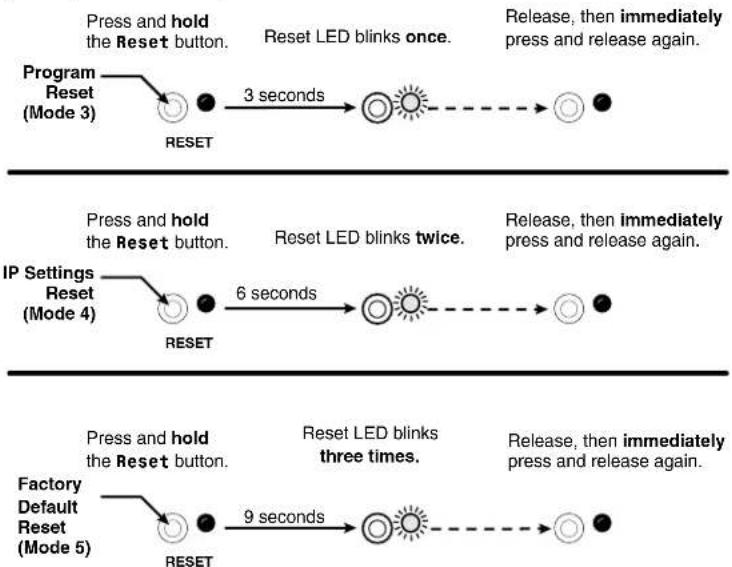
flowchart
graph TD
    A["Program Reset (Mode 3)"] --> B["Reset"]
    B --> C["Reset LED blinks once."]
    C --> D["Reset"]
    D --> E["Release, then immediately press and release again."]

    F["Press and hold the Reset button."] --> G["Reset"]
    G --> H["Reset LED blinks twice."]
    H --> I["Reset"]
    I --> J["Release, then immediately press and release again."]

    K["IP Settings Reset (Mode 4)"] --> L["Reset"]
    L --> M["Reset LED blinks twice."]
    M --> N["Reset"]
    N --> O["Release, then immediately press and release again."]

    P["Factory Default Reset (Mode 5)"] --> Q["Reset"]
    Q --> R["Reset LED blinks three times."]
    R --> S["Reset"]
    S --> T["Release, then immediately press and release again."]

    style A fill:#f9f,stroke:#333
    style K fill:#f9f,stroke:#333
    style P fill:#f9f,stroke:#333
Figure 13. Resets
- Release the Reset button and then immediately press and release the Reset button again. Nothing happens if the second momentary press does not occur within 1 second.
Programming Guide
This section describes the operation of the FOX matrix switchers using the Simple Instruction Set, including:
- Host Control Ports
- Host-to-Switcher Instructions
- Switcher-Initiated Messages
- Switcher Error Responses
• Using the Command and Response Tables
• Special Characters
Host Control Ports
The switcher has two serial ports and an Ethernet LAN port. Any of these ports can be connected to a host device such as a computer running either the Extron DataViewer utility or the HyperTerminal utility or a control system. These ports make control of the switcher possible.
Serial Ports
The serial ports are:
- Rear panel Remote port — A 9-pin D connector for serial RS-232 or RS-422 control (see Remote Port on page 13).
- Front panel Configuration port — A 2.5 mm mini stereo jack for serial RS-232 control (see Front Panel Features on page 16).
The default protocol for both ports is as follows:
9600 baud
- no parity
- 8 data bits
- 1 stop bit - no flow control
The ports can be configured to operate at the 9600, 19200, 38400, or 115200 baud rate.
NOTES:
- These two ports are independent of one another. A front panel Configuration port connection and a rear panel Remote port connection can both be active at the same time. Commands are processed in the order received.
- The switcher can operate at 9600, 19200, 38400, or 115200 baud rates, but Extron recommends leaving these ports at 9600 baud only.
- The protocol of these ports can be changed via an SIS command only (see the Set serial port parameters SIS command on page 34 to configure these ports using an SIS command).
Ethernet (LAN) Port
The rear panel Ethernet port on the switcher can be connected to an Ethernet LAN or WAN (see Ethernet Connection on page 14). Communications between the switcher and the controlling device is via telnet (a TCP socket using port 23). The TCP port can be changed if necessary. This connection makes SIS control of the switcher possible using a computer connected to the same LAN or WAN. The SIS commands and actions of the switcher are identical to the commands and actions the switcher has when communicating to it via RS-232.
Establishing a connection
Establish a network connection to a FOX matrix switcher as follows:
- Open a TCP socket to port 23 using the IP address of the switcher.
NOTE: If the local system administrators have not changed the value, the factory-specified default, 192.168.254.254, is the value for this field.
The switcher responds with a copyright message including the copyright year, the name of the product, firmware version, part number, and the current date and time.
NOTES:
- The factory configured passwords for all accounts on this device have been set to the device serial number. Passwords are case sensitive
- On password-protected connections, there are two levels of protection: administrator and user.
- Administrators have full access to all switching capabilities and editing functions.
- Users can create ties, create and recall presets, set mutes, and view all settings with the exception of passwords.
- If the switcher is not password-protected, the device is ready to accept SIS commands immediately after it sends the copyright message.
-
If the switcher is password-protected, a password prompt appears below the copyright message.
-
If the switcher is password protected, enter the appropriate administrator or user password.
If the password is accepted, the switcher responds with Login User or Login Administrator.
If the password is not accepted, the Password prompt reappears.
Connection timeouts
The Ethernet link times out after a designated period of time of no communications. By default, this timeout value is set to five minutes but the value can be changed (see the Configure port timeout SIS commands on page 34).
NOTE: Extron recommends leaving the default timeout at 5 minutes and periodically issuing the SIS Q command (see Query firmware version SIS command on page 31) to keep the connection active. If there are long idle periods, Extron recommends disconnecting the socket and reopening the connection when another command must be sent.
Number of connections
A FOX matrix switcher can have up to 200 simultaneous TCP connections, including all HTTP sockets and Telnet connections. When the connection limit is reached, the switcher accepts no new connections until some have been closed. No error message or indication is given that the connection limit has been reached. To maximize performance of an IP Link device, keep the number of connections low and close unnecessary open sockets.
Using Verbose Mode
Telnet connections to a FOX matrix switcher can be used to monitor for changes that occur on the switcher, such as front panel operations and SIS commands from other Telnet sockets or a serial port. For a Telnet session to receive change notices from the switcher, the Telnet session must be in verbose mode 1 or 3 (see the Verbose Mode SIS command on page 34).
Host-to-Switcher Instructions
SIS commands consist of one or more characters per field. No special characters are required to begin or end a command character sequence. When a command is valid, the unit executes it and sends a response to the host device. All responses from the unit to the host end with a carriage return and a line feed (CR/LF = ←), which signals the end of the response character string. A string is one or more characters.
Switcher-initiated Messages
When a local event, such as an equipment power-up, occurs, the unit responds by sending a message to the host. The unit-initiated messages are listed below:
(c) Copyright 20yy, Extron Electronics, FOXMatrix 320x, Vx.xx, 60-nnnn-01← {day, date, time}
- Or -
(c) Copyright 20yy, Extron Electronics, FOX Matrix 14400, Vx.xx, 60-nnnn-01← {day, date, time}
The switcher issues the appropriate copyright message (above) when it first powers on. Vx.xx is the firmware version number; 60-xxxx-xx is the part number of the connected unit.
NOTE: {Day, date, time} are reported only if the connection is via the LAN port.
←Password:
The switcher initiates the password message immediately after the copyright message when the controlling system is connected using TCP/IP or Telnet and the switcher is password protected. The switcher requires an administrator or user level password before it will perform the commands entered via this link. The switcher repeats the password message response for every entry other than a valid password until a valid password is entered.
NOTE: The factory configured passwords for all accounts on this device have been set to the device serial number. Passwords are case sensitive.
←Login Administrator
←Login User←
The switcher initiates the login message when a correct administrator or user password has been entered. If the user and administrator passwords are the same, the switcher defaults to administrator privileges.
Switcher Error Responses
When the switcher receives a valid SIS command, it executes the command and sends a response to the host device. If the unit is unable to execute the command because the command is invalid or it contains invalid parameters, the unit returns an error response to the host. The error response codes are:
E01 — Invalid input channel number (too large)
E10 — Invalid command
E11 — Invalid preset number
E12 — Invalid output number (too large)
E13 — Invalid value (out of range)
E14 — Illegal command for this configuration
E17 — Timeout (caused only by direct write of global presets)
E21 — Invalid room number
E24 — Privilege violation (Ethernet only. Personnel logged in as users attempting operations requiring administrator privileges. Users have access to all view and read commands [other than the administrator password], and can create ties and presets, and mute and unmute the output.)
Using the Command and Response Tables
The command and response table begins on page 25. Either uppercase or lower case letters are acceptable in the command field. Symbols, defined starting below and used throughout the table, represent variables in the command and response fields. Command and response examples are shown throughout the table. The ASCII to Hex conversion table below is for use with the command and response table.
Space
| ASCII to Hex Conversion Table | Esc | 1B | CR | ∅D | LF | ∅A | ||||||||
| 20 | ! | 21 | “ | 22 | # | 23 | $ 24 | % | 25 | & | 26 | ‘ | 27 | |
| ( | 28 | ) | 29 | * | 2A | + | 2B | , | 2C | - | 2D | • | 2E | / |
| ∅ | 30 | 1 | 31 | 2 | 32 | 3 | 33 | 4 | 34 | 5 | 35 | 6 | 36 | 7 |
| 8 | 38 | 9 | 39 | : | 3A | ; | 3B | < | 3C | = | 3D | > | 3E | ? |
| @ | 40 | A | 41 | B | 42 | C | 43 | D | 44 | E | 45 | F | 46 | G |
| H | 48 | I | 49 | J | 4A | K | 4B | L | 4C | M | 4D | N | 4E | O |
| P | 50 | Q | 51 | R | 52 | S | 53 | T | 54 | U | 55 | V | 56 | W |
| X | 58 | Y | 59 | Z | 5A | [ | 5B | \ | 5C] | 5D | ^ | 5E | – | 5F |
| ` | 60 | a | 61 | b | 62 | c | 63 | d | 64 | e | 65 | f | 66 | g |
| h | 68 | i | 69 | j | 6A | k | 6B | | | 6C | m | 6D | n | 6E | o |
| p | 70 | q | 71 | r | 72 | s | 73 | t | 74 | u | 75 | v | 76 | w |
| x | 78 | y | 79 | z | 7A | { | 7B | | | 7C} | 7D | ~ | 7E | DEL | 7F |
Command and Response Table for SIS Commands
Symbol definitions
| ← = CR/LF (carriage return with line feed) (hex ∅D ∅A) | |
| ← = Carriage return (no line feed, hex ∅D) | (| [Pipe] can be used interchangeably with the ← character) |
| • = Space character | (W can be used interchangeably with the Esc character) |
| Esc = Escape key (hex 1B) | |
| X1 = Input number (for tie) | ∅∅0 - (maximum number of inputs for your configuration) (∅∅0 = untied) |
| X2 = Output number | ∅∅1 - (maximum number of outputs for your configuration) |
| X3 = Mute ∅ = not muted 1 = muted | |
| X4 = SFP number or reclockable output number | ∅∅0 - 320 (FOX Matrix 320x) or 144 (FOX Matrix 14400) (∅∅0 = global [SFP only]) |
| X5 = Output reclocking rate ∅0 = Bypass mode | |
| ∅1* = Auto (HDSDI boards) or N/A (laser boards) ∅3 = 2.125 Gbps (laser boards only) | |
| ∅2 = 1.250 Gbps (laser boards only) ∅4* = 4.250 Gbps (laser boards only) | |
| X6 = Laser control | ∅ = disable 1 = enable (default) 2 = automatic |
| X7 = Global preset number | ∅∅ - 64 (∅∅ = current configuration for view only) |
| X8 = Room number (for room presets) | 10 max. (each can have up to 10 presets [X10] assigned) |
NOTE: A room is a subset of operator selected outputs that relate to each other. The FOX matrix switcher supports up to 10 rooms, each of which can consist of from 1 to 16 outputs.
| X9 = Name | 12 characters maximum for input names, output names, global preset names, and room preset namesUpper- and lower-case alphanumeric characters and _ / and spaces are valid. |
NOTE: The following characters are invalid or not recommended in the name:
| X10 = Room preset number | 10 maximum |
NOTE: A room preset is a stored configuration with all of the outputs assigned to a single room. When a room preset is retrieved from memory, it becomes the current configuration.
| X11 = Connection status | ∅ = no input connected | 1 = input connected |
| X12 = Input number | ∅01 - 320 (FOX Matrix 320x) or 144 (FOX Matrix 14400) | |
| X13 = Number (quantity) of inputs | In sets of 16 (∅16, ∅32, ∅48, ∅64, and so on) | |
| X14 = Number (quantity) of outputs | In sets of 16 (∅16, ∅32, ∅48, ∅64, and so on) | |
| X15 = Board installed | ∅ = No board installed | 4 = Non-pathological multimode board |
| 1 = Non-reclocking multimode board† | 5 = Non-pathological singlemode board | |
| 2 = Non-reclocking singlemode board† | 6 = Pathological singlemode board | |
| 3 = 3G, SDI, HD-SDI board | x = Unknown board or mix of transceivers | |
| X16 = I/O board slot number | ∅1 - ∅9 or 2∅ | |
| X17 = Transceiver module installed | ∅ = No module installed | 3 = 3G-SDI, HD-SDI, SD-SDI module |
| 1 = Non-pathological multimode module | 4 = Pathological singlemode module | |
| 2 = Non-pathological singlemode module | ||
| X18 = Transceiver module number | ∅01 - 320 (or maximum number of transceiver modules for your configuration) | |
| X19 = Reclocking status | ∅ = Signal reclocked | 1 = Signal not reclocked |
| X20 = Vendor or manufacturer name | ||
| X21 = Transmit output power in milliwatts | ||
| X22 = Receive optical power in milliwatts | ||
| X23 = SFP temperature | Degrees Celsius | |
| X24 = Firmware version number to second decimal place (x.xx) | ||
| X25 = Verbose firmware version-description-upload date and time (see the Query firmware version (verbose) command on page 31). | ||
| X26 = Voltage | Positive or negative voltage and magnitude | |
| X27 = Switcher temperature | Degrees Fahrenheit | |
| X28 = Fan speed (in RPM) | ||
| X29 = Power supply status | ∅ = Out of tolerance or failed | 1 = Ok |
* 01 is default for HDSDI boards, 04 is default for laser boards.
^† Legacy board, no longer manufactured, identified for completeness only.
Command and Response Table for SIS Commands
| Command SIS Command (Host to Unit) | Response (Unit to Host) | Additional description | |
| NOTES: The matrix switchers support 1-, 2-, and 3-digit numeric entries (1*1, 02*02, or 003*003). Commands can be entered back-to-back in a string, with no spaces. For example: 1*1!02*02&003*003%. | |||
| Create ties | |||
| NOTES: The quick multiple tie and tie input to all output commands activate all I/O switches simultaneously. The !tie command, &tie command, and %tie command can be used interchangeably. The !tie all command, &tie all command, and %tie all command can be used interchangeably. When you create a tie where X1 = 000, you tie no input to the specified output (X2) (untie X2). When you create a tie where X2 = 000, you untie all outputs from input X1. | |||
| Tie input X1 to output X2 X1 Example: *X2! Out 1*3! Out003•In001•All← Tie input X1 to output X2. Tie input 1 to output 3. Tie input X1 to output X2 X1 Example (see 2nd Note bullet, above): *X2& Out 10*4& Out004•In010•RGB← Tie input 10 to output 4. | |||
| Tie input X1 to output X2 X1 Example (see 2nd Note bullet, above): *X2% Out 7*5% Out005•In007•Vid← Tie input X1 to output X2. Tie input 7 to output 5. | |||
| Quick multiple tie Example: Esc+QX1*X2!...X1*X2!← Qik← 1, &, and % ties are valid. Tie input 3 to output 4, output 5, and output 6. Tie input 4 to output 7. | |||
| Tie input to all outputs Example (see last Note bullet, above): X1*! In 5*! In005•All← Tie input X1 to all outputs. Tie input 5 to all outputs. | |||
| TIP: 0*! clears all ties. | |||
| Tie input to all outputs Example (see last Note bullet, above): X1*& In 8*& In008•RGB← Tie input X1 to all outputs. Tie input 8 to all outputs. | |||
| Tie input to all outputs Example (see last Note bullet, above): X1*% In 10*% In010•Vid← Tie input X1 to all outputs. Tie input 10 to all outputs. | |||
| Read ties | |||
| NOTES: The !read tie command, &read tie command, and %read tie command can be used interchangeably. When the switcher is in verbose mode, the response is Out X2•InX1•(All)(RGB) or (Vid)←. | |||
| Read tied input X2! X1← Input X1 is tied to output X2. Read tied input, RGB output X2& X1← Input X1 is tied to output X2. Read tied input, Vid output X2% X1← Input X1 is tied to output X2. | |||
| Channel mutes | |||
| Channel mute X2*1B Vmt X2*1← Mute output X2 (no signal is output, but the light output remains active). | |||
| Channel unmute X2*0B Vmt X2*0← Unmute output X2 (signal is output). | |||
| Read channel mute status X2B X3← 0 = mute off, 1 = mute on. | |||
| Global channel mute 1*B Vmt1← Mute all output channels. | |||
| Global channel unmute 0*B Vmt0← Unmute all output channels. | |||
| KEY: X1 = Input number 000 - (maximum number of inputs for your configuration) (000 = untied) X2 = Output number 001 - (maximum number of outputs for your configuration) X3 = Mute 0 = not muted; 1 = mutedReclocking | |||
| NOTES:• Laser board reclockers are set on a per SFP basis. If an SFP is reclocked, the corresponding input and output reclockers reclock at the same rate.• HD-SDI reclockers are set on a per output basis only.• If the connected input or output device is a FOX USB Extender unit, ensure that the re-clockers are set to bypass mode. | |||
| Set output reclocker | X4*X5= Rte | X4*X5← | Set the rate for reclocker X4 to X5. |
| Example: | 8*00= | Rte08*00← | Set the rate for reclocker 8 to bypass. |
| Read reclocker status | X4= | X5← | Show current rate status for reclocker X4. |
| Laser controls | |||
| Enable individual laser driver | EscX2*1FIBR← | FibrX2+1← | Enable the laser for output X2. The laser lights so long as power is applied. |
| Disable individual laser driver | EscX2*0FIBR← | FibrX2+0← | Disable the laser for output X2. The laser is off. |
| Set individual output laser driver to automatic | EscX2*2FIBR← | FibrX2+2← | Set the laser driver for output X2 to automatic. The laser lights when a tie is made to output X2, but is off when no tie is made to output X2 or the output is muted. |
| Read status of all laser drivers | EscFIBR← | X6X6X6X6...X6← | List the laser driver status of all installed outputs.n is the highest numbered output for your switcher. |
| Global laser enable | Esc1*FIBR← | Fibr1← | Enable all output laser drivers. |
| NOTE: If your switcher has any BNC 3G/HD/SD-SDI boards installed, the global commands are not available. The switcher returns E14. | |||
| Global laser disable | Esc0*FIBR← | Fibr0← | Disable all output laser drivers. |
| Global laser automatic | Esc2*FIBR← | Fibr2← | Set all output laser drivers to automatic. |
| Save, recall, and directly write presets | |||
| NOTES:• If you try to recall a preset that is not saved, the matrix switcher responds with the error code E11.• The following characters are invalid or not recommended in preset names: + - , `@ = [ ] { } ‘ “ ; : | \ and ?. | |||
| Save current configuration as a global preset | X7, Spr | X7← | Command character is a comma. |
| Example: | 9, | Spr9← | Save current ties as preset 9. |
| Recall a global preset | X7. Rpr | X7← | Command character is a period. |
| Example: | 5. | Rpr05← | Recall preset 5, to become the current configuration. |
| Direct write process | |||
| NOTE: The direct write of a global preset should always be preceded by a clear global preset ties command of that same preset number. In a directly-written preset, the tied input of each output position (or no tied input) remains unchanged unless overwritten or cleared. If you do not clear the ties in a global preset number before you directly write a global preset to that number, ties that are part of the previous version of the specified preset with the same number can unexpectedly become part of the newly-created preset. | |||
| Clear ties of a global preset | Esc+X7P0*!← | SprX7← | Clear all ties in preset X7. |
| Directly write a global preset | Esc+X7X1*X2|X1*X2%X1*X2! ... X1*X2%← | SprX7← | Enter as many ties as are valid for this configuration. The ! tie, & tie, and % tie commands are all valid. |
| Example: | Esc+27P0*!← | Spr27← | Clear all ties in preset 27. |
| Esc+27P12*5!10*09%3*2!3*8&← | Spr27← | Brackets are shown to separate ties for clarity only. Create global preset 27, which ties input 12 to output 5, input 10 to output 9, input 3 to output 2, and input 3 to output 8. | |
| KEY: X1 = Input number 000 - (maximum number of inputs for your configuration) (000 = untied)X2 = Output number 001 - (maximum number of outputs for your configuration)X4 = SFP or reclockable output 000 - 144 or 320 (FOX Matrix 320x) (000 = global [SFP only])X5 = Output reclocking rate 00 = Bypass mode01 = Automatic mode (HDSDI [default] only) or N/A (laser) 03 = 2.125 Gbps (laser only)02 = 1.250 Gbps (laser boards only) 04 = 4.250 Gbps (laser only [default])X6 = Laser control 0 = disable 1 = enable (default) 2 = automaticX7 = Global preset number 00 - 64 | |||
| Save, recall, and directly write presets (continued) | |||
| NOTES:• A room can contain a maximum of 16 outputs (X2s).• If a room is not defined (does not exist in the switcher), the matrix switcher responds with the error code E11. An output can belong to only one room.The maximum number of rooms ( X8) is 10. | |||
| Write room outputs | EscX8,X21,X22,... X2MR← | MprX8,X21,X22,... X2← | See the notes below. |
| Example: | Esc8,3,04,5,6MR← | Mpr8,03,04,05,06← | Outputs 3, 4, 5, and 6 are assigned to room 8. |
| Read room outputs | EscX8MR← | X9,X21,X22,... X2← | |
| NOTES:• If no outputs have been assigned to the room, the switcher returns [unassigned]←.• The default name (X9) is the room number with four trailing spaces: "Room#X8●●●". | |||
| Example: | Esc3MR← | Room#03●●●,01,02,08,09← | Outputs 1, 2, 8, and 9 are assigned to room 3. |
| Save ties as a room preset | X8*X10,Rmm | X8•SprX10← | Command character is a comma. |
| NOTE: You must have assigned outputs to a room ( EscX8, MR←) before you can save a room preset. | |||
| Example: | 3*9, | Rmm03•Spr09← | Save current ties as preset 9 for room 3. |
| Recall room preset | X8*X10.Rmm | X8•RprX10← | Command character is a period. |
| Clear room preset ties | Esc+X8*X10*0*!← | RmmX8•SprX10← | Clear all ties in room X8 preset X10. |
| Directly write a room preset | Esc+X8*X10*X1*X2!X1*X2%X1*X2!...X1*X2!← | RmmX8•SprX10← | Enter as many ties as are valid for this configuration. The ! tie command, & tie, and % tie commands are all valid and equivalent. |
| Example: | Esc+7*3P12*7&11*5&4*5%6*6!← | Rmm07•Spr03← | Brackets are shown to separate ties for clarity only. Create preset 3 for room 7, which ties input 12 to output 7, input 11 to output 5, input 4 to output 5, and input 6 to output 6. |
| View ties, mutes, and presets | |||
| NOTE: The ! read tie command, & read tie command, and % read tie command can be used interchangeably. | |||
| View tied input | X2! | X1← | Input X1 is tied to output X2. |
| View output tie | X2& | X1← | |
| Example: | 15& | 027← | Input 27 is tied to output 15. |
| View output tie | X2% | X1← | |
| Example: | 7% | 002← | Input 2 is tied to output 7. |
| View output mutes | EscVM← | X3*X32... X3← | Each X3 response is the mute status of an output, starting from output 1.n is the highest-numbered installed output. |
| NOTE: The switcher reports the mute status for all outputs, up to the highest numbered output on the highest numbered slot with an I/O board installed. The switcher does not recognize gaps in the board installation. For example, if boards are installed in only slots 1 and 3, leaving slot 2 empty, the switcher returns mute status for 48 sequential outputs. The mute status for the outputs in slot 2, inputs 17 through 32, can be ones or zeroes (the switcher allows you to mute an output that is not installed, so long as it is numbered lower than the highest numbered output installed). | |||
| KEY: X1 = Input number X2 = Output number X3 = Mute 0 = not muted; 1 = muted X8 = Room # (for room presets) X10 = Room preset # | 000 - (maximum number of inputs for your configuration) (000 = untied) 001 - (maximum number of outputs for your configuration) 01 - 10 (each can have up to 10 presets (X10s) assigned) 01 - 10 | ||
| View ties, mutes, and presets (continued) | |||
| View global preset configuration | EscX7*X2*1VC← | X1^h1^n+11^n+15 | Show the configuration of preset X7. Show the input tied to 16 sequential outputs, starting from output X2, n is the starting output number. |
| Command description: | preset number (X7)*starting output number (X2)*1VC | ||
| Response description: | input number (X1) tied to X2^h1 tied to X2^n-21 tied to X2^n+15 | ||
| Example (32 x 32 matrix): | Esc23*25*1VC← | ||
| input 8 tied to output 28 | |||
| no tied input | outputs do not exist | ||
| Output: | 3231302928272625 38 39 4033 34 38 | ||
| Each position shown in the response is an output: left = output 25 (the starting output number), right = output 32. (Outputs 33 through 40 are not present on this matrix size.) The number in each position is the input tied to that output. | |||
| In this example, video input 8 is tied to outputs 25, 26, 28, and 29; input 2 is tied to output 27; and input 1 is tied to output 30. No inputs are tied to outputs 31 and 32. | |||
| NOTE: EscX7*X2*1VC← where X7 = 0 returns 16 ties in the current video configuration of the switcher, starting from output X2. | |||
| View room preset configuration | EscX8*X10*X2*1VC← | X1^h1^n+11^n+15 | Show the configuration of room X8, preset X10. Show the input tied to up to 16 outputs assigned to room X8, n is the starting output number. |
| Command description: | room number (X8)*room preset number (X10)*starting output number (X2)*1VC | ||
| Response description: | input number (X1) tied to X2^h1 tied to X2^n+11 tied to X2^n-21 tied to X2^n+15 | ||
| List input link detection | |||
| NOTE: The switcher reports the link status for only as many inputs as are supported by the highest numbered slot with an I/O board installed. The switcher does not recognize gaps in the board installation. For example, if only two boards are installed, in slots 1 and 3, leaving slot 2 empty, the switcher returns link status for 48 sequential inputs. The input link response for the inputs supported by the board in slot 2, inputs 17 through 32, are all zeroes. | |||
| View all input connections | OLS | X11^hX11^nX11^h11 | Each X11 response is the connection status of all inputs, starting from input 1. n is the highest-numbered installed input. |
| Example: | OLS | no input detected input detected | |
| Response Status: 0 0 0 1 1 1 0 ... 0← | |||
| Input: 1 2 3 4 5 6 7 n | |||
| KEY: X1 = Input number (for tie) X2 = Output number X11 = Connection status X7 = Global preset number X8 = Room number (for room presets) X10 = Room preset number | 00 - (maximum number of inputs for your configuration) (00 = untied) 01 - (maximum number of outputs for your configuration) 0 = no input connected 1 = input connected 00 - 64 (00 = current configuration for views only) 01 - 10 (each can have up to 10 presets (X10s) assigned) 01 - 10 maximum | ||
| Names | |||
| NOTES:The HTML language reserves certain characters for specific functions (seeSpecial Characterson page 35).Do not use leading spaces in preset names.If a preset is unassigned, theX10displays [unassigned].If a global preset is saved, but not yet named, the default name is Preset•X7.If a room preset is saved, but not yet named, the default name is RmX8•PrstX9. | |||
| Write global preset name | EscX7,X9NG← | NmgX7,X9← | |
| Example: | Esc1,Security 1NG← | Nmg001,Security 1← | Name global preset 1 “Security 1”. |
| Read global preset name | EscX7NG←X9← | ||
| Example: | Esc2NG← | Security 2← | Global preset 2 is named “Security 2”. |
| Write room preset name | EscX8*X10,X9NP← | NmpX8*X10,X9← | |
| Example: | Esc1*3,Podium_DVDNP← | Nmp01*3,Podium_DVD← | Name room1, preset 3 “Podium_DVD”. |
| Read room preset name | EscX8*X10NP←X9← | ||
| Write input name | EscX12,X9NI← | NmiX12,X9← | |
| Example: | Esc1,Podium camNI← | Nmi001,Podium cam← | Name input 1 “Podium cam”. |
| Read input name | EscX12NI←X9← | ||
| Write output name | EscX2,X9NO← | NmoX2,X9← | |
| Example: | Esc1,Main PJ1NO← | Nmo001,Main PJ1← | Name output 1 “Main PJ1”. |
| Read output name | EscX2NO←X9← | ||
| Resets | |||
| Reset global presets and names | EscZG← | Zpg← | Clear all global presets and their names. |
| Resetoneglobal preset | EscX7ZG← | ZpgX7← | Clear global preset X7. |
| Reset all mutes | EscZZ← | Zpz← | Unmute all outputs. |
| Reset room map | EscZR← | Zpr← | Clear all room definitions. |
| Reset individual room | EscX8ZR← | ZprX8← | Delete room X8. |
| Reset all room presets | EscZP← | Zpp← | Clear all room presets and names. |
| Reset individual room preset | EscX8*X10ZP← | ZppX8*X10← | Clear an individual room preset and name. |
| Reset whole switcher | EscZXXX← | Zpx← | Clear all ties and presets. |
| Absolute reset | EscZQQQ← | Zpq← | Similar toReset whole switcher, plus clear the IP address to 192.168.254.254 and subnet mask to 255.255.000.000. |
| NOTE: The factory configured passwords for all accounts on this device have been set to the device serial number. In the event of a complete system reset, the passwords convert to the default, which is no password. | |||
| Reset all device settings | EscZY← | Zpy← | Similar to absolute reset,above, but excludes the following IP settings: IP address, subnet mask, gateway address, unit name, DHCP setting, and port mapping (Telnet, web, and direct address). |
| KEY:X2= Output number ∅1 – (maximum number of outputs for your configuration)X7= Global preset number ∅01 – ∅64X8= Room number (for room presets) ∅1 – 10 (each can have up to 10 presets (X10s) assigned)X9= Name 11 characters maximum for room names12 characters maximum for all other namesX10= Room preset number ∅0 – 10 (∅ = current configuration for room)X12= Input number (for other than tie) ∅1 – (maximum number of inputs for your configuration)File management | |||
| NOTE: The response to the View File Directory command differs, depending on whether the command is sent via an RS-232/RS-422 or Telnet connection or sent via a web browser connection. | |||
| View file directoryRS-232/RS-422 port andTelnet | EscDF← | filename1, date and time, length←filename2, date and time, length← | |
| filenamen, date and time, length←# of Bytes•Left←← | List user-supplied files. | ||
| View file directoryweb browser | EscDF← | Var file = new array ();File [1] = 'filename1, date1, filesize1';File [2] = 'filename2, date2, filesize2'; | |
| File [n] = 'filenamen, daten, filesizen';File [n+1] = # of Bytes•Left | List user-supplied files. | ||
| Erase user-supplied webpages or files | EscEF← | Del← | |
| Information requests | |||
| Information request | I | VX13X14•AX13X14•SX151X152..X15n← | VX13X14 shows the number of available inputs and outputs for this configuration.AX13X14 has no meaning for this product.SX151X15..X15n shows the board type installed in each slot.n is either 9 or 20, depending on the model. |
| Slot, plane, and LC information | ∅*X16I | X17X170X17°...X17p← | |
| Request part number | N | 60-nnnn-nn← | See www.extron.com, for part numbers. |
| Request part number andboard configuration | *N | 60-nnnn-nn.X15X152X153... | Part number plus I/O boards installed.n is either 9 or 20, depending on the model. |
| Read reclocker status | X4= | X5← | Show current reclocker status for output X4. |
| NOTE: The switcher automatically detects and reclocks the signal if the rate is 4.25 Gbps only. Other rates are ignored. | |||
| View SFP module status | 40*X18S | X20•X21•X22•X23← | |
| KEY: | 4 = SFP or reclockable output number 5 = Output reclocking rate = Bypass mode | - 320 or 144 (FOX Matrix 14400) | |
| 1 = Automatic mode (HDSDI boards only) 3 = 2.125 Gbps (laser boards only) 2 = 1.250 Gbps (laser boards only) 4 = 4.250 Gbps (laser boards only) | |||
| 13 = Number (quantity) of inputs 14 = Number (quantity) of outputs 15 = Board installed | In sets of 16 ( 16, 32, 48, 64 , and so on)In sets of 16 ( 16, 32, 48, 64 , and so on) | ||
| = No board installed 1 = Non-reclocking multimode board 2 = Non-reclocking singlemode board 3 = 3G, SDI, HD-SDI board | 4 = Non-pathological multimode board 5 = Non-pathological singlemode board 6 = Pathological singlemode board X = Unknown board or mix of transceivers | ||
| 16 = I/O board slot number 17 = Transceiver module installed | 1 - 20 (FOX Matrix 320x) or 1 - 9 (FOX Matrix 14400) | ||
| = No module installed 1 = Non-pathological multimode module 2 = Non-pathological singlemode module | 3 = 3G -SDI, HD-SDI, SD-SDI module 4 = Pathological singlemode module | ||
| 18 = Transceiver module number 19 = Reclocking status 20 = Vendor or manufacturer name 21 = Transmit output power in milliwatts 22 = Receive optical power in milliwatts 23 = SFP temperature | 1 - 320 (or maximum number of transceiver modules for your configuration) = signal reclocked | 1 = signal not reclocked | |
| Degrees Celsius | |||
| Command SIS Command (Host to Unit) | Response (Unit to Host) | Additional description | |
| Information requests (continued) | |||
| NOTE: There are up to three separate sets of Extron firmware on which the switcher can report: the controller firmware, which is the overall control firmware; the Ethernet protocol firmware, which handles the Ethernet interface; and the latest optional Extron firmware update, which is available at www.extron.com. | |||
| Query firmware version | Q | X24← | |
| Example: | Q | 1.23← | The factory-installed controller firmware version is 1.23 (sample value only). |
| Query controller firmware version (verbose) | 0Q | X24-X25-X25← | Provide a detailed status of the Ethernet protocol firmware, the controller firmware, and any firmware upgrade. An asterisk (*) marks the firmware that is running. A caret (^) marks that the firmware has a bad checksum or an invalid load. ???? marks that firmware is not loaded. |
| Response description: | |||
| Ethernet protocol firmware version-controller firmware version-updated firmware version← | |||
| Example: | 0q | ||
| Description | * indicates the version running Upload date and time | ||
| 1.23-1.00(1.68-FOMX Series -Wed, 20 Feb 2008 00:00:00 GMT)-1.00*(1.06-FOMX Series -Mon, 17 Mar 2007 16:39:21 GMT)← | |||
| Ethernet protocol firmware | FOX Matrix firmware version Updated firmware version | ||
| Request system status | S | ||
| FOX Matrix 320x | X26-X26-X26-X26-X26-X26-X26-X26-X26-X27-X28-X28-X28-X28-X28-X28-X28-X28-X28-X29-X29-X29-X29← | ||
| FOX Matrix 14400 | X26-X26-X26-X26-X26-X26-X26-X26-X26-X26-X26-X26-X27-X28-X28-X28-X28-X28-X28-X28← | ||
| Response description (FOX Matrix 320x): | |||
| +3.3V•+5V•+2.5V•+1.8V•+12V (backplane) •+12V (primary PS1)•+12V (redundant PS1)•+12V (Primary PS2)•+12V (redundant PS2)•Temp•Fan1 RPM•Fan2•Fan3•Fan4•Fan5•Fan6•Fan7•Fan8•Pri1 PS status•Red1 PS status•Pri2 PS status•Red2 PS status← | |||
| Response description (FOX Matrix 14400): | |||
| +3.3V•+5V•+1.3V•+1.2V•+12V (backplane)•+12V (redundant PS)•+12V (primary PS)•Temp•Fan1 RPM•Fan2•Fan3•Fan4← | |||
| Example | Backplane receiving 12.00 V Internal temperature 78.8°F | ||
| (FOX Matrix 14400): | S | 3.27•4.95•1.31•1.22•12.00•12.06•12.12•+078.80•02909•02909•02909•02860← | |
| Fan 1 rotating at 2,909 RPM3.3 V power system at 3 | |||
| KEY: X24 = Firmware version number to second decimal place (x.xx) | |||
| X25 = Verbose firmware version-description-upload date and time. See above | |||
| X26 = Voltage Positive or negative voltage and magnitude | |||
| X27 = Switcher temperature Degrees Fahrenheit | |||
| X28 = Fan speed (in RPM) | |||
| X29 = Power supply status | 1 = Ok | ∅ = Out of tolerance or failed | |
Command and Response Table for IP- and SNMP-Specific SIS Commands
Symbol definitions
[X40] = Matrix name (Up to 24 alphanumeric characters)
NOTE: The HTML language reserves certain characters for specific functions (see Special Characters on page 35).
X41 = Default name FOX-Matrix- + last 3 pairs of MAC address
[X42] = Time and date (for set) In the format: MM/DD/YY•HH:MM:SS where:
MM = month: 01 (Jan) through 12 (Dec)
DD = day: ∅1 through 31
YY = year: 00 through 99
HH = hour: 00 through 23
MM = minutes: ∅0 through 59
SS = seconds: ∅0 through 59
X43 = Time and date (for read) In the format: Day, •DD•Mmm•YYYY•HH:MM:SS where:
Day = weekday: Mon through Sun
DD = date: ∅1 through 31
Mmm = month: Jan through Dec
YYYY = year: 2000 through 2099
HH = hour: ∅∅ through 24
MM = minutes: ∅∅ through 59
SS = seconds: ∅0 through 59
[X44] = GMT offset -12.∅ through +14.∅. Hours and minutes removed from GMT
X45 = Daylight Saving Time 0 = Daylight Saving Time off or ignore 2 = Daylight Saving Time on (Europe)
1 = Daylight Saving Time on (North America) 3 = Daylight Saving Time on (Brazil)
X46 = IP address nnn.nnn.nnn.nnn
[X47] = Hardware (MAC) address nn-nn-nn-nn-nn-nn
[X48] = Number of open connections ∅ - 255
[X49] = Password 12 alphanumeric characters
NOTE: The HTML language reserves certain characters for specific functions (see Special Characters on page 35).
X50 = Domain name Standard domain name rules apply (for example: xxx.com)
NOTE: The HTML language reserves certain characters for specific functions (see Special Characters on page 35). The @ character is acceptable only as the lead-in to the domain name (such as @extron.com).
X51 = E-mail account 1 through 5 65 - 69. 65 = e-mail recipient 1, 66 = 2, 67 = 3, ... 69 = recipient 5
X52 = E-mail address Typical e-mail address format (for example: nnnn@xxx.com)
X53 = Notification selections, part 1 I = inputs F = fans P = power supply
X54 = Notification selections, part 2 If X53 = I, then X54 = 000 (all inputs), or inputs 001 through 144 (320)
If 53=F , then 54= (all fans)
If 53=P , then 54= (all power supplies)
X55 = Notify when? = no response
1 = fail or missing 3 = both 1 & 2
2 = fixed or restored 4 = suspend
∅ = off or disable 1 = on or enable
[X56] = DHCP and SNMP ∅ = off or disable 1 = on or enable
[X57] = Port number ∅∅ (all ports), ∅1 (rear panel), ∅2 (front panel)
X58 = Baud rate 9600, 19200, 38400, 115200
X59 = Parity odd, even, none, mark, space (only the first letter required)
X60 = Data bits 7, 8 (default)
[X61] = Stop bits 1 (default), 2
X62 = Port type = RS-232, 1 = RS-422
X63 = Verbose mode 0 = clear or none (default for Telnet connection)
1 = verbose mode (default for RS-232 or RS-422 connection)
2 = tagged responses for queries, verbose mode not enabled
3 = verbose mode and tagged for queries
NOTE: If tagged responses are enabled, all read commands return the constant string and the value as the set command does (for example, the read matrix name command EscCN← returns Ipn•X40←).
X64 = Port timeout (10-second increments)
1 (= 10 seconds) - 65000 (default is 30 = 300 seconds = 5 minutes)
X65 = SMNP port number
00000 (= disable) - nnnnn. Default = 00161. Leading zeroes are not necessary for entry.
X66 = SNMP contact name and location
Up to 64 alphanumeric characters. Default = Not•Specified.
X67 = SNMP community name Up to 64 alphanumeric characters.
Default = public (for read community) or private (for read-write community).
X68 = Trap target 1 - 3
X69 = SNMP trap version
2 or 3, or = empty (default) if no target set
X70 = SNMP target 1 through 3
70 - 72. 70 = SNMP target 1, ... 72 = target 3
Command and Response Table for IP- and SNMP-Specific SIS Commands
| Command ASCII Command | (host to unit) | Response(unit to host) | Additional description |
| IP setup commands | |||
| Set matrix name | EscX40CN← | Ipn•X40← | |
| Read matrix name | EscCN←X40← | ||
| Reset matrix name to factory default | Esc•CN← | Ipn•X41← | “FOX-Matrix-nnnn” plus the last 3 pairs of the MAC address.nnnn = 320x or 14400. |
| Set time and date | EscX42CT← | IptX42← | |
| Read time and date | EscCT←X43← | ||
| Set GMT offset | EscX44CZ← | IpzX44← | In the command, the divider between hours and minutes can be either a colon (:) or a period. In the response, the divider is a colon. |
| Example: | Esc8.0CZ← | Ipz+08:00← | |
| Set Daylight Saving Time | EscX45CX← | IpxX45← | |
| Read Daylight Saving Time | EscCX←X45← | ||
| Set IP address | EscX46CI← | IpiX46← | |
| Read IP address | EscCI←X46← | ||
| Read hardware address | EscCH←X47← | ||
| Read # of open connections | EscCC←X48← | ||
| Set subnet mask | EscX46CS← | IpsX46← | |
| Read subnet mask | EscCS←X46← | ||
| Set gateway IP address | EscX46CG← | IpgX46← | |
| Read gateway IP address | EscCG←X46← | ||
| Set administrator password | EscX49CA← | Ipa•X49← | |
NOTES:
- The factory configured passwords for all accounts on this device have been set to the device serial number. Passwords are case sensitive.
- If the device is reset, the password reverts to the original password condition.
Read administrator password
Esc CA← X49←
Reset (clear) administrator password
Esc CA
Ipa•
Set user password
Esc X49 CU
Ipu•X49
NOTE A user password cannot be assigned if an administrator password does not exist. If the administrator password is cleared (removed), the user password is removed also.
| Read user password | Esc CU← X49← | |
| Reset (clear) user password | Esc • CU← | Ipu•← |
| Set mail server, domain name | Esc X46, X50, X49 CM← | Ipm X46, X50, X49, ← |
| Read mail server, domain name | Esc CM← X46 | , X50, X49← |
Command and Response Table for IP- and SNMP-Specific SIS Commands (continued)
| Command ASCII Command (host to unit) | Response(unit to host) | Additional description | |
| IP setup commands (continued) | |||
| Set e-mail recipient | EscX51,X52CR← | IprX51,X52,← | This command sets the e-mail recipient. To receive e-mail notifications, you must then set the events that the switcher reports, using one or more separate Set email (EM) commands (below). |
| Example: | Esc69,Jsmith@folklore.netCR← | ||
| Ipr69,Jsmith@folklore.net,← | |||
| Read e-mail recipient or target | EscX51CR←X52 | ,← | |
| Set e-mail events for recipient | EscX53X51,X54,X55,∅EM← | IpeX53X51*X54*X55*∅← | You must first have set an e-mail recipient for the X51 variable, using the separate Set email recipient (CR) command above. |
| Example: | EscI69,63,3,∅EM← | IpeI69*63*3*∅← | E-mail account #89 (recipient #5, JSmith), will receive fail or missing and fixed or restored messages for input 63. |
| Read e-mail notifications for one account (recipient) | EscX53X51,X54EM←X55X55X55 | ...X55*∅← | |
| Set DHCP on or off | EscX56DH← | IdhX56←X56 | :∅=off (default), 1 = on |
| Read DHCP on/off status | EscDH←X56← | ||
| Set serial port parameters | EscX57*X58,X59,X60,X61CP← | CpnX57*CcpX58,X59,X60,X61← | |
| Read serial port parameters | EscX57CP←X58 | ,X59,X60,X61← | |
| Set serial port mode | EscX57*X62CY← | CpnX57*CtyX62←X62 | :∅=RS-232, 1 = RS-422, |
| Read serial port mode | EscX57CY←X62← | ||
| Set verbose mode | EscX63CV← | VrbX63← | |
| Read verbose mode | EscCV←X63← | ||
| Configure current port timeout | Esc∅*X64TC← | Pti∅*X64← | |
| View current port timeout | Esc∅TC←X64← | ||
| Configure global IP port timeout | Esc1*X64TC← | Pti1*X64← | |
| View global IP port timeout | Esc1TC←X64← | ||
SNMP setup commands
| NOTE: See SNMP Settings Page, on page 68. This HTML page provides introductory information about Simple Network Management Protocol (SNMP) and is the preferred method for performing the functions listed below. | |||
| Port mapping | |||
| Map SNMP port | EscAX65PMAP← | PmapAX65← | Assign a specific port. Default:161. |
| Reset SNMP port to default | EscA161PMAP← | PmapA00161← | |
| Disable SNMP port | EscA0PMAP← | PmapA00000← | Assign no port for SNMP.Assign a valid port to enable. |
| View current SNMP port | EscAPMAP←X65← | ||
Unit contact name and location
| NOTE: No contact or location (as opposed to Not•Specified, the default value) is not a valid entry. | |||
| Set unit contact info | EscC×66SNMP← | SnmpC*×66← | Set contact info to ×66. |
| Reset unit contact info to default | EscC•SNMP← | SnmpC*Not•Specified← | |
| View unit contact info | EscCSNMP←×66← | ||
| Set unit location info | EscL×66SNMP← | SnmpL*×66← | Set location info to ×66. |
| Reset unit location info to default | EscL•SNMP← | SnmpL*Not•Specified← | |
| View unit location info | EscLSNMP←×66← | ||
| Community names | |||
| Set unit read-only community name | EscP×67SNMP← | SnmpP*×67← | Set read-only (public) name to ×67. |
| Reset read-only community name to default | EscP•SNMP← | SnmpP*public← | |
| View unit read-only name | EscPSNMP←×67← | ||
| Set unit read-write community name | EscX×67SNMP← | SnmpX*×67← | Set read-write (private) name to ×67. |
| Reset read-write community name to default | EscX•SNMP← | SnmpX*private← | |
| Command ASCII Command(host to unit) | Response(unit to host) | Additional description | |
| SNMP setup commands (continued) | |||
| View unit read-write name | EscXSNMP← X67← | ||
| Access enable | |||
| Enable SNMP access and traps | EscE1SNMP← | SnmpE*1← | |
| Disable SNMP access and traps | EscE0SNMP← | SnmpE*0← | Default is disabled. |
| View SNMP access setting | EscESNMP← X56← | ||
| Trap targets | |||
| Set trap target | EscTX67, X68*X46*X69SNMP← | SnmpT*X67, X68*X46*X69← | |
| Clear trap target | EscTX68*0SNMP← | SnmpT*, X68*0.0.0.*0← | |
| View trap target | EscTX68SNMP← X87 | , X68*X46*X69← | |
| Trap target notifications | |||
| Set SNMP events for target | EscX53X70, X54, X55, 1EM← | IpeX53X70* X54*X55*1← | Notify target X70 of events defined by X53, X54, and X55. |
| Example: | EscF72,0,1,1EM← IpeF72*0*1*1 | ← | Notify account #72 (SNMP target #3) upon any fan failure. |
| Read SNMP events for target | EscX53X70, X54EM← X55X56X55 | ... X55*1← | |
Special Characters
The HTML language reserves certain characters for specific functions. The switcher does not accept these characters as part of preset names, name of the switcher, passwords, or locally created file names.
The following characters are not valid or not recommended:
{space (spaces are ok for names)} + \~ , @ = ' [ ] { } < > ' " semicolon (;) colon (:) | \ and ?.
Matrix Software
This section introduces the Extron Matrix Switchers Control Program, which is available on the Extron website, including:
- About this Program
• Installing the Software
• Using the Matrix Switchers Control Program
About this Program
The Extron Matrix Switchers Control Program and Firmware Loader communicate with the switcher via the Ethernet LAN port or a serial port to provide an easy way to set up ties and sets of ties. The program is compatible with Windows 2000, Windows XP, Windows 7, and newer operating systems. Updates to the two Extron programs can be downloaded from the Extron website.
Software Operation via Ethernet
When a matrix switcher is connected to an Ethernet WAN or LAN, up to 200 users can operate it, locally or remotely, using the Matrix Switchers Control Program (see Ethernet Connection on page 14 for installation details).
Connection to the switcher via the Ethernet is password protected. There are two levels of password protection: administrator and user. Administrators have full access to all switching capabilities and editing functions. Users can select inputs and outputs, recall presets, and view all settings with the exception of passwords. If the same password or no password is required for logging on, all personnel log on with administrator privileges. Fields and functions that exceed user privileges are not selectable in the Matrix Switchers Control Program when the operator is logged on as a user.
NOTE: The factory configured passwords for all accounts on this device have been set to the device serial number. Passwords are case sensitive.
Ethernet protocol settings
The IP Settings / Options dialog box (see figure 22 on page 43) provides a location for viewing and, if the PC is connected via the RS-232 link or if you are logged on via the Ethernet port as an administrator, editing settings unique to the Ethernet interface (see IP Settings / Options Dialog Box on page 43 for more details).
Software Operation via a Serial Port
On the FOX Matrix 14400, the two serial ports are independent of one another. A front panel Configuration port connection and a rear panel Remote RS-232/RS-422 port connection can be active at the same time.
The default serial port protocol of both ports is as follows:
9600 baud
- no parity
8 data bits
- 1 stop bit - no flow control
The serial ports can be configured to operate at the 9600, 19200, 38400, or 115200 baud rate but Extron recommends leaving these ports at 9600 baud only (see the Serial port parameters SIS commands on page 34 to configure either port using an SIS command).
Installing the Software
The Matrix Switchers Control Program and Firmware Loader are available on the Extron website. Download and install both programs as follows:
NOTES:
- This procedural description is illustrated as using Internet Explorer. Depending on the browser you use, some steps or indications may be different.
-
Steps 1 through 7, below, are also used to download firmware update packages.
-
Go to www.extron.com and hover the cursor over the Download tab (see figure 14, ①). The Find Software & Downloads links appear (②).
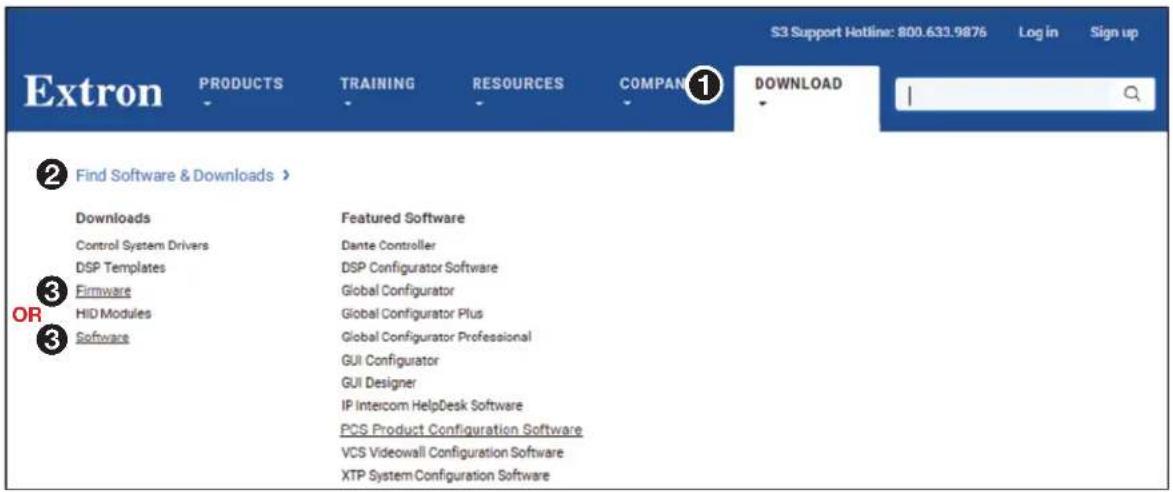
Figure 14. Selecting the Download Tab
- Click the Software or Firmware link, as appropriate to the operation you are performing (③). The main download page opens (see figure 15 on the next page).
- Click the desired filtering letter (see figure 15, ①) to jump to the nearest page of downloads.
- Click Download for the desired software or firmware package to download (2). The Log in dialog box appears (see figure 16 on the next page).
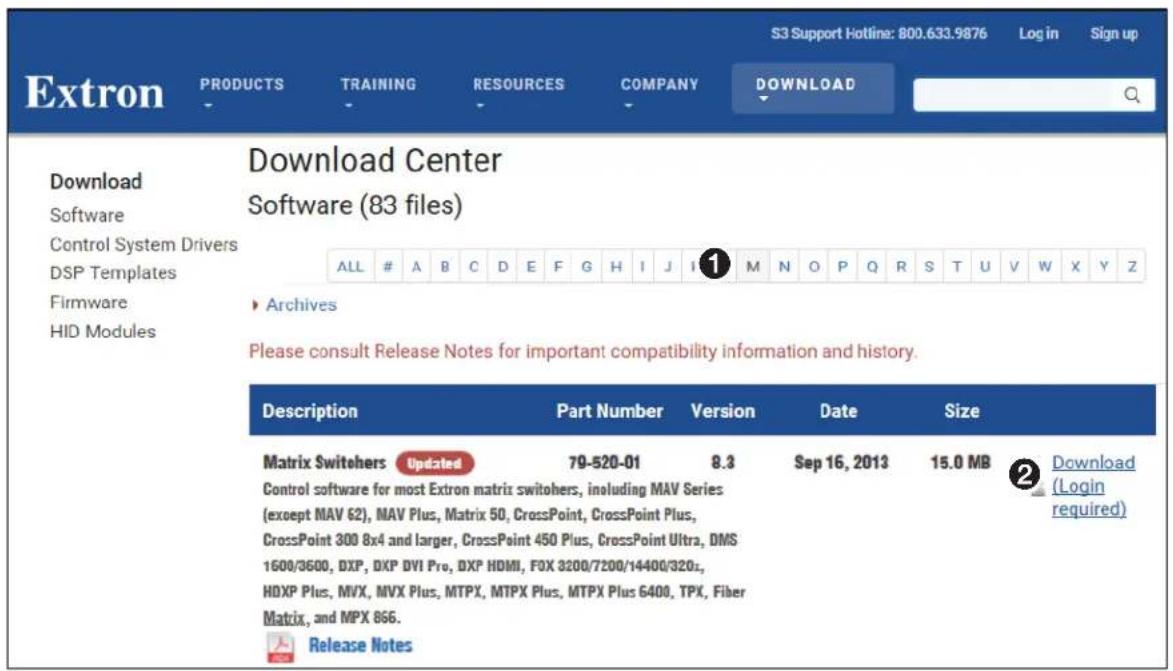
Figure 15. Downloading from the Main Download Page

Figure 16. Log in Dialog Box
- Enter the E-Mail address and Password associated with your Extron insider account (see figure 16, ①).
TIPS:
- Click Sign up (see figure 16, ② on the previous page) to obtain website credentials.
- Click Keep me logged in (3) to eliminate steps 4 and 5 in future downloads.
-
Enter your registered e-mail address and click Retrieve Password (4) if you have forgotten your credentials.
-
Click Log in to copy the software to the computer (5).
- If your browser asks you to confirm that you want to continue, click Run or make a similar confirmation that you want to run the installation (see figure 17, ①).

Figure 17. Download Warning and Confirmation
NOTE: Figure 17 may appear different or may not appear at all, depending on your web browser choice and its security settings.
- For a firmware download, exit this procedure and return to Updating Firmware on page 48 or Firmware Upgrade Page on page 70.
- Follow the on-screen instructions. The installation creates a C:\Program Files\Extron\Matrix_Switchers directory, and it places the following four icons into a group folder named "Extron Electronics\Matrix Switchers":
NOTE: The folder is C:\Program Files(x86)\ ... for Windows 7 or Windows 8.
• MATRIX Switcher + Control Program
• MATRIX Switcher + Help
- Check for Matrix Updates
• Uninstall MATRIX Switcher
Using the Matrix Switchers Control Program
Many items found in the Matrix Switchers Control Program are also accessible under SIS control (see Programming Guide, beginning on page 20).
Starting the Program
- To run the Matrix Switchers Control Program, click
Start > Programs > Extron Electronics > Matrix Switchers > MATRIX Switcher + Control Pgm.
The Comm Port Selection dialog box appears (see figure 18).

MATRIX Switcher+
Control Pgm

Figure 18. Comm Port Selection Dialog Box
- Choose either the comm port that is connected to one of the serial ports of the switcher, IP [LAN], or Emulate.
- If you selected a comm port, check the baud rate displayed in the comm port selection dialog box.
NOTE: If you need to change the baud rate, click the Baud button and double-click the desired baud rate. The default is 9600.
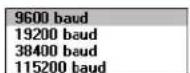
Click OK. The Extron Matrix Switchers Control Program window appears, displaying the current configuration of the attached matrix (see figure 20 and figure 21 on page 42). Proceed to step 4.
• If you selected IP [LAN], click OK and proceed to step 3.
• If you selected Emulate, click OK and see Using Emulation Mode on page 56.
- If you selected IP [LAN] in step 2, the IP Connection dialog box appears (see figure 19).

Figure 19. IP Connection Dialog Box
a. Examine the Matrix IP Address field in the IP Connection dialog box. The field displays the last IP address entered.
- If the IP address is correct, proceed to step 3b.
- If the address is not correct, either click in the Matrix IP Address field and enter the IP address or click the scroll down button (→) and select from among the recently used addresses. Proceed to step 3b.
NOTE: If the local system administrators have not changed the value, the factory-specified default, 192.168.254.254, is the value for this field.
b. If the switcher is password protected, click in the Password field and enter the appropriate administrator or user password.
NOTE: The factory configured passwords for all accounts on this device have been set to the device serial number. Passwords are case sensitive.
c. Click Connect. The Extron Matrix Switchers Control Program window appears, displaying the current configuration of the attached matrix (see figure 20 and figure 21 on the next page). Proceed to step 4.
- If you logged on using the administrator password or if no password was required, the program connects you to the matrix switcher with all of the administrator rights and privileges. Administrators have full access to all switching capabilities and editing functions.
- If you logged on using the user password, the program connects you to the matrix switcher with only user capabilities.
-
If an incorrect password was entered, the program beeps and returns to the password entry display.
-
Use the Matrix Switchers Control Program controls to operate the switcher as desired.
-
To create a tie, drag an input box to one or more output boxes. To remove a tie, drag the output box to its tied input box or to the trash can.
- To make the control program easier to use, assign a device icon to each input and output. Click on a box that represents an input or output and drag the desired icon onto the box from the icon palette that appears.
- For quick display of information on a specific input or output device, position the pointer tool over that input or output in the control program window. The program opens a pop-up dialog box that provides details about the connection to that device (see the inset box in figure 21 on the next page).
NOTE: The matrix size is so large that you need to scroll up and down to see all of the inputs and outputs.
TIP: You can print a map of the current configuration by clicking File > Print Tie Map.

Figure 20. Extron Matrix Switchers Control Program Window (Blank)
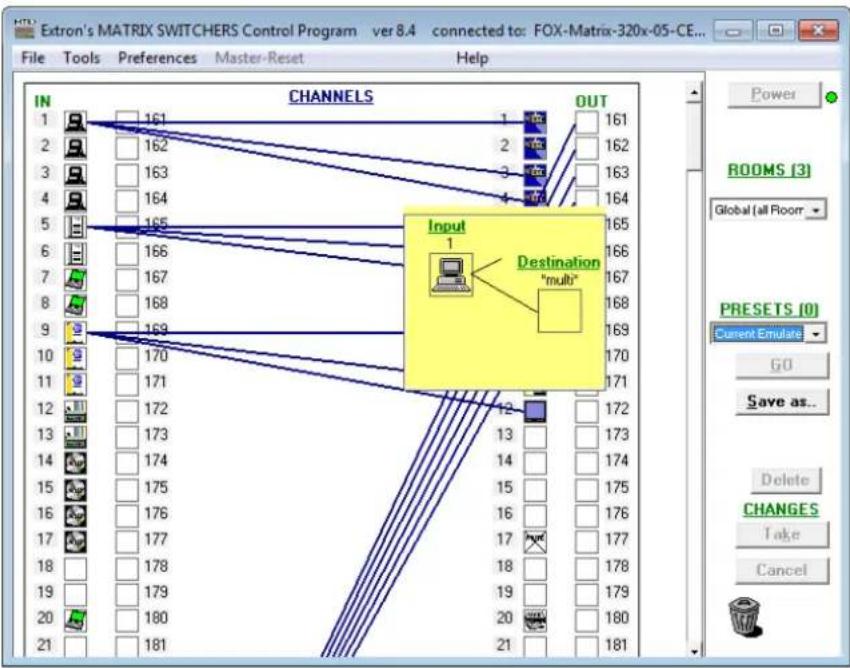
flowchart
graph TD
    A["IN"] --> B["CHANNELS"]
    B --> C["OUT"]
    C --> D["Destination "mult""]
    D --> E["Input 1"]
    E --> F["CHANNELS Channel 1"]
    F --> G["OUT Channel 1"]
    style D fill:#ffcccc,stroke:#333
    style E fill:#ffcccc,stroke:#333
Figure 21. Sample Matrix Switchers Control Program Window (Complete)
IP Settings / Options Dialog Box
The IP Settings / Options dialog box (click Tools > IP options, see figure 22) provides a location for viewing and, if connected via either serial port or if logged on via the Ethernet port as an administrator, editing settings unique to the Ethernet interface (see Ethernet Connection on page 82 for basic information about IP addresses). None of the fields on this screen can be edited while you are logged on as a user.

Figure 22. Control Program IP Setting/Options Dialog Box
NOTES:
- Editing variables in the IP Settings / Options dialog box while connected via the Ethernet port can immediately disconnect the user from the switcher. Extron recommends editing the settings on this screen using a serial port and protecting the Ethernet access to this screen by assigning an administrator password to qualified and knowledgeable personnel only.
- When the control program is connected to the switcher via the RS-232 link, the Administrator Password and User Password fields are not masked. If a password has been inadvertently changed to an unknown value, you can look up and change a password in this dialog box without knowing the current password.
Address and Name fields
- The Matrix IP Address field contains the IP address of the connected matrix switcher. This value is encoded in the flash memory in the switcher.
- The Gateway IP Address field identifies the address of the gateway to the controlling PC to be used if the matrix switcher and the mail server are not on the same subnet.
- The Subnet Mask field is used to determine whether the matrix switcher is on the same subnet as the controlling PC when you are subnetting. For more information, see Subnetting — A Primer on page 87.
- The Mail Server IP Address field displays the IP address of the mail server that handles the e-mail for the facility in which the FOX matrix switcher is installed.
Valid addresses consist of four 1-, 2-, or 3-digit numeric subfields, properly called "octets," separated by dots (periods). Each field can be numbered from 000 through 255. Leading zeroes, up to three digits total per field, are optional. Values of 256 and above are invalid.
The default addresses are as follows, but if these conflict with other equipment at your installation, you can change the addresses to any valid value:
• IP address: 192.168.254.254
• Gateway address: 0.0.0.0
- Subnet mask: 255.255.0.0
NOTES:
- The address fields are unavailable when the Use DHCP checkbox is selected.
- Editing the addresses while connected via the Ethernet port can immediately disconnect the user from the FOX matrix switcher. Extron recommends editing this field using one of the serial ports and protecting the Ethernet access by assigning an administrator password to qualified and knowledgeable personnel only.
The Extron Name/Descriptor field contains the name of the matrix switcher. This descriptor can be changed to any valid name, up to 24 alphanumeric characters.
NOTE: The HTML language reserves certain characters for specific functions (see Special Characters on page 35). In the Mail Server Domain Name field, the @ character is acceptable only as the lead-in to the domain name (such as @folklore.net).
Edit any of these fields as follows:
- Click in the desired field. The graphic cursor becomes a text cursor.
- Edit the address or name as desired.
- Press the
key on the keyboard or click in another field to exit the field. - Click the Take button to make the address change take effect.
Hardware Address field
The hardware (MAC) address is hardcoded in the matrix switcher and cannot be changed.
Use DHCP checkbox
The Use DHCP checkbox directs the matrix switcher to ignore any entered IP addresses and to obtain its IP address from a Dynamic Host Configuration Protocol (DHCP) server (if the network is DHCP capable). Contact the local system administrator to determine whether to use DHCP.
Date, Time (local), and GMT (offset) fields
The Date field displays the current date in the Greenwich Mean Time zone.
The Time (local) field displays the current time in the local time zone.
The GMT field displays the amount of time, in hours and minutes, that the local time varies from the GMT international time reference.
NOTE: Rather than the following procedure, you can click the Sync Time to PC button to set the switcher to the internal time of your computer.
If desired, adjust any of these values as follows:
- Click in the desired field. The field changes to an editable field appropriate to the value being changed and the graphic cursor becomes a text cursor.
- The Date field becomes a set date field, with the date in the format (M)M/(D)D/YYYY. Leading zeroes are not shown.
Date : 1/14/2013
- The Time (local) field becomes a set time field, with the time in the format HH:MM:SS (00:00:00 to 23:59:59).
Time (local) : 03:57:00
- The GMT field becomes a set offset field, with the offset in the format ±HH:MM (-12:00 to +14:00).
GMT - 8:00
- Edit the field as desired to set the proper value. For time, remember to use 24-hour time. Leading zeroes are optional.
- Press the
key on the keyboard or click in another field to exit the set date field. - Click the Take button to make the date change take effect.
Sync Time to PC button
Clicking the Sync Time to PC button causes the computer you are operating to send its internal time to the switcher in a set time command.
Use Daylight Saving checkbox
To turn Daylight Saving Time on and off for North America, select the Use Daylight Saving checkbox. When Daylight Saving Time is turned on, the switcher automatically updates its internal clock between Standard Time and Daylight Saving Time in the spring and fall on the date that the time change occurs in the country or region selected. When Daylight Saving Time is turned off, the switcher does not adjust its time reference.
NOTE: For Daylight Saving Time in Europe and Brazil, see the Set Daylight Saving Time SIS command on page 33.
Administrator Password and User Password fields
The Administrator Password field displays the password required to log on to the matrix switcher via the Ethernet port with all of the rights and privileges of an administrator. The User Password field displays the password required to log on to the matrix switcher via the Ethernet port as a user, without all of the rights and privileges of an administrator. Passwords are case sensitive and are limited to 12 upper-case and lower-case alphanumeric characters.
Both password fields are masked with asterisks (*****************) as a security measure.
NOTES:
- The factory configured passwords for all accounts on this device have been set to the device serial number. Passwords are case sensitive.
- If the device is reset, the password reverts to the original password condition. This means the device may be password protected by the software default (usually "extron") or there can be no password.
- On password-protected connections, there are two levels of protection: administrator and user. Administrators have full access to all switching capabilities and editing functions. Users can create ties, create and recall presets, set mutes, and view all settings with the exception of passwords.
- Editing the Administrator Password field while connected via the Ethernet port can immediately disconnect the user from the switcher. Extron recommends editing this field using either serial port and protecting the Ethernet access to this screen by assigning an administrator password to qualified and knowledgeable personnel only.
- An administrator password must be created before a user password can be created.
- The HTML language reserves certain characters for specific functions (see Special Characters on page 35).
Edit either password field as follows:
- Click in the desired Password field. The pointer tool becomes a text cursor.
- Edit the case-sensitive password as desired.
- Press the
key on the keyboard or click in another field to exit the Password field. - Click the Take button to make the password change take effect.
Mail Server IP Address field
The Mail Server IP Address field displays the IP address of the mail server that handles the e-mail for the facility in which the matrix switcher is installed. Standard IP protocol rules apply to the Mail Server IP address.
Edit this field as follows:
- Click in the Mail Server IP Address field. The pointer tool becomes a text cursor.
- Edit the IP address as desired.
- Press the
key on the keyboard or click in another field to exit the Mail Server IP Address field. - Click the Take button to make the address change take effect.
Mail Server Domain Name field
The Mail Server Domain Name field displays the domain name that the matrix switcher uses to log on to the e-mail server. Standard domain conventions (such as xxx.com) apply.
NOTE: The HTML language reserves certain characters for specific functions (see Special Characters on page 35). In the Mail Server Domain Name field, the @ character is only acceptable as the lead-in to the domain name (such as @folklore.net).
Edit this field as follows:
- Click in the Mail Server Domain Name field. The pointer becomes a text cursor.
- Edit the name as desired.
- Press the
key on the keyboard or click in another field to exit the Mail Server Domain Name field. - Click the Take button to make the name change take effect.
E-mail Addressee fields
The five E-mail Addressee fields permit the administrator to identify the e-mail addresses of the personnel to whom the matrix switcher e-mails notification of its failure and repair status. Figure 23 shows a typical e-mail from the switcher.
Miles Standish
From: FOX-Matrix-1-04-29-B9@folklore.net
Sent: Wednesday, December 5, 2012 11:22 AM
To: Miles Standish
Subject: FOX-Matrix-1-04-29-B9 - Fans restored
Wed, 5 Dec 2012 11:22:48
Unit Name = FOX-Matrix-1-04-29-B9
Unit IP Address = 192-168-254-254
Figure 23. Typical E-mail Message from the Switcher
The radio buttons and checkboxes associated with each address field permit the administrator to specify e-mail requirements for each recipient.
Edit these fields and controls as follows:
- Click in the desired E-mail Addressee field. The pointer becomes a text cursor.
- Edit the e-mail address as desired. Standard e-mail address conventions apply (for example: aaaa@xxx.com).
- Press the
key on the keyboard or click in another field to exit the E-mail addressee field. - In the square checkboxes associated with each addressee, select one or more options about which the addressee is to be e-mailed: Missing Input(s), Fans, and Power Supply. In the floating box that contains the input numbers, select the inputs to be monitored.
- In the round radio buttons associated with each addressee, select whether the addressee is to be e-mailed of failures, fixes, both, or not to be notified. The None radio button is useful for temporarily removing personnel from the e-mail list when they are unavailable, such as when travelling or on vacation.
- If desired, click the Send test E-mail button to test the e-mail function.
- Click the Take button to make the e-mail address changes take effect.
Updating Firmware
The firmware upgrade utility provides a way to replace the firmware that is coded on the control board of the switcher without taking the switcher out of service.
NOTE: Upgrading the firmware does not overwrite the current configuration or presets.
Update the switcher firmware as follows:
- Perform steps 1 through 7 of Installing the Software, on page 37, to download the firmware upgrade from the Extron website.
- Click Run in the File Download and Security Warning dialog boxes (see figure 24, ① on the next page). The PC extracts the firmware update received from the Extron website and starts the Extron Installation Program to extract the firmware file.
- Click Next in the Firmware Upgrade dialog box (2). The program extracts the firmware files and places them in a folder identified in the InstallShield Wizard dialog box.
ATTENTION:
- Note the folder to which the firmware file is saved. When downloaded from the Extron website, the firmware is placed in a subfolder of:
- Windows 7, Windows 8, or Windows 10: C:\Program Files (x86)\Extron\Firmware.
- Older versions: C:\Program Files\Extron\Firmware.
- The original factory-installed firmware is permanently available on the matrix switcher. If the attempted firmware upload fails, the switcher reverts to the factory-installed firmware.

Figure 24. Downloading Firmware Upgrade Files
- Click Finish in the Firmware Upgrade dialog box to exit the program (see figure 24, ③).
- Connect a computer that runs the Windows operating system to a switcher serial port (see item C, the Remote RS-232/RS-422 port, on page 13 or item A, the Configuration port, on page 16) or the switcher LAN port (see item D, the Ethernet Port, on page 14).
-
Start the Matrix Switchers Control Program and connect to the matrix switcher (see Using the Matrix Switcher Control Software, steps 1 through 4, starting on page 40).
-
Click Tools > Update firmware. The Select Files dialog box appears (figure 25).
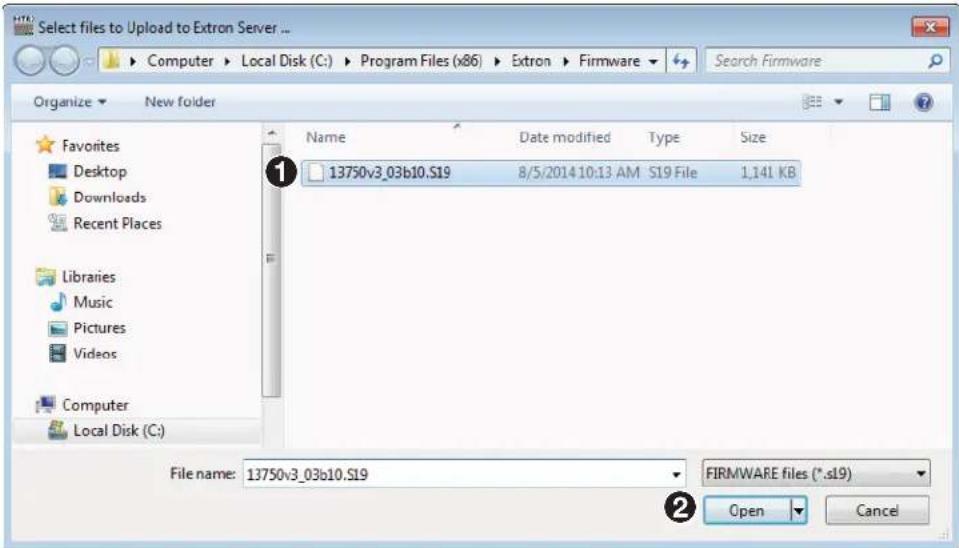
Figure 25. Select Files Dialog Box
-
Navigate to the folder where you saved the firmware upgrade file (see figure 25, ①). Select the file.
-
Click the Open button (2). The software advises you that you are about to reprogram the switcher firmware. Click OK to continue.
A status dialog box, which shows the progress of the upload, appears. The firmware upload to the FOX matrix switcher may take a few minutes.
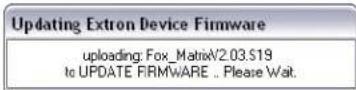
Uploading HTML Files
You can create customized HTML pages for the switcher to display. The HTML Files List dialog box (see figure 26), accessible via the Tools menu, provides a way to view the contents of the file system of the switcher and upload custom HTML pages to the switcher.

Figure 26. HTML Files List Dialog Box
NOTES:
- The files listed in figure 26 are shown for example only and may not be present on your switcher.
- The HTML Files List dialog box is for inserting your own HTML pages. This is not the location to replace the firmware that controls all switcher operation (see Updating Firmware, on page 48, to replace the firmware).
- The HTML language reserves certain characters for specific functions (see Special Characters on page 35).
Upload HTML pages as follows:
- Connect the PC to the matrix switcher via any of the serial ports or the Ethernet port of the switcher.
- Start the Matrix Switchers Control Program and connect to the FOX matrix switcher (see Using the Matrix Switcher Control Software, steps 1 through 4, starting on page 40).
- Click Tools > HTML File Manager.
- Click the Pick File(s) to Load to Server button (see figure 26, 1). An Open File dialog box opens.
- Navigate to the folder where you saved the HTML files. Select the files.
NOTES:
- To select multiple files, hold the
key while you select the desired files. -
If you want one of the HTML files that you created to be the default start-up page, name the file "index.html." The FOX matrix switcher automatically looks for that file name when you first connect to it using an Internet browser.
-
Click the Open button. Uploading the files to the FOX matrix switcher may take a few minutes.
- Click the Update button to confirm the upload (②).
- Click the Close button to exit the HTML Files List dialog box (③).
Windows Buttons, List boxes, and Trash Can
The buttons, list boxes, and trash can on the right side of the Matrix Switchers Control Program window perform the following functions:
• Power — Unavailable for FOX matrix switchers.
- Rooms — Displays a list of up to 10 rooms. You can select a room from the list to display it in the window.
NOTE: A room is a subset of outputs that the operator logically relate to each other. The FOX matrix switcher supports up to 10 rooms, each of which can consist of from 1 to 16 outputs.
- Presets — Displays a list of up to 64 global presets and up to 100 room presets (10 rooms x 10 presets per room). You can select a preset from the list to display it in the window and either activate it (Go) or delete it (Delete).
- Go — Activates the selected preset as the current configuration.
- Save as .. — Allows the current set of ties to be saved as a preset. Enter the preset number when prompted to do so.
- Delete — Allows the current preset to be deleted.
- Changes – Take — Allows you to execute any potential changes made to the displayed configuration.
- Changes – Cancel — Returns to the previous screen, undoing any changes you have made.
- Trash can — Drag and drop from an input or output button to the trash can to erase all ties associated with that input or output.
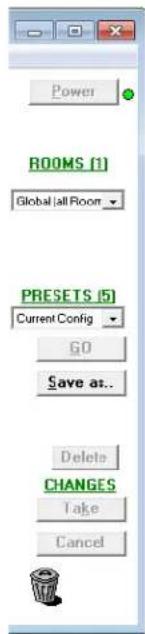
Windows Menus
File menu
- Save MATRIX settings as ... — Saves a complete set of up to 64 presets, rooms, room presets, and preset names plus the last active setting (preset 0), to a file. Saved settings include assigned icons and icon captions.
- Restore MATRIX settings from ... — Loads and activates a previously saved setting file.
- Save This-Session's settings — Saves the current assigned icons and icon captions.
- Restore Last-Session's settings — Loads the icons and icon captions that were saved during the last session. If you saved changes from the previous session to disk the last time you exited the program, the ties from that session are also loaded.
- Select printer ... — Selects the target printer.
- Print tie map — Prints the tie set that is displayed on the screen.
- Exit — Closes the Matrix Switchers Control Program.

Tools menu
- Assign Device Icons — Displays the complete set of input and output device icons. You can drag any of these icons to the input and output boxes.
- Edit Device Palette — Allows you to add your own device icon graphics.
- Mute-Output settings — Displays the Mute Adjust dialog box, from which you can mute each output.
- FOX Re-clocker settings — Displays the FOX Reclocking Rate Settings dialog box, from which you can select the reclocking rate for one or all outputs and mute and unmute the output.
- View Input Frequencies — Displays the Input Detection dialog box, which shows the data rates for SDI and HD-SDI inputs only. This selection is not available if no BNC 3G/HD/SD-SDI I/O boards are installed.
- Update Firmware ... — Allows you to replace the firmware that is coded on the control board of the switcher without taking the switcher out of service (see Updating Firmware on page 48).
- IP Options — Allows you to set IP options (see IP Settings / Options Dialog Box on page 43).
- HTML file manager — Displays a list of HTML files installed on the switcher and allows you to upload custom files from a PC connected to the switcher (see Uploading HTML files on page 51).
- Hardware status — Provides an overall view of the status of the matrix switcher, including the power supply voltages, the internal temperature, the Remote RS-232/RS-422 port configuration, and the installed and updated firmware status (see figure 27).
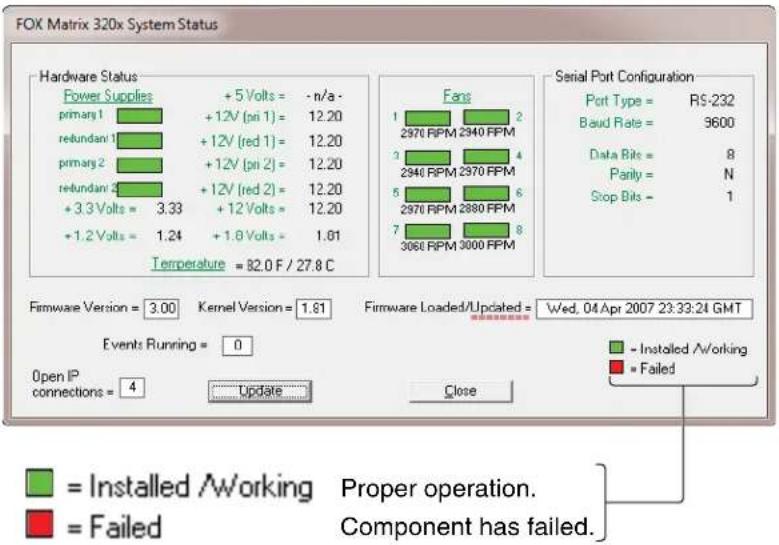
bar
FOX Matrix 320x System Status | Component | Status | | :--- | :--- | | Hardware Status | Power Supplies: +5 Volts = -n/a - primary 1: +12V (psi 1) = 12.20; redundant 1: +12V (red 1) = 12.20; primary 2: +12V (psi 2) = 12.20; redundant 2: +12V (red 2) = 12.20; +3.3 Volts = 3.33; +1.2 Volts = 12.20; +1.2 Volts = 1.24; +1.8 Volts = 1.01 Temperature = 82.0 F / 27.8 C Serial Port Configuration Port Type = RS-232 Baud Rate = 9600 Data Bits = 8 Parity = N Stop Bits = 1 Firmware Version = 3.00 Kernel Version = 1.81 Firmware Loaded/Updated = Wed, 04 Apr 2007 23:33:24 GMT Events Running = 0 Open IP connections = 4 Update Close = Installed /Working = Failed Proper operation. Component has failed.Figure 27. Status Dialog Box
| Tools | Preferences | Master-Reset |
| Assign Device IconsEdit Device Palette | ||
| RGB Delay settingsAudio-Input Gain settingsAudio-Output Volume settingsMute-Output settingsFOX Re-docker settingsView Input Frequencies | ||
| Update Firmware ... | ||
| View Input Frequencies | ||
| IP OptionsHTML File ManagerHardware StatusPhysical Switcher Layout | ||
| Name PresetsShow RS-232 StringsI/O Group settingsRoom configurationInitialize ... | ||
- Physical Switcher Layout — Opens the FOX matrix switcher Physical Configuration dialog box (see figure 28), which displays the I/O board type installed in each slot. The Channels panel can be helpful in identifying a specific input or output. In figure 28, for example, input 49 is identified as slot 4, input transceiver 1 (4i01).
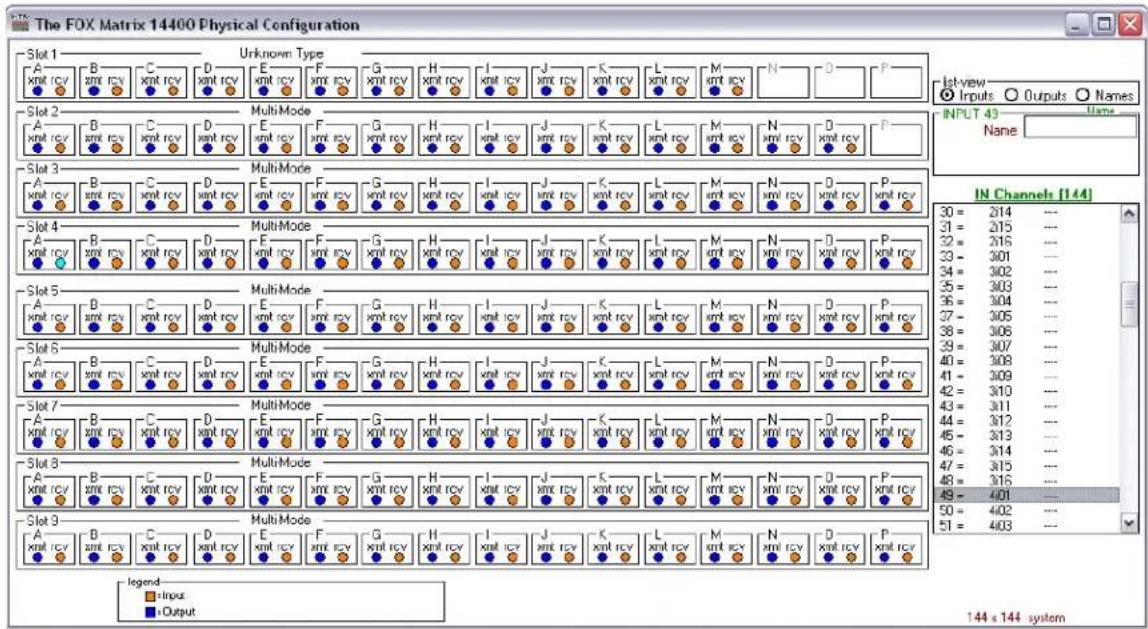
Figure 28. Physical Configuration Dialog Box
- Name Presets — Allows you to assign a name to each of the 64 global presets and 100 room presets.
NOTE: Preset names are limited to 12 upper- and lower-case alphanumeric characters,
- Show RS-232 Strings — Displays the ASCII commands that are used by the current configuration. You can refer to these for SIS programming.
- Room configuration — Allows you to assign outputs to or delete outputs from rooms.
NOTE: A room is a subset of outputs that are logically related to each other, as determined by the operator. The FOX matrix switcher supports up to 10 rooms, each of which can consist of from 1 to 16 outputs.
- Initialize ... — Initializes and clears any or all of the following: ties, presets, preset names, icon names, and icons.
Preferences menu
- Immediate Changes — Causes configuration changes to take effect immediately.
- Hold/verify Changes — Delays implementation of configuration changes until the Take button is clicked.
• Ties as Lines — Displays ties as lines (see figure 29).

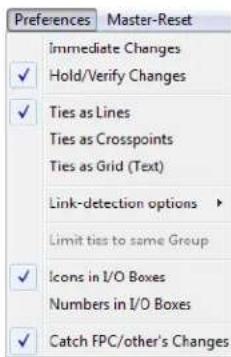
Figure 29. Ties Shown as Lines
- Ties as Crosspoints — Displays ties as a matrix of inputs and outputs (see figure 30). Ties that have been made are indicated as amber boxes. Ties that will take effect when you click the Take button are indicated by +. Ties that will be broken when you click the Take button are indicated by -.
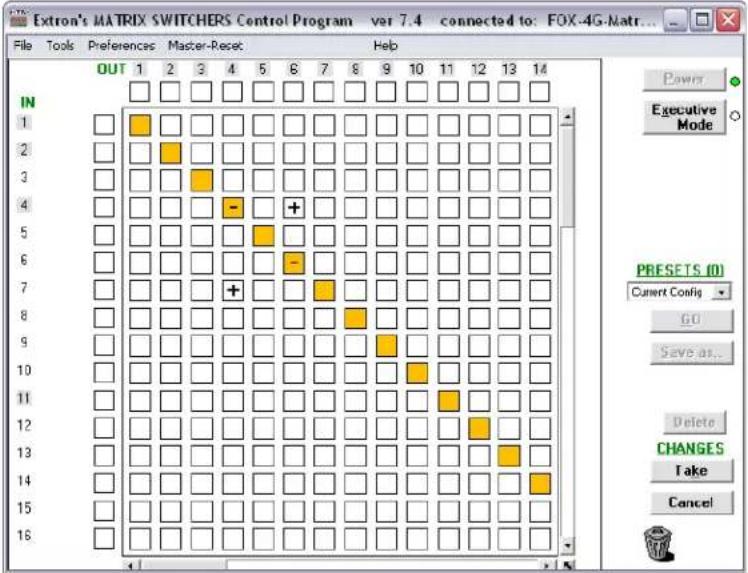
Figure 30. Ties Shown as Crosspoints
- Ties as Grid (available for FOX Matrix 320x only)—Displays ties as a grid of outputs and inputs (see figure 31) that allows you to click an output and type the desired input. Ties that have been made are indicated in black and white. Ties that will take effect or be broken when you click the Take button are indicated in red or gray.

Figure 31. Ties Shown in a Grid
- Link-detection options — Allows you to set the link detection feature as follows:
• To automatically refresh the display every 10 seconds
• To update the display whenever you refresh the screen
• To never sample and display the link status
- Icons in I/O Boxes — Erases any numbers in the I/O boxes in either the ties-as-lines display or the ties-as-boxes display (see figure 20 on page 42). You can place icons in the boxes.
- Numbers in I/O Boxes — Erases any icons in the I/O boxes in either the ties-as-lines display or the ties-as-boxes display and fills each box with the associated input or output number.


- Catch FPC/other's Changes — When checked, sets the switcher to report all configuration and setting changes to the serial port or Ethernet connection that turned this selection on. These reports allow the Matrix Switchers Control Program to track the changes that occur in the configuration and settings of the switcher, whether commanded via either serial port or the Ethernet port.
Master-Reset selection
Master-Reset
Master reset performs all of the following functions:
- Clears all ties
- Clears all presets
- Clears all rooms
- Clears all output mutes
NOTE: Master reset does not reset the Internet protocol (IP) settings.
Using Emulation Mode
Emulation mode allows you to set up the software without connecting the switcher. Use emulation mode as follows:
- To run the Matrix Switchers Control Program, click
Start > Programs > Extron Electronics > Matrix Switchers > MATRIX Switcher + Control Pgm.
The Comm Port Selection dialog box (see figure 32) appears.

MATRIX Switcher+ Control Pgm
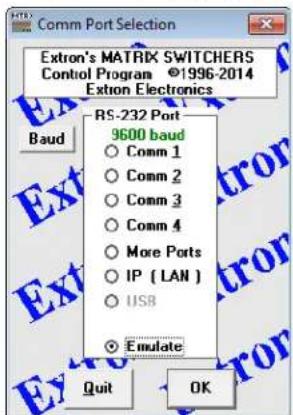
Figure 32. Comm Port Selection Dialog Box
- Choose Emulate, and click OK.
- Choose an emulation file to open, and click OK. The file DEMO.MTX provides a sample of a completed matrix setup. Selecting the file NEW.INI or clicking Cancel provides a blank setup dialog box to get you started.
-
Enter the file name under which you want to save any changes to the file, and click OK.
-
Select Fiber Matrix as the Matrix Model, 320x or 14400 as the Default Size, and either singlemode or multimode for each board installed (see figure 33). Click OK.

- Continue using the program as described on page 41.
Using the Help System
For information about program features, you can access the help program in any of the following ways:
- From the Extron Electronics program folder or group, double-click the MTRX.HLP icon (shown at right).

MTRX.HLP
- From within the Matrix Switchers Control Program, click Help > Contents on the menu bar.
- From within the Matrix Switchers Control Program, press the keyboard
HTML Operation
This section introduces using the built-in HTML pages to operate the FOX matrix switchers, including:
- Opening the Embedded Web Pages
- Status Tab
- Configuration Tab
- File Management Tab
- Control Tab
The switcher can be controlled and operated through its LAN port, connected via a LAN or WAN, using a web browser such as Microsoft® Internet Explorer®. The browser display of the status or operation of the switcher has the appearance of web pages. This section describes the factory-installed HTML pages, which are always available and cannot be erased or overwritten.
NOTE: If your Ethernet connection to the matrix switcher is unstable, try turning off the proxy server in your web browser. In Internet Explorer, click Tools > Internet Options > Connections > LAN Settings, uncheck the Use a proxy server... box, and then click OK.
Opening the Embedded Web Pages
Access the switcher using HTML pages as follows:
- Start the web browser.
- Click in the Address field of the browser.
- Enter the IP address in the Address field of the browser.
NOTE: If the local system administrators have not changed the value, the factory-specified default, 192.168.254.254, is the value for this field.
- If you want the browser to display a page other than the default page (such as a custom page that you have uploaded), enter a slash (/) and the name of the file to open after the IP address.
NOTES:
- The Address field of the browser should display the address in the following format:
/ -
The HTML language reserves certain characters for specific functions (see Special Characters on page 35).
-
Press the keyboard
key. The switcher checks to see if it is password protected.
NOTE: The factory configured passwords for all accounts on this device have been set to the device serial number. Passwords are case sensitive
If the switcher is not password protected, it checks and downloads the HTML pages (proceed to step 7).
If the switcher is password protected, the switcher opens the Windows Security dialog box (see figure 34).
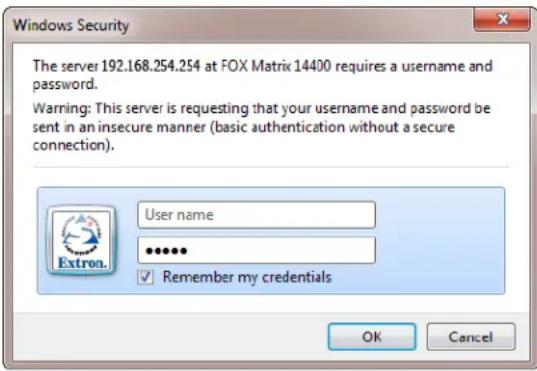
Figure 34. Windows Security Dialog Box
NOTE: A User name entry is not required.
-
Click in the Password field and type in the appropriate administrator or user password. Click the OK button.
-
The switcher checks several possibilities, in the following order, and then responds accordingly:
-
Does the address include a specific file name, such as 192.168.254.254/
- Is there a file in the memory of the switcher that is named "index.html"? If so, the switcher downloads "index.html" as the default startup page.
- If neither of the above conditions is true, the switcher downloads the factory-installed default startup page, "nortxe_index.html" (see figure 35), also known as the System Status page.
Status Tab
System Status Page
The System Status page (see figure 35) provides an overall view of the status of the matrix switcher, including power supply status, individual voltages, and fan status. The System Status page is the default page that the switcher downloads when you connect to the switcher. Access the System Status page from other pages by clicking the Status tab.

Figure 35. System Status Page
The System Status page periodically refreshes to reflect the latest status of the switcher components.
Input Link Page
You can view the status of each I/O board slot on the Input Link page (see figure 36). Click the Input Link link to the left of the Status page to download the Input Link page. The Input Link automatically updates itself every 30 seconds to show the latest status of installed boards, LC connector installation, and input signal presence.

Figure 36. Input Link Page
Configuration Tab
System Settings Page
The FOX matrix switcher downloads the System Settings page (see figure 37) when you click the Configuration tab. The screen consists of fields in which you can view and edit IP administration and system settings. You can access the Passwords, Email Settings, SNMP Settings, and Firmware Upgrade pages by clicking the appropriate link (see Ethernet Connection on page 82 for basic information about IP addresses and subnetting).
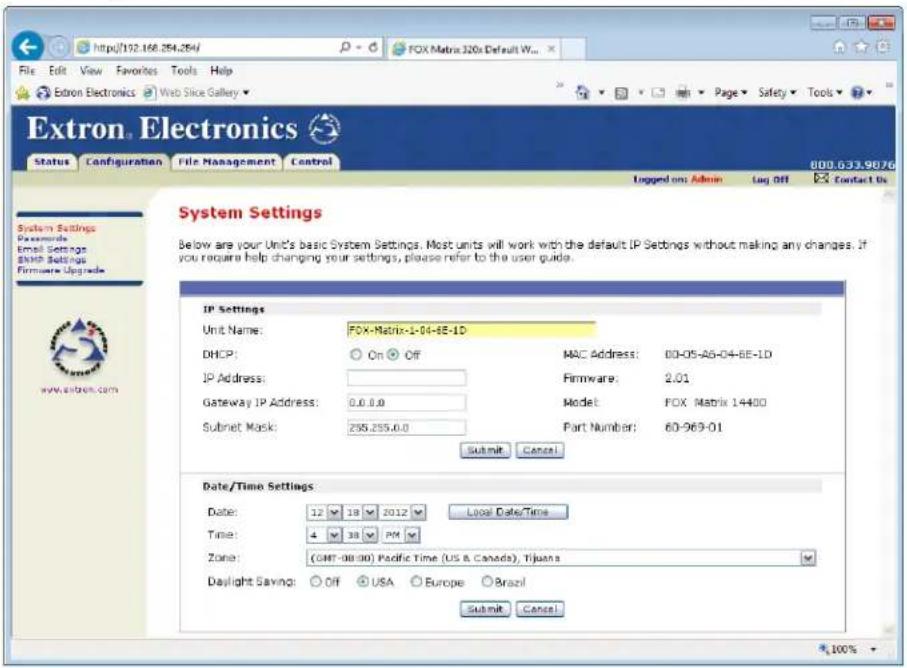
Figure 37. System Settings Page
On password-protected connections, there are two levels of protection: administrator and user. Administrators have full access to all switching capabilities and editing functions. Users can create ties, create and recall presets, set output mutes, and view all settings with the exception of passwords.
IP Settings panel
The IP Settings panel provides a location for viewing and editing settings unique to the Ethernet interface. After editing any of the settings in this panel, click the Submit button at the bottom of the field.
Unit Name field
The Unit Name field contains the name used as the "from" information when the switcher e-mails notification of its failed or repaired status. This name can be changed to any valid name, up to 24 alphanumeric characters.
NOTE: The HTML language reserves certain characters for specific functions (see Special Characters on page 35).
DHCP radio buttons
The DHCP On radio button directs the switcher to ignore any entered IP addresses and to obtain its IP address from a Dynamic Host Configuration Protocol (DHCP) server (if the network is DHCP capable). The DHCP Off radio button turns DHCP off. Contact the local system administrator to determine if DHCP is appropriate.
IP Address field
The IP Address field contains the IP address of the connected switcher. This value is encoded in the flash memory of the switcher.
Standard IP protocol consists of addresses comprised of four 1-, 2-, or 3-digit numeric subfields, properly called "octets", separated by dots (periods). Each field can be numbered from 000 through 255. Leading zeroes, up to three digits total per field, are optional. Values of 256 and above are invalid.
The factory-installed default address is 192.168.254.254, but if this conflicts with other equipment at your installation, you can change the IP address to any valid value.
NOTE: IP address changes can cause conflicts with other equipment. Only local system administrators should change IP addresses.
Gateway IP Address field
The Gateway IP Address field identifies the address of the gateway to the mail server to be used if the switcher and the mail server are not on the same subnet.
The gateway IP address has the same validity rules as the system IP address.
Subnet Mask field
The Subnet Mask field is used to determine whether the switcher is on the same subnet as the mail server when you are subnetting. For more information, see Subnetting — A Primer on page 87.
MAC Address
The Media Access Control (MAC) Address is hardcoded in the switcher and cannot be changed.
Firmware field
The Firmware field identifies the installed firmware version. This field is hardcoded in the switcher and cannot be changed.
Model field
The Model field identifies the switcher as a FOX Matrix 320x or FOX Matrix 14400. This field is hardcoded in the switcher and cannot be changed.
Part Number field
The Part Number field identifies the part number of your switcher. This field is hardcoded in the switcher and cannot be changed.
Date/Time Settings panel
The Date/Time Settings panel (see figure 38) provides a location for viewing and setting the time functions.
Date/Time Settings
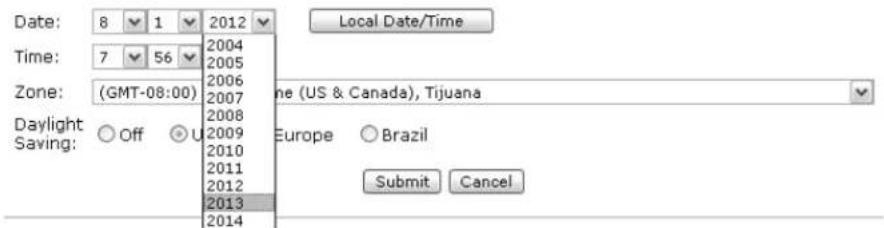
Figure 38. Date/Time Settings Panel
To sync the switcher clock to the connected PC, simply click the Local Date/Time button and then click the Submit button.
NOTE: Using the Local Date/Time button has no effect on the Zone and Daylight Savings functions.
For more complete control of the date and time settings, change the settings as follows:
- Click the list for the variable to be changed. The adjustable variables are month, day, year, hours, minutes, AM/PM, and (time) zone. A drop-down menu appears (the year list is selected in figure 38).
- Click and drag the slider or click the scroll up ▲ button or the scroll down ▼ button until the desired variable is visible.
- Click the desired variable.
NOTES:
- If setting the time, set the local time. The Zone variable allows you to then enter the offset from Greenwich Mean Time (GMT).
-
The Zone field identifies the standard time zone selected and displays the amount of time, in hours and minutes, that the local time varies from the GMT international time reference.
-
Repeat steps 1 through 3 for other variables that need to be changed.
- If appropriate, select the appropriate Daylight Saving radio button to turn on the daylight saving time feature for your region or nation.
NOTE: When Daylight Saving Time is turned on, the switcher automatically updates its internal clock between Standard Time and Daylight Saving Time in the spring and fall on the date that the time change occurs in the country or region selected. When Daylight Saving Time is turned off, the switcher does not adjust its time reference.
- Click the Submit button at the bottom of the Date/Time Settings panel.
Passwords Page
Access the Passwords page (see figure 39) by clicking the Passwords link on the System Settings page.

Figure 39. Passwords Page
NOTES:
- The factory configured passwords for all accounts on this device have been set to the device serial number. Passwords are case sensitive.
- If the device is reset, the password reverts to the original password configuration. This means the device may be password protected by the software default (usually "extron") or there can be no password.
- On password-protected connections, there are two levels of protection: administrator and user. Administrators have full access to all switching capabilities and editing functions. Users can create ties, create and recall presets, set mutes, and view all settings with the exception of passwords.
- If the switcher is password protected, fields on this page can be edited only by personnel logged in as administrators.
- An administrator password must be created before a user password can be created.
- The HTML language reserves certain characters for specific functions (see Special Characters on page 35).
The fields on the Passwords page are for entering and verifying administrator and user passwords. Passwords are case sensitive and are limited to 12 upper-case and lower-case alphanumeric characters. Each password must be entered twice: once in the Password field and then again in the Re-enter Password field. Characters in these fields are masked by asterisks (****). If you do not want to password protect an access level, leave the Password field and the Re-Enter Password field blank. After entering the desired password in both fields, click the Submit button.
To clear an existing password so that no password is required, enter a single space character in the Password and Re-enter Password fields, and click the Submit button.
Resetting a password
Reset an existing password so that no password is required as follows:
- Clear any existing password in both the Password and Re-enter Password fields.
- Tap the
bar once to enter a single ASCII space character in both the Password and Re-enter Password fields. - Click the Submit button.
Email Settings Page
Access the Email Settings page (see figure 40) by clicking the Email Settings link on the System Settings page. The Email Settings page has fields for setting up the e-mail notification capabilities of the switcher. For the e-mail settings and for each row of the e-mail notification settings, click the Edit button to make the fields available for editing. The button changes to Save. After editing the associated settings with, click the Save button.

Figure 40. Email Settings Page
Mail IP Address field
The Mail IP Address field displays the IP address of the e-mail server for the facility in which the FOX matrix switcher is installed. Standard IP protocol rules apply to the Mail IP address field.
Domain Name field
The Domain Name field displays the domain name that the FOX matrix switcher uses to log on to the e-mail server. Standard domain name conventions (for example: xxx.com) apply.
NOTE: The HTML language reserves certain characters for specific functions (see Special Characters on page 35). The @ character is acceptable only as the lead-in to the domain name (such as @folklore.net).
Setting up SMTP authorization
If desired, set the FOX matrix switcher to require SMTP authorization before accepting any e-mail as follows:
-
Click Edit. The button changes to Save.
-
Select the SMTP Authorization Required checkbox, located below the Domain Name field. This enables the User Name and Password fields below the checkbox.
-
Enter a user name and a password in the User Name and Password fields. For the FOX matrix switcher to accept their e-mail messages, senders must enter the user name and password.
NOTES:
- For the user name, any combination of letters, numerals, spaces, and symbols except the comma (,) and the single and double quotation marks (' and '') are valid. For the password, all characters except the comma are valid. The user name and password can each be from 1 to 30 characters.
- Both a user name and a password must be specified.
-
The factory configured passwords for all accounts on this device have been set to the device serial number. Passwords are case sensitive.
-
Click Save to save the user name and password.
Deselecting SMTP authorization
Remove SMTP authorization as follows:
- Click Edit. The button changes to Save.
- Click (deselect) the SMTP Authorization Required checkbox.
- Click Save.
Email Address fields
The five Email Address fields identify the e-mail addresses of the personnel to whom the FOX matrix switcher e-mails notification of its failure and repair status. Standard e-mail address conventions (aaaaa@xxx.com) apply.
The checkboxes and list boxes associated with each address field permit you to specify specific criteria under which the switcher will e-mail recipients.
- In the associated Missing Input list boxes, select the inputs to monitor for presence or absence of a signal.
- Check the Fans and Power boxes to monitor the fans and power supplies.
- In the associated Email Options list, select whether the recipient is to be e-mailed about failures, fixes, both, not notified, or to be removed from the e-mail list. The Suspend option is useful for temporarily removing personnel from the e-mail list when they are unavailable, such as when travelling or on vacation.
- Deleting an e-mail addressee and clicking the Submit button removes the recipient from e-mail notification completely.
SNMP Settings Page
NOTES:
- Simple Network Management Protocol (SNMP) is an internet-standard protocol for IT personnel to manage devices on an IP network. It is not the intent of this guide to define SNMP further than this and this section is intended for users who are familiar with SNMP protocol.
- The matrix switcher can report alarm events via an SNMP trap, providing simple integration with network management systems (NMS).
- When communicating using SNMP and generating SNMP traps (alarms and notifications), the matrix switcher complies with the requirements of SNMP v2c.
- IT personnel — Contact the S3 Sales & Technical Support Hotline to get all Extron-specific Management Information Bases (MIBs). See the contact numbers listed on the Extron webpage for the office nearest you.
Reach the SNMP Settings page (see figure 41) by clicking the SNMP Settings link on the System Settings page. The SNMP Settings page has fields for establishing the general SNMP settings and fields to establish SNMP monitoring and optional traps.
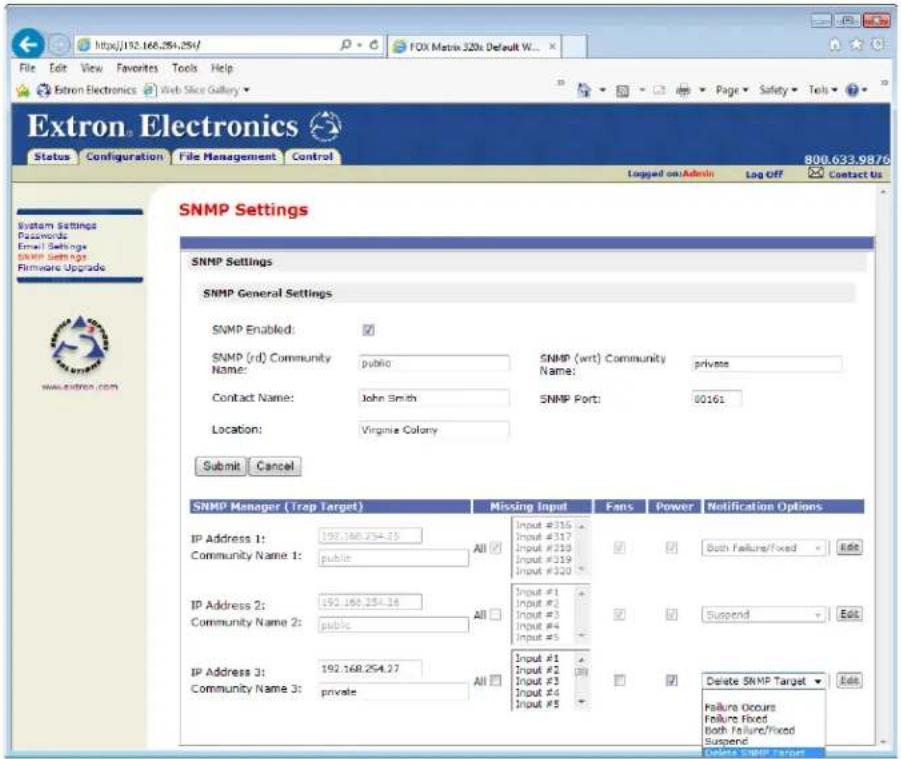
Figure 41. SNMP Settings Page
SNMP General Settings fields
To edit the SNMP General Settings fields, ensure that the SNMP Enabled checkbox is selected (SNMP is disabled by default). Click the Submit button to save all changes or the Cancel button to abandon changes.
SNMP Community Name fields — The two names are similar to passwords, granting public, read-only [SNMP (rd)] and private, read-write access [SNMP (wrt)] to the NMS. The default names are public and private.
Contact Name and Location fields — The two fields add optional information as to the location of the NMS. By default, Not Specified is assigned to the Name and Location fields.
SNMP Port field — This field identifies the port that the NMS uses to communicate with the switcher and should only be changed by IT personnel. The default port is 161.
SNMP Manager (Trap Target) fields
To edit each row of the SNMP Manager (Trap Target) settings, click the Edit button to make the fields available for editing. The button changes to Save. After editing the associated settings, click the Save button.
The three IP Address fields identify up to three NMS targets to receive trap notifications of the switcher failure and repair status or a mix of trap types to the same target.
The checkboxes and list boxes associated with each IP address field permit the operator to specify specific criteria under which the switcher sends trap notifications.
- In the associated Missing Input list boxes, select the inputs to trap the presence or absence of a signal.
- Check the Fans and Power boxes to trap the fans and power supplies.
- In the associated Notification Options list, select whether to notify the target of failures, fixes, both, not notified, or to remove the target from trap list (select Delete SNMP Target). The Suspend option is useful for temporarily removing NMS stations from the notification list when they are unavailable.
Firmware Upgrade Page
The Firmware Upgrade (see figure 42) page provides another way to replace the firmware that is coded on the control board of the switcher without taking the switcher out of service. Access the page by clicking the Firmware Upgrade link on the System Settings page.
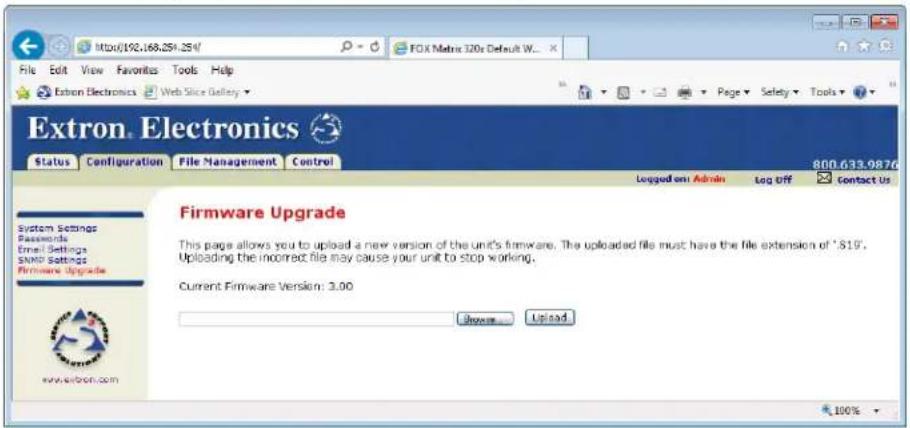
Figure 42. Firmware Upgrade Page
Update the switcher firmware as follows:
NOTE: The Firmware Upgrade page is only for replacing the firmware that controls all switcher operation. To insert your own custom HTML pages, see File Management Page, on the next page.
- Perform steps 1 through 5 of Installing the Software, on page 37, to download the firmware upgrade from the Extron website.
- Connect the PC to the FOX matrix switcher via the LAN port of the switcher.
- Access the FOX matrix switcher using HTML pages.
- Click the Configuration tab (see figure 43, ①).

Figure 43. Firmware Upgrade
- Click the Firmware Upgrade link (see figure 43 on the previous page, ②).
- Click the Browse button (③). A Choose File to Upload dialog box appears.
- Navigate to the folder where you saved the firmware upgrade file and select it (④).
ATTENTION:
- When downloaded from the website, the firmware is placed in a subfolder of:
- Windows 7 or Windows 8: C:\Program Files (x86)\Extron\Firmware.
- Older versions: C:\Program Files\Extron\Firmware.
-
The original firmware is permanently available on the switcher. If the attempted firmware upload fails, the switcher reverts to the factory-installed firmware.
-
Click the Open button (5).
- Click the Upload button (6). The firmware upload may take a few minutes.
File Management Tab
File Management Page
To delete files such as HTML pages from the switcher or to upload your own files to the switcher, click the File Management tab. The switcher downloads the File Management HTML page (see figure 44).
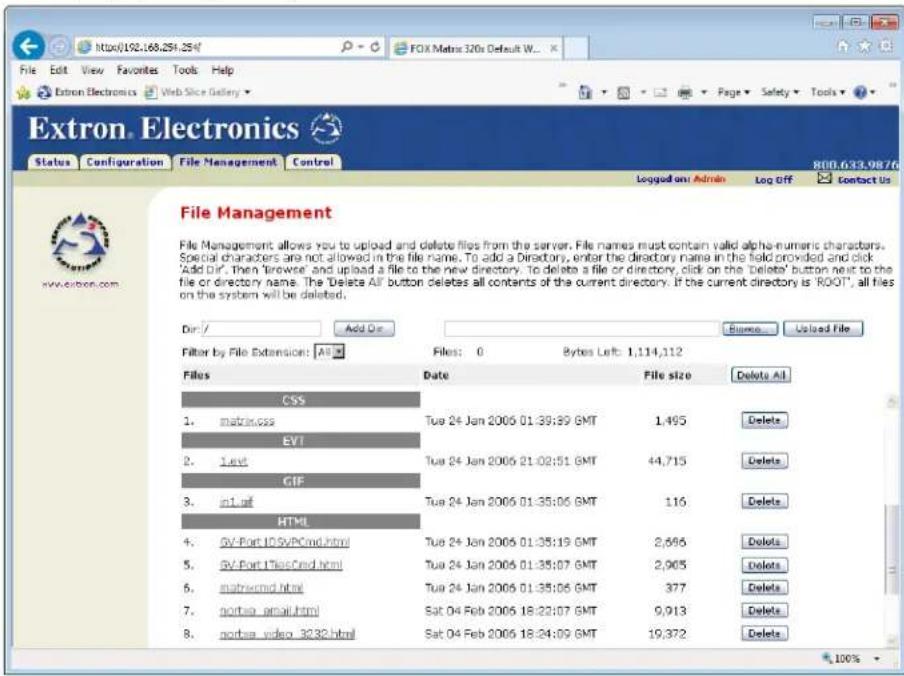
Figure 44. File Management Page
NOTE: Figure 44 is an example only. Files shown may not be present on your switcher.
To delete a file, click the Delete button associated with that file.
Upload your own files as follows:
NOTE: The HTML language reserves certain characters for specific functions (see Special Characters on page 35).
- Click the Browse button.
- Browse through your system and select the desired file or files.
NOTE: If you want one of the pages that you create and upload to be the default startup page, name that file "index.html".
- Click the Upload File button. The file or files that you selected appear in the list.
Control Tab
Set and View Ties Page
You can create ties on the Set and View Ties page (see figure 45). Access the Set and View Ties page by clicking the Control tab.

Figure 45. Set and View Ties Page
The page consists of a matrix of input (rows) and output (columns) buttons of two colors:
• The amber buttons indicate ties.
• The gray buttons indicate no ties.
TIP: If you lose track of the input and output associated with a specific button, let the mouse pointer rest over the button for a moment. As shown on figure 45 on the previous page, a field pops up that identifies the input and output numbers for that button.
Creating or deleting a tie
Make or break a tie as follows:
-
Move the mouse over the matrix of input and output selection buttons. Click a button to:
-
Create a pending tie (if a tie does not exist) of the input and output associated with that button.
- Create a pending untie (if a tie exists) of the input and output associated with that button.
A "P" (for pending) appears in the button.
NOTES:
- Because of command length limitations in the browser, you can make a maximum of 30 connections with a single Take command (step 2).
-
To tie an input to all outputs, click the input number for that input.
-
Click the Take button to make the configuration changes or the Cancel button to abandon the configuration changes.
Maintenance and Modifications
This section covers corrective maintenance and modifying the FOX matrix switchers, including:
- Mounting the Switcher
• Battery and Power Precautions - Removing and Installing an I/O Board or Blank Panel
- Removing and Installing a Power Supply Module
- Removing and Installing a Fan Module
ATTENTION:
Mounting the Switcher
The FOX Matrix 320x is housed in a rack-mountable, 17U high metal enclosure with mounting flanges for standard 19-inch wide racks. The FOX Matrix 14400 is in an 8U high enclosure.
UL Guidelines
The following Underwriters Laboratories (UL) guidelines pertain to the installation of the matrix switcher into a rack.
- Elevated operating ambient temperature — If the equipment is installed in a closed or multi-unit rack assembly, the operating ambient temperature of the rack environment may be greater than room ambient. Therefore, consider installing the equipment in an environment compatible with the maximum ambient temperature specified by Extron (Tma = +32 to +122 °F [0 to +50 °C]).
- Reduced air flow — Installation of the equipment in a rack should be such that the amount of air flow required for safe operation of the equipment is not compromised.
- Mechanical loading — Mount the equipment in the rack so that uneven mechanical loading does not create a hazardous condition.
- Circuit overloading — Consider the connection of the equipment to the supply circuit and the effect that overloading of the circuits might have on overcurrent protection and supply wiring. Use appropriate consideration of equipment nameplate ratings when addressing this concern.
- Reliable earthing (grounding) — Reliable earthing of rack-mounted equipment should be maintained. Particular attention should be given to supply connections other than direct connections to the branch circuit (such as the use of power strips).
Mounting Instructions
If desired, rack mount the switcher as follows:
- Insert the unit into the rack, aligning the mounting bracket holes with those in the rack.
- Secure the switcher to the rack using the supplied bolts.
Battery and Power Precautions
The matrix switcher is provided with a permanently installed (factory-soldered in place) lithium battery. The battery maintains the real time clock in the event of power failure or extended storage periods and does not affect the normal operation of the switcher. If the battery becomes ineffective, return the switcher to Extron for repair.

WARNING: There is a danger of explosion if the battery is incorrectly replaced. Do not attempt to remove or replace the internal battery.
Removing and Installing an I/O Board or Blank Panel

WARNING: The FOX matrix switchers fiber optic I/O boards output continuous invisible light (Class 1 rated), which may be harmful to the eyes; use with caution.
- As factory configured, the fiber optic I/O boards are either 100 percent singlemode or 100 percent multimode, but you can remove a fiber optic transceiver module (one input and one output) of one transmission mode and replace it with a module of the other transmission mode.
You can mix transmission mode transceiver modules on a fiber optic I/O board, provided that you ensure that each fiber cable and connected devices are the appropriate transmission mode for the transceiver module. Typically, singlemode fiber cable has a yellow jacket and multimode cable has an orange or aqua jacket.
- For proper cooling and air flow, boards or blank panels should be installed in all locations during normal switcher operations.
As shown in figure 46, each I/O board is identified by the input and output numbers supported by the board position, which are printed on the side of each fan module (1 - 16, 17 - 32, and so on). The transceiver modules on fiber optic I/O boards are identified as A through P.
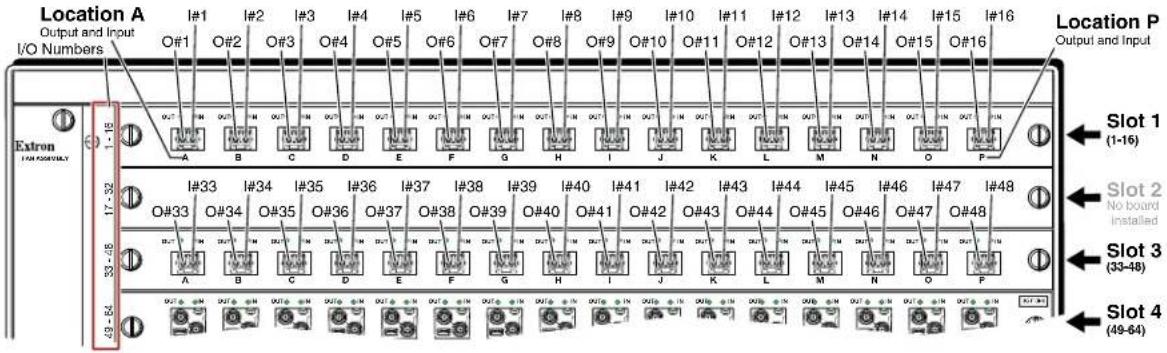
Figure 46. Arrangement of Inputs and Outputs on the I/O Boards
Locations A through P correspond to the transceiver modules. Each module, numbered from left to right, includes one of the outputs and one of the inputs supported by the board. (For example, the input and output numbers supported by the I/O board in location 33 - 48 [slot 3] are as follows: A = 33, B = 34, C = 35, D = 36, E = 37, F = 38, G = 39, H = 40, I = 41, J = 42, K = 43, L = 44, M = 45, N = 46, O = 47, and P = 48.)
NOTE: The output on the transceiver module is to the left of the input.
| Slot Inputs and outputs Slot Inputs and outputs | |
| 1 1 through 16 11* 161 through 176 | |
| 2 17 through 32 12* 177 through 192 | |
| 3 33 through 48 13* 193 through 208 | |
| 4 49 through 64 14* 209 through 224 | |
| 5 65 through 80 15* 225 through 240 | |
| 6 81 through 96 16* 241 through 256 | |
| 7 97 through 112 17* 257 through 272 | |
| 8 113 through 128 18* 273 through 288 | |
| 9 129 through 144 19* 289 through 304 | |
| 10* 145 through 160 20* 305 through 320 | |
* FOX Matrix 320x only
ATTENTION:
NOTE: The I/O boards are hot-swappable. You do not need to power down the switcher to remove or install an I/O board.
Removing an I/O Board or Blank Panel
Remove an I/O board or blank panel as follows:
- For an I/O board, disconnect any connected cables.
- Rotate the left and right knurled knobs to completely loosen the captive thumbscrews.
- Gently pull on the screws to loosen the board or panel from the backplane.
- Slide the board or panel out of the chassis (see figure 47) and place it on an anti-static surface or in an anti-static container.

Figure 47. I/O Board Replacement
Installing an I/O Board or Blank Panel
Install an I/O board or blank panel as follows:
NOTE: Captive thumbscrews must be tightened with a screwdriver after both initial installation and subsequent replacement of an I/O board or back panel.
- For an I/O board, orient the board to be installed so that transceiver module A (fiber board) or input BNC A (SDI/HD-SDI board) is on the left and P is on the right.
- For an I/O board, align the board with the left and right chassis guides (see figure 47 on the previous page).
- Gently slide the board or blank panel into the enclosure. For an I/O board, slide the board toward the front panel until it meets resistance.
- Gently seat the board or panel in the backplane.
- Use a screwdriver to tighten the left and right captive thumbscrews to secure the board or panel in place.
Removing and Installing a Power Supply Module
The power supply modules are identical. Each power supply module has a 2-color LED that indicates the status of the power supply outputs. If the LED is lit green, the power supply is operating normally. If the LED is lit red, the supply has failed and should be replaced at the earliest opportunity.
NOTE: The power supply modules are hot-swappable. Any power supply can be removed without powering down the switcher.
Removing a Power Supply Module
Remove a power supply module as follows:
- Rotate the left and right knurled knobs to completely loosen the captive thumbscrews.
- Gently pull on the handle to loosen the power supply from the backplane (see figure 48 on the next page).
NOTE: Figure 48 shows a FOX Matrix 14400. The FOX Matrix 320x is similar, but has four power supply modules that are vertically mounted.
- Slide the power supply out of the chassis.
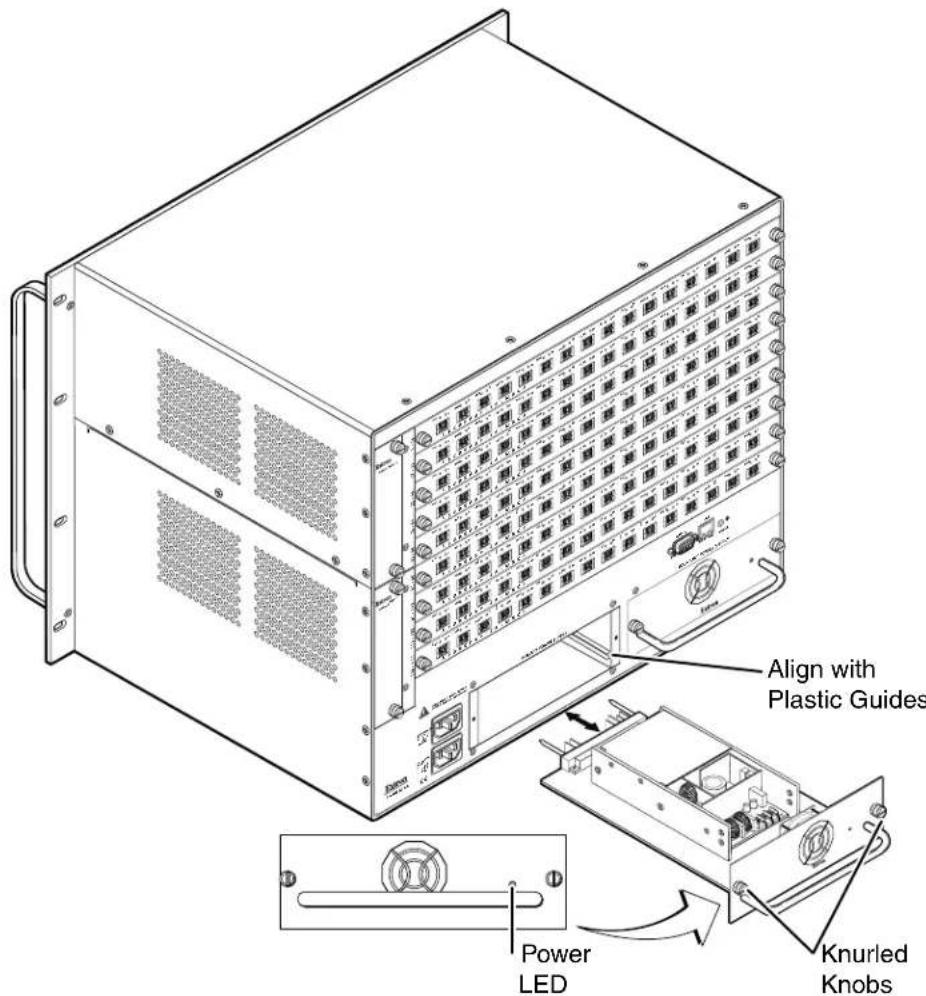
Figure 48. Power Supply Replacement, FOX Matrix 14400
Installing a Power Supply Module
NOTES:
- The power supply modules are hot-swappable. You do not need to power down the switcher to install a power supply.
- Captive thumbscrews must be tightened with a screwdriver after both initial installation and subsequent replacement of a power supply module.
Install a power supply module as follows:
- Orient the power supply module to be installed with the LED to the right.
- Align the flanges on the power supply module with the left and right power supply guides (see figure 48).
- Gently slide the power supply module into the enclosure until the power supply meets resistance.
- Gently seat the power supply in the backplane.
- Use a screwdriver to tighten the left and right captive thumbscrews to secure the power supply in place.
Removing and Installing a Fan Module
The FOX Matrix 320x has four fan modules and the FOX Matrix 14400 has two fan modules. The fan modules for each model are identical. If a fan fails, it should be replaced at the earliest opportunity.
Removing a Fan Module
NOTE: The fans modules are hot-swappable. Either fan can be removed or installed without powering down the switcher.
Remove a fan module as follows:
- Remove and retain the two screws that secure the row identification plate to the fan (see figure 49). Retain the plate.
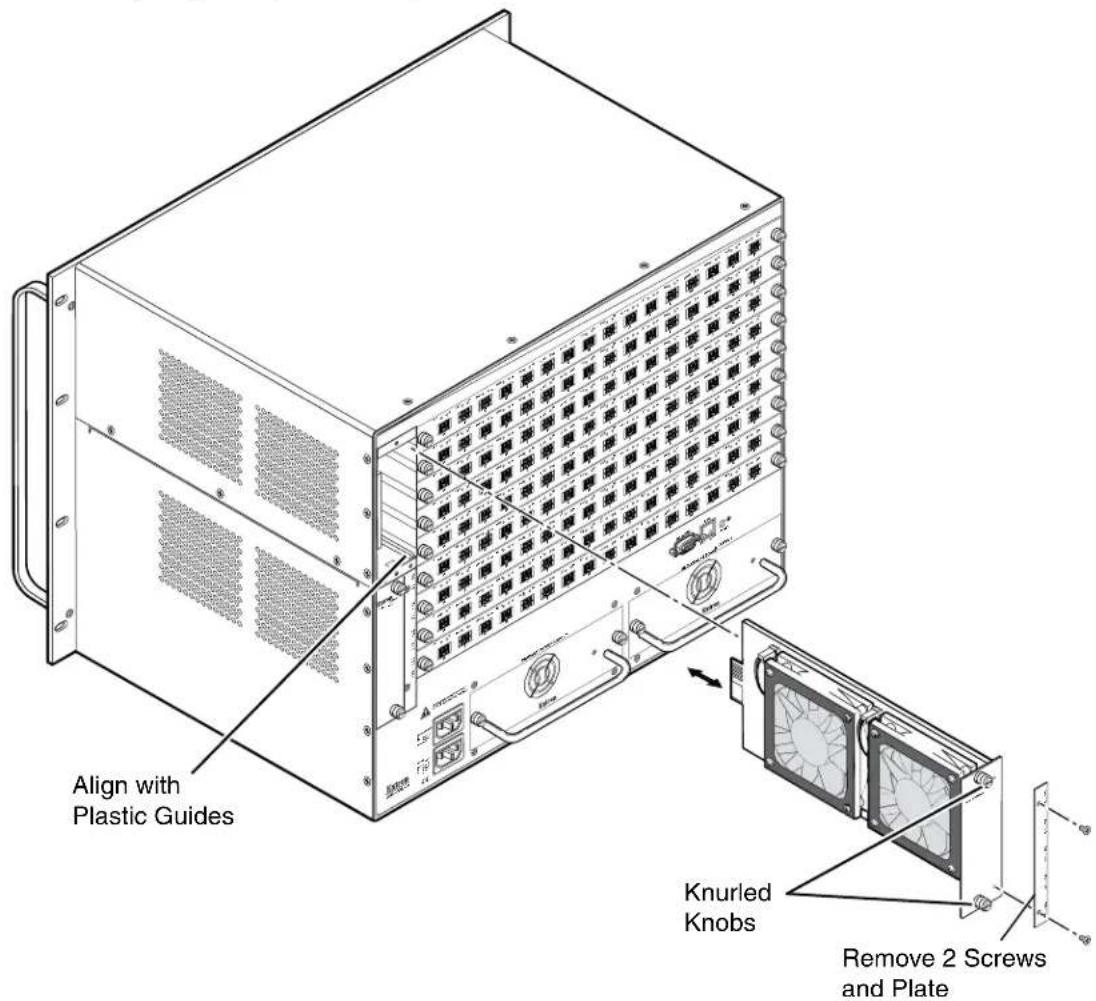
Figure 49. Fan Replacement
- Rotate the top and bottom knurled knobs to completely loosen the captive thumbscrews.
- Gently pull on the screws to loosen the fan from the backplane.
- Slide the fan out of the chassis.
Installing a Fan Module
NOTE: Captive thumbscrews must be tightened with a screwdriver after both initial installation and subsequent replacement of a fan module.
Install a fan module as follows:
- Orient the fan to be installed so that the printing on the back of the panel is rightside up.
- Align the flanges on the fan with the top and bottom fan guides (see figure 49, on the previous page).
- Gently slide the fan into the enclosure until the fan meets resistance.
- Gently seat the fan in the backplane.
- Use a screwdriver to tighten the top and bottom captive thumbscrews to secure the fan in place.
- Secure the row identification plate to the fan.
Ethernet Connection
This section provides a high level discussion of the Ethernet connection to the switcher and a primer on the subject of subnetting. Topics that are covered, include:
- Ethernet Link
- Subnetting – A Primer
Ethernet Link
The rear panel Ethernet connector on the FOX matrix switcher can be connected to an Ethernet LAN or WAN. This connection makes SIS control of the switcher possible using a computer connected to the same LAN.
Ethernet Connection
The Ethernet cable can be terminated as a straight-through cable or a crossover cable and must be properly terminated for your application (see figure 10 on page 14).
- Crossover cable — Direct connection between the computer and the FOX matrix switcher
- Patch (straight-through) cable — Connection of the FOX matrix switcher to an Ethernet LAN
Default IP Address
To access the FOX matrix switcher via the LAN port, you need the IP address of the switcher. If the address has been changed to an address comprised of words and characters, you can determine the actual numeric IP address using the ping utility. If the address has not been changed, the factory-specified default is 192.168.254.254.
The Ping command can also be used to test the Ethernet link to the FOX matrix switcher.
Pinging to Determine the Extron IP Address
The ping utility is available at the Command prompt. Ping tests the Ethernet interface between the computer and the FOX matrix switcher. Ping can also be used to determine the actual numeric IP address from an alias and to determine the web address.
Ping the switcher as follows:
- On the Windows task bar, click on Start > Run.
- At the Open prompt, type command.
- Click the 0K button.
- At the Command prompt, type ping {IP address} and then press
. The computer returns a display similar to the one shown in figure 50.
The line Pinging ... reports the actual numeric IP address, regardless of whether you entered the actual numeric IP address or an alias name.
C:\>ping 192.168.254.254
Pinging 192.168.254.254 with 32 bytes of data:
Reply from 192.168.254.254: bytes=32 time<10ms TTL=128
Reply from 192.168.254.254: bytes=32 time<10ms TTL=128
Reply from 192.168.254.254: bytes=32 time<10ms TTL=128
Reply from 192.168.254.254: bytes=32 time<10ms TTL=118
Ping statistics for 192.168.254.254:
    Packets: Sent = 4, Received = 4, Lost = 0 (0% loss),
Approximate round trip times in milli-seconds:
    Minimum = 0ms, Maximum = 0ms, Average = 0ms
Figure 50. Typical Ping Response
Pinging to Determine the Web IP Address
The ping utility has a modifier, -a, that directs the command to return the web address rather than the numeric IP address.
At the Command prompt, type ping -a {IP address} and then press
Configuring the Switcher for Network Use via the ARP Command
The ARP (address resolution protocol) command tells your computer to associate the MAC (media access control) address of the FOX matrix switcher with the assigned IP address. You must then use the ping utility to access the controller, at which point the IP address of the controller is reconfigured.
Use ARP to configure the IP address as follows:
- Obtain a valid IP address for the FOX matrix switcher from your network administrator.
- Obtain the MAC address (UID #) of the FOX matrix switcher from the label on its rear panel. The MAC address should have this format: 00-05-A6-xx-xx-xx.
- If the FOX matrix switcher has never been configured and is still set for factory defaults, proceed to step 4. If not, perform a mode 4 system reset and then proceed to step 4. For detailed information on reset modes, see Performing Soft System Resets (Resets 3, 4, and 5) on page 19.
NOTE: The FOX matrix switcher must be configured with the factory default IP address (192.168.254.254) before the ARP command is executed, as described below.
- At the PC, access the Command prompt (see Pinging to Determine the Extron IP Address, on the previous page, steps 1 through 3), then enter the arp -s command. Type in the desired new IP address for the unit (obtained in step 1) and the MAC address of the unit (from the rear panel of the unit), for example, arp -s 192.168.254.254 00-05-A6-03-69-B0 and then press
.
The computer returns the command prompt (C:).
After you issue the arp -s command, the controller changes to the new address and starts responding to the ping requests to the new address, as described in the next step.
NOTE: You must ping the FOX matrix switcher for the IP address change to take place. The response should show the new IP address, as shown in figure 51.
- Execute a ping command by entering ping followed by a space and the new IP address at the command prompt. For example:
ping 192.168.254.254
C:\>ping 192.168.254.254
Pinging 192.168.254.254 with 32 bytes of data:
Reply from 192.168.254.254: bytes=32 time<10ms TTL=128
Reply from 192.168.254.254: bytes=32 time<10ms TTL=128
Reply from 192.168.254.254: bytes=32 time<10ms TTL=128
Reply from 192.168.254.254: bytes=32 time<10ms TTL=118
Ping statistics for 192.168.254.254:
    Packets: Sent = 4, Received = 4, Lost = 0 (0% loss),
Approximate round trip times in milli-seconds:
    Minimum = 0ms, Maximum = 0ms, Average = 0ms
Figure 51. Ping with New Address
NOTE: You can reconnect using either Telnet or a web browser to verify that the update was successful.
- After verifying that the IP address change was successful, enter and issue the arp -d command at the Command prompt. For example:
arp -d 192.168.254.254 removes 192.168.254.254 from the ARP table or
arp -d* removes all static IP addresses from the ARP table.
Connecting as a Telnet Client
The Telnet utility is available from the Command prompt. Telnet allows you to input SIS commands to the FOX matrix switcher from the PC via the Ethernet link and the LAN.
Access the Command prompt and start Telnet as follows:
- On the Windows task bar, click Start > Run.
- At the Open prompt, type command.
- Click the OK button.
- At the Command prompt, type Telnet and then press
. The computer returns a display similar to the one shown in figure 52.
Microsoft (R) windows 2000 (TM) Version 5.0 (Build 2195)
Welcome to Microsoft Telnet Client
Telnet Client Build 5.00.99203.1
Escape Character is 'CTRL+']
Microsoft Telnet>
Figure 52. Telnet Window
Telnet Tips
It is not the intention of this guide to detail all of the operations and functionality of Telnet; however, some basic level of understanding is necessary for operating the FOX matrix switcher via Telnet.
Open
Connect to the FOX matrix switcher using the Open command. Once you are connected to the switcher, you can enter the SIS commands the same as you would if you were using the RS-232 or RS-422 link.
Connect to the FOX matrix switcher as follows:
- At the Telnet prompt, type open {IP address} and then press
.
If the switcher is password protected, Telnet displays the password prompt.
NOTE: The factory configured passwords for all accounts on this device have been set to the device serial number. Passwords are case sensitive.
If the switcher is not password protected, no further prompts are displayed until you break or disconnect the connection to the matrix switcher.
- If necessary, at the password prompt, type the appropriate password and then press
.
Connection to the switcher via the Ethernet can be password protected. There are two levels of password protection: administrator and user. A person logged on as an administrator has full access to all matrix switcher switching capabilities and editing functions. Users can create ties, set mutes, and view all settings with the exception of passwords. By default, the FOX matrix switcher is shipped with both passwords set to {carriage return}.
Once you are logged in, the switcher returns either Login Administrator or Login User. No further prompts are displayed until you break or disconnect the connection to the FOX matrix switcher.
Escape character and Esc key
When Telnet is first started, the utility advises that the Escape character is 'Ctrl+'. Many SIS commands include the keyboard
The Telnet Escape character is a key combination, the
The Escape key is the
Local echo
Once connected to the FOX matrix switcher, by default, Telnet does not display your keystrokes on the screen. SIS commands are typed in blindly and only the SIS responses are displayed on the screen. To command Telnet to show keystrokes, at the Telnet prompt, type set local_echo and then press
With local echo turned on, keystrokes and the responses of the switcher are displayed on the same line. For example: 1*1! In1 Out1 All, where 1*1! is the SIS command and In1 Out1 All is the response.
With local echo turned on, all keystrokes are displayed, even those that should be masked, such as the password entry. For example, when entering a password with local echo turned on, you see a display such as a*d*m*i*n*, where admin is the keyed in password and ***** is the masked response.
You can turn off local echo by typing unset local_echo and then pressing
Set carriage return-line feed
Unless commanded otherwise, Telnet transmits a line feed character only (no carriage return) to the connected switcher when you press the
Close
To close the link to the switcher, access the Telnet prompt by typing the Escape character (
Help
For Telnet command definitions, at the Telnet prompt, type ? and then press
Quit
Exit the Telnet utility by typing quit and then pressing
Subnetting — A Primer
It is not the purpose of this guide to describe TCP/IP protocol in detail. However, some understanding of TCP/IP subnetting (a subnet is a subset of a network — a set of IP devices that have portions of their IP addresses in common) is necessary in order to understand the interaction of the FOX matrix switcher and the mail server gateway. To understand subnetting at the level required to install and operate the FOX matrix switcher, you must understand the concepts of a gateway, local and remote devices, IP addresses and octets, and subnet masks and octets.
Gateways
The FOX matrix switcher can communicate with the e-mail server that the switcher uses for e-mail notification directly (if they are on the same subnet) or the communication can be routed via a gateway (a computer that provides a link between different subnets).
Local and Remote Devices
The local and remote devices are defined from the point of view of the function being described. In this guide, subnetting is an issue when you are using the controlling PC to set TCP/IP and e-mail values in the matrix switcher (see IP Settings / Options Dialog Box on page 43 and Email Settings Page on page 66). When you are setting up the variables for e-mail notification, which may include subnetting, the matrix switcher is the local device and the e-mail server is the remote device.
IP Addresses and Octets
Valid IP addresses consist of four 1-, 2-, or 3-digit numeric subfields, properly called "octets," separated by dots (periods) (see figure 53). Each octet can be numbered from 000 through 255. Leading zeroes, up to three digits total per octet, are optional. Values of 256 and above are invalid.
$$ \underbrace {1 9 2 . 1 6 8 . 2 5 4 . 2 5 4} _ {\text { Octets }} $$
Figure 53. Typical IP Address
Subnet Masks and Octets
The subnet mask (see figure 54) is used to determine whether the local and remote devices are on the same subnet or different subnets. The subnet mask consists of four numeric octets separated by dots. Each octet can be numbered from 000 through 255. Leading zeroes, up to three digits total per octet, are optional. Each octet typically contains either 255 or 0. The octets determine whether or not the same octets of two IP addresses will be compared when determining if two devices are on the same subnet.
255 indicates that this octet will be compared between two IP addresses.
0 indicates that this octet will not be compared between two IP addresses.
255.255.0.0 Typical Subnet Mask: Octets
Figure 54. Typical Subnet Mask
Determining Whether Devices Are on the Same Subnet
To determine the subnet, the IP address of the local device is compared to the IP address of the remote device (see figure 55). The octets of each address are compared or not compared, depending on the value in the related subnet mask octet.
- If a subnet mask octet contains the value 255, the related octets of the IP addresses of the local device and the remote device are unmasked.
Unmasked octets are compared (indicated by ? in figure 55).
- If the subnet mask octet contains the value 0, the related octets of the IP addresses of the local device and remote device are masked.
Masked octets are not compared (indicated by X in figure 55).
If the unmasked octets of the two IP addresses match (indicated by = in figure 55, example 1), the two addresses are on the same subnet.
If the two unmasked fields do not match (indicated by in figure 55, example 2 and example 3), the addresses are not on the same subnet.
| Example 1 Example 2 | Example 3 | ||
| Local IP Address: | 192.168.254.254 | 192.168.254.254 | 192.168.254.254 |
| Subnet Mask: | 255.255.0.0 (?.?.X.X) | 255.255.0.0 (?.?.X.X) | 255.255.0.0 (?.?.X.X) |
| Remote IP Address: | 192.168.2.25 | 190.190.2.25 | 192.190.2.25 |
| Match?: | =.=.X.X — Match(Same subnet) | ≠.≠.X.X — No match(Different subnet) | =.≠.X.X — No match(Different subnet) |
Figure 55. Comparing the IP Addresses of the Local and Remote Devices
Extron Warranty
Extron Electronics warrants this product against defects in materials and workmanship for a period of three years from the date of purchase. In the event of malfunction during the warranty period attributable directly to faulty workmanship and/or materials, Extron Electronics will, at its option, repair or replace said products or components, to whatever extent it shall deem necessary to restore said product to proper operating condition, provided that it is returned within the warranty period, with proof of purchase and description of malfunction to:
USA, Canada, South America, and Central America:
Extron Electronics
1230 South Lewis Street
Anaheim, CA 92805
U.S.A.
Asia:
Extron Asia Pte Ltd
135 Joo Seng Road, #04-01
PM Industrial Bldg.
Singapore 368363
Singapore
Japan:
Extron Electronics, Japan
Kyodo Building, 16 Ichibancho
Chiyoda-ku, Tokyo 102-0082
Japan
Europe:
Extron Europe
Hanzeboulevard 10
3825 PH Amersfoort
The Netherlands
China:
Extron China
686 Ronghua Road
Songjiang District
Shanghai 201611
China
Middle East:
Extron Middle East
Dubai Airport Free Zone
F13, PO Box 293666
United Arab Emirates, Dubai
Africa:
Extron South Africa
South Tower
160 Jan Smuts Avenue
Rosebank 2196, South Africa
This Limited Warranty does not apply if the fault has been caused by misuse, improper handling care, electrical or mechanical abuse, abnormal operating conditions, or if modifications were made to the product that were not authorized by Extron.
NOTE: If a product is defective, please call Extron and ask for an Application Engineer to receive an RA (Return Authorization) number. This will begin the repair process.
USA: 714.491.1500 or 800.633.9876 Asia:
65.6383.4400
Europe: 31.33.453.4040 or 800.3987.6673
Japan: 81.3.3511.7655
Africa: 27.11.447.6162
Middle East: 971.4.299.1800
Units must be returned insured, with shipping charges prepaid. If not insured, you assume the risk of loss or damage during shipment. Returned units must include the serial number and a description of the problem, as well as the name of the person to contact in case there are any questions.
Extron Electronics makes no further warranties either expressed or implied with respect to the product and its quality, performance, merchantability, or fitness for any particular use. In no event will Extron Electronics be liable for direct, indirect, or consequential damages resulting from any defect in this product even if Extron Electronics has been advised of such damage.
Please note that laws vary from state to state and country to country, and that some provisions of this warranty may not apply to you.


- Fiber Optic Matrix Switchers
- FOX Matrix 320x
- FOX Matrix 14400
- Safety Instructions
- Safety Instructions • English
- Trademarks
- FCC Class A Notice
- Battery Notice
- Class 1 Laser Product
- Conventions Used in this Guide
- Notifications
- Software Commands
- Specifications Availability
- Extron Glossary of Terms
- Contents
- Introduction.... 1
- Installation....7
- Programming Guide....20
- Matrix Software....36
- HTML Operation 58
- Maintenance and Modifications....74
- Ethernet Connection 82
- Introduction
- About the FOX Matrix Switchers
- NOTES:
- Fiber Cable Transmission Modes
- Definitions
- Features
- Setup and Installation Checklist
- Get Ready
- Configure the Matrix Switcher
- Perform Physical Installation
- Install Software
- ATTENTION:
- A1 Input connector and LED — For all one-way
- Fiber optic I/O board LED indications
- 3G/HD/SD-SDI boards
- Remote Port
- Ethernet Connection
- Cabling
- RJ-45 connector wiring
- Reset Button and LED
- Power Supply Modules and Indicator LEDs
- Cooling Fan Assemblies
- Front Panel Features
- B Power Supply and Status LEDs —
- Primary and Redundant Power Supply LEDs —
- Status LED (FOX Matrix 320x only) —
- Reset Operations
- Performing Soft System Resets (Resets 3, 4, and 5)
- Programming Guide
- Host Control Ports
- Serial Ports
- Ethernet (LAN) Port
- Establishing a connection
- Connection timeouts
- Number of connections
- Using Verbose Mode
- Host-to-Switcher Instructions
- Switcher-initiated Messages
- ←Password:
- Switcher Error Responses
- Using the Command and Response Tables
- Command and Response Table for SIS Commands
- Symbol definitions
- Command and Response Table for IP- and SNMP-Specific SIS Commands
- Special Characters
- Matrix Software
- About this Program
- Software Operation via Ethernet
- Ethernet protocol settings
- Software Operation via a Serial Port
- Installing the Software
- TIPS:
- Using the Matrix Switchers Control Program
- Starting the Program
- IP Settings / Options Dialog Box
- Address and Name fields
- Hardware Address field
- Use DHCP checkbox
- Date, Time (local), and GMT (offset) fields
- Sync Time to PC button
- Use Daylight Saving checkbox
- Administrator Password and User Password fields
- Mail Server IP Address field
- Mail Server Domain Name field
- E-mail Addressee fields
- Miles Standish
- Figure 23. Typical E-mail Message from the Switcher
- Updating Firmware
- Uploading HTML Files
- Windows Buttons, List boxes, and Trash Can
- Windows Menus
- File menu
- Tools menu
- Preferences menu
- Master-Reset selection
- Using Emulation Mode
- Using the Help System
- HTML Operation
- Opening the Embedded Web Pages
- Status Tab
- System Status Page
- Input Link Page
- Configuration Tab
- System Settings Page
- IP Settings panel
- Unit Name field
- DHCP radio buttons
- IP Address field
- Gateway IP Address field
- Subnet Mask field
- MAC Address
- Firmware field
- Model field
- Part Number field
- Date/Time Settings panel
- Passwords Page
- Resetting a password
- Email Settings Page
- Mail IP Address field
- Domain Name field
- Setting up SMTP authorization
- Deselecting SMTP authorization
- Email Address fields
- SNMP Settings Page
- SNMP General Settings fields
- SNMP Manager (Trap Target) fields
- Firmware Upgrade Page
- File Management Tab
- File Management Page
- Control Tab
- Set and View Ties Page
- Creating or deleting a tie
- Maintenance and Modifications
- Mounting the Switcher
- UL Guidelines
- Mounting Instructions
- Battery and Power Precautions
- Removing and Installing an I/O Board or Blank Panel
- Removing an I/O Board or Blank Panel
- Installing an I/O Board or Blank Panel
- Removing and Installing a Power Supply Module
- Removing a Power Supply Module
- Installing a Power Supply Module
- Removing and Installing a Fan Module
- Removing a Fan Module
- Installing a Fan Module
- Ethernet Link
- Default IP Address
- Pinging to Determine the Extron IP Address
- Pinging to Determine the Web IP Address
- Configuring the Switcher for Network Use via the ARP Command
- Connecting as a Telnet Client
- Telnet Tips
- Open
- Escape character and Esc key
- Local echo
- Set carriage return-line feed
- Close
- Help
- Quit
- Subnetting — A Primer
- Gateways
- Local and Remote Devices
- IP Addresses and Octets
- Subnet Masks and Octets
- Determining Whether Devices Are on the Same Subnet
- Extron Warranty
- USA, Canada, South America, and Central America:
- Asia:
- Japan:
- Europe:
- China:
- Middle East:
- Africa:
Brand : Extron
Model : FOX Matrix 320x
Category : Video matrix