
LRP-822CS - NAS Planet - Free user manual and instructions
Find the device manual for free LRP-822CS Planet in PDF.


| Product Type | L2/L4 Long Reach PoE Managed Switch |
| Model | LRP-822CS |
| Ports | 8 x BNC (Coax) Long Reach PoE, 2 x 10/100/1000BASE-T RJ45, 2 x 100/1000BASE-X SFP |
| PoE Power Budget | 240 watts (total), up to 36 watts per port |
| Long Reach Distance | Up to 1,000 meters over coaxial cable (with PoE), 1,200 meters without PoE |
| Switch Fabric | 9.6 Gbps non-blocking |
| Dimensions (W x D x H) | 440 x 300 x 44.5 mm (1U height) |
| Weight | 4282 g |
| Power Supply | AC 100~240V, 50/60Hz, auto-sensing, maximum 320 watts |
| Management | Web, Telnet, SNMP v1/v2c/v3, SSH, SSL, Console |
| Layer 2 Features | VLAN (802.1Q, Q-in-Q, Voice, Private), STP/RSTP/MSTP, LACP, IGMP/MLD Snooping, Port Mirroring |
| Quality of Service | 802.1p, DSCP, IP Precedence, Strict Priority, WRR, Ingress/Egress Rate Limit, Storm Control |
| Security | 802.1X, ACL (MAC/IPv4/IPv6), DHCP Snooping, ARP Inspection, IP Source Guard, Port Security, DoS Prevention |
| PoE Management | PD Alive Check, Scheduled Power Recycling, PoE Schedule, PoE Usage Monitoring, Over-temperature Protection |
| Diagnostics | Cable Diagnostics, Ping, SFP DDM, RMON (4 groups), LLDP |
| Environmental | Operating Temperature: 0~50°C, Humidity: 5~95% (non-condensing) |
| Regulatory | FCC Part 15 Class A, CE, RoHS |
| Cooling | Smart fan with speed control, silent operation |
| Maintenance | Firmware upgrade via HTTP/TFTP, configuration backup/restore, dual image support, factory reset button |
Frequently Asked Questions - LRP-822CS Planet
User questions about LRP-822CS Planet
0 question about this device. Answer the ones you know or ask your own.
Ask a new question about this device
Download the instructions for your NAS in PDF format for free! Find your manual LRP-822CS - Planet and take your electronic device back in hand. On this page are published all the documents necessary for the use of your device. LRP-822CS by Planet.
USER MANUAL LRP-822CS Planet
L2/L4 Long Reach PoE Managed Switch
LRP-822CS
LRP-1622CS

Trademarks
Copyright © PLANET Technology Corp. 2015.
Contents are subject to revision without prior notice.
PLANET is a registered trademark of PLANET Technology Corp. All other trademarks belong to their respective owners.
Disclaimer
PLANET Technology does not warrant that the hardware will work properly in all environments and applications, and makes no warranty and representation, either implied or expressed, with respect to the quality, performance, merchantability, or fitness for a particular purpose. PLANET has made every effort to ensure that this User's Manual is accurate; PLANET disclaims liability for any inaccuracies or omissions that may have occurred.
Information in this User's Manual is subject to change without notice and does not represent a commitment on the part of PLANET. PLANET assumes no responsibility for any inaccuracies that may be contained in this User's Manual. PLANET makes no commitment to update or keep current the information in this User's Manual, and reserves the right to make improvements to this User's Manual and/or to the products described in this User's Manual, at any time without notice.
If you find information in this manual that is incorrect, misleading, or incomplete, we would appreciate your comments and suggestions.
FCC Warning
This equipment has been tested and found to comply with the limits for a Class A digital device, pursuant to Part 15 of the FCC Rules. These limits are designed to provide reasonable protection against harmful interference when the equipment is operated in a commercial environment. This equipment generates, uses, and can radiate radio frequency energy and, if not installed and used in accordance with the Instruction manual, may cause harmful interference to radio communications. Operation of this equipment in a residential area is likely to cause harmful interference in which case the user will be required to correct the interference at his own expense.
CE Mark Warning
This is a Class A product. In a domestic environment, this product may cause radio interference, in which case the user may be required to take adequate measures.
Energy Saving Note of the Device
This power required device does not support Standby mode operation. For energy saving, please remove the power cable to disconnect the device from the power circuit. In view of saving the energy and reducing the unnecessary power consumption, it is strongly suggested to remove the power connection for the device if this device is not intended to be active.
WEEE Warning
To avoid the potential effects on the environment and human health as a result of the presence of hazardous substances in electrical and electronic equipment, end users of electrical and electronic equipment should understand the meaning of the crossed-out wheeled bin symbol. Do not dispose of WEEE as unsorted municipal waste and have to collect such WEEE separately.
Revision
PLANET Multi-port Coax + 2-port 10/100/1000T + 2-port 100/1000X SFP Long Reach PoE over Coaxial Switch User's Manual
For Model: LRP-822CS/LRP-1622CS
Revision: 1.1 (Jul. 2015)
Part No: EM-LRP-822CS_LRP-1622CS_v1.1
TABLE OF CONTENTS
1. INTRODUCTION.... 10
1.1 Packet Contents .... 10
1.2 Product Description....11
1.3 How to Use This Manual....16
1.4 Product Features....16
1.5 Product Specifications .... 19
2. INSTALLATION 23
2.1 Hardware Description ....23
2.1.1 Switch Front Panel 23
2.1.2 LED Indications .... 25
2.1.3 Switch Rear Panel 27
2.2 Installing the Switch....28
2.2.1 Desktop Installation ....28
2.2.2 Rack Mounting....29
2.2.3 Installing the SFP transceiver .... 30
2.2.4 Installing the Long Reach PoE Communication....33
3. SWITCH MANAGEMENT .... 37
3.1 Requirements....37
3.2 Management Access Overview....38
3.3 Administration Console....39
3.4 Web Management....40
3.5 SNMP-based Network Management ....41
3.6 PLANET Smart Discovery Utility ....41
4. WEB CONFIGURATION.... 43
4.1 Main Web Page 46
4.1.1 Save Button....47
4.1.2 Configuration Manager 48
4.1.2.1 Saving Configuration 49
4.2 System....50
4.2.1 System Information....50
4.2.2 IP Configurations....51
4.2.3 IPv6 Configuration 53
4.2.4 User Configuration....55
4.2.5 Time Settings....56
4.2.5.1 System Time....56
4.2.5.2 SNTP Server Settings ....59
4.2.6 Log Management....60
4.2.6.1 Local Log 60
4.2.6.2 Local Log 61
4.2.6.3 Remote Syslog 63
4.2.6.4 Log Message....64
4.2.7 SNMP Management ....67
4.2.7.1 SNMP Overview....67
4.2.7.2 SNMP System Information 68
4.2.7.3 SNMP View 69
4.2.7.4 SNMP Access Group....71
4.2.7.5 SNMP Community 72
4.2.7.6 SNMP User....74
4.2.7.7 SNMPv1, 2 Notification Recipients ..... 75
4.2.7.9 SNMPv3 Notification Recipients ....77
4.2.7.10 SNMP Engine ID 78
4.2.7.11 SNMP Remote Engine ID 79
4.3 Port Management 80
4.3.1 Port Configuration....80
4.3.2 LRP Port Configuration....82
4.3.3 Port Counters 84
4.3.4 Bandwidth Utilization 89
4.3.5 Port Mirroring....90
4.3.6 Jumbo Frame 92
4.3.7 Port Error Disabled Configuration....93
4.3.8 Port Error Disabled 95
4.3.9 Protected Ports 95
4.3.10 EEE 98
4.3.11 SFP Module Information 99
4.3.11.1 SFP Module Status 99
4.3.11.1 SFP Module Detail Status....101
4.4 Link Aggregation....102
4.4.1 LAG Setting....104
4.4.2 LAG Management ....105
4.4.3 LAG Port Setting....106
4.4.4 LACP Setting 108
4.4.5 LACP Port Setting....109
4.4.6 LAG Status 110
4.5 VLAN....113
4.5.1 VLAN Overview 113
4.5.2 IEEE 802.1Q VLAN 114
4.5.3 Management VLAN 117
4.5.4 Create VLAN 118
4.5.5 Interface Settings....119
4.5.6 Port to VLAN....124
4.5.7 Port VLAN Membership....125
4.5.8 Protocol VLAN Group Setting....126
4.5.9 Protocol VLAN Port Setting 127
4.5.10 GVRP Setting 129
4.5.11 GVRP Port Setting....131
4.5.12 GVRP VLAN....133
4.5.13 GVRP Statistics 133
4.5.14 VLAN Setting Example: 135
4.5.14.1 Two Separate 802.1Q VLANs....135
4.5.14.2 VLAN Trunking between Two 802.1Q Aware Switches .....138
4.6 Spanning Tree Protocol....141
4.6.1 Theory ...... 141
4.6.2 STP Global Settings 147
4.6.3 STP Port Setting....149
4.6.4 CIST Instance Setting....152
4.6.5 CIST Port Setting....154
4.6.6 MST Instance Configuration 156
4.6.7 MST Port Setting 159
4.6.8 STP Statistics ....161
4.7 Multicast....162
4.7.1 Properties 162
4.7.2 IGMP Snooping....164
4.7.2.1 IGMP Setting....168
4.7.2.2 IGMP Querier Setting 170
4.7.2.3 IGMP Static Group....171
4.7.2.4 IGMP Group Table....172
4.7.2.5 IGMP Router Setting 173
4.7.2.6 IGMP Router Table 174
4.7.2.7 IGMP Forward All 175
4.7.3 IGMP Snooping Statics....176
4.7.4 MLD Snooping....178
4.7.4.1 MLD Setting....178
4.7.4.2 MLD Static Group 180
4.7.4.3 MLD Group Table 181
4.7.4.4 MLD Router Setting....181
4.7.4.5 MLD Router Table....183
4.7.4.6 MLD Forward All 184
4.7.5 MLD Snooping Statics 185
4.7.6 Multicast Throttling Setting 187
4.7.7 Multicast Filter 188
4.7.7.1 Multicast Profile Setting....189
4.7.7.2 IGMP Filter Setting....190
4.7.7.3 MLD Filter Setting....191
4.8 Quality of Service....193
4.8.1 Understand QoS....193
4.8.2 General....194
4.8.2.1 QoS Properties....194
4.8.2.2 QoS Port Settings....195
4.8.2.3 Queue Settings....196
4.8.2.4 CoS Mapping....197
4.8.2.5 DSCP Mapping....199
4.8.2.6 IP Precedence Mapping ....201
4.8.3 QoS Basic Mode....202
4.8.3.1 Global Settings 202
4.8.3.2 Port Settings....203
4.8.4 Rate Limit 204
4.8.4.1 Ingress Bandwidth Control ....204
4.8.4.2 Egress Bandwidth Control 206
4.8.4.3 Egress Queue 207
4.8.5 Voice VLAN 209
4.5.8.1 Introduction to Voice VLAN....209
4.8.5.2 Properties 209
4.8.5.3 Telephony OUI MAC Setting....211
4.8.5.4 Telephony OUI Port Setting 213
4.9 Security ......215
4.9.1 802.1X....215
4.9.1.1 Understanding IEEE 802.1X Port-based Authentication....216
4.9.1.2 802.1X Setting....219
4.9.1.3 802.1X Port Setting ....220
4.9.1.4 Guest VLAN Setting 222
4.9.1.5 Authenticated Host 225
4.9.2 RADIUS Server 225
4.9.3 TACACS+ Server....228
4.9.4 AAA 231
4.9.4.1 Login List....232
4.9.4.2 Enable List....233
4.9.5 Access 234
4.9.5.1 Telnet 234
4.9.5.2 SSH....235
4.9.5.3 HTTP 237
4.9.5.4 HTTPS 239
4.9.6 Management Access Method ....240
4.9.6.1 Profile Rules 240
4.9.6.2 Access Rules....241
4.9.7 DHCP Snooping 243
4.9.7.1 DHCP Snooping Overview 243
4.9.7.2 Global Setting....244
4.9.7.3 VLAN Setting 245
4.9.7.4 Port Setting....247
4.9.7.5 Statistics 248
4.9.7.6 Database Agent....249
4.9.7.7 Rate Limit 251
4.9.7.8 Option 82 Global Setting ....253
4.9.7.9 Option 82 Port Setting ....254
4.9.7.10 Option 82 Circuit-ID Setting....256
4.9.8 Dynamic ARP Inspection 257
4.9.8.1 Global Setting....257
4.9.8.2 VLAN Setting 258
4.9.8.3 Port Setting....259
4.9.8.4 Statistics 261
4.9.8.5 Rate Limit 262
4.9.9 IP Source Guard....263
4.9.9.1 Port Settings....264
4.9.9.2 Binding Table....265
4.9.10 Port Security 267
4.9.11 DoS....269
4.9.11.1 Global DoS Setting 269
4.9.11.2 DoS Port Setting 272
4.9.12 Storm Control....274
4.9.12.1 Global Setting....274
4.9.12.2 Port Setting....275
4.10 ACL 277
4.10.1 MAC-based ACL....277
4.10.2 MAC-based ACE 278
4.10.3 IPv4-based ACL....281
4.10.4 IPv4-based ACE 281
4.10.5 IPv6-based ACL....287
4.10.6 IPv6-based ACE 287
4.10.7 ACL Binding 293
4.11 MAC Address Table....294
4.11.1 Static MAC Setting....294
4.11.2 MAC Filtering....295
4.11.3 Dynamic Address Setting....296
4.11.4 Dynamically Learned 297
4.12 LLDP 299
4.12.1 Link Layer Discovery Protocol 299
4.12.2 LLDP Global Setting 299
4.12.3 LLDP Port Setting....302
4.12.4 LLDP Local Device 305
4.12.5 LLDP Remote Device 306
4.12.6 MED Network Policy 308
4.12.7 MED Port Setting....311
4.12.8 LLDP Overloading 314
4.12.9 LLDP Statistics....315
4.13 Diagnostics....317
4.13.1 Cable Diagnostics....317
4.13.2 Ping 319
4.13.3 Ping Test....319
4.13.4 IPv6 Ping Test....320
4.14 RMON....321
4.14.1 RMON Statistics ....321
4.14.2 RMON Event 323
4.14.3 RMON Event Log 324
4.14.4 RMON Alarm 325
4.14.5 RMON History 328
4.14.6 RMON History Log 329
4.15 Power over Ethernet 330
4.15.1 Long Reach Power over Ethernet Powered Device....331
4.15.2 System Configuration 332
4.15.3 Power over Ethernet Configuration....332
4.15.4 PoE Schedule 335
4.15.5 PoE Alive Check Configuration....338
4.16 Maintenance....340
4.16.1 Factory Default 340
4.16.2 Reboot Switch 341
4.16.3 Backup Manager ....341
4.16.4 Upgrade Manager....342
4.16.5 Dual Image 343
5. SWITCH OPERATION 344
5.1 Address Table 344
5.2 Learning ....344
5.3 Forwarding & Filtering....344
5.4 Store-and-Forward 344
5.5 Auto-Negotiation ....345
6. TROUBLESHOOTING.... 346
APPENDIX A 348
A.1 Switch's RJ45 Pin Assignments....348
A.2 10/100Mbps, 10/100BASE-TX....348
1. INTRODUCTION
Thank you for purchasing PLANET LRP Managed Switch series, which comes with multiple Long Reach PoE female BNC, Gigabit Ethernet copper and SFP fiber optic connectivity, and robust layer 2 and layer 4 features. The description of this model is shown below:
LRP-822CS
8-port Coax + 2-port 10/100/1000T + 2-port 100/1000X SFP Long Reach PoE over Coaxial Managed Switch
LRP-1622CS
16-port Coax + 2-port 10/100/1000T + 2-port 100/1000X SFP Long Reach PoE over Coaxial Managed Switch
"LRP Managed Switch" is used as an alternative name in this user's manual.
1.1 Packet Contents
Open the box of the LRP Managed Switch and carefully unpack it. The box should contain the following items:
◆ The LRP Managed Switch x 1
◆ Quick Installation Guide x 1
◆ Rubber Feet x 4
◆ Power Cord x 1
◆ RS232 to RJ45 Console Cable x 1
◆ SFP Dust Cap x 2
◆ BNC Female Dust Cap x 8 (LRP-822CS)
◆ BNC Female Dust Cap x 16 (LRP-1622CS)
◆ Warning Sticker x 8 (LRP-822CS)
◆ Warning Sticker x 16 (LRP-1622CS)
◆ Rack-mount Accessory Kit x 1
If any item is found missing or damaged, please contact your local reseller for replacement.
1.2 Product Description
PLANET Long Reach PoE Solution enables all enterprises and network service providers to set up an IP infrastructure in a remote location where 802.3af/at PoE compliant powered devices can receive both data and power via PLANET switches, and PLANET LRP extenders and injectors over a long distance but not limited to the normal 100 meters.
Intelligent Long Reach PoE Switch on Coaxial-based Network
PLANET LRP Managed Switch series, a brand-new Multi-channel Long Reach PoE Switch, features an extended Ethernet and PoE networking of up to 1,000 meters over the existing coaxial cables going to multiple PoE IP cameras. It provides IPv6 / IPv4 dual stack management and built-in L2/L4 Gigabit Switching engine along with multi-BNC ports with Long Reach PoE Injector function, 2 Gigabit copper ports and 2 extra 100/1000BASE-X SFP fiber slots. As an advanced PoE switch, the PLANET LRP Managed Switch features intelligent PoE functions to improve the availability of critical applications. It provides a quick, safe and cost-effective PoE network solution to upgrading the existing coaxial cable infrastructure from the analog system to the HD IP surveillance system.
Multi-channel Long Reach Power over Ethernet
To support the enterprises in easily building a multi-channel and centrally-controlled Long Reach PoE system, the LRP-822CS works with the Long Reach PoE Extenders, LRP-101CE, via its BNC ports being the Long Reach PoE injectors for all connected LRP Extenders. Each of the BNC port features long range data and power transmission for distance up to 1,000m (3,280ft) over coaxial cable to the LRP Extender, and another 100m over Ethernet cable to remote PoE IP camera, PoE wireless AP or access control systems complied with 802.3af/at PoE.
![graph LR A["LRP-822CS"] -->|Power over Coaxial| B["LRP-101CE"] B -->|802.3at PoE+| C["PoE IP Camera"] A --> D["PLANET"] D --> E["Coaxial Up to 1km"] E --> F["UTP 100m"] D --> G["Coaxial Up to 1km"] G --> H["UTP 100m"] D --> I["Coaxial Up to 1km"] I --> J["UTP 100m"] D --> K["Coaxial Up to 1km"] K --…](/content/2026/06/1225141/images/3e19d9db50b0fbc56fa442c8ee249edc8efe42f58fd9db12cc6f6179dc73afcb.jpg)
Centralized Power Management
PLANET LRP Managed Switch eliminates the need for an additional remote site power while allowing a single power source to provide power to both LRP extenders and the PoE powered devices at long range. The Long Reach PoE capabilities provided help to reduce installation time and deployment costs for network devices as a result of freeing from restrictions of power outlet locations.
Daisy-chaining Multiple Nodes
PLANET Long Reach PoE solution can easily build a power system for centrally-controlled IP cameras in a high availability network infrastructure. It gives users the flexibility to expand small area network with BNC T-connector for sharing four nodes per port when needed.
Built-in Unique PoE Functions for Powered Devices Management
As a managed PoE switch for surveillance, wireless and VoIP networks, the PLANET LRP Managed Switch particularly features the following special PoE Management functions to accomplish a highly-efficient Long Reach network:
■ PD Alive Check
■ Scheduled Power Recycling
■ PoE Schedule
■ PoE Usage Monitoring
Intelligent Powered Device Alive Check
The PLANET LRP Managed Switch can be configured to monitor connected PD (Powered Device) status in real time via ping action. Once the PD stops working and responding, the PLANET LRP Managed Switch will resume the PoE port power and bring the PD back to work. It will greatly enhance the network reliability through the PoE port resetting the PD's power source and reducing administrator management burden.
![graph LR A["PD Status Good!!"] -->|Ping Request| B["PT PoE Camera"] B -->|Ping Echo| A](/content/2026/06/1225141/images/1a3bae81f292bb349ab04c4d099622ec2b24b22b9af8137cf916250cf8d2d4cd.jpg)

![graph LR A["Alarm Notification"] --> B["ON"] B --> C["OFF"] C --> D["Stop"] style A fill:#f9f,stroke:#333 style D fill:#ccf,stroke:#333](/content/2026/06/1225141/images/03547dd66d307fb50f9640c0217908d3a9d5aaea7637ffcffae62504aeed409a.jpg)
![graph LR A["PD Alive!!"] --> B["POE ON"] B --> C["ON"] style A fill:#cce5ff,stroke:#333 style B fill:#ffcccc,stroke:#333 style C fill:#f9f9f9f,stroke:#333](/content/2026/06/1225141/images/a4420b7920c55bb2508add1105c0560b689da6bd1c9f6ec7b7a7373ca27fc0fb.jpg)
Scheduled Power Recycling
PLANET LRP Managed Switch allows each of the connected PoE IP cameras or PoE wireless access points via the LRP-101CE to reboot at a specific time each week. Therefore, it will reduce the chance of IP camera or wireless AP crash resulting from buffer overflow.
![graph TD A["Automatically Reboot Every Monday 03:00"] --> B["On OFF"] B --> C["CPU/Buffer Load 10%"] D["Automatically Reboot Every Friday 23:00"] --> E["On OFF"] E --> F["CPU/Buffer Load 85%"] G["Allows scheduled power recycling per port"] --> H["Router"] H --> I["On OFF"] I --> J["On OFF"] J --> K[…](/content/2026/06/1225141/images/bf9d1f88bfcea76045bd25e5ffe24ad74b045a9de274a4bfd2753a21eb10e38f.jpg)
PoE Schedule for Energy Saving
Under the trend of energy saving worldwide and contributing to environmental protection, the PLANET LRP Managed Switch can effectively control the power supply besides its capability of giving high watts power. The "PoE schedule" function helps you to enable or disable PoE power feeding for each PoE port during specified time intervals and it is a powerful function to help SMBs or enterprises save power and money. It also increases security by powering off PDs that should not be in use during non-business hours.
![graph TD A["8AM"] --> B["Switch"] C["5PM"] --> B B --> D["Power On: 6 Watts"] B --> E["Power On: 6 Watts"] B --> F["Power On: 12 Watts"] B --> G["Power On: 12 Watts"]](/content/2026/06/1225141/images/252fed934cf8540bbca9fe7b785682a68656835c681cbdfff9c3520f88402d5e.jpg)
![graph TD A["SPM"] --> B["Sun"] C["BAM"] --> D["Switch"] D --> E["Power Off 6 Watts"] D --> F["Power Off 6 Watts"] D --> G["Power Off 12 Watts"] D --> H["Power On 12 Watts"] style A fill:#fff,stroke:#000 style C fill:#fff,stroke:#000 style B fill:#ff9,stroke:#000 style D fill:#ff9,stroke:#000 style E…](/content/2026/06/1225141/images/4bd27a97020b03827c4c5d12795b8adbfbb6b3a24650bdd710ac011f2532d34e.jpg)
PoE Usage Monitoring
Via the power usage chart in the web management interface, PLANET LRP Managed Switch enables the administrator to monitor the status of the power usage of the connected PDs in real time. Thus, it greatly enhances the management efficiency of the facilities.
PoE Over-temperature Protection System
The over-temperature protection of PLANET LRP Managed Switch offers a safe and stable PoE operation by limiting the output power in order to avoid destructive breakdown due to unexpected overheating.
Environment-friendly, Smart Fan Design for Silent Operation
PLANET LRP Managed Switch features a 19-inch metal housing, a low noise design and an effective ventilation system. It supports the smart fan technology to automatically control the speed of the built-in fan to reduce noise and maintain the temperature of the PoE switch for optimal power output capability. PLANET LRP Managed Switch is able to operate reliably, stably and quietly in any environment without affecting its performance.
IPv6 / IPv4 Dual Stack
Supporting both IPv6 and IPv4 protocols, PLANET LRP Managed Switch enables SMBs to step in the IPv6 era with the lowest investment as its network facilities need not be replaced or overhauled if the IPv6 FTTx edge network is set up.
Robust Layer 2 Features
PLANET LRP Managed Switch can be programmed for advanced switch management functions such as dynamic port link aggregation, 802.1Q VLAN and Q-in-Q VLAN, Multiple Spanning Tree Protocol (MSTP), Loop and BPDU Guard, IGMP Snooping, and MLD Snooping. Via the link aggregation, PLANET LRP Managed Switch allows the operation of a high-speed trunk to combine with multiple ports such as an 8Gbps fat pipe, and supports fail-over as well. Also, the Link Layer Discovery Protocol (LLDP) is the Layer 2 Protocol included to help discover basic information about neighboring devices on the local broadcast domain.
![graph LR A["L2/L4 Managed Switch"] --> B["Central Channel"] B --> C["MSTP"] B --> D["LACP"] B --> E["Q-In-Q"] B --> F["QoS"] B --> G["LLDP"] B --> H["MLD"] B --> I["IGMP"] B --> J["L2/L4 Managed Switch"]](/content/2026/06/1225141/images/0420422930005fb8633a57502ea4026f993f83d07c2d101ebdf4f7865acdd491.jpg)
Efficient Traffic Control
PLANET LRP Managed Switch is loaded with robust QoS features and powerful traffic management to enhance services to business-class data, voice, and video solutions. The functionality includes broadcast/multicast storm control, per port bandwidth control, IP DSCP QoS priority and remarking. It guarantees the best performance for VoIP and video stream transmission, and empowers the enterprises to take full advantage of the limited network resources.
Powerful Security
PLANET LRP Managed Switch offers comprehensive IPv4 / IPv6 Layer 2 to Layer 4 Access Control List (ACL) for enforcing security to the edge. It can be used to restrict network access by denying packets based on source and destination IP address, TCP/UDP ports or defined typical network applications. Its protection mechanism also comprises 802.1X port-based user and device authentication, which can be deployed with RADIUS to ensure the port level security and block illegal users. With the Protected Port function, communication between edge ports can be prevented to guarantee user privacy. Furthermore, Port Security function allows to limit the number of network devices on a given port.
Advanced Network Security
PLANET LRP Managed Switch also provides DHCP Snooping, IP Source Guard and Dynamic ARP Inspection functions to prevent IP snooping from attack and discard ARP packets with invalid MAC address. The network administrators can now build highly-secured corporate networks with considerably less time and effort than before.
Friendly and Secure Management
For efficient management, PLANET LRP Managed Switch is equipped with console, Web, Telnet and SNMP management interfaces. With the built-in Web-based management interface, PLANET LRP Managed Switch offers an easy-to-use, platform-independent management and configuration facility. By supporting the standard Simple Network Management Protocol (SNMP), the switch can be managed via any standard management software. For text-based management, the switch can be accessed via Telnet and the console port. Moreover, PLANET LRP Managed Switch offers secure remote management by supporting SSH, SSL and SNMP v3 connections which encrypt the packet content at each session.
Flexibility and Long-distance Extension Solution
PLANET LRP Managed Switch provides two Gigabit TP interfaces supporting 10/100/1000BASE-T RJ45 copper to be connected with surveillance network devices such as NVR, Video Streaming Server or NAS to facilitate surveillance management. Or through another two dual-speed fiber SFP slots, it can connect with
the 100BASE-FX/1000BASE-SX/LX SFP (Small Form-factor Pluggable) fiber transceiver to uplink to backbone switch and monitoring center in long distance. The distance can be extended from 550 meters to 2 kilometers (multi-mode fiber) and up to 10/20/30/40/50/70/120 kilometers (single-mode fiber or WDM fiber). The LRP Managed Switch is well suited for applications within the enterprise data centers and distributions.
Intelligent SFP Diagnosis Mechanism
PLANET LRP Managed Switch also supports SFP-DDM (Digital Diagnostic Monitor) function that can easily monitor real-time parameters of the SFP for network administrator, such as optical output power, optical input power, temperature, laser bias current and transceiver supply voltage.
1.3 How to Use This Manual
This User Manual is structured as follows:
Section 2, INSTALLATION
The section explains the functions of the Switch and how to physically install the LRP Managed Switch.
Section 3, SWITCH MANAGEMENT
The section contains the information about the software function of the LRP Managed Switch.
Section 4, WEB CONFIGURATION
The section explains how to manage the LRP Managed Switch by Web interface.
Section 5, SWITCH OPERATION
The chapter explains how to do the switch operation of the LRP Managed Switch.
Section 6, TROUBLESHOOTING
The chapter explains how to troubleshoot the LRP Managed Switch.
Appendix A
The section contains cable information of the LRP Managed Switch.
1.4 Product Features
▶ Physical Port
■ 100Mbps BNC female ports with Long Reach PoE Injector function
■ 2 10/100/1000BASE-T Gigabit RJ45 copper ports
■ 2 100/1000BASE-X mini-GBIC/SFP slots
■ RJ45 console interface for switch basic management and setup
▶ Long Reach Power over Ethernet
■ Supports PoE power up to 36 watts for each PoE port
■ Remote power feeding up to 1 kilometer with 5C2V/RG6 75Ω coaxial cable
■ Long Reach PoE Management
- Total Long Reach PoE power budget control
- Per port Long Reach PoE function enable/disable
- Long Reach PoE port power feeding priority
- Per Long Reach PoE port power limitation
- Long Reach PD alive check
- Long Reach PoE schedule
▶ Layer 2 Features
■ Prevents packet loss with back pressure (half-duplex) and IEEE 802.3x pause frame flow control (full-duplex)
■ High performance Store and Forward architecture, broadcast storm control, runt/CRC filtering that eliminates erroneous packets to optimize the network bandwidth
■ Supports VLAN
- IEEE 802.1Q tagged VLAN
- Provider Bridging (VLAN Q-in-Q) support (IEEE 802.1ad)
- Protocol VLAN
- Voice VLAN
- Private VLAN
- Management VLAN
- GVRP
■ Supports Spanning Tree Protocol
- STP (Spanning Tree Protocol)
- RSTP (Rapid Spanning Tree Protocol)
- MSTP (Multiple Spanning Tree Protocol)
- STP BPDU Guard, BPDU Filtering and BPDU Forwarding
■ Supports Link Aggregation
- IEEE 802.3ad Link Aggregation Control Protocol (LACP)
– Cisco ether-channel (static trunk) - Maximum 4 trunk groups, up to 4 ports per trunk group
■ Provides port mirror (many-to-1)
■ Loop protection to avoid broadcast loops
Quality of Service
■ Ingress/Egress rate limit per port bandwidth control
■ Storm control support
- Broadcast/Unknown unicast/Unknown multicast
■ Traffic classification
- IEEE 802.1p CoS
- ToS/DSCP/IP Precedence of IPv4/IPv6 packets
■ Strict priority and Weighted Round Robin (WRR) CoS policies
Multicast
■ Supports IGMP snooping v2 and v3
■ Supports MLD snooping v1, v2
■ IGMP querier mode support
■ IGMP snooping port filtering
■ MLD snooping port filtering
Security
Authentication
- IEEE 802.1x port-based network access authentication
- Built-in RADIUS client to co-operate with the RADIUS servers
- RADIUS/TACACS+ login user access authentication
■ Access Control List
- IPv4/IPv6 IP-based ACL
- MAC-based ACL
MAC Security
- Static MAC
- MAC filtering
■ Port security for source MAC address entries filtering
■ DHCP snooping to filter untrusted DHCP messages
■ Dynamic ARP inspection discards ARP packets with invalid MAC address to IP address binding
■ IP source guard prevents IP spoofing attacks
■ DoS attack prevention
■ SSH / SSL
▶ Management
■ IPv4 and IPv6 dual stack management
■ Switch management interface
- Web switch management
- Telnet command line interface
- SNMP v1, v2c and v3
- SSH / SSL secure access
■ User privilege levels control
■ Built-in Trivial File Transfer Protocol (TFTP) client
■ BOOTP and DHCP for IP address assignment
■ System maintenance
- Firmware upload/download via HTTP/TFTP
- Configuration upload/download through Web interface
- Dual images
- Hardware reset button for system reboot or reset to factory default
■ SNTP Network Time Protocol
■ Cable diagnostics
■ Link Layer Discovery Protocol (LLDP) and LLDP-MED
■ SNMP trap for interface linkup and linkdown notification
■ Event message logging to remote Syslog server
■ Four RMON groups (history, statistics, alarms and events)
■ PLANET Smart Discovery utility
■ Smart fan with speed control
1.5 Product Specifications
| Model LRP-822CS | LRP-1622CS | ||||
| Hardware Specifications | |||||
| Ethernet Interfaces | Copper | 2 x 10/100/1000BASE-T RJ45Auto-negotiation/ Auto-MDI/MDI-X | |||
| Fiber Optic | 2 x 100/1000BASE-X SFP slotSupports 100/1000Mbps dual mode and DDM | ||||
| Jumbo Frame | 10Kbytes with GE1 to GE4 | ||||
| Long Reach PoE Interfaces | Connectivity | 8 x BNC female connectors 16 x BNC female connectors | |||
| Long Reach PoE over coaxial PSE (Power Source Equipment)■ BNC center pole : DC+ / Hi■ BNC shield : DC - / Lo | |||||
| Power Output | Per port 54V DC, 36 watts max. Per port 52V DC, 36 watts max. | ||||
| Total Power Budget | 240 watts (max.) 440 watts (max.) | ||||
| Cabling | Coaxial cable: 75 ohmRG-6/U cable (Recommended) | ||||
| Maximum Distance | Max. 200m with PoE+ output (656ft.)Max. 400m with PoE output (1,312ft.)Max. 1000m with PoE output (3,280ft.)Max. 1200m without PoE output (3,937ft.) | ||||
| Long Reach Ethernet Standard | IEEE 1901 | ||||
| Modulation Type Wavelet-OFDM | |||||
| Security 128-bit AES encryption | |||||
| Frequency Band 2 ~ 28MHz | |||||
| Performance | [LRP-822CS] | ||||
| Distance | CableType | Data Rate* | LRP-101CEPoE Output* | ||
| TX** RX** | |||||
| 200m | RG6 | 91.8Mbps | 81.1Mbps | ||
| 400m | RG6 | 85.5Mbps | 66.9Mbps | ||
| 600m | RG6 | 76.5Mbps | 54.2Mbps | ||
| 800m | RG6 | 67.9Mbps | 49.2Mbps | ||
| 1000m | RG6 | 26.6Mbps | 25.6Mbps | ||
| 1200m | RG6 | 25.6Mbps | 25.0Mbps | ||
| [LRP-1622CS] | ||||||
| Distance | Cable Type | Data Rate* | LRP-101CE PoE Output* | |||
| TX** RX** | ||||||
| 200m | RG6 | 74.8Mbps | 81.7Mbps | 19.8W | ||
| 400m | RG6 | 62.5Mbps | 75.2Mbps | 15.8W | ||
| 600m | RG6 | 57.8Mbps | 70.3Mbps | 11.8W | ||
| 800m | RG6 | 41.7Mbps | 67.1Mbps | 7.9W | ||
| 1000m | RG6 | 31.7Mbps | 58.8Mbps | 6.7W | ||
| 1200m | RG6 | 14.9Mbps | 22.5Mbps | --- | ||
| * The actual data rate and PoE output vary on the quality of the copper wire and environmental factors. The performance result above is based on the testing via the RG-6/U coaxial cable. ** TX: LRP-822CS to LRP-101CE; RX: LRP-101CE to LRP-822CS. | ||||||
| Multiple Nodes | Up to 4 LRP extenders within 1km RG-6/U coaxial cable* * The actual extender nodes vary on the quality of the copper wire and environmental factors. | |||||
| LRP Compatibility | LRP-101CE: 1-Port 10/100TX PoE PSE + 1-Port Coax Long Reach PoE Extender | |||||
| Console 1 x RS232-to-RJ45 serial port (1) | 115200, 8, N, 1) | |||||
| Switch Architecture Store-and-Forward | ||||||
| Switch Fabric 9.6Gbps / non-blocking 1 | 1.2Gbps / non-blocking | |||||
| Address Table 8K entries | ||||||
| Shared Data Buffer 4.1 megabits | ||||||
| Flow Control | IEEE 802.3x pause frame for full-duplex Back pressure for half-duplex | |||||
| Reset Button | < 5 sec: System reboot > 5 sec: Factory default | |||||
| LED | PWR, SYS, LNK, PoE-in-Use, 1000, LNK/ACK, Fan 1 Alert, Fan 2 Alert, PoE PWR Alert | |||||
| Dimensions (W x D x H) | 440 x 300 x 44.5 mm, 1U height | |||||
| Weight | 4282g | 4430g | ||||
| Power Requirements | AC 100~240V, 50/60Hz, auto-sensing | |||||
| ESD Protection 6KV DC | ||||||
| Power Consumption | 320 watts / 1091.8 BTU | 540watts / 1843BTU | ||||
| Enclosure | Metal | |||||
| Layer 2 Functions | ||||||
| Port Mirroring | TX / RX / both | |||||
| Many-to-1 monitor | ||||||
| VLAN | 802.1Q tagged-based VLANUp to 256 VLAN groups, out of 4094 VLAN IDs802.1ad Q-in-Q tunnelingVoice VLANProtocol VLANPrivate VLAN (Protected port)GVRP | |||||
| Link Aggregation | IEEE 802.3ad LACP and static trunkSupports 4 groups of 4-port trunk | |||||
| Spanning Tree Protocol STP / RSTP / MSTP | ||||||
| IGMP Snooping | IGMP (v2/v3) SnoopingIGMP QuerierUp to 256 multicast groups | |||||
| MLD Snooping | MLD (v1/v2) Snooping, up to 256 multicast groups | |||||
| Access Control List | IPv4/IPv6 IP-based ACL / MAC-based ACL | |||||
| QoS | 8 mapping ID to 8 level priority queues- Port number- 802.1p priority- 802.1Q VLAN tag- DSCP field in IP packetTraffic classification based, strict priority and WRR | |||||
| Security | IEEE 802.1X– Port-based authenticationBuilt-in RADIUS client to co-operate with RADIUS serverRADIUS / TACACS+ user access authenticationIP-MAC port bindingMAC filterStatic MAC addressDHCP Snooping and DHCP Option 82STP BPDU guard, BPDU filtering and BPDU forwardingDoS attack preventionARP inspectionIP source guard | |||||
| Management Functions | ||||||
| Basic Management Interfaces | Web browser / Telnet / SNMP v1, v2cFirmware upgrade by HTTP / TFTP protocol through Ethernet networkRemote / Local SyslogSystem logLLDP protocolSNTP | |||||
| Secure Management Interfaces | SSH, SSL, SNMP v3 | |||||
| SNMP MIBs | RFC 1213 MIB-IIRFC 1215 Generic TrapsRFC 1493 Bridge MIBRFC 2674 Bridge MIB ExtensionsRFC 2737 Entity MIB (Version 2)RFC 2819 RMON (1, 2, 3, 9)RFC 2863 Interface Group MIBRFC 3635 Ethernet-like MIB | |||||
| Standards Conformance | ||||||
| Regulation Compliance | FCC Part 15 Class A, CE | |||||
| Standards Compliance | IEEE 1901 Broadband Power LineIEEE 802.3 10BASE-TIEEE 802.3u 100BASE-TX/100BASE-FXIEEE 802.3z Gigabit SX/LXIEEE 802.3ab Gigabit 1000TIEEE 802.3x flow control and back pressureIEEE 802.3ad port trunk with LACPIEEE 802.1D Spanning Tree ProtocolIEEE 802.1w Rapid Spanning Tree ProtocolIEEE 802.1s Multiple Spanning Tree ProtocolIEEE 802.1p Class of ServiceIEEE 802.1Q VLAN taggingIEEE 802.1X Port Authentication Network ControlIEEE 802.1ab LLDPRFC 768 UDPRFC 793 TFTPRFC 791 IPRFC 792 ICMPRFC 2068 HTTPRFC 1112 IGMP version 1RFC 2236 IGMP version 2RFC 3376 IGMP version 3RFC 2710 MLD version 1RFC 3810 MLD version 2 | |||||
| Environment | ||||||
| Operating | Temperature: 0 ~ 50 degrees CRelative Humidity: 5 ~ 95% (non-condensing) | |||||
| Storage | Temperature: -10 ~ 70 degrees CRelative Humidity: 5 ~ 95% (non-condensing) | |||||
2. INSTALLATION
This section describes the hardware features and installation of the LRP Managed Switch on the desktop or rack mount. For easier management and control of the LRP Managed Switch, familiarize yourself with its display indicators, and ports. Front panel illustrations in this chapter display the unit LED indicators. Before connecting any network device to the LRP Managed Switch, please read this chapter completely.
2.1 Hardware Description
2.1.1 Switch Front Panel
The front panel provides a simple interface monitoring of the LRP Managed Switch. Figures 2-1-1A and 2-1-1B show the front panels of the LRP Managed Switches.
Front Panel

Figure 2-1-1A LRP-822CS Front Panel
Front Panel

Figure 2-1-1B LRP-1622CS Front Panel
■ Long Reach PoE BNC Interface
BNC female port, 5C2V/RG6 75Ω coaxial cable: Up to 1 kilometer.
Gigabit TP Interface
10/100/1000BASE-T Copper, RJ45 Twisted-pair: Up to 100 meters.
100/1000BASE-X SFP Slots
Each of the SFP (Small Form-factor Pluggable) slots supports dual-speed, 1000BASE-SX / LX or 100BASE-FX
- For 1000BASE-SX/LX SFP transceiver module: From 550 meters (multi-mode fiber) to 10/30/50/70/120 kilometers (single-mode fiber).
- For 100BASE-FX SFP transceiver module: From 2 kilometers (multi-mode fiber) to 20/40/60 kilometers (single-mode fiber).
Console Port
The console port is a RJ45 port connector. It is an interface for connecting a terminal directly. Through the console port, it provides rich diagnostic information including IP Address setting, factory reset, port management, link status and system setting.
Users can use the attached DB9 to RJ45 console cable in the package and connect to the console port on the device. After the connection, users can run any terminal emulation program (Hyper Terminal, ProComm Plus, Telix, Winterm and so on) to enter the startup screen of the device.
Reset Button
On the left of the front panel, the reset button is designed to reboot the LRP Managed Switch without turning off and on the power. The following is the summary table of the Reset button functions:
| Reset Button Pressed and Released Function | |
| < 5 sec: System Reboot Reboot the LRP | Managed Switch. |
| > 5 sec: Factory Default | Reset the LRP Managed Switch to the Factory Default configuration. The LRP Managed Switch will then reboot and load the default settings shown below:Default Username: adminDefault Password: adminDefault IP Address: 192.168.0.100Subnet Mask: 255.255.255.0Default Gateway: 192.168.0.254 |
2.1.2 LED Indications
The front panel LEDs indicates instant status of port links, data activity and system power; it helps monitor and troubleshoot when needed. Figures 2-1-2A and 2-1-2B show the LED indications of these LRP Managed Switches.
LRP-822CS LED Indication

Figure 2-1-2 LRP-822CS LED Panel
System / Alert
| LED Color Function | |
| PWR Green | Lights to indicate that the Switch has power. |
| SYS Green | Lights to indicate the system is working.Off to indicate the system is booting. |
| FAN 1 Red | Lights to indicate that Fan 1 is down. |
| FAN 2 Red | Lights to indicate that Fan 2 is down. |
| FAN 3 Red | Lights to indicate that Fan 3 is down. |
| PWR Red | Lights to indicate that the PoE Power is down. |
■ Long Reach PoE Interfaces (Port-1 to Port-8)
| LED Color Function | ||
| LNK Green Lights | To indicate the link through that port is successfully established. | |
| PoE Orange | Lights To indicate the port is providing DC in-line power. | |
■ 10/100/1000BASE-T Interfaces (GE1 to GE2)
| LED Color Function | ||
| LNK/ACT | Green | Lights To indicate the link through that port is successfully established.Blinking To indicate that the switch is actively sending or receiving data over that port. |
| 1000 | Orange | Lights To indicate that the port is operating at 1000Mbps. |
| Lights When LNK/ACT LED lights up, it indicates that the port is operating at 10/100Mbps.Off When LNK/ACT LED is off, it indicates that the port is linkdown. | ||
1000BASE-SX/LX SFP Interfaces (GE3 to GE4)
| LED Color Function | ||
| LNK/ACT Green | Lights To indicate the link through that port is successfully established.Blinking To indicate that the switch is actively sending or receiving data over that port. | |
| 1000 | Orange | Lights To indicate that the port is operating at 1000Mbps. |
| Lights When LNK/ACT LED lights up, it indicates that the port is operating at 10/100Mbps.Off When LNK/ACT LED is off, it indicates that the port is linkdown. | ||
LRP-1622CS LED Indication

Figure 2-1-2B LRP-1622CS LED Panel
System / Alert
| LED Color Function | ||
| PWR Green | Lights to indicate that the Switch has power. | |
| SYS Green | Lights to indicate the system is working.Off to indicate the system is booting. | |
| FAN 1 | Red | Lights to indicate that Fan 1 is down. |
| FAN 2 | Red | Lights to indicate that Fan 2 is down. |
| FAN 3 | Red | Lights to indicate that Fan 3 is down. |
| PWR | Red | Lights to indicate that the PoE Power is down. |
Long Reach PoE Interfaces (Port-1 to Port-16)
| LED Color Function | |||
| LNK | Green | Lights | To indicate the link through that port is successfully established. |
| PoE | Orange | Lights | To indicate the port is providing DC in-line power. |
10/100/1000BASE-T Interfaces (GE1 to GE2)
| LED Color Function | ||
| LNK/ACT | Green | Lights To indicate the link through that port is successfully established.Blinking To indicate that the switch is actively sending or receiving data over that port. |
| 1000 | Orange | Lights To indicate that the port is operating at 1000Mbps. |
| Lights | If LNK/ACT LED lights up, it indicates that the port is operating at 10/100Mbps. | ||
| Off | If LNK/ACT LED is off, it indicates that the port is linkdown. |
■ 1000BASE-SX/LX SFP Interfaces (GE3 to GE4)
| LED Color Function | |||
| LNK/ACT Green | Lights | To indicate the link through that port is successfully established. | |
| Blinking | To indicate that the switch is actively sending or receiving data over that port. | ||
| 1000 Orange | Lights | To indicate that the port is operating at 1000Mbps. | |
| Lights | If LNK/ACT LED lights up, it indicates that the port is operating at 100Mbps. | ||
| Off | If LNK/ACT LED is off, it indicates that the port is linkdown. | ||
2.1.3 Switch Rear Panel
The rear panel of the LRP Managed Switch has an AC power socket, which accepts voltage from 100 to 240V AC at 50-60Hz.
Figure 2-1-3 shows the rear panel of these LRP Managed Switches.
Rear Panel

Figure 2-1-3 Rear Panel of LRP-822CS/LRP-1622CS
■ AC Power Receptacle
For compatibility with electric service in most areas of the world, the LRP Managed Switch's power supply automatically adjusts to line power in the range of 100-240V AC at 50/60 Hz.
Plug the female end of the power cord firmly into the receptacle on the rear panel of the LRP Managed Switch. Plug the other end of the power cord into an electrical outlet and the power will be ready.
The device is a power-required device, which means it will not work till it is powered. If your networks Power Notice: should be active all the time, please consider using UPS (Uninterrupted Power Supply) for your device. It will prevent you from network data loss or network downtime.
Power Notice: In some areas, installing a surge suppression device may also help to protect your LRP Managed Switch from being damaged by unregulated surge or current to the LRP Managed Switch.
2.2 Installing the Switch
This section describes how to install your LRP Managed Switch and make connections to the LRP Managed Switch. Please read the following topics and perform the procedures in the order being presented. To install your LRP Managed Switch on a desktop or shelf, simply complete the following steps.
2.2.1 Desktop Installation
To install the LRP Managed Switch on desktop or shelf, please follow these steps:
Step 1: Attach the rubber feet to the recessed areas on the bottom of the LRP Managed Switch.
Step 2: Place the LRP Managed Switch on the desktop or the shelf near an AC power source, as shown in Figure 2-1-4.
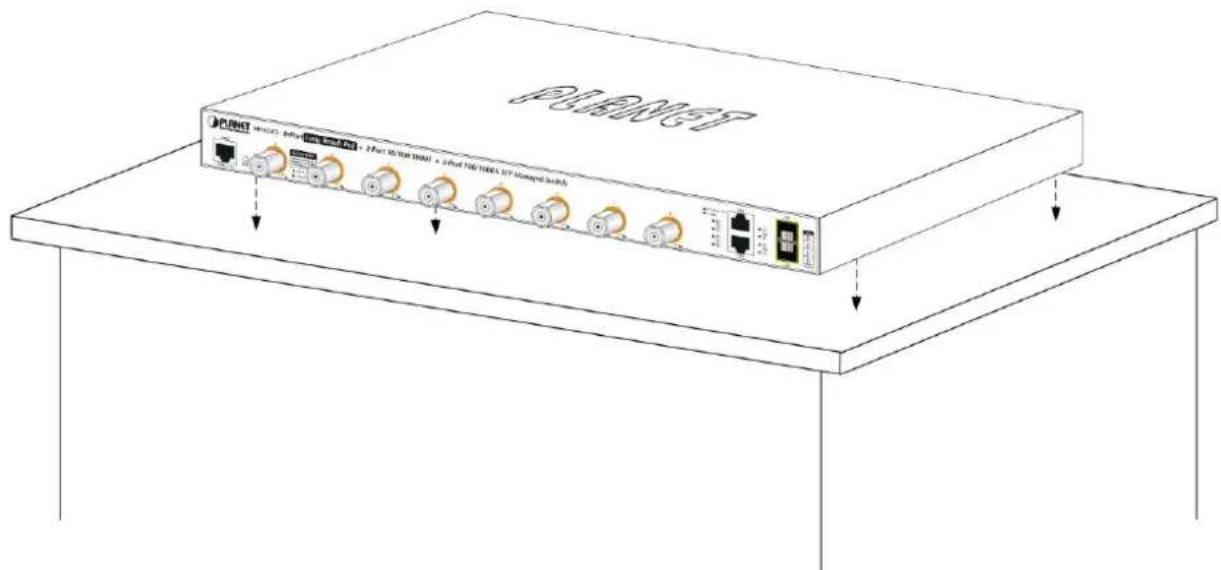
Figure 2-1-4 Place the LRP Managed Switch on the desktop
Step 3: Keep enough ventilation space between the LRP Managed Switch and the surrounding objects.

When choosing a location, please keep in mind the environmental restrictions discussed in Chapter 1, Section 4 under specifications.
Step 4: Connect the LRP Managed Switch to network devices.
Connect one end of a standard network cable to the 10/100/1000 RJ45 ports and standard coaxial cable to LRP ports on the front of the LRP Managed Switch. Connect the other end of the cable to the network devices such as printer server, workstation or router.

Connection to the LRP Managed Switch requires UTP Category 5 network cabling with RJ45 tips. For more information, please see the Cabling Specification in Appendix A.
Step 5: Supply power to the LRP Managed Switch.
Connect one end of the power cable to the LRP Managed Switch. Connect the power plug of the power cable to a standard wall outlet. When the LRP Managed Switch receives power, the Power LED should remain solid Green.
2.2.2 Rack Mounting
To install the LRP Managed Switch in a 19-inch standard rack, please follow the instructions described below.
Step 1: Place the LRP Managed Switch on a hard flat surface, with the front panel positioned towards the front side.
Step 2: Attach the rack-mount bracket to each side of the LRP Managed Switch with supplied screws attached to the package.
Figure 2-1-5 shows how to attach brackets to one side of the LRP Managed Switch.

Figure 2-1-5 Attach Brackets to the LRP Managed Switch.

You must use the screws supplied with the mounting brackets. Damage caused to the parts by using incorrect screws would invalidate the warranty.
Step 3: Secure the brackets tightly.
Step 4: Follow the same steps to attach the second bracket to the opposite side.
Step 5: After the brackets are attached to the LRP Managed Switch, use suitable screws to securely attach the brackets to the rack, as shown in Figure 2-1-6.
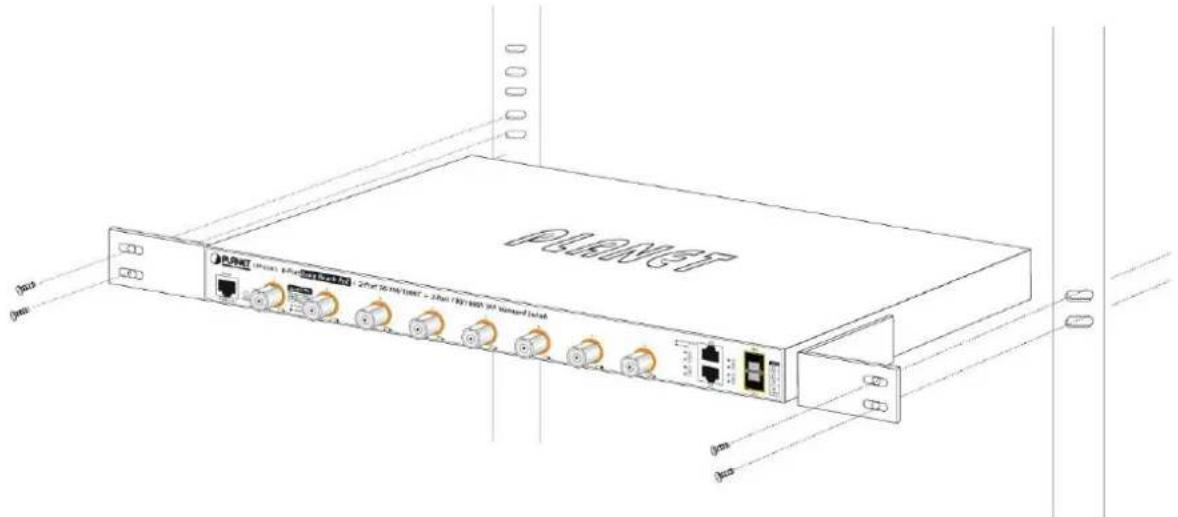
Figure 2-1-6 Mounting LRP Managed Switch in a Rack
Step 6: Proceeds with Steps 4 and 5 of session 2.2.1 Desktop Installation to connect the network cabling and supply power to the LRP Managed Switch.
2.2.3 Installing the SFP transceiver
The sections describe how to insert an SFP transceiver into an SFP slot. The SFP transceivers are hot-pluggable and hot-swappable. You can plug in and out the transceiver to/from any SFP port without having to power down the LRP Managed Switch as Figure 2-1-7 shows.

Figure 2-1-7 Plug in the SFP transceiver
■ Approved PLANET SFP Transceivers
PLANET LRP Managed Switch supports both single mode and multi-mode SFP transceivers. The following list of approved PLANET SFP transceivers is correct at the time of publication:
Gigabit SFP Transceiver Modules
■ MGB-GT SFP-Port 1000BASE-T Module
■ MGB-SX SFP-Port 1000BASE-SX mini-GBIC module
■ MGB-LX SFP-Port 1000BASE-LX mini-GBIC module
■ MGB-L50 SFP-Port 1000BASE-LX mini-GBIC module – 50km
■ MGB-L70 SFP-Port 1000BASE-LX mini-GBIC module – 70km
■ MGB-L120 SFP-Port 1000BASE-LX mini-GBIC module – 120km
■ MGB-LA10 SFP-Port 1000BASE-LX (WDM,TX:1310nm) – 10km
■ MGB-LA20 SFP-Port 1000BASE-LX (WDM,TX:1310nm) – 20km
■ MGB-LB20 SFP-Port 1000BASE-LX (WDM,TX:1550nm) – 20km
■ MGB-LA40 SFP-Port 1000BASE-LX (WDM,TX:1310nm) – 40km
■ MGB-LB40 SFP-Port 1000BASE-LX (WDM,TX:1550nm) – 40km
Fast Ethernet SFP Transceiver Modules
■ MFB-FX SFP-Port 100BASE-FX Transceiver – 2km
■ MFB-F20 SFP-Port 100BASE-FX Transceiver – 20km
■ MFB-F60 SFP-Port 100BASE-FX Transceiver – 60km
■ MFB-FA20 SFP-Port 100BASE-BX Transceiver (WDM,TX:1310nm) – 20km
■ MFB-FB20 SFP-Port 100BASE-BX Transceiver (WDM,TX:1550nm) – 20km

It is recommended to use PLANET SFP on the LRP Managed Switch. If you insert an SFP transceiver that is not supported, the LRP Managed Switch will not recognize it.

In the installation steps below, this Manual uses Gigabit SFP transceiver as an example. However, the steps for Fast Ethernet SFP transceiver are similar.
-
Before we connect LRP Managed Switch to the other network device, we have to make sure both sides of the SFP transceivers are with the same media type, for example, 1000BASE-SX to 1000BASE-SX, 1000BASE-LX to 1000BASE-LX.
-
Check whether the fiber-optic cable type matches with the SFP transceiver requirement.
To connect to 1000BASE-SX SFP transceiver, please use the multi-mode fiber cable with one side being the male duplex LC connector type.
To connect to 1000BASE-LX SFP transceiver, please use the single-mode fiber cable with one side being the male duplex LC connector type.
■ Connect the Fiber Cable
- Insert the duplex LC connector into the SFP transceiver.
- Connect the other end of the cable to a device with SFP transceiver installed.
- Check the LNK/ACT LED of the SFP slot on the front of the LRP Managed Switch. Ensure that the SFP transceiver is operating correctly.
- Check the Link mode of the SFP port if the link fails. To function with some fiber-NICs or media converters, user has to set the port Link mode to "1000 Force" or "100 Force".
■ Remove the Transceiver Module
- Make sure there is no network activity anymore.
- Remove the fiber-optic cable gently.
- Lift up the lever of the MGB module and turn it to a horizontal position.
- Pull out the module gently through the lever.
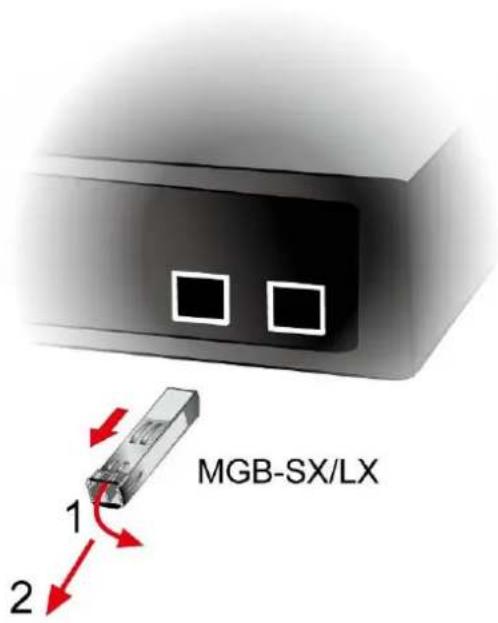
Figure 2-1-8 How to Pull Out the SFP Transceiver

Note
Never pull out the module without lifting up the lever of the module and turning it into a horizontal position. Directly pulling out the module could damage the module and the SFP module slot of the LRP Managed Switch.
2.2.4 Installing the Long Reach PoE Communication
The sections describe how to insert a coaxial cable into a BNC female port. You can plug in and out the coaxial cable to/from any BNC female port without having to power down the LRP Managed Switch.
■ Approved PLANET Long Reach PoE Extenders
The following list of approved PLANET Long Reach PoE extenders is correct at the time of publication:
Long Reach Ethernet Coaxial Extenders
■ LRP-101CE
1-Port 10/100TX PoE PSE + 1-Port Coax Long Reach PoE Extender

It is recommended to use PLANET Long Reach Ethernet coaxial extenders on the LRP Managed Switch. If you insert a coaxial extender that is not supported, the LRP Managed Switch may damage it.
- Before we connect LRP Managed Switch to the other network device, we have to make sure both sides of the Long Reach Ethernet coaxial extender/transceiver are with the same media type.
- Check whether the coaxial cable type matches with the Long Reach Ethernet coaxial extender/transceiver requirement.
To connect to LRP Managed Switch, please use the coaxial cable with 75Ω BNC plug with one side being the BNC plug connector type.
To connect to Long Reach Ethernet coaxial extenders, please use the coaxial cable with one side being the 75Ω BNC plug connector type.

Because there are various resistance values in the category of RG-59/U or RG-6/U cables, please take care of the conditions of the resistance value of cables as follows:
| Coaxial Cable Type | |||
| RG-59/U | Less | than | 30Ω/1000 ft. |
| RG-6/U | Less | than | 12Ω/1000 ft |

In the installation steps below, this Manual uses Long Reach Ethernet coaxial extender as an example.
■ Connect the Coaxial Cable
- Insert the coaxial cable with one side being the 75Ω BNC plug connector into the Long Reach Ethernet coaxial interface.
- Connect the other end of the cable to a device with Long Reach Ethernet coaxial extender installed.
3. Tighten the BNC male connector gently.

Figure 2-1-8 How to insert the coaxial cable from LRP Managed Switch
4. Enable Long Reach Power over Ethernet function for the all LRP ports from WebUI

5. Check the LNK LED of the Long Reach Power over Ethernet interface on the front of the LRP Managed Switch. Ensure that the Long Reach Power over Ethernet interface is operating correctly.
■ Remove the connected the Coaxial Cable
- Make sure there is no network activity anymore.
- Disable Long Reach Power over Ethernet function for the all LRP ports from WebUI.

. Loosen the BNC male connector gently. 3
4. Pull out the coaxial cable gently.
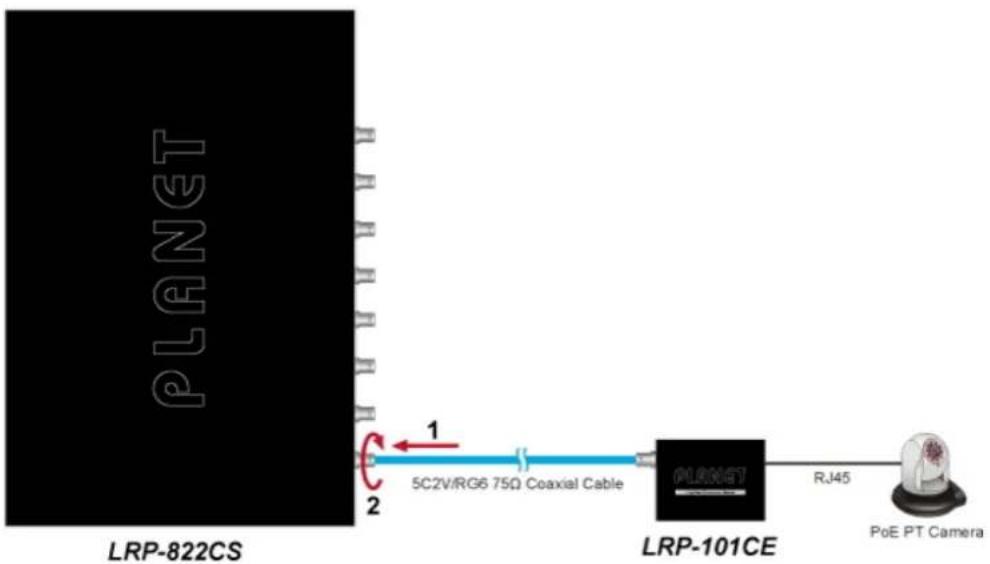
Figure 2-1-8 How to pull out the coaxial cable from LRP Managed Switch

Note
Never pull out the coaxial cable without disabling Long Reach Power over Ethernet function for the port from WebUI. Directly pulling out the coaxial cable could damage the Long Reach Ethernet coaxial extender and the BNC female connector of the LRP Managed Switch.

- The package contains eight warning stickers, which should be stuck on the coaxial cable connector before using PLANET LRP Managed Switch and LRP extender. If connected with non-PLANET LRP series extender equipment, it might cause damage to the equipment.
Please stick the sticker on the connector going to the LRP Extender

Warning: This side of connector contains electric power. Please be careful before plugging into the device.

Warning: This side of connector contains electric power. Please be careful before plugging into the device.
- After the LRP export is enabled, the pin center of the coaxial cable has electri the pin center or connect this end to any non- PLANET LRP equipment.

3. SWITCH MANAGEMENT
This chapter explains the methods that you can use to configure management access to the LRP Managed Switch. It describes the types of management applications and the communication and management protocols that deliver data between your management device (workstation or personal computer) and the system. It also contains information about port connection options.
This chapter covers the following topics:
- Requirements
■ Management Access Overview
■ Administration Console Access
■ Web Management Access
SNMP Access
■ Standards, Protocols, and Related Reading
3.1 Requirements
■ Workstations running Windows 2000/XP, 2003, Vista/7/8, 2008, MAC OS9 or later, Linux, UNIX or other platforms are compatible with TCP/IP protocols.
■ Workstation is installed with Ethernet NIC (Network Interface Card)
■ Serial Port connect (Terminal)
- The above PC with COM Port (DB9 / RS232) or USB-to-RS232 converter
■ Ethernet Port connection
- Network cables -- Use standard network (UTP) cables with RJ45 connectors.
■ The above Workstation is installed with Web browser and JAVA runtime environment plug-in

It is recommended to use Internet Explore 8.0 or above to access LRP Managed Switch.
3.2 Management Access Overview
The LRP Managed Switch gives you the flexibility to access and manage it using any or all of the following methods:
■ An administration console
■ Web browser interface
■ An external SNMP-based network management application
The administration console and Web browser interface support are embedded in the LRP Managed Switch software and are available for immediate use. Each of these management methods has their own advantages. Table 3-1 compares the three management methods.
| Method Advantages Disadvantages | ||
| Console | No IP address or subnet neededText-basedTelnet functionality and HyperTerminal built into Windows95/98/NT/2000/ME/XP operating systemsSecure | Must be near the switch or use dial-up connectionNot convenient for remote usersModem connection may prove to be unreliable or slow |
| Web Browser | Ideal for configuring the switch remotelyCompatible with all popular browsersCan be accessed from any locationMost visually appealing | Security can be compromised (hackers need only know the IP address and subnet mask)May encounter lag times on poor connections |
| SNMP Agent | Communicates with switch functions at the MIB levelBased on open standards | Requires SNMP manager softwareLeast visually appealing of all three methodsSome settings require calculationsSecurity can be compromised (hackers only unity name) need to kno |
Table 3-1 Comparison of Management Methods
3.3 Administration Console
The administration console is an internal, character-oriented, and command line user interface for performing system administration such as displaying statistics or changing option settings. Using this method, you can view the administration console from a terminal, personal computer, Apple Macintosh, or workstation connected to the LRP Managed Switch's console port.
![graph LR A["PC / Workstation with Terminal Emulation Software"] --> B["Serial Port"] B --> C["RS232 to RJ45 Cable"] C --> D["Managed Switch"] D --> E["RJ45 Console Port"]](/content/2026/06/1225141/images/2495c4d561916d9f54b2146ee161994e9e86eb99f535bcb8819f0c05a7e9da80.jpg)
Figure 3-1-1: Console Management
Direct Access
Direct access to trade is achieved by directly connecting a terminal or a PC equipped with a
terminal-emulation program (such as HyperTerminal) to the LRP Managed Switch console (serial) port. When using this management method, a straight RS232 to RJ45 cable is required to connect the switch to the PC. After making this
connection, configur
wing parameters: e the terminal-emulation program to use the follo
The default parameters are:
■ 115200 bps
■ 8 data bits
■ No parity
■ 1 stop bit

Figure 3-1-2: Terminal Parameter Settings
You can change these settings, if desired, after you log on. This management method is often preferred because you can remain connected and monitor the system during system reboots. Also, certain error messages are sent to the serial port,
regardless of the interface through which the associated action was initiated. A Macintosh or PC attachment can use any terminal-emulation program for connecting to the terminal serial port. A workstation attachment under UNIX can use an emulator such as TIP.
3.4 Web Management
The LRP Managed Switch offers management features that allow users to manage the LRP Managed Switch from anywhere on the network through a standard browser such as Microsoft Internet Explorer. After you set up your IP address for the switch, you can access the LRP Managed Switch's Web interface applications directly in your Web browser by entering the IP address of the LRP Managed Switch.
![graph LR A["Managed Switch"] -->|IP Address: 192.168.0.100| B["RJ45/UTP Cable"] B --> C["PC / Workstation with Web Browser 192.168.0.x"]](/content/2026/06/1225141/images/d944c9235438d4d59952754525612cb3c433e755efd11cb7a6e2181991d68467.jpg)
Figure 3-1-3 Web Management
You can then use your Web browser to list and manage the LRP Managed Switch configuration parameters from one central location, just as if you were directly connected to the LRP Managed Switch's console port. Web Management requires either Microsoft Internet Explorer 8.0 or later, Google Chrome, Safari or Mozilla Firefox 1.5, or later.

Figure 3-1-4 Web Main Screen of LRP Managed Switch
3.5 SNMP-based Network Management
You can use an external SNMP-based application to configure and manage the LRP Managed Switch, such as SNMP Network Manager, HP Openview Network Node Management (NNM) or What's Up Gold. This management method requires the SNMP agent on the switch and the SNMP Network Management Station to use the same community string. This management method, in fact, uses two community strings: the get community string and the set community string. If the SNMP Net-work management Station only knows the set community string, it can read and write to the MIBs. However, if it only knows the get community string, it can only read MIBs. The default gets and sets community strings for the LRP Managed Switch are public.
![graph LR A["IP Address: 192.168.0.x"] --> B["Internet"] C["PC / Workstation with SNMP application"] --> B D["Managed Switch\nSNMP Agent Status: Enabled"] --> B B --> E["IP Address: 192.168.0.100"]](/content/2026/06/1225141/images/28f70b78e03c0e9b5dba705f35af997f6343a7b69b082fae989b8bc8762a9cda.jpg)
Figure 3-1-5 SNMP management
3.6 PLANET Smart Discovery Utility
For easily listing the LRP Managed Switch in your Ethernet environment, the Planet Smart Discovery Utility from user's manual CD-ROM is an ideal solution. The following installation instructions are to guide you to running the Planet Smart Discovery Utility.
- Deposit the Planet Smart Discovery Utility in administrator PC.
- Run this utility as the following screen appears.
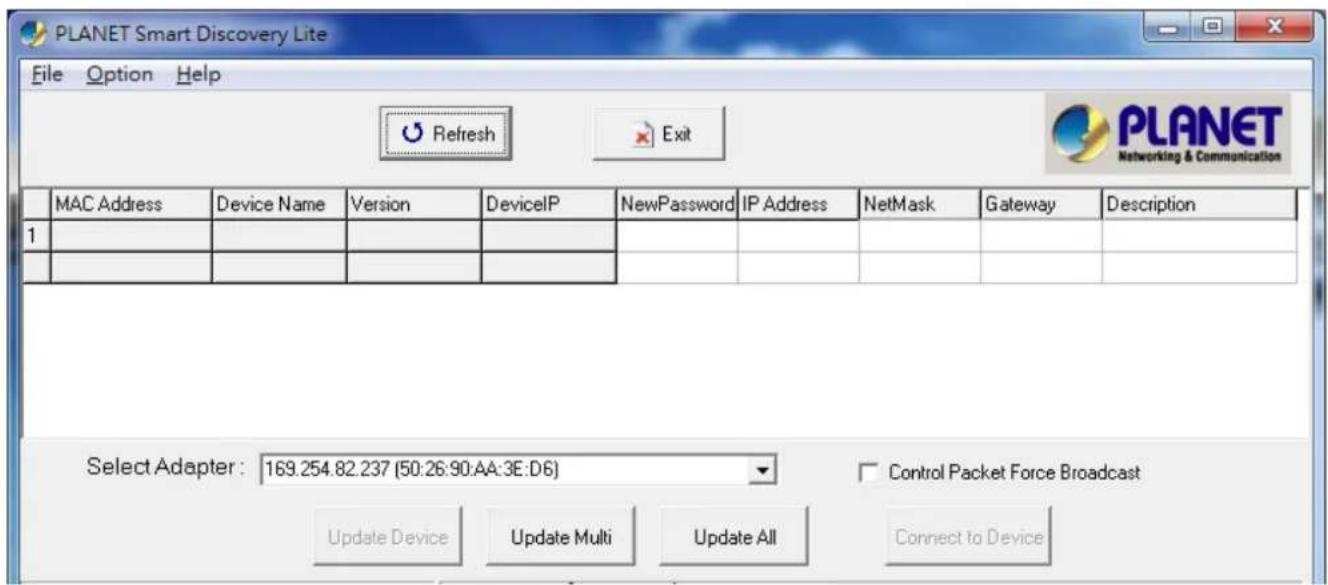
Figure 3-1-6: Planet Smart Discovery Utility Screen

If there are two LAN cards or above in the same administrator PC, choose a different LAN card by using the "Select Adapter" tool.
- Press the "Refresh" button for the currently connected devices in the discovery list as the screen shows below:
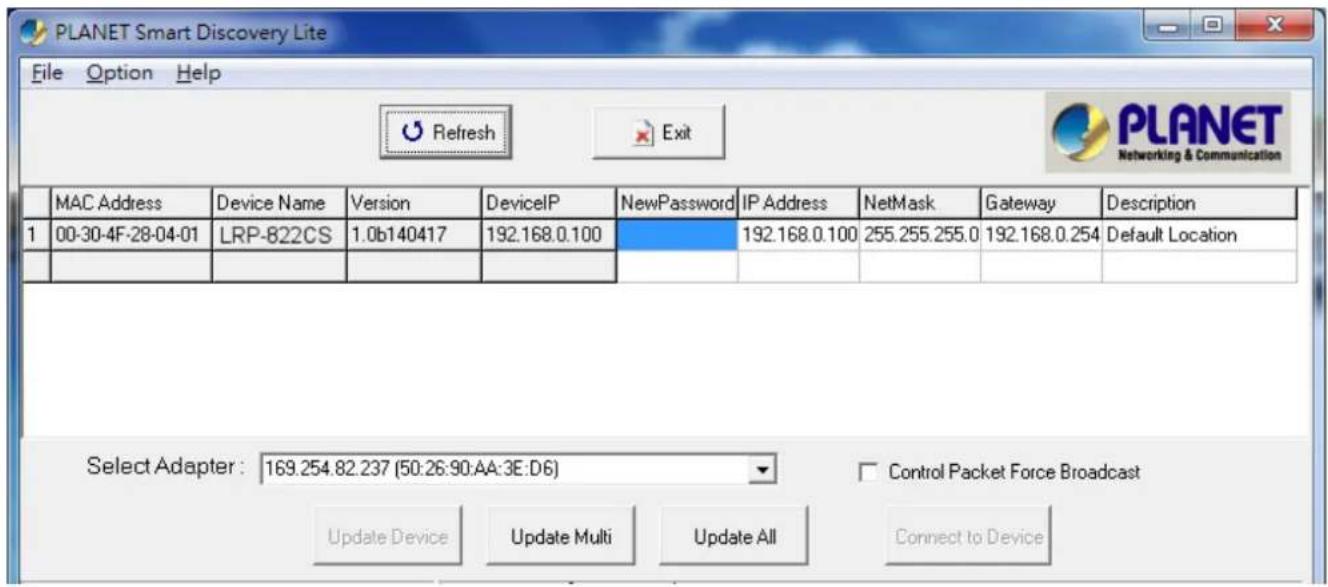
Figure 3-1-7: Planet Smart Discovery Utility Screen
- This utility shows all necessary information from the devices, such as MAC Address, Device Name, firmware version and Device IP Subnet address. It can also assign new password, IP subnet address and description to the devices.
- After setup is completed, press the "Update Device", "Update Multi" or "Update All" button to take effect. The meaning of the 3 buttons above are shown below:
■ Update Device: use the current setting on one single device.
■ Update Multi: use the current setting on multi-devices.
■ Update All: use the current setting on whole devices in the list.
The same functions mentioned above also can be found in "Option" tools bar.
- To click the "Control Packet Force Broadcast" function, it allows you to assign a new setting value to the Web Smart Switch under a different IP subnet address.
- Press the "Connect to Device" button and the Web login screen appears in Figure 3-1-4.
- Press the "Exit" button to shut down the Planet Smart Discovery Utility.
This section introduces the configuration and functions of the Web-based management.
About Web-based Management
The LRP Managed Switch offers management features that allow users to manage the LRP Managed Switch from anywhere on the network through a standard browser such as Microsoft Internet Explorer.
The Web-based Management supports Internet Explorer 8.0. It is based on Java Applets with an aim to reduce network bandwidth consumption, enhance access speed and present an easy viewing screen.

By default, IE8.0 or later version does not allow Java Applets to open sockets. The user has to explicitly modify the browser setting to enable Java Applets to use network ports.
The LRP Managed Switch can be configured through an Ethernet connection, making sure the manager PC must be set on the same IP subnet address as the LRP Managed Switch.
For example, the default IP address of the LRP Managed Switch is 192.168.0.100, then the manager PC should be set at 192.168.0.x (where x is a number between 1 and 254, except 100), and the default subnet mask is 255.255.255.0.
If you have changed the default IP address of the LRP Managed Switch to 192.168.1.1 with subnet mask 255.255.255.0 via console, then the manager PC should be set at 192.168.1.x (where x is a number between 2 and 254) to do the relative configuration on manager PC.
![graph LR A["Managed Switch"] -->|IP Address: 192.168.0.100| B["RJ45/UTP Cable"] B --> C["PC / Workstation with Web Browser 192.168.0.x"]](/content/2026/06/1225141/images/8f48570be6f83b6aabc995c6ac967a665743376b5fcab9197cfd48d415dc2875.jpg)
Figure 4-1-1 Web Management
■ Logging on the switch
- Use Internet Explorer 8.0 or above Web browser. Enter the factory-default IP address to access the Web interface. The factory-default IP address is as follows:
http://192.168.0.100
- When the following login screen appears, please enter the default username "admin" with password "admin" (or the username/password you have changed via console) to login the main screen of LRP Managed Switch. The login screen in Figure 4-1-2 appears.

Figure 4-1-2 Login screen
Default User Name: admin
Default Password: admin
After entering the username and password, the main screen appears as Figure 4-1-3.

Figure 4-1-3 Default Main Page
Now, you can use the Web management interface to continue the switch management or manage the LRP Managed Switch by Web interface. The Switch Menu on the left of the web page lets you access all the commands and statistics the LRP Managed Switch provides.

It is recommended to use Internet Explore 8.0 or above to access LRP Managed Switch.
The changed IP address takes effect immediately after clicking on the Save button. You need to use the new IP address to access the Web interface.

For security reason, please change and memorize the new password after this first setup.
■ Only accept command in lowercase letter under Web interface.
4.1 Main Web Page
The LRP Managed Switch provides a Web-based browser interface for configuring and managing it. This interface allows you to access the LRP Managed Switch using the Web browser of your choice. This chapter describes how to use the LRP Managed Switch's Web browser interface to configure and manage it.
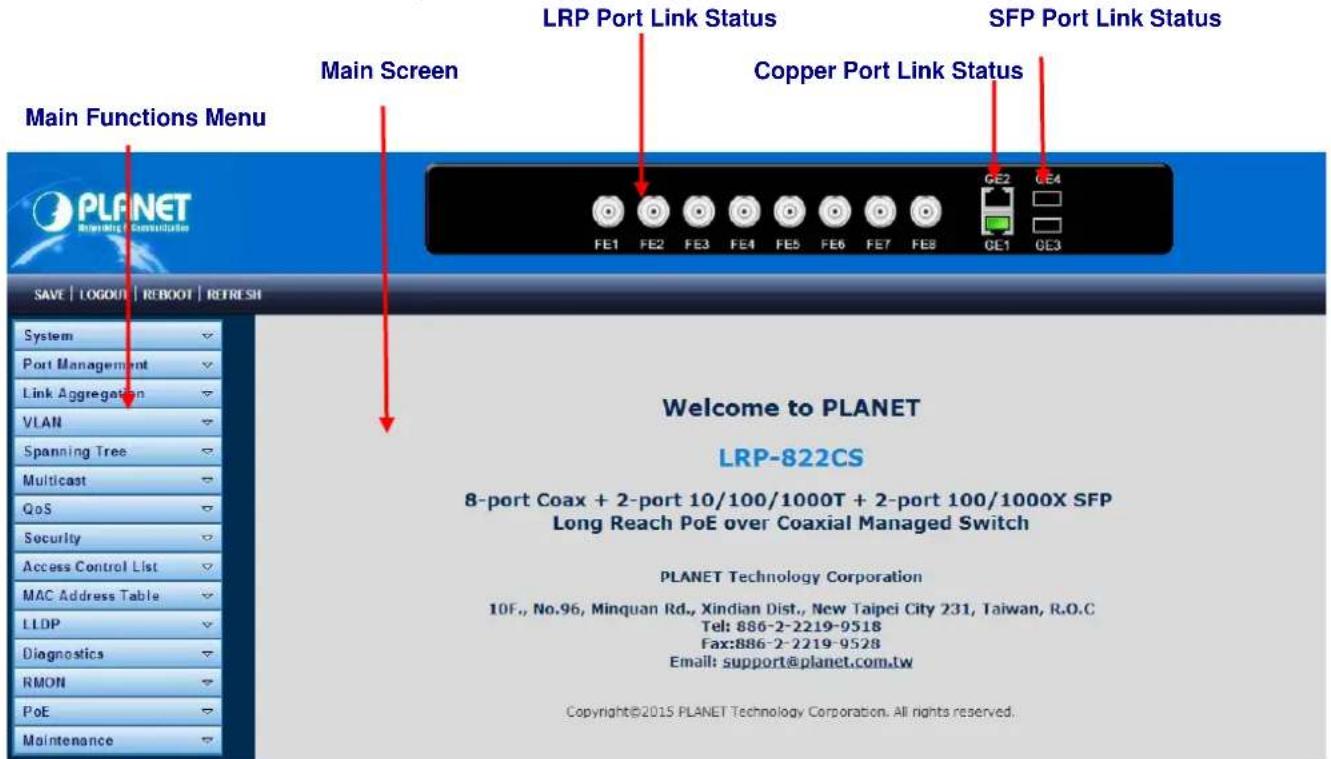
Figure 4-1-4 Main Page
Panel Display
The Web agent displays an image of the LRP Managed Switch's ports. The Mode can be set to display different information for the ports, including Link up or Link down. Clicking on the image of a port opens the Port Statistics page.
The port states are illustrated as follows:

Main Menu
Using the onboard Web agent, you can define system parameters, manage and control the LRP Managed Switch, and all its ports, or monitor network conditions. Via the Web-Management, the administrator can set up the LRP Managed Switch by selecting the functions those listed in the Main Function. The screen in Figure 4-1-5 appears.
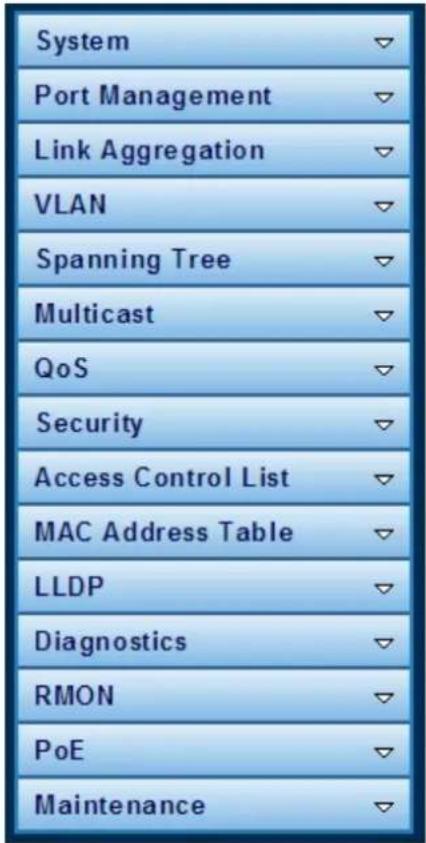
Figure 4-1-5 LRP Managed Switch Main Functions Menu
Buttons
SAVE
: Click to save changes or reset to default.
LOGOUT
Click to logout the LRP Managed Switch.
REBOOT
Click to reboot the LRP Managed Switch.
REFRESH
: Click to refresh the page.
4.1.1 Save Button
This save button allows save the running pstartup / back configuration o eset switch in default parameter. The screen in Figure 4-1-6 appears.

Figure 4-1-6 Save Button Screenshot
The page includes the following fields:
| Object Description | |
| • Save Configuration to FLASH | Click to save the configuration. For more detailed information, please refer to chapter 4.1.2 |
| • Restore to Default | Click to reset switch in default parameter. For more detailed information, please refer to chapter 4.15.1 |
4.1.2 Configuration Manager
The system file folder contains configuration settings. The screen in Figure 4-1-7 appears.
Save Configuration
| Source File | Running configurationStartup configurationBackup configuration |
| Destination File | Startup configurationBackup configuration |
Apply
Figure 4-1-7 Save Button Screenshot
The page includes the following fields:
| Object Description | |
| • Running Configuration | Refers to the running configuration sequence use in the switch. In switch, the running configuration file stores in the RAM. In the current version, the running configuration sequence running-config can be saved from the RAM to FLASH by saving “Source File = Running Configuration” to “Destination File = Startup Configuration”, so that the running configuration sequence becomes the startup configuration file, which is called configuration save. To prevent illicit file upload and easier configuration, switch mandates the name of running configuration file to be running-config. |
| • Startup Configuration | Refers to the configuration sequence used in switch startup. Startup configuration file stores in nonvolatile storage, corresponding to the so-called configuration save. If the device supports multi-config file, name the configuration file to be .cfg file, the default is startup.cfg. If the device does not support multi-config file, mandates the name of startup configuration file to be startup-config. |
| • Backup Configuration | The backup configuration is empty in FLASH; please save the backup configuration first by “Maintenance > Backup Manager”. |
Buttons
Apply
: Click to save configuration.
4.1.2.1 Saving Configuration
In the LRP Managed Switch, the running configuration file stores in the RAM. In the current version, the running configuration sequence of running-config can be saved from the RAM to FLASH by "Save Configurations to FLASH" function, so that the running configuration sequence becomes the startup configuration file, which is called configuration save.
To save all applied changes and set the current configuration as a startup configuration. The startup-configuration file will be loaded automatically across a system reboot.
- Click "Save > Save Configurations to FLASH" to login the "Configuration Manager" page.

- Select "Source File = Running Configuration" and "Destination File = Startup Configuration".
Save Configuration
| Source File | Running configurationStartup configurationBackup configuration |
| Destination File | Startup configurationBackup configuration |
Apply
- Press the "Apply" button to save running configuration to start up configuration.
4.2 System
Use the System menu items to display and configure basic administrative details of the LRP Managed Switch. Under System the following topic via provided system configuration. This section has the following items:
System Information The switch system information is provided here.
IP Configurations Configure the switch-managed IP information on this page.
■ IPv6 Configuration Configure the switch-managed IPv6 information on this page.
■ User Configuration Configure new user name and password on this page.
■ Time Settings Configure SNTP on this page.
Log Management The switch log information is provided here.
SNMP Management Configure SNMP on this page.
4.2.1 System Information
The System Info page provides information for the current device information. System Info page helps a switch administrator to identify the hardware MAC address, software version and system uptime. The screens in Figure 4-2-1 & Figure 4-2-2 appear.
| Information Name | Information Value |
| System Name | Edit LRP-822CS |
| System Location | Edit Default Location |
| System Contact | Edit Default Contact |
| MAC Address | 00:30:4F:00:00:00 |
| IP Address | 192.168.0.100 |
| Subnet Mask | 255.255.255.0 |
| Gateway | 192.168.0.254 |
| Loader Version | 2011.12.46351 |
| Loader Date | Apr 16 2014 - 14:51:06 |
| Firmware Version | 1.0b150417 |
| Firmware Date | Wed May 7 15:41:06 UZT 2015 |
| System Object ID | 1.3.6.1.4.1.10456.1.1509 |
| System Up Time | 0 days, 2 hours, 6 mins, 32 secs |
| PCB/HW Version | V1 |
Figure 4-2-1 System Information Page Screenshot
e following fields: The page includes th
| Object Description | |
| • System Name | Display the current system name |
| • System Location | Display the current system location |
| • System Contact | Display the current system contact |
| • MAC Address | The MAC address of this LRP Managed Switch. |
| • IP Address | The IP address of this LRP Managed Switch. |
| • Subnet Mask | Managed Switch. The subnet mask of this LRP |
| • Gateway | The gateway of this LRP Managed Switch. |
| • Loader Version | The loader version of this LRP Managed Switch. |
| • Loader Date | The loader date of this LRP Managed Switch. |
| • Firmware Version | The firmware version of this LRP Managed Switch. |
| • Firmware Date | The firmware date of this LRP Managed Switch. |
| • System Object ID | The system object ID of the LRP Managed Switch. |
| • System Up Time | The period of time the device has been operational. |
| • PCN/HW Version | The hardware version of this LRP Managed Switch. |
Buttons
Edit
Click to edit parameter.
4.2.2 IP Configurations
The IP Configuration includes the IP Address, Subnet Mask and Gateway. The configured column is used to view or change the IP configuration. Fill out the IP Address, Subnet Mask and Gateway for the device. The screens in Figure 4-2-2 & Figure 4-2-3 appear.
IP Address Setting
| Mode | Static DHCP |
| IP Address | 192.168.1.1 |
| Subnet Mask | 255.255.255.0 |
| Gateway | 192.168.1.254 |
| DNS Server 1 | 168.95.1.1 |
| DNS Server 2 | 168.95.192.1 |
Apply
Figure 4-2-2 IP Address Setting Page Screenshot
The page includes the following fields:
| Object Description | |
| • Mode | Indicates the IP address mode operation. Possible modes are:Static: Enable NTP mode operation.When enabling NTP mode operation, the agent forwards and transfersNTP messages between the clients and the server when they are not onthe same subnet domain.DHCP: Enable DHCP client mode operation.Enable the DHCP client by checking this box. If DHCP fails and theconfigured IP address is zero, DHCP will retry. If DHCP fails and theconfigured IP address is non-zero, DHCP will stop and the configured IPsettings will be used. The DHCP client will announce the configuredSystem Name as hostname to provide DNS lookup. |
| • IP Address | Provide the IP address of this switch in dotted decimal notation. |
| • Subnet Mask | Provide the subnet mask of this switch in dotted decimal notation. |
| • Gateway | Provide the IP address of the router in dotted decimal notation. |
| • DNS Server 1/2 | Provide the IP address of the DNS Server in dotted decimal notation. |
Buttons
Apply
Click to apply changes.
| Information Name | Information Value |
| DHCP State | Disabled |
| Static IP Address | 192.168.1.1 |
| Static Subnet Mask | 255.255.255.0 |
| Static Gateway | 192.168.1.254 |
| Static DNS Server 1 | 168.95.1.1 |
| Static DNS Server 2 | 168.95.192.1 |
Figure 4-2-3 IP Information Page Screenshot
The page includes the following fields:
| Object Description | |
| DHCP State | Display the current DHCP state. |
| IP Address | Display the current IP address. |
| Subnet Mask | Display the current subnet mask. |
| Gateway | Display the current gateway. |
| DNS Server 1/2 | Display the current DNS server. |
4.2.3 IPv6 Configuration
The IPv6 Configuration includes Auto Configuration, IPv6 Address and Gateway. The configured column is used to view or change the IPv6 configuration. Fill out the Auto Configuration, IPv6 Address and Gateway for the device. The screens in Figure 4-2-4 & Figure 4-2-5 appear.

Figure 4-2-4 IPv6 Address Setting Page Screenshot
The page includes the following fields:
| Object Description | |
| • Auto Configuration | Enable IPv6 auto-configuration by checking this box.If it fails, the configured IPv6 address is zero. The router may delay responding to a router solicitation for a few seconds; the total time needed to complete nfiguration can be significantly longer. auto-co |
| • IPv6 Address | Provide the IPv6 address of this switch.IPv6 address is in 128-bit records represented as eight fields of up to four hexadecimal digits with a colon separating each field ():. For example,'fe80::215:c5ff:fe03:4dc7'.The symbol '::' is a special syntax that can be used as a shorthand way of representing multiple 16-bit groups of contiguous zeros; but it can only appear once. It also uses the following legally IPv4 address. For example, ':192.1.2.34'.Provide the IPv6 Prefix of this switch. The allowed range is 1 through 128. |
| • Gateway | Provide the IPv6 gateway address of this switch. |
| • DHCPv6 Client | To enable this LRP Managed Switch to accept a configuration from a Dynamic Host Configuration Protocol version 6 (DHCPv6) server. By default, the LRP Managed Switch does not perform DHCPv6 client actions. DHCPv6 clients request the delegation of long-lived prefixes that they can push to individual local hosts. |
Buttons
Apply
: Click to apply changes.
IPv6 Information
| Information Name | Information Value |
| Auto Configuration | Enabled |
| IPv6 In Use Address | fe80::2e0:4cff:fe00:0 / 64 |
| IPv6 In Use Router | :: |
| IPv6 Static Address | fe80::2e0:4cff:fe00:0 / 0 |
| IPv6 Static Router | :: |
| DHCPv6 Client | Disabled |
Figure 4-2-5 IPv6 Information Page Screenshot
elds: The page includes the following fi
| Object Description | |
| • Auto Configuration | Display the current auto configuration state |
| • IPv6 In Use Address | Display the current IPv6 in-use address |
| • IPv6 In Use Router | Display the current in-use gateway |
| • IPv6 Static Address | Display the current IPv6 static address |
| • IPv6 Static Router | Display the current IPv6 static gateway |
| • DHCPv6 Client | atus Display the current DHCPv6 client st |
4.2.4 User Configuration
This page provides an overview of the current users and privilege type. Currently the only way to login as another user on the Web server is to close and reopen the browser. After the setup is completed, please press the "Apply" button to take effect. Please login Web interface with a new user name and password; the screens in Figure 4-2-6 & Figure 4-2-7 appear.

Figure 4-2-6 Local User Information Page Screenshot
The page includes the following fields:
| Object Description | |
| •Username | The name identifying the user.Maximum length: 32 characters;Maximum number of users: 8 |
| •Password Type | type for the user. The password |
| •Password | Enter the user's new password here.(Range: 0-32 characters plain text, case sensitive) |
| •Retype Password | Please enter the user's new password here again to confirm. |
| •Privilege Type | The privilege type for the user.Options:AdminUserOther |
Buttons
Apply
Click to apply changes.
| User Name | Password Type | Privilege Type | Privilege Value | Modify |
| admin | Encrypted | Admin | 15 |
Figure 4-2-7 Local User Page Screenshot
The page includes the following fields:
| Object Description | |
| •Username | Display the current username |
| •Password Type | Display the current password type |
| •Privilege Type | Display the current privilege type |
| •Modify | Click to modify the local user entryDelete: Delete the current user |
4.2.5 Time Settings
4.2.5.1 System Time
Configure SNTP on this page.
SNTP is an acronym for Simple Network Time Protocol, a network protocol for synchronizing the clocks of computer systems. You can specify SNTP Servers and set GMT Time zone. The SNTP Configuration screens in Figure 4-2-8 & Figure 4-2-9 appear.

Figure 4-2-8 SNTP Setup Page Screenshot
The page includes the following fields:
| Object Description | |
| • Enable SNTP | Enabled: Enable SNTP mode operation.When enabling SNTP mode operation, the agent forwards and transfersSNTP messages between the clients and the server when they are not on the same subnet domain. Disabled: Disable SNTP mode operation. |
| • Manual Time | To set time manually.■ Year - Select the starting Y ear.■ Month - Select the starting month.■ Day - Select the starting day.■ hours - Select the starting minutes - Select the starting minute.■ Seconds - Select the starting seconds. |
| • Time Zone | Allows to select the time zone according to the current location of switch. |
| • Daylight Saving Time | This is used to set the clock forward or backward according to the configurations set below for a defined Daylight Saving Time duration. Select 'Disable' to disable the Daylight Saving Time configuration. Select 'Recurring' and configure the Daylight Saving Time duration to repeat the configuration every year. Select 'Non-Recurring' and configure the Daylight Saving Time duration for single time configuration. (Default : Disabled ). |
| • Daylight Saving Time Offset | Enter the number of minutes to add during Daylight Saving Time. ( Range: 1 to 1440 ) |
| • Recurring From | • Week - Select the starting week number.· Day - Select the starting day.· Month - Select the starting month.· Hours - Select the starting hour.· Minutes - Select the starting minute. |
| • Recurring To | • Week - Select the starting week number.· Day - Select the starting day.· Month - Select the starting month.· Hours - Select the starting hour.· Minutes - Select the starting minute. |
| • Non-recurring From | • Week - Select the starting week number.· Day - Select the starting day.· Month - Select the starting month.· Hours - Select the starting hour.· Minutes - Select the starting minute. |
| • Non-recurring To | • Week - Select the starting week number.· Day - Select the starting day.· Month - Select the starting month.· Hours - Select the starting hour.· Minutes - Select the starting minute. |
Buttons
Apply
: Click to apply changes.
System Time Informations
| Information Name | Information Value |
| Current Date/Time | 09:13:10 DFL(UTC+8) Jan 01 2000 |
| SNTP | Disabled |
| Time zone | UTC+8 |
| Daylight Saving Time | Disabled |
| Daylight Saving Time Offset | |
| From | |
| To |
Figure 4-2-9 Time Information Page Screenshot
ds: The page includes the following fiel
| Object Description | |
| • Current Data/Time | Display the current data/time |
| • SNTP | Display the current SNTP state |
| • Time Zone | Display the current time zone |
| • Daylight Saving Time | Display the current daylight saving time state |
| • Daylight Saving Time Offset | Display the current daylight saving time offset state |
| • From | Display the current daylight saving time from |
| • To | Display the current daylight saving time to |
4.2.5.2 SNTP Server Settings
The SNTP Server Configuration screens in Figure 4-2-10 & Figure 4-2-11 appear.

Figure 4-2-10 SNTP Setup Page Screenshot
The page includes the following fields:
| Object Description | |
| • SNTP Server Address | Type the IP address or domain name of the SNTP server |
| • Server Port | Type the port number of the SNTP |
Buttons
Apply
: Click to apply changes.
| Information Name | Information Value |
| SNTP Server Address | |
| SNTP Server Port | 123 |
Figure 42:1nshGNTP Server Information Page S
The page includes the following fields:
| Object Description | |
| • SNTP Server Address | Display the current SNTP server address |
| • Server Port | Display the current SNTP server port |
4.2.6 Log Management
The LRP Managed Switch log management is provided here. The local logs allow you to configure and limit system messages that are logged to flash or RAM memory. The default is for event levels 0 to 3 to be logged to flash and levels 0 to 6 to be logged to RAM. The following table lists the event levels of the LRP Managed Switch:
| Level Severity Name Description | ||
| 7 | Debug | Debugging messages |
| 6 | Informational | Informational messages only |
| 5 | Notice | Normal but significant condition, such as cold start |
| 4 | Warning | Warning conditions (e.g., return false, unexpected return) |
| 3 | Error | Error conditions (e.g., invalid input, default used) |
| 2 | Critical | Critical conditions (e.g., memory allocation, or free memory error - resource exhausted) |
| 1 | Alert | Im eded mediate action ne |
| 0 | Emergency | System unusable |
4.2.6.1 Local Log
The switch system local log information is provided here. The local Log screens in Figure 4-2-12 & Figure 4-2-13 appear.

Figure 4-2-12 Logging Settings Page Screenshot
The page includes the following fields:
| Object Description | |
| • Logging Service | Enabled: Enable logging service operation. |
| Disabled: Disable logging service operation. |
Buttons
Apply
: Click to apply changes.
| Information Name | Information Value |
| Logging Service | enabled |
Figure 4-2-13 Logging Information Page Screenshot
The page includes the foll wing fields: o
| Object Description | |
| • gg Lo ing Service | Display the current logging service status |
4.2.6.2 Local Log
The switch system local log information is provided here. The local Log screens in Figure 4-2-14 & Figure 4-2-15 appear.

Figure 4-2-14 Local Log Target Setting Page Screenshot
The page includes the following fields:
| Object Description | |
| • Target | The target of the local log entry. The following target types are supported:Buffered: Target the buffer of the local log.File: Target the file of the local log. |
| • Severity | The severity of the local log entry. The following severity types are supported:emerg: Emergency level of the system unstable for local log.alert: Alert level of the immediate action needed for local log.crit: Critical level of the critical conditions for local log.error: Error level of the error conditions for local log.warning: Warning level of the warning conditions for local log.notice: Notice level of the normal but significant conditions for local log.info: Informational level of the informational messages for local log.debug: Debug level of the debugging messages for local log. |
Buttons
Apply
: Click to apply changes.
| Status | Target | Soverity | Action |
| enabled | buffered | emerg, alert, crit, error, warning, notice | Delete |
Figural 4.2g15elting Status Page Screenshot
The page includes the following fields:
| Object Description | |
| • Status | Display the current local log state |
| • Target | Display the current local log target |
| • Severity | Display the current local log severity |
| • Action | Delete: Delete the current status |
4.2.6.3 Remote Syslog
Configure remote syslog on this page. The Remote Syslog page allows you to configure the logging of messages that are sent to syslog servers or other management stations. You can also limit the event messages sent to only those messages below a specified level.
![graph TD A["Port 1 Link Fail"] --> B["Router"] B --> C["Syslog Server"] C --> D["Port: 514"] B -->|IP: 192.168.0.100| E["Event"] E --> C style A fill:#f9f,stroke:#333 style B fill:#ccf,stroke:#333 style C fill:#cfc,stroke:#333 style D fill:#fcc,stroke:#333](/content/2026/06/1225141/images/fc8d9c67c3b93134043d67e22f15ee74726ac66e66c97b58ed78bef4c57d7b10.jpg)
The Remote Syslog screens in Figure 4-2-16 & Figure 4-2-17 appear.

Figure 4-2-16 Remote Log Target Page Screenshot
The page includes the following fields:
| Object Description | |
| • Server Address | Provide the remote syslog IP address of this switch. |
| • Server Port | Provide the port number of remote syslog server.Default Port no.: 514 |
| • Severity | The severity of the local log entry. The following severity types are supported:■ emerg: Emergency level of the system unstable for local log.■ alert: Alert level of the immediate action needed for local log.■crit: Critical level of the critical conditions for local log.■error: Error level of the error conditions for local log.■warning: Warning level of the warning conditions for local log.■notice: Notice level of the normal but significant conditions for local log.■info: Informational level of the informational messages for local log.■debug: Debug level of the debugging messages for local log. |
| • Facility | Local0~7: local user 0~7 |
Buttons
Apply
Click to apply changes.

Figure 4-2-17 Remote Log Setting Status Page Screenshot
The page includes the following fields:
| Object Description | |
| • Status | Display the current remote syslog state |
| • Server Info | Display the current remote syslog server information |
| • Severity | Display the current remote syslog severity |
| • Facility | Display the current remote syslog facility |
| • Action | Delete: Delete the remote server entry |
4.2.6.4 Log Message
The switch log view is provided here. The Log View screens in Figure 4-2-18, Figure 4-2-19 & Figure 4-2-20 appear.
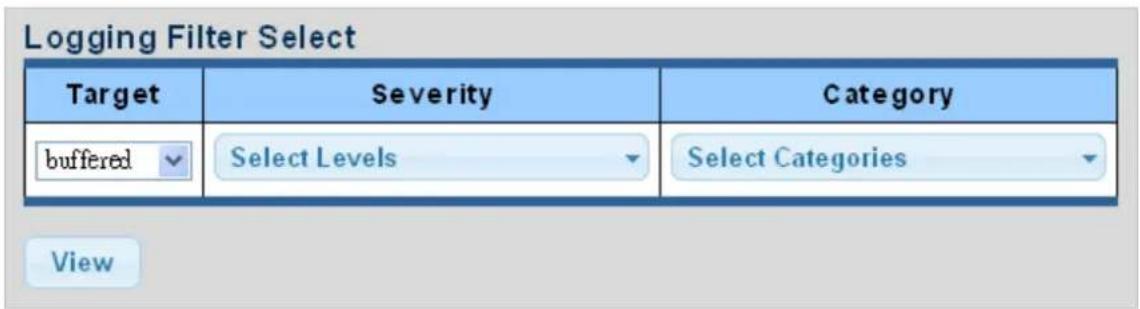
Figure 4-2-18 Log Information Select Page Screenshot
The page includes the following fields:
| Object Description | |
| • Target | The target of the log view entry. The following target types are supported:Buffered: Target the buffered of the log view.File: Target the file of the log view. |
| • Severity | The severit entry. The following severity types are supported: y of the log viewemerg: Emergency level of the system unstable for log view.alert: Alert level of the immediate action needed for log view.crit: Critical level of the critical conditions for log view.error: Error level of the error conditions for log view.warning: Warning level of the warning conditions for log view.notice: Notice level of the normal but significant conditions for log view.info: Informational level of the informational messages for log view.debug: Debug level of the debugging messages for log view. |
| • Category | The category of the log view includes:AAA, ACL, CABLE_DIAG, DAI, DHCP_SNOOPING, Dd1X, GVRP,IGMP_SNOOPING, IPSG, L2, LLDP, Mirror, MLD_SNOOPING, Platform, PM,Port, PORT_SECURITY, QoS, Rate, SNMP and STP |
Buttons
View
Click to view log.
| Information Name | Information Value |
| Target | buffered |
| Severity | emerg, alert, crit, error, warning, notice |
| Category | AAA, ACL, CABLE_DIAG, DAI, DHCP_SNOOPING, Dot1X, GVRP, IGMP_SNOOPING, IPSG, L2, LLDP, Mirror, MLD_SNOOPING, Platform, PM, Port, PORT_SECURITY, QoS, Rate, SNMP, STP, Security-suite, System, Trunk, VLAN |
| Total Entries | 1 |
Figure 4-2-19 Logging Information Page Screenshot
The page includes the following fields:
| Object Description | |
| • Target | Display the current log target |
| • Severity | Display the current log severity |
| • Category | Display the current log category |
| • Total Entries | Display the current log entries |

Figure 4-2-20 Logging Messages Page Screenshot
The page includes the following fields:
| Object Description | |
| • No. | This is the number for logs |
| • Timestamp | Display the time of log |
| • Category | Display the category type |
| • Severity | Display the severity type |
| • Message | Display the log message |
Buttons
Clear
Click to clear the log.
Refresh
Click to refresh the log.
4.2.7 SNMP Management
4.2.7.1 SNMP Overview
The Simple Network Management Protocol (SNMP) is an application layer protocol that facilitates the exchange of management information between network devices. It is part of the Transmission Control Protocol/Internet Protocol (TCP/IP) protocol suite. SNMP enables network administrators to manage network performance, find and solve network problems, and plan for network growth.
An SNMP-managed network consists of four components: Network management stations (NMSs), SNMP agent, management information (MB) and network-ma tocol: nagement pro
Network management stations (NMSs): Sometimes called consoles, these devices execute management applications that monitor and control network elements usually engineering workstation-caliber computers with fast CPUs, megapixel color displays, substack style and one NMS must be present in each managed environment.
Agents : Agents are software modules that re-ride in collector and store management information such as the number of error packets received by a network element.
Management information base (MIB) : A MIB is a collection of managed objects residing in a virtual information store. Collections of related managed objects are defined in specific MIB modules.
Network-management protocol : A management protocol is used to convey management information between agents and NMSs. SNMP is the Internet community's de facto standard management protocol.
SNMP Operations
SNMP itself is a simple request/response protocol. NMSs can send multiple requests without receiving a response.
- Get -- Allows the NMS to retrieve an object instance from the agent.
Set -- Allows the NMS to set values for object instances within an agent.
Trap -- Used by the agent to asynchronously inform the NMS of some event. The SNMPv2 trap message is designed to replace the SNMPv1 trap message.
SNMP Community
An SNMP community is the group that devices and management stations running SNMP belong to. It helps define where information is sent. The community name is used to identify the group. An SNMP device or agent may belong to more than one SNMP community. It will not respond to requests from management stations that do not belong to one of its communities.
SNMP default communities are:
Write = private
Read = public
4.2.7.2 SNMP System Information
Configure SNMP setting on this page. The SNMP System global setting screens in Figure 4-2-21 & Figure 4-2-22 appear.

Figure 4-2-21 SNMP Global Setting Page Screenshot
The page includes the following fields:
| Object Description | |
| • Status | Indicates the SNMP mode operation. Possible modes are:Enabled: Enable SNMP mode operation levelDisabled: Disable SNMP mode operation. |
Buttons
Apply
: Click to apply changes.
| Information Name | Information Value |
| SNMP | Disabled |
Figure 4-2-22 SNMP Information Page Screenshot
The page includes the following fields:
| Object Description | |
| • SNMP | Display the current SNMP status |
4.2.7.3 SNMP View
Configure SNMPv3 view table on this page. The entry index keys are View Name and OID Subtree. The SNMPv3 View Table Setting screens in Figure 4-2-23 and Figure 4-2-24 appear.
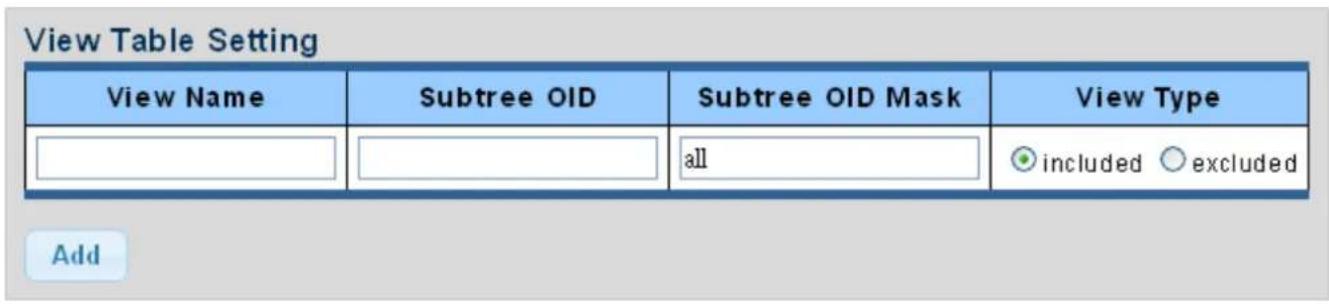
Figure 4-2-23 SNMPv3 View Table Setting Page Screenshot
The page includes the following fields:
| Object Description | |
| • View Name | A string identifying the view name that this entry should belong to.The allowed string length is 1 to 16. |
| • Subtree OID | The OID defining the root of the subtree to add to the named view.The allowed string content is digital number or asterisk(*). |
| • Subtree OID Mask | The bitmask identifies which positions in the specified object identifier are to be regarded as "wildcards" for the purpose of pattern-matching. |
| • View Type | Indicates the view type that this entry should belong to. Possible view type are:included: An optional flag to indicate that this view subtree should be included.excluded: An optional flag to indicate that this view subtree should be excluded.General, if a view entry's view type is 'excluded', it should exist another view entry in which view type is 'included' and its OID subtree oversteps the 'excluded' view entry. |
uttons B
Add
: Click to add a new view entry.
View Table Status
| View Name | Subtree OID | OID Mask | View Type | Action |
| all | .1 | all | included |
Figure 4-2-24 SNMP View Table Status Page Screenshot
The page includes the following fields:
| Object Description | |
| • View Name | Display the current SNMP view name |
| • Subtree OID | Display the current SNMP subtree OID |
| • OID Mask | rrent SNMP OID mask Display the cu |
| • View Type | Display the current SNMP view type |
| • Action | Delete: Delete the view table entry. |
4.2.7.4 SNMP Access Group
Configure SNMPv3 access group on this page. The entry index keys are Group Name, Security Model and Security Level.
The SNMPv3 Access Group Setting screens in Figure 4-2-25 & Figure 4-2-26 appear.

Figure 4-2-25 SNMPv3 Access Group Setting Page Screenshot
lowing fields: The page includes the fol
| Object Description | |
| • Group Name | A string identifying the group name that this entry should belong to.The allowed string length is 1 to 16. |
| • Security Model | Indicates the security model that this entry should belong to.Possible security models are:■ v1: Reserved for SNMPv1.■ v2c: Reserved for SNMPv2c.■ V3: Reserved for SNMPv3 or User-based Security Model (USM) |
| • Security Level | Indicates the security model that this entry should belong to.Possible security models are:■ Noauth: None authentication and none privacy security levels are assigned to the group.■ auth: Authentication and none privacy.■ priv: Authentication and privacy.Note: The Security Level applies to SNNPv3 only. |
| • Read View Name | Read view name is the name of the view in which you can only view the contents of the agent.The allowed string length is 1 to 16. |
| • Write View Name | Write view name is the name of the view in which you enter data and configure the contents of the agent.The allowed string length is 1 to 16. |
| • Notify View Name | Notify view name is the name of the view in which you specify a notify, inform, or trap. |
Buttons

: Click to add a new access entry.

: Check to delete the entry.

Figure 4-2-26 SNMP View Table Status Page Screenshot
The page includes the following fields:
| Object Description | |
| • Group Name | Display the current SNMP access group name |
| • Security Model | Display the current security model |
| • Security Level | Display the current security level |
| • Read View Name | Display the current read view name |
| • Write View Name | Display the current write view name |
| • Notify View Name | Display the current notify view name |
| • Action | Delete: Delete the access group entry. |
4.2.7.5 SNMP Community
Configure SNMP Community on this page. The SNMP Community screens in Figure 4-2-27 & Figure 4-2-28 appear.

Figure 4-2-27 Community Setting Page Screenshot
includes the following fields: The page
| Object Description | |
| Community Name | Indicates the community read/write access string to permit access to SNMP agent.The allowed string length is 0 to 16. |
| Community Mode | Indicates the SNMP community supported mode. Possible versions are:■ Basic: Set SNMP community mode supported version 1 and 2c.■ Advanced: Set SNMP community mode supported version 3. |
| Group Name | A string identifying the group name that this entry should belong to.The allowed string length is 1 to 16. |
| View Name | A string identifying the view name that this entry should belong to.The allowed string length is 1 to 16. |
| Access Right | community type operation. Possible types are: Indicates the SNMPRO=Read-Only: Set access string type in read-only mode.RW=Read-Write: Set access string type in read-write mode. |
Buttons
Apply
Click to apply changes.
Community Status
| Community Name | Group Name | View Name | Access Right | Action |
| public | all | rw | Delete |
Figure 4-2-28 Community Status Page Screenshot
The page includes the following fields:
| Object Description | |
| Community Name | Display the current community type |
| Group Name | Display the current SNMP access group's name |
| View Name | Display the current view name |
| Access Right | Display the current access type |
| Delete | Delete: Delete the community entry |
4.2.7.6 SNMP
Configure SNMPv3 users table on this page each SNMPv3 user is defined by a unique name. Users must be configu specific security level and assigned to a group. The SNMPv3 group restricts users to a specific read, write, and notify view. The entry index key is User Name. The SNMPv3 User Setting screens in Figure 4-2-29 & Figure 4-2-30 appear.

Figure 4 Page 29 SdnMrsBdUsers Configuration
The page includes the following fields:
| Object Description | |
| User Name | A string identifying the user name that this entry should belong to.The allowed string length is 1 to 16. |
| Group | The SNMP Access Group. A string identifying the group name that this entry should belong to. |
| Privilege Mode | Indicates the security model that this entry should belong to. Possible security models are:NoAuth: None authentication and none privacy.Auth: Authentication and none privacy.Priv: Authentication and privacy.The value of security level cannot be modified if entry already exists. That means you must first ensure that the value is set correctly. |
| Authentication Protocol | Indicates the authentication protocol that this entry should belong to. Possible authentication protocols are:None: None authentication protocol.MD5: An optional flag to indicate that this user using MD5 authentication protocol.SHA: An optional flag to indicate that this user using SHA authentication protocol.The value of security level cannot be modified if entry already exist. That means you must first ensure that the value is set correctly. |
| Authentication Password | A string identifying the authentication pass phrase. For both MD5 and SHA authentication protocol, the allowed string length is 8 to 16. |
| Encryption Protocol | Indicates the privacy protocol that this entry should belong to. Possible privacyprotocol are:■ None: None privacy protocol.■ DES: An optional flag to indicate that this user using DES authentication protocol. |
| • Encryption Key | A string identifying the privacy pass phrase.The allowed string length is 8 to 16. |
Buttons
Add
: Click to add a new user entry.

Figure 432-80 Status Page Screenshot
The page includes the following fields:
| Object Description | |
| User Name | Display the current user name |
| Group | current group Display the c |
| Privilege Mode | Display the current privilege mode |
| Authentication Protocol | Display the current authentication protocol |
| Encryption Protocol | Display the current encryption protocol |
| Access Right | Display the current access right |
| Action | Delete: Delete the user entry |
4.2.7.7 SNMPv1, 2 Notification Recipients
Configure SNMPv1 and 2 notification recipients on this page. The SNMPv1, 2 Notification Recipients screens in Figure 4-2-31 & Figure 4-2-32 appear.
SNMPv1.2 Host Setting
| Server Address | SNMP Version | Notify Type | Community Name | UDP Port | TimeOut | Retries |
| v1 | Traps | public | 162 (1-65535) | 15 (1-300) | 3 (1-255) |
Figure 4-2-31 SNMPv1, 2 Notification Recipients Page Screenshot
The page includes the following fields:
| Object Description | |
| • Server Address | Indicates the SNMP trap destination address. It allow a valid IP address in dotted decimal notation ('x.y.z.w'). It can also represent a legally valid IPv4 address. For example, ‘::192.1.2.34’. |
| • SNMP Version | Indicates the SNMP trap supported version. Possible versions are: ■ SNMP v1: Set SNMP trap supported version 1. ■ SNMP v2c: Set SNMP trap supported version 2c. |
| • Notify Type | Set the notify type in traps or informs. |
| • Community Name | Indicates the community access string when send SNMP trap packet. |
| • UDP Port | Indicates the SNMP trap destination port. SNMP Agent will send SNMP message via this port, the port range is 1~65535. |
| • Time Out | Indicates the SNMP trap inform timeout. The allowed range is 1 to 300. |
| • Retries | Indicates the SNMP trap inform retry times. The allowed range is 1 to 255. |
Buttons
Add
: Click to add a new SNMPv1, 2 host entry.

Figure 4e2-32 SNMPv1, 2 Host Status Page S
The page includes the following fields:
| Object Description | |
| • Server Address | Display the current server address |
| • SNMP Version | Display the current SNMP version |
| • Notify Type | Display the current notify type |
| • Community Name | Display the current community name |
| • UDP Port | Display the current UDP port |
| • Time Out | Display the current time out |
| • Retries | Display the current retry times |
| • Action | Delete: Delete the SNMPv1, 2 host entry. |
4.2.7.9 SNMPv3 Notification Recipients
Configure SNMPv3 notification recipients on this page. The SNMPv1, 2 Notification Recipients screens in Figure 4-2-33 &
Figure 4-2-34 appear.
SNMPv3 Host Setting
| Server Address | Notify Type | User Name | UDP Port | TimeOut | Retries |
| Traps | 162 (1-65535) | 15 (1-300) | 3 (1-255) |
Add
Figure 4 Page Software Notification Recipients
The page includes the following fields:
| Object Description | |
| • Server Address | Indicates the SNMP trap destination address. It allows a valid IP address in dotted decimal notation ('x.y.z.w'). It can also represent a legally valid IPv4 address. For example, ':192.1.2.34'. |
| • Notify Type | Set the notify type in traps or informs. |
| • User Name | Indicates the user string when send SNMP trap packet. |
| • UDP Port | Indicates the SNMP trap destination port. SNMP Agent will send SNMP message via this port, the port range is 1~65535. |
| • Time Out | Indicates the SNMP trap inform timeout. The allowed range is 1 to 300. |
| • Retries | Indicates the SNMP trap inform retry times. The allowed range is 1 to 255. |
Buttons
Add
: Click to add a new SNMPv3 host entry.

Figuser4-2-34oSNMPv3 Host Status Pag
The page includes the following fields:
| Object Description | |
| • Server Address | Display the current server address |
| • Notify Type | Display the current notify type |
| User Name | Display the current user name |
| UDP Port | Display the current UDP port |
| Time Out | Display the current time out |
| Retries | Display the current retry times |
| Action | Delete: Delete the SNMPv3 host entry |
4.2.7.10 SNMP Engine ID
Configure SNMPv3 Engine ID on this page. The entry index key is Engine ID. The remote engine ID is used to compute the security digest for authenticating and encrypting packets sent to a user on the remote host. The SNMPv3 Engine ID Setting screens in Figure 6-appe & Figure 4-2-3
Engine ID Settings
| Use Default | Enabled Disabled |
| Engine ID | 80006a92030000304F1122 (10-64) |
Apply
Figure 2t35 SNMPv3 Engine ID Setting Page Scree
The page includes the following fields:
| Object Description | |
| • Engine ID | An octet string identifying the engine ID that this entry should belong to. The string must contain an even number between 10 and 64 hexadecimal digits, but I-'F's are not allowed. all-zeros and al |
Buttons
Apply
: Click to apply changes.
Engine ID Status
| Information Name | Information Value |
| Use Default | Enabled |
| Engine ID | 80006a92030000304f1122 |
Figure 4s2-36 S1Me0sEngine ID St
llowing fields: The page includes the fo
| Object Description | |
| • User Default | Display the current status |
| • Engine ID | Display the current engine ID |
4.2.7.11 SNMP Remote Engine ID
Configure SNMPv3 remote Engine ID on this page. The SNMPv3 Remote Engine ID Setting screens in Figure 4-2-37 & Figure 4-2-38 appear.

Figure 4-2-37 SNMPv3 Remote Engine ID Setting Page Screenshot
The page includes the following fields:
| Object Description | |
| • Remote IP Address | Indicates the SNMP remote engine ID address. It allows a valid IP address in dotted decimal notation ('x.y.z.w'). |
| • Engine ID | y should belong to. An octet string identifying |
Buttons
Apply
: Click to apply changes.

Figure 4-2-38 SNMPv3 Remote Engine ID Status Page Screenshot
The page includes the following fields:
| Object Description | |
| • Remote IP Address | IP address Display the current remote |
| • Engine ID | Display the current engine ID |
| • Action | Delete: Delete the remote IP address entry |
4.3 Port Management
Use the Port Menu to display or configure the LRP Managed Switch's ports. This section has the following items:
■ Port Configuration Configures port configuration settings
■ LRP Port Configuration Configures LRP port configuration settings
■ Port Counters Lists Ethernet and RMON port statistics
■ Bandwidth Utilization Displays current bandwidth utilization
■ Port Mirroring Sets the source and target ports for mirroring
■ Jumbo Frame Sets the jumbo frame on the switch
■ Port Error Disable
Configuration
Configures port error disable settings
■ Port Error Disabled Status Disables port error status
■ Protected Ports Configures protected ports settings
■ EEE Configures EEE settings
■ SFR module Information Displays SFP module information.
4.3.1 Port Configuration
This page displays current port configurations and status. Ports can also be configured here. The table has one row for each port on the selected switch in a number of columns, which are:
The Port Configuration screens in Figure 4-3-1A & Figure 4-3-2A appear.
Port settings
| Port Select | Enabled | Speed | Duplex | Flow Control |
| Select Ports | EnabledDisabled | Auto | Auto | EnabledDisabled |
| Fiber Ports | EnabledDisabled | Auto-1000M | Full | EnabledDisabled |
Apply
Figure 4-3-1A Port Settings Page Screenshot
The page includes the following fields:
| Object Description | |
| • Port Select | Select port number from this drop-down list. |
| • Enabled | Indicates the port state operation. Possible states are:Enabled - Start up the port manually.Disabled – Shut down the port manually. |
| • Speed | Select any available link speed for the given switch port. Draw the menu bar to select the mode.Auto - Setup Auto negotiation.Auto-10M - Setup 10M Auto negotiation.Auto-100M - Setup 100M Auto negotiation.Auto-1000M - Setup 1000M Auto negotiation.Auto-10/100M - Setup 10/100M Auto negotiation.10M - Setup 10M Force mode.100M - Setup 100M Force mode.1000M - Setup 1000M Force mode. |
| • Duplex | Select any available link duplex for the given switch port. Draw the menu bar to select the mode.Auto - Setup Auto negotiation.Full - Force sets Full-Duplex mode.Half - Force sets Half-Duplex mode. |
| • Flow Control | When SelectSpeed is selected for control, this capability that is advertised to the link partner. When a fixed-speed setting is selected, that is what is used. Current Rx column indicates whether pause frames on the port are obeyed. Current Tx column indicates whether pause frames on the port are transmitted. The Rx and Tx settings are determined by the result of the last Auto-Negotiation. Check the configured column to use flow control. This setting is related to the setting for Configured Link Speed. |
Buttons
Apply
Click to apply changes.
| Port | Description | Enable State | Link Status | Speed | Duplex | FlowCtrl Config | FlowCtrl Status |
| GE1 | Edit | Enabled | UP | A-1000M | A-Full | Disabled | Disabled |
| GE2 | Edit | Enabled | DOWN | Auto | Auto | Disabled | Disabled |
| GE3 | Edit | Enabled | DOWN | Auto | Auto | Disabled | Disabled |
| GE4 | Edit | Enabled | DOWN | Auto | Auto | Disabled | Disabled |
Figure 4-3-2A Port Status Page Screenshot
The page includes the following fiel sd :
| Object Description | |
| • Port | row This is the logical port number for this |
| • Description | Click Edit to indicate the port name |
| • Enable State | Display the current port state |
| • Link Status | current link status Display the c |
| • Speed | e port Display the current speed status of th |
| • Duplex | rt Display the current duplex status of the po |
| • Flow Control Configuration | Display the current flow control configuration of the port |
| • Flow Control Status | Display the current flow control status of the port |
4.3.2 LRP Port Configuration
This page displays current LRP port configurations and status. Ports can also be configured here. The table has one row for each port on the selected switch in a number of columns, which are:
The Port Configuration screens in Figure 4-3-1B & Figure 4-3-2B appear.
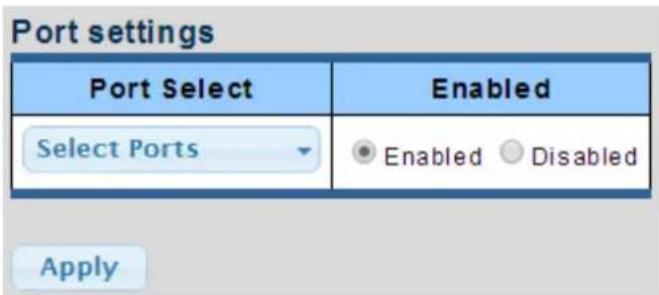
Figure 4-3-1B LRP Port Settings Page Screenshot
The page includes the following fields:
| Object Description | |
| • Port Select | Select port number from this drop-down list. |
| • Enabled | Indicates the port state operation. Possible state are:Enabled- Start up the port manually.Disabled– Shut down the port manually. |
Buttons
Apply
Click to apply changes.
| Port | Description | Enable State | Link Status |
| FE1 | Edit | Enabled | DOWN |
| FE2 | Edit | Enabled | DOWN |
| FE3 | Edit | Enabled | DOWN |
| FE4 | Edit | Enabled | DOWN |
| FE5 | Edit | Enabled | DOWN |
| FE6 | Edit | Enabled | DOWN |
| FE7 | Edit | Enabled | DOWN |
| FE8 | Edit | Enabled | DOWN |
Figure 4-3-2B Port Status Page Screenshot
The page includes the following fields:
| Object Description | |
| • Port | This is the logical port number for this row |
| • Description | Click Edit to indicate the port name |
| • Enable State | Display the current port state |
| • Link Status | Display the current link status |
4.3.3 Port Counters
This page provides a review of traffic
atistics for all switch ports. The Port Statistics screens in Figure 4-3-3,
Figure 4-3-4, Figure 4-3-5 & Figure 4-3-6 appear.
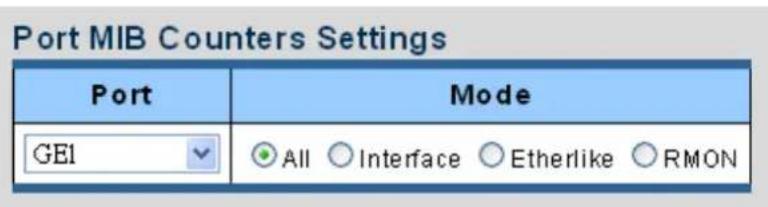
Figure 4-3-3 Port MIB Counters Page Screenshot
The page includes the following fields:
| Object Description | |
| • Port | Select port number from this drop-down list. |
| • Mode | Select port counters mode.Option:AllInterfaceEther-linkRMON |
| Interface Counters | Counters Value |
| Received Octets | 0 |
| Received Unicast Packets | 0 |
| Received Unknown Unicast Packets | 0 |
| Received Discards Packets | 0 |
| Transmit Octets | 0 |
| Transmit Unicast Packets | 0 |
| Transmit Unknown Unicast Packets | 0 |
| Transmit Discards Packets | 0 |
| Received Multicast Packets | 0 |
| Received Broadcast Packets | 0 |
| Transmit Multicast Packets | 0 |
| Transmit Broadcast Packets | 0 |
| Object Description | |
| Received Octets | The total number of octets received on the interface, including framing characters. |
| Received Unicast Packets | The number of subnetwork-unicast packets delivered to a higher-layer protocol. |
| Received Unknown Unicast Packets | The number of packets received via the interface which is discarded because of an unknown or unsupported protocol. |
| Received Discarded Packets | The number of inbound packets which were chosen to be discarded even though no errors had been detected to prevent their being deliverable to a higher-layer protocol. One possible reason for discarding such a packet could be to free up buffer space. |
| Transmit Octets | The total number of octets transmitted out of the interface, including framing characters. |
| Transmit Unicast Packets | The total number of packets that higher-level protocols requested is transmitted to a subnetwork-unicast address, including those that were discarded or not sent. |
| Transmit Unknown Unicast Packets | The total number of packets that higher-level protocols requested is transmitted to a subnetwork-unicast address, including those that were discarded or not sent. |
| Transmit Discarded Packets | The number of inbound packets which is chosen to be discarded even though no errors have been detected to prevent from being delivered to a higher-layer protocol. One possible reason for discarding such a packet could be to free up buffer space. |
| Received Multicast Packets | The number of packets, delivered by this sub-layer to a higher (sub-) layer, is addressed to a multicast address at this sub-layer. |
| Received Broadcast Packets | The number of packets, delivered by this sub-layer to a higher (sub-) layer, addressed to a broadcast address at this sub-layer. |
| Transmit Multicast Packets | The total number of packets that higher-level protocols requested is transmitted and is addressed to a multicast address at this sub-layer, including those that were discarded or not sent. |
| Transmit Broadcast Packets | The total number of packets that higher-level protocols requested is transmitted, and addressed to a broadcast address at this sub-layer, including those that were discarded or not sent. |
| Ethernet-link Counters | Counters Value |
| Alignment Errors | 0 |
| FCS Errors | 0 |
| Single Collision Frames | 0 |
| Multiple Collision Frames | 0 |
| Deferred Transmissions | 0 |
| Late Collision | 0 |
| Excessive Collision | 0 |
| Frame Too Longs | 0 |
| Symbol Errors | 0 |
| Control In Unknow Opcodes | 0 |
| In Pause Frames | 0 |
| Out Pause Frames | 0 |
Figure 4-3-4 Interface Counters Page Screenshot
Figure 4-3-5 Ethernet link Counters Page Screenshot
| Object Description | |
| • Alignment Errors | The number of alignment errors (missynchronized data packets). |
| • FCS Errors | A count of frames received on a particular interface that are an integral number of octets in length but do not pass the FCS check. This count does not include frames received with frame-too-long or frame-too-short error. |
| • Single Collision Frames | The number of successfully transmitted frames for which transmission is inhibited by exactly one collision. |
| • Multiple Collision Frames | A count of successfully transmitted frames for which transmission is inhibited by more than one collision. |
| • Deferred Transmissions | A count of frames for which the first transmission attempt on a particular interface is delayed because the medium was busy. |
| • Late Collision | The number of times that a collision is detected later than 512 bit-times into the transmission of a packet. |
| • Excessive Collision | A count of frames for which transmission on a particular interface fails due to excessive collisions. This counter does not increase when the interface is operating in full-duplex mode. |
| • Frame Too Long | A count of frames received on a particular interface that exceeds the maximum permitted frame size. |
| • Symbol Errors | The number of received and transmitted symbol errors |
| • Control In Unknown Opcodes | The number of received control unknown opcodes |
| • In Pause Frames | The number of received pause frames |
| • Out Pause Frames | The number of transmitted pause frames |
| RMON Counters | Counters Value |
| Drop Events | 0 |
| Octets | 0 |
| Packets | 0 |
| Broadcast Packets | 0 |
| Multicast Packets | 0 |
| CRC / Alignment Errors | 0 |
| Undersize Packets | 0 |
| Oversize Packets | 0 |
| Fragments | 0 |
| Jabbers | 0 |
| Collisions | 0 |
| 64 Bytes Frame | 0 |
| 65-127 Byte Frames | 0 |
| 128-255 Byte Frames | 0 |
| 256-511 Byte Frames | 0 |
| 512-1023 Byte Frames | 0 |
| 1024-1518 Byte Frames | 0 |
Figure 4-3-6 RMON Counters Page Screenshot
| Object Description | |
| • Drop Events | s in which packets were dropped due to lack of The total number of event resources. |
| • Octets | The total number of octets received and transmitted on the interface, including framing characters. |
| • Packets | The total number of packets received and transmitted on the interface. |
| • Broadcast Packets | The total number of good frames received that were directed to the broadcast address. Note that this does not include multicast packets. |
| • Multicast Packets | The total number of good frames received that were directed to this multicast address. |
| • CRC / Alignment Errors | The number of CRC/alignment errors (FCS or alignment errors). |
| • Undersize Packets | The total number of frames received that were less than 64 octets long (excluding framing bits, but including FCS octets) and were otherwise well formed. |
| • Oversize Packets | The total number of frames received that were longer than 1518 octets (excluding framing bits, but including FCS octets) and were otherwise well formed. |
| • Fragments | The total number of frames received that were less than 64 octets in length (excluding framing bits, but including FCS octets) and had either an FCS or alignment error. |
| • Jabbers | The total number of frames received that were longer than 1518 octets (excluding framing bits, but including FCS octets), and had either an FCS or alignment error. |
| • Collisions | The best estimate of the total number of collisions on this Ethernet segment. |
| • 64 Bytes Frames | The total number of frames (including bad packets) received and transmitted that were 64 octets in length (excluding framing bits but including FCS octets). |
| • 65-127 Byte Frames128-255 Byte Frames256-511 Byte Frames512-1023 Byte Frames1024-1518 ByteFrames | The total number of frames (including bad packets) received and transmitted where the number of octets falls within the specified range (excluding framing bits but including FCS octets). |
4.3.4 Bandwidth Utilization
The Bandwidth Utilization page displays the percentage of the total available bandwidth being used on the ports. Bandwidth utilization statistics can be viewed using a line graph. The Bandwidth Utilization screen in Figure 4-3-7 appears.
To view the port utilization, click on the Port Management folder and then the Bandwidth Utilization link:
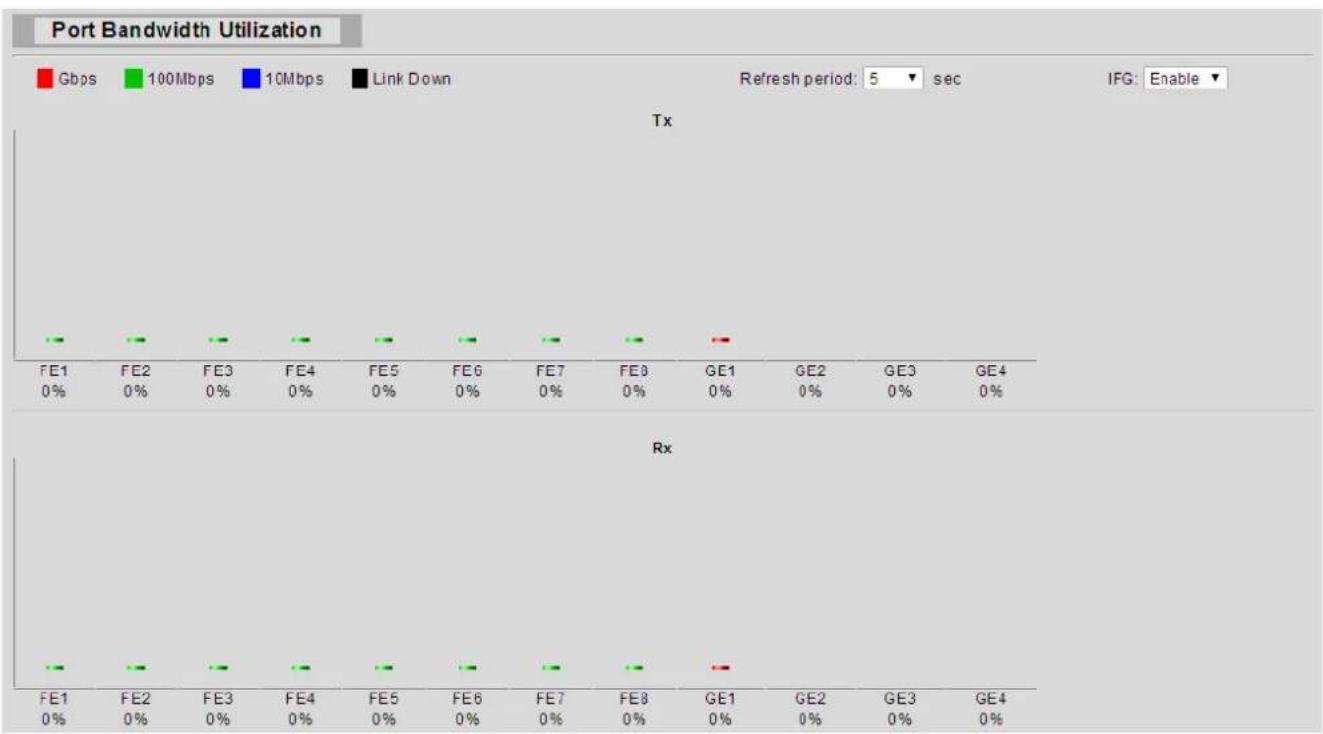
Figure 4-3-7 Port Bandwidth Utilization Page Screenshot
The page includes the following fields:
| Object Description | |
| • Refresh Period | This shows the period interval between last and next refresh. Options: ■ 2 sec ■ 5 sec ■ 10 sec |
| • IFG | Allow user to enable or disable this function |
4.3.5 Port Mirroring
Configure port Mirroring on this page. This function provides monitoring of network traffic that forwards a copy of each incoming or outgoing packet from one port of a network switch to another port where the packet can be studied. It enables the manager to keep close track of switch performance and alter it if necessary.
- To debug network problems, selected traffic can be copied, or mirrored, to a mirror port where a frame analyzer can be attached to analyze the frame flow.
- The LRP Managed Switch can unobtrusively mirror traffic from any port to a monitor port. You can then attach a protocol analyzer or RMON probe to this port to perform traffic analysis and verify connection integrity.
Port Mirror Application
![graph TD A["Source Port"] --> B["Port"] C["Target Port"] --> B D["Monitor Client With Ethereal or Sniffer Pro"] --> E["Computer"] B --> F["Mirroring"] E --> F style A fill:#cce5ff,stroke:#333 style C fill:#cce5ff,stroke:#333 style D fill:#cce5ff,stroke:#333 style E fill:#cce5ff,stroke:#333 style F f…](/content/2026/06/1225141/images/26b58de30b71da9d8c256a5d4e8cce9b461177e85fd6380a4ca3993757c8b8c4.jpg)
Figure 4-3-8 Port Mirror Application
The traffic to be copied to the mirror port is selected as follows:
- All frames received on a given port (also known as ingress or source mirroring).
- All frames transmitted on a given port (also known as egress or destination mirroring).
Mirror Port Configuration
The Port Mirror Configuration screens in Figure 4-3-9 & Figure 4-3-10 appear.
Mirror Setting
| Session ID | Select Session |
| Monitor session state | Disable |
| Destination Port | GE1 |
| allow-ingress | Disable |
| Sniffer RX Ports | Select RX Ports |
| Sniffer TX Ports | Select TX Ports |
Apply
Figure 4-3-9 Port Mirroring Settings Page Screenshot
The page includes the following fields:
| Object Description | |
| • Session ID | Set the port mirror session ID. Possible ID are: 1 to 4. |
| • Monitor Session State | Enable or disable the port mirroring function. |
| • Destination Port | Select the port to mirror destination port. |
| • Allow-ingress | Frames from ports that have either source (RX) or destination (TX) mirroring enabled are mirrored to this port. |
| • Sniffer TX Ports | Frames transmitted from these ports are mirrored to the mirroring port. Frames received are not mirrored. |
| • Sniffer RX Ports | Frames received at these ports are mirrored to the mirroring port. Frames transmitted are not mirrored. |
Buttons
Apply
: Click to apply changes.
| Session ID | Destination Port | Ingress State | Source TX Port | Source RX Port |
| 1 | N/A | N/A | N/A | N/A |
| 2 | N/A | N/A | N/A | N/A |
| 3 | N/A | N/A | N/A | N/A |
| 4 | N/A | N/A | N/A | N/A |
Figure 4-3-10 Mirroring Status Page Screenshot
The page includes the following fields:
| Object Description | |
| • Session ID | Display the session ID |
| • Destination Port | This is the mirroring port entry |
| • Ingress State | Display the ingress state |
| • Source TX Port | Display the current TX ports |
| • Source RX Port | Display the current RX ports |
4.3.6 Jumbo Frame
This page provides to select the maximum frame size allowed for the switch port. The Jumbo Frame screens in Figure 4-3-11 & Figure 4-3-12 appear.

Figure 4-3-11 Jumbo Frame Setting Page Screenshot
The page includes the following fields
| Object Description | |
| • Jumbo Frame (Bytes) | Enter the maximum frame size allowed for the switch port, including FCS. The allowed range is 64 bytes to 9216 bytes. |
Buttons
Apply
Click to apply changes.
| Information Name | Information Value |
| Jumbo Frame (Bytes) | 1522 |
Figure 4-3-12 Jumbo Frame Information Page Screenshot
The page includes the following fields:
| Object Description | |
| • Jumbo | Display the current maximum frame size |

Jumbo Frame is av 1\~GE4 only. ailable for GE
4.3.7 Port Error Disabled Configuration
This page provides to set port error disable function. The Port Error Disable Configuration screens in Figure 4-3-13 & Figure -3-14 appear. 4
Error Disabled Recovery
| Recovery Interval | 300 (Seconds) |
| BPDU Guard | ○ Enabled ● Disabled |
| Self Loop | ○ Enabled ● Disabled |
| Broadcast Flood | ○ Enabled ● Disabled |
| Unknown Multicast Flood | ○ Enabled ● Disabled |
| Unicast Flood | ○ Enabled ● Disabled |
| ACL | ○ Enabled ● Disabled |
| Port Security Violation | ○ Enabled ● Disabled |
| DHCP rate limit | ○ Enabled ● Disabled |
| ARP rate limit | ○ Enabled ● Disabled |
Apply
Figure 4-3-13 Error Disabled Recovery Page Screenshot
The page includes the following fields:
| Object Description | |
| • Recovery Interval | The period (in seconds) for which a port will be kept disabled in the event of a port error is detected (and the port action shuts down the port). |
| • BPDU Guard | Enable or disable the port error disabled function to check status by BPDU guard. |
| • Self Loop | Enable or disable the port error disabled function to check status by self loop. |
| • Broadcast Flood | Enable or disable the port error disabled function to check status by broadcast flood. |
| • Unknown Multicast Flood | Enable or disable the port error disabled function to check status by unknown multicast flood. |
| • Unicast Flood | Enable or disable the port error disabled function to check status by unicast flood. |
| • ACL | Enable or disable the port error disabled function to check status by ACL. |
| • Port Security | Enable or disable the port error disabled function to check status by port security |
| Violation violation. | |
| • DHCP Rate Limit | Enable or disable the port error disabled function to check status by DHCP rate limit |
| • ARP Rate Limit | Enable or disable the port error disabled function to check status by ARP rate limit |
Buttons
Apply
Click to apply changes.
Error Disable Information
| Information Name | Information Value |
| Recovery Interval | 300 |
| BPDU Guard | disabled |
| Self Loop | disabled |
| Broadcast Flood | disabled |
| Unknown Multicast Flood | disabled |
| Unicast Flood | disabled |
| ACL | disabled |
| Port Security Violation | disabled |
| DHCP rate limit | disabled |
| ARP rate limit | disabled |
Figure 4-3-14 Error Disabled Information Page Screenshot
The page includes the following fields:
| Object Description | |
| • Recovery Interval | Display the current recovery interval time |
| • BPDU Guard | Display the current BPDU guard status |
| • Self Loop | Display the current self loop status |
| • Broadcast Flood | Display the current broadcast flood status |
| • Unknown Multicast Flood | Display the current unknown multicast flood status |
| • Unicast Flood | ay the current unicast flood status Displ |
| • ACL | Display the current ACL status |
| • Port Security Violation | Display the current port security violation status |
| • DHCP Rate Limit | Display the current DHCP rate limit status |
| • ARP Rate Limit | Display the current ARP rate limit status |
4.3.8 Port Error Disabled
This page provides disable that transitions a port into error disable and the recovery options. The ports were disabled by some protocols such as BPDU Guard, Loopback and UDLD. The Port Error Disable screen in Figure 4-3-15 appears.

Figure 4-3-15 Port Error Disable Page Screenshot
The displayed counters are:
| Object Description | |
| • Port Name | Display the port for error disable |
| • Error Disable Reason | Display the error disabled reason of the port |
| • Time Left (Seconds) | Display the time left |
4.3.9 Protected Ports
Overview
When a switch port is configured to be a member of protected group (also called Private VLAN), communication between protected ports within that group can be prevented. Two application examples are provided in t
- Customers connected to an ISP can be members of the protected group, but they are not allowed to communicate with each other within that VLAN.
- Servers in a farm of web servers in a Demilitarized Zone (DMZ) are allowed to communicate with the outside world and with data as enterprises that are not allowed to communicate with each other
![graph TD A["Internet"] -->|Permit| B["Router"] C["Public Servers"] -->|Permit| B B --> D["Isolate"] B --> E["Isolate"] B --> F["Isolate"] B --> G["Isolate"] D <--> H["Access Denied"] E <--> I["Access Denied"] F <--> J["Access Denied"] G <--> K["Access Denied"] style A fill:#cce5ff,stroke:#333 style…](/content/2026/06/1225141/images/571e4958c88a85668c5a6b310949e4294defaa5e6f3a4f60993ce3149fbb3d8e.jpg)
For protected port group to be applied, the LRP Managed Switch must first be configured for standard VLAN operation. Ports in a protected port group fall into one of these two groups:
■ Promiscuous (Unprotected) ports
— Ports from which traffic can be forwarded to all ports in the private VLAN
— Ports which can receive traffic from all ports in the private VLAN
■ Isolated (Protected) ports
— Ports from which traffic can only be forwarded to promiscuous ports in the private VLAN
— Ports which can receive traffic from only promiscuous ports in the private VLAN
The configuration of promiscuous and isolated ports applies to all private VLANs. When traffic comes in on a promiscuous port in a private VLAN, the VLAN mask from the VLAN table is applied. When traffic comes in on an isolated port, the private VLAN mask is applied in addition to the VLAN mask from the VLAN table. This reduces the ports to which forwarding can be done to just the promiscuous ports within the private VLAN.
The port settings relate to the currently unit, as reflected by the page header. The Port Isolation Configuration screens in Figure 4-3-16 & Figure 4-3-17 appear.

Figure 4-3-16 Protected Ports Settings Page Screenshot
The page includes the following fields:
| Object Description | |
| • Port List | Select port number from this drop-down list. |
| • Port Type | Displays protected port types.-Protected:A single stand-alone VLAN that contains one promiscuous port and one or more isolated (or host) ports. This VLAN conveys traffic between the isolated ports and a lone promiscuous port.-Unprotected:A promiscuous port can communicate with all the interfaces within a private VLAN. This is the default setting. |
Buttons
Apply
: Click to apply changes.
| Protected Type | Port List |
| Protected Ports | |
| Unprotected Ports | all |
Figure 4-3-17 Port Isolation Status Page Screenshot
The page includes the following fields:
| Object Description | |
| • Protected Ports | Display the current protected ports |
| • Unprotected Ports | Display the current unprotected ports |
4.3.10 EEE
What is EEE
EEE is a power saving option that reduces the power usage when there is low or no traffic utilization. EEE works by powering down circuits when there is no traffic. When a port gets data to be transmitted all circuits are powered up. The time it takes to power up the circuits is named wakeup time. The default wakeup time is 17 us for 1Gbit links and 30 us for other link speeds.
EEE devices must agree upon the value of the wakeup time in order to make sure that both the receiving and transmitting device has all circuits powered up when traffic is transmitted. The devices can exchange wakeup time information using the LLDP protocol. EEE works for ports in auto-negotiation mode, where the port is negotiated to either 1G or 100 Mbit full duplex mode. For ports that are not EEE-capable the corresponding EEE checkboxes are grayed out and thus impossible to enable EEE for. The EEE port settings remain effective as reflected by the page h
When a port is powered down for saving power, outgoing traffic is stored in a buffer until the port is powered up again. Because there are some overhead in turning the target down and up, more power can be saved if the traffic can be buffered up until burst of traffic can be transmitted. Buffering traffic will give some latency in the traffic.
The EEE Port Settings screens in Figure 4-3-18 & Figure 4-3-19 appear.
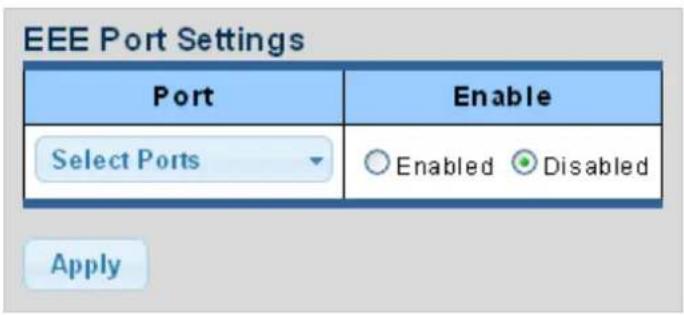
Figure 4-3-18 EEE Port Settings Page Screenshot
The page includes the following fields:
| Object Description | |
| • Port | Select port number from this drop-down list |
| • Enable | Enable or disable the EEE function |
Buttons
Apply
: Click to apply changes.
| Port | EEE State |
| GE1 | Disabled |
| GE2 | Disabled |
Figure 4-3-19 EEE Enable Status Page Screenshot
The page includes the following fields:
| Object Description | |
| • Port | The switch port number of the logical port |
| • EEE State | Display the current EEE state |

EEE is available for GE1\~GE2 only.
4.3.11 SFP Module Information
LRP Managed Switch has supported the SFP module with digital diagnostics monitoring (DDM) function, this feature is also known as digital optical monitoring (DOM). You can check the physical or operational status of an SFP module via the SFP Module Information Page. This Page shows the operational status, such as the transceiver type, speed, wavelength, optical output power, optical input power, temperature, laser bias current and transceiver supply voltage in real time. You can also use the hyperlink of port no. to check the statistics on a specific interface.
4.3.11.10SEReStatus
The SFP Module Status screens in Figure 4-3-20 & Figure 4-3-21 appear.

Figure 4-3-20 Port Selected Page Screenshot with Sample Switch
The page includes the following fields:
| Object Description | |
| • Port | Select port number from this drop-down list |
GE11 Fiber Port Status
| Fiber Status | Status Value |
| OE-Present | Insert |
| LOS | Loss |
| Transceiver Type | SFP/SFP+ |
| Hot Plug | Support |
| Connect Type | LC |
| Fiber Type | Single Mode |
| Eth Compliance | 1000BASE-LX |
| TX Distance | 0(m) |
| Wave Length | 1310(nm) |
| Baud Rate | 1000M |
| Vendor OUI | 0-90-65 |
| Vendor Name | SANOANOCNOC OC |
| Vendor PN | SJ13J1311312312- |
| Vendor Rev | |
| Vendor SN | SJ13J1311312312- |
| Data Code | 13-08-12 |
| Temperature | 64.718(°C) |
| Voltage | 3.35(V) |
| Current | 30.70(A) |
| Output power | 0.27(mW) |
| Input power | 0.00(mW) |
Figure 4-3-21 Fiber Port Status Page Screenshot
The page includes the following fields:
| Object Description | |
| • OE-Present | Display the current SFP OE-present |
| • LOS | Display the current SFP LOS |
4.3.11.1 SFP Module Detail Status
The SFP Module Detail Status screen in Figure 4-3-22 appears.
| Port | Temperature | Voltage | Current | Output Power | Input Power | Transmitter Fault | Loss of Signal |
| GE12 | 0.00 | 0.00 | 0.00 | 0.00 | 0.00 | N/S | N/S |
Figure 4-3-22 SFP Module Detail Status Page Screenshot with Sample Switch
The page includes the following fields:
| Object Description | |
| • Port | The logical port for the settings contained in the same row |
| • Temperature | Display the current SFP temperature |
| • Voltage | Display the current SFP voltage |
| • Current | Display the current SFP current |
| • Output Power | Display the current SFP output power |
| • Input Power | Display the current SFP input power |
| • Transmit Fault | Display the current SFP transmit fault |
| • Loss of Signal | Display the current SFP loss of signal. |
| • Rate Ready | Display the current SFP rate ready. |
4.4 Link Aggregation
Port Aggregation optimizes port usage by linking a group of ports together to form a single Link Aggregated Groups (LAGs).
Port Aggregation multiplies the bandwidth between the devices, increases port flexibility, and provides link redundancy.
Each LAG is composed of ports of the same speed, set to full-duplex operations. Ports in a LAG can be of different media types (UTP/Fiber, or different fiber types) provided they operate at the same speed.
Aggregated Links can be assigned manually (Port Trunk) or automatically by enabling Link Aggregation Control Protocol (LACP) on the relevant links.
Aggregated Links are treated by the system as a single logical port. Specifically, the Aggregated Link has similar port attributes to a non-aggregated port, including auto-negotiation, speed, suplex setting, etc.
The devices stopfollegation Algrs :
■ Static LAGs (Port Trunk) – Force aggregated selected ports to be a trunk group.
■ Link Aggregation Control Protogot (LACP) Legated PodRinks with other LACP ports located via different device AOPsports, the devices establish a LAG between them.
![graph TD A["Server 1"] --> B["Router"] C["Server 2"] --> B D["Server 3"] --> B E["Server 4"] --> B B --> F["Router"] G["Computer 1"] --> H["Router"] I["Computer 2"] --> H J["Computer 3"] --> H K["Computer 4"] --> H B --> L["Link Aggregation"] B --> M["Link Aggregation 4 Port Link Aggregation (Up to…](/content/2026/06/1225141/images/df8e08ed222b9689ee007c191e5ab44f676f4c5c0e78bf240f8b9640a7a1892c.jpg)
Figure 4-4-1 Link Aggregation
The Link Aggregation Control Protocol (LACP) provides a standardized means for exchanging information between Partner Systems that require high-speed redundant links. Link aggregation lets you group up to eight consecutive ports into a single dedicated connection. This feature can expand bandwidth to a device on the network. LACP operation requires full-duplex mode. For more detailed information, refer to the IEEE 802.3ad standard.
Port link aggregations can be used to increase the bandwidth of a network connection or to ensure fault recovery. Link aggregation lets you group up to 8 consecutive ports into a single dedicated connection between any two the Switch or other Layer 2 switches. However, before making any physical connections between devices, use the Link Aggregation Configuration menu to specify the link aggregation on the devices at both ends. When using a port link aggregation, note that:
- The ports used in a link aggregation must all be of the same media type (RJ45, 100 Mbps fiber).
- The ports that can be assigned to the same link aggregation have certain other restrictions (see below).
- Ports can only be assigned to one link aggregation.
- The ports at both ends of a connection must be configured as link aggregation ports.
- None of the ports in a link aggregation can be configured as a mirror source port or a mirror target port.
- All of the ports in a link aggregation have to be treated as a whole when moved from/to, added or deleted from a VLAN.
- The Spanning Tree Protocol will treat all the ports in a link aggregation as a whole.
- Enable the link aggregation prior to connecting any cable between the switches to avoid creating a data loop.
- Disconnect all link aggregation port cables or disable the link aggregation ports before removing a port link aggregation to avoid creating a data loop.
It allows a maximum of 8 ports to be aggregated at the same time. The LRP Managed Switch supports Gigabit Ethernet ports (up to 8 groups). If the group is defined as an LACP static link aggregation group, then any extra ports selected are placed in a standby mode for redundancy if one of the other ports fails. If the group is defined as a local static link aggregation group, then the number of ports must be the same as the group member ports.
Use the Link Aggregation Menu to display or configure the Trunk function. This section has the following items:
■ LAG Setting Configures load balance algorithm configuration settings
■ LAG Management Configures LAG configuration settings
■ LAG Port Setting Configures LAG port settings
■ LACP Setting Configures LACP priority settings
■ LACP Port Setting Configures LACP configuration settings
■ LAG Status Displays LAG status / LACP information
4.4.1 LAG Setting
This page allows configuring load balance algorithm configuration settings. The LAG Setting screens in Figure 4-4-2 & Figure 4-4-3 appear.

Figure 4-4-2 LAG Setting Page Screenshot
The page includes the following fields:
| Object Description | |
| Load Balance Algorithm | Select load balance algorithm mode:■ MAC Address: The MAC address can be used to calculate the port for the frame.■ IP/MAC Address: The IP and MAC address can be used to calculate the port for the frame. |
Buttons
Apply
: Click to apply changes.
| Information Name | Information Value |
| Load Balance Algorithm | src-dst-mac |
Figure 4-4-3 LAG Information Page Screenshot
he page includes the following fields: T
| Object Description | |
| • Load Balance Algorithm | Display the current load balance algorithm |
4.4.2 LAG Management
This page is used to configure the LAG management. The LAG Management screens in Figure 4-4-4 & Figure 4-4-5 appear.
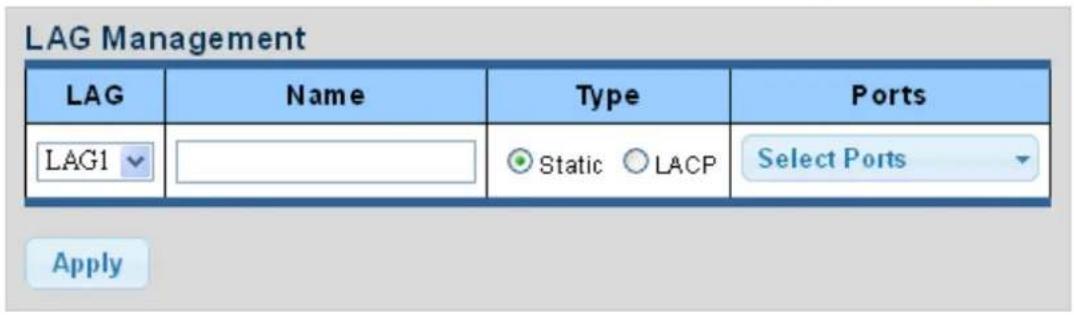
Figure 4-4-4 LAG Management Page Screensh
The page includes the following fields:
| Object Description | |
| • LAG | Select LAG number from this drop-down list |
| • Name | Indicates each LAG name |
| • Type | trunk type Indicates theStatic: Force aggregated selected ports to be a trunk group.LACP: LACP LAG negotiate Aggregated Port links with other LACP ports located on a different device. If the other device ports are also LACP ports, the devices establish a LAG between them. |
| • Ports | Select port number from this drop-down list to establish Link Aggregation |
| LAG | Name | Type | Link State | Active Member | Standby Member | Modify |
| LAG1 | - | Not Present | - | - | Edit | |
| LAG2 | - | Not Present | - | - | Edit | |
| LAG3 | - | Not Present | - | - | Edit | |
| LAG4 | - | Not Present | - | - | Edit |
Figure 4-4-5 LAG Management Information Page Screenshot
The page includes the following fields:
| Object Description | |
| • LAG | The ow LAG for the settings contained in the same r |
| • Name | Display the current name |
| • Type | Display the current type |
| • Link State | Display the link state |
| • Active Member | Display the active member |
| • Standby Member | Display the standby member |
| • Modify | Click Edit to modify LAG configuration |
4.4.3 LAG Port Setting
This page allows setting configuration for each LAG. The LAG Port Setting screens in Figure 4-4-6 & Figure 4-4-7 appear.
LAG Port settings
| LAG Select | Enabled | Speed | Flow Control |
| Select LAGs | Enabled Disabled | Auto | Enabled Disabled |
Figure 4-4-6 LAG Port Setting Information Page Screenshot
The page includes the following fields:
| Object Description | |
| LAG Select | Select LAG number from this drop-down list. |
| Enable | Indicates the LAG state operation. Possible states are:Enabled - Start up the LAG manually.Disabled - Shut down the LAG manually. |
| Speed | Select any available link speed for the given switch port. Draw the menu bar to select the mode.■ Auto - Set up Auto negotiation.■ Auto-10M - Set up 10M Auto negotiation.■ Auto-100M - Set up 100M Auto negotiation.■ Auto-1000M - Set up 1000M Auto negotiation.■ Auto-10/100M - Set up 10/100M Auto negotiation.■ 10M - Set up 10M Force mode.■ 100M - Set up 100M Force mode.■ 1000M - Set up 1000M Force mode. |
| 6throIC | When Auto Speed is selected for a port, this section indicates the flow control capability that is advertised to the link partner. When a fixed-speed setting is selected, that is what is used. The current RX column indicates whether pause frames on the port are obeyed. The current TX column indicates whether pauseframes on the port are transmitted. The RX and TX settings are determined by the result of the last Auto-Negotiation. Check the configured column to use flow control. This setting is related to the setting for Configured Link Speed. |
Buttons
Apply
Click to apply changes.
| LAG | Description | Port Type | Enable State | Link Status | Speed | Duplex | FlowCtrl Config | FlowCtrl Status |
| LAG1 | Enabled | Auto | Auto | Disabled | Disabled | |||
| LAG2 | Enabled | Auto | Auto | Disabled | Disabled | |||
| LAG3 | Enabled | Auto | Auto | Disabled | Disabled | |||
| LAG4 | Enabled | Auto | Auto | Disabled | Disabled |
Figure 4-4-7 LAG Port Status Page Screenshot
The page includes the following fields:
| Object Description | |
| • LAG | The LAG for the settings contained in the same row |
| • Description | rrent description Display the cu |
| • Port Type | Display the current port type |
| • Enable State | Display the current enable state |
| • Speed | Display the current speed |
| • Duplex | Display the current duplex mode |
| • Flow Control Config | Display the current flow control configuration |
| • Flow Control Status | w control status Display the current flo |

LACP is available for GE1\~ E4. G
4.4.4 LACP Setting
This page is used to configure the LACP system priority setting. The LACP Setting screens in Figure 4-4-8 & Figure 4-4-appear.

Figure 4-4-8 LACP Setting Page Screenshot
The page includes the following fields:
| Object Description | |
| • System Priority | A value which is used to identify the active LACP. The LRP Managed Switch with the lowest value has the highest priority and is selected as the active LACP peer of the trunk group. |
Buttons
Apply
: Click to apply changes.
| Information Name | Information Value |
| System Priority | 32768 |
Figuset-4-9 LACP Information Page Scre
The page includes the following fields:
| Object Description | |
| • SystemPriority | Display the current system priority. |
4.4.5 LACP Port Setting
This page is used to configure the LACP port setting. The LACP Port Setting screens in Figure 4-4-10 & Figure 4-4-11 appear.
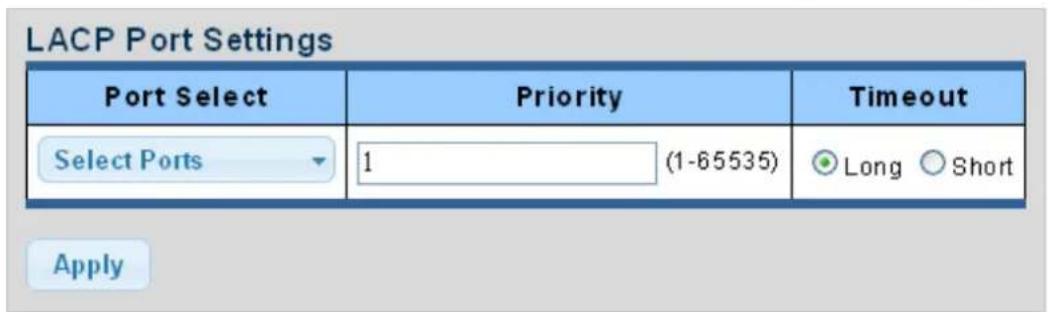
Figure 4-4-10 LACP Port Setting Page Screenshot
The pag s the following fields: e include
| Object Description | |
| • Port Select | Select port number from this drop-down list to set LACP port setting. |
| • Priority | The Priority controls the priority of the port. If the LACP partner wants to form a larger group than is supported by this device, then this parameter will control which ports will be active and which ports will be in a backup role.ower number means greater priority. L |
| • Timeout | The Timeout controls the period between BPDU transmissions. Short will transmit LACP packets each second, while Long will wait for 30 seconds before sending an LACP packet. |
Buttons
Apply
: Click to apply changes.
LACP Port Information
| Port Name | Priority | Timeout |
| GE1 | 1 | Long |
| GE2 | 1 | Long |
| GE3 | 1 | Long |
| GE4 | 1 | Long |
Figure 4-4-11 LACP Port Information Page Screenshot
ds: The page includes the following fiel
| Object Description | |
| • Port Name | The switch port number of the logical port |
| • Priority | Display the current LACP priority parameter |
| • Timeout | Display the current timeout parameter |
4.4.6 LAG Status
This page displays LAG status. The LAG Status screens in Figure 4-4-12 & Figure 4-4-13 appear.
LAG Status
| LAG | Name | Type | Link State | Active Member | Standby Member |
| LAG1 | --- | Not Present | - | - | |
| LAG2 | --- | Not Present | - | - | |
| LAG3 | --- | Not Present | - | - | |
| LAG4 | --- | Not Present | - | - |
Figure 4-4-12 LAG Status Page Screenshot
he page includes the following fields: T
| Object Description | |
| • LAG | Display the current trunk entry |
| • Name | Display the current LAG name |
| • Type | Display the current trunk type |
| • Link State | Display the current link state |
| • Active Member | Display the current active member |
| • Standby Member | Display the current standby member |
LACP information
| LAG | Port | PartnerSysId | PnKey | AtKey | Sel | Mux | Receiv | PrdTx | AtState | PnState |
| LAG1 | GE1 | 000000000000 | 03e8 | 03e8 | U | DETACH | DFLT | FstPRD | A_G__F_ | _TG_C_F_ |
| LAG1 | GE2 | 000000000000 | 03e8 | 03e8 | U | DETACH | DFLT | FstPRD | A_G__F_ | _TG_C_F_ |
Figure 4-4-13 LACP Information Page Screenshot
he page includes the following fields: T
| Object Description | |
| Trunk | rrent trunk ID Display the cu |
| Port | Display the current port number |
| PartnerSysId | The system ID of link partner. This field would be updated when the port receives LACP PDU from link partner |
| PnKey | Port key of partner. This field would be updated when the port receives LACP PDU from link partner |
| AtKey | Port key of actor. The key is designed to be the same as trunk ID. |
| Sel | LACP selection logic status of the port■ “S” means selected■ “U” means unselected■ “D” means standby |
| Mux | LACP mux state machine status of the port■ “DETACH” means the port is in detached state■ “WAIT” means waiting state■ “ATTACH” means attach state■ “CLLCT” means collecting state■ “DSTRBT” means distributing state |
| Receiv | LACP receive state machine status of the port■ “INIT” means the port is in initialize state■ “PORTds” means port disabled state■ “EXPR” means expired state■ “LACPds” means LACP disabled state■ “DFLT” means defaulted state■ “CRRNT” means current state |
| PrdTx | LACP periodic transmission state machine status of the port■ “no P RD” means the port is in no periodic state■ “FstPRD” means fast p eriodic state■ “SlwPRD” means slow pe riodic state■ “PrdTX” means period ic TX state |
| AtState | The actor state field of LACP PDU description.The field from left to right describes: “LACP_Activity”, “LACP_Timeout”, “Aggregation”, “Synchronization”, “Collecting”, “Distributing”, “Defaulted”, and “Expired”.The contents could be true or false. If the contents are false, the web shows “_”; if the contents are true, the web shows “A”, “T”, “G”, “S”, “C”, “D”, “F” and “E” for each content respectively. |
| PnState | The partner state field of LACP PDU description.The field from left to right describes: “LACP_Activity”, “LACP_Timeout”, “Aggregation”, “Synchronization”, “Collecting”, “Distributing”, “Defaulted”, and |
| "Expired".The contents could be true or false. If the contents are false, the web will show “_”; if the contents are true, the Web shows “A”, “T”, “G”, “S”, “C”, “D”, “F” and “E” for each content respectively. |
4.5 VLAN
4.5.1 VLAN Overview
A Virtual Local Area Network (VLAN) is a network topology configured according to a logical scheme rather than the physical layout. VLAN can be used to combine any collection of LAN segments into an autonomous user group that appears as a single LAN. VLAN also logically segment the network into different broadcast domains so that packets are forwarded only between ports within the VLAN. Typically, a VLAN corresponds to a particular subnet, although not necessarily.
VLAN can enhance performance by conserving bandwidth, and improve security by limiting traffic to specific domains.
A VLAN is a collection of end nodes grouped by logic instead of physical location. End nodes that frequently communicate with each other are assigned to the same VLAN, regardless of where they are physically on the network. Logically, a VLAN can be equated to a broadcast domain, because broadcast packets are forwarded to only members of the VLAN on which the broadcast was initiated.
VLAN Overview
![graph TD subgraph VLAN 2 PC1["PC-1 (Untagged)"] PC2["PC-2 (Untagged)"] PC3["PC-3 (Tagged)"] end subgraph VLAN 3 PC4["PC-4 (Untagged)"] PC5["PC-5 (Untagged)"] PC6["PC-6 (Tagged)"] end PC1 --> VLAN2 PC2 --> VLAN2 PC3 --> VLAN2 PC4 --> VLAN3 PC5 --> VLAN3 PC6 --> VLAN3](/content/2026/06/1225141/images/f12b5746c52a113999513a3c03c771d0c9c601cda8eaa3dfb25c20dcb0f07fe7.jpg)
- No matter what basis is used to uniquely identify end nodes and assign these nodes VLAN membership, packets cannot cross VLAN without a network device performing a routing function between the VLAN.

-
The LRP Managed Switch supports IEEE 802.1Q VLAN. The port untagging function can be used to remove the 802.1 tag from packet headers to maintain compatibility with devices that are tag-unaware.
-
The LRP Managed Switch's default is to assign all ports to a single 802.1Q VLAN named DEFAULT_VLAN. As new VLAN is created, the member ports assigned to the new VLAN will be removed from the DEFAULT_VLAN port member list. The DEFAULT_VLAN has a VID = 1.
This section has the following items:
| ■ Management VLA N | Configures the management VLAN |
| ■ Create VLAN | Creates the VLAN group |
| ■ Interface Settings | Configures mode and PVID on the VLAN port |
| ■ Port to VLAN | Configures the VLAN membership |
| ■ Port VLAN Membership | Displays the VLAN membership |
| ■ Protocol VLAN Group Setting | Configures the protocol VLAN group |
| ■ Protocol VLAN Port Setting | Configures the protocol VLAN port setting |
| ■ GVRP Setting | Configures GVRP global setting |
| ■ GVRP Port Setting | Configures GVRP port setting |
| ■ GVRP VLAN | Displays the GVRP VLAN database |
| ■ GVRP Statistics | Displays the GVRP port statistics |
4.5.2 IEEE 802.1Q VLAN
In large networks, routers are used to isolate broadcast traffic for each subnet into separate domains. This LRP Managed Switch provides a similar service at Layer 2 by using VLANs to organize any group of network nodes into separate broadcast domains. VLANs confine broadcast traffic to the originating group, and can eliminate broadcast storms in large networks. This also provides a more secure and cleaner network environment.
An IEEE 802.1Q VLAN is a group of ports that can be located anywhere in the network, but communicate as though they belong to the same physical segment.
VLANs help to simplify network management by allowing you to move devices to a new VLAN without having to change any physical connections. VLANs can be easily organized to reflect departmental groups (such as Marketing or R&D), usage groups (such as e-mail), or multicast groups (used for multimedia applications such as videoconferencing).
VLANs provide greater network efficiency by reducing broadcast traffic, and allow you to make network changes without having to update IP addresses or IP subnets. VLANs inherently provide a high level of network security since traffic must pass through a configured Layer 3 link to reach a different VLAN.
This LRP Managed Switch supports the following VLAN features:
■ Up to 255 V LANs based on the IEEE 802.1Q standard
■ Port overla rt tppiagtcibareing multiple VLANs
■ End stations can belong to multiple VLANs
■ Passin g traffic between VLAN-aware and VLAN-unaware devices
IEEE 802.1Q Standard
IEEE 802.1Q (tagged) VLAN are implemented on the Switch. 802.1Q VLAN require tagging, which enables them to span the entire network (assuming all switches on the network are IEEE 802.1Q-compliant
VLAN allow a network to be segmented in order to reduce the size of broadcast domains. All packets entering a VLAN will only be forwarded to the stations (over IEEE 802.1Q enabled switches) that are members of that VLAN, and this includes broadcast, multicast and unicast packets from unknown sources.
VLAN can also provide a level of security to your network. IEEE 802.1Q VLAN will only deliver packets between stations that are members of the VLAN. Any port can be configured as either tagging or untagging.:
■ The untagging feature of IEEE 802.1Q VLAN allows VLAN to work with legacy switches that don't recognize VLAN tags in packet headers.
■ The tagging feature allows VLAN to switch multiple through using physical connection and allows Spanning Tree to allow panel and work normally.
Some relevant terms:
- Tagging - The act of putting 802.1Q VLAN information into the header of a packet.
- Untagging - The act of stripping 802.1Q VLAN information out of the packet header.
802.1Q VLAN Tags
The figure below shows the 802.1Q VLAN tag. There are four additional octets inserted after the source MAC address. Their presence is indicated by a value of 0x8100 in the Ether Type field. When a packet's Ether Type field is equal to 0x8100, the packet carries the IEEE 802.1Q/802.1p tag. The tag is contained in the following two octets and consists of 3 bits of user priority, 1 bit of Canonical Format Identifier (CFI - used for encapsulating Token Ring packets so they can be carried across Ethernet backbones), and 12 bits of VLAN ID (VID). The 3 bits of user priority are used by 802.1p. The VID is the VLAN identifier and is used by the 802.1Q standard. Because the VID is 12 bits long, 4094 unique VLAN can be identified.
The tag is inserted into the packet header making the entire packet longer by 4 octets. All of the information originally contained in the packet is retained.
802.1Q Tag
![graph TD A["Preamble"] --> B["Destination Address"] A --> C["Source Address"] A --> D["VLAN TAG"] D --> E["Ethernet Type"] D --> F["Data"] D --> G["FCS"] H["User Priority"] --> I["CFI"] H --> J["VLAN ID (VID)"] K["TPID (Tag Protocol Identifier)"] --> L["2 bytes"] K --> M["TCI (Tag Control Informatio…](/content/2026/06/1225141/images/2e7b635cf9e43e7722a8e47c2d65c259dbcfa370f72d56b950748d5dd31524ef.jpg)
The Ether Type and VLAN ID are inserted after the MAC source address, but before the original Ether Type/Length or Logical Link Control. Because the packet is now a bit longer than it was originally, the Cyclic Redundancy Check (CRC) must be recalculated.
Adding an IEEE802.1Q Tag
![graph TD A["Dest. Addr. Src. Addr. Length/E. type"] --> B["Dest. Addr."] A --> C["Src. Addr."] A --> D["E. type"] A --> E["Tag"] A --> F["Length/E. type"] A --> G["Data"] A --> H["New CRC"] I["Original Ethernet"] --> A J["New Tagged Packet"] --> K["Priority CFI VLAN ID"]](/content/2026/06/1225141/images/e0dd361772d41089103fe33e94fd11864e2999add4bc6411254134abdb7b6107.jpg)
Port VLAN ID
Packets that are tagged (are carrying the 802.1Q VID information) can be transmitted from one 802.1Q compliant network device to another with the VLAN information intact. This allows 802.1Q VLAN to span network devices (and indeed, the entire network – if all network devices are 802.1Q compliant).
Every physical port on a switch has a PVID. 802.1Q ports are also assigned a PVID, for use within the switch. If no VLAN are defined on the switch, all ports are then assigned to a default VLAN with a PVID equal to 1. Untagged packets are assigned the PVID of the port on which they were received. Forwarding decisions are based upon this PVID, in so far as VLAN are concerned. Tagged packets are forwarded according to the VID contained within the tag. Tagged packets are also assigned a PVID, but the PVID is not used to make packet forwarding decisions, the VID is.
Tag-aware switches must keep a table to relate PVID within the switch to VID on the network. The switch will compare the VID of a packet to be transmitted to the VID of the port that is to transmit the packet. If the two VID are different the switch will drop the packet. Because of the existence of the PVID for untagged packets and the VID for tagged packets, tag-aware and tag-unaware network devices can coexist on the same network.
A switch port can have only one PVID, but can have as many VID as the switch has memory in its VLAN table to store them.
Because some devices on a network may bestag-ataareheperten a tagransatredeide before
packets are transmitted – should the packet to be transmitted have a tag or not? If the transmitting port is connected to a tag-unaware device, the packet should be untagged. If the transmitting port is connected to a tag-aware device, the packet should be tagged.
Default VLANs
The Switch initially configures one VLAN, VID = 1, called "default." The factory default setting assigns all ports on the Switch to the "default". As new VLAN are configured in Port-based mode, their respective member ports are removed from the "default."
- Assigning Ports to VLANs
Before enabling VLANs for the switch, you must first assign each port to the VLAN group(s) in which it will participate. By default all ports are assigned to VLAN 1 as untagged ports. Add a port as a tagged port if you want it to carry traffic for one or more VLANs, and any intermediate network devices or the host at the other end of the connection supports VLANs. Then assign ports on the other VLAN-aware network devices along the path that will carry this traffic to the same VLAN(s), either manually or dynamically using GVRP. However, if you want a port on this switch to participate in one or more VLANs, but none of the intermediated two e-supports Vleansthatperboth end of onnection ANs, then you should the VLAN as an untagged port.

VLAN-tagged frames can pass through VLAN-aware or VLAN-unaware network interconnection devices, but the VLAN tags should be stripped off before passing it on to any end-node host that does not support VLAN tagging.
VLAN Classification
When the switch receives a frame, it classifies the frame in one of two ways. If the frame is untagged, the switch assigns the frame to an associated VLAN (based on the default VLAN ID of the receiving port). But if the frame is tagged, the switch uses the tagged VLAN ID to identify the port broadcast domain of the frame.
Port Overlapping
Port overlapping can be used to allow access to commonly shared network resources among different VLAN groups, such as file servers or printers. Note that if you implement VLANs which do not overlap, but still need to communicate, you can connect them by enabled routing on this switch.
■ Untagged VLANs
Untagged (or static) VLANs are typically used to reduce broadcast traffic and to increase security. A group of network users assigned to a VLAN form a broadcast domain that is separate from other VLANs configured on the switch. Packets are forwarded only between ports that are designated for the same VLAN. Untagged VLANs can be used to manually isolate user groups or subnets.
4.5.3 Management VLAN
Configure Management VLAN on this page. The screens in Figure 4-5-1 & Figure 4-5-2 appear.

Figure 4-5-1 Management VLAN Setting Page Screenshot
The page includes the following fields:
| Object Description | |
| • Management VLAN | Provide the managed VLAN ID |
Buttons
Apply
Click to apply changes.
| Config Name | Config Value |
| Management VLAN | 1 |
Figure 4-5-2 Management VLAN State Page Screenshot
The page includes the following fields:
| Object Description | |
| • Management VLAN | Display the current management VLAN. |
4.5.4 Create VLAN
Create/delete VLAN on this page. The screens in Figure 4-5-3 & Figure 4-5-4 appear.

Figure 4-5-3 VLAN Setting Page Screenshot
The page includes the following fields:
| Object Description | |
| • VLAN List | Indicates the ID of this particular VLAN. |
| • VLAN Action | This column allows users to add or delete VLAN s. |
| • VLAN Name Prefix | Indicates the name of this particular VLAN. |
uttons B
Apply
: Click to apply changes.
| VLAN ID | VLAN Name | VLAN Typo | Modify |
| 1 | default | Default | Edit |
Figure 4-5-4 VLAN Table Page Screenshot
The page includes the following fields:
| Object Description | |
| • VLAN ID | Display the current VLAN ID entry |
| • VLAN Name | Display the current VLAN ID name |
| • VLAN Type | Display the current VLAN ID type |
| • Modify | Click Edit to modify VLAN configuration |
4.5.5 Interface Settings
This page is used for configuring the LRP Managed Switch port VLAN. The VLAN per Port Configuration Page contains fields for managing ports that are part of a VLAN. The port default VLAN ID (PVID) is configured on the VLAN Port Configuration Page. All untagged packets arriving to the device are tagged by the ports PVID.
Understand nomenclature of the Switch
IEEE 802.1Q Tagged and Untagged
Every port on an 802.1Q compliant switch can be configured as tagged or untagged.
- Tagged: Ports with tagging enabled will put the VID number, priority and other VLAN information into the header of all packets that flow into those ports. If a packet has previously been tagged, the port will not alter the packet, thus keeping the VLAN information intact. The VLAN information in the tag edrbythe802.the networkartdevices on packet-for-revisioning
- Untagged: Ports with untaggedlets with strip when 802.1Q tag from all ports. If the packet doesn't have an 802.1Q VLAN tag, the port will not alter the packet. Thus, all packets received by and forwarded by an untagging port will have no 802.1Q VLAN information. (Remember that the PVID is only used internally within the Switch). Untagging is used to send packets from an 802.1Q-compliant network device to a non-compliant network device.
| Frame Income Frame Leave | Income Frame is tagged | Income Frame is untagged |
| Leave port is tagged Frame remains tagged Tag is inserted | ||
| Leave port is untagged Tag is removed Frame remain untagged | ||
Table 4-5-1: Ingress / Egress Port with VLAN VID Tag / Untag Table
IEEE 802.1Q Tunneling (Q-in-Q)
IEEE 802.1Q Tunneling (QinQ) is designed for service providers carrying traffic for multiple customers across their networks. QinQ tunneling is used to maintain customer-specific VLAN and Layer 2 protocol configurations even when different customers use the same internal VLAN IDs. This is accomplished by inserting Service Provider VLAN (SPVLAN) tags into the customer's frames when they enter the service provider's network, and then stripping the tags when the frames leave the network.
A service provider's customers may have specific requirements for their internal VLAN IDs and number of VLANs supported. VLAN ranges required by different customers in the same service-provider network might easily overlap, and traffic passing through the infrastructure might be mixed. Assigning a unique range of VLAN IDs to each customer would restrict customer configurations, require intensive processing of VLAN mapping tables, and could easily exceed the maximum VLAN limit of 4096.
![graph TD subgraph_Customer_A_s_LAN_Headquarters["Customer A's LAN Headquarters"] A1["VLAN 1-20"] --> B1["Network"] A2["VLAN 1-30"] --> B2["Network"] end subgraph_Customer_B_s_LAN_Headquarters["Customer B's LAN Headquarters"] B1 --> C1["Network"] B2 --> C2["Network"] end subgraph_Customer_B_s_LAN_Bra…](/content/2026/06/1225141/images/0fd706dc405e93050721f58e7d93efd6e3a61f6d77c4c588634b99fd5cf61809.jpg)
The LRP Managed Switch supports multiple VLAN tags and can therefore be used in MAN applications as a provider bridge,
aggregating prefilefromo bhenhANs(Mdce. Onetofustomer LANs
etro Access Network) sp
purposes of the provider bridge is to be recognized and use VLAN tags so that the VLANs in the MAN s
independent of the customers' VLANs. This is accomplished by adding a VLAN tag with a MAN-related VID for frames entering the MAN. When leaving the MAN, the tag is stripped and the original VLAN tag with the customer-related VID is again available.
This provides a tunneling mechanism to connect remote costumer VLANs through a common MAN space without interfering with the VLAN tags. All tags use EtherType 0x8100 or 0x88A8, where 0x8100 is used for customer tags and 0x88A8 are used for service provider tags.
In cases where a given service VLAN only has two member ports on the switch, the learning can be disabled for the particular VLAN and can therefore rely on flooding as the forwarding mechanism between the two ports. This way, the MAC table requirements is reduced.
Edit Interface Setting
The Edit Interface Setting/Status screens in Figure 4-5-5 & Figure 4-5-6 appear.

Figure 4-5-5 Edit Interface Setting Page Screenshot
The page includes the following fields:
| Object Description | |
| • Port Select | Select port number from this drop-down list to set VLAN port setting. |
| • Interface VLAN Mode | Set the port in access, trunk, hybrid and tunnel mode.■ Trunk means the port allows traffic of multiple VLANs.■ Access indicates the port belongs to one VLAN only.■ Hybrid means the port allows the traffic of multi-VLANs to pass in tag or untag mode.■ Tunnel configures IEEE 802.1Q tunneling for a downlink port to another device within the customer network. |
| • PVID | Allows you to assign PVID to selected port.The PVID will be inserted into all untagged frames entering the ingress port. The PVID must be the same as the VLAN ID that the port belongs to VLAN group, or the untagged traffic will be dropped.The range for the PVID is 1-4094. |
| • Accepted Type | Determines whether the port accepts all frames or only tagged frames. This parameter affects VLAN ingress processing. If the port only accepts tagged frames, untagged frames received on the port are discarded.Options:■ All■ Tag Only■ Untag OnlyBy default, the field is set to All. |
| • Ingress Filtering | • If ingress filtering is enabled (checkbox is checked), frames classified to a VLAN that the port is not a member of get discarded.• If ingress filtering is disabled, frames classified to a VLAN that the port is not a member of are accepted and forwarded to the switch engine.However, the port will never transmit frames classified to VLANs that it is not a member of. |
| • Uplink | Enable/disable uplink function in trunk port. |
| • TPID | Configure the type (TPID) of the protocol of switch trunk port. |
Buttons
Apply
: Click to apply changes.
▼ Port VLAN Status
| Port | Interface VLAN Mode | PVID | Accept Frame Type | Ingress Filtering | Uplink | TPID |
| GE1 | Trunk | 1 | ALL | Enabled | Disabled | 0x8100 |
| GE2 | Trunk | 1 | ALL | Enabled | Disabled | 0x8100 |
| GE3 | Trunk | 1 | ALL | Enabled | Disabled | 0x8100 |
| 1 | ALL | Disabled | 0x8100 |
| LAG6 | Trunk | 1 | ALL | Enabled | Disabled | 0x8100 |
| LAG7 | Trunk | 1 | ALL | Enabled | Disabled | 0x8100 |
| LAG8 | Trunk | 1 | ALL | Enabled | Disabled | 0x8100 |
Figure 345-6s Edtt Interface Setting Pa
The page includes the following fields:
| Object Description | |
| • Port | number of the logical port The switch port |
| • Interface VLAN Mode | iD s la the current interface VLAN mode |
| • PVID | Display the current PVID |
| • Accepted Frame Type | Display the current access frame type |
| • Ingress Filtering | Display the current ingress filtering |
| • Uplink | Display the current uplink mode |
| • TPID | Display the current TPID |
4.5.6 Port to VLAN
Use the VLAN Static Table to configure port members for the selected VLAN index. This page allows you to add and delete port members of each VLAN. The screen in Figure 4-5-7 appears.
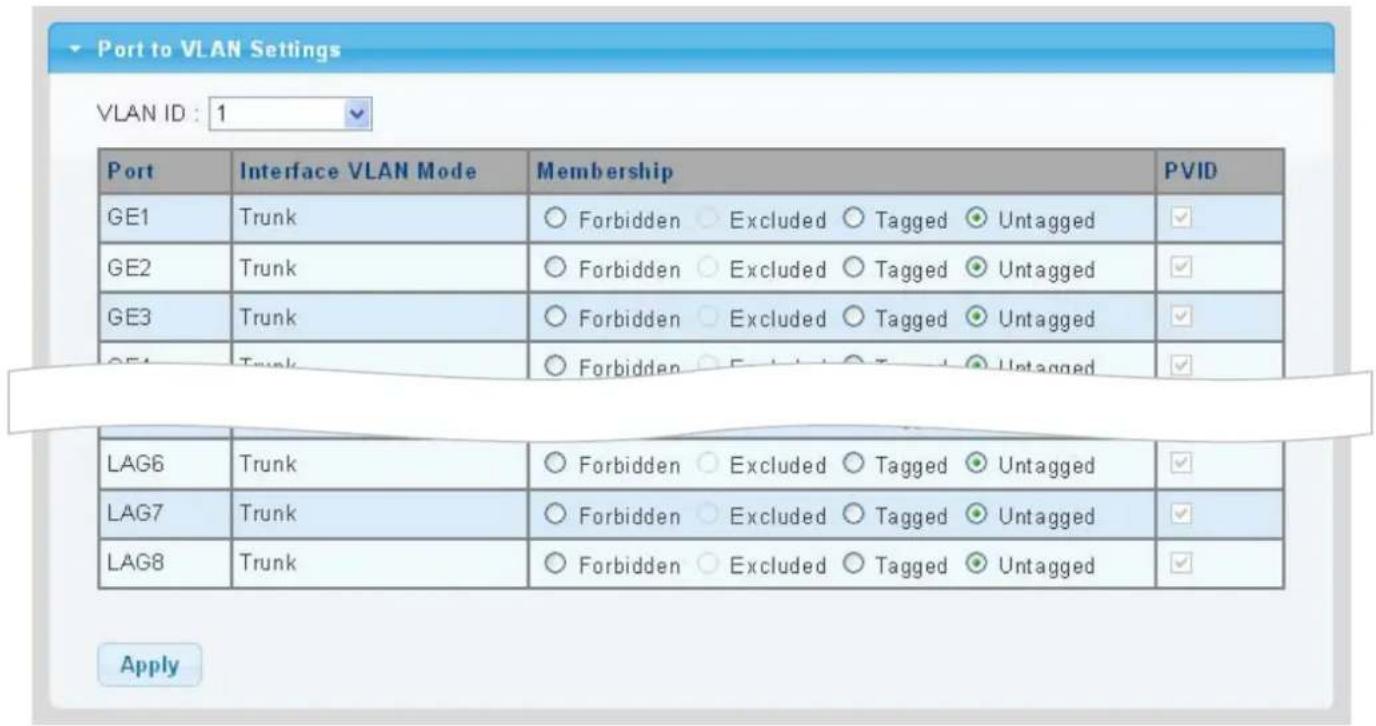
Figure 4-5-7 Port to VLAN Setting Page Screenshot
The page includes the following fields:
| Object Description | ||
| • VLAN ID | Select VLAN ID from this drop-down list to assign VLAN membership. | |
| • Port | The switch port number of the logical port. | |
| • Interface VLAN Mode | e. Display the current interface VLAN mod | |
| • Membership | Select VLAN membership for each interface by marking the appropriate radio button for a port or trunk: | |
| Forbidden: | Interface is forbidden from automatically joining the VLAN via GVRP. | |
| Excluded: | Interface is not a member of the VLAN. Packets associated with this VLAN will not be transmitted by the interface. | |
| Tagged: | Interface is a member of the VLAN. All packets transmitted by the port will be tagged, that is, carry a tag and therefore carry VLAN or CoS information. | |
| Untagged: | Interface is a member of the VLAN. All packets transmitted by the port will be untagged, that is, not carry a tag and therefore notcarry VLAN or CoS information. Note that an interface must be assigned to at least one group as an untagged port. | |
| • PVID | Display the current PVID | |
Buttons
Apply
: Click to apply changes.
4.5.7 Port VLAN Membership
This page provides an overview of membership status for VLAN users. The VLAN Membership Status screen in Figure 4-5-8 appears.
▼ Port VLAN Membership Table
| Port | Mode | Administrative VLANs | Operational VLANs | Modify |
| GE1 | Trunk | 1UP | 1UP | Edit |
| GE2 | Trunk | 1UP | 1UP | Edit |
| GE3 | Trunk | 1UP | 1UP | Edit |
| Trunk | 1UP | Edit |
| LAG6 | Trunk | 1UP | 1UP | Edit |
| LAG7 | Trunk | 1UP | 1UP | Edit |
| LAG8 | Trunk | 1UP | 1UP | Edit |
Figure 4-5-8 EoshoLAN Membership Table Page Scre
The page includes the following fields:
| Object Description | |
| • Port | The switch po r of the logical port rt numbe |
| • Mode | Display the current VLAN mode |
| • Administrative VLANs | e cuDisplay th rrent administrative VLANs |
| • Operational VLANs | Display the current operational VLANs |
| • Modify | Click Edit to modify VLAN membership |
4.5.8 Protocol VLAN Group Setting
The network devices required to choose careneasily grouped into a common VLAN. This may require
non-standard devices to pass traffic between different VLANs in order to encompass all the devices participating in a specific protocol. This kind of configuration deprives users of the basic benefits of VLANs, including security and easy accessibility.
To avoid these problems, you can configure this LRP Managed Switch with protocol-based VLANs that divide the physical network into logical VLAN groups for each required protocol. When a frame is received at a port, its VLAN membership can then be determined based on the protocol type being used by the inbound packets.
Command Usage
To configure protocol-based VLANs, follow these steps:
- First configure VLAN groups for the protocols you want to use. Although not mandatory, we suggest configuring a separate VLAN for each major protocol running on your network. Do not add port members at this time.
- Create a protocol group for each of the protocols you want to assign to a VLAN using the Protocol VLAN Configuration page.
- Then map the protocol for each interface to the appropriate VLAN using the Protocol VLAN Port Configuration page.
This page allows you to configure protocol-based VLAN Group Setting. The protocol-based VLAN screens in Figure 4-5-9 &
Figure 4-5-10 appear.
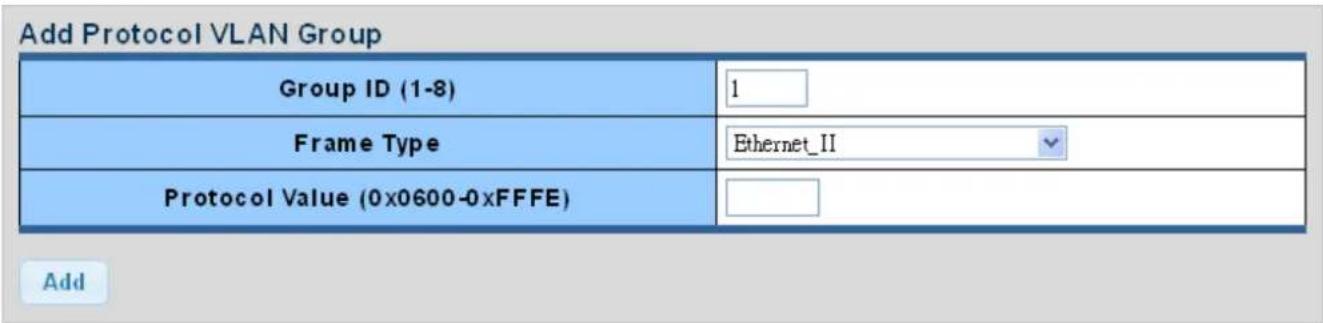
Figure 4-5-9 Add Protocol VLAN Group Page Screenshot
The page includes the following fields:
| Object Description | |
| • Group ID | Protocol VLAN Group. Protocol Group ID assigned to the |
| • Frame Type | following values: Frame Type can have one of the■ Ethernet II■ IEEE802.3_LLC_Other■ RFC_1042Note: On changing the Frame type field, valid value of the following text field willependin lected. vary d g on the new frame type you se |
| • Protocol Value | Valid value that can be entered in this text field depends on the option selected |
| (0x0600-0xFFFE) | from the preceding Frame Type selection menu. Valid values for frame type ranges from 0x0600-0xfffe |
Buttons
Apply
: Click to apply changes.
| Protocol VLAN Group State | |||
| Group ID | Frame Type | Protocol Value | Delete |
Figure 4-5-10 Protocol VLAN Group State Page Screenshot
The page includes the following fields:
| Object Description | |
| • Group ID | Display the current group ID |
| • Frame Type | Display the current frame type |
| • Protocol Value | Display the current protocol value |
| • Delete | Click to delete the group ID entry |
4.5.9 Protocol VLAN Port Setting
This page allows you to map an already configured Group Name to a VLAN/port for the switch. The Protocol VLAN Port Setting/State screens in Figure 4-5-11 & 2 appear.

Figure 4-5-11 Protocol VLAN Port Setting Page Screenshot
T fields: he page includes the following
| Object Description | |
| • Port | Select port from this drop-down list to assign protocol VLAN port |
| • Group | Select group ID from this drop-down list to protocol VLAN group |
| • VLAN | VLAN ID assigned to the Special Protocol VLAN Group |
Buttons
Add
: Click to add protocol VLAN port entry.
Protocol VLAN Port State
Port
Group ID
VLAN ID
Delete
Figure State PageScoreViewLAN Port
The page includes the following fields:
| Object Description | |
| • Port | y the currenDispla t port |
| • Group ID | Display the current group ID |
| • VLAN ID | Display the current VLAN ID |
| • Delete | ClickDeleteto delete the group ID entry |
4.5.10 GVRP Setting
GARP VLAN RegistryndPhiatocol (G
VLAN members on works across the net
a way for switches to exchange VLAN information in order to register
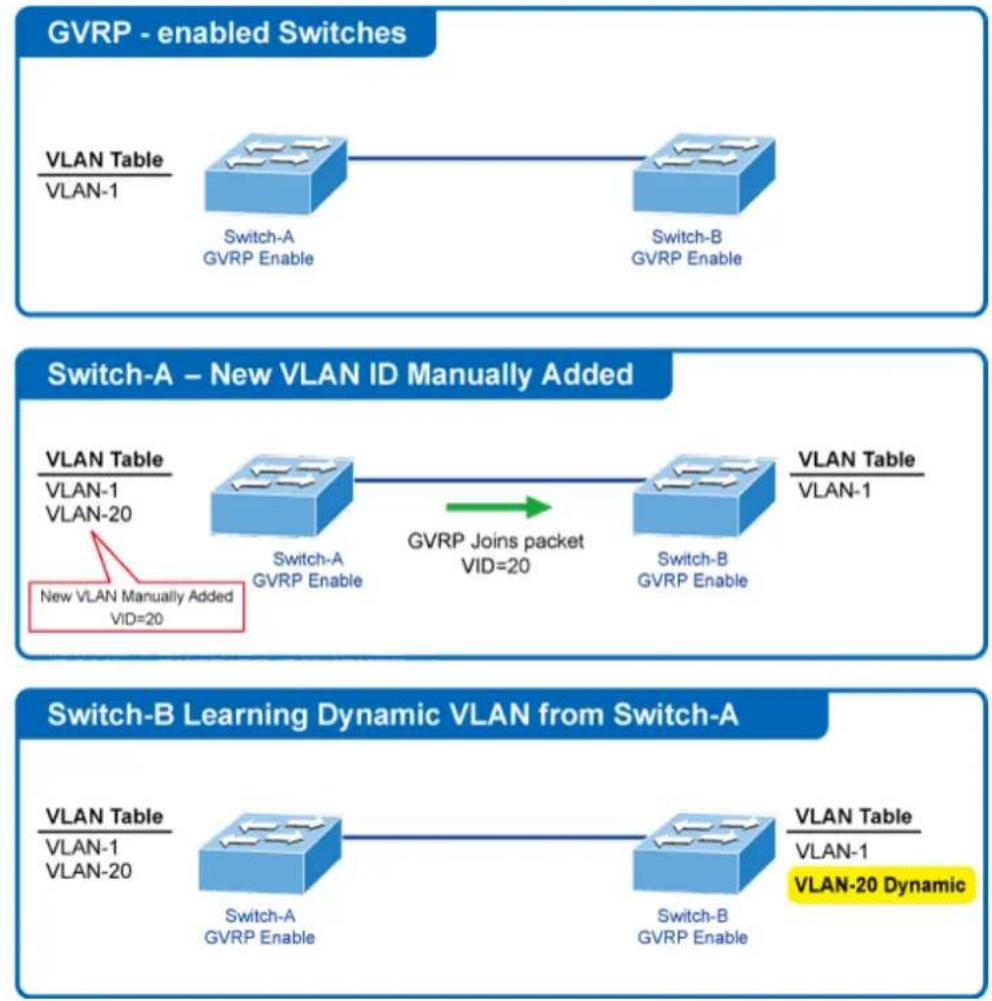
VLANs are dynamically configured based on join messages issued by host devices and propagated throughout the network. GVRP must be enabled to permit automatic VLAN registration, and to support VLANs which extend beyond the local switch.
The GVRP Global Setting/Information screens in Figure 4-5-13 & Figure 4-5-14 appear.
GVRP Global Setting
| GVRP | Disable Enable |
| Join Timeout | 20 (20-16375 centiseconds) |
| Leave Timeout | 60 (45-32760 centiseconds) |
| LeaveAll Timeout | 1000 (65-32765 centiseconds) |
Apply
Figure 4-5-13 GVRP Global Setting Page Screenshot
ds: The page includes the following fiel
| Object Description | |
| • GVRP | Controls whether GVRP is enabled or disabled on this switch. |
| • Join Timeout | The interval between transmitting requests/queries to participate in a VLAN group.Range: 20-16375 centisecondsDefault: 20 centiseconds |
| • Leave Timeout | The interval a port waits before leaving a VLAN group. This time should be set to more than twice the join time. This ensures that after a Leave or LeaveAll message has been issued, the applicants can rejoin before the port actually leaves the group.Range: 45-32760 centisecondsDefault: 60 centiseconds |
| • LeaveAll Timeout | The interval between sending out a LeaveAll query message for VLAN group participants and the port leaving the group. This interval should be considerably larger than the Leave Time to minimize the amount of traffic generated by nodes rejoining the group.Range: 65-32765 centiseconds;Default: 1000 centiseconds |

Note
Timer settings must follow this rule:
2 x (join timer) < leave timer < leaveAll timer
Buttons
Apply
Click to apply changes.
GVRP Informations
| Information Name | Information Value |
| GVRP Status | Disabled |
| Join Timeout | 200 millisecond |
| Leave Timeout | 600 millisecond |
| LeaveAll Timeout | 10000 millisecond |
Figure 4-5-14 GVRP Global Setting Page Screenshot
The page includes the following fields:
| Object Description | |
| • GVRP Status | Display the current GVRP status |
| • Join Timeout | Display the current join timeout parameter |
| • Leave Timeout | he current leave timeout parameter Display t |
| • LeaveAll Timeout | ll timeout parameter Display the current leavea |
4.5.11 GVRP Port Setting
The GVRP Port Setting/Status screens in Figure 4-5-15 & Figure 4-5-16 appear.
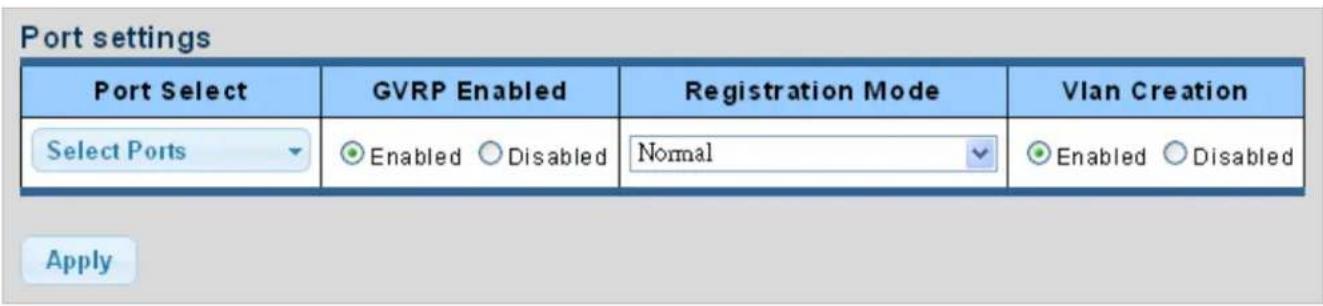
Figure 4-5-15 GVRP Global Setting Page Screenshot
The page includes the following fields:
| Object Description | |
| • Port Select | Select port from this drop-down list to assign protocol VLAN port |
| • GVRP Enabled | Controls whether GVRP is enabled or disabled on port |
| • Registration Mode | By default GVRP ports are in normal registration mode. These ports use GVRP join messages from neighboring switches to prune the VLANs running across the 802.1Q trunk link. If the device on the other side is not capable of sending GVRP messages, or if you do not want to allow the switch to prune any of the VLANs, use the fixed mode. Fixed mode ports will forward for all VLANs that exist in the switch database. Ports in forbidden mode forward only for VLAN 1. |
| • VLAN Creation | GVRP can dynamically create VLANs on switches for trunking purposes. By enabling GVRP dynamic VLAN creation, a switch will add VLANs to its database when it receives GVRP join messages about VLANs it does not have. |
Buttons
Apply
: Click to apply changes.
| Port | Enable State | Registration Mode | Vlan Creation State |
| GE1 | Disabled | Normal | Enabled |
| GE2 | Disabled | Normal | Enabled |
| GE3 | Disabled | Normal | Enabled |
| GE4 | Disabled | Normal | Enabled |
| LAG6 | Disabled | Normal | Enabled |
| LAG7 | Disabled | Normal | Enabled |
| LAG8 | Disabled | Normal | Enabled |
Figure 4-5-16 GVRP Port Status Page Screenshot
The page includes the following fields:
| Object Description | |
| • Port | The switch port number of the logical port |
| • Enable Status | rent GVRP port state Display the cur |
| • Registration Mode | Display the current registration mode |
| • VLAN Creation Status | Display the current VLAN creation status |
4.5.12 GVRP VLAN
The GVRP VLAN Database screen in Figure 4-5-17 appears.

Figure 4-5-17 GVRP VLAN Database Status Page Screenshot
The page includes the following fields:
| Object Description | |
| • VLAN ID | Display the current VLAN ID |
| • Member Ports | Display the current member ports |
| • Dynamic Ports | Display the current dynamic ports |
| • VLAN Type | Display the current VLAN type |
4.5.13 GVRP Statistics
The GVRP Port Statistics and Error Statistics screens in Figure 4-5-18 & Figure 4-5-19 appear.
Figure 4-5-18 GVRP Port Statistics Page Screenshot
The page includes the following fields:
| Object Description | |
| • Port | The switch port number of the logical port |
| • Join Empty (Rx/Tx) | Display the current join empty (TX/RX) packets |
| • Empty (Rx/Tx) | Display the current empty (TX/RX) packets |
| • Leave Empty (Rx/Tx) | Display the current leave empty (TX/RX) packets |
| • Join In (Rx/Tx) | Display the current join in (TX/RX) packets |
| • Leave In (Rx/Tx) | Display the current leave in (TX/RX) packets |
| • LeaveAll (Rx/Tx) | Display the current leaveall (TX/RX) packets |

Figure 4-5-19 GVRP Port Error Statistics Page Screenshot
elds: The page includes the following fi
| Object Description | |
| • Port | The switch port number of the logical port. |
| • Invalid Protocol ID | Display the current invalid protocol ID |
| • Invalid Attribute Type | Display the current invalid attribute type |
| • Invalid Attribute Value | Display the current invalid attribute value |
| • Invalid Attribute Length | Display the current invalid attribute length |
| • Invalid Event | Display the current invalid event. |
Buttons
Clear
Click to clear the GVRP Error Statistics.
Refresh
: Click to refresh the GVRP Error Statistics.
4.5.14 VLAN setting b×amp
- Separate VLANs
- 802.1Q VLAN Trunk
4.5.14.1 Two Separate 802L1QNs
The diagram shows how the LRP Managed Switch handles Tagged and Untagged traffic flow for two VLANs. VLAN Group 2 and VLAN Group 3 are separated VLANs. Each VLAN isolates network traffic so only members of the VLAN receive traffic from the same VLAN members. The screen in Figure 4-5-20 appears and Table 4-5-2 describes the port configuration of the LRP Managed Switches.
VLAN Overview
![graph TD subgraph VLAN 2 PC1["PC-1 (Untagged)"] PC2["PC-2 (Untagged)"] PC3["PC-3 (Tagged)"] end subgraph VLAN 3 PC4["PC-4 (Untagged)"] PC5["PC-5 (Untagged)"] PC6["PC-6 (Tagged)"] end PC1 --> PC2 PC2 --> PC3 PC3 --> PC4 PC4 --> PC5 PC5 --> PC6 PC1 -.-> PC2 PC2 -.-> PC3 PC3 -.-> PC4 PC4 -.-> PC5 PC5 -…](/content/2026/06/1225141/images/2a2e33455982fc84cb144467dc61b3b82a208c50895670ae634624234cd1990c.jpg)
Figure 4-5-20 Two Separate VLAN Diagrams
| VLAN Group | VID | Untagged Members | Tagged Members |
| VLAN Group 1 N/A | 1 Port-7~Port-8 | ||
| VLAN Group 2 2 | Port-1,Port-2 | Port-3 | |
| VLAN Group 3 3 | Port-4,Port-5 | Port-6 |
Table 4-5-2 VLAN and Port Configuration
The scenario described as follows:
Untagged packet entering VLAN 2
-
While [PC-1] transmits an untagged packet enters Port-1, the LRP Managed Switch will tag it with a VLAN Tag=2. [PC-2] and [PC-3] will receive the packet through Port-2 and Port-3.
-
[PC-4], [PC-5] and [PC-6] receive no packet.
- While the packet leaves Port-2, it will be stripped away its tag becoming an untagged packet.
- While the packet leaves Port-3, it will be kept as a tagged packet with VLAN Tag=2.
■ Tagged packet entering VLAN 2
- While [PC-3] transmits a tagged packet with VLAN Tag=2 entering Port-3. [PC-1] and [PC-2] will receive the packet through Port-1 and Port-2.
- While the packet leaves Port-1 and Port-2, it will be stripped away its tag becoming an untagged packet.
■ Untagged packet entering VLAN 3
- While [PC-4] transmits an untagged packet enters Port-4, the switch will tag it with a VLAN Tag=3. [PC-5] and [PC-6] will receive the packet through Port-5 and Port-6.
- While the packet leaves Port-5, it will be stripped away its tag becoming an untagged packet.
- While the packet leaves Port-6, it will be kept as a tagged packet with VLAN Tag=3.

In this example, VLAN Group 1 is set as default VLAN, but only focuses on VLAN 2 and VLAN 3 traffic flow.
Setup Steps
1. Create VLAN Group 2 and 3
Add VLAN group 2 and group 3
| VLAN ID | VLAN Name | VLAN Type |
| 1 | default | Default |
| 2 | 20002 | Static |
| 3 | 30003 | Static |
2. Assign VLAN mode and PVID to each port:
Port-1, Port-2 and Port-3 : VLAN Mode = Hybrid, PVID=2
Port-4, Port-5 and Port-6 : VLAN Mode = Hybrid, PVID=3
▼ Port VLAN Status
| Port | Interface VLAN Mode | PVID | Accept Frame Type |
| GE1 | Hybrid | 2 | ALL |
| GE2 | Hybrid | 2 | ALL |
| GE3 | Hybrid | 2 | ALL |
| GE4 | Hybrid | 3 | ALL |
| GE5 | Hybrid | 3 | ALL |
| GE6 | Hybrid | 3 | ALL |
3. Assign Tagged/Untagged to each port:
VLAN ID = 2:
Port-1 & 2 = Untagged,
Port-3 = Tagged,
Port -4\~6 = Excluded.
Port to VLAN Settings
| Port | Interface VLAN Mode | Membership | PVID |
| GE1 | Hybrid | ○ Forbidden ○ Excluded ○ Tagged ○ Untagged | ☑ |
| GE2 | Hybrid | ○ Forbidden ○ Excluded ○ Tagged ○ Untagged | ☑ |
| GE3 | Hybrid | ○ Forbidden ○ Excluded ○ Tagged ○ Untagged | ☑ |
| GE4 | Hybrid | ○ Forbidden ○ Excluded ○ Tagged ○ Untagged | ☐ |
| GE5 | Hybrid | ○ Forbidden ○ Excluded ○ Tagged ○ Untagged | ☐ |
| GE6 | Hybrid | ○ Forbidden ○ Excluded ○ Tagged ○ Untagged | ☐ |
VLAN ID = 3:
Port-4 & 5 = Untagged,
Port -6 = Tagged,
Port-1\~3 = Excluded.
Port to VLAN Settings
| Port | Interface VLAN Mode | Membership | PVID |
| GE1 | Hybrid | ○ Forbidden ○ Excluded ○ Tagged ○ Untagged | |
| GE2 | Hybrid | ○ Forbidden ○ Excluded ○ Tagged ○ Untagged | |
| GE3 | Hybrid | ○ Forbidden ○ Excluded ○ Tagged ○ Untagged | |
| GE4 | Hybrid | ○ Forbidden ○ Excluded ○ Tagged ○ Untagged | |
| GE5 | Hybrid | ○ Forbidden ○ Excluded ○ Tagged ○ Untagged | |
| GE6 | Hybrid | ○ Forbidden ○ Excluded ○ Tagged ○ Untagged |
4.5.14.2 VLAN Trunking between Two 802.1Q Aware Switches
In most cases, separately also different Uplinkies, but they interested to access
other switches2 wappets same VLAN group. The screen in Figur
![graph TD subgraph VLAN 2 PC2["PC-2 (Untagged)"] -->|red arrow| Trking["802.1Q Trunking"] PC3["PC-3 (Tagged)"] -->|red arrow| Trking PC1["PC-1 (Untagged)"] -->|blue arrow| Trking end subgraph VLAN 3 PC5["PC-5 (Untagged)"] -->|red arrow| Trking PC6["PC-6 (Tagged)"] -->|red arrow| Trking PC4["PC-4 (Unt…](/content/2026/06/1225141/images/13f79fb78e2cdef509647f14b8d6bdb7205b59f1b0c86b0ec318f18f544b79cb.jpg)
Setup steps
1. te Clean Group 2 and 3
Add VLAN group 2 and group 3
| VLAN ID | VLAN Name | VLAN Type |
| 1 | default | Default |
| 2 | 20002 | Static |
| 3 | 30003 | Static |
2. Assign VLAN mode and PVID to each port:
Port-1, Port-2 and Port-3 : VLAN Mode = Hybrid, PVID=2
Port-4, Port-5 and Port-6 : VLAN Mode = Hybrid, PVID=3
Port-7 : VLAN Mode = Hybrid, PVID=1
▼ Port VLAN Status
| Port | Interface VLAN Mode | PVID | Accept Frame Type |
| GE1 | Hybrid | 2 | ALL |
| GE2 | Hybrid | 2 | ALL |
| GE3 | Hybrid | 2 | ALL |
| GE4 | Hybrid | 3 | ALL |
| GE5 | Hybrid | 3 | ALL |
| GE6 | Hybrid | 3 | ALL |
| GE7 | Hybrid | 1 | ALL |
3. Assign Tagged/Untagged to each port:
VLAN ID = 1:
Port-1\~6 = Untagged,
Port -7 = Excluded.
Port to VLAN Settings
| Port | Interface VLAN Mode | Membership | PVID |
| GE1 | Hybrid | ○ Forbidden ○ Excluded ○ Tagged ○ Untagged | |
| GE2 | Hybrid | ○ Forbidden ○ Excluded ○ Tagged ○ Untagged | |
| GE3 | Hybrid | ○ Forbidden ○ Excluded ○ Tagged ○ Untagged | |
| GE4 | Hybrid | ○ Forbidden ○ Excluded ○ Tagged ○ Untagged | |
| GE5 | Hybrid | ○ Forbidden ○ Excluded ○ Tagged ○ Untagged | |
| GE6 | Hybrid | ○ Forbidden ○ Excluded ○ Tagged ○ Untagged | |
| GE7 | Hybrid | ○ Forbidden ○ Excluded ○ Tagged ○ Untagged |
VLAN ID = 2:
Port-1 & 2 = Untagged,
Port-3 & 7 = Tagged,
Port -4\~6 = Excluded.
▼ Port to VLAN Settings
VLAN ID: 2
| Port | Interface VLAN Mode | Membership | PVID |
| GE1 | Hybrid | ○ Forbidden ○ Excluded ○ Tagged ○ Untagged | ☑ |
| GE2 | Hybrid | ○ Forbidden ○ Excluded ○ Tagged ○ Untagged | ☑ |
| GE3 | Hybrid | ○ Forbidden ○ Excluded ○ Tagged ○ Untagged | ☑ |
| GE4 | Hybrid | ○ Forbidden ○ Excluded ○ Tagged ○ Untagged | ☐ |
| GE5 | Hybrid | ○ Forbidden ○ Excluded ○ Tagged ○ Untagged | ☐ |
| GE6 | Hybrid | ○ Forbidden ○ Excluded ○ Tagged ○ Untagged | ☐ |
| GE7 | Hybrid | ○ Forbidden ○ Excluded ○ Tagged ○ Untagged | ☐ |
VLAN ID = 3:
Port-4 & 5 = Untagged,
Port -6 & 7= Tagged,
Port-1\~3 = Excluded.
Port to VLAN Settings
VLAN ID: 3
| Port | Interface VLAN Mode | Membership | PVID |
| GE1 | Hybrid | ○ Forbidden ○ Excluded ○ Tagged ○ Untagged | |
| GE2 | Hybrid | ○ Forbidden ○ Excluded ○ Tagged ○ Untagged | |
| GE3 | Hybrid | ○ Forbidden ○ Excluded ○ Tagged ○ Untagged | |
| GE4 | Hybrid | ○ Forbidden ○ Excluded ○ Tagged ○ Untagged | |
| GE5 | Hybrid | ○ Forbidden ○ Excluded ○ Tagged ○ Untagged | |
| GE6 | Hybrid | ○ Forbidden ○ Excluded ○ Tagged ○ Untagged | |
| GE7 | Hybrid | ○ Forbidden ○ Excluded ○ Tagged ○ Untagged |
4.6 Spanning Tree Protocol
4.6.1 Theory
The Spanning Tree Protocol can be used to detect and disable network loops, and to provide backup links between switches, bridges or routers. This allows the switch to interact with other bridging devices in your network to ensure that only one route exists between any two stations on the network, and provide backup links which automatically take over when a primary link goes down. The spanning tree algorithms supported by this switch include these versions:
■ STP – Spanning Tree Protocol (IEEE 802.1D)
■ RSTP – R apid Spanning Tree Protocol (IEEE 802.1w)
■ MSTP – Multiple Sp anning Tree Protocol (IEEE 802.1s)
The IEEE 802.1D Spanning Tree Protocol and IEEE 802.1w Rapid Spanning Tree Protocol allow for the blocking of links between switches that form loops within the network. When multiple links between switches are detected, a primary link is established. Duplicated links are blocked from use and become standby links. The protocol allows for the duplicate links to be used in the event of a failure of the primary link. Once the Spanning Tree Protocol is configured and enabled, primary links are established and duplicated links are blocked automatically. The reactivation of the blocked links (at the time of a primary link failure) is also accomplished automatically without operator intervention.
This automatic network reconfiguration provides maximum uptime to network users. However, the concepts of the Spanning Tree Algorithm and protocol are a complicated and complex subject and must be fully researched and understood. It is possible to cause serious degradation of the performance of the network if the Spanning Tree is incorrectly configured. Please read the following before making any changes from the default values.
The Switch STP performs the following functions:
■ Creates a single spanning tree from any combination of switching or bridging elements.
- Creates multiple spanning trees – from any combination of ports contained within a single switch, in user specified groups.
■ Automatically reconfigures the spanning tree to compensate for the failure, addition, or removal of any element in the tree.
■ Reconfigures the spanning tree without operator intervention.
Bridge Protocol Data Units
For STP to arrive at a stable network topology, the following information is used:
■ The unique switch identifier
■ The path cost to the root associated with each switch port
■ The port identifier
STP communicates between switches on the network using Bridge Protocol Data Units (BPDUs). Each BPDU contains the following information:
■ The unique identifier of the switch that the transmitting switch currently believes is the root switch
■ The path cost to the root from the t transmitting port
■ The port identifier of the transmittin g port
The switch sends BPDUs to communicate and construct the spanning-tree topology. All switches connected to the LAN on which the packet is transmitted will receive the BPDU. BPDUs are not directly forwarded by the switch, but the receiving switch uses the information in the frame to calculate a BPDU, and, if the topology changes, initiates a BPDU transmission.
The communication between switches via BPDUs results in the following:
■ One switch is elected as the root switch
■ The shortest distance to the root switch is calculated for each switch
■ A designated switch is selected. This is the sw itch closest to the root switch through which packets will be forwarded to the root.
A port for each switch is selected. This is the port providing the best path from the switch to the root switch.
■ Ports included in the STP are selected.
Creating a Stable STP Topology
It is to make the root port a fastest link. If all switches have STP enabled with default settings, the switch with the lowest MAC address in the network will become the root switch. By increasing the priority (lowering the priority number) of the best switch, STP can be forced to select the best switch as the root switch.
When STP is enabled using the default parameters, the path between source and destination stations in a switched network might not be ideal. For instance, connecting higher-speed links to a port that has a higher number than the current root port can cause a root-port change.
STP Port States
The BPDUs take some time to pass through a network. This propagation delay can result in topology changes where a port that transitioned directly from a Blocking state to a Forwarding state could create temporary data loops. Ports must wait for new network topology information to propagate throughout the network before starting to forward packets. They must also wait for the packet lifetime to expire for BPDU packets that were forwarded based on the old topology. The forward delay timer is used to allow the network topology to stabilize after a topology change. In addition, STP specifies a series of states a port must transition through to further ensure that a stable network topology is created after a topology change.
Each port on a switch using STP exists is in one of the following five states:
■ Blocking – the port is blocked from forwarding or receiving packets
■ Listening – the port is waiting to receive BPDU packets that may tell the port to go back to the blocking state
■ Learning – the port is adding addresses to its forwarding database, but not yet forwarding packets
■ Forwarding – the port is forwarding packets
■ Disabled – the port only responds to network management messages and must return to the blocking state first
A port transitions from one state to another as follows:
■ From initialization (switch boot) to blocking
■ From block ing to listening or to disabled
■ From listening to learning or to disabled
■ From learning to forwarding or to disabled
■ From forwarding to disabled
■ From disabled to blocking
![graph TD A["Switch"] --> B["Blocking"] B --> C["Listening"] C --> D["Learning"] D --> E["Forwarding"] E --> F["Disable"] F --> B F --> C C --> B](/content/2026/06/1225141/images/aa5299b55ccc7a43bfbbe7b0c6d26614e90f00e4c18373364f23454c0ce738f2.jpg)
Figure 4-6-1 STP Port State Transitions
You can modify each port state by using management software. When you enable STP, every port on every switch in the network goes through the blocking state and then transitions through the states of listening and learning at power up. If properly configured, each port stabilizes to the forwarding or blocking state. No packets (except BPDUs) are forwarded from, or received by, STP enabled ports until the forwarding state is enabled for that port.
2. STP Parameters
STP Operation Levels
The Switch allows for two levels of operation: the switch level and the port level. The switch level forms a spanning tree consisting of links between one or more switches. The port level constructs a spanning tree consisting of groups of one or more ports. The STP operates in much the same way for both levels.

On the switch level, STP calculates the Bridge Identifier for each switch and then sets the Root Bridge and the Designated Bridges. On the port level, STP sets the Root Port and the Designated Ports.
| Parameter Description Default Value | ||
| Bridge Identifier (Not user configurable except by setting priority below) | A combination of the User-set priority and the switch's MAC address.The Bridge Identifier consists of two parts:a 16-bit priority and a 48-bit Ethernet MAC address32768 + MAC | 32768 + MAC |
| Priority | A relative priority for each switch – lower numbers give a higher priority and a greater chance of a given switch being elected as the root bridge | 32768 |
| Hello Time | The length of time between broadcasts of the hello message by the switch | 2 seconds |
| Maximum Age Timer | Measures the age of a received BPDU for a port and ensures that the BPDU is discarded when its age exceeds the value of the maximum age timer. | 20 seconds |
| Forward Delay Timer | The amount time spent by a port in the learning and listening states waiting for a BPDU that may return the port to the blocking state. | 15 seconds |
The following are the user-configurable STP parameters for the port or port group level:
| Variable Description Default Value | ||
| Port Priority | A relative priority for each port –lower numbers give a higher priority and a greater chance of a given port being elected as the root port | 128 |
| Port Cost | A value used by STP to evaluate paths – STP calculates path costs and selects the path with the minimum cost as the active path | 200,000-100Mbps Fast Ethernet ports20,000-1000Mbps Gigabit Ethernet ports0 - Auto |
Default Spanning-Tree Configuration
| Feature Default Value | |
| Enable state STP disabled for all ports | |
| Port priority 128 | |
| Port cost 0 | |
| Bridge priority 32,768 | |
User-Changeable STA Parameters
The Switch's factory default setting should cover the majority of installations. However, it is advisable to keep the default settings as set at the factory; unless, it is absolutely necessary. The user changeable parameters in the Switch are as follows:
Priority – A Priority for the switch can be set from 0 to 65535. 0 is equal to the highest Priority.
Hello Title: Time dan lobe froms doinds.the ionte of B Between two transmis ackets
sent by the Root Bridge to tell all othe witches that it is indeed the Root Bridge. If you set a Hel me for your Sw is not the Root Bridge, the e Switch becomes the Root Bridge.

The Hello Time cannot be longer than the Max. Age. Otherwise, a configuration error will occur.
Max. Age – The Max Age can be from 6 to 40 seconds. At the end of the Max Age, if a BPDU has still not been received from the Root Bridge, your Switch will start sending its own BPDU to all other Switches for permission to become the Root Bridge. If it turns out that your Switch has the lowest Bridge Identifier, it will become the Root Bridge.
Forward Delay Timer – The Forward Delay can be from 4 to 30 seconds. This is the time any port on the
Switch spends in the listening state while moving from the blocking state to the forwarding state.

Observe the following formulas when setting the above parameters:
Max. Age _ 2 x (Forward Delay - 1 second)
Max. Age _ 2 x (Hello Time + 1 second)
Port Priority – A Port Priority can be from 0 to 240. The lower the number, the greater the probability the port will be chosen as the Root Port.
Port Cost – A Port Cost can be set from 0 to 200000000. The lower the number, the greater the probability the port will be chosen to forward packets.
3. Illustration of STP
A simple illustration of three switches connected in a loop is depicted in the below diagram. In this example, you can anticipate some major network problems if the STP assistance is not applied.
If switch A broadcasts a packet to switch B, switch B will broadcast it to switch C, and switch C will broadcast it to back to switch A and so on. The broadcast packet will be passed indefinitely in a loop, potentially causing a network failure. In this example, STP breaks the loop by blocking the connection between switch B and C. The decision to block a particular connection is based on the STP calculation of the most current Bridge and Port settings.
Now, if switch A broadcasts a packet to switch C, then switch C will drop the packet at port 2 and the broadcast will end there. Setting-up STP using values other than the defaults, can be complex. Therefore, you are advised to keep the default factory settings and STP will automatically assign root bridges/ports and block loop connections. Influencing STP to choose a particular switch as the root bridge using the Priority setting, or influencing STP to choose a particular port to block using the Port Priority and Port Cost settings is, however, relatively straight forward.
![graph TD A["Bridge ID = 15"] -->|Port cost = 20,000| B["B"] A -->|Port cost = 20,000| C["C"] B -->|Port cost = 20,000| A B -->|Port cost = 20,000| C C -->|Port cost = 20,000| A C -->|Port cost = 20,000| B B -->|Port cost = 200,000| A B -->|Port cost = 200,000| C A -->|LAN1| A C -->|LAN3| C B -->|LAN…](/content/2026/06/1225141/images/8a3ec80b0dd4db22f770e6a67f8320c193ff7bf8e5a3e2ae7e3060b3f52a1315.jpg)
Figure 4-6-2 Before Applying the STA Rules
In this example, only the default STP values are used.
![graph TD A["Root Bridge"] -->|Designated Port| B["Node B"] A -->|Designated Port| C["Node C"] B -->|Root Port| A C -->|Root Port| A B -->|Blocked| C A -->|LAN1| A C -->|LAN2| C A -->|LAN3| A B -->|Port 1| B B -->|Port 2| B B -->|Port 3| B C -->|Port 1| C C -->|Port 2| C C -->|Port 3| C](/content/2026/06/1225141/images/5f117a94410419f30413e014e2b09818290f20314fd68b0dbd51ae493f70a3d2.jpg)
Figure 4-6-3 After Applying the STA Rules
The switch with the lowest Bridge ID (switch C) was elected the root bridge, and the ports were selected to give a high port cost between switches B and C. The two (optional) Gigabit ports (default port cost = 20,000) on switch A are connected to one (optional) Gigabit port on both switch B and C. The redundant link between switch B and C is deliberately chosen as a 100 Mbps Fast Ethernet link (default port cost = 200,000). Gigabit ports could be used, but the port cost should be increased from the default to ensure that the link between switch B and switch C is the blocked link.
This section has the following items:
■ STP Global Setting Configures STP system settings
■ STP Port Setting Configures per port STP setting
■ CIST Instance Setting Configures system configuration
■ CIST Port Setting Configures CIST port setting
■ MST Instance Setting Configures each MST instance setting
■ MST Port Setting Configures per port MST setting
■ STP Statistics Displays the STP statistics
4.6.2 STP Global Settings
This page allows you to configure STP system, Bridging station settings, Service and They all ST
LRP Managed Switch support the following Spanning Tree Protocols:
- Compatible -- Spanning Tree Protocol (STP): Provides a single path between end stations, avoiding and eliminating loops.
- Normal -- Rapid Spanning Tree Protocol (RSTP): Detects and uses network topologies that provide faster spanning tree convergence, without creating forwarding loops.
- Extension – Multiple Spanning Tree Protocol (MSTP): Defines an extension to RSTP to further develop the usefulness of virtual LANs (VLANs). This "Per-VLAN" Multiple Spanning Tree Protocol configures a separate Spanning Tree for each VLAN group and blocks all but one of the possible alternate paths within each Spanning Tree.
The STP Global Settings screens in Figure 4-6-4 & Figure 4-6-5 appear.
Global Setting
| Enabled | ○Enabled ○Disabled |
| BPDU Forward | ○flooding ○filtering |
| PathCost Method | ○short ○long |
| Force Version | RSTP-Operation ▼ |
| Configuration Name | 00:00:30:4F:11:22 (Max.32 character) |
| Configuration Revision | 0 (0 - 65535) |
Apply
Figureo4-6-4 Global Settings Page Screens
The page includes the follow
| Object Description | |
| Enable | Enable or disable the STP function. The default value is "Disabled". |
| BPDU Forward | Set the BPDU forward method. |
| PathCost Method | The path cost method is used to determine the best path between devices.Therefore, lower values should be assigned to ports attached to faster media,and higher values assigned to ports with slower media. |
| Force Version | The STP protocol version setting. Valid values areSTP-Compatible,RSTP-OperationandMSTP-Operation. |
| Configuration Name | Identifier used to identify the configuration currently being used. |
| Configuration Revision | Identifier used to identify the configuration currently being used. The valuesallowed are between 0 and 65535.The default value is0. |
Buttons
Apply
: Click to apply changes.
STP Informations
| Information Name | Information Value |
| STP | Disabled |
| BPDU Forward | flooding |
| Cost Method | long |
| Force Version | RSTP-Operation |
| Configuration Name | 00:00:30 4F:11:22 |
| Configuration Revision | 0 |
Figure 4-6-5 STP Information Page Screenshot
The page includes the following fields:
| Object Description | |
| • STP | Display the current STP state |
| • BPDU Forward | Display the current BPDU forward mode |
| • Cost Method | Display the current cost method |
| • Force Version | Display the current force version |
| • Configuration Name | Display the current configuration name |
| • Configuration Revision | Display the current configuration revision |
4.6.3 STP Port Setting
This page allows you to configure per port STP7session. The STP Port Setting screens in Figure 4-6-6 & Figure 4-
STP Port Setting
| Port Select | External Path Cost(0 = Auto) | Edge Port | BPDU Filter | BPDU Guard | P2P MAC | Migrate |
| Select Ports | 0 | No | No | No | Yes |
Figure 4-6-6 STP Port Configuration Page Screenshot
The page includes the following fields:
| Object Description | |
| • Port Select | Select port number from this drop-down list. |
| • External Cost (0 = Auto) | Controls the path cost incurred by the port. The Auto setting will set the path cost as appropriate by the physical link speed, using the 802.1D recommended values. Using the Specific setting, a user-defined value can be entered. The path cost is used when establishing the active topology of the network. Lower path cost ports are chosen as forwarding ports in favor of higher path cost ports. Valid values are in the range 1 to 200000000. |
| • Edge Port | Controls whether the operEdge flag should start as being set or cleared. (The initial operEdge state when a port is initialized). |
| • BPDU Filter | Control whether a port explicitly configured as Edge will transmit and receive BPDUs. |
| • BPDU Guard | Control whether a port explicitly configured as Edge will disable itself upon reception of a BPDU. The port will enter the error-disabled state, and will be removed from the active topology. |
| • P2P MAC | Controls whether the port connects to a point-to-point LAN rather than a shared medium. This can be automatically determined, or forced either true or false.Transition to the forwarding state is faster for point-to-point LANs than for shared media.(This applies to physical ports only. Aggregations are always forced Point2Point). |
| • Migrate | If at any time the switch detects STP BPDUs, including Configuration or Topology Change Notification BPDUs, it will automatically set the selected interface to forced STP-compatible mode. However, you can also use the Protocol Migration button to manually re-check the appropriate BPDU format (RSTP or STP-compatible) to send on the selected interfaces.(Default: Disabled) |
Buttons
Apply
Click to apply changes.
By default, the system automatically detects the speed and duplex mode used on each port, and configures the path cost according to the values shown below. Path cost "0" is used to indicate auto-configuration mode. When the short path cost method is selected and the default path cost recommended by the IEEE 8021w standard exceeds 65,535, the default is set to 65,535.
| Port Type | IEEE 802.1D-1998 | IEEE 802.1w-2001 |
| Ethernet | 50-600 | 200,000-20,000,000 |
| Fast Ethernet | 10-60 | 20,000-2,000,000 |
| Gigabit Ethernet | 3-10 | 2,000-200,000 |
Table 4-6-1 Recommended STP Path Cost Range
| Port Type | Link Type | IEEE 802.1D-1998 | IEEE 802.1w-2001 |
| Ethernet | Half Duplex | 100 | 2,000,000 |
| Full Duplex | 95 | 1,999,999 | |
| Trunk | 90 | 1,000,000 | |
| Fast Ethernet | Half Duplex | 19 | 200,000 |
| Full Duplex | 18 | 100,000 | |
| Trunk 15 | 50,000 | ||
| Gigabit Ethernet | Full Duplex | 4 | 10,000 |
| Trunk 3 | 5,000 |
Table 4-6-2 Recommended STP Path Costs
| Link Type IEEE 802.1w-2001 Port Type | ||
| Ethernet | Full Duplex Trunk | 2,000,000 Half Duplex 1,000,000 500,000 |
| Fast Ethernet | Half Duplex Full Duplex 100,000 Trunk | 200,000 50,000 |
| Gigabit Ethernet | Full Duplex Trunk | 10,000 5,000 |
Table 4-6-3 Default STP Path Costs
| Port | Admin Enable | External Cost | Edge Port | BPDU Filter | BPDU Guard | P2P MAC |
| GE1 | Enable | 0 | No | No | No | Yes |
| GE2 | Enable | 0 | No | No | No | Yes |
| GE3 | Enable | 0 | No | No | No | Yes |
| GE4 | Enable | 0 | No | No | No | Yes |
| LAG6 | Enable | No | No | |||
| LAG7 | Enable | 0 | No | No | No | Yes |
| LAG8 | Enable | 0 | No | No | No | Yes |
Figure 4-6-7 STP Port Status Page Screenshot
The page includes the following fields:
| Object Description | |
| • Port | The switch port number of the logical STP port. |
| • Admin Enable | Display the current STP port mode status |
| • External Cost | y the curDispla rent external cost. |
| • Edge Port | Display the current edg status. |
| • BPDU Filter | Display the current BPDU filter configuration. |
| • BPDU Guard | Display the current BPDU guard configuration. |
| • P2P MAC | Display the current P2P MAC status. |
4.6.4 CIST Instance Setting
This Page allows you to configure CI Setting and the
CIST Instance Setting and Information screens in Figure 4-6-8 &
Figure 4-6-9 appear.

Figure 4-6-8: CIST Instance Setting Page Screenshot
The page includes the following fields:
| Object Description | |
| • Priority | Controls the bridge priority. Lower numeric values have better priority. The bridge priority plus the MSTI instance number, concatenated with the 6-byte MAC address of the switch forms a Bridge Identifier.For MSTP operation, this is the priority of the CIST. Otherwise, this is the priority of the STP/RSTP bridge. |
| • Max Hops | This defines the initial value of remaining Hops for MSTI information generated at the boundary of an MSTI region. It defines how many bridges a root bridge can distribute its BPDU information. Valid values are in the range 6 to 40 hops. |
| • Forward Delay | The delay used by STP Bridges to transition Root and Designated Ports to Forwarding (used in STP compatible mode). Valid values are in the range 4 to 30 seconds-Default: 15-Minimum: The higher of 4 or [(Max. Message Age / 2) + 1]-Maximum: 30 |
| • Max Age | The maximum age of the information transmitted by the Bridge when it is the Root Bridge. Valid values are in the range 6 to 40 seconds.-Default: 20-Minimum: The higher of 6 or [2 x (Hello Time + 1)].-Maximum: The lower of 40 or [2 x (Forward Delay -1)] |
| • Tx Hold Count | The number of BPDU's a bridge port can send per second. When exceeded, transmission of the next BPDU will be delayed. Valid values are in the range 1 to 10 BPDU's per second. |
| • Hello Time | The time that controls the switch to send out the BPDU packet to check STP current status.Enter a value between 1 through 10. |
Buttons
Apply
: Click to apply changes.
CIST Instance Information
| Information Name | Information Value |
| Priority | 32768 |
| Max Hops | 20 |
| Forward Delay | 15 |
| Max Age | 20 |
| Tx Hold Count | 6 |
| Hello Time | 2 |
Figure 4-6-9 CIST Instance Information Page Screen
The page includes the following fields:
| Object Description | |
| • Priority | Display the current CIST priority |
| • Max Hop | Display the current max. hop |
| • Forward Delay | Display the current forward delay |
| • Max. Age | Display the current max. age |
| • Tx Hold Count | Display the current Tx hold count |
| • Hello Time | Di t hello time splay the curren |
4.6.5 CIST Port Setting
This page allows you to configure per port CIST priority and cost. The CIST Port Setting and Status screens in Figure 4-6-10 & Figure 4-6-11 appear.

Figure 4-6-10 CIST Port Setting Page Screenshot
The page includes the following fields:
| Object Description | |
| • Port Select | Select port number from this drop-down list. |
| • Priority | Controls the port priority. This can be used to control priority of ports having identical port cost. (See above).Default: 128Range: 0-240, in steps of 16 |
| • Internal Path Cost(0 = Auto) | Controls the path cost incurred by the port. TheAutosetting will set the path cost as appropriate by the physical link speed, using the 802.1D recommended values. Using theSpecificsetting, a user-defined value can be entered. The path cost is used when establishing the active topology of the network. Lower path cost ports are chosen as forwarding ports in favor of higher path cost ports. Valid values are in the range 1 to 200000000. |
Buttons
Apply
Click to apply changes.

Figure 4-6-11 CIST Port Status Page Screenshot
The pages through following fields:
| Object Description | |
| • Port | the logical STP port The switch port number of |
| • Identifier (Priority / Port ID) | e current identifier (Priority / Port ID) Display th |
| • External Path Cost Conf/Oper | Display the current external path cost conf/oper |
| • Internal Path Cost Conf/Oper | Display the current internal path cost/oper |
| • Designated Root Bridge | Display the current designated root bridge |
| • External Root Cost | Display the current external root cost |
| • Regional Root Bridge | Display the current regional root bridge |
| • Internal Root Cost | Display the current internal root cost |
| • Designated Bridge | Display the current designated bridge |
| • Internal Port Path Cost | Display the current internal port path cost |
| • Edge Port Conf/Oper | Display the current edge port conf/oper |
| • P2P MAC Conf/Oper | Display the current P2P MAC conf/oper |
| • Port Role | Display the current port role |
| • Port State | Display the current port state |
4.6.6 MST Instance Configuration
This page allows the user to configure MST Instance Configuration. The MST Instance Setting, Information and Status screens in Figure 4-6-12, Figure 4-6-13 & Figure 4-6-14 appear.

Figure 4-6-12 MST Instance Setting Page Screenshot
The page includes the following fields:
| Object Description | |
| • MSTI ID | Allow to assign MSTI ID. The range for the MSTI ID is 1-15. |
| • VLAN List (1-4096) | Allow to assign VLAN list to special MSTI ID. The range for the VLAN list is 1-4094. |
| • Priority | Controls better bridge priority Lower numerical values have bridged by with the MS-Tyres MAC number, concaten address of the switch forms a Bridge Identifier. |
Buttons
Apply
: Click to apply changes.

Figure 4-6-13 MS Transmission Setting Information Page Sc
The page includes the following fields:
| Object Description | |
| • MSTI | Display the current MSTI entry |
| • Status | Display the current MSTI status |
| • VLAN List | Display the current VLAN list |
| • VLAN Count | Display the current VLAN count |
| • Priority | Display the current MSTI priority |
MST Instance Status
| Information Name | Information Value |
| MSTI ID | 1 |
| Regional Root Bridge | --/-- |
| Internal Root Cost | --/-- |
| Designated Bridge | --/-- |
| Root Port | --/-- |
| Max Age | --/-- |
| Forward Delay | --/-- |
| Remainging Hops | --/-- |
| Last Topology Change | --/-- |
Figure 4-6-14 MST Instance Status Page Screenshot
The page includes the following fields:
| Object Description | |
| • MSTI ID | Display the MSTI ID. |
| • Regional Root Bridge | ot bridge Display the current designated ro |
| • Internal Root Cost | Display the current internal root cost |
| • Designated Bridge | dge Display the current designated bri |
| • Root Port | Display the current root port. |
| • Max. Age | Display the current max. age. |
| • Forward Delay | Display the current forward delay. |
| • Remaining Hops | Display the current remaining hops. |
| • Last Topology Change | Display the current last topology change. |
4.6.7 MST Port Setting
This page also works in respect to BTPM Configurations, and possibly change them as well.
A MSTI port is a virtual port, which is instantiated separately for each active CIST (physical) port for each MSTI instance configuration. This application should be selected before displaying actual MSTI port configuration options.
This page contains MSTI port settings, physical and setting gear ports. The MSTI Ports Setting screens in Figure 4-6-15 & Figure 4-6-16 appear.
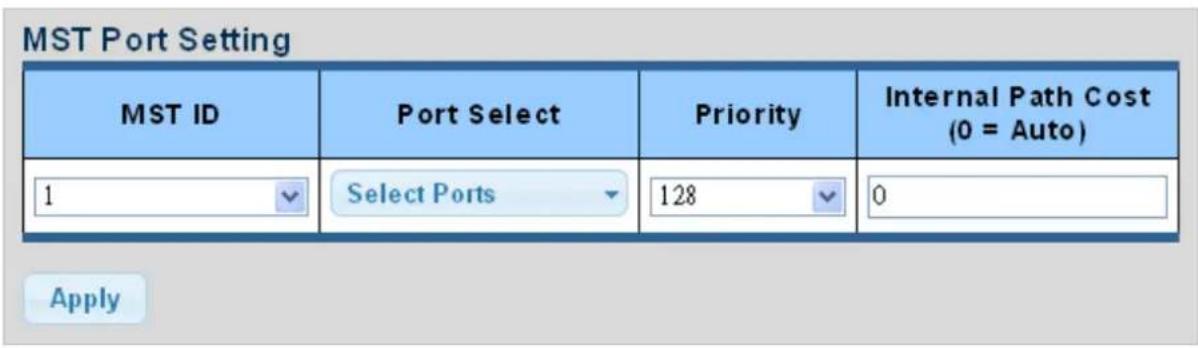
Figure 4-6-15 MST Port Configuration Page Screenshot
The page includes the following fields:
| Object Description | |
| • MST ID | Enter the special MST ID to configure path cost and priority. |
| • Port Select | Select port number from this drop-down list. |
| • Priority | Controls the port priority. This can be used to control priority of ports having identical port cost. |
| • Internal Path Cost (0 = Auto) | Controls the path cost incurred by the port.TheAutosetting will set the path cost as appropriate by the physical link speed, using the 802.1D recommended values. Using the Specific setting, a user-defined value can be entered.The path cost is used when establishing the active topology of the network.Lower path cost ports are chosen as forwarding ports in favor of higher path cost ports.Valid values are in the range 1 to 200000000. |
Buttons
Apply
: Click to apply changes.
| MSTI ID | Port | Identifier (Priority Port Id) | Internal Path Cost Conf Oper | Regional Root Bridge | Internal Root Cost | Designated Bridge | Internal Path Cost | Port Role | Port State |
| 1 | GE1 | 128/1 | 0/- | -/- | - | -/- | - | - | - |
| 1 | GE2 | 128/2 | 0/- | -/- | - | -/- | - | - | - |
| 1 | GE3 | 128/3 | 0/- | -/- | - | -/- | - | - | - |
| 1 | GE4 | 128/4 | 0/- | -/- | - | - | - | - | - |
| 1 | LAG6 | 128/16 | -/- | ||||||
| 1 | LAG7 | 128/17 | 0/- | -/- | - | -/- | - | - | - |
| 1 | LAG8 | 128/18 | 0/- | -/- | - | -/- | - | - | - |
Figure 4-6-16 MST Port Status Page Screenshot
The page includes the following fields:
| Object Description | |
| • MSTI ID | Display the current MSTI ID |
| • Port | The switch port number of the logical STP port |
| • Identifier (Priority / Port ID) | Display the current identifier (priority / port ID) |
| • Internal Path Cost Conf/Oper | Display the current internal path cost configuration / operation |
| • Regional Root Bridge | gional root bridge Display the current re |
| • Internal Root Cost | Display the current internal root cost |
| • Designated Bridge | Display the current designated bridge |
| • Internal Path Cost | Display the current internal path cost |
| • Port Role | Display the current port role |
| • Port State | Display the current port state |
4.6.8 STP Statistics
This page displays STP statistics. The STP statistics screen in Figure 4-6-17 appears.
STP Statistics
| Port | Configuration BDPUs Received | TCN BDPUs Received | MSTP BDPUs Received | Configuration BDPUs Transmitted | TCN BDPUs Transmitted | MSTP BDPUs Transmitted |
| GE1 | 0 | 0 | 0 | 0 | 0 | 0 |
| GE2 | 0 | 0 | 0 | 0 | 0 | 0 |
| GE3 | 0 | 0 | 0 | 0 | 0 | 0 |
| LAG6 | 0 | 0 | 0 | 0 | 0 | 0 |
| LAG7 | 0 | 0 | 0 | 0 | 0 | 0 |
| LAG8 | 0 | 0 | 0 | 0 | 0 | 0 |
Figure 4-6-17 STP Statistics Page Screenshot
The page includes the following fields:
| Object Description | |
| • Port | The switch port number of the logical STP port |
| • Configuration BPDUs Received | Display the current configuration BPDUs received |
| • TCN BPDUs Received | Display the current TCN BPDUs received |
| • MSTP BPDUs Received | Display the current MSTP BPDUs received |
| • Configuration BPDUs Transmitted | Display the configuration BPDUs transmitted |
| • TCN BPDUs Transmitted | mitted Display the current TCN BPDUs trans |
| • MSTP BPDUs Transmitted | Display the current BPDUs transmitted |
4.7 Multicast
This section has the following items:
■ Properties Configures multicast properties
■ IGMP Snooping Configures IGMP snooping settings
■ IGMP Snooping Statistics Displays the IGMP snooping statistics
■ MLD Snooping Configures MLD snooping settings
■ MLD Snooping Statistics Displays the MLD snooping statistics
■ Multicast Throttling
Setting
Configures multicast throttling setting
■ Multicast Filter Configures multicast filter
4.7.1 Properties
This page provides multicast properties related configuration.
The multicast Properties and Information screen in Figure 4-7-1 & Figure 4-7-2 appear.
PropertiesSetting
| Unknown Multicast Action | ○ Drop ○ Flood ○ Router Port |
| IPv4 Forward Method | ○ MAC ○ Src-Dst-lp |
| IPv6 Forward Method | ○ MAC ○ Src-Dst-lp |
Apply
Figure 4-7-1 Properties Setting Page Screenshot
The page includes the following fields:
| Object Description | |
| • Unknown Multica st Action | Unknown multicast traffic method:Drop, flood or send to router port. |
| • IPv4 Forward Method | Configure the IPv4 multicast forward method |
| • IPv6 Forward Method | Configure the IPv6 multicast forward method |
Buttons
Apply
: Click to apply changes.
| Information Name | Information Value |
| Unknown Multicast Action | Flood |
| Forwarding Method For IPv4 | MAC |
| Forwarding Method For IPv6 | MAC |
Figure 4-7-2 Properties Information Page Screenshot
The page includes the following fields:
| Object Description | |
| • Unknown Multicast Action | Display the current unknown multicast action status |
| • Forward Method For IPv4 | Display the current IPv4 multicast forward method |
| • Forward Method For IPv6 | Display the current IPv6 multicast forward method |
4.7.2 IGMP Snooping
The Internet Group Management Protocol (IGMP) lets host and routers share information about multicast groups memberships. IGMP snooping is a switch feature that monitors the exchange of IGMP messages and copies them to the CPU for feature processing. The overall purpose of IGMP Snooping is to limit the forwarding of multicast frames to only ports that are a member of the multicast group.
About the Internet Group Management Protocol (IGMP) Snooping
Computers and network devices that want to receive multicast transmissions need to inform nearby routers that they will become members of a multicast group. The Internet Group Management Protocol (IGMP) is used to communicate this information. IGMP is also used to periodically check the multicast group for members that are no longer active. In the case where there is more than one multicast router. This network keeps router is elected as the
track of the membership of the multicast groups that have active members. The information received from IGMP is then used to determine if multicast packets should be forwarded to a given sub network or not. The router can check, using IGMP, to see if there is at least one member of a multicast group on a given subnet work. If there are no members on a sub network, packets will not be directed to that sub network.
![graph TD A["IPTV Server"] -->|A| B["Switch"] A -->|B| C["Router"] D["Multicast Transmitter"] -->|A| B D -->|D| E["Switch"] F["Multicast Receiver"] -->|B| C G["IP"] -->|C| C H["Multicast Receiver"] -->|C| E I["Give me multicast stream"] --> C J["Give me multicast stream"] --> E](/content/2026/06/1225141/images/8e634cae01237aa702c4fcf4f4c0b1b7d01b6c6beb45c54c75020dd3a61b5145.jpg)
Figure 4-7-3 Multicast Service
![graph TD A["IPTV Server"] -->|I don't want the stream| B["Switch"] A -->|I don't want the stream| C["Router"] D["Multicast Transmitter"] -->|I don't want the stream| B D -->|I don't want the stream| C E["Multicast Receiver"] -->|I don't want the stream| B F["Multicast Receiver"] -->|I don't want the…](/content/2026/06/1225141/images/0b9372005c5bb5f4f90895893d6c93dccb21fa93936aa44abcf63f6a7032c880.jpg)
Figure 4-7-4 Multicast Flooding
![graph TD A["IPTV Server"] -->|Multicast Transmitter| B["IGMP Snooping Switch"] A -->|Multicast Transmitter| C["Router"] A -->|Multicast Transmitter| D["IGMP Snooping Switch"] B --> E["Multicast Receiver"] C --> F["Multicast Receiver"] D --> G["Multicast Receiver"] B --> H["IGMP Snooping Switch"] C -…](/content/2026/06/1225141/images/d54a2c2f937f732857b51f1a962d7e153d6254c7d5c3ab4fe29a82c0551e26fa.jpg)
Figure 4-7-5 IGMP Snooping Multicast Stream Control
IGMP Versions 1 and 2
Multicast groups allow members to join or leave at any time. IGMP provides the method for members and multicast routers to communicate when joining or leaving a multicast group.
IGMP version 1 is defined in RFC 1112. It has a fixed packet size and no optional data.
The format of an IGMP packet is shown below:
IGMP Message Format
| Octets | ||||
| 0 | 8 | 16 | 31 | |
| Type | Response | Time | Checksum | |
Group Address (all zeros if this is a query)
The IGMP Type codes are shown below:
| Type | Meaning |
| 0x11 | Membership Query (if Group Address is 0.0.0.0) |
| 0x11 | Specific Group Membership Query (if Group Address is Present) |
| 0x16 Membership Report (version 2) | |
| 0x17 Leave a Group (version 2) | |
| 0x12 Membership Report (version 1) | |
IGMP packets enable multicast routers to keep track of the membership of multicast groups, on their respective sub networks.
The following outlines what is communicated between a multicast router and a multicast group member using IGMP.
A host sends an IGMP "report" to join a group
A host will never send a report when it wants to leave a group (for version 1).
A host will send a "leave" report when it wants to leave a group (for version 2).
Multicast routers send IGMP queries (to the all-hosts group address: 224.0.0.1) periodically to see whether any group members exist on their sub networks. If there is no response from a particular group, the router assumes that there are no group members on the network.
The Time-to-Live (TTL) field of query messages is set to 1 so that the queries will not be forwarded to other sub networks.
IGMP version 2 introduces some enhancements such as a method to elect a multicast queried for each LAN, an explicit leave
message, and query messages that are specific to a given group.
The states a computer will go through to join or to leave a multicast group are shown below:
![graph TD A["Non-Member"] -->|Leave Group (Stop Timer)| B["Delaying Member"] A -->|Leave Group| C["Idle Member"] B -->|Query Received (Start Timer) Report Received| C C -->|Join Group (Send Report Start Timer)| A C -->|Stop Timer) Timer Expried (Send report)| B](/content/2026/06/1225141/images/5f38171e41dcf758891df07e1e583e8df036f1075038f43e3ba0e023a6b1c710.jpg)
Figure 4-7-6 IGMP State Transitions
■ IGMP Quer ier –
A router, or multicast-enabled switch, can periodically ask their hosts if they want to receive multicast traffic. If there is more than one router/switch the LAN performing IP multicasting, one of these devices is elected "querier" and assumes the role of querying the LAN for group members. It then propagates the service requests on to any upstream multicast switch/router to ensure that it will continue to receive the multicast service.

Multicast routers use this information, along with a multicast routing protocol such as
ternet. DVMRP or PIM, to support IP multicasting across the
4.7.2.1 IGMP Setting
This page provides IGMP Snooping related configuration.
Most of the settings are global, whereas the Router Port configuration is related to the current unit, as reflected by the page header. The IGMP Snooping Setting and Information screens in Figure 4-7-7, Figure 4-7-8 & Figure 4-7-9 appear.
IGMP Snooping
| IGMP Snooping Status | ○ Enable ○ Disable |
| IGMP Snooping Version | ○ v2 ○ v3 |
| IGMP Snooping Report Suppression | ○ Enable ○ Disable |
Apply
Figure 4-7-7 IGMP Snooping Page Screenshot
The page includes the following fields:
| Object Description | |
| • IGMP Snooping Status | Enable or disable the IGMP snooping. The default value is "Disabled". |
| • IGMP Snooping Version | Sets the IGMP Snooping operation version. Possible versions are: ■ v2: Set IGMP Snooping supported IGMP version 2. ■ v3: Set IGMP Snooping supported IGMP version 3. |
| • IGMP Snooping Report Suppression | Limits the and capable report traffic sent to mWhen you disable report suppression, all IGMP reports are sent as is to multicast-capable routers.The default is enabled. |
Buttons
Apply
: Click to apply changes.
IGMP Snooping Informations
| Information Name | Information Value |
| IGMP Snooping Status | Enable |
| IGMP Snooping Version | v2 |
| IGMP Snooping V2 Report Suppression | Enable |
Figure 4-7-8 IGMP Snooping Information Page Screenshot
ing fields: The page includes the follow
| Object Description | |
| • IGMP Snooping Status | Display the current IGMP snooping status. |
| • IGMP Snooping Version | Display the current IGMP snooping version. |
| • IGMP Snooping V2 Report Suppression | Display the current IGMP snooping v2 report suppression. |
| Entry No. | VLAN ID | IGMP Snooping Operation Status | Router Ports Auto Learn | Query Robustness | Query Interval(sec.) | Query Max Response Interval(sec.) | Last Member Query count | Last Member Query Interval(sec) | Immediate Leave | Modify |
| 1 | 1 | disabled | enabled | 2 | 125 | 10 | 2 | 1 | disabled | Edit |
Figure 4-7-9 IGMP Snooping Information Page Screenshot
The p des the following fields: age inclu
| Object Description | |
| • Entry No. | Display the current entry number |
| • VLAN ID | Display the current VLAN ID |
| • IGMP Snooping Operation Status | Display the current IGMP snooping operation status |
| • Router Ports Auto Learn | ning Display the current router ports auto lear |
| • Query Robustness | y robustness Display the current quer |
| • Query Interval (sec.) | Display the current query interval |
| • Query Max Response Interval (sec.) | Display the current query max response interval |
| • Las t Member Query count | Display the current last member query count |
| • Last Member Query Interval (sec) | Display the current last member query interval |
| • Immediate Leave | Display the current immediate leave |
| • Modify | Click Edit to edit parameter |
4.7.2.2 IGMP Querier Setting
This page provides IGMP Querier Setting. The IGMP Querier Setting screens in Figure 4-7-10 & Figure 4-7-11 appear.

Figure 4-7-10 IGMP VLAN Setting Page Screenshot
The page includes the following fields:
| Object Description | |
| • VLAN ID | Select VLAN ID from this drop-down list. |
| • Querier State | Enable or disable the querier state.The default value is "Disabled". |
| • Querier Version | er version for compatibility with other devices on the network. Sets the queriVersion: 2 or 3;Default: 2 |
Buttons
Apply
: Click to apply changes.
| VLAN ID | Querier State | Querier Status | Querier Version | Querier IP |
| 1 | disabled | Non-Querier | --- | --- |
Figure 4-7-11 IGMP Querier Status Page Screenshot
The page includes the following fields:
| Object Description | |
| • VLAN ID | Display the current VLAN ID |
| • Querier State | Display the current querier state |
| • Querier Status | Display the current querier status |
| • Querier Version | Display the current querier version |
| • Querier IP | Display the current querier IP |
4.7.2.3 IGMP Static Group
Multicast filtering can be dynamically configured using IGMP Snooping and IGMP Query messages as described in above sections. For certain applications that require tighter control, you may need to statically configure a multicast service on the LRP Managed Switch. First add all the ports attached to participating hosts to a common VLAN, and then assign the multicast service to that VLAN group.
- Static multicast addresses are never aged out.
- When a multicast address is assigned to an interface in a specific VLAN, the corresponding traffic can only be forwarded to ports within that VLAN.
The IGMP Static Group configuration screens in Figure 4-7-12 & Figure 4-7-13 appear.
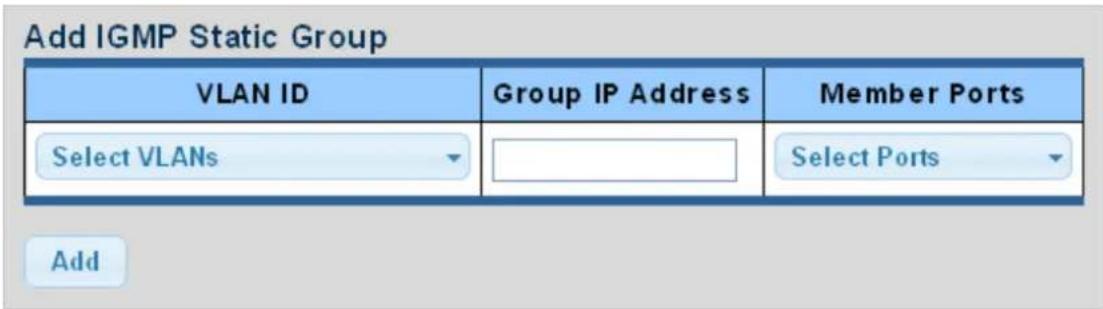
Figure4Static GdoupGPage Screenshot
The page includes the following fields:
| Object Description | |
| • VLAN ID | Select VLAN ID from this drop-down list |
| • Group IP Address | The IP address for a specific multicast service |
| • Member Ports | Select port number from this drop-down list |
Buttons
Add
: Click to add IGMP router port entry.
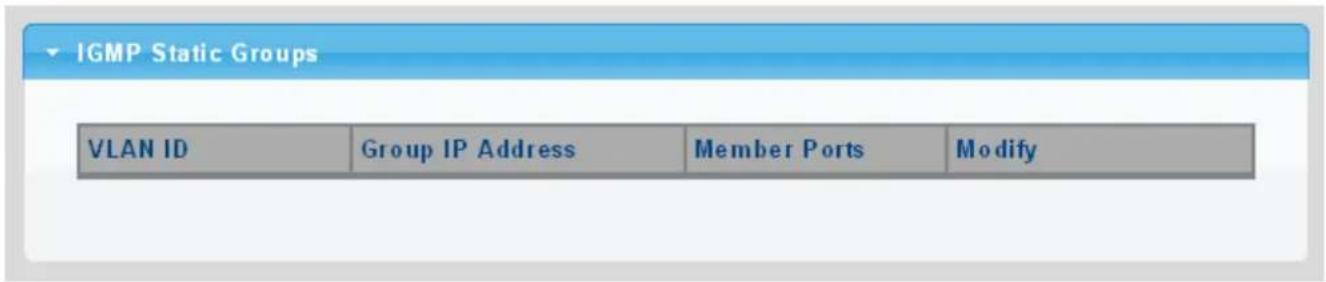
Figure 4-7-13 IGMP Static Groups Page Screenshot
The page includes the following fields:
| Object Description | |
| • VLAN ID | Display the current VLAN ID |
| • Group IP Address | Display the current group IP address |
| • Member Ports | Display the current member ports |
| • Modify | Click  to edit parameter to edit parameter |
4.7.2.4 IGMP Group Table
This page provides Multicast Database. The IGMP Group Table screen in Figure 4-7-14 appears.
| VLAN ID | Group IP Address | Member Ports | Type | Life(Sec) |
Figure 4-7-14 IGMP Group Table Page Screenshot
following fields: The page includes the
| Object Description | |
| • VLAN ID | Display the current VID |
| • Group IP Address | Display multicast IP address for a specific multicast service |
| • Member Port | Display the current member port |
| • Type | Member types displayed include Static or Dynamic, depending on selected options |
| • Life(Sec) | Display the current life |
4.7.2.5 IGMP Router Setting
Depending on your network connections, IGMP snooping may not always be able to locate the IGMP querier. Therefore, if the
IGMP querier is a lanoswitchobiocast rout
ected over the network to an interface (port or trunk) on your LRP
Managed Switch, you config an additional interface (and a sp
ecified VLAN) to join all the current multicast groups
supported by the attached routercThisensure that multicast traffic is pass
ed to all the appropriate interfaces within the LRP
Managed Switch.
The IGMP Router Setting and Status screens in Figure 4-7-15 & Figure 4-7-16 appear.
Add Router Port
| VLAN ID | Type | Static Ports Select | Forbid Ports Select |
| Select VLANs | Static Forbid | Select Static Ports | Select Forbid Ports |
Add
Figure 4-7-15 Add Router Port Page Screenshot
The page includes the following fields:
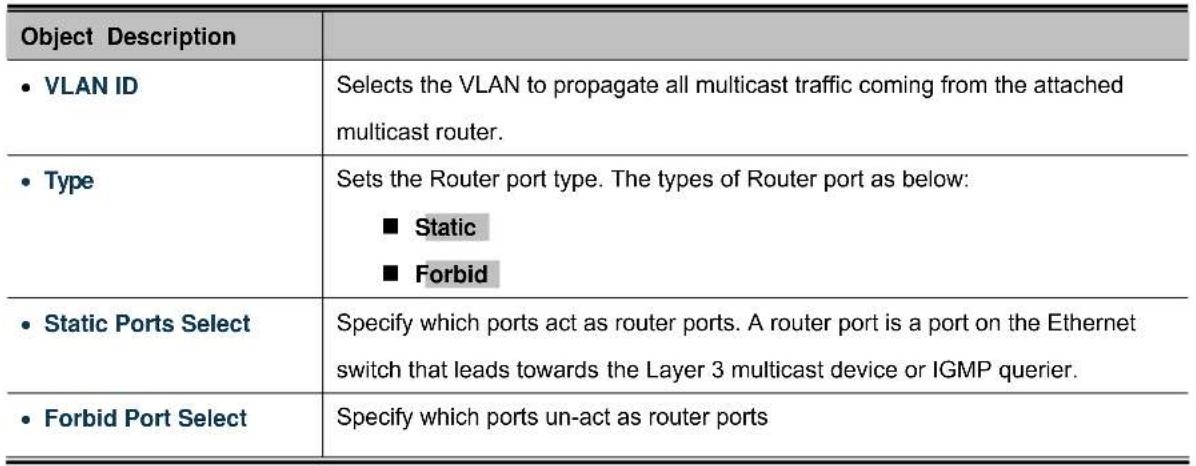 |
Buttons
Add
Click to add IGMP router port entry.

Figure 4-7-16 Router Port Status Page Screenshot
The page includes the following fields:
| Object Description | |
| • VLAN ID | Display the current VLAN ID |
| • Static Ports | Display the current static ports |
| • Forbidden Ports | Display the current forbidden ports |
| • Modify | Click  to edit parameterClick to edit parameterClick  to delete the group ID entry to delete the group ID entry |
4.7.2.6 IGMP Router Table
This page provides Router Table. The Dynamic, Static and Forbidden Router Table screens in Figure 4-7-17, Figure 4-7-18 & Figure 4-7-19 appear.

Figure 4-7-17 Dynamic Router Table Page Screenshot
The page includes the following fields:
| Object Description | |
| • VLAN ID | Display the current VLAN ID |
| • Port | Display the current dynamic router ports |
| • Expiry Time (Sec) | Display the current expiry time |

Figure 4-7-18 Static Router Table Page Screenshot
he page includes the following fields: T
| Object Description | |
| • VLAN ID | rrent VLAN ID Display the cu |
| • Port Mask | Display the current port mask |

Figure 4-7rd diens Router Table Page Screen
The page includes the following fields:
| Object Description | |
| • VLAN ID | Display the current VLAN ID |
| • Port Mask | Display the current port mask |
4.7.2.7 IGMP Forward All
This page provides IGMP Forward All. The Forward All screen in Figure 4-7-20 appears.

Figure 4-7-20 Forward All Setting Page Screenshot
The page includes the following fields:
| Object Description | ||
| • VLAN ID | Sel n list to assign IGMP membership ect VLAN ID from this drop-dow | |
| • Port | The switch port number of the logical port | |
| • Membership | Select IGMP membership for each interface: | |
| Forbidden: | Interface is forbidden from automatically joining the IGMP via MVR. | |
| None: | Interface is not a member of the VLAN. Packets associated with this VLAN will not be transmitted by the interface. | |
| Static: | Interface is a member of the IGMP. | |
Buttons
Apply
: Click to apply changes.
4.7.3 IGMP Snooping Static
This page provides IGMP Snooping Statics. The IGMP Snooping Statics screen in Figure 4-7-20 appears.
| Statistics Packets | Counter |
| Total RX | 18 |
| Valid RX | 8 |
| Invalid RX | 10 |
| Other RX | 0 |
| Leave RX | 0 |
| Report RX | 0 |
| General Query RX | 0 |
| Specail Group Query RX | 0 |
| Specail Group & Source Query RX | 0 |
| Leave TX | 0 |
| Report TX | 0 |
| General Query TX | 0 |
| Specail Group Query TX | 0 |
| Specail Group & Source Query TX | 0 |
Figure 4-7-20 Forward All Setting Page Screenshot
The page includes the following fields:
| Object Description | |
| • Total RX | rrent total RX Display cu |
| • Valid RX | Display current valid RX |
| • Invalid RX | Display current invalid RX |
| • Other RX | urrenDisplay c t other RX |
| • Leave RX | lay currenDisp t leave RX |
| • Report RX | ay current report RDispl X |
| • General Query RX | Display current general query RX |
| • Special Group Query RX | Display current special group query RX |
| • Special Group & Source Query RX | Display current special group & source query RX |
| • Leave TX | Display current leave TX |
| • Report TX | Display current report TX |
| • General Query TX | Display current general query TX |
| • Special Group Query TX | Display current special group query TX |
| • Special Group & Source Query TX | Display current special group & source query TX |
Buttons
Clear
Click to clear the IGMP Snooping Statistics.
Refresh
Click to refresh the IGMP Snooping Statistics.
4.7.4 MLD Snooping
4.7.4.1 MLD Setting
This page provides ML deSroopfigraelan.
Most of the settings are Globter Whereasftgeration is r
elated to the current unit, as reflected by the page
header. The MLD Snooping Setting, Information and Table screens in Figure 4-7-21, Figure 4-7-22 & Figure 4-7-23 appear.
MLD Snooping
| MLD Snooping Status | ○ Enable ○ Disable |
| MLD Snooping Version | ○ v1 ○ v2 |
| MLD Snooping Report Suppression | ○ Enable ○ Disable |
Apply
Figure 4-7-21 MLD Snooping Page Screenshot
following fields: The page includes the
| Object Description | |
| MLD Snooping Status | The default value is "Disabled". Enable or disable the MLD sn |
| MLD Snooping Version | Sets the MLD Snooping operation version. Possible versions are:v1: Set MLD Snooping supported MLD version 1.v2: Set MLD Snooping supported MLD version 2. |
| MLD Snooping Report Suppression | Limits the membership report traffic sent to multicast-capable routers. When you disable report suppression, all MLD reports are sent as is to multicast-capable routers. The default is enabled. |
Buttons
Apply
: Click to apply changes.
| Information Name | Information Value |
| MLD Snooping Status | Disable |
| MLD Snooping Version | v1 |
| MLD Snooping V2 Report Suppression | Enable |
Figure 4-7-22 MLD Snooping information Page Screenshot
ds: The page includes the following fiel
| Object Description | |
| MLD Snooping Status | Display the current MLD snooping status |
| MLD Snooping Version | Display the current MLD snooping version |
| MLD Snooping Report Suppression | Display the current MLD snooping report suppression |
MLD Snooping Table
| Entry No. | VLAN ID | MLD Snooping Operation Status | Router Ports Auto Learn | Query Robustness | Query Interval(sec.) | Query Max Response Interval(sec.) | Last Member Query count | Last Member Query Interval(sec) | Immediate Leave | Modify |
| 1 | 1 | disabled | enabled | 2 | 125 | 10 | 2 | 1 | disabled | Edit |
Figure 4-7-23 MLD Snooping Table Page Screensh
The page includes the following fields:
| Object Description | |
| • Entry No. | Display the current entry number |
| • VLAN ID | Display the current VLAN ID |
| • MLD Snooping Operation Status | Display the current MLD snooping operation status |
| • Router Ports Auto Learn | Display the current router ports auto learning |
| • Query Robustness | ess Display the current query robustn |
| • Query Interval (sec.) | Display the current query interval |
| • Query Max Response Interval (sec.) | Display the current query max response interval |
| • Last Member Query count | Display the current last member query count |
| • Last Member Query Interval (sec) | Display the current last member query interval |
| • Immediate Leave | Display the current immediate leave |
| • Modify | Click Edit to edit parameter |
4.7.4.2 MLD Static Group
The MLD Static Group configuration screens in Figure 4-7-24 & Figure 4-7-25 appear.
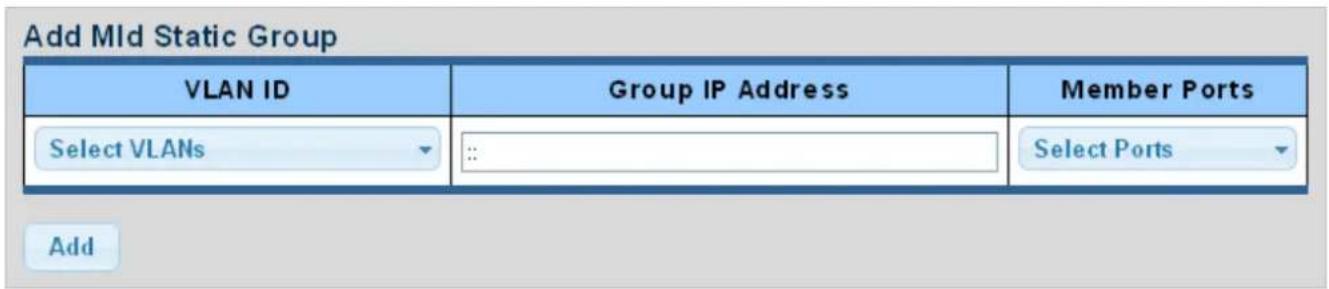
Figure 4-7-24 Add MLD Static Group Page Screenshot
The page includes the following fields:
| Object Description | |
| • VLAN ID | Select VLAN ID from this drop-down list |
| • Group IP Address | The IP address for a specific multicast service |
| • Member Ports | Select port number from this drop-down list |
Buttons
Add
Click to add IGMP router port entry.

Figure 4-7-25 MLD Static Groups Page Screenshot
The page includes the following fields:
| Object Description | |
| • VLAN ID | Display the current VLAN ID |
| • Group IPv6 Address | s Display the current group IPv6 addres |
| • Member Ports | Display the current member ports |
| • Modify | Click Edit to edit parameter. |
4.7.4.3 MLD Group Table
This page provides MLD Group Table. The MLD Group Table screen in Figure 4-7-26 appears.

Figure 4-7-26 MLD Group Table Page Screenshot
he page includes the following fields: T
| Object Description | |
| • VLAN ID | rrent VID Display the cu |
| • Group IP Address | multicast service Display multicast IP address for a speci |
| • Member Port | Display the current member port |
| • Type | Member types displayed include Static or Dynamic, depending on selected options |
| • Life(Sec) | Display the current life |
4.7.4.4 MLD Router Setting
Depending on your network connections, MLD snooping may not always be able to locate the MLD querier. Therefore, if the MLD querier is a known multicast router/ switch connected over the network to an interface (port or trunk) on your LRP Managed Switch, you can manually configure the interface (and a specified VLAN) to join all the current multicast groups supported by the attached router. This can ensure that multicast traffic is passed to all the appropriate interfaces within the LRP Managed Switch.
The MLD Router Setting screens in Figure 4-7-27 & Figure 4-7-28 appear.
Add Router Port
| VLAN ID | Type | Static Ports Select | Forbid Ports Select |
| Select VLANs | Static Forbid | Select Static Ports | Select Forbid Ports |
Add
Figure 4-7-27 Add Router Port Page Screenshot
ds: The page includes the following fiel
| Object Description | |
| • VLAN ID | Selects the VLAN to propagate all multicast traffic coming from the attached multicast router |
| • Type | Sets the Router port type. The types of Router port as below:StaticForbid |
| • Static Ports Select | Specify which ports act as router ports. A router port is a port on the Ethernet switch that leads towards the Layer 3 multicast device or MLD querier. |
| • Forbid Port Select | Specify which ports un-act as router ports |
Buttons
Add
: Click to add MLD router port entry.

Figustatus 728gR SuterePrshot
The page includes the following fields:
| Object Description | |
| • VLAN ID | Display the current VLAN ID |
| • Static Ports | Display the current static ports |
| • Forbidden Ports | Display the current forbidden ports |
| • Modify | Click Edit to edit parameterClick Delete to delete the group ID entry |
4.7.4.5 MLD Router Table
This page provides Router Table. The Dynamic, Static and Forbidden Router Table screens in Figure 4-7-29, Figure 4-7-30 &
Figure 4-7-31 appear.

Figure 4-7-29 Dynamic Router Table Page Screenshot
The page includes the following fields:
| Object Description | |
| • VLAN ID | Display the current VLAN ID |
| • Port | Display the current dynamic router ports |
| • Expiry Time (Sec) | Display the current expiry time |

Figure 4-7-30 Static Router Table Page Screenshot
The pag s the following fields: e include
| Object Description | |
| • VLAN ID | Display the current VLAN ID |
| • Port Mask | Display the current port mask |

Figure 4-7-31 Forbidden Router Table Page Screenshot
ds: The page includes the following fiel
| Object Description | |
| • VLAN ID | Display the current VLAN ID |
| • Port Mask | Display the current port mask |
4.7.4.6 MLD Forward All
This page provides MLD Forward All. The Forward All screen in Figure 4-7-32 appears.

Figurer4-A132 Setting Page Screenshot
The page includes the following fields:
| Object Description | ||
| • VLAN ID | Select VLAN ID from this drop-down list to assign MLD membership | |
| • Port | The switch port number of the logical port | |
| • Membership | Select MLD membership for each interface: | |
| Forbidden: | Interface is forbidden from automatically joining the MLD via MVR. | |
| None: | Interface is not a member of the VLAN. Packets associated with this VLAN will not be transmitted by the interface. | |
| Static: | Interface is a member of the MLD. | |
Buttons
Apply
: Click to apply changes.
4.7.5 MLD Snooping Statics
This page provides MLD Snooping Statics. The MLD Snooping Statics screen in Figure 4-7-33 appears.
| Statistics Packets | Counter |
| Total RX | 0 |
| Valid RX | 0 |
| Invalid RX | 0 |
| Other RX | 0 |
| Leave RX | 0 |
| Report RX | 0 |
| General Query RX | 0 |
| Specail Group Query RX | 0 |
| Specail Group & Source Query RX | 0 |
| Leave TX | 0 |
| Report TX | 0 |
| General Query TX | 0 |
| Specail Group Query TX | 0 |
| Specail Group & Source Query TX | 0 |
Figure 4-7-33 Forward All Setting Page Screenshot
The page includes the following fields:
| Object Description | |
| • Total RX | Display the current total RX |
| • Valid RX | Display the current valid RX |
| • Invalid RX | Display the current invalid RX |
| • Other RX | Display the current other RX |
| • Leave RX | uDisplay the c rrent leave RX |
| • Report RX | he cuDisplay t rrent report RX |
| • General Query RX | the curDisplay rent general query RX |
| • Special Group QueryRX | Display the current special group query RX |
| • Special Group & Source Query RX | Display the current special group & source query RX |
| • Leave TX | Display the current leave TX |
| • Report TX | Display the current report TX |
| • General Query TX | Display the current general query TX |
| • Special Group Query TX | Display the current special group query TX |
| • Special Group & Source Query TX | Display the current special group & source query TX |
Buttons
Clear
Click to clear the MLD Snooping Statistics.
Refresh
Click to refresh the MLD Snooping Statistics.
4.7.6 Multicast Throttling Setting
Multicast throttling sets a maximum number of multicast groups that a port can join at the same time. When the maximum number of groups is reached on a port, the switch can take one of two actions; either "deny" or "replace". If the action is set to deny, any new multicast jo in reports will be dropped. If the action is set to replace, the switch randomly removes an existing group and replaces it with which a groupul
Once you have configured multicast profiles, you can assign them to interfaces on the LRP Managed Switch. Also you can set the heuristic abtobisignumber TchinMAX Groupber of multicast groups an interface can j and Information screens in Figure 4-7-34 & Figure 4-7-35 appear.

Figure 4-7-34 Max Groups and Action Setting Page Screenshot
The page includes the following fields:
| Object Description | |
| • IP Type | Select IPv4 or IPv6 from this drop-down list |
| • Port Select | Select port number from this drop-down list |
| • Max Groups | Sets the maximum number of multicast groups an interface can join at the same time.Range: 0-256;Default: 256 |
| • Action | Sets the action to take when the maximum number of multicast groups for the interface has been exceeded.(Default: Deny)-Deny - The new multicast group join report is dropped-Replace - The new multicast group replaces an existing group |
Buttons
Apply
: Click to apply changes.
| Port | Max Groups | Action |
| GE1 | 256 | Deny |
| GE2 | 256 | Deny |
| GE3 | 256 | Deny |
| 256 | Deny | |
| LAG6 | Deny | |
| LAG7 | 256 | Deny |
| LAG8 | 256 | Deny |
Figure 4-7-35 IGMP Port Max Groups Information Page Screenshot
The page includes the following fields:
| Object Description | |
| • Port | The switch port number of the logical port |
| • Max Groups | Display the current Max groups |
| • Action | Display the current action |
4.7.7 Multicast Filter
In certain switch application, the demand to control the multicast services
that are available to end users. For
example, an IP/TV service is based on a specific function of the triple requiTenerulbigast filt
restricting access to specified multicast services on a switch port.
Multicast filtering enables you to assign a profile to a switch port that specifies multicast groups that are permitted or denied on the port. A multicast filter profile can contain one or more, or a range of multicast addresses; but only one profile can be assigned to a port. When enabled, multicast join reports received on the port are checked against the filter profile. If a requested multicast group is permitted, the multicast join report is forwarded as normal. If a requested multicast group is denied, multicast join report is dropped.
When you have created a Multicast profile filter and set the abcessonfigure the multicast groups mode.
Command Usage
• Each profile has only one access mode; either permit or deny.
- When the access mode is set to permit, multicast join reports are processed when a multicast group falls within the controlled range.
- When the access mode is set to deny, multicast join reports are only processed when the multicast group is not in the controlled range.
4.7.7.1 Multicast Profile Setting
The Add Profile and Profile Status screens in Figure 4-7-36 & Figure 4-7-37 appear.
Add Profile
| Ip Type | ipv4 |
| Profile Index | 1 (1-128) |
| Group from | |
| Group to | |
| Action | Permit Deny |
Figure 4-7-36 Add Profile Setting Page Screenshot
s the following fields: The page include
| Object Description | ||
| • IP Type | Select IPv4 or IPv6 from this drop-down list | |
| • Profile Index | Indicates the ID of this particular profile | |
| • Group from | Specifies multicast groups to include in the profile. Specify a multicast group range by entering a start IP address. | |
| • Group to | Specifies multicast groups to include in the profile. Specify a multicast group range by entering an end IP address. | |
| • Action | Sets the access mode of the profile; either permit or deny. | |
| - Permit | Multicast join reports are processed when a multicast group falls within the controlled range. | |
| - Deny | When the access mode is set to, multicast join reports are only processed when the multicast group is not in the controlled range. | |
Buttons
Add
Click to add multicast profile entry.

Figure 4-7-37 IGMP/MLD Profile Status Page Screenshot
The page includes the following fields:
| Object Description | |
| Index | Display the current index |
| IP Type | Display the current IP Type |
| Group from | Display the current group from |
| Group to | Display the current group to |
| Action | Display the current action |
| Modify | Click to edit parameter.Click to delete the MLD/IGMP profile entry. |
4.7.7.2 IGMP Filter Setting
The Filter Setting and Status screens in Figure 4-7-38 & Figure 4-7-39 appear.

Figure 4-7-38 Filter Setting Page Screenshot
he following fielThe page includes t ds:
| Object Description | |
| • Port Select | ct port nuSele mber from this drop-down list |
| • Filter Profile ID | Select filter profile ID from this drop-down list |
Buttons
Apply
: Click to apply changes.

Figure 4-7-39 Port Filter Status Page Screenshot
The page includes the following fields:
| Object Description | |
| • Port | Display the current port |
| • Filter Profile ID | D Display the current filter profile I |
| • Action | Click  / detail profile parameterClick / detail profile parameterClick  to delete the IGMP filter profile entry to delete the IGMP filter profile entry |
4.7.7.3 MLD Filter Setting
The Filter Setting and Status screens in Figure 4-7-40 & Figure 4-7-41 appear.
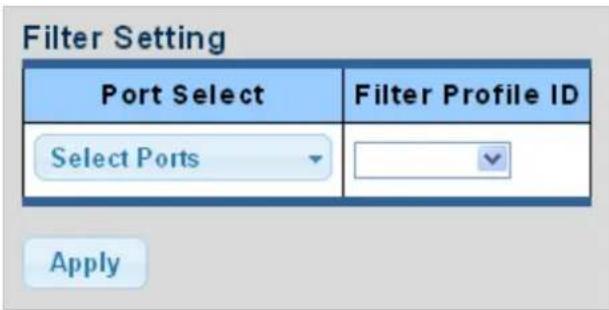
Figure 4-7-40 Filter Setting Page Screenshot
The page includes the following fields:
| Object Description | |
| • Port Select | Select port number from this drop-down list |
| • Filter Profile ID | ofile ID from this drop-down list Select filter pr |
Buttons
Apply
: Click to apply changes.
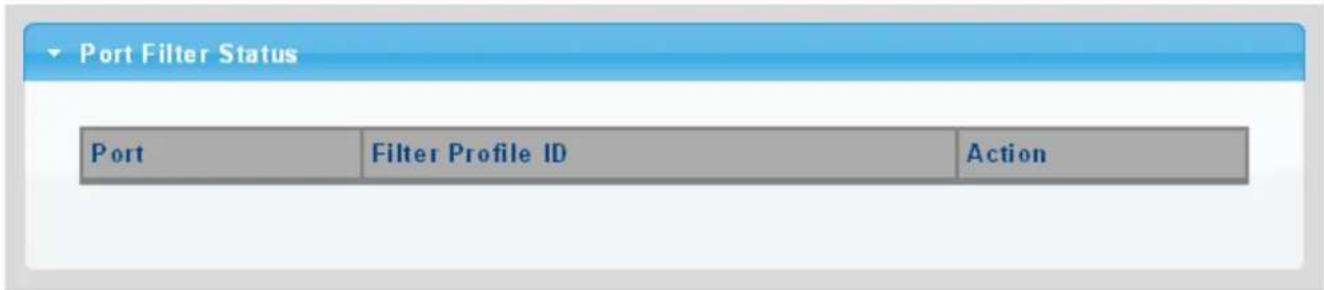
Figure 4-7-41 Port Filter Status Page Screenshot
The page includes the following fields:
| Object Description | |
| • Port | Display the current port |
| • Filter Profile ID | Display the current filter profile ID |
| • Action | Click Show to display detail profile parameterClick Delete to delete the MLD filter profile entry |
4.8 Quality of Service
4.8.1 Understand QoS
Quality of Service (QoS) is an adtraffic prioritization featu re that allows you to establish control over network traffic. QoS
enables you to assign various grades of network service to different types of traffic, such as multi-media, video, protocol-specific, time critical, and file-backup traffic.
QoS reduces bandwidth limitations, delay, loss, and jitter. It also provides increased reliability for delivery of your data and allows you to prioritize certain applications in your net u want the switch can trehe exactly how yo selected applications and types of traffic.
You can use QoS on your system to:
• Control a wide variety of network traffic by:
• Classifying traffic based on packet attributes.
- Assigning priorities to traffic (for example, to set higher priorities to time-critical or business-critical applications).
- Applying security policy through traffic filtering.
- Provide predictable throughput for multimedia applications such as video conferencing or voice over IP by minimizing delay and jitter.
- Improve performance for specific types of traffic and preserve performance as the amount of traffic grows.
- Reduce the need to constantly add bandwidth to the network.
- Manage network congestion.
To implement QoS on your network, you need to carry out the following actions:
- Define a service level to determine the priority that will be applied to traffic.
- Apply a classifier to determine how the incoming traffic will be classified and thus treated by the Switch.
- Create a QoS profile which associates a service level and a classifier.
- Apply a QoS profile to a port(s).
The QoS page of the LRP Managed Switch contains three types of QoS mode - the 802.1p mode, DSCP mode or Port-base mode can be selected. Both the three mode rely on predefined fields within the packet to determine the output queue.
■ 802.1p Tag Priority Mode –The output queue assignment is determined by the IEEE 802.1p VLAN priority tag.
■ IP DSCP Mode - The output queue assignment is determined by the TOS or DSCP field in the IP packets.
■ Port-Base Priority Mode – Any packet received from the specify high priority port will treated as a high priority packet.
The LRP Managed Switch supports eight priority level queue, the queue service rate is based on the WRR(Weight Round Robin) and WFQ (Weighted Fair Queuing) algorithm. The WRR ratio of high-priority and low-priority can be set to "4:1 and 8:1.
4.8.2 General
4.8.2.1 QoS Properties
The QoS Global Setting and Information screen in Figure 4-8-1 & Figure 4-8-2 appear.

Figure 4-8-1 QoS Global Setting Page Screenshot
The page includes the following fields:
| Object Description | |
| • QoS Mode | Enable or disable QoS mode |
Buttons
Apply
: Click to apply changes.
| Information Name | Information Value |
| QoS Mode | disable |
Figure 4-8-2 QoS Information Page Screenshot
The page includes the following fields:
| Object Description | |
| • QoS Mode | Display the current QoS mode |
4.8.2.2 QoS Port Settings
The QoS Port Settings and Status screens in Figure 4-8-2 & Figure 4-8-3 appear.
Port Port Settings
| Port | CoS Value | Remark CoS | Remark DSCP | Remark IP Precedence |
| Select Ports | 0 | Disable Enable | Disable Enable | Disable Enable |
Apply
Figure 4-8-2 QoS Port Setting Page Screenshot
The page includes the following fields:
| Object Description | |
| • Port Select | mber from this drop-down list Select port nu |
| • CoS Value | Select CoS value from this drop-down list |
| • Remark CoS | Disable or enable remark CoS |
| • Remark DSCP | Disable or enable remark DSCP |
| • Remark IP Precedence | Disable or enable remark IP Precedence |
Buttons
Apply
: Click to apply changes.
QoS Port Status
| Port | CoS value | Remark CoS | Remark DSCP | Remark IP Precedence |
| GE1 | 0 | disabled | disabled | disabled |
| GE2 | 0 | disabled | disabled | disabled |
| GE3 | 0 | disabled | disabled | disabled |
| LAG6 | 0 | disabled | disabled | disabled |
| LAG7 | 0 | disabled | disabled | disabled |
| LAG8 | 0 | disabled | disabled | disabled |
Figure 4-8-3 QoS Port Status Page Screenshot
The page includes the following fields:
| Object Description | |
| • Port | The switch port number of the logical port |
| • CoS Value | Display the current CoS value |
| • Remark CoS | Display the current remark CoS |
| • Remark DSCP | Display the current remark DSCP |
| • Remark IP Precedence | Display the current remark IP precedence |
4.8.2.3 Queue Settings
The Queue Table and Information screens in Figure 4-8-4 & Figure 4-8-5 appear.
| Queue | Scheduling Method | |||
| Strict Priority | WRR | Weight | % of WRR Bandwidth | |
| 1 | Og | 1 | ||
| 2 | Og | 2 | ||
| 3 | Og | 3 | ||
| 4 | Og | 4 | ||
| 5 | Og | 5 | ||
| 6 | Og | 9 | ||
| 7 | Og | 13 | ||
| 8 | Og | 15 | ||
Figure 4-8-4 Queue Table Page Screenshot
The page includes the following fields:
| Object Description | |
| • Queue | Display the current queue ID |
| • Strict Priority | Controls whether the scheduler mode is "Strict Priority" on this switch port |
| WRR | Controls whether the scheduler mode is "Weighted" on this switch port |
| Weight | Controls the weight for this queue. This value is restricted to 1-100. This parameter is only shown if "Scheduler Mode" is set to "Weighted". |
| % of WRR Bandwidth | e Display the current bandwidth for each queu |
Buttons
Apply
: Click to apply changes.
| Information Name | Information Value |
| Strict Priority Queue Number | 8 |
Figure 4-8-5 Queue Information Page Screenshot
The page includes the following fields:
| Object Description | |
| • Information Name | Display the current queue method information |
| • Information Value | Display the current queue value information |
4.8.2.4 CoS Mapping
The CoS to Queue and Queue to CoS Mapping screens in Figure 4-8-6 & Figure 4-8-7 appear.
CoS to Queue Mapping
| Class of Service | 0 | 1 | 2 | 3 | 4 | 5 | 6 | 7 |
| Queue | 2 | 1 | 3 | 4 | 5 | 6 | 7 | 8 |
Queue to CoS Mapping
| Queue | 1 | 2 | 3 | 4 | 5 | 6 | 7 | 8 |
| Class of Service | 1 | 0 | 2 | 3 | 4 | 5 | 6 | 7 |
Apply
Figure 4-8-6 CoS to Queue and Queue to CoS Mapping Page Screenshot
the following fields: The page includes
| Object Description | |
| • Queue | Select Queue value from this drop-down list |
| • Class of Service | Select CoS value from this drop-down list |
Buttons
Apply
: Click to apply changes.
CoS mapping
| CoS | Mapping to Queue |
| 0 | 2 |
| 1 | 1 |
| 2 | 3 |
| 3 | 4 |
| 4 | 5 |
| 5 | 6 |
| 6 | 7 |
| 7 | 8 |
| Queue | Mapping to CoS |
| 1 | 1 |
| 2 | 0 |
| 3 | 2 |
| 4 | 3 |
| 5 | 4 |
| 6 | 5 |
| 7 | 6 |
| 8 | 7 |
Figure 4-8-7 CoS Mapping Page Screenshot
The page includes the following fields:
| Object Description | |
| • CoS | Display the current CoS value |
| • Mapping to Queue | Display the current mapping to queue |
| • Queue | Display the current queue value |
| • Mapping to CoS | rrent mapping to CoS Display the cu |
4.8.2.5 DSCP Mapping
The DSCP to Queue and Queue to DSCP Mapping screens in Figure 4-8-8 & Figure 4-8-9 appear.
DSCP to Queue Mapping
| DSCP | Queue |
| Select DSCP | 1 |
Queue to DSCP Mapping
| Queue | 1 | 2 | 3 | 4 | 5 | 6 | 7 | 8 |
| DSCP | 0 | 8 | 16 | 24 | 32 | 40 | 48 | 56 |
Apply
Figure 4-8-8 DSCP to Queue and Queue to DSCP Mapping Page Screenshot
The page includes the following fields:
| Object Description | |
| • Queue | Select Queue value from this drop-down list |
| • DSCP | Select DSCP value from this drop-down list |
Buttons
Apply
Click to apply changes.
DSCP mapping
| DSCP | Mapping to Queue |
| 0 | 1 |
| 1 | 1 |
| 2 | 1 |
| 3 | 1 |
| 4 | 1 |
| 59 | |
| 60 | 8 |
| 61 | 8 |
| 62 | 8 |
| 63 | 8 |
| Queue | Mapping to DSCP |
| 1 | 0 |
| 2 | 8 |
| 3 | 16 |
| 4 | 24 |
| 5 | 32 |
| 6 | 40 |
| 7 | 48 |
| 8 | 56 |
Figure 4-8-9 DSCP Mapping Page Screenshot
The page includes the following fields:
| Object Description | |
| • DSCP | Display the current CoS value |
| • Mapping to Queue | Display the current mapping to queue |
| • Queue | Display the current queue value |
| • Mapping to DSCP | Display the current mapping to DSCP |
The IP Precedence to Queue and Queue to IP Precedence Mapping screens in Figure 4-8-10 & Figure 4-8-11 appear.

Figure 4-8-10 IP Precedence to Queue and Queue to IP Precedence Mapping Page Screenshot
The page includes the following fields:
| Object Description | |
| • Queue | Select Queue value from this drop-down list |
| • IP Precedence | Select IP Precedence value from this drop-down list |
Buttons
Apply
: Click to apply changes.
| IP Precedence | Mapping to Queue |
| 0 | 1 |
| 1 | 2 |
| 2 | 3 |
| 3 | 4 |
| 4 | 5 |
| 5 | 6 |
| 6 | 7 |
| 7 | 8 |
| Queue | Mapping to IP Precedence |
| 1 | 0 |
| 2 | 1 |
| 3 | 2 |
| 4 | 3 |
| 5 | 4 |
| 6 | 5 |
| 7 | 6 |
| 8 | 7 |
Figure 4-8-11 IP Precedence Mapping Page Screenshot
The page includes the following fields:
| Object Description | |
| • IP Precedence | rrent CoS value Display the cu |
| • Mapping to Queue | Display the current mapping to queue |
| • Queue | Display the current queue value |
| • Mapping to IP Precedence | Display the current mapping to IP Precedence |
4.8.3 QoS Basic Mode
4.8.3.1 Global Settings
The Basic Mode Global Settings and QoS Information screens in Figure 4-8-12 & Figure 4-8-13 appear.
Basic Mode Global Settings

Figure 4-8-12 Basic Mode Global Settings Page Screenshot
The page includes the following fields:
| Object Description | |
| • Trust Mode | Set the QoS mode |
Buttons
Apply
: Click to apply changes.
| Information Name | Information Value |
| Trust Mode | COS |
Figure 4-8-13 QoS Information Page Screenshot
The page includes the following fields:
| Object Description | |
| • Trust Mode | rrent QoS mode Display the cu |
4.8.3.2 Port Settings
The QoS Port Setting and Status screens in Figure 4-8-14 & Figure 4-8-15 appear.

Figure 4-8-14 Basic Mode Global Settings Page Screenshot
The page includes the following fields:
| Object Description | |
| • Port | Select port number from this drop-down list |
| • Trust Mode | Enable or disable the trust mode |
Buttons
Apply
: Click to apply changes.
| Port | Trust Type |
| GE1 | enabled |
| GE2 | enabled |
| GE3 | enabled |
| enabled | |
| LAG5 | enabled |
| LAG6 | enabled |
| LAG7 | enabled |
| LAG8 | enabled |
Figure 4-8-15 QoS Port Status Page Screenshot
The page includes the following fields:
| Object Description | |
| • Port | The switch port number of the logical port |
| • Trust Mode | Display the current trust type |
4.8.4 Rate Limit
Configure the switch port rate limit for the switch port on this page.
4.8.4.1 Ingress Bandwidth Con
This page provides to select the weightspreamble. The Ingress
Bandwidth Control Setting and Status screens in
Figure 4-8-16 & Figure 4-8-17 appear.
Ingress Bandwidth Control Settings
| Port | State | Rate(Kbps) |
| Select Ports | Disable Enable | (0-1000000, must a multiple of 16) |
Figure 4-8-16 Ingress Bandwidth Control Settings Page Screenshot
The page includes the following fields:
| Object Description | |
| • Port | Select port number from this drop-down list |
| • State | Enable or disable the port rate policer. The default value is "Disabled". |
| • Rate (Kbps) | Configure the rate for the port policer. The default value is "unlimited". Valid values are in the range 0 to 1000000. |
Buttons
Apply
: Click to apply changes.
| Port | Ingress RateLimit (Kbps) |
| GE1 | off |
| GE2 | off |
| GE3 | off |
| GE4 | off |
| E100 | |
| LAG7 | off |
| LAG8 | off |
Figure 4-8-17 Ingress Bandwidth Control Status Page Screenshot
The page includes the following fields:
| Object Description | |
| • Port | The switch port number of the logical port |
| • Ingress Rate Limit (Kbps) | Display the current ingress rate limit |
4.8.4.2 Egress Bandwidth Control
This page provides to select the egress bandwidth preamble. The Egress Bandwidth Control Setting and Status screens in
Figure 4-8-18 & Figure 4-8-19 appear.
Egress Bandwidth Control Settings
| Port | State | Rate (Kbps) |
| Select Ports | Disable Enable | (0-1000000, must a multiple of 16) |
Apply
Figure 4-8-16 Eight Control Settings Page Screenshot
The page includes the following fields:
| Object Description | |
| • Port | n list Select port number from this drop-dow |
| • State | Enable or disable the port rate policer.The default value is "Disabled". |
| • Rate (Kbps) | Configure the rate for the port policer.The default value is "unlimited".Valid values are in the range 0 to 1000000. |
Buttons
Apply
: Click to apply changes.
| Port | Egress RateLimit (Kbps) |
| GE1 | off |
| GE2 | off |
| GE3 | off |
| GE4 | off |
| LAG6 | off |
| LAG7 | off |
| LAG8 | off |
Figure 4-8-19 Egress Bandwidth Control Status Page Screenshot
The page includes the following fields:
| Object Description | |
| • Port | The switch port number of the logical port |
| • Egress Rate Limit (Kbps) | Display the current egress rate limit |
4.8.4.3 Egress Queue
The Egress Queue Bandwidth Control Settings and Status screens in Figure 4-8-20 & Figure 4-8-21 appear.
Egress Queue Bandwidth Control Settings
| Port | Queue | State | CIR(Kbps) |
| GEI | 1 | Disable Enable | (0-1000000, must a multiple of 16) |
Figure 4-8-20 Engre Page Score Bandwidth Sett
The page includes the following fields:
| Object Description | |
| • Port | Select port number from this drop-down list |
| • Queue | Select queue number from this drop-down list |
| • State | Enable or disable the port rate policer. The default value is "Disabled". |
| • CIR (Kbps) | Configure the CIR for the port policer. The default value is "unlimited". Valid values are in the range 0 to 1000000. |
uttons B
Apply
: Click to apply changes.
GE1 Egress Per Queue Status
| Queue Id | Rate Limit (Kbps) |
| 1 | off |
| 2 | off |
| 3 | off |
| 4 | off |
| 5 | off |
| 6 | off |
| 7 | off |
| 8 | off |
Figure 4-8-21 Egress Queue Status Page Screenshot
s the following fields: The page include
| Object Description | |
| • Queue ID | Display the current queue ID |
| • Rate Limit (Kbps) | Display the current rate limit |
4.8.5 Voice VLAN
4.5.8.1 Introduction to Voice VLAN
Configure the switch port rate limit for the switch port on this page.
Voice VLAN is specially configured for the user voice data traffic. By setting a Voice VLAN and adding the ports of the connected voice equipments to Voice VLAN, the user will be able to configure QoS (Quality of service) service for voice data, and improve voice data traffic transmission priority to ensure the calling quality.
The switch can judge if the data traffic is the voice data traffic from specified equipment according to the source MAC address field of the data packet entering the port. The packet with the source MAC address complying with the system defined voice equipment OUI (Organizationally Unique Identifier) will be considered the voice data traffic and transmitted to the Voice VLAN.
The configuration is based on MAC address, acquiring a mechanism in which every voice equipment transmitting information through the network has got its unique MAC address. VLAN will trace the address belongs to specified MAC. By This means, VLAN allows the voice equipment always belong to Voice VLAN when relocated physically. The greatest advantage of the VLAN is the equipment can be automatically placed into Voice VLAN according to its voice traffic which will be transmitted at specified priority. Meanwhile, when voice equipment is physically relocated, it still belongs to the Voice VLAN without any further configuration modification, which is departise it is based on voice equipment other than switc

The Voice VLAN feature enables the voice traffic to forward on the Voice VLAN, and then the switch can be classified and scheduled to network traffic. It is recommended there are two VLANs on a port -- one for voice, one for data.

Before connecting the IP device to the switch, the IP phone should configure the voice VLAN ID correctly. It should be configured through its own GUI.
4.8.5.2 Properties
The Voice VLAN feature enables voice traffic to forward on the Voice VLAN, and then the switch can be classified and scheduled to network traffic. It is recommended that there are two VLANs on a port -- one for voice, one for data.
Before connecting the IP device to the switch, the IP phone should configure the voice VLAN ID correctly. It should be configured through its own GUI. This page provides to select the ingress bandwidth preamble. The Ingress Bandwidth Control Setting/Status screens in Figure 4-8-22 & Figure 4-8-23 appear.
Properties
| Voice VLAN State | ○Enabled ●Disabled |
| Voice VLAN Id | |
| Remark Cos/802.1p | 6 |
| 1p remark | ○Enabled ●Disabled |
| Aging Time(30-65536 min) | 1440 |
Apply
Figure 4-8-22 Properties Page Screenshot
The page includes the following fields:
| Object Description | |
| • Voice VLAN State | Indicates the Voice VLAN mode operation. We must disable MSTP feature before we enable Voice VLAN. It can avoid the conflict of ingress filter. Possible modes are:■ Enabled: Enable Voice VLAN mode operation.■ Disabled: Disable Voice VLAN mode operation |
| • Voice VLAN ID | Indicates the Voice VLAN ID. It should be a unique VLAN ID in the system and cannot equal each port PVID. It is conflict configuration if the value equal management VID, MVR VID, PVID, etc.The allowed range is 1 to 4095. |
| • Remark CoS/802.1p | Select 802.1p value from this drop-down list |
| • 1p Remark | Enable or disable 802.1p remark |
| • Aging Time (30-65536 min) | The time after which a port is removed from the Voice VLAN when VoIP traffic is no longer received on the port.(Default: 1440 minutes). |
uttons B
Apply
: Click to apply changes.
| Information Name | Information Value |
| Voice VLAN State | disabled |
| Voice VLAN ID | none (disable) |
| Remark Cos/802.1p | 6 |
| 1p Remark State | disabled |
| Aging | 1440 |
Figure 4-8-23 Properties Page Screenshot
The page includes the following fields:
| Object Description | |
| • Voice VLAN State | Display the current voice VLAN state. |
| • Voice VLAN ID | Display the current voice VLAN ID. |
| • Remark CoS/802.1p | Display the current remark CoS/802.1p. |
| • 1p Remark | Display the current 1p remark. |
| • Aging | Display the current aging time. |
4.8.5.3 Telephony OUI MAC Setting
Configure VOICE VLAN OUI table on this Page. The Telephony OUI MAC Setting screens in Figure 4-8-24 & Figure 4-8-25 appear.

Figure 4-8-24 Voice VLAN OUI Settings Page Screenshot
The page includes the following fields:
| Object Description | |
| • OUI Address | A telephony OUI address is a globally unique identifier assigned to a vendor by IEEE. It must be 6 characters long and the input format is "xx:xx:xx" (x is a hexadecimal digit). |
| • Description | User-defined text that identifies the VoIP devices |
Buttons
Add
: Click to add voice VLAN OUI setting.
Voice VLAN OUI Group
| OUI Address | Description | Modify | |
| 00:E0:BB | 3COM | Edit | Delete |
| 00:03:6B | Cisco | Edit | Delete |
| 00:E0:75 | Veritel | Edit | Delete |
| 00:D0:1E | Pingtel | Edit | Delete |
| 00:01:E3 | Siemens | Edit | Delete |
| 00:0F:E2 | H3C | Edit | Delete |
| 00:09:6E | Avaya | Edit | Delete |
Figure 4-8-25 Voice VLAN OUI Group Page Screenshot
The page includes the following fields:
| Object Description | |
| • OUI Address | Display the current OUI address |
| • Description | Display the current description |
| • Modify | Click Edit to edit voice VLAN OUI group parameterClick Delete to delete voice VLAN OUI group parameter |
4.8.5.4 Telephony OUI Port Setting
The Voice VLAN feature enables voice traffic forwarding on the Voice VLAN, then the switch can classify and schedule network traffic. It is recommended that there be two VLANs on a port - one for voice and one for data. Before connecting the IP device to the switch, the IP phone should configure the voice VLAN ID correctly. It should be configured through its own GUI. The Telephony OUI MAC Setting screens in Figure 4-8-26 & Figure 4-8-27 appear.
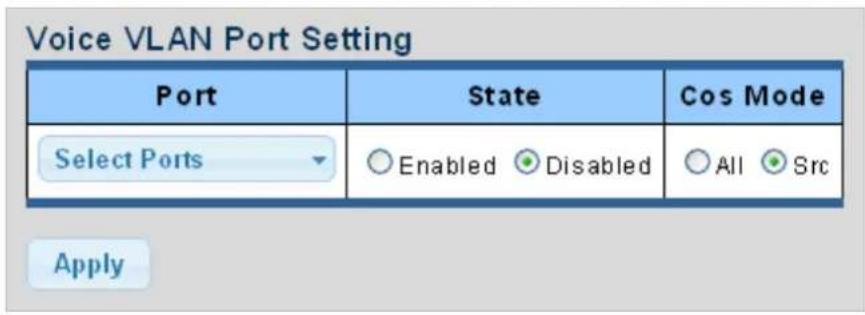
Figure 4-8-26 Voice VLAN Port Setting Page Screenshot
The page includes the following fields:
| Object Description | |
| • Port | Select port number for this drop down list |
| • State | Enable or disable the voice VLAN port setting. The default value is "Disabled". |
| • CoS Mode | Select the current CoS mode |
Buttons
Apply
: Click to apply changes.
| Port | State | Cos Mode |
| GE1 | Disabled | Src |
| GE2 | Disabled | Src |
| GE3 | Disabled | Src |
| Disabled | ||
| LAG6 | Disabled | Src |
| LAG7 | Disabled | Src |
| LAG8 | Disabled | Src |
Figure 4-8-27 Voice VLAN Port State Page Screenshot
The page includes the following fields:
| Object Description | |
| • Port | The switch port number of the logical port |
| • State | Display the current state |
| • CoS Mode | Display the current CoS mode |
4.9 Security
This section is to control the access of the LRP Managed Switch, including the user access and management control.
The Security page links to intgemmapics:
■ 802.1X
■ RADIUS Server
■ TACA ■ CS+ Server
AAA
■ Access
■ Management Access Method
■ DHCP Snooping
■ Dynamic ARP Inspection
IP Source Guard
■ Port Security
DoS
■ Storm Control
4.9.1 802.1X
Overview of 802.1X (Port-based) Authentication
In the 802.1X-world, the user is called the supplicant, the switch is the authenticator, and the RADIUS server is the authentication server. The switch acts as the man-in-the-middle, forwarding requests and responses between the supplicant and the authentication server. Frames sent between the supplicant and the switch are special 802.1X frames, known as EAPOL (EAP Over LANs) frames. EAPOL frames encapsulate EAP PDUs (RFC3748). Frames sent between the switch and the RADIUS server are RADIUS packets. RADIUS packets also encapsulate EAP PDUs together with other attributes like the switch's IP address, name, and the supplicant's port number on the switch. EAP is very flexible, in that it allows for different authentication methods, like MD5-Challenge, PEAP, and TLS. The important thing is that the authenticator (the switch) doesn't need to know which authentication method the supplicant and the authentication server are using, or how many information exchange frames are needed for a particular method. The switch simply encapsulates the EAP part of the frame into the relevant type (EAPOL or RADIUS) and forwards it.
When authentication is complete, the RADIUS server sends a special packet containing a success or failure indication. Besides forwarding this decision to the supplicant, the switch uses it to open up or block traffic on the switch port connected to the supplicant.
Overview of User Authentication
It is allowed to configure the LRP Managed Switch to authenticate users logging into the system for management access using local or remote authentication methods, such as Telnet and Web browser. This LRP Managed Switch provides secure network management access using the following options:
■ Remote Authentication Dial-in User Service (RADIUS)
■ Terminal Access Controller Access Control System Plus (TACACS+)
■ Local user name and Privilege Level control
4.9.1.1 Understanding IEEE 802.1X Port-based Authentication
The IEEE 802.1X standard defines a client-server-based access control and authentication protocol that restricts unauthorized clients from connecting to a LAN through publicly accessible ports. The authentication server authenticates each client connected to a switch port before making available any services offered by the switch or the LAN.
Until the client is authenticated, 802.1X access control allows only Extensible Authentication Protocol over LAN (EAPOL) traffic through the port to which the client is connected. After authentication is successful, normal traffic can pass through the port.
This section includes this conceptual information:
- Device Roles
• Authentication Initiation and Message Exchange - Ports in Authorized and Unauthorized States
■ Device Role s
With 802.1X port-based authentication, the devices in the network have specific roles as shown below.
![graph TD A["Authentication server (RADIUS Server)"] --> C["Router"] B["Authentication server (TACACS+ Server)"] --> C C --> D["Intranet / Intranet"] D --> E["Authenticator (PLANET 802.1X aware Switch)"] E --> F["Supplicant (Client with 802.1X authentication)"] F --> G["Intranet"] F --> H["Laptop"] F…](/content/2026/06/1225141/images/c4f1940ac18d825268c59dc5bc9bb26c65facdca4ba27c95987efefbefc938c8.jpg)
Figure 4-9-1
- Client—the device (workstation) that requests access to the LAN and switch services and responds to requests from the switch. The workstation must be running 802.1X-compliant client software such as that offered in the Microsoft Windows XP operating system. (The client is the supplicant in the IEEE 802.1X specification.)
- Authentication server—performs the actual authentication of the client. The authentication server validates the identity of the client and notifies the switch whether or not the client is authorized to access the LAN and switch services. Because the switch acts as the proxy, the authentication service is transparent to the client. In this release, the Remote Authentication Dial-In User Service (RADIUS) security system with Extensible Authentication Protocol (EAP) extensions is the only supported authentication server; it is available in Cisco Secure Access Control Server version 3.0. RADIUS operates in a client/server model in which secure authentication information is exchanged between the RADIUS server and one or more RADIUS clients.
- Switch (802.1X device)—controls the physical access to the network based on the authentication status of the client. The switch acts as an intermediary (proxy) between the client and the authentication server, requesting identity information from the client, verifying that information with the authentication server, and relaying a response to the client. The switch includes the RADIUS client, which is responsible for encapsulating and decapsulating the Extensible Authentication Protocol (EAP) frames and interacting with the authentication server. When the switch receives EAPOL frames and relays them to the authentication server, the Ethernet header is stripped and the remaining EAP frame is re-encapsulated in the RADIUS format. The EAP frames are not modified or examined during encapsulation, and the authentication server must support EAP within the native frame format. When the switch receives frames from the authentication server, the server's frame header is removed, leaving the EAP frame, which is then encapsulated for Ethernet and sent to the client.
■ Authentication Initiation and Message Exchange
The switch or the client can initiate authentication. If you enable authentication on a port by using the dot1x port-control auto interface configuration command, the switch must initiate authentication when it determines that the port link state transitions from down to up. It then sends an EAP-request/identity frame to the client to request its identity (typically, the switch sends an initial identity/request frame followed by one or more requests for authentication information). Upon receipt of the frame, the client responds with an EAP-response/identity frame.
However, if during bootup, the client does not receive an EAP-request/identity frame from the switch, the client can initiate authentication by sending an EAPOL-start frame, which prompts the switch to request the client's identity

If 802.1X is not enabled or supported on the network access device, any EAPOL frames from the client are dropped. If the client does not receive an EAP-request/identity frame after three attempts to start authentication, the client transmits frames as if the port is in the authorized state. A port in the authorized state effectively means that the client has been successfully authenticated.
When the client supplies its identity, the switch begins its role as the intermediary, passing EAP frames between the client and the authentication server until authentication succeeds or fails. If the authentication succeeds, the switch port becomes authorized.
The specific exchange of EAP frames depends on the authentication method being used. "Figure 4-9-2" shows a message exchange initiated by the client using the One-Time-Password (OTP) authentication method with a RADIUS server.
![graph TD A["Client"] -->|EAPOL-Start| B["802.1X Switch"] B -->|RADIUS Access-Request| C["Authentication Server (RADIUS)"] B -->|RADIUS Access-Challenge| C B -->|RADIUS Access-Request| C B -->|RADIUS Access-Accept| C B -->|EAP-Response/OTP| B B -->|EAP-Response/OTP| B B -->|EAP-Response/Identity| B B…](/content/2026/06/1225141/images/d3461f7b1fbe65b468c65129f1255d1390842a4ca2d69aaf190d19b028fa7635.jpg)
Figure 4-9-2 EAP Message Exchange
■ Ports in Authorized and Unauthorized States
The switch port state determines whether or not the client is granted access to the network. The port starts in the unauthorized state. While in this state, the port disallows all ingress and egress traffic except for 802.1X protocol packets. When a client is successfully authenticated, the port transitions to the authorized state, allowing all traffic for the client to flow normally.
If a client that does not support 802.1X is connected to an unauthorized 802.1X port, the switch requests the client's identity. In this situation, the client does not respond to the request, the port remains in the unauthorized state, and the client is not granted access to the network.
In contrast, when an 802.1X-enabled client connects to a port that is not running the 802.1X protocol, the client initiates the authentication process by sending the EAPOL-start frame. When no response is received, the client sends the request for a fixed number of times. Because no response is received, the client begins sending frames as if the port is in the authorized state
If the client is successfully authenticated (receives an Accept frame from the authentication server), the port state change authorized, and all frames from the authenticated client are allowed through the port. If the authentication fails, the port r in the unauthorized website can't authentication can be retried. If the authentication server cannot be reached, the s retransmit the request. If no response is received from the server after the specified number of attempts, authentication fails, and network access is not granted.
When a client logs off, it sends an EAPOL-logoff message, causing the switch port to transition to the unauthorized state.
If the link state of a port transitions from up to down, or if an EAPOL-logoff frame is received, the port returns to the unauthorized state.
4.9.1.2 802.1X Setting
This page allows you to configure the IEEE 802.1X authentication system.
The IEEE 802.1X standard defines a port-based access control procedure that prevents unauthorized access to a network by requiring users to first submit credentials for authentication. One or more central servers, the backend servers, determine whether the user is allowed access to the network. These backend (RADIUS) servers are configured on the "Security→802.1X Access Control→802.1X Setting" page. The IEEE802.1X standard defines port-based operation, but non-standard variants overcome security limitations as shall be explored below.
The 802.1X Setting and Information screens in Figure 4-9-3 & Figure 4-9-4 appear.

Figure 4-9-3 802.1X Setting Page Screenshot
The page includes the following fields:
| Object Description | |
| • 802.1X | Indicates if NAS is globally enabled or disabled on the switch. If globally disabled, all ports are allowed forwarding of frames. |
Buttons
Apply
: Click to apply changes.
| Information Name | Information Value |
| 802.1X | Disabled |
Figure 4-9-4 802.1X Information Page Screenshot
The page includes the following fields:
| Object Description | |
| • 802.1X | Display the current 802.1X state |
4.9.1.3 802.1X Port Setting
This page allows you to configure the IEEE 802.1X Port Setting. The 802.1X Port Setting screens in Figure 4-9-5 & Figure 4-9-6 appear.
802.1x Port Setting
| Port | Select Ports |
| Mode | No Authentication |
| Reauthentication Enable | Disable Enable |
| Reauthentication Period | 3600 (Range 30 - 65535, Default: 3600) |
| Quiet Period | 60 (Range 0 - 65535, Default: 60) |
| Supplicant Period | 30 (Range 1 - 65535, Default: 30) |
| Maximum Request Retries | 2 (Range 1 - 10, Default: 2) |
Apply
Figure 4-9-5 802.1X Port Setting Page Screenshot
e following fields: The page includes th
| Object Description | |
| • Port | Select port from this drop-down list |
| • Mode | If NAS is globally enabled, this selection controls the port's authentication mode. The following modes are available:■ No Authentication■ Authentication■ Force AuthorizedIn this mode, the switch will send one EAPOL Success frame when the port link comes up, and any client on the port will be allowed network access without authentication.■ Force UnauthorizedIn this mode, the switch will send one EAPOL Failure frame when the port link comes up, and any client on the port will be disallowed network access. |
| • Reauthentication Enable | If checked, successfully authenticated supplicants/clients are reauthenticated after the interval specified by the Reauthentication Period. Reauthentication for802.1X-enabled ports can be used to detect if a new device is plugged into a switch port or if a supplicant is no longer attached. |
| • Reauthentication Period | Determines the period, in seconds, after which a connected client must be reauthenticated. This is only active if the Reauthentication Enabled checkbox is checked.Valid values are in the range 30 to 65535 seconds. |
| • Quiet Period | Sets time to keep silent on supplicant authentication failure. |
| • Supplicant Period | Sets the interval for the supplicant to re-transmit EAP request/identify frame. |
| • Maximum Request Retries | The number of times that the switch transmits an EAPOL Request Identity frame without response before considering entering the Guest VLAN is adjusted with this setting.The value can only be changed if the Guest VLAN option is globally enabled. |
Buttons
Apply
: Click to apply changes.
802.1x Port Status
| Port | Mode (pps) | Status (pps) | Periodic Reauthentication | Reauthentication Period | Quiet Period | Supplicant Timeout | Max. EAP Requests | Modify |
| GE1 | 802.1X Disabled | - | Enabled | 3600 | 60 | 30 | 2 | Edit |
| GE2 | 802.1X Disabled | - | Enabled | 3600 | 60 | 30 | 2 | Edit |
| GE3 | 802.1X Disabled | - | Enabled | 3600 | 60 | 30 | 2 | Edit |
| GE4 | 802.1X Disabled | - | Enabled | 3600 | 60 | 30 | 2 | Edit |
| GE5 | 802.1X Disabled | - | Enabled | 3600 | 60 | 30 | 2 | Edit |
| GE6 | 802.1X Disabled | - | Enabled | 3600 | 60 | 30 | 2 | Edit |
| GE7 | 802.1X Disabled | - | Enabled | 3600 | 60 | 30 | 2 | Edit |
| GE8 | 802.1X Disabled | - | Enabled | 3600 | 60 | 30 | 2 | Edit |
| GE9 | 802.1X Disabled | - | Enabled | 3600 | 60 | 30 | 2 | Edit |
| GE10 | 802.1X Disabled | - | Enabled | 3600 | 60 | 30 | 2 | Edit |
Figure 4-9-6 802.1X Port Status Page Screenshot
The page includes the following fields:
| Object Description | |
| • Port | The switch port number of the logical port. |
| • Mode (pps) | Display the current mode. |
| • Status (pps) | Display the current status. |
| • Periodic Reauthentication | Display the current periodic reauthentication. |
| • Reauthentication Period | Display the current reauthentication period. |
| • Quiet Period | Display the current quiet period. |
| • Supplicant Timeout | Display the current supplicant timeout. |
| • Max. EAP Requests | Display the current Max. EAP requests. |
| • Modify | Click Edit to edit 802.1X port setting parameter. |
When a Guest VLAN enabled port's link comes up, the switch starts transmitting EAPOL Request Identity frames. If the number of transmissions of such frames exceeds Max. Reauth. Count and no EAPOL frames have been received in the meantime, the switch considers entering the Guest VLAN. The interval between transmission of EAPOL Request Identity frames is configured with EAPOL Timeout. If Allow Guest VLAN if EAPOL Seen is enabled, the port will now be placed in the Guest VLAN. If disabled, the switch will first check its history to see if an EAPOL frame has previously been received on the port (this history is cleared if the port link goes down or the port's Admin State is changed), and if not, the port will be placed in the Guest VLAN. Otherwise it will not move to the Guest VLAN, but continue transmitting EAPOL Request Identity frames at the rate given by EAPOL Timeout.
Once in the Guest VLAN, the port is considered that an and its attached clients on
VLAN. The switch will not transmit an EAPOL Success frame when entering the Guest VLAN.
While in the Guest VLAN, the switch monitors the link for EAPOL frames, and if one such frame is received, the switch immediately takes the port out of the Guest VLAN and starts authenticating the supplicant according to the port mode. If an EAPOL frame is received, the port will never be able to go back into the Guest VLAN if the "Allow Guest VLAN if EAPOL Seen" is disabled.
The 802.1X Guest VLAN setting screens in Figure 4-9-7 & Figure 4-9-8 appear.
Guest VLAN Setting

Guest VLAN port Setting

Figure 4-9-7 Guest VLAN Setting Page Screenshot
The page includes the following fields:
| Object Description | |
| • Guest VLAN ID | This is the value that a port's Port VLAN ID is set to if a port is moved into the Guest VLAN is globally enabled if the Guest VLAN optionValid values are in the range [1~4094]. |
| • Guest VLAN Enabled | A Guest VLAN is a special VLAN - typically with limited network access - on which 802.1X-unaware clients are placed after a network administrator-defined timeout. The switch follows a set of rules for entering and leaving the Guest VLAN as listed below.The "Guest VLAN Enabled" checkbox provides a quick way to globally enable/disable Guest VLAN functionality.When checked, the individual ports' ditto setting determines whether the port can be moved into Guest VLAN.When unchecked, the ability to move to the Guest VLAN is disabled for all ports. |
| • Guest VLAN Port Setting | When Guest VLAN is both globally enabled and enabled (checked) for a given port, the switch considers moving the port into the Guest VLAN according to the rules outlined below.This option is only available for EAPOL-based modes, i.e.• Port-based 802.1X |
Buttons
Apply
: Click to apply changes.
| Port Name | Enable State | In Guest VLAN |
| GE1 | Disabled | NO |
| GE2 | Disabled | NO |
| GE3 | Disabled | NO |
| GE4 | Disabled | NO |
| GE5 | Disabled | NO |
| GE6 | Disabled | NO |
| GE7 | Disabled | NO |
| GE8 | Disabled | NO |
| GE9 | Disabled | NO |
| GE10 | Disabled | NO |
Figure 4-9-8 Guest VLAN Status Page Screenshot
The page includes the following fields:
| Object Description | |
| • Port Name | The switch port number of the logical port |
| • Enable State | Display the current state |
| • In Guest VLAN | t guest VLAN Display the curren |
4.9.1.5 Authenticated Host
The Authenticated Host Table screen in Figure 4-9-9 appears.
| User Name | Port | Session Time | Authentication Method | MAC Address |
Figure 4-9-9 Authenticated Host Table Page Screenshot
The page includes the following fields:
| Object Description | |
| User Name | Display the current user name |
| Port | Display the current port number |
| Session Time | Display the current session time |
| Authentication Method | Display the current authentication method |
| MAC Address | Display the current MAC address |
4.9.2 RADIUS Server
This page is to configure the RADIUS server connection session parameters. The RADIUS Settings screens in Figure 4-9-10, Figure 4-9-11 & Figure 4-9-12 appears.
Use Default Parameters
| IP Version | Version 6 Version 4 | |
| Retries | 3 | (Range 1 - 10, Default: 3) |
| Timeout for Reply | 3 | sec. (Range 1 - 30, Default: 3) |
| Dead Time | 0 | min. (Range 0 - 2000, Default: 0) |
| Key String | (0/63 ASCII Alphanumeric Characters Used) | |
Apply
Figure 4-9-10 Use Default Parameters Page Screenshot
ds: The page includes the following fiel
| Object Description | |
| Retries | Timeout is the number of seconds, in the range 1 to 10, to wait for a reply from a RADIUS server before retransmitting the request. |
| Timeout for Reply | Retransmit is the number of times, in the range 1 to 30, a RADIUS request is retransmitted to a server that is not responding. If the server has not responded after the last retransmit it is considered to be dead. |
| Dead Time | The Dead Time, which can be set to a number between 0 and 3600 seconds, is the period during which the switch will not send new requests to a server that has failed to respond to a previous request. This will stop the switch from continually trying to contact a server that it has already determined as dead.Setting the Dead Time to a value greater than 0 (zero) will enable this feature, but only if more than one server has been configured. |
| Key String | The secret key - up to 63 characters long - shared between the RADIUS server and the switch. |
Buttons
Apply
: Click to apply changes.
New Radius Server
| Server Definition | By IP address By name |
| Server IP | |
| Authentication Port | 1812 (0 - 65535) |
| Acct Port | 1813 (0 - 65535) |
| Key String | Use Default |
| Timeout for Reply | Use Default (1-30) secs |
| Retries | Use Default (1 - 10) |
| Server Priority | 1 (0 - 65535) |
| Dead Time | 0 (0 - 2000) |
| Usage Type | Login 802.1X All |
Add
Figure 4-9-11 New RADIUS Server Page Screenshot
The page includes the following fields:
| Object Description | |
| • Server Definition | Set the server definition |
| • Server IP | Address of the RADIUS server IP/name |
| • Authentication Port | The UDP port to use on the RADIUS Authentication Server. If the port is set to 0 (zero), the default port (1812) is used on the RADIUS Authentication Server. |
| • Acct Port | The UDP port to use on the RADIUS Accounting Server. If the port is set to 0 (zero), the default port (1813) is used on the RADIUS Accounting Server. |
| • Key String | The shared key - shared between the RADIUS Authentication Server and the switch. |
| • Timeout for Reply | The Timeout, which can be set to a number between 1 and 30 seconds, is the maximum time to wait for a reply from a server. If the server does not reply within this timeframe, we will consider it to be dead and continue with the next enabled server (if any).RADIUS servers are using the UDP protocol, which is unreliable by design. In order to cope with lost frames, the timeout interval is divided into 3 subintervals of equal length. If a reply is not received within the subinterval, the request is transmitted again. This algorithm causes the RADIUS server to be queried up to 3 times before it is considered to be dead. |
| • Retries | Timeout is the number of seconds, in the range 1 to 10, to wait for a reply from a RADIUS server before retransmitting the request. |
| • Server Priority | Set the server priority |
| • Dead Time | The Dead Time, which can be set to a number between 0 and 3600 seconds, is the period during which the switch will not send new requests to a server that has failed to respond to a previous request. This will stop the switch from continually trying to contact a server that it has already determined as dead.Setting the Dead Time to a value greater than 0 (zero) will enable this feature, but only if more than one server has been configured. |
| • Usage Type | Set the usage type. The following modes are available:■ Login■ 802.1X■ All |
Buttons
Add
: Click to add RADIUS server setting.

Figure 4-9-12 Login Authentication List Page Screenshot
The page includes the following fields:
| Object Description | |
| IP Address | ent IP address Display the curr |
| Auth Port | Display the current auth port |
| Acct Port | Display the current acct port |
| Key | Display the current key |
| Timeout | Display the current timeout |
| Retries | Display the current retry times |
| Priority | Display the current priority |
| Dead Time | Display the current dead time |
| Usage Type | Display the current usage type |
| Modify | Click Edit to edit login authentication list parameter.Click Delete to delete login authentication list entry. |
4.9.3 TACACS+ Server
This page is to configure the RADIUS server connection session parameters. The RADIUS Settings screens in Figure 4-9-13, Figure 4-9-14 & Figure 4-9-15 appear.
Use Default Parameters
| IP Version | Version 6 Version 4 |
| Key String | |
| Timeout for Reply | 5 sec. (Range 1 - 30, Default 5) |
Apply
Figure 4-9-13 Guest VLAN Setting Page Screenshot
The page includes the following fields:
| Object Description | |
| • Key String | The secret key with up to 63 characters long is shared between the TACACS+ server and the switch. |
| • Timeout for Reply | Retransmit is the number of times, in the range 1 to 30, a TACACS+ request is retransmitted to a server that is not responding. If the server has not responded after the last retransmit it is considered to be dead. |
Buttons
Apply
: Click to apply changes.
New Tacacs+ Server
| Server Definition | By IP address By name |
| Server IP | |
| Server Port | 49 (0 - 65535) |
| Server Key | Use Default |
| Server Timeout | Use Default (1-30) secs |
| Server Priority | 1 (0 - 65535) |
Add
Figure 4-9-14 New RADIUS Server Page Screenshot
The page includes the following fields:
| Object Description | |
| • Server Definition | Set the server definition |
| • Server IP | Address of the TACACS+ server IP/name |
| • Server Port | Network (TCP) port of TACACS+ server used for authentication messages. (Range: 1-65535; Default: 49) |
| • Server Key | The key is shared between the TACACS+ Authentication Server and the switch. |
| • Server Timeout | The number of seconds the switch waits for a reply from the server before it resends the request. |
| • Server Priority | Set the server priority |
Buttons
Add
: Click to add RADIUS server setting.
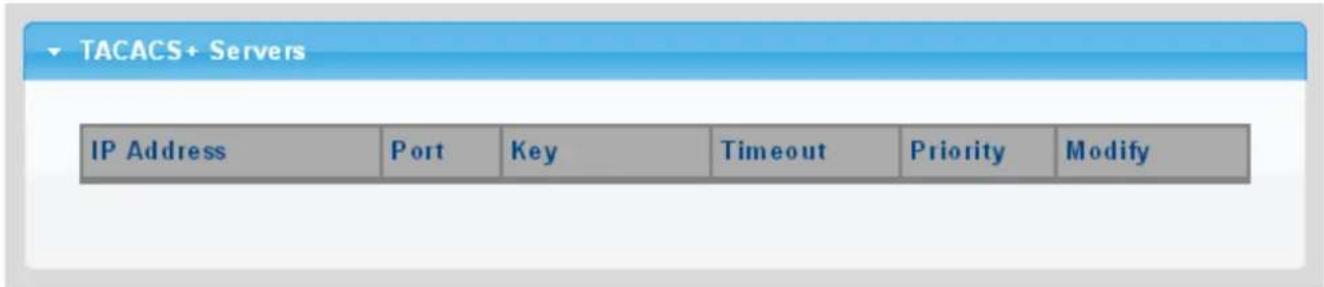
Figure 4-9-15 Login Authentication List Page Screenshot
The page includes the following fields:
| Object Description | |
| • IP Address | Display the current IP address |
| • Port | Display the current port |
| • Key | Display the current key |
| • Timeout | Display the current timeout |
| • Retries | Display the current retry times |
| • Priority | Display the current priority |
| Modify | Click Edit to edit login authentication list parameterClick Delete to delete login authentication list entry |
4.9.4 AAA
Authentication, authorization, and accounting (AAA) provides a framework for configuring access control on the LRP Managed Switch. The three security system can be summarized as follows:
- Authentication — Identifies users that request access to the network.
- Authorization — Determines if users can access specific services.
- Accounting — Provides reports, auditing, and billing for services that users have accessed on the network.
The AAA functions require the use of configured RADIUS or TACACS+ servers in the network. The security servers can be defined as sequential groups that are then applied as a method for controlling user access to specified services. For example, when the switch attempts to authenticate a user, a request is sent to the first server in the defined group, if there is no response the second server will be tried, and so on. If at any point a pass or fail is returned, the process stops.
The LRP Managed Switch supports the following AAA features:
- Accounting for IEEE 802.1X authenticated users that access the network through the LRP Managed Switch.
• Accounting for users that access management interfaces on the LRP Managed Switch through the console and Telnet. - Accounting for commands that users enter at specific CLI privilege levels. Authorization of users that access management interfaces on the LRP Managed Switch through the console and Telnet.
To configure AAA on the LRP Managed Switch, you need to follow this general process:
-
Configure RADIUS and TACACS+ server access parameters. See "Configuring Local/Remote Logon Authentication".
-
Define RADsSengrTACACS s to support the accounting and authorization of services.
-
Define a method name for each service to which you want to apply accounting or authorization and specify the RADIUS ouTASCAUSE: Apply the method names to port or line interfaces.

This guide assumes that RADIUS and TACACS+ server software can be configured to support AAA. The configuration of RADIUS and TACACS+ server software is beyond the scope of this guide. Refer to the documentation provided with the RADIUS or TACACS+ server software.
4.9.4.1 Login List
This page is to login list parameters. The authentication list screens in Figure 4-9-17 & Figure 4-9-18 appear.
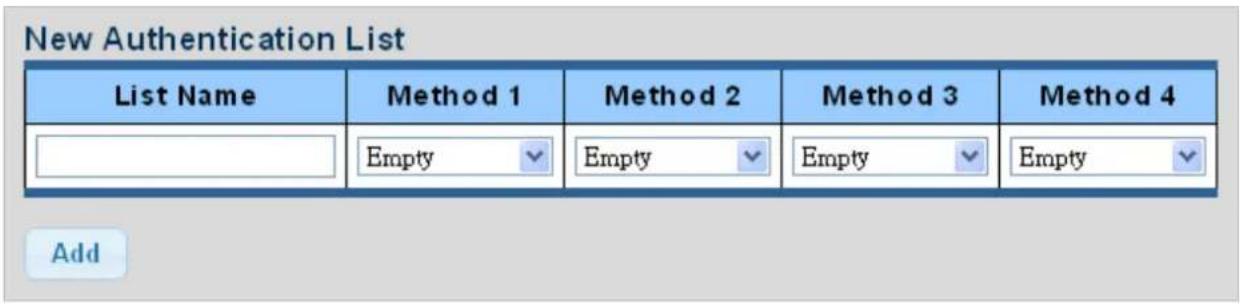
Figure 4-9-17 New Authentication List Screenshot
The page includes the following fields:
| Object Description | |
| • List Name | Defines a name for the authentication list |
| • Method 1-4 | Set the login authentication method:Empty / None / Local / TACACS+ / RADIUS / Enable |
Buttons
Add
Click to add authentication list.

Figure 4-9-18 Login Authentication List Screenshot
The page includes the following fields:
| Object Description | |
| • List Name | Display the current list name |
| • Method List | Display the current method list |
| • Modify | Click Edit to edit login authentication list parameterClick Delete to delete login authentication list entry |
4.9.4.2 Enable List
This page is to login list parameters. The authentication list screens in Figure 4-9-19 & Figure 4-9-20 appear.

Figure 4-9-19 New Authentication List Screenshot
The page includes the following fields:
| Object Description | |
| • List Name | Defines a name for the authentication list |
| • Method 1-3 | Set the login authentication method:Empty / None / Enable / TACACS+ / RADIUS |
Buttons
Add
Click to add authentication list.
| List Name | Method List | Modify |
| default | enable | Edit |
Figure 4-9-20 Login Authentication List Screenshot
The page includes the following fields:
| Object Description | |
| • List Name | Display the current list name |
| • Method List | Display the current method list |
| • Modify | Click Edit to edit login authentication list parameterClick Delete to delete login authentication list entry |
4.9.5 Access
This section is to control the access of the LRP Managed Switch, including the different access methods – Telnet, SSH, HTTP and HTTPS.
4.9.5.1 Telnet
The Telnet Settings and Information screens in Figure 4-9-21 & Figure 4-9-22 appear.

Figure 4-9-21 Telnet Settings Page Screenshot
The page includes the following fields:
| Object Description | |
| Telnet Service | Disable or enable Telnet service |
| Login Authentication List | Select login authentication list from this drop-down list |
| Enable Authentication List | Select enable authentication list from this drop-down list |
| Session Timeout | Set the session timeout value |
| Password Retry Count | Set the password retry count value |
| Silent Time | me value Set the silent ti |
Buttons
Apply
Click to apply changes
Disconnect
Click to disconnect Telnet communication
Telnet Information
| Information Name | Information Value |
| Telnet Service | Disabled |
| Login Authentication List | default |
| Enable Authentication List | default |
| Session Timeout | 10 |
| Password Retry Count | 3 |
| Silent Time | 0 |
| Current Telnet Sessions Count | 0 |
Figure 4-9-21 Telnet Information Page Screenshot
The page includes the following fields:
| Object Description | |
| Telnet Service | Display the current Telnet service |
| Login Authentication List | Display the current login authentication list |
| Enable Authentication List | Display the current enable authentication list |
| Session Timeout | rrent session timeout Display the cu |
| Password Retry Count | Display the current password retry count |
| Silent Time | Display the current silent time |
| Current Telnet Session Count | Display the current Telnet session count |
4.9.5.2 SSH
Configure SSH on this page. This page shows the Port Security status. Port Security is a module with no direct configuration. Configuration comes indirectly from other modules -- the user modules. When a user module has enabled port security on a port, the port is set up for software-based learning. In this mode, frames from unknown MAC addresses are passed on to the port security module which in this reads MAC address should be forward or block it. For a
MAC address to be set in the forwarding state, all enabled user modules must unanimously agree on allowing the MAC address to forward. If only one chooses to block it, it will be blocked until that user module decides otherwise.
The SSH Settings and Information screens in Figure 4-9-23 & Figure 4-9-24 appear.
SSH Settings
| SSH Service | Disabled |
| Login Authentication List | default |
| Enable Authentication List | default |
| Session Timeout | 10 (0-65535) minutes |
| Password Retry Count | 3 (0-120) minutes |
| Silent Time | 0 (0-65535) seconds |
Apply
Disconnect
Figure 4-9-23 SSH Settings Page Screenshot
he page includes the following fields: T
| Object Description | |
| • Edit Ser | Disable or enable SSH service |
| • Login Authentication List | down list Select login authentication list from this |
| • Enable Authentication List | Select enable authentication list from this drop-down list |
| • Session Timeout | Set the session timeout value |
| • Password Retry Count | Set the password retry count value |
| • Silent Time | Set the silent time value |
Buttons
Apply
: Click to apply changes.
Disconnect
: Click to disconnect Telnet communication.
SSH Information
| Information Name | Information Value |
| SSH Service | Disabled |
| Login Authentication List | default |
| Enable Authentication List | default |
| Session Timeout | 10 |
| Password Retry Count | 3 |
| Silent Time | 0 |
| Current SSH Sessions Count | 0 |
Figure 4-9-24 SSH Information Page Screenshot
The page includes the following fields:
| Object Description | |
| • SSH Service | rent SSH service Display the cur |
| • Login Authentication List | tication list Display the current login authen |
| • Enable Authentication List | Display the current enable authentication list |
| • Session Timeout | Display the current session timeout |
| • Password Retry Count | Display the current password retry count |
| • Silent Time | Display the current silent time |
| • Current SSH Session Count | Display the current SSH session count |
4.9.5.3 HTTP
The HTTP Settings and Information screens in Figure 4-9-25 & Figure 4-9-26 appear.
HTTP Settings
| HTTP Service | Enabled Disabled |
| Login Authentication List | default |
| Session Timeout | 10 (0-86400) minutes |
Apply
Figure 4-9-25 HTTP Settings Page Screenshot
The page includes the following fields:
| Object Description | |
| • HTTP Service | Disable or enable HTTP service |
| • Login Authentication List | Select login authentication list from this drop-down list |
| • Session Timeout | Set the session timeout value |
Buttons
Apply
: Click to apply changes.
| Information Name | Information Value |
| HTTP Service | Enabled |
| Login Authentication List | default |
| Session Timeout | 10 |
Figure 4-9-26 HTTP Information Page Screenshot
The page includes the following fields:
| Object Description | |
| HTTP Servic | Display the current HTTP service |
| Login Authentication List | Display the current login authentication list |
| Session Timeout | Display the current session timeout |
4.9.5.4 HTTPS
The HTTPS Settings and Information screens in Figure 4-9-27 & Figure 4-9-28 appear.
HTTPS Settings
| HTTPS Service | Enabled Disabled |
| Login Authentication List | default |
| Session Timeout | 10 (0-86400) minutes |
Apply
Figure 4-9-27 HTTPS Settings Page Screenshot
The page includes the following fields:
| Object Description | |
| HTTPS Service | Disable or enable HTTPS service |
| Login Authentication List | Select login authentication list from this drop-down list |
| Session Timeout | Set the session timeout value |
uttons B
Apply
: Click to apply changes.
| Information Name | Information Value |
| HTTPS Service | Disabled |
| Login Authentication List | default |
| Session Timeout | 10 |
Figure 4-9-28 HTTPS Information Page Screenshot
The page includes the following fields:
| Object Description | |
| HTTPS Service | Display the current HTTPS service |
| Login Authentication List | Display the current login authentication list |
| Session Timeout | Display the current session timeout |
4.9.6 Management Access Method
4.9.6.1 Profile Rules
The Profile Rule Table Setting and Table screens in Figure 4-9-29 & Figure 4-9-30 appear.

Figure 4-9-29 Profile Rule Table Setting Page Screenshot
The pag s the following fields: e include
| Object Description | |
| • Access Profile Name(1-32 characters) | Indicates the access profile name |
| • Priority (1-65535) | Set priority. The allowed value is from 1 to 65535 |
| • Management Method | Indicates the host can access the switch from HTTP/HTTPS/telnet/SSH/SNMP/All interface that the host IP address matched the entry. |
| • Action | An IP address can contain any combination of permit or deny rules.(Default: Permit rules)Sets the access mode of the profile; either permit or deny. |
| • Port | Select port from this drop-down list |
| • IP-Source | Indicates the IP address for the access management entry |
Buttons
Apply
: Click to apply changes.
| Access Profile Name | Priority | Management Method | Action | Port | Source IPV4 | Source IPV4 Mask | Source IPV6 | Source IPV6 Prefix | Modify |
| default | 1 | All | Permit | gi1-10,lag1-8 | Edit Delete |
Figure 4-9-30 Profile Rule Table Page Screenshot
The page includes the following fields:
| Object Description | |
| • Access Profile Name | Display the current access profile name |
| • Priority | Display the current priority |
| • Management Method | Display the current management method |
| • Action | Display the current action |
| • Port | Display the current port list |
| • Source IPv4 | Display the current source IPv4 address |
| • Source IPv4 Mask | Display the current source IPv4 mask |
| • Source IPv6 | Display the current source IPv6 address |
| • Source IPv6 Prefix | Display the current source IPv6 prefix |
| • Modify | Click  to edit profile rule parameterClick to edit profile rule parameterClick  to delete profile rule entry to delete profile rule entry |
4.9.6.2 Access Rules
The access profile screens in Figure 4-9-31 & Figure 4-9-32 appear.

Figure 4-9-31 Access Profile Page Screenshot
The page includes the following fields:
| Object Description | |
| • Access Profile | Select access profile from this drop-down list |
uttons B
Apply
: Click to apply changes.
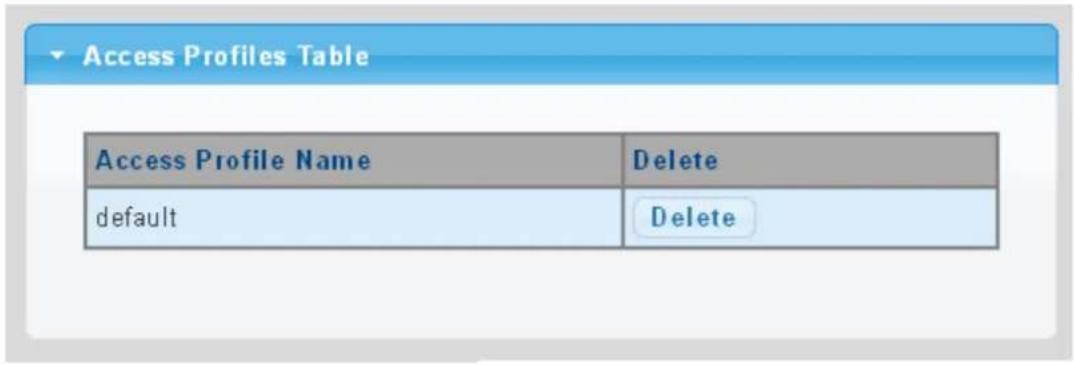
Figure 30:32 Access Profile Table Page Sc
The page includes the following fields:
| Object Description | |
| • Access Profile | y the currenDispla t access profile |
| • Delete | Click to delete access profile entry |
4.9.7 DHCP Snooping
4.9.7.1 DHCP Snooping Overview
The addresses assigned to DHCP clients on unsecure ports can be carefully controlled using the dynamic bindings registered with DHCP Snooping. DHCP snooping allows a switch to protect a network from rogue DHCP servers or other devices which send port-related information to a DHCP server. This information can be useful in tracking an IP address back to a physical port.
DHCP Snooping Overview
![graph TD subgraph_DHCP_Client_1["DHCP Client 1"] A["User"] --> B["Laptop"] C["User"] --> D["Server"] E["User"] --> F["Un-Trust Port"] end subgraph_DHCP_Client_2["DHCP Client 2"] G["User"] --> H["Laptop"] I["User"] --> J["Server"] K["User"] --> L["Un-Trust Port"] end subgraph_DHCP_Server["DHCP Server…](/content/2026/06/1225141/images/55b9ad7f6194ebd507402c42bf8f7ab12c246a8eec49859d5ac74b3e4b44ff68.jpg)
Command Usage
- Network traffic may be disrupted when malicious DHCP messages are received from an outside source. DHCP snooping is used to filter DHCP messages received on a non-secure interface from outside the network or firewall. When DHCP snooping is enabled globally and enabled on a VLAN interface, DHCP messages received on an untrusted interface from a device not listed in the DHCP snooping table will be dropped.
- Table entries are only learned for trusted interfaces. An entry is added or removed dynamically to the DHCP snooping table when a client receives or releases an IP address from a DHCP server. Each entry includes a MAC address, IP address, lease time, VLAN identifier, and port identifier.
- When DHCP snooping is enabled, DHCP messages entering an untrusted interface are filtered based upon dynamic entries learned via DHCP snooping.
• Filtering rules are implemented as follows:
■ If the global DHCP sno oping is disabled, all DHCP packets are forwarded.
■ If DHCP snooping is enabled globally, and also enabled on the VLAN where the DHCP packet is received, all DHCP packets are forwarded for a trusted port. If the received packet is a DHCP ACK message, a dynamic DHCP snooping entry is also added to the binding table.
If DHCP snooping is enabled globally, and also enabled on the VLAN where the DHCP packet is received, but the port is not trusted, it is processed as follows:
If the DHCP packet is a reply packet from a DHCP server (including OFFER, ACK or NAK messages), the packet is dropped.
If the DHCP packet is from a client, such as a DECLINE or RELEASE message, the switch forwards the packet only if the corresponding entry is found in the binding table.
If the DHCP packet is from a client, such as a DISCOVER, REQUEST, INFORM, DECLINE or RELEASE message, the packet is forwarded if MAC address verification is disabled. However, if MAC address verification is enabled, then the packet will only be forwarded if the client's hardware address stored in the DHCP packet is the same as the source MAC address in the Ethernet header.
If the DHCP packet is not a recognizable type, it is dropped.
- If a DHCP packet from a client passes the filtering criteria above, it will only be forwarded to trusted ports in the same VLAN.
- If a DHCP packet is from server is received on a trusted port, it will be forwarded to both trusted and untrusted ports in the same VLAN.
- If the DHCP snooping is globally disabled, all dynamic bindings are removed from the binding table.
■ Additional considerations when the switch itself is a DHCP client – The port(s) through which the switch submits a client request to the DHCP server must be configured as trusted. Note that the switch will not add a dynamic entry for itself to the binding table when it receives an ACK message from a DHCP server. Also, when the switch sends out DHCP client packets for itself, no filtering takes place. However, when the switch receives any messages from a DHCP server, any packets received from untrusted ports are dropped.
4.9.7.2 Global Setting
DHCP Snooping is used to block intruder on the untrusted ports of switch when it tries to intervene by injecting a bogus DHCP reply packet to a legitimate conversation between the DHCP client and server. Configure DHCP Snooping on this page. The DHCP Snooping Setting and Information screens in Figure 4-9-33 & Figure 4-9-34 appear.
DHCP Snooping Setting
| DHCP Snooping | ○ Enabled ○ Disabled |
Apply
Figure 4-9-33 DHCP Snooping Setting Page Screenshot
The page includes the following fields:
| Object Description | |
| • DHCP Snooping | Indicates the DHCP snooping mode operation. Possible modes are:■ Enabled: Enable DHCP snooping mode operation.When DHCP snooping mode operation is enabled, the request DHCP messages will be forwarded to trusted ports and only allowed reply packets from trusted ports.■ Disabled: Disable DHCP snooping mode operation. |
Buttons
Apply
: Click to apply changes.
| Information Name | Information Value |
| DHCP Snooping | disabled |
Figure 4-9-34 DHCP Snooping Information Page Screenshot
The page includes the following fields:
| Object Description | |
| • DHCP Snooping | Display the current DHCP snooping status |
4.9.7.3 VLAN Setting
Command Usage
- When DHCP snooping is enabled globally on the switch, and enabled on the specified VLAN, DHCP packet filtering will be performed on any untrusted ports within the VLAN.
- When the DHCP snooping is globally disabled, DHCP snooping can still be configured for specific VLANs, but the changes will not take effect until DHCP snooping is globally re-enabled.
- When DHCP snooping is globally enabled, and DHCP snooping is then disabled on a VLAN, all dynamic bindings learned for this VLAN are removed from the binding table.
The DHCP Snooping VLAN Setting screens in Figure 4-9-35 & Figure 4-9-36 appear.
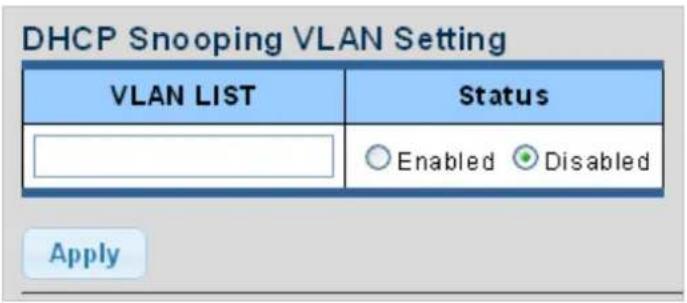
Figure 4-9-35 DHCP Snooping VLAN Setting Page Screenshot
The page includes the following fields:
| Object Description | |
| • VLAN List | Indicates the ID of this particular VLAN. |
| • Status | Indicates the DHCP snooping mode operation. Possible modes are:■ Enabled: Enable DHCP snooping mode operation.When DHCP snooping mode operation is enabled, the request DHCP messages will be forwarded to trusted ports and only allowed reply packets from trusted ports.■ Disabled: Disable DHCP snooping mode operation. |
Buttons
Apply
: Click to apply changes.
| VLAN List | Status |
| No VLANs | enabled |
Figure 4-9-36 DHCP Snooping VLAN Setting Page Screenshot
The page includes the following fields:
| Object Description | |
| • VLAN List | Display the current VLAN list |
| • Status | Display the current DHCP snooping status |
4.9.7.4 Port Setting
Configures switch ports as trusted or untrusted.
Command Usage
- A trusted interface is an interface that is configured to receive only messages from within the network. An untrusted interface is an interface that is configured to receive messages from outside the network or firewall.
- When DHCP snooping is enabled both globally and on a VLAN, DHCP packet filtering will be performed on any untrusted ports within the VLAN.
- When an untrusted port is changed to a trusted port, all the dynamic DHCP snooping bindings associated with this port are removed.
- Set all ports connected to DHCP servers within the local network or firewall to trusted state. Set all other ports outside the local network state trusted
The DHCP Snooping Port Setting screens in Figure 4-9-37 & Figure 4-9-38 appear.
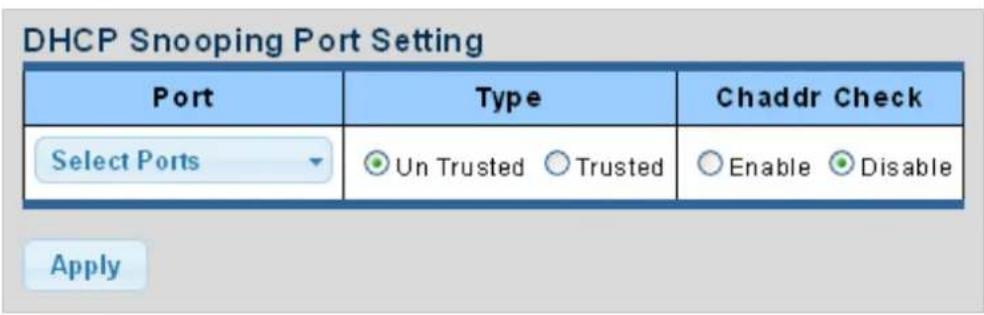
Figure 4-9-37 DHCP Snooping Port Setting Page Screenshot
he page includes the following fields: T
| Object Description | |
| • Port | Select port from this drop-down list |
| • Type | Indicates the DHCP snooping port mode. Possible port modes are:■ Trusted: Configures the port as trusted sources of the DHCP message.■ Untrusted: Configures the port as untrusted sources of the DHCP message. |
| • Chaddr Check | Indicates that the Chaddr check function is enabled on selected port.Chaddr: Client hardware address. |
Buttons
Apply
: Click to apply changes.
DHCP Snooping Port Setting
| Port | Type | Chaddr Check |
| GE1 | Un Trusted | disabled |
| GE2 | Un Trusted | disabled |
| GE3 | Un Trusted | disabled |
| Un Trusted |
| LAG5 | disabled | |
| LAG6 | Un Trusted | disabled |
| LAG7 | Un Trusted | disabled |
| LAG8 | Un Trusted | disabled |
Figure 4-9-38 DHCP Snooping Port Setting Page Screenshot
The page includes the following fields:
| Object Description | |
| • Port | The switch port number of the logical port |
| • Type | Display the current type |
| • Chaddr Check | Display the current chaddr check |
4.9.7.5 Statistics
The DHCP Snooping Statistics 9-30 appears.
DHCP Snooping Statistics
Clear Refresh
| Port | Forwarded | Chaddr Check Dropped | Untrust Port Dropped | Untrust Port With Option82 Dropped | Invalid Dropped |
| GE1 | 0 | 0 | 0 | 0 | 0 |
| GE2 | 0 | 0 | 0 | 0 | 0 |
| GE3 | 0 | 0 | 0 | 0 | 0 |
| GE4 | 0 | 0 | 0 | 0 | 0 |
| LAG7 | 0 | 0 | 0 | 0 | 0 |
| LAG8 | 0 | 0 | 0 | 0 | 0 |
Figure 4-9-39 DHCP Snooping Statistics Page Screenshot
The page includes the following fields:
| Object Description | |
| • Port | The switch port number of the logical port |
| • Forwarded | Display the current forwarded |
| • Chaddr Check Dropped | Display the chaddr check dropped |
| • Untrusted Port Dropped | Display untrusted port dropped |
| • Untrusted Port with Option82 Dropped | Display untrusted port with option82 dropped |
| • Invalid Dropped | Display invalid dropped |
Buttons
Clear
Click to clear the statistics.
Refresh
Click to refresh the statistics.
4.9.7.6 Database Agent
Overview of the DHCP Snooping Database Agent
When DHCP snooping is enabled, the switch uses the DHCP snooping binding database to store information about untrusted interfaces. The database can have up to 8192 bindings.
Each database entry (binding) has an IP address, an associated MAC address, the lease time (in hexadecimal format), the interface to which the binding applies, and the VLAN to which the interface belongs. A checksum value, the end of each entry, is the number of bytes from the start of the file to end of the entry. Each entry is 72 bytes, followed by a space and then the checksum value.
To keep the bindings when the switch reloads, you must use the DHCP snooping database agent. If the agent is disabled, dynamic ARP or IP source guard is enabled, and the DHCP snooping binding database has dynamic bindings, the switch loses its connectivity. If the agent is disabled and only DHCP snooping is enabled, the switch does not lose its connectivity, but DHCP snooping might not prevent DCHP spoofing attacks.
The database agent stores the bindings in a file at a configured location. When reloading, the switch reads the binding file to build the DHCP snooping binding database. The switch keeps the file current by updating it when the database changes.
When a switch learns of new binding entries in the case of bindings, the switch immediately updates th
The switch also updates the entries in the binding file. The frequency at which the file is updated is based on a configurable delay, and the updates are batched. If the file is not updated in a specified time (set by the write-delay and abort-timeout values), the update stops.
The DHCP Snooping Databases and Inform
in Figure 4-9-40 & Figure 4-9-41 appear.
DHCP Snooping Database
| Database Type | None |
| FileName | |
| Remote Server | (X.X.X.X or Hostname) |
| Write Delay | 300 (15 ~ 86400 Second) |
| Timeout | 300 (0 ~ 86400 Second) |
Apply
Figure 4-9-40 DHCP Snooping Database Setting Page Screenshot
The page includes the following fields:
| Object Description | |
| Database Type | Select database type |
| File Name | The name of file image |
| Remote Server | Fill in your remote server IP address |
| Write Delay | Specify the duration for which the transfer should be delayed after the binding database changes. The range is from 15 to 86400 seconds. The default is 300 seconds (5 minutes). |
| Timeout | Specify when to stop the database transfer process after the binding database changes.The range is from 0 to 86400. Use 0 for an infinite duration. The default is 300 seconds (5 minutes). |
Buttons
Apply
: Click to apply changes.
DHCP Snooping Database Informations
| Information Name | Information Value |
| Database Type | None |
| FileName | |
| Remote Server | |
| Write Delay | 300 |
| Timeout | 300 |
Figure 4-9-41 DHCP Snooping Database Information Page Screenshot
The page includes the following fields:
| Object Description | |
| Database Type | Display the current database type |
| File Name | Display the current file name |
| Remote Server | rrent remote server Display the cu |
| Write Delay | Display the current write delay |
| Timeout | Display the current timeout |
4.9.7.7 Rate Limit
After enabling DHCP snooping, the switch will monitor all the DHCP messages and implement software transmission. The DHCP Rate Limit Setting and Config screens in Figure 4-9-42 & Figure 4-9-43 appear.
DHCP Rate Limit Setting
| Port | State | Rate Limit (pps) |
| Select Ports | DefaultUser-Define | Unlimited(1~300 pps) |
Apply
Figure 4-9-42 DHCP Rate Limit Setting Page Screenshot
The page includes the following fields:
| Object Description | |
| • Port | Select port from this drop-down list |
| • State | Set default or user-define |
| • Rate Limit (pps) | Configure the rate limit for the port policer. The default value is "unlimited". Valid values are in the range 1 to 300. |
Buttons
Apply
: Click to apply changes
DHCP Rate Limit Config
| Port Name | Rate Limit (pps) |
| GE1 | Unlimited |
| GE2 | Unlimited |
| GE3 | Unlimited |
| GE4 | Unlimited |
| LAG6 | Unlimited |
| LAG7 | Unlimited |
| LAG8 | Unlimited |
Figure 4-9-43 DHCP Rate Limit Setting Page Screenshot
The page includes the following fields:
| Object Description | |
| • Port | The switch port number of the logical port |
| • Rate Limit (pps) | Display the current rate limit |
4.9.7.8 Option 82 Global Setting
DHCP provides a relaying mechanism for
ation about the switch and its DHCP clients to DHCP servers. Known as
DHCP Option 82, DHCPwsecoenpaablsee theinfassigting IP addresses, or to set other
services or policies fan effective to also preventi
ng malicious network attacks from attached clients on DHCP
services, such as IP Spoofing, Client Identifier Spoofing, MAC Address Spoofing, and Address Exhaustion.
The DHCP option 82 enables a DHCP relay agent to insert specific information into a DHCP request packets when forwarding client DHCP packets to a DHCP server and remove the specific information from a DHCP reply packets when forwarding server DHCP packets to a DHCP client. The DHCP server can use this information to implement IP address or other assignment policies. Specifically, the options are:
■ Circuit ID (option 1)
■ Remote ID (option 2)
The Circuit ID sub-option is supposed to include information specific to which circuit the request came in on.
The Remote ID sub-option was designed to carry information relating to the remote host end of the circuit.
The definition of Circuit ID in the switch is 4 bytes in length and the format is "vlan_id" "module_id" "port_no". The parameter of "vlan_id" is the first two bytes represent the VLAN ID. The parameter of "module_id" is the third byte for the module ID (in standalone switch it always equal 0, in switch it means switch ID). The parameter of "port_no" is the fourth byte and it means the port number.
After enabling DHCP snooping, the switch will monitor all the DHCP messages and implement software transmission. The DHCP Rate Limit Setting and Config screens in Figure 4-9-44 & Figure 4-9-45 appear.

Figure 4-9-44 Option 82 Global Setting Page Screenshot
The page includes the following fields:
| Object Description | |
| • State | Set the option 2 (remote ID option) content of option 82 added by DHCP request packets.■ Default means the default VLAN MAC format.■ User-Define means the remote-id content of option 82 specified by users |
Buttons
Apply
: Click to apply changes.
| Information Name | Information Value |
| Option82 Remote ID | 0:30:4f:af:ff:81 (Byte Format) |
Figure 4-9-45 Option 82 Global Setting Page Screenshot
The page includes the following fields:
| Object Description | |
| • Option 82 Remote ID | Display the current option 82 remote ID |
4.9.7.9 Option 82 Port Setting
This function is used to set the retransmitting policy of the system for the received DHCP request message which contains option 82. The drop mode means that if the message has option 82, then the system will drop it without processing; keep mode means that the system will keep the original option 82 segment in the message, and forward it to the server to process; replace mode means that the system will replace the option 82 segment in the existing message with its own option 82, and forward the message to the server to process. Option 82 Port Setting screens in Figure 4-9-46 & Figure 4-9-47 appear.
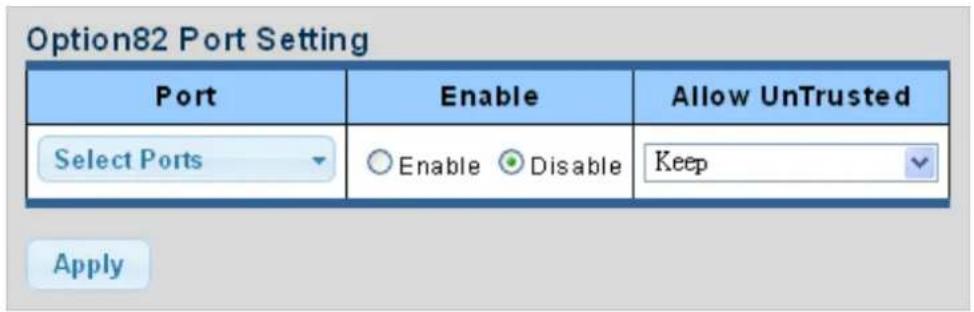
Figure 04-0462 Global Setting Page Screenshot
includes the following fields: The page
| Object Description | |
| • Port | Select port from this drop-down list |
| • Enable | Enable or disable option 82 function on port |
| • Allow Untrusted | Select modes from this drop-down list. The following modes are available: ■ Drop ■ Keep ■ Replace |
Buttons
Apply
: Click to apply changes.
Option82 Port Setting
| Port | Enable | Allow UnTrusted |
| GE1 | disabled | Drop |
| GE2 | disabled | Drop |
| GE3 | disabled | Drop |
| GE4 | disabled | Drop |
| LAG5 | Drop | |
| LAG6 | disabled | Drop |
| LAG7 | disabled | Drop |
| LAG8 | disabled | Drop |
Figure 4-9-47 Option 82 Global Setting Page Screenshot
The page includes the following fields:
| Object Description | |
| • Port | The switch port number of the logical port |
| • Enable | Display the current status |
| • Allow Untrusted | Display the current untrusted mode |
4.9.7.10 Option 82 Circuit-ID Setting
Set creation method define 82, user
e parameters of circuit-id suboption by themselves. Option 82 Circuit-ID
Setting screens in Figu4e49a46eaFigu
Option82 Port Circuit-ID Setting
| Port | Vlan | Circuit ID |
| Select Ports | ✓ 1 | Default ○ User-Define |
| Apply | ||
Figure 4-9-48 Option 82 Port Circuit-ID Setting Page Screenshot
The page includes the following fields:
| Object Description | |
| • Port | Select port for this drop down list |
| • VLAN | Indicates the ID of this particular VLAN |
| • Circuit ID | Set the option1 (Circuit ID) content of option 82 added by DHCP request packets |
Buttons
Apply
: Click to apply changes.

Figure 4-9-49 Option 82 Port Circuit-ID Setting Page Screenshot
The page includes the following fields:
| Object Description | |
| • Port | Display the current port |
| • VLAN | Display the current VLAN |
| • Circuit ID | Display the current circuit ID |
4.9.8 Dynamic ARP Inspection
Dynamic ARP Inspection (DAI) is a secure feature. Several types of attacks can be launched against a host or devices connected to Layer 2 networks by "poisoning" the ARP caches. This feature is used to block such attacks. Only valid ARP requests and responses can go through DUT. This page provides ARP Inspection related configuration.

A Dynamic ARP prevents the untrusted ARP packets based on the DHCP Snooping Database.
4.9.8.1 Global Setting
DAI Setting and Information screens in Figure 4-9-50 & Figure 4-9-51 appear.

Figure 4-9-50 DAI Setting Page Screenshot
The page includes the following fields:
| Object Description | |
| • DAI | Enable the Global Dynamic ARP Inspection or disable the Global ARP Inspection |
Buttons
Apply
: Click to apply changes.

Figure 4-9-51 DAI Information Page Screenshot
The page includes the following fields:
| Object Description | |
| • DAI | Display the current DAI status |
4.9.8.2 VLAN Setting
DAI VLAN Setting screens in Figure 4-9-52 & Figure 4-9-53 appear.
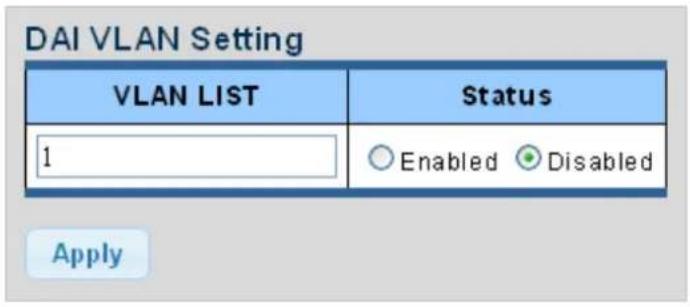
Figure 4-9-52 DAI VLAN Setting Page Screenshot
The page includes the following fields:
| Object Description | |
| • VLAN ID | Indicates the ID of this particular VLAN |
| Status | Enables Dynamic ARP Inspection on the specified VLANOptions:■ Enable■ Disable |
Buttons
Apply
: Click to apply changes.

Figure 4-9-53 DAI VLAN Setting Page Screenshot
The page includes the following fields:
| Object Description | |
| • VLAN List | Display the current VLAN list |
| • Status | Display the current status |
4.9.8.3 Port Setting
Configures switch ports as DAI trusted or untrusted and check mode. DAI Port Setting screens in Figure 4-9-54 & Figure 4-9-55 appear.
| Port | Type | Src-Mac Chk | Dst-Mac Chk | IP Chk | IP Allow Zero |
| Select Ports | Un Trusted Trusted | Disabled Enabled | Disabled Enabled | Disabled Enabled | Disabled Enabled |
| Apply |
Figure 4-9-54 DAI Port Setting Page Screenshot
The page includes the following fields:
| Object Description | |
| • Port | Select port from this drop-down list |
| • Type | Specify ARP Inspection is enabled on which ports. Only when both Global Mode and Port Mode on a given port are enabled, ARP Inspection is enabled on this given port.Default: All interfaces are untrusted. |
| • Src-Mac Chk | Enable or disable to checks the source MAC address in the Ethernet header against the sender MAC address in the ARP body. This check is performed on both ARP requests and responses. When enabled, packets with different MAC addresses are classified as invalid and are dropped. |
| • Dst-Mac Chk | Enable or disable to checks the destination MAC address in the Ethernet header against the target MAC address in ARP body. This check is performed for ARP responses. When enabled, packets with different MAC addresses are classified as invalid and are dropped. |
| • IP Chk | Enable or disable to checks the source and destination IP addresses of ARP packets. The all-zero, all-one or multicast IP addresses are considered invalid and the corresponding packets are discarded. |
| • IP Allow Zero | Enable or disable to check all-zero IP addresses. |
Buttons
Apply
: Click to apply changes.
DAI Port Setting
| Port | Type | Src-Mac Chk | Dst-Mac Chk | IP Chk | IP Allow Zero |
| GE1 | Un Trusted | disabled | disabled | disabled | disabled |
| GE2 | Un Trusted | disabled | disabled | disabled | disabled |
| GE3 | Un Trusted | disabled | disabled | disabled | disabled |
| Un Trusted | disabled | disabled | disabled | disabled |
| LAG6 | Un Trusted | disabled | disabled | disabled | disabled |
| LAG7 | Un Trusted | disabled | disabled | disabled | disabled |
| LAG8 | Un Trusted | disabled | disabled | disabled | disabled |
Figure 4-9-55 DAI Port Setting Page Screenshot
The page includes the following fields:
| Object Description | |
| • Port | The switch port number of the logical port |
| • Type | Display the current port type |
| • Src-Mac Chk | Display the current Src-Mac Chk status |
| • Dst-Mac Chk | Display the current Dst-Mac Chk status |
| • IP Chk | Display the current IP Chk status |
| • IP Allow Zero | Display the current IP allow zero status |
4.9.8.4 Statistics
Configures switch ports as DAI trusted or untrusted and check mode. DAI Port Setting screen in Figure 4-9-56 appears.
| Port | Forwarded | Source MAC Failures | Dest MAC Failures | SIP Validation Failures | DIP Validation Failures | IP MAC Mismatch Failures |
| GE1 | 0 | 0 | 0 | 0 | 0 | 0 |
| GE2 | 0 | 0 | 0 | 0 | 0 | 0 |
| 0 | 0 | 0 | ||||
| LAG5 | 0 | 0 | 0 | |||
| LAG6 | 0 | 0 | 0 | 0 | 0 | 0 |
| LAG7 | 0 | 0 | 0 | 0 | 0 | 0 |
| LAG8 | 0 | 0 | 0 | 0 | 0 | 0 |
Figure 4-9-56 DAI Port Setting Page Screenshot
The page includes the following fields:
| Object Description | |
| • Port | The switch port number of the logical port |
| • Forwarded | rrent forwarded Display the cu |
| Source MAC Failures | Display the current source MAC failures |
| • Dest MAC Failures | C failures Display the current source MA |
| • SIP Validation Failures | s Display the current SIP Validation failure |
| • DIP Validation Failures | s Display the current DIP Validation failure |
| • IP-MAC Mismatch Failures | Display the current IP-MAC mismatch failures |
uttons B
Clear
Click to clear the statistics.
Refresh
Click to refresh the statistics.
4.9.8.5 Rate Limit
The ARP Rate Limit Setting and Config screens in Figure 4-9-57 & Figure 4-9-58 appear.
ARP Rate Limit Setting
| Port | State | Rate Limit (pps) |
| Select Ports | DefaultUser-Define | Unlimited(up to 50 pps) |
Figure 4-9-57 ARP Rate Limit Setting Page Screenshot
The page includes the following fields:
| Object Description | |
| • Port | Select port from this drop-down list |
| • State | Set default or user-define |
| • Rate Limit (pps) | Configure the rate limit for the port policer. The default value is "unlimited". |
Buttons
Apply
Click to apply changes.
| Port Name | Rate Limit (pps) |
| GE1 | unlimited |
| GE2 | unlimited |
| GE3 | unlimited |
| GE4 | unlimited |
| LAG6 | unlimited |
| LAG7 | unlimited |
| LAG8 | unlimited |
Figure 4-9-58 ARP Rate Limit Setting Page Screenshot
The page includes the following fields:
| Object Description | |
| • Port | The switch port number of the logical port |
| • Rate Limit (pps) | Display the current rate limit |
4.9.9 IP Source Guard
IP Source Guard is a secure feature used to restrict IP traffic on DHCP snooping untrusted ports by filtering traffic based on the DHCP Snooping Table or manually configured IP Source Bindings. It helps prevent IP spoofing attacks when a host tries to spoof and use the IP address of another host.
After receiving a packet, the port looks up the key attributes (including IP address, MAC address and VLAN tag) of the packet in the binding entries of the IP source guard. If there is a matching entry, the port will forward the packet. Otherwise, the port will abandon the packet.
IP source guard filters packets based on the following types of binding entries:
■ IP-port binding entry
■ MAC-port binding entry
■ C-pB-Ninding entry
IP Source Guard Overview
![graph TD A["Untrusted Port"] --> B["DHCP Client A"] A --> C["DHCP Client B"] B --> D["IP:192.168.0.1 MAC:A"] C --> E["IP:192.168.0.1 MAC:B"] F["Untrusted Port"] --> G["Bad IP-MAC binding"] F --> H["Bad IP-Port binding"] I["DHCP Trusted Port"] --> J["DHCP Server"] J --> K["IP:192.168.0.1 MAC:A"] L["D…](/content/2026/06/1225141/images/682ce10ec884f1423b8750e705266c8319828f613149f8687211d77b228b8121.jpg)
4.9.9.1 Port Settings
IP Source Guard is a secure feature used to restrict IP traffic on DHCP snooping untrusted ports by filtering traffic based on the DHCP Snooping Table or manually configured IP Source Bindings. It helps prevent IP spoofing attacks when a host tries to spoof and use the IP address of another host.
The IP Source Guard Port Setting and Information screens in Figure 4-9-60 & Figure 4-9-61 appear.
IP Source Guard Port Setting
| Port | Status | Verify Source | Max Binding Entry |
| Select Ports | EnabledDisabled | IPIP and MAC | No-limited |
Figure 4-9-60 IP Source Guard Port Setting Page Screenshot
The page includes the following fields:
| Object Description | |
| • Port | Select port from this drop-down list |
| • Status | Enable or disable the IP source guard |
| • Verify Source | Configures the switch to filter inbound traffic based IP address, or IP address and MAC address.■ None Disables IP source guard filtering on the LRP Managed Switch.■ IP Enables traffic filtering based on IP addresses stored in the binding table.■ IP and MAC Enables traffic filtering based on IP addresses and corresponding MAC addresses stored in the binding table. |
| • Max Binding Entry | The maximum number of IP source guard that can be secured on this port |
Buttons
Apply
: Click to apply changes.
IP Source Guard Port Information
| Port | Status | Verify Source | Max Binding Entry | Current Binding Entry |
| GE1 | disabled | IP | No-limited | 0 |
| GE2 | disabled | IP | No-limited | 0 |
| GE3 | disabled | IP | No-limited | 0 |
| GE4 | disabled | IP | No-limited | 0 |
| LAG6 | disabled | IP | No-limited | 0 |
| LAG7 | disabled | IP | No-limited | 0 |
| LAG8 | disabled | IP | No-limited | 0 |
Figure 4-9-61 IP Source Guard Port Setting Page Screenshot
s the following fields: The page include
| Object Description | |
| • Port | The switch port number of the logical port |
| • Status | nt status Display the curre |
| • Verify Source | Display the current verify source |
| • Max Binding Entry | Display the current max binding entry |
| • Current Binding Entry | Display the current binding entry |
4.9.9.2 Binding Table
The IP Source Guard Static Binding Entry and Table Status screens in Figure 4-9-62 & Figure 4-9-63 appear.
Ip Source Guard Static Binding Entry
| Port | VLAN ID | MAC Address | IP Address |
| GE1 | 1 (1-4094) |
Add
Figure 4-9-62 IP Source Guard Static Binding Entry Page Screenshot
includes the following fields: The page
| Object Description | |
| • Port | Select port from this drop-down list |
| • VLAN ID | Indicates the ID of this particular VLAN |
| • MAC Address | Sourcing MAC address is allowed |
| • IP Address | Sourcing IP address is allowed |
Buttons
Add
: Click to add authentication list

Figure 4-9-63 IP Source Guard Binding Table Status Page Screenshot
The pages through following fields:
| Object Description | |
| • Port | Display the current port |
| • VLAN ID | Display the current VLAN |
| • MAC Address | Display the current MAC address |
| • IP Address | Display the current IP Address |
| • Type | Display the current entry type |
| • Lease Time | Display the current lease time |
| • Action | Click to delete IP source guard binding table status entry |
4.9.10 Port Security
This page allows you to configure the P
mit Control system and port settings. Limit Control allows for limiting the
number of users on is identified by a MACAddress Limit Control is enabled on a port, the
limit specifies the maximum number of users on the port. If this number is exceeded, an action is taken. The action can be one of the four as described below.
The Limit Control module is generated of modules that utilize the Port Security module, which manages MAC addresses learned on the port.
The Limit Control configuration consists of two sections, a system- and a port-wide. The IP Source Guard Static Binding Entry and Table Status screens in Figure 4-9-64 & Figure 4-9-65 appear.
Port Security Settings
| Port Select | Security | Max L2 Entry | Action |
| Select Ports | EnabledDisabled | Unlimited | Forward |
Apply
Figure 4-9-64 Port Security Setting Page Screenshot
The page includes fields:
| Object | Description |
| • Port | Select port from this drop-down list |
| • Security | Enable or disable the port security |
| • Mac L2 Entry | The maximum number of MAC addresses that can be secured on this port. If the limit is exceeded, the corresponding action is taken.The switch is "born" with a total number of MAC addresses from which all ports draw whenever a new MAC address is seen on a Port Security-enabled port.Since all ports draw from the same pool, it may happen that a configured maximum cannot be granted, if the remaining ports have already used all available MAC addresses. |
| • Action | If Limit is reached, the switch can take one of the following actions:■ Forward: Do not allow more than Limit MAC addresses on the port, but take no further action.■ Shutdown: If Limit + 1 MAC addresses is seen on the port, shut down the port. This implies that all secured MAC addresses will be removed from the port, and no new will be learned. Even if the link is physically disconnectedand reconnected on the port (by disconnecting the cable), the port will remain shut down. There are three ways to re-open the port:1) Disable and re-enable Limit Control on the port or the switch,2) Click the Reopen button.■Discard: If Limit + 1 MAC addresses is seen on the port, it will trigger the action that do not learn the new MAC and drop the package. |
Buttons
Apply
: Click to apply changes.
▼ Port Security Status
| Port Name | Enable State | L2 Entry Num | Action |
| GE1 | Disabled | 8192 | Forward |
| GE2 | Disabled | 8192 | Forward |
| GE3 | Disabled | 8192 | Forward |
| GE4 | Disabled | 8192 | Forward |
| LAG6 | Disabled | 8192 | Forward |
| LAG7 | Disabled | 8192 | Forward |
| LAG8 | Disabled | 8192 | Forward |
Figure 4-9-65 Port Security Status Page Screenshot
The page includes the following fields:
| Object Description | |
| • Port Name | The switch port number of the logical port |
| • Enable State | security status Display the current per port |
| • L2 Entry Num | Display the current L2 entry number |
| • Action | on Display the current acti |
4.9.11 DoS
The DoS is short for Denial of Service, whichever single DoS effective destructive attack on the internet. The s attack will drop normal user data packet due tracker-sto tar peaking to the denial of the service and worse can lead to leak of sensitive data of the server.
Security feature refers to applications such as protocol check which is for protecting the server from attacks such as DoS. The protocol check allows the user to drop matched packets based on specified conditions. The security features provide several simple and effective protections against Dos attacks while acting no influence on the linear forwarding performance of the switch.
4.9.11.1 Global DoS Setting
The Global DoS Setting and Information screens in Figure 4-9-66 & Figure 4-9-67 appear.
Global DoS Setting
| DMAC = SMAC | Enabled Disabled |
| Land | Enabled Disabled |
| UDP Blat | Enabled Disabled |
| TCP Blat | Enabled Disabled |
| POD | Enabled Disabled |
| IPv6 Min Fragment | Enabled DisabledByte: 1240 (0-65535) |
| ICMP Fragments | Enabled Disabled |
| IPv4 Ping Max Size | Enabled Disabled |
| IPv6 Ping Max Size | Enabled Disabled |
| Ping Max Size Setting | Byte: 512 (0-65535) |
| Smurf Attack | Enabled DisabledNetmask Length: 0 (0-32) |
| TCP Min Hdr Size | Enabled DisabledBytes: 20 (0-31) |
| TCP-SYN(SPORT<1024) | Enabled Disabled |
| Null Scan Attack | Enabled Disabled |
| X-Mas Scan Attack | Enabled Disabled |
| TCP SYN-FIN Attack | Enabled Disabled |
| TCP SYN-RST Attack | Enabled Disabled |
| TCP Fragment (Offset = 1) | Enabled Disabled |
Apply
Figure 4-9-66 Global DoS Setting Page Screenshot
The page includes the following fields:
| Object Description | |
| • DMAC = SMAC | Enable or disable DoS check mode by DMAC = SMAC |
| • Land | Enable or disable DoS check mode by land |
| • UDP Blat | Enable or disable DoS check mode by UDP blat |
| • TCP Blat | Enable or disable DoS check mode by TCP blat |
| • POD | Enable or disable DoS check mode by POD |
| • IPv6 Min Fragment | Enable or disable DoS check mode by IPv6 min fragment |
| • ICMP Fragments | Enable or disable DoS check mode by ICMP fragment |
| • IPv4 Ping Max Size | Enable or disable DoS check mode by IPv4 ping max size |
| • IPv6 Ping Max Size | Enable or disable DoS check mode by IPv6 ping max size |
| • Ping Max Size Setting | Set the max size for ping |
| • Smurf Attack | Enable or disable DoS check mode by smurf attack |
| • TCP Min Hdr Size | Enable or disable DoS check mode by TCP min hdr size |
| • TCP-SYN (SPORT < 1024) | Enable or disable DoS check mode by TCP-syn (sport < 1024) |
| • Null Scan Attack | Enable or disable DoS check mode by null scan attack |
| • X-mas Scan Attack | Enable or disable DoS check mode by X-mas scan attack |
| • TCP SYN-FIN Attack | Enable or disable DoS check mode by TCP syn-fin attack |
| • TCP SYN-RST Attack | Enable or disable DoS check mode by TCP syn-rst attack |
| • TCP Fragment (Offset = 1) | Enable or disable DoS check mode by TCP fragment (offset = 1) |
Buttons
Apply
: Click to apply changes.
BeS Informations
| Information Name | Information Value |
| DMAC - SMAC | Enabled |
| Land Attack | Enabled |
| UDP Blat | Enabled |
| TCP Blat | Enabled |
| POD (Ping of Death) | Enabled |
| IPv6 Min Fragment Size | Enabled (1240 Bytes) |
| ICMP Fragment Packets | Enabled |
| IPv4 Ping Max Packet Size | Enabled (512 Bytes) |
| IPv6 Ping Max Packet Size | Enabled (512 Bytes) |
| Smurf Attack | Enabled (Netmask Length: 0) |
| TCP Min Header Length | Enabled (20 Bytes) |
| TCP Syn (SPORT < 1024) | Enabled |
| Null Scan Attack | Enabled |
| X-Mas Scan Attack | Enabled |
| TCP SYN-FIN Attack | Enabled |
| TCP SYN-RST Attack | Enabled |
| TCP Fragment (Offset = 1) | Enabled |
Figure 4-9-67 DoS Information Page Screenshot
The page includes the following fields:
| Object Description | |
| DMAC = SMAC | Display the current DMAC = SMAC status |
| Land Attach | Display the current land attach status |
| UDP Blat | Display the current UDP blat status |
| TCP Blat | Display the current TCP blat status |
| POD | Display the current POD status |
| IPv6 Min Fragment | Display the current IPv6 min fragment status |
| ICMP Fragments | Display the current ICMP fragment status |
| IPv4 Ping Max Size | Display the current IPv4 ping max size status |
| IPv6 Ping Max Size | Display the current IPv6 ping max size status |
| Smurf Attack | Display the current smurf attack status |
| TCP Min Header Length | Display the current TCP min header length |
| TCP-SYN (SPORT < 1024) | Display the current TCP syn status |
| Null Scan Attack | Display the current null scan attack status |
| X-mas Scan Attack | Display the current X-mas scan attack status |
| TCP SYN-FIN Attack | Display the current TCP syn-fin attack status |
| TCP SYN-RST Attack | Display the current TCP syn-rst attack status |
| TCP Fragment (Offset = 1) | Display the TCP fragment (offset = 1) status |
The DoS Port Setting and Status screens in Figure 4-9-68 & Figure 4-9-69 appear.
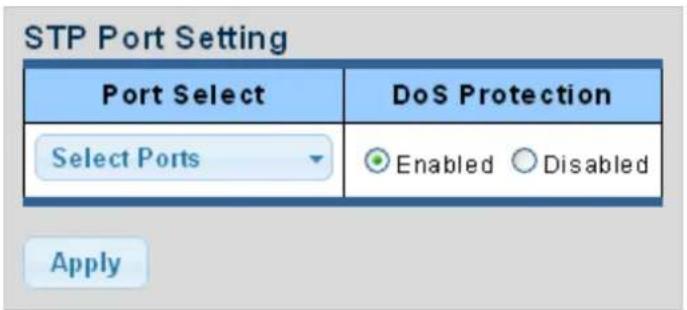
Figure 4-9-68 Port Security Setting Page Screenshot
he page includes the following fields: T
| Object Description | |
| • Port Select | Select port from this drop-down list. |
| • DoS Protection | Enable or disable per port DoS protection. |
Buttons
Apply
: Click to apply changes.
| Port | DoS Protection |
| GE1 | Disable |
| GE2 | Disable |
| GE3 | Disable |
| Disable | |
| LAG6 | Disable |
| LAG7 | Disable |
| LAG8 | Disable |
Figure 4-9-68 Port Security Setting Page Screenshot
The page includes the following fields:
| Object Description | |
| • Port | The switch port number of the logical port |
| • DoS Protection | Display the current DoS protection |
4.9.12 Storm Control
Storm control for the switch is configured on this page
There is an unknown unicast storm rate down multicast storm ra
te control, and a broadcast storm rate control.
These only affect flooded framesies. writer of ULAINDA, DMAc deep tablet pres
4.9.12.1 Global Setting
The Storm Control Global Setting and Information screens in Figure 4-9-69 & Figure 4-9-70 appear.
Storm Control Global Setting
| Unit | ○ pps ● bps |
| Preamble & IFG | ● Excluded ○ Included |
Apply
Figure 4-9-69 Storm Control Global Setting Page Screenshot
The page includes the following fields:
| Object Description | |
| • Unit | Controls the unit of measure for the storm control rate as "pps" or "bps". The default value is "bps". |
| • Preamble & IFG | Set the excluded or included interframe gap |
Buttons
Apply
Click to apply changes.
| Information Name | Information Value |
| Unit | bps |
| Preamble & IFG | Excluded |
Figure 4-950 StorshoControl Global Information Pag
The page includes the following fields:
| Object Description | |
| • Unit | Display the current unit |
| • Preamble & IFG | Display the current preamble & IFG |
4.9.12.2 Port Setting
Storm control for the switch is configured on this page. There are three types of storm rate control:
■ Broadcast storm rate control
■ Unknown Unicast storm rate control
■ Unknown Multicast storm rate control
The configuration indicates the permitted packet rate for unknown unicast, unknown multicast, or broadcast traffic across the switch. The Storm Control Configuration screens in Figure 4-9-71 & Figure 4-9-72 appear.

Figure409-716 Setting Page Screenshot
The page includes the following fields:
| Object Description | |
| • Port | Select port for this drop-down list. |
| • Port State | Enable or disable the storm control status for the given storm type. |
| • Action | Configures the action performed when storm control is over rate on a port. Valid values are Shutdown or Drop. |
| • Type Enable | The settings in a particular row apply to the frame type listed here: ■ broadcast ■ unknown unicast ■ unknown multicast |
| • Rate (kbps/pps) | Configure the rate for the storm control. The default value is "10,000". |
Buttons
Apply
: Click to apply changes
▼ Storm Control Information
| Port | Port State | Broadcast (Kbps) | Unknown Multicast (Kbps) | Unknown Unicast (Kbps) | Action |
| GE1 | disabled | Off (10000) | Off (10000) | Off (10000) | Drop |
| GE2 | disabled | Off (10000) | Off (10000) | Off (10000) | Drop |
| GE3 | disabled | Off (10000) | Off (10000) | Off (10000) | Drop |
| GE4 | disabled | Off (10000) | Off (10000) | Off (10000) | Drop |
| GE5 | disabled | Off (10000) | Off (10000) | Off (10000) | Drop |
| GE6 | disabled | Off (10000) | Off (10000) | Off (10000) | Drop |
| GE7 | disabled | Off (10000) | Off (10000) | Off (10000) | Drop |
| GE8 | disabled | Off (10000) | Off (10000) | Off (10000) | Drop |
| GE9 | disabled | Off (10000) | Off (10000) | Off (10000) | Drop |
| GE10 | disabled | Off (10000) | Off (10000) | Off (10000) | Drop |
Figure 4-9-72 Storm Control Information Page Screenshot
The page includes the following fields:
| Object Description | |
| • Port | The switch port number of the logical port |
| • Port State | Display the current port state |
| • Broadcast (Kbps/pps) | rent broadcast storm control rate Display the cur |
| • Unknown Multicast (Kbps/pps) | ast storm control rate Display the current unknown multic |
| • Unknown Unicast (Kbps/pps) | Display the current unknown unicast storm control rate |
| • Action | Display the current action |
4.10 ACL
ACL is an acronym for Access Control List. It is the list table of ACEs, containing access control entries that specify individual users or groups permitted or denied to specific traffic objects, such as a process or a program. Each accessible traffic object contains an identifier to its ACL. The privileges determine whether there are specific traffic object access rights.
ACL implementations can be quite complex, for example, when the ACEs are prioritized for the various situation. In networking, the ACL refers to a list of service ports or network services that are available on a host or server, each with a list of hosts or servers permitted or denied to use the service. ACL can generally be configured to control inbound traffic, and in this context, they are similar to firewalls.
ACE is an acronym for Access Control Entry. It describes access permission associated with a particular ACE ID. There are three ACE frame types (Ethernet Type, ARP, and IPv4) and two ACE actions (permit and deny). The ACE also contains many detailed, different parameter options that are available for individual application.
The ACL page contains links to the following main topics:
■ MAC-based ACL Configure MAC-based ACL setting
■ MAC-based ACE Add / Edit / Delete the MAC-based ACE (Access Control Entry) setting
■ IPv4-based ACL Configure IPv4-based ACL setting
■ IPv4-based ACE Add / Edit / Delete the IPv4-based ACE (Access Control Entry) setting
■ IPv6 -based ACL Configure IPv6-based ACL setting
■ IPv6-base d ACE Add / Edit / Delete the IPv6-based ACE (Access Control Entry) setting
■ ACL Binding Configure the ACL parameters (ACE) of each switch port.
4.10.1 MAC-based ACL
This page shows the ACL status by different ACL users. Each row describes the ACE that is defined. It is a conflict if a specific
ACE is not applied to the available base
d ACL screens in Figure 4-10-1 & Figure 4-10-2
appear.

Figure 4-10-1 MAC-based ACL Page Screenshot
The page includes the following fields:
| Object Description | |
| • ACL Name | Create a name from MAC-based ACL list |

Figure 4-10-2 ACL Table Page Screenshot
The page includes the following fields:
| Object Description | |
| • Delete | Click to delete ACL name entry |
4.10.2 MAC-based ACE
An ACE consists of several parameters. Different parameter options are displayed depending on the frame type that you select.
The MAC-based ACE screens in Figure 4-10-3 & Figure 4-10-4 appear.
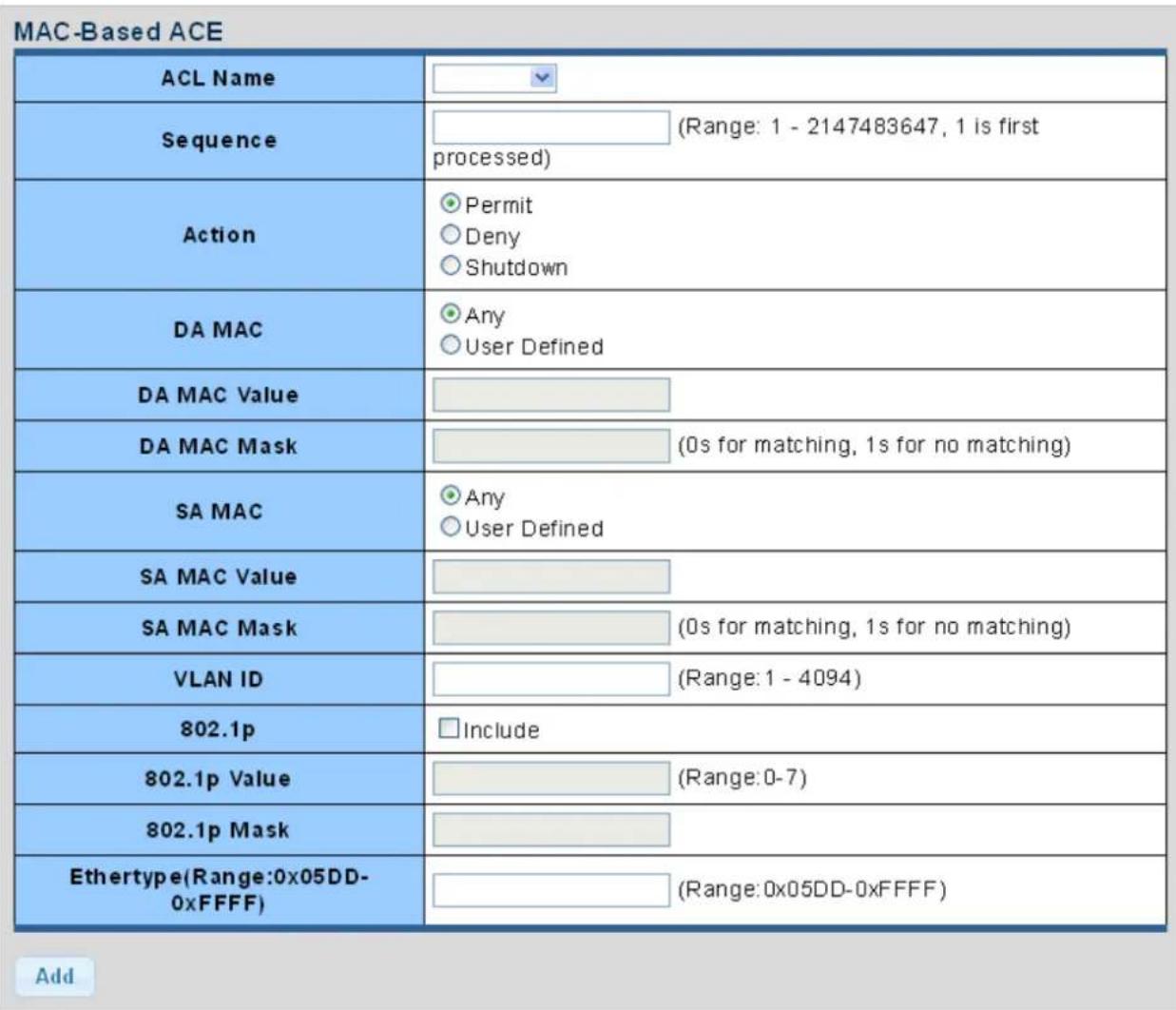
Figure 4-10-3 MAC-based ACE Page Screenshot
The page includes the following fields:
| Object Description | |
| ACL Name | Select ACL name from this drop-down list |
| Sequence | Set the ACL sequence |
| Action | Indicates the forwarding action of the ACE.■Permit: Frames matching the ACE may be forwarded and learned.■Deny: Frames matching the ACE are dropped.■Shutdown: Port shutdown is disabled for the ACE. |
| DA MAC | y the destin . Specif ation MAC filter for this ACE■Any: No DA MAC filter is specified.■User Defined: If you want to filter a specific destination MAC address with this ACE, choose this value. A field for entering a DA MAC value appears. |
| DA MAC Value | When "User Defined" is selected for the DA MAC filter, you can enter a specific destination MAC address. The legal format is "xx-xx-xx-xx-xx-xx". A frame that hits this ACE matches this DA MAC value. |
| DA MAC Mask | Specify whether frames can hit the action according to their sender hardware address field (SHA) settings.■0: ARP frames where SHA is not equal to the DA MAC address.■1: ARP frames where SHA is equal to the DA MAC address. |
| SA MAC | Specify the source MAC filter for this ACE.■Any: No SA MAC filter is specified.■User Defined: If you want to filter a specific source MAC address with this ACE, choose this value. A field for entering a SA MAC value appears. |
| SA MAC Value | When "User Defined" is selected for the SA MAC filter, you can enter a specific source MAC address. The legal format is "xx-xx-xx-xx-xx-xx". A frame that hits this ACE matches this SA MAC value. |
| SA MAC Mask | Specify whether frames can hit the action according to their sender hardware address field (SHA) settings.■0: ARP frames where SHA is not equal to the SA MAC address.■1: ARP frames where SHA is equal to the SA MAC address. |
| VLAN ID | Indicates the ID of this particular VLAN |
| 802.1p | Include or exclude the 802.1p value |
| 802.1p Value | Set the 802.1p value |
| 802.1p Mask | ■0: where frame is not equal to the 802.1p value.■1: where frame is equal to the 802.1p value. |
| EtherType(Range:0x05DD - 0xFFFF) | You can enter a specific EtherType value. The allowed range is 0x05DD to 0xFFFF. A frame that hits this ACE matches this EtherType value. |
Buttons
Add
Click to add ACE list.
| ACL Name | Sequence | Action | Destination | Source | VLAN ID | 802.1p | 802.1p Mask | Ethertype | Modify | ||
| MAC Address | Wildcard Mask | MAC Address | Wildcard Mask | ||||||||
Figure 4-10-4 MAC-based ACE Table Page Screenshot
The page includes the following fields:
| Object Description | |
| ACL Name | Display the current ACL name |
| Sequence | Display the current sequence |
| Action | Display the current action |
| Destination MAC Address | Display the current destination MAC address |
| Destination MAC Address Mask | Display the current destination MAC address mask |
| Source MAC Address | Display the current source MAC address |
| Source MAC Address Mask | Display the current source MAC address mask |
| VLAN ID | Display the current VLAN ID |
| 802.1p | Display the current 802.1p value |
| 802.1p Mask | Display the current 802.1p mask |
| EtherType | Display the current EtherType |
| Modify | Click Edit to edit MAC-based ACL parameterClick Delete to delete MAC-based ACL entry |
4.10.3 IPv4-based ACL
This page shows the ACL status by different ACL users. Each row describes the ACE that is defined. It is a conflict if a specific ACE is not applied to the hardware due to hardware limitations. IPv4-based ACL screens in Figure 4-10-5 & Figure 4-10-6 appear.

Figure 4-10-5 IPv4-based ACL Page Screenshot
The page includes the following fields:
| Object Description | |
| • ACL Name | Crea list te a name from IPv4-based ACL |
Buttons
Add
Click to add ACL name list.

Figure 4-10-6 ACL Table Page Screens
The page includes the following fields:
| Object Description | |
| • Delete | Click to delete ACL name entry. |
4.10.4 IPv4-based ACE
An ACE consists of several parameters. Different parameter options are displayed depending on the frame type that you select. The IPv4-based ACE screens in Figure 4-10-7 & Figure 4-10-8 appear.
IPv4-Based ACE
| ACL Name | |
| Sequence | (Range: 1 - 2147483647, 1 is first processed) |
| Action | PermitDenyShutdown |
| Protocol | Any(IP)Select from listampProtocol ID to match1 |
| Source IP Address | AnyUser Defined |
| Source IP Address Value | |
| Source IP Wildcard Mask | (0s for matching, 1s for no matching) |
| Destination IP Address | AnyUser Defined |
| Destination IP Address Value | |
| Destination IP Wildcard Mask | (0s for matching, 1s for no matching) |
| Source Port | AnySingle0 (Range: 0 - 65535)Range0 - 65535 (Range: 0 - 65535) |
| Destination Port | AnySingle(Range: 0 - 65535)0 (Range: 0 - 65535)Range(Range: 0 - 65535)0 - 65535 (Range: 0 - 65535) |
| TCP Flags | UrgSetUnsetDon't CareAckSetUnsetDon't CarePshSetUnsetDon't CareRstSetUnsetDon't CareSynSetUnsetDon't CareFinSetUnsetDon't Care |
| Type of Service | AnyDSCP to match0 (Range: 0 - 63)IP Precedence to match0 (Range: 0 - 7) |
| ICMP | AnySelect from listEcho ReplyProtocol ID to match0 (Range: 0 - 255) |
| ICMP Code | AnyUser Defined0 (Range: 0 - 255) |
Add
Figure 4-10-7 IP-based ACE Page Screenshot
The page includes the following fields:
| Object Description | ||
| ACL Name | Select ACL name from this drop-down list. | |
| Sequence | Set the ACL sequence. | |
| Action | Indicates the forwarding action of the ACE.■Permit: Frames matching the ACE may be forwarded and learned.■Deny: Frames matching the ACE are dropped.■Shutdown: Port shutdown is disabled for the ACE. | |
| Protocol | Specify the protocol filter for this ACE.■Any(IP): No protocol filter is specified.■Select from list: If you want to filter a specific protocol with this ACE, choose this value and select protocol for this drop down list.■Protocol ID to match: I If you want to filter a specific protocol with this ACE, choose this value and set correct protocol ID. | |
| Source IP Address | Specify the Source IP address filter for this ACE.■Any: No source IP address filter is specified.■User Defined: If you want to filter a specific source IP address with this ACE, choose this value. A field for entering a source IP address value appears. | |
| Source IP Address Value | When "User Defined" is selected for the source IP address filter, you can enter a specific source IP address. The legal format is "xxx.xxx.xxx.xxx". A frame that hits this ACE matches this source IP address value. | |
| Source IP Wildcard Mask | When "User Defined" is selected for the source IP filter, you can enter a specific SIP mask in dotted decimal notation. | |
| Destination IP Address | Specify the Destination IP address filter for this ACE.■Any: No destination IP address filter is specified.■User Defined: If you want to filter a specific destination IP address with this ACE, choose this value. A field for entering a source IP address value appears. | |
| Destination IP Address Value | When "User Defined" is selected for the destination IP address filter, you can enter a specific destination IP address. The legal format is "xxx.xxx.xxx.xxx". A frame that hits this ACE matches this destination IP address value. | |
| Destination IP Wildcard Mask | When "User Defined" is selected for the destination IP filter, you can enter a specific DIP mask in dotted decimal notation. | |
| Source Port | Specify the source port for this ACE.■Any: No specific source port is specified (source port status is "don't-care").■Single: If you want to filter a specific source port with this ACE, you can enter a specific source port value. A field for entering a source port value appears. The allowed range is 0 to 65535. A frame that hits this ACE matches this source port value. | |
| ■ Range: If you want to filter a specific source port range filter with this ACE, you can enter a specific source port range value. A field for entering a source port value appears. The allowed range is 0 to 65535. A frame that hits this ACE matches this source port value. | ||
| • Destination Port | ort for this ACE. Specify the destination p■ Any: No specific destination port is specified (destination port status is "don't-care").■ Single: If you want to filter a specific destination port with this ACE, you can enter a specific destination port value. A field for entering a destination port value appears. The allowed range is 0 to 65535. A frame that hits this ACE matches this destination port value.■ Range: If you want to filter a specific destination port range filter with this ACE, you can enter a specific destination port range value. A field for entering a destination port value appears. | |
| • TCP Flags | UGR Specify the TCP "Urgent Pointer field significant" (URG) value for this ACE.■ Set: TCP frames where the URG field is set must be able to match this entry.■ Unset: TCP frames where the URG field is set must not be able to match this entry.■ Don't Care: Any value is allowed ("don't-care"). | |
| ACK Specify the TCP "Acknowledgment field significant" (ACK) value for this ACE.■ Set: TCP frames where the ACK field is set must be able to match this entry.■ Unset: TCP frames where the ACK field is set must not be able to match this entry.■ Don't Care: Any value is allowed ("don't-care"). | ||
| PSH Specify the TCP "Push Function" (PSH) value for this ACE.■ Set: TCP frames where the PSH field is set must be able to match this entry.■ Unset: TCP frames where the PSH field is set must not be able to match this entry.■ Don't Care: Any value is allowed ("don't-care"). | ||
| RST | ■ Specify the TCP "Reset t he connection" (RST) value for this ACE.■ Set: TCP frames where the RST field is set must be able to match this entry.■ Unset: TCP frames where the RST field is set must not be able to match this entry.■ Don't Care: Any value is allowed ("don't-care"). | |
| E.S | ||
| ■ Set: TCP frames where the SYN field is set must be able to match this entry.■ Unset: TCP frames where the SYN field is set must not be able to match this entry.■ Don't Care: Any value is allowed ("don't-care"). | ||
| FIN Specify the TCP "No more data from sender" (FIN) value for this ACE.■ Set: TCP frames where the FIN field is set must be able to match this entry.■ Unset: TCP frames where the FIN field is set must not be able to match this entry.■ Don't Care: Any value is allowed ("don't-care"). | ||
| • Type of Service | Specify the type of service for this ACE.■ Any: No specific type of service is specified (destination port status is on"d t-care").■ DSCP: If you want to filter a specific DSCP with this ACE, you can enter a specific DSCP value. A field for entering a DSCP value appears. The allowed range is 0 to 63. A frame that hits this ACE matches this DSCP value.■ ifRecedence: If you want to filter a specific DSCP with this ACE, you can enter a specific IP recedence value. A field for entering an IP recedence value appears. The allowed range is 0 to 7. A frame that hits this ACE matches this I recedence va | |
| • ICMP | Specify the ICMP for this ACE.■ Any: No specific ICMP is specified (destination port status is "don't-care").■ List: If you want to filter a specific list with this ACE, you can select a specific list value.■ Protocol ID: If you want to filter a specific protocol ID filter with this ACE, you can enter a specific protocol ID value. A field for entering a protocol ID value appears. The allowed range is 0 to 255. A frame that hits this ACE matches this protocol ID value. | |
| • ICMP Code | Specify the ICMP code filter for this ACE.■ Any: No ICMP code filter is specified (ICMP code filter status is "don't-care").■ User Defined: If you want to filter a specific ICMP code filter with this ACE, you can enter a specific ICMP code value. A field for entering an ICMP code value appears. The allowed range is 0 to 255. A frame that hits this ACE matches this ICMP code value. | |
Add
Click to add ACE list.
| ACL Name | Sequence | Action | Protocol | Source IP Address | Destination IP Address | Source Port Range | Destination Port Range | Flag Set | DSCP | IP Precedence | ICMP Type | ICMP Code | Modify | ||
| IP Address | Wildcard Mask | IP Address | Wildcard Mask | ||||||||||||
Figure 4-10-8 IPv4-based ACE Table Page Screenshot
The page includes the following fields:
| Object Description | |
| ACL Name | name Display the current ACL |
| Sequence | Display the current sequence |
| Action | Display the current action |
| Protocol | Display the current protocol |
| Source IP Address | Display the current source IP address |
| Source IP Address Wildcard Mask | Display the current source IP address wildcard mask |
| Destination IP Address | Display the current destination IP address |
| Destination IP Address Wildcard Mask | address wildcard mask Display the current destination IP |
| Source Port Range | Display the current source port range |
| Destination Port Range | Display the current destination port range |
| Flag Set | Display the current flag set |
| DSCP | current DSCP Display the |
| IP Precedence | Display the current IP precedence |
| ICMP Type | Display the current ICMP Type |
| ICMP Code | Display the current ICMP code |
| Modify | Click Edit to edit IPv4-based ACL parameterClick Delete to delete IPv4-based ACL entry |
4.10.5 IPv6-based ACL
This page shows the ACL status by different ACL users. Each row describes the ACE that is defined. It is a conflict if a specific ACE is not applied to the hardware due to hardware limitations. IPv6-based ACL screens in Figure 4-10-9 & Figure 4-10-10 appear.

Figure 4-10-9 IPv6-based ACL Page Screenshot
The page includes the following fields:
| Object Description | |
| • ACL Name | Create a name from IPv6-based ACL list |
Buttons
Add
: Click to add ACL name list.

Figure 4-10-10 ACL Table Page Screenshot
The page includes the following fields:
| Object Description | |
| • Delete | Click to delete ACL name entry |
4.10.6 IPv6-based ACE
An ACE consists of several parameters. Different options are displayed depending on
n the frame type that you select.
The IPv6-based ACE screens in Figure 4-10-11 & Figure 4-10-12 appear.
IPv6-Based ACE
| ACL Name | |
| Sequence | (Range: 1 - 2147483647, 1 is first processed) |
| Action | PermitDenyShutdown |
| Protocol | Any(IP)Select from list tcp |
| Source IP Address | AnyUser Defined |
| Source IP Address Value | |
| Source IP Prefix Length | (Range: 0 - 128) |
| Destination IP Address | AnyUser Defined |
| Destination IP Address Value | |
| Destination IP prefix Length | (0s for matching, 1s for no matching) |
| Source Port | AnySingle (Range: 0 - 65535)Range (Range: 0 - 65535) |
| Destination Port | AnySingle(Range: 0 - 65535) (Range: 0 - 65535)Range(Range: 0 - 65535) (Range: 0 - 65535) |
| TCP Flags | Urg Set Unset Don't CareAck Set Unset Don't CarePsh Set Unset Don't CareRst Set Unset Don't CareSyn Set Unset Don't CareFin Set Unset Don't Care |
| Type of Service | AnyDSCP to match (Range: 0 - 63)IP Precedence to match (Range: 0 - 7) |
| ICMP | AnySelect from list destinationProtocol ID to match (Range: 0 - 255) |
| ICMP Code | AnyUser Defined (Range: 0 - 255) |
Figure 4-10-11 IP-based ACE Page Screenshot
The page includes the following fields:
| Object Description | ||
| ACL Name | Select ACL name from this drop-down list | |
| Sequence | Set the ACL sequence | |
| Action | Indicates the forwarding action of the ACEPermit: Frames matching the ACE may be forwarded and learned.Deny: Frames matching the ACE are dropped.Shutdown: Port shutdown is disabled for the ACE. | |
| Protocol | Specify the protocol filter for this ACEAny(IP): No protocol filter is specified.Select from list: If you want to filter a specific protocol with this ACE, choose this value and select protocol for this drop down list. | |
| Source IP Address | Specify the Source IP address filter for this ACEAny: No source IP address filter is specified.User Defined: If you want to filter a specific source IP address with this ACE, choose this value. A field for entering a source IP address value appears. | |
| Source IP Address Value | When "User Defined" is selected for the source IP address filter, you can enter a specific source IP address. The legal format is "xxxx:xxxx:xxxx:xxxx:xxxx:xxxx:xxxx:xxxx". A frame that hits this ACE matches this source IP address value. | |
| Source IP Prefix Length | When "User Defined" is selected for the source IP filter, you can enter a specific SIP prefix length in dotted decimal notation. | |
| Destination IP Address | Specify the Destination IP address filter for this ACE.Any: No destination IP address filter is specified.User Defined: If you want to filter a specific destination IP address with this ACE, choose this value. A field for entering a source IP address value appears. | |
| Destination IP Address Value | When "User Defined" is selected for the destination IP address filter, you can enter a specific destination IP address. The legal format is "xxxx:xxxx:xxxx:xxxx:xxxx:xxxx:xxxx:xxxx". A frame that hits this ACE matches this destination IP address value. | |
| Destination IP Prefix Length | When "User Defined" is selected for the destination IP filter, you can enter a specific DIP prefix length in dotted decimal notation. | |
| Source Port | Specify the source port for this ACE.Any: No specific source port is specified (source port status is "don't-care").Single: If you want to filter a specific source port with this ACE, you can enter a specific source port value. A field for entering a source port value appears. The allowed range is 0 to 65535. A frame that hits this ACE | |
| matches this source port value.■Range:If you want to filter a specific source port range filter with this ACE, you can enter a specific source port range value. A field for entering a source port value appears. The allowed range is 0 to 65535. A frame that hits this source port value. ACE matches this s | ||
| • Destination Port | Specify the destination port for this ACE.■Any:No specific destination port is specified (destination port status is "don't-care").■Single:If you want to filter a specific destination port with this ACE, you can enter a specific destination port value. A field for entering a destination port value appears. The allowed range is 0 to 65535. A frame that hits this ACE matches this destination port value.■Range:If you want to filter a specific destination port range filter with this ACE, you can enter a specific destination port range value. A field for entering a destination port value appears. | |
| • TCP Flags | UGR Specify the TCP "Urgent Pointer field significant" (URG) value for this ACE.■Set:TCP frames where the URG field is set must be able to match this entry.■Unset:TCP frames where the URG field is set must not be able to match this entry.■Don't Care:Any value is allowed ("don't-care"). | |
| ACK Specify the TCP "Acknowledgment field significant" (ACK) value for this ACE.■Set:TCP frames where the ACK field is set must be able to match this entry.■Unset:TCP frames where the ACK field is set must not be able to match this entry.■Don't Care:Any value is allowed ("don't-care"). | ||
| PSH Specify the TCP "Push Function" (PSH) value for this ACE.■Set:TCP frames where the PSH field is set must be able to match this entry.■Unset:TCP frames where the PSH field is set must not be able to match this entry.■Don't Care:Any value is allowed ("don't-care"). | ||
| RST Specify the TCP "Reset the connection" (RST) value for this ACE.■Set:TCP frames where the RST field is set must be able to match this entry.■Unset:TCP frames where the RST field is set must not be able to | ||
| match this entry.■ Don't Care: Any value is allowed ("don't-care"). | ||
| SYN Specify the TCP "Synchronize sequence numbers" (SYN) value for this ACE.■ Set: TCP frames where the SYN field is set must be able to match this entry.■ Unset: TCP frames where the SYN field is set must not be able to match this entry.■ Don't Care: Any value is allowed ("don't-care"). | ||
| FIN Specify the TCP "No more data from sender" (FIN) value for this ACE.■ Set: TCP frames where the FIN field is set must be able to match this entry.■ Unset: TCP frames where the FIN field is set must not be able to match this entry.■ Don't Care: Any value is allowed ("don't-care"). | ||
| • Type of Service | y thSpecif e type of service for this ACE.■ Any: No specific type of service is specified (destination port status is "don't-care").■ DSCP: If you want to filter a specific DSCP with this ACE, you can enter a specific DSCP value. A field for entering a DSCP value appears. The allowed range is 0 to 63. A frame that hits this ACE matches this DSCP value.■ IP Recedence: If you want to filter a specific IP recedence with this ACE, you n eca nter a specific IP recedence value. A field for entering a IP recedence value appears. The allowed range is 0 to 7. A frame that hits this ACE matches this IP recedence value. | |
| • ICMP | Specify the ICMP for this ACE.■ Any: No specific ICMP is specified (destination port status is "don't-care").■ List: If you want to filter a specific list with this ACE, you can select a specific list value.■ Protocol ID: If you want to filter a specific protocol ID filter with this ACE, you can enter a specific protocol ID value. A field for entering a protocol ID value appears. The allowed range is 0 to 255. A frame that hits this ACE matches this protocol ID value. | |
| • ICMP Code | Specify the ICMP code filter for this ACE.■ Any: No ICMP code filter is specified (ICMP code filter status is "don't-care").■ User Defined: If you want to filter a specific ICMP code filter with this ACE, you can enter a specific ICMP code value. A field for entering an ICMP code value appears. The allowed range is 0 to 255. A frame that hits this ACE matches this ICMP code value. | |
Buttons
Add
Click to add ACE list
| ACL Name | Sequence | Action | Protocol | Source IP Address | Destination IP Address | Source Port Range | Destination Port Range | Flag Set | DSCP | IP Precedence | ICMP Type | ICMP Code | Modify | ||
| IP Address | Wildcard Mask | IP Address | Wildcard Mask | ||||||||||||
Figure 4-10-12 C#6-base Page Screenshot
The page includes the following fields:
| Object Description | |
| ACL Name | Display the current ACL name |
| Sequence | Display the current sequence |
| Action | ction Display the current a |
| Protocol | Display the current protocol |
| Source IP Address | Display the current source IP address |
| Source IP Address Wildcard Mask | Display the current source IP address wildcard mask |
| Destination IP Address | Display the current destination IP address |
| Destination IP Address Wildcard Mask | Display the current destination IP address wildcard mask |
| Source Port Range | Display the current source port range |
| Destination Port Range | Display the current destination port range |
| Flag Set | Display the current flag set |
| DSCP | Display the current DSCP |
| IP Precedence | Display the current IP precedence |
| ICMP Type | pe Display the current ICMP Ty |
| ICMP Code | Display the current ICMP code |
| Modify | Click Edit to edit IPv6-based ACL parameter.Click Delete to delete IPv6-based ACL entry. |
4.10.7 ACL Binding
This page allows you to bind the Policy content to the appropriate ACLs. The ACL Policy screens in Figure 4-10-13 & Figure 4-10-14 appear.
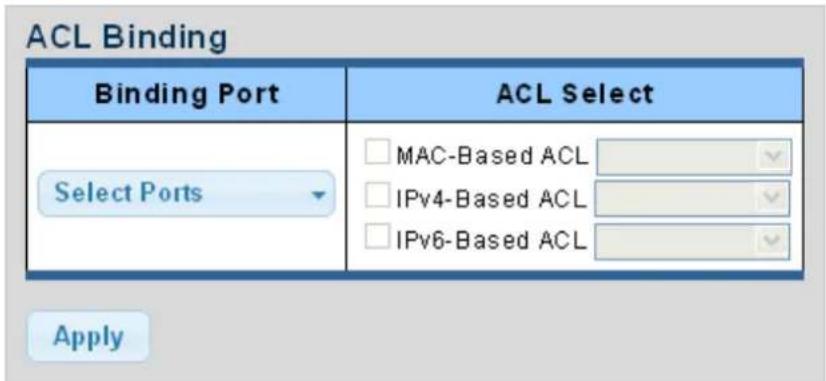
Figure 4-10-13 ACL Binding Page Screenshot
The page includes fields:
| Object Description | |
| • Binding Port | list Select port from this drop-down |
| • ACL Select | p-down list Select ACL list from this dro |
Buttons
Apply
: Click to apply changes.

Figuset-10-14 ACL Binding Table Page Scre
The page includes the following fields:
| Object Description | |
| • Port | The switch port number of the logical port |
| • MAC ACL | Display the current MAC ACL |
| • IPv4 ACL | Display the current IPv4 ACL |
| • IPv6 ACL | y the curDispla rent IPv6 ACL |
| • Modify | Click Edit to edit ACL binding table parameterClick Delete to delete ACL binding entry |
4.11 MAC Address Table
Switching of frames is based upon the DMAC address contained in the frame. The LRP Managed Switch builds up a table that maps MAC addresses to switch ports for knowing which ports the frames should go to (based upon the DMAC address in the frame). This table contains both static and dynamic entries. The static entries are configured by the network administrator if the administrator wants to do a fixed mapping between the DMAC address and switch ports.
The frames also contain a MAC address (SMAC address), which shows the MAC address of the equipment sending the frame. The SMAC address is used by the switch to automatically update the MAC table with these dynamic MAC addresses. Dynamic entries are removed from the MAC table if no frame with the corresponding SMAC address has been seen after a configurable age time.
4.11.1 Static MAC Setting
The static entries in the MAC table are shown in this table. The MAC table is sorted first by VLAN ID and then by MAC address. The Static MAC Setting screens in Figure 4-11-1 & Figure 4-11-2 appear.

Figure 4-11-1 Statics MAC Setting Page Screenshot
The page includes the following fields:
| Object Description | |
| • MAC Address | Physical address associated with this interface |
| • VLAN | Select VLAN from this drop-down list |
| • Port | Select port from this drop-down list |
Buttons
Add
: Click to add new static MAC address.
| No. | MAC Address | VLAN | Post | Delete |
| 1 | 00:30:4F:AF:FF:81 | default(1) | CPU |
Figure 4-11-2 Statics MAC Status Page Screenshot
he page includes the following fields: T
| Object Description | |
| • No. | This is the number for entries |
| • MAC Address | The MAC address for the entry |
| • VLAN | The VLAN ID for the entry |
| • Port | Display the current port |
| • Delete | Click to delete static MAC status entry |
4.11.2 MAC Filtering
By filtering MAC address, the switch can easily filter the pre-configured MAC address and reduce the un-safety. The Static MAC Setting screens in Figure 4-11-3 & Figure 4-11-4 appear.
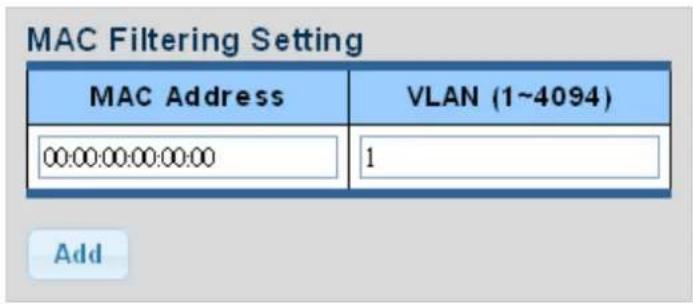
Figure 4-11-3 MAC Filtering Setting Page Screenshot
The page includes the following fields:
| Object Description | |
| • MAC Address | Physical address associated with this interface |
| • VLAN (1~4096) | Indicates the ID of this particular VLAN |
Buttons
Add
: Click to add new MAC filtering setting.

Figure 4-11-4 Statics MAC Status Page Screenshot
The page includes the following fields:
| Object Description | |
| • No. | This is the number for entries |
| • MAC Address | The MAC address for the entry |
| • VLAN | The VLAN ID for the entry |
| • Delete | Click to delete static MAC status entry. |
4.11.3 Dynamic Address Setting
By default, dynamic entries are removed from the MAC table after 300 seconds. The Dynamic Address Setting/Status screens in Figure 4-11-5 & Figure 4-11-6 appear.
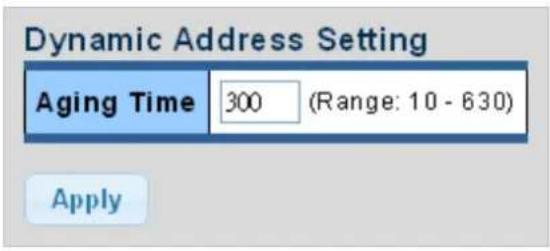
Figure 4-11-5 Dynamic Addresses Setting Page Screenshot
he page includes the following fields: T
| Object Description | |
| • Aging Time | which a learned entry is discarded The time after (Range: 10-630 seconds; Default: 300 seconds) |
Buttons
Apply
: Click to apply changes.

Figure 4-11-6 Dynamic Addresses Status Page Screenshot
The pages through following fields:
| Object Description | |
| • Aging Time | Display the current aging time |
4.11.4 Dynamic Learned
Dynamic MAC Table
The Dynamically Learned MAC Table is shown on this page. The MAC Table is sorted first by VLAN ID and then by MAC address. The Dynamically Learned screens in Figure 4-11-6 & Figure 4-11-7 appear.

Figure 4-11-6 Dynamically Learned Page Screenshot
The page includes the following fields:
| Object Description | |
| • Port | Select port from this drop-down list |
| • VLAN | rom this drop-down list Select VLAN f |
| • MAC Address | Physical address associated with this interface |
Buttons
View
: Refreshes the able starting from the "Start from MAC address" and "VLAN" input fields displayed t
Clear
Flushes all dynamic entries

Figure 4-11-7 MAC Address Information Page Screenshot
| Object Description | |
| • MAC Address | The MAC address of the entry |
| • VLAN | The VLAN ID of the entry |
| • Type | Indicates whether the entry is a static or dynamic entry |
| • Port | The ports that are members of the entry |
Buttons
Add to Static MAC table
Click to add dynamic MAC address to static MAC address.
4.12 LLDP
4.12.1 Link Layer Discovery Protocol
Link Layer Discovery Protocol (LLDP) is used to discover basic information about neighboring devices on the local broadcast domain. LLDP is a Layer 2 protocol that uses periodic broadcasts to advertise information about the sending device. Advertised information is represented in Type Length Value (TLV) format according to the IEEE 802.1ab standard, and can include details such as device identification, capabilities and configuration settings. LLDP also defines how to store and maintain information gathered about the neighboring network nodes it discovers.
Link Layer Discovery Protocol - Media Endpoint Discovery (LLDP-MED) is an extension of LLDP intended for managing endpoint devices such as Voice over IP phones and network switches. The LLDP-MED TLVs advertise information such as network policy, power, inventory, and device location details. LLDP and LLDP-MED information can be used by SNMP applications to simplify troubleshoot@networketopetwork management, and maintain an accu
4.12.2 LLDP Sletbitalg
This page allows the user to inspect and configure the current LLDP port settings. The LLDP Global Setting and Config screens in Figure 4-12-1 & Figure 4-12-2 appea
Global Settings
| Enabled | Enabled Disabled |
| LLDP PDU Disable Action | Filtering Bridging Flooding |
| Transmission Interval | 30 (5-32768) |
| Holdtime Multiplier | 4 (2-10) |
| Reinitialization Delay | 2 (1-10) |
| Transmit Delay | 2 (1-8192) |
| LLDP-MED Fast Start Repeat Count | 3 (1-10) |
Apply
Figure 4-12-1 Global Setting Page Screenshot
The page includes the following fields:
| Object Description | |
| Enable | Globally enable or disable LLDP function |
| LLDP PDU Disable Action | Set LLDP PDU disable action: include “Filtering”, “Bridging” and “Flooding”.■ Filtering: discard all LLDP PDUs.■ Bridging: transmit LLDP PDU in the same VLAN.■ Flooding: transmit LLDP PDU for all port. |
| Transmission Interval | The switch is periodically transmitting LLDP frames to its neighbors for having the network discovery information up-to-date. The interval between each LLDP frame is determined by the Transmission Interval value. Valid values are restricted to 5 - 32768 seconds.Default: 30 secondsply with the following rule: This attribute must com(Transmission Interval * Hold Time Multiplier) ≤65536, and Transmission Interval >= (4 * Delay Interval) |
| Holdtime Multiplier | Each LLDP frame contains information about how long the information in the LLDP frame shall be considered valid. The LLDP information valid period is set to Holdtime multiplied by Transmission Interval seconds. Valid values are restricted to 2 - 10 times.TTL in seconds is based on the following rule:(Transmission Interval * Holdtime Multiplier) ≤ 65536.Therefore, the default TTL is 4*30 = 120 seconds. |
| Reinitialization Delay | When a port is disabled, LLDP is disabled or the switch is rebooted a LLDP shutdown frame is transmitted to the neighboring units, signaling that the LLDP information isn't valid anymore. TX Reinit controls the amount of seconds between the shutdown frame and a new LLDP initialization. Valid values are restricted to 1 - 10 seconds. |
| Transmit Delay | If some configuration is changed (e.g. the IP address) a new LLDP frame is transmitted, but the time between the LLDP frames will always be at least the value of Transmit Delay seconds. Transmit Delay cannot be larger than 1/4 of the Transmission Interval value. Valid values are restricted to 1 - 8192 seconds.This attribute must comply with the rule:(4 * Delay Interval) ≤Transmission Interval |
| LLDP-MED Fast Start Repeat Count | Configuses the transmit during the P MED Fast Start LLDP activation process of the LLDP-MED Fast Start mechanism.Range: 1-10 packets;Default: 3 packetsThe MED Fast Start Count parameter is part of the timer which ensures that the LLDP-MED Fast Start mechanism is active for the port. LLDP-MED Fast Start is critical to the timely startup of LLDP, and therefore integral to the rapid availability of Emergency Call Service. |
Buttons
Apply
: Click to apply changes.
LLDP Global Config
| Config Name | Config Value |
| LLDP Enabled | Enabled |
| LLDP PDU Disable Action | Flooding |
| Transmission Interval | 30 Secs |
| Holdtme Multiplier | 4 |
| Reinitialization Delay | 2 Secs |
| Transmit Delay | 2 Secs |
| LLDP-MED Fast Start Repeat Count | 3 PDUs |
Figure 4-12-2 LLDP Global Config Page Screenshot
The page includes the following fields:
| Object Description | |
| • LLDP Enable | Display the current LLDP status |
| • LLDP PDU Disable Action | Display the current LLDP PDU disable action |
| • Transmission Interval | Display the current transmission interval |
| • Holdtime Multiplier | Display the current holdtime multiplier |
| • Reinitialization Delay | Display the current reinitialization delay |
| • Transmit Delay | Display the current transmit delay |
| • LLDP-MED Fast Start Repeat Count | Di MED Fast Start Repeat Count splay the current LLDP- |
4.12.3 LLDP Port Setting
Use the LLDP RargSettigutespecifydlivone interfaces, including whether messages are
transmitted, received, or both transmitted and received. The LLDP Port Configuration and Status screens in Figure 4-12-3 &
Figure 4-12-4 appear.
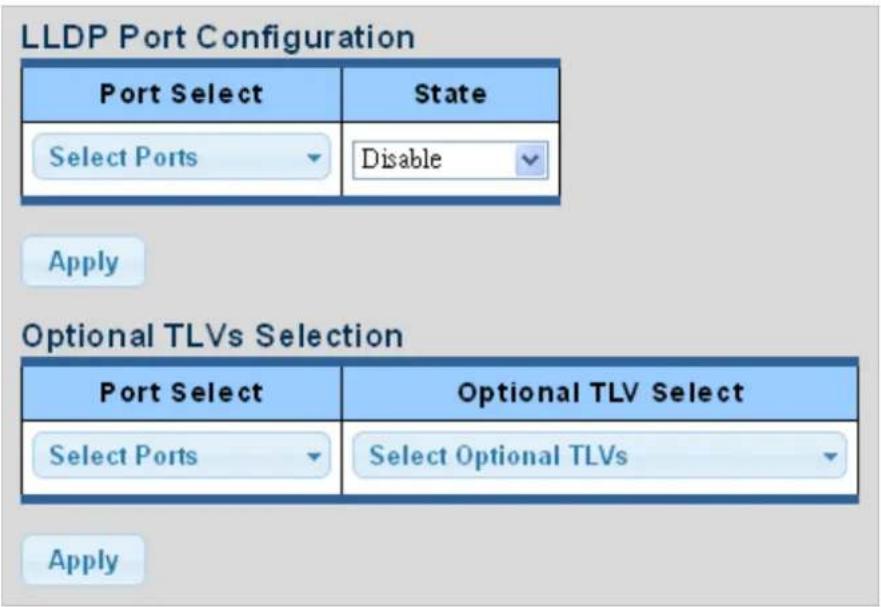
Figure 4-12-3 LLDP Port Configuration and Optional TLVs Selection Page Screenshot
he page includes the following fields: T
| Object Description | |
| • Port Select | Select port from this drop-down list |
| • State | Enables LLDP messages transmit and receive modes for LLDP Protocol Data Units. Options:■ TX only■ RX only■ Tx RX■ Disabled |
| • Port Select | Select port from this drop-down list |
| • Optional TLV Select | Configures the information included in the TLV field of advertised messages.■ System Name: When checked the "System Name" is included in LLDP information transmitted.■ Port Description: When checked the "Port Description" is included in LLDP information transmitted.■ System Description: When checked the "System Description" is included in LLDP information transmitted.■ System Capability: When checked the "System Capability" is included in LLDP information transmitted.■ 802.3 MAC-PHY: When checked the "802.3 MAC-PHY" is included in LLDP information transmitted.■ 802.3 Link Aggregation: When checked the "802.3 Link Aggregation" is included in LLDP information transmitted.■ 802.3 Maximum Frame Size: When checked the "802.3 Maximum Frame Size" is included in LLDP information transmitted.■ Management Address: When checked the "Management Address" is included in LLDP information transmitted.■ 802.1 PVID: When checked the "802.1 PVID" is included in LLDP information transmitted. |
Buttons
Apply
: Click to apply changes
LLDP Port Status
| Port | State | Selected Optional TLVs |
| GE1 | TX&RX | 802.1 PVID |
| GE2 | TX&RX | 802.1 PVID |
| GE3 | TX&RX | 802.1 PVID |
| GE4 | TX&RX | 802.1 PVID |
| GE5 | TX&RX | 802.1 PVID |
| GE6 | TX&RX | 802.1 PVID |
| GE7 | TX&RX | 802.1 PVID |
| GE8 | TX&RX | 802.1 PVID |
| GE9 | TX&RX | 802.1 PVID |
| GE10 | TX&RX | 802.1 PVID |
Figure 4-12-4 LLDP Port Status Page Screenshot
The page includes the following fields:
| Object Description | |
| • Port | rt The switch port number of the logical po |
| • State | Display the current LLDP status |
| • Selected Optional TLVs | Display the current selected optional TLVs |
The VLAN Name TLV VLAN Selection and LLDP Port VLAN TLV Status screens in Figure 4-12-5 & Figure 4-12-6 appear.
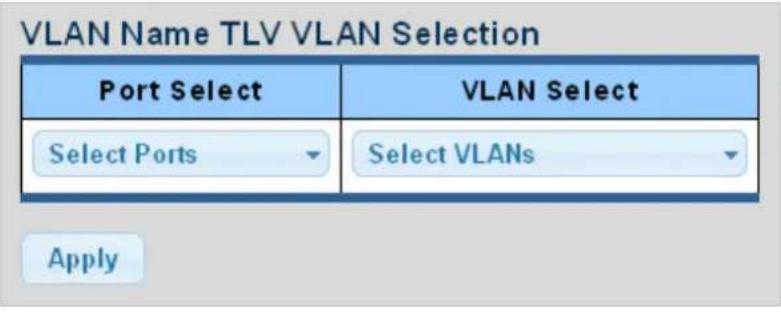
rEigu 2+5RalgENskareresTibV Selecti
The page includes the following fields:
| Object Description | |
| • Port Select | Select port from this drop-down list. |
| • VLAN Select | Select VLAN from this drop-down list. |
Buttons
Apply
: Click to apply changes.
| Port | Selected VLAN |
| GE1 | |
| GE2 | |
| GE3 | |
| GE4 | |
| GE5 | |
| GE6 | |
| GE7 | |
| GE8 | |
| GE9 | |
| GE10 |
Figure 4-12-6 LLDP Port VLAN TLV Status Page Screenshot
The page includes the following fields:
| Object Description | |
| • Port | The switch port number of the logical port |
| • Selected VLAN | Display the current selected VLAN |
4.12.4 LLDP Local Device
Use the LLDP Local Device Information screen to display information about the switch, such as its MAC address, chassis ID, management IP address, and port information. The Local Device Summary and Port Status screens in Figure 4-12-7 & Figure 4-12-8 appear.
| Chassis ID Subtype | MAC Address |
| Chassis ID | 00:30:4F:AF:FF:81 |
| System Name | GSD-1002M |
| System Description | V1 |
| Capabilities Supported | Bridge |
| Capabilities Enabled | Bridge |
| Port ID Subtype | Interface name |
Figure 4-12-7 Local Device Summary Page Screenshot
The page includes the following fields:
| Object Description | |
| • Chassis ID Subtype | Display the current chassis ID subtype |
| • Chassis ID | Display the current chassis ID |
| • System Name | Display the current system name |
| • System Description | Display the current system description |
| • Capabilities Supported | Display the current capabilities supported |
| • Capabilities Enabled | Display the current capabilities enabled |
| • Port ID Subtype | Display the current port ID subtype |
| Interface | LLDP Status | LLDP Med Status | |
| ○ | GE1 | TX & RX | Enabled |
| ○ | GE2 | TX & RX | Enabled |
| ○ | GE3 | TX & RX | Enabled |
| ○ | GE4 | TX & RX | Enabled |
| ○ | GE5 | TX & RX | Enabled |
| ○ | GE6 | TX & RX | Enabled |
| ○ | GE7 | TX & RX | Enabled |
| ○ | GE8 | TX & RX | Enabled |
| ○ | GE9 | TX & RX | Enabled |
| ○ | GE10 | TX & RX | Enabled |
Figure 4-12-8 Port Status Page Screenshot
The page includes the following fields:
| Object Description | |
| • Interface | The switch port number of the logical port. |
| • LLDP Status | rrent LLDP status Display the cu |
| • LLDP MED Status | Display the current LLDP MED Status |
4.12.5 LLDP Remote Device
This page provides a status overview for all LLDP remote devices. The displayed table contains a row for each port on which an LLDP neighbor is detected. The LLDP Remote Device screen in Figure 4-12-9 appears.

Figure 4-12-9 LLDP Remote Device Page Screenshot
The page includes the following fields:
| Object Description | |
| • Local Port | Display the current local port |
| • Chassis ID Subtype | Display the current chassis ID subtype |
| • Chassis ID | The Chassis ID is the identification of the neighbor's LLDP frames |
| • Port ID Subtype | Display the current port ID subtype |
| • Port ID | The Remote Port ID is the identification of the neighbor port |
| • System Name | System Name is the name advertised by the neighbor unit |
| • Time to Live | Display the current time to live |
Buttons
Delete
: Click to delete LLDP remote device entry.
Refresh
: Click to refresh LLDP remote device.
4.12.6 MED Network Policy
Network Policy Disaffinity describes the
ry and diagnosis of mismatch issues with the VLAN configuration, along
with the associated Layer32a1b1 layer, which apply for a s
et of specific protocol applications on that port. Improper
network policy configurations are a significant reispectively result in microematurity degradation
or loss of service.
Policies are only intended for uppliatiensehabhapelisperificrealintesuch as interactive
voice and/or video services.
The network policy attributes advertised are:
- Layer 2 VLAN ID (IEEE 802.1Q-2003)
- Layer 2 priority value (IEEE 8002-2004)
- Layer 3 Diffserv code point (DSCP) value (IETF RFC 2474)
This network policy is potentially advertised and associated with multiple sets of application types supported on a given port.
The application types specifically addressed are:
- Voice
- Guest Voice
- Softphone Voice
- Video Conferencing
- Streaming Video
- Control / Signaling (conditionally support a separate network policy for the media types above)
A large network may support multiple VoIP policies across the entire organization, and different policies per application type.
LLDP-MED allows multiple policies to be advertised per port, each corresponding to a different application type. Different ports on the same Network Connectivity Device may advertise different sets of policies, based on the authenticated user identity or port configuration.
It should be noted that LLDP-MED is not intended to run on links other than between Network Connectivity Devices and
Endpoints, and therefore does not need to advertise the multitude of network policies that frequently run on an aggregated link interior to the LAN.
The Voice Auto Mode Configuration, Network Policy Configuration and LLDP MED Network Policy Table screens in Figure 4-12-10 & Figure 4-12-11 appear.
Voice Auto Mode Configuration
| LLDP MED Policy for Voice Application | Auto Manual |
Apply
Network Policy Configuration
| Network Policy Number | 1 |
| Application | Voice |
| VLAN ID | 1 (1-4094) |
| VLAN Tag | Tagged Untagged |
| L2 Priority | 0 (0-7) |
| DSCP Value | 0 (0-63) |
Apply
Figure 4-12-10 Voice Auto Mode Configuration and Network Policy Configuration Page Screenshot
The e following fields: page includes th
| Object Description | |
| LLDP MED Policy for Voice Application | Set the LLDP MED policy for voice application mode |
| Network Policy Number | Select network policy number for this drop down list |
| Application Type | Intended use of the application types:Voice- for use by dedicated IP Telephony handsets and other similar appliances supporting interactive voice services. These devices are typically deployed on a separate VLAN for ease of deployment and enhanced security by isolation from data applications.Voice Signaling- for use in network topologies that require a different policy for the voice signaling than for the voice media. This application type should not be advertised if all the same network policies apply as those advertised in the Voice application policy.Guest Voice- support a separate 'limited feature-set' voice service for guest users and visitors with their own IP Telephony handsets and other similar appliances supporting interactive voice services.Guest Voice Signaling- for use in network topologies that require a different policy for the guest voice signaling than for the guest voice media. This application type should not be advertised if all the same network policies apply as those advertised in the Guest Voice application policy.Softphone Voice - for use by softphone applications on typical data centric devices, such as PCs or laptops. This class of endpoints frequently does not support multiple VLANs, if at all, and are typically configured to use an 'untagged' VLAN or a single 'tagged' data specific VLAN. When a network policy is defined for use with an 'untagged' VLAN (see Tagged flag below), then the L2 priority field is ignored and only the DSCP value has relevance.Video Conferencing- for use by dedicated Video Conferencing equipment and other similar appliances supporting real-time interactive video/audio services.App Streaming Video- for use by broadcast or multicast based video content distribution and other similar applications supporting streaming video services that require specific network policy treatment. Video applications relying on TCP with buffering would not be an intended use of this application type.Video Signaling- for use in network topologies that require a separate policy for the video signaling than for the video media. This application type should not be advertised if all the same network policies apply as those advertised in the Video Conferencing application policy. |
| • VLAN ID | VLAN identifier (VID) for the port as defined in IEEE 802.1Q-2003 |
| • Tag | Tag indicating whether the specified application type is using a 'tagged' or an 'untagged' VLAN.Untagged indicates that the device is using an untagged frame format and as such does not include a tag header as defined by IEEE 802.1Q-2003. In this case, both the VLAN ID and the Layer 2 priority fields are ignored and only the DSCP value has relevance.Tagged indicates that the device is using the IEEE 802.1Q tagged frame format, and that both the VLAN ID and the Layer 2 priority values are being used, as well as the DSCP value. The tagged format includes an additional field, known as the tag header. The tagged frame format also includes priority tagged frames as defined by IEEE 802.1Q-2003. |
| • L2 Priority | L2 Priority is the Layer 2 priority to be used for the specified application type. L2 Priority may specify one of eight priority levels (0 through 7), as defined by IEEE 802.1D-2004. A value of 0 represents use of the default priority as defined in IEEE 802.1D-2004. |
| • DSCP | DSCP value to be used to provide Diffserv node behavior for the specified application type as defined in IETF RFC 2474. DSCP may contain one of 64 code point values (0 through 63). A value of 0 represents use of the default DSCP value as defined in RFC 2475. |
Buttons
Apply
: Click to apply changes.

Figure 4-12-11 LLDP MED Network Policy Table Page Screenshot
The page includes the following fields:
| Object Description | |
| • Network Policy Number | Display the current network policy number |
| • Application | Display the current application |
| • VLAN ID | Display the current VLAN ID |
| • VLAN Tag | Display the current VLAN tag status |
| • L2 Priority | ority Display the current L2 pri |
| • DSCP Value | Display the current DSCP value |
Buttons
Delete
Click to delete LLDP MED network policy table entry.
4.12.7 MED Port Setting
The Port LLDP MED Configuration/Port Setting Table screens in Figure 4-12-12 & Figure 4-12-13 appear.
Port LLDP MED Configuration
| Port Select | MED Enable | MED Optional TLVs | MED Network Policy |
| Select Ports | Enable | Select Optional TLVs | Select Optional TLVs |
Figure 4-12-12 enshot Port LLDP MED Configuration Page Scre
includes the following fields: The page
| Object Description | |
| • Port Select | Select port from this drop-down list |
| • MED Enable | Enable or disable MED configuration |
| • MED Optional TVLs | Configures the information included in the MED TLV field of advertised messages.-Network Policy – This option advertises network policy configuration information, aiding in the discovery and diagnosis of VLAN configuration mismatches on a port. Improper network policy configurations frequently result in voice quality degradation or complete service disruption.-Location – This option advertises location identification details.-Inventory – This option advertises device details useful for inventory management, such as manufacturer, model, software version and other pertinent information. |
| • MED Network Policy | Select MED network policy from this drop-down list |
Buttons
Apply
: Click to apply changes.
LLDP MEO Port Setting Table
| Interface | LLDP MED Status | User Defined Network Policy | Location | Inventory | |
| Active | Application | ||||
| GE1 | Enabled | Yes | No | No | |
| GE2 | Enabled | Yes | No | No | |
| GE3 | Enabled | Yes | No | No | |
| GE4 | Enabled | Yes | No | No | |
| GE5 | Enabled | Yes | No | No | |
| GE6 | Enabled | Yes | No | No | |
| GE7 | Enabled | Yes | No | No | |
| GE8 | Enabled | Yes | No | No | |
| GE9 | Enabled | Yes | No | No | |
| GE10 | Enabled | Yes | No | No | |
Figure 4-12-13 Port LLDP MED Configuration Page Screenshot
The page includes the following fields:
| Object Description | |
| • Interface | The switch port number of the logical port |
| • LLDP MED Status | Display the current LLDP MED status |
| • Active | Display the current active status |
| • Application | Display the current application |
| • tiona | Display the current location |
| • Inventory | Display the current inventory |
The MED Location Configuration and LLDP MED Port Location Table screens in Figure 4-12-14 & Figure 4-12-15 appear.
MED Location Configuration
| Ports | Select Ports |
| Location Coordinate | (16 pairs of hexadecimal characters) |
| Location Civic Address | (6-160 pairs of hexadecimal characters) |
| Location ECS ELIN | (10-25 pairs of hexadecimal characters) |
Figure 4-12-14 Port LLDP MED Configuration Page Screenshot
The page includes the following fields:
| Object Description | |
| • Port | Select port from this drop-down list |
| • Location Coordinate | A string identifying the Location Coordinate that this entry should belong to |
| • Location Civic Address | A string identifying the Location Civic Address that this entry should belong to |
| • Location ESC ELIN | A string identifying the Location ESC ELIN that this entry should belong to |
Buttons
Apply
: Click to apply changes.
▼ ILOP MED Port Location Table
| Port | Coordinate | Civic Address | ECS ELIN |
| GE1 | |||
| GE2 | |||
| GE3 | |||
| GE4 | |||
| GE5 | |||
| GE6 | |||
| GE7 | |||
| GE8 | |||
| GE9 | |||
| GE10 |
Figure 4-12-15 LLDP MED Port Location Table Page Screenshot
lowing fields: The page includes the fol
| Object Description | |
| • Port | The switch port number of the logical port |
| • Coordinate | Display the current coordinate |
| • Civic Address | Display the current civic address |
| • ESC ELIN | Display the current ESC ELIN |
4.12.8 LLDP Overloading
The LLDP Port Overloading screen in Figure 4-12-16 appears.
| Interface | Total(Bytes) | Left to Send(Bytes) | Status | Status | ||||||||
| Mandatory TLVs | MED Capabilities | MED Location | MED Network Policy | MED Extended Power via MDI | 802.3 TLVs | Optional TLVs | MED Inventory | 802.1 TLVs | ||||
| GE1 | 48 | 1440 | Not Overloading | 21(Transmitted) | 9(Transmitted) | 10(Transmitted) | 6(Transmitted) | |||||
| GE2 | 48 | 1440 | Not Overloading | 21(Transmitted) | 9(Transmitted) | 10(Transmitted) | 6(Transmitted) | |||||
| GE3 | 48 | 1440 | Not Overloading | 21(Transmitted) | 9(Transmitted) | 10(Transmitted) | 6(Transmitted) | |||||
| GE4 | 48 | 1440 | Not Overloading | 21(Tranomitted) | 9(Transmitted) | 10(Transmitted) | 6(Transmitted) | |||||
| GE5 | 48 | 1440 | Not Overloading | 21(Transmitted) | 9(Transmitted) | 10(Transmitted) | 6(Transmitted) | |||||
| GE6 | 48 | 1440 | Not Overloading | 21(Transmitted) | 9(Transmitted) | 10(Transmitted) | 6(Transmitted) | |||||
| GE7 | 48 | 1440 | Not Overloading | 21(Transmitted) | 9(Transmitted) | 10(Transmitted) | 6(Transmitted) | |||||
| GE8 | 48 | 1440 | Not Overloading | 21(Transmitted) | 9(Transmitted) | 10(Transmitted) | 6(Transmitted) | |||||
| GE9 | 48 | 1440 | Not Overloading | 21(Tranomitted) | 9(Transmitted) | 10(Transmitted) | 6(Transmitted) | |||||
| GE10 | 49 | 1439 | Not Overloading | 22(Transmitted) | 9(Transmitted) | 10(Transmitted) | 6(Transmitted) | |||||
Figure 4-12-16 LLDP Port Overloading Table Page Screenshot
The page includes the following fields:
| Object Description | |
| • Interface | The switch port number of the logical port |
| • Total (Bytes) | Total number of bytes of LLDP information that is normally sent in a packet |
| • Left to Send (Bytes) | Total number of available bytes that can also send LLDP information in a packet |
| • Status | Gives the status of the TLVs |
| • Mandatory TLVs | Displays if the mandatory group of TLVs were transmitted or overloaded |
| • MED Capabilities | nsmitted or overloaded Displays if the capabilities packe |
| • MED Location | were transmitted or overloaded Displays if the location packets |
| • MED Network Policy | ckets were transmitted or overloaded Displays if the network policy |
| • MED Extended Power via MDI | via MDI packets were transmitted or overloaded Displays if the exte |
| • 802.3 TLVs | Displays if the 802.3 TLVs were transmitted or overloaded |
| • Optional TLVs | If the LLDP MED extended power via MDI packets were sent, or if they wereoverloaded |
| • MED Inventory | Displays if the mandatory group of TLVs was transmitted or overloaded |
| • 802.1 TLVs | Displays if the 802.1 TLVs were transmitted or overloaded |
4.12.9 LLDP Statistics
Use the LLDP Device Statistics screen to general statistics for LLDP-capable devices attached to the switch, and for LLDP protocol messages transmitted or received on all local interfaces. The LLDP Global and Port Statistics screens in Figure 4-12-17 & Figure 4-12-18 appear.

Figure 4-12-17 LLDP Global Statistics Page Screenshot
he page includes the following fields: T
| Object Description | |
| • insertio | Shows the number of new entries added since switch reboot.\ |
| • Deletions | Shows the number of new entries deleted since switch reboot.\ |
| • Drops | Shows the number of LLDP frames dropped due to that the entry table was full.\ |
| • Age Outs | Shows the number of entries deleted due to Time-To-Live expiring.\ |
Buttons
Clear
: Click to clear the statistics
Refresh
Click to refresh the statistics
LLDP Port Statistics
| Port | TX Frames | RX Frames | RX TLVs | RX Ageouts | |||
| Total | Total | Discarded | Errors | Discarded | Unrecognized | Total | |
| GE1 | 136 | 0 | 0 | 0 | 0 | 0 | 0 |
| GE2 | 0 | 0 | 0 | 0 | 0 | 0 | 0 |
| GE3 | 0 | 0 | 0 | 0 | 0 | 0 | 0 |
| GE4 | 0 | 0 | 0 | 0 | 0 | 0 | 0 |
| GE5 | 0 | 0 | 0 | 0 | 0 | 0 | 0 |
| GE6 | 0 | 0 | 0 | 0 | 0 | 0 | 0 |
| GE7 | 0 | 0 | 0 | 0 | 0 | 0 | 0 |
| GE8 | 0 | 0 | 0 | 0 | 0 | 0 | 0 |
| GE9 | 0 | 0 | 0 | 0 | 0 | 0 | 0 |
| GE10 | 0 | 0 | 0 | 0 | 0 | 0 | 0 |
Figure 4-12-18 LLDP Port Statistics Page Screenshot
The page includes the following fields:
| Object Description | |
| • Port | The port on which LLDP frames are received or transmitted |
| • TX Frame – Total | The number of LLDP frames transmitted on the port |
| • RX Frame – Total | The number of LLDP frames received on the port |
| • RX Frame – Discarded | If an LLDP frame is received on a port, and the switch's internal table has run full, the LLDP frame is counted and discarded. This situation is known as "Too Many Neighbors" in the LLDP standard. LLDP frames require a new entry in the table when the Chassis ID or Remote Port ID is not already contained within the table. Entries are removed from the table when a given port links down, an LLDP shutdown frame is received, or when the entry ages out. |
| • RX Frame – Error | The number of received LLDP frames containing some kind of error. |
| • RX TLVs – Discarded | Each LLDP frame can contain multiple pieces of information, known as TLVs (TLV is short for "Type Length Value"). If a TLV is malformed, it is counted and discarded. |
| • RX TLVs – Unrecognized | The number of well-formed TLVs, but with an unknown type value |
| • RX Ageout - Total | The number of organizationally TLVs received |
4.13 Diagnostics
This section provide the Physical layer and IP layer network diagnostics tools for troubleshoot. The diagnostic tools are designed for network manager to help them quickly diagnose problems between point to point and better service customers.
Use the Diagnostics brand authorised interactive tablet of the LRP Managed Switch. Under
System the following topics are provided to configure and view the system information:
This section has the following items:
■ Cable Diagnostics
■ Ping Test
■ IPv6 Ping Test
■ Trace Route
4.13.1 Cable Diagnostics
The Cable Diagnostics performs tests on copper cables. These functions have the ability to identify the cable length and operating conditions, and to isolate a variety of common faults that can occur on the cat5 twisted-pair cabling. There might be two statuses as follows:
If the link is established on the twisted-pair interface in 1000BASE-T mode, the Cable Diagnostics can run without disruption of the link or of any data transfer.
If the link BASE-T is linked in 100 0BASE-T, the Cable Diagnostics causes the link to drop while the diagnostics is running.
After the diagnostics is finished, established and the following functions are available
■ Coupling between cable pairs.
■ Cable pair termination
■ Cable length

Cable Diagnost ters. ics is only accurate for cables of length from 15 to 100 me
The copper test and test result screens in Figure 4-13-1 & Figure 4-13-2 appear.

Figure 4-13-1 Copper Test Page Screenshot
ollowing fields: The page includes the f
| Object Description | |
| • Port | Select port from this drop-down list |
Buttons
Copper Test
Click to run the diagnostics
| Port | Channel A | Cable Length A | Channel B | Cable Length B | Channel C | Cable Length C | Channel D | Cable Length D | Result |
| GE2 | NORMAL | NORMAL | NORMAL | NORMAL | PASS |
Figure 4-13-2 Test Results Page Screenshot
The page includes the following fields:
| Object Description | |
| • Port | The port where you are requesting Cable Diagnostics |
| • Channel A~D | Display the current channel status |
| • Cable Length A~D | Display the current cable length |
| • Result | Display the test result |
4.13.2 Ping
The ping and IPv6 ping allow you to issue ICMP ping packets to troubleshoot IP connectivity issues. The LRP Managed Switch transmits ICMP packets, and the sequence number and roundtrip time are displayed upon reception of a reply.
4.13.3 Ping Test
This page allows you to issue ICMP ping packets to troubleshoot IP connectivity issues. After you press "Apply", ICMP packets are transmitted, and the sequence number and roundtrip time are displayed upon reception of a reply. The page refreshes automatically until responses to all packets are received, or until a timeout occurs. The ICMP Ping screen in Figure 4-13-3 appears.
| IP Address | (x.x.x.x or hostname) |
| Count | 4 (1 - 5 | Default : 4) |
| Interval (in sec) | 1 (1 - 5 | Default : 1) |
| Size (in bytes) | 56 (8 - 5120 | Default : 56) |
| Ping Results |
Figure 4-13-3 ICMP Ping Page Screenshot
owing fields: The page includes the foll
| Object Description | |
| • IP Address | The destination IP Address |
| • Count | Number of echo requests to send |
| • Interval (in sec) | Send interval for each ICMP packet |
| • Size (in bytes) | The payload size of the ICMP packet. Values range from 8bytes to 5120bytes. |
| • Ping Results | Display the current ping result. |

Be sure the target IP Address is within the same network subnet of the switch, or you have to set up the correct gateway IP address.
4.13.4 IPv6 Ping Test
This page allows you to issue ICMPv6 PING packets to troubleshoot IPv6 connectivity issues. After you press "Apply", 5 ICMPv6 packets are transmitted, and the sequence number and roundtrip time are displayed upon reception of a reply. The page refreshes automatically until responses to all packets are received, or until a timeout occurs. The ICMPv6 Ping screen in Figure 4-13-4 appears.
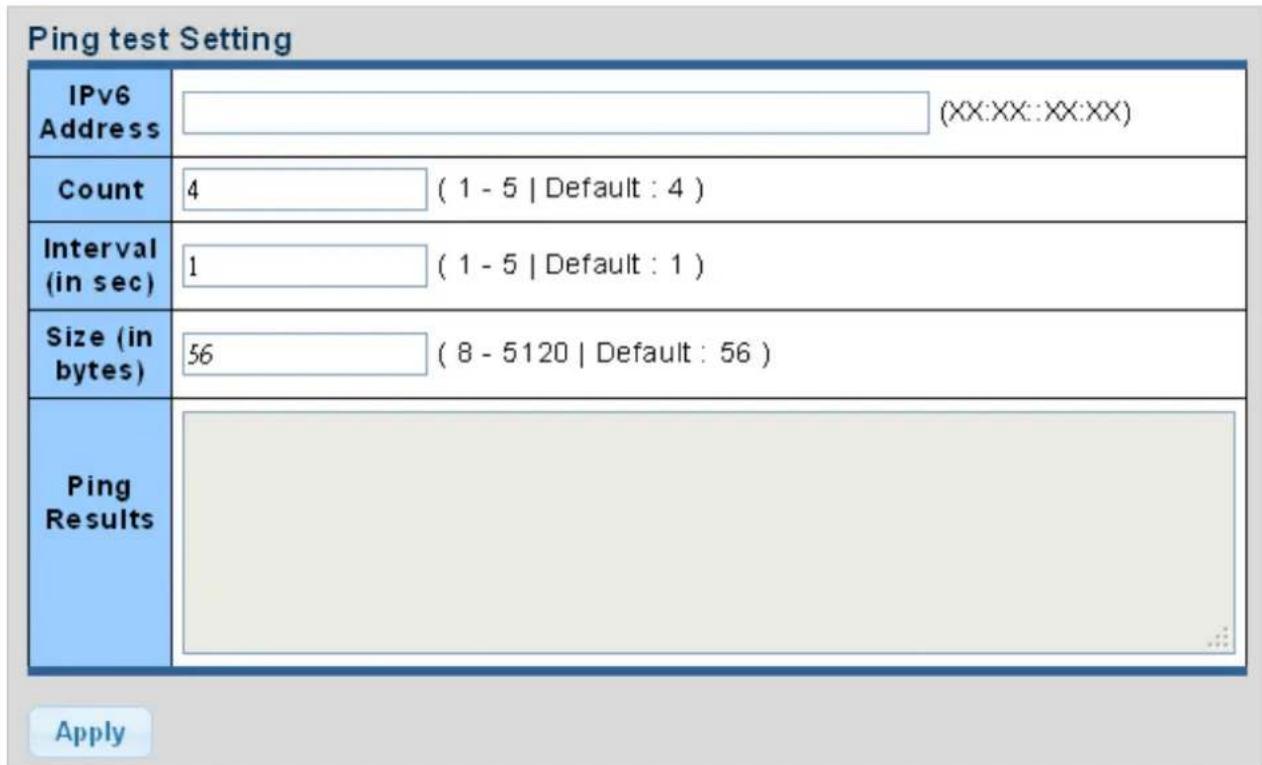
Figure 4-13-4 ICMPv6 Ping Page Screenshot
The page includes the following fields:
| Object Description | |
| • IP Address | The destination IPv6 Address |
| • Count | Number of echo requests to send |
| • Interval (in sec) | Send interval for each ICMP packet |
| • Size (in bytes) | The payload size of the ICMP packet. Values range from 8bytes to 5120bytes |
| • Ping Results | Display the current ping result |
4.14 RMON
RMON is the most important expansion of the standard SNMP. RMON is a set of MIB definitions, used to define standard network monitor functions and interfaces, enabling the communication between SNMP management terminals and remote monitors. RMON provides a highly efficient method to monitor actions inside the subnets.
MID of RMON consists of 10 groups. The switch supports the most frequently-used groups 1, 2, 3 and 9:
■ Statistics: Maintain basic usage and error statistics for each subnet monitored by the Agent.
■ History: Record periodical statistic samples available from Statistics.
- Alarm: Allow management console users to set any count or integer for sample intervals and alert thresholds for RMON Agent records.
■ Event: A list of all events generated by RMON Agent.
Alarm depends on the implementation of Event. Statistics and History display some current or history subnet statistics. Alarm and Event provide a method to monitor any integer data change in the network, and provide some alerts upon abnormal events (sending Trap or record in logs).
4.14.1 RMON Statistics
This page provides a detail of a specific RMON statistics entry; RMON Statistics screen in Figure 4-14-1 appears.
| RMON Counters | Value |
| Drop Events | 0 |
| Octets | 5192377 |
| Packets | 36210 |
| Broadcast Packets | 508 |
| Multicast Packets | 156 |
| CRC / Alignment Errors | 0 |
| Undersize Packets | 0 |
| Oversize Packets | 0 |
| Fragments | 0 |
| Jabbers | 0 |
| Collisions | 0 |
| 64 Bytes Frame | 23107 |
| 65-127 Byte Frames | 5685 |
| 128-255 Byte Frames | 227 |
| 256-511 Byte Frames | 7161 |
| 512-1023 Byte Frames | 30 |
| 1024-1518 Byte Frames | 0 |
Figure 4-14-1: RMON Statistics Detail Page Screenshot
e following fields: The page includes th
| Object Description | |
| • Port | Select port from this drop-down list |
| • Drop Events | The total number of events in which packets were dropped by the probe due to lack of resources |
| • Octets | The total number of octets of data (including those in bad packets) received on the network |
| • Packets | The total number of packets (including bad packets, broadcast packets, and multicast packets) received |
| • Broadcast Packets | The total number of good packets received that were directed to the broadcast address |
| • Multicast Packets | The total number of good packets received that were directed to a multicast address |
| • CRC/Alignment Errors | The total number of packets received that had a length (excluding framing bits, but including FCS octets) of between 64 and 1518 octets |
| • Undersize Packets | The total number of packets received that were less than 64 octets |
| • Oversize Packets | The total number of packets received that were longer than 1518 octets |
| • Fragments | The number of frames which size is less than 64 octets received with invalid CRC |
| • Jabbers | The number of frames which size is larger than 64 octets received with invalid CRC |
| • Collisions | The best estimate of the total number of collisions on this Ethernet segment. |
| • 64 Byte Frame | The total number of packets (including bad packets) received that were 64 octets in length |
| • 65~127 Byte Frames | The total number of packets (including bad packets) received that were between 65 to 127 octets in length |
| • 128~255 Byte Frames | The total number of packets (including bad packets) received that were between 128 to 255 octets in length |
| • 256~511 Byte Frames | The total number of packets (including bad packets) received that were between 256 to 511 octets in length |
| • 512~1023 Byte Frames | The total number of packets (including bad packets) received that were between 512 to 1023 octets in length |
| • 1024~1518 Byte Frames | The total number of packets (including bad packets) received that were between 1024 to 1518 octets in length |
Buttons
Clear
: Click to clear the RMON statistics
4.14.2 RMON Event
Configure RMON Event table on this page. The RMON Event screens in Figure 4-14-2 & Figure 4-14-3 appear.
RMON Event
| Select Index | Create New |
| Index | 0 (1-65535) |
| Type | None |
| Community | |
| Owner | (0~31 Characters) |
| Description | (0~127 Characters) |
Figure 4-14-2: RMON Event Configuration Page Screenshot
The page includes the following fields:
| Object Description | |
| • Select Index | Select index from this drop-down list to create new index or modify index |
| • Index | Indi ndex of the entry. The range is from 1 to 65535 cates the i |
| • Type | Indicates the notification of the event, the possible types are:■ none: The total number of octets received on the interface, including framing characters.■ log: The number of uni-cast packets delivered to a higher-layer protocol.■ SNMP-Trap: The number of broad-cast and multi-cast packets delivered to a higher-layer protocol.■ Log and Trap: The number of inbound packets that are discarded even the packets are normal. |
| • Community | Specify the community when trap is sent, the string length is from 0 to 127, default is "public". |
| • Owner | Indicates the owner of this event, the string length is from 0 to 127, default is a null string |
| • Description | Indicates description of this event, the string length is from 0 to 127, default is a null string |
Buttons
Apply
: Click to apply changes.

Figure 4-14-3: RMON Event Status Page Screenshot
The page includes the following fields:
| Object Description | |
| Index | Display the current event index |
| Event Type | Display the current event type |
| Community | Display the current community for SNMP trap |
| Description | Display the current event description |
| Last Sent Time | Display the current last sent time |
| Owner | Display the current event owner |
| Action | Click to delete RMON event entry |
4.14.3 RMON Event Log
This page provides an overview of RMON Event Log. The RMON Event Log Table screen in Figure 4-14-4 appears.

Figure 4-14-4: RMON Event Log Table Page Screenshot
The page includes the following fields:
| Object Description | |
| • Select Index | index from this drop-down list Select |
| • Index | Indicates the index of the log entry |
| • Log Time | Indicates Event log time |
| • Description | icates the Event description Ind |
4.14.4 RMON Alarm
Configure RMON Alarm table on this page. The RMON Alarm screens in Figure 4-14-5 & Figure 4-14-6 appear.
RMON Alarm
| Select Index | Create New |
| Index | 0 (1-65535) |
| Sample Port | GE1 |
| Sample Variable | DropEvents |
| Sample Interval | 0 (1-2147483647) |
| Sample Type | ○absolute ○delta |
| Rising Threshold | 0 (0-2147483647) |
| Falling Threshold | 0 (0-2147483647) |
| Rising Event | 0: None (Unassigned) |
| Falling Event | 0: None (Unassigned) |
| Owner | (0~31 Characters) |
Figure 4-14-5: RMON Alarm Table Page Screenshot
The page includes the following fields:
| Object Description | |
| • Select Index | Select index from this drop-down list to create the new index or modify the index |
| • Index | Indicates the index of the alarm entry |
| • Sample Port | Select port from this drop-down list |
| • Sample Variable | Indicates the particular variable to be sampled, the possible variables are:■ DropEvents: The total number of events in which packets were dropped due to lack of resources.■ Octets: The number of received and transmitted (good and bad) bytes.g bits. Includes FCS, but excludes framin■ Pkts: The total number of frames (bad, broadcast and multicast) received and transmitted.■ BroadcastPkts: The total number of good frames received that were directed to the broadcast address. Note that this does not include multicastpackets.■ MulticastPkts: The total number of good frames received that were directed to this multicast address.■ CRCAlignErrors: The number of CRC/alignment errors (FCS or alignment errors).■ UndersizePkts: The total number of frames received that were less than 64 octets long(excluding framing bits, but including FCS octets) and were otherwise well formed.■ OversizePkts: The total number of frames received that were longer than 1518 octets (excluding framing bits, but including FCS octets) and were otherwise well formed.■ Fragments: The total number of frames received that were less than 64 octets in length (excluding framing bits, but including FCS octets) and had either an FCS or alignment error.■ Jabbers: The total number of frames received that were longer than 1518 octets(excluding framing bits, but including FCS octets), and had either an FCS or alignment error.■ Collisions: The best estimate of the total number of collisions on this Ethernet segment.■ Pkts64Octets: The total number of frames (including bad packets) received and transmitted that were 64 octets in length (excluding framing bits but including FCS octets).■ Pkts64to172Octets: The total number of frames (including bad packets) received and transmitted where the number of octets fall within the specified range (excluding framing bits but including FCS octets).■ Pkts158to255Octets: The total number of frames (including bad packets) received and transmitted where the number of octets fall within the specified range (excluding framing bits but including FCS octets).■ Pkts256to511Octets: The total number of frames (including bad packets) received and transmitted where the number of octets fall within the specified range (excluding framing bits but including FCS octets).■ Pkts512to1023Octets: The total number of frames (including bad packets) received and transmitted where the number of octets fall within the specified range (excluding framing bits but including FCS octets).■ Pkts1024to1518Octets: The total number of frames (including bad packets) received and transmitted where the number of octets fall within the specified range (excluding framing bits but including FCS octets). |
| • Sample Interval | Sample interval (1–2147483647) |
| Sample Type | ng the selected variable and calculating the value to be The method of sampling compared against the thresholds, possible sample types are:■ Absolute: Get the sample directly (default).■ Delta: Calculate the difference between samples. |
| Rising Threshold | old value (0–2147483647) Rising thresh |
| Falling Threshold | Falling threshold value (0–2147483647) |
| Rising Event | threshold is crossed Event to fire when the rising |
| Falling Event | Event to fire when the falling threshold is crossed |
| Owner | Specify an owner for the alarm |
Buttons
Apply
: Click to apply changes.

Figure 4-14-6: RMON Alarm Status Page Screenshot
The page includes the following fields:
| Object Description | |
| Index | Indicates the index of Alarm control entry |
| Sample Port | Display the current sample port |
| Sample Variable | Display the current sample variable |
| Sample Interval | Display the current interval |
| Sample Type | Display the current sample type |
| Rising Threshold | Display the current rising threshold |
| Falling Threshold | Display the current falling threshold |
| Rising Event | Display the current rising event |
| Falling Event | Display the current falling event |
| Owner | Display the current owner |
| Action | Click to delete RMON alarm entry |
4.14.5 RMON History
Configure RMON History table on image page. The RMON History screens in Figure 4-14-7 & Figure 4-1
RMON History
| Select Index | Create New | |
| Index | 0 | (1-65535) |
| Sample Port | GE1 | |
| Bucket Requested | 50 | (1-50, Default 50) |
| Interval | 1800 | (1-3600 Default 1800) |
| Owner | (0~31 Characters) |
Figure 4-14-7: RMON History Table Page Screenshot
The page includes the following fields:
| Object Description | |
| • Select Index | Select index from this drop-down list to create the new index or modify the index |
| • Index | Indicates the index of the history entry |
| • Sample Port | Select port from this drop-down list |
| • Bucket Requested | Indicates the maximum data entries associated this History control entry stored in nge is from 1 to 50, default value is 50 RMON. The ra |
| • Interval | Indicates the interval in seconds for sampling the history statistics data. The range is from 1 to 3600, default value is 1800 seconds. |
| • Owner | Specify an owner for the history |
Buttons
Apply
: Click to apply changes.

Figure 4-14-8: RMON History Status Page Screenshot
The page includes the following fields:
| Object Description | |
| • Index | Display the current index |
| • Data Source | Display the current data source |
| • Bucket Requested | Display the current bucket requested |
| • Interval | Display the current interval |
| • Owner | Display the current owner |
| • Action | Click to delete RMON history entry. |
4.14.6 RMON History Log
This page provides a detail of RMON history entries; screen in Figure 4-14-9 appears.

Figure 3c14e9sRON History Status Pa
The page includes the following fields:
| Object Description | |
| • History | Select history index from this drop-down list |
Buttons
Apply
Click to apply changes.
4.15 Power over Ethernet
The LRP Managed Switch can easily build a power central-controlled IP phone system, IP camera system and AP group for the
enterprise. Without a power packet li
P Managed Switch makes the installation of cameras or WLAN APs
easier and more efficient.
PoE Power Budget list for LRP MedSwitch
| Model Name PoE Budget @ 25 degrees C PoE Budget @ 50 degrees C | |
| LRP-822CS 240 watts 200 watts | |
| LRP-1622CS 380 watts 440 watts | |
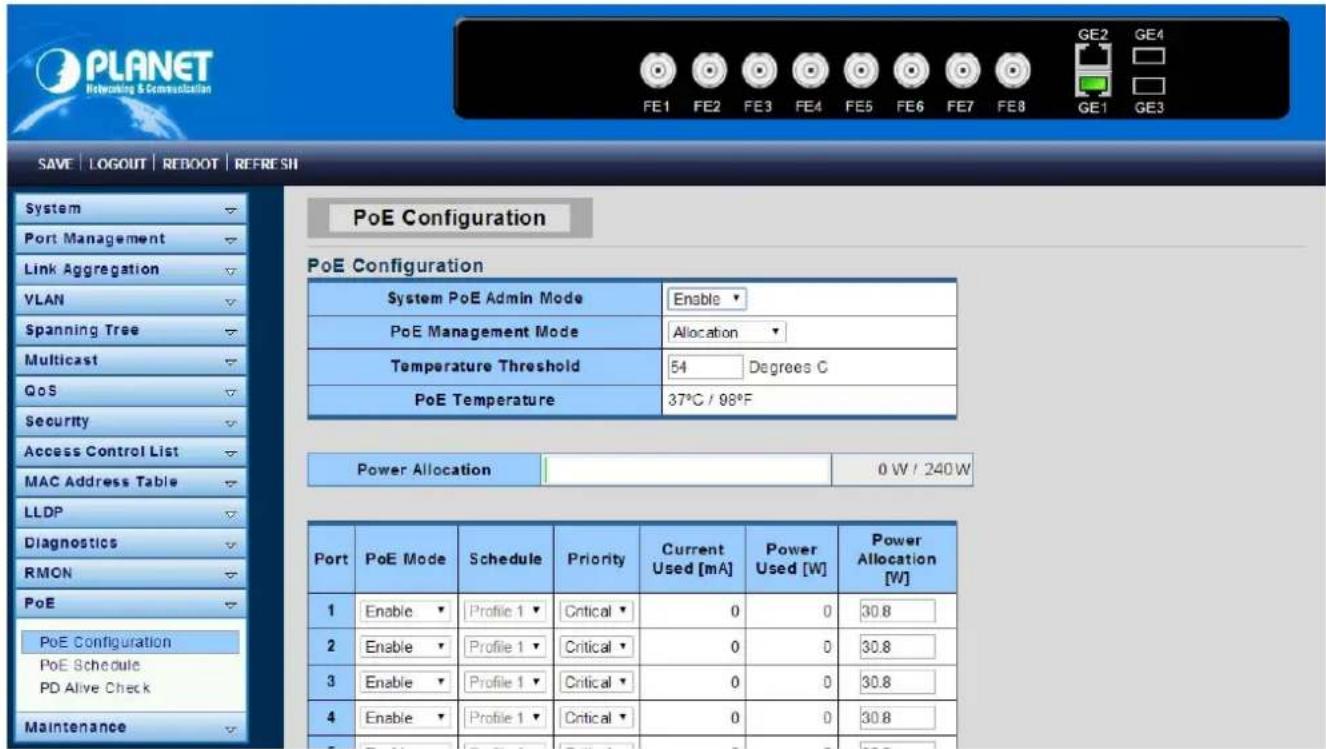
Figure 4-16-1: Power over Ethernet Status
Ethernet Powered Device 4.15.1 Long Reach Power over
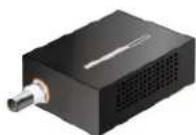
36 watts (max.)
Long Reach Power over Ethernet Extenders
Enterprise can extend IP Ethernet transmission and inject power over an existing coaxial cable for distance up to 1000m (3280ft) to PoE IP camera, PoE wireless AP and any 802.3af/at complied powered device (PD).
■ A Népřobová ReA ach PoE Extenders
The following distribution of the Dog Effectors is correct at the time of publica
Long Reach Ethernet Coaxial Extenders
■ LRP-101CE
1-Port 10/100TX PoE PSE + 1-Port Coax Long Reach PoE Extender

It is recommended to use PLANET Long Reach Ethernet coaxial extenders on the LRP Managed Switch. If you insert a coaxial extender that is not supported, the LRP Managed Switch may damage it.
4.15.2 System Configuration
In a power over Ethernet system, operating power supply applied over the power source (PSU-po
infrastructure to powered devices (PDs), which are connected to ports. Under some conditions, the total output power required
by PDs can exceed the available
e power provided by the PSU. The system with a PSU is capable of supplying less
power than the total potential pf the
mption of all the PoE ports in the system. In order to maintain the func
majority of the ports, power management is implemented.
The PSU input power consumption is monitored by measuring voltage and current. The input power consumption is equal to the system's aggregated power consumption. The power management concept allows all ports to be active and activates additional ports, as long as the aggregated power of the system is lower than the power level at which additional PDs cannot be connected .When this value besides power is digital be deactivated, according to user-defined priori
managed according to the following user-definable parameters: maximum available power, ports priority and maximum allowable power per port.
Reserved Power
There are five m e r i s g for conti g up ports/PDs may reserve power and when to shut down ports.
■ Allocation mode
In this mode, the user allocates the amount of power that each port may reserve. The allocated/reserved power for each port/PD is specified in the Maximum Power fields. The ports are shut down when total reserved power exceeds the amount of power that the power supply can deliver.

In this mode, the port power is not turned on if the PD requests more available power.
4.15.3 Power over Ethernet Configuration
This section allows the user to inspect and configure the current PoE configuration setting as screen in Figure 4-16-1 appears.
PoE Configuration
| System PoE Admin Mode | Enable |
| PoE Management Mode | Consumption |
| Temperature Threshold | 80 Degrees C |
| PoE Temperature | 40°C / 104°F |
Figure 4-16-1: PoE Configuration Screenshot
The page includes the following fields:
| Object Description | |
| System PoE Admin Mode | Allows user to enable or disable PoE function. It will cause all of PoE ports to supply or not to supply power. |
| PoE Management Mode | There are six modes for configuring how the ports/PDs may reserve power and when to shut down ports.Consumption mode:The system offers PoE power according to PD real power consumption.Allocation mode:Users allow to assign how much PoE power to each port and the system will reserve PoE power to PD. |
| Temperature Threshold | Allows setting over temperature protection threshold value. If the system temperature is overly high, the system will lower the total PoE power budget automatically. |
| PoE Temperature | Display the PoE Chip Temperature |
This section displays the PoE Power Usage of Current Power Consumption as Figure 4-16-2 shows.
| Current Power Consumption | 11% | 27.4 W / 240 W |
Figure 4-16-2: Current Power Consumption Screenshot
This section allows the user to inspect and configure the current PoE port settings as Figure 4-16-3 shows.
| Port | PoE Mode | Schedule | Priority | Current Used [mA] | Power Used [W] | Power Allocation [W] |
| 1 | Enable ▼ | Profile 1 ▼ | Critical ▼ | 0 | 0 | 30.8 |
| 2 | Enable ▼ | Profile 1 ▼ | Critical ▼ | 0 | 0 | 30.8 |
Figure 4-16-3: Power over Ethernet Configuration Screenshot
The page includes the following fields:
| Object Description | |
| PoE Mode | There are three modes for PoE mode.■ : enable PoE function. Enable■ Disable: disable PoE function.■ Schedule: enable PoE function in schedule mode. |
| Schedule | Indicates the scheduled profile mode. Possible profiles are:■ Profile1■ Profile2■ Profile3■ Profile4 |
| Priority | The Priority represents PoE ports priority. There are three levels of power priority named Low, High and Critical.The priority is used in case the total power consumption is over the total power budget. In this case the port with the lowest priority will be turned off, and offer power for the port of higher priority. |
| Current Used [mA] | The Power Used shows how much current the PD currently is using. |
| Power Used [W] | The Power Used shows how much power the PD currently is using. |
| Power Allocation | It can limit the port PoE supply watts. Per port maximum value must be less than 30.8 watts. Total port values must be less than the Power Reservation value. Once power overload is detected, the port will auto shut down and keep in detection mode until PD's power consumption is lower than the power limit value |
Buttons
Apply
: Click to apply changes.
4.15.4 PoE Schedule
This page allows the user schedule and scheduled power recycling.
PoE Schedule
Besides being used as an IP Surveillance, PoE Managed PoE switch is certainly applicable to construc
including VoIP and Wireless AHD Underenergy saving worldwide contributing to th
on the Earth, the Managed PoE switch can effectively control the power supply besides its capability of giving high watts power.
The "PoE schedule" function helps you to enable or disable PoE power feeding for each PoE port during specified time intervals and it is a powerful function to help SMB or Enterprise save power and money.
![graph TD A["8AM"] --> B["Sun"] C["5PM"] --> B B --> D["Network"] D --> E["Power On: 6 Watts"] D --> F["Power On: 6 Watts"] D --> G["Power On: 12 Watts"] D --> H["Power On: 12 Watts"]](/content/2026/06/1225141/images/157ab1d942025d72eda6cd36150f9fe5b47508415a11f1db9a92d72bb0425a7f.jpg)
![graph TD A["SPM"] --> B["Switch"] C["BAM"] --> B B --> D["Power Off 6 Watts"] B --> E["Power Off 6 Watts"] B --> F["Power Off 12 Watts"] B --> G["Power On 12 Watts"] style B fill:#f9f,stroke:#333 note right of B Save 24 watts/hr during off-business hours Total Saved = 10800 Watts/month](/content/2026/06/1225141/images/8f6e79b918463d2163729c4ebe900317e52d2291dd03be1e89e77259ede815aa.jpg)
1000Base-T UTP with PoE
Scheduled Power Recycling
The Managed PoE switch allows each of the connected PoE IP cameras to reboot at a specified time each week. Therefore, it will reduce the chance of IP camera cras ting from buffer overflow. h resul
![graph TD A["Automatically Reboot Every Monday 03:00"] --> B["On/OFF System"] B --> C["CPU/Buffer Load 10%"] D["Automatically Reboot Every Friday 23:00"] --> E["On/OFF System"] E --> F["CPU/Buffer Load 85%"] G["Allows scheduled power recycling per port"] --> H["Central System"] style A fill:#f9f,stro…](/content/2026/06/1225141/images/f4b8ad386341dc005ffb243ff433b3ff11d81d09b9bc24df366b9548728a5366.jpg)
The screen in Figure 4-16-4 appears.
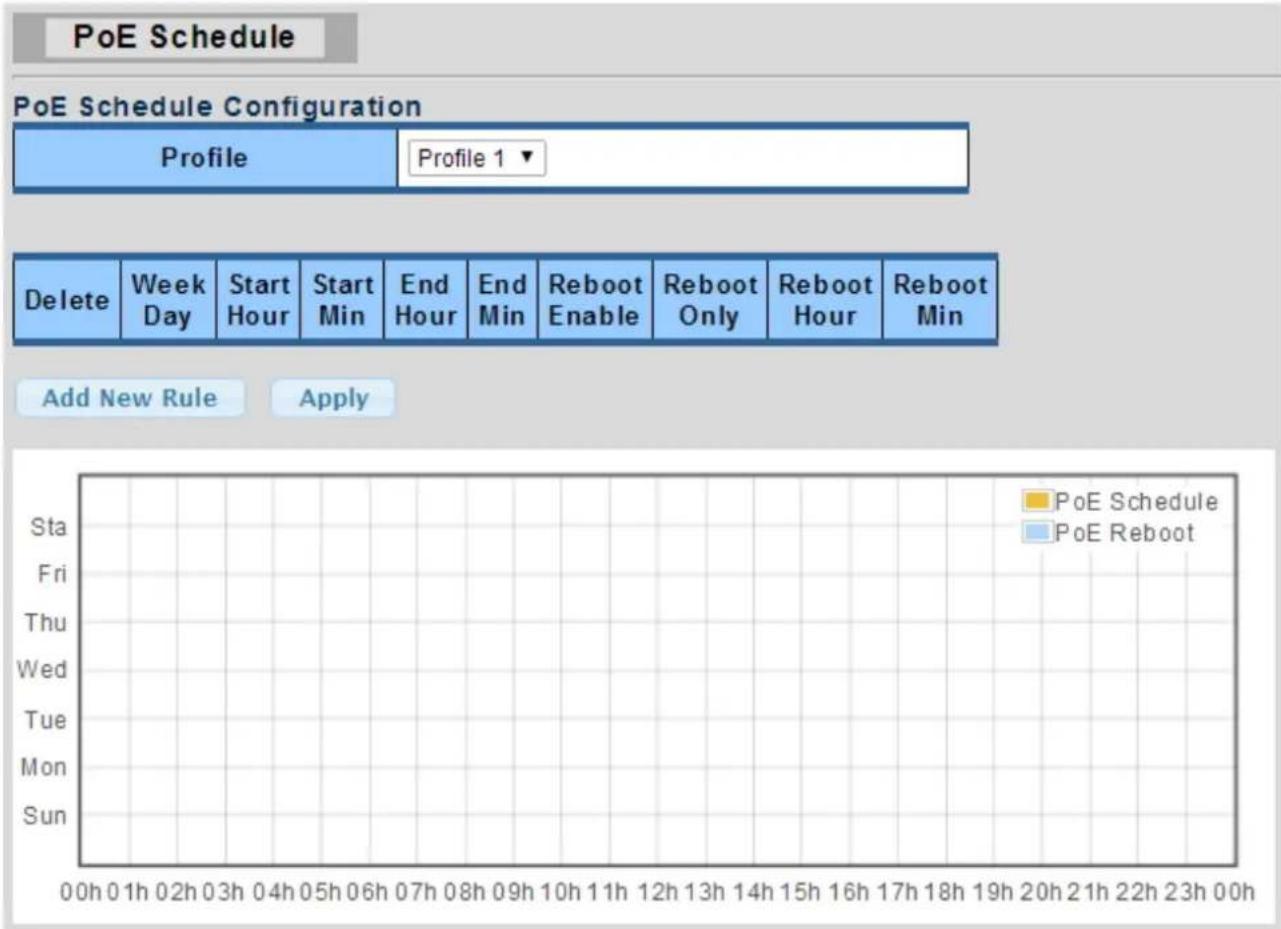
Figure 4-16-4: PoE Schedule Screenshot
Please press the Add New Rule button to start setting PoE Schedule function. You have to set PoE schedule to profile and then go back to PoE Port Configuration, and select "Schedule" mode from per port "PoE Mode" option to enable you to indicate which schedule profile could be applied to the PoE port.
The page includes the following fields:
| Object Description | |
| • Profile | Set the schedule profile mode. Possible profiles are:Profile1Profile2Profile3Profile4 |
| • Week Day | Allows user to set week day for defining PoE function by enabling it on the day. |
| • Start Hour | Allows user to set what hour PoE function does by enabling it. |
| • Start Min | Allows user to set what minute PoE function does by enabling it. |
| • End Hour | Allows user to set what hour PoE function does by disabling it. |
| • End Min | Allows user to set what minute PoE function does by disabling it. |
| • Reboot Enable | Allows user to enable or disable the whole PoE port reboot by PoE reboot schedule.Please note that if you want PoE schedule and PoE reboot schedule to work at the same time, please use this function, and don't useReboot Onlyfunction. This function offers administrator to reboot PoE device at an indicated time if administrator has this kind of requirement. |
| • Reboot Only | Allows user to reboot PoE function by PoE reboot schedule. Please note that if administrator enables this function, PoE schedule will not set time to profile. This function is just for PoE port to reset at an indicated time. |
| • Reboot Hour | Allows user to set what hour PoE reboots. This function is only for PoE reboot schedule. |
| • Reboot Min | Allows user to set what minute PoE reboots. This function is only for PoE reboot schedule. |
Buttons
Add New Rule
: Click to add new rule.
Apply
Click to apply changes
Delete
Check to delete the entry.
4.15.5 PoE Alive Operation
The PoE Switch can be configured to monitor connected PD's status in real time via ping action. Once the PD stops working and without response, the PoE Switch is going to restart PoE port power, and bring the PD back to work. It will greatly enhance the reliability and reduces administrator management burden.
Step 1
![graph LR A["PD Status Good!!"] --> B["Ping Request"] A --> C["Ping Echo"] D["PT PoE Camera"] --> B D --> C](/content/2026/06/1225141/images/556ee42c647f4966c9001d214a0de843e50d1cf40bacfc0603b3198c0d2b656f.jpg)
Step 2
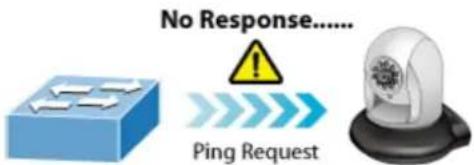
Check alive status for 3 times
Step 3
Alarm Notification

Restart PoE device if without response
Step 4
![graph LR A["PD Alive!!"] --> B["POE ON"] B --> C["Green State"] B --> D["Red State"]](/content/2026/06/1225141/images/059b6053d2f9062415133dfb44dc6a2e10ca7f0b6765921e27b880359431b70f.jpg)
This page provides you with how to configure PD Alive Check. The screen in Figure 4-16-5 appears.
PD Alive Check
PD Alive Check
| Port Select | Mode | Interval Time(10~300s) | Retry Count(1~5) | Action | Reboot Time(30~180s) |
| Select Ports | EnabledDisabled | 30 | 2 | None | 90 |
Apply
PD Alive Check Configuration
| Port | Mode | Ping PD IP Address | Interval Time [s] | Retry Count | Action | Reboot Time [s] | |
| 1 | Disabled | Edit | 0.0.0.0 | 30 | 2 | None | 90 |
| 2 | Disabled | Edit | 0.0.0.0 | 30 | 2 | None | 90 |
| 3 | Disabled | Edit | 0.0.0.0 | 30 | 2 | None | 90 |
| 4 | Disabled | Edit | 0.0.0.0 | 30 | 2 | None | 90 |
| 5 | Disabled | Edit | 0.0.0.0 | 30 | 2 | None | 90 |
| 6 | Disabled | Edit | 0.0.0.0 | 30 | 2 | None | 90 |
Figure 4-15-5: PD Alive Check Configuration Screenshot
The page includes the following fields:
| Object Description | |
| • Mode | Allows user to enable or disable per port PD Alive Check function. By default, all ports are disabled. |
| • Ping PD IP Address | This column allows user to set PoE device IP address for system making ping to the PoE device. Please note that the PD's IP address must be set to the same network segment with the PoE Switch. |
| • Interval Time (10~300s) | This column allows user to set how long system should issue a ping request to PD for detecting whether PD is alive or dead. Interval time range is from 10 seconds to 300 seconds. |
| • Retry Count (1~5) | This column allows user to set the number of times system retries ping to PD. For example, if we set count 2, it means that if system retries ping to the PD and the PD doesn't response continuously, the PoE port will be reset. |
| • Action | Allows user to set which action will be applied if the PD is without any response. The PoE Switch offers the following 3 actions: ■ PD Reboot: It means system will reset the PoE port that is connected to the PD. ■ PD Reboot & Alarm: It means system will reset the PoE port and issue an alarm message via Syslog, SMTP. ■ Alarm: It means system will issue an alarm message via Syslog, SMTP. |
| • Reboot Time (30~180s) | This column allows user to set the PoE device rebooting time as there are so many kinds of PoE devices on the market and they have a different rebooting time. The PD Alive-check is not a defining standard, so the PoE device on the market doesn't report reboot done information to the PoE Switch. Thus, user has to make sure how long the PD will take to finish booting, and then set the time value to this column. System is going to check the PD again according to the reboot time. If you are not sure of the precise booting time, we suggest you set it longer. |
Buttons
Apply
Click to apply changes.
4.16 Maintenance
Use the Maintenance System configuration basic configura
tions of the LRP Managed Switch. Under
maintenance, the following topics are provided to back up, upgrade, save and restore the configuration. This section has the following items:
■ Factory Default You can reset the configuration of the switch on this page.
■ Reboot Switch You can restart the switch on this page. After restart, the switch will boot normally.
■ Backup Manager You can back up the switch configuration.
■ Upgrade Manager You are switch configuration.
Dual Image lect active or backup image on this page.
4.16.1 Factory Default
You can reset the configuration of the switch on this page. Only the IP configuration is retained. The new configuration is available immediately, which means that no restart is necessary. The Factory Default screen in Figure 4-15-1 appears and click to reset the configuration to Factory Defaults.

Figure 4-15-1 Factory Default Page Screenshot
After the "Factory" button is pressed and rebooted, the system will load the default IP settings as follows:
Default IP address: 192.16 8.0.100
Subnet mask: 255.255.255 .0
Default Gateway: 192.168. 0.254
The other setting value is b ack to disable or none.

To reset the LRP Managed Switch to the factory default setting, you can also press the hardware reset button on the front panel for about 10 seconds. After the device is rebooted, you can login the management Web interface within the same subnet of 192.168.0.xx.
4.16.2 Reboot Switch
The Reboot page enables the device to be rebooted from a remote location. Once the Reboot button is pressed, user has to re-login the Web interface for about 60 seconds. The Reboot Switch screen in Figure 4-16-2 appears and click to reboot the system.
Figure 4-16-2 Reboot Switch Page Screenshot
4.16.3 Backup Manager
This function allows backup of the current image or configuration of the LRP Managed Switch to the local management station. The Backup Manager screen in Figure 4-16-3 appears.

Figure 4-16-3 Backup Manager Page Screenshot
The page includes the following fields:
| Object Description | |
| • Backup Method | Select backup method from this drop-down list. |
| • Server IP | Fill in your TFTP server IP address. |
| • Backup Type | Select backup type. |
| • Image | Select active or backup image. |
Buttons
Backup
: Click to back up image, configuration or log.
4.16.4 Upgrade Manager
This function allows reloading of the current image or configuration of the LRP Managed Switch to the local management station. The Upgrade Manager screen in Figure 4-16-4 appears.
Upgrade Manager
| Upgrade Method | TFTP |
| Server IP | (IPv4 or IPv6 Address) |
| File Name | |
| Upgrade Type | ImageStartup ConfigurationBackup ConfigurationRunning Configuration |
| Image | (Active) (Backup) |
Upgrade
Figure 4-16-4 Upgrade Manager Page Screenshot
The page includes the following fields:
| Object Description | |
| • Upgrade Method | Select upgrade method from this drop-down list. |
| • Server IP | Fill in your TFTP server IP address. |
| • File Name | The name of firmware image or configuration. |
| • Upgrade Type | Select upgrade type. |
| • Image | Select active or backup image. |
Buttons
Upgrade
Click to upgrade image or configuration.
4.16.5 Dual Image
This page provides information about the active and backup firmware images in the device, and allows you to revert to the backup image. The web page displays two tables with information about the active and backup firmware images. The Dual Image Configuration and Information screens in Figure 4-16-5 & Figure 4-16-6 appear.

Figure 4-15-5: Dual Image Configuration Page Screenshot
The page includes the following fields:
| Object Description | |
| • Active Image | Select the active or backup image |
Buttons
Apply
: Click to apply active image.
| v1.0b140225.bix | Active |
| Flash Partition | 0 |
| Image Name | v1.0b140225.bix |
| Image Size | 57:12633 Bytes |
| Created Time | 2014-02-26 19:42:58 UTC |
| v1.0b140225.bix | Backup |
| Flash Partition | 1 |
| Image Name | v1.0b140225.bix |
| Image Size | 57:12633 Bytes |
| Created Time | 2014-02-26 19:42:58 UTC |
Figure 4-16-6: Dual Image Information Page Screenshot
he page includes the following fields: T
| Object Description | |
| • Flash Partition | Display the current flash partition |
| • Image Name | Display the current image name |
| • Image Size | Display the current image size |
| • Created Time | Display the created time |
5. SWITCH OPERATION
5.1 Address Table
The Switch is implemented with an address table. This address table is composed of many entries. Each entry is used to store the address information of some nodes on the network, including MAC address, port no, etc. This information comes from the learning process of Ethernet Switch.
5.2 Learning
When one packet comes in from any port, the Switch will record the source address, port number and the other related information in the address table. This information will be used to decide either forwarding or filtering for future packets.
5.3 Fordiagr & Filteri
When one packet comes from the Ephes and a kitching destination address besides the source
address learning. The Ethernet Switching will look up the address table for the destination address. If not found, this packet will be forwarded to all the other ports except the port, which this packet comes in. And these ports will transmit this packet to the network it connected. If found, and the destination address is located at a different port from this packet comes in, the Ethernet Switching will forward this packet to the port where this destination address is located according to the information from the address table. But, if the destination address is located at the same port with this packet, then this packet will be filtered, thereby increasing the network throughput and availability
5.4 Store-and-Forward
Store-and-Forward is one type of packet-forwarding techniques. A Store-and-Forward Ethernet Switching stores the incoming frame in an internal buffer and does the complete error checking before transmission. Therefore, no error packets occur. It is the best choice when a network needs efficiency and stability.
The Ethernet Switch scans the destination address from the packet-header, searches the routing table provided for the incoming port and forwards the packet, only if required. The fast forwarding makes the switch attractive for connecting servers directly to the network, thereby increasing throughput and availability. However, the switch is most commonly used to segment existence hubs, which nearly always can't be easily configured performance. An Ethernet Switchin
Ethernet network environment to significantly boost bandwidth using the conventional cabling and adapters.
Due to the learning function of the Ethernet switching, the source address and corresponding port number of each incoming and outgoing packed packets is stored in this ia routi information is subsequently used to filter packets whose destination address is on the same segments based on the address traffic times respective domain and reduces the overall load on the network.
The Switch performs "Store and therefore is necessary to look reliably, it reduces the re-transmission rate. No packet loss will occur.
5.5 Auto-Negotiation
The STP ports on the Switch have a built-in "Auto-negotiation". This technology automatically sets the best possible bandwidth when a connection is established with another network device (usually at Power On or Reset). This is done by detecting the modes and speeds when both devices are connected. Both 10BASE-T and 100BASE-TX devices can connect with the port in either half- or full-duplex mode.
| If attached device is: 100BASE-TX port will set to: | |
| 10Mbps, without auto-negotiation 10Mbps. | |
| 10Mbps, with auto-negotiation 10/20Mbps (10BASE-T/full-duplex) | |
| 100Mbps, without auto-negotiation 100Mbps | |
| 100Mbps, with auto-negotiation 100/200Mbps (100BASE-TX/full-duplex) |
6. TROUBLESHOOTING
This chapter contains information to help you solve your issue. If the LRP Managed Switch is not functioning properly, make sure the LRP Managed Switch is set up according to instructions in this manual.
■ The Link LED is not lit
Solution:
Check the cable connection and remove duplex mode of the LRP Managed Switch
■ Som stations is cannot talk to other cated on the other port
Solution:
Please check the device settings, trunk settin port enable
■ Performance is bad
Solution:
Check the full duplex status of the LRP Managed Switch. If the LRP Managed Switch is set to full duplex and the partner is set to half duplex, then the performance will be poor. Please also check the in/out rate of the port.
Why the Switch doesn't connect to the network
Solution:
- Check the LNK/ACT LED on the LRP Managed Switch
- Try another port on the LRP Managed Switch
- Make sure the cable is installed properly
- Make sure the cable is the right type
- Turn off the power. After a while, turn on power again
■ 100BASE-TX port link LED is lit, but the traffic is irregular
Solution:
Check that the attached device is not set to full duplex. Some devices use a physical or software switch to change duplex modes. Auto-negotiation may not recognize this type of full-duplex setting.
■ Switch does not power up
Solution:
- AC power cord is not inserted or faulty
-
Check whether the AC power cord is inserted correctly
-
Replace the power cord if the cord is inserted correctly. Check whether the AC power source is working by
connecting a different device in place of the switch.
- If that device works, refer to the next step.
- If that device does not work, check the AC power
APPENDIX A
A.1 Switch's RJ45 Pin Assignments
1000Mbps, 1000BASE T
| Contact MDI MDI-X | ||
| 1 | BI_DA+ | BI_DB+ |
| 2 | BI_DA- | BI_DB- |
| 3 | BI_DB+ | BI_DA+ |
| 4 | BI_DC+ | BI_DD+ |
| 5 | BI_DC- | BI_DD- |
| 6 | BI_DB- | BI_DA- |
| 7 | BI_DD+ | BI_DC+ |
| 8 | BI_DD- | BI_DC- |
Implicit implementation of the crossover function within a twisted-pair cable, or at a wiring panel, while not expressly forbidden, is beyond the scope of this standard.
A.2 10/100Mbps, 10/100BASE-TX
When connecting your 10/100Mbps Ethernet Switch to another switch, a bridge or a hub, a straight-through or crossover cable is necessary. Each port of the Switch supports auto-MDI/MDI-X detection. That means you can directly connect the Switch to any Ethernet devices without making a crossover cable. The following table and diagram show the standard RJ45 receptacle/connector and their pin assignments:
| RJ45 Connector Pin Assignment | ||
| Contact | MDIMedia Dependent Interface | MDI-XMedia DependentInterface-Cross |
| 1 Tx + (transmit) Rx + (receive) | ||
| 2 Tx - (transmit) Rx - (receive) | ||
| 3 Rx + (receive) Tx + (transmit) | ||
| 4, 5 Not used | ||
| 6 Rx - (receive) Tx - (transmit) | ||
| 7, 8 Not used | ||
The standard cable, RJ45 pin assignment
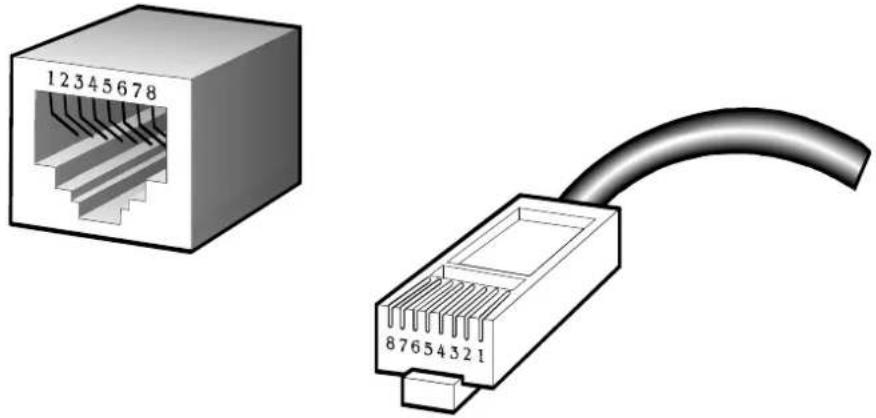
The standard Edition
There are 8 wires on a standard UTP/STP cable and each wire is color-co of straight-through cable and crossover cable connection
he following shows the pin allocation and color
| Straight-through Cable SIDE 1 SIDE 2 | |||
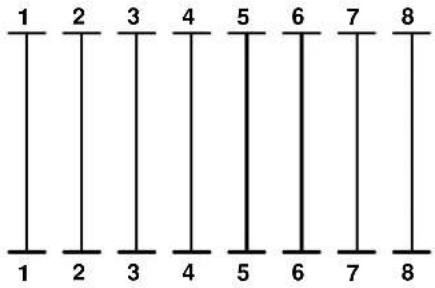 | SIDE 1 | 1 = White / Orange | 1 = White / Orange |
| 2 = Orange | 2 = Orange | ||
| 3 = White / Green | 3 = White / Green | ||
| 4 = Blue | 4 = Blue | ||
| 5 = White / Blue | 5 = White / Blue | ||
| 6 = Green | 6 = Green | ||
| 7 = White / Brown | 7 = White / Brown | ||
| SIDE 2 | 8 = Brown | 8 = Brown | |
| Crossover Cable SIDE 1 SIDE 2 | |||
 | SIDE 1 | 1 = White / Orange | 1 = White / Green |
| 2 = Orange | 2 = Green | ||
| 3 = White / Green | 3 = White / Orange | ||
| 4 = Blue | 4 = Blue | ||
| 5 = White / Blue | 5 = White / Blue | ||
| 6 = Green | 6 = Orange | ||
| 7 = White / Brown | 7 = White / Brown | ||
| SIDE 2 | 8 = Brown | 8 = Brown | |
Figure A-1: Straight-through and Crossover Cable
Please make sure your connectedare w cables into your network.
ith the same pin assignment and color as the above table before deploying the
EC Declaration of Conformity
For the following equipment:
*Type of Product : 8-port Coax + 2-port 10/100/1000T + 2-port 100/1000X SFP Long Reach PoE over Coaxial Managed Switch
*Model Number : LRP-822CS
* Produced by:
Manufacturer's Name : Planet Technology Corp.
Manufacturer's Address : 10F., No.96, Minquan Rd., Xindian Dist., New Taipei City 231, Taiwan (R.O.C.).
is herewith confirmed to comply with the requirements set out in the Council Directive on the Approximation of the Laws of the Member States relating to Electromagnetic Compatibility Directive on (2004/108/EC) and Low Voltage Directive 2006/95/EC..
For the evaluation regarding the EMC, the following standards were applied:
EN 55022 (2010+AC: 2011)
EN 61000-3-2 (2006+A1:2009+A2:2009)
EN 61000-3-3 (2008)
EN 55024 (2010)
EN 61000-4-2 (2009)
EN 61000-4-3 (2006+A2:2010)
EN 61000-4-4 (2012)
EN 61000-4-5 (2006)
EN 61000-4-6 (2009)
EN 61000-4-8 (2010)
EN 61000-4-11 (2004)
EN60950-1 (2006+A11:2009+A1:2010+A12:2011+A2:2013)
Responsible for marking this declaration if the:
☒ Manufacturer ☐ Authorized representative established within the EU
Authorized representative established within the EU (if applicable):
Company Name: Planet Technology Corp.
Company Address: 10F., No.96, Minquan Rd., Xindian Dist., New Taipei City 231, Taiwan(R.O.C.)
Person responsible for making this declaration
Name, Surname Kent Kang
Position / Title : Product Manager
Taiwan
Place
12th , June, 2015
Date
font fang
Legal Signature
- L2/L4 LONG REACH POE MANAGED SWITCH
- TRADEMARKS
- DISCLAIMER
- FCC WARNING
- CE MARK WARNING
- ENERGY SAVING NOTE OF THE DEVICE
- WEEE WARNING
- REVISION
- TABLE OF CONTENTS
- INTRODUCTION.... 10
- INSTALLATION 23
- SWITCH MANAGEMENT .... 37
- WEB CONFIGURATION.... 43
- 4.2 SYSTEM....50
- 4.3 PORT MANAGEMENT 80
- 4.4 LINK AGGREGATION....102
- 4.5 VLAN....113
- 4.6 SPANNING TREE PROTOCOL....141
- 4.7 MULTICAST....162
- 4.8 QUALITY OF SERVICE....193
- 4.9 SECURITY ......215
- 4.10 ACL 277
- 4.11 MAC ADDRESS TABLE....294
- 4.12 LLDP 299
- 4.13 DIAGNOSTICS....317
- 4.14 RMON....321
- 4.15 POWER OVER ETHERNET 330
- 4.16 MAINTENANCE....340
- SWITCH OPERATION 344
- TROUBLESHOOTING.... 346
- APPENDIX A 348
- INTRODUCTION
- 1.1 PACKET CONTENTS
- 1.2 PRODUCT DESCRIPTION
- INTELLIGENT LONG REACH POE SWITCH ON COAXIAL-BASED NETWORK
- MULTI-CHANNEL LONG REACH POWER OVER ETHERNET
- CENTRALIZED POWER MANAGEMENT
- DAISY-CHAINING MULTIPLE NODES
- BUILT-IN UNIQUE POE FUNCTIONS FOR POWERED DEVICES MANAGEMENT
- INTELLIGENT POWERED DEVICE ALIVE CHECK
- SCHEDULED POWER RECYCLING
- POE SCHEDULE FOR ENERGY SAVING
- POE USAGE MONITORING
- POE OVER-TEMPERATURE PROTECTION SYSTEM
- ENVIRONMENT-FRIENDLY, SMART FAN DESIGN FOR SILENT OPERATION
- IPV6 / IPV4 DUAL STACK
- ROBUST LAYER 2 FEATURES
- EFFICIENT TRAFFIC CONTROL
- POWERFUL SECURITY
- ADVANCED NETWORK SECURITY
- FRIENDLY AND SECURE MANAGEMENT
- FLEXIBILITY AND LONG-DISTANCE EXTENSION SOLUTION
- INTELLIGENT SFP DIAGNOSIS MECHANISM
- 1.3 HOW TO USE THIS MANUAL
- THIS USER MANUAL IS STRUCTURED AS FOLLOWS
- SECTION 2, INSTALLATION
- SECTION 3, SWITCH MANAGEMENT
- SECTION 4, WEB CONFIGURATION
- SECTION 5, SWITCH OPERATION
- SECTION 6, TROUBLESHOOTING
- APPENDIX A
- 1.4 PRODUCT FEATURES
- PHYSICAL PORT
- LONG REACH POWER OVER ETHERNET
- LAYER 2 FEATURES
- QUALITY OF SERVICE
- MULTICAST
- SECURITY
- AUTHENTICATION
- ACCESS CONTROL LIST
- MAC SECURITY
- PORT SECURITY FOR SOURCE MAC ADDRESS ENTRIES FILTERING
- DHCP SNOOPING TO FILTER UNTRUSTED DHCP MESSAGES
- DYNAMIC ARP INSPECTION DISCARDS ARP PACKETS WITH INVALID MAC ADDRESS TO IP ADDRESS BINDING
- IP SOURCE GUARD PREVENTS IP SPOOFING ATTACKS
- DOS ATTACK PREVENTION
- SSH / SSL
- MANAGEMENT
- IPV4 AND IPV6 DUAL STACK MANAGEMENT
- SWITCH MANAGEMENT INTERFACE
- USER PRIVILEGE LEVELS CONTROL
- BUILT-IN TRIVIAL FILE TRANSFER PROTOCOL (TFTP) CLIENT
- BOOTP AND DHCP FOR IP ADDRESS ASSIGNMENT
- SYSTEM MAINTENANCE
- SNTP NETWORK TIME PROTOCOL
- CABLE DIAGNOSTICS
- LINK LAYER DISCOVERY PROTOCOL (LLDP) AND LLDP-MED
- SNMP TRAP FOR INTERFACE LINKUP AND LINKDOWN NOTIFICATION
- EVENT MESSAGE LOGGING TO REMOTE SYSLOG SERVER
- FOUR RMON GROUPS (HISTORY, STATISTICS, ALARMS AND EVENTS)
- PLANET SMART DISCOVERY UTILITY
- SMART FAN WITH SPEED CONTROL
- INSTALLATION
- 2.1 HARDWARE DESCRIPTION
- 2.1.1 SWITCH FRONT PANEL
- FRONT PANEL
- LONG REACH POE BNC INTERFACE
- GIGABIT TP INTERFACE
- 100/1000BASE-X SFP SLOTS
- CONSOLE PORT
- RESET BUTTON
- 2.1.2 LED INDICATIONS
- LRP-822CS LED INDICATION
- 1000BASE-SX/LX SFP INTERFACES (GE3 TO GE4)
- LRP-1622CS LED INDICATION
- SYSTEM / ALERT
- LONG REACH POE INTERFACES (PORT-1 TO PORT-16)
- 10/100/1000BASE-T INTERFACES (GE1 TO GE2)
- 2.1.3 SWITCH REAR PANEL
- REAR PANEL
- AC POWER RECEPTACLE
- 2.2 INSTALLING THE SWITCH
- 2.2.1 DESKTOP INSTALLATION
- 2.2.2 RACK MOUNTING
- 2.2.3 INSTALLING THE SFP TRANSCEIVER
- APPROVED PLANET SFP TRANSCEIVERS
- GIGABIT SFP TRANSCEIVER MODULES
- FAST ETHERNET SFP TRANSCEIVER MODULES
- CONNECT THE FIBER CABLE
- REMOVE THE TRANSCEIVER MODULE
- 2.2.4 INSTALLING THE LONG REACH POE COMMUNICATION
- APPROVED PLANET LONG REACH POE EXTENDERS
- LONG REACH ETHERNET COAXIAL EXTENDERS
- CONNECT THE COAXIAL CABLE
- TIGHTEN THE BNC MALE CONNECTOR GENTLY
- ENABLE LONG REACH POWER OVER ETHERNET FUNCTION FOR THE ALL LRP PORTS FROM WEBUI
- CHECK THE LNK LED OF THE LONG REACH POWER OVER ETHERNET INTERFACE ON THE FRONT OF THE LRP MANAGED SWITCH. ENSURE THAT THE LONG REACH POWER OVER ETHERNET INTERFACE IS OPERATING CORRECTLY
- REMOVE THE CONNECTED THE COAXIAL CABLE
- PLEASE STICK THE STICKER ON THE CONNECTOR GOING TO THE LRP EXTENDER
- SWITCH MANAGEMENT
- THIS CHAPTER COVERS THE FOLLOWING TOPICS
- 3.1 REQUIREMENTS
- 3.2 MANAGEMENT ACCESS OVERVIEW
- 3.3 ADMINISTRATION CONSOLE
- DIRECT ACCESS
- 3.4 WEB MANAGEMENT
- 3.5 SNMP-BASED NETWORK MANAGEMENT
- 3.6 PLANET SMART DISCOVERY UTILITY
- ABOUT WEB-BASED MANAGEMENT
- LOGGING ON THE SWITCH
- 4.1 MAIN WEB PAGE
- PANEL DISPLAY
- MAIN MENU
- BUTTONS
- SAVE
- LOGOUT
- REBOOT
- REFRESH
- 4.1.1 SAVE BUTTON
- 4.1.2 CONFIGURATION MANAGER
- APPLY
- 4.1.2.1 SAVING CONFIGURATION
- 4.2 SYSTEM
- 4.2.1 SYSTEM INFORMATION
- EDIT
- 4.2.2 IP CONFIGURATIONS
- 4.2.3 IPV6 CONFIGURATION
- IPV6 INFORMATION
- 4.2.4 USER CONFIGURATION
- 4.2.5 TIME SETTINGS
- 4.2.5.1 SYSTEM TIME
- SYSTEM TIME INFORMATIONS
- 4.2.5.2 SNTP SERVER SETTINGS
- 4.2.6 LOG MANAGEMENT
- 4.2.6.1 LOCAL LOG
- 4.2.6.2 LOCAL LOG
- 4.2.6.3 REMOTE SYSLOG
- 4.2.6.4 LOG MESSAGE
- VIEW
- CLEAR
- 4.2.7 SNMP MANAGEMENT
- 4.2.7.1 SNMP OVERVIEW
- SNMP OPERATIONS
- SNMP COMMUNITY
- 4.2.7.2 SNMP SYSTEM INFORMATION
- 4.2.7.3 SNMP VIEW
- UTTONS B
- ADD
- VIEW TABLE STATUS
- 4.2.7.4 SNMP ACCESS GROUP
- 4.2.7.5 SNMP COMMUNITY
- COMMUNITY STATUS
- 4.2.7.6 SNMP
- 4.2.7.7 SNMPV1, 2 NOTIFICATION RECIPIENTS
- 4.2.7.9 SNMPV3 NOTIFICATION RECIPIENTS
- 4.2.7.10 SNMP ENGINE ID
- ENGINE ID STATUS
- 4.2.7.11 SNMP REMOTE ENGINE ID
- 4.3 PORT MANAGEMENT
- 4.3.1 PORT CONFIGURATION
- 4.3.2 LRP PORT CONFIGURATION
- 4.3.3 PORT COUNTERS
- 4.3.4 BANDWIDTH UTILIZATION
- 4.3.5 PORT MIRRORING
- MIRROR PORT CONFIGURATION
- 4.3.6 JUMBO FRAME
- 4.3.7 PORT ERROR DISABLED CONFIGURATION
- ERROR DISABLE INFORMATION
- 4.3.8 PORT ERROR DISABLED
- 4.3.9 PROTECTED PORTS
- OVERVIEW
- PROMISCUOUS (UNPROTECTED) PORTS
- ISOLATED (PROTECTED) PORTS
- 4.3.10 EEE
- WHAT IS EEE
- 4.3.11 SFP MODULE INFORMATION
- 4.3.11.10SERESTATUS
- 4.3.11.1 SFP MODULE DETAIL STATUS
- 4.4 LINK AGGREGATION
- 4.4.1 LAG SETTING
- 4.4.2 LAG MANAGEMENT
- 4.4.3 LAG PORT SETTING
- 4.4.4 LACP SETTING
- 4.4.5 LACP PORT SETTING
- LACP PORT INFORMATION
- 4.4.6 LAG STATUS
- LAG STATUS
- LACP INFORMATION
- 4.5 VLAN
- 4.5.1 VLAN OVERVIEW
- 4.5.2 IEEE 802.1Q VLAN
- IEEE 802.1Q STANDARD
- 802.1Q VLAN TAGS
- ADDING AN IEEE802.1Q TAG
- PORT VLAN ID
- DEFAULT VLANS
- ASSIGNING PORTS TO VLANS
- VLAN CLASSIFICATION
- PORT OVERLAPPING
- UNTAGGED VLANS
- 4.5.3 MANAGEMENT VLAN
- 4.5.4 CREATE VLAN
- 4.5.5 INTERFACE SETTINGS
- UNDERSTAND NOMENCLATURE OF THE SWITCH
- IEEE 802.1Q TAGGED AND UNTAGGED
- IEEE 802.1Q TUNNELING (Q-IN-Q)
- EDIT INTERFACE SETTING
- 4.5.6 PORT TO VLAN
- 4.5.7 PORT VLAN MEMBERSHIP
- ▼ PORT VLAN MEMBERSHIP TABLE
- 4.5.8 PROTOCOL VLAN GROUP SETTING
- COMMAND USAGE
- 4.5.9 PROTOCOL VLAN PORT SETTING
- PROTOCOL VLAN PORT STATE
- 4.5.10 GVRP SETTING
- GVRP INFORMATIONS
- 4.5.11 GVRP PORT SETTING
- 4.5.12 GVRP VLAN
- 4.5.13 GVRP STATISTICS
- 4.5.14 VLAN SETTING B×AMP
- 4.5.14.1 TWO SEPARATE 802L1QNS
- UNTAGGED PACKET ENTERING VLAN 2
- TAGGED PACKET ENTERING VLAN 2
- UNTAGGED PACKET ENTERING VLAN 3
- SETUP STEPS
- CREATE VLAN GROUP 2 AND 3
- ASSIGN VLAN MODE AND PVID TO EACH PORT
- ASSIGN TAGGED/UNTAGGED TO EACH PORT
- 4.5.14.2 VLAN TRUNKING BETWEEN TWO 802.1Q AWARE SWITCHES
- TE CLEAN GROUP 2 AND 3
- ▼ PORT TO VLAN SETTINGS
- PORT TO VLAN SETTINGS
- 4.6 SPANNING TREE PROTOCOL
- 4.6.1 THEORY
- BRIDGE PROTOCOL DATA UNITS
- CREATING A STABLE STP TOPOLOGY
- STP PORT STATES
- EACH PORT ON A SWITCH USING STP EXISTS IS IN ONE OF THE FOLLOWING FIVE STATES
- A PORT TRANSITIONS FROM ONE STATE TO ANOTHER AS FOLLOWS
- STP PARAMETERS
- STP OPERATION LEVELS
- USER-CHANGEABLE STA PARAMETERS
- ILLUSTRATION OF STP
- 4.6.2 STP GLOBAL SETTINGS
- 4.6.3 STP PORT SETTING
- 4.6.4 CIST INSTANCE SETTING
- CIST INSTANCE INFORMATION
- 4.6.5 CIST PORT SETTING
- 4.6.6 MST INSTANCE CONFIGURATION
- MST INSTANCE STATUS
- 4.6.7 MST PORT SETTING
- 4.6.8 STP STATISTICS
- 4.7 MULTICAST
- 4.7.1 PROPERTIES
- 4.7.2 IGMP SNOOPING
- ABOUT THE INTERNET GROUP MANAGEMENT PROTOCOL (IGMP) SNOOPING
- IGMP VERSIONS 1 AND 2
- IGMP QUER IER
- 4.7.2.1 IGMP SETTING
- IGMP SNOOPING INFORMATIONS
- 4.7.2.2 IGMP QUERIER SETTING
- 4.7.2.3 IGMP STATIC GROUP
- 4.7.2.4 IGMP GROUP TABLE
- 4.7.2.5 IGMP ROUTER SETTING
- 4.7.2.6 IGMP ROUTER TABLE
- 4.7.2.7 IGMP FORWARD ALL
- 4.7.3 IGMP SNOOPING STATIC
- 4.7.4 MLD SNOOPING
- 4.7.4.1 MLD SETTING
- 4.7.4.2 MLD STATIC GROUP
- 4.7.4.3 MLD GROUP TABLE
- 4.7.4.4 MLD ROUTER SETTING
- 4.7.4.5 MLD ROUTER TABLE
- 4.7.4.6 MLD FORWARD ALL
- 4.7.5 MLD SNOOPING STATICS
- 4.7.6 MULTICAST THROTTLING SETTING
- 4.7.7 MULTICAST FILTER
- 4.7.7.1 MULTICAST PROFILE SETTING
- 4.7.7.2 IGMP FILTER SETTING
- 4.7.7.3 MLD FILTER SETTING
- 4.8 QUALITY OF SERVICE
- 4.8.1 UNDERSTAND QOS
- 4.8.2 GENERAL
- 4.8.2.1 QOS PROPERTIES
- 4.8.2.2 QOS PORT SETTINGS
- 4.8.2.3 QUEUE SETTINGS
- 4.8.2.4 COS MAPPING
- COS MAPPING
- 4.8.2.5 DSCP MAPPING
- DSCP MAPPING
- 4.8.3 QOS BASIC MODE
- 4.8.3.1 GLOBAL SETTINGS
- BASIC MODE GLOBAL SETTINGS
- 4.8.3.2 PORT SETTINGS
- 4.8.4 RATE LIMIT
- 4.8.4.1 INGRESS BANDWIDTH CON
- 4.8.4.2 EGRESS BANDWIDTH CONTROL
- 4.8.4.3 EGRESS QUEUE
- GE1 EGRESS PER QUEUE STATUS
- 4.8.5 VOICE VLAN
- 4.5.8.1 INTRODUCTION TO VOICE VLAN
- 4.8.5.2 PROPERTIES
- 4.8.5.3 TELEPHONY OUI MAC SETTING
- VOICE VLAN OUI GROUP
- 4.8.5.4 TELEPHONY OUI PORT SETTING
- 4.9 SECURITY
- 4.9.1 802.1X
- OVERVIEW OF 802.1X (PORT-BASED) AUTHENTICATION
- OVERVIEW OF USER AUTHENTICATION
- 4.9.1.1 UNDERSTANDING IEEE 802.1X PORT-BASED AUTHENTICATION
- DEVICE ROLE S
- AUTHENTICATION INITIATION AND MESSAGE EXCHANGE
- PORTS IN AUTHORIZED AND UNAUTHORIZED STATES
- 4.9.1.2 802.1X SETTING
- 4.9.1.3 802.1X PORT SETTING
- GUEST VLAN SETTING
- GUEST VLAN PORT SETTING
- 4.9.1.5 AUTHENTICATED HOST
- 4.9.2 RADIUS SERVER
- 4.9.3 TACACS+ SERVER
- 4.9.4 AAA
- 4.9.4.1 LOGIN LIST
- 4.9.4.2 ENABLE LIST
- 4.9.5 ACCESS
- 4.9.5.1 TELNET
- TELNET INFORMATION
- 4.9.5.2 SSH
- DISCONNECT
- SSH INFORMATION
- 4.9.5.3 HTTP
- 4.9.5.4 HTTPS
- 4.9.6 MANAGEMENT ACCESS METHOD
- 4.9.6.1 PROFILE RULES
- 4.9.6.2 ACCESS RULES
- 4.9.7 DHCP SNOOPING
- 4.9.7.1 DHCP SNOOPING OVERVIEW
- 4.9.7.2 GLOBAL SETTING
- DHCP SNOOPING SETTING
- 4.9.7.3 VLAN SETTING
- 4.9.7.4 PORT SETTING
- DHCP SNOOPING PORT SETTING
- 4.9.7.5 STATISTICS
- DHCP SNOOPING STATISTICS
- 4.9.7.6 DATABASE AGENT
- OVERVIEW OF THE DHCP SNOOPING DATABASE AGENT
- DHCP SNOOPING DATABASE INFORMATIONS
- 4.9.7.7 RATE LIMIT
- DHCP RATE LIMIT CONFIG
- 4.9.7.8 OPTION 82 GLOBAL SETTING
- 4.9.7.9 OPTION 82 PORT SETTING
- OPTION82 PORT SETTING
- 4.9.7.10 OPTION 82 CIRCUIT-ID SETTING
- 4.9.8 DYNAMIC ARP INSPECTION
- 4.9.8.1 GLOBAL SETTING
- 4.9.8.2 VLAN SETTING
- 4.9.8.3 PORT SETTING
- 4.9.8.4 STATISTICS
- 4.9.8.5 RATE LIMIT
- 4.9.9 IP SOURCE GUARD
- 4.9.9.1 PORT SETTINGS
- IP SOURCE GUARD PORT INFORMATION
- 4.9.9.2 BINDING TABLE
- 4.9.10 PORT SECURITY
- ▼ PORT SECURITY STATUS
- 4.9.11 DOS
- 4.9.11.1 GLOBAL DOS SETTING
- 4.9.12 STORM CONTROL
- 4.9.12.1 GLOBAL SETTING
- 4.9.12.2 PORT SETTING
- 4.10 ACL
- 4.10.1 MAC-BASED ACL
- 4.10.2 MAC-BASED ACE
- 4.10.3 IPV4-BASED ACL
- 4.10.4 IPV4-BASED ACE
- 4.10.5 IPV6-BASED ACL
- 4.10.6 IPV6-BASED ACE
- 4.10.7 ACL BINDING
- 4.11 MAC ADDRESS TABLE
- 4.11.1 STATIC MAC SETTING
- 4.11.2 MAC FILTERING
- 4.11.3 DYNAMIC ADDRESS SETTING
- 4.11.4 DYNAMIC LEARNED
- DYNAMIC MAC TABLE
- 4.12 LLDP
- 4.12.1 LINK LAYER DISCOVERY PROTOCOL
- 4.12.2 LLDP SLETBITALG
- LLDP GLOBAL CONFIG
- 4.12.3 LLDP PORT SETTING
- 4.12.4 LLDP LOCAL DEVICE
- 4.12.5 LLDP REMOTE DEVICE
- DELETE
- 4.12.6 MED NETWORK POLICY
- 4.12.7 MED PORT SETTING
- 4.12.8 LLDP OVERLOADING
- 4.12.9 LLDP STATISTICS
- 4.13 DIAGNOSTICS
- 4.13.1 CABLE DIAGNOSTICS
- COPPER TEST
- 4.13.2 PING
- 4.13.3 PING TEST
- 4.13.4 IPV6 PING TEST
- 4.14 RMON
- 4.14.1 RMON STATISTICS
- 4.14.2 RMON EVENT
- 4.14.3 RMON EVENT LOG
- 4.14.4 RMON ALARM
- 4.14.5 RMON HISTORY
- 4.14.6 RMON HISTORY LOG
- 4.15 POWER OVER ETHERNET
- POE POWER BUDGET LIST FOR LRP MEDSWITCH
- ETHERNET POWERED DEVICE 4.15.1 LONG REACH POWER OVER
- LONG REACH POWER OVER ETHERNET EXTENDERS
- A NÉPŘOBOVÁ REA ACH POE EXTENDERS
- 4.15.2 SYSTEM CONFIGURATION
- RESERVED POWER
- ALLOCATION MODE
- 4.15.3 POWER OVER ETHERNET CONFIGURATION
- 4.15.4 POE SCHEDULE
- POE SCHEDULE
- 4.15.5 POE ALIVE OPERATION
- PD ALIVE CHECK
- PD ALIVE CHECK CONFIGURATION
- 4.16 MAINTENANCE
- 4.16.1 FACTORY DEFAULT
- 4.16.2 REBOOT SWITCH
- 4.16.3 BACKUP MANAGER
- BACKUP
- 4.16.4 UPGRADE MANAGER
- UPGRADE
- 4.16.5 DUAL IMAGE
- SWITCH OPERATION
- 5.1 ADDRESS TABLE
- 5.2 LEARNING
- 5.3 FORDIAGR & FILTERI
- 5.4 STORE-AND-FORWARD
- 5.5 AUTO-NEGOTIATION
- TROUBLESHOOTING
- THE LINK LED IS NOT LIT
- SOM STATIONS IS CANNOT TALK TO OTHER CATED ON THE OTHER PORT
- PERFORMANCE IS BAD
- WHY THE SWITCH DOESN'T CONNECT TO THE NETWORK
- 100BASE-TX PORT LINK LED IS LIT, BUT THE TRAFFIC IS IRREGULAR
- SWITCH DOES NOT POWER UP
- A.1 SWITCH'S RJ45 PIN ASSIGNMENTS
- A.2 10/100MBPS, 10/100BASE-TX
- EC DECLARATION OF CONFORMITY
Brand : Planet
Model : LRP-822CS
Category : NAS