Cybex SC900 - Unknown Emerson - Free user manual and instructions
Find the device manual for free Cybex SC900 Emerson in PDF.


| Product Type | Secure KVM/KM Switch |
| Brand | Emerson (Vertiv) |
| Model Series | Cybex SC900 (Dual-Head) |
| Video Support | HDMI, DVI-I, DisplayPort, VGA (depending on model) |
| Number of Computers Supported | 2, 4, or 8 ports (depending on model) |
| Security Features | Active intrusion protection, tamper-evident seals, optical data diodes, EDID emulators, non-reprogrammable firmware, EAL4+ certified |
| Power Supply | 12V DC 1.5A external adapter (2-port) or internal 35W/45W AC power supply (4/8-port) |
| Dimensions (Height x Width x Depth) - 4-port | 2.2 x 13.7 x 5.0 in (56 x 348 x 127 mm) |
| Weight - 4-port | 3.7 lb (1.9 kg) |
| Operating Temperature | 32° to 104°F (0° to 40°C) |
| Humidity | 0-80% RH, non-condensing |
| Supported Operating Systems | Windows, Linux (Red Hat, Ubuntu), Mac OS X 10.3+ |
| Keyboard/Mouse Support | USB and PS/2 (standard keyboards and mice; wireless not supported for security) |
| Audio Support | Stereo headphones and amplified speakers; microphone not supported |
| USB Ports | Console keyboard/mouse USB Type-A, PC keyboard/mouse USB Type-B, filtered USB (fUSB), Dedicated Peripheral Port (DPP) for CAC/smart card |
| Console Video Ports | Dual-head: 2 video outputs (HDMI, DVI-I, or DisplayPort) |
| PC Video Ports | Corresponding to number of computers (2, 4, or 8) |
| Cable Options | Available in 6 ft and 10 ft lengths for various video types |
| Compatible Authentication Devices | Common Access Card (CAC), USB biometric, USB tokens |
| Mounting | Desktop (rack mount not specified) |
Frequently Asked Questions - Cybex SC900 Emerson
User questions about Cybex SC900 Emerson
0 question about this device. Answer the ones you know or ask your own.
Ask a new question about this device
Download the instructions for your Unknown in PDF format for free! Find your manual Cybex SC900 - Emerson and take your electronic device back in hand. On this page are published all the documents necessary for the use of your device. Cybex SC900 by Emerson.
USER MANUAL Cybex SC900 Emerson
Cybex™ SC Switching System
Installer/User Guide
The information contained in this document is subject to change without notice and may not be suitable for all applications. While every precaution has been taken to ensure the accuracy and completeness of this document, Vertiv assumes no responsibility and disclaims all liability for damages resulting from use of this information or for any errors or omissions. Refer to other local practices or building codes as applicable for the correct methods, tools, and materials to be used in performing procedures not specifically described in this document.
The products covered by this instruction manual are manufactured and/or sold by Vertiv. This document is the property of Vertiv and contains confidential and proprietary information owned by Vertiv. Any copying, use or disclosure of it without the written permission of Vertiv is strictly prohibited.
Names of companies and products are trademarks or registered trademarks of the respective companies. Any questions regarding usage of trademark names should be directed to the original manufacturer.
Technical Support Site
If you encounter any installation or operational issues with your product, check the pertinent section of this manual to see if the issue can be resolved by following outlined procedures. Visit https://www.VertivCo.com/en-us/support/ for additional assistance.
TABLE OF CONTENTS
1 Product Overview 1
1.1 Features and Benefits 2
2 Basic Operation 3
2.0.1 Factory reset 3
2.1 Switch Overview 3.
2.1.1 Switching between computers 14....
2.1.2 Dedicated Peripheral Port (DPP) 15
2.1.3 KM multi-monitor support.... 15
2.2 Keyboard and Mouse Settings.... 18
2.2.1 Keyboard settings.... 18
2.2.2 Mouse settings.... 19
2.2.3 Filtered USB port (fUSB) 19
2.2.4 Interchangeable KVM to KM functionality .....19
2.3 Keyboard Shortcuts..19....
2.4 KM Configuration.... 22
2.4.1 Creating a KM configuration_file 23
2.4.2 Loading a KM configuration file 29
3 Troubleshooting 31
3.1 General 31
3.2 KM Configuration File 31
3.3 Video.... 33
3.4 Keyboard 34
3.5 Mouse 35
3.6 DPP 36
4 Appendices.... 37
Appendix A: Technical Specifications 37
This page intentionally left blank
1 PRODUCT OVERVIEW
Cybex™ SC switches are field-proven, secure, KVM and KM switching solutions with special support government agencies. This switching system allows users to switch safely between computers operating at different classification levels from a single set of peripherals, providing continuous access to critical data. With multiple security features, the secure design prevents the transfer of data between the connected computers, ensuring data security is not compromised.

WARNING! This product is equipped with active intrusion protection and tamper-evident seal. Tampering with the switch or breaking/removing the seals will permanently disable it and the warranty. If the enclosure appears to have been tampered with or if all the port I continuously, please contact Technical Support.
The appliances covered in this manual include:
KM Models:
• Cybex™ SC KM 120 Secure 2-Port KM Switch
• Cybex™ SC KM 140/145 Secure 4-Port KM Switches
KVM Models:
• Cybex™ SC 820D/920D Secure 2-Port DisplayPort to HDMI KVM Switches
• Cybex™ SC 820H/920H Secure 2-Port HDMI KVM Switches
• Cybex™ SC 820DP/920DP Secure 2-Port DisplayPort KVM Switches
• Cybex™ SC 840/845/940/945 Secure 4-Port DVI-I KVM Switches
• Cybex™ SC 840D/845D/940D/945D Secure 4-Port DisplayPort to HDMI KVM Switches
• Cybex™ SC 840H/845H/940H/945H Secure 4-Port HDMI KVM Switches
• Cybex™ SC 840DP/845DP/940DP/945DP Secure 4-port DisplayPort KVM Switches
- Cybex™ SC 920XD Secure 2-Port Mixed HDMI, DisplayPort and DVI-I KVM Dual Head KV1 Switch
- Cybex™ SC 945XD Secure 4-Port Mixed HDMI, DisplayPort and DVI-I KVM Dual Head KVI Switch
• Cybex™ SC 885DP/985DP Secure 8-port DisplayPort KVM Switches
• Cybex™ SC 820/920 Secure 2-Port DVI-I KVM Switches
• Cybex™ SC 885/985 Secure 8-port DVI-I KVM Switches
• Cybex™ SC 920XP Secure 2-Port Mixed DisplayPort and DVI-I KVM Dual Head KVM Switch
• Cybex™ SC 945XP Secure 4-Port Mixed DisplayPort and DVI-I KVM Dual Head KVM Switc
1.1 Features and Benefits
The SC switching system offers the following options, depending on the model:
• Support for HDMI, DVI-I, VGA and/or DisplayPort video
• Support for Common Access Card (CAC), USB biometric device and USB authentication tok
• Certification to Evaluation Assurance Level (EAL) 4+
• Support for USB and PS/2 keyboard and mouse
NOTE: Supports most keyboards and mice. For more information, contact Technical Support.
The SC switching system is also designed to provide additional layers of security, preventing infinite data leaks between computers and providing additional USB port protection.
Table 1.1 Security and Protection Features
| FEATURE DESCRIPTION | |
| Complete network segmentation | Data flow is controlled and insulated from peripheral devices using optical data diodes. EDID emulators and internal firewalls protect shared displays and prevent external memory leaks. |
| Protection from shared resources | The switches are designed to securely operate, even when peripheral devices are vulnerable. They do not allow computer access to any shared resource and do not share controllable to signaling at power sources. |
| Non-reprogrammable firmware | Custom firmware is not reprogrammable preventing the ability to remotely attack switch controllers. |
| Audio protection | Microphone switching is not supported to prevent data leaks through audio ports. |
| CONSOLE USB port protection | CONSOLE USB ports protect from the use of unsafe USB storage devices. Unqualified devices are rejected connected through the switch even though keyboard and mouse data is passed through. |
2 BASIC OPERATION
Although installation of your SC switching system is complete, ensure you have one of the following compatible operating systems:
- Microsoft® Windows®
- Red Hat®, Ubuntu® or any other Linux® platform
• Mac OS® X version 10.3 or higher
The switches are compatible with stereo headphones and amplified stereo speakers.
NOTE: Do not connect a microphone device to the switch's audio output port. Opt to use hard devices that do not include microphone capabilities.
Wireless devices and non-standard keyboards with integrated USB hubs and other USB-integrated devices are not fully supported for security reasons.
2.0.1 Factory reset
A factory reset clears the device settings and restores the device to its original configuration.
To factory reset:
Type Ctrl + Ctrl + F11 + R
2.1 Switch Overview
The following figures and tables show the controls and connectors on the front panel and connected the back of the switching systems covered in this manual.
NOTE: The SC 800 series models are single-head devices. They have identical ports, except for number of ports on the device. The SC 900 series models are dual-head devices.
Figure 2.1 SC KM120 Switch
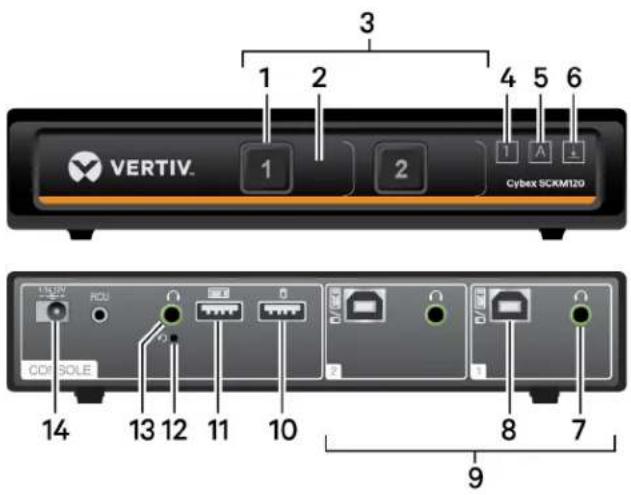
Table 2.1 SC KM120 Switch Description
| ITEM DESCRIPTION ITEM DESCRIPTION | |||
| 1 LED channel selector 8 PC keyboard/mouse | USB Type-B | port | |
| 2 Channel label 9 PC ports | |||
| 3 PC port selectors 10 CONSOLE mouse | USB Type-A | port | |
| 4 Num lock indicator | 11 CONSOLEkeyboard USB Type-A port | ||
| 5 Caps lock indicator 12 | CONSOLE reset button | ||
| 6 Scroll lock indicator | 13 | CONSOLE audio jack (3.5 mm stereo) | |
| 7 PC audio jack (3.5 mm stereo) | 14 | DC Power Inlet | |
Figure 2.2 SC KM145 Switch
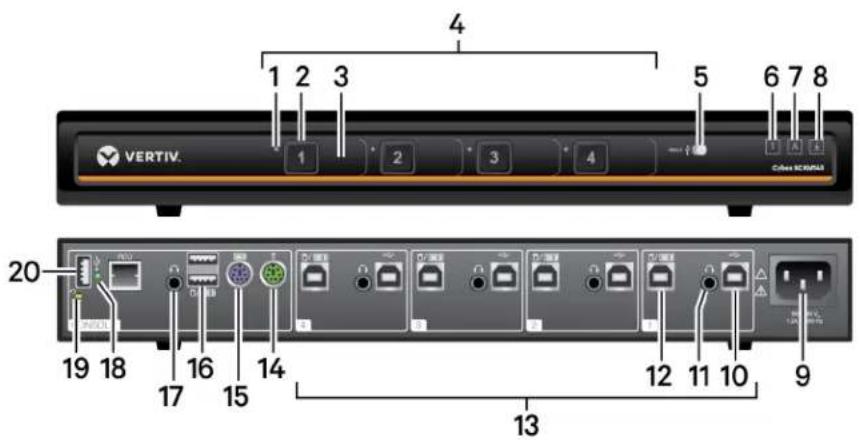
Table 2.2 SC KM145 Switch Description
| ITEM DESCRIPTION ITEM DESCRIPTION | |||
| 1 LED DPP channel indicator 11 PC audio jack (3.5 mm stereo) | |||
| 2 LED channel selector 12 PC keyboard/mouse USB Type-B port | |||
| 3 Channel label 13 PC ports | |||
| 4 | PC port selectors | 14 | CONSOLE mouse PS/2 mini-DIN 6-pin port |
| 5 | DPP freeze button | 15 | CONSOLE keyboard PS/2 mini-DIN 6-pin port |
| 6 | Num lock indicator | 16 | CONSOLE keyboard/mouse USB Type-A port |
| 7 | Caps lock indicator | 17 | CONSOLE audio jack (3.5 mm stereo) |
| 8 | Scroll lock indicator | 18 | CONSOLE DPP LED connection indicator |
| 9 | AC power inlet | 19 | CONSOLE system reset |
| 10 | DPP USB Type-B port | 20 | CONSOLE DPP USB Type-A port |
Figure 2.3 SC 920 DVI-I KVM Switch


Table 2.3 SC 920 DVI-I KVM Switch Description
| ITEM DESCRIPTION ITEM DESCRIPTION | |||
| 1 LED channel selector 9 PC ports | |||
| 2 Channel label 10 | CONSOLE mouse USB Type-A port | ||
| 3 Num lock indicator 11 | CONSOLE DVI-I video ports | ||
| 4 Caps lock indicator | 12 | CONSOLE keyboard USB Type-A port | |
| 5 Scroll lock indicator 13 | Status LEDs | ||
| 6 PC audio jack (3.5 mm stereo) | 14 | CONSOLE audio jack (3.5 mm stereo) | |
| 7 PC DVI-I video ports 15 | DC power inlet | ||
| 8 PC keyboard/mouse USB Type-B port | |||
Figure 2.4 SC 940 DVI-I KVM Switch

Table 2.4 SC 940 DVI-I KVM Switch Description
| ITEM DESCRIPTION ITEM DESCRIPTION | |||
| 1 LED channel selector 10 CONSOLE | DVI-I video | ports | |
| 2 Channel label 11 Status LEDs | |||
| 3 PC port selectors 12 | CONSOLE Remote Control Unit (RCU) port | ||
| 4 Num lock indicator | 13 | CONSOLE audio jack (3.5 mm stereo) | |
| 5 Caps lock indicator 14 | CONSOLE keyboard/mouse USB Type-A port | ||
| 6 Scroll lock indicator | 15 | CONSOLE keyboard PS/2 mini-DIN 6-pin port | |
| 7 AC power inlet 16 | CONSOLE mouse PS/2 mini-DIN 6-pin port | ||
| 8 PC ports | 17 | PC keyboard/mouse USB Type-B port | |
| 9 PC DVI-I video ports | 18 | PC audio jack (3.5 mm stereo) | |
Figure 2.5 SC 940D KVM Switch

Table 2.5 SC 940D KVM Switch Description
| ITEM DESCRIPTION ITEM DESCRIPTION | |||
| 1 LED channel selector 10 CONSOLE HDMI video ports | |||
| 2 Channe label 11 Status LEDs | |||
| 3 PC port selectors 12 | CONSOLE Remote Control Unit (RCU) port | ||
| 4 | Num lock indicator | 13 | CONSOLE audio jack (3.5 mm stereo) |
| 5 | Caps lock indicator | 14 | CONSOLE keyboard/mouse USB Type-A port |
| 6 | Scroll lock indicator | 15 | CONSOLE keyboard PS/2 mini-DIN 6-pin port |
| 7 | AC power inlet | 16 | CONSOLE mouse PS/2 mini-DIN 6-pin port |
| 8 | PC ports | 17 | PC keyboard/mouse USB Type-B port |
| 9 | PC DisplayPort video ports | 18 | PC audio jack (3.5 mm stereo) |
Figure 2.6 SC 940H KVM Switch

Table 2.6 SC 940H KVM Switch Description
| ITEM DESCRIPTION ITEM DESCRIPTION | |||
| 1 LED channel selector 10 CONSOLE | HDMI video | ports | |
| 2 Channel | label 11 Status LEDs | ||
| 3 PC port | selectors 12 | CONSOLE Remote Control Unit (RCU) port | |
| 4 | Num lock indicator | 13 | CONSOLE audio jack (3.5 mm stereo) |
| 5 | Caps lock indicator | 14 | CONSOLE keyboard/mouse USB Type-A port |
| 6 | Scroll lock indicator | 15 | CONSOLE keyboard PS/2 mini-DIN 6-pin port |
| 7 | AC power inlet | 16 | CONSOLE mouse PS/2 mini-DIN 6-pin port |
| 8 | PC ports | 17 | PC keyboard/mouse USB Type-B port |
| 9 | PC HDMI video ports | 18 | PC audio jack (3.5 mm stereo) |
Figure 2.7 SC 920DP KVM Switch

Table 2.7 SC 920DP KVM Switch Description
| ITEM DESCRIPTION ITEM DESCRIPTION | |||
| 1 LED channel selector 9 PC ports | |||
| 2 Channel label 10 CONSOLE mouse USB Type-A port | |||
| 3 Num lock indicator 11 CONSOLED displayPort video ports | |||
| 4 Caps lock indicator | 12 | CONSOLE keyboard USB Type-A port | |
| 5 Scroll lock indicator 13 Status LEDs | |||
| 6 PC audio jack (3.5 mm stereo) | 14 | CONSOLE audio jack (3.5 mm stereo) | |
| 7 PC DisplayPort video ports | 15 | DC power inlet | |
| 8 PC keyboard/mouse USB Type-B port | |||
Figure 2.8 SC 920XD KVM Switch

Table 2.8 SC 920XD KVM Switch Description
| ITEM DESCRIPTION ITEM DESCRIPTION | |||
| 1 LED channel selector 10 PC ports | |||
| 2 Channel label 11 CONSOLEmouse USB Type-A port | |||
| 3 Num lock indicator 12 | CONSOLE HDMI video port | ||
| 4 Caps lock indicator | 13 | CONSOLE DVI-I video port | |
| 5 Scroll lock indicator 14 | CONSOLE keyboard USB Type-A port | ||
| 6 PC audio jack (3.5 mm stereo) | 15 | Status LEDs | |
| 7 PC DisplayPort video port | 16 | CONSOLE audio jack (3.5 mm stereo) | |
| 8 PC DVI-I video port | 17 | DC power inlet | |
| 8 PC keyboard/mouse USB Type-B port | |||
Figure 2.9 SC 945XD KVM Switch
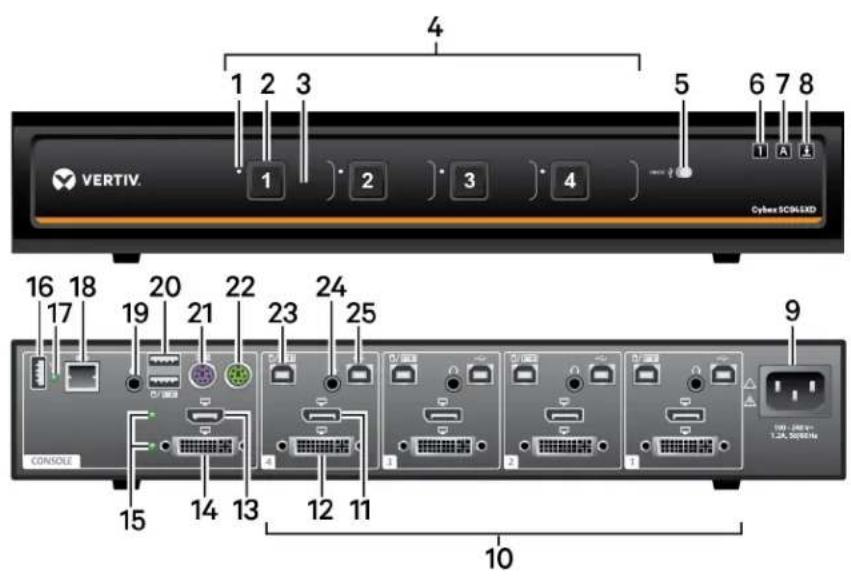
Table 2.9 SC 945XD KVM Switch Description
| ITEM DESCRIPTION ITEM DESCRIPTION | |||
| 1 LED DPP channel indicator 14 CONSOLE DVI-I video port | |||
| 2 LED channel selector 15 Status LEDs | |||
| 3 Channel label 16 CONSOLE DPP USB Type-A port | |||
| 4 PC port selectors 17 CONSOLE DPP LED connection indicator | |||
| 5 DPP freeze button 18 CONSOLE Remote Control Unit (RCU) port | |||
| 6 Num lock indicator 19 CONSOLE audio jack (3.5 mm stereo) | |||
| 7 Caps lock indicator 20 CONSOLE keyboard/mouse USB Type-A port | |||
| 8 Scroll lock indicator 21 CONSOLE keyboard PS/2 mini-DIN 6-pin port | |||
| 9 AC power inlet 22 CONSOLE mouse PS/2 mini-DIN 6-pin port | |||
| 10 PC ports 23 PC keyboard/mouse USB Type-B port | |||
| 11 PC DisplayPort video port 24 PC audio jack (3.5 mm stereo) | |||
| 12 PC DVI-I video port 25 PC DPP USB Type-B port | |||
| 13 CONSOLE HDMI video port |
Figure 2.10 SC 945XP KVM Switch
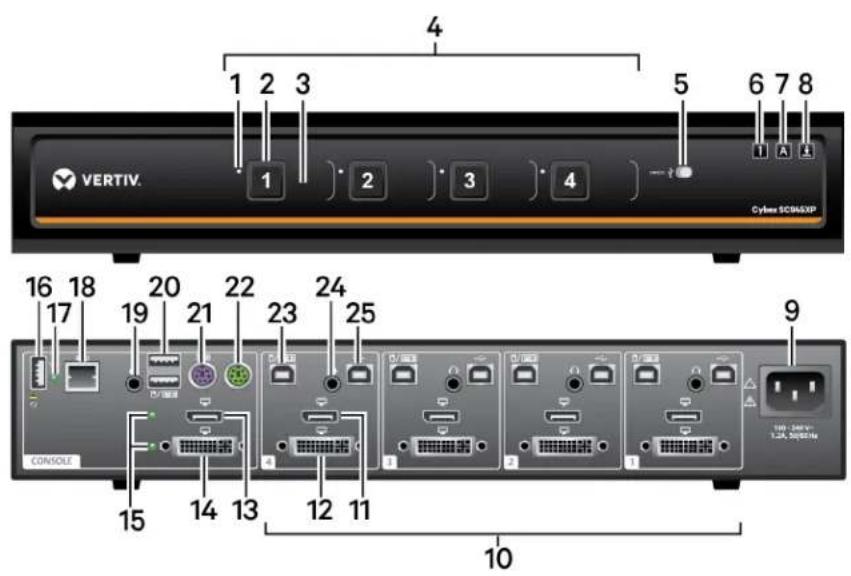
Table 2.10 SC 945XP KVM Switch Description
| ITEM DESCRIPTION ITEM DESCRIPTION | |||
| 1 LED | DPP channel indicator 14 CONSOLE DVI-I video | port | |
| 2 LED | channel selector 15 | Status LEDs | |
| 3 | Channel label | 16 | CONSOLE DPP USB Type-A port |
| 4 | PC port selectors | 17 | CONSOLE DPP LED connection indicator |
| 5 DPP | freeze button 18 | CONSOLE | Remote Control Unit (RCU) port |
| 6 | Num lock indicator | 19 | CONSOLE audio jack (3.5 mm stereo) |
| 7 Caps | lock indicator 20 | CONSOLE keyboard/mouse USB Type-A port | |
| 8 | Scroll lock indicator | 21 | CONSOLE keyboard PS/2 mini-DIN 6-pin port |
| 9 | AC power inlet | 22 | CONSOLE mouse PS/2 mini-DIN 6-pin port |
| 10 | PC ports | 23 | PC keyboard/mouse USB Type-B port |
| 11 | PC DisplayPort video port | 24 | PC audio jack (3.5 mm stereo) |
| 12 | PC DVI-I video port | 25 | PC DPP USB Type-B port |
| 13 | CONSOLE DisplayPort video port | ||
Figure 2.11 SC 985DP KVM Switch
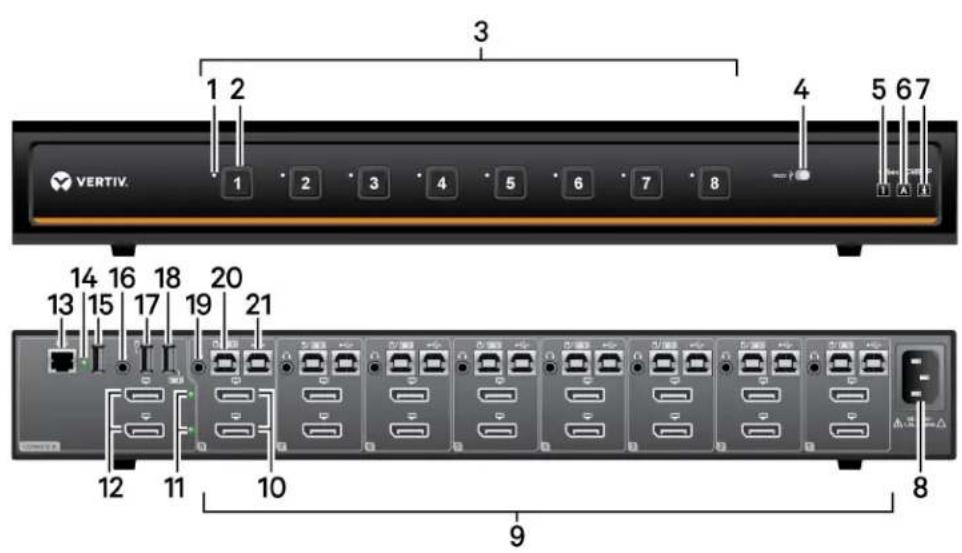
Table 2.11 SC 985DP KVM Switch Description
| ITEM DESCRIPTION ITEM DESCRIPTION | |||
| 1 LED DPP channel indicator 12 CONSOLE | DisplayPort | video ports | |
| 2 LED channel selector 13 CONSOLE Remote Control | Unit (RCU) port | ||
| 3 PC port selectors 14 CONSOLE DPP LED | connection | indicator | |
| 4 DPP freeze button | 15 CONSOLE DPP USB Type-A port | ||
| 5 Num lock indicator 16 | CONSOLE audio jack (3.5 mm stereo) | ||
| 6 Capslock indicator | 17 | CONSOLE mouse USB Type-A port | |
| 7 Scroll lock indicator 18 | CONSOLE keyboard USB Type-A port | ||
| 8 AC power inlet | 19 PC | audio jack (3.5 mm stereo) | |
| 9 PCports | 20 | PCkeyboard/mouse USB Type-B port | |
| 10 PC DisplayPort video ports | 21 PC DPP USB Type-B port | ||
| 11 Status LEDs | |||
2.1.1 Switching between computers
After turning on the switch, the default channel is channel one. You can select which computer to operate using the front panel push-buttons. The LED number illuminates to indicate which computer is currently selected. Allow approximately one second for the video signal to sync after switching computers.
After selecting a new channel, the mouse cursor is positioned in the center of the selected computer display. When you select a new channel, the mapping for the keyboard, mouse, audio and USB device also changes to the specified channel.
To switch between computers:
Select the computer by pressing the corresponding front panel push-button on the front of the s
2.1.2 Dedicated Peripheral Port (DPP)
The DPP feature allows secure use of authentication devices such as a CAC or smartcard reader. Vertiv Cybex™ SC/SCM Switching System Additional Operations and Configuration Technical Bulletin for detailed DPP configuration procedures.
The host detection function of the DPP enables you to switch between ports without disconnecting user authentication session, known as DPP freeze. When locked, switching channels does not affect processes performed by the USB device connected to the locked channel. If only one computer is the DPP function, ensure that it is connected to channel 1.
The DPP status LED is illuminated after a qualified USB device is connected to the switch and r use. If the USB device is not qualified or is rejected from the switch's DPP port, the DPP status and the USB device is inoperable. If the USB device is not detected by the port, the DPP status not illuminate and the USB device is inoperable.
NOTE: Do not connect a cable to the DPP if an authentication device is not needed. The s automatically detect a cable and attempt to program the DPP selection logic. If you are conn the DPP, your device must be fully compliant with a standard USB 1.1 or USB 2.0 and turn
Using DPP freeze
If you need to retain authentication information on one channel after switching to another, you can the DPP of the first channel.
To freeze the DPP channel:
- Select the DPP channel you want to freeze.
- On the front panel, enable the DPP freeze button and verify the channel indicator illuminates on the selected channel and on the freeze button.
NOTE: If you are on a channel that has a DPP enabled and you switch to a channel that DPP, then you will lose the connection and the ability to freeze the information. You must s to a DPP-enabled channel to reactivate the feature.
2.1.3 KM multi-monitor support
The switches are configured to support one monitor per channel. The switch configuration must m the physical positioning of the display units. When configuring the switch, you can select from the presets or you can create a custom configuration file. To create a configuration file, see KM Configuration on page 22.
When Virtual Display Technology (VDT) switching is enabled, you can set up a multiple monitor configuration and seamlessly switch between displays by moving the mouse cursor to the desired
To use the multiple monitor feature, you must download and install the KM Multi-Monitor Driver f Software Downloads section on the Vertiv website on each of the applicable computers.
VDT switching
By default, the switch is configured to use the relative mouse setting, which confines mouse cursor movement to the screen of the selected computer. With this setting, you must use the front par selection buttons to switch between computers.
Alternatively, the switch can be configured to use the absolute mouse setting, which allows you to between isolated computer systems by moving the mouse cursor across display borders. When the cursor scrolls beyond the screen border from one computer to another, the keyboard, mouse, audio USB device mapping switch accordingly. You can enable the absolute or relative mouse settings by pressing a keyboard shortcut on the connected keyboard. See Keyboard Shortcuts on page 19 for a list of the keystroke combinations.
You can use the preset keys to configure the KM to support more than one monitor per channel following images detail the different preset monitor configurations.
NOTE: In the configurations, gray indicates a single computer and black indicates a multi-monit display. P indicates the primary display and S indicates the secondary display in a multi-monit configuration.
Figure 2.12 Two-Port KM Presets

Figure 2.13 Four-Port KM Presets

2.2 Keyboard and Mouse Settings
2.2.1 Keyboard settings
All secure switches block communication from the computers to the keyboard to prevent potential leaks. You can enable Caps Lock, Scroll Lock or Num Lock from a connected keyboard; however, connected keyboard status indicators do not illuminate to indicate the settings are enabled. The Ca lock, Scroll lock and Num lock LEDs on the switch illuminate to indicate the settings are enabled specific channel. Switching channels changes the status of the LEDs if different settings are enabled each computer.
2.2.2 Mouse settings
When VDT is enabled, you can freeze mouse functionality on a selected channel to prevent inadvertent switching channels if the mouse approaches the screen border. The prevent transition feature allows to use the mouse to move objects such as windows and icons on a screen without unintentional dragging the object to another display. When the prevent transition feature is enabled and the left button is depressed, you can move objects only within the active display.
Using keyboard shortcuts, you can freeze or unfreeze the mouse on a selected channel, or increase decrease the speed of the mouse. See Keyboard Shortcuts on page 19 for a list of the keystroke combinations.
NOTE: The default mouse speed is set to 5 on a 1 to 10 speed scale.
2.2.3 Filtered USB port (fUSB)
Some models are equipped with a filtered USB port that only accepts authorized USB devices. When authorized USB device is connected to the fUSB port, the status LED on the front panel illuminates when an un-authorized USB device is connected to the fUSB console port, the status LED on the panel illuminates red. When switching between channels, the USB device connected to the fUSB port automatically switches. When switching to a channel that has no fUSB connection, the port remains mapped to the last channel that had a fUSB channel. To assign the fUSB port to a specific computer press the freeze USB button. Freeze USB prevents the fUSB from switching even when the keyboard video, mouse and audio peripherals switch between computers.
2.2.4 Interchangeable KVM to KM functionality
In KVM mode one display, keyboard, mouse, USB and audio peripheral set is shared between all computers. In KM mode, each computer is connected to a separate display while the keyboard are shared.
To change from KVM to KM mode:
- Disconnect the display from the KVM console port.
- Connect each computer directly to a separate display while keeping the keyboard, mouse, and audio peripherals connected to the KVM.
- Change the mouse mode by typing L Ctrl | L Ctrl | F11 | c.
To change from KM to KVM mode:
- Connect the display to the KVM console port.
- Connect each computer to the corresponding KVM computer video port.
- Change the mouse mode by typing L Ctrl | L Ctrl | F11 | b.
2.3 Keyboard Shortcuts
Keyboard shortcuts can be used to execute switch commands, load monitor presets and adjust mc settings. Keyboard shortcut functionality varies depending on the firmware version and the switch m
The style for sequential or concurrent keyboard shortcuts is typically Ctrl + Ctrl + F11. The following table
deviates from the style by eliminating the plus symbol between keystrokes. Unless otherwise noted, key combinations should be pressed concurrently and an L preceding Ctrl indicates the left contro while an R preceding Ctrl indicates the right control key.
The following table details keyboard shortcut options.
Table 2.12 KM Keyboard Shortcuts
| KEY COMBINATION DESCRIPTION | STANDARD SWITCHES | VERSION 10020715 | VERSION 10300915 | VERSION 10020316 OR HIGHER | KVM | KM | MINI-MATRIX | |||
| L Ctrl L Ctrl 1 Switch to channel 1 | Y Y Y Y | Y Y N | ||||||||
| L Ctrl L Ctrl 2 Switch to channel 2 | Y Y Y Y | Y Y N | ||||||||
| L Ctrl L Ctrl 3 Switch to channel 3 | Y Y Y Y | Y Y N | ||||||||
| L Ctrl L Ctrl 4 Switch to channel 4 | Y Y Y | Y Y Y N | ||||||||
| L Ctrl L Ctrl 5 Switch to channel 5 | Y Y Y Y | Y Y N | ||||||||
| L Ctrl L Ctrl 6 Switch to channel 6 | Y Y Y | Y Y Y N | ||||||||
| L Ctrl L Ctrl F11 B Relative mouse mode | N | N | Y | Y | Y | Y | Y | |||
| L Ctrl L Ctrl F11 Absolute mouse C mode | N | N Y Y Y | Y Y | |||||||
| L Ctrl L Ctrl F | N | N Y Y Y | N N | |||||||
| L Ctrl L Ctrl F11 System reset to R factory default | N | Y Y Y Y | Y Y | |||||||
| L Ctrl R Ctrl B Current channel DE relative only | is N | N N | Y Y Y | Y | ||||||
| L Ctrl R Ctrl C Current channel DE default | is N | N N | Y Y Y | Y | ||||||
| L Ctrl R Ctrl Q Disable/enable the copy and paste function | Y Y Y Y | Y Y Y | ||||||||
| L Ctrl Shift Mouse will be ABS until released | N | Y Y Y Y | ||||||||
| L Ctrl R Ctrl X Exit terminal mode | N | Y | Y | Y | Y | Y | Y | |||
| L Ctrl R Ctrl T Enter terminal mode | N | Y | Y | Y | Y | Y | Y | |||
| L Ctrl L Ctrl F11 Disable switching by F mouse | N | Y Y Y Y | 2 | Y | Y | |||||
| L Ctrl L Ctrl F11 Enable switching by U mouse | N | Y Y Y Y | 2 | Y | Y | |||||
| L Ctrl L Ctrl F11 Increase mouse + speed | N | Y Y Y Y | 2 | Y | Y | |||||
| L Ctrl L Ctrl F11 Decrease mouse speed | N | Y Y Y Y | 2 | Y | Y | |||||
| L Ctrl L Ctrl F11 Load preset 1 | N | Y | Y | Y | N | Y | N | |||
Table 2.12 KM Keyboard Shortcuts (continued)
| KEY | COMBINATION | DESCRIPTION | STANDARD SWITCHES | VERSION 10020715 | VERSION 10300915 | VERSION 10020316 OR HIGHER | KVM | KM | MINI-MATRIX |
| L | Ctrl L Ctrl F11 | F2 Load preset 2 | N Y Y Y | N Y N | |||||
| L | Ctrl L Ctrl F11 | F3 Load preset 3 | N Y Y Y | N Y N | |||||
| L | Ctrl L Ctrl F11 | F4 Load preset 4 | N Y Y Y | N Y N | |||||
| L | Ctrl L Ctrl F11 | F5 Load preset 5 | N Y Y Y | N Y N | |||||
| L | Ctrl L Ctrl F11 | F6 Load preset 6 | N Y Y Y | N Y N | |||||
| L | Ctrl L Ctrl F11 | F7 Load preset 7 | N Y Y Y | N Y N | |||||
| L | Ctrl L Ctrl F11 | F8 Load preset 8 | N Y Y Y | N Y N | |||||
| L | Ctrl L Ctrl F11 | F9 Load preset 9 | N Y Y Y | N Y N | |||||
| L | Ctrl L Ctrl F11 F10 | Load preset 10 | N | Y | Y | Y | N | Y | N |
| L | Ctrl L Ctrl F11 1-3 1-0 | Load preset 1-3 or 1-0 | N | Y | Y | Y | N | Y | N |
| L | Ctrl L Ctrl F11 | Load previously loaded preset | N Y Y Y | N Y N | |||||
| L | Ctrl L Ctrl F11 L 1 | Load layout 1 | N | N | N | Y | N | N | Y |
| L | Ctrl L Ctrl F11 L 2 | Load layout 2 | N | N | N | Y | N | N | Y |
| L | Ctrl L Ctrl F11 L 3 | Load layout 3 | N | N | N | Y | N | N | Y |
| L | Ctrl L Ctrl F11 L 4 | Load layout 4 | N | N | N | Y | N | N | Y |
| L | Ctrl L Ctrl F11 L 5 | Load layout 5 | N | N | N | Y | N | N | Y |
| L | Ctrl L Ctrl F11 L 6 | Load layout 6 | N | N | N | Y | N | N | Y |
| L | Ctrl L Ctrl F1 | Display channel 1-4 monitor 1 | on Y | N | N | Y | N | N | Y |
| L | Ctrl L Ctrl F2 | Display channel 1-4 monitor 2 | on Y | N | N | Y | N | N | Y |
| 1 You must press and hold this keyboard shortcut to execute the command. 2 This command is only available when the switch is in KM mode. | |||||||||
2.4 KM Configuration
The KM configuration utility is a web-based tool that allows system administrators to define custom monitor setups in a KM configuration file. The file is saved with the .kmc extension. When configuring a KM switch using a KM configuration file, you must be logged in to the switch as administrator.
The KM configuration utility allows administrators to define the number of monitors connected to ea computer. Monitors can vary in size and resolution, and can be arranged in multiple layouts. You download and install the KM configuration utility from the Software Downloads section on the Vert site.
The KM configuration utility operates only with Microsoft® Windows®. Before downloading and installing the KM configuration utility, ensure at least Microsoft® Windows® XP is installed on the computers connected. The following browsers support the KM configuration utility:
• Google Chrome 20.0 or higher
• Microsoft® Internet Explorer®
- Mozilla® Firefox®
Before creating a KM configuration file, verify the number of computers and monitors to be connected to the KM switch and the monitors' sizes and resolutions.
2.4.1 Creating a KM configuration file
A KM configuration file is referred to in the KM configuration utility interface as a KM configuratic project. Each customized setup requires its own project. You can create projects using the KM configuration utility project wizard. After completing the steps in the wizard, the KM configuration is generated and downloaded to the computer.
The following table lists guidelines for entering project file information.
| CONFIGURATION FIELD | DESCRIPTION |
| Project Name Name of the custom monitor configuration. | |
| Product Model Model of the KM switch. | |
| Mouse Speed | Default mouse cursor speed for all systems. Changes in the mouse cursor speed value on each computer not affect the KM switch's mouse cursor speed. |
| Mouse Acceleration | Rate at which the mouse cursor speed increases. Changes in the mouse cursor acceleration value on each computer do not affect the KM switch's mouse cursor acceleration. |
| Number of Computers | Total number of computers to be connected to the KM switch for a particular configuration. |
To create a new KM configuration project:
- Log in to the KM switch as administrator, launch the KM configuration utility and click N Project.
- Enter the project name and number of computers into the fields on the KM project setu window.
- Select the product model, mouse speed and mouse acceleration from the drop-down menu and click Next Step.
Figure 2.14 KM Project Setup Window
KM Project Setup
Enter general information about the project configuration.
General Setup
Project Name:
New KM Project
Product Model:
K304
Mouse Speed:
5 - Default
Mouse Acceleration:
5 - Default
Number of computers:
2
- Enter a detailed product description that explains the configuration and click Next Step.
- For each computer, select the number of monitors from the drop-down menu, enter each monitor's size and resolution and then click Next Step.
NOTE: Multiple monitor configurations require additional steps. See Multiple monitor setup on page 28 for more information.
NOTE: If a monitor is set to portrait orientation, enter the native resolution accordingly. For a monitor with 1680 x 1050 native resolution would have a 1050 x 1680 resolution in portrait orientation.
Figure 2.15 Computer Setup Window
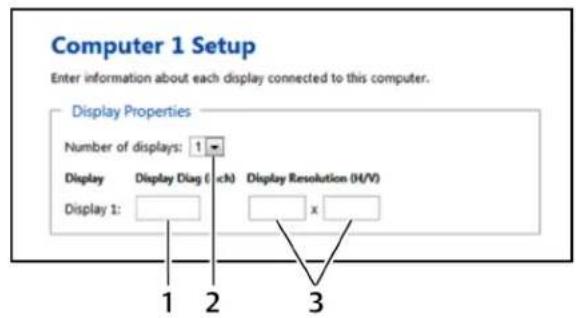
Table 2.13 Computer Setup Window
| ITEM DESCRIPTION | |
| 1 Monitor size | |
| 2 Number of displays | |
| 3 Native monitor resolution | |
- Configure the location of the monitors by dragging and dropping the monitors into position. See Configuration examples on page 25 for acceptable multiple monitor setups.
- Click Complete Setup to generate and download the configuration file.
Configuration examples
Each monitor is labeled with its computer number and monitor number in the KM configuration u. The monitors can be touching or separated by distance based on the geometry settings required.
After the monitors are placed into a layout, a bridge between the two monitors is shown in yel indicate the mouse cursor area for switching monitors. Clicking the yellow area removes it from the configuration and you will not be able to switch between the monitors using the mouse cursor.
Example 1
The monitor configuration in example 1 establishes a mouse cursor bridge between the bottom left of display 1 and the top right corner of display 2. The mouse cursor bridge is indicated by the and it is the only area where the mouse switching between the two monitors is enabled. When cursor switches from display 1 to display 2, the active computer switches from computer 1 to co respectively. The red lines indicate areas where mouse cursor switching is disabled.
Figure 2.16 Example 1 Physical Layout
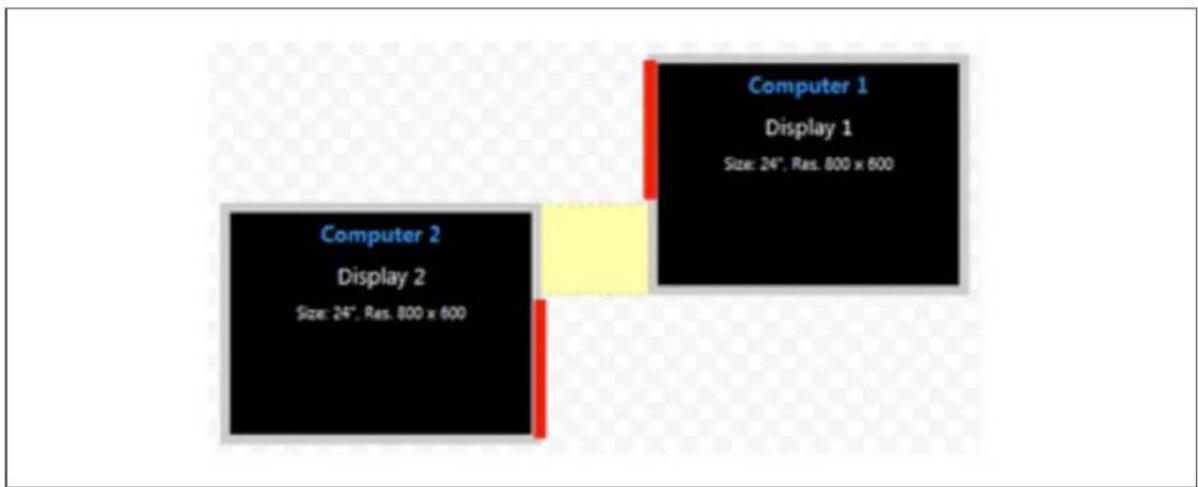
Example 2
Both monitor configurations in example two enable you to switch between display 1 on the left a 2 on the right. Using the mouse cursor to switch from display 1 to display 2 also switches you computer 1 to computer 2.
Figure 2.17 Example 2 Physical Layout


Example 3
Example 3 depicts a multiple monitor configuration with the monitors connected at the corners. Ex 3A is an invalid configuration because display 1 and display 2 do not share an overlapping area mouse cursor can cross. Example 3B is valid since the two monitors overlap to create an area mouse cursor can cross.
Figure 2.18 Example 3A Invalid Physical Layout
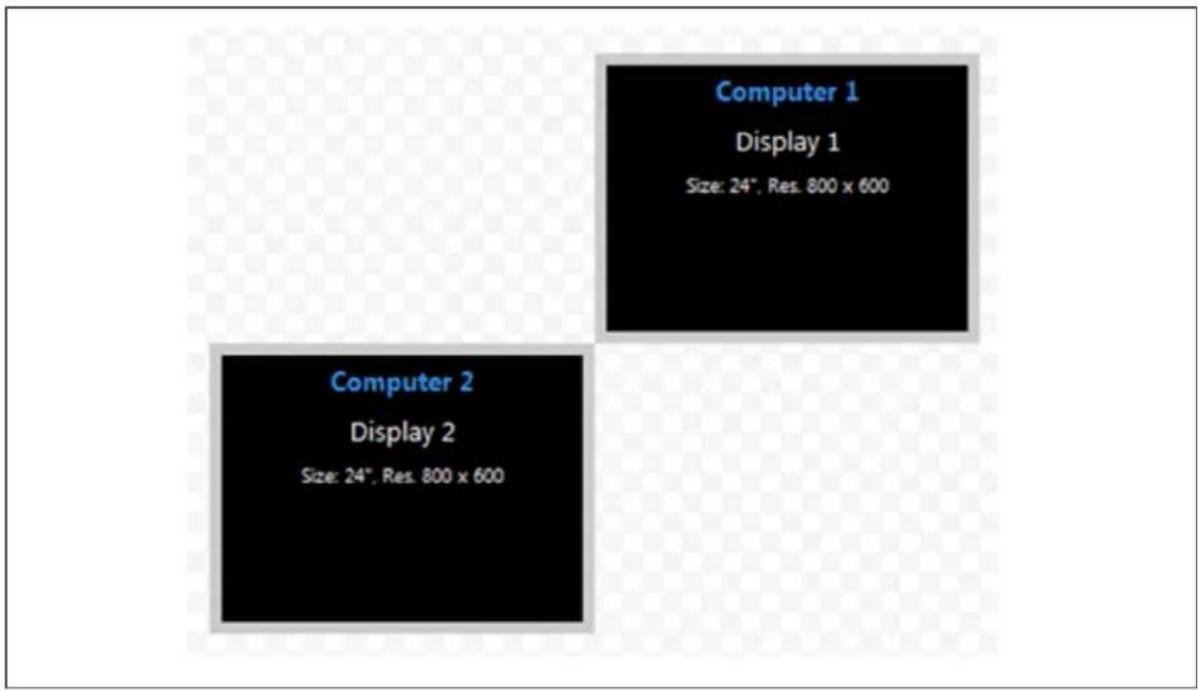
Figure 2.19 Example 3B Valid Physical Layout
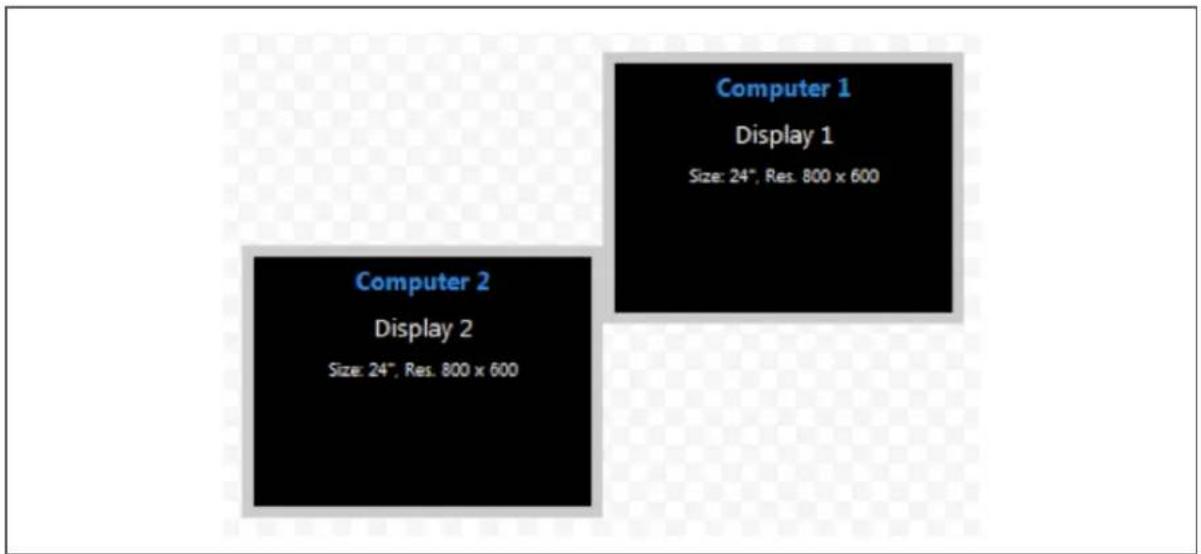
Example 4
In example 4, the physical placement of the monitors can be configured multiple ways. In the first computer 2 has two connected monitors and mouse cursor switching is enabled between computer both computer 2 monitors. In the second layout, mouse cursor switching is enabled only between computer 1 and display 1 for computer 2.
Figure 2.20 Example 4 Physical Layouts

Multiple monitor setup
In a multiple monitor configuration, the KM configuration file and the Microsoft® extended desktop settings control switching between the monitors. When setting up a multiple monitor configuration, y must enter the Microsoft® virtual desktop parameters to ensure a smooth and proportional transition among all connected monitors.
All monitors connected to the same computer must be configured next to one another with no between the monitors.
To set up a multiple monitor configuration:
- From the Start menu, click Control Panel, then click Appearance and Personalization - Display - Adjust Resolution.
- In the KM configuration utility Display Properties window, enter the size and resolution information for the primary and secondary monitors as indicated in the Microsoft® extended desktop settings.
- Enter the vertical and horizontal coordinates for monitors.
The following figure and table list the monitor property fields to be completed when configuring r monitors.
Figure 2.21 Entering Data for a Multiple Monitor Configuration

Table 2.14 Multiple Monitor Configuration Properties
| ITEM DESCRIPTION | |
| 1 Monitor size | |
| 2 Native monitor resolution | |
| 3 Monitor coordinates per the Microsoft® extended desktop settings |
2.4.2 Loading a KM configuration file
Before you can upload the KM configuration file, you must have the following:
- Loading driver mapping file - An .inf file that maps Microsoft® drivers to be used by the switch in administrator mode.
- USB programming cable - The cable required to load configurations onto the switch and is connected to the switch's USB mouse port.
NOTE: The cable will not work if connected to any port other than the USB mouse port.
- Administrator credentials - You must be logged in as administrator to load the KM configuration file onto the switch.
To load the KM configuration file:
- Ensure power to the switch is turned on and a valid keyboard is connected to the switch's keyboard port.
- Launch administrator mode by pressing L CTRL + R CTRL + T while in terminal mode.
- Select KM Configuration Option and log in as administrator.
- Connect one end of the USB programming cable to the mouse port on the switch and the other end to the computer that has the KM configuration file, the loading utility an mapping file.
- Open the loading utility and verify that the switch is recognized.
- Click Select a new configuration file and select the KM configuration file to be loaded.
- Click Update KM and restart the switch.
The following figure and table list the items shown on the KM configuration utility load interface.
Figure 2.22 KM Configuration Utility Load Interface
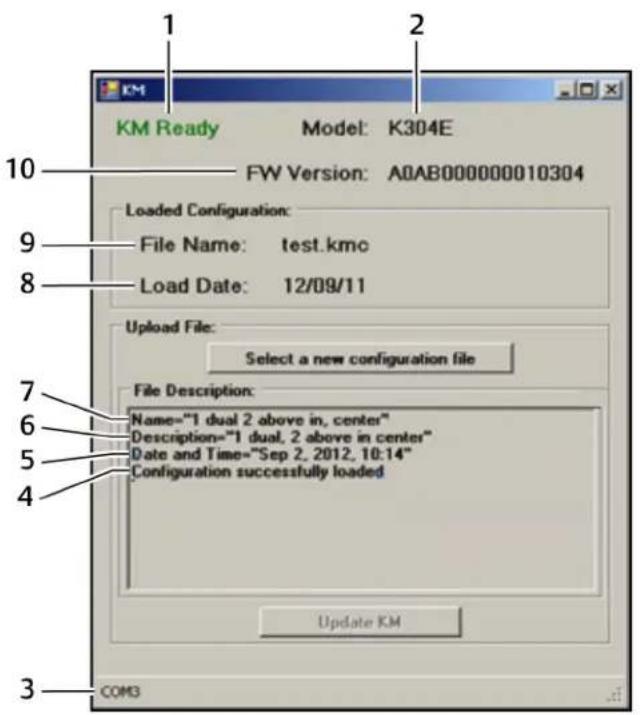
Table 2.15 KM Configuration Utility Load Interface Items
| ITEM DESCRIPTION | |
| 1 KM configuration utility status | |
| 2 Switch model detected by the KM configuration utility | |
| 3 Connected port | |
| 4 Configuration file load status | |
| 5 Date the configuration file was created | |
| 6 Description of the configuration file | |
| 7 Configuration filename | |
| 8 Load date of the configuration file | |
| 9 Filename of the last loaded configuration | |
| 10 Switch's firmware version detected by the KM configuration utility |
3 TROUBLESHOOTING
When power is turned on to the switch, it performs a self-test to verify normal operation. If the self-test procedure, all channel LED buttons flash on and off once and a combination of LEDs illuminate. The various combinations of illuminated LEDs indicate the fault with the switch. After failed self-test, the switch becomes inoperable until the fault is resolved.
3.1 General
The following table lists general faults, the fault indicators and the actions to resolve each fault.
Table 3.1 General Switch Faults
| FAULT INDICATOR RESOLUTION | ||
| The switch did not the self-test. | All channel LED buttonsflash on and off once and passa combination of LEDilluminate to indicate the fault. | |
| The switch is not receiving power. | The displays do not show video output and ensure the power cable is intact and connected to the switch and to the none of the front paper source. If the cable is damaged, replace it.LEDs illuminate. | |
| The switch enclosure compromised. | The tamper-evidentseals indicate intrusion,the switch is inoperableand all channelLED buttons flashcontinuously. | Immediately remove the switch from service and contact Technical Support. |
| Remote desktop control is connected and rendering the channel select button is inoperable. | The switch does not respond when the channel select button are pressed. | Disconnect from remote desktop control, or control the KVM through remote desktop control or keyboard shortcuts. |
3.2 KM Configuration File
The two most common errors that occur when loading the KM configuration file include:
- Incorrectly formatted configuration file - When you load an incorrectly formatted file, the KM configuration utility load interface indicates the issue in the File Description section and prompts you to load another file. Ensure the files you load are created with the KM configuration utility and have not been manually modified.
Figure 3.1 KM Configuration Utility Load Interface with Configuration File Error
![KM Ready Model: K304E FW Version: A0AB000000010304 Loaded Configuration: File Name: Full.kmc Load Date: 12/09/11 Upload File: Select a new configuration file File Description: Name="New KM Project" Description="test" Date and Time="Sep 11, 2012, 10:54" Mouse Speed [11] out of range [1-10] Please load another file Update KM COM3](/content/2026/06/1221353/images/32fd4a0c193af3d0d96d2d54bc9a72c6146aeef40ae50219c5c5e1a48281850c.jpg)
- Invalid communication connection to the switch - When communication between the switch and the utility is lost or fails, the KM configuration utility load interface status is KM Not Ensure that you use a USB programming cable to connect the switch to the computer runs the configuration utility and the cable is connected to the switch's USB mouse port. verify that the loading driver mapping file is installed on the computer. If the connection continues to fail, restart the switch and relaunch administrator mode.
Figure 3.2 KM Configuration Utility Load Interface with Failed Connection Error

3.3 Video
The following table lists video faults, the fault indicators and the action to resolve each fault.
Table 3.2 Video Faults
| FAULT INDICATOR RESOLUTION | ||
| The connected video displayis not qualified. | The video diagnostic LED flashes green and the display is inoperable. | Turn off and disconnect the non-qualified display and connect on to a qualified display. and turn power |
| The displays or the computers are not connected to the switch properly or the connecting cables or ports are damaged. | The displays do not show video output on any channel and the displaydiagnostic LED does not appear solid green. | Ensure the displays are properly connected to the switch and connecting cables are not damaged. Replace damaged cables. If connecting cables are damaged, replace the damaged parts. If the issue persists, check the displays' on-screen menu to ensure the correct source is selected and verifythe video mode and computer's video mode. If the problem persists and the LED does not illuminate solid green, change the entire display unit or contact Technical Support. |
| A specific computer is not connected to the switch properly or the connecting cable or port is damaged. | The display does not show video output for specific channel. | Ensure the connecting cable between the computer and the switch is secured and not damaged. Replace damaged cables. Ensure the displays are compatible with the computer resolution and refresh rate settings. Verify the video output is available and an image is shown when the display unit is connected directlyto the computer. If the problem persists, turn power off and on to the switch, reboot the computer, replace the display unit or contact TechnicalSupport. |
| The displays or computers are not connected to the switch properly or the connecting cables are not compatible with displays. | Some or all channels experiencing poor video image quality and the display diagnostic LED does not appear solid green. | Ensure the displays are properly connected to the switch and connecting cables are compatible with the displays and not damaged. Replace damaged cables. Video cable length should not exceed 15 feet. Ensure the displays are compatible with the computer resolution and refresh rate settings. Lower the video resolution of the computer. Verify the video output is available and an image is shown when the display unit is connected directly to the computer. If the problem persists, turn power off and on to the switch, reboot the computers and displays, replace the video displays or contact Technical Support. |
3.4 Keyboard
The following table lists keyboard faults, the fault indicators and the action to resolve each fault.
Table 3.3 Keyboard Faults
| FAULT INDICATOR RESOLUTION | ||
| The keyboard is not connected to the switch properly or the keyboard cable or port damaged. | The keyboard does not work on any channels is | Ensure the keyboard is properly connected to the switch and between the keyboard and the switch is not damaged. If the connect the keyboard to a different port or use a different standard, non-wireless, qualified keyboard. Ensure the driver for the keyboard is installed on the computer.NOTE: If the computer is returning from standby mode, allow up to one minute for the computer to regain keyboard functionality. |
| The keyboard, mouse and video cables are connected to two different computers. | The keyboard and mouse are not working on two channels. | Ensure the keyboard/mouse and video cables are connected to ports on the switch. For example, the keyboard and mouse cable for computer 1 should be connected to ports specifically computer 1. |
| The computer does not recognize the connected keyboard. | The keyboard does not work on one channel issue. | Use the computer's Device Manager wizard to troubleshoot and resolve the issue. |
| The connected keyboard is not qualified or not connected to switch properly | The keyboard is non-functional on any channel and you are unable to produce the keystrokes on the screen when using the keyboard. | Ensure the keyboard is properly connected to the switch and between the keyboard and the switch is not damaged. If damaged, replace the cable. Ensure the keyboard is a qualified device. If not, disconnect the non-qualified keyboard and connect a qualified keyboard. Verify that the keyboard works connected directly to the computer or when connected to a different USB port. If the problem persists, turn power off and on to the switch, reboot the computer, and replace the keyboard unit or contact Technical Support. |
| Caps lock, Scroll lock and Num lock LEDs not illuminate on the keyboard. | When the Caps lock, Scroll lock or Num lock keys are pressed, the corresponding keyboard LEDs do not illuminate. | This is a normal behavior. All secure switches block communication from the computer to the keyboard to prevent potential data leaks. To Caps lock, Scroll lock or Num lock are enabled on a specific channel select button on the switch and observe the Caps lock, Scroll lock and Num lock LEDs on the switch. |
| The connected keyboard is not compatible with the switch. | Certain keyboard functions are inoperable once connected to the switch. | Determine if the connected keyboard is compatible with the switch. Some non-standard keyboard functions are disabled by the switch for purposes. Contact TechnicalSupport for compatibility information. |
3.5 Mouse
The following table lists mouse faults, the fault indicators and the action to resolve each fault.
Table 3.4 Device Faults
| FAULT INDICATOR RESOLUTION | ||
| The connected mouse is not qualified. | The mouse is non-functional and the mouse cursor is frozen on the screen. You unable to use the mouse to move the mouse cursor. | Disconnect the non-qualified mouse and connect a qualified mouse. |
| The mouse is not plugged into the cor port. | The mouse does not work on any channel but the keyboard work | Verify that the mouse is plugged into the mouse port and the connecting ca sis not damaged. Plug the mouse into the mouse port if it is connected to mouse port and replace the cable if it is damaged. |
| The mouse is not connected to the switch properly or the mouse cable or port damaged. | The mouse does not work on any channels. | Ensure the mouse is properly connected to the switch and the USB cable between the mouse and the switch is not damaged. If the issue persists, connect the mouse to a different port or use a different standard, non-wireless, qualified mouse. Ensure the driver for the mouse is installed on the computer.NOTE: If the computer is returning from standby mode, allow up to one minute for the computer to regain mouse functionality. |
| The computer does not recognize the connected mouse. | The mouse does not work on one channel issue. | Use the computer's Device Manager wizard to troubleshoot and resolve the issue. |
3.6 DPP
The following table lists DPP device faults, the fault indicators and the action to resolve each fault
Table 3.5 Device Faults
| FAULT INDICATOR RESOLUTION | ||
| The connected USB device is not qualified. | DPP LED flashes green and the USB device inoperable. | Disconnect the non-qualified USB device and connect a qualified USB device. |
| The USB device is working properly or the connecting cable between the computer and the DPP input on the switch is damaged or missing. | not the DPP USB device is not working on a channel port | Ensure the USB device is working properly when connected directly to the computer and ensure that the USB cable connecting the computer and the DPP input port on the switch is not damaged or missing. |
| The USB device and video cables are connected to two different computers. | DPP USB device is not working on two channels. | Ensure the USB device and video cables are connected to the correct ports on the switch. For example, the USB device cable and the video cable for computer 1 should be connected to ports specifically designated for computer 1. |
| The USB device is not working properly or connected to the computer. | DPP USB device is not working on all channels. | Ensure the USB device is working properly and connected directly to the computer. Ensure there is a USB connected cable between the computer and the relevant DPP. |
4 APPENDICES
Appendix A: Technical Specifications
The appendix contains technical specification tables for all the products covered in this document.
Table A.1 DisplayPort 1.2 (4K UHD 3840 x 2160 @ 30 Hz)
| Computers | SC 800 Single-Head SC 900 Dual-Head | |||
| Audio/USB Audio/USB/DPP | Audio/USB Audio/USB/DPP | |||
| 2 Cybex SC 820DP - Cybex | SC 920DP | - | ||
| 4 Cybex SC 840DP | Cybex SC 845DP | Cybex SC 940DP | Cybex SC 945DP | |
| 8 - | Cybex SC 885DP | - | Cybex SC 985DP | |
Table A.2 DisplayPort 1.2 Computer & HDMI 1.4 Console (4K UHD 3840 x 2160 @ 30 Hz)
| Computers | SC 800 Single-Head | SC 900 Dual-Head | ||
| Audio/USB | Audio/USB/DPP | Audio/USB | Audio/USB/DPP | |
| 2 | Cybex SC 820D | - | Cybex SC 920D | - |
| 4 | Cybex SC 840D | Cybex SC 845D | Cybex SC 940D | Cybex SC 945D |
Table A.3 HDMI 1.4 (4K UHD 3840 X 2160 @30 HZ)
| Computers | SC 800 Single-Head | SC 900 Dual-Head | ||
| Audio/USB | Audio/USB/DPP | Audio/USB | Audio/USB/DPP | |
| 2 | Cybex SC 820H | - | Cybex SC 920H | - |
| 4 | Cybex SC 840H | Cybex SC 845H | Cybex SC 940H | Cybex SC 945H |
Table A.4 Single/Dual Link DVI-I (2560 x 1600)
| Computers | SC 800 Single-Head | SC 900 Dual-Head | ||
| Audio/USB | Audio/USB/DPP | Audio/USB | Audio/USB/DPP | |
| 2 | Cybex SC 820 | - | Cybex SC 920 | - |
| 4 | Cybex SC 840 | Cybex SC 845 | Cybex SC 940 | Cybex SC 945 |
| 8 | - | Cybex SC 885 | - | Cybex SC 985 |
Table A.5 Single/Dual Link DVI-I (2560 x 1600) & DisplayPort 1.2 (4K UHD 3840 x 2160 @ 30 Hz) Computers
| Console Display Type Dual DVI & DP 1.2 Monitors Dual Dual-Link DVI-I & HDMI 1.4 Monitors | ||||
| Computers Audio/USB Audio/USB/DPP Audio/USB Audio/USB/DPP | ||||
| 2 Cybex SC 920XP -4 - Cybex SC 945XP | Cybex SC 920XD - - Cybex SC 945XD | |||
Table A.6 Secure Keyboard and Mouse Switches (no video)
| Computers | Audio/USB | Audio/USB/DPP |
| 2 | Cybex SCKM 120 | Cybex SCKM 125 |
| 4 | - | Cybex SCKM 145 |
Table A.7 Dimensions and Weights
| Computers | Width (in/mm) | Depth (in/mm) | SC 800 Single-Head | SC 900 Dual-Head | ||
| Height (in/mm) | Weight (lb/kg) | Height (in/mm) | Weight (lb/kg) | |||
| 2 | 7.0 / 178 | 2.4 / 61 | 1.7 / 43 | 1.0 / 0.5 | 2.2 / 56 | 1.5 / 0.7 |
| 4 | 13.7 / 348 | 5.0 / 127 | 1.7 / 43 | 3.0 / 1.5 | 2.2 / 56 | 3.7 / 1.9 |
| 8 | 17.3 / 439 | 7.3 / 185 | 1.7 / 43 | 5.4 / 2.5 | 2.2 / 56 | 6.8 / 3.1 |
Table A.8 Environmental Conditions
| Series | Operating Temperature | Humidity | Storage Temperature |
| All Series | 32° to 104°F0° to 40°C | 0-80% RH, non-condensing | -4° to 140°F-20° to 60°C |
Table A.9 Electrical Power
| Computers | Power | AC Input Voltage |
| 2 | 12V DC 1.5A External Power Adaptor | 100 to 240V AC 50/60 Hz |
| 4 | 35W Max Internal Power Supply | |
| 8 | 45W Max Internal Power Supply |
Table A.10 Console Peripherals
| Computers Keyboard/Mouse | |
| 2 USB Type-A4 USB Type-A & PS/28 USB Type-A & PS/2 |
Table A.11 Cable Options
| Series Video Type | Cable Length | (ft/m) | SC 800 Single-Head SC 900 Dual-Head | |||
| Audio/USB | Audio/USB/DPP | Audio/USB | Audio/USB/DPP | |||
| SCxxx DVI-I | 6 / 1.8 CBL0150 | CBL0146 | CBL0152 | CBL0148 | ||
| 10 / 3.0 | CBL0151 | CBL0147 | CBL0153 | CBL0149 | ||
| SCxxxH | HDMI | 6 / 1.8 CBL0110 | CBL0112 | CBL0114 | CBL0116 | |
| 10 / 3.0 | CBL0111 | CBL0113 | CBL0115 | CBL0117 | ||
| SCxxxD & SCxxxDP | DisplayPort | 6 / 1.8 | CBL0102 | CBL0104 | CBL0106 | CBL0108 |
| SCxxx & SCxxxH | HDMI-to-DVI-D | 6 / 1.8 | CBL0162 | CBL0164 | CBL0166 | CBL0168 |
This page intentionally left blank

VERTIV™

VERTIV™
- Technical Support Site
- TABLE OF CONTENTS
- PRODUCT OVERVIEW
- Features and Benefits
- BASIC OPERATION
- Factory reset
- Switch Overview
- Switching between computers
- Dedicated Peripheral Port (DPP)
- Using DPP freeze
- KM multi-monitor support
- VDT switching
- Keyboard and Mouse Settings
- Keyboard settings
- Mouse settings
- Filtered USB port (fUSB)
- Interchangeable KVM to KM functionality
- Keyboard Shortcuts
- KM Configuration
- Creating a KM configuration file
- To create a new KM configuration project:
- KM Project Setup
- Configuration examples
- Example 1
- Example 2
- Example 3
- Example 4
- Multiple monitor setup
- Loading a KM configuration file
- TROUBLESHOOTING
- General
- KM Configuration File
- Video
- Keyboard
- Mouse
- DPP
- APPENDICES
- Appendix A: Technical Specifications
Brand : Emerson
Model : Cybex SC900
Category : Unknown