
TR-2A - Unspecified Kramer - Free user manual and instructions
Find the device manual for free TR-2A Kramer in PDF.


| Product Type | Twisted Pair Receiver |
| Brand | Kramer |
| Model | TR-2A |
| Dimensions (W x D x H) | 12 cm x 7.5 cm x 2.5 cm |
| Weight | 0.3 kg |
| Power Supply | 12V DC, 0.5A |
| Input Connector | RJ-45 |
| Output Connector | VGA (HD-15) or Composite (BNC) depending on variant |
| Maximum Range | Up to 100 meters |
| Supported Signals | Analog video (VGA/Component/Composite) and audio |
| Video Bandwidth | 300 MHz |
| Audio Support | Stereo unbalanced audio |
| LED Indicators | Power and Signal presence |
| Enclosure Material | Metal |
| Operating Temperature | 0°C to 40°C |
| Storage Temperature | -20°C to 60°C |
| Humidity | 10% to 90%, non-condensing |
| Included Accessories | Power adapter, mounting brackets |
| Maintenance | Wipe with dry cloth; do not use liquids |
| Safety Precautions | Keep away from moisture and direct sunlight |
| Spare Parts Availability | Contact Kramer for replacement parts |
| Repairability | Serviceable by authorized technicians only |
Frequently Asked Questions - TR-2A Kramer
User questions about TR-2A Kramer
0 question about this device. Answer the ones you know or ask your own.
Ask a new question about this device
Download the instructions for your Unspecified in PDF format for free! Find your manual TR-2A - Kramer and take your electronic device back in hand. On this page are published all the documents necessary for the use of your device. TR-2A by Kramer.
USER MANUAL TR-2A Kramer
Kramer Electronics, Ltd.

natural_image
Abstract black geometric shape on white background (no text or symbols)KRAMER
USER MANUAL
Models:
TR-1, Video Isolation Transformer
TR-1A, Audio Isolation Transformer
TR-2A, Audio Isolation Transformers
TR-3, Video / Audio Isolation Transformers
Contents
1 Introduction 1
2 Getting Started 1
3 Overview 2
4 Your Isolation Transformers 3
5 Using the Isolation Transformer 7
5.1 Connecting the Isolation Transformer 7
5.2 Setting the dipswitches 9
5.2.1 Audio Dipswitches 10
5.2.2 Video Dipswitches 11
6 Technical Specifications 12
Figures
Figure 1: TR-1 Video Isolation Transformer 3
Figure 2: TR-1A Audio Isolation Transformer 4
Figure 3: TR-2A Audio Isolation Transformers 5
Figure 4: TR-3 Video / Audio Isolation Transformers 6
Figure 5: Connecting the TR-3 Video / Audio Isolation Transformer 8
Figure 6: Dipswitch Settings for TR-3. TR-2A and TR-1A 9
Figure 7: IN and OUT Grounding Options 10
Figure 8: Balanced Audio Grounding Schematics 10
Figure 9: Unbalanced Audio Grounding Schematics 11
Figure 10: Video Grounding Schematics 11
Tables
Table 1: TR-1, TR-1A, TR-2A and TR-3 Characteristics 2
Table 2: Features and Functions of the TR-1 Video Isolation Transformer 3
Table 3: Features and Functions of the TR-1A Audio Isolation Transformer 4
Table 4: Features and Functions of the TR-2A Audio Isolation Transformers 5
Table 5: Features and Functions of the TR-3 Video / Audio Isolation Transformers 6
Table 6: Connecting the TR-1, TR-1A and TR-2A 8
Table 7: Dipswitch Settings 9
Table 8: Audio Dipswitch Settings 10
Table 9: Video Dipswitch Settings 11
Table 10: Technical Specifications of the Isolation Transformers 12
1 Introduction
Welcome to Kramer Electronics (since 1981): a world of unique, creative and affordable solutions to the infinite range of problems that confront the video, audio and presentation professional on a daily basis. In recent years, we have redesigned and upgraded most of our line, making the best even better! Our 500-plus different models now appear in 8 Groups which are clearly defined by function.
Congratulations on purchasing your Kramer TR-1 Video Isolation Transformer, TR-1A Audio Isolation Transformer ^2 , TR-2A Audio Isolation Transformers ^3 or TR-3 Video / Audio Isolation Transformers ^3 .
This product is ideal for:
- Broadcast and production audio/video studios
• Audio/video duplication studios
• Staging and fieldwork
The package includes the following items:
• TR-1 or TR-1A or TR-2A or TR-3
- This user manual ^4
2 Getting Started
We recommend that you:
- Unpack the equipment carefully and save the original box and packaging materials for possible future shipment
• Review the contents of this user manual
3 Overview
In many applications, the connection between video and/or audio sources and acceptors induces 50Hz or 60Hz ground loops, with an undesirable effect such as hum bars ^1 and audio hum.
The Kramer Isolation Transformers break the ground connection in audio/video transmission lines eliminating the hum caused by ground loops ^2 .
The high-performance Kramer Isolation Transformers are designed for applications in which interference problems—due to improper grounding and different ground potentials—affect the quality of the audio/video signal. It can also be used to remove DC potentials, as well as for removal of common mode noise (for example, induced on long cable runs). The Isolation Transformers are purely passive units and are ideal for fieldwork.
The Isolation Transformers:
- Include a video bandwidth of 5.8MHz and an audio bandwidth from 20Hz to 20kHz
• Have excellent linearity - Offer total galvanic isolation between input and output
Table 1 describes the unique characteristics of each unit:
Table 1: TR-1, TR-1A, TR-2A and TR-3 Characteristics
| Machine Name | Isolates and Transforms |
| TR-1 | One video channel |
| TR-1A | One audio channel (mono) |
| TR-2A | Two audio channels (stereo) |
| TR-3 | One video channel and two audio channels (Stereo) |
To achieve the best performance:
- Connect only good quality connection cables, thus avoiding interference, deterioration in signal quality due to poor matching, and elevated noise levels (often associated with low quality cables)
- Avoid interference from neighboring electrical and magnetic appliances that may adversely influence signal quality and position your Kramer Isolation Transformer away from moisture, excessive sunlight and dust
4 Your Isolation Transformers
This section defines each of the Isolation Transformer units:
• Figure 1 and Table 2 define the TR-1 Video Isolation Transformer
• Figure 2 and Table 3 define the TR-1A Audio Isolation Transformer
• Figure 3 and Table 4 define the TR-2A Audio Isolation Transformers
• Figure 4 and Table 5 define the TR-3 Video / Audio Isolation Transformers

Figure 1: TR-1 Video Isolation Transformer
Table 2: Features and Functions of the TR-1 Video Isolation Transformer
| # Feature Function | ||
| 1 | VIDEO OUT BNC Connector | Connects to the video output |
| 2 | VIDEO IN BNC Connector | Connects to the video input |
| 3 Ground In the case that you want | to connect the unit to an external ground | |
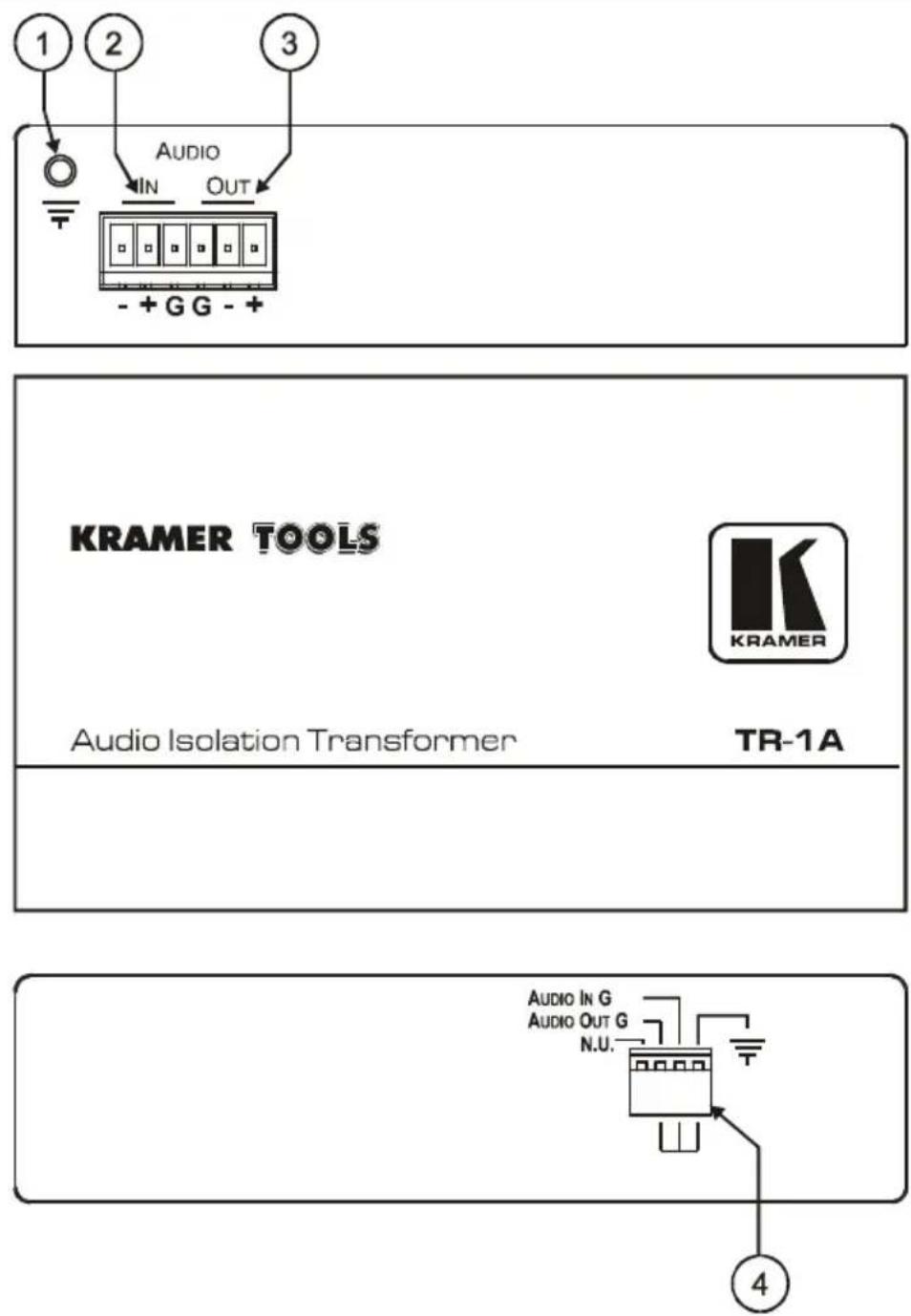
Figure 2: TR-1A Audio Isolation Transformer
Table 3: Features and Functions of the TR-1A Audio Isolation Transformer
| # Feature Function | |||
| 1 Ground In the case that you want to connect the unit to an external ground | |||
| 2 IN | Block Connector | ^1 Audio input | |
| 3 | OUT Connects to the balanced ^1 audio output | ||
| 4 Dip switches See section 5.2 | |||
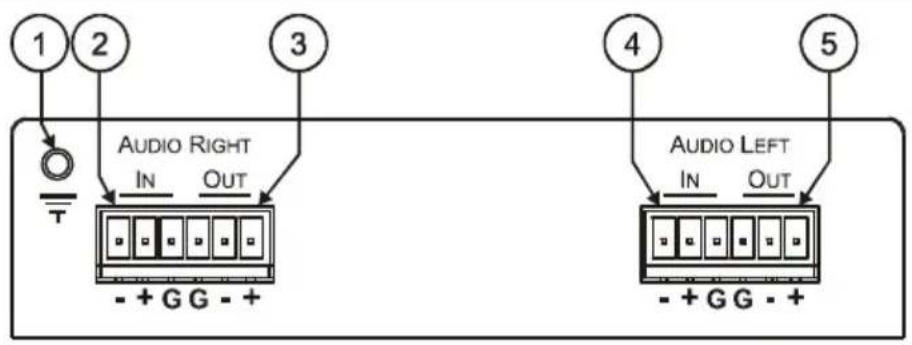

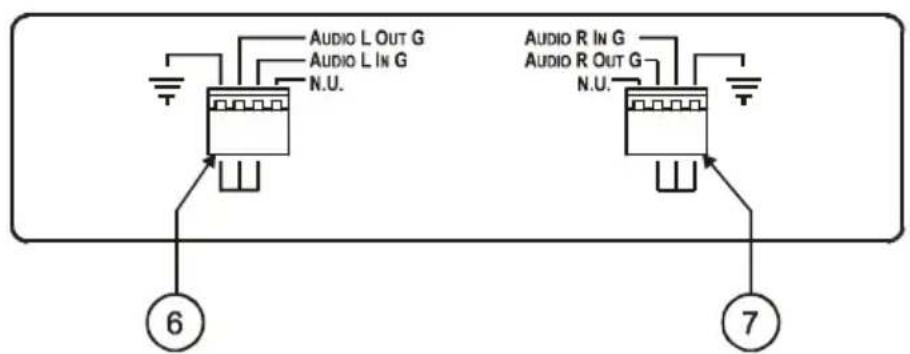
Figure 3: TR-2A Audio Isolation Transformers
Table 4: Features and Functions of the TR-2A Audio Isolation Transformers
| # Feature Function | |||
| 1 Ground In the case that you want to connect the unit to an external ground | |||
| 2 IN | Block Connector | OUT Connects to the right balanced ^1 audio input | |
| 3 | |||
| 4 IN | Block Connector | OUT Connects to the left balanced ^1 audio output | |
| 5 | |||
| 6 Dip switches for AUDIO L (Left) | See section 5.2 | ||
| 7 Dip switches for AUDIO R (Right) | |||
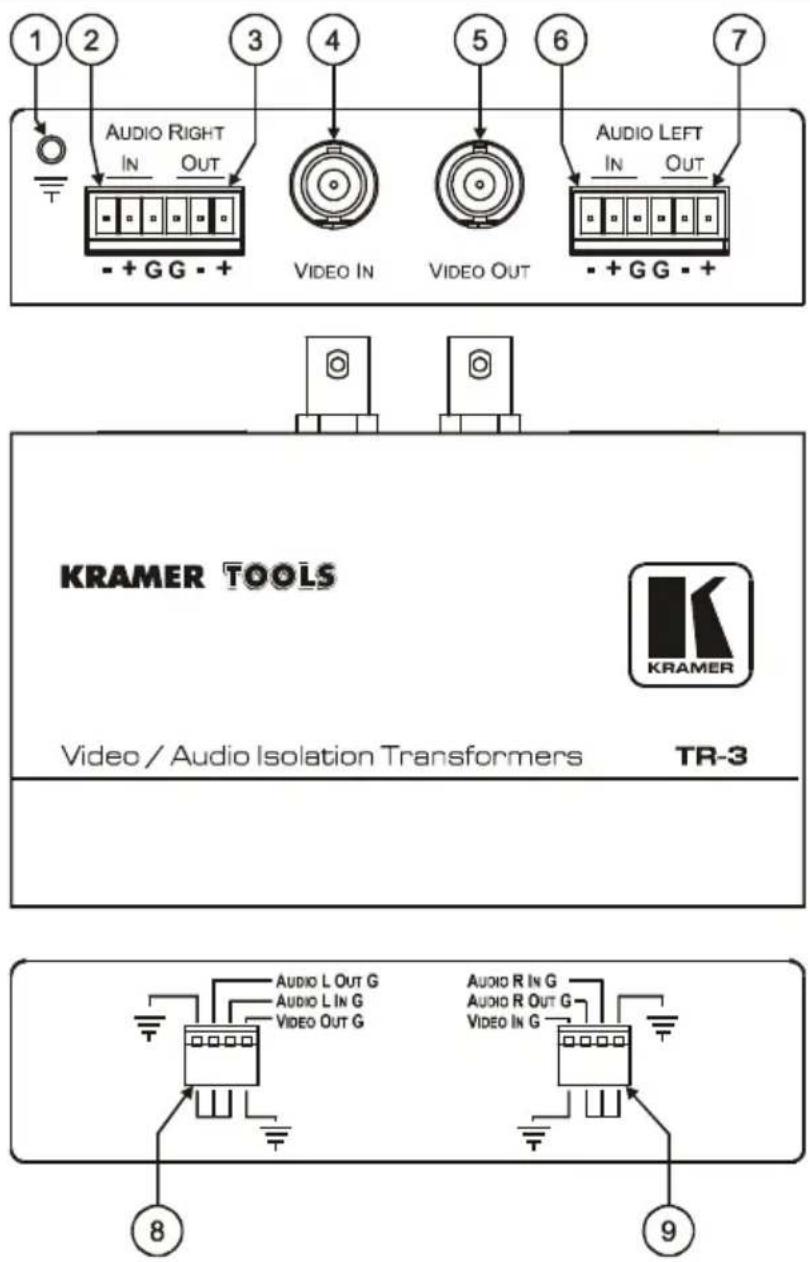
Figure 4: TR-3 Video / Audio Isolation Transformers
Table 5: Features and Functions of the TR-3 Video / Audio Isolation Transformers
| # Feature Function | |||
| 1 Ground In the case that you want to connect the unit to an external ground | |||
| 2 IN | Block Connector | OUT | ^1 audio input |
| 3 | ^1 connects to the right balanced ^1 audio output | ||
| 4 | VIDEO IN BNC Connector | Connects to the video input | |
| 5 | VIDEO OUT BNC Connector | Connects to the video output | |
| 6 IN | Block Connector | OUT | ^1 connects to the left balanced ^1 audio output |
| 7 | |||
| 8 Dipswitches for AUDIO L (Left) | See section 5.2 | ||
| 9 Dipswitches for AUDIO R (Right) | |||
5 Using the Isolation Transformer
The Isolation Transformers are used for video signals (TR-1); video and balanced ^1 stereo audio signals (TR-3); balanced ^1 mono audio signals (TR-1A); and balanced ^1 stereo audio signals (TR-2A).
There are no general rules as to how and where to connect the Isolation Transformers. This depends on many factors, which relate to the setup of the studio, improper grounding and so on.
The best method is to disconnect all the equipment and then connect it one by one, checking for hum, as each piece of equipment is connected. When hum is detected, the appropriate Isolation Transformer is connected at that point to break the ground loop.
The Isolation Transformers also provide different grounding combinations, which are set via the dipswitches for optimum operation.
This section describes how to connect an Isolation Transformer (see section 5.1), and set the dipswitches for optimum performance (see section 5.2).
5.1 Connecting the Isolation Transformer
When installing an Isolation Transformer, you just connect it somewhere on the line between the source and the acceptor. The particular example in
Figure 5 shows how to connect the TR-3 Video /Audio Isolation Transformers. However, this is not a specific recommendation, as there are many different configuration options.
To connect the TR-3, do the following ^2 :
- Connect a video source (for example, a composite video player) to the VIDEO IN BNC connector.
- Connect the VIDEO OUT BNC connector to a video acceptor (for example, a composite video display).
- Connect a balanced ^3 audio stereo signal source (for example, a balanced stereo audio player) to the AUDIO RIGHT IN terminal block connector and the AUDIO LEFT IN terminal block connector.
- Connect the AUDIO RIGHT OUT and the AUDIO LEFT OUT terminal block connectors to a balanced audio stereo acceptor (for example, a power amplifier).
-
Turn the power ON on the audio/video sources and acceptors.
-
Set the dipswitches ^1 for optimum performance (see section 5.2).
The same principles apply to the TR-1, TR-1A and TR-2A. Simply connect the units anywhere between the sources and acceptors, as Table 6 defines:
Table 6: Connecting the TR-1, TR-1A and TR-2A
| Connect the Source Connect the Acceptor | ||
| TR-1 | A video signal (for example, a composite video player) | A composite video acceptor (for example, a composite video display) |
| TR-1A | A balanced ^2 audio signal (for example, a balanced mono microphone) | A balanced ^2 audio acceptor (for example, a power amplifier) |
| TR-2A | A balanced ^2 stereo audio signal (for example, a balanced stereo audio player) | A balanced ^2 stereo audio acceptor (for example, a power amplifier) |

flowchart
graph TD
    A["TA-3 Audio Transceiver"] --> B["TA-3 TA-3"]
    B --> C["Audio Left"]
    C --> D["Audio Left"]
    D --> E["Composite Video Player"]
    E --> F["Composite Video Display"]
    F --> G["Power Amplifier"]
    G --> H["Balanced/Unbalanced Stereo Audio Player"]
    H --> I["Composite Video Player"]
    I --> J["Composite Video Display"]
    J --> K["Power Amplifier"]
Figure 5: Connecting the TR-3 Video / Audio Isolation Transformer
5.2 Setting the dipswitches
Figure 6 and Table 7 define ^1 the factory default dipswitches:
| TR-3 | ||
| TR-2A | ||
| TR-1A |
Figure 6: Dipswitch Settings for TR-3. TR-2A and TR-1A
Table 7: Dipswitch Settings
| DIPS Name Description | ||
| AUDIO LEFT | 1 Chassis ground | |
| 2 AUDIO L OUT G The output audio signal ground | ||
| 3 AUDIO L IN G The input audio signal ground | ||
| 4 VIDEO OUT G | ||
| AUDIO RIGHT | 1 VIDEO IN G | |
| 2 AUDIO R OUT G The output audio signal ground | ||
| 3 AUDIO R IN G The input audio signal ground | ||
| 4 Chassis ground | ||
The grounding conditions are set by trial and error. Check all the options to work out which option best suits your needs ^1 .
5.2.1 Audio Dipswitches
The dipswitches let you set the grounding conditions, as illustrated in Figure 7 and defined in Table 8 for the audio channels.
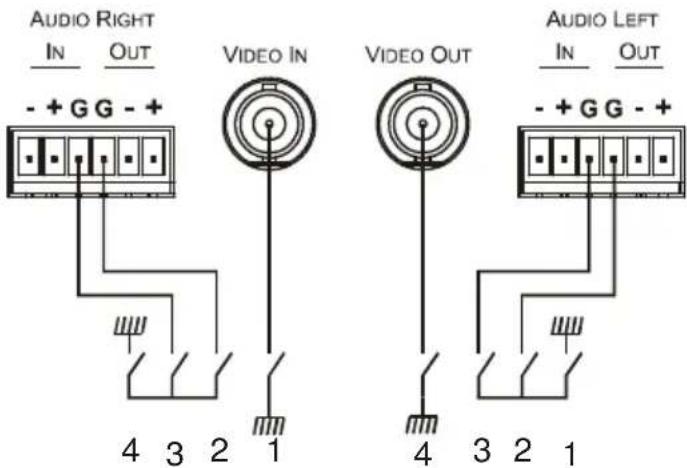
Figure 7: IN and OUT Grounding Options
Table 8: Audio Dipswitch Settings ^2
| AUDIO LEFT Description AUDIO RIGHT | ||||||
| 1 2 | 3 2 | 3 4 | ||||
| ON ON ON Audio IN and OUT are grounded to the chassis ON ON ON | ||||||
| ON ON OFF Audio OUT shield is connected to the common ground, audio IN shield is left open | ON OFF ON | |||||
| ON OFF ON Audio IN is connected to chassis, audio OUT is grounded to the shield | OFF ON ON | |||||
| OFF ON ON Audio IN and OUT are both grounded to the shield ON ON OFF | ||||||
Figure 8 and Figure 9 show the balanced and unbalanced audio grounding schematics respectively.
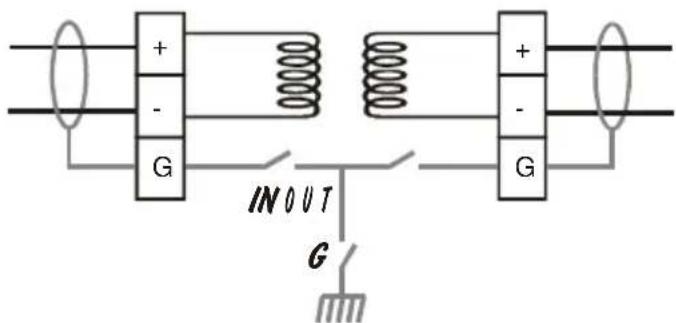
Figure 8: Balanced Audio Grounding Schematics
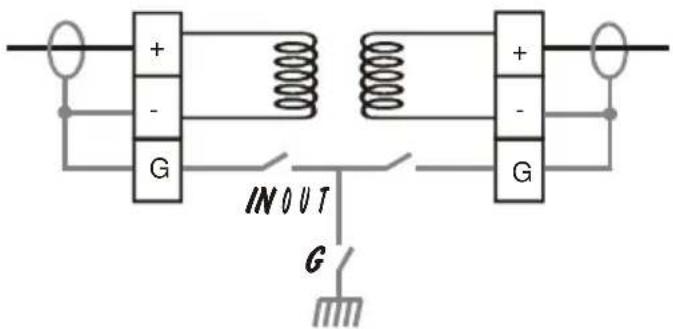
Figure 9: Unbalanced Audio Grounding Schematics
5.2.2 Video Dipswitches
Table 9 defines the video ground conditions that are set by DIP 4 on the left and DIP 1 on the right:
Table 9: Video Dipswitch Settings
| VIDEO OUT G (DIP 4) | VIDEO IN G (DIP 1) | Description |
| ON ON Video IN | N and OUT are grounded to the chassis | |
| ON OFF Video | OUT is grounded to the chassis; video IN is not | |
| OFF ON Video | IN is grounded to the chassis; video OUT is not | |
| OFF OFF Video | IN and OUT are not grounded to the chassis | |
Figure 10 illustrates the video grounding schematics.
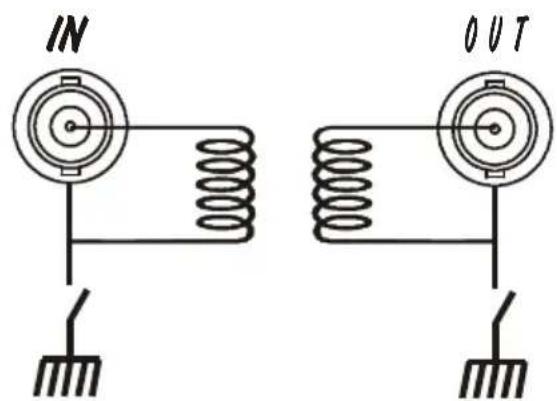
Figure 10: Video Grounding Schematics
6 Technical Specifications
Table 10: Technical Specifications ^1 of the Isolation Transformers
| INPUTS: | TR-3: 1 composite video, 1Vpp/75Ω on a BNC connector,2 balanced audio +4dBu/600Ω on detachable terminal blocks;TR-2A: 2 balanced audio +4dBu/600Ω on detachable terminal blocks;TR-1A: 1 balanced audio +4dBu/600Ω on a detachable terminal block;TR-1: 1 composite video, 1Vpp/75Ω on a BNC connector | |
| OUTPUTS: | TR-3: 1 composite video, 1Vpp/75Ω on a BNC connector,2 balanced audio +4dBu/600Ω on detachable terminal blocks;TR-2A: 2 balanced audio +4dBu/600Ω on detachable terminal blocks;TR-1A: 1 balanced audio +4dBu/600Ω on a detachable terminal block;TR-1: 1composite video, 1Vpp/75Ω on a BNC connector | |
| MAX. OUTPUT LEVEL: | VIDEO: 4Vpp / 75Ω | AUDIO: +26dBu |
| BANDWIDTH (-3dB): VIDEO: <10Hz to 5.8MHz; -3dB AUDIO: 20Hz to 20kHz | ||
| DIFF. GAIN: 0.05% | ||
| DIFF. PHASE: 0.05 Deg | ||
| K-FACTOR: <1.2% | ||
| S/N RATIO: VIDEO: 73dB AUDIO: -83dBu @+4dBu/1000Hz | ||
| CONTROLS: Dipswitches to connect to chassis | ||
| VIDEO TILT: 0.1% @ Pulse & Bar | ||
| VIDEO NON LINEARITY: 0.1% | ||
| COUPLING: VIDEO: Transformer AUDIO: Transformer | ||
| AUDIO THD + NOISE: | ≤ 0.025% @+4dBu/1000Hz | |
| DIMENSIONS: | TR-3, TR-2A, TR-1A: 12.1cm x 7.2cm x 3cm (4.77" x 2.85" x 1.2") W, D, HTR-1: 12cm x 7.3cm x 3cm (4.7" x 2.88" x 1.2") W, D, H | |
| WEIGHT: 0.34 kg. (0.75lbs.) approx. | ||
| ACCESSORIES: Mounting brackets | ||
LIMITED WARRANTY
Kramer Electronics (hereafter Kramer) warrants this product free from defects in material and workmanship under the following terms.
HOW LONG IS THE WARRANTY
Labor and parts are warranted for seven years from the date of the first customer purchase.
WHO IS PROTECTED?
Only the first purchase customer may enforce this warranty.
WHAT IS COVERED AND WHAT IS NOT COVERED
Except as below, this warranty covers all defects in material or workmanship in this product. The following are not covered by the warranty:
- Any product which is not distributed by Kramer, or which is not purchased from an authorized Kramer dealer. If you are uncertain as to whether a dealer is authorized, please contact Kramer at one of the agents listed in the web site www.kramerelectronics.com.
- Any product, on which the serial number has been defaced, modified or removed.
- Damage, deterioration or malfunction resulting from:
i) Accident, misuse, abuse, neglect, fire, water, lightning or other acts of nature
ii) Product modification, or failure to follow instructions supplied with the product
iii) Repair or attempted repair by anyone not authorized by Kramer
iv) Any shipment of the product (claims must be presented to the carrier)
v) Removal or installation of the product
vi) Any other cause, which does not relate to a product defect
vii) Cartons, equipment enclosures, cables or accessories used in conjunction with the product
WHAT WE WILL PAY FOR AND WHAT WE WILL NOT PAY FOR
We will pay labor and material expenses for covered items. We will not pay for the following:
- Removal or installations charges.
- Costs of initial technical adjustments (set-up), including adjustment of user controls or programming. These costs are the responsibility of the Kramer dealer from whom the product was purchased.
- Shipping charges.
HOW YOU CAN GET WARRANTY SERVICE
- To obtain service on you product, you must take or ship it prepaid to any authorized Kramer service center.
- Whenever warranty service is required, the original dated invoice (or a copy) must be presented as proof of warranty coverage, and should be included in any shipment of the product. Please also include in any mailing a contact name, company, address, and a description of the problem(s).
- For the name of the nearest Kramer authorized service center, consult your authorized dealer.
LIMITATION OF IMPLIED WARRANTIES
All implied warranties, including warranties of merchantability and fitness for a particular purpose, are limited in duration to the length of this warranty.
EXCLUSION OF DAMAGES
The liability of Kramer for any effective products is limited to the repair or replacement of the product at our option. Kramer shall not be liable for:
- Damage to other property caused by defects in this product, damages based upon inconvenience, loss of use of the product, loss of time, commercial loss; or:
- Any other damages, whether incidental, consequential or otherwise. Some countries may not allow limitations on how long an implied warranty lasts and/or do not allow the exclusion or limitation of incidental or consequential damages, so the above limitations and exclusions may not apply to you.
This warranty gives you specific legal rights, and you may also have other rights, which vary from place to place.
NOTE: All products returned to Kramer for service must have prior approval. This may be obtained from your dealer.
This equipment has been tested to determine compliance with the requirements of:
EN-50081: "Electromagnetic compatibility (EMC);
generic emission standard.
Part 1: Residential, commercial and light industry"
EN-50082: "Electromagnetic compatibility (EMC) generic immunity standard.
Part 1: Residential, commercial and light industry environment".
CFR-47: FCC Rules and Regulations:
Part 15: "Radio frequency devices
Subpart B – Unintentional radiators”
CAUTION!
Servicing the machines can only be done by an authorized Kramer technician. Any user who makes changes or modifications to the unit without the expressed approval of the manufacturer will void user authority to operate the equipment.
☒ Use the supplied DC power supply to feed power to the machine.
☒ Please use recommended interconnection cables to connect the machine to other components.
For the latest information on our products and a list of Kramer distributors, visit our Web site: www.kramerelectronics.com, where updates to this user manual may be found.
We welcome your questions, comments and feedback.

CE


- Kramer Electronics, Ltd.
- USER MANUAL
- Models:
- Contents
- Figures
- Tables
- Introduction
- Getting Started
- Overview
- The Isolation Transformers:
- Your Isolation Transformers
- Using the Isolation Transformer
- Connecting the Isolation Transformer
- Setting the dipswitches
- Audio Dipswitches
- Video Dipswitches
- Technical Specifications
- LIMITED WARRANTY
- HOW LONG IS THE WARRANTY
- WHO IS PROTECTED?
- WHAT IS COVERED AND WHAT IS NOT COVERED
- WHAT WE WILL PAY FOR AND WHAT WE WILL NOT PAY FOR
- HOW YOU CAN GET WARRANTY SERVICE
- LIMITATION OF IMPLIED WARRANTIES
- EXCLUSION OF DAMAGES
- CAUTION!
Brand : Kramer
Model : TR-2A
Category : Unspecified