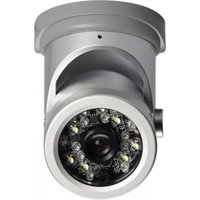
LBC5451 - Security Camera Lorex - Free user manual and instructions
Find the device manual for free LBC5451 Lorex in PDF.


| Brand | Lorex |
| Model | LBC5451 |
| Product Type | Security Camera |
| Image Sensor | 1/3" Sony Super HAD™ II |
| Resolution | 540 TV Lines |
| Lens Type | 4.3mm F2.0 Fixed |
| Field of View | 80° (Diagonal) |
| Night Vision Range (B/W) | 60 ft / 18 m |
| Night Vision Range (Color) | 30 ft / 9 m (with White Light LEDs) |
| Motion Detection Range | 9 ft / 3 m |
| White Light Range | 30 ft / 9 m |
| Video Output | Composite 1.0Vpp @ 75 ohm, BNC |
| Power Supply | 12V DC ±10% (included regulated adapter) |
| Power Consumption | Max 300 mA (with White Light LEDs) |
| Environmental Rating | IP67 (weatherproof, not submersible) |
| Operating Temperature | 14°F to 122°F / -10°C to 50°C |
| Operating Humidity | < 80% RH |
| Weight (including stand) | 0.75 lbs / 0.34 kg |
| Recommended Mounting Height | 7 ft / 2.2 m |
| Included Accessories | Camera with stand, power adapter, mounting kit, Allen key, screw cap, 60 ft BNC/power extension cable, BNC-to-RCA adapter, manual |
| Cleaning Instructions | Use a damp cloth only; no harsh cleaners |
Frequently Asked Questions - LBC5451 Lorex
User questions about LBC5451 Lorex
0 question about this device. Answer the ones you know or ask your own.
Ask a new question about this device
Download the instructions for your Security Camera in PDF format for free! Find your manual LBC5451 - Lorex and take your electronic device back in hand. On this page are published all the documents necessary for the use of your device. LBC5451 by Lorex.
USER MANUAL LBC5451 Lorex
natural_image
Close-up of a security camera lens showing illuminated components and internal circuitry (no text or symbols visible)Contents
- 1x Camera and mounting stand
- 1x Power adapter
- 1x Mounting kit
- 1x Allen key
- 1x Screw cap
- 1x 60 ft. (18m) BNC / power extension cable
• 1x BNC Female / RCA Male adapter
• 1x Instruction Manual
CHECK YOUR PACKAGE TO CONFIRM THAT YOU HAVE RECEIVED ALL THE COMPONENTS SHOWN ABOVE.
Features
- High resolution Sony Super HAD™ image sensor delivers 540TV lines of resolution.
- Dual infrared / white-light LEDs provide full-color night vision in complete darkness for long-range monitoring and close-up recognition.
- Capable of capturing images up to 60 ft. (18m) away in total darkness in B/W and 30 ft. (9m) in color.
- 4.3mm wide-angle lens for wide area coverage (80° FOV) ^† .
- IP67 rated housing for indoor / outdoor installations ^ .
Safety Instructions
- Read this guide carefully and keep it for future reference.
- Follow all instructions for safe use of the product and handle with care.
- Use the camera within given temperature, humidity, and voltage levels noted in the Technical Specifications.
- Do not disassemble the camera.
- Do not point the camera directly towards the sun or a source of intense light.
- Use only the supplied regulated power supply. Use of a non-regulated, non-conforming power supply can damage this product and voids the warranty.
- Periodic cleaning may be required. Use a damp cloth only. Do not use harsh cleaners or aerosol cleaners.
- The supplied extension cable is rated for surface mounting only. Cables for in-wall/floor-to-floor installations are sold separately.
TABLE OF CONTENTS
- Camera Overview .... 1
- Night Vision Features .... 2
2.1 Night Vision 2
2.2 Motion Detection / White Light LEDs ..... 2
- Installation Tips .... 4
3.1 Suggested Install Locations .....5
- Installing the Camera 6
4.1 Before Installing the Camera ....6
4.2 To Install the Camera 6
- Positioning 10
- Connecting the Camera .... 12
6.1 BNC to RCA Adapter (Optional) .....13
6.2 Setup Diagram....13
- Technical Specifications .... 14
7.1 Dimensions .....15
- Cable Extension Options .... 16
- Troubleshooting ..... 17
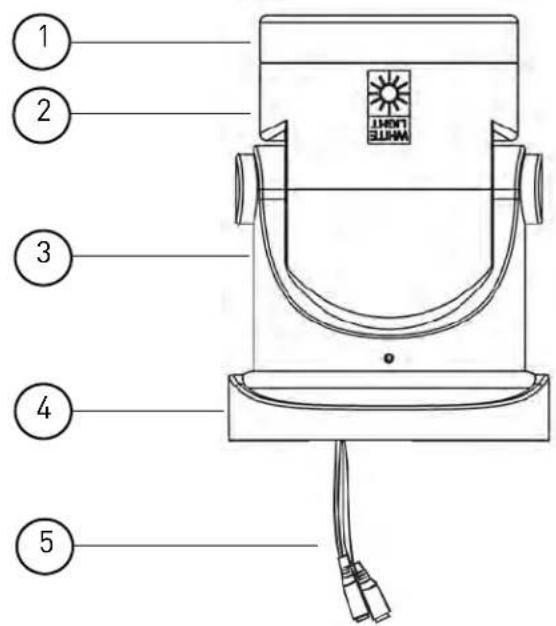
1. CAMERA OVERVIEW
1 Camera Module
2 Camera Holder
3 Camera Mount
4 Mounting Base
5 DC Power / BNC Video Connectors: See
"Connecting the Camera" on page 12 for details.
6 Infrared LEDs: Enable the camera to see at night.
7 White Light LEDs:
Automatically turn on when motion is detected (during night vision only) to deter criminals and allow camera to view color images at night
8 Camer a Lens
9 Sensor: Dete cts light to control night vision and trigger White Light LEDs.

2. NIGHT VISION FEATURES
This camera is equipped with special features that make it more effective at deterring and identifying nighttime intruders.
2.1 Night Vision
This camera is equipped with IR (Infrared) LEDs, which allow it to see at night up to a range of 60 ft. (18m). It has a built-in light sensor that activates night vision when it is dark. The camera sees in black and white when night vision is on.
2.2 Motion Detection / White Light LEDs
This camera is also equipped with White Light LEDs. At night, the White Light LEDs are set to turn on automatically when the camera detects motion within a range of 9 ft. (3m).

How it Works: During nighttime, the camera's night vision sees up to 60 ft. in black and white. When an object comes within a 9 ft. range, the White Light LEDs turn on, and the Infrared LEDs turn off. White light projects up to 30 ft., allowing the camera to view close by objects in color (depending on lighting conditions). After 15 seconds, the White Light LEDs turn off, and the Infrared LEDs turn back on.
This helps deter / identify intruders by:
- Alerting them to the presence of the camera, after they have already been spotted.
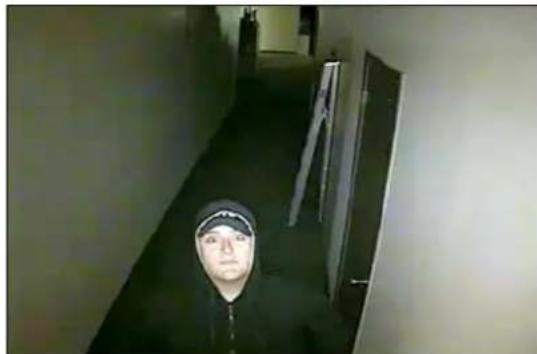
- Providing a better view of the intruder's face. The white lights on the camera turn on instantly to surprise intruders, drawing their eyes to the camera.
natural_image
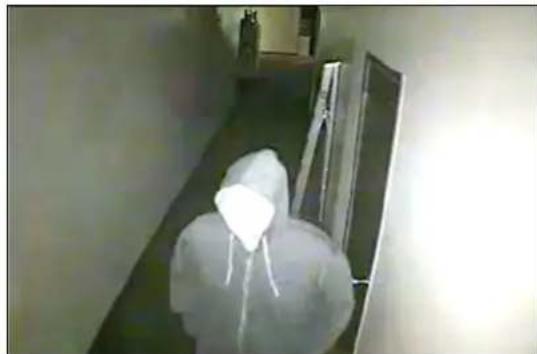
Person in full protective suit walking down a hallway (no visible text or symbols)Typical night-vision cameras may be overlooked by intruders
natural_image
Person walking down a narrow, dark corridor with hanging doors (no visible text or symbols)White Light LEDs draw attention to help identify faces
- Providing color images at night. When the white lights are activated, the camera can view close by objects in color. Color images help identify the intruder's face and clothing.
NOTE: White Light LEDs remain on for 15 seconds after the camera detects motion.
IMPORTANT:
The camera detects motion using a built-in light sensor. Avoid installing the camera in areas where the lighting conditions are likely to change frequently, as lighting changes may trigger the sensor even if there is no motion.
3. INSTALLATION TIPS
- Test the camera before installing to ensure that there are no problems with the camera.
- To maximize the range of the motion sensor and White Light LEDs, mount the camera around 7 ft. (2.2m) off the ground.
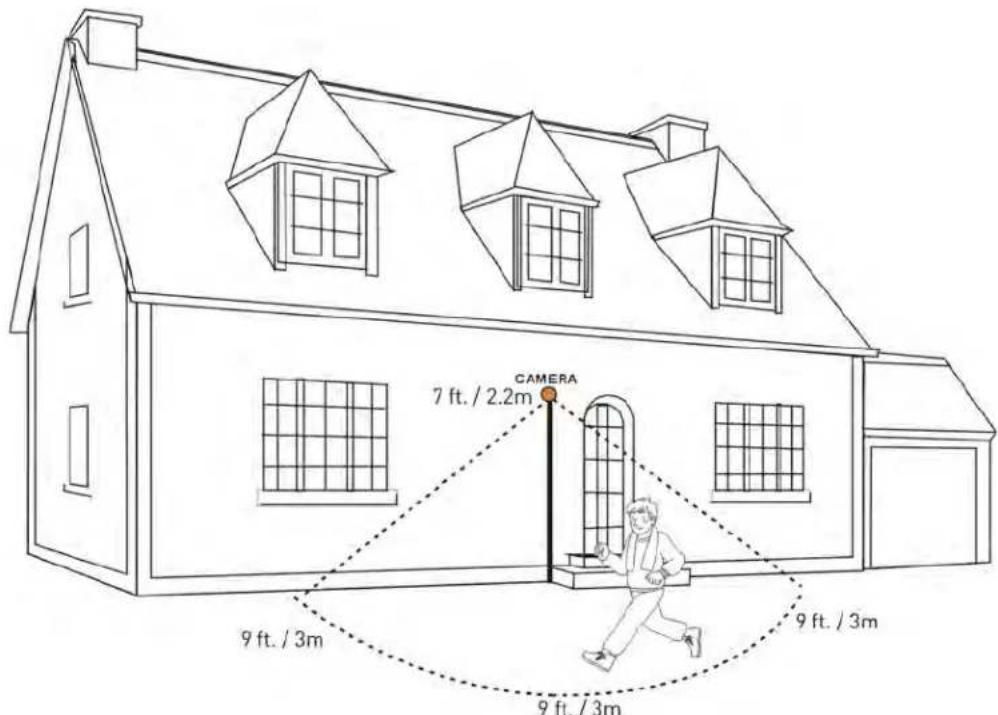
- Avoid installing the camera in locations overlooking a public road or sidewalk, as motion or lighting changes from these locations will trigger the camera's White Light LEDs
- Mount the camera where the lenses are away from direct and intense sunlight.
- Plan your cable wiring so that it does not interfere with power lines or telephone lines.
-
Ensure that the camera wiring is not exposed or easily cut.
-
Adjust the camera angle so that it provides a satisfactory view of the area you would like to monitor.
- In "high-risk" locations, have multiple cameras point in the same area. This provides camera redundancy if a camera malfunctions, or if a vandal attempts to damage the camera.
- Mount the camera in an area that is visible but out of reach.
3.1 Suggested Install Locations
This camera is ideal for entrances and other areas where intruders are likely to come in close proximity to the camera.
Good locations to install the camera are:
- Home entrance.
• Office / warehouse entrance. - Stairwells.
- Hallways.
Avoid installing the camera:
- Overlooking a road, street, sidewalk, or other location where normal nighttime traffic is likely to trigger the motion sensor.
- In a location where people or objects are unlikely to come within 9 ft. (3m) of the camera (for example, mounted to a high ceiling in a warehouse).
- Where lighting conditions change frequently.
- In a location that is lit at night (such as a parking lot), as existing lighting may prevent the camera from turning on night vision.
4. INSTALLING THE CAMERA
4.1 Before Installing the Camera
Decide if you are going to run the cables through the wall / ceiling (drilling required) or along the wall / ceiling.
- If you are running the cables through the wall / ceiling, connect the power and BNC video cables to the camera before installing. See “Connecting the Camera” on page 12 for details.
- If you are running the cables along the wall/ceiling, follow the instructions below before connecting the camera power and BNC video cables.
4.2 To Install the Camera
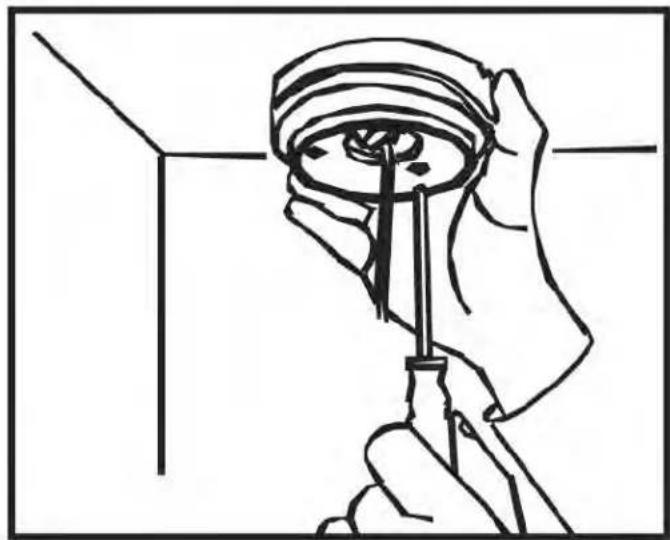
1 Use the included allen key to loosen the base screws (Figure 1). Twist the mounting base until it loosens; then, separate the camera from the mounting base.
Figure 1: Figure 2:


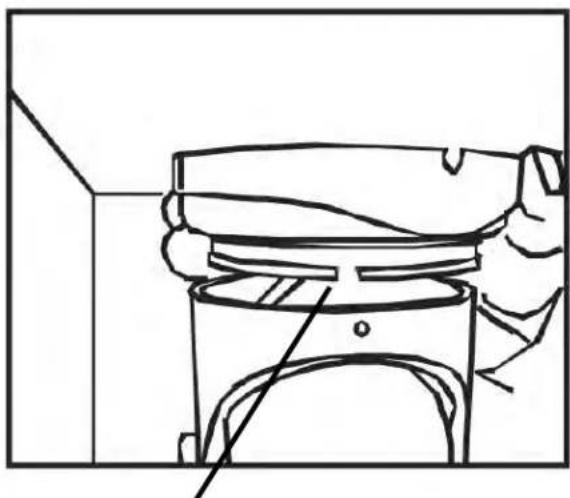
2 Run the cable through the base (Figure 3) and secure it by pushing the rubber bumper on the cable through the slot on the base (Figure 4). This prevents the camera from falling during installation.
- If you are running the cables along the wall / ceiling, make sure to run the cable through the cable notch on the base. This will keep the camera base flush to the wall / ceiling when mounted.

3 Mount the base to the desired surface using the included screws.
NOTE: If mounting to drywall, use the included drywall plugs.
natural_image
Line drawing of a hand using a screwdriver to adjust or install a circular component (no text or symbols present)NOTE: Camera hangs down from base during mounting.
4 Attach the camera to the base. Align the base screws with the slots on the base, slide the camera onto the base, and twist.
natural_image
Line drawing of a mechanical component with a handle and base, no text or symbols presentBase slot
5 Adjust the camera position as needed (see "Positioning" on page 10 for details).
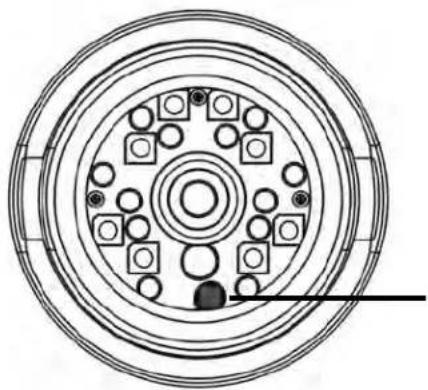
NOTE: Ensure that the sensor is directly below the camera lens (in the 6 o'clock position) or the image will appear rotated.
6 Tighten the screws to secure the camera in position and snap the screw cap over the arm screw.


Do not over-tighten the screws, as this may crack the camera or base.
7 If you are running the cables along the wall / ceiling, connect the camera power and BNC video cables. See "Connecting the Camera" on page 12 for details.
5. POSITIONING
The camera offers flexible positioning, allowing you to manually adjust the camera for wall or ceiling installation.
NOTE: To maximize the range of the motion sensor and White Light LEDs, it is recommended to mount the camera around 7 ft. (2.2m) off the ground.
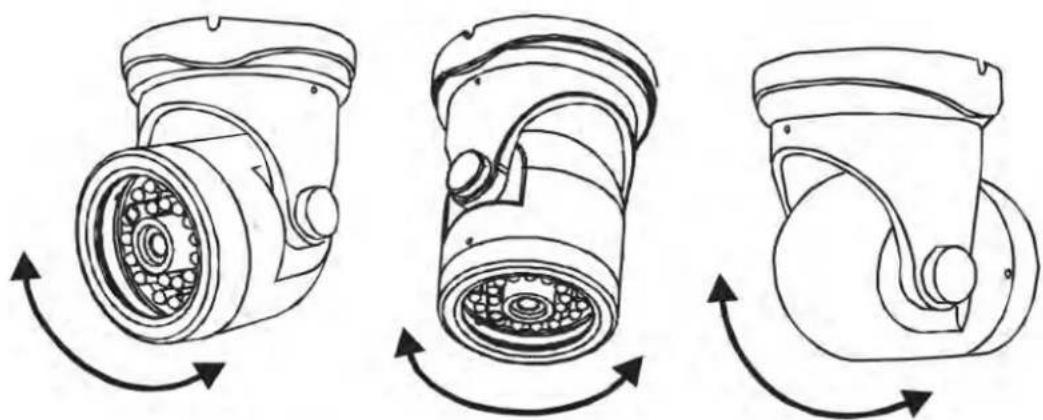
Tilt the camera to adjust the angle.

Loosen the screws on both sides of the base and twist the camera to adjust the camera direction.

Do not over-tighten the screws, as this may crack the camera or base.
Base screws

natural_image
Technical line drawing of a mechanical component with rotational arrows indicating motion (no text or symbols)Camera module screws
Loosen the screws on both sides of the camera module and twist to adjust the sensor position.

The camera module can only twist one full rotation in either direction. Do not force the lens, as this can break the camera.
natural_image
Circular diagram of a multi-layered electrical or mechanical component with no visible text or symbolsMake sure that the sensor is directly below the camera lens (in the 6 o'clock position). Otherwise, the image will appear rotated.
Correct sensor position

Do not over-tighten the screws, as this may crack the camera or base.
6. CONNECTING THE CAMERA
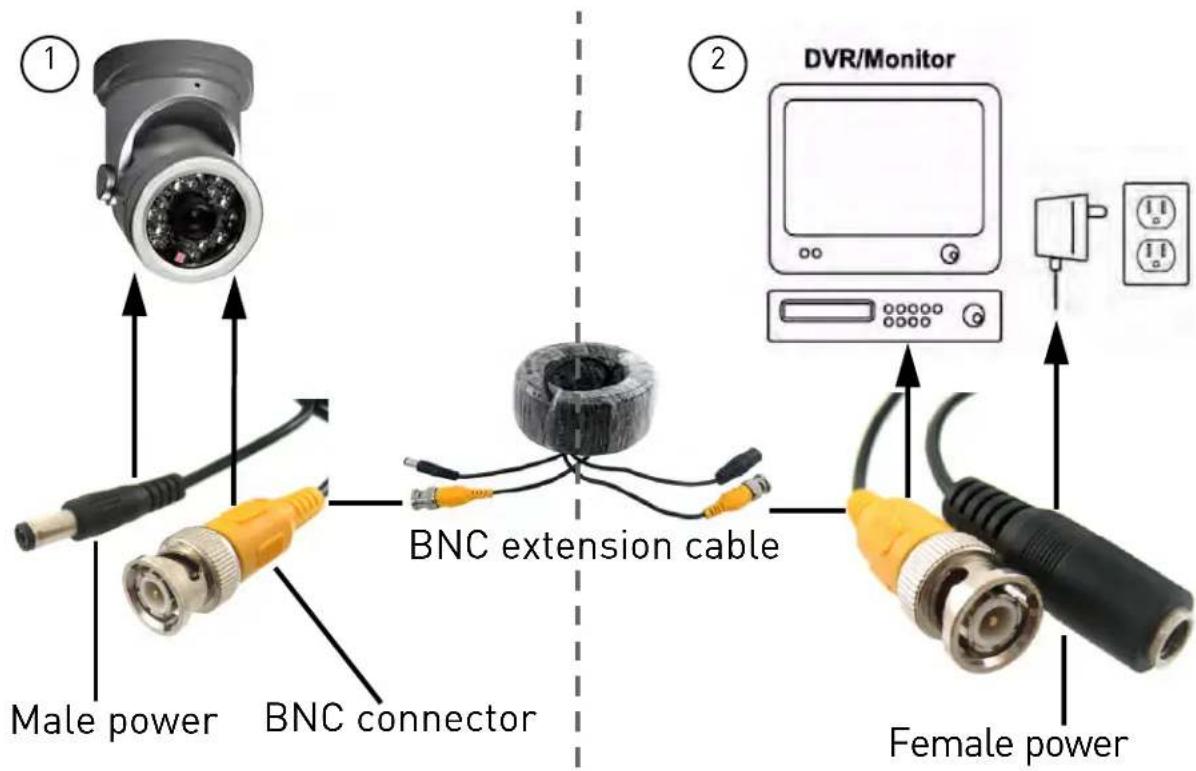
To Camera: To Monitor / DVR:
1 Connect the male power connector on the BNC extension cable with the female power connector on the camera.
- Connect the BNC connector on the ex tension cable to the camera.
2 Connect the female power connector on the extension cable to the power adapter.
- Connect the BNC connector on the extension cable to your monitor or DVR.
3 Plug the power adapter into a power outlet.
6.1 BNC to RCA Adapter (Optional)
DVR / CCTV MONITOR Video IN
TV / VCR Video IN

Attach the included BNC to RCA adapter to connect the extension cable to RCA inputs (i.e. for a TV connection).
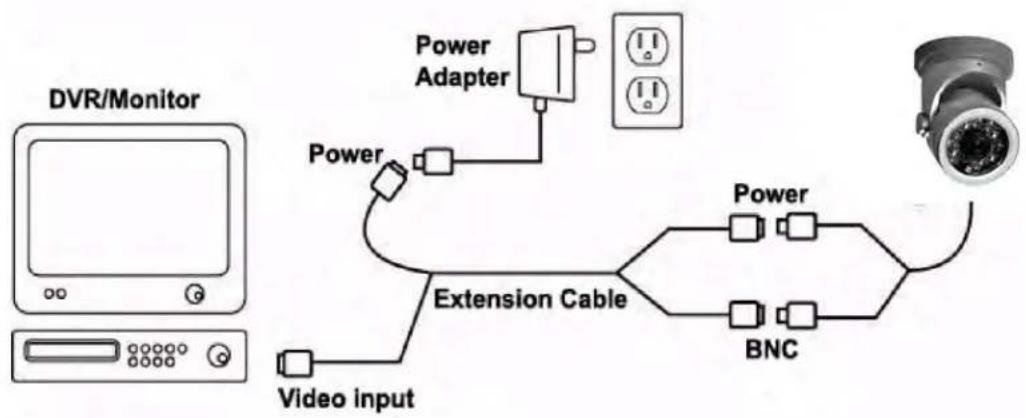
6.2 Setup Diagram
7. TECHNICAL SPECIFICATIONS
| Image Sensor 1/3" Sony Super HAD ^TM II | |
| Video Format NTSC | |
| Effective Pixels H:768 V:494 | |
| Resolution 540 TV Lines | |
| Scan System 2:1 Interlace | |
| Sync System Internal | |
| S / N Ratio 48 dB (AGC OFF) | |
| Iris AES | |
| AES Shutter Speed NTSC: (1/60~1/100,000 sec.) | |
| Min. Illumination 0.2 Lux without IR LED0 Lux with IR LED | |
| Video Output Composite 1.0Vpp @ 75ohm | |
| Lens / Lens Type 4.3mm F2.0 / Fixed | |
| FOV (Diagonal) 80° | |
| Termination | BNC Type |
| IR LED Qty / Type | 12 pcs. / 850nm |
| Night Vision Range ^1 | 60 ft. / 18m |
| White Light LED Qty | 8 pcs. |
| Motion Detection Range | 9 ft. / 3m |
| White Light Range | 30 ft. / 9m |
| Power Requirement 12V DC ±10% | |
| Power Consumption Max. | 300mA (w/White Light LEDs) |
| Operating Temp. Range 1 | 4° ~ 122° F / -10 ~ 50°C |
| Operating Humidity Range | < 80% RH |
| Environmental Rating ^2 | IP 67 |
| Weight (including stand) | 0.75 lbs. / 0.34kg |
-
IR Illumination Range under ideal conditions. Objects at or beyond this range may be partially or completely obscured, depending on the camera application.
-
Not intended for submersion in water. Installation in a sheltered location recommended.
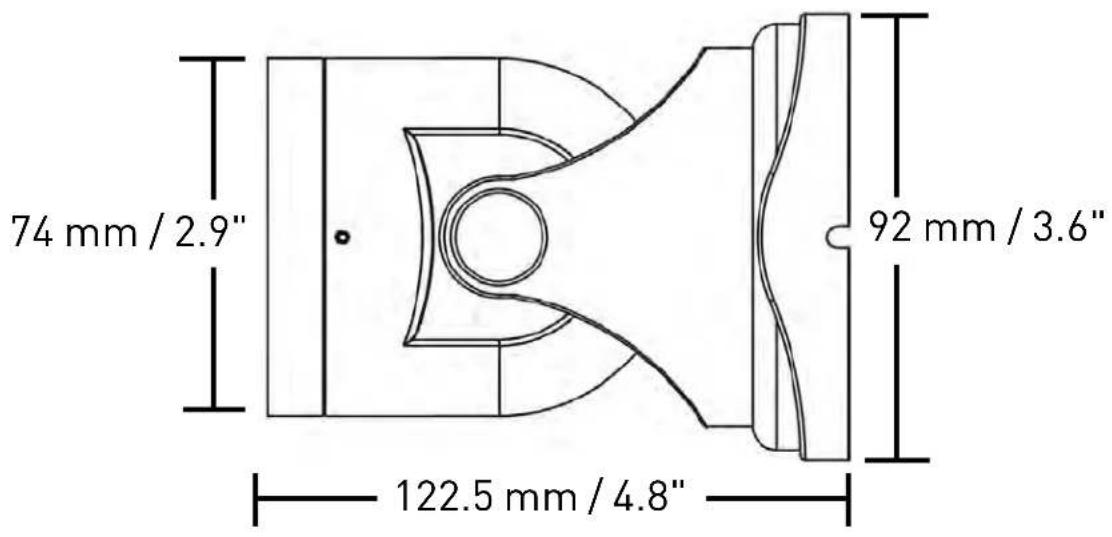
7.1 Dimensions
8. CABLE EXTENSION OPTIONS
You can extend the cable run for your camera up to 300 ft. depending on the cable type used. See table below:
| Option Cable Type Max Cable | Run Distance | Max. # of Extensions | |
| 1 Regular BNC(supplied with camera) | 180 ft. / 55m 3 | ||
| 2 'RG59' or 'Coax' or 'Coaxial' BNC (sold separately) | 300 ft. / 92m 5 | ||
| 3 Lorex Universal Cable(sold separately) | 300 ft. / 92m 3 | ||
Notes:
1 For optimal performance, consider using option 2 or 3. It is best to use the same cable type for the entire distance.
2 Cable run recommendation based on typical camera power consumption (up to 500mA). For specialty cameras with higher current consumption, maximum cable run may be reduced. Consider providing power to the camera at the camera side, rather than at the end of the extension cable.
3 Indicators that your cable run may be too long:
• Video is permanently black & white (even during day time).
- Video is distorted.
9. TROUBLESHOOTING
| Problem Solution | |
| No Picture / Signal • | Ensure your TV is on the correct input channel. Common terms of an input channel: INPUT, AV CHANNEL, LINE1, LINE2, AUX.If your camera is connected to a VCR / DVR, ensure it is properly connected to your TV / Monitor.Ensure connections are properly connected.Ensure the camera power supply is plugged in. |
| Picture is too bright • | Ensure your camera isn’t pointed directly at a source of light (e.g. sun or spot light).Move your camera to a different location. |
| Picture is too dark • | Check the brightness and contrast settings of the device your camera connects to (TV / Monitor / DVR). |
| Picture is rotated sideways or upside down | Rotate the camera module to ensure that the sensor is directly below the camera lens (at the 6 o’clock position). |
| Picture is not clear | Check the camera lens for dust, dirt, and spiderwebs. Clean the lens with a soft, clean cloth.Make sure that the cable run is within the limitations specified in the section 'Cable Extension Options'. |
| Night vision is not working | The night vision activates when light levels drop. The area may have too much light. |
| White Light LEDs do not turn on | Motion detection range is limited to 9 ft. (3m). It is recommended to install the camera at a height of about 7 ft. (2.2m) to ensure that people and objects will be detected. |
| White Light LEDs turn on too frequently | Move the camera to a different location where normal nighttime traffic will not trigger the motion detection.Changes in lighting conditions may trigger the motion sensor. Adjust the camera angle down to reduce exposure to light, or move the camera to a different location. |
| Bright spot in video when viewing camera at night | Night vision reflects when pointing a camera to a window. Move the camera to a different location. |
| BNC connection does not connect to my TV | Use a BNC to RCA adapter at the end of the extension cable. |
VANTAGE
LBC5451
Version 1.0
www.lorextechnology.com
- Contents
- Features
- Safety Instructions
- TABLE OF CONTENTS
- CAMERA OVERVIEW
- NIGHT VISION FEATURES
- Night Vision
- Motion Detection / White Light LEDs
- IMPORTANT:
- INSTALLATION TIPS
- Suggested Install Locations
- INSTALLING THE CAMERA
- Before Installing the Camera
- To Install the Camera
- POSITIONING
- CONNECTING THE CAMERA
- BNC to RCA Adapter (Optional)
- Setup Diagram
- TECHNICAL SPECIFICATIONS
- Dimensions
- CABLE EXTENSION OPTIONS
- Notes:
- TROUBLESHOOTING
- VANTAGE
Brand : Lorex
Model : LBC5451
Category : Security Camera