
rDrive 6628TW - Uncategorized Highpoint - Free user manual and instructions
Find the device manual for free rDrive 6628TW Highpoint in PDF.


| Product Type | External Hard Drive Enclosure |
| Model | rDrive 6628TW |
| Drive Bays | 2 x 3.5-inch SATA |
| Dimensions | 220 x 140 x 80 mm |
| Weight | 1.2 kg |
| Material | Aluminum alloy with plastic front |
| Power Supply | External AC adapter, 12V DC, 2A |
| Connectivity | USB 3.0 Type-B, eSATA |
| RAID Modes | RAID 0, RAID 1, JBOD, Span |
| Cooling | 80mm low-noise fan |
| LED Indicators | Power, HDD activity, RAID status |
| Compatible OS | Windows 10/11, macOS 10.14+, Linux |
| Operating Temperature | 0°C to 40°C |
| Storage Temperature | -20°C to 60°C |
| Maintenance | Wipe with dry cloth; keep vents clean |
| Safety | Use only supplied power adapter; avoid liquids |
| Spare Parts | Power adapter, USB cable (available from support) |
| Repairability | Not user-serviceable; contact Highpoint support |
| Warranty | 2 years limited |
Frequently Asked Questions - rDrive 6628TW Highpoint
User questions about rDrive 6628TW Highpoint
0 question about this device. Answer the ones you know or ask your own.
Ask a new question about this device
Download the instructions for your Uncategorized in PDF format for free! Find your manual rDrive 6628TW - Highpoint and take your electronic device back in hand. On this page are published all the documents necessary for the use of your device. rDrive 6628TW by Highpoint.
USER MANUAL rDrive 6628TW Highpoint
Copyright © 2017 HighPoint Technologies, Inc. This document contains materials protected by International Copyright Laws. All rights reserved. No part of this manual may be reproduced, transmitted or transcribed in any form and for any purpose without the express written permission of HighPoint Technologies, Inc.
Trademarks
Companies and products mentioned in this manual are for identification purpose only. Product names or brand names appearing in this manual may or may not be registered trademarks or copyrights of their respective owners. Backup your important data before using HighPoint's products and use at your own risk. In no event shall HighPoint be liable for any loss of profits, or for direct, indirect, special, incidental or consequential damages arising from any defect or error in HighPoint's products or manuals.
Information in this manual is subject to change without notice and does not represent a commitment on the part of HighPoint.
Notice
Reasonable effort has been made to ensure that the information in this manual is accurate. HighPoint assumes no liability for technical inaccuracies, typographical, or other errors contained herein.
FCC Part 15 Class B Radio Frequency Interference Statement
This equipment has been tested and found to comply with the limits for a Class B digital device, pursuant to part 15 of the FCC Rules. These limits are designed to provide reasonable protection against harmful interference in a residential installation. This equipment generates uses and can radiate radio frequency energy and, if not installed and used in accordance with the instructions, may cause harmful interference to radio communications. However, there is no guarantee that interference will not occur in a particular installation. If this equipment does cause harmful interference to radio or television reception, which can be determined by turning the equipment off and on, the user is encouraged to try to correct the interference by one or more of the following measures:
- Reorient or relocate the receiving antenna.
- Increase the separation between the equipment and receiver.
- Connect the equipment into an outlet on a circuit different from that to which the receiver is connected.
- Consult the dealer or an experienced radio/TV technician for help.
Modifications not expressly approved by the manufacturer could void the user's authority to operate the equipment under FCC rules.
This device complies with part 15 of the FCC Rules. Operation is subject to the following two conditions: (1) this device may not cause harmful interference, and (2) this device must accept any interference received, including interference that may cause undesired operation.
European Union Compliance Statement
This Information Technologies Equipment has been tested and found to comply with the following European directives:
• European Standard EN55022 (1998) Class B
• European Standard EN55024 (1998)
Table of Contents
Product Overview....5
Kit Content....5
Product Information....5
Section 1: Hardware Installation....6
Hardware Overview....6
Panel Layout-Front View 6
Panel Layout-Rear View 6
System Requirements 7
Enclosure Setup....7
Section 2: Setting Up Software for Windows Platforms ....8
Driver Installation....8
Checking Your Driver Version....8
Updating the Drivers 9
Uninstalling the Driver....10
Installing the HighPoint rDrive Manager....11
How to Login to the rDrive Manager....12
Remote Login....12
Formatting the RAID Volumes....12
Section 3: Using the HighPoint rDrive Manager....16
How to Login to the rDrive Manager....16
Navigating the rDrive Manager....16
Overview Tab....17
Enclosure Properties 17
Storage Properties....17
Array Config....18
Delete 18
Quick Config. 18
Advanced Config....18
Quick Config. 19
Advanced Config....20
Creating Array 21
Spare Pool....23
Logical Device 24
Logical Device Information....24
Maintenance 24
Array Information....24
Expanding an Existing Array 28
Physical Device Information....29
Rescan 30
Beeper Mute....30
Settings Tab 31
Enclosure 31
Email Notification....31
SMTP Setting 31
Add Recipient 32
Security....33
Password Setting 33
System 34
Event....35
Storage Health Inspector (SHI) 35
Scheduler....36
How to Create a New Verify Task....36
Help 37
Section 4: Troubleshooting ....38
Handling Critical Arrays 38
Rebuilding Stops Due to Bad Sectors 39
Critical Array Becomes Disabled When You Removed Faulty Disk 39
Online RAID Roaming 39
Appendix....40
Table 1: rDrive Manager Icon Guide ....40
Table 2: RAID Reference Level....42
Contacting Technical Support 42
Product Overview
Customers can now take advantage of professional class Thunderbolt™ 3 storage with a premium feature set for the price of entry level backup solution. The rDrive 6628TW delivers superior data security and outstanding transfer performance in a compact, turnkey, out of the box ready solution that can be easily connected to any PC running Windows 8.0 or later platform with Thunderbolt™ 3 capability. Armed with 16 to 96TB of pre-configured RAID storage, the rDrive 6628TW series can accommodate any budget and capacity requirement.
Kit Content
• 1x rDrive RAID Storage unit
• 8x Removable Disk Modules
• 1x 40Gb/s Thunderbolt™ 3 cable
- 1x UL Power Cord
• 1x Quick Installation Guide
Before getting started, check to see if any items are missing, damaged, or incorrect. If you discover any discrepancies, please contact your reseller, or our Support Department via our Online Web Support Portal.
Product Information
| Product Information | rDrive 6628TW |
| Port Type | ThunderboltTM 3 |
| Number of Ports | 2 |
| Interface Technology | Daisy Chain up to 6 devicesBi-directional, dual-protocol (PCI Express and DisplayPort)8 lanes of Display Port 1.2 – supports dual 4K displays or one 5K displayPower delivery: 15W to bus-powered devicesBackward compatible with ThunderboltTM 2 devicesUSB-C ports compatible with existing USB devices and cables, support up to USB 3.1 10Gb/s speed |
| RAID Level | Preconfigured RAID 5 / Optional RAID 0, 1, 6, 1/0 & JBODNote: RAID 1/0 is the equivalent of RAID 10 |
| System Requirement | Computer with a ThunderboltTM 3 portWindows 8 and Later |
| Warranty | 2 Years |
| Performance Benchmark | RAID 0:Read – 1,570 MB/sWrite – 1,556 MB/sRAID 5:Read – 1,386 MB/sWrite – 892 MB/s |
| Kit Contents | 1x rDrive RAID Storage unit8x Removable Disk Modules1x 40Gb/s ThunderboltTM 3 cable1x UL Power Cord1x Quick Installation Guide |
Section 1: Hardware Installation
Hardware Overview
Panel Layout-Front View
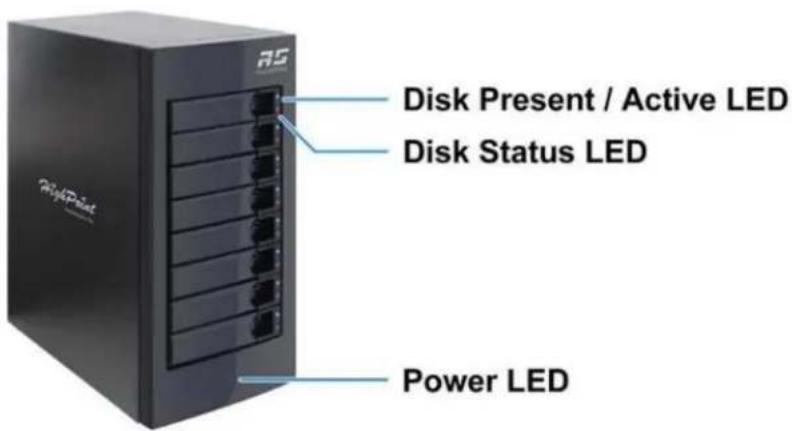
LED Indicators
Disk Present: Solid blue
Disk Active LED: Flashing blue
Disk Failure LED: Solid red
Disk rebuilding/identifying LED: Flashing red
Power LED: Solid blue
Panel Layout-Rear View

System Requirements
- Windows system with a Thunderbolt ^TM 3 (USB type-C) port or AIC card
- Windows 8 or later
Enclosure Setup
- Connect the rDrive 6628TW to the host system with the Thunderbolt™ 3 cable

natural_image
Close-up of a black computer power supply unit rear panel showing a fan and drive slots (no visible text or symbols)- Connect the rDrive 6628TW to power and turn on the power switch

natural_image
Close-up of a black power supply unit with fan and socket, showing internal components and a green connector (no readable text or symbols)Section 2: Setting Up Software for Windows Platforms
Driver Installation
Drivers provide a way for your operating system to communicate with your new hardware. Updating to the latest available driver ensures your product benefits from the most recent performance, stability, and compatibility improvements.
- Obtain the latest driver software for the rDrive 6628TW from our website: http://www.highpoint-tech.com/USA_new/series-rd6628tw-download.htm#nav_bottom
- Locate the downloaded folder and run setup.exe
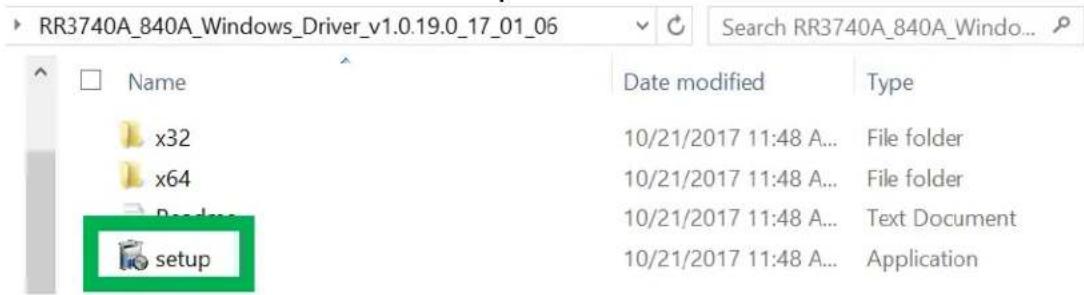
- Follow the on screen steps to install the driver
Checking Your Driver Version
- Right click the Windows logo on the bottom left of the screen
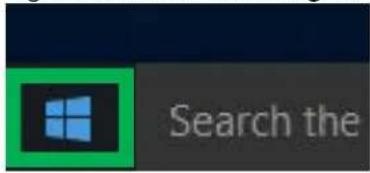
- Select Device Manager

- Click on the Storage controllers tab

- Right click on the RocketRAID 840A SATA Controller and select Properties
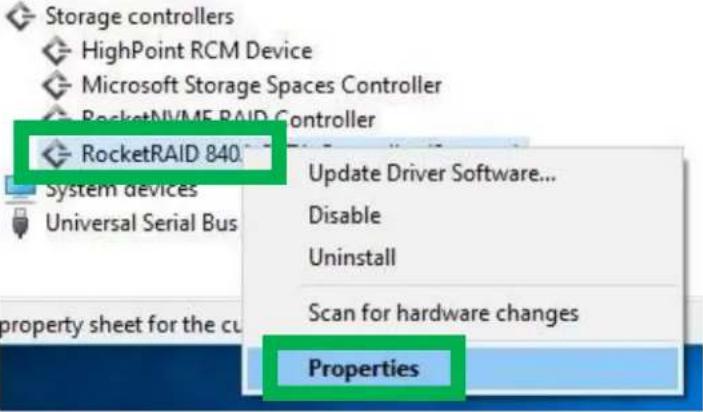
- Click the Properties tab and look at the Driver Version section to check

Updating the Drivers
- Obtain the latest driver files for the rDrive 6628TW from http://www.highpoint-tech.com/USA_new/series-rd6628tw-download.htm#nav_bottom
-
Right click the Windows logo on the bottom left of the screen
-
Select Device Manager
-
Click on the Storage controllers tab
-
Right click on the RocketRAID 840A SATA Controller and select Update Driver Software

- Click Browse my computer for driver software
Update Driver Software - RocketRAID 840A SATA Controller (Storport)
How do you want to search for driver software?
→ Search automatically for updated driver software Windows will search your computer and the Internet for the latest driver software for your device, unless you've disabled this feature in your device installation settings.
→ Browse my computer for driver software Locate and install driver software manually.
-
Select the driver files you downloaded
-
Click Next
-
Restart the system
Uninstalling the Driver
- Right click the Windows logo on the bottom left of the screen
- Select Device Manager
-
Click on the Storage controllers tab
-
Right click on the RocketRAID 840A SATA Controller and select Uninstall

- Restart the system
Installing the HighPoint rDrive Manager
The HighPoint rDrive Manager is the primary link between you and your RAID array. Using the management utilities and menus offered by the rDrive Manager, you would be able to access, create, and maintain your RAID arrays.
- Download the rDrive Manager files from http://www.highpoint-tech.com/USA_new/series-rs6628t-download.htm.
- Locate the folder in which you downloaded the files to and run HighPoint rDrive Manager.exe
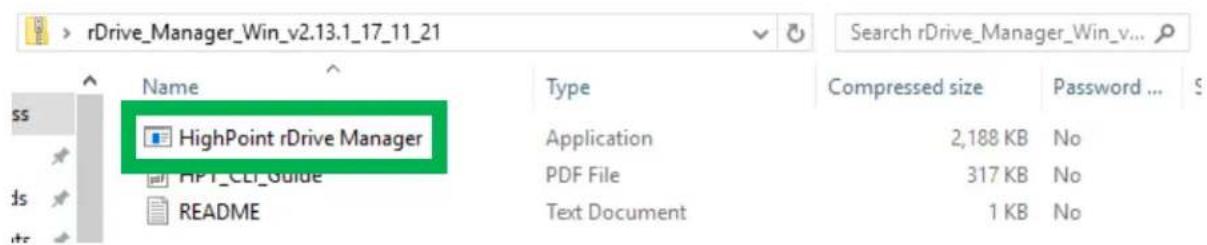
- Follow the on screen steps to install the rDrive Manager software
- Log into the rDrive Manager by double clicking the desktop icon (see below), or by typing http://localhost:7406 in your preferred web browser's address line (we recommend using the latest browser version

How to Login to the rDrive Manager
You can reach the rDrive Manager log in page either by:
- Double clicking on the rDrive Manager icon created on your desktop
- Opening your preferred web browser and typing http://localhost:7406 in the address bar Note: You can set the password under the Setting tab
Remote Login
A user connected to a local network can remotely access the rDrive Manager using the IP address of the host device.
To obtain your IP address
- Open a command prompt window on the host computer
- Type ipconfig
- Look for the section that contains your network adapter information
- Look at the IP address section
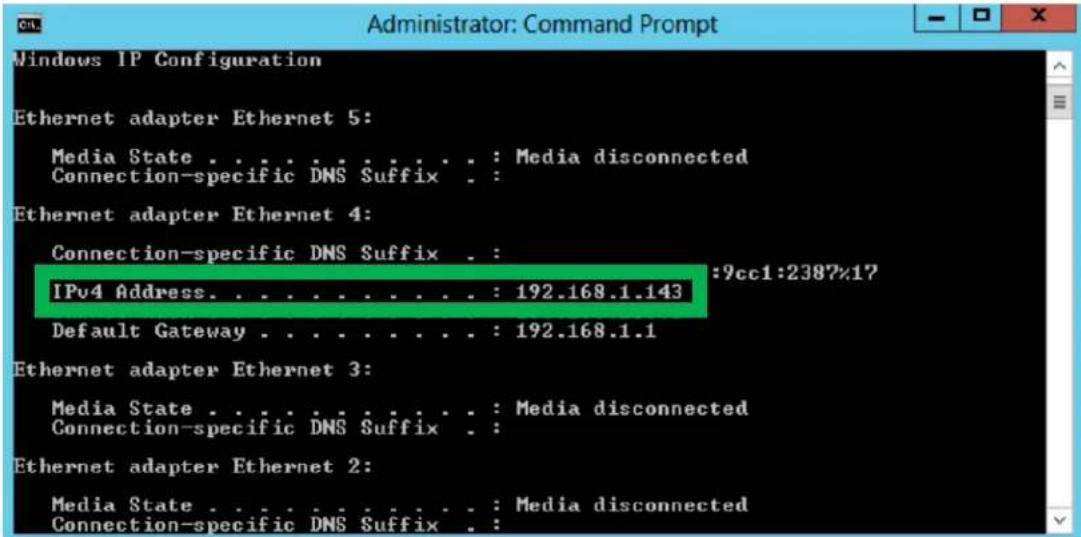
Note: Make sure the Restrict to localhost access is disabled in the rDrive Manager Setting tab
You can then remotely access the rDrive Manager using any other computer that is in your local network by opening any web browser and typing http://{IP address of host compute}:7404 (default port is 7404)
Formatting the RAID Volumes
After creating a RAID array, your operating system will recognize that array as a logical disk. However, the array will not be accessible until it is formatted by the operating system.
Format the volume when you have finished the following procedures
- Set up the Enclosure
- Set up the RAID Controller
- Installed Drivers
- Create an Array
For Windows users
- Right click the Windows logo on the bottom left of the screen
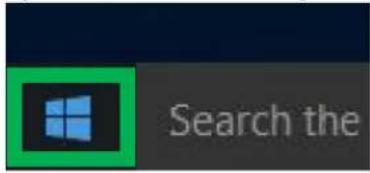
- Select Disk Management
Device Manager
Network Connections
Disk Management
Computer Management
Command Prompt
- If you just created the array, a prompt will appear after clicking disk management asking you to initialize the disk
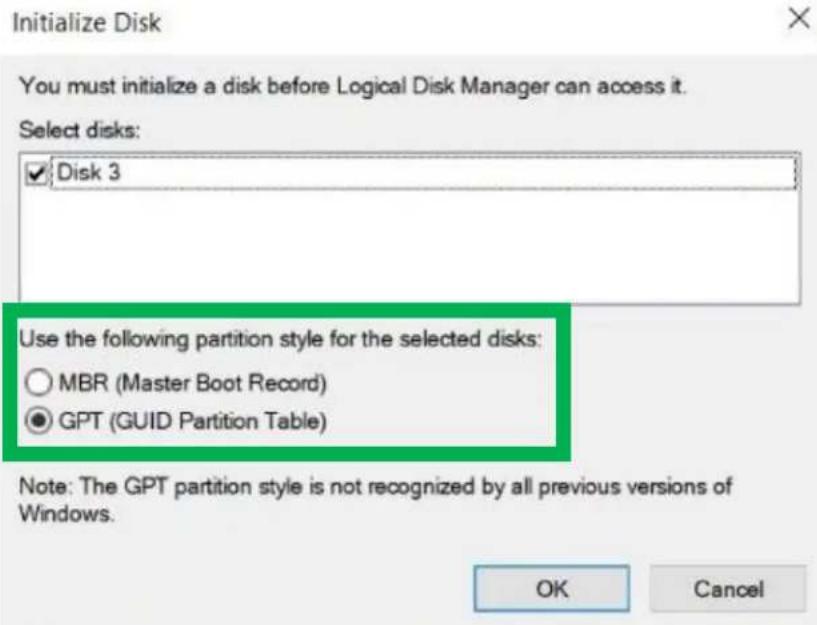
a. MBR partition table is mainly for bootable drives and has a 2 TB limit. If your PC motherboard uses legacy BIOS, you will most likely need to use MBR for bootable drives.
b. GPT partition table has no capacity limit, but cannot be bootable unless your PC motherboard contains UEFI firmware
- Once initialized, right click the unallocated disk space for your disk and select New Simple Volume

- Follow the instructions on screen to receive a drive letter
New Simple Volume Wizard

Assign Drive Letter or Path
For easier access, you can assign a drive letter or drive path to your partition.
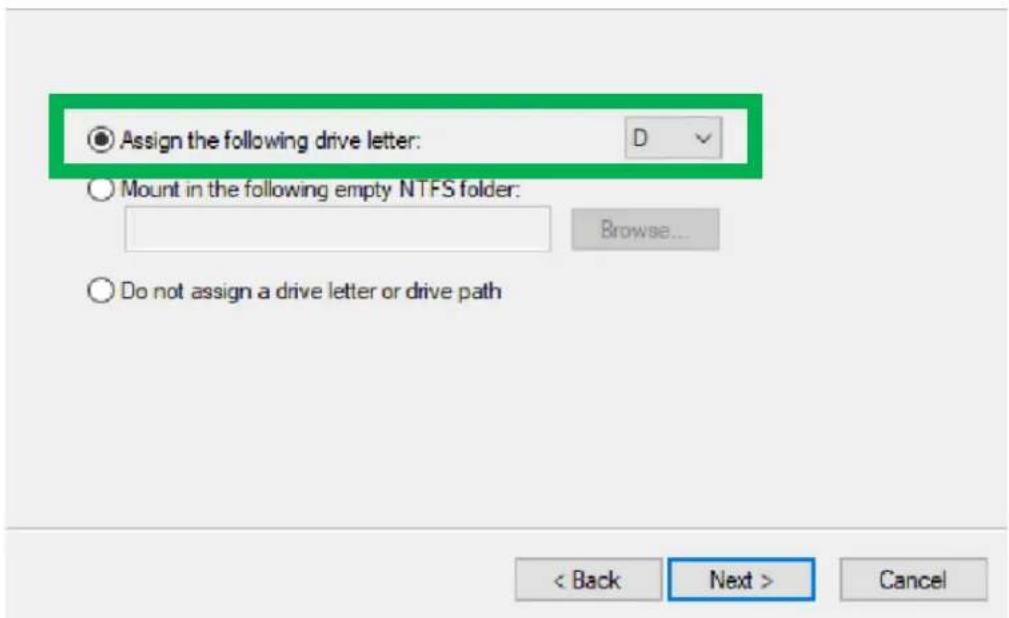
- Follow the instructions on screen to create a disk name
New Simple Volume Wizard

Format Partition
To store data on this partition, you must format it first.
Choose whether you want to format this volume, and if so, what settings you want to use.
○ Do not format this volume
◎ Format this volume with the following settings:
File system:
NTFS

Allocation unit size.
Default
Volume label:
rDrive RAID Array
Perform a quick format
□ Enable file and folder compression
< Back
Next >
Cancel
- Once finished, the drive will appear in your OS with the name and letter you assigned
Disk 6
Basic
334.94 GB
Online
rDrive RAID Array (D:)
334.94 GB NTFS
Healthy (Primary Partition)
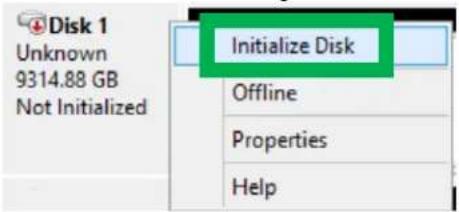
Please note your disk may initially appear offline to the operating system and you may have to bring it online
- In Disk Management, right click the disk you wish to bring online
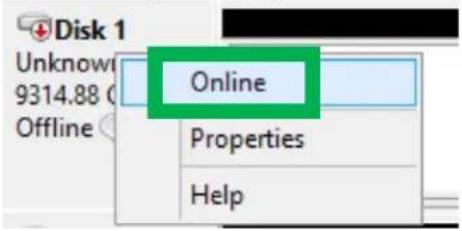
- The disk status will change to Not Initialized, right click the disk again to initialize it.
Section 3: Using the HighPoint rDrive Manager
How to Login to the rDrive Manager
You can reach the rDrive Manager log in page either by:
- Double clicking on the rDrive Manager icon created on your desktop
- Opening your preferred web browser and typing http://localhost:7406 in the address bar.
There is no password needed for the default log-in. The password can be changed under the Setting tab after log-in the rDrive Manager.
Navigating the rDrive Manager
The rDrive Manager allows you to do several key things:
- Create and remove arrays
• Monitor disk health - Update firmware and BIOS
- Change enclosure settings
- Troubleshoot faulty drives
• View general system overview
| Tab Name | Function |
| Overview | View Enclosure and Storage Properties |
| Quick Config | A quick configuration wizard to create a new RAID array |
| Advanced Config | Manage and create RAID arrays |
| Settings | Adjust rDrive Manager control settings |
| Event | Show rDrive Manager event log |
| Storage Health Inspector (SHI) | View and schedule S.M.A.R.T monitoring |
| Help | Online help, register product, configuration records |
Overview Tab
Enclosure(1): rD6628T

HighPoint Technologies, Inc.
rDrive Manager 2.18.2
Copyright (c) 2017 HighPoint Technologies, Inc. All Rights Reserved
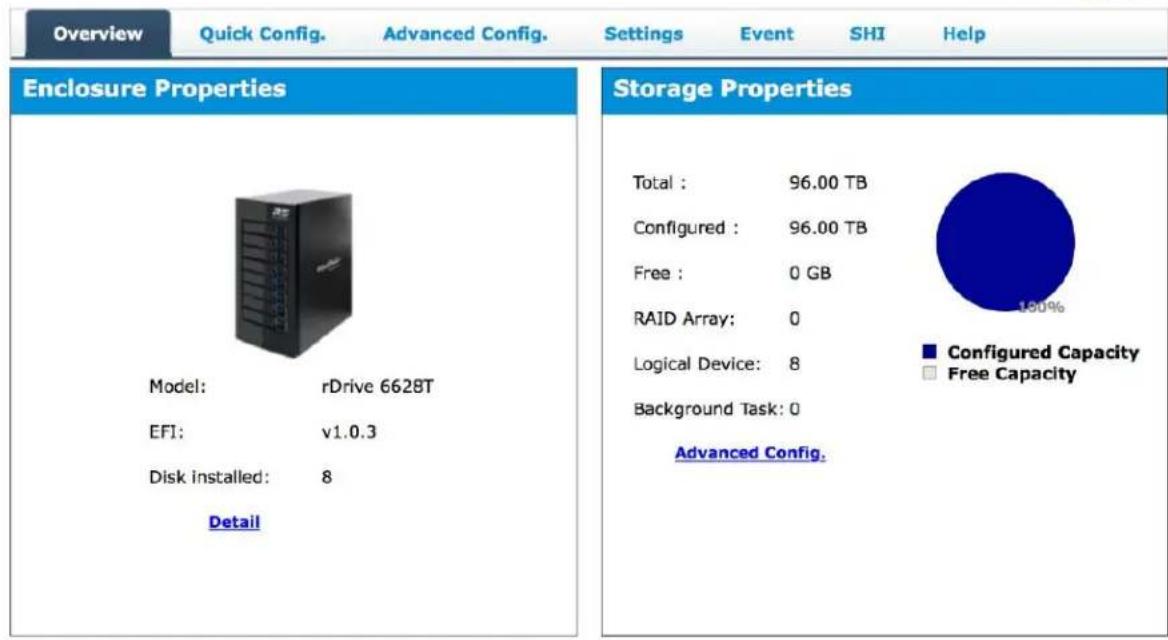
The Overview provides information regarding each HighPoint Enclosure connected to your computer detects. It is also the first page you see when logging in.
It also provides the following information
• Enclosure Properties
• Storage Properties
On the top left of the page is a drop down menu that allows you to select which controller you want to manage (if you have multiple HighPoint controllers connected).
Enclosure Properties
- Model: the model name of the controller
- Disk Installed: number of drives seen by the controller
Storage Properties
• Total: the combined capacity of the physical disks connected to the controller.
- Configured: the amount of space used for creating arrays
• Free: total amount of unused space
- RAID Array: total amount of configured RAID arrays
• Logical Device: total amount of logical devices
• Background Task: current running task
Array Config.
When setting up a new array configuration make sure back up all the data on the disks. Afterwards click maintenance than delete to set up the disk for the new array.
Delete
The delete function is used to delete the already exist arrays so that the user has free disks to create another array.
The delete function can be found in the Advanced Config. tab.

rDrive Manager 2.18.2
Copyright (c) 2017 HighPoint Technologies, Inc. All Rights Reserved
Quick Config.
Quick Config. is the easiest and quickest way to configure RAID arrays. Back up all data before following the on-screen instructions to configure your array.
Advanced Config.
The Advanced Config. tab is where you can edit, delete, and maintain your RAID configurations, as well as review the Physical Device information.
Quick Config.
- Choose the Raid level you would like (Refer to Table 2; RAID Reference Level)(P.38)
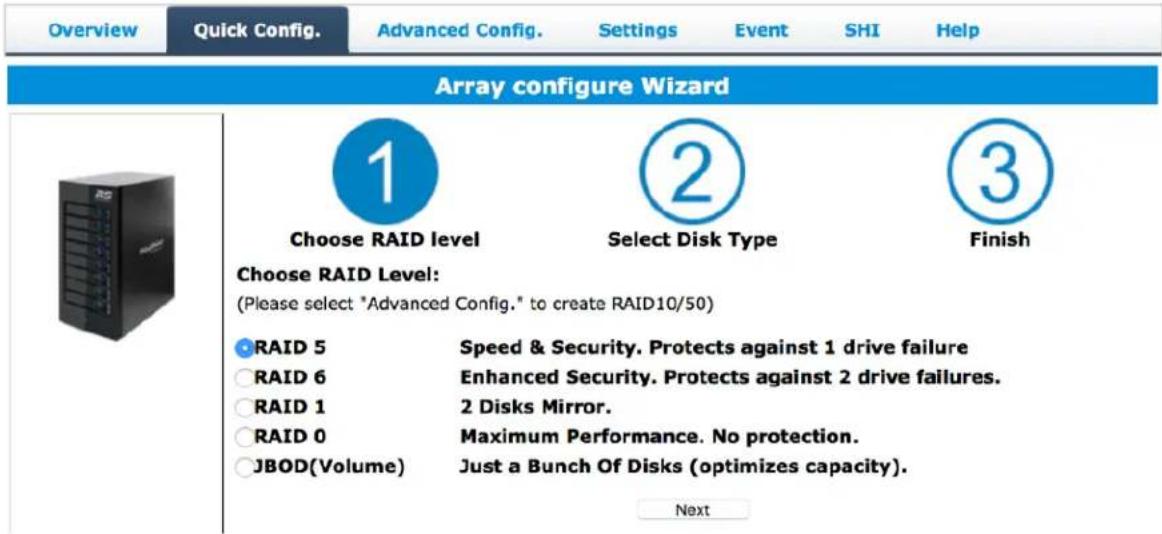
- Select the disk type
a. New disk is used for disk with no data on them
b. Used disk is used for disks already having data
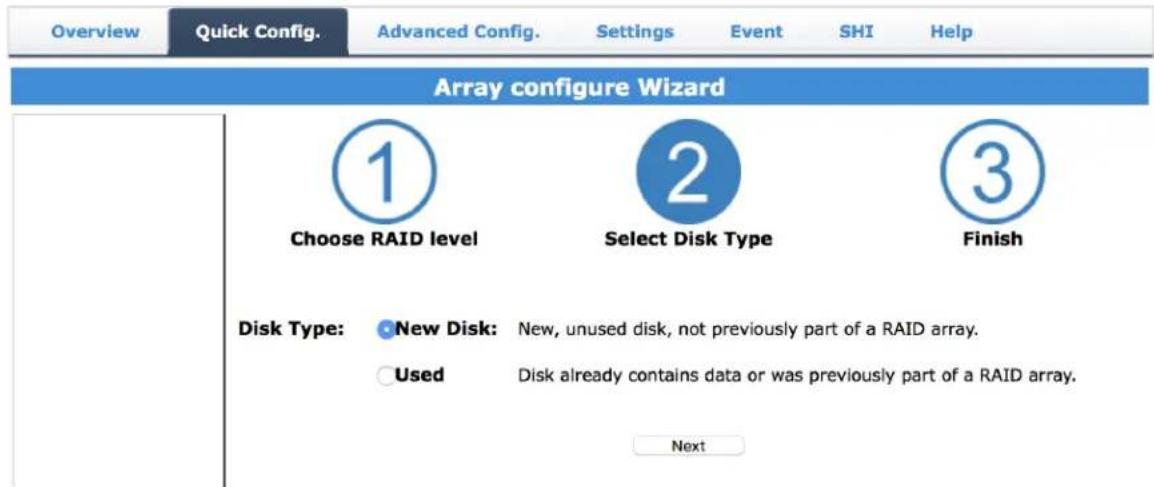
- Click create on the bottom
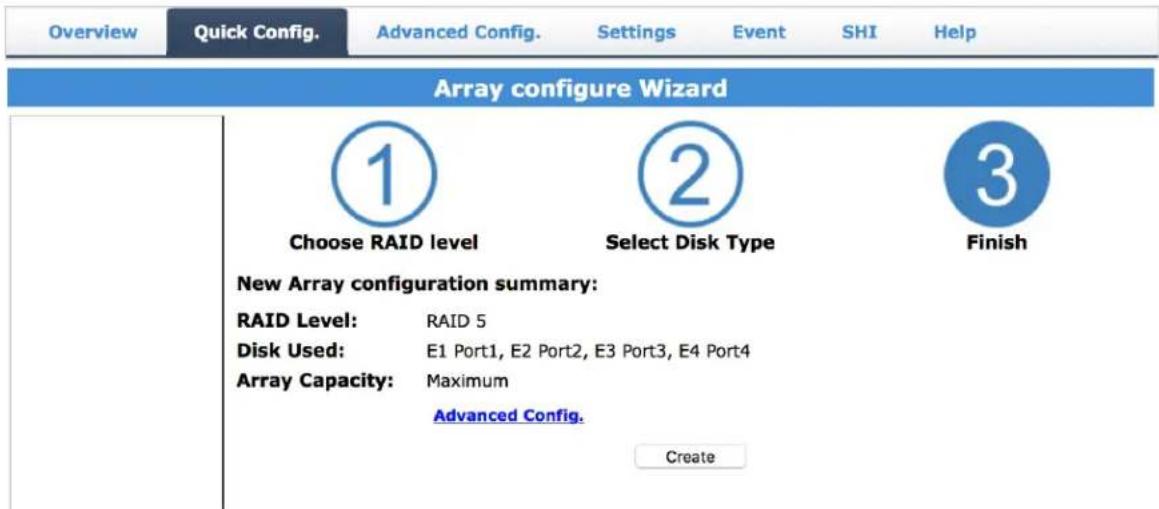
- Next, you will need to format the RAID Volume. Please check page 11 for more information.
Advanced Config.
| Overview Quick Config. Advanced Config. Settings Event SHI Help | ||||||||
| Create Array Spare Pool Logical Device Rescan Beeper Mute | Logical Device Information | |||||||
| Name Type Capacity BlockSize SectorSize OS Name Status RAID_5_0 RAID 5 84.00 TB 128k 512B HPT DISK 1_0 Normal Maintenance | ||||||||
| Physical Device Information | ||||||||
| Location Model | Capacity Max Free | |||||||
| 1/1 ST12000VN0007-2GS116-ZCH074PL | 12.00 TB 0.00 GB | |||||||
| Revision SC60 | Read Ahead Enabled Change | |||||||
| Location 1/1 | Write Cache Enabled Change | |||||||
| Max Free 0.00 GB | ||||||||
| Status Normal | NCQ Enabled Change | |||||||
| Serial Num ZCH074PL | Identify LED [ON] [OFF] | |||||||
| 1/2 ST12000VN0007-2GS116-ZCH07TEY | 12.00 TB 0.00 GB | |||||||
| 1/3 ST12000VN0007-2GS116-ZCH05C83 | 12.00 TB 0.00 GB | |||||||
| 1/4 ST12000VN0007-2GS116-ZCH07VLV | 12.00 TB 0.00 GB | |||||||
| 1/5 ST12000VN0007-2GS116-ZCH05HLN | 12.00 TB 0.00 GB | |||||||
| 1/6 ST12000VN0007-2GS116-ZCH08FX3 | 12.00 TB 0.00 GB | |||||||
| 1/7 ST12000VN0007-2GS116-ZCH070PW | 12.00 TB 0.00 GB | |||||||
| 1/8 ST12000VN0007-2GS116-ZCH08DNS | 12.00 TB 0.00 GB | |||||||
rDrive Manager 2.18.2
Copyright (c) 2017 HighPoint Technologies, Inc. All Rights Reserved
The Advanced Config. tab has the following functions:
- Create Array
- Spare Pool
- Logical Device
- Rescan
- Beeper Mute
Creating Array

rDrive Manager 2.18.2
Copyright (c) 2017 HighPoint Technologies, Inc. All Rights Reserved
Array Type
• JBOD: Just a Bunch of Disks
- RAID 0: Striping
- RAID 1: Mirroring
• RAID 5: Rotating Parity bit (Single parity)
• RAID 6: Rotating Parity bit (Dual parity)
• RAID 10: Striping Mirrored array
• RAID 50: Stripping RAID 5 array
Each RAID level has its pros and cons based on the application you use it for (Note: Refer to RAID level Quick Reference.)
Array Name
Name displayed in Logical Device Information (Default: RAID_
Initialization Method
Initialization of a disk sets all data bits to 0, essentially clearing all the data on the drive. It is important to initialize disks as previous data physically stored on the drive may interfere with new data.
- Keep Old Data: This option skips the initialization process and all data on each physical disk of the array will be untouched.
- Quick Init: This option grants immediate access to the RAID array by skipping the initialization process, but it will delete all data. Note: Skipping initialization is generally not recommended as residual data on disks may interfere with new data in the future.
- Foreground: The array initialization process will be set at high priority. During this time array is not accessible, but the initialization process will complete much faster.
- Background: The array initialization process will have a lower priority. During this time the array will be accessible, but the initialization process will take much longer to complete.
Note:
- Initializing takes a significant amount of time (approximately 2 hours per one TB).
- Fully initializing the array will completely zero out the data on the disks, meaning the disk will be completely wiped and every bit on the disk will be set to 0. Foregoing initialization means the array will still be created, and you can still write new data onto the array. But when your array requires rebuilding, residual data left behind may interfere with the process.
Cache Policy (Default: Write Back)
Write Back:
- Any data written to the array will be stored as cache, resulting in better I/O performance at the risk of data failures due to power outages. Data will be stored as cache before it is physically written to the disk; when a power outage occurs, any data in the cache will be lost.
Write Through:
- Data written to an array is directly written onto the disk, meaning lower write performance for higher data availability. Without cache acting as a buffer, write performance will be noticeably slower but data loss due to power outages or other failures is significantly minimized.
Block Size (default: 512K)
Adjusting the block size towards your disk usage can result in some performance gain.
In a typical RAID configuration, data of the virtual drive is striped (or spread across) the physical drives. Having a smaller array block size will increase the likelihood of accessing all physical drives
when processing large I/O requests. Multiple physical drives working in parallel increases the throughput, meaning better performance.
For smaller I/O requests (512 bytes to 4 kilobytes), it is better to have each individual disks handle their own I/O request, improving the IOPS (I/O per second), rather than having one tiny I/O request being handled by multiple disks.
A block size of 64k is recommended because it strikes a balance between the two I/O usage scenarios.
Capacity (Default: Maximum)
The total amount of space you want the RAID array to take up. When creating RAID levels, disk capacities are limited by the smallest disk. For example, consider the following
• You have 3 drives connected to the enclosure.
• The first drive is 6 TB, the second is 4 TB, and the third drive is 2 TB.
- After creating a RAID level 5 using all three drives and maximum capacity, the first drive will have 4 TB, the second 2 TB, and the third drive 0 TB of free capacity
- The free capacity on the first and second drive can be used to create a separate array.
You may also choose how much space each array will utilize. You can use the remaining space to create another array (up to 4 arrays are supported).
Spare Pool
Spare disks are physical disks that will immediately replace critical disks in an array.
To add spare disks:
-
Click Advanced Config.
-
Click Spare Pool
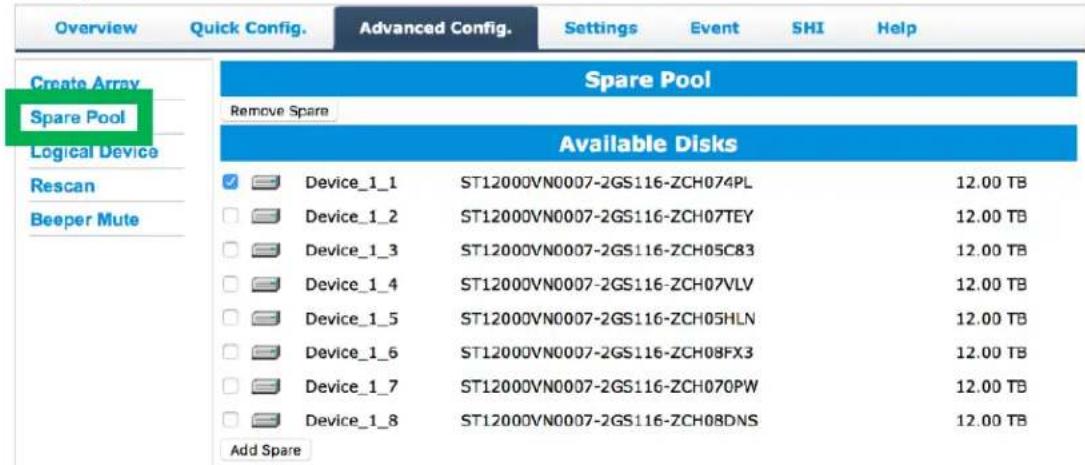
-
Check the box for the disk you want as a spare under Available Disks.
-
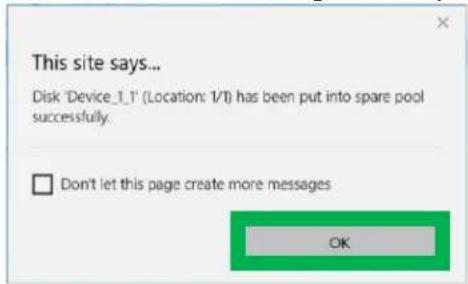
Click Add Spare, and confirm by selecting OK from the pop-up window:

- The disk has now been assigned as a spare. Click OK to confirm:
-
Disks added to the spare pool will be displayed under Spare Pool and can be removed by checking the box before the target drive, then clicking the Remove Spare button.
-
Physical drives marked as a spare will automatically be added to an array whenever there is a disk failure. This feature minimizes the chances of a data loss by reducing the time an array is in the critical status.
Logical Device
The Logical device including your RAID arrays and the individual disks your system detects.
Logical Device Information
Arrays you create and the properties associated with them will appear here.
Maintenance
Once an array has been created, the Maintenance menu provides options to maintain or edit it. To access the Maintenance menu, click the Maintenance button towards the right-hand side of the array name.
Array Information
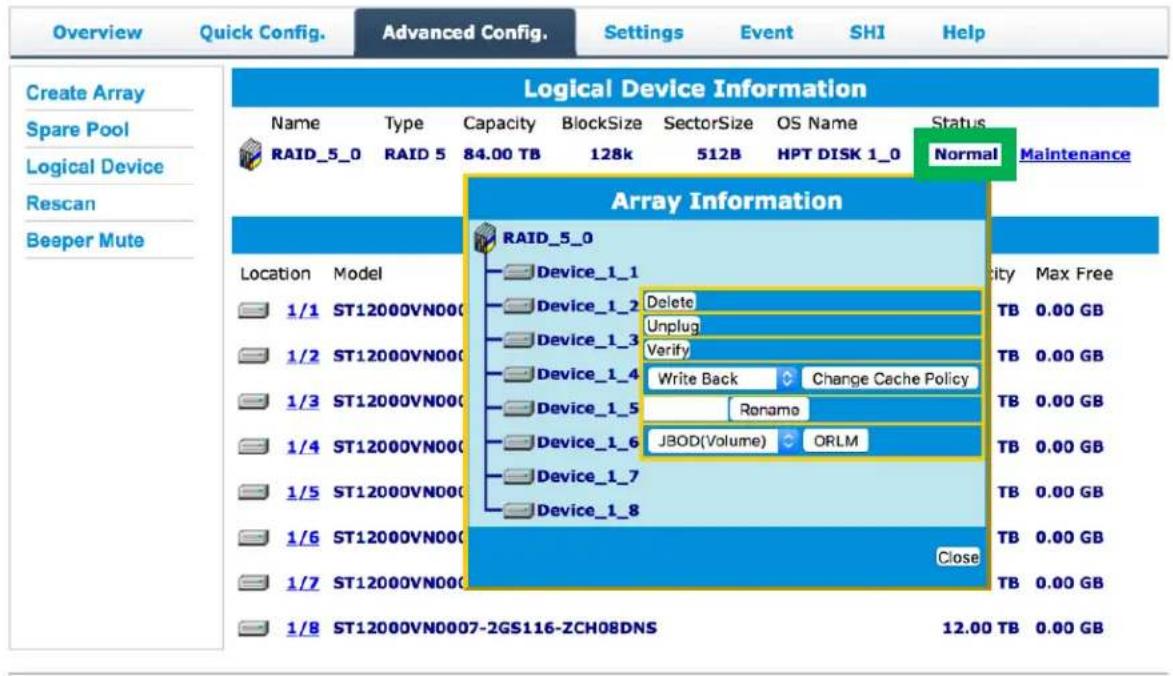
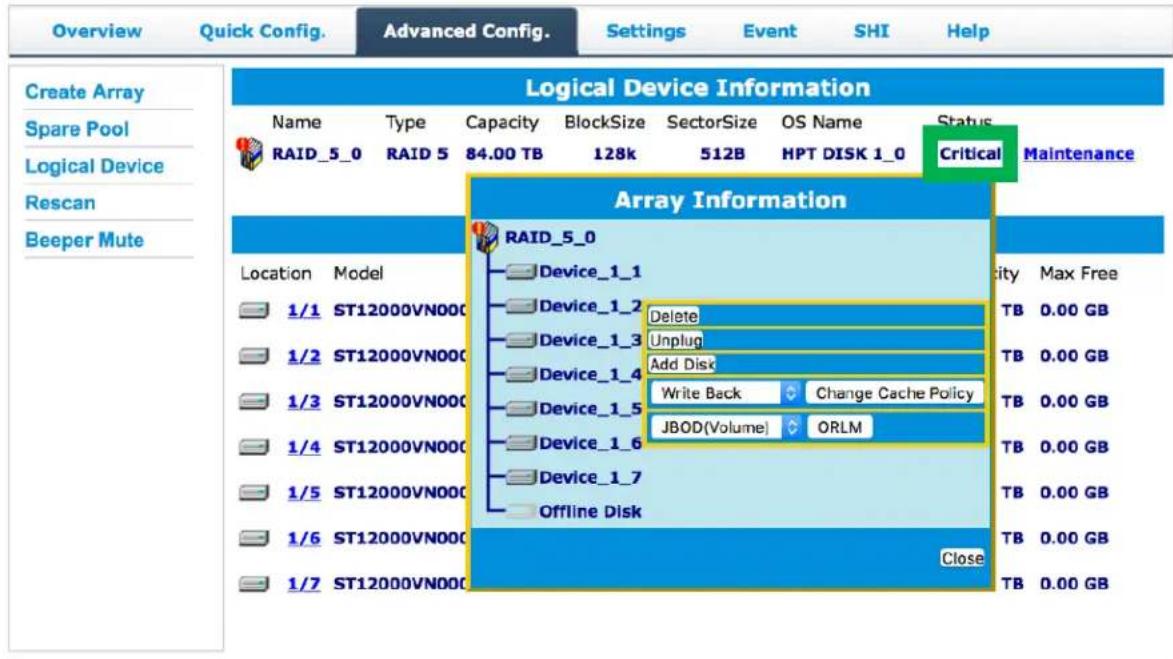
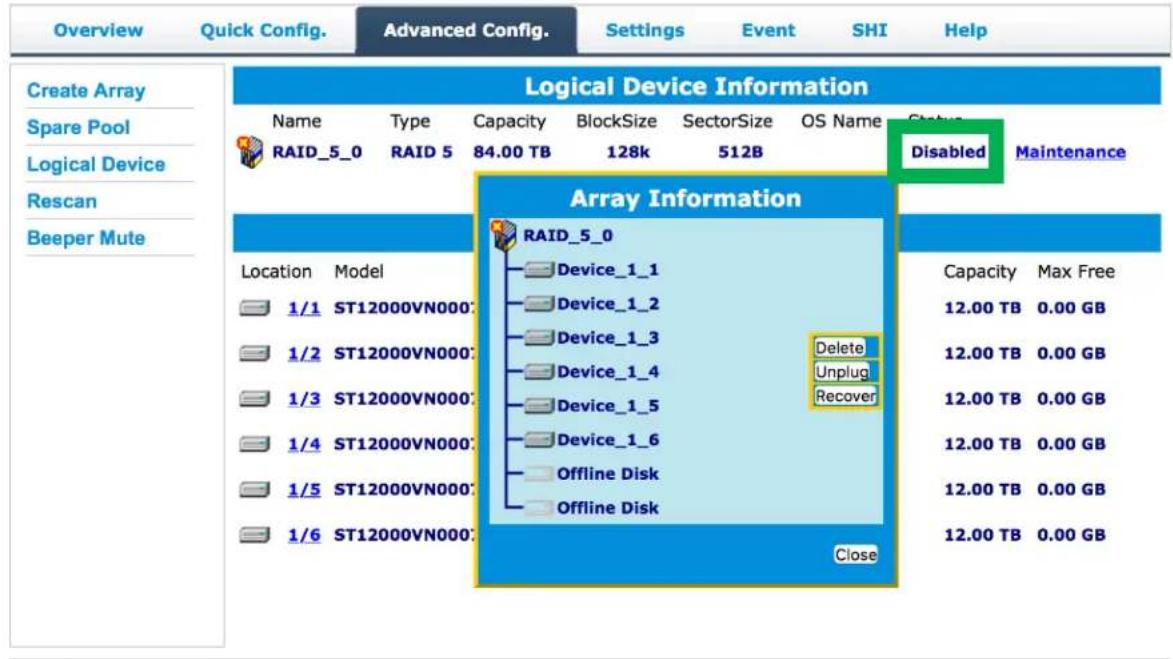
Clicking on the maintenance button will show you the Array information box. Different array statuses (normal, critical, disabled) will have different maintenance options.
Normal
rDrive Manager 2.18.2
Copyright (c) 2017 HighPoint Technologies, Inc. All Rights Reserved
Arrays with the Normal status are healthy and functioning properly. Arrays with the Normal status will have the following options:
- Delete: deletes the selected RAID array
- Unplug: powers off the selected RAID array – once powered off, the physical disks can be safely removed from the RAID controller
To detect the disk again you can wait for the system to detect the disk or you can turn the power off and on for a quicker solution - Verify: verifies the integrity of the RAID array
- Change Cache Policy: toggles between Write through and Write back cache
- Rename: renames the RAID array.
- ORLM (Online Capacity Expansion / Online RAID Level Migration options): see Expanding a RAID array for more information.
Critical
rDrive Manager 2.18.2
Copyright (c) 2017 HighPoint Technologies, Inc. All Rights Reserved
Arrays in the Critical status can be accessed and utilized, but are no longer fault tolerant. A Critical array should be rebuilt as soon as possible to restore redundancy.
A critical status array has all the normal status options except the following:
• The Array can no longer be renamed
- Add Disk replaces the Verify Disk option
Once the array status changes to critical, the faulty disk will be taken offline and you can either:
- Reinsert the same disk
- Insert new disk
Reinserting the same disk should trigger the rebuilding status, since data on the disk would be recognized. If you insert a new disk, clicking Add Disk will give you the option to select that disk and add it to the array. If a spare disk is available, an array that has entered the critical state will begin rebuilding using the next available spare disk.
Disabled
rDrive Manager 2.18.2
Copyright (c) 2017 HighPoint Technologies, Inc. All Rights Reserved
An array with the Disabled status means that the RAID level does not have enough disks to function.
- Your data will be inaccessible
- Rebuilding will not trigger, since the RAID array does not have enough parity data to rebuild.
Your options in Maintenance are:
- Delete: it will delete all the data in the disk in the array
• Unplug: take the array offline, making it safe to remove - Verify: attempt to verify the RAID array integrity, only the RAID1, 5 and 10 support this feature.
Expanding an Existing Array
Important: It is recommended that the array be Verified/Rebuilt before Expanding or Migrating. Once you start an OCE/ORLM procedure, you can stop the process, but it must be resumed until completion.
To add more capacity to your current configuration follows these steps:
-
Click Advanced Config.
-
Click Maintenance for the array you want to change
a. Select a different RAID level to Migrate. For example, if you want to change a RAID 0 array, you will need to select a different RAID level, such as RAID 5 or 6.
b. Select the same RAID level to Expand. For example, if you want to expand the capacity of an existing RAID 5 array, you must select RAID 5 from the menu.

-
Important: make a note of all the physical drives currently in the target array.
-
Click ORLM
-
Select the physical drives you recorded earlier (step 5) and the drives you want to add
-
Click Submit
-
Upon submission, you will receive a prompt stating ORLM has been successfully configured.

The Logical Device Information will change the status to migrating.
| Overview Quick Config. Advanced Config. Settings Event SHI Help | ||||||||
| Create Array Spare Pool Logical Device Rescan Beeper Mute | Logical Device Information | |||||||
| Name Type Capacity BlockSize SectorSize OS Name Status RAID_5_0 RAID 5 36.00 TB 128k 512B HPT DISK 1_0 Migrating 0% Maintenance RAID_5_1 RAID 5 36.00 TB 128k 512B Migrating 0% Maintenance | ||||||||
| Physical Device Information | ||||||||
| Location Model | Capacity Max Free | |||||||
| 1/1 ST12000VN0007-2GS116-ZCH074PL | 12.00 TB | 0.00 GB | ||||||
| 1/2 ST12000VN0007-2GS116-ZCH07TEY | 12.00 TB | 0.00 GB | ||||||
| 1/3 ST12000VN0007-2GS116-ZCH05C83 | 12.00 TB | 0.00 GB | ||||||
| 1/4 ST12000VN0007-2GS116-ZCH07VLV | 12.00 TB | 0.00 GB | ||||||
| 1/5 ST12000VN0007-2GS116-ZCH05HLN | 12.00 TB | 0.00 GB | ||||||
| 1/6 ST12000VN0007-2GS116-ZCH08FX3 | 12.00 TB | 0.00 GB | ||||||
| 1/7 ST12000VN0007-2GS116-ZCH070PW | 12.00 TB | 0.00 GB | ||||||
| 1/8 ST12000VN0007-2GS116-ZCH08DNS | 12.00 TB | 0.00 GB | ||||||
rDrive Manager 2.18.2
Copyright (c) 2017 HighPoint Technologies, Inc. All Rights Reserved
Physical Device Information
- Location: which controller and port the drive is located in
- Model: model number of the drive connected
• Capacity: total capacity of the drive
• Max Free: total capacity that is not configured
| Overview Quick Config. Advanced Config. Settings Event SHI Help | ||||||||
| Create Array Spare Pool Logical Device Rescan Beeper Mute | Logical Device Information | |||||||
| Name Type Capacity BlockSize SectorSize OS Name Status RAID_5_0 RAID 5 84.00 TB 128k 512B HPT DISK 1_0 Normal Maintenance | ||||||||
| Physical Device Information | ||||||||
| Location Model | Capacity Max Free | |||||||
| 1/1 ST12000VN0007-2GS116-ZCH074PL | 12.00 TB 0.00 GB | |||||||
| Revision SC60 | Read Ahead Enabled Change | |||||||
| Location 1/1 | Write Cache Enabled Change | |||||||
| Max Free 0.00 GB | ||||||||
| Status Normal | NCQ Enabled Change | |||||||
| Serial Num ZCH074PL | Identify LED [ON] [OFF] | |||||||
The following properties are part of the Physical Devices Information
- Model: model number of the physical drive
• Capacity: total capacity of the physical drive - Revision: HDD device firmware revision number
- Read Ahead* (Enable/Disable): enabling disk read ahead will speed up read operations by prefetching data and loading it into RAM
- Location: device location (example: 1/2 states controller 1, channel 2)
- Write Cache* (Enable/Disable): enabling write cache will speed up write operations
- Max Free: space on the disk that is not configured in an array
- Status (Normal, Disabled, Critical): status of the disk
- Serial Number: serial number of the physical disk
- Unplug: safely ejects the selected disk, other methods of disk removal will trigger the alarm if enabled
* Disk properties that can be adjusted.
Rescan
Clicking rescan will force the drivers to report the array status. For any disk(s) you hot plug into the device; do not click rescan until all physical drives are detected and appear under Logical Device Information.
Beeper Mute
Click the beeper to mute/unmute the device
Settings Tab
Enclosure
Review the rDrive unit information or update the BIOS/Firmware
| Overview Quick Config. Advanced Config. Settings Event SHI Help | |
| Enclosure Email Notification Security System | Enclosure Info |
| Controller Name: rDrive 6628T | |
| EFI Version: v1.0.3 Select the file to update BIOS. This process may take some time. Choose File no file selected Submit | |
Email Notification
Setting up the event notification via SMTP Email server

You can instruct the controller to send an email out to the recipients of your choosing when certain events trigger (for more information, see Event Tab).
SMTP Setting
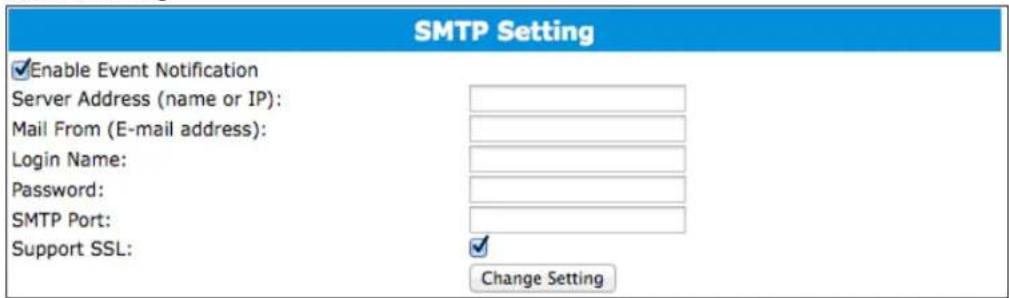
To set up email alerts:
- Check the Enable Event Notification box.
- Enter the ISP server address name or SMTP name
- Type in the email address of the sender (email account that is going to send the alert)
- Type in the account name and password of the sender
- Type in the SMTP port (default: 25)
- Check support SSL box if SSL is supported by your ISP (port value will change to 465).
Note: After you click Change Setting, the password box will become blank.
Add Recipient
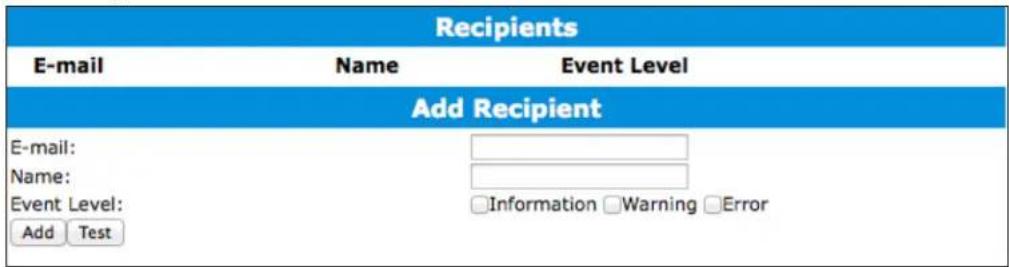
You can add multiple email addresses as receivers of a notice.
- Type the email of the recipient in the E-mail text box
- Type the name of the recipient in the Name text box
- Check which type(s) of events will trigger an email using the respective Event Level check boxes.
- (Optional) Click test to confirm the settings are correct by sending out a test email
- Click add to add the recipient to recipient list
- The added recipient will display in under Recipients
The email will include the output recorded in the event log. Example email message:
![HighPoint RAID Management Software Mail Notification Sent: Mon 5/4/2015 4:36 PM To: test0 Mon, 04 May 2015 23:35:40 GMT: [HPTMV9580IOPController]: Plugging device detected.('WDC WD40EFRX-68WT0N0-WD-WCC4EHYCFZXL' at Controller2-Channel8)](/content/2026/06/1150930/images/9da4865cec5cd20376c78d0970cbd9e107da0e66a2a206c70119c058a9e0fb0d.jpg)
Security
This section allows you to change the log-in password, Port Number and enable or disable localhost access.

Password Setting
To change your password type your new password, confirm it, and then click Submit.
Note: if you are locked out of the rDrive Manager and do not remember your password, do the following
- Mac: We recommend uninstalling rDrive Manager, then reinstalling. This will remove the password requirement and allow you create a new one under the Setting tab.
- Windows: In file explorer, go to \C\Windows\hptuser.dat and delete the file
System
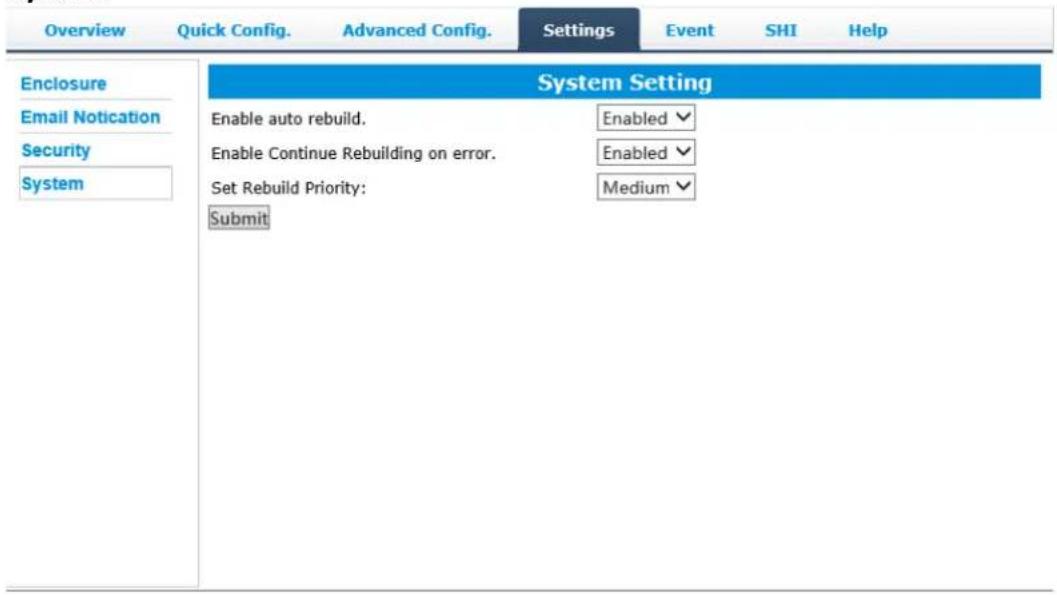
Enable auto rebuild (default: Enabled)
- When a physical drive fails, the controller will take the drive offline. Once you re-insert or replace the disk, the controller will not automatically rebuild the array unless this option is enabled.
Enable continue rebuilding on error (default: Enabled)
- When enabled, the rebuilding process will ignore bad disk sectors and continue rebuilding until completion. When the rebuild is finished, the data may be accessible but may also be inconsistent, due to any bad sectors that were ignored during the procedure. If this option is enabled, HighPoint recommends checking the event log periodically for bad sectors warnings.
Rebuild Priority (default: Medium)
- You can specify the amount of system resources you want to dedicate to rebuilding the array. There are 5 levels of priority [Lowest, Low, Medium, High, Highest].
Event
The event view is a basic error logging tool built into the rDrive Manager
| Icon | Name | Definition |
| [227A] | Information | Includes general administrative tasks:Create/delete arraysConfiguring sparesRebuilding arraysConfiguring event notificationsConfiguring maintenance |
| [046A] | Warning | Alerts issued by the Host Adapter:High temperaturesSector errorsCommunication errorsVerification errors |
| [STZY] | Error | Hardware related problemsHard disk failureBroken errorsMemory failure |
Storage Health Inspector (SHI)
SHI outputs information collected using SMART (Self-Monitoring Analysis and Reporting Technology) Hard Drive Technology. The data provided on this tab helps you to anticipate any disk failures based on a variety of monitored hard disk properties.
| Overview | Quick Config. | Advanced Config. | Settings | Event | SHI | Help | |
| Storage Health Inspector(SHI) | |||||||
| Enclosure ID | Port# | Device Serial Number | RAID | Temperature | Bad Sectors Found & Repaired | S.M.A.R.T | |
| 1 | 1 | ZCH074PL | RAID_5_0 | Normal | None | Detail | |
| 1 | 2 | ZCH07TEY | RAID_5_0 | Normal | None | Detail | |
| 1 | 3 | ZCH05C83 | RAID_5_0 | Normal | None | Detail | |
| 1 | 4 | ZCH07VLV | RAID_5_0 | Normal | None | Detail | |
| 1 | 5 | ZCH05HLN | RAID_5_0 | Normal | None | Detail | |
| 1 | 6 | ZCH08FX3 | RAID_5_0 | Normal | None | Detail | |
| 1 | 7 | ZCH070PW | RAID_5_0 | Normal | None | Detail | |
| 1 | 8 | ZCH08DNS | RAID_5_0 | Normal | None | Detail | |
| Schedule a task | |||||||
rDrive Manager 2.18.2
Copyright (c) 2017 HighPoint Technologies, Inc. All Rights Reserved
To enable S.M.A.R.T monitoring, go to the S.M.A.R.T section in the middle of the SHI section and select Enable and vice versa
Note: Disabling SMART monitoring will disable all warnings related to SMART attributes.
Scheduler
To enter the Scheduler, select Schedule a Task on the SHI page

The Scheduler enables you to schedule disk/array checkups to ensure disks/array are functioning optimally.
How to Create a New Verify Task
All arrays will appear under New Verify Task
- Log into the rDrive Manager
- Select the proper controller from the top left drop down
- Click SHI
- Click Schedule a task
- Select the array you want to schedule the verify task
- Type the name in Task Name entry box
- Choose how you want to schedule
- One time verify task on specific date (YYYY-MM-DD) at (HH:MM:SS, 24-hr clock)
- Or a specific schedule you can adjust based on Daily, Weekly, or Monthly options
- Click Submit
- Your entry will appear under Tasks List
Note: New Verify Task box only appears if you have normal status arrays. If you have a critical array, New Rebuild Task will replace New Verify Task.
Help
Online Help redirects you to additional documentation concerning the rDrive Manager.
Register Product takes you to the HighPoint Online Web Support Portal. On this page you can create a new customer profile where you can register your product, or post an online support ticket
The Configuration Record feature simplifies the process of gathering system and configuration information when submitting a technical support inquiry. Instead of manually entering all RAID related settings, simply type in the new Case ID assigned to the Online Support Ticket, and click submit – rDrive Manager will automatically send all required data to the corresponding Case ID.

Support Case ID:

Please enter your Support Case ID. Your configuration will be Emailed to HighPoint Support.
If you do not have a Case ID, please submit a Support Ticket, or Register an Account.
Http://www.highpoint-tech.com/websupport
Submit
Section 4: Troubleshooting
Handling Critical Arrays
When your disk status turns critical, your array as a whole is still accessible, but one or more disks are faulty (depending on your RAID level), and the array is in danger of failing.
Common scenarios for critical status
- Unplugging a disk that is part of an array
- Bad sector is detected on a disk that is part of an array
• Unrecoverable data during rebuilding
• Defective port or cable interrupts rebuilding process
To recover from this situation,
- Backup your existing data.
- Identify which disk is faulty.
a. You can refer to the LED lights on the enclosure
b. Refer to the rDrive Manager Logical tab and Event tab.
- Re-insert the faulty disk or replace with a new disk.
a. The array will rebuild automatically if your auto-rebuild setting is enabled and you reseated the faulty disk. Note: Click Rescan if the array still does not rebuild automatically.
- If the new disk is added and it does not automatically start rebuilding, you can manually add the disk in maintenance.
a. Log into the rDrive Manager
b. Click Advanced Config. Tab
c. Click Maintenance > Add Disk > select the appropriate disk
- Rebuild should now start.
a. If rebuild does not start, click 'Rescan' on the left hand panel.
Note: Rebuilding an array takes on average 2 hours per 1 Terabyte of disk capacity. The process will scan through the entire disk, even if you have very little used disk space.
Rebuilding Stops Due to Bad Sectors
If rebuilding fails to complete due to bad disk sector errors (check in the Event Log), there is an option to continue rebuilding on error in the HighPoint rDrive Manager.
- Log into the rDrive Manager
- Click Settings tab
- Change Enable Continue Rebuilding on Error to Enabled
This option will enable rebuilding to ignore bad sectors and attempt to make your data accessible. It is important to backup immediately after backup is complete and replace or repair the disks with bad sectors.
Critical Array Becomes Disabled When You Removed Faulty Disk
If this is the case, you may have removed the wrong disk. When you remove the wrong disk from a critical array, the array status may become disabled. Data is inaccessible for disabled arrays. Follow these steps to restore the array to the previous state.
- Shut down your PC
- Shut down the rDrive 6628TW Enclosure
- Place all disks back to original configuration
- Boot up PC
Your array should be back to Critical status. Identify the correct disk and rebuild from there.
Online RAID Roaming
One of the features of all HighPoint RAID controllers is online array roaming. Information about the RAID configuration is stored on the physical drives. So if a card fails or you wish to switch cards, the RAID configuration data can still be read by another HighPoint card.
Appendix
Table 1: rDrive Manager Icon Guide
| [700] | Critical: Missing DiskA disk is missing from the array bringing it to ‘critical’ status. The array is still accessible but another disk failure could result in data loss. |
| [2168] | VerifyingThe array is currently running a disk integrity check. |
| [518C] | RebuildingThe array is currently rebuilding meaning you replaced a failed disk or added a new disk to a ‘critical’ state array. |
| [4302] | Critical: Rebuild RequiredThe array has all disks, but one disk requires rebuilding. |
 | DisabledThe icon represents a disabled array, meaning more than one disk failed and the array is no longer accessible |
| [440C] | InitializingThe array is initializing. The two types of initialization are Foreground and Background. (See Initialization) |
| [1948] | UninitializedThe array initialization process has been interrupted, and the process is incomplete. |
| [52X] | Not InitializedDisk is not initialized yet, and needs to be initialized before use |
| [WCDF] | OCE/ORLMArray is performing a OCE/ORLM operation |
| [18W3] | OCE/ORLM Has StoppedThe array expansion process has been stopped. |
[CTN2] | LegacyAn existing file system has been detected on the disk. These disks are classified as legacy drives.SpareThe device is a spare drive, it will automatically replace any failed drive part of an array. |
| [8332] | NormalThe array status is normal |
 | InitializingThe array is initializing, either foreground or background initialization |
 | Initialization StoppedThe initialization has been stopped. Current status is uninitialized. |
| [KS2K] | Critical: InconsistencyData in the array is inconsistent and needs to be rebuilt. |
| [DAHT] | Critical: Missing DiskA disk has been removed or experienced failure, and user needs to reinsert disk or add a new disk. |
 | RebuildingThe array is currently rebuilding. |
 | VerifyingThe array is performing a data consistency check. Array status will show ‘verifying’. |
 | DisabledThe array does not have enough disks to maintain the RAID level. A disabled array is not accessible. |
| [Z2DS] | OCE/ORLMArray is expanding its capacity or migrating to a different raid level. Status will display ‘Expanding/Migrating’ |
| [AXBS] | OCE/ORLM StoppedThe ‘Expansion/Migrating’ process has been stopped. The status will display ‘Need Expanding/Migrating’ |
 | Critical: OCE/ORLMA disk member is lost during the OCE/ORLM process. |

Critical: OCE/ORLM Rebuild
The expanding/migrating array requires a rebuild.
Table 2: RAID Reference Level
| Type | Description | Min. Disks | Usable Space | Advantage | Disadvantage | Application |
| JBOD | Just a bunch of disk | 1 | 100% | Each drive can be accessed as a single volume | No fault tolerance - failure of one drive results in complete data loss | Backup |
| RAID 0 | Disk Striping | 2 | 100% | Offers the highest performance | No fault tolerance - failure of one drive results in complete data loss | Temporary file, performance driven application. |
| RAID 1 | Disk Mirroring | 2 | 50% | Provides convenient low-cost data redundancy for smaller systems and servers | Useable storage space is 50% of total available capacity. Can handle 1 disk failure. | Operating system, backup, and transaction database. |
| RAID 10 | Disk Mirroring followed by stripe | 4 | 50% | High read performance and medium write performance with data protection for up to 2-drive failures | Useable storage capacity equals total capacity of all drives in the array minus two | Fast database and application servers which need performance and data protection |
| RAID 5 | Disk Striping with Rotating parity | 3 | 67-87% | High read performance, and medium write performance with data protection with a single drive failure | Not recommended for database applications that require frequent/heavy write sessions. Can handle 1 disk failure. | Data archives, and ideal for application that require data protection |
| RAID 50 | Disk Mirroring followed by RAID5 | 6 | 67-75% | High read performance, and medium write performance with data protection in case of up to two drives failure | Not recommended for applications that require frequent/heavy write sessions. | Data archives and ideal for application that requires data protection |
| RAID 6 | Disk Striping with dual rotating parity | 4 | 50-75% | High read performance, and medium write performance with data protection in case of up to two drives failure | Not recommended for applications that require frequent/heavy write sessions. | Data archives and ideal for application that requires data protection |
Contacting Technical Support
For any help and support, please submit the following
• Support ticket online at http://www.highpoint-tech.com/websupport/
- Configuration record
- Trademarks
- Notice
- FCC Part 15 Class B Radio Frequency Interference Statement
- European Union Compliance Statement
- Table of Contents
- Product Overview
- Kit Content
- Section 1: Hardware Installation
- Hardware Overview
- Panel Layout-Front View
- LED Indicators
- Panel Layout-Rear View
- System Requirements
- Enclosure Setup
- Section 2: Setting Up Software for Windows Platforms
- Driver Installation
- Checking Your Driver Version
- Updating the Drivers
- Uninstalling the Driver
- Installing the HighPoint rDrive Manager
- How to Login to the rDrive Manager
- Remote Login
- To obtain your IP address
- Formatting the RAID Volumes
- Format the volume when you have finished the following procedures
- For Windows users
- Assign Drive Letter or Path
- Format Partition
- Section 3: Using the HighPoint rDrive Manager
- Navigating the rDrive Manager
- Overview Tab
- Enclosure Properties
- Storage Properties
- Array Config.
- Delete
- Quick Config.
- Advanced Config.
- Array Type
- Array Name
- Initialization Method
- Note:
- Cache Policy (Default: Write Back)
- Write Back:
- Write Through:
- Block Size (default: 512K)
- Capacity (Default: Maximum)
- Spare Pool
- To add spare disks:
- Logical Device
- Logical Device Information
- Maintenance
- Array Information
- Expanding an Existing Array
- Physical Device Information
- Rescan
- Beeper Mute
- Settings Tab
- Enclosure
- Email Notification
- SMTP Setting
- To set up email alerts:
- Add Recipient
- Security
- Password Setting
- System
- Event
- Storage Health Inspector (SHI)
- Scheduler
- How to Create a New Verify Task
- Help
- Section 4: Troubleshooting
- Handling Critical Arrays
- Rebuilding Stops Due to Bad Sectors
- Critical Array Becomes Disabled When You Removed Faulty Disk
- Online RAID Roaming
- Appendix
- Critical: OCE/ORLM Rebuild
- Contacting Technical Support
Brand : Highpoint
Model : rDrive 6628TW
Category : Uncategorized