
SI Series P10i - Audio HK AUDIO - Free user manual and instructions
Find the device manual for free SI Series P10i HK AUDIO in PDF.


| Product Type | P10i passive loudspeaker for low impedance connection |
| Impedance | 16 ohms |
| Protection Class | IP66 per EN 60529 |
| Certifications | EN 54-24:2008, DIN 18032-9 ball impact resistant |
| Frequency Range | Fullrange (130 Hz and above with appropriate filter) |
| Horizontal Dispersion | Narrowing above 4 kHz, symmetrical vertical directivity |
| Connector Type | Two 4-pole connectors, electrically parallel |
| Maximum Number per Amplifier Channel | Up to 3 recommended (low impedance), depends on amplifier power for TR version |
| Mounting Accessories | U-bracket, connector plates, swivel/tilt brackets, rigging rail, pole support, ceiling mount |
| Application | Voice alarm systems (EN 54-24), public address, sports facilities, outdoor use |
| Maximum Tilt (Ceiling Mount) | -40° for single speaker, -12.5° for two speakers |
| Maximum Speakers per Rigging Rail | 3 |
| Cable Requirement | Round sheathed speaker cable; use crimped wire ends |
| Torque Specifications | Cover plate outer screws: 2.6 Nm, inner screws: 1 Nm; U-bracket nuts: approx. 25 Nm |
| Sealing Material | Isozell (must be replaced after disassembly) |
| Environmental Conditions | Outdoor and dusty environments; protected from wind for rigging rail |
| Safety | Requires two independent safeties for overhead installations; use threadlocking adhesive |
Frequently Asked Questions - SI Series P10i HK AUDIO
User questions about SI Series P10i HK AUDIO
0 question about this device. Answer the ones you know or ask your own.
Ask a new question about this device
Download the instructions for your Audio in PDF format for free! Find your manual SI Series P10i - HK AUDIO and take your electronic device back in hand. On this page are published all the documents necessary for the use of your device. SI Series P10i by HK AUDIO.
USER MANUAL SI Series P10i HK AUDIO
- Operating and Installation Instructions 1.0
General Notes on Safety for Loudspeaker Systems

Mounting systems may only be used for those loudspeaker systems authorized by the manufacturer and only with the mounting accessories specified by the manufacturer in the installation instructions. Read and heed the manufacturer's installation instructions. The indicated load-bearing capacity cannot be guaranteed and the manufacturer will not be liable for damages in the event of improper installation or the use of unauthorized mounting accessories.
The system's load-bearing capacity cannot be guaranteed and the manufacturer will not be liable for damages in the event that loudspeakers, mounting accessories, and connecting and attaching components are modified in any way.
Components affecting safety may only be repaired by the manufacturer or authorized agents, otherwise the operating permit will be voided.

Installation may be performed by qualified personnel only, and then only at pick-points with sufficient load-carrying capacity and in compliance with local building regulations. Use only the mounting hardware specified by the manufacturer in the installation instructions (screws, anchors, etc.). Take all the precautions necessary to ensure bolted connections and other threaded locking devices will not loosen.

Fixed and portable installations (in this case, speakers and mounting accessories) must be secured by two independent safeties to prevent them from falling. Safeties must be able to catch accessories or parts that are loose or may become loose. Ensure compliance with the given national regulations when using connecting, attaching, and rigging devices. Factor potential dynamic forces (jerks) into the equation when determining the proper size and load-bearing capacity of safeties.

Be sure to observe speaker stands' maximum load-bearing capacity. Note that for reasons of design and construction, most speaker stands are approved to bear centric loads only; that is, the speakers' mass has to be precisely centered and balanced. Ensure speaker stands are set up stably and securely. Take appropriate added measures to secure speaker stands, for example when:
- the floor or ground surface does not provide a stable, secure base.
- they are extended to heights that impede stability.
- high wind pressure may be expected.
- there is the risk that they may be knocked over by people.
Special measures may become necessary as precautions against unsafe audience behavior. Do not set up speaker stands in evacuation routes and emergency exits. Ensure corridors are wide enough and put proper barriers and markings in place when setting speaker stands up in passageways. Mounting and dismounting are especially hazardous tasks. Use aids suitable for this purpose. Observe the given national regulations when doing so.


Wear proper protection (in particular, a helmet, gloves, and safety suitable means of ascent (ladders, scaffolds, etc.) during installation. requirement is the sole responsibility of the company performing the

WARNING: After installation, inspect the system comprised of the mounting fixtures and loudspeakers to ensure it is properly secured. The operator of loudspeaker systems (fixed or portable) must regularly inspect or task a third party to regularly inspect all system components in accordance with the given country's regulations and have possible defects repaired immediately. We also strongly recommend maintaining a logbook or the like to document all inspections.
Also be sure to provide sufficient safety margins for the rigging points used for flown systems. Observe the given national regulations when doing so.

Professional loudspeaker systems can produce harmful volume levels. Even prolonged exposure to seemingly harmless levels (starting at about 95 gBA SPL) can cause permanent hearing damage! Therefore we recommend that everyone who is exposed to high volume levels produced by loudspeaker systems wears professional hearing protection (earplugs or earmuffs).
Manufacturer: Stamer Musikanlagen GmbH, Magdeburger Str. B, 66606 St. Wendel, Germany
Version 2.8 08/2019

- Please keep these instructions for later use during installation or make them available to the specialist company carrying out the installation!
- The use of threadlocking adhesives is recommended for all screw connections in order to guarantee a stable connection in the long term.
- In principle, a sufficiently load-bearing surface and a suitable connection method must be ensured for all installations. This is the responsibility of the specialist company carrying out the installation. In case of doubt, qualified advice (e.g. from engineering consultants/staticians) must be sought.
- All loudspeakers must be inspected for damage and signs of wear at regular intervals appropriate to the respective installation site and its environmental conditions. This applies especially to installations outside protected premises and in particular under demanding environmental conditions.
• Examples of possible damage or signs of wear include the ingress of water or dust into critical areas of the enclosure such as the electrical connections or the mechanically sensitive areas of the transducers, rust or mechanical damage to the metal surfaces/ grids/strews, and cracks or other damage to the paint finish.
- If damage of this or similar nature is found, the speaker must be dismantled and repaired.
Contents
1 Loudspeaker types....4
2 Mechanical accessories....7
2.1 U-Bracket....7
2.2 Connector Plates....7
2.3 Swivel and tilt bracket for one loudspeaker....8
2.4 Swivel and tilt bracket for two loudspeakers....8
2.5 Rigging Rail 8
2.6 Pole Support 8
2.7 Ceiling Mount....8
3 Application Guide 9
3.1 Basic use of P10 loudspeakers....9
3.2 Permitted areas of use and environmental conditions 9
3.3 Basic filters for different P10 combinations 10
3.4 Filtering in practice....11
4 Electrical connections....12
4.1 Electrical connections for P10i and P10j....12
4.2 Electrical connections for P10i TR and P10j TR 12
4.3 Mounting the cover plate....13
4.4 Service and disassembly of the cover plate 14
4.5 Connecting multiple P10i or P10j to one power amplifier channel ..... 14
4.6 Connecting multiple P10i TR or P10j TR to one power amplifier channel .15
5 Mounting instructions for mechanical accessories....17
5.1 U-Bracket....17
5.2 Connector Plates....18
5.3 Swivel and tilt bracket for one loudspeaker....19
5.4 Swivel and tilt bracket for two loudspeakers....21
5.5 Rigging Rail 24
5.6 Pole Support 26
5.7 Ceiling Mount....28
1 Loudspeaker types
Four variants of the P10 loudspeaker are available within the SI SERIES:
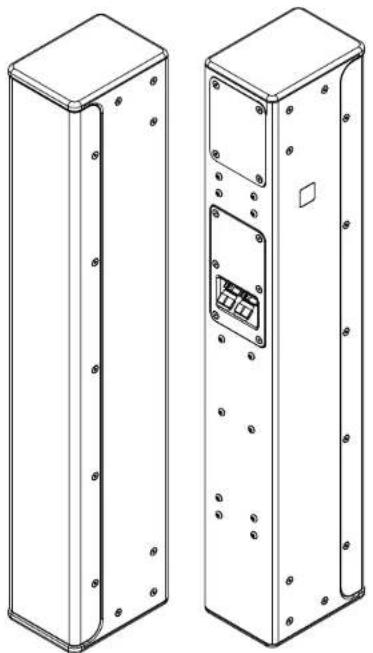
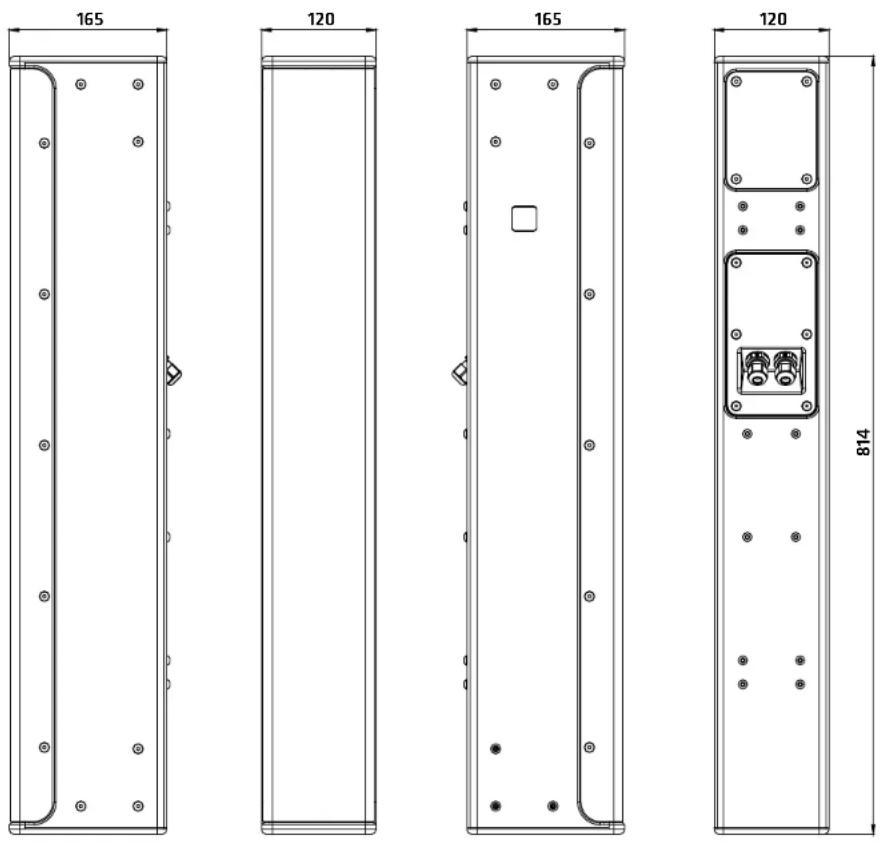
• P10i
for low impedance connection, with a straight cabinet and symmetrical vertical directivity
• P10i TR
for high impedance (100 V/70 V) connection, with a straight cabinet and symmetrical vertical directivity
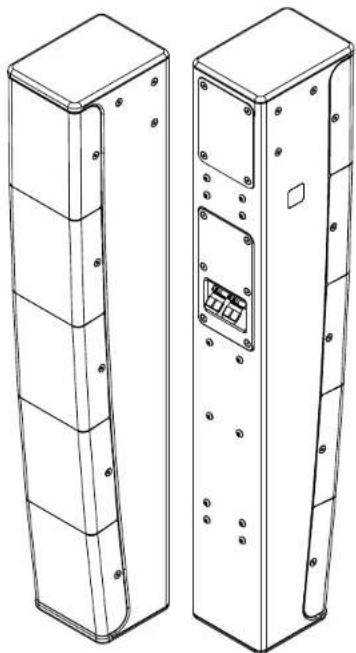
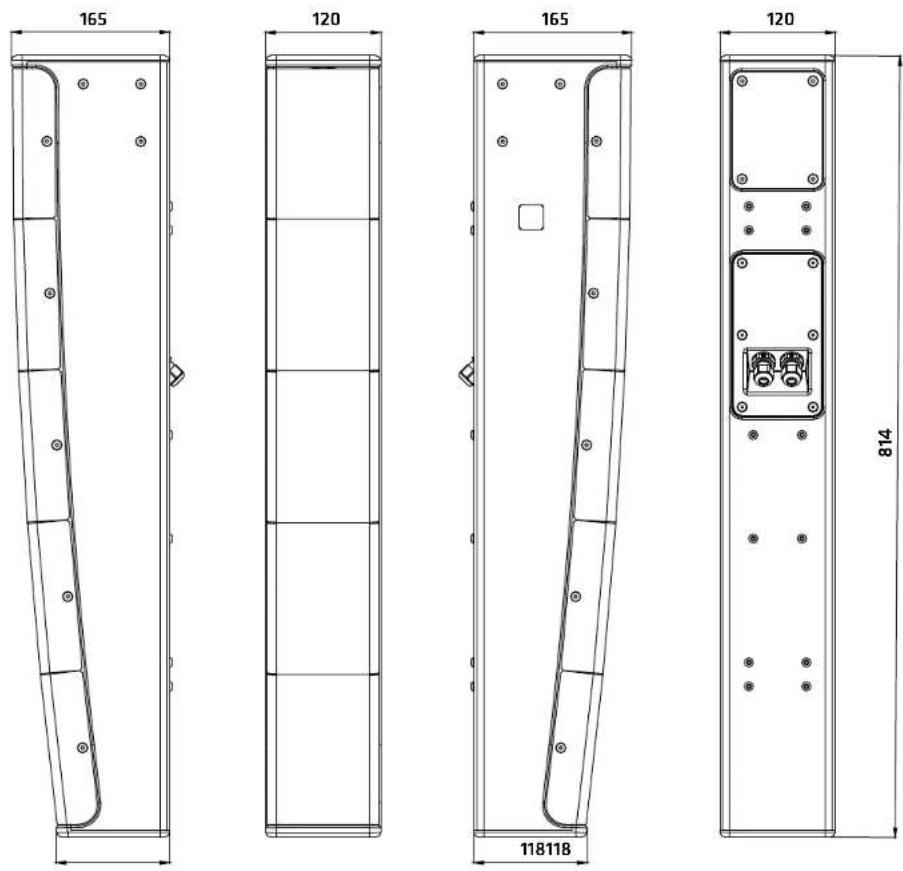
• P10j
for low impedance connection, with bent cabinet and asymmetrical (i-shaped) vertical directivity
• P10j TR
for high impedance (100 V/70 V) connection, with bent cabinet and asymmetrical (j-shaped) vertical directivity
• P10i / P10i TR
• P10j / P10j TR
2 Mechanical accessories
The mounting accessories available for SI SERIES P10 are applicable to all variants of the P10 (see 1) without exception. They are shown below in the component overview.

Caution: Only original HK Audio mounting series may be used to install the speakers.
2.1 U-Bracket
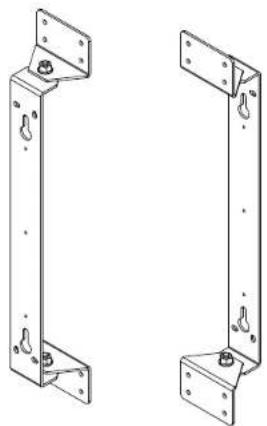
The mounting of a single P10 speaker can be implemented using the U-bracket included as standard.
2.2 Connector Plates
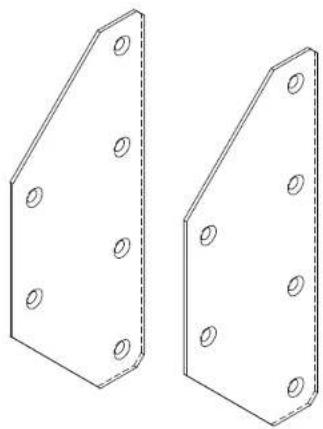
The connector plates are optional accessories and are suitable for setting up multiple P10 speakers and mechanically connecting them to each other (see 2.1, 2.5, 2.6 and 2.7). Corresponding set articles are available from HK Audio.
2.3 Swivel and tilt bracket for one loudspeaker
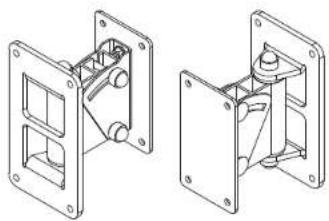
In applications where precise alignment and tilting to the audience areas required, this swivel and tilt mount is used. It supports a single P10 loudspeaker.
2.4 Swivel and tilt bracket for two loudspeakers
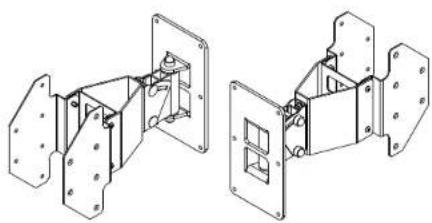
This large swivel and tilt bracket supports two P10 speakers and allows their precise alignment and tilt to the desired audience areas.
2.5 Rigging Rail
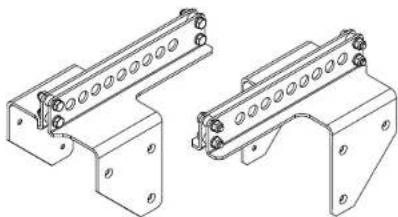
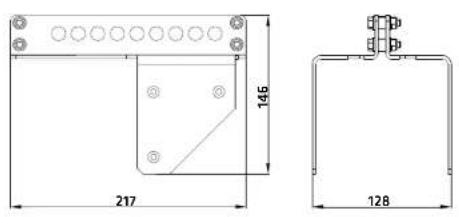
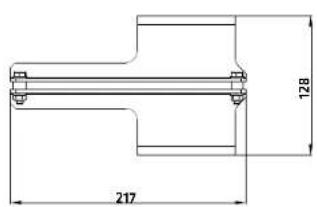
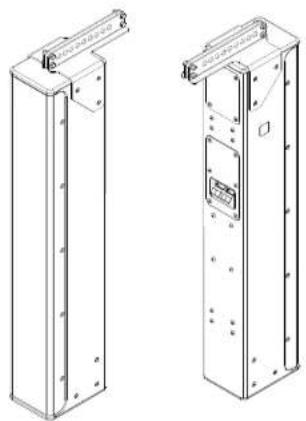
A rigging rail is available for the flown fixed installation, which supports up to three P10 loudspeakers. The speakers are connected to each other using the P10 connector plates (see 2.2). An L-sheet is available for attaching lashing ropes or anti-twist devices.
2.6 Pole Support
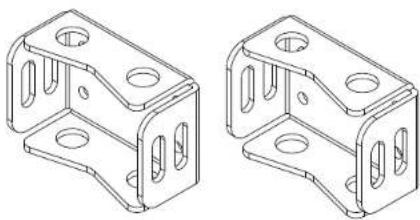
For permanent installation on pipes, columns, poles or trusses, the P10 pole supports are the suitable solution. Note: The necessary lashing straps are not offered by HK Audio.
2.7 Ceiling Mount
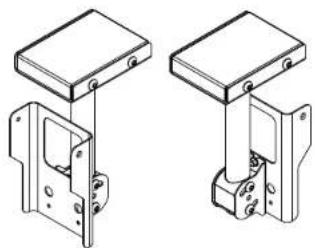
A ceiling mount with concealed cable routing in the tube is available for mounting to a ceiling and subsequent alignment to the audience areas below. One ceiling mount supports up to two P10 loudspeakers.
3 Application Guide
3.1 Basic use of P10 loudspeakers
The modular extendable P10 loudspeakers are suitable for installations in acoustically difficult conditions. This can apply to critical room acoustic conditions with long reverberation times and flutter echoes as well as to high ambient noise levels. Due to their technical characteristics, P10 loudspeakers are particularly suitable for coping with a combination of the above-mentioned problems (difficult room acoustics with simultaneously high environmental sound levels).
The more P10 loudspeakers are operated together in a line arrangement, the narrower their vertical dispersion behaviour becomes. Likewise, the maximum achievable sound pressure level increases. Optimal results are achieved in most practical applications when the loudspeakers are placed just above ear level and 'grazing' the audience areas.
As a matter of principle, we recommend carrying out acoustic simulations during the planning phase using suitable software (EASE 4.4, EASE Focus 3). Only in this way can the necessary quantities and the optimal positioning/alignment of the P10 loudspeakers be planned with good certainty.
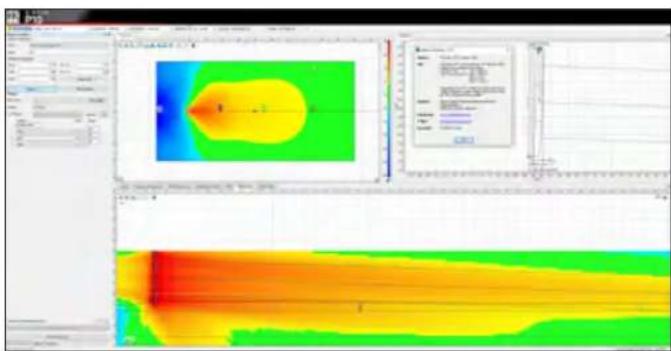
Basically, the P10 speakers are designed to form lines vertically.
Attention! An arrangement of P10 loudspeakers in the horizontal plane is not intended and is generally not recommended. The positioning of several P10 loudspeakers directly next to each other is also not permitted.
For justified exceptions to these rules, it is essential to seek the assistance of the manufacturer and/or a professional acoustician with practical experience in sound reinforcement.
3.2 Permitted areas of use and environmental conditions
All P10 loudspeakers are certified according to EN 54-24:2008 for use in voice alarm systems in case of fire. In addition, the P10 loudspeakers are also recommended for use in public address systems that are not planned for alarm purposes in the event of fire, such as electroacoustic emergency warning systems in accordance with EN 50849. The latter standard assumes that EN 54-24 products are fundamentally suitable for their area of specification.
Irrespective of the above-mentioned normative specifications, the P10 loudspeakers are of course suitable for all other forms of public address systems where high audio quality with spatially adapted loudspeakers is required.
Basically, all P10 loudspeakers are specified with protection class IP 66 according to EN 60529. The conformity was approved by an independent institute (TÜV SÜD Product Service GmbH). Therefore, installation in unroofed and unprotected outdoor areas is permissible. The P10 loudspeakers may be exposed to strong dust/dirt loads as well as strong loads from water.
All P10 loudspeakers are also certified as ball impact resistant according to DIN 18032-9. This has been tested and confirmed by an independent institute (Materials Testing Institute at the University of Stuttgart). Therefore, the P10s may be installed in sports facilities with the loads typical there.
3.3 Basic filters for different P10 combinations
In principle, the use of the F10 loudspeakers results in a very large number of mechanical combination possibilities. These possibilities are taken into account by a range of preset basic filters on the acoustic side.
The filters are available both as ready-made preset files based on Lab. gruppen IPD and Lake. Powersoft Armonia+ and as an open table format (the latter based on Lab. gruppen IPD).
Depending on the number of P10 loudspeakers on the same power amplifier channel and on their installation location, corresponding filters with the following nomenclature are offered:
| P10x(+x+x) FR LC FS WM | ||||
| Type and number of P10 Fullrange Low Cut Full Space Wall Mount | ||||
- Example 1: 1x P10j is to be used, which is to be mounted directly on a wall. It is to reproduce up to 130 Hz (fullrange).
- Basic filter to be selected: P10j FR WM
- Example 2: An arrangement of 2x P10i is to be used in combination with the ceiling mount. Furthermore, an additional subwoofer is to be used, so that the Low Cut profile must be used.
- Basic filter to be selected: P10+i LC FS
- Example 3: An installation is to be carried out using a flown arrangement of 3x P10 (2x P10i and 1x P10j). Since subwoofers are intended for the lower octaves, the low cut profile can be used.
- Basic filter to be selected: P10i+i+j LC FS
All basic filters mentioned above are also included in the simulation data in GLL format and can be used for the acoustic simulations recommended in section 3.1.

3.4 Filtering in practice
In addition to the basic filters described in 3.3, on-site adjustments are generally necessary, which depend primarily on the room acoustic conditions, but must not least also take into account the requirements of the operator.
Since all P10 loudspeakers show a steadily narrower directivity in the horizontal above 4 kHz, it has proven useful in practice, especially for wide rooms, to add further energy to this frequency range with the help of a shelving EO (F = 4 kHz, Q = 1, Cain = +3...+6 dB). These requirements can also be checked in advance with the help of suitable acoustic simulations (see 3.1).
Further adjustments of in-room frequency response should always be made with the help of the manufacturer and/or a professional acoustician with practical experience in sound reinforcement.
4 Electrical connections
The following section describes how to make the electrical connections and how to mount the cover plate.

Note: The manufacturer's specification of protection class IP 66 (EN 60529) for the construction only applies if the instructions in this section are followed during
4.1 Electrical connections for P10i and P10j
Two 4-pole connectors are available for wiring the P10i and P10j. These always have two poles and are electrically connected in parallel.
Before starting the cabling, the speaker cable (not yet stripped) must be pushed through the opened PG gland of the enclosed cover plate. Further notes on mounting the cover plate in 4.3.
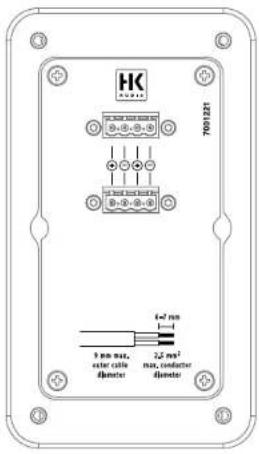
Only one conductor may be connected to each clamping point. It is not permissible to insert several conductors into the same clamping point, as these are not designed for this and could become loose in the long term.
As a general rule, we recommend that all connection cables be provided with (gas-tight) crimped wire and sleeves to prevent the oxidation of the conductors in the long term. Non-crimped (bare) conductors form an oxide layer in the long term, which worsens the contact resistance at the terminals.
In practice, it has proven useful to connect one connection cable per connector, because this makes the actual assembly more convenient in confined spaces or when the cables are pulled in different directions. However, all conductors can also be inserted to only one connector, as they are electrically connected in parallel (as described above).
4.2 Electrical connections for P10i TR and P10j TR
For the wiring of P10i TR and P10j TR there are two 4-pole connectors available. These are wired to 100 V or 70 V for the three power taps available.
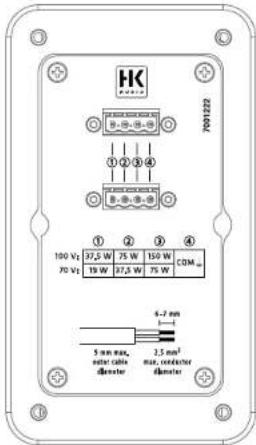
Only one single conductor may be connected per clamping point. It is not permissible to insert several conductors into the same clamping point, as these are not designed for this purpose and could become loose in the long term.
To connect an additional loudspeaker, the second connector must therefore always be used for P10i TR and P10j TR.
All further operating instructions from see 4.1.
4.3 Mounting the cover plate
As described in 4.1, the connecting cable must be pushed through the opened PG gland(s) before making the electrical connections.
The sealing material (Isozell) enclosed with the cover plate must be glued all around in the areas provided for this purpose on the back before installation. Make sure that it is glued neatly. Under no circumstances may the sealing material protrude to the side and/or be visible from the outside.

Attention! It is not permissible to apply the sealing material (Isozell) directly to the enclosure. This will result in a lack of tightness.
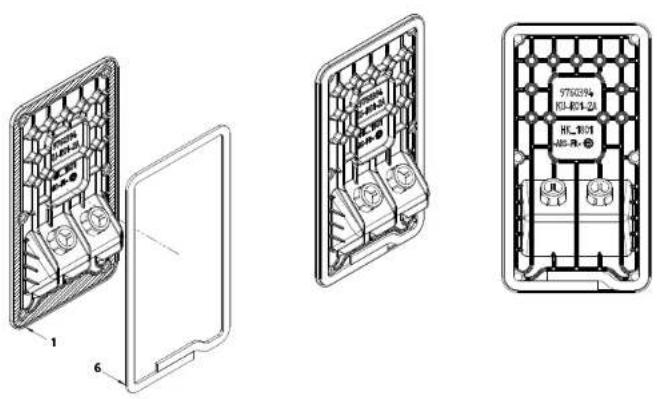
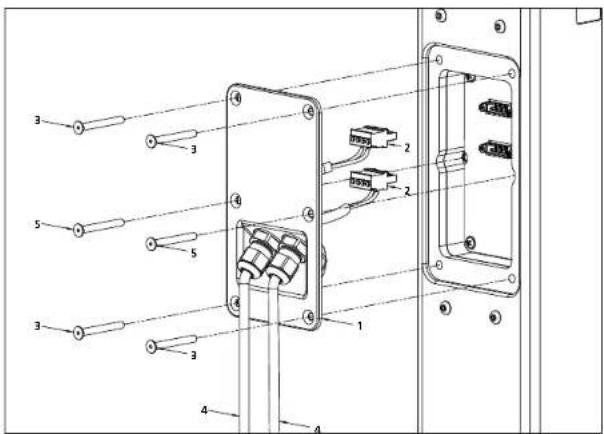
| pos. description qty. | |
| 1 Cover plate 1 | |
| 2 4-pole connectors 2 | |
| 3 outer MS countersunk screws 4 | |
| 4 Connection cable - * | |
| 5 inner MS countersunk screws 2 | |
| 6 sealing material (Isozell) 1 | |
* Not included in delivery
As standard, the cover plate is provided with a sealing plug in one of the two PG glands. If the P10 loudspeaker is to be connected with only one cable, the sealing plug must remain in the PG gland. If a second cable is to be used (e.g. to connect another loudspeaker connected in parallel), the sealing plug must be removed accordingly for the cable feed-through.
Basically, only speaker cables with a round sheathing may be used. Individually insulated speaker cables would create a gap in the PG gland through which dust or water could penetrate.
The cover plate must be screwed crosswise and with gradually increasing torque. Under no circumstances may the cover plate lift at a corner or form a bulge along one side, as otherwise sufficient tightness cannot be guaranteed.
Attention! The maximum torque for tightening the outer screw connections of the cover plate is 2.6 Nm, for the inner screw connections the maximum torque is 1 Nm (see figure in this chapter).
4.4 Service and disassembly of the cover plate
If the cover plate has been removed for service purposes, it is essential to renew the sealing material (Isozell) as it will no longer seal properly after being compressed once. Care must be taken to ensure that the renewed Isozell is bonded to a clean surface, as its tightness could otherwise be impaired. We generally advise against the use of silicone/acrylic or similar substances instead of the Isozell, as it may be impossible to dismantle the cover plate for service purposes using such sealants.
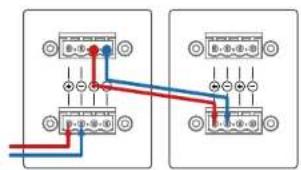
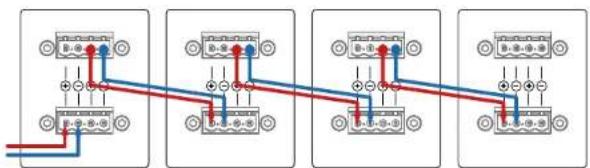
4.5 Connecting multiple P10i or P10j to one power amplifier channel
The electrical impedance of the P10i or P10j is 16 ohms. A large number of low-impedance P10 speakers can therefore be connected in parallel to most modern power amplifiers. HK Audio does not specify a maximum number of P10s on the same power amp channel.
However, we recommend operating a maximum of three P10 loudspeakers in parallel, for which the appropriate basic filters (see 3.1) are also provided.
The electrical parallel connection is available to the user through the freely accessible connection terminals (see 4.1) depending on the application. The following formulae apply to determine the connected total load:
Equation for parallel connection:
R _ total = 1( 1R _ 1) + ( 1R _ 2) + ( 1R _ 3) + ... ( 1R _ n)
Example #1:
Connecting two 16 ohm speakers in parallel results in a connected load of 8 ohms.
R _ total = 1/(1/1 6 Ω) + (1/1 6 Ω) = 8 Ω
Example #2:
Connecting four 16 ohm speakers in parallel results in a connected load of 4 ohms.
R _ total = 1/(1/1 6 Ω) + (1/1 6 Ω) + (1/1 6 Ω) + (1/1 6 Ω) = 4 Ω
4.6 Connecting multiple P10i TR or P10j TR to one power amplifier channel
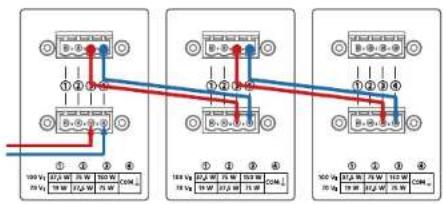
The P10i TR or P10j TR are designed with a built-in transformer for connection to high-impedance line networks (100 V/70 V). To determine the maximum permissible quantity of P10i TR or P10j TR speakers on the same power amplifier channel, the connected power taps must be summed and compared with the power data of the amplifier used.
The sum of the power taps must not exceed the maximum power of the amplifier.
The manufacturer's specifications of the respective amplifier manufacturer or the project-specific planning documents including the respective cable system apply.
The following examples represent the maximum permissible number of P10x TR loudspeakers for an amplifier with a maximum power of 500 W/100 V:
Example #1:
Connecting three P10x TR speakers in parallel to the 150 W power tap results in a maximum power of 450 W to be considered. Thus, operation on an amplifier with a maximum power of 500 W/100 V would be permissible with some 'reserve'.
P _ = P10iTR _ 1 5 0 W + P10iTR _ 1 5 0 W + P10iTR _ 1 5 0 W = 4 5 0 W
Example #2:
Connecting five P10x TR speakers in parallel to the 75 W power tap results in a maximum power of 375 W to be considered. Thus, operation with an amplifier with a maximum power of 500 W/100 V would be permissible with some "reserves".
P _ = P10iTR _ 7 5 W + P10iTR _ 7 5 W + P10iTR _ 7 5 W + P10iTR _ 7 5 W + P10iTR _ 7 5 W = 3 7 5 W
![graph LR A["Terminal 1"] --> B["Switch"] B --> C["Terminal 2"] C --> D["Switch"] D --> E["Terminal 3"] E --> F["Switch"] F --> G["Terminal 4"] G --> H["Switch"] H --> I["Terminal 5"] style A fill:#f9f,stroke:#333 style B fill:#ccf,stroke:#333 style C fill:#cfc,stroke:#333 style D fill:#fcc,stroke:#3…](/content/2026/06/1148146/images/2fffff97dd7cd20943b38c5f757bd2c950b5276986beb35be6f5d8717c7ea7ae.jpg)
However, we generally recommend (cf. 4.5) operating a maximum of three P10x TR loudspeakers in parallel, as only for this purpose the appropriate basic filters (see 3.3) are provided.
5 Mounting instructions for mechanical accessories

The following mounting instructions for mechanical
accessories apply only to use with the P10 speakers. Only
original HK Audio accessories may be used. Care must be
taken to use appropriate tools to perform the installation. The general safety instructions apply.
5.1 U-Bracket
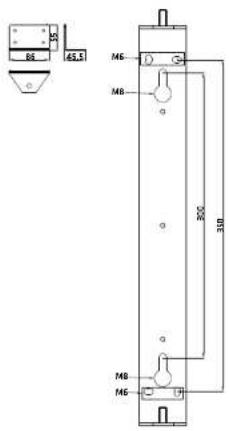
1.) The two mounting brackets must be screwed to the enclosure. The M5 pan-head screws already present in the enclosure must be used for this purpose.
2.) Attach the U-bracket to the desired surface, e.g. a wall. Holes are provided for 6 mm or 8 mm diameter screws. To facilitate an exact alignment, the 6 mm fixing points are designed as horizontally or vertically aligned slotted holes.
3.) Before hooking the speaker with the mounting brackets into the U-bracket, the two M8 lock washers ("RIPP LOCK") must be placed on the threaded rods of the U-bracket.
4.) The speaker can then be hooked into the U-bracket. The actual screwing is done by applying the two self-locking nuts.
5.) The nuts must be tightened until the locking washers ("RIPP LOCK") are firmly stamped into the material. A torque of approx. 25 Nm is necessary for this.
6.) Three further MS threaded holes in the U-bracket can be used later to secure or fasten connecting cables.
7.) If desired, the loudspeaker line can be extended with additional P10s. In this case, the connector plates must be used (see 5.2).
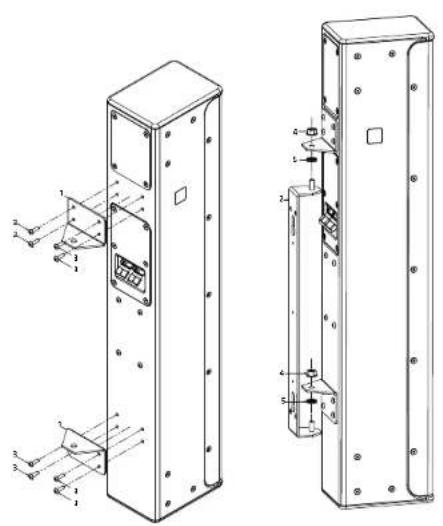

Note: If the lock washers ("RIPP LOCK") are not used at all or not sufficiently tightened, the ball impact safety certificate according to DIN 18032-3 is invalid. So please always ensure correct assembly based on these instructions.
| pos. description qty. | ||
| 1 Mounting bracket 2 | ||
| 2 U-bracket 1 | ||
| 3 M5 pan-head screw | 8 | |
| 4 | M8 nut. self-locking | 2 |
| 5 M8 lock washer (RIPP LDCK) | 2 | |
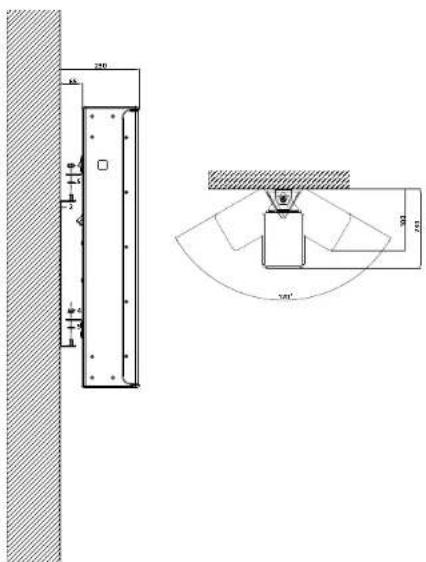
5.2 Connector Plates
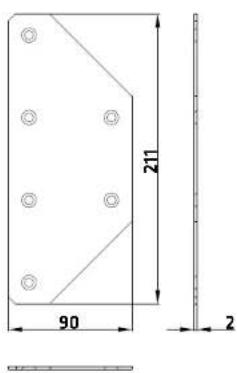
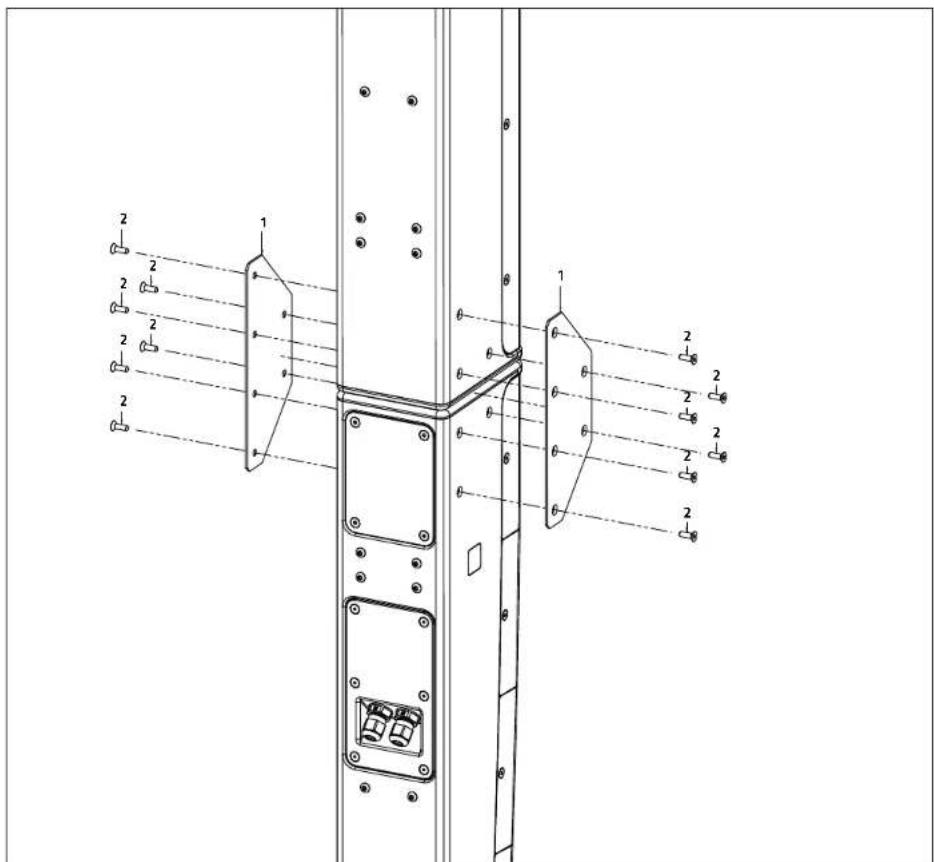
1.) The connector plates are connected to the enclosures using the MS countersunk screws provided in the enclosure.
2.) The connector plates can also be supplied as part of a set article with other components described here below (see 5.4 to 5.7). The instructions for assembly in these cases do not differ from this chapter.
| pos. description qty. | ||
| 1 Connector plate 2 | ||
| 2 MS countersunk screw 12 | ||
5.3 Swivel and tilt bracket for one loudspeaker
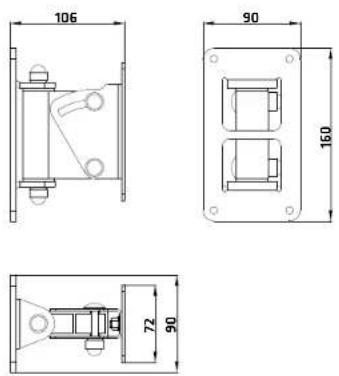
1.) Attach the adapter plate to the speaker cabinet. The four M5 pan-head screws in the enclosure must be used for this.
2.) The swivel bracket can then be screwed to the adapter plate, for which two self-locking MG nuts must be used.
3.) Now the upper M8 carriage bolt with washers placed on both sides must be inserted into the slotted hole at the head end of the swivel bracket. It is first loosely screwed with the M8 nut.
4.) Then the loudspeaker can be hooked into the swivel and tilt bracket mounted on the desired surface (e.g. wall) with the help of the previously inserted M8 carriage bolt. With the help of the second M8 carriage bolt, which is inserted into the lower hole, the second connection is made.
5.) Now the desired vertical tilt angle can be set by tightening all screws. Furthermore, the original assembly instructions of the manufacturer enclosed with the delivery apply.
6.) Finally, the M8 protective caps can be fitted onto the carriage bolts.
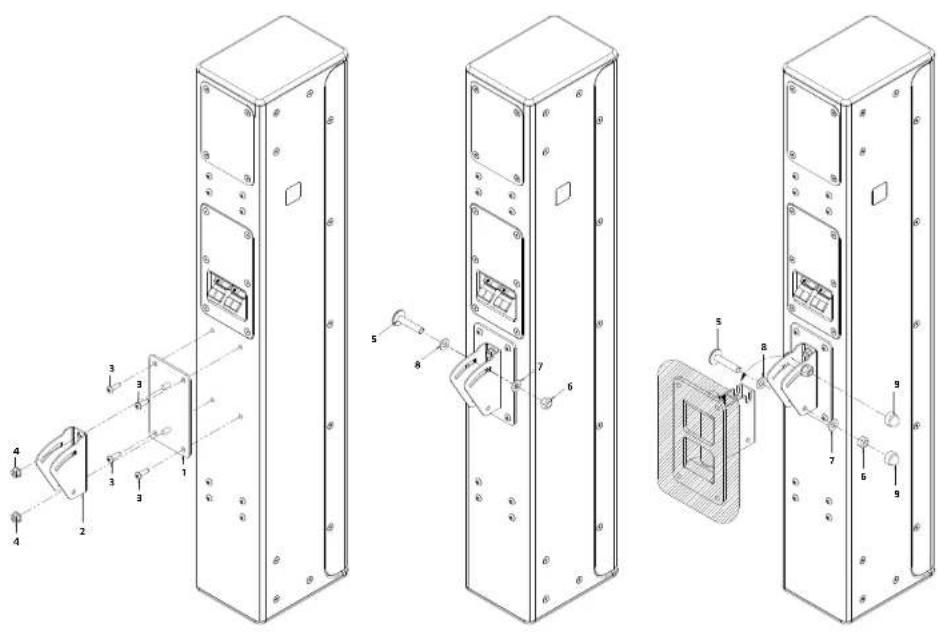
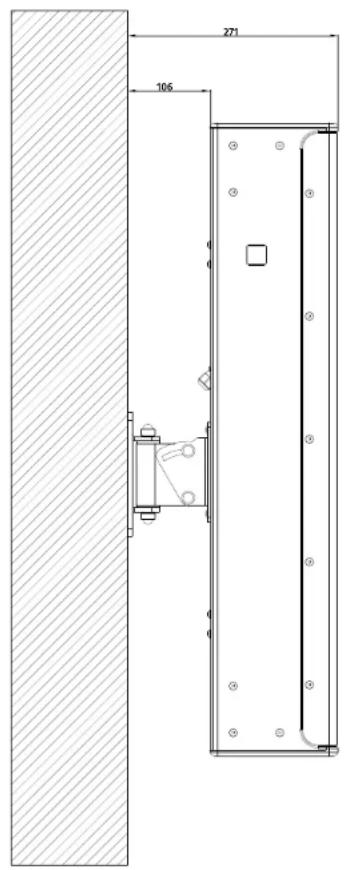
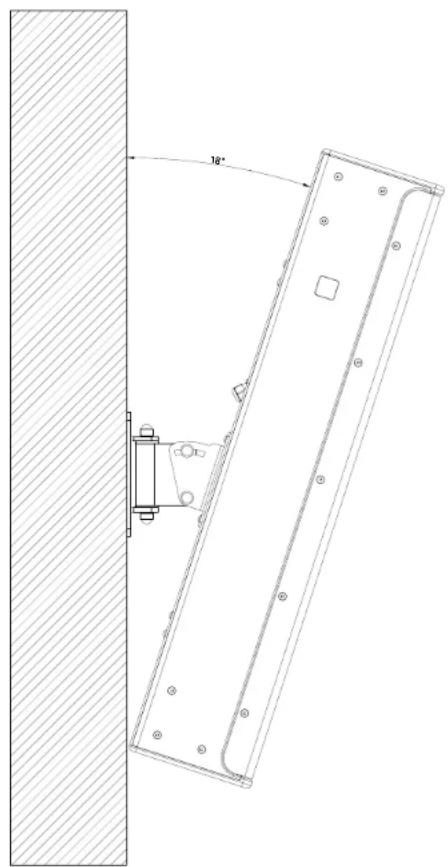
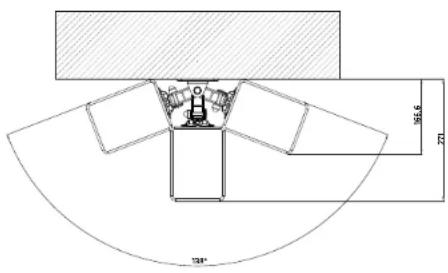
| pos. description qty. | ||
| 1 Adapter plate AP3 1 | ||
| 2 Swivel bracket 1 | ||
| 3 M5 pan-head screw 4 | ||
| 4 M6 nut, self-locking 2 | ||
| 5 M8 carriage bolt 2 | ||
| 6 M8 nut, self-locking 2 | ||
| 7 Washer 4 | ||
| 8 Washer 4 | ||
| 9 M8 Protective cap 2 | ||
5.4 Swivel and tilt bracket for two loudspeakers
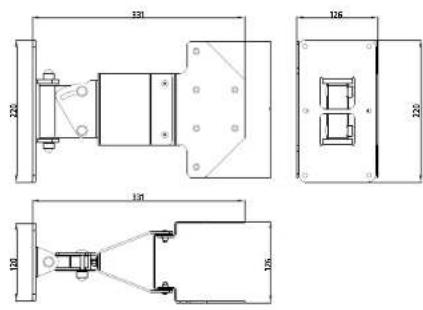
1.) The delivery includes a pre-assembled mounting adapter for attachment to the speakers (see positions 1 to 3).
2.) The swivel bracket is to be screwed to the mounting adapter, for which two self-locking MG nuts must be used.
3.) The mounting adapter must then be attached to the loudspeaker enclosures. For this purpose, the MS countersunk screws provided in the respective enclosures must be used. This assembly step is easiest with the enclosures lying on the floor, whereby the screws should be screwed crosswise.
4.) Now the upper M8 carriage bolt with washers placed on both sides must be inserted into the slotted hole at the head end of the swivel bracket. It is first loosely screwed with the M8 nut.
5.) Then the loudspeaker can be hooked into the swivel and tilt bracket mounted on the desired surface (e.g. wall) with the help of the previously inserted M8 carriage bolt. With the help of the second M8 carriage bolt, which is inserted into the lower hole, the second connection is made.
6.) Now the desired vertical tilt angle can be set by tightening all screws. Furthermore, the original assembly instructions of the manufacturer enclosed with the delivery apply.
7.) Finally, the M8 protective caps can be fitted onto the carriage bolts.
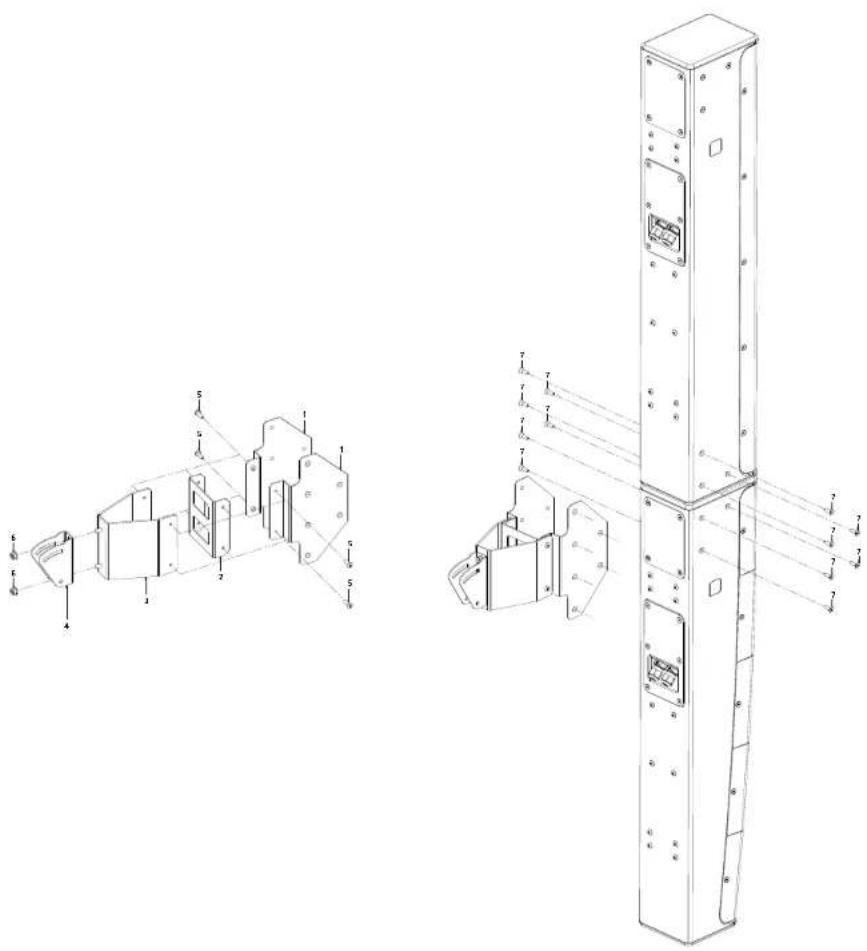
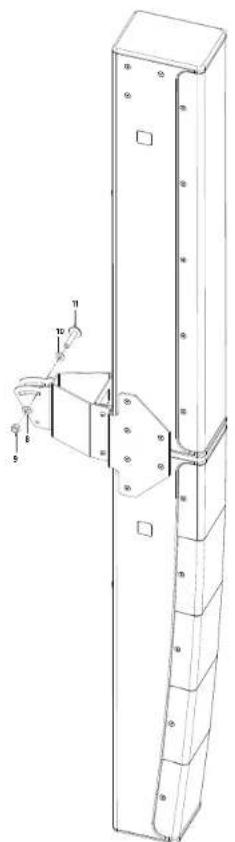
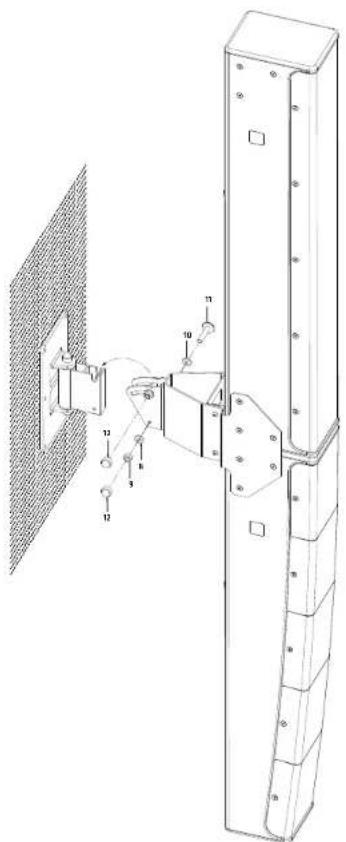
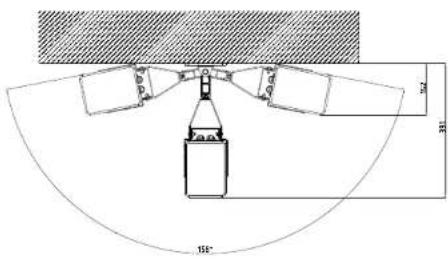
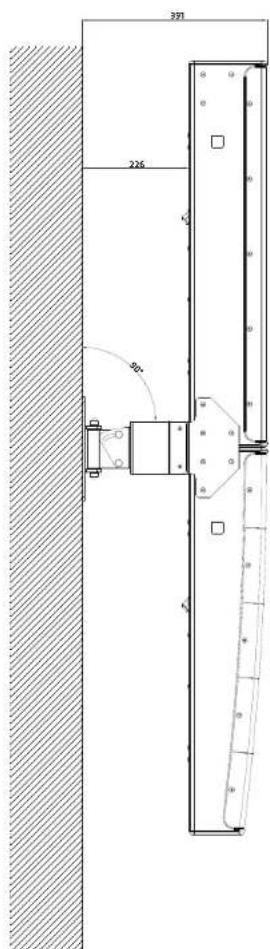
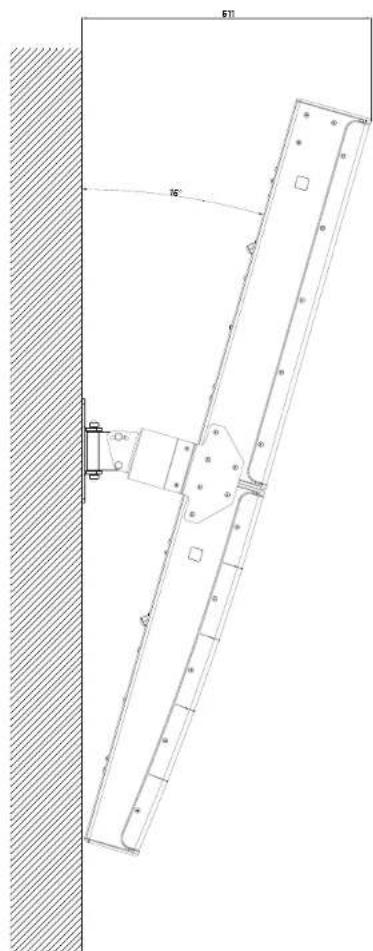
pos. description qty.
| 1 Connector plate incliner 2 | ||
| 2 U-bracket incliner 1 | ||
| 3 Adapter incliner 1 | ||
| 4 Swivel bracket 1 | ||
| 5 M5 pan-head screw 4 | ||
| 6 M6 nut, self-locking 2 | ||
| 7 M5 countersunk screw 12 | ||
| 8 M8 washer | 2 | |
| 9 M8 nut, self-locking | 2 | |
| 10 | M8 washer | 2 |
| 11 | M8 carriage bolt | 2 |
| 12 | M8 protective cap | 2 |
5.5 Rigging Rail
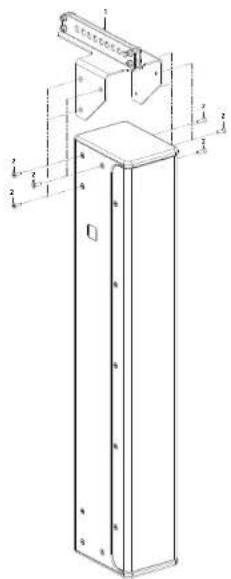
1.) The rigging rail must be attached with the MS countersunk screws provided in the housing.
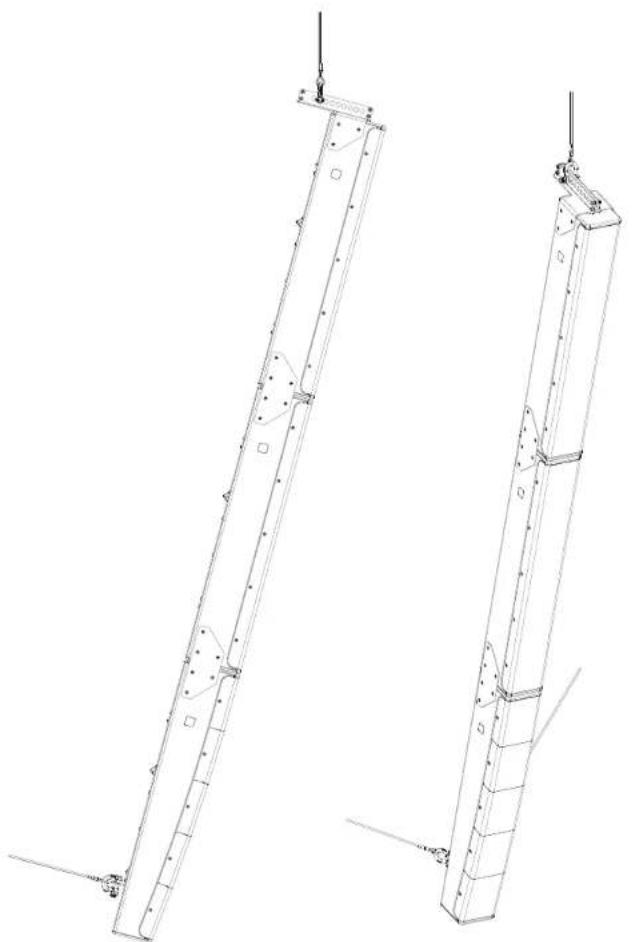
2.) If desired, the loudspeaker line can be extended by additional P10s. In this case, the connector plates must be used (see 5.2).
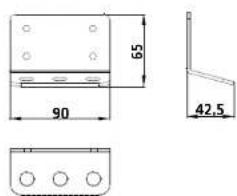
3.) For bracing or to ensure protection against twisting, an L-sheet is available, which can be screwed to the loudspeaker cabinet if required.
4.) A maximum of three P10 loudspeakers may be supported by one rigging rail.
5.) The range of application of the rigging rail is limited to fixed installation in wind-protected areas. Other areas and purposes of use are not permitted.
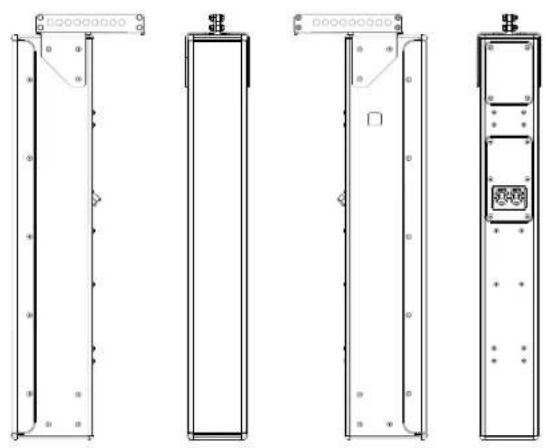
| pos. description qty. | ||
| 1 Rigging rail 1 | ||
| 2 M5 countersunk screw 6 | ||


5 Mounting instructions for mechanical accessories
- English
5.6 Pole Support
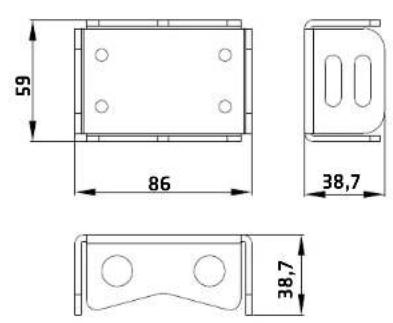
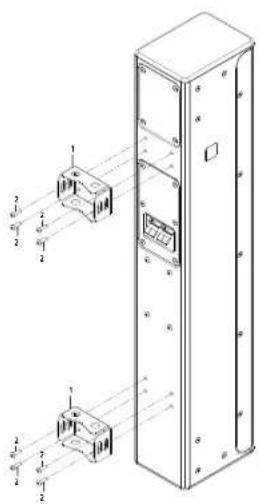
1.) The pole support must be connected to the speaker enclosure using the MS pan-head screws provided in the enclosure.
2.) If desired, the loudspeaker line can be extended by additional P10s. In this case, the connector plates must be used (see 5.2).
3.) Suitable steel connectors or clamps can be used to fasten the speakers. These are not included in the HK Audio scope of delivery and are not offered due to application-specific requirements.
4.) In practice, clamps from the supplier Würth have proven themselves, e.g.: "Würth hose clamp A4", clamping range 50-70 mm, article number at Würth: 0538 50 70.
Note: If clamps of poor quality are used, such as those with a load-bearing capacity that is not appropriate for the application or those with a rapidly decreasing clamping force, the ball impact safety certificate according to DIN 18032-3 is invalid. So please always ensure correct assembly based on these instructions.
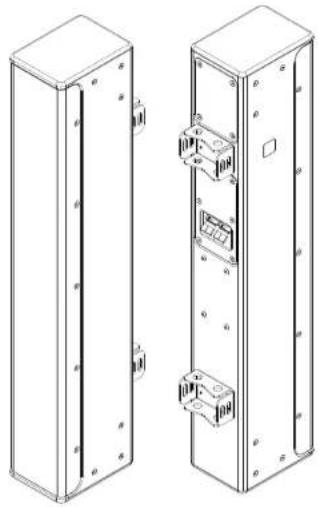
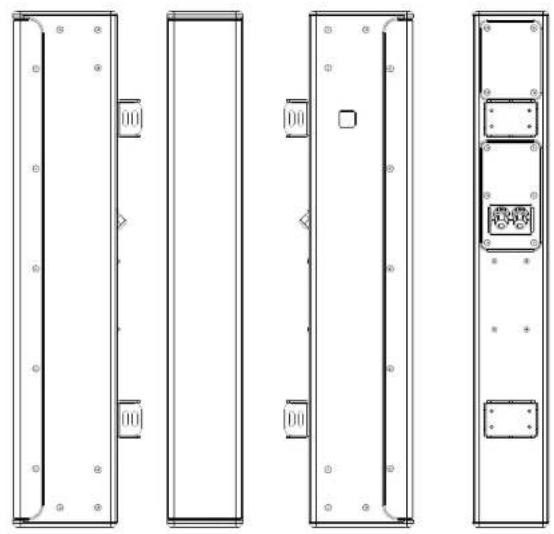
| pos. description qty. | |
| 1 Pole support 2 | |
| 2 M5 pan-head screw 8 | |

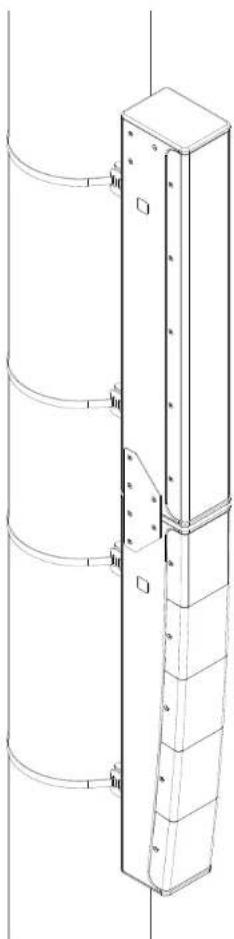
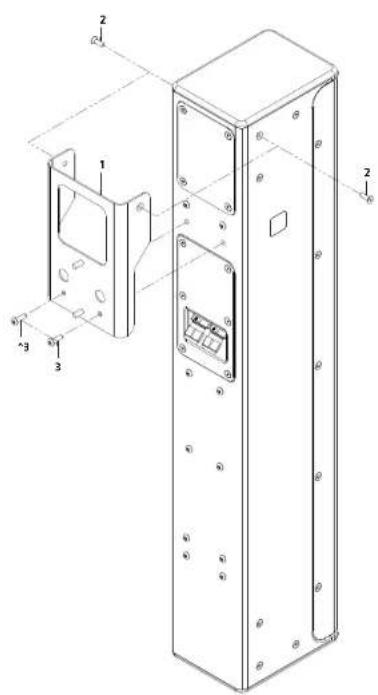
5.7 Ceiling Mount
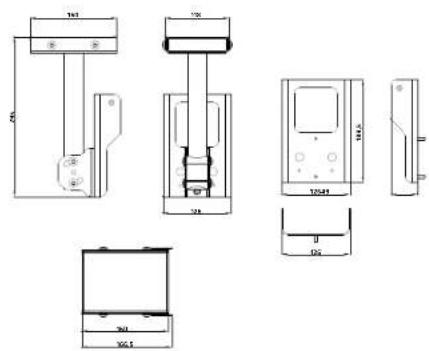
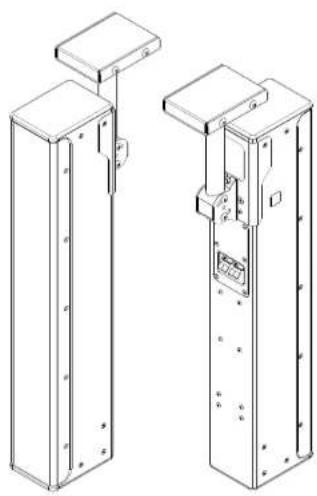
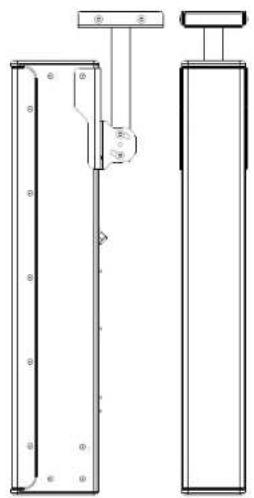
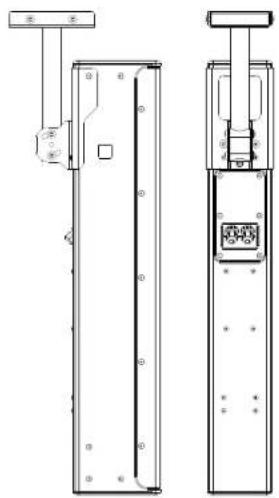
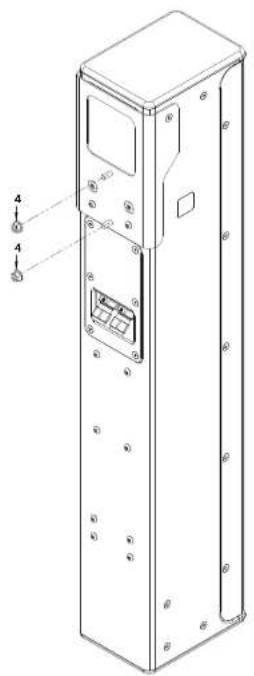
1.) First, the ceiling mount adapter at the head end of the P10 speakers must be connected to the enclosure. M5 countersunk screws (side) or M5 pan-head screws (rear) must be used for this.
2.) Then the self-locking M6 nuts should be placed on the threaded rods of the ceiling mount adapter. These should not be screwed tightly to the ceiling bracket adapter, but - in order to hook the entire unit into the ceiling bracket - should protrude a few millimetres initially.
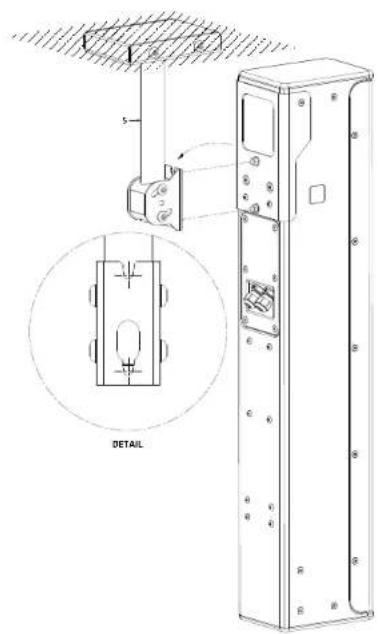
3.) Now the loudspeaker can be hung into the ceiling mount or its swivel bracket. As soon as it is suspended, the lower screw must be tightened first. In the second step, the upper screw is tightened.
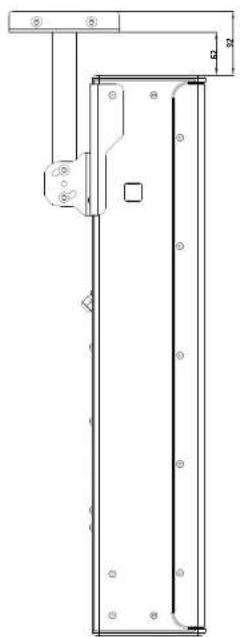
4.) Now the desired vertical tilt angle can be fixed by tightening all screws on the ceiling bracket. Furthermore, the manufacturer's original installation instructions enclosed with the delivery apply.
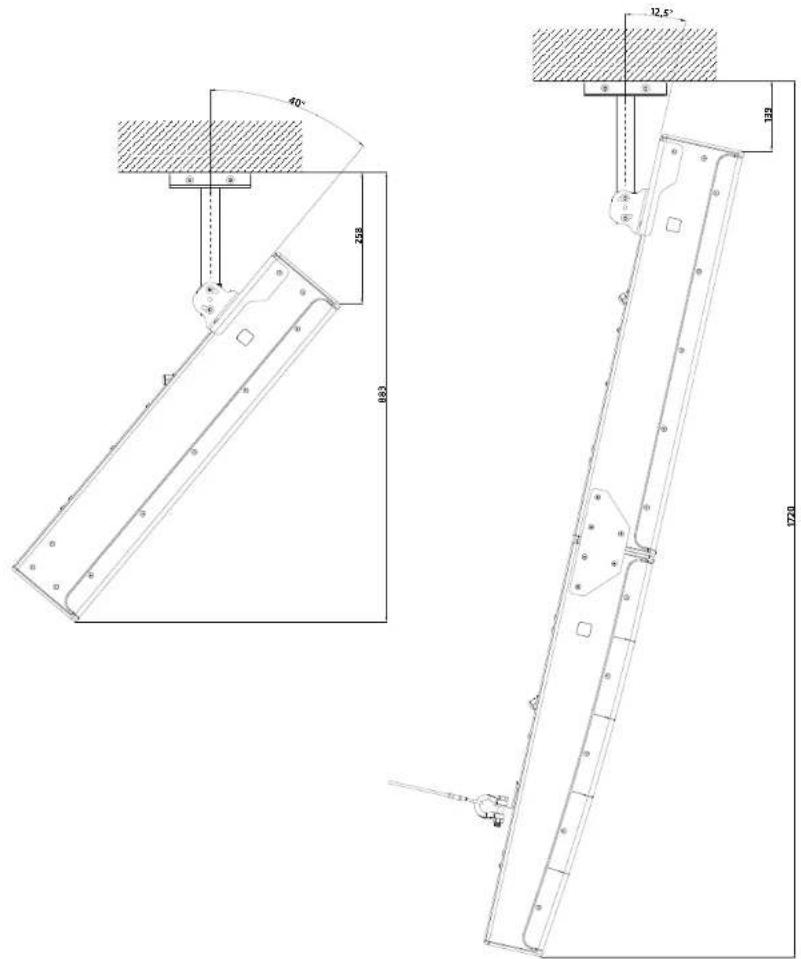
5.) The maximum vertical tilt angle when using a P10 loudspeaker on the ceiling mount is -40°.
6.) If desired, the loudspeaker row can be extended with additional P10s. In this case, the connector plates must be used (see 5.2).
7.) The maximum vertical tilt angle when using two P10 speakers is -12.5°.
8.) More than two P10 speakers or exceeding the above tilt angles are not permitted when using the ceiling mount.
| pos. description qty. | ||
| 1 Ceiling mount adapter 1 | ||
| 2 M5 countersunk head screw 2 | ||
| 3 M5 pan-head screw | 2 | |
| 4 | M6 nut, self-locking | 2 |
| 5 Ceiling mount | 1 | |
5 Mounting instructions for mechanical accessories
SI SERIES P10

HK Audio™ • Postfach 1509 • 66595 St. Wendel • Germany • info@hkaudio.com • www.hkaudio.com
International Inquiries: fax +49-68 51-905 215 • international@hkaudio.com

- GENERAL NOTES ON SAFETY FOR LOUDSPEAKER SYSTEMS
- CONTENTS
- 1 LOUDSPEAKER TYPES
- 2 MECHANICAL ACCESSORIES
- 2.3 SWIVEL AND TILT BRACKET FOR ONE LOUDSPEAKER
- 2.4 SWIVEL AND TILT BRACKET FOR TWO LOUDSPEAKERS
- 2.5 RIGGING RAIL
- 2.6 POLE SUPPORT
- 2.7 CEILING MOUNT
- 3 APPLICATION GUIDE
- 3.1 BASIC USE OF P10 LOUDSPEAKERS
- 3.2 PERMITTED AREAS OF USE AND ENVIRONMENTAL CONDITIONS
- 3.3 BASIC FILTERS FOR DIFFERENT P10 COMBINATIONS
- 3.4 FILTERING IN PRACTICE
- 4 ELECTRICAL CONNECTIONS
- 4.1 ELECTRICAL CONNECTIONS FOR P10I AND P10J
- 4.2 ELECTRICAL CONNECTIONS FOR P10I TR AND P10J TR
- 4.3 MOUNTING THE COVER PLATE
- 4.4 SERVICE AND DISASSEMBLY OF THE COVER PLATE
- 4.5 CONNECTING MULTIPLE P10I OR P10J TO ONE POWER AMPLIFIER CHANNEL
- EXAMPLE #1
- EXAMPLE #2
- 4.6 CONNECTING MULTIPLE P10I TR OR P10J TR TO ONE POWER AMPLIFIER CHANNEL
- 5 MOUNTING INSTRUCTIONS FOR MECHANICAL ACCESSORIES
- 5.4 SWIVEL AND TILT BRACKET FOR TWO LOUDSPEAKERS
- 5.5 RIGGING RAIL
- SI SERIES P10
Brand : HK AUDIO
Model : SI Series P10i
Category : Audio