
PRO-2200 - Vacuum Sealer Weston - Free user manual and instructions
Find the device manual for free PRO-2200 Weston in PDF.


| Product Type | Vacuum Sealer |
| Brand | Weston |
| Model | PRO-2200 |
| Power Supply | 120V, 60Hz, 10 Amp |
| Motor Type | 2-Piston Vacuum Pump |
| Sealing Method | Heat sealing with Seal Bar Heating Element |
| Vacuum Chamber | Plastic vacuum chamber with oval seals |
| Control Buttons | Start, Stop, Manual Seal |
| Cooling System | Internal Cooling Fan |
| Safety Features | Thermal overload protector, limit switch, grounded plug |
| Indicator Lights | Power, Vacuum, Seal, Cool |
| Compatible Bags | Vacuum bags only (not household bags) |
| Maintenance | Replaceable oval vacuum chamber seals, Teflon tape, fuse (10 Amp) |
| Cleaning | Wipe with damp cloth; do not immerse |
| Warranty | 1 year limited warranty (requires registration within 30 days) |
| Included Accessories | Power cord, user manual |
| Optional Accessories | Maintenance kit, various bag sizes and rolls |
| Usage | Indoor use only; on stable surface |
Frequently Asked Questions - PRO-2200 Weston
User questions about PRO-2200 Weston
0 question about this device. Answer the ones you know or ask your own.
Ask a new question about this device
Download the instructions for your Vacuum Sealer in PDF format for free! Find your manual PRO-2200 - Weston and take your electronic device back in hand. On this page are published all the documents necessary for the use of your device. PRO-2200 by Weston.
USER MANUAL PRO-2200 Weston
If any components of this unit are broken, do not operate properly, or for product returns, please contact Weston Products LLC at
1-800-814-4895
(Outside the U.S. call 440-638-3131)
For the online catalog, log onto WestonSupply.com.
Exclusively imported by Weston Products LLC Strongsville, Ohio
SAVE THESE INSTRUCTIONS!
Refer to them often and use them to instruct others.
NOTE: The Vacuum Sealer is ONLY intended to be used with VACUUM BAGS. For best results, only use the recommended vacuum bags. DO NOT USE HOUSEHOLD BAGSI Any other uses of the Vacuum Sealer, other than the uses described in this booklet, could potentially damage the appliance and void the warranty!
WESTON WARRANTY INFORMATION SAVE THIS WARRANTY INFORMATION FOR YOUR RECORDS!
Weston Products LLC warrants to the ORIGINAL RETAIL PURCHASER of this product that if operated in accordance with the printed instruction accompanying it, then for a period of 1 year from the date of purchase, the product shall be free from defects in material and workmanship.
The Warranty Card, along with a copy of the original receipt, must be received by Weston Products LLC within 30 days from purchase date for the warranty to apply. Failure to send the completely filled out Warranty Card, along with a copy of the original receipt, will void the warranty.
The product must be delivered to or shipped freight prepaid to Weston Products LLC for warranty services, in either its original packaging or similar packaging affording an equal degree of protection. Damage due to shipping is not the responsibility of the company. Weston Products LLC charges a \$35.00 per hour benefit charge. NOTE: No repairs will be started without the authorization of the customer. The return shipping cost to the customer will be added to the repair invoice.
Weston Products LLC will repair (or at its discretion, replace) the product free of charge, if in the judgment of the company, it has been proven to be defective as to seller's labor and material, within the warranty period. New or rebuilt replacements for factory defective parts will be supplied for one (1) year from the date of purchase. Replacement parts are warranted for the remainder of the original warranty period.
For non-warranty repairs, contact Weston Products LLC's Customer Service at 1-800-814-4895 M-F 8am-5pm EST (outside of the United States 440-638-3131) to obtain a Return Merchandise Authorization Number (RMA Number). Weston Products LLC will refuse all returns that do not contain this number. DO NOT RETURN THE UNIT WITHOUT PROPER AUTHORIZATION FROM WESTON PRODUCTS LLC.
LIMITATIONS: The warranty is void if the product is used for any purpose other than that for which it is designed. The product must not have been previously altered, repaired, or serviced by anyone else other than Weston Products LLC. If applicable, the serial number must not have been altered or removed. The product must not have been subjected to accident in transit or while in the customer's possession, misused, abused, or operated contrary to the instructions contained in the instruction manual. This includes failure caused by neglect of reasonable and necessary maintenance, improper line voltage and acts of nature. This warranty is not transferable and applies only to U.S. and Canadian sales.
Except to the extent prohibited by applicable law, no other warranties whether expressed or implied, including warranty merchantability and fitness for a particular purpose, shall apply to this product. Underno circumstances shall Weston Products LLC be liable for consequential damages sustained in connection with said product and Weston Products LLC neither assumes nor authorizes any representative or other person to assume for it any obligation or liability other than such as is expressly set forth herein. Any applicable implied warranties are also limited to the one (1) year period of the limited warranty.
This warranty covers only the product and its specific parts, not the food or other products processed in it.
CUT ALONG THE DOTTED LINE AND SEND THE WARRANTY CARD ALONG WITH A COPY OF YOUR ORIGINAL PURCHASE RECEIPT TO:
Weston Products LLC
20365 Progress Drive, Strongsville, OH 44149
WESTON WARRANTY CARD
SEND THIS CARD ALONG WITH A COPY OF YOUR ORIGINAL PURCHASE RECEIPT TO: WESTON WARRANTY, WESTON PRODUCTS LLC, 20365 PROGRESS DRIVE, STRONGSVILLE, OH 44149
Customer Name:
Address:
City/State/Zip:
Telephone Number: ( )
E-Mail Address:
Original Date of Purchase: ____/____/____
Product Model #:
Serial # (if applicable):

FOOD SAFETY
There are basic rules to follow when handling food.
They are COOK, SEPARATE, CLEAN, and CHILL.
COOK
It's crucial to cook food to a safe internal temperature to destroy bacteria that is present. The safety of hamburgers and other foods made with ground meat has been receiving a lot of attention lately, and with good reason. When meat is ground, the bacteria present on the surface is mixed throughout the ground mixture. If this ground meat is not cooked to at least 160°F to 165°F (71°C to 74°C) , bacteria will not be destroyed and there's a good chance you will get sick.
Solid pieces of meat like steaks and chops don't have dangerous bacteria like E. coli on the inside, so they can be served more rare. Still, any beef cut should be cooked to an internal temperature of at least 145°F (63°C) (medium rare). The safe temperature for poultry is 180°F (82°C) and solid cuts of pork should be cooked to 160°F (71°C). Eggs should be thoroughly cooked too. If you are making a meringue or other recipe that uses uncooked eggs, buy specially pasteurized eggs or use prepared meringue powder.
SEPARATE
Foods that will be eaten uncooked and foods that will be cooked before eating MUST ALWAYS be separated. Cross-contamination occurs when raw meats or eggs come in contact with foods that will be eaten uncooked. This is a major source of food poisoning. Always double-wrap raw meats and place them on the lowest shelf in the refrigerator so there is no way juices can drip onto fresh produce. Then use the raw meats within 1-2 days of purchase, or freeze for longer storage. Defrost frozen meats in the refrigerator, not on the counter.
When grilling or cooking raw meats or fish, make sure to place the cooked meat on a clean platter. Don't use the same platter you used to carry the food out to the grill. Wash the utensils used in grilling after the food is turned for the last time on the grill, as well as spatulas and spoons used for stir-frying or turning meat as it cooks.
Make sure to wash your hands after handling raw meats or raw eggs. Washing hands with soap and water, or using a pre-moistened antibacterial towelette is absolutely necessary after you have touched raw meat or raw eggs. Not washing hands and surfaces while cooking is a major cause of cross-contamination.
CLEAN
Wash your hands and work surfaces frequently when you are cooking. Washing with soap and warm water for at least 15 seconds, then dry with a paper towel.
CHILL
Chilling food is very important. The danger zone where bacteria multiply is between 40°F and 140°F (4°C and 6°C). Your refrigerator should be set to 40F (4°C) or below; your freezer should be 0F (-17°C) or below. Simple rule: serve hot foods hot, cold foods cold. Use chafing dishes or hot plates to keep food hot while serving. Use ice water baths to keep cold foods cold. Never let any food sit at room temperature for more than 2 hours - 1 hour if the ambient temperature is F9032°C) or above. When packing for a picnic, make sure the foods are already chilled when they go into the insulated hamper. The hamper won't chill food - it just keeps food cold when properly packed with ice. Hot cooked foods should be placed in shallow containers and immediately refrigerated so they cool rapidly. Make sure to cover foods after they are cool.
NOTE: Special considerations must be made when using venison or other wild game, since it can become heavily contaminated during field dressing. Venison is often held at temperatures that could potentially allow bacteria to grow, such as when it is being transported. Refer to the USDA Meat and Poultry Department for further questions or information on meat and food safety.
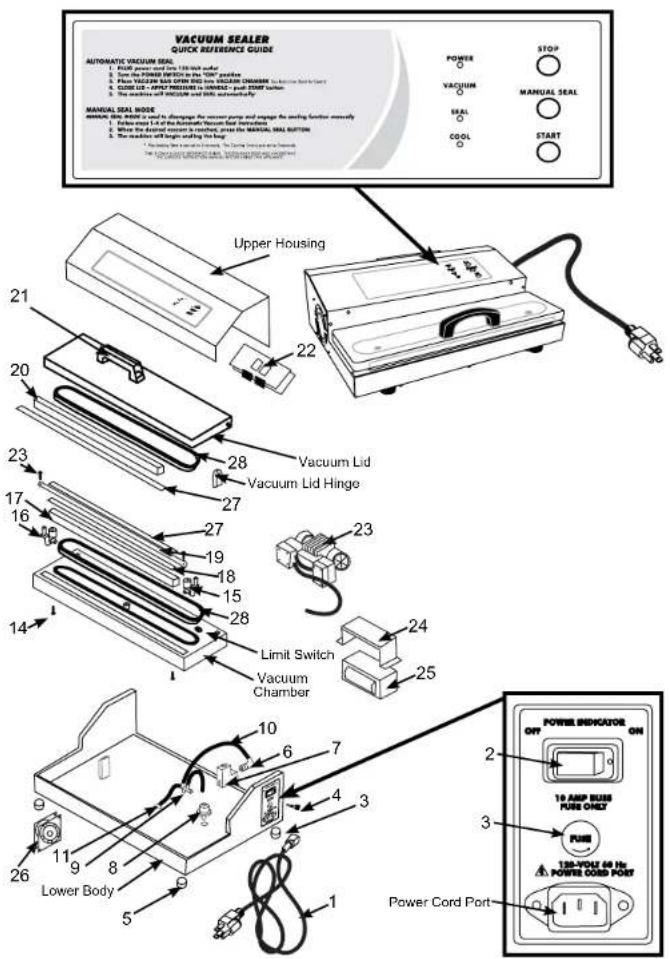
COMPONENT LIST
| DIAGRAMNO. | PARTDESCRIPTION | PARTNUMBER |
| 1 Power Cord 08-0402 | ||
| 2 Power Indicator Switch 65-0110 | ||
| 3 Fuse Holder 08-0404 | ||
| 4 10-Amp Buss Fuse | 08-0405 | |
| 5 Rubber Foot (6) | 08-0407 | |
| 6 Exhaust Valve Fitting | 08-0408 | |
| 7 Exhaust Valve | 08-0409 | |
| 8 Vacuum Sensor | 08-0410 | |
| 9 4-Way Vacuum Junction | 08-0411 | |
| 10 Exhaust Valve Vacuum Tube | 08-0412 | |
| 11 Main Vacuum Chamber Tube | 08-0413 | |
| 14 Seal Bar Base Screws | ||
| 15 Seal Bar Base Spacer | ||
| 16 Seal Bar Bracket | ||
| 17 Seal Bar Aluminum Base | ||
| 18 Seal Bar Base Insulator | 08-0425 | |
| 19 Seal Bar Heating Element with Screws | 08-0427 | |
| 20 Vacuum Lid Seal Bar Assembly | 08-0430 | |
| 21 Vacuum Lid Handle with Screws | 08-0434 | |
| 22 Circuit Board Assembly | 65-0108 | |
| 23 2-Piston Vacuum Pump | 08-0439 | |
| 24 Transformer Bracket | 08-0440 | |
| 25 Transformer 08-0441 | ||
| 26 Internal Cooling Fan | 08-0443 | |
| 27 Teflon Tape (Upper & Lower) | ||
| 28 Oval Vacuum Chamber Seal (2) | ||
If any components of this unit are broken or the unit does not operate
properly, call Weston Products LLC Toll Free at
1-800-814-4895
Monday thru Friday 8:00am-5:00pm EST. Outside the U.S. call 440-638-3131
ADDITIONAL ACCESSORIES AVAILABLE
| Pro-Series Vacuum Sealer Maintenance KitIncludes Upper & Lower Teflon Tape, 2 Oval Vacuum Chamber Seals | 08-0501-W |
| Pint 6" x 10" 100 Count Vacuum Bags | 30-0106-W |
| Quart 8" x 12" 100 Count Vacuum Bags | 30-0101-W |
| Gallon 11" x 16" 100 Count Vacuum Bags | 30-0102-W |
| Extra Large 15" x 18" 100 Count Vacuum Bags | 30-0105-W |
| (3 Rolls) 8" x 22' Rolls Vacuum Bags | 30-0201-W |
| (3 Rolls) 11" x 18' Rolls Vacuum Bags | 30-0202-W |
| 8" x 50' Roll Vacuum Bags | 30-0008-W |
| 11" x 50' Roll Vacuum Bags | 30-0011-W |
| 15" x 50' Roll Vacuum Bags | 30-0015-W |
| Multi-Pack Vacuum Bags | 30-0107-W |
| Includes (25 Bags) 6" x 10", (10 Bags) 11" x 16", (15 Bags) 8" x 12" |
These products and many more products can be ordered by visiting
WestonSupply.com or by calling
Weston Products LLC Toll Free at 1-800-814-4895
Monday thru Friday 8:00am-5:00pm EST. Outside the U.S. call 440-638-3131
WARNING! Before cleaning, assembling or disassembling the Vacuum Sealer, make sure the Vacuum Sealer is OFF and the PLUG IS REMOVED FROM THE OUTLET/POWER SOURCE!
IMPORTANT SAFETY RULES

WARNING!
READ AND FULLY UNDERSTAND ALL INSTRUCTIONS AND WARNINGS PRIOR TO USING THIS UNIT. YOUR SAFETY IS MOST IMPORTANT! FAILURE TO COMPLY WITH PROCEDURES AND SAFEGUARDS MAY RESULT IN SERIOUS INJURY OR PROPERTY DAMAGE. REMEMBER: YOUR PERSONAL SAFETY IS YOUR RESPONSIBILITY!
- ALWAYS DISCONNECT Vacuum Seale from power source before servicing, changing accessories or cleaning the unit.
- Plug the Vacuum Sealer into a standard 12 Volt, 60 Hz wall outlet. Avoid using extension cords.
- DO NOT USE the Vacuum Sealer if the Power Cord, Plug or any other parts are damaged. If the Power Cord or the Vacuum Sealer is damaged, call Customer Service. DO NOT ATTEMPT TO REPLACE THE CORD. Be sure to not allow the Power Cord to drape into your work area. Check that all parts are operating properly, and perform the intended functions. Check for any other conditions that may affect the operation.
- NEVER use any accessories or parts from other manufacturers. Doing so will VOID YOU WARRANTY and may cause fire, electrical shock or injury.
- Reduce risk of unintentional starting. Make sure the Power Switch is in the "OFF" position before attaching to the power source.
-
KEEP FINGERS CLEAR of the Heat Sealing Bar and Teflon Tape AT ALL TIMES, these areas become HOT. Doing so may cause serious injury.
-
DO NOT take this appliance apart; doing so will VOID YOUR WARRANTY and may result in personal injury.
-
TO PROTECT AGAINST RISK OF ELECTRICAL SHOCK: DO NOT SUBMERGE THE VACUUM SEALER INTO WATER OR LIQUID. BE SURE THE VACUUM SEALER IS DISCONNECTED FROM THE POWER SOURCE BEFORE CLEANING. Follow the "Cleaning Instructions" in this booklet. NEVER rinse appliance Vacuum Sealer under tap.
- NEVER LEAVE THE VACUUM SEALER UNATTENDED. Be safe, DISCONNECT the Vacuum Sealer from power source before leaving the work area. Close supervision is necessary when any appliance is used near children. This appliance is NOT to be used by children.
- DO NOT let the Power Cord hang over edge of work surface.
- Be sure the Vacuum Sealer is on a stable work surface. Be sure all the Vacuum Sealer Feet are stable.
- DO NOT use the Vacuum Sealer outdoors.
- DO NOT use the Vacuum Sealer while under the influence of drugs, medications or alcohol.
- The Vacuum Sealer is ONLY intended to be used with VACUUM BAGS. For best results, only use the recommended vacuum bags. DO NOT USE HOUSEHOLD BAGSI Any other uses of the Vacuum Sealer, other than the uses described in this booklet, could potentially damage the appliance and void the warranty!
SAVE THESE INSTRUCTIONS!
Refer to them often and use them to instruct others.
NOTE: The Vacuum Sealer is ONLY intended to be used with VACUUM BAGS. For best results, only use the recommended vacuum bags. DO NOT USE HOUSEHOLD BAGS! Any other uses of the Vacuum Sealer, other than the uses described in this booklet, could potentially damage the appliance and void the warranty!
VACUUM PACKAGING GUIDELINES
Very Moist Foods: It is best to freeze very moist food items, like fish, before vacuum sealing them. The excessive moisture can interfere with the Sealing Bar's ability to completely fuse the layers of the bag together.
Powdery Items: When vacuum sealing powdery items, like flour, it is best to keep them in their original packaging before putting them into the vacuum bags. The fine powder may get sucked into the 2-Piston Vacuum Pump and cause enough damage to shorten the life of your Vacuum Sealer. Powdery items may also interfere with the bag sealing function.
Sharp or Pointed Items: When vacuum sealing sharp or pointy items, it is best to cushion the edges so they do not puncture the bag during the vacuum process.
YEAST & BACTERIA
For best results in extending the life of foods, it is important to vacuum package foods that are fresh. Once food has begun to deteriorate, vacuum packaging may only slow the deterioration process. Vacuum sealing cannot completely prevent the growth of mold. Other disease causing microorganisms can still grow in low oxygen environments and may require further measures to be eliminated.
Yeast: The development of yeast can be slowed by refrigeration and completely stopped by freezing food at 0° F ( -18° C). Yeast causes fermentation, which will give food an identifiable smell.
Bacteria: Freezing cannot eliminate bacteria, but their growth can be stopped. The growth of bacteria can be easily identified by an offensive odor and sometimes a slimy texture. Some bacteria, like the one that causes botulism, can grow in low oxygen environments and cannot be detected by smell, taste or color. Botulism is very rare, but dangerous. Be sure that all foods are stored and cooked properly before eating.
COOKING & HEATING
- Before microwaving vacuum-packed foods, puncture or open the bag to allow hot air to escape while heating.
• Vacuum-packed foods can be thawed or cooked in boiling water.
• Vacuum-packed perishable foods like meats, vegetables and cheeses must be refrigerated (at or below 34° F (1.1°C)) or frozen, especially acid-free or low-acid foods.
This is important because although vacuum packaging removes most air from the bag, bacteria like Clostridium Botulinum, which produces a toxin that causes the illness botulism, is anaerobic and grows in the absence of oxygen. Refrigeration and freezing slow the growth of bacteria. It is also important to maintain a clean working area to reduce the likelihood of packaging harmful bacteria with the food.

STORAGE LIFESPAN GUIDELINES
- IMPORTANT NOTE: Vacuum packaging is NOT a substitute for refrigeration. Vacuum packed perishable foods still require refrigeration.
- NEVER thaw frozen foods at room temperature. Thaw frozen foods in a refrigerator or microwave oven.
• In general, the colder the temperature at which foods are stored, the longer the shelf life. - Handle vacuum sealer bags with care. Avoid damaging them. A damaged bag will not hold a seal.
- Only use information in the following chart as a guideline! Refer to the "Vacuum Packaging Guidelines" and "Food Safety" sections of this manual. Actual storage life spans may vary. Check all food for spoilage before use.
| FOOD TYPE | STORAGE LOCATION | NORMAL LIFE | VACUUM PACK LIFE | |
| LARGE CUTS OF MEAT GROUND MEAT FISH | Freezer 6 months Freezer 4 months Freezer 6 months 2 years | 2-3 years1 year2 years | ||
| For best results, freeze meats & fish for 1-2 hours before vacuum packing to help prevent moisture and juices from interfering with the seal of the vacuum bag. | ||||
| COFFEE BEANS COFFEE BEANS FLOUR, RICE, SUGAR | Room temperature 4 weeks Freezer 6-9 months | 16 months2-3 yearsRoom Temperature 6 months | 1-2 years | |
| For best results, powder or grainy substances should be kept in their original container or bag, then placed in a vacuum bag for sealing to prevent interfering with the seal of the vacuum bag. | ||||
| BERRIES STRAVESIES, RISPONIES, BLACKBAMES BERRIES CRANTIES, HUCKLEBAMES, BLUEBAMESTo prevent berries from being crushed by the vacuum feeder, it is best to freeze from before packing. Spread the berries out on a cookie sheet to allow them to freeze accordingly. Berries, frozen in a large block will be difficult to vacuum seal due to the many small air pockets that would form between the berries. | Refrigerator 1-3 days Refrigerator 3-6 days | 1 week2 weeks | ||
| CHEESEIf vacuum packetal cheese is used often made are the vacuum bag is long enough to allow for repeated sealing. For shredded cheese, place a paper, towel inside the vacuum bag, on top of the cheese to prevent the cheese from being inserted into the Facuum dealer or interfering with the sealing of the bag. | Refrigerator 1-2 weeks | 4-8 months | ||
| COOKIES, CRACKERS, BREADS with periodical opening Freeze soft airy foods for 1-2 hours prior vacuum packing, to retain shape & texture. | Room Temperature 1-2 weeks | 3-6 weeks | ||
| PASTA, GRAINS, DRIED BEANS NUTSDried foods with sharp edges should be wrapped in a paper towel or other matter to prevent the sharp edges from puncturing the vacuum bag. | Room Temperature 6 months Room Temperature 6 months | 1-1/2 years2 years | ||
| LETTUCE | Refrigerator 3-6 days | 2 weeks | ||
| Wash & thoroughly dry leafy vegetables before vacuum packaging. | ||||
| VEGETABLES | Freezer 8 months | 2 1/2 years | ||
| To maximize the taste of vegetables, blanche than before vacuum packaging. Bleaching cooks the vegetables were briefly sealing in the flavor, odor and texture, leaving the vegetables coupled but still crisp. Vegetables can be blanched in boiling water in the microtensive, most vegetables only require 2-5 minutes (corn on the cob required 6-11 minutes). Then immerise the vegetables to cold water to stop the cooking process. Dry the vegetables, then vacuum pack. | ||||
Table adapted from Dr. G.K. York, Dept. of Food Science & Tech, U of California, Davis.
PROTECTIVE TAPE
There are two (2) factory installed strips of Teflon Tape on the Vacuum Sealer. DO NOT REMOVE THE TAPE!
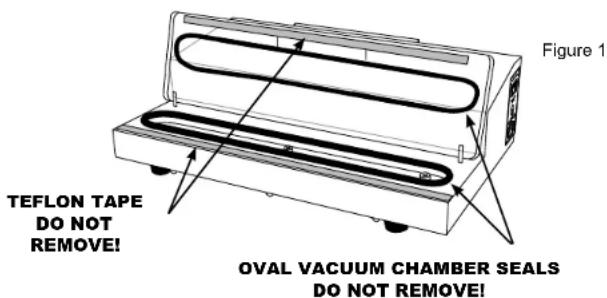
The Seal Bar Heating Element and Vacuum Lid Seal are each covered with Teflon Tape to protect vacuum bags during sealing Figure 1. DO NOT remove the Teflon Tape. See the "Service Instructions" section of this manual for information on replacing the Teflon Tape, if necessary.
CLEANING INSTRUCTIONS
WARNING! Before cleaning, assembling or disassembling the Vacuum Sealer, make sure the Vacuum Sealer is OFF and the PLUG IS REMOVED FROM THE OUTLET/POWER SOURCE!
• NEVER IMMERSE the Vacuum Sealer in water or other liquid.
• Make sure the Vacuum Sealer has completely cooled before cleaning it.
- Wipe clean all outside surfaces including the Plastic Vacuum Chamber and Vacuum Lid with a damp cloth or paper towel. Most household spray cleaners are safe to use. Avoid spraying directly into the vent on the left side of the unit. DO NOT use abrasive cleansers! Abrasive cleansers will spoil the clarity of the Vacuum Lid.
- Be careful while cleaning not to peel or damage the strips of Teflon Tape covering the Seal Bar Heating Element and Vacuum Lid Seal.
• Dry all surfaces and close the Vacuum Lid before storing the Vacuum Sealer.
VACUUM CHAMBER SEALS
There are two factory-installed Oval Vacuum Chamber Seals on the Vacuum Sealer. When the Vacuum Lid is closed and downward force applied, they form an airtight seal so the Vacuum Chamber can be evacuated.
The Oval Vacuum Chamber Seals may wear over time and require replacement. See the "Service Instructions" section of this manual for information on replacing the Oval Vacuum Chamber Seals, if necessary.
COOLING FAN
The Vacuum Sealer has an Internal Cooling Fan that runs whenever the unit is plugged in and turned on. To save energy, turn the unit "OFF" and unplug the Power Cord when not in use.
THERMAL OVERLOAD PROTECTOR
The Vacuum Sealer will automatically shut down if it overheats. If this occurs, turn the unit off and open the Vacuum Lid. Resume normal operation after the unit cools or about 20 minutes.
To help prevent overheating, wait at least 20 seconds between cycles with the Vacuum Lid open. Avoid touching the Teflon Tape. The Teflon Tape will remain hot for a brief period of time after each sealing cycle.
LIMIT SWITCH
The Vacuum Sealer is equipped with a switch to prevent actuation of the Seal Bar Heating Element in manual mode when the Vacuum Lid is open. When the Vacuum Lid is closed, heat made by the Seal Bar Heating Element is absorbed by the vacuum bag and Vacuum Lid Seal.
When the Vacuum Lid is open, there is no means to dissipate the heat and unit damage may occur.

NOTE: The Vacuum Sealer is ONLY intended to be used with VACUUM BAGS. For best results, only use the recommended vacuum bags. DO NOT USE HOUSEHOLD BAGS! Any other uses of the Vacuum Sealer, other than the uses described in this booklet, could potentially damage the appliance and void the warranty!
- Set a new Oval Vacuum Chamber Seal on the groove in the Plastic Vacuum Chamber. Work the seal into the groove with your fingers until done.
- Position a new Oval Vacuum Chamber Seal near the groove in the Vacuum Lid. Work the seal into the groove with your fingers until done.
REPLACING THE TEFLON TAPE:
-
Turn "OFF" the Vacuum Sealer and remove the Power Cord from the electrical outlet.
-
Make sure the unit is completely cool.
- Open the Vacuum Lid.
- Pick at either end of the Teflon Tape covering the Seal Bar Heating Element with a fingernail or sharp-edged tool until it lifts slightly. Grasp the loose end and slowly pull the Teflon Tape back over itself until fully removed.
- Repeat step 4 for the Teflon Tape covering Vacuum Lid Seal. DO NOT remove the Seal.
- Remove the backing from a new wide strip of Teflon Tape for the Seal Bar Heating Element. Be careful not to allow the Teflon Tape to contact anything including itself while the adhesive side is exposed.
- Hold one end of the Teflon Tape in each hand. Stick the left end of the Teflon Tape to the flat area on the Plastic Vacuum Chamber just left of the Seal Bar Heating Element. Apply the Teflon Tape from left to right over the Seal Bar Heating Element until done. Make sure there are no wrinkles or folds in the Teflon Tape once applied. The Teflon Tape should fully cover the Seal Bar Heating Element.
- Remove the backing from a new narrow strip of Teflon Tape for the Vacuum Lid Seal. Stick the left end of the Teflon Tape onto the left end of the Seal. The Teflon Tape and Seal ends should be flush. Apply the Teflon Tape from left to right over the Vacuum Lid Seal until done. Make sure there are no wrinkles or folds in the Teflon Tape once applied. The Teflon Tape should fully cover the Vacuum Lid Seal.
REPLACING THE FUSE
If the Vacuum Sealer does not operate when it is plugged in and turned on, try any or all of the following:
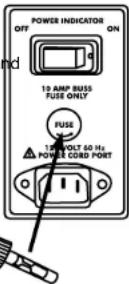
Figure 5
- Make sure the Fuse is not blown. The Fuse is located on the right side of the unit directly above the Power Cord Port. Turn "OFF" a unplug the Vacuum Sealer. Twist off and remove the Fuse Cap. Remove and check the Fuse. The thin metal band in the center of the Fuse should be clean and unbroken. If it is burned and/or broken, replace it with a new Fuse (10 Amp). Replace the Fuse Cap.
- Make sure the Connector at the end of the Power Cord is plugged completely into the Power Cord Port.
- Make sure the Power Cord is not damaged. DO NOT use a damaged Power Cord. Call the Customer Service line information on part replacement.
- Try connecting the Power Cord Plug to another electrical outlet.
PREPARING VAC BAGS FROM A ROLL
- Make sure the Vacuum Sealer is in the "OFF" position. Attach the Vacuum Sealer to the power supply.
- Turn the Vacuum Sealer "ON".
- The "POWER" Light on the display, "POWER INDICATOR" Switch both will illuminate and the Internal Cooling Fan will run.
- Open the Vacuum Lid.
- Cut a vacuum bag to the length you want from a roll.
- Place either open end of the bag against the outer face of the Oval Vacuum Chamber Seal in the Vacuum Chamber (not in the Vacuum Chamber).
- Close the Vacuum Lid. The bag end should be sandwiched between the Vacuum Lid Seal and Seal Bar Heating Element. Make sure there are no wrinkles or creases in the bag in the sealing area.
- Press and hold the Vacuum Lid Handle down. You may need to continue holding the bag.
- Press the "START" Button (this will engage the Pump and the Heating Element). Press the Manual Seal Button to seal the vacuum bag.
- Sealing is complete when the Vacuum Chamber releases after a 3 second cooling period (the "COOL" Light will illuminate). The release is audible.
- Open the Vacuum Lid and remove the bag. DO NOT try to open the Vacuum Lid before the vacuum has released or unit damage may occur. Wait at least 20 seconds before sealing another bag to avoid overheating the unit.
- Turn the Vacuum Sealer "OFF" and unplug the Power Cord when you are done.
SERVICE INSTRUCTIONS
WARNING! Before cleaning, assembling or disassembling the Vacuum Sealer, make sure the Vacuum Sealer is OFF and the PLUG IS REMOVED FROM THE OUTLET/POWER SOURCE!
Some parts of the Vacuum Sealer may need replacing after repeated use. A Vacuum Sealer Maintenance Kit Sold Separately Model No. 08-0501-W) may be necessary for the Vacuum Sealer to properly function.
REPLACING THE OVAL VACUUM CHAMBER SEALS:
- Turn "OFF" the Vacuum Sealer and remove the Power Cord from the electrical outlet.
- Make sure the unit is completely cool.
- Open the Vacuum Lid
- Remove the Oval Vacuum Chamber Seal from the groove on the underside of the Vacuum Lid.
- Remove the Oval Vacuum Chamber Seal from the groove in the Plastic Vacuum Chamber.
GROUNDING INSTRUCTIONS
GROUNDING
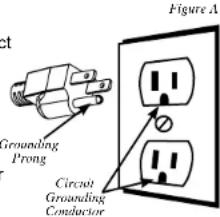
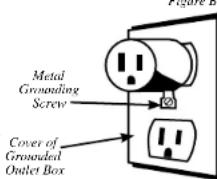
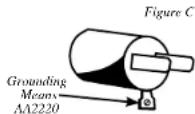
This appliance must be grounded while in use to protect the operator from electrical shock. The appliance is equipped with a 3-conductor cord and a 3-prong grounding type plug to fit the proper grounding-type receptacle. The appliance has a plug that looks like Figure A. An adaptor, Figure B, should be used for connecting Figure A plugs to two-prong receptacles. The grounding tab which extends from the adaptor must be grounded to a permanent ground such as a properly grounded outlet box as shown in Figure C using a metal screw.
EXTENSION CORDS
Use only 3-wire extension cords which have 3-prong grounding-type plugs and a 3-pole cord connector that accepts the plug from the appliance. Use only extension cords having an electrical rating not less than the rating of the appliance. Do not use damaged extension cords. Examine extension cord before using it and replace if damaged. Do not abuse extension cord and do not yank on any cord to disconnect. Keep cord away from heat and sharp edges.
POWER SUPPLY
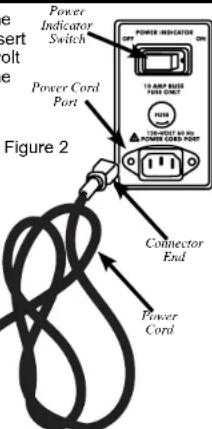
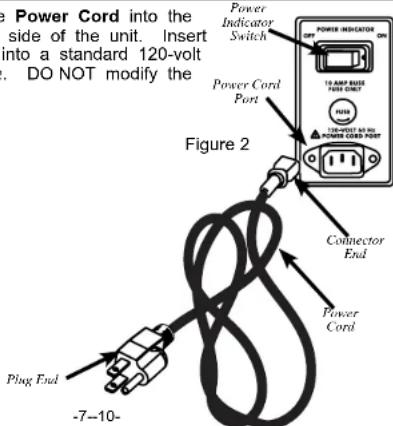
Insert the connector end of the Power Cord into the Power Cord Port on the right side of the unit. Insert the Plug on the Power Cord into a standard 120-volt grounded electrical outlet Figure 2. DO NOT modify the plug to fit an unsuitable outlet.
CONTROL BUTTONS
STOP BUTTON
Press the Stop Button stops to halt the vacuuming process Figure 3.
MANUAL SEAL BUTTON
Press the Manual Seal Button during the vacuuming process to initiate the seal (before the preset vacuum pressure is reached) Figure 3.
START BUTTON
Press the Start Button to initiate the vacuuming process (the Vacuum Sealer will automatically seal the bag when a preset vacuum pressure is reached) Figure 3.
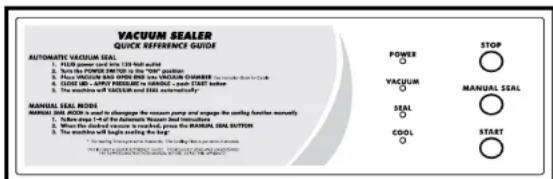
Figure 3
OPERATING INSTRUCTIONS
WARNING! Before cleaning, assembling or disassembling the Vacuum Sealer, make sure the Vacuum Sealer is OFF and the PLUG IS REMOVED FROM THE OUTLET/POWER SOURCE!
• CAUTION: The Seal Bar Heating Element and Vacuum Lid Seal get HOT! Avoid touching them. Be careful while loading bags into the Vacuum Chamber.
• DO NOT try to open the Vacuum Lid before the vacuum has released or unit damage may occur.
- Wait at least 20 seconds between cycles to avoid overheating the unit.
- DO NOT allow liquids to be sucked into the Vacuum Port or unit damage may occur. Press the "Stop" Button if you must. If liquids are problematic, reduce the amount of product in the bag or seal the bag (by pressing the "Manual Seal" Button) before liquids reach the Vacuum Port. If you do this, beware that the bag may not be completely evacuated of air.
• The Vacuum Sealer is ONLY intended to be used with VACUUM BAGS. For best results, only use the recommended vacuum bags. DO NOT USE HOUSEHOLD BAGS! Any other uses of the Vacuum Sealer, other than the uses described in this booklet, could potentially damage the appliance and void the warranty!
- Make sure the Vacuum Sealer is in the "OFF" position. Attach the Vacuum Sealer to the power supply.
- Turn the Vacuum Sealer "ON".
-
The "POWER" Light on the display, "POWER INDICATOR" Switch both will illuminate and the Internal Cooling Fan will run.
-
Open the Vacuum Lid.
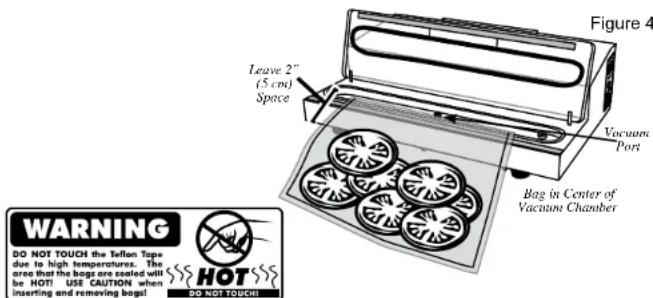
- Fill a vacuum bag with the product you want to seal. Leave at least 2" (5 cm) of space between the open end of the bag and product figure 4.
- Load the open end of the bag into the Lower Vacuum Chamber. Center the bag in the Lower Vacuum Chamber. Place the bag close to, but do not cover, the Vacuum Port. Be careful not to touch either strip of Teflon Tape which may be HOT from a previous heating cycle.
- Close the Vacuum Lid. Make sure there are no folds or creases in the bag in the sealing area.
- Press down on the Vacuum Lid Handle to form a tight seal so the Vacuum Chamber can be evacuated.
- Press the "START" Button to initiate the vacuuming process (the "VACUUM" Light will illuminate). Release the Vacuum Lid Handle at the first sign of bag collapse. The Vacuum Sealer will automatically seal the bag when a preset vacuum pressure is reached in the Vacuum Chamber. Sealing lasts for 3 seconds (the "SEAL" Light will illuminate).
- To manually seal a bag (i.e. before it is done automatically), press the Manual Seal Button at any time during the vacuuming process.
- You can stop the vacuuming process at any time by pressing the "STOP" Button.
- Sealing is complete when the Vacuum Chamber releases after a 3 second cooling period (the "COOL" Light will illuminate). The release is audible.
- Open the Vacuum Lid and remove the bag. DO NOT try to open the Vacuum Lid before the vacuum has released or unit damage may occur. Wait at least 20 seconds before sealing another bag to avoid overheating the unit.
- Turn the Vacuum Sealer "OFF" and unplug the Power Cord when you are done.
NOTE: The Vacuum Sealer is ONLY intended to be used with VACUUM BAGS. For best results, only use the recommended vacuum bags. DO NOT USE HOUSEHOLD BAGS! Any other uses of the Vacuum Sealer, other than the uses described in this booklet, could potentially damage the appliance and void the warranty!



- SAVE THESE INSTRUCTIONS
- WESTON WARRANTY INFORMATION SAVE THIS WARRANTY INFORMATION FOR YOUR RECORDS
- WESTON WARRANTY CARD
- FOOD SAFETY
- COOK
- SEPARATE
- CLEAN
- CHILL
- IMPORTANT SAFETY RULES
- WARNING
- VACUUM PACKAGING GUIDELINES
- YEAST & BACTERIA
- COOKING & HEATING
- STORAGE LIFESPAN GUIDELINES
- PROTECTIVE TAPE
- THERE ARE TWO (2) FACTORY INSTALLED STRIPS OF TEFLON TAPE ON THE VACUUM SEALER. DO NOT REMOVE THE TAPE
- CLEANING INSTRUCTIONS
- VACUUM CHAMBER SEALS
- COOLING FAN
- THERMAL OVERLOAD PROTECTOR
- LIMIT SWITCH
- REPLACING THE TEFLON TAPE
- REPLACING THE FUSE
- PREPARING VAC BAGS FROM A ROLL
- SERVICE INSTRUCTIONS
- REPLACING THE OVAL VACUUM CHAMBER SEALS
- GROUNDING INSTRUCTIONS
- GROUNDING
- EXTENSION CORDS
- POWER SUPPLY
- CONTROL BUTTONS
- STOP BUTTON
- MANUAL SEAL BUTTON
- START BUTTON
- OPERATING INSTRUCTIONS
- WARNING! BEFORE CLEANING, ASSEMBLING OR DISASSEMBLING THE VACUUM SEALER, MAKE SURE THE VACUUM SEALER IS OFF AND THE PLUG IS REMOVED FROM THE OUTLET/POWER SOURCE
Brand : Weston
Model : PRO-2200
Category : Vacuum Sealer