S5GONGB13 - Hot plate Sandstrøm - Free user manual and instructions
Find the device manual for free S5GONGB13 Sandstrøm in PDF.


| Product Type | Portable Electric Stove |
| Brand | Sandstrøm |
| Model | S5GONGB13 |
| Heating Element | Single Cast Iron Hot Plate |
| Power Source | AC 220-240V, 50/60Hz |
| Power Consumption | 1500W |
| Temperature Control | Adjustable Knob |
| Dimensions (W x D x H) | 30 x 30 x 10 cm |
| Weight | 2 kg |
| Cooking Surface Material | Cast Iron |
| Indicator Light | Power On Indicator |
| Overheat Protection | Yes, Auto Shut-Off |
| Cleaning | Wipe with damp cloth; do not immerse |
| Included Accessories | Power Cord, Manual |
| Certifications | CE, RoHS |
| Usage | Indoor use only |
| Warranty | 2 Years |
Frequently Asked Questions - S5GONGB13 Sandstrøm
User questions about S5GONGB13 Sandstrøm
0 question about this device. Answer the ones you know or ask your own.
Ask a new question about this device
Download the instructions for your Hot plate in PDF format for free! Find your manual S5GONGB13 - Sandstrøm and take your electronic device back in hand. On this page are published all the documents necessary for the use of your device. S5GONGB13 by Sandstrøm.
USER MANUAL S5GONGB13 Sandstrøm
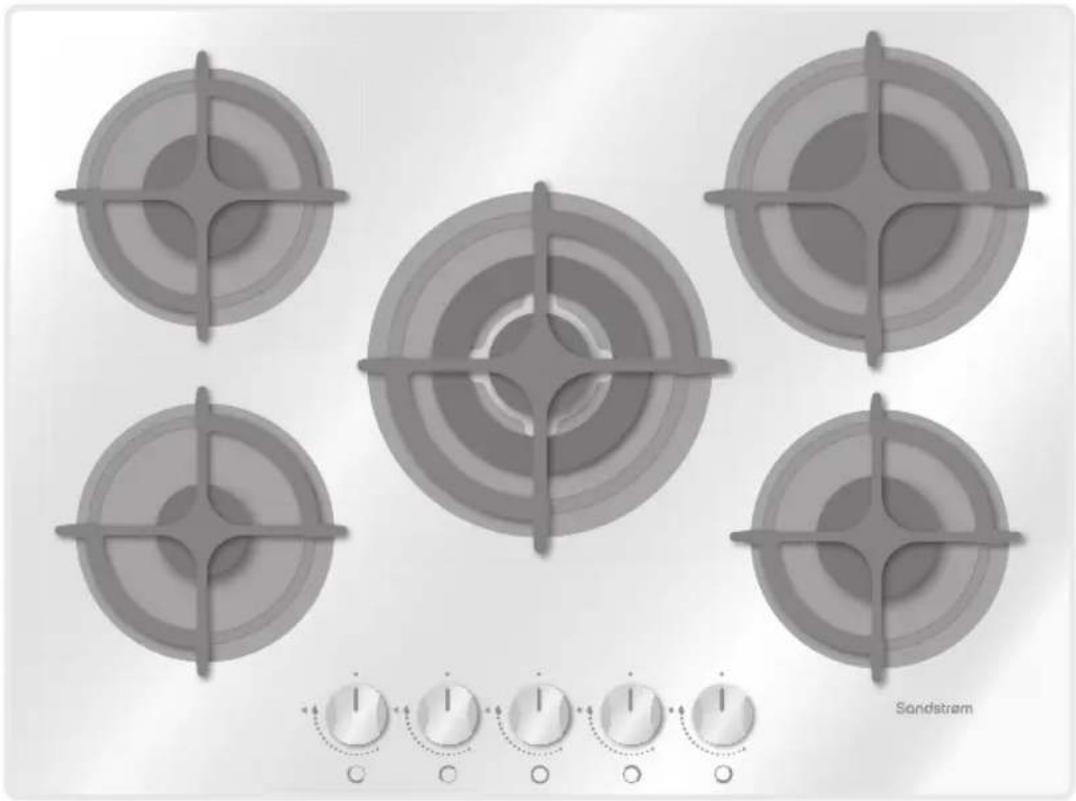
Instruction Manual 5 Burner Gas Hob
S5GONGW13/S5GONGB13
natural_image
Five identical gas stove covers arranged in a grid, with a central kiln and a dashed dial labeled 'Sandstrum' below (no text on covers or instruments)Contents
Safety Warnings....4
Unpacking 6
Product Overview 7
Main Unit....7
Control Panel 7
Before Using Your New Hob 8
Lighting the Hob 8
Manual Ignition (in case of electricity failure) 8
Flame Failure Safety Feature 9
If the Burner Does Not Light 9
If the Flame is Irregular 9
Cookware Guidelines 10
Cleaning and Maintenance....11
Cleaning Burner Parts and Pan Supports ....12
Replacing the Burners....12
Hob Controls....12
Hints and Tips....13
Specifications....14
Nominal Heat Input Chart....14
Installation....15
Ventilation....15
Location....16
When the Hob is First Installed....17
Fitting....17
Fitting the Hob into the Worktop 18
Electrical Connection....19
Gas Connection....20
Check the Hob After Installation & Before Using 20
Conversion from NG to LPG or from LPG to NG 21
Method 21
Adjusting the Gas Rate 21
Burner Configuration Table 22
Safety Warnings
IMPORTANT SAFETY INSTRUCTIONS READ CAREFULLY AND KEEP FOR FUTURE REFERENCE
- This appliance must be installed by a qualified Gas Safe registered engineer. The manufacturer is not responsible for any damage caused by incorrect installation.
- Check whether there is any damage to the appliance after you have unpacked it. If any damage is found, do not use the appliance and contact the store where you purchased it.
- This appliance is for indoor domestic use only.
- This appliance is for cooking purposes only. It must not be used for other purposes, for example room heating.
- The hob is fitted with a moulded mains plug. The mains plug must remain accessible or a switch providing full disconnection incorporated in the fixed wiring.
- If the mains cable gets damaged, it should be replaced by an authorized service agent or qualified electrician in order to avoid a hazard.
- The hob must be used in a well ventilated location and installed on a flat/level surface.
- Only operate your appliance in a dry atmosphere.
- Keep the electrical cables of your other appliances away from hot areas; do not let them touch the appliance.
- Ensure that the appliance is switched off at the mains supply switch and allowed to completely cool down before cleaning or performing any maintenance to avoid the possibility of an electric shock or burns.
-
The use of a gas cooking appliance results in the production of heat, moisture and products of combustion in the room in which it is installed. Ensure that the kitchen is well ventilated especially when the appliance is in use. Keep natural ventilation holes open or install a mechanical ventilation device (mechanical extractor hood).
-
Prolonged intensive use of the appliance may call for additional ventilation, for example opening of a window, or more effective ventilation, for example increasing the level of mechanical ventilation where present.
- This appliance is not intended for use by persons (including children) with reduced physical, sensory and mental capabilities, or lack of experience and knowledge, unless they have been given supervision or instruction concerning the use of the appliance by a person responsible for their safety.
- Cleaning and user maintenance shall not be made by children without supervision.
- Children should be supervised to ensure that they do not play with the appliance.
- The appliance and its accessible parts become hot during use. Young children should be kept away.
- Unattended cooking on a hob with fat or oil can be dangerous and may result in fire. NEVER try to extinguish a fire with water, but switch off the appliance and then cover the flame e.g. with a lid or a fire blanket.
- Danger of fire: Do not store items on the cooking surfaces.
- When the hob is hot never touch any parts that get hot. Allow the hob to cool before touching these parts.
- Before starting to use your appliance, keep curtains, tulle/netting, paper or flammable materials away from your appliance.
- Do not keep combustible or flammable things on or near the appliance.
- Do not use steam cleaners for cleaning the appliance.
- The appliance is not intended to be operated by means of an external timer or separate remote-control system.
Thank you
Thank you for purchasing your new Sandstrøm Gas Hob. Like all Sandstrøm products our gas hobs take inspiration from traditional Scandinavian values of quality and functionality, combined with modern innovations and a flair for simply looking good. These operating instructions will help you use it properly and safely. You must spend some time reading this manual in order that you fully understand all the operational features it offers. Read all the safety instructions carefully before use and keep this manual for future reference.
Unpacking
Remove all packaging from the unit. Retain the packaging. If you dispose of it, please do so according to local regulations.
The following items are included:
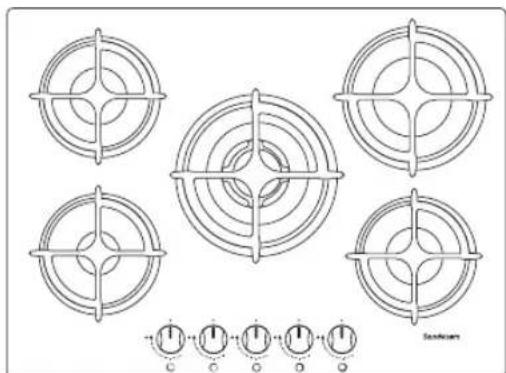
natural_image
Five circular mechanical components with cross-sectional views, arranged in a grid pattern (no text or symbols)Main Unit
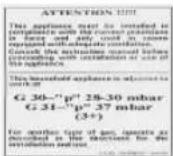
LPG Replacement Plate Sticker x4

LPG Nozzle x4
natural_image
Circular diagram with concentric gray bands, no text or symbols presentSelf Adhesive
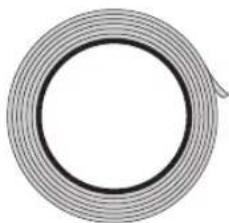
Sealing Tape x1
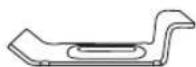
Fixing Bracket x4
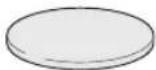
90 mm
Burner Cap x1
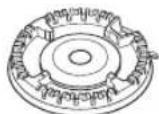
90 mm
Burner Ring x1
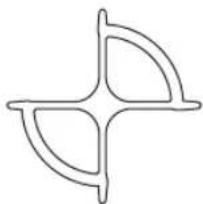
natural_image
Symmetrical abstract line drawing with four curved segments forming a cross-like pattern (no text or symbols)125 mm Pan Support x1
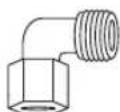
Elbow Connector with Washer x1
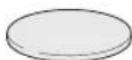
65 mm
Burner Cap x2
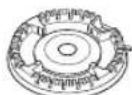
65 mm
Burner Ring x2
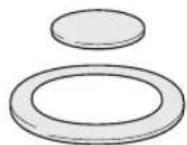
125 mm Inner & Outer Cap x1
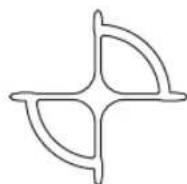
90 mm
Pan Support x1
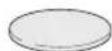
45 mm
Burner Cap x1
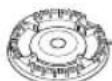
45 mm
Burner Ring x1
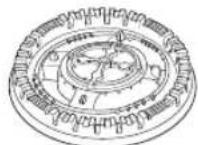
125 mm
Burner Ring x1
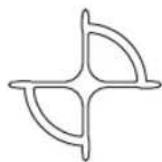
65/45 mm
Pan Support

If items are missing or damaged, please contact Partmaster (UK only). Tel: 0844 800 3456 for assistance.
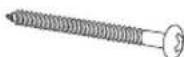
Screws x4
Product Overview
Main Unit
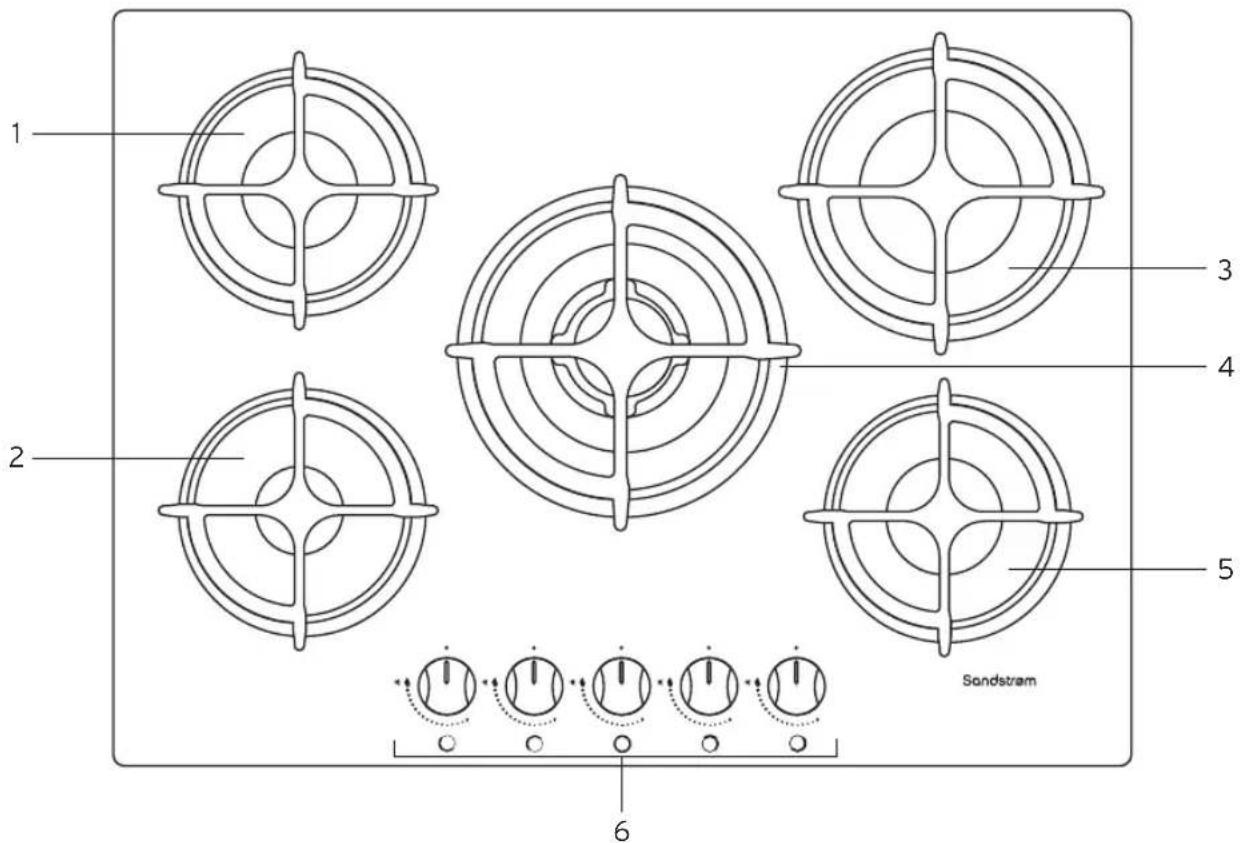
- Standard Burner (65 mm)
- Small Burner (45 mm)
-
Large Burner (90 mm)
-
Extra Large Burner (125 mm)
- Standard Burner (65 mm)
- Control Panel
Control Panel
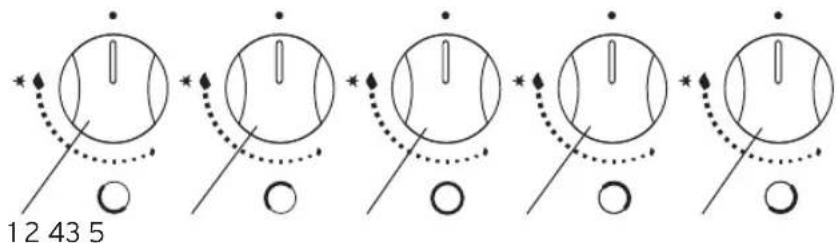
- Selects front left burner
- Selects back left burner
-
Selects centre burner
-
Selects back right burner
- Selects front right burner
Before Using Your New Hob
Before using your new hob, please:
- Read this manual fully, taking special note of the 'Safety Warnings' section.
- Plug the hob into the electricity supply and turn it on so that the ignition circuit will work.
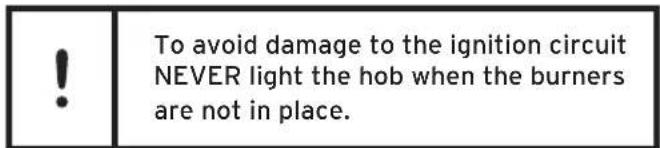
!
- This appliance is for cooking purposes only. It must not be used for other purposes, for example room heating.
- The use of a gas cooking appliance results in the production of heat, moisture and products of combustion in the room in which it is installed. Ensure that the kitchen is well ventilated especially when the appliance is in use: keep natural ventilation holes open or install a mechanical ventilation device (mechanical extractor hood). Prolonged intensive use of the appliance may call for additional ventilation, e.g. opening of a window, or more effective ventilation, e.g. increasing the level of mechanical ventilation where present.
Lighting the Hob
- Choose the control for the burner you intend using.
- Press the burner control in lightly and turn anti-clockwise to the large flame symbol ♦.
- Press the burner control in fully. The spark ignition will operate and gas will be released whilst you hold in the control.
Continue to hold the control in for approximately 5 - 10 seconds after the burner has lit before adjusting to the desired setting. Releasing the control too soon will extinguish the flame due to the flame failure safety feature.

- Adjust the flame anywhere between the ◆ and positions. Do not adjust the flame between the and Off '●' position.
- After ignition, check the flames visually. If you see yellow tipped, lifted or unstable flames; turn the control off, and check the assembly of the burner rings and caps. Allow these to cool before touching. Also, make sure that no liquid has entered into the burner cups. If the burner flames go out accidentally, turn the burners off, and do not try to light them again for at least one minute (to allow the gas to disperse).
- When turning the hob off, turn the control in a clockwise direction. If the control stops at the maximum flame mark, push the control in slightly and continue turning clockwise to the off mark, '●'.

- If the burner does not light within 15 seconds, turn the control off and wait for at least one minute before trying again.
- To switch the burner off, turn the control clockwise to the off position.
• After use, always turn the controls to the off position.
Manual Ignition (in case of electricity failure)
- Choose the control for the burner you intend using.
-
Press the burner control in lightly and turn anti-clockwise to the large flame symbol ♦.
-
Hold an ignition source (e.g. candle lighter) close to the side of the burner and press the burner control in fully to release and light the gas.
The control must still be held down for approximately 5 - 10 seconds after the burner has lit. Releasing the controls too soon will extinguish the flame.
- Adjust the controls as required.
Flame Failure Safety Feature
The flame supervision device (FSD) probe cuts off the gas supply to the burner within one minute if the flame is extinguished.
If the flames are accidentally extinguished, turn off the burner and do not try to light it again for at least one minute (to allow the gas to disperse).
When lighting the burner, hold down the control for approximately 5 - 10 seconds after the burner has lit. Releasing the control too soon will extinguish the flame.
If the Burner Does Not Light
If the burner does not light, check that:
- The hob is connected to the electrical supply and the supply is switched on.
• The gas is turned on. - You have held down the control for at least 5 - 10 seconds after the flame has been lit.
- The ignitors are sparking. If the ignitors are not sparking, they may be dirty or wet. Clean them gently with a small nylon brush such as a toothbrush as shown opposite and allow to dry fully. Ensure the electrical supply has been disconnected before cleaning.
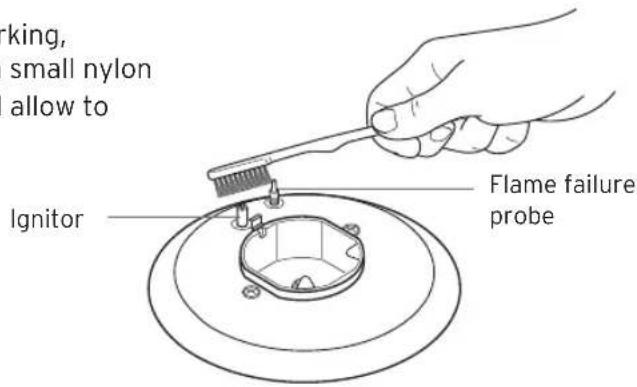
If the Flame is Irregular
If the flame is yellow or irregular, check that the burner parts, including the burner cap (allow this to cool before touching) are:
- Clean and dry.
- Positioned correctly. See 'Replacing the Burners'.
• Also see 'Hints and Tips'.
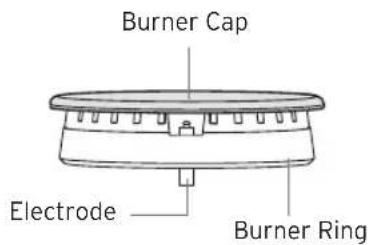
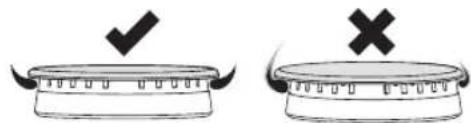
natural_image
Two identical diagrams showing a plate with a checkmark and an inverted cross, no text or symbols present.Cookware Guidelines
To get the best out of your hob, follow these simple suggestions:
- Use saucepans with thick flat bottoms. Food in a saucepan with an uneven bottom will take longer to cook.
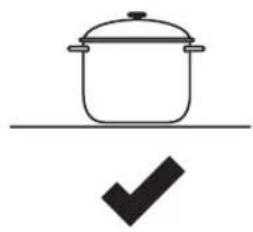
natural_image
Simple line drawing of a cooking pot with a checkmark below it (no text or symbols)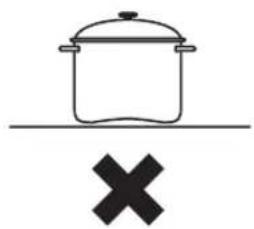
natural_image
Simple line drawing of a cooking pot above a cross symbol (no text or labels)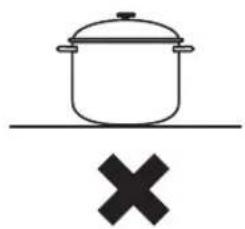
natural_image
Simple line drawing of a cooking pot above a horizontal line with a black X symbol below (no text or labels)- Do not use large saucepans or frying pans that overlap the edges of your hob as this can deflect heat onto your worktop and damage the surface, and may also cause a hazard.
• Always make sure saucepans are stable. Using very heavy saucepans may bend the trivet/pan support or deflect the flame.
• Always lift the cookware when removing from the hob, do not drag.
- When you need to boil, simmer or fry food, first set the temperature to the High position. Once the food is boiling, reduce the temperature to maintain a steady heat to cook your food thoroughly. Doing this will reduce the cooking time and save energy.
- Pan sizes should be as per the table shown below.
| Burners Minimum Diameter Maximum Diameter | ||
| Extra Large 24 cm 26 cm | ||
| Large 20 cm 22 cm | ||
| Standard 16 cm 18 cm | ||
| Small 10 cm 14 cm | ||
Do not use cooking vessels on the hob that overlap its edges.

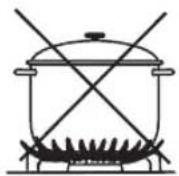
• Using a lid will reduce cooking times and save energy.
- Choose cookware of the proper size, material and construction.
- Minimise the amount of liquid or fat to reduce cooking times.
- Select the proper temperature setting for the cooking task.
Avoid using pans of the maximum diameter on both the large and extra large burners together as these sizes will not allow the pans to sit centrally above the gas flame.
Cleaning and Maintenance

• To avoid shock hazard, always disconnect the hob from the electrical supply.
- Steam Cleaners must not be used to clean this product.
Cooking Part Cleaning Method Important
| Trivets/pan supports, burner caps and enamel surfaces | Hot soapy water and nylon scourerNon-abrasive cream cleaners | Always allow hob parts to cool completely before cleaning themAlways apply minimal pressure with cleanersRemove spills as soon as the hob is cool to avoid the spills becoming burnt on |
| Burner parts • Hot soapy waterTo clear the holes use a stiff nylon brushNon-abrasive cream cleaners | Ensure burner parts are dry before refittingReassemble the burner parts correctly | |
| Controls • Hot soapy water and a soft cloth • Care must be taken if removing the controls from the shaftsIf cleaning the controls whilst they are attached to the shaft, ensure liquid does not enter the appliance | ||
| Hob surfaces • Soak stains under a hot soapy cloth, rinse and dry thoroughlyNon-abrasive hob surface cleaners. Regular use of a polish designed for use with glass hobs will reduce fingerprints and other marks | Never use harsh/abrasive cleaning agents as they will damage the finishChlorine or chlorine compounds in some cleaners are corrosive to hob surface and may damage the appearance of your hob. Check the label on the cleaner before using | |
| Electrodes • Toothbrush • A dirty or wet electrode will prevent | the burner lighting efficiently. Ensure the appliance has been disconnected from the electrical supply before cleaning or drying | |
Regular Maintenance
| Daily | Clean gas hob as per the instructions |
| Monthly | Remove all burner parts, and clean using a non-abrasive detergent. Rinse in cold water, dry thoroughly, and replaceClean the ignitor and probe carefully, using a toothbrush |
| Yearly | Contact your local authorized gas Service Agent to perform a thorough check on all gas components on the gas hob |
Cleaning Burner Parts and Pan Supports
You can remove and clean these parts with hot soapy water or non-abrasive detergents.
Clean spills regularly before they become burnt on, especially spills of vinegar, coffee, milk, salt water, lemon or tomato juice.
Do not wash these parts in a dishwasher.
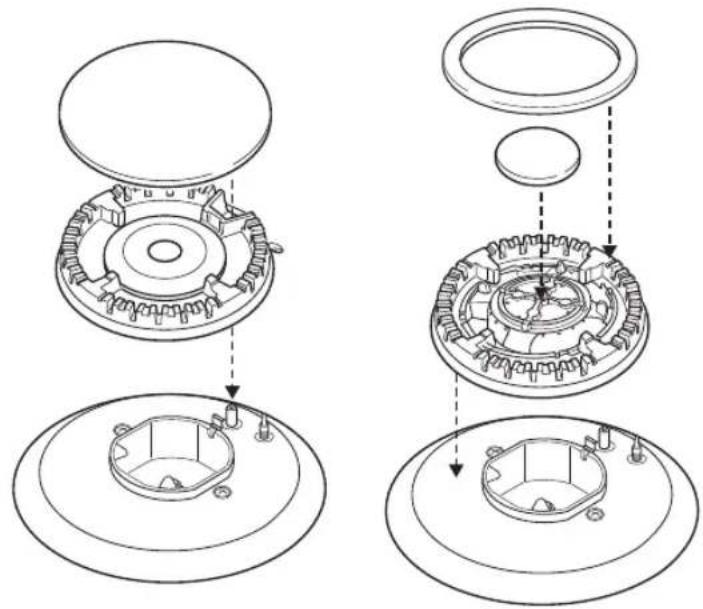
After cleaning, check that the burner rings and burner caps are dry before replacing correctly.
It is very important to check that the burner rings and burner caps have been correctly positioned.
Failure to do so can cause serious problems.
Replacing the Burners
Check that:
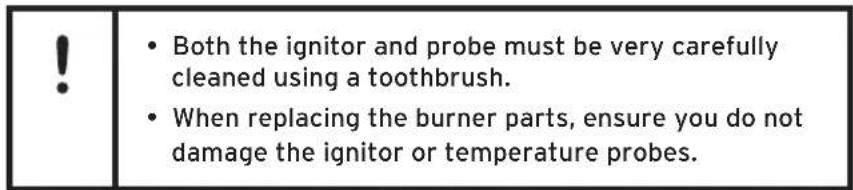
• The ignitor is always clean to ensure trouble-free sparking.
- The FSD probe is always clean to ensure correct operation of the safety valves.
- All the burner parts are assembled correctly.
Hob Controls
These parts are not user serviceable.
If you have problems with the hob controls (gas taps), call your Authorised Service Centre.
Hints and Tips
| Problem Possible Solutions | |
| My burner does not light • Check | the hob is plugged in and the electricity is switched onCheck the gas supply valve is turned on and the gas supply to the house is working. You should hear the gas when you turn a burner onEnsure the control is held down for 5 - 10 seconds after the burner has lit, as releasing the control too soon will extinguish the flameThe ignitors may be dirty. Clean gently with a small nylon brush such as a toothbrushThe burner parts may not be located properly. Check the assembly and make sure the burner cap is sitting flat |
| My burner flames are yellow or hard to start | The burner parts may not be located properly. Check the assembly and make sure the burner cap is sitting flatIf you use bottled gas this may indicate you are getting near the end of the bottleCheck the burner parts are clean and dryThe gas pressure may not be at the correct level. Check with your approved service agentYour hob may not be set up for the gas you are using. Check this with your approved service agent or installer |
| One of my burners has an uneven flame | Check the burner parts are clean and dry. Check the assembly and make sure the burner cap is sitting flat |
| My burner goes out when I let go of the control | The hob has a safety feature called ‘Flame Supervision Device (FSD)’. Hold down the control for approximately 5 - 10 seconds after the burner has lit. Releasing the control too soon will extinguish the flame. See the ‘Flame Failure Safety Feature’ section |
| The flame goes out at low settings | The gas supply pressure may be low. Check this with your approved service agentThe low setting may have been adjusted incorrectly. Check this with your approved service agent |
| My burners do not turn down much (when running on bottled gas or LPG) | Your burners may not have been adjusted correctly. Check this with your approved service agent |
| The flame tips are very yellow • | Call your approved service agent |
| There are objectionable odours • | Ensure the hob and burners are clean and dryCall your approved service agent |
| The flame appears to lift off the burner | Call your approved service agent |
| There is an electricity failure • If | there is an electricity failure, you can still use your hob.See the ‘Manual Ignition’ section for more information |
Specifications
| Model No. S5GONGW13/S5GONGB13 | |
| Rated Voltage (V) | 220 - 240 |
| Rated Frequency (Hz) | 50 |
| Power Consumption (W) | 1.1 |
| Gas Type | NG or LPG (Default set to NG) |
| Net Weight (kg) | 15 |
| External Product Dimensions (cm)Width x Depth | 68 x 50 |
| Internal Product Dimensions (cm)Width x Depth | 55 x 47 |
Features and specifications are subject to change without prior notice.
Nominal Heat Input Chart
| Burner Power Output | |
| Extra Large Burner (120 mm) 3100W | |
| Large Burner (90 mm) 2800W | |
| Standard Burner - back left (65 mm) 1750W | |
| Standard Burner - front right (65 mm) 1400W | |
| Small Burner (45 mm) 1000W | |
Installation
!
- This appliance must be installed and serviced only by a suitably qualified and Gas Safe Registered engineer, and in accordance with the current editions of the following standards and regulations or other locally applicable regulations:
Gas Safety (Installation and Use) Regulations Building Regulations
British Standards (BS 5440, BS 6172 and BS 6891)
Regulations for Electrical Installation (BS 7671, (Latest Edition))
- Please, ensure that, once the hob is installed, it is easily accessible for the engineer in the event of a breakdown
-
This hob uses and is ready to use NATURAL GAS only and cannot be used with any other gas without modification. This appliance is manufactured for conversion to LPG after fitting new injectors and making adjustments. Refer to “replacement of burner injectors” section for details.
-
Prior to installation, ensure that the local distribution conditions (nature of gas and pressure) and the adjustment of the product are compatible. The adjustment conditions for this product are stated on the data plate.
- Ensure that there is a mains socket within reach of the hob cable (1500 mm from the rear left of the product). This must be accessible after installation or an all-pole disconnection switch must be provided in the fixed wiring in accordance with the local wiring regulations. The mains cable must not touch any hot parts.
- Ensure that your kitchen worktop is designed for use in a kitchen.
Ventilation
- This appliance is not connected to a combustion products evacuation device. It should be installed and connected in accordance with current installation regulations. Particular attention should be given to the relevant requirements regarding ventilation.
- The appliance should be installed in a room or space with an air supply in accordance with the latest edition of BS5440-2.
- For rooms with a volume of less than 5m^-3 - permanent ventilation of 100cm^2 free area will be required.
- For rooms with a volume of between 5m^-3 and 10m^3 a permanent ventilation of 50cm^2 free area will be required unless the room has a door which opens directly to the outside air in which case no permanent ventilation is required.
- For rooms with a volume greater than 10m^-3 – no permanent ventilation is required.
!
- Regardless of room size, all rooms containing the appliance must have direct access to the outside air via a window that opens or equivalent.
- Where there are other fuel burning appliances in the same room, the latest edition of BS 5440-2 should be consulted to determine the correct amount of free area ventilation requirements.
Location
- The hob should be located in a kitchen or kitchen/diner, but not in a bathroom, shower room, garage or a bed sitting room with a volume less than 20 cubic metres.
- Before making the cut out in the worktop ensure that there is a minimum distance of 50 mm between the rear edge of the hob and the wall.
- A minimum distance of 175 mm must be left between the side edges of the hob and any adjacent cabinets or walls.
- The minimum distance combustible material can be fitted above the hob in line with the edges of the hob is 450 mm.
- The minimum distance combustible material can be fitted directly above the hob is 760 mm.
- The furniture walls adjacent to the cooker must be made of heat resistant material (check with your furniture supplier). The veneered synthetic material and the glue used must be resistant to a temperature of 150^ in order to avoid ungluing or deformations.
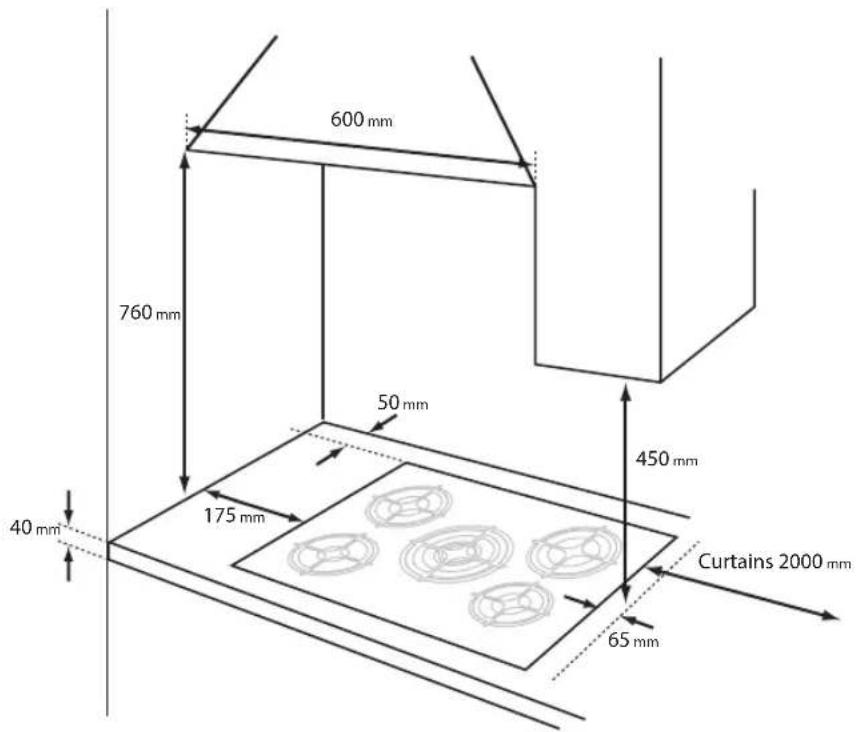
When fitting the hob with a cooker hood above
!
The use of a gas cooking appliance results in the production of heat, moisture and products of combustion in the room in which it is installed. Ensure that the kitchen is well ventilated especially when the appliance is in use: keep natural ventilation holes open or install a mechanical ventilation device (mechanical extractor hood). Prolonged intensive use of the appliance may call for additional ventilation, e.g. opening of a window, or more effective ventilation, e.g. increasing the level of mechanical ventilation where present.
When the Hob is First Installed
Once the hob has been installed, it is important to remove any protective materials, which were put on in the factory.
Any gas installation must be carried out by a Gas Safe Registered engineer.
The manufacturer will not accept liability, should the above instructions or any of the other safety instructions incorporated in this manual are ignored.
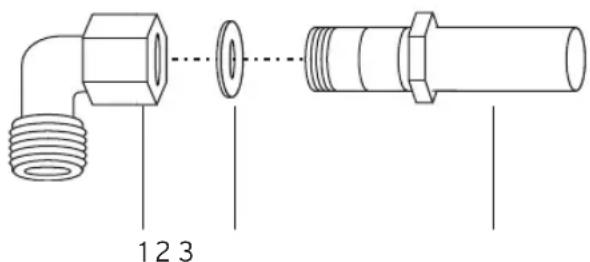
Connect the threaded elbow to the gas supply input if required. The washer (supplied) must be fitted between these components, if any adjustments are made ensure parts are screwed together without using excessive force.
Fitting
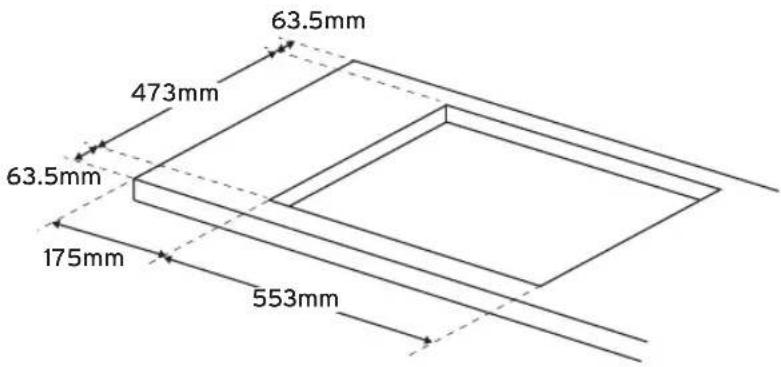
The dimensions of the cut-out are given in the diagram.
Width: 553 mm Depth: 473 mm
Product Overall Dimensions
Width: 680 mm Depth: 500 mm
Fitting the Hob into the Worktop
!
When fitted, the metal base of the hob should rest against the worktop. Do not allow the glass surface of the hob to rest against the worktop as it could cause damage to the glass.
- Remove all removable parts from the hob.
- Turn the hob upside down and place it on a soft surface to avoid scratching.
- Measure the width and depth of the outer edge of the hob glass and cut the self adhesive sealing tape (supplied) to the correct lengths.
- Stick the sealing tape to the outer edge of the underside of the hob. Ensure the strips of tape fit together at the corners but do not overlap.
- Remove the backing strip from the sealing tape and carefully fit the hob into the aperture.
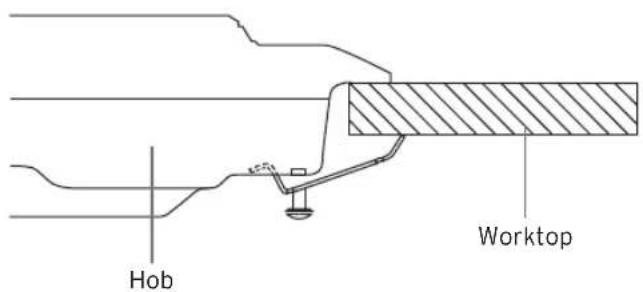
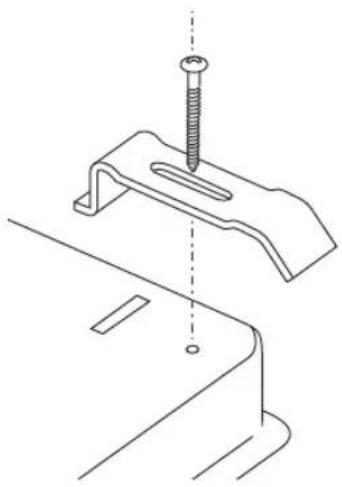
- Fit the four brackets to the underside of the hob. Insert the hooked edge of the bracket into the slot on the underside of the hob and secure the bracket in place with the screw. Replace the procedure for the other three brackets.
- Adjust the position of the brackets depending on the thickness of the worktop as indicated below and tighten the screws evenly.
natural_image
Technical line drawing of a mechanical bracket with a screw inserted (no text or symbols)!
If the appliance is to be installed above a cupboard or drawer it is absolutely essential that you place a separating board between the base of the appliance and the drawer unit. This must be fixed in place below the hob (at 70 mm measured from the top of the worktop) to prevent accidental contact with the bottom of the hob which may be hot.
Electrical Connection
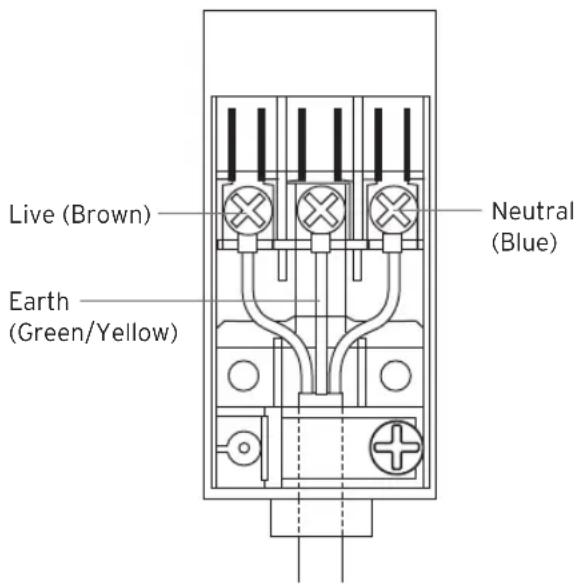
The flexible mains lead is supplied connected to a BS1363 fused plug, having a fuse of 3Amp capacity. If this plug does not fit the socket in your home, it should be replaced with a suitable plug as outlined below.
Should the mains lead of the appliance ever require replacing, we recommend that this be carried out by a qualified electrician who must replace it with a lead of the same size and temperature rating.
The wires in the mains lead are coloured in accordance with the following code:

Green & Yellow = Earth
Blue = Neutral
Brown = Live
The wire which is coloured green and yellow must be connected to the terminal marked E ( 12 ) Earth.
The wire which is coloured blue must be connected to the terminal marked N (Neutral).
The wire which is coloured brown must be connected to the terminal marked L (Live).
Ensure all screws are adequately tightened. Do not over tighten as you may risk damaging the screw threads.
The plug and socket must be accessible after installation, or an all-pole disconnection switch provided in the fixed wiring in accordance with the local wiring regulations.
Gas Connection

Any gas installation must be carried out by a Gas Safe Registered engineer.
Connection to the gas supply should be with either rigid or semi-rigid pipe, i.e. steel or copper. The connection should be suitable for connecting to 1/2 inch BSP male thread. When the final connection has been made, it is essential that a thorough leak test is carried out on the hob and installation. Ensure that the main connection pipe does not exert any strain on the hob.
It is important to install the elbow correctly, with the shoulder on the end of the thread, fitted to the hob connecting pipe. Failure to ensure the correct assembly will cause leakage of gas.
- 90 degree connection elbow
- Washer
- End of manifold with 1/2 inch BSP male thread
Check the Hob After Installation & Before Using
When the hob has been fully installed it will be necessary to check the minimum flame setting. To do this, follow the step below,
- Turn the gas tap to the maximum position and ignite
- Set the gas tap to the minimum flame position then turn the control from minimum to maximum several times. If the flame is unstable or is extinguished adjust the gas rate.
- Perform a gas tightness test.
Conversion from NG to LPG or from LPG to NG
The replacement/conversion of the gas hob should only be undertaken by a Gas Safe Registered Engineer. The hob is supplied for use with Natural Gas only and cannot be used on any other gas without modification. It can be converted from NG to LPG or LPG to NG providing the correct injectors are fitted and the gas rate is adjusted to suit.
Natural Gas
In the United Kingdom flexible connections must NOT be used for built in product, rigid or semi-rigid pipework must be used.
LP Gas
In the United Kingdom flexible type hoses must NOT be used for built in products, rigid or semi-rigid pipework must be used. Ensure it is suitable for use on LP Gas up to 50mbar pressure rise.
In all other countries this appliance must be installed in accordance with local regulations and standards.
Method
- Ensure that the gas taps are in the Off '' position
- Isolate the hob from the electrical supply
- Remove all pan supports, burner caps, rings, crowns and controls.
- With the aid of a 7 mm box spanner the burner injectors can then be unscrewed and replaced by the appropriate injectors. See the Burner Configuration Table for details. Note the size of the injector being removed to ensure the corresponding size of the new injector is used, NG vs LPG.
Adjusting the Gas Rate
This unit has been set at the factory for NG but can be checked after the correct pressure has been reached.
The bypass adjustment screw, which is located on the gas tap body, can be adjusted with the aid of a thin bladed screwdriver as follows:
- Ignite the burner and set the control to its minimum position.
- Remove the control. Also remove rubber seal if needed to gain easier access.
- FOR NG (G20 G25)
Rotate the screw slowly until a minimum regular flame is achieved.
(The flame will diminish when the screw is turned clockwise and increase when turned anti-clockwise.
FOR LP Gas (G30 G31)
Rotate the screw fully clockwise - this is the fixed turn down position for LP Gas.
- Upon completion stick the replacement rating plate sticker on the under side of the hob.
- Replace the rubber seal (if removed) and the control.
When the setting is right check regulation by quickly rotating the control from the maximum to the minimum delivery position. The flame must not go out and remain stable throughout the range.
Burner Configuration Table
| Gas Category G30/31 G20 | ||
| Normal Pressure (mbar) 28 - 30/37 20 | ||
| Extra Large Burner | ||
| Injector Diameter (mm) 0.90 1.21 | ||
| Nominal Rating (W) 3100 3100 | ||
| Consumption 225/222 gr/h 295 lt/h | ||
| Large Burner | ||
| Injector Diameter (mm) 0.83 1.17 | ||
| Nominal Rating (W) | 2800 | 2800 |
| Consumption | 204/200 gr/h | 267 lt/h |
| Standard Burner (front right) | ||
| Injector Diameter (mm) 0.58 | 0.85 | |
| Nominal Rating (W) | 1400 | 1400 |
| Consumption | 102/100 gr/h | 133 lt/h |
| Standard Burner (back left) | ||
| Injector Diameter (mm) 0.68 | 0.98 | |
| Nominal Rating (W) | 1750 | 1750 |
| Consumption | 127/125 gr/h | 167 lt/h |
| Small Burner | ||
| Injector Diameter (mm) | 0.51 | 0.75 |
| Nominal Rating (W) | 1000 | 1000 |
| Consumption | 73/71 gr/h | 95 lt/h |

KNOWHOW™
For general information about this appliance
and handy hints and tips, please visit
www.knowhow.com/knowledgebank or call 0844 5611234.
Partmaster
CO.uk
Visit Partmaster.co.uk today for the easiest way to buy electrical spares and accessories. With over 1 million spares and accessories available we can deliver direct to your door the very next day.
Visit www.partmaster.co.uk or call 0844 800 3456 (UK customers only)
Calls charged at National Rate.
This symbol on the product or in the instructions means that your electrical and electronic equipment should be disposed at the end of its life separately from your household waste. There are separate collection systems for recycling in the EU.
For more information, please contact the local authority or your retailer where you purchased the product.
DSG Retail Limited (Registered in England No. 504877), Maylands Avenue,
Hemel Hempstead, Hertfordshire HP2 7TG. UK
- Instruction Manual 5 Burner Gas Hob
- Contents
- Conversion from NG to LPG or from LPG to NG 21
- Safety Warnings
- IMPORTANT SAFETY INSTRUCTIONS READ CAREFULLY AND KEEP FOR FUTURE REFERENCE
- Thank you
- Unpacking
- Product Overview
- Before Using Your New Hob
- Lighting the Hob
- Manual Ignition (in case of electricity failure)
- Flame Failure Safety Feature
- If the Burner Does Not Light
- If the Flame is Irregular
- Cookware Guidelines
- Cleaning and Maintenance
- Cleaning Burner Parts and Pan Supports
- Replacing the Burners
- Hob Controls
- Hints and Tips
- Specifications
- Nominal Heat Input Chart
- Installation
- !
- Ventilation
- Location
- When the Hob is First Installed
- Fitting
- Product Overall Dimensions
- Fitting the Hob into the Worktop
- Electrical Connection
- Gas Connection
- Check the Hob After Installation & Before Using
- Conversion from NG to LPG or from LPG to NG
- Natural Gas
- LP Gas
- Method
- Adjusting the Gas Rate
- FOR LP Gas (G30 G31)
- KNOWHOW™
- Partmaster
- CO.uk
Brand : Sandstrøm
Model : S5GONGB13
Category : Hot plate