
OPR10 - Saucepans JATA - Free user manual and instructions
Find the device manual for free OPR10 JATA in PDF.


| Product Type | Pressure Cooker |
| Brand | Jata |
| Model | OPR10 |
| Capacity | 10 liters |
| Material | Stainless steel (pot), aluminum (lid) |
| Dimensions (approx.) | Diameter: 28 cm, Height: 25 cm |
| Weight (approx.) | 3.2 kg |
| Power Source | Stovetop (gas, electric, ceramic, induction compatible?) |
| Pressure Settings | High (II) and Low (I) pressure |
| Safety Features | Pressure indicator, pressure regulator valve, safety window, lid locking mechanism |
| Lid Opening | Automatic release: turn lid anticlockwise after pressure release |
| Pressure Release Methods | Natural release, quick release via valve, cold water release |
| Cooking Time (example) | Rice: 4-8 min, Beef: 8-11 min, Chickpeas: 15-20 min |
| Cleaning Instructions | Pot dishwasher safe; lid, handle, sealing ring hand wash only |
| Sealing Ring | Replaceable silicone ring |
| Spare Parts Available | Sealing ring, pressure regulator valve, pressure indicator |
| Reparability | User replaceable parts: valve, ring, indicator; professional repair for complex issues |
| Warranty | Standard manufacturer warranty (refer to manual) |
Frequently Asked Questions - OPR10 JATA
User questions about OPR10 JATA
0 question about this device. Answer the ones you know or ask your own.
Ask a new question about this device
Download the instructions for your Saucepans in PDF format for free! Find your manual OPR10 - JATA and take your electronic device back in hand. On this page are published all the documents necessary for the use of your device. OPR10 by JATA.
USER MANUAL OPR10 JATA

natural_image
Line drawing of a cooking pot with lid and handle (no text or symbols)OPR6 - OPR8 - OPR10
- Pressure regulator valve.
- Pressure indicator.
- Lid opening button.
- Lid handle for locking.
- Pot handle for locking.
- Lid.
- Security window.
- Sealing ring.
COMPOSANTS PRINCIPAUX

natural_image
Simple line drawing of a mechanical component with a base and stem, labeled Fig. A Fig. B (no text or symbols on the diagram itself)
natural_image
Illustration of hands holding a curved object, possibly a wheel or ring (no text or symbols visible)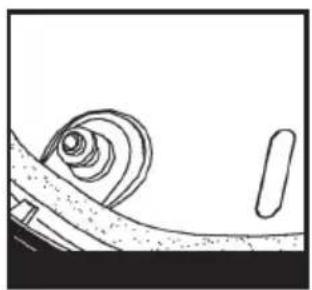
natural_image
Abstract line drawing of a curved, spiral-like shape with a small oval shape on the right side (no text or symbols)
natural_image
Diagram of a mechanical device with lever and handle, labeled Fig. D (no text or symbols on diagram itself)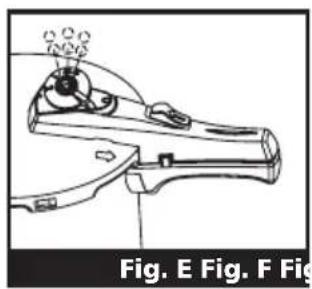
natural_image
Line drawing of a mechanical device with no visible text or symbols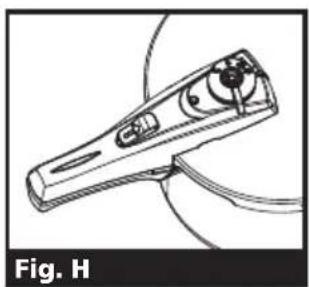
natural_image
Technical line drawing of a handheld device with a handle and control knob, labeled Fig. H (no text or symbols on the device itself)
natural_image
Line drawing of a mechanical device with no visible text or symbols
natural_image
Diagram of a mechanical device with rotating components and directional arrows (no text or symbols)ATENCIÓN
ESPAÑOL
- Carefully read these instructions before making the pressure cooker work and save them for future enquiries.
- Keep the pressure cooker away from children while it is using.
- Do not touch the hot parts. Always use the handles, specially if you have to move it when it is under pressure. If necessary, use gloves.
- Never use it to fry food with oil under pressure.
- Never fill it beyond "max" neither under the inner indication "min" showed inside the pot. For expanding food during cooking like rice, legumes, etc. do not fill it beyond its 12 capacity.
- If doughy food is being cooked, slightly shake the cooker before removing the lid to avoid splashing.
- If you are cooking some food with its skin that can blow up (tongue for instance), make sure they do not block the security elements of the lid. Do not burst the inflated meat because it could get burned.
- Do not use the pressure cooker in a conventional oven nor in the microwave.
- Do not use the pressure cooker with other purpose than the one it has been designed for.
- Never manipulate the security elements, excepted the given indications for its maintenance and cleaning.
- Before each use, check the valves are not obstructed and the sealing ring is properly placed.
- Make sure it is conveniently locked before heating it.
- Do not try to open the pressure cooker forcing it. Open it only when you are completely sure there is no air in the inside.
INSTRUCTIONS OF USE
- Before the first use clean the pressure cooker with water and soap.
- Check the pressure indicator (2) by turning the lid and pressing it in the middle with a needle or similar to check it works like a spring. (Fig A).
- With the lid up down place the sealing ring in the lid ensuring it is properly positioned.
- If the opening button (3) is placed in the closed position 🔒 place the silicone ring as showed in the (Fig. B).
- If the opening button (3) is situated in the opened position ⏻ the silicon ring must be placed as showed in (Fig. C).
- Before placing the lid on the pressure cooker be sure the opening lid (3) is in open position. Make coincide the indication on the lid with the mark placed in the handle of the pressure cooker for locking (5) and turn the lid clockwise until the end (Fig. D) Next place the opening button in the close position.
COOKING
- Place the pressure cooker on the stove on a maximum flame and the pressure regulator valve (1) in the position II (high pressure). The position I (low pressure) can be used to soft the food or to finish the cooking.
- In a certain time, the cooker's pressure will start to grow and the pressure indicator (2) will start to rise. During this period, some steam may appear through the pressure indicator (Fig. E).
- The pressure will continue growing up until start going out by the pressure regulator valve (1). The cooking times can be started to be counted from that moment.
- Reduce the flame of the stove until the steam flows from the valve (1). If you do not reduce the flame, the pressure will keep growing and the steam could go out intermittently by the security window of the lid (7). Reduce the heat.
OPENING THE PRESSURE COOKER
- Remember the cooker must not be open until there is no pressure inside.
- To open the lid, it is necessary to remove the inner pressure in one of these 3 ways:
- Take the pressure cooker away from the heat until the steam stops flowing from the valve (1) and the pressure indicator (2) goes completely down
- Lift up slowly the valve (1) and turn it (Fig F) to the position ⏻. Wait until all the steam has gone out and the pressure indicator (2) goes completely down.
Attention: Doing this operation the steam flows in an important way by the upper side of the valve. Do not place your hand neither your face in front of this valve.
- Place the cooker under the water tap and let the water fall down over the lid (Fig G) until the pressure indicator (2) goes completely down.
- Once the pressure indicator (2) has completely gone down, place the opening button (3) in open position and turn the lid (3) anticlockwise until the indication on the lid matches with the indication placed in the handle of the pressure cooker (Fig. H).
MAINTENANCE AND CLEANING
- You can clean the pressure cooker with water and a washing-up liquid. The pot can be washed in the dishwasher, although the lid, the lid handle and the sealing ring must not be washed in the dishwasher.
- Remove all the dirt or any food remnants that it could appear in the valve (1). To do that take it out by pulling it upwards and place it under the tap. If necessary you can clean it with a needle. Do the same with the valve shaft placed on the lid. Next place the valve again in its original position.
- Place it also the pressure indicator (2) under the tap.
- In any case clean the possible food remnants that it could remain in any of the valve and in the pressure indicator.
- The water calc may produce small marks in the inner part of the pressure cooker that can be removed easily with some vinegar. Finally rinse well the pressure cooker.
- Once the cooker is clean, to store it place the lid upside-down so that the silicone ring and the rest of components can dry completely.
ATTENTION
FRANÇAIS
OUVRIR LA COCOTTE-MINUTE
- The information given in the bellow chart is only indicative as it depends on the size and food quality that you are going to cook.
- The times are taken from the moment that the steam starts to go out by the valve (1).
| ALIMENTOS - ALIMENTOS - FOOD | Tiempo de cocinado (minutos)Tempos de cozedura (minutos)Cooking time (minutes) |
| Sopa de pescado - Sopa de peixe - Fish soup | 8 - 10 |
| Sopa de verduras - Sopa de vegetais - Vegetables soup | 10 - 12 |
| Arroz - Arroz - Rice 4 - 8 | |
| Ternera - Vitela - Beef | 8 - 11 |
| Vaca estofado - Vaca guisado - Stew | 20 - 25 |
| Pollo - Frango- Chicken | 10 - 15 |
| Merluza - Pescada - Hake | 3 - 5 |
| Rape - Tamboril - Monkfish. | 5 - 8 |
| Coliflor - Couve-flor - Cauliflower | 3 - 5 |
| Garbanzos - Grao de bico - Chickpeas | 15 - 20 |
| Alubias - Feijao - Black eyes peas | 20 - 25 |
| Lentejas - Lentilhas - Lentils | 15 - 20 |
| Patatas - Batatas- Potatoes | 6 - 8 |
CONDICIONES DE GARANTÍA
ESPAÑOL
Brand : JATA
Model : OPR10
Category : Saucepans