
HS-208FN - Freezer Tisira - Free user manual and instructions
Find the device manual for free HS-208FN Tisira in PDF.


| Product Type | Freezer |
| Brand | Tisira |
| Model | HS-208FN |
| Capacity | 200 L (approx.) |
| Dimensions (H x W x D) | 84 cm x 55 cm x 60 cm (approx.) |
| Weight | 40 kg (approx.) |
| Power Supply | 220-240 V, 50 Hz |
| Energy Class | F (approx.) |
| Climate Class | N-ST |
| Temperature Range | -18°C to -24°C |
| Freezing Capacity | 12 kg/24h (approx.) |
| Storage Time in Case of Power Failure | 12 hours (approx.) |
| Defrosting Type | Manual defrost |
| Control Type | Mechanical thermostat |
| Interior Light | No |
| Lock | No |
| Refrigerant Type | R600a |
| Noise Level | 42 dB (approx.) |
| Installation Type | Freestanding |
| Colour | White |
| Warranty | 2 years |
Frequently Asked Questions - HS-208FN Tisira
User questions about HS-208FN Tisira
0 question about this device. Answer the ones you know or ask your own.
Ask a new question about this device
Download the instructions for your Freezer in PDF format for free! Find your manual HS-208FN - Tisira and take your electronic device back in hand. On this page are published all the documents necessary for the use of your device. HS-208FN by Tisira.
USER MANUAL HS-208FN Tisira
3. PRODUCT OVERVIEW 7
4. OPERATION....8
4.1 Switching On Your Unit 8
4.2 Noise Inside the Unit! 8
4.3 Tips for Keeping Food in the Unit....8
5. CLEANING 8
5.1 Defrosng....8
5.2 Cleaning the Interior and the Exterior of the Unit 8
5.3 Cleaning Tips 9
6. MAINTENANCE 9
6.1 Care When Handling / Moving Your Unit....9
6.2 Servicing 9
6.3 Switching Of for Long Periods of Time....9
7. Trouble shoong 9
7.1 Warm ps.... 10
8. TIPS FOR ENERGY SAVING 10
9. DISPOSAL....11
1. SAFETY WARNINGS
1) WARNING—Keep venlaon openings, in the appliance enclosure or in the built-in structure, clear of obstrucon.
2) WARNING—Do not use mechanical devices or other means to accelerate the defrosing process, other than those recommended by the manufacturer.
3) WARNING—Do not damage the refrigerant circuit.
4) WARNING—Do not use electrical appliances inside the food storage compartments of the appliance, unless they are of the type recommended by the manufacturer.
5) The appliance has to be unplugged aer use and before carrying out user maintenance on the appliance.
6) This appliance should not be used by children aged from 8 years and above and persons with reduce physical sensory or mental capabilities or lack of experience and knowledge unless they have been given supervision or instrucon concerning use of the appliance in a safe way and understand the hazards involved. Children should not play with the appliance. Cleaning and user maintenance should not be conducted by children.
7) If the supply cord is damaged, it must be replaced by the manufacturer, its service agent or similarly qualified persons in order to avoid a hazard.
8) Please dispose of the refrigerator according to local regulaons regarding ammable blowing gas and refrigerants.
9) Please refer to local regulaons regarding disposal of the appliance for its ammable refrigerant and blowing gas. Before you scrap the appliance, please take o the doors to prevent children trapped.
10) This appliance is intended to be used in household and similar applicaons such as
— Sta kitchen areas in shops, oces and other working environments;
– Farm houses and by clients in hotels, motels and other residential type environments;
- Bed and breakfast type environments;
– Catering and similar non-retail applicaons.
11) Do not store explosive substances such as aerosol cans with a ammable propellant in this appliance.

IT IS HAZARDOUS FOR ANYONE OTHER THAN AUTHORISED SERVICE PERSONNEL TO CARRY OUT SERVICING OF REPAIRS WHICH INVOLVE THE REMOVAL OF COVERS.

TO AVOID THE RISK OF AN ELECTRICAL SHOCK DO NOT ATTEMPTREPAIRS YOURSELF.
2. INSTALLTION
2.1 Locaon
When selecng a posion for the unit, make sure the oor is at and rm, and the room is well venlated. Avoid locang the unit near a heat source, e.g. cooker, boiler or radiator. Also avoid direct sunlight as it may increase the electrical consumpon. Extreme cold ambient temperatures may also cause the unit not to perform properly. This unit is not designed for use in a garage or outdoor installaon. Do not drape the unit with any covering.
When installing the unit, ensure that 10cm of free space is le at both sides, 10cm at the rear and 30 cm at the top of the unit. This will allow cold air to circulate around the wine cooler and improve the eciency of the cooling process.
2.2 Reversing the Door Swing
Tools Required: Phillips style screwdriver / Flat head screwdriver / Hexagonal spanner
1) Remove the right top hinge cover.

2) Remove the screws xed the top-hinge with cross-slot screwdriver.
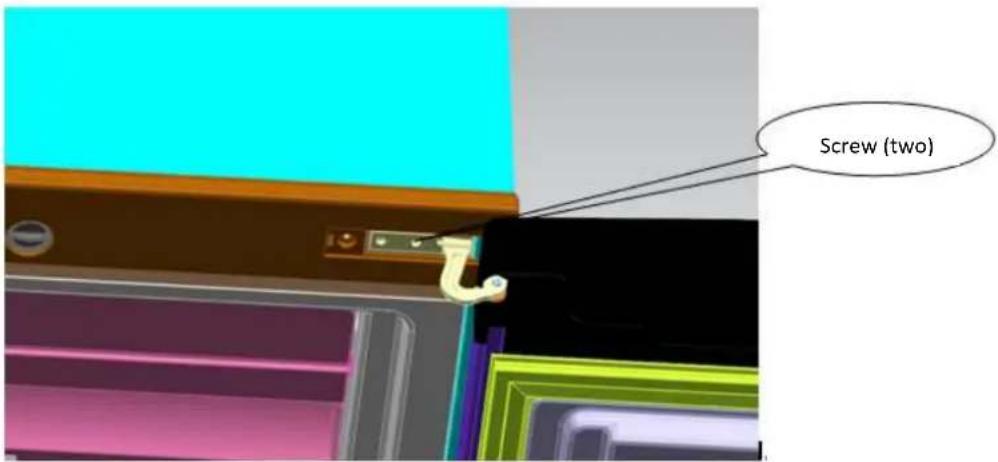
3) Replace the top-hinge and the top-door limit block and the door bearing bush to the other side.
A. Remove the nut with sleeve. Take o the washer then remove the axes to the other side and xed.
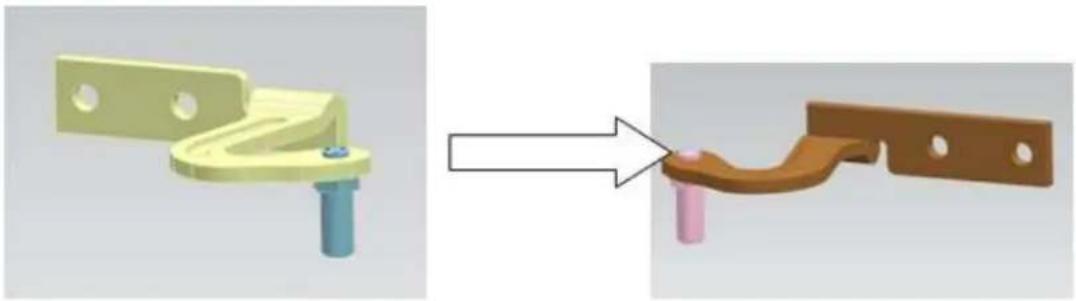
B. Remove the door limit block

C. Take out another door limit block, with screw moung to the door

4) Disassemble the screws xed the bottom-hinge with cross-slot screw driver.

Note: the refrigerator-freezer incline angle less 45° .
5) Replace the bottom hinge to the other side then x it with screws.
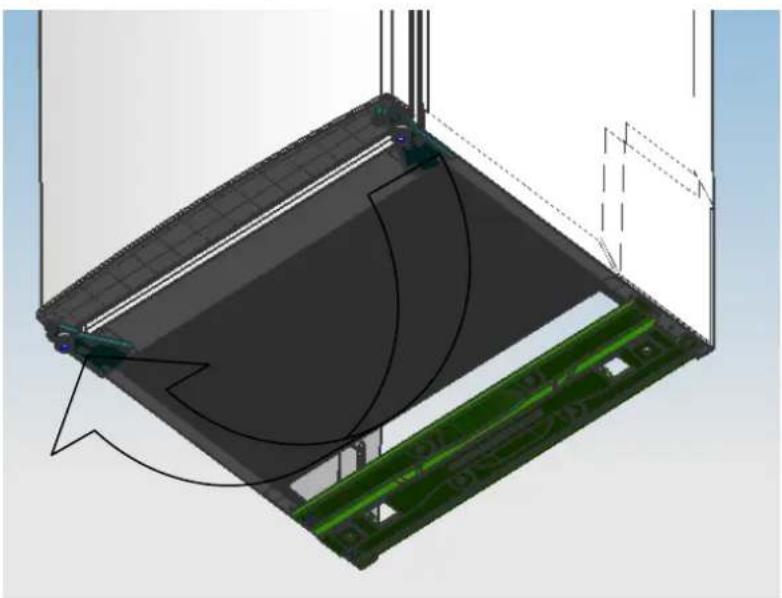
6) Set the door right posion, x the mid-hinge.

7) Replace the top-hinge.

8) Set the top door right posion, x the top-hinge and the cover.
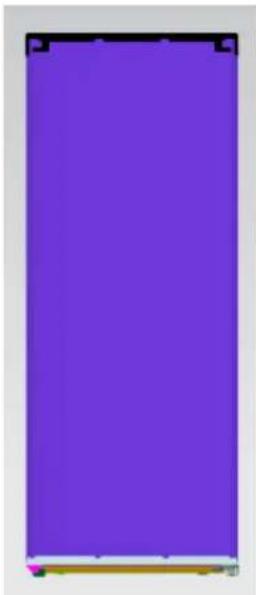
9) Replace the leveler to the other side and adjust it to make sure the cabinet level.
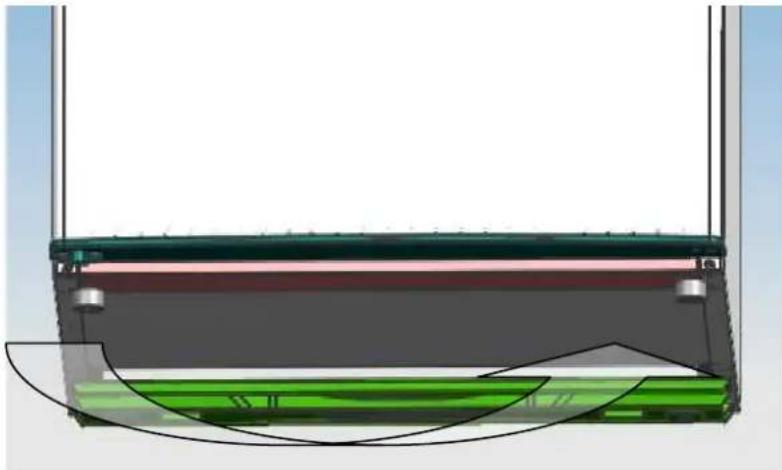
2.3 Door Space Requirements
The unit's door must be able to open fully as shown. W × D ≥ 902 × 1052mm

2.4 Levelling the Unit
To level the unit, adjust the two levelling feet at the front of the unit. If the unit is not level, the door and magnec seal alignments will not be covered properly.
Make sure that the foot touches the ground before use.
Look down from the top, clockwise and counterclockwise loosening, ghtening.

2.5 Cleaning Before Use
Wipe the inside of the unit with a weak soluon of bicarbonate soda. Then rinse with warm water using a 'Wrung-out' sponge or cloth. Wash the shelves and salad bin in warm soapy water and dry completely before replacing in the unit. Clean the exterior of the unit with a damp cloth. If you require more informaon refer to the Cleaning secon.
2.6 Before Using Your Unit
Do not use when the power cord is damaged or the plug is worn.
Do not alter the power cord under any circumstances, so as to ensure safe use.
Do not put ammable, explosive, volale and highly corrosive items in the refrigerator to prevent damages to the product or re accidents.
Do not place ammable items near the refrigerator to avoid res.
This product is a household refrigerator and is only suitable for the storage of foods. According to naonal standards, household refrigerators shall not be used for other purposes, such as storage of blood, drugs or biological products.
Do not place items such as bottled or sealed container of uid such as boled beers and beverages in the freezer to prevent bursts and other losses.
Before placing any food in your unit, turn it on and wait for 24 hours, to make sure it is working properly and to allow it me to fall to the correct temperature. Your unit should not be overlled.

Before Plugging in
You must check that you have a socket which is compatible with the plug supplied with the unit.
Before Turning On!
Do not turn on unl two hours aer moving the unit.
2.7 Interior Accessories
Various glass or plasc storage shelves are included with your appliance - dierent models have dierent combinaons.
You should always slide one of the full size glass storage shelves into the lowest set of guides, above the fruit and vegetable containers, and keep it in this posion. To do this, pull the storage shelf forward until it can be swiveled upwards or downwards and removed.
Please do the same in reverse to insert the shelf at a dierent height.

In order to make the most of the volume of the fresh food storage compartment and frozen-food storage compartment, the user can remove one or more shelves, drawers, out of the appliance, according to your daily use.
3. PRODUCT OVERVIEW

*All images in this instrucon manual are for indicaon only; please refer to your individual unit for details.
4. OPERATION
4.1 Switching On Your Unit
◆The temperature selector knob is located on the right hand sidewall of the refrigerator interior Seing “Min”: Less Cool Temperature
Seng “Mid”: Normal Operaon (adequate for most situaons)
Seng "Max": Coolest Temperature
◆During high ambient temperatures e.g. on hot summer days. It may be necessary to set the thermostat to the Coolest seng(posion "Max").This may cause the compressor running connuously in order to maintain a low temperature in the cabinet.
◆ For the rst time you install your refrigerator, set the thermostat knob at "Mid".
Give your refrigerator me to cool down completely before adding food. It is the best to wait 24 hours before adding food. The thermostat knob controls the temperature.
4.2 Noise Inside the Unit!
You may noce that your unit makes some unusual noises. Most of these are perfectly normal, but you should be aware of them!
These noises are caused by the circulaon of the refrigerant liquid in the cooling system. It has become more pronounced since the introducon of CFC free gases. This is not a fault and will not affect the performance of your unit. This is the compressor motor working, as it pumps the refrigerant around the system.
4.3 Tips for Keeping Food in the Unit
◆ Cooked meats/shes should always be stored on a shelf above raw meats/shes to avoid bacterial transfer. Keep raw meats/shes in a container which is large enough to collect juices and cover it properly. Place the container on the lowest shelf.
Leave space around your food, to allow air to circulate inside the unit. Ensure all parts of the unit are kept cool.
◆ To prevent transfer of avours and drying out, pack or cover the food separately. Fruit and vegetables do not need to be wrapped.
◆ Always let pre-cooked food cool down before you put in the unit. This will help to maintain the internal temperature of the unit.
◆ To prevent cold air escaping from the unit, try to limit the number of mes you open the door. It is recommended that you only open the door when you need to put food in or take food out.
5. CLEANING
5.1 Defrosng
Auto-defrost for Frost-free Refrigerator
5.2 Cleaning the Interior and the Exterior of the Unit
◆ Remove all the shelves and the salad bin. To remove the salad bin rst remove the lower door shelf.
◆ Wipe the inside of the unit with a weak soluon of bicarbonate soda and then rinse with
warm water using a “wrung-out” sponge or cloth. Wipe completely dry before replacing the shelves and salad bin.
Use a damp cloth to clean the exterior, and then wipe with a standard furniture polish. Make sure that the door is closed to avoid the polish geng on the magnec door seal or inside the unit.
◆ The grille of the condenser at the back of the unit and the adjacent components can be vacuumed using a so brush aachment.
5.3 Cleaning Tips
Condensaon may appear on the outside of the unit. This may be due to a change in room temperature. Wipe off any moisture residue. If the problem connues, please contact a qualified technician for assistance.
6. MAINTENANCE
6.1 Care When Handling / Moving Your Unit
Hold the unit around its sides or base when moving it. Under no circumstances should it be lied by holding the edges of the top surface.
6.2 Servicing
The unit should be serviced by an authorized technician and only genuine spare parts should be used. Under no circumstances should you aempt to repair the unit yourself. Repairs carried out by inexperienced persons may cause injury or serious malfuncon. Contact a qualitatively technician.
6.3 Switching Of for Long Periods of Time
When the unit is not in use for a long period of me, disconnect it from the mains supply, empty all food and clean the appliance, leaving the door ajar to prevent unpleasant smells.
7. Trouble shoong
The following simple issues can be handled by the user. Please contact your point of purchase if the issues remain unresolved.
| Inoperaon | Whether the freezer is plugged and connected to power;Low voltage;Failure power or tripping circuit |
| Odor | Odorous foods should closely wrapped;Whether foods are roen;Whether the interior shall be cleaned. |
| Long-term operaon of compressor | It is normal that refrigerator operates for longer me in summer when the ambient temperature is higher;Do not put too much food in the freezer at one me;Do not put foods unl they are cooled;Frequent opening of refrigerator door. |
| Illuminang light does not shine | Whether the refrigerator is connected to power, whether the illuminang light is damaged. |
| The refrigerator door can not be properly closed. | The freezer door is stuck by food packages; Too much food; Tilt refrigerator. |
| Loud noises | Whether the food is leveled, whether the refrigerator is balanced; Whether the refrigerator parts are properly placed. |
7.1 Warm ps:
◆The refrigerator enclosure may emit heat during operaon specially in summer, this is caused by the radiaon of the condenser, and it is a normal phenomenon.
◆ Condensaon: condensaon phenomenon will be detected on the exterior surface and door seals of the freezer when the ambient humidity is large, this is a normal phenomenon, and the condensaon can be wiped away with a dry towel.
◆Buzz: Buzz will be generated by running compressor specially when starng up or shuing down.
8. TIPS FOR ENERGY SAVING
Try not to open the door too oen, especially when the weather is wet and hot. Once you open the door, close it as soon as possible.
Every now and then check if the appliance is suciently venlated (adequate air circulation behind the appliance).
In normal temperature conditions, please arrange the thermostat at the middle seng.
Before loading the appliance with packages of fresh food, make sure they are cooled to ambient temperature.
Ice and frost layer increase energy consumption, so clean the appliance as soon as the layer is 3-5 mm thick.
If it is the outer condenser, the rear wall should be always clean free of dust or any impurities.
◆ The appliance should be located in the coolest area of the room, away from heat producing appliances or heang ducts, and out of the direct sunlight.
Let hot foods cool to room temperature before placing in the appliance. Overloading the appliance forces the compressor to run longer. Foods that freeze too slowly may lose quality, or spoil.
◆ Be sure to wrap foods properly, and wipe containers dry before placing them in the appliance. This cuts down on frost build-up inside the appliance.
◆ Appliance storage bin should not be lined with aluminum foil, wax paper, or paper toweling. Liners interfere with cold air circulaon, making the appliance less ecient.
◆ Organize and label food to reduce door openings and extended searches. Remove as many items as needed at one me, and close the door as soon as possible.
9. DISPOSAL
Old units sill have some residual value. An environmentally friendly method of disposal will ensure that valuable raw materials can be recovered and used again. The refrigerant used in your unit and insulaon materials require special disposal procedures. Ensure that none of the pipes on the back of the unit are damaged prior to disposal. Up to date informaon concerning opons of disposing of your old unit and packaging from the new one can be obtained from your local council oce.
When disposing of an old unit break of any old locks or latches and remove the door as a safeguard.
Correct Disposal of this product

Correct Disposal of this product
This marking indicates that this product should not be disposed with other household wastes throughout the EU. To prevent possible harm to the environment or human health from uncontrolled waste disposal, recycle it responsibly to promote the sustainable reuse of material resources. To return your used device, please use the return and collecon systems or contact the retailer where the product was purchased. They can take this product for environmental safe recycling.
For more informaon, please contact the local authority or your retailer where you purchased the product.
- PRODUCT OVERVIEW 7
- OPERATION....8
- CLEANING 8
- MAINTENANCE 9
- TROUBLE SHOONG 9
- TIPS FOR ENERGY SAVING 10
- DISPOSAL....11
- SAFETY WARNINGS
- INSTALLTION
- 2.1 LOCAON
- 2.2 REVERSING THE DOOR SWING
- 2.3 DOOR SPACE REQUIREMENTS
- 2.4 LEVELLING THE UNIT
- 2.5 CLEANING BEFORE USE
- 2.6 BEFORE USING YOUR UNIT
- 2.7 INTERIOR ACCESSORIES
- PRODUCT OVERVIEW
- OPERATION
- 4.1 SWITCHING ON YOUR UNIT
- 4.2 NOISE INSIDE THE UNIT
- 4.3 TIPS FOR KEEPING FOOD IN THE UNIT
- CLEANING
- 5.1 DEFROSNG
- 5.2 CLEANING THE INTERIOR AND THE EXTERIOR OF THE UNIT
- 5.3 CLEANING TIPS
- MAINTENANCE
- 6.1 CARE WHEN HANDLING / MOVING YOUR UNIT
- 6.2 SERVICING
- 6.3 SWITCHING OF FOR LONG PERIODS OF TIME
- TROUBLE SHOONG
- 7.1 WARM PS
- TIPS FOR ENERGY SAVING
- DISPOSAL
- CORRECT DISPOSAL OF THIS PRODUCT
Brand : Tisira
Model : HS-208FN
Category : Freezer