
H91F - Refrigerator Heller - Free user manual and instructions
Find the device manual for free H91F Heller in PDF.


| Product Type | Refrigerator |
| Model | H91F |
| Brand | Heller |
| Energy Class | A+ |
| Total Capacity | 100 L |
| Fridge Capacity | 80 L |
| Freezer Capacity | 20 L |
| Dimensions (H x W x D) | 85 x 50 x 55 cm |
| Weight | 25 kg |
| Power Supply | 220-240 V, 50 Hz |
| Energy Consumption | 0.5 kWh/24h |
| Climate Class | N-ST |
| Noise Level | 40 dB |
| Defrost | Manual (freezer) |
| Refrigerant | R600a |
| Functions | Adjustable thermostat, reversible door, removable shelves |
| Care & Cleaning | Clean with mild detergent; avoid abrasive cleaners |
| Safety | Do not use near water; keep ventilation openings clear |
| Spare Parts | Available from Heller or authorized dealers |
| Reparability | Repairable by qualified technician |
Frequently Asked Questions - H91F Heller
User questions about H91F Heller
0 question about this device. Answer the ones you know or ask your own.
Ask a new question about this device
Download the instructions for your Refrigerator in PDF format for free! Find your manual H91F - Heller and take your electronic device back in hand. On this page are published all the documents necessary for the use of your device. H91F by Heller.
USER MANUAL H91F Heller
natural_image
Empty rectangular frame with a top handle and side supports (no text or symbols)Read this instruction manual before using your product for the first time. Ensure you save this manual in a safe place for future reference.
In the interest of your safety and to ensure correct use of the product, before installing and first using the appliance, read this instruction manual carefully, including hints and warning. To avoid potential hazards or accidents, it is important to ensure that all people using this appliance are thoroughly familiar with the safety features and operation of the product. Save these instructions for future reference, and ensure that it remains with the appliance should it be moved or sold so that everyone using the appliance through its life will be properly informed of the usage and safety precautions regarding this product.
To ensure safe use and for the safety of life and property, retain the precautions mentioned in this instruction manual, as the manufacturer is not responsible for damages caused by omission.
Safety of children and vulnerable person(s)
- This appliance is not intended for use by persons (including children) with reduced physical, sensory or mental capabilities, or lack of experience and knowledge unless they have been given supervision or instruction concerning use of the appliance by a person responsible for their safety.
- Children should be supervised to ensure that they do not play with the appliance.
- Cleaning and user maintenance shall not be performed by children.
- Keep all packaging away from children as there is a risk of suffocation.
- If you are discarding the appliance, pull the plug out of the socket, cut the connection cable (as close to the appliance as you can) and remove the door to avoid playing children to suffer from potential electric shock or closing themselves into the appliance.
- If this appliance which features a magnetic door seal is to replace an older appliance which features a spring lock (latch) on the door of lid, be sure to make the spring lock unusable before you discard the old appliance. This will prevent the spring lock becoming a potentially lethal hazard for children.
Safety of children and vulnerable person(s)
⚠ WARNING! Keep ventilation openings, both inside the appliance enclosure or in the built-in structure, clear of obstruction.
⚠ WARNING! Do not use mechanical devices or other means to accelerate the defrosting process, other than those recommended by the manufacturer.
⚠ WARNING! Do not damage the refrigerant circuit.
⚠ WARNING! Do not use other electrical appliances (such as ice cream makers) inside of refrigerating appliances, unless they are approved for this purpose by the manufacturer.
⚠ WARNING! Do not touch the light bulb if it has been on for an extended period of time as it can become very hot.
- Do not store explosive substances such as aerosol cans with a flammable propellant in this appliance.
- The refrigerant isobutane (R600a) is contained within the refrigerant circuit of the appliance, a natural gas with a high level of environmental compatibility, however is also extremely flammable.
- During transportation and installation of the appliance, ensure that none of the components of the refrigerant circuit become damaged.
- Avoid open flames and sources of ignition.
- Thoroughly ventilate the room in which the appliance is situated.
- It is dangerous to alter the specifications or modify this product in any way. Any damage to the cord may cause a short circuit, fire and/or electric shock.
- This appliance is intended to be used in household and similar applications such as - Staff kitchen areas in shops, offices and other working environments - Farm houses and by clients in hotels, motels and other residential type environments:
- Bed and breakfast type environments
- Catering and similar non-retail applications
WARNING! Any electrical components (plug, power cord, compressor and etc.) must be replaced by a certified service agent or qualified service personnel. If the supply cord is damaged, it must be replaced by the manufacturer, its service agent or similarly qualified persons in order to avoid a hazard.
WARNING! The light bulb supplied with this appliance is a special light bulb specifically designed to be used only with the appliance supplied. This special light bulb is not usable for domestic lighting.
- The power cord must not be lengthened.
- Ensure the power plug is not squashed or damaged by the back of the appliance. A squashed or damaged power plug may overheat and cause a fire.
- Ensure you have access to the main plug of the appliance in all positions.
- Do not pull the main plug cable.
- If the power plug socket is loose, do not insert the power plug. There is a risk of electric shock or fire.
- You must not operate the appliance without the lamp.
- This appliance is heavy. Care should be taken when moving it.
- Do not remove nor touch items from the freezer component if your hands are damp or wet, as this could cause skin abrasions or frost/freezer burns.
- Avoid prolonged exposure of the appliance to direct sunlight.
Daily Use
- Do not let hot items to come into contact with the plastic parts and components of the appliance.
- Do not place food products directly against the rear wall.
- Frozen food must not be re-frozen once it has been thawed out.
- Store pre-packed frozen food in accordance with the frozen food manufacturer's instructions.
- The appliance's manufacturer's storage recommendations should be strictly adhered to. Refer to relevant instructions.
- Do not place carbonated or fizzy drinks in the freezer compartment as it creates pressure in the container, which may cause it to explode, resulting in damage to the appliance.
- Ice lollies can cause frost burns if consumed straight from the appliance.
Care and Cleaning
- Before maintenance, switch off the appliance and disconnect the mains plug from the mains socket.
- Do not clean the appliance with metal objects.
- Do not use sharp objects to remove frost from the appliance. Use a plastic scraper.
- Regularly examine the drain in the refrigerator for defrosted water. If necessary, clean the drain. If the drain is blocked, water will collect at the bottom of the appliance.
Installation
IMPORTANT! For electrical connection, carefully follow the instructions given in specific paragraphs.
- Unpack the appliance and check if there are any damages inside and outside of the appliance. Do not connect the appliance if it is damaged.
- It is advisable to wait at least four hours before connecting the appliance to allow the oil to flow back in the compressor.
- Adequate air circulation must be around the appliance at all times, or else it may lead to overheating. To achieve sufficient ventilation follow the instructions relevant to installation.
- Wherever possible the spaces of the product should be against a wall to avoid touching or making any contact with warm parts (compressor, condenser) to prevent possible burns.
• The appliance must not be located close to radiators or cookers. - Make sure that the mains plug is accessible after installation of the appliance.
Service
- Any electrical work required to service the appliance should be carried out by a qualified electrician or certified personnel.
- This product must be serviced by an authorised service center, and only genuine spare parts must be used.
- It is hazardous for anyone other than an Authorised Service Person to service this appliance. In Queensland - the authorised service person MUST hold a Gas Work Authorisation for hydrocarbon refrigerants to carry out servicing or repairs which involve the removal of covers.
Energy Saving
- Do not put hot food in the appliance.
- Do not pack food close together as this prevents air circulating through the appliance.
- Make sure food does not touch the back of the compartment(s).
- If no electricity is powering the fridge, do not open the door(s).
- Do not open the door(s) frequently.
- Do not keep the door(s) open for extended periods of time.
- Do not set the thermostat on exceedingly low temperatures as frost may build up.
- Some accessories such as drawers, can be removed to get larger storage volumes and lower energy consumption.
Environment Protection
This appliance does not contain gases which could damage the ozone layer, in both the refrigerant circuit or insulation materials. The appliance shall not be discarded together with urban refuse and rubbish. The insulation foam contains flammable gases: the appliance shall be disposed according to the appliance regulations provided by your local council. Avoid damaging the cooling unit, especially the heat exchanger. The materials used on this appliance marked by the are recyclable.
This symbol (left) on the product or on its packaging indicates that this product may not be treated as household waste. Instead, it should be taken to the appropriate collection point for the recycling of electrical and electronic equipment. By ensuring this product is disposed of correctly you will help prevent potential negative consequences for the environment and human health, which could otherwise be caused by inappropriate waste handling of this product. For more detailed information about recycling this product, please contact your local council, your household waste disposal service or the store in which the appliance was purchased.
Packaging materials
The materials with the Symbol are recyclable. Dispose the packaging in a suitable collection point or container to recycle it.
Disposal of the appliance
- Disconnect the mains plug from the mains socket.
- Cut off the mains cable as close to the appliance as possible and discard it.
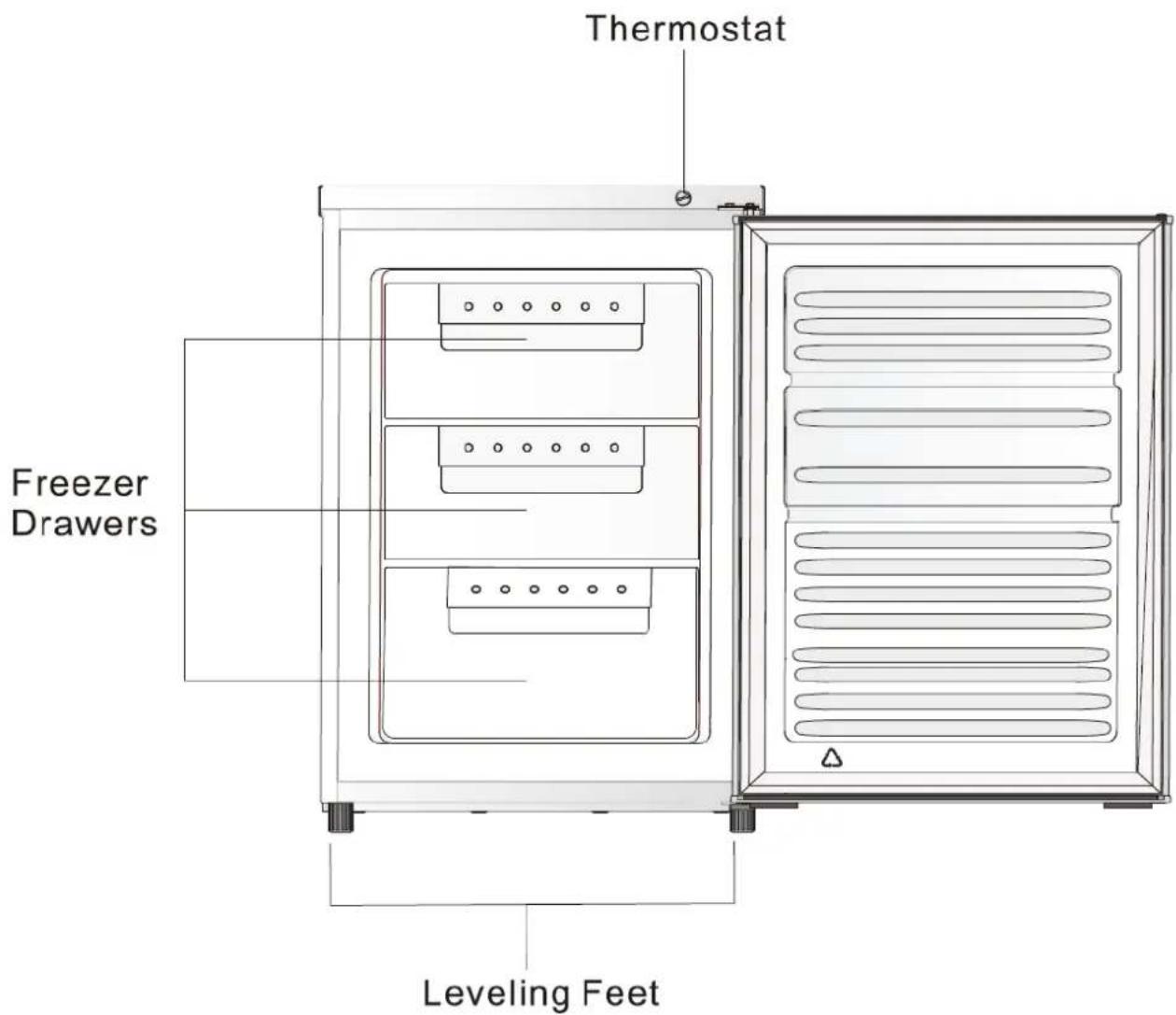
Tool(s) required: Phillips screwdriver, Flat-bladed screwdriver, Hexagonal spanner
- Ensure the unit is unplugged and empty.
- To remove the door, it is necessary to tilt the unit backwards. It is highly recommended to rest the unit on something solid, so that the appliance will not slip during the door reversing process.
- All parts must be removed must be stored to perform re-installation of the door.
- Do not lay the unit flat as this may damage the coolant system.
-
It is recommended for 2 people to handle the unit during assembly.
-
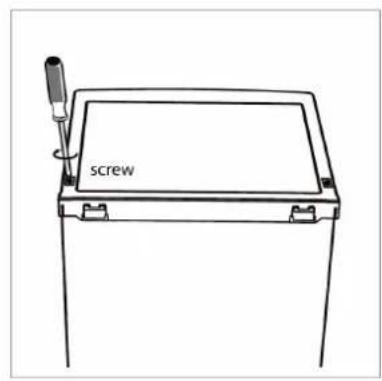
Remove the two screw positioned at the rear side of the top cover.
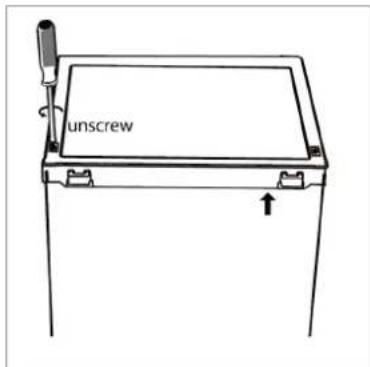
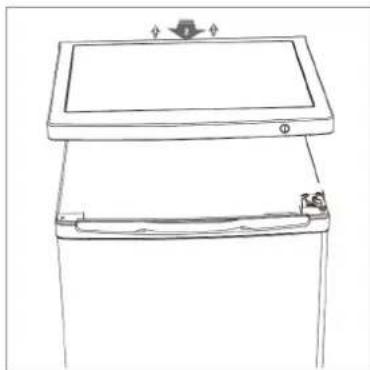
- Remove the top cover and thermostat knob then place it aside.
natural_image
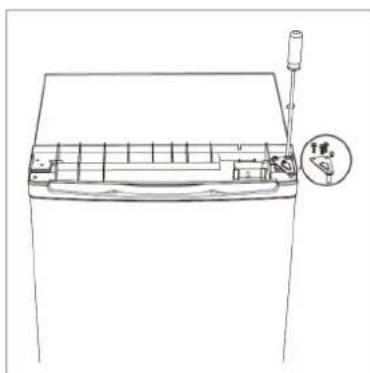
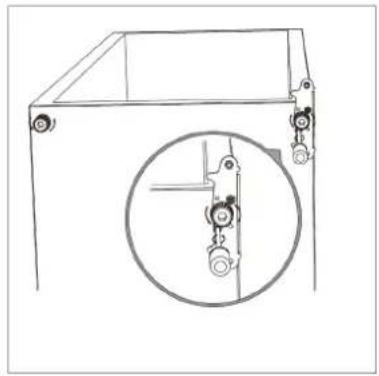
Line drawing of a refrigerator with top panel and side arm (no text or symbols)- Unscrew top hinge and remove the door and place it on a soft surface or similar surface to prevent scratches and damage.
natural_image
Line drawing of a door panel with a magnified inset showing a small object labeled '1.5" (no text or symbols on the main diagram)- Unscrew the bottom hinge. Then, remove the adjustable feet from both sides (1).
natural_image
Technical line drawing of a mechanical device with a circular component and mounting holes (no text or symbols)- Remove the top cover and thermostat knob then place it aside.
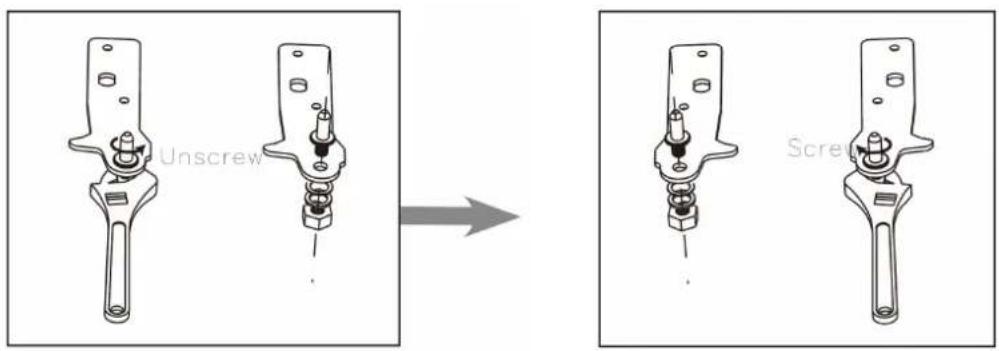
- Refit the bracket belonging to the bottom hinge pin. Replace both adjustable feet.
natural_image
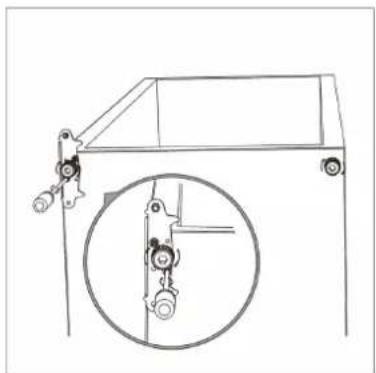
Technical line drawing of a mechanical assembly with a magnified inset showing internal components (no text or symbols)- Place the door back on. Ensure the door is aligned horizontally and vertically so that the seals are properly closed on all sides before finally tightening the top hinge.
natural_image
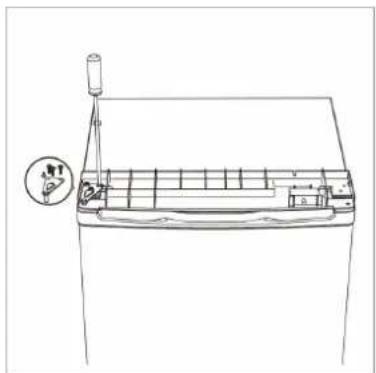
Line drawing of a mechanical device with a cylindrical component and a circular inset showing a tool or component (no text or symbols)-
Return the top cover to its original position and fix it with the 2 screws that were previously removed.
-
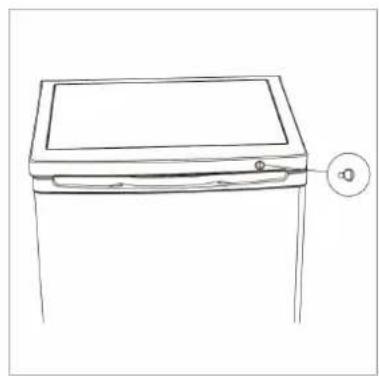
Fix the thermostat knob.
natural_image
Line drawing of a rectangular electronic device with a screen and a button, no text or symbols presentInstallation
Space Requirement
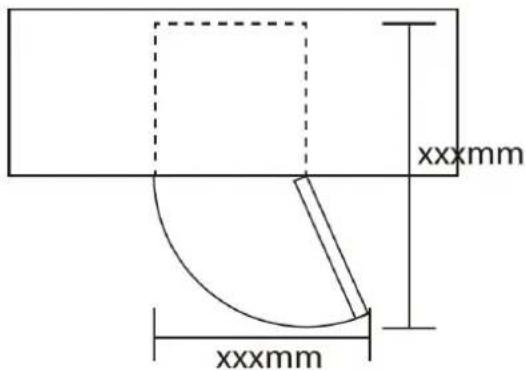
- Ensure there is enough space for the door to open.
- Ensure there is at least a 50mm gap around both sides of the appliance.
Levelling the Unit
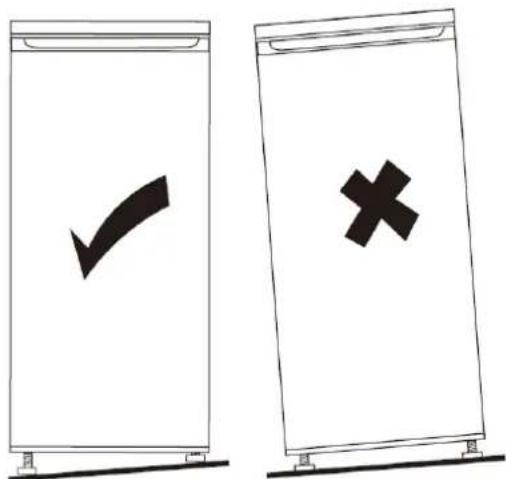
To level the appliance, adjust the two levelling feet located at the front of the appliance.
If the unit is not level, the doors and magnetic seal alignments will not function as intended.
Positioning
Install this appliance at a location where the ambient temperature corresponds to the climate class indicated on the rating place of the appliance.
| Climate class | Ambient temperature |
| SN | +10°C to +32°C |
| N | +16°C to +32°C |
| ST | +16°C to +38°C |
| T | +16°C to +43°C |
Location
The appliance should be installed a safe distance away from sources of heat such as radiators, boilers, direct sunlight etc. Ensure that air can circulate freely around the back of the cabinet. To ensure optimal performance, if the appliance is positioned below an overhanging wall unit, the minimum distance between the top of the cabinet and the wall unit must be at least 100mm. Ideally, however, the appliance should not be positioned below overhanging wall units. Accurate leveling is ensured by one or more adjustable feet at the base of the cabinet.

Warning! It must be possible to disconnect the appliance from the mains power supply; the plug must there be easily accessible after installation.
Electrical connection
Before plugging in, ensure that the voltage and frequency shown on the rating plate correspond to your domestic power supply. The appliance must be earthed. The power supply cable plug is provided with a contact for this purpose. If the domestic power supply socket is not earthed, connect the appliance to a separate earth in compliance with current regulations, consulting a qualified electrician.
The manufacturer declines all responsibility if the above safety precautions are not observed. This appliance complies with the E.E.C. Directives.
First Use
Cleaning the interior
Before using the appliance for the first time, wash the interior and all internal accessories with lukewarm water and some neutral soap so as to remove the typical smell of a brand new product, then dry thoroughly.
Important! Do not use detergents or abrasive powders, as these will damage the finish.
Temperature Setting
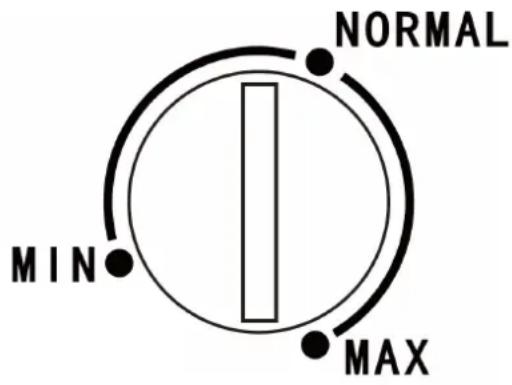
- Plug in your appliance. The internal temperature is controlled by a thermostat. There are 3 settings, MIN, NORMAL and MAX. MIN is the warmest setting and MAX is the coldest setting.
- The appliance many not operate at the correct temperature if it is in a particularly hot or if you open the door frequently.
Daily Use
Freezing fresh food
The freezer compartment is suitable for freezing fresh food and storing frozen and deep-frozen food for a long time.
Place the fresh food to be frozen in the bottom compartment.
The maximum amount of food that can be frozen in 24 hours is specified on the rating plate. The freezing process lasts 24 hours: during this period do not add other food to be frozen.
Storing Frozen Food
When first starting-up or after the appliance has not been used for a long period of time, before putting the product in the compartment let the appliance run at least 2 hours on the highest settings.
Important! In the event of accidental defrosting, for example the power has been off for longer than the value shown in the technical characteristics chart under “rising time”, the defrosted food must be consumed quickly or cooked immediately and then re-frozen (after cooked).
Thawing
Deep-frozen or frozen food, prior to be used, can be thawed in the fridge compartment or at room temperature, depending on the time available for this operation.
Small pieces may even be cooked still frozen, directly from the freezer. In this case, cooking will take longer.
Helpful hints and tips
Hints for freezing
To help you make the most of the freezing process, here are some important hints:
- The maximum quantity of food which can be frozen in 24 hours is shown on the rating plate.
- The freezing process takes 24 hours. No further food to be frozen should be added during this period.
- Only freeze top quality, fresh and thoroughly cleaned, foodstuffs.
- Prepare food in small portions to enable it to be rapidly and completely frozen and to make it possible subsequently to thaw only the quantity required.
- Wrap up the food in aluminium foil or polythene and make sure that the packages are airtight.
- Do not allow fresh, unfrozen food to touch food which is already frozen, thus avoiding a rise in temperature of the latter.
- Lean foods store better and longer than fatty ones; salt reduces the storage life of food.
- Ice cubes, if consumed immediately after removal from the freezer compartment, can possibly cause the skin to be freeze burnt.
- It is advisable to show the freezing in date on each individual pack to enable you to keep tab of the storage time.
Hints for storage of frozen food
To obtain the best performance from this appliance, ensure to:
- Ensure that commercially frozen foodstuffs have been adequately stored by the retailer.
- Ensure that frozen foodstuffs are transferred from the food store to the freezer in the shortest possible time.
- Do not open the door frequently or leave it open longer than absolutely necessary.
- Once defrosted, food deteriorates rapidly and cannot be refrozen.
- Do not exceed the storage period indicated by the food manufacturer.
Cleaning
For hygienic reasons the appliance interior, including interior accessories, should be cleaned regularly.

Caution! The appliance may not be connected to the mains during cleaning. Danger of electrical shock! Before cleaning, switch the appliance off and remove the plug from the mains, or switch off or turn out the circuit breaker or fuse. Never clean the appliance with a steam cleaner. Moisture could accumulate in electrical components, danger of electrical shock! Hot vapors can lead to the damage of plastic parts. The appliance must be dry before it is placed back into service.
Important! Ethereal oils and organic solvents can deteriorate plastic parts, e.g. lemon juice or the juice from orange peels, butyric acid, cleansers that contain acetic acid.
- Do not clean the appliance or any appliance parts with abrasive cleaners or the above mentioned substances.
- Remove food from the freezer. Store them in a cool place, well covered, when cleaning the appliance.
- Switch the appliance off and remove the plug from the mains, or switch off or turn out the circuit breaker of the fuse.
- Clean the appliance and the interior accessories with a cloth and lukewarm water. After cleaning, wipe with a cloth damp with fresh water and rub dry.
- Accumulation of dust at the condenser increases energy consumption. For this reason carefully clean the condenser located at the rear of the appliance once a year with a soft brush or a vacuum cleaner.
• After everything is dry, place all appliance parts and use as normal.
Defrosting the Freezer
The freezer compartment, however, will progressively become covered with frost. This should be removed. Never use sharp metal tools to scrape off frost from the evaporator as you could damage it.
However, when the ice becomes very thick on the inner liner, complete defrosting should be carried out as follows:
- Remove the plug from the power socket.
- Remove all stored food, wrap it in several layers of newspaper and place in a cool place to prevent defrosting as much as possible.
- Keep the door open, placing a basin underneath the appliance to collect defrosted water.
- When defrosting is complete, dry the interior thoroughly.
- Plug the appliance back into the power socket and run the appliance again.
Troubleshooting

Caution! Before troubleshooting. disconnect the power supply. Only a qualified electrician must perform troubleshooting that is not outlined in this manual.
Important! There are some sounds during normal use (compressor, refrigerant circulation).
| Problem | Possible cause | Solution |
| Appliance does not work | Mains plug is not plugged in or is loose | Insert mains plug. |
| Fuse has blown or is defective | Check fuse, replace if necessary. | |
| Socket is defective | Mains malfunctions are to be corrected by an electrician. | |
| Appliance freezes too much | Temperature is set too cold or the appliance runs at MAX setting. | Turn the temperature regulator to a warmer setting temporarily. |
| The food is not frozen enough. | Temperature is not properly adjusted. | Please look in the initial Temperature Setting section. |
| Door was open for an extended period. | Open the door only as long as necessary. | |
| A large quantity of warm food was placed in the appliance within the last 24 hours. | Turn the temperature regulation to a colder setting temporarily. | |
| The appliance is near a heat source. | Please look in the installation location section. | |
| Heavy build-up of frost on the door seal. | Door seal is not air-tight. | Carefully warm the leaking sections of the door seal with a hair dryer (on a cool setting). At the same time shape the warmed door seal by hand such that it sits correctly. |
| Unusual noises | Appliance is not level. | Re-adjust the feet. |
| The appliance is touching the wall or other objects. | Move the appliance slightly. | |
| A component, e.g. a pipe, on the rear of the appliance is touching another part of the appliance or the wall. | If necessary, carefully bend the component out of the way. |
If the malfunction shows again, contact the Service Center.
- This appliance contains a small quantity of R600a refrigerant which is environmentally friendly, but flammable. It does not damage the ozone layer, nor does it increase the greenhouse effect.
- During transportation and installation, ensure that the tubing of the refrigerant circuit is not damaged.
- Leaking refrigerant can ignite and may damage the eyes.
- In the event that any damage does occur, avoid exposure to open fires and any devices which create sparks. Disconnect the appliance from the mains power.
- Thoroughly ventilate the room in which the appliance is located for several minutes.
- The designated room for installing the appliance must at least be 1 cubic metre per 8 grams of refrigerant. The refrigerant quantity contained in this appliance is noted on the Rating Plate of the appliance.
- It is hazardous for anyone other than an Authorised Service Person to service this appliance. In Queensland - the authorized Service Person MUST hold a Gas Work Authorisation for hydrocarbon refrigerants, to carry out servicing or repairs which involve the removal of covers.
Warranty
Before making a claim under warranty, please refer to your instruction/installation manual to ensure that you have followed the correct operation procedures of your product, and refer to the trouble shooting section to assist solving any problems you may have.
Contact information
Australian Customer Service
GAF Control (Sales) Pty Ltd
P.O Box 19
Altona North Victoria, 3025
Phone: 1300 659 489
Hours: 9AM - 5PM (EST) Monday - Friday
www.gafcontrol.com.au
*This product may vary slightly to the product illustrated due to ongoing product development.
- Safety of children and vulnerable person(s)
- Daily Use
- Care and Cleaning
- Installation
- Service
- Energy Saving
- Environment Protection
- Packaging materials
- Disposal of the appliance
- Space Requirement
- Levelling the Unit
- Positioning
- Location
- Electrical connection
- First Use
- Cleaning the interior
- Temperature Setting
- Freezing fresh food
- Storing Frozen Food
- Thawing
- Helpful hints and tips
- Hints for freezing
- Hints for storage of frozen food
- Cleaning
- Defrosting the Freezer
- Troubleshooting
- Warranty
- Contact information
Brand : Heller
Model : H91F
Category : Refrigerator