
Versatile Folding - Car seat InfaSecure - Free user manual and instructions
Find the device manual for free Versatile Folding InfaSecure in PDF.


| Brand | InfaSecure |
| Model | Versatile Folding |
| Product Type | Convertible Car Seat |
| Weight Group | 0+ (0-13 kg) / 1 (9-18 kg) / 2 (15-25 kg) |
| Age Range | Birth to approximately 6 years |
| Overall Dimensions (L x W x H) | Approx. 65 x 45 x 60 cm |
| Weight of Seat | Approx. 7.5 kg |
| Harness Type | 5-point harness with adjustable headrest |
| Installation Methods | Seat belt (forward/rear-facing) and ISOFIX compatible |
| Folding Feature | Yes, folds for compact storage |
| Recline Positions | Multiple recline positions for comfort |
| Side Impact Protection | Integrated side impact protection |
| Cover Removal | Removable and washable cover |
| Cleaning Instructions | Hand wash cover in cold water, air dry. Wipe plastic parts with damp cloth. |
| Compliance Standards | ECE R44/04 or R129 (i-Size) compliant |
| Expiry Date | Typically 6 years from manufacture date (check label) |
| Warranty | 2 years against manufacturing defects |
Frequently Asked Questions - Versatile Folding InfaSecure
User questions about Versatile Folding InfaSecure
0 question about this device. Answer the ones you know or ask your own.
Ask a new question about this device
Download the instructions for your Car seat in PDF format for free! Find your manual Versatile Folding - InfaSecure and take your electronic device back in hand. On this page are published all the documents necessary for the use of your device. Versatile Folding by InfaSecure.
USER MANUAL Versatile Folding InfaSecure
(Forward Facing) Suitable for children from approximately 4 years to 8 years* of age.
Instruction Manual
IMPORTANT: KEEP THIS BOOKLET IN THE PLACE PROVIDED ON THE CHILD RESTRAINT (STORED BENEATH COVER)
*All references to age are approximates only and reference to children of average proportions.
Children vary in shapes and sizes. The photo displayed is indicative of the type of restraint and may vary slightly depending on the model.
Certified Product

Australian Standard
AS/NZS: 1754:2013 Licence No. 25324-2
SAI Global
Contents
Contents 1
Information 2
Warnings 3
Restraint Guide 4
Booster Seat
Information 5
CS6013 Child Restraints (Itemised list) 6
Shoulder Height Marker 7
Next Restraint 9
Installation
- Installation in Vehicle 10
Use
- Using Lap-sash Seatbelt 11
- To Release Child 14
Care of Restraint
- Care and Maintenance 15
- Cleaning 16
Accessories 17
Insurers Information 18
Lifetime Warranty 22
Please read carefully the whole of the instructions for installation and, in the event of doubt about the method of installation, to consult InfaSecure or agent, or a child restraint fitter, or in New Zealand, to consult the agent for the vehicle.
Information
This instruction manual covers various models under the Model number CS6013. This Booster Seat is designed to be used by children from approximately 4 years of age up to approximately 8 years of age. This booster seat is installed in the rear of the car, forward-facing using the vehicle seatbelts & top tether strap.
Child Restraints
No child restraint can guarantee absolute protection from injury in every crash. However, to ensure that your child gets all the protection designed into the restraint please read and follow the instructions exactly and use only InfaSecure recommended parts and accessories.
Family Bussiness
InfaSecure is an Australian owned and operated family business, which can trace it's roots back over 60 years, becoming the single largest Australian owned and operated child restraint company in the country. Today, we are still growing, continuing to innovate and provide high quality products at an affordable price.


WARNINGS
- Use the restraint exactly as shown in the instructions.
• Supervision of children is needed because they may be able to undo buckles.
• DO NOT LEAVE CHILDREN UNATTENDED IN THE CAR. - Do not alter or modify this restraint.
• Repairs must only be done by the manufacturers or agent. - Do not allow the restraint to come into contact with polishes, oils, bleach and other chemicals.
- Destroy the restraint if it has been in a severe crash, even if no damage is visible.
• DO NOT USE THIS RESTRAINT WITHOUT THE COVER. - DO NOT USE WITH JUST A LAP BELT. You must use with a lap-sash belt.
- The lap part of the seat belt must be firmly across the thighs and the sash belt fitted diagonally across the chest and on the shoulder.
- IF AN AIRBAG IS FITTED IN THE SEATING POSITION WHERE THE CHILD RESTRAINT IS TO BE FITTED, FOLLOW THE VEHICLE MANUFACTURER'S WARNINGS AND INSTRUCTIONS.

WARNING
DO NOT LEAVE CHILDREN UNATTENDED IN THE CAR.

WARNING
This child restraint is not approved for use with any connectors that connect to the cars |SOFIX low anchorages.
Restraint Guide

bar
| MODE | BIRTH | 0 to 6 (months) | Child Seat | Booster Seat | |---|---|---|---|---| | REARWARD-FACING RESTRAINT (TYPE A1) | 📄 | | | | | CONVERTIBLE CAR SEAT (TYPE A2/B) | 📋 | FORWARD FACING | Approx 0 to 4 years | | | CONVERTIBLE CAR SEAT (TYPE A4/B) | 📋 | FORWARD FACING | Approx 0 to 4 years | | | CONVERTIBLE CAR SEAT (TYPE A4/G) | 📋 | FORWARD FACING | FORWARD FACING | FORWARD FACING | | ZERO TO 8 CONVERTIBLE CAR SEAT (TYPE A1/B/E) | 📋 | FORWARD FACING | BOOSTER SEAT | | | FORWARD-FACING RESTRAINT (TYPE B) APPROX 6 MONTHS TO 4 YEARS | 📋 | FORWARD FACING | Approx 6 months to 4 years | | | FORWARD-FACING RESTRAINT (TYPE G) APPROX 6 MONTHS TO 8 YEARS | 📋 | FORWARD FACING | | Approx 6 months to 8 years | | CONVERTIBLE BOOSTER SEAT (TYPE B/E) APPROX 6 MONTHS TO 8 YEARS | 📋 | FORWARD FACING | BOOSTER SEAT | | | BOOSTER SEAT (TYPE E) FROM APPROX 4 YEARS TO 8 YEARS | 📋 | Approx 4 years to 8 years | BOOSTER SEAT | LARGER BOOSTER SEAT | | BOOSTER SEAT (TYPE F) FROM APPROX 4 YEARS TO 10 YEARS | 📋 | Approx 4 years to 10 years | BOOSTER SEAT | | | SEAT BELT FROM APPROX 7 YEARS AND OVER | 📋 | | | 7 + Allowable by law | | REQUIRED BY LAW | | | | Seat Belt | | 12+ | | | | Seat Belt | | 10 + More Appropriate | Reasons: Rearward-Facing, Convertible Car Seat, Zero to 8 Convertible Car Seat, Forward-Facing, Forward-Facing, and CONVERTible Booster Seat.IMPORTANT: Research has shown that the likelihood of an accessory child safety harness being used incorrectly is very high and the risk of injuries when incorrectly used is much higher compared to a lap-sash seat belt. InfaSecure recommend that an accessory child safety harness should only be used if a lap-only seat belt is all that is available.
Booster Seat (Forward Facing)
THE SUITABILITY OF THE CHILD RESTRAINT TO GROUPS OF CHILDREN
TYPE E
To be used with a lap-sash seatbelt by a child whose shoulders are above the lower shoulder height marker (approximately 4 years of age) until the child's shoulders reach the upper shoulder height marker (approximately 6 to 8 years of age).
Continue to use this booster seat until the child reaches this limit. Children are safest in a booster seat until their shoulders reach the upper shoulder height marker of the booster seat.
Do not use this booster seat until child's shoulders are above the lower shoulder height marker.
If the knees do not bend in front of the vehicle seat cushion continue to use a booster seat.
Just using a seatbelt is not recommended for children that have outgrown this seat. Use a larger booster seat.*
THIS RESTRAINTMUST BE USED IN CARS WITH FORWARD-FACING SEATS WITH A LAP-SASH SEATBELT. THIS BOOSTER SEAT IS NOT SUITABLE FOR USE WITH A CHILD HARNESS.
The use of child restraints in the front seat may be restricted for children of specific ages by local legislation. Please check with your local Department of Transport.

IMPORTANT
- Seatbelt extenders are not recommended to be used if the seatbelt is not long enough to secure the child restraint. If seatbelts are too short then advice should be sought from a child restraint fitter and their recommendation be considered before using a seatbelt extender.

WARNING
This child restraint is not approved for use with any connectors that connect to the cars |SOFIX low anchorages.
Model CS6013

- Shoulder Height Markers
- Vehicle Seat Belt
-
"BOOSTER SEAT BELT PATH" Marker (each side of restraint - coloured red)
-
Comfort Cover
-
Backrest
- Seat Base
Shoulder Height Markers
Smaller Child
Shoulder height markers are provided on this restraint for a visual indication that the child is safe to travel in this restraint.
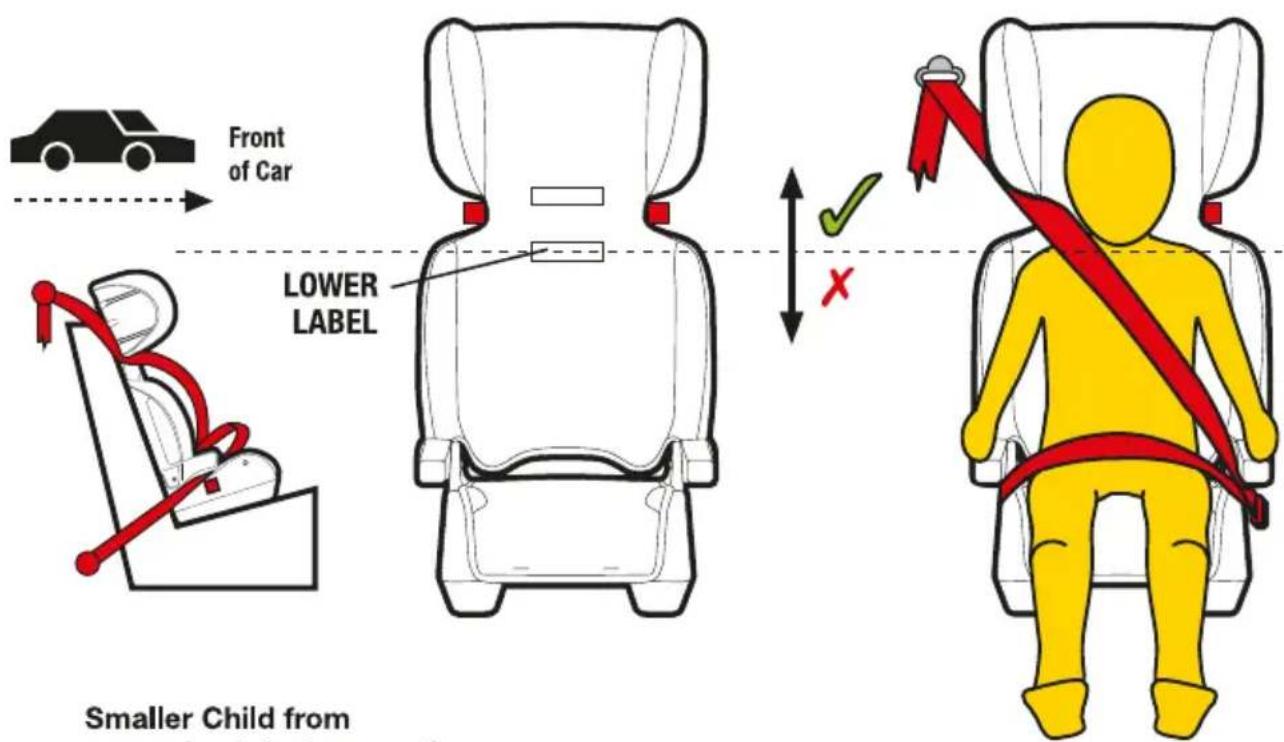
Smaller Child from approximately 4 years of age
Do not use this booster seat if the child's shoulders are below the lower shoulder height marker, (Lower label)
LOWER LABEL


IMPORTANT
If moving a child from forward facing child restraint with an inbuilt harness, the child's shoulders will need to be inline or above the lower label of this booster seat. If the child's shoulders are below the lower label the child should continue to use the forward facing child restraint with an inbuilt harness
Shoulder Height Markers
Taller Child
Shoulder height markers are provided on this restraint for a visual indication that the child is safe to travel in this restraint.
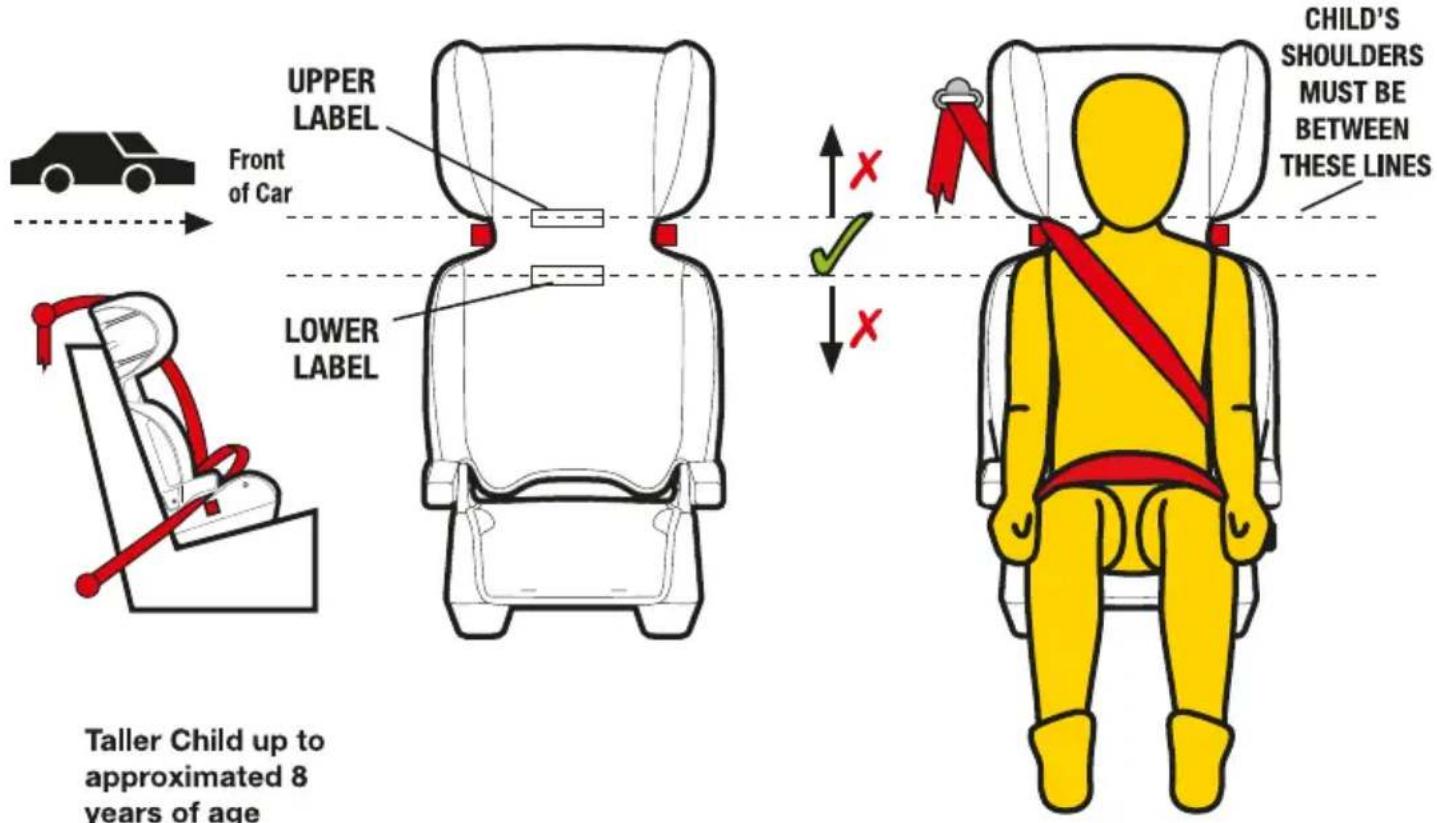
Continue to use this booster seat until the child's shoulders reach the upper shoulder height marker, (Upper Label).
UPPER LABEL
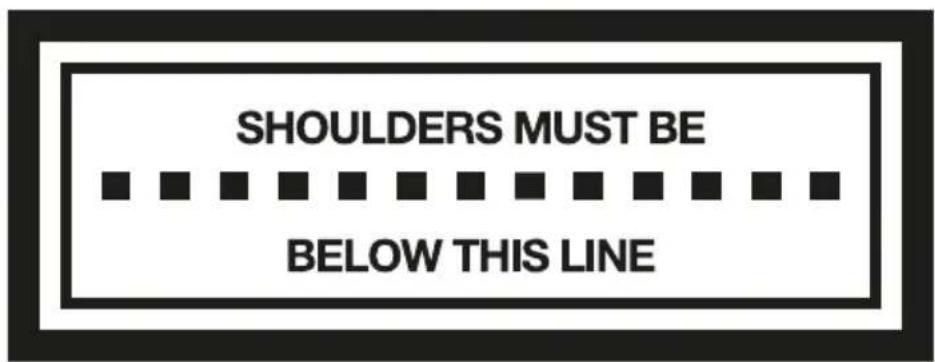
If the child's shoulders reach the shoulder height markers, the child should move to the next type of restraint (See page 4 & 9). Use a larger booster seat, if available, otherwise use seat belt assembly.
Next Restraint
Next Type of Restraint
Refer to the 'RESTRAINT GUIDE' for the selection for the most appropriate next restraint (refer Page 5). When the child has outgrown the booster seat, then you can use either of the following;
- Vehicle Seat Belt – check the "Five Step Test" for suitability.
Five Step Test
Step 1: Can the child sit with their back against the vehicle seat back? (refer Figure 1).
Step 2: Do the child's knees bend in front of the edge of the seat? (refer Figure 2).
Step 3: Does the sash (shoulder) belt sit across the middle of the shoulder, not on the neck or out near the arm? (refer Figure 3).
Step 4: Is the lap belt sitting low across the hips touching the thighs? (refer Figure 4).
Step 5: Can the child stay seated like this for the whole trip? (refer Figure 5).
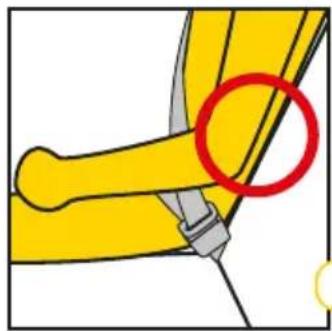
natural_image
Illustration of a yellow robotic arm joint with a red circle highlighting a specific area (no text or symbols present)Figure 1

natural_image
Illustration of a yellow human figure with a red circle highlighting a specific joint area (no text or symbols present)Figure 2
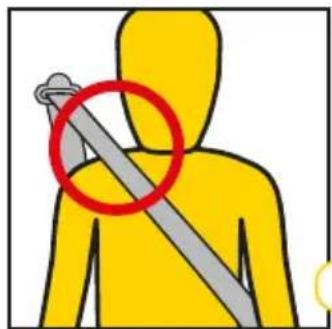
natural_image
Illustration of a person wearing a sword with a red circle highlighting the blade (no text or symbols)Figure 3

natural_image
Illustration of a yellow safety harness with a red circle highlighting the seat area (no text or symbols)Figure 4
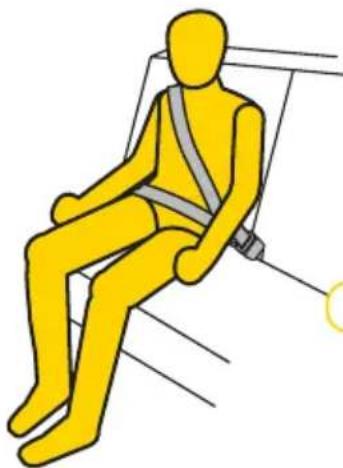
natural_image
Yellow silhouette of a person sitting on a chair wearing a seatbelt and harness (no text or symbols)Figure 5
Installation
Installing in Vehicle
Step 1: Unfold the booster seat and place the booster in the car in a forward facing position (refer Figure 1 & 2).

IMPORTANT
- Seatbelt extenders are not recommended to be used if the seatbelt is not long enough to secure the child restraint. If seatbelts are too short then advice should be sought from a child restraint fitter and their recommendation be considered before using a seatbelt extender.

natural_image
Diagram of a car interior showing seat, seatbelt, and seat cover with directional arrows indicating movement (no text or labels)Figure 1

WARNING
This child restraint is not approved for use with any connectors that connect to the cars ISOFIX low anchorages.

natural_image
Line drawing of a car seat with a red vertical safety belt and arrow (no text or symbols)Figure 2
Using lap-sash seat belt
Step 1: Sit your child in the restraint with their back against the backrest (refer Figure 2).

IMPORTANT
Ensure that you use the BOOSTER BELT PATH
identified by the following label.

Step 3: Position the lap section of the vehicle seat across the child's lap then insert the buckle tongue in to the belt buckle until you hear "CLICK". Ensuring the lap portion is positioned under the armrests and over the child's thighs (refer Figure 3).
Step 3: Remove the seat belt slack by first pulling on the lap belt in the direction of arrow 1 (refer figure 1) then pull the sash belt in the direction of arrow 2. Ensuring the lap portion is positioned under the armrests and over the child's thighs.
Step 4: The shoulder strap passes diagonally across the child's chest and under the headrest (refer Figure 2 and 3, 4 & 5).

IMPORTANT
Refer to shoulder height marker (As shown on pages 5 and 6).

natural_image
Line drawing of a car seat with red tassel and label 'Figure 1' (no text or symbols on the diagram itself)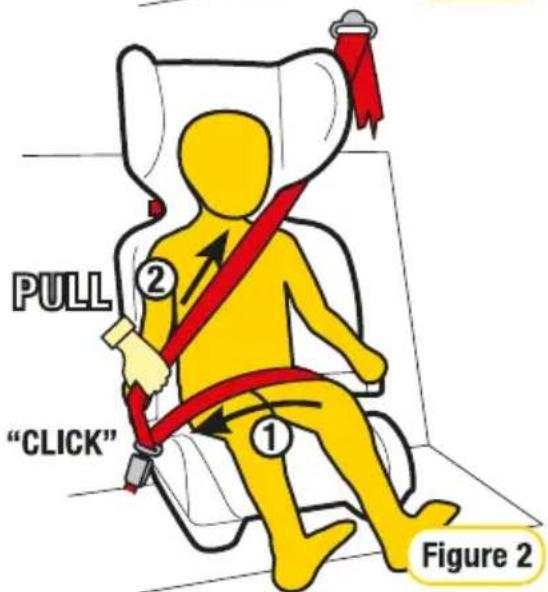

Figure 3
Using lap-sash seat belt

WARNING
DO NOT LEAVE CHILDREN UNATTENDED IN THE CAR.
ALWAYS ENSURE THE SEAT BELT IS SECURED.

WARNING
ALWAYS ENSURE THE SEAT BELT IS SECURED. YOUR CHILD'S LIFE MAY DEPEND ON IT.

REMOVE ALL SLACK FROM SEATBELT
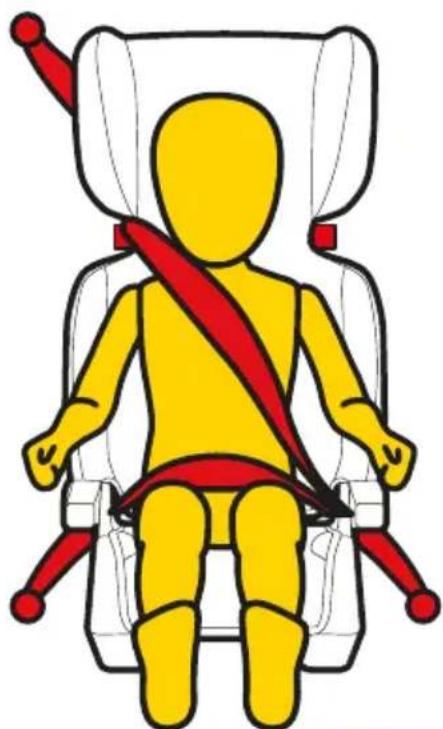
natural_image
Illustration of a yellow car seatbelt with red straps, no text or symbols presentFigure 5
Safety Warning

WARNING
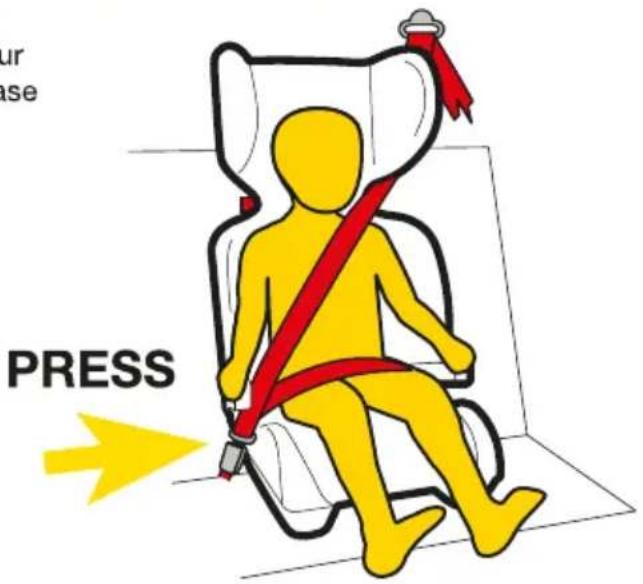
Step 1: To release your child from the restraint simply press the belt buckle and carefully remove your child from the seat. It is not necessary to release the red belt clamp, to remove your child
Note: When the restraint is not in use, the seat belt should be fastened around it and engaged.

WARNING
• Always use lap-sash seat belt and upper anchorage strap to attach the child restraint to the vehicle.
- Do not use the restraint without the upper anchorage strap correctly attached and adjusted.
- Do not use on any vehicle seat which faces sideways or rearwards.
- IF AN AIRBAG IS FITTED IN THE SEATING POSITION WHERE THE CHILD RESTRAINT IS TO BE FITTED, FOLLOW THE VEHICLE MANUFACTURER'S WARNINGS AND INSTRUCTIONS.
• DO NOT USE WITH JUST A LAP BELT. You must use with a lap-sash seat belt
- Ensure the lap belt is correctly positioned on the child's thighs and hips.
- Do not place the seat belt sash under the arm or behind the back of the child.
Care of Restraint
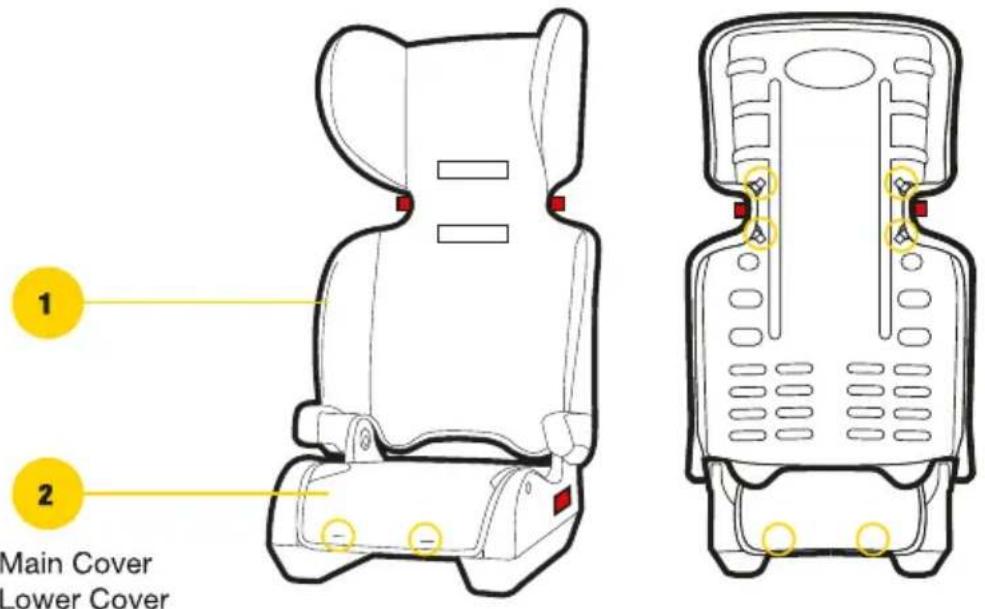
The child restraint cover has been manufactured to meet the Australian Standards requirements for flammability and toxicity to ensure your child's safety. The cover has also been designed to provide your child with comfort and support.
VERY IMPORTANT
Only replace the cover with a InfaSecure supplied replacement cover with identical shoulder height markers or a replacement cover meeting AS/NZS 8005.
Care and Maintenance
Regular care of the restraint will ensure safety of your child.
- Check the webbing for fraying.
- Check the upper anchorage attachment clip to ensure retainer clip is still present.
- Ensure there are no cracks in moulding or the plastic moulding.
- Check the buckles "click" when you engage tongues and is not sluggish or sticky in operation.
- Ensure the buckle is free of fluff, liquid, or other matter that may enter the buckle slots. Clean the buckle if it is sluggish to engage (refer Cleaning Harness Buckle Pages 23 & 24).
- Check the harness adjuster is operating and is clamping the webbing
- If any part of the restraint is cracked or broken, seek repair immediately or replace the child restraint.
Care of Restraint
Cleaning

IMPORTANT
Use only mild soap and water to clean all parts of the CS6013 Booster Seat.
Do not use chemicals or cleaning agents
Cold water only to be used and to be rinsed well
Do not dry clean or tumble dry
Do not bleach.
Covers
The restraint has a flame retardant cover which is removable for cleaning. Cleaning instructions are on the care label attached to the cover. If a fluffy cover is fitted, then washing the cover prior to use will remove excess fluff.
The cover has been designed to protect your child when seated in the restraint.
Care should be taken if children either eat or drink while in the restraint as some food or drink products may cause damage or marking to the cover. Wash or clean immediately. Do not pull sticky items from covers as the cover may be damaged - soak in water and gently remove.
Only machine wash on gentle cycle (hand washing is recommended). When washing the covers, ensure the hook and loop attachment strips are connected to eliminate other materials or garments being caught. Ensure that the hook and loop attachment strips are free of lint, this will ensure a positive engagement.
Seat
Use only mild soap and water to clean all webbing, metal and plastic parts of the restraint using a damp cloth. Do not use chemicals or cleaning agents.
Care and Maintenance
Regular care of the restraint will ensure safety of your child.
(A) Check the webbing for fraying.
(B) Check the upper anchorage attachment clip to ensure plastic retainer clip is still present.
(C) Ensure there are no cracks in the plastic moulding.
Accessories
Follow the instructions covering the use of accessories provided with this child restraint or spare parts provided by InfaSecure for this restraint.
IMPORTANT
Use of unauthorised aftermarket accessories (i.e items not provided in this box with the child restraint), can reduce the safety provided by the child restraint and may cause injury or death.
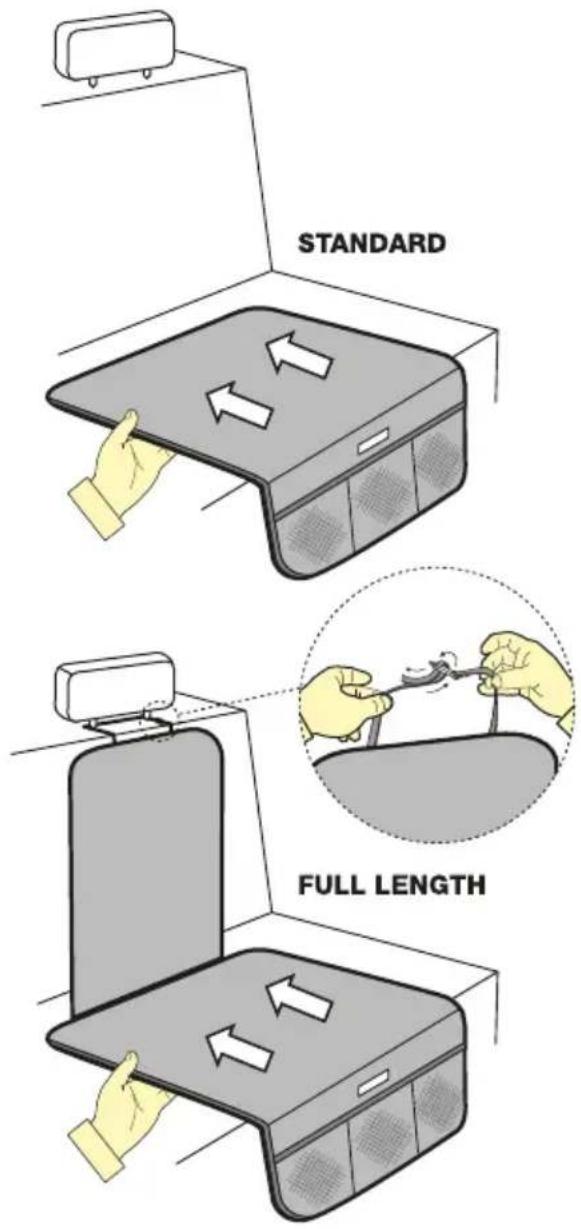
SEAT PROTECTOR (if fitted)
The seat protector is designed to protect your car's seat.
STANDARD
Step 1: Position the front flap with pockets, at the front of the rear seat and position the mat rearwards to obtain a flat fit.
FULL LENGTH
Step 1: Position the front flap with pockets, at the front of the rear seat and position the mat rearwards to obtain a flat fit. (If required an additional flap has been provided to tuck in between the seat back & cushion)
Step 2: Position the back section up the seat back and use the plastic buckle & webbing strap to attach around the vehicle seat headrest (if the rear vehicle seat does not have a headrest then the strap could be used to attach around the child seats top tether after you have installed the child seat).
Insurers Information
If your restraint has been involved in a severe crash, you should destroy the restraint even if no damage is obvious. Some insurance companies offer vehicle insurance which covers or partially covers the replacement of your child restraint. Contact your insurance company for further details.
Your insurance company may require you to keep the child restraint for assessment, but do not use the child restraint after a severe crash. To assist you in making an accident insurance claim cut the following statement and include it with your claim.
NOTICE TO INSURANCE COMPANY CHILD RESTRAINT INVOLVED IN AN ACCIDENT
All InfaSecure child restraints are manufactured to Australian/New Zealand Standards AS/NZS1754 which requires us to advise users of child restraints to "Destroy the entire restraint if it has been in use in a severe crash, even if no damage is obvious".
The Australian/New Zealand Standards committee, advise that this statement applies whether a child was in the child restraint or not. We consider a "severe crash" as being one where the main body structure of the vehicle is distorted.
There is no method of determining if the restraint has been damaged and we concur with the Australian/New Zealand Standards in recommending destruction of the child restraint.
This notice is to advise you of the requirements of the Australian/New Zealand Standards and our obligation in complying with the standards.
Please assist the owner of this restraint in their claim.
INFASECURE PTY LTD ABN: 52 149 173 660
Head Office and Registered Address
110-114 Old Bathurst Rd, Emu Plains, NSW 2750
P.O. Box 487, Emu Plains, NSW 2750
Head Office
P: 02 4728 8000
F: 02 4728 8040
www.infasecure.com.au
Notes:
Notes:
Notes:
Register your product to receive lifetime warranty*, product updates and information.

Please visit infasecure.com.au/warranty-registration to register your product.
InfaSecure Warranty
InfaSecure Pty Ltd warrants this product for twelve months from the date of purchase against failure due to manufacturing faults or faulty materials. Misuse, accidental damages, normal wear and tear are not covered by this warranty.
When used for commercial use the period is limited to six months. "Our goods come with guarantees that cannot be excluded under the Australian Consumer Law. You are entitled to a replacement or refund for a major failure and for compensation for any other reasonably foreseeable loss or damage. You are also entitled to have the goods repaired or replaced if the goods fail to be of acceptable quality and the failure does not amount to a major failure."
Additional Warranty on Blow Moulded Child Restraints
Our blow moulded child restraints are covered against faulty materials and manufacturing when used under normal conditions and according to the instructions.
In the unlikely case that you do have a fault in relation to material quality or manufacturing that restricts your ability to use your Child Restraint normally, we will repair or replace the product within the following warranty periods from date of purchase:
• 12 month warranty for material and fabrics
• 2 year warranty for straps and webbing
- 5 year warranty for hardware and fittings
- Lifetime warranty* on the manufacturing of the seat moulding
Please read your instruction manual carefully before using any of our products.
The above express warranties do not apply where a failure or defect results from improper care, misuse or from normal wear and tear.
Refer to website for more details: www.infasecure.com.au

CHILD RESTRAINT SAFETY PARTNER

infasecure

We are proud to be working with The Wiggles. With their help, we are able to reach more young families with much needed information and advice to keep our little ones safe.

INFASECURE PTY LTD ABN: 52 149 173 660
Head Office and Registered Address
110-114 Old Bathurst Rd,Emu Plains,NSW 2750
P.O. Box 487, Emu Plains, NSW 2750
HEAD OFFICE
Phone No: +61 2 4728 8000
Fax No: +61 2 4728 8040
Email: admin@infa.com.au
CUSTOMER SERVICE
Phone No: +61 2 4728 8090
Fax No: +61 2 4728 8040
Email: service@infa.com.au

Australian
Standard
AS/NZS: 1754:2013
Licence No. 25324-2
SAI Global
- Instruction Manual
- IMPORTANT: KEEP THIS BOOKLET IN THE PLACE PROVIDED ON THE CHILD RESTRAINT (STORED BENEATH COVER)
- Contents
- Booster Seat
- Information
- Child Restraints
- Family Bussiness
- WARNINGS
- WARNING
- DO NOT LEAVE CHILDREN UNATTENDED IN THE CAR.
- Restraint Guide
- Booster Seat (Forward Facing)
- THE SUITABILITY OF THE CHILD RESTRAINT TO GROUPS OF CHILDREN
- TYPE E
- IMPORTANT
- Model CS6013
- Shoulder Height Markers
- Smaller Child
- Taller Child
- Next Restraint
- Next Type of Restraint
- Five Step Test
- Installation
- Installing in Vehicle
- Using lap-sash seat belt
- Safety Warning
- Care of Restraint
- VERY IMPORTANT
- Care and Maintenance
- Cleaning
- Covers
- Seat
- Accessories
- SEAT PROTECTOR (if fitted)
- STANDARD
- FULL LENGTH
- Insurers Information
- NOTICE TO INSURANCE COMPANY CHILD RESTRAINT INVOLVED IN AN ACCIDENT
- Notes:
- InfaSecure Warranty
- Additional Warranty on Blow Moulded Child Restraints
Brand : InfaSecure
Model : Versatile Folding
Category : Car seat