
Viking 205 - Symaskine HUSQVARNA - Gratis brugsanvisning og manual
Find enhedens vejledning gratis Viking 205 HUSQVARNA i PDF-format.


Brugerspørgsmål om Viking 205 HUSQVARNA
0 spørgsmål om dette apparat. Besvar dem du kender, eller stil dit eget.
Stil et nyt spørgsmål om dette apparat
Download vejledningen til din Symaskine i PDF-format gratis! Find din vejledning Viking 205 - HUSQVARNA og tag din elektroniske enhed tilbage i hånden. På denne side er alle dokumenter nødvendige for brugen af din enhed offentliggjort. Viking 205 af mærket HUSQVARNA.
BRUGSANVISNING Viking 205 HUSQVARNA
Operating manual
Model 225, Model 215 and Model 205
Manual de instrucciones
Modelo 225, Modelo 215 y Modelo 205
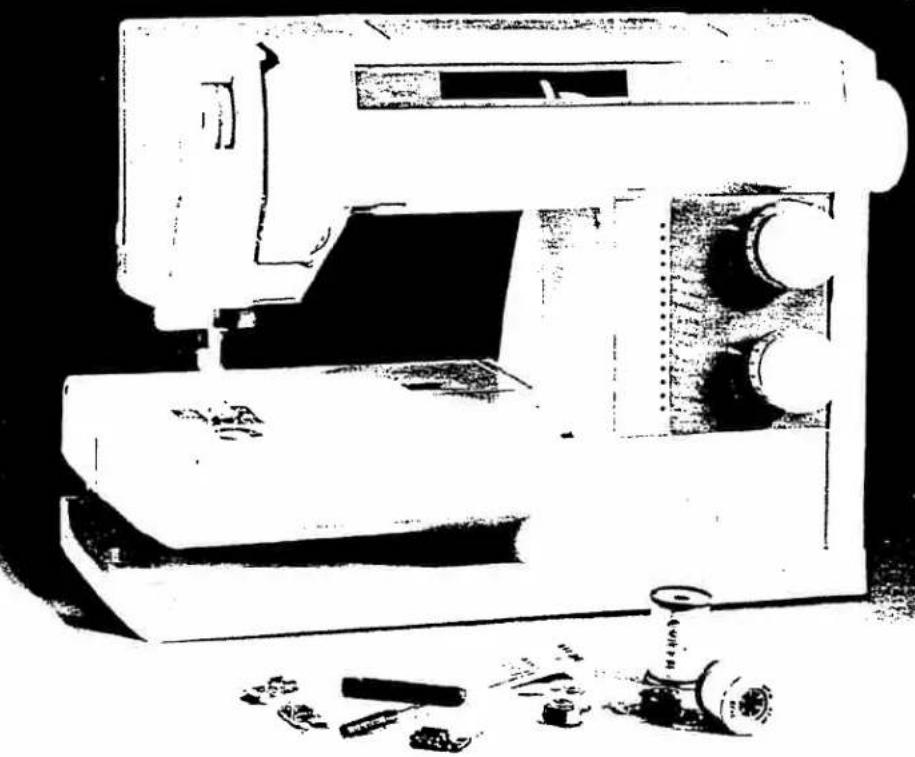
natural_image
Black-and-white illustration of a sewing machine with tools and components, no visible text or symbols.IMPORTANT SAFETY INSTRUCTIONS
When using an electrical appliance, basic safety precautions should always be followed, including the following:
Read all instructions before using this household sewing machine
DANGER
To reduce the risk of electric shock:
- Do not leave sewing machine when plugged in. Turn off the switch and unplug from electric outlet the electric cord when not in use or before servicing
● Always unplug before relamping. Replace bulb with same type rated 15 Watts
WARNING
To reduce the risk of burns, fire, electric shock, or injury to person:
● Do not use outdoors or on wet surfaces.
- Do not allow to use as a toy. Close attention is necessary when used by or near children.
- Use only as described in this manual. Use only manufacturer's recommended attachments.
- Do not use with damaged cord or plug. If sewing machine is not working as it should has been dropped or damaged, left outdoors, or dropped in water, return it to the nearest authorized delaer or service center before using.
● Never operate the sewing machine with any air openings blocked. Keep ventilation openings of sewing machine and foot controller free from the accumulation of lint, dust, and loose cloth.
● Never drop or insert any objects into any opening.
● To disconnect, turn the switch off, then remove plug from outlet.
- Do not unplug by pulling on cord. To unplug, grasp the plug, not the cord.
- Do not operate where aerosol (spray) products are being used or where oxygen is being administered.
- Keep fingers away from all moving parts. Special care is required around the sewing machine needle.
● Always use the proper needle plate. The wrong plate can cause the needle to break.
● Do not use bent needles.
- Do not pull or push the fabric while stitching. It may deflect the needle causing to break.
- Switch the sewing machine off when making any adjustments in the needle area, such as threading needle, changing needle, threading bobbin, or changing presser foot, and the like.
● Always unplug the sewing machine from electrical outlet when removing covers, or when making other user servicing adjustments mentioned in the instruction manual. No lubrication by customer is recommended.
- Keep your work area well lighted.
SAVE THESE INSTRUCTIONS
Models covered in this manual: S225/225, S215/215 and 205. All models might not be available in all markets.
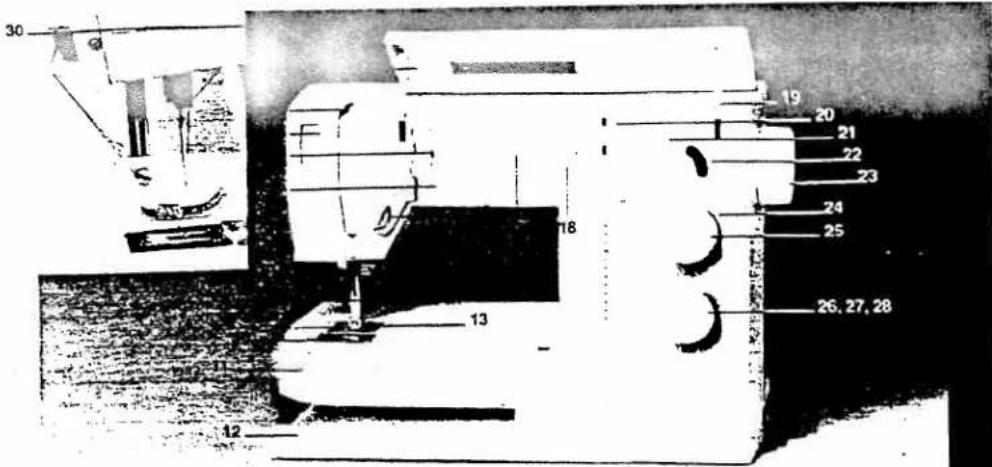
Summary
- Door
- Thread take-up lever
- Presser foot pressure dial
- Thread guide
- Thread guide for bobbin winding
- Light
- Needle bar with needle clamp
- Presser bar with presser foot ankle
- Presser foot
- Bobbin cover
- Free arm
- Base plate
- Needle plate
- Needle clamp screw
- Presser foot lever
- Thread tension dial
- Spool pin
- Bobbin area
- Thread cutter bobbin winding
- Recess for additional spool pin
- Stitch variation
- Bobbin spindle
- Hand wheel
- Stitch width dial
- Stitch selector
- Stitch length dial
- Reverse
- Drop feed teeth
- Connection to power supply
- Thread cutter
La máquina y sus partes – nomenclatura
- Tapa
- Palanca tira-hilo
- Regulador de la presión del prensatel
- Guía-hilo
- Guía-hilo del devanador
- Luz
- Soporte agujas con sujeción de la agu
- Barra del prensatelas con cuerpo o prensatelas
- Pie prensatelas
- Tapa de protección cápsula
- Brazo libre
- Zócalo
- Placa de aguja
- Tomillo de' sujeción de la aguja
- Palanca de elevación del prensatela
- Regulador de la tension del hilo
- Porta-carretes
- Cesto bobina
- Cortador de hilos devanado
- Entalladura/Agujero para porta-corre extra
- "Stitch variation" - "variación de puntad
- Eje del canillero
- Volante
- Regulador de amplitud de puntadas
- Selector de puntada
- Regulador de longitud de puntadas
- Marcha atrás
- Descenso del transportador
- Conexión eléctrica
- Cortador de hilos
Unpacking
- Place the machine on the table or cabinet and lift off the cover.
- The foot control is stored at one of the side parts of the packing material. Press the foot control together and remove it.
- The machine is delivered with a plastic cover, an accessory bag, a main cord and a foot control cord.
- Wipe the machine, particularly around the needle and needle plate to remove any soil before sewing.
Desembalaje
- Poner la máquina encima de la meso o trabajo y levantar la cubierto
- El pedal esta situado en uno de los lotrales. Comprima el pedal y saqueic
- La máquina está equipada con un cubierta de plástico, una boisa de accesorios, el cable para la rea y el cable a pedal.
- Limpiar la máquina, especialmente o readeor de la aguja y la piaca de agua
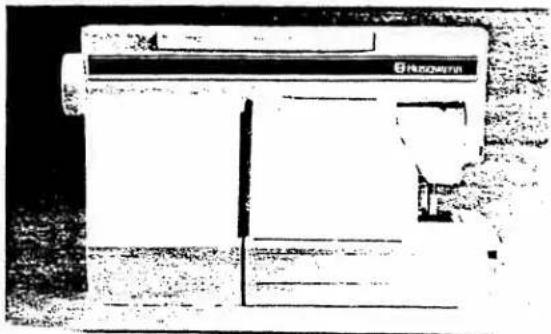
Packing away after sewing
- Unplug the cords from the wall socket and the machine.
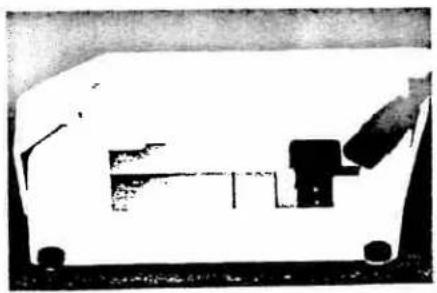
- Wind the cords around your hand and place the foot control cord in the foot control storage space and the main cord in the pocket of the plastic cover. There is also space provided for the operating manual.
- Check to ensure that all accessories are in the accessory tray. Slide it onto the machine behind the free arm.
- Lower the presser foot.
- Place the foot control, underside toward you, on the accessory tray at the back of the machine. Fold up the handle and replace the cover.
Embalaje después de coser
- Sacar el enchufe de la red y de la máquina.
- Luego enrollar los cables alrededor de la mano e introducir el cable del pedal en el hueco del pedal y el cable de la red en el bolsillo de la cubierta. Allí también hay sitio para el manual de instrucciones.
- Asegurarse de que todos los accesorios estén en la caja de accesorios. Luego colocarla debajo del brazo libre.
- Bajar el prensatelas.
- Colocar el pedal dentro de la caja de accesorios, con la parte que se apoya en el suelo contra ésta. Levantar el asa abatible y colocar la cubierta.
natural_image
Simple line drawing of a vehicle interior with no text or symbolsConnecting the foot control
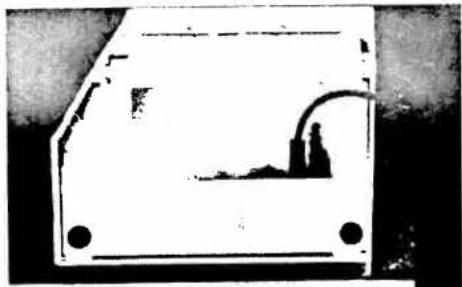
Among the accessories you will find the foot control cord and the main cord.
- Remove the foot control cord.
- Place the foot control on its narrow side. Fit the plug into the socket inside the foot control compartment, push the plug.
- Push it firmly to make sure it is properly connected. This operation is only necessary the very first time you are going to use the machine.
- To correctly turn away the cord, place it into the slot, see picture.
natural_image
Pure electrical circuit lines without any symbolsConexión del pedal
El cable del pedal está entre los acessrios. Este cable ha de conectarse al mano de pie.
- Sacar el cable del pedal
- Ponga de canto el pedai. Introducir clavija pequeña en el zócalo dentro a mando de pie e según la figura
- Controlar que la clavija de contacto e tà bien fija. Esto solo ha de hacerse la primera ve cuando se desembala la maquina
- Para poder desenrollar correctamen el cable, colóquelo en la ranura segla ilustración.
Connecting to the power supply
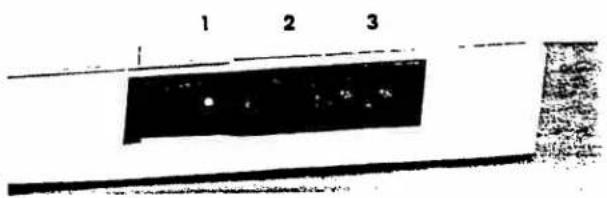
- When you press the power switch, both the machine and the light are switched on.
- Connect the foot control cord to the socket in the middle on the bottom right side of the machine.
- Connect the main cord to the back socket on the bottom right side of the machine.
On the underside of the machine you will find information about the power supply (V) and the frequency (Hz). Check the power supply setting in the machine to ensure that this agrees with the main supply before you connect the machine.
Conexión eléctrica
- Al pulsar el interruptor principal, se c necta la máquina y la iluminación.
- Conectar el cable del pedal en la ent lladura central abajo en el lado derech de la máquina.
- Conectar el cable de la red en el enchte trasero, debajo del lado derecho de la máquina.
Debajo del zócalo están indicadas la sesión (voltaje) y la frecuencia (Hz). Antes o conectar la máquina a red, asegurarse que los valores indicados coincidan con la de la red.
natural_image
Black-and-white illustration of a mechanical assembly or machine with no visible text or symbolsAccessory tray
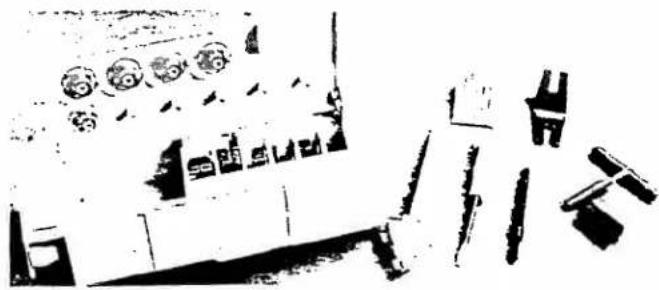
Open the Accessory Tray by placing your finger in the space on the top and lift upward.
In the Accessory Tray there are special spaces for presser feet and bobbins plus space for other accessories. Store the accessories in the tray from the beginning so they are always easily accessible (refer to the figure).
Caja de accesorios
Abra la caja de accesorios poniendac aedo en la entaliadura de la tapa leva tándola hacia armpa
En la caja de accesorios hay compartimentos especiales para los
pies de prensatelas, canillas y otros accesos nos. Poner los accesarios en la caja o manera que siempre sean accesibles (ve foto).
natural_image
Close-up of a sewing machine needle stitching fabric (no visible text or symbols)Extended sewing surface
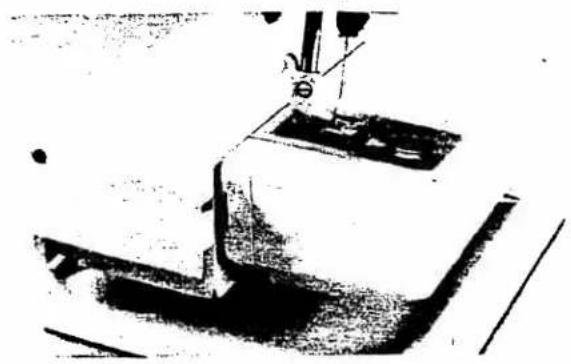
Slide the Accessory Tray onto the machine to provide a larger flat bed work surface. Slide the Accessory Tray to the left when you wish to remove it and use the free arm. To facilitate sewing trouser legs and sleeve hems use the free arm. The free arm also allows you to darn socks (darning foot as an accessory. Extension table to provide an even larger work surface, is available as an accessory).
Superficie de trabajo
Dejar la caja de accesorios en la máquina cuando se necesite una mayor superficie de trabajo.
Cuando se utiliza el brazo libre, sacar la caja de accesorios hacia la izquierda. El brazo libre permite coser fácilmente mangas o perneras, así como coser cuellos, puños y zurcir calcetines y medias (el prensatelas de zurcido - accesorios especiales).
Cuando se necesite todavía una mayor superficie de trabajo, hay una mesa de prolongación como accesorio especial.
natural_image
Black-and-white photo of a building interior with windows and a large window (no visible text or symbols)Spool pin
The machine has spool pins suitable for all types of thread. One of the spool pins is adjustable – the thread reels off the stationary spool. Place the spool so that the thread reels counter-clockwise.
There are two spool holders on the spool pin. With narrow thread spools, the small holder is placed in front of the thread. If you use large thread spools, the large holder is placed in front of the thread.
There is also a separate spool pin to be attached onto the machine. The fingers on the extra spool pin fit into the two holes to the right of the fixed spool pin. Push downward to snap in place.
The large spool holder is placed under the thread.
This spool pin is used when winding a bobbin from a second spool of thread or for a second spool when sewing with a twin needle.
Porta-carrete
La máquina tiene los porta-carretes a adapta a todo tipo de bobinas. Se p utilizar en posición diferentes - el h desenrolla y la bobina está parado. El porta-carrete esta equipado con do cos guía-hilo.
Si se tienen bobinas pequeñas se debiner el disco pequeño delante de la baj. Si se tienen bobinas grandes, se debiner el disco grande delante de la baj. La máquina también tiene un porta-csuelto que se monta en la máquina. El cho del porta-carrete se introduce dos agujeros a la derecha del porta-cte fijo empujándolo hacia abajo.
El disco grande se coloque como zo Este porta-carrete se utiliza al bobinar radamente o al coser con una aguj mela.
natural_image
Pure electrical circuit lines without any symbols
natural_image
Black-and-white sketch of a cylindrical object with textured surface and small rectangular elements below (no text or symbols)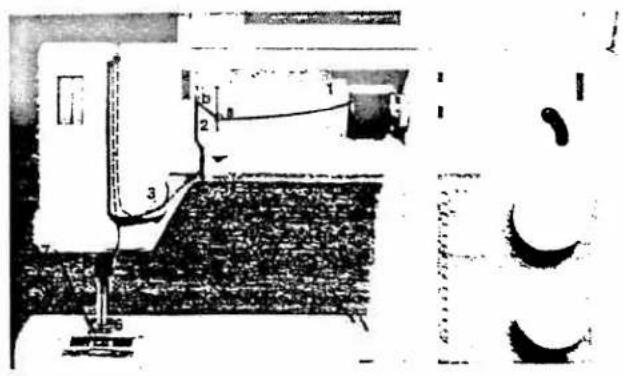
Threading the upper thread
Make sure the presser foot is raised and the needle is in the up position.
- Place the thread on the spool pin and the spool holder on the spool pin as described above.
- Bring the thread under the thread guide (a) and over the thread guide (b).
- Bring the thread down between the thread tension discs.
- Continue threading by drawing the thread from the right into the slot on the take-up lever.
- Thread last guide just above needle.
- The needle is threaded from front to back. The white on the presser foot ankle makes it easy to see the eye of the needle.
- Place thread under the presser foot and into the thread knife where it is cut.
Enhebrado del hilo superior
Asegurarse de que el prensatelas y la aguja se encuentran levantados.
- Poner el carrete del hijo sobre el porta carrete y poner el disco sobre el porta carrete como está indicado arriba
- Pasar el hilo debajo el guía-hilo (a) encima el guía-hilo (b).
- Luego pasar el hilo hacia abajo entre lo dos discos de tensión.
- Pasar el hilo desde la derecha en la ra nura del tira-hilo.
- Continuar pasando el hilo hacia abajo por el guía-hilo.
- Enhebrar la aguja de adelante hacia atrás. Gracias a la superficie blanca de contraste del cuerpo del prensatelas, se observa facilmente el agujero de la aguja.
- Finalmente tirar el hilo hacia atrás por debajo del prensatelas y luego hacia arriba a través del corta-hilo, donde el hilo es cortado.
natural_image
Abstract black ink brushstroke on white background (no text or symbols)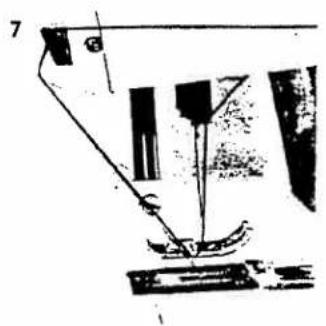
natural_image
Pure mechanical diagram showing a sewing machine needle and base structure without any text or symbols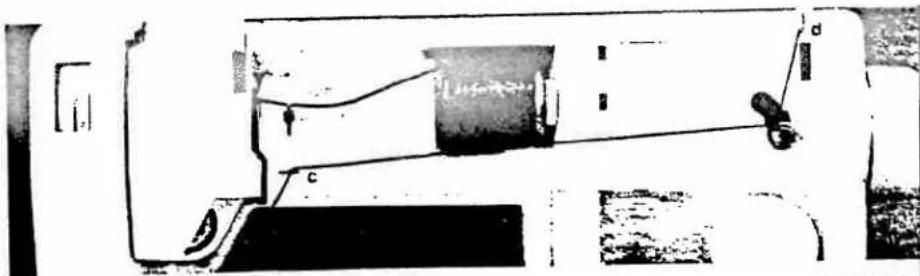
natural_image
Mechanical assembly diagram showing a motor with labeled parts (no readable text or symbols)Bobbin winding with the machine threaded
Place your empty bobbin with the small mark Ⓗ outwards on the bobbin spindle on the front of the machine. Bring the bobbin spindle down.
Pull the thread from the needle under the presser foot and to the right over the thread guide (c).
Start from above and wind a few turns of thread around the bobbin.
Cut off the thread on the thread knife (d). Press the foot control. When the bobbin winding is finished, remove the bobbin, cut off the thread and bring the bobbin spindle up.
Devanado de la canilla
Colocar la canilla vacía en el eje del car llero, en el frente de la máquina con marca circular (ñ) hacia fuera
Conduzca el eje del canillero hacia aba Pasar el hilo de la aguja, por debajo del p del prensatelas y hacia la derecha hacie dolo pasar por encima del guia-hilo (c).
Después, comenzar por arriba y dar un cuantas vueltas al hilo en la canilla Cortar el hilo con el cortador (d).
Presionar sobre el pedal.
Al terminar el bobinaje saque la canilla, p sa el hilo por el corta-hilos y conduzca el e del canillero hacia arriba.
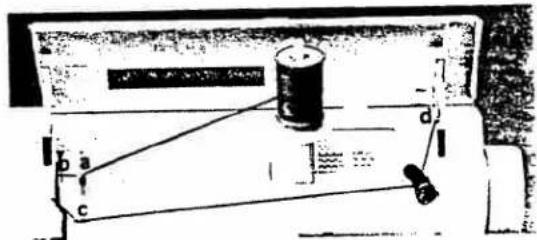
Bobbin winding – vertical spool pin
Place an empty bobbin with the mark (8) outwards on the bobbin spindle and bring it down. Place the large spool holder under the thread on the spool pin. Bring the thread under the thread guide (a) and over thread guide (b), further under thread guide (c). From above wind a few turns of thread around the the bobbin and into the thread knife. Press the foot control. When the bobbin winding is finished, remove the bobbin, cut off the thread and bring the bobbin spindle up.
Devanado - porta-carrete vertical
Poner una canilla vacía con la marca hacia fuera sobre el eje del canillero y co dúzcalo hacia abajo.
Pasar el hilo debajo el guía-hilo (a) y en ma el guía-hilo (b), después debajo el gu hilo (c). Dar unas cuantas vueltas al hi sobre la canilla.
Pasar el hilo por el corta-hilos y cortarlo. Presionar sobre el pedal.
Al terminar el bobinaje saque la canilla, pi sa el hilo por el corta-hilos y conduzca el el del canillero hacia arriba.
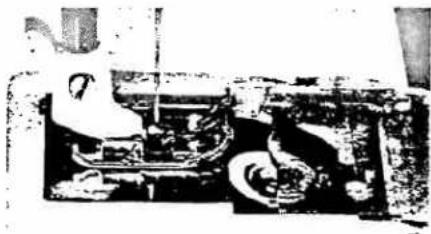
natural_image
Mechanical assembly diagram showing internal components and gears (no visible text or labels)Placing the bobbin in the machine
Open the cover by pulling it towards you and take it away.
Place the bobbin in the bobbin case with the mark 📄 facing upward.
Push down on the bobbin while drawing the thread to the right passing (a), then to the left between the tension spring. Continue threading around (b) and cut off the thread in the thread knife (c).
Replace the cover and shut it into position.
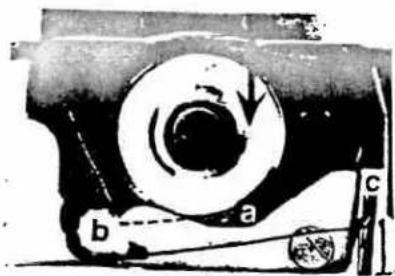
natural_image
Close-up of a mechanical device with labeled parts (a, b, c), no readable text or symbols beyond labelsEnhebrado del hilo inferior
Abrir la tapa tiránola hacia Va. Saque tapa. Poner la canilla en la cápsula con marca hacia arriba.
Aguante la canilla. Pasar el hilo hacia l derecha pasando el punto (a), después la izquierda entre el muelle de tension. Lué go pasar el hilo alrededor del punto (b) cortándolo con el corta-hilos (c).
Devuelva la tapa y colóquela en su pos ción.
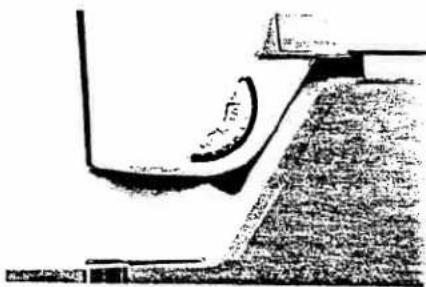
natural_image
Simple line drawing of a boat hull with hull and hull details (no text or symbols)Thread tension
You can adjust the thread tension by turning the dial which is numbered. The higher the number the tighter the tension. Normal thread tension is number 4.
When sewing buttonholes and decorative stitches set thread tension to number 3.
When topstitching with a coarse thread in thick fabrics, increase the tension to 7-9.
Tensión del hilo
También se puede modificar la tensión de hilo girando el mando de regulación de lo tensión graduado. Cuanto más alto la cifra más fuerte la tensión. La cifra 4 corresponde a la tensión normal del hilo.
Para ojales y otras costuras espesas se obtiene una buena tensión del hilo en la cifra 3.
Si va a pespuntear con hilo grueso sobre material grueso, aumentar la tensión de hilo hasta la posición 7 a 9.
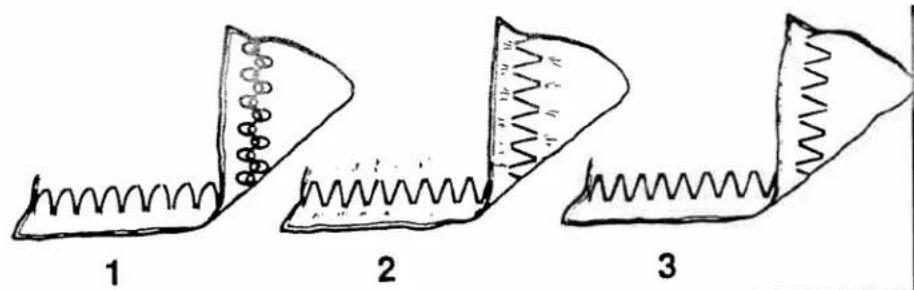
natural_image
Three hand-drawn diagrams showing a wavy object with internal springs, labeled 1, 2, and 3 (no text or symbols on the objects themselves)Correct and incorrect thread tension
To understand the correct thread tension, sew a few sample stitches at different settings.
- Begin with a tension that is too loose, i.e. the dial set at "1". The lower thread will lie straight and the upper thread will be drawn down on the underside.
- If you set the dial at the highest number, the opposite will occur, and the seam may pucker.
- The correct thread tension is provided when the threads interlock in the middle of both layers of material or, in the case of decorative stitches, on the underside.
Make a few tests on a scrap piece of the material you are going to use and check the tension.
Tensión de los hilos correcto incorrecta
Para comprobar cual debe ser la tensid correcto del hilo, lo más simple es realiz varias costuras, modificando en cada un la tensión.
- Comenzar con una tensión muy floja sea, girar el mando de regulación de tensión aproximando lo al "1". Examin la costura: el hilo inferior está tenso mie tras el hilo superior arruga el tejido en parte interior.
- Si se sitúa el mando de regulación en número más alto se obtendrá un efecto contrario, es decir, el tejido se arrugar
- La tensión correcto de los hilos se o tiene cuando la unión de los mismos produce en la mitad de las dos cap de tejido, o bien en la parte inferior coser costuras decorativas.
Siempre hacer una prueba en un trozo d género igual al que se desee coser y co- trolar la tensión de los hilos.
Changing the needle
- Loosen the screw in the needle clamp.
- Remove the needle.
- Push up the new needle with the flat side away from you until it will go no further.
- Tighten the screw properly.
Always use needles of system 130/705H.
Cambio de la aguja
- Aflojar el tornillo del soporte-aguj con el destornillador.
- Sacar la aguja.
- Introducir la aguja de abajo a arrib (la superficie redondeada had adelante) empujándola hasta su t pe.
- Apretar fuertamente el tornillo. Utilice siempre agujas del sistem 130/705H.
natural_image
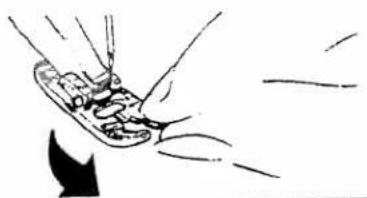
Illustration of a hand holding a small object with motion lines indicating movement (no text or symbols)Changing the presser foot
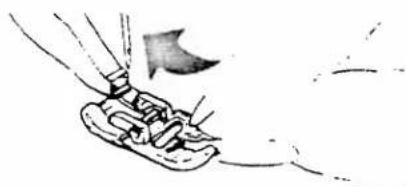
- Make sure that the needle is in the highest position. Pull the presser foot down and towards you.
- Line up the cross pin on the foot between the spring and the presser foot ankle.
Press down and back until the foot snaps into place.
natural_image
Illustration of a hand holding a small object with motion lines, no text or symbols presentCambio del prensatelas
- Poner primero la aguja en su posicio más alta. Empuiar el prensatelas ligermente hacia abajo y hacia adelante
- Introducir el pasador transversal o prensatelas entre el cuerpo de este y muelle.
Empujar oblicuamente hacia abajo y had atrás hasta que el pie encaje.
Presser foot pressure
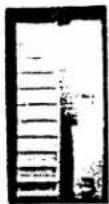
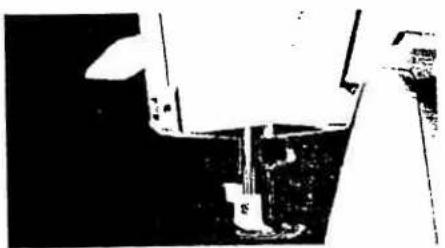
The presser foot pressure is adjusted with the dial on the front of the machine. The higher the number the more pressure on the fabric. Soft fabrics should be sewn at low pressure.
Presión del pie del prensatelas
La presión del pie del prensatelas se efectúa mediante una rueda graduado de ajuste situada en el lado izquierdo a la máquina. Cuando mayor sea el número de regulación, mayor será la presión en el prensatelas. Telas finas se cose con una presión baja del prensatelas
natural_image
Pure mechanical assembly diagram without any text, numbers, or symbolsPresser foot lever
The presser foot is raised and lowered with the presser foot lever. The presser foot must be lowered when sewing. By raising the presser foot lever as far as it goes and holding it there, the lift height can be increased by several millimeters. This is useful when sewing heavy materials.
Palanca de elevación del prensatelas
Por medio de la palanca se sube o baja el prensatelas. Al coser el prensatelas debe estar en su posición interior. Elevando el prensatelas lo más alto posible y manteniéndalo así se puede incrementar la altura de elevación en algunos mm, más. Esto puede ser útil en la costura de género muy gruesos o al pasar sobre costuras.
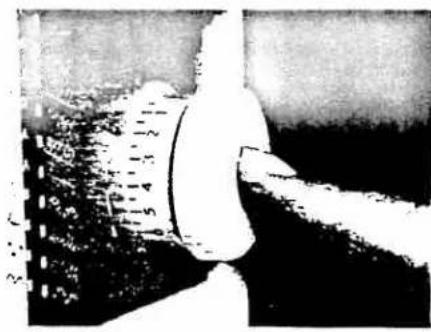
natural_image
Close-up of a mechanical component with a cylindrical shaft and flange, no visible text or symbolsReverse
Your machine sews backwards when the stitch length dial is pressed. The machine sews forward when the dial is released. For permanent reverse, turn the stitch length dial to position η.
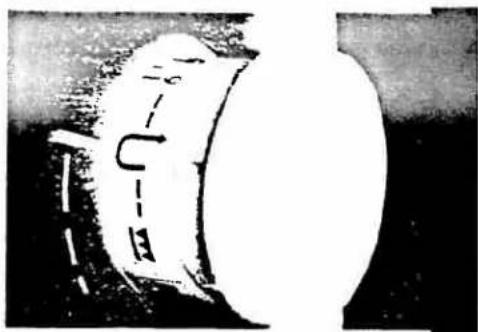
natural_image
Pure electrical circuit lines without any symbolsMarcha atrás
La máquina cose hacia atrás cuando se presiona el volante para la longitud de puntadas. La máquina cose de nuevo hacía adelante al soltar el volante. La máquina se puede bloquear en la posición marcha atrás al girar el volante para la longitud de puntadas hasta la posición η
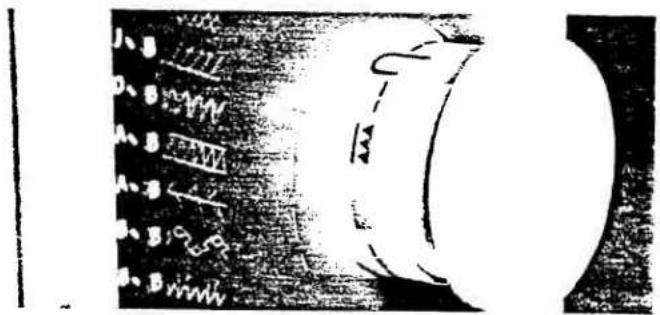
Lowering the feed teeth
The feed teeth are lowered when you turn the stitch length dial to the right to ____. Turn the dial to the left if you wish to raise the feed teeth. The feed teeth will not come up until you begin to sew.
The feed teeth are lowered when sewing buttons and for free-hand work.
Bajada del transporte de dientes
Se baja el transporte de dientes, girando el regulador desde la derecho en ____ y se sube girando el regulador desde la izquierda. Los dientes del transporte se alzan automáticamente al empezar a coser.
La bajada del transporte de dientes se requiere para coser botones y para operaciones de remendar.
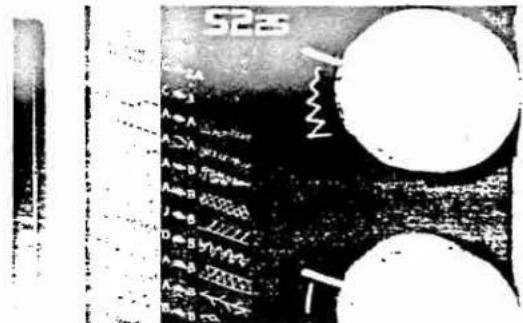
Stitch selection
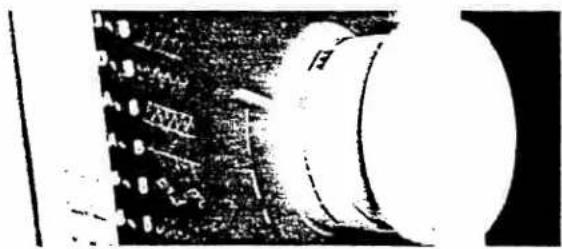
Your machine will sew all the stitches pictured on the front. The stitch is set by turning the stitch selector – the upper dial. A colored marker lines up while turning the stitch selector, showing which stitch is set. Check that the needle is in its highest position before you turn the stitch selector. The lower dial is to adjust the stitch length. The stitches are divided into two groups. Forward motion and trimotion stitches. The stitch length for the left group, forward motion stitches, can be varied between 0 and 6 and the width between 0–5.5. Recommendations for the suggested stitch length are given next to the stitches.
Selección de puntada
En la parte frontal de la máquina se encuentra el selector de las costuras que puede realizar con ella. La costura desde se obtiene girando el selector de punta. Un cursor de color se mueve simultanamente al girar el selector de puntada muestra la que ha sido seleccionada. Co trolar que la aguja este en su posician m alta al girar el selector de puntada. Con volante inferior se cambia la longitud puntadas. Las costuras están divididas dos grupos. Para las del grupo a la izquierda, la longitud de puntada puede var entre 0 y 6 mm y la amplitua entre 0 - 5 mm. Delande de respective puntada presenta información sobre la regulación más conveniente al tipo de costura seleccionada.
natural_image
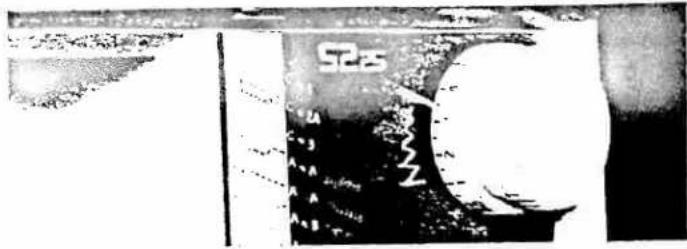
Close-up of a mechanical component with circular features and a central circular feature (no visible text or symbols)When you wish to use one of the stitches in the right group, the trimotion stitches, you turn the stitch length dial to the left until it reaches the orange area ----. The stitch length is set for these stitches. The stitch width can be set between 0–5.5. There are letters between the stitch pictures which indicate the most suitable presser foot for each stitch. The letter is also marked on the presser foot.
Cuando quira realizar alguna de las costuras del grupo a la derecha debe girar regulador de longitud de puntada a la quería, hasta la zona anaranjada ---- Esto significa que esas costuras tendrá ahora una longitud incorporada fija. La amplitud de puntada puede regular entre 0,5,5 mm. Entre los simboios de costuras ha letras que indican el prensatelas más apropiado para cada costura. La misma letra s encuentra en el prensatelas.
Stitch width
When you select a stitch the machine automatically sets the best stitch width. By turning the stitch width dial (placed inside the stitch selector) you can change the stitch width. The width is numbered 0–5.5. By setting the stitch width dial at 2.5 you can halve the width of the stitches. Most of the stitches will then get a different look and you have a selection of "new" stitches.
Amplitud de puntada
Cuando se elige una costura, la maque seleccionará automáticamente la amtud de puntada adecuada La amplitua de puntada se puede camb mediante el selector de puntada, graduado en medio milímetros entre 0–5.5 mm tuado al interior del selector de puntada. Al poner el selector de puntada en 2.5 parte a medias la amplitua de las puntas. La mayoría de las puntadas obtien un aspecto nuevo y se obtiene un rume de puntadas nuevas.
Stitch length
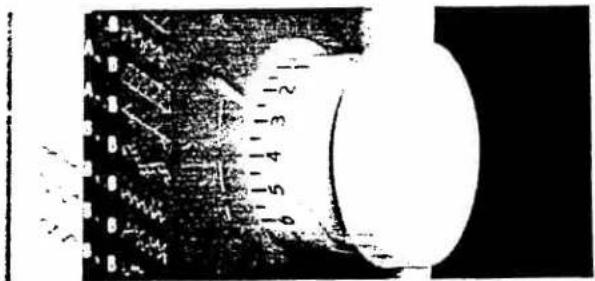
Recommendations for the suitable setting are given next to the forward motion stitches. Always use the recommended setting to start with but experiment until you arrive at the exact setting for the actual work you will be doing.
Longitud de puntada
Cuando una puntada ha sido seleccion do se muestra la información sobre la long tud más adecuados a la costura en tel normales. Empiece siempre por la longitud de punt da recomendada; después podra ir bu cando la longitud de puntada que con- dera más perfecta para la labor en cue tion.
Buttonholes

Ojales

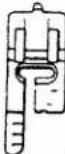
Use presser foot C.
The buttonhole foot has guide lines to determine buttonhole length. Place the button on the presser foot against the needle and you will be able to see which line on the foot corresponds to the button.
Utilizar el prensatelas C
Las graduaciones pueden también ser: utzadas para obtener un borde regula a potón. La rave del medio sobre el prensate las C indica un borde de 1,5 cm
El botón se coloca aespues sobre el prensa telas contra la aguja y se puede ver de esta manera qué raya del prensateías corres ponda al botón.
There is a small finger at the back of the presser foot. For a corded buttonhole loop your cord around the finger as illustrated.
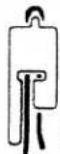
En la parte trasera del prensateías hay un talón. Cuando se utiliza un hito de retuerzo cebe ser enganchado en el talon como indica la figura.
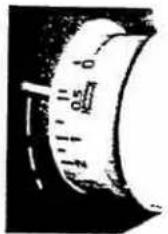
For better visibility the machine sews buttonholes away from you.
- Set the stitch length dial to buttonhole, symbol. Set the stitch selector to buttonhole, symbol 1. Sew until your stitching reaches the line on the foot that matched your button.
- Turn to symbol 2-4. Now the machine will stitch the bar tack. Sew three or four stitches.
- Turn to symbol 3. Sew the other column the same length as the first one.
- Turn back to symbol 2-4. The machine will stitch the final bar tack. Sew three or four stitches. Turn the stitch width dial to 0 and lock the threads with a few stitches.
¡Atención! La máquina comienza a coser los ojales en marcho atrás.
- Gire el regulador de longitud de punta- da hacia el símbolo ojales. Gire el selec- tor de puntada hacia ojales, símbolo 1. Cosa el primer borde. Pare al alcanzar el largo desegdo.
- Gire al simbolo 2-4. La máquina cose la primera presilla. Haga unas 3-4 puntadas.
- Gire al símbolo 3. Cosa el otro borde del ojal del mismo largo que el primero.
- Gire otra vez al simbolo 2-4. La máquina cose la segunda presilla. Haga 3-4 puntadas. Gire, finalmente, el regulador de amplitud de puntada al 0 y haga una puntadas de remate.
Sewing buttons
Costura de botones
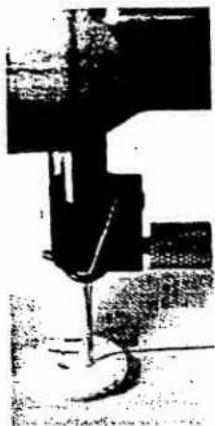
Lower the feed teeth 📄. Snap off the presser foot, place the button and lower the presser bar ankle to hold the button in place.
Turn the stitch selector to zig-zag. Turn the handwheel towards you and check to be sure that the needle goes into the holes of the button. Sew 5-6 stitches and then move to the next pair of holes. Set the stitch width dial to 0 and lock the threads with a few stitches.
natural_image
Pure mechanical component diagram without any text, numbers, or symbolsBajar el transporte 🐘. Sacar e: pren las
Colocar el botón en la tela y balaría
prensatelas. Girar en zig-zagrar el volante manual y asegse de que la aguja coinciados los agujeros del boton. Coser 5-6 puntacas Conta con el próximo boton. Gira e gulador de amplitua de puntal 0 y haga una puntacas a mate.
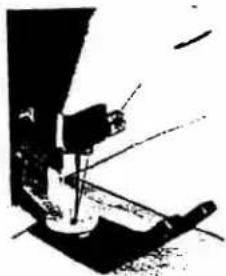
Use the clearance plate to sew button with a shank. Use the thin end when sewing buttons on light fabrics, the thick end for heavier fabrics.
Push in the plate between the button and the fabric. Lower the presser bar and sew on the button. Pull the threads between the button and the fabric. Wind the threads a few times around the shank and tie the ends.
natural_image
Pure mechanical assembly diagram without any text, numbers, or symbolsA menudo se necesita cose botón con "cuello". Para ello empleo el suplemento para tones. La parte delgado para la mediana y la parte más gsa, para géneros pesados.
Colocar el suplemento entre botón y el género y coser el bo como se indicó antenorme Retirar el suplemento, meter hilos entre el botón y el géndándoles unas cuantas vue alrededor del "cuello" y fmente hacer un nudo, corta los hilos sobrantes.
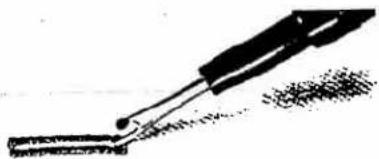
Buttonhole knife
The knife is used to cut buttonholes. It is also useful for removing stitches sewn in error.
Abridor de ojales
El abridor de ojales se utiliza para abrir ojales. Sirve también para abrir costo erróneamente cosidas.
natural_image
Simple line drawing of a pen or stylus with a handle, no text or symbols presentStraight stitch

Costura recta

Straight stitching ---- is used to join fabric which does not stretch and for seams which will not be subjected to great strain. Turn the stitch length dial to the recommended setting 2.5 to start with but experiment until you arrive at the exact setting for the actual work you will be doing. Example: Increase the stitch length when basting and when topstitching.
Costura recta ---- se utiliza para un parte de tela no extensibles y para costuras o no están expuestas a mayores estuerdos. El regulador de la longitud de puntada: pone en la posición base recomendado de 2,5 mm. Repite hasta obtenir la mej posición para su trabajo. Aumentar la longitud de puntada al hivanoar y al realizar despuntes decorativos
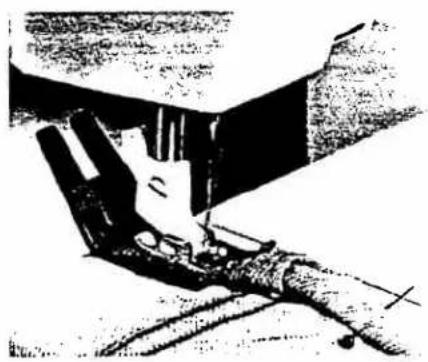
Clearance plate
The clearance plate is used when sewing over thick seams. One side of the plate is thicker than the other. Use the side that suits the thickness of the seam best.
Placa para costuras tupidas
La placa para costuras tupidas se utilizada para coser sobre costuras muy gruesas. Una parte de la placa es más gruesa que lo otra. Usar la parte que tenga un grosor más o menos parecido al de la costura.
natural_image
Mechanical assembly diagram showing a clamping device connected to a cable (no text or labels visible)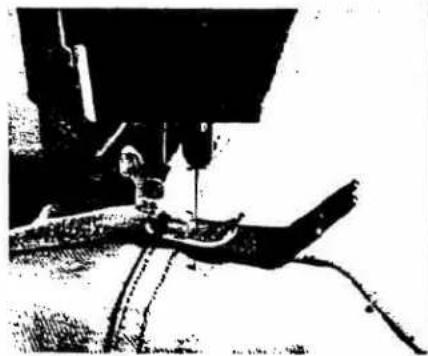
natural_image
Close-up of a sewing machine needle stitching fabric (no visible text or symbols)Sewing zippers

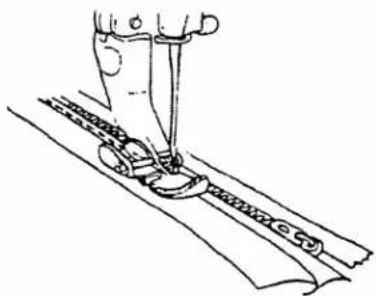
The zipper foot E can be attached so that it is located either to the right or to the left of the needle, making it easy to sew both sides of the zipper. To sew the other side of the zipper, re-position the zipper foot.
Cosido de cremalleras

Aplique el prensatelas E de tal manera o el mismo queae a la derecho o a la quiera de la agua. v de esta forma resu fácil coser ambos lados de la cremalle. Para coser el otro lado de la cremalle retirar el prensatelas y colocario de nuev de manera que éste queae al otro lado
Lapped zipper
- Sew the seam together to the bottom of the zipper placket. Baste the rest of the seam. Leave about 2 cm open at the top. Press seam open. Use right needle position.
- Place presser foot E to the left of the needle. From the wrong side fold the fabric to one side so both seam allowances are free. Fold and press the left allowance under approximately 0.5 cm from the basted seam.
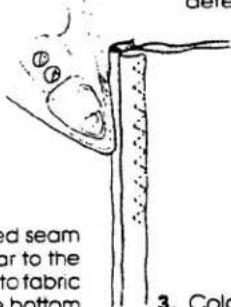
- Place the zipper under the folded seam allowance with the teeth as near to the fold as possible and stitch zipper to fabric close to fold. Begin sewing at the bottom of the zipper. Before reaching the zipper pull, lift the presser foot and slide the zipper pull down past the zipper foot. Lower the foot and sew to the top of the zipper.
Cremallera oculta
-
Una las costuras hasta la marcación a la cremaliera. Hiivanar la abertura. Dejar aprox. 2 a abiertos al comienzo de la abertura. Planchar la costa. Emplear la posición derecha de la aguja.
-
Colocar el prensateías E a izquierda de la aguja. Dar vuelto a la prenda de tal to ma que el reves quede p encima y dobiar la prenda lado hasta que se vean las acosturas. Dobiar el aumento de la co tura del lado izquierao, com un pliegue, a unos 5 mm a hilvanado.
-
Colocar lo cremallera con alfileres de bajo de la costura doblada con los dietes lo más cerca posible del doblado coser el lado izquierdo. Empezar a cose desde abajo.
Unos centímetros antes de llegar al final de la costura, levantar el prensatelas y abrirremallera, deslizando el cierre de la misma por detrás del prensatelas. Bajar prensatelas y terminar la costura.
natural_image
Line drawing of a sewing machine needle stitching fabric (no text or symbols)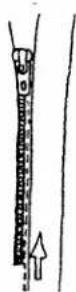
-
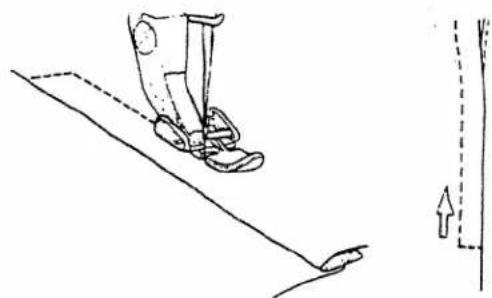
Use left needle position. Snap on the zipper foot so it is to the right of the needle. Turn the garment to the right side. It is important that the seam on the right side is sewn straight. Before you begin to sew, mark the seam line.
Sew the other side of the zipper. Begin stitching across the bottom and continue upwards.
Remove the basting -
Emplear la posición ¿cuyiera de la ja
Retire el prensateías y coloqueía de en vo, de manera que este aquee a la recha de la agua. Es importante a costura del derecho aquee recta y p ta. Es muy fácil efectuar esa marcat la línea de la costura
Fijar con alfileres y coser el crelo lada la cremaliera dentro de la rinea mar-aa. Coser una costura transversa: a' la de la cremaliera y continuar nacia o pc.
natural_image
Simple line drawing of a person's legs and feet on a seesaw, with an arrow indicating upward motion (no text or symbols)If you want to sew a "gentleman's zipper", follow the instructions but insert in the other direction.
Si se quiere coser una cremallera de "c ballero" se hace todo según la descripción pero invertido.
Re-inforced 'straight stitch

Turn the stitch length dial to the orange area ---- to sew re-inforced straight stitch. This stitch is stronger than ordinary straight stitch, due to the fact that it is a triple and elastic stitch.
The re-inforced straight stitch can be used for heavy stretch fabrics, for crotch seams which are subject to considerable strain and for topstitching.
Costura recta reforzada

Gire el regulador de longitud de puntada hacia la zona anaranjada ---- se puede den coser la costurarecta reforzada. La costura es más fuerte que la costura recta normal porque es triple y elástica. La costura recta reforzada es adecuada para coser en materiales gruesos, elástico y para costuras que están expuestas a mayores estuerzos.
Needle positions
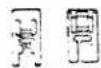
You can select straight stitch and re-in-forced straight stitch, with the needle in left position. The needle position can be adjusted in steps. Use the stitch width dial, turn to the right to reach the right position. To edge stitch, you should take advantage of the possibility to set the needle to the left or the right position. Fit presser foot A when sewing light fabrics and presser foot D when sewing other fabrics.
Posición de la aguja

En costura recta y costura recta restora se puede cambiar la posición izauiera, la aguja. Esto se efectua con el reguras del ancho de puntada, girar a la derec para llegar la posición derecha. Cuando quiera cose: un pespunte cet de un borde exterior, es mas faci cose: la aguja en posición de izauiera o decha. Para generos muy ligeros se empies prensatelas À y para los aemas el prensalas D.
Place the fabric and sew so that the edge follows the inside right edge of the presser foot D or the first mark of the left edge of the presser foot A.
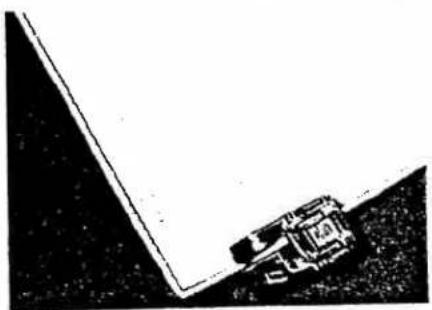
natural_image
Simple line drawing of a vehicle on a slope with no text or symbolsPonga el genero com borde exterior contro lado interior del "aed derecho del prensa las D o contra la prima entalladora de " do" izquierado del presateías A y cosa pespunte.
If you wish to sew about 5 mm from the edge or sew a narrow hem, use presser foot A and set the needle to the right position. Place the edge of the fabric so that it follows the outside right edge of the presser foot to sew a hem.
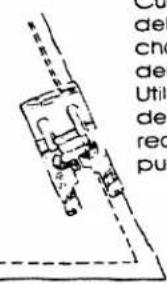
Cuando quiera pespuntear aprox. 5m del borde o hacer un dobladillo est cho, se hace con la aguja en posici derecho. Utilizar el prensatelas A. Poner el bor del tejido debajo del borde exterior o recho del prensatelas y coser un p-punte o un dobladillo.
Zig-zag
The zig-zog 3V\~ is utilized for sewing on lace, bound edging and appliqués. The zig-zog width will be decreased from the left 5.5 mm width, steplessly to the right to 0 mm. In this position the machine sews straight stitch in the right needle position. Experiment until you reach the best setting for your actual work.
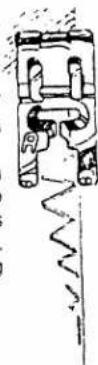
Zig-zag
La costura zig-zag "^^" se usa, p. para aplicar encajes, ribetear con a tas y también para hacer aplicación. La amplitud de zig-zag es progresivamente regulable hacia la izquierda mm amplitud a la derecha a 0 mm. Ara la máquina cose una costura red con la aguja en posición derecha. De de alli puede modificar hasta encont las regulaciones más apropiadas a labor.
Three-step zig-zag
natural_image
Technical line drawing of a mechanical component with no visible text or symbolsOvercasting
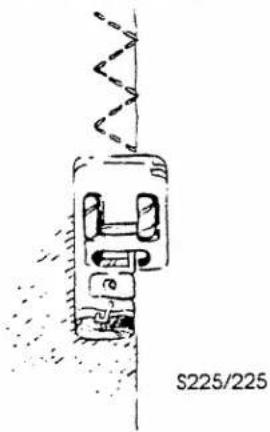
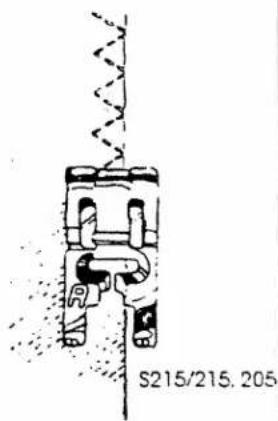
Three-step zig-zag is suitable for overcasting most fabrics. Trim the edges of the fabric before overcasting. Make sure that the needle sews over the edge of the fabric. Place the fabric according to the presser foot (see picture).
Zig-zag de tres pasos
natural_image
Technical line drawing of a mechanical component with no visible text or symbolsSobrehilado
La costura zig-zag de tres pasos ... e conveniente para sobrehilar en la mayor de los tejidos.
Recorte los bordes antes de sobrehilar. Pro cure al coser que las puntadas cojan bie el borde tomando los hilos. Coloque la tel seguir la referencia del prensatelas (ve illustración).
natural_image
Black-and-white sketch of a car climbing a steep cliff, with people climbing nearby (no text or symbols)Mending and darning
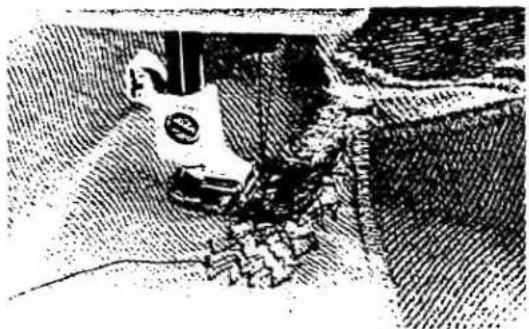
Three-step zig-zag . can be utilized for mending and darning. A threadbare spot is mended by sewing back and forth with three-step zig-zag. Use reverse and for every row of stitching, guide the fabric slightly to the side. If the fabric is very worn, a piece of fabric or lining may be attached to the reverse side of the material as reinforcement.
Remendar y zurcir
El zig-zag de tres puntadas. ¿¿... es la costura de utilidad más versátil para remenda y zurzir. Para remendar otros desperfectos bastan unas cuantos pasadas con el zig-zag de tres puntadas hacia adelante atrás. Utilice marcha atrás y desplace la tela lateralmente al coser. Cuando el des perfecto así lo requiera, suplemente el lado inferior con un trozo de tela de retuerzo.
natural_image
Pure mechanical diagram showing a piston-cranked joint with zigzag grooves (no text or symbols)Terry cloth is a rather loosely woven fabric in which seams easily break.
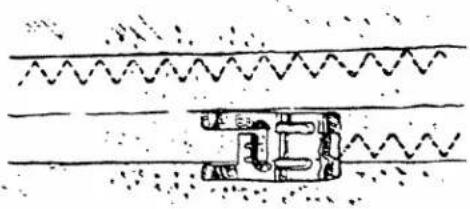
Sew the garment together with straight stitch. Trim the seams and press the seam allowance flat and sew the edges down against the garment on the wrong side with three-step zig-zag. Even though the stitching goes right through to the "right" side of the garment, it is nearly invisible and even the wrong side looks neat.
Use presser foot A if you have model S215. 215 or 205.
El tejido esponjoso suele tener una textu bastante fioja, que ceda facilmente en lo costuras. Cosa y una la prenda con costo recta.
Después, corte los aumentos limpiamente planche ambos bordes de la costura.
Después, cosa al borde de los cantos por revés, con el zig-zag de tres puntadas. Au que la costura traspase el tejido, es co invisible y el reves tiene buena presentación. Utilizar el prensatelas A en moaje \$215, 215 o 205.
Seam and overcast
Some stitches can be used for seaming and overcasting in one sewing step directly on the edge where a 5 mm (1/4") seam is allowed. Place the fabric so that the inside right "toe" of the presser foot follows the edge of the fabric.
Presser foot J is used to overlock and overcast many different fabrics with the exception of heavy, firm fabrics. The pin fitted on the presser foot should follow the edge of the fabric and will in this way prevent the fabric from puckering. Stitch width 5.5 mm. Follow the recommended setting, given for stitch length.
Overcast stitch, may be used to sew light and medium non-stretch fabric and light stretch fabric. Use presser foot J, presser foot A if you have model S215/215 or 205.
Overlock, is chiefly used for sewing heavy stretch fabric. Use presser foot B. Use presser foot A if you have model S215/215.
Unión y sobrehilado

Ciertas costuras se utilizan para unir y s brehilar directamente sobre el borae e una operación con 5 mm de costura. Ponga el género de manera que el borae interior del "dedo" derecho del prensatei guie el canto del tejido.
Ei prensatelas J se utiliza para el sobrehilado y para costuras al canto en todos tipos o tela, con excepción de telas muy gruesos duras.
La punta del pie debe estar canto a can con la tela e impedir así que se contraiga borde de la tela.
Ancho de puntada 5,5 mm. Por lo demás siga las recomendaciones sobre la longitud de puntada.
Puntada semi-overlock, se emplea para las finas y corrientes, para géneros no elás cos y para telas finas elásticas. Utilizar prensatelas J. prensatelas A en mode S215/215 o 205.
Puntada de overlock se emplea para tel gruesas y elásticas. Utilizar el prensatelas Utilizar el prensatelas A en modelo S21 215
Blind hem

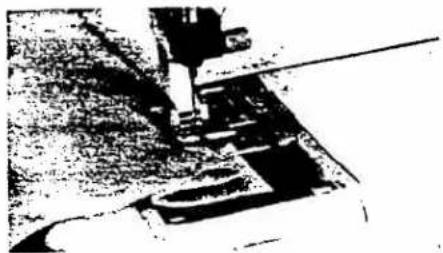
Presser foot D is used for blind hem. Fold the material as shown.
Dobladillo

El prensateías D se utiliza para el coblado a puntada invisible
natural_image
Close-up of a sewing machine needle stitching fabric (no visible text or symbols)Make sure that the fold line of the fabric rides in the groove under the right side of the presser foot. Practice using a scrap of material and compare with the illustrations.
Dobiar el género como muestra la figura Hacer una prueza y comparar con las figuras.
natural_image
Abstract black-and-white pattern with wavy lines and a horizontal line above a solid black rectangle (no text or symbols)-
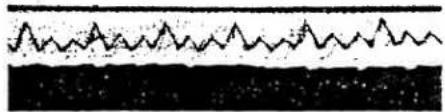
If the stitch does not catch the folded edge, increase the stitch width.
-
Cuando las puntadas no alcanzan el borde doblado del género, aumentar el ancho de puntada.
natural_image
Pure electrical circuit lines without any symbols-
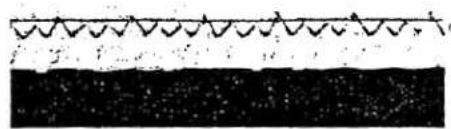
If the stitch catches too much of the fold, decrease the stitch width.
-
Cuando las puntadas sobrepasan demasiado el borde doblado, reducir el ancho de puntadas.
natural_image
Abstract black-and-white pattern with wavy lines and a horizontal band (no text or symbols)-
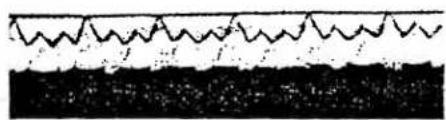
For an invisible hem the needle catches a single thread of the folded edge.
-
Un dobladillo correcta: la aguja debe caer de forma tangencial sobre el borde de la doblez del género.
Flatlock
- Double-Action stitch

Puntada overlock triple - Puntada de tricot

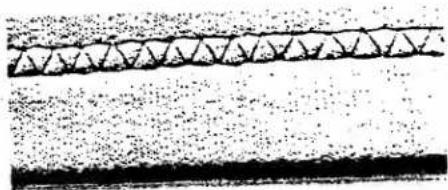
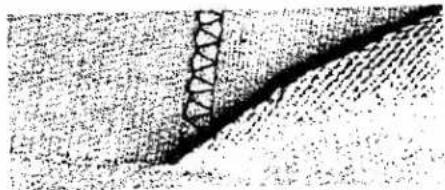
Flatlock or Double-Action stitch is suitable for sewing overlapped seams and decorative hems.
Puntada overlock triple o puntada de triac . es una costura que se empleo para costuras montadas y bastilla:
natural_image
Two parallel truss structures with triangular supports, one above a solid black line (no text or symbols)You can produce a decorative hem by folding a single hem to the wrong side and sewing the flatlock from the right side. Trim excess hem to stitching from the wrong side.
Para obtener una bastilla decorativa, doble la tela sobre su revés, formando así uno bastilla, y cosa con overlock triple sobre el lado derecho.
natural_image
Close-up of a textured surface with a diagonal dark line and a wavy black line above it (no text or symbols visible)To sew an overlapped seam, lap one piece of fabric 1 cm over the other piece and sew flatlock stitch over the fabric edge on the right side. Trim from the wrong side or sew another seam from the right side.
Para conteccionar una costura montado coloque una parte del género sobre la otra y cosa con overlock triple sobre el lado de recho del borde del género y recorte e aumento de la costura limpiamente en e revés.
natural_image
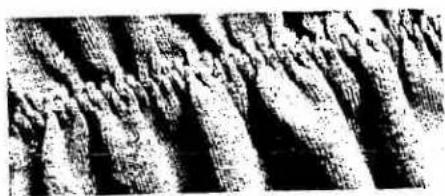
Black and white abstract pattern with vertical streaks and textured gradients (no text or symbols)When gathering with narrow, flat elastic or elastic cord, use the double-action stitch. To be sure the elastic does not get stitched in but can run freely, use presser foot A or B and slip narrow elastic between the toes of the foot.
Al fruncir con cordoncillo estrecho, redond o llano, utilice la puntada de tricot. Asegúre se de que el cordoncillo se desliza libremente, sin estar cogido por las puntada Utilice el prensatelas A o B.
Decorative Stitches
\$225/225

Costuras decorativas
\$225/225
In addition to the stitches already described, there are a number of beautiful decorative stitches
Set the desired stitch with the stitch selector dial. At first try the recommended stitch length then adjust as needed. Always make a test first on a scrap of the fabric you are going to use. Start sewing slightly in from the edge.
When sewing light-weight material you will get a better result if you place a stabilizer under the fabric.
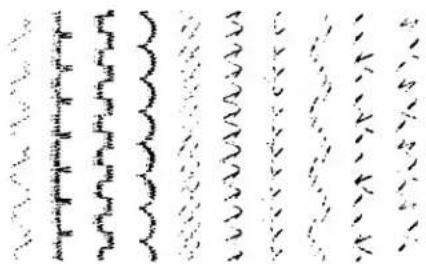
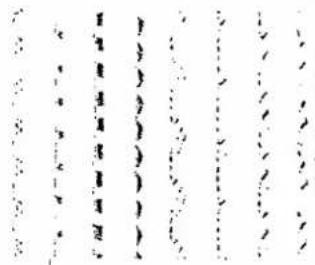
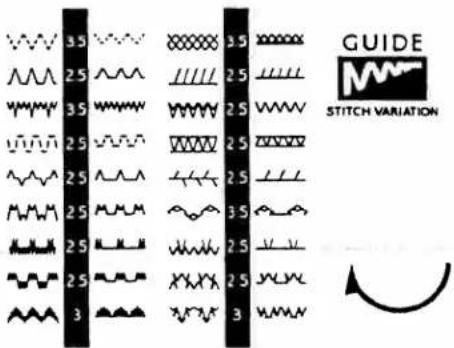
Stitch variation
On the machine there is a guide "Stitch variation" showing a number of stitches. By selecting one of the stitches from the left column and decreasing the stitch width according to recommendation in the right column, the look of the stitch will change. This gives you 12 additional stitches.
Además de las costuras va descritas algunos tipos de puntaje que perm ejecutar costuras decorativas
Gire el selector sobre la puntaca aeseado siga las recomendaciones en longitud puntada. Pruebe primero sobre un trozo la tela que vava usa:
Comience su costura a algunos mm borde de la tela
Las telas finas tienen tenencia a trunc con costuras decorativas. Para evitario de coser junto con papel de sede o viseli
"Stitch variation" – Variación de pun da"
La guía "Stitch variation" de la máqu muestra un número de costuras. Se cam el aspecto de las costuras al seleccion una de las costuras en la columna izquier y al reducir la amplitud según las recom daciones en la columna derecha. Se pe den todavía elejir 12 costuras mas.
natural_image
Abstract black-and-white illustration of a sewing machine (no text or symbols visible)Changing the light bulb
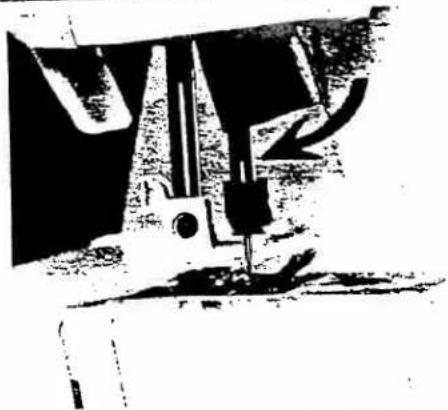
The light bulb is placed to the left of the needle. Place the rubber sheath found in the accessory bag around the bulb, turn a quarter of a turn in the direction of the arrow and remove the bulb.
Cambio de la bombilla
La bombilla está situada a la izaurerado aguja. Empuje el soporte de goma arriba y alrededor de la bombilla y cuarto de una vuelta en dirección o cha sacando la bombilla.
natural_image
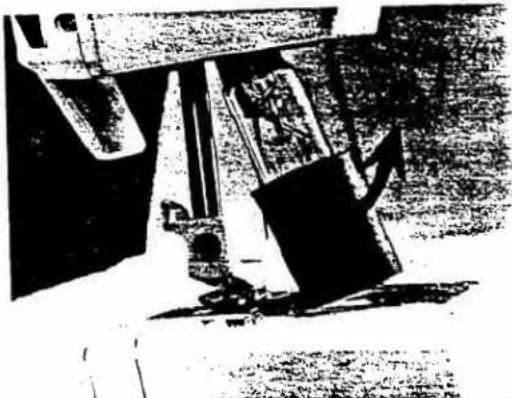
Black-and-white photo of a mechanical device with a lever and base mount (no visible text or symbols)When inserting, place the rubber sheath around the new bulb, insert the bulb and turn a quarter of a turn in the direction of the arrow.
Use light bulb designed as indicated on the front of the machine.
Al colocar la bombilla ponga el sopa goma alrededor de la bombilla ca dola en el soporte de bombilla, em gire un cuarto de una vuelta en dir de la flecha. La potencia de lo bo está indicada en vatios en la parte de ra de la máquina.
Care of the machine
To keep your sewing machine operating satisfactorily it requires, like other precision machines, regular cleaning.
It need not, however, be lubricated.
Mantenimiento de la máquina
Para que la máquina siempre trabaplena satisfacción, necesita una limregulación adecuada como cualququina de precisión. Sin embargo, no be lubrificar nunca.
Maintenance
Mantenimiento
natural_image
Mechanical assembly diagram showing a lever mechanism with motion arrows (no text or symbols)Removing the stitch plate
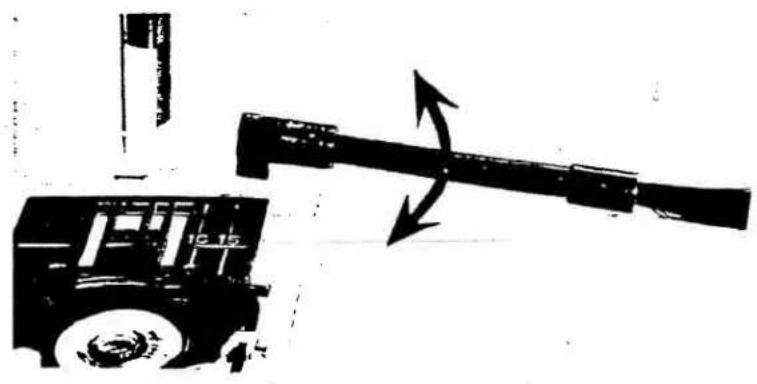
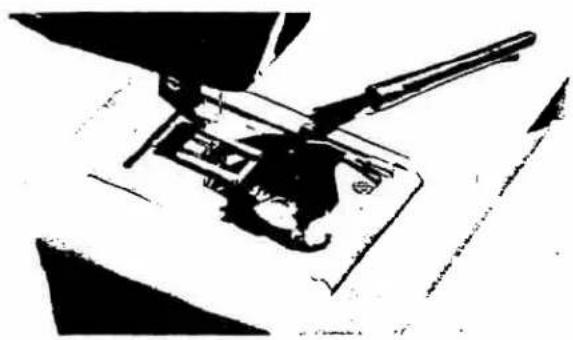
Remove the presser foot and the bobbin cover. Lower the feed teeth. Place the stitch plate opener on the brush. There is a recess at the rear of the stitch plate. Insert the stitch plate opener at the recess and turn.
Sacar la placa de aguja
Retirar el prensateías y la tapa de baja bajar el transporte de aientes. Coloque abridor de la piaca de aguja en el estilla la brocha. En la parte de atras de la pia de aguja hay una entalladura. Pongo abridor en la entalladura y gire.
natural_image
Silhouette of a sewing machine needle stitching fabric (no text or symbols visible)Cleaning
When necessary, the feed teeth and the bottom of the bobbin area must be cleaned with the brush, which you will find with the accessories.
Limpiar debajo del cesto de bobina
A veces es necesario limpiar también bajo del cesto de bobina. Se limpian mediante el pincel de la caja accesorios.
Replacing the stitch plate
Replace the stitch plate about 5 mm in front of the rear edge and push it backward. Replace the bobbin cover.
Sacar la placa de aguja
Coloque en su sitio la placa de agua apr 5 mm delante del borde posterior empujo dola hacia atrás. Coloque la tapa de bona.
Fault-finding
Always start by checking the needle
An important part which needs to be changed from time to time is the needle. Always start with a new needle as soon as you discover that a seam is not what you expected. Test sew on a scrap of the fabric you are sewing.
Check that you have chosen the correct needle and see that it is correctly inserted. see page 12.
Unattractive stitches
The thread tension is not correct. See page 11-12.
Make sure that the thread is not catching. Certain thread spools are unsuitable for spooling from a horizontal spool pin. Try instead with the vertical spool pin.
The machine may be incorrectly threaded. The correct threading is shown on page 9. Wrong lower thread. It should be of the same thickness as the upper thread.
The needle breaks
You may have helped the machine to feed by pulling the fabric. The needle can strike against the stitch plate and break.
The upper thread breaks
Check the thread spool to see that it has not caught in any way.
The needle eye may have sharp edges which cut the thread. If so, change the needle. See page 12.
The upper thread is incorrectly threaded. See page 9.
The upper thread may have too much tension. Refer to page 11-12.
The thread is knotted.
The hole in the stitch plate may be chipped and have sharp edges. Slight damage to the stitch plate can possibly be polished or filed but we recommend that you replace it.
The lower thread breaks
The lower thread may be incorrectly threaded. See page 11.
The stitch plate hole is damaged. See "Upper thread breaks".
Posibles averías
Controlar la aguja
La parte más importe que hay que com de vez en cuanao es la aguía. Por lo cuando alguna vez una costura no sec tisfactoria, comprobar con una aguía va en un trozo de teic Controla: que haya elegido la aguía correcto y asegu se de que la aguja sea introducida hasta tope y que el tornillo está apretada cor tamente: vease la pág 12
Puntadas falsas
La tensión del hijo no es correcta. veas pág. 11-12.
Asegúrarse que el hilo no está bloqueo Ciertos porta-carretes no son adecuo para el devanado desae porta-carr horizontales.
Po lo tanto, comprobar con un porta-co te vertical.
El enhebrado no es correcto, verificar se la pág. 9.
Hilo inferior inadecuado. Este depe ser lo que el superior.
Rotura de la aguja
Nunca se debe tirar de la tela durant cosido, porque la aguja se puede rom al tropezar contra la piaca de aguja
Rotura del hilo superior
Examinar el carrete del hilo y verificar hilo se ha enganchado en alguno par Podria ser que el agujero de la aguja estuviera lo suficiente bien pulido.
Cambiar la aguja, véase la pág. 12
El hilo superior está mal enhebrado, ve la pág. 9.
La tensión del hilo superior es demás fuerte. Ver la "Tensión del hilo", pág. 11
El hilo tiene nudos.
El agujero de la placa de la aguja se dañado por los continuos pinchazos a aguja. Hay que pulir el agujero, pero lojor es cambiar la placa de aguja.
Rotura del hilo interior
El hilo inferior está mal enhebrado, v pág. 11.
Se ha dañado el agujero de la place aguja, ver arriba.
Irregular bobbin winding
This may be due to poor quality thread. When sewing with cotton thread, increase the thread tension.
The machine is not correctly threaded for bobbin winding. See page 11
The fabric puckers
The upper thread tension is too tight. See page 11-12 for correct thread tension.
The machine does not feed the fabric
The stitch length is too short. Increase stitch length.
The feed teeth may be lowered. Raise them by turning the stitch length dial to the left. The feed teeth are full of dust and dirt. Clean with the brush. See page 29.
The seam is too loose - fabric layers not held together
The thread tension is far too loose. Page 11-12 shows how to adjust the thread tension.
Machine runs sluggishly
Dirt or lint has packed under the needle plate. Loosen the plate and brush clean between the feed teeth. See page 29. Dirt or lint has packed in the hook. Remove the bobbin and clean with the brush. See page 29.
Expert assistance
Have your machine "tuned up" regularly by your dealer.
If you have followed the preceding points and still do not get satisfactory results, you should contact the dealer where you bought the machine. Your dealer will always be pleased to help you solve your sewing problems.
When the machine is being checked, it is a great help if it can be test sewn under as similar conditions as possible as when you used it.
Remember to take a sewing sample along with you, preferably on the fabric and with the thread you intend to use.
A sewing sample will often give much better information than words.
Bobinado irregular del hilo
Puede ser a cause de la diferente do de: hic
Al coser con un hic de a pocré, a mi la tensión del hic
La máquina no esta correctamente e brada para el bepinada ver la pas
La tela se frunce
La tensión del nie supencía es demo fuerte. Tensión correcta de nie vería 11-12
No hay avance del tejido
La longitud de la puntado es aemos corto. Aumenta:
Puede ser que el transporte este baica la pág. 14.
El transporte esta lleno de pelusillo y a to
Limpiario con un pincel, ver la pag. 29
La costura resulta demasiado floja capas del tejido no están fuertem unidas
La tensión del hilo es demasiado flora sión correcta del hilo, ver la pag i i - 1
La máquina marcha con dificultad
Puede ser que haya acumulado aem da pelusilla y apresto por debajo de la ca de aguja. Quitar la placa de agi limpiar el dentado del transporte con brocha, ver la pag. 2º.
Puede ser que haya acumulado pelus apresto en el garfio.
Retirar la cápsula y limpiaria con una cha, ver la pág. 29.
Asistencia técnica
Cuando se hayan seguido todas las ins ciones mericionadas, y, a pesar de ello se consigan resultados satisfactorios, nerse en contacto con el establecimiento que le vendió la máquina.
Allí, le atenderán gustosamente con consejos e instrucciones correspondir. También, le aconsejerán donde puede mandar la máquina para un servicio de mucha utilidad y ayuda para el perspectífico acompañar a la máquina muestras del tejido e hilos utilizados, como asimismo, una muestra del cosido de tuoso.
Muchas veces una muestra del cosid mejor información que un informe oro
Needles/Agujas
Only use needles of System 130/705H Emplee solamente agujas del sistema 130/705H.
natural_image
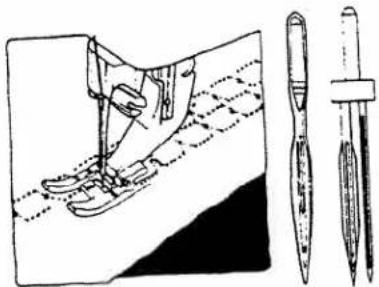
Illustration of a sewing machine needle and two separate blade designs (no text or symbols)411 31 42-01. Wing needle. Produces a hemstitch effect.
412 03 64-01. Double wing needle. 1xNo 80 standard and 1xNo 100 wing needle. Maximum stitch width setting 2.
411 31 42-01. Con la aguja de punta de lanza (alada), se consiguen efectos de calado.
412 03 64-01. Aguja doble alada. Una aguja No. 80 standard y una aguja alada No. 100. Ancho máximo de puntada 2.
Standard needles/Agujas standard
| 411 31 00-01 | 5x No 60 |
| 411 31 02-01 | 5x No 70 |
| 411 31 04-01 | 5x No 80 |
| 411 31 05-01 | 10x No 80 |
| 401 60 94-01 | 100x No 80 |
| 411 31 06-01 | 5x No 90 |
| 411 31 07-01 | 10x No 90 |
| 401 60 98-01 | 100x No 90 |
| 411 31 08-01 | 5x No 100 |
| 411 31 10-01 | 5x No 110 |
Jeans needles/Agujas para vaqueros
| 411 31 30-01 | 2x No 90, 2x No 100, |
| 1x No 110 | |
| 411 31 29-01 | 5x No 90 |
| 412 03 55-01 | 5x No 100 |
Needles with rounded tip/Agujas con punta redondeada
| 412 03 56-01 | 5x No 70 |
| 412 03 57-01 | 5x No 80 |
Stretch needles/Agujas para teji elásticos
| 411 31 23-01 | 5x No 75 |
| 411 31 24-01 | 5x No 92 |
Combi case/Caja con agujas diteres
411 64 14-01 1x No 75, 2x No 80, 1x 90 Twin needle/Ag gemelas 2mm. 1x No Stretch needle/Ag para tejidos elásticos No 75. 1x No 90 Jeneedie/Agula para queros. 1x No 90, 1x 100
411 78 90-01 1x No 70. 1x No 80. 1x 90. Stretch needle/Ag para tejidos elásticos No 90. Jeans nee Aguja para vaquero No 90
411 31 17-01 2x No 70.6x No 80.2x 90
412 31 90-01 1x No 70. 1x No 80. 1x 90. Stretch needles/ Agujas para tejidos e ticos 1x No 75. 1x No
Twin needles/Agujas gemelas (Twi
| 412 03 66-01 | 2x No 70, 1.6 mm |
| 412 03 58-01 | 2x No 80, 1.6 mm |
| 411 31 33-01 | 2x No 80, 2 mm |
| 412 03 70-01 | 2x No 80, 2.5 mm |
| 412 03 60-01 | 2x No 80, 4 mm |
| 411 31 35-01 | 2x No 90, 4 mm |
| 412 32 56-01 | 2x No 100, 6 mm |
Double stretch needle/Aguja doble para tejidos elásticos
412 03 62-01 2x No 75, 4 mm 412 32 58-01 2x No 75, 2.5 mm
Accessories/Accesorios
natural_image
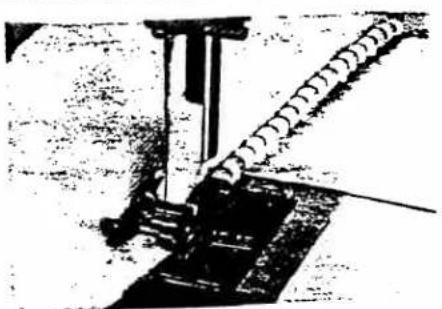
Mechanical device with coiled spring and base plate (no visible text or symbols)412 32 00-45. Presser foot B for over-lock. Suitable for heavy, soft fabrics and for decorative stitches.
412 32 00-45. Prensatelas B para costura overlock. Indicada para confeccionar costuras en tejidos gruesos, blandos y para costuras decorativas.
natural_image
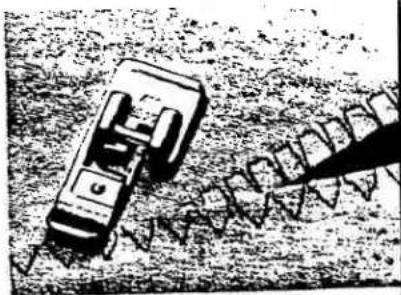
Illustration of a mobile phone with a charging cable and antenna, no visible text or symbols412 32 83-45. Presser foot J for overting. Suitable for all kinds of fabric. St width 5.5 mm.
412 32 83-45. Prensatelas J para brehilar en la mayoría de los tejidos. plitud de puntada 5,5 mm.
natural_image
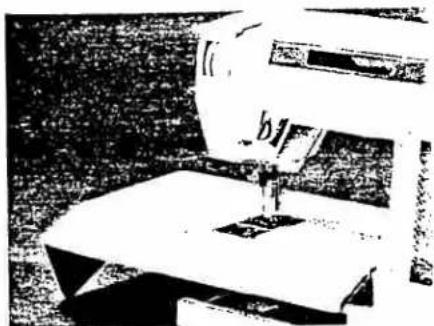
Black-and-white photo of a 3D printer on a flat surface, no visible text or symbols412 31 20-01. Extension table for larger working surface.
412 31 20-01. Tablero de prolongación ara ampliar la superficie de trabajo.
natural_image
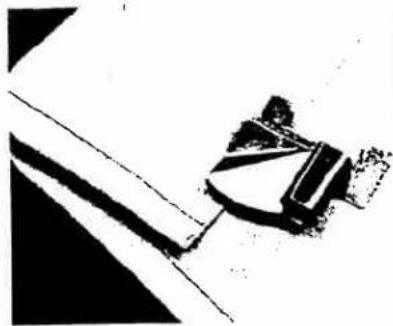
Abstract black-and-white sketch of a mechanical or architectural component (no text or symbols)412 01 76-45. Rolled hem guide to mm hemming.
412 01 76-45. Placa dobladillador ra dobladillos de 10 mm.
Accessories/Accesorios
natural_image
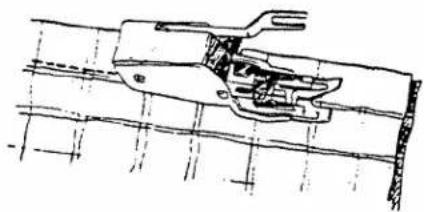
Technical line drawing of a mechanical assembly with no visible text or symbols412 35 73-45 Dual feeder. To be used for materials which easily shift, e.g. plastic, velvet. Useful also for checked and striped fabrics.
412 35 73-45 Prensatelas con transporte superior. Se emplea convenientemente para caser materiales muy deslizantes, como p.e. plásticos, terciopelo. También se recomienda su empleo para hacer coincidir tejidos a cuadros o rayas.
natural_image
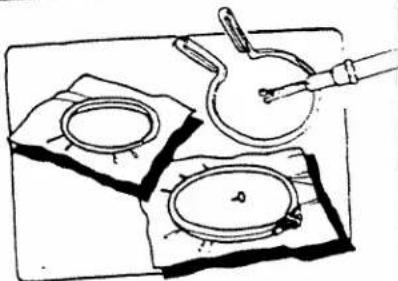
Simple line drawing of a kitchen utensil and two circular objects on a tray (no text or symbols)Frames for darning and embroide Bectidores para zurcir y bordar.
401 53 98-01 5,5 cm
401 35 78-01 10 cm
409 30 29-01 15 cm
409 30 30-01 20 cm
natural_image
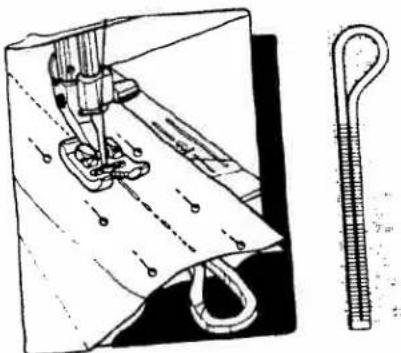
Technical illustration of a sewing machine with a separate side view showing a measuring tool (no text or symbols present)401 53 67-45. Hemstitcher. Put the fork between two layers of material, and sew together with long straight stitches. 401 53 67-45. Horquilla para confeccionar vainicas. Coloque la horquilla entre dos capas de material y cosa con pespunte recto y puntadas largas.
natural_image
Black-and-white photo of a mechanical device with a lever and base, no visible text or symbols412 34 67-45. Darning foot. For d with straight stitch the work is stret a hoop. For darning socks use z The material is guided by hand. Se ser foot pressure at low position. 412 34 67-45. Prensatelas zurci ra zurcir con pespunte recto, co tense el tejido en un bastidor. Sitú tón regulador de la presión del pr las sobre el símbolo de zurcir.
Accessories/Accesorios
natural_image
Pure mechanical diagram showing a lever and shaft assembly without any text, numbers, or symbols411 73 95-45. The edge guide is used as a guide for seam allowances wider than 2cm .
411 73 95-45. La guía referencia se utiliza como guía para facilitar el ajuste del margen de costura que sobrepase los 2 mm.
natural_image
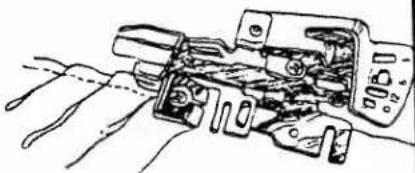
Black-and-white illustration of a sewing machine needle stitching fabric (no text or symbols visible)411 17 32-45. The clearance plate used when sewing over thick seams. U the clearance plate when sewing butt with a shank.
411 17 32-45. La placa para costur tupidas se utiliza para coser sobre cos ras muy gruesas. Utilizar la placa po coser un botón con "cuello".
natural_image
Diagram of a mechanical assembly with internal components and wiring (no text or labels)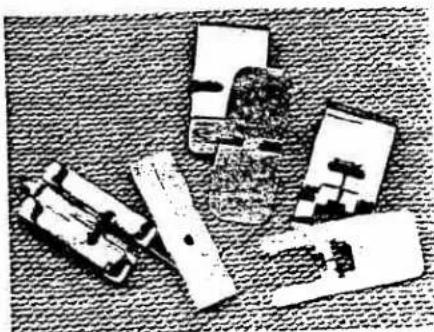
natural_image
Black-and-white photo of various household appliances and fixtures on a textured surface (no visible text or symbols)412 34 66-45. Glide plates for sewing plastic-coated fabrics, leather imitations etc.
412 34 66-45. Plaquitas deslizantes para coser materiales sintéticos e imitaciones de cuero.
412 35 72-45 Ruffler. Can be set for ghering and pleating at every, every 6th every 12th stitch.
412 35 72-45 Aparato para confeccanar fruncidos volantes y plisados. Se pude regular para cada una, cada 6012a puntada.
PictogramRn
412 08 37-46. Pictogram m™ pen, special air soluable pen for transferring pattern to the material.
412 08 37-46. Lápiz para pictograma Lápiz especial para la reproducción motivos sobre tejidos.
natural_image
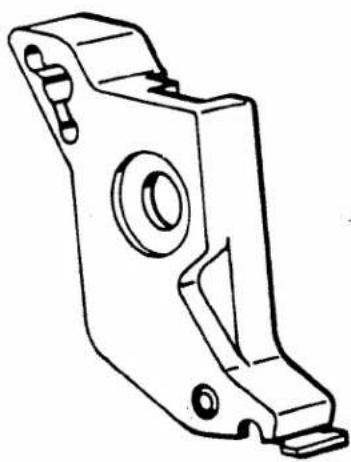
Technical line drawing of a mechanical bracket component (no text or symbols)412 34 71-01. Presser foot ankle. With this presser foot ankle fitted to the machine a number of more presser feet can be used. This ankle is in grey colour in order not to be mixed up by the standard ankle which is in white.
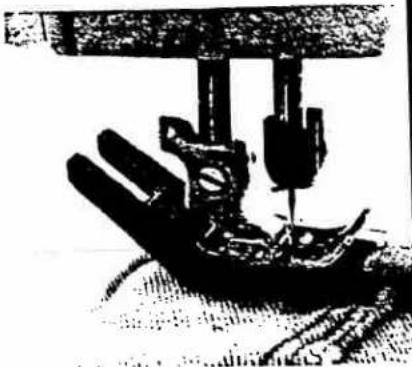
IMPORTANT! Only the grey presser foot ankle 412 34 71-01 can be used with the following presser feet.
natural_image
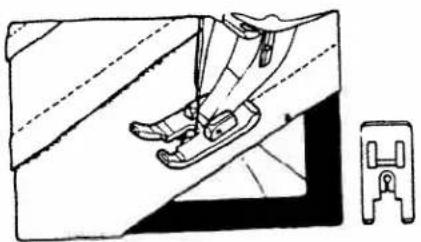
Technical line drawing of a sewing machine needle and its corresponding clamping mechanism (no text or symbols)411 85 35-45. Straight stitch presser foot. For straight stitching in fine fabrics. It holds the fabric more firmly to the stitch plate. Use only stitch width 0.
411 85 35-45. Prensatelas para pes-punte recto en tejidos delicados. Presione el tejido mejor sobre la placa de aguja. Amplitud de puntada = 0.
412 34 71-01. Cuerpo del prensate Con este cuerpo del prensatelos es máquina se pueden utilizar otros prentelas. El cuerpo es de color gris para no se confunda con el cuerpo de estard que es de color blanco.
IMPORTANTE! Solo se puede utiliza cuerpo de prensatelas gris con el núm 412 34 71-01 para los prensato siguientes.
natural_image
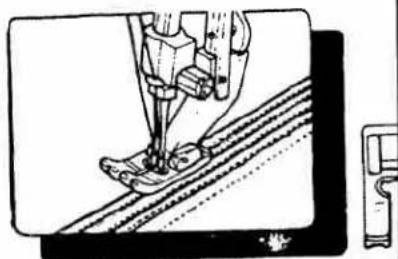
Technical illustration of a sewing machine needle stitching fabric (no text or symbols)412 01 42-45. Raised seam presser for parallel raised seams with the needle.
412 01 42-45. Prensatelas para peñas paralelas con aguja gemela, co sin cordoncillo, para rayas y pliegues corativos etc.
natural_image
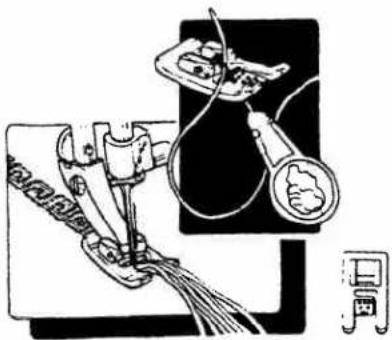
Illustration of a medical or laboratory procedure with tubing and a device (no text or symbols visible)412 01 43-45. Presser foot with seven holes for decorative stitching over yarn or for satin stitching with wide zig-zag. Thread from underneath the presser foot and draw the threads down through the holes with needle threader.
412 01 43-45. Prensatelas con siete agujeros para costuras decorativas sobre hilo o cordoncillo o para puntadas satinadas sobre zig-zag.
Enhebre el enhebrador del hilo desde abajo del prensatelas y tire los hilos hacia abajo por los agujeros.
natural_image
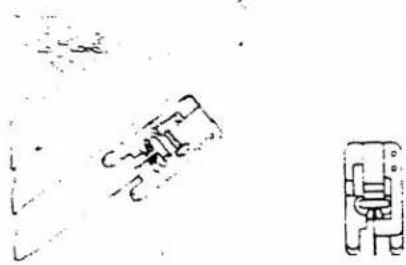
Pure electrical circuit lines without any symbols412 28 02-45. Edge/joining presser to with guide in the center. Use the different needle positions of your sewing machine
412 28 02-45. Prensatelas de pespun con una regla en el centro. Se debe utilizar las posiciones de la aguja de máquina.
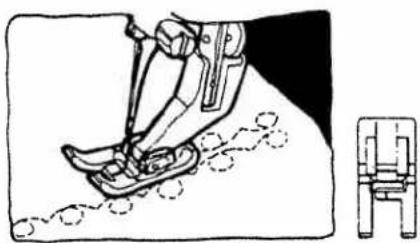
natural_image
Line drawing of a foot pushpin and foot, with no text or symbols present412 00 16-45. Presser foot for decorative stitching. Being completely transparent it is easy to match stitch patterns.
412 00 16-45. Prensatelas para costura decorativa. El prensatelas es transparente y permite ver la costura o el motivo.
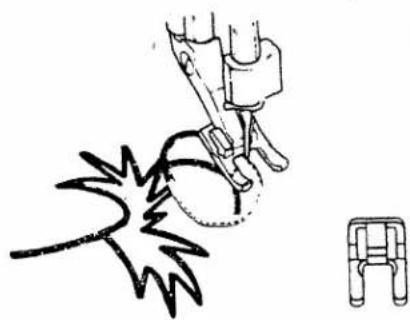
natural_image
Simple line drawing of a person using a tool to lift a ball, with a separate bracket nearby (no text or symbols)412 27 70-45. Open toe appliqué presser foot. Allows excellent view of your work.
412 27 70-45. Prensatelas abierto de aplicaciones. Da buena visibilidad al coser.
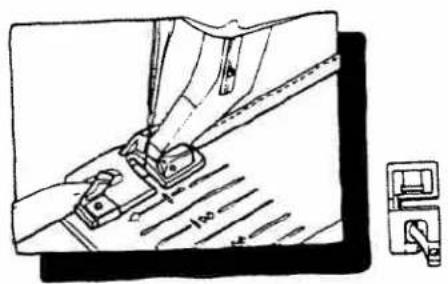
natural_image
Line drawing of a sewing machine needle stitching fabric, with no visible text or symbols411 85 17-45. Presser foot for 5 mm hemming.
411 85 22-45. Presser foot for 2 mm hemming. For straight stitch, zig-zag or decorative stitching.
411 85 17-45. Dobladillador ancho de 5 mm.
411 85 22-45. Dobladillador estrecho de 2 mm.
Para costuras en pespunte recto, en zigzag ó costuras decorativas.
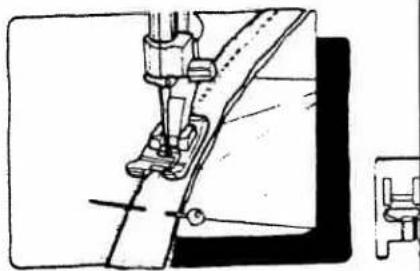
natural_image
Technical line drawing of a sewing machine needle and clasp mechanism (no text or symbols)411 85 10-45. Piping presser foot to setting piping.
411 85 10-45. Prensatelas para apl vivos, es decir, para coser un cordon
natural_image
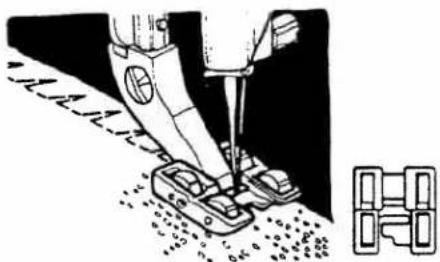
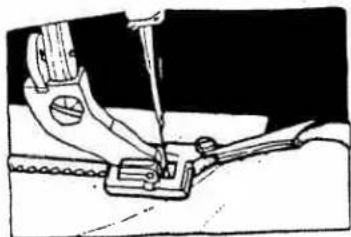
Mechanical sewing machine needle stitching a surface with fasteners (no text or symbols visible)411 85 29-45. Roller presser foot. Suitable for coarse-knitted material, certain knit and stretch fabrics, as well as leather imitations and plastic material.
411 85 29-45. Prensatelas de rodillos. Para coser géneros de calceta (malla) y punto muy gruesos así como materiales sintéticos e imitaciones de cuero.
natural_image
Illustration of a sewing machine needle stitching fabric (no text or symbols visible)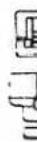
411 85 04-45. Bias binder for ed with bias tape. For use with 24mm u ded tape. Sew with straight stitch, zig or decorative stitch.
411 85 04-45. Aparato ribeteador, este ribeteador se puede aplicar lisa con ancho de 24 mm., tanto con punte recto como en zig-zag, ó bien costura decorativa.
- Manual de instrucciones
- IMPORTANT SAFETY INSTRUCTIONS
- DANGER
- WARNING
- SAVE THESE INSTRUCTIONS
- Summary
- La máquina y sus partes – nomenclatura
- Unpacking
- Desembalaje
- Packing away after sewing
- Embalaje después de coser
- Connecting the foot control
- Conexión del pedal
- Connecting to the power supply
- Conexión eléctrica
- Accessory tray
- Caja de accesorios
- Extended sewing surface
- Superficie de trabajo
- Spool pin
- Porta-carrete
- Threading the upper thread
- Enhebrado del hilo superior
- Bobbin winding with the machine threaded
- Devanado de la canilla
- Bobbin winding – vertical spool pin
- Devanado - porta-carrete vertical
- Placing the bobbin in the machine
- Enhebrado del hilo inferior
- Thread tension
- Tensión del hilo
- Correct and incorrect thread tension
- Tensión de los hilos correcto incorrecta
- Changing the needle
- Cambio de la aguja
- Changing the presser foot
- Cambio del prensatelas
- Presser foot pressure
- Presión del pie del prensatelas
- Presser foot lever
- Palanca de elevación del prensatelas
- Lowering the feed teeth
- Bajada del transporte de dientes
- Stitch selection
- Selección de puntada
- Stitch width
- Amplitud de puntada
- Stitch length
- Longitud de puntada
- Buttonholes
- Ojales
- For better visibility the machine sews buttonholes away from you.
- Sewing buttons
- Costura de botones
- Buttonhole knife
- Abridor de ojales
- Straight stitch
- Costura recta
- Clearance plate
- Placa para costuras tupidas
- Sewing zippers
- Cosido de cremalleras
- Lapped zipper
- Cremallera oculta
- Re-inforced 'straight stitch
- Costura recta reforzada
- Needle positions
- Posición de la aguja
- Zig-zag
- Overcasting
- Sobrehilado
- Mending and darning
- Remendar y zurcir
- Seam and overcast
- Unión y sobrehilado
- Blind hem
- Dobladillo
- Flatlock
- - Double-Action stitch
- Puntada overlock triple - Puntada de tricot
- Decorative Stitches
- \$225/225
- Costuras decorativas
- Stitch variation
- "Stitch variation" – Variación de pun da"
- Changing the light bulb
- Cambio de la bombilla
- Care of the machine
- Mantenimiento de la máquina
- Maintenance
- Mantenimiento
- Removing the stitch plate
- Sacar la placa de aguja
- Cleaning
- Limpiar debajo del cesto de bobina
- Replacing the stitch plate
- Fault-finding
- Always start by checking the needle
- Unattractive stitches
- The needle breaks
- The upper thread breaks
- The lower thread breaks
- Posibles averías
- Controlar la aguja
- Puntadas falsas
- Rotura de la aguja
- Rotura del hilo superior
- El hilo tiene nudos.
- Rotura del hilo interior
- Irregular bobbin winding
- The fabric puckers
- The machine does not feed the fabric
- The seam is too loose - fabric layers not held together
- Machine runs sluggishly
- Expert assistance
- Bobinado irregular del hilo
- La tela se frunce
- No hay avance del tejido
- La costura resulta demasiado floja capas del tejido no están fuertem unidas
- La máquina marcha con dificultad
- Asistencia técnica
- Needles/Agujas
- Accessories/Accesorios
Mærke : HUSQVARNA
Model : Viking 205
Kategori : Symaskine