Spica - Akıllı telefon Benefon - Ücretsiz kullanım kılavuzu
Cihazın kılavuzunu ücretsiz bulun Spica Benefon PDF formatında.


Kullanıcıların soruları hakkında Spica Benefon
0 soru bu cihaz hakkında. Bildiklerinizi cevaplayın veya kendinizinki sorun.
Bu cihaz hakkında yeni bir soru sor
Cihazınız için talimatları indirin Akıllı telefon PDF formatında ücretsiz! Kılavuzunuzu bulun Spica - Benefon ve elektronik cihazınızı yeniden ele alın. Bu sayfada cihazınızın kullanımı için gerekli tüm belgeler yayınlanmaktadır. Spica markasının Benefon.
KULLANIM KILAVUZU Spica Benefon
SERVICE MANUAL
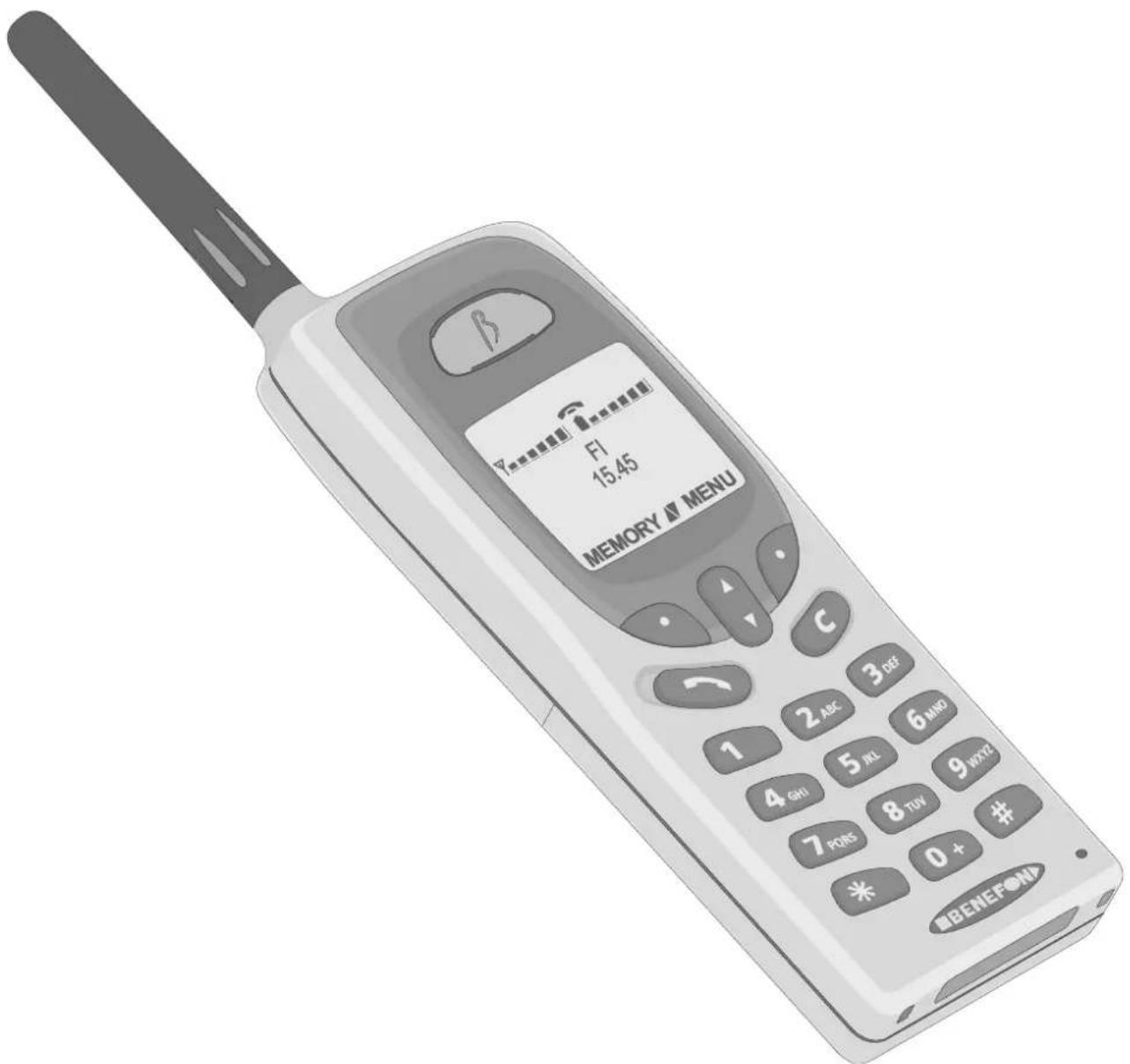
BENEFON SPICA
TDP-60-HN
TDP-60-HN
1.0 GENERAL 1 - 1
1.1 TECHNICAL INFORMATION 1 - 1
1.1.1 Operational System 1 - 1
1.1.2 Dimensions 1 - 1
1.1.3 Power Consumption 1 - 1
1.1.4 Accessories 1 - 1
1.1.5 Alert Functions 1 - 2
1.1.6 Memory 1 - 2
1.1.7 Clock 1 - 2
1.1.8 Auto Answer; Pager/Hands Free 1 - 3
1.1.9 Other Functions 1 - 3
1.1.10 Additional Exchange-Based Features 1 - 4
1.1.11 Manufacturer 1 - 4
1.2 PRODUCT FAMILY 1 - 5
2.0 OWNER'S MANUAL 2 - 1
3.0 INSTALLATION INSTRUCTIONS 3-1
3.1 Phone Programming 3 - 1
3.1.1 To program Using the Phone Keys 3 - 1
3.1.2 To program Using the BeneLoc Program 3 - 3
3.2 CAR KIT 3 - 5
3.2.1 Antenna 3-5
3.2.2 Phone Holder KDS-60 3 - 5
3.2.3 Microphone 3-5
3.2.4 Cable 3-5
3.2.5 External Handset HDS-50 3 - 6
3.2.6 Car Box UDH-60 3 - 6
3.2.7 Hf Speaker 3 - 6
3.2.8 BENEBOOST KIT 3 - 8
3.3 HF-FUNCTION 3-10
3.3.1 CAR KIT TUNING (theory) 3 - 10
3.3.2 CAR KIT SWING (theory) 3 - 12
3.3.3 HF-function tuning in practice 3 - 13
4.0 SERVICE APPLICATIONS 4 - 1
4.1 BeneWin SCA-60 4 - 1
4.1.1 Installation of BeneWin program 4 - 1
4.1.2 To start the BeneWin program 4 - 4
4.2 BeneLoc 4 - 5
4.2.1 Installation of BeneLoc program 4 - 5
4.2.2 To start the BeneLoc program 4 - 6
4.2.3 Using the BeneLoc program 4 - 7
5.0 PHONE'S CONSTRUCTION 5-1
5.1 LOGIC / AUDIO 5 - 2
5.1.1 General 5-2
5.1.2 Connectors: 5 - 3
5.1.3 Functions 5-5
5.1.4 Function Description 5-9
5.1.5 TX-audio 5-9
5.1.6 RX-Audio 5-10
5.1.7 FII Signal 5-10
5.1.8 FFSK Modem 5 - 10
5.1.9 The DTMF Generator/Receiver 5 - 11
5.1.10 Signal level detectors 5 - 11
5.1.11 Compander/Expander 5 - 11
5.1.12 Alarm buzzer 5 - 11
5.1.13 The other in audio asic (I401) 5 - 12
5.1.14 Parts list OA1900 5 - 13
5.2 RF MODULE 5 - 28
5.2.1 General 5 - 28
5.2.2 Functional Description 5 - 28
5.2.3 Control- and Output-Signals 5 - 28
5.2.4 General 5 - 29
5.2.5 Function Description 5 - 29
5.2.6 Control- and Output-Signals 5 - 30
5.2.7 General 5-31
5.2.8 Input- and Output-Signals 5 - 32
5.2.9 General 5 - 33
5.2.10 Function Description 5-33
5.2.11 Control- and Output-Signals 5 - 33
5.2.12 Parts list OY1920 5 - 36
6.0 CAR ASSEMBLY KIT 6 - 1
6.1 CARBOX UDH-60 6 - 2
6.1.1 Including attached functions 6 - 2
6.1.2 Connector descriptions 6 - 2
6.1.3 Parts list OW1951 6 - 5
6.2 EXTERNAL HANDSET WITH CRADLE HDS-50 ... 6 - 19
6.2.1 External Handset (not serviceable) 6 - 19
6.2.2 General 6 - 20
6.2.3 Connector XIN Signals 6 - 21
6.2.4 Microphone 6-21
6.2.5 Speaker 6-21
6.2.6 Hook 6-21
6.2.7 Parts list OO0009 6 - 22
6.2.8 Cradle 6-26
7.0 BENEBOOST 7-1
7.0.1 TECHNICAL INFORMATION 7 - 2
7.1 Functional description 7 - 2
7.1.1 Transmitting section and power control 7 - 2
7.1.2 Front end amplifier 7 - 3
7.1.3 DC power and control logic 7 - 3
7.1.4 Testpoint levels 7 - 3
7.1.5 Part lists OC1910 7 - 4
8.0 OTHER ACCESSORIES....8 - 1
8.1 PORTABLE HANDS FREE KIT EHD-60 .....8 - 2
8.1.1 SPECIFICATION FOR HEADSET ADAPTER OO0313 .....8 - 2
8.1.2 Connector descriptions 8 - 2
8.1.3 Operation 8 - 3
8.1.4 Parts list OO0313 8 - 4
1.0 GENERAL
General
1.1 TECHNICAL INFORMATION
1.1.1 Operational System
NMT-450i
1.1.2 Dimensions
Size: 56 x 145 x 23 mm
Weight: 240 g
Volume: 159 cm ^4
1.1.3 Power Consumption
- Batteries: 4x 1.2 V NiMH
- Sleep current: 2 mA
- Standby current: 43 mA
- Conversation mode, high power: app. 0.9 A
- Conversation mode, low power: app. 0.4 A
Charger:
- automatic 1 h rapid charging for NiMH batteries
1.1.4 Accessories
- hands free car kit (carbox, holder, car-radio mute, microphone, loudspeaker, external alert)
- BeneBoost car amplifier
- light holder
- portable hands free
- line interface
- mains charger
- cigarette lighter charger
- desktop charger
-
external handset with holder
-
external antenna adapter
- BeneWin
- hand strap
- belt clip
1.1.5 Alert Functions
Adjustable ringing tones
- type, 9 fixed, one changeable with BeneWin
- volume
- progressive or fixed
- short tone and 'call is coming' text in the display
- vibrator in optional batteries
Silent alert
Vibrating alert
1.1.6 Memory
Alphanumeric
- 99 memory locations, 23 characters, 16 alphanumeric / memory location
- memory scroll and recall in alphabetical or numerical order
- writing in memory during a call
Repeat: last dialled number or one of 6 numbers from the quick-memory locations
1.1.7 Clock
- time and date display
- real time alarm setting
- real time power on setting
- real time power off setting
- elapsed conversation time counter (both incoming and outgoing)
- received call counter and time display
1.1.8 Auto Answer; Pager/Hands Free
- pre-set number of ring tones before answering (0...6)
Pager
- answers incoming calls and receives numeric messages
- 9 memory locations (23 characters / location)
Hands Free
- answers incoming calls when connected to HF
1.1.9 Other Functions
DTMF - receiver / transmitter
DTMF - key tones
Display and key illumination
Volume control
- 5 levels
- level indicator
Battery charge level indicator
- battery empty alarm tone and display
- used battery capacity display
- battery specific charge memory
Field strength indicator
Battery-saving function
Menu structure for user customisation
Prefix editor
Keys lockable to prevent accidental operation
Phone code to prevent unauthorised use
SIS protection function
CLIP, calling line identity presentation
‘+’ international prefix
1.1.10 Additional Exchange-Based Features
Call management
- New call
- Pick incoming call
- Select call
MFT-function (DTMF signal transmission)
1.1.11 Manufacturer
Benefon Oyj
P.O. Box 84
24101 Salo
Finland
Tel. +358 2 77400 Fax. +358 2 7332633
1.2 PRODUCT FAMILY
- BENEFON SPICA HANDPORTABLE TDP-60-HN
- MAINS CHARGER CMA-60-230
- CIGARETTE LIGHTER CHARGER CCS 60-12
- DESKTOP CHARGER CTA-60
- LIGHT HOLDER KDC-60
- PORTABLE HANDS FREE EHD-60
- HANDS FREE CAR KIT
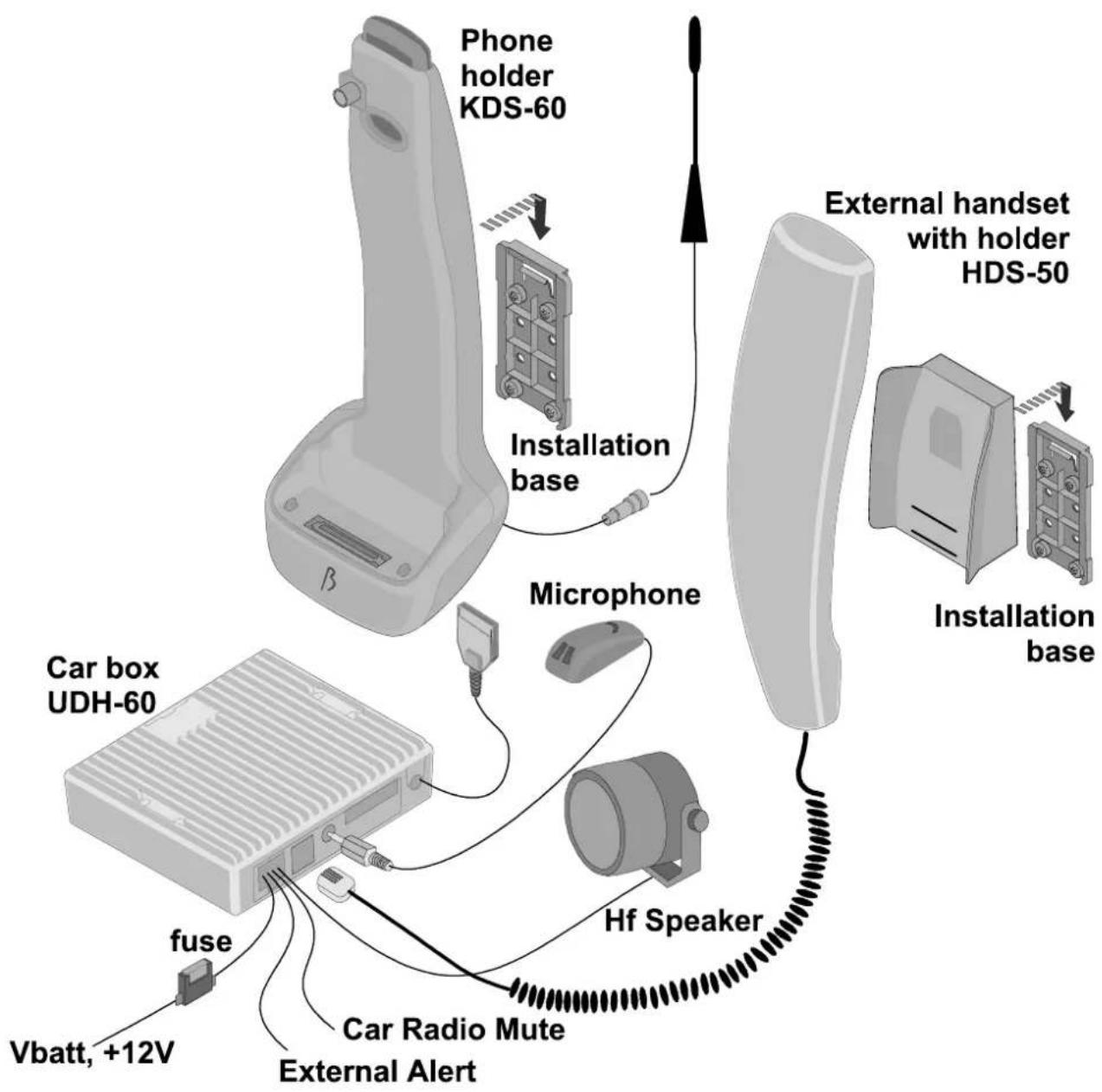
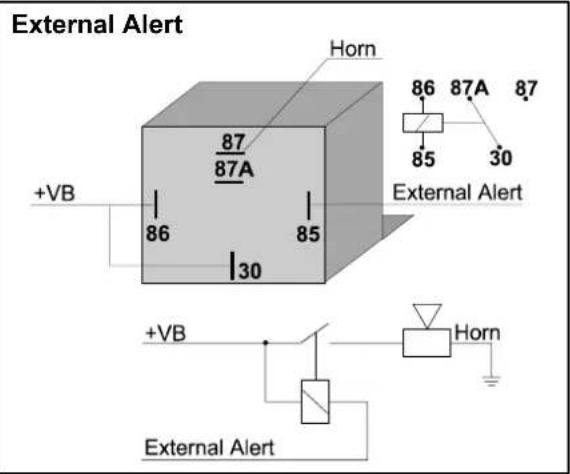
This kit includes a charging holder KDS-60, carbox UDH-60, loudspeaker and microphone for hands free function, car radio mute and external alert facility.
- EXTERNAL HANDSET WITH HOLDER HDS-50
This is an optional accessory for the hands free car kit.
- BENEBOOST CAR AMPLIFIER TDB-60-x
This is an optional accessory for the hands free car kit.
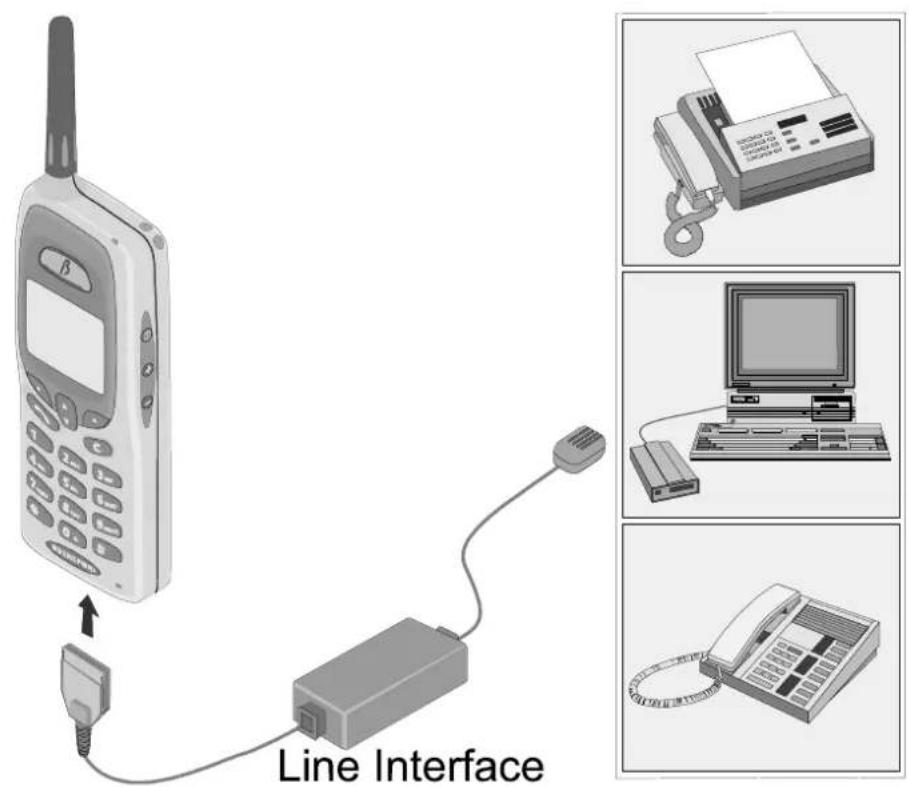
- LINE INTERFACE LIF-60
To connect to the mobile phone any appliance using DTMF or MFT dialling such as the home telephone, wireless phone, answering machine, telefax or modem and microcomputer.
- BENEWIN SCA-60
- ANTENNA ADAPTER RAC-60
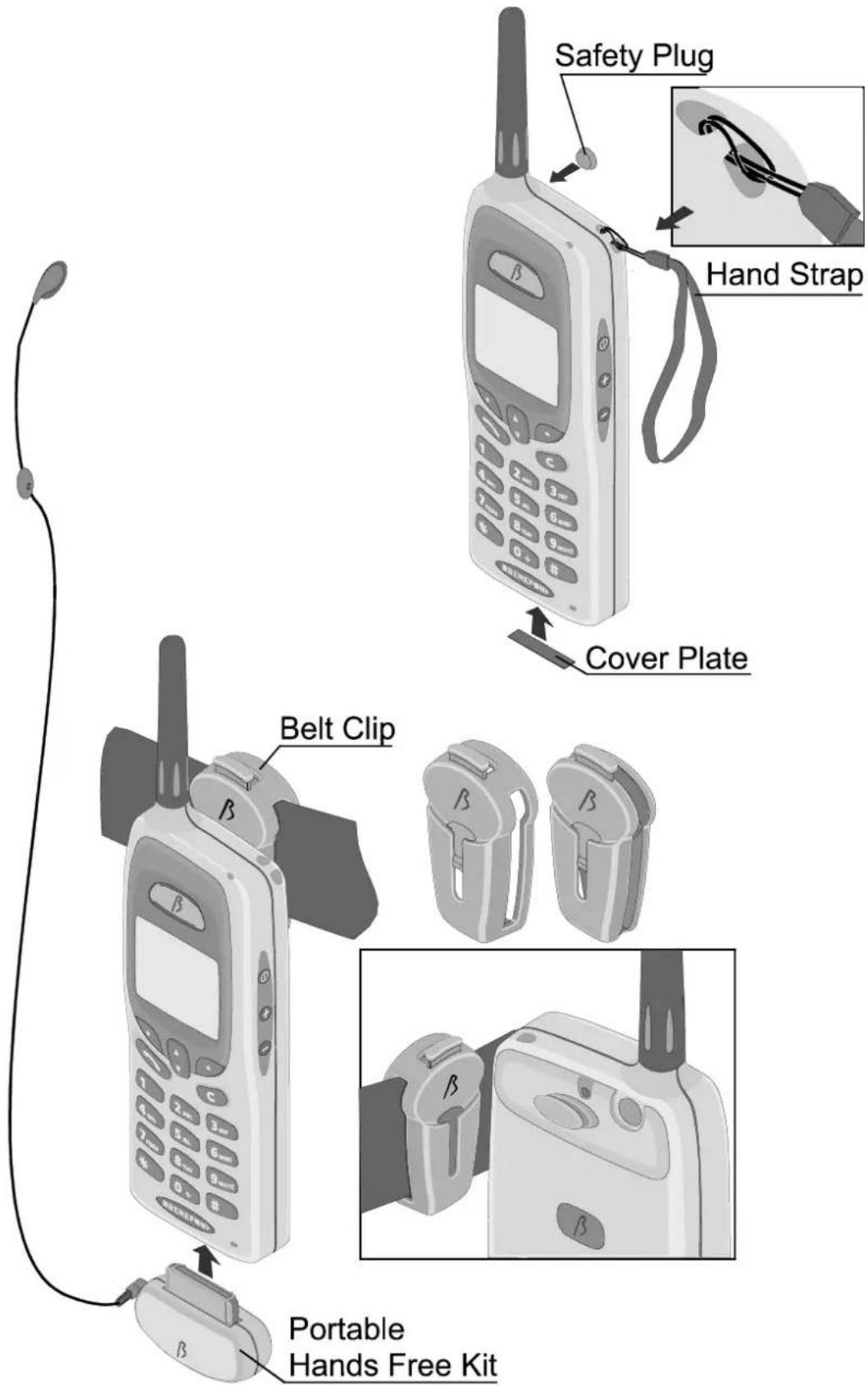
- HAND STRAP
- BELT CLIP
Benefon Spica And The Chargers
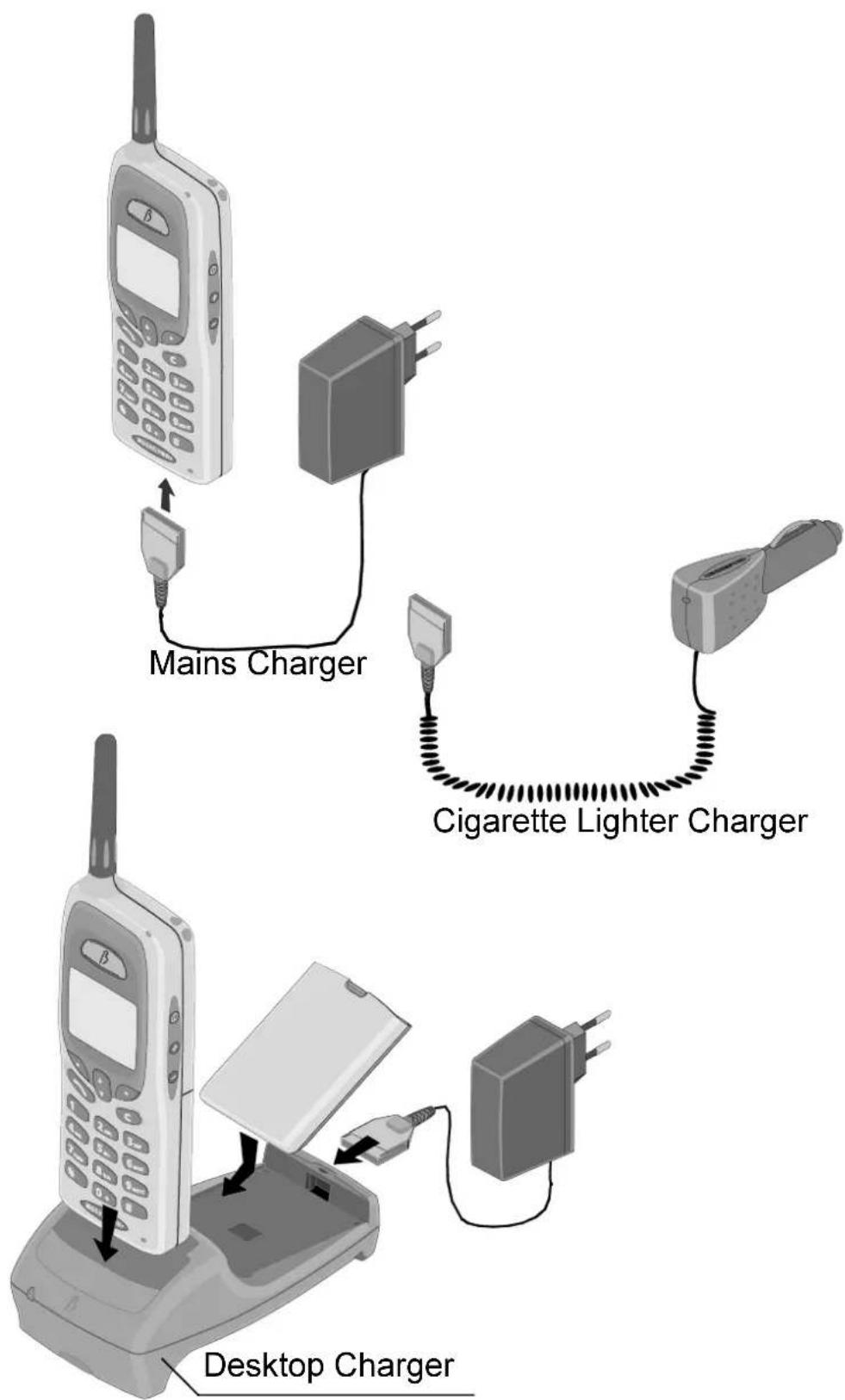
Light Car Installation
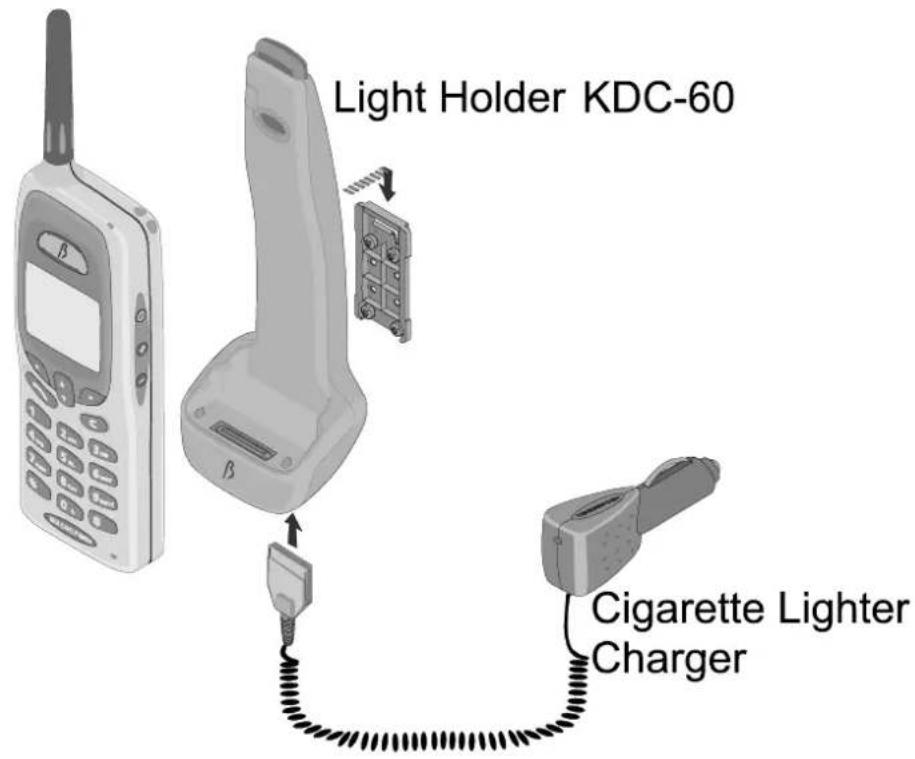
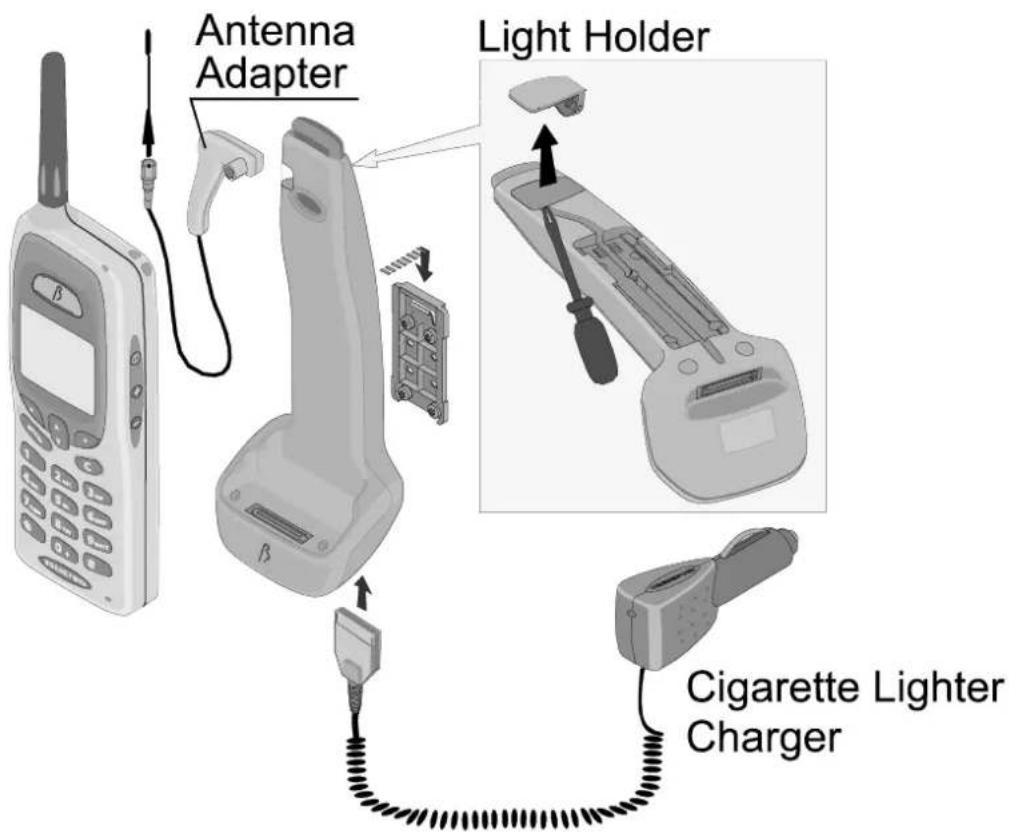
Car Installation
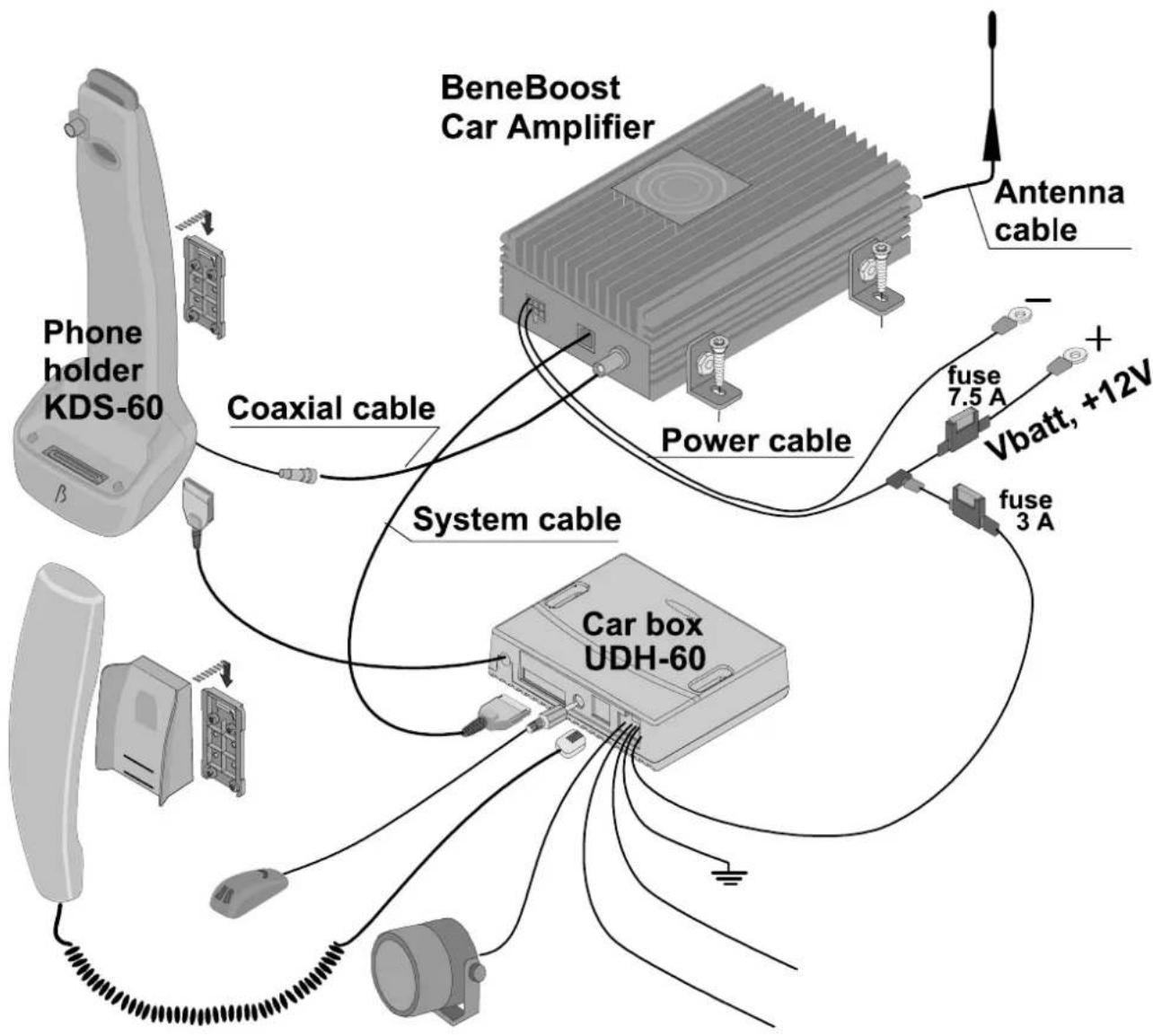
Car Installation with BeneBoost
Other Accessories
2.0 OWNER'S MANUAL
3.0 INSTALLATION INSTRUCTIONS
Installation Instructions
3.1 Phone Programming
You can program Benefon Spica by using either the keys on your phone, or the BeneLoc computer program. In either case, you will need a localbox.
Programming Menu Commands:
- SALES DATE
- RADIO PATH ID
- PHONE CODE
- HF-FUNCTION
CAR KIT TUNING (background noise tuning)
CAR KIT SWING (MIC-ERP contrast tuning)
- SW VERSION
- SAK
- PRODUCT CODE
- UPDATE LOCALBOX
- INTERLEAVING
- AUTOMATIC ROAMING
- RESET RAM
3.1.1 To program Using the Phone Keys
- Connect the localbox to your phone, and turn the phone on.
- Press ▼ and the following text will appear in the display: ***BENEFON***
will be flashing in the display.
3.1.1.1 Sales Date
- Choose ▶SELECT. The following text will appear in the display: SALES DATE [XXXXXX].
- Choose ▶ CHANGE. [XXXXXX] will be replaced by the date [daydaymonthmonthyearyear]. Remember to check that the date is correct. If the date is correct, choose ▶ SAVE. If the date is incorrect, delete it by choosing ▶ and enter the correct date (six digits in the following form: daydaymonthmonthyearyear). To save the date, choose ▶ SAVE.
It is possible to program the sales date ONLY ONCE, which means that you will not be able to change it again afterwards. If the sales date has not been programmed, your phone will not enter the normal stand-by mode.
3.1.1.2 Radio Path Identification
- Press ▼, and the following text will appear in the display: RADIO PATH ID [XXXXXXXXXX].
- Choose ▶ CHANGE. Enter the radio path identification (ten digits), and save the identification by choosing ▶ SAVE. Remember to check that the radio path identification is correct.
3.1.1.3 Phone Code
- Press ▼ ▼, and the following text will appear in the display: PHONE CODE [XXXX].
- Choose ▶ CHANGE. Enter the phone code (four digits), and save the code by choosing ▶ SAVE.
3.1.1.4 Automatic roaming and Interleaving
The Dealer activates or deactivs them according to the operator's or the customer's likings.
3.1.1.5 Closing Instructions
- Having programmed the necessary information choose ▶ QUIT, and the following text will appear in the display: ***BENEFON***.
- Turn off your phone, and disconnect the localbox.
- Turn the phone on once more, and make a test call.
3.1.2 To program Using the BeneLoc Program
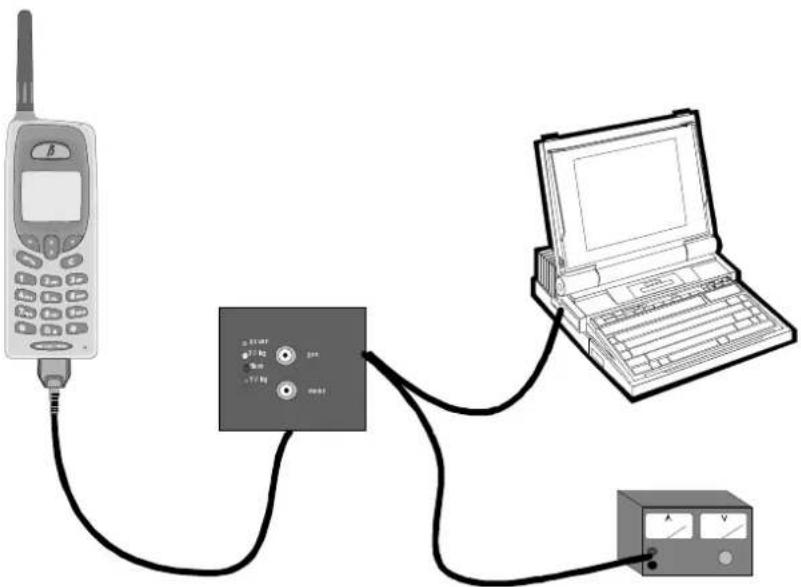
Start the installed program by clicking the icon. The phone must be connected to the system as discribed above.

Main window
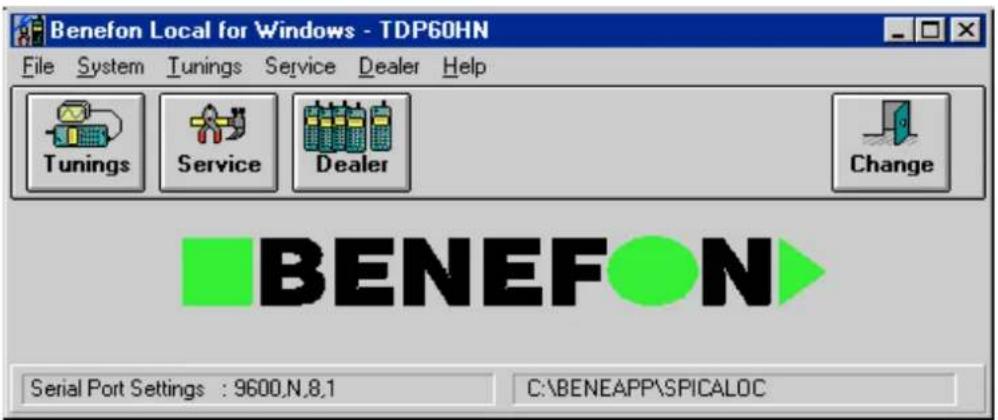
Press Dealer-key to enter the programming window.
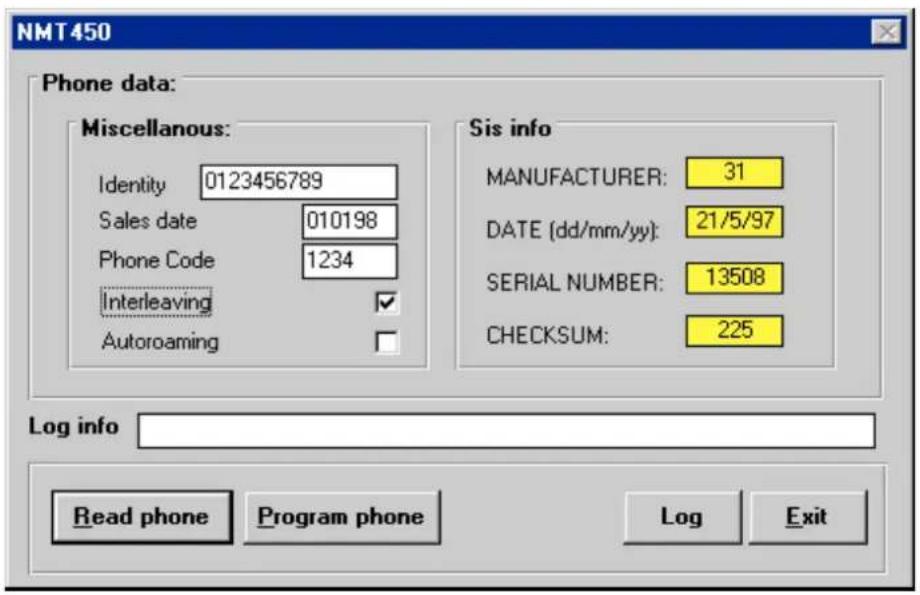
You can read the phone data by pressing the Read phone -key. You can change the miscellaneous settings with the computer and transfer them to phone by pressing the Program phone -key.
BeneLoc includes Help-program for further information.
3.2 CAR KIT
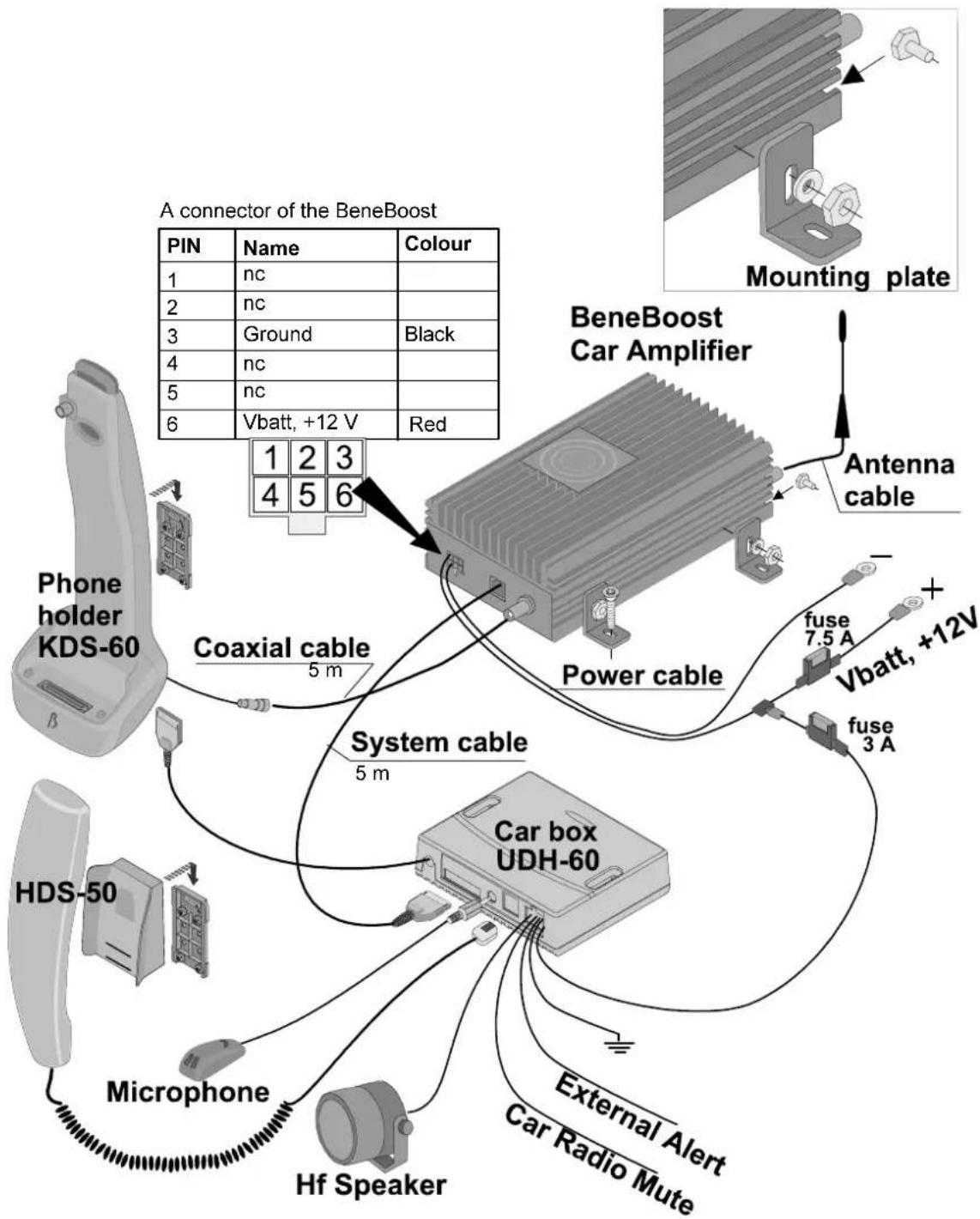
The Car Kit includes a phone holder (KDS-60), a car box (UDH-60), an antenna, an installation base, a hf speaker, a microphone and a cable. The Car Kit sales package also includes an installation materials bag, which contains the necessary installation equipment. On the next page you will find a diagram of connections explaining how to install the Car Kit.
Caution:
The Car Kit should only be installed by Benefon authorized installer. The end user should never attempt to install the Car Kit without professional assistance. Professional installers have the required tools and knowledge for installing the Car Kit properly and safely. The terms of warranty also require that the Car Kit is installed by professionally trained personnel. Cable routing may cause interference with the components of the vehicle's electronic systems (such as ignition and braking systems). It is recommended that cables not be routed next to such electronic components.
3.2.1 Antenna
Choose a suitable place for the antenna. It is recommended that you place the antenna on the roof of the vehicle.
3.2.2 Phone Holder KDS-60
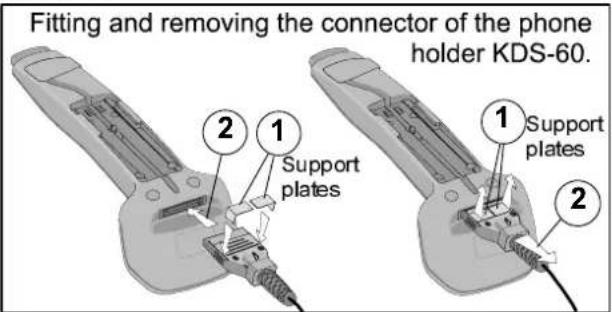
Choose such a place for the phone holder in the vehicle that will be both easy and safe when using the phone. Remember to leave enough space for the antenna plug behind the phone holder. First, fix the installation base to the place you have chosen, and then install the phone holder in the installation base.
3.2.3 Microphone
Install the microphone so that it is aimed directly at the user, and comes as close as possible to the user's mouth. A good place for the microphone is near the rearview mirror where the noise level is lower than, for example, beside a windshield pillar. It is also possible to install the microphone on a sun visor, but then it will be inconvenient to use the sun visor and microphone at the same time. One alternative would be a swan-neck microphone as it can be placed closest to the user's mouth.
3.2.4 Cable
Obtain the necessary (+)-electrical current from a suitable place, preferably directly from the battery of the vehicle. Connect the fuse chamber to the (+)-wire. You will find the fuse chamber in the installation materials bag. Connect
the ground lead to the frame of the car with a short wire.
3.2.5 External Handset HDS-50
Install the external handset the same way as you installed the phone holder.
3.2.6 Car Box UDH-60
Place the car box out of sight inside the dashboard of the car or to another suitable place. First, connect the wires to the car box. Install the car box so that the heat sink has some space for cooling. The car box has holes which enable you to fasten the car box with a cable tie. The installation materials bag also contains adhesive band fasteners.
3.2.7 Hf Speaker
Install the speaker in a suitable place near the floor of the car. To avoid echo remember to pay attention to the position of the microphone as well.
A Diagram of Connections
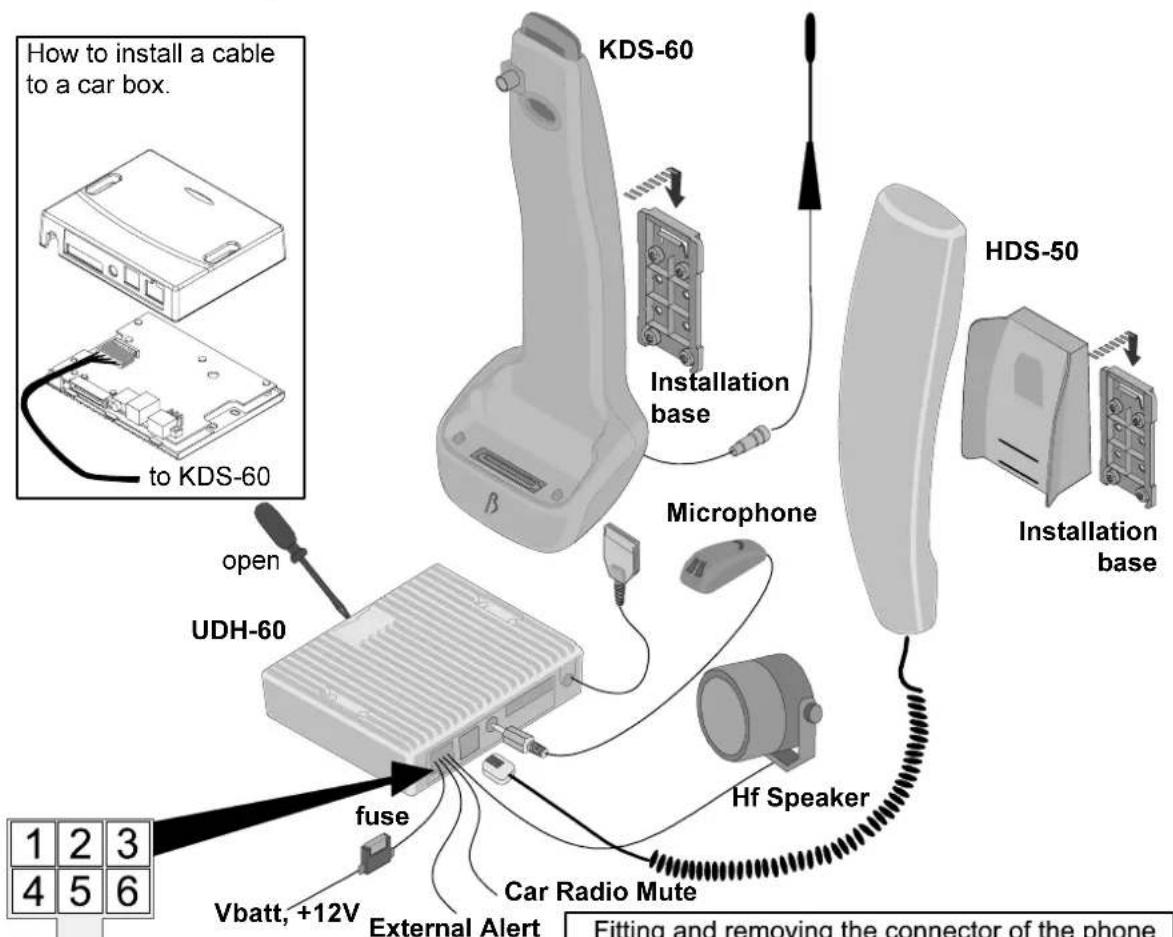
| PIN | Name | Colour |
| 1 | Car Radio Mute (active low) | Blue |
| 2 | Hf Speaker | Grey |
| 3 | Ground | Black |
| 4 | External Alert (active low) | Brown |
| 5 | Hf Speaker | Grey |
| 6 | Vbatt, +12 V | Red |
Car Radio Mute (See the installation instructions of your car radio)
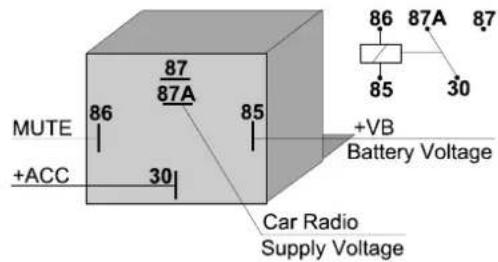
+ACC: to the +12 V power terminal which is energized in the accessory position of the ignition key
3.2.8 BENEBOOST KIT
The BeneBoost Kit is an extension for a car kit. It includes the BeneBoost car amplifier (TDB-60), a coaxial cable, a system cable and a power cable. The BeneBoost Kit sales package also includes an installation materials bag, which contains the necessary installation equipment. On the next page you will find a diagram of connections explaining how to install the BeneBoost Kit.
Caution:
The BeneBoost should only be installed by a Benefon authorized service centre. The end user should never attempt to install the BeneBoost without professional assistance. Professional installers have the required tools and knowledge for installing the BeneBoost properly and safely. The terms of warranty also require that the BeneBoost is installed by professionally trained personnel. Cable routing may cause interference with the components of the vehicle's electronic systems (such as ignition and braking systems). It is recommended that cables not be routed next to such electronic components.
3.2.8.1 BeneBoost
It is recommended that you place the BeneBoost in the trunk of the vehicle. There has to be enough dry, free space around and above the BeneBoost and there should not be any flammable materials nearby, because the BeneBoost can heat up to almost +80°C under extreme conditions. You should therefore place it at least 10 cm away from objects which might prevent its air circulation.
First slip the hex head screws into the slots of the BeneBoost and fasten the mounting plates with the nuts. Then fasten the BeneBoost car amplifier in the trunk with screws.
3.2.8.2 Coaxial Cable
Install the coaxial cable between the phone holder (KDS-60) and the PHONE plug on the BeneBoost.
Connect the antenna cable to the ANTENNA plug on the BeneBoost.
3.2.8.3 System Cable
Connect the system cable USB-connector to the BeneBoost and AMP-connector to the car box.
3.2.8.4 Power Cable
Obtain the necessary (+)-electrical current directly from the 12V battery of the vehicle. Connect the fuse chamber to the (+)-wire, near the cable end. If installation is made for a vehicle with a 24V electrical system, a 24V/12V DC converter must be used. In this case the (+)-wire should be connected to the +12V output of the converter.
The (+)-wire from the car kit, including its fuse chamber, will be connected to
(+)-wire of the power cable of the booster with a blade splice connector.
IMPORTANT: If you install the BeneBoost after the car kit, you must first remove the car kit (+)-wire of the power cable from the battery and attach it as mentioned above.
A Diagram of Connections
3.3 HF-FUNCTION
Benefon nSpica offers you hands free -setup for the Car Kit : the background noise tuning (CAR KIT TUNING) and MIC-ERP contrast tuning (CAR KIT SWING).
3.3.1 CAR KIT TUNING (theory)
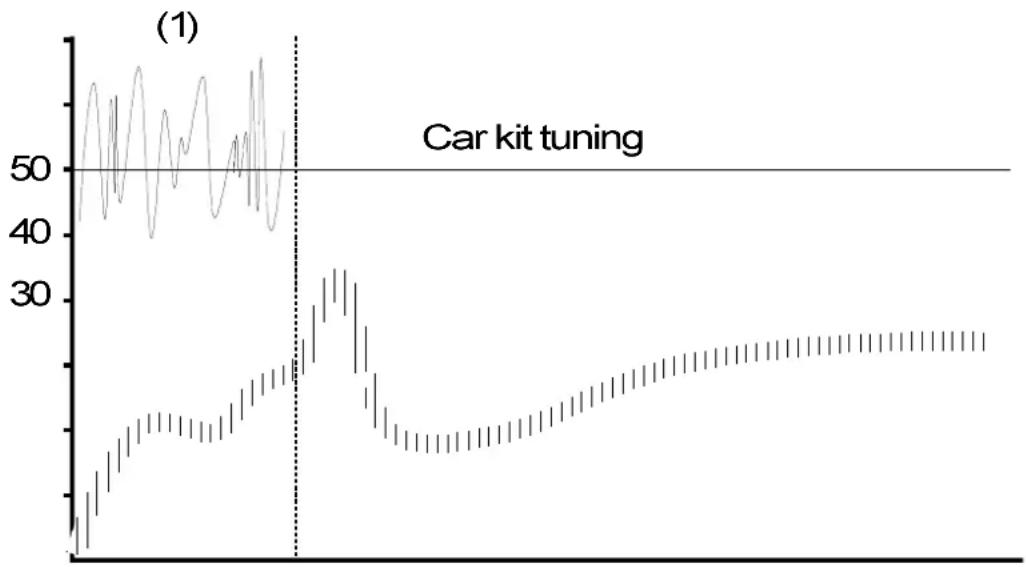
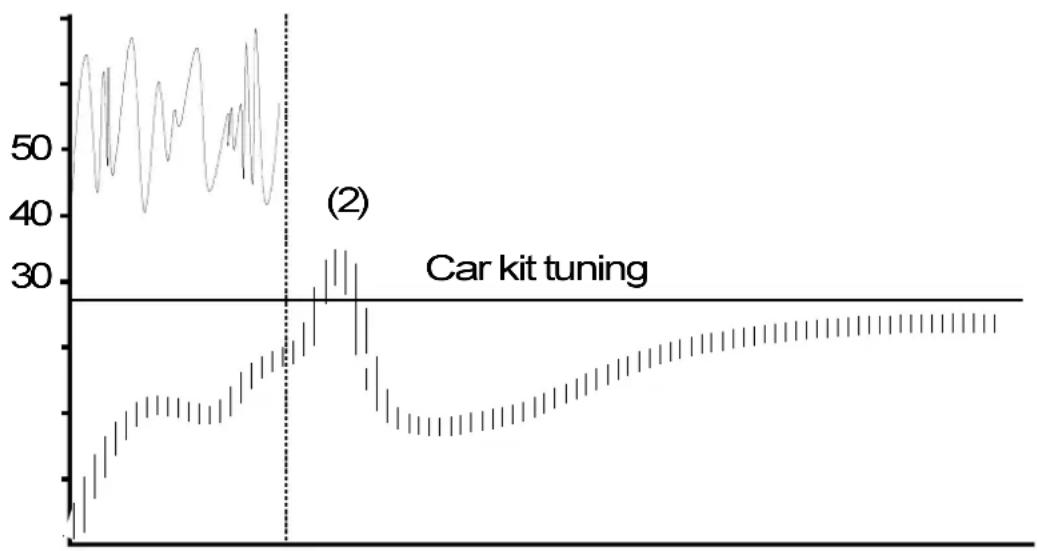
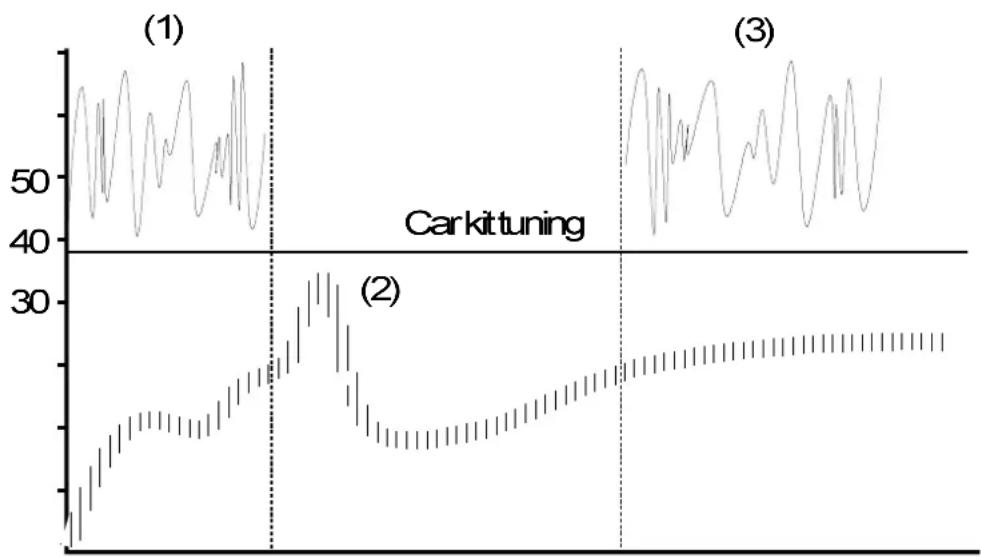
You can set up the activation level of the microphone by using the CAR KIT TUNING option. The level is correct when the microphone path is activated by voice alone, and not, for example, by background noise in your car.
The following figure shows you the CAR KIT TUNING setup process.
a. If the CAR KIT TUNING is set too high, your voice (1) will not activate the microphone path properly, and the person at the other end will only hear interrupted transmission of speech.
b. If the CAR KIT TUNING has been set up too low, the background noise in your car (2) will activate the microphone path, and the volume of the HF-speaker will be low.
line
| Time Point | Solid Line Value | Dotted Line Value | | ---------- | ---------------- | ----------------- | | 0 | ~50 | ~0 | | 1 | ~45 | ~5 | | 2 | ~55 | ~10 | | 3 | ~40 | ~15 | | 4 | ~50 | ~20 | | 5 | ~45 | ~25 | | 6 | ~55 | ~30 | | 7 | ~40 | ~35 | | 8 | ~50 | ~40 | | 9 | ~45 | ~45 | | 10 | ~55 | ~50 | | 11 | ~40 | ~55 | | 12 | ~50 | ~60 | | 13 | ~45 | ~65 | | 14 | ~55 | ~70 | | 15 | ~40 | ~75 | | 16 | ~50 | ~80 | | 17 | ~45 | ~85 | | 18 | ~55 | ~90 | | 19 | ~40 | ~95 | | 20 | ~50 | ~100 | | 21 | ~45 | ~105 | | 22 | ~55 | ~110 | | 23 | ~40 | ~115 | | 24 | ~50 | ~120 | | 25 | ~45 | ~125 | | 26 | ~55 | ~130 | | 27 | ~40 | ~135 | | 28 | ~50 | ~140 | | 29 | ~45 | ~145 | | 30 | ~55 | ~150 | | 31 | ~40 | ~155 | | 32 | ~50 | ~160 | | 33 | ~45 | ~165 | | 34 | ~55 | ~170 | | 35 | ~40 | ~175 | | 36 | ~50 | ~180 | | 37 | ~45 | ~185 | | 38 | ~55 | ~190 | | 39 | ~40 | ~195 | | 40 | ~50 | ~200 | | 41 | ~45 | ~205 | | 42 | ~55 | ~210 | | 43 | ~40 | ~215 | | 44 | ~50 | ~220 | | 45 | ~45 | ~225 | | 46 | ~55 | ~230 | | 47 | ~40 | ~235 | | 48 | ~50 | ~240 | | 49 | ~45 | ~245 | | 50 | ~55 | ~250 | | 51 | ~40 | ~255 | | 52 | ~50 | ~260 | | 53 | ~45 | ~265 | | 54 | ~55 | ~270 | | 55 | ~40 | ~275 | | 56 | ~50 | ~280 | | 57 | ~45 | ~285 | | 58 | ~55 | ~290 | | 59 | ~40 | ~295 | | 60 | ~50 | ~300 | | 61 | ~45 | ~305 | | 62 | ~55 | ~310 | | 63 | ~40 | ~315 | | 64 | ~50 | ~320 | | 65 | ~45 | ~325 | | 66 | ~55 | ~330 | | 67 | ~40 | ~335 | | 68 | ~50 | ~340 | | 69 | ~45 | ~345 | | 70 | ~55 | ~350 | | 71 | ~40 | ~355 | | 72 | ~50 | ~360 | | 73 | ~45 | ~365 | | 74 | ~55 | ~370 | | 75 | ~40 | ~375 | | 76 | ~50 | ~380 | | 77 | ~45 | ~385 | | 78 | ~55 | ~390 | | 79 | ~40 | ~395 | | 80 | ~50 | ~400 | | 81 | ~45 | ~405 | | 82 | ~55 | ~410 | | 83 | ~40 | ~415 | | 84 | ~50 | ~420 | | 85 | ~45 | ~425 | | 86 | ~55 | ~430 | | 87 | ~40 | ~435 | | 88 | ~50 | ~440 | | 89 | ~45 | ~445 | | 90 | ~55 | ~450 | | 91 | ~40 | ~455 | | 92 | ~50 | ~460 | | 93 | ~45 | ~465 | | 94 | ~55 | ~470 | | 95 | ~40 | ~475 | | 96 | ~50 | ~480 | | 97 | ~45 | ~485 | | 98 | ~55 | ~490 | | 99 | ~40 | ~495 | | 100 | ~50 | >10 | Note: The chart is divided into two sections based on the x-axis labeled 'Car kit tuning'. The y-axis values are estimated based on the y-axis label 'Value' and the x-axis label 'Time'. The dashed vertical line marks the 'Time' point at approximately T = T_1. The solid line represents the 'Value' of the 'T' series. The dashed line represents the 'Value' of the 'Time' series. The dotted line represents the 'Value' of the 'T' series. The dashed line is annotated with a vertical line between T_1 and T_2. The text 'Figmentation' is not explicitly provided in the code.c. When the CAR KIT TUNING has been set correctly only your voice (1 & 3) will open the microphone path.
line
| Step | Value | | ---- | ----- | | 1 | ~50 | | 2 | ~30 | | 3 | ~45 |Benefon phones have been set in our factory so that they will function in most cars. The factory setting for the CAR KIT TUNING is 38. The recommended adjustment range is +/- 5 units from the factory setting.
3.3.2 CAR KIT SWING (theory)
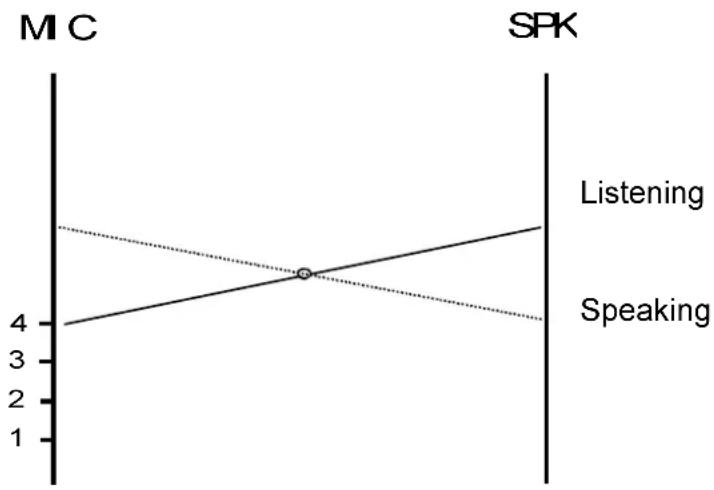
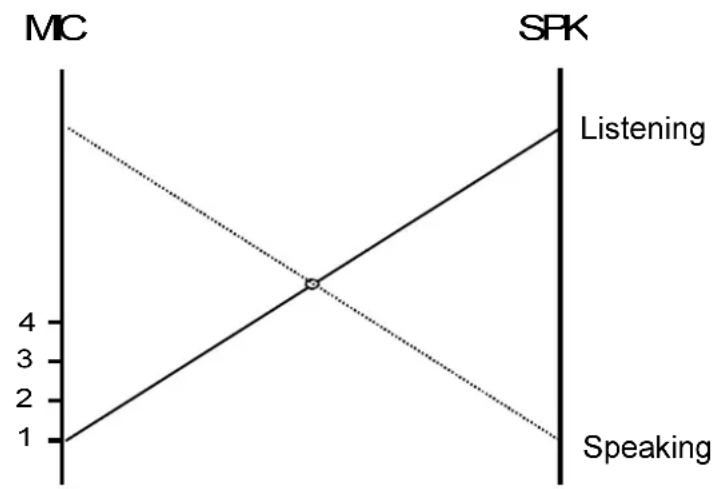
The four-step CAR KIT SWING tuning is used to set the contrast of the microphone amplification/speaker attenuation swing. In the following figures the swing position while listening to the Car Kit is indicated by a solid line and the position while speaking into Car Kit the indicated by a dotted line.
a. With a tuning value of 4 it is possible to obtain the smallest difference between the amplification and attenuation of the microphone and speaker. This means that the connection is almost bidirectional. If the HF-function easily creates feedback, decrease the value of the CAR KIT SWING. By turning down the volume it is possible to reduce the occurrence of feedback.
b. With a tuning value of 1 it is possible to obtain the greatest difference between the amplification and attenuation of the microphone and speaker. This means that the connection is almost unidirectional.
flowchart
graph LR
    MC["MC"] -->|1| Listening["Listening"]
    MC -->|2| Speaking["Speaking"]
    MC -->|3| Listening
    MC -->|4| Speaking
    SPK["SPK"] -->|Listening| Listening
    SPK -->|Speaking| Listening
The factory setting for the CAR KIT SWING is 3.
3.3.3 HF-function tuning in practice
You can tune HF-functions two ways: manually or with car kit.
Manual tuning
- Connect the localbox to your phone, and turn the phone on.
- Press ▼ and the following text will appear in the display: ***BENEFON***. Will be flashing in the display.
- Press ▼ ▼ ▼, and the following text will appear in the display: HF-FUNCTION
- Choose ▶ SELECT, and the following text will appear in the display: CAR KIT TUNING [038]. (The figure can be different).
- Choose ▶ CHANGE, and the following text will appear in the display: CAR KIT TUNING [ ] (026). (The figure can be different).
- Enter three digits and ▶ SAVE. The recommended value is between 033 and 043.
- Choose ▼ SELECT, and the following text will appear in the display: CAR KIT SWING (1...4): [3]. (The figure can be different).
- Choose ▼ SELECT, and the following text will appear in the display: CAR KIT SWING (1...4): [3]. (3 is blinking)
- Enter one digit and OK.
Tuning in car kit
- Connect the localbox to your phone, and turn the phone on.
- Press ▼ and the following text will appear in the display: ***BENEFON***. Will be flashing in the display.
- Connect the hand portable to the car kit
-
Press ▼ ▼ ▼, and the following text will appear in the display: HF-FUNCTION
-
Choose ▶ SELECT, and the following text will appear in the display: CAR KIT TUNING [038]. (The figure can be different).
-
Choose ▶ CHANGE, and the following text will appear in the display: CAR KIT TUNING [ ] (026). (The figure can be different).
-
Drive the car so that you can get a normal back ground noise level. The figure (026) will be changed according the back ground noise level.
-
Enter three digits (back by pressing ⓒ) shown in the figure (xxx) and ⚠ SAVE. The level will be stored.
4.0 SERVICE APPLICATIONS
BeneWin
4.1 BeneWin SCA-60
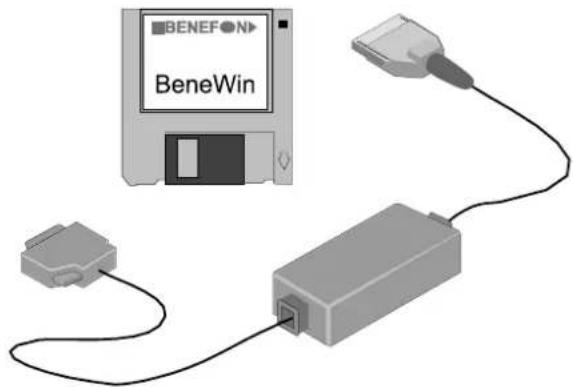
The BeneWin SCM Program for Windows is designed to facilitate maintenance of phone numbers and user settings on Benefon mobile phones. You can also use your phone to carry out the commands in the BeneWin Program, but it is handier to process data using your screen and keyboard - the advantage of the BeneWin Program. For example, all user settings are displayed in a single window, which enables you to check at a glance your current settings.
Your personal settings and phone numbers stored on the hard disk can be transferred to the mobile phone whenever necessary. When you travel or use a borrowed phone, your own settings make the phone feel like your own.
The main functions of the BeneWin Program are divided into four sections: THE BENEWIN MAIN WINDOW, in which you can modify the phone numbers, THE USER SETTINGS WINDOW, in which you can modify the phone's user settings, MAESTRO, in which you can compose or change last alert tone, SMS MANAGER, in which you can use SMS functions.
4.1.1 Installation of BeneWin program
Start Windows.
Insert the BeneWin installation disk in the floppy disk drive of your computer.
Using the Windows 3.1 choose Run from the File menu in the Program Manager and in the Windows 95 choose Run from the Start menu.

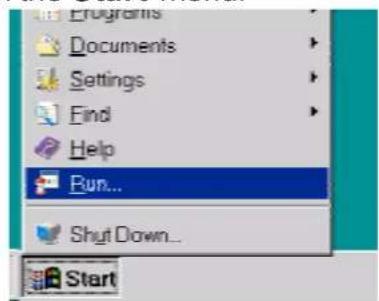
In the Command Line box, type the letter A: or B: to indicate your floppy disk drive, and then type SETUP. For example, A:SETUP.
Click the OK button, and follow the instructions displayed on your screen.
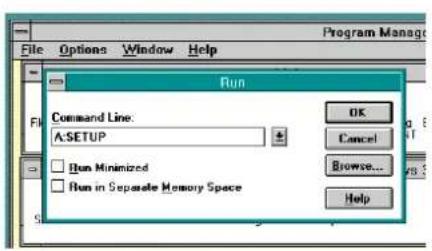
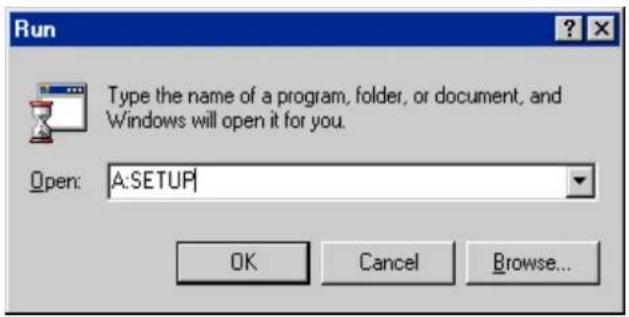
As normal it is recommended to close all other applications when installing new SW into hard disk. Only Windows should be running.
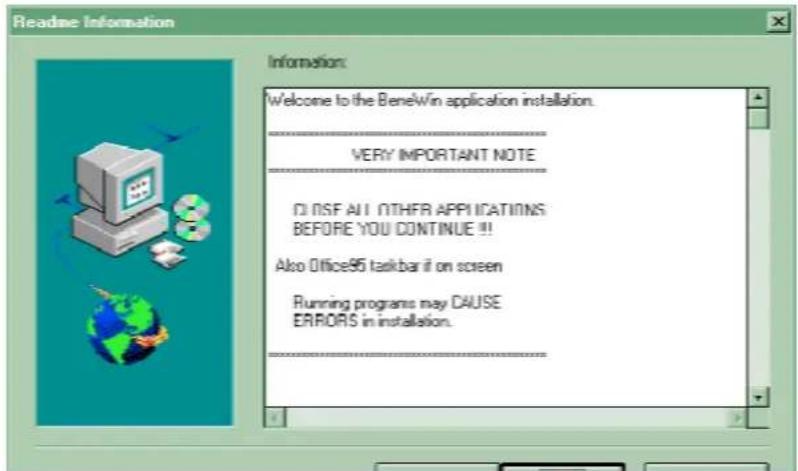
When you have confirmed that there is no other program running click Next.
On the second screen you will define the path where BeneWin will be installed. Default value is "C:\Beneapp\Benewin".
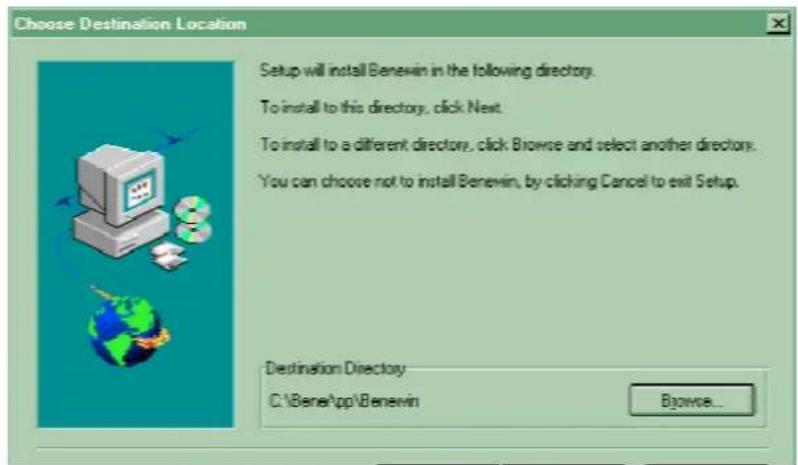
You may change the path if you wish. When ready click Next.
On the next phase you will determine Program Folder.
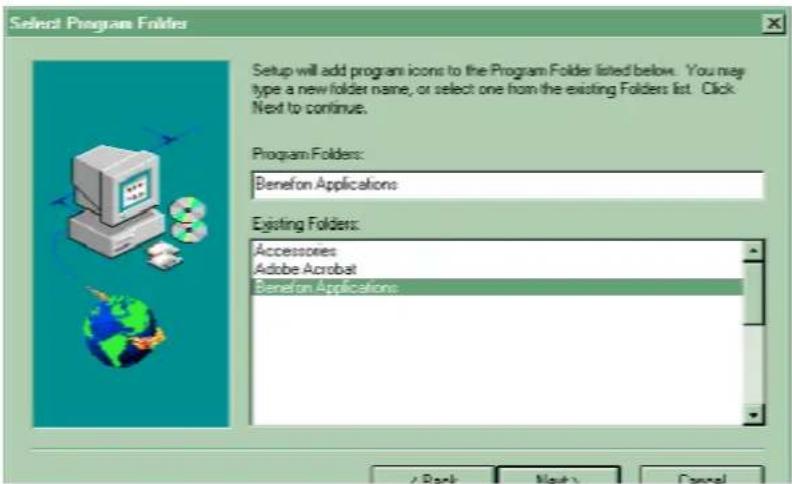
Default value is "Benefon Applications". You may choose some other Folder or even crate a new one. When done click Next.
Before the real installation starts you may accept or decline the settings.
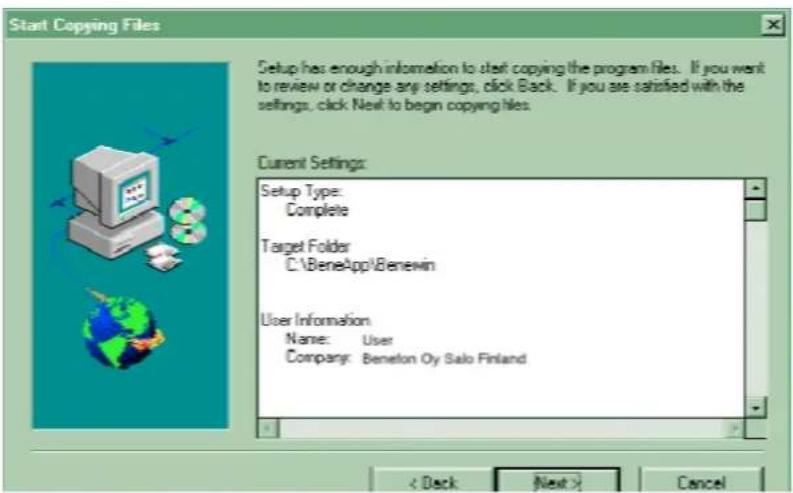
If you are satisfied click Next and the installation starts.
4.1.2 To start the BeneWin program
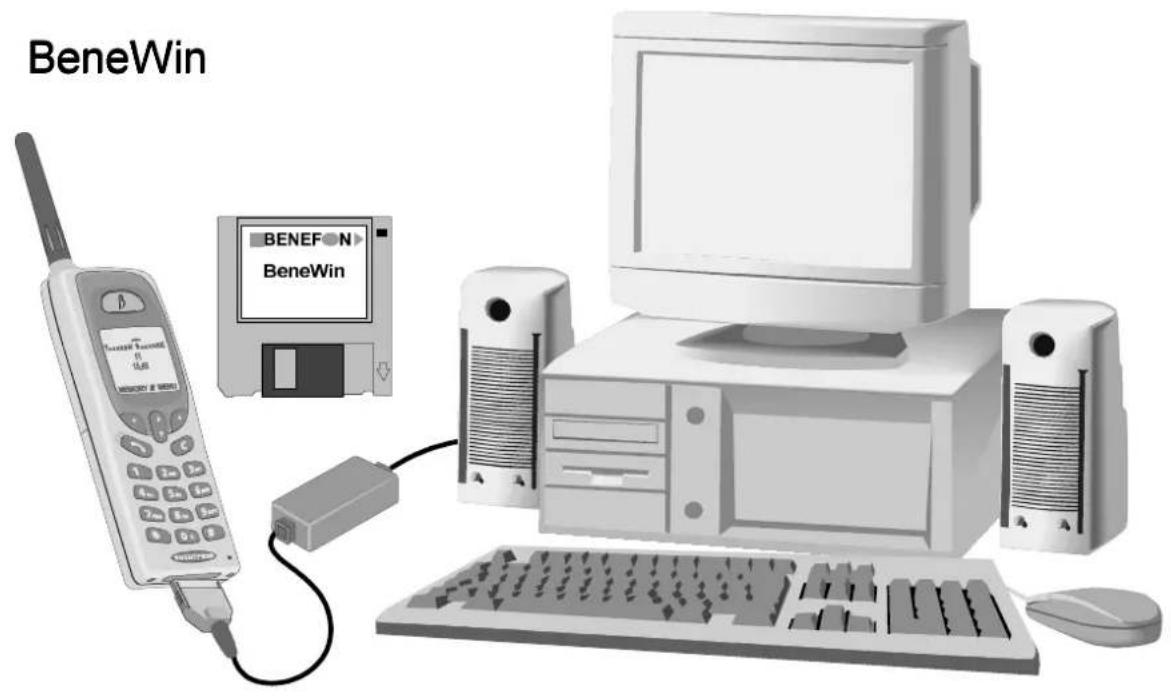
Connect your phone with a cable to the serial port of your computer, which is called COM1 or COM2. The serial ports are located in the back of your computer, and more precise instructions can be found in the manual accompanying the computer. Plug the flat end of the cable into the connector at the bottom of your phone. When the cable has been connected and the phone is functioning, you can start the BeneWin Program.
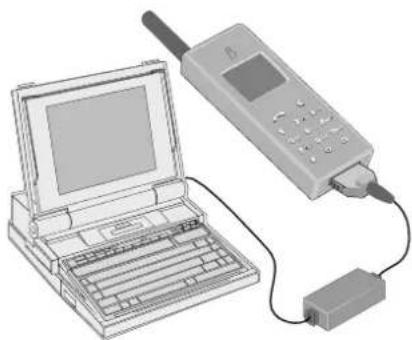
natural_image
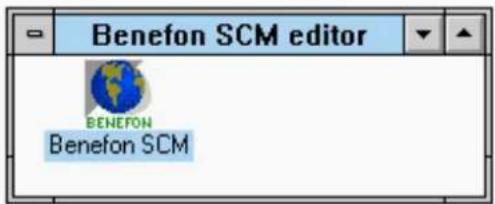
Illustration of a laptop connected to a handheld electronic device with a power cord (no text or symbols visible)To start the BeneWin Program, double-click the BeneSCM icon.
If you use a laptop computer make sure that the computer is not in the energy saving mode. If so the energy saving mode may prevent the transfer of data from the phone to computer or vice versa.
After starting up the BeneWin program will guide you further with the help of an electric manual (Online Help).
4.2 BeneLoc
BeneLoc
natural_image
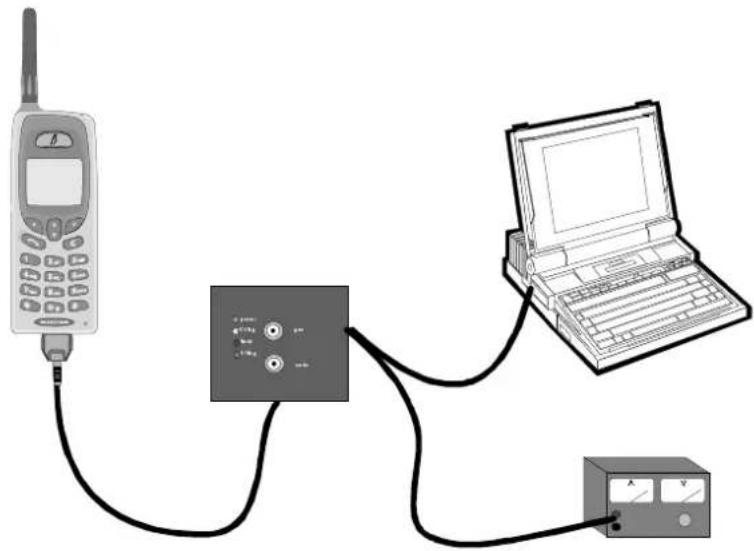
Diagram of a mobile phone connected to a laptop via cable, showing signal and measurement components (no text or labels)BeneLoc program is designed to help service person on tuning and service purpose. With Flasher Program you can change the software to Benefon phones.
Both, BeneLoc and Flasher program will need Local Box with service rights to work.
4.2.1 Installation of BeneLoc program
Start Windows. Close all other programs except Program Manager.
Insert BeneLoc Installation Disc 1 in the floppy disk drive of your computer. In the Program Manager window, choose Run from File menu.
Type the letter A: or B: to indicate your floppy disc drive, and then type SETUP.EXE. For example, A:\SETUP.EXE.
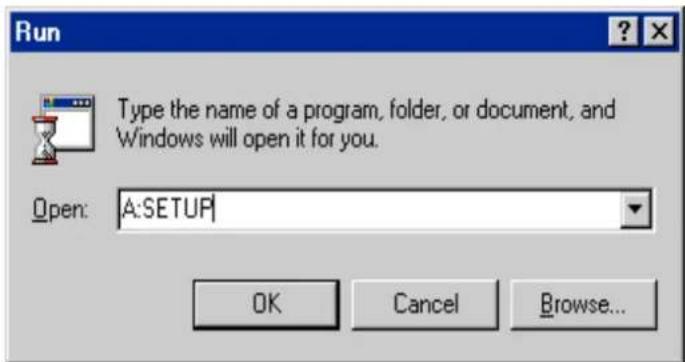
Click the OK button, and follow the instructions displayed on your screen.
The Setup Program will ask you to specify the drive and directory in which you want to install the BeneLoc Program. The Program suggests the following: C:\Bene-
App\BeneLoc. Accept the drive and directory by clicking Next button. You can also type your own directory for Beneloc Program.
The Setup Program creates all necessary directories and subdirectories to your computer. Setup Program also creates its own group window in Program Manager.
4.2.2 To start the BeneLoc program
Connect the Service LocalBox to serial port of your computer, which is called COM1 or COM2. The serial ports are usually located in the back of your computer, and more precise instructions can be found in the manual accompanying the computer.
Switch off the phone. Plug the cable with flat connector into the connector at the bottom of the phone. When the cable has been connected and the phone is switched on, the phone should be in LOCAL mode. You can test this by pressing arrow button. There should be ***BENEFON*** on the display, if not, clean connectors and try again. When phone is in LOCAL mode you can start the BeneLoc Program.
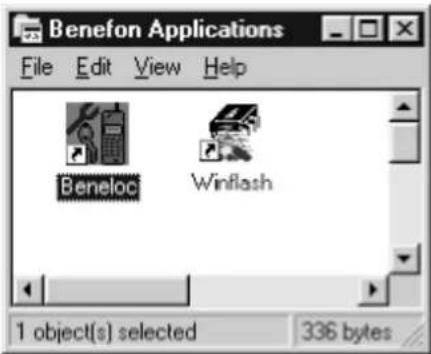
To start the BeneLoc Program, double click the BeneLoc icon.
In the BeneLoc Startup window, first select the correct serial port. Then, you have to select type of the phone. You can also use the Autodetect option. After selection click OK to start BeneLoc Program. When operating without external power supply the phone may be on sleep mode and registration fails. You can wake up the phone by pressing some buttons on the phone.
4.2.3 Using the BeneLoc program
In the main window of the BeneLoc, you will find submenus and buttons. Clicking the buttons you can go to the submenus.
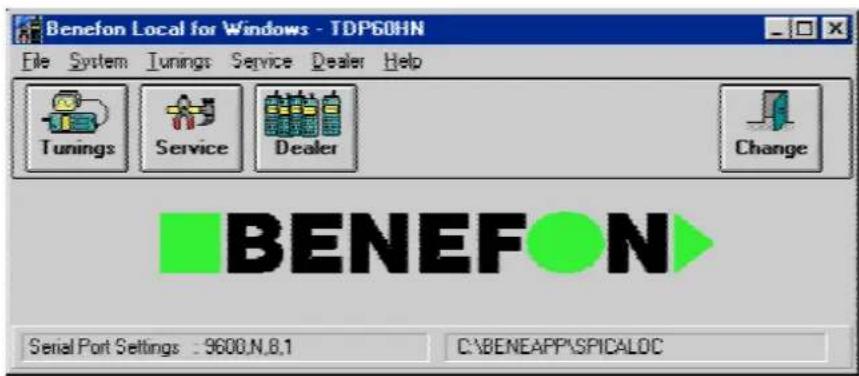
Change
For changing phone to another similar you do not need to do more than enter into main menu. It means that this button is not needed. If you are going to change the tested phone to one having different software in, clicking Change will start the registration protocol again.
Help
About BeneLoc submenu will tell you version of the BeneLoc Program and also the state of memory.
About Cellular submenu will show you information of the phone. Type of phones software, sales date, date of the software, serial number and present tuning values of the phone. You can not change the tuning values from Help menu.
Dealer
From Dealer submenu you can make or check programming of the phone. You will also find the SIS information from Dealer submenu.
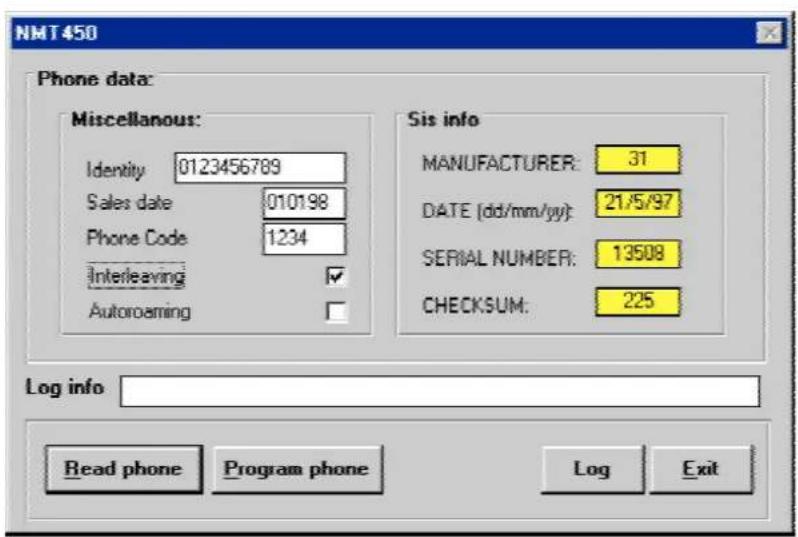
Service
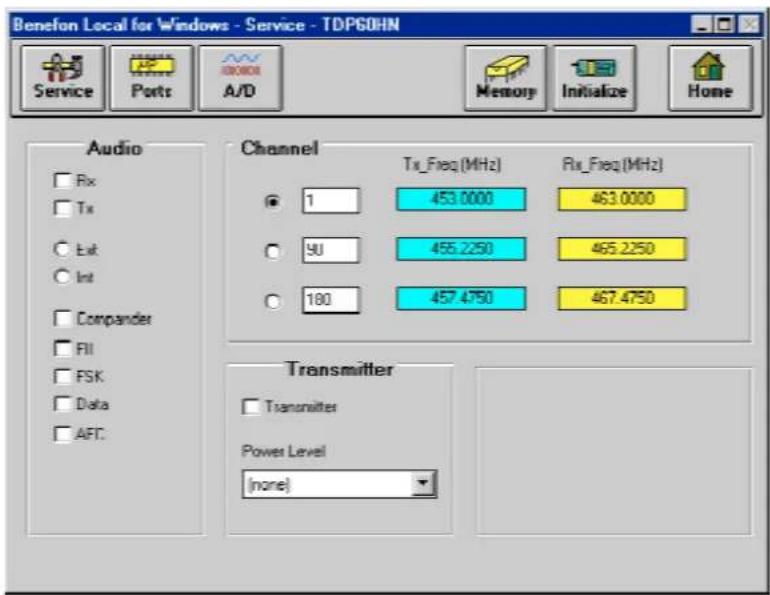
You can control the audio lines (for example, switch Rx audio and compander on/off) in the Service main menu. It is also possible to control the phone to desired channel. There is also possible to change the power of transmitter.
In the Ports submenu is you can see the status of different digital ports. There is also possible to control some of the output ports.
You can read the status of the A/D converters from the A/D submenu. Select 8 different topics to view. By clicking SCAN AD button The Beneloc will scan A/D the state of converters continuously. Scanning can stopped by clicking STOP AD.
Memory submenu allows you to make Ram reset.
By clicking Initialize You can clear all LOCAL settings in service menu.
Home button will return you back to main menu.
Tunings
From Tunings main menu you can select different tunings to do. Every tuning have they own instruction window. Follow given instructions to do tunings. Clicking START will start tuning. The value will be stored only by clicking SAVE. Some of the tunings are chained and you can enter to next phase by clicking NEXT.
![Load tune File - C:\BENEAPP\SPICALOC\TUN\TDP60HN 1. Battery voltage[ 5 V ] tuning 2. TX level tuning 3. TCXO tuning 4. RX audio tuning 5. RSSI level tuning 6. LNAGC level tuning 7. FSK-split level tuning 8. Deviation tuning 9. Display contrast tuning OK EXIT](/content/2026/06/1233788/images/c95f3bd67d0dae2b1c2aca24babee63f01591578ffa7006e703f1907668f693f.jpg)
System
You select used mobile phone system from this submenu.
File
From settings submenu you can manually change settings of the communication port.
5.0 PHONE'S CONSTRUCTION
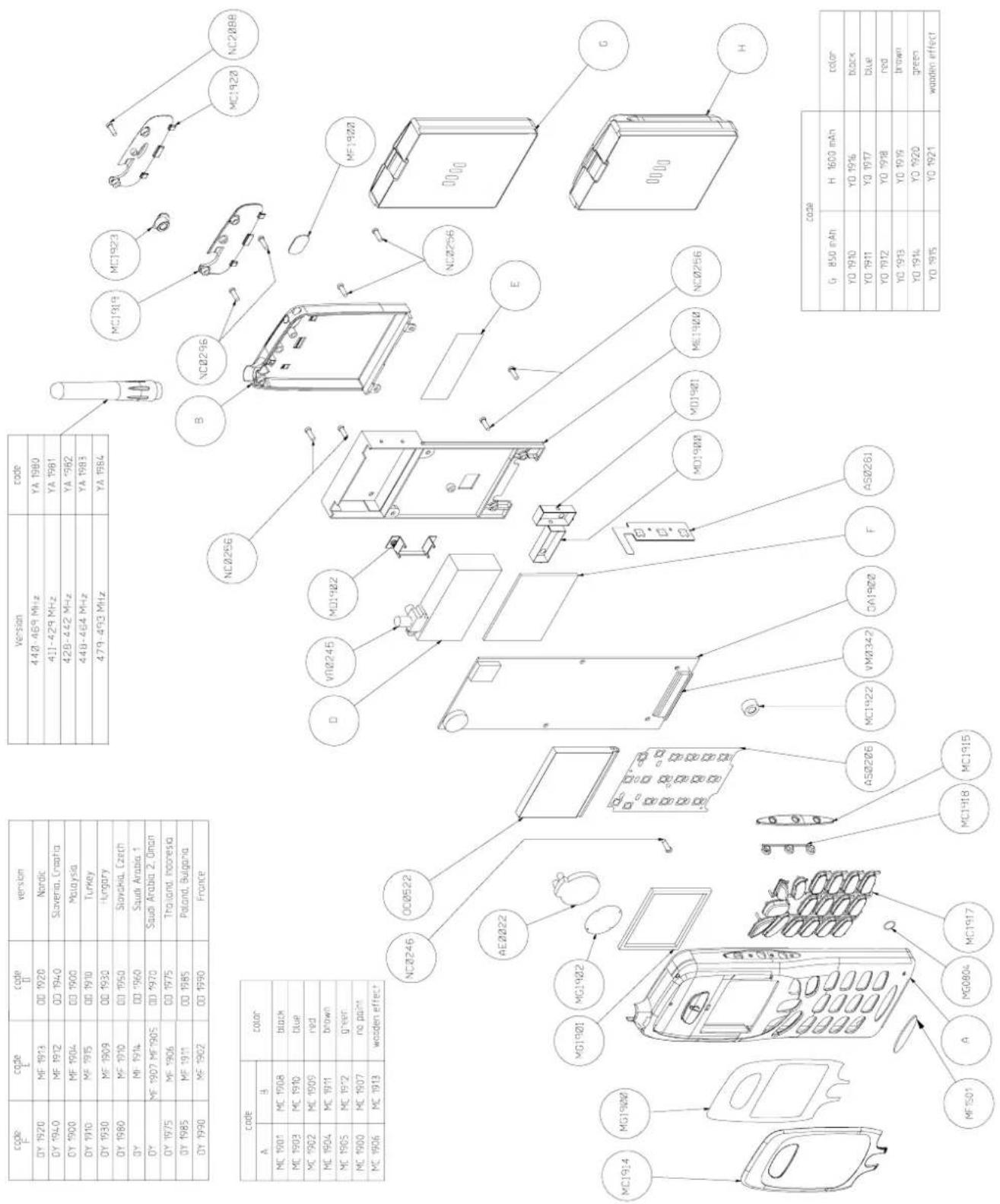
5.1 LOGIC / AUDIO
OA1900 Processor/Audio
PROCESSOR
5.1.1 General
The entire radio audio and processor functions are found within a single PA1900 board, through which all other modules are connected. Only the RF signals have a different unit.
The processor controls the audio and radio (RF) modules, internal devices and external accessories.
The CBIC (processor-asic) includes:
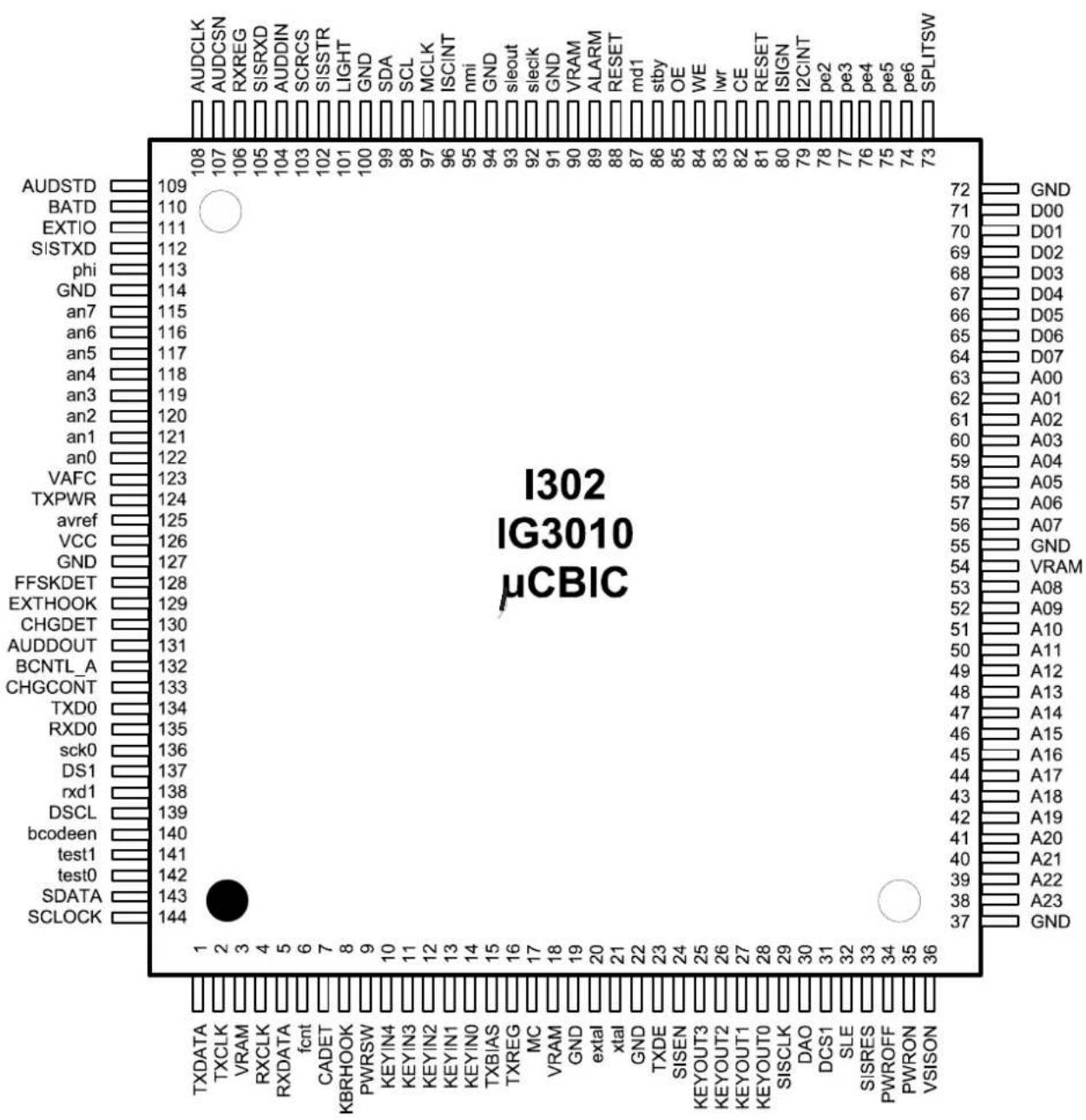
μCBIC IG3010 H8/300H-cpu, 10k*8 CMOS RAM, 8 A/D, 4 D/A, 48 pcs I/O lines, 3 series-interfaces, 2 modem-interfaces, i2c-interface, frequency counter, realtime clock
PROM 29LV004 512k*8 EEPROM, program memory
SIS IG2048 Asic for SIS-function, 256k*8 EEPROM + Universal EEPROM for tuning values
5.1.2 Connectors:
5.1.2.1 Radio Base Connector, V101
| 1 SV_SHG charge voltage for battery 6 - 8V / max 1,1A | |||
| 2 SV_SHG charge voltage for battery 6 - 8V / max 1,1A | |||
| 3 SVB battery voltage to accessory 4 7,5V / max 0,3A | |||
| 4 SV-PROG flash programming voltage 0.5/12 -14 Vdc | |||
| 5 | SEXTMIC + PWR | external audio signal from the accessory + power on/off control (3V = pwr on) | 200 mVrms |
| 6 | GND ground | ||
| 7 | GND ground | ||
| 8 | EXTERP + HOOK | external audio signal to the accessory 100mVrms | |
| 9 | S C A | accessory identify (carkit, table charger, booster) | 0/VCC digital |
| 10 | SI2CINT i2c interrupt | 0/VCC digital | |
| 11 | SSCL | i2c clock | 0/VCC digital |
| 12 | SSDA | i2c data | 0/VCC digital |
| 13 | STXD | rs232 output | 0/VCC digital |
| 14 | SRXD | rs232 input | 0/VCC digital |
| 15 | SEXTIO | headset identify IO | 0/VCC digital |
| 16 | SCHGCONT | charger control | 0 - VCC |
The Ext-hook switch is connected to the erp-line so that the erp-line dc level drops when the handset is in its holder.
5.1.2.2 Accu module, V102
1 A_VB power supply voltage from the battery 5V
2 A_BATD battery pack data 0/VCC
3 A_MC Extra control-line 0/VCC
4 GND
5.1.2.3 RF-module, V103
| 1 S_SDATA synthesizer control data 0/VCC | |||
| 2 S_SCLK clock signal for synthesizer control data 0/VCC | |||
| 3 S_SLE enable pulse to the synthesizer 0/VCC | |||
| 4 S_RX_REG | control line for VRX-regulator | 0/VCC | |
| 5 S_TX_REG | control line for VTXS-regulator | 0/VCC | |
| 6 S_AFC | frequency compensation control voltage | approx 1.5V | |
| 7 S_SNTC | temperature data, analog | 0-VCC | |
| 8 | S_RXAUDIO | received audio signal | 230 mVrms |
| 9 | S_RSSI | received signal strength indicator, analog | 0-2V |
| 10 | GND | v | |
| 11 | s450K | 450kHz for AFC detector | approx 1Vpp |
| 12 | GND | ground | |
| 13 | BCNTL_A | booster power level setting | approx 1V / 0.1V |
| 14 | |||
| 15 | VB | power supply voltage from the battery | 5V |
| 16 | VB | ||
| 17 | VB | ||
| 18 | S_TXBIAS | power on/off control, (0V = TX OFF) | 0/VCC |
| 19 | S_TXPWR | TX power level control, analog | 0-VCC |
| 20 | S_TXAUDIO | transmitter audio signal | 200 mVrms |
5.1.2.4 Side switch module, V104
| 1 | KEYOUT3 | key matrix output (volume key +) | 0/VCC |
| 2 | PWRKEY | powerkey | |
| 3 | GND | ||
| 4 | KEYINP0 | key matrix input (volume keys +/-) | 0/VCC |
| 5 | KEYOUT2 | key matrix output (volume key -) | 0/VCC |
5.1.2.5 Display module, A200
| 1...7 | nc | not connected | |
| 8 | VCC | power supply voltage | 3.3V |
| 9 | RESET | reset-line (low active) | 0/VCC |
| 10 | GND | ground | |
| 11 | DCSI | chip select (low active) | 0/VCC |
| 12 | VCC | power supply voltage | 3.3V |
13 VCC power supply voltage 3.3V
14 DAO L:control data H:display data 0/VCC
15...17 VCC power supply voltage 3.3V
18...23 nc not connected
24 DSCL serial clock line for data 0/VCC
25 DSI serial data input
26 GND ground
27...34 connected to the voltage components
35 VCC power supply voltage 3.3V
36...40 connected to the voltage components
41 nc not connected
5.1.2.6 Circuit Diagram
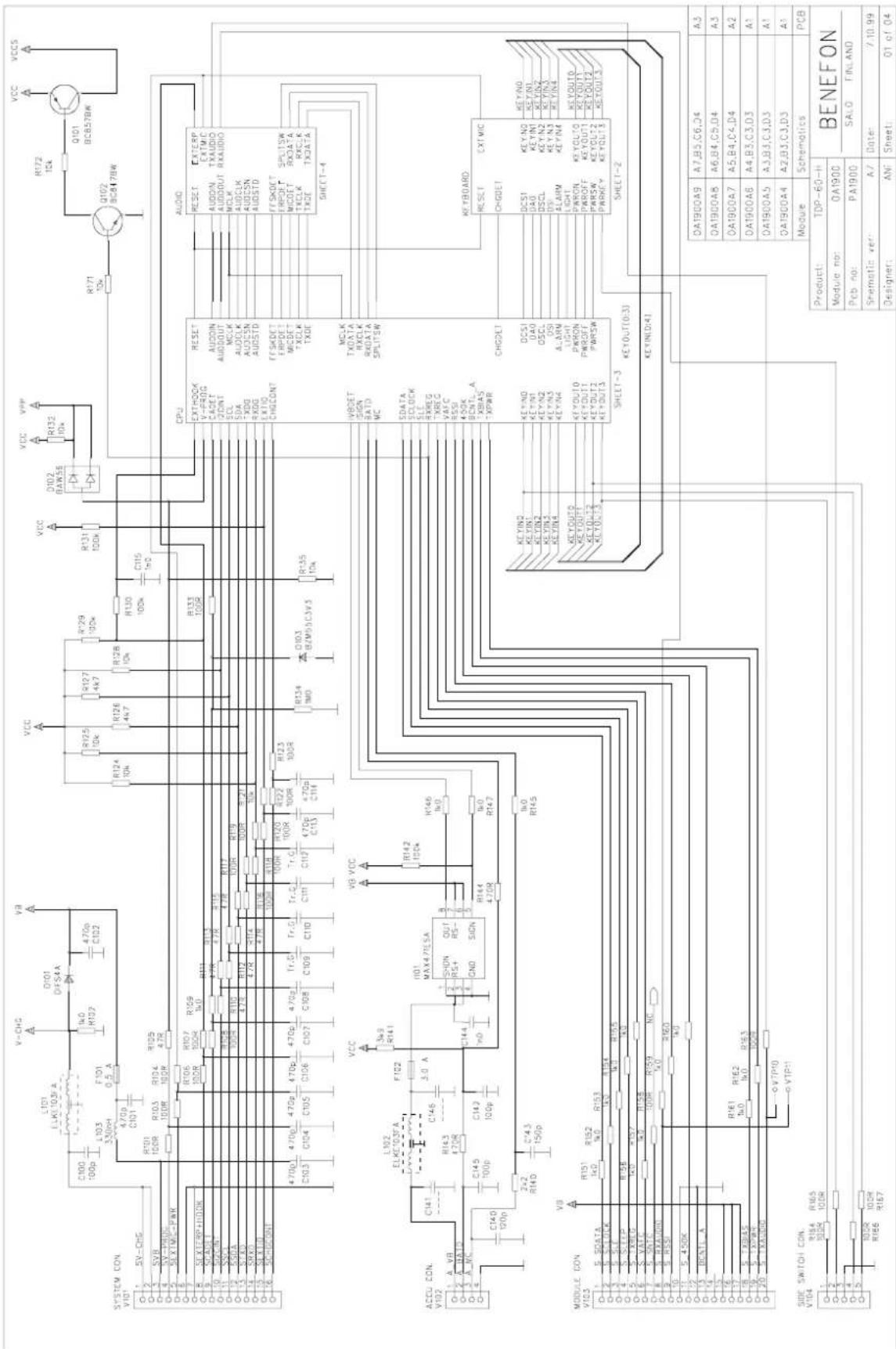
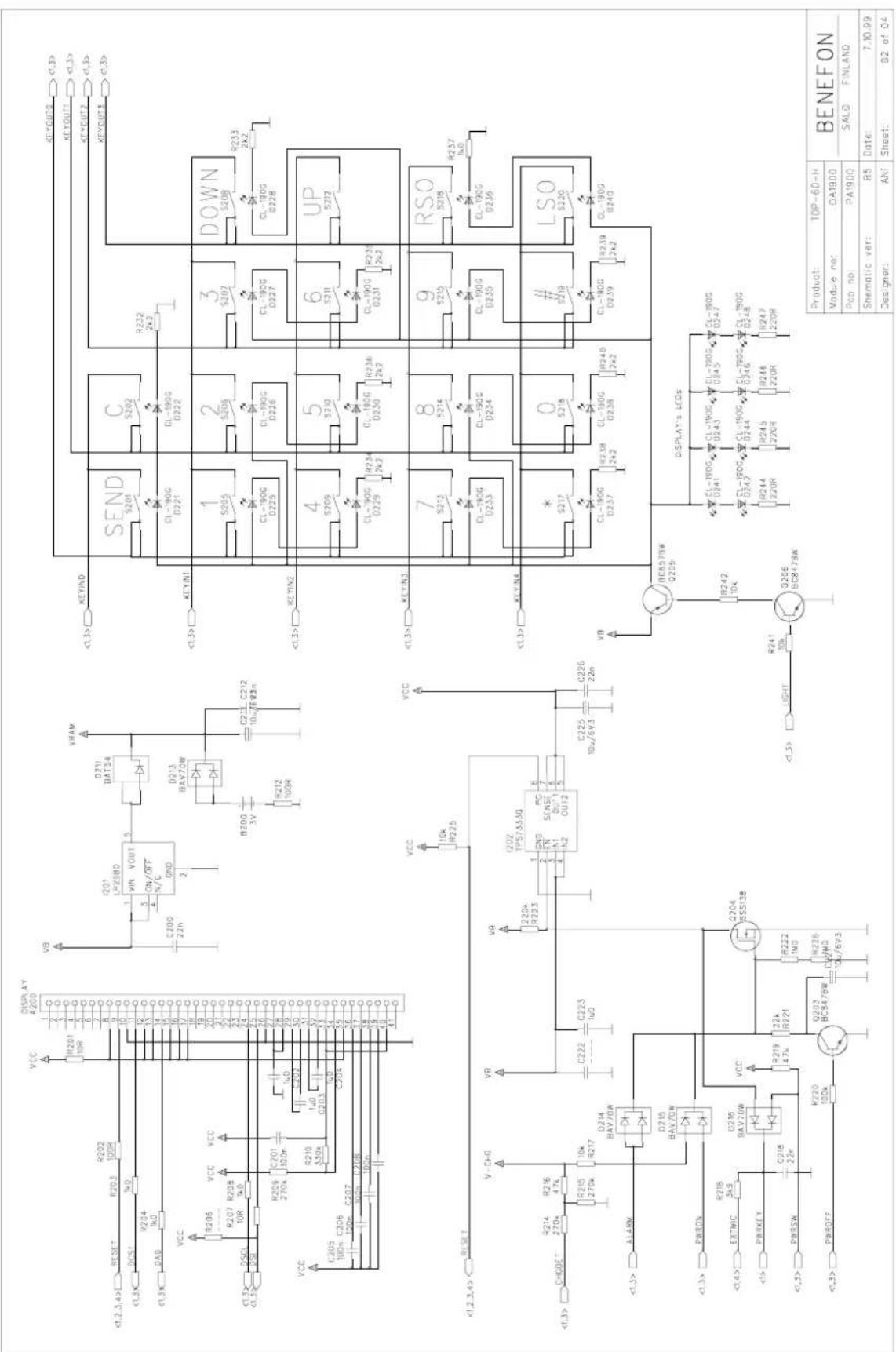
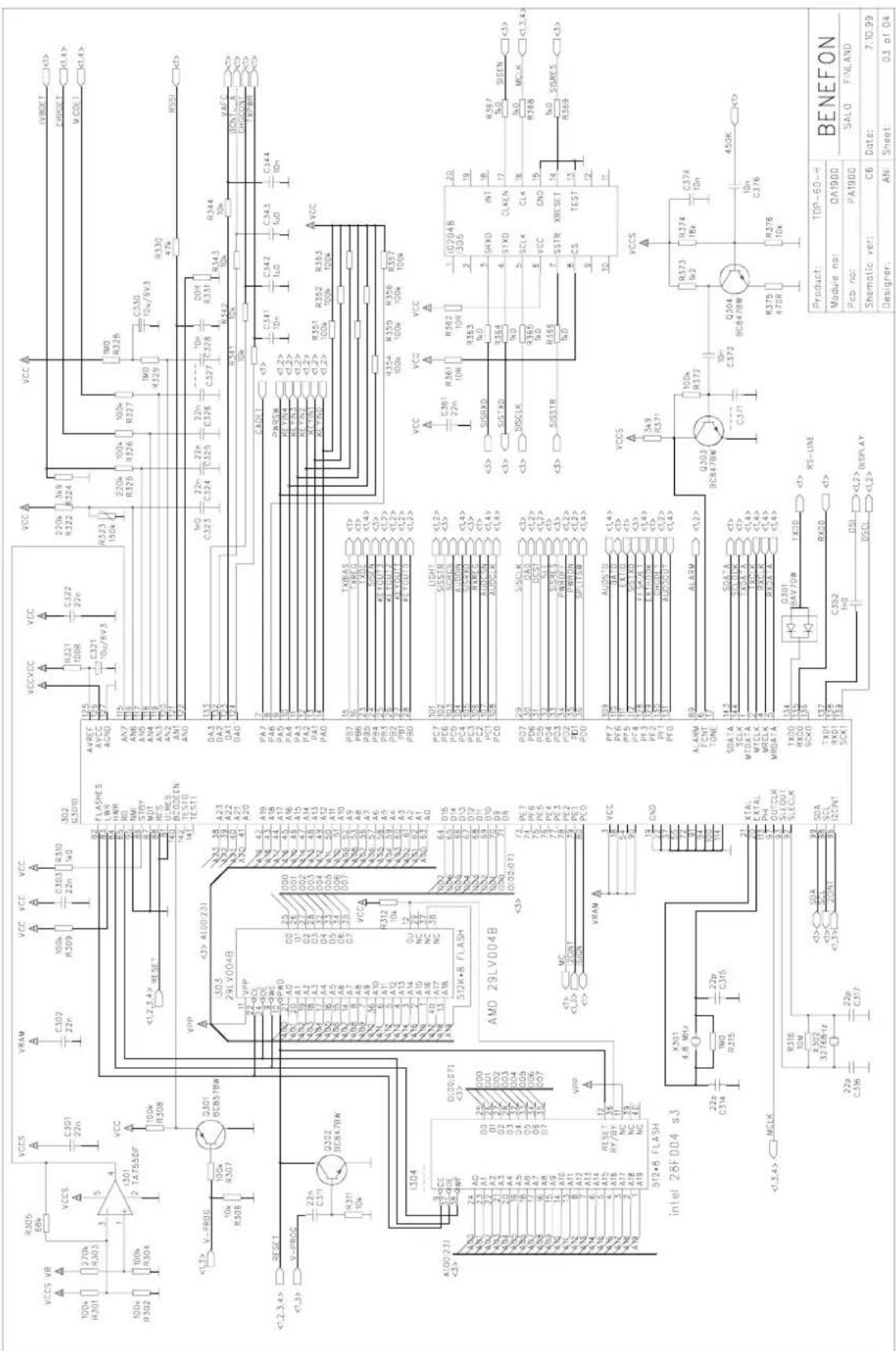
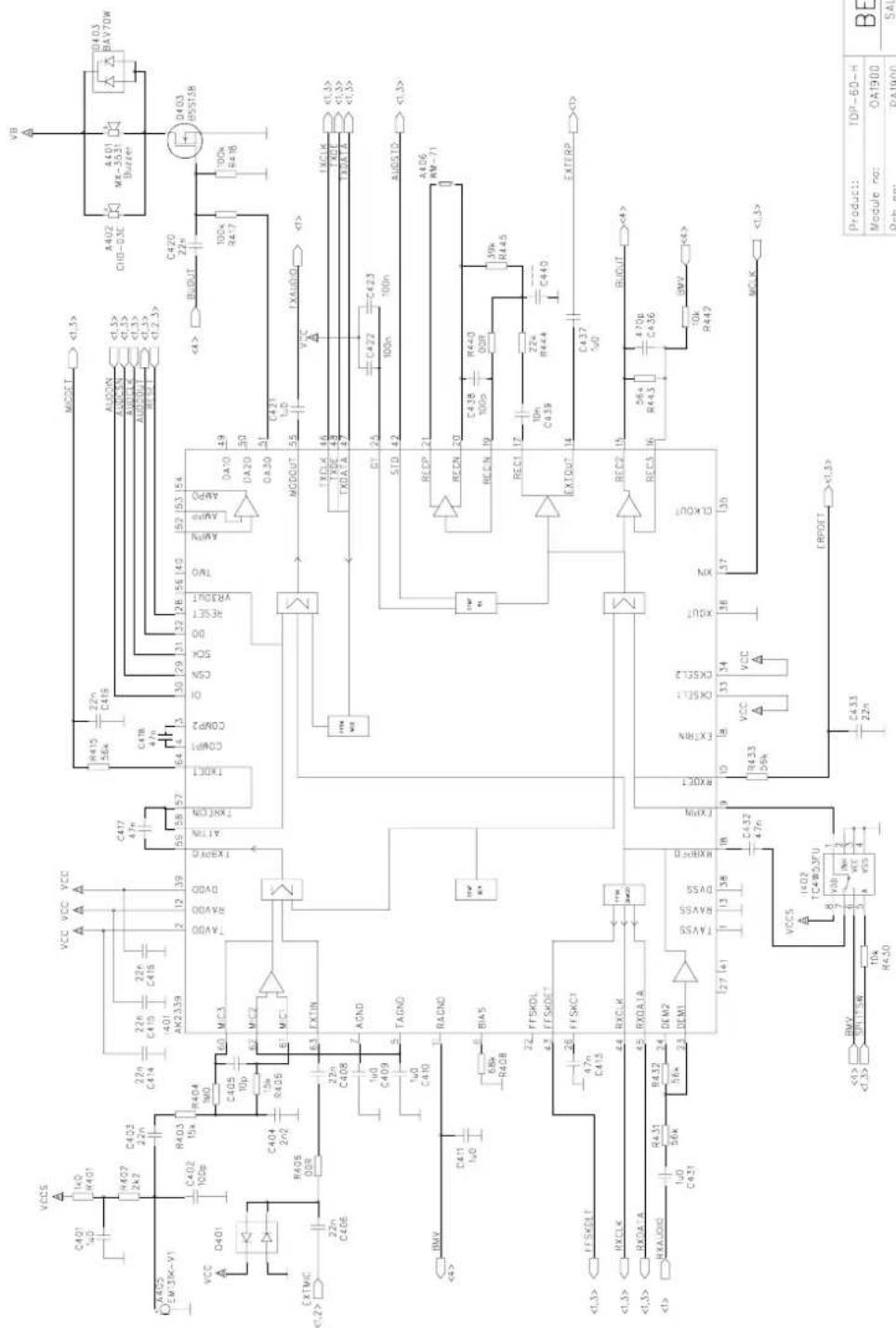
The processor and audio circuits diagram is split into four parts. Signals in the circuit diagrams have been given names, and signals with the same name are connected between diagrams (
| Page 1 of 5 | module connector pins | |
| 2 of 5 | power supply + display | |
| 3 of 5 | μCBIC, EPROM, SIS-function | |
| 4 of 5 | audio parts | |
5.1.3 Functions
5.1.3.1 μCBIC
I302 is itself a processor-asic circuit. It is comprised H8/300H-cpu, 10k*8 CMOS RAM, 8 A/D, 4 D/A, 48 pcs I/O lines, 3 series-interfaces, 2 modem-interfaces, i2c-interface, frequency counter, realtime clock, timers and 4, 8 MHz clock oscillator. The μCBIC divides this by 4 to get timing signal E.
When the processor is operating, RESET = VCC, VCC = 3.3V, E = 1.2MHz.
5.1.3.2 Memories
Memory and external I/O-circuit address coding is done with the CBIC circuit I302. The circuit options CE, OE and WE are 0-active.
The program memory is in 512k*8 EPROM. The program uses the addresses 2100H 3E8000H.
RAM-memory is 10k*8 CMOS RAM and included to the μCBIC. μCBIC use own power supply voltage which is VRAM and that is always operating, even when the radio is in the OFF state.
5.1.3.3 The Modem
The FFSK modem is located in the audio circuit. The modem is connected to the CBIC by a series line, input to synchronised port, and transmission is
controlled by an CBIC series output. The modem gives a 1200 Hz signal RXCLK and TXCLK to the CBIC. There is a data detector within the modem, the speed of which is controlled by C413. The CBIC A/D converter measures the level of acceptance from ERPDET line. The same detector also serves to control HF function.
5.1.3.4 AFC
The AFC function is performed by an internal CBIC frequency counter. A 450 kHz intermediate frequency is amplified to a square-wave form by Q303. The frequency is adjusted by CBIC D/A 1 signal. This approx. 1,5 Vdc voltage is fed to the synthesiser AFC pin.
5.1.3.5 Sleep Timer
The phone puts the central functions to sleep for a time. Although everything seems normal to the user, most of the functions are closed down. The radio and audio units are closed down completely. The processor still has a power supply, but the processor is halted and has minimal power consumption. Only the CBIC circuit sleep timer and its 32 kHz crystal oscillator remain in active mode. The phone is "woken up" by interrupting the sleep timer or by changing the keyboard state. The sleep timer 32 kHz clock frequency is produced by the oscillator made by crystal X302.
5.1.3.6 Warm start
C330 and R329 measure the length of a voltage break. The voltage drops during a break, after which it is measured by the A/D (AN2) converter. The time constant is approx. 10 s. Thus a "warm start" is detected.
5.1.3.7 Reset
The main voltage (VCC) regulator I202 PG output resets (stops) the processor and zeroes the controls when the battery voltage drops below 3.3V. When the voltage rises again, the processor restarts.
5.1.3.8 Power Switch
The power switch (PWRKEY) is grounded, and directs the regulator I202 to conduct when pressed. The program commences and checks the PWRSW line to ensure that the switch is being pressed, and sets hold on the regulator for the PWRON line. When the switch is depressed for a longer time, the program directs power to the PWROFF line. During a short voltage break, C221 and R221 remember the previous control, i.e. fet Q204 conducts again when the voltage is restored within 10 seconds. The switch-fet also serves as a watchdog should the voltage drop or processor error-state continue; after 10 seconds, the radio will shut down completely.
Note! The CBIC circuits have their own power supply voltage connected to the battery to ensure an uninterrupted power supply. The CBIC power supply
is ensured during a battery-back change by the battery B200.
5.1.3.9 Battery Voltage Measurement
The battery voltage is measured by an A/D converter (AN7). The converter 256 step conversion scale is not sufficient as it stands, so the measured range is restricted to 4.8V by the operational amplifier I301. The reference voltage for the measurement is provided by the main regulator 3.3V supply. Calibration is done by the program against a precisely known battery voltage.
5.1.3.10 I/O ports
The CBIC I/O ports PA PF are 8-bit hold circuits. Data is fed to the addressed output. When the RESET line is down (0V) all the CBIC ports are zeroed (0V). As RESET rises again, all of the two-way I/O ports are inputs until the program sets them to the desired state. With the radio in OFF state, RESET is down so all of the controls are also down although CBIC is still provided with operational voltage VRAM.
5.1.3.11 SIS
SIM is performed by a BENEFON ASIC IG2048 manufactured by Atmel. Integrated circuit IG2048 is E2 logic array. This type of array incorporates both an electrically erasable and programmable read only memory (EEPROM) and a gate array for SIM function.
SIM has 256 bytes internal EEPROM divided to two parts: 224 bytes EEPROM for universal use and 32 bytes EEPROM for SIS calculations are secured by programmable fuse function.
User specific information is stored in EEPROM which CANNOT be read from outside the chip. All external attempts to read the information clear both. EEPROM and RAM (fill with FF).
5.1.3.12 Power Adjustment
The transmitter control logic switches TX power and also adjusts it to the correct level. The S_TXREG signal sets the transmitter to ready mode. Power is controlled by the CBIC analog output A/D 0.0V corresponds to "no power" and 3.3V to maximum transmitter power. The power levels are calibrated by the program at the source of measurement.
5.1.3.13 Charging Control
The charger is controlled by the program. The charger is detected by a voltage at the SV-CHG pin. The charging current (0 1,1A) is controlled by an analog output (0,4 2,0V) CHGCONT signal which comes from CBIC DA3 pulse frequency output. Charging is governed by yhe battery and radio temperatures, battery voltage and time measurement. Every time when charger is connected to the radio base connector this charger give approx. 3 second maximum current (that help if battery is empty).
5.1.3.14 Temperature Measurement
The radio has two separate temperature sensors, one within the battery pack, and the other within the radio module. Inside the radio the NTC resistor R323 voltage is measured by the CBIC A/D converter (AN6). This value is converted by a programmed table to a temperature reading.
5.1.3.15 Real-time Clock
A real-time clock is provided within CBIC to give the time and date. The alarm function can also be programmed to the ALARM pin. This will initiate the main regulator and thus also the radio although it is in OFF state.
The CBIC circuit has a continuous power supply and the 32 kHz clock crystal runs constantly. Not even the RESET line stops the clock. If the power supply has dropped too low, the clock will need to be reset with the radio buttons (from the menu).
Audio
5.1.4 Function Description
OA1900 Audio
The audio module is comprised of the following functions:
- TX-audio signal handling
- RX-audio signal handling
- Fii signal handling
- FFSK modem
- DTMF generator/receiver
- Signal level detectors
- Compander
- Expander
- Buzzer
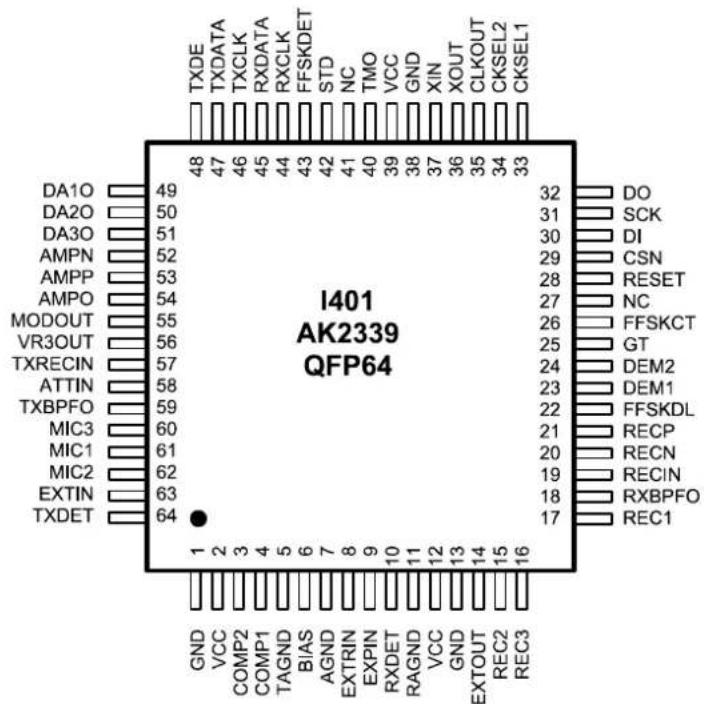
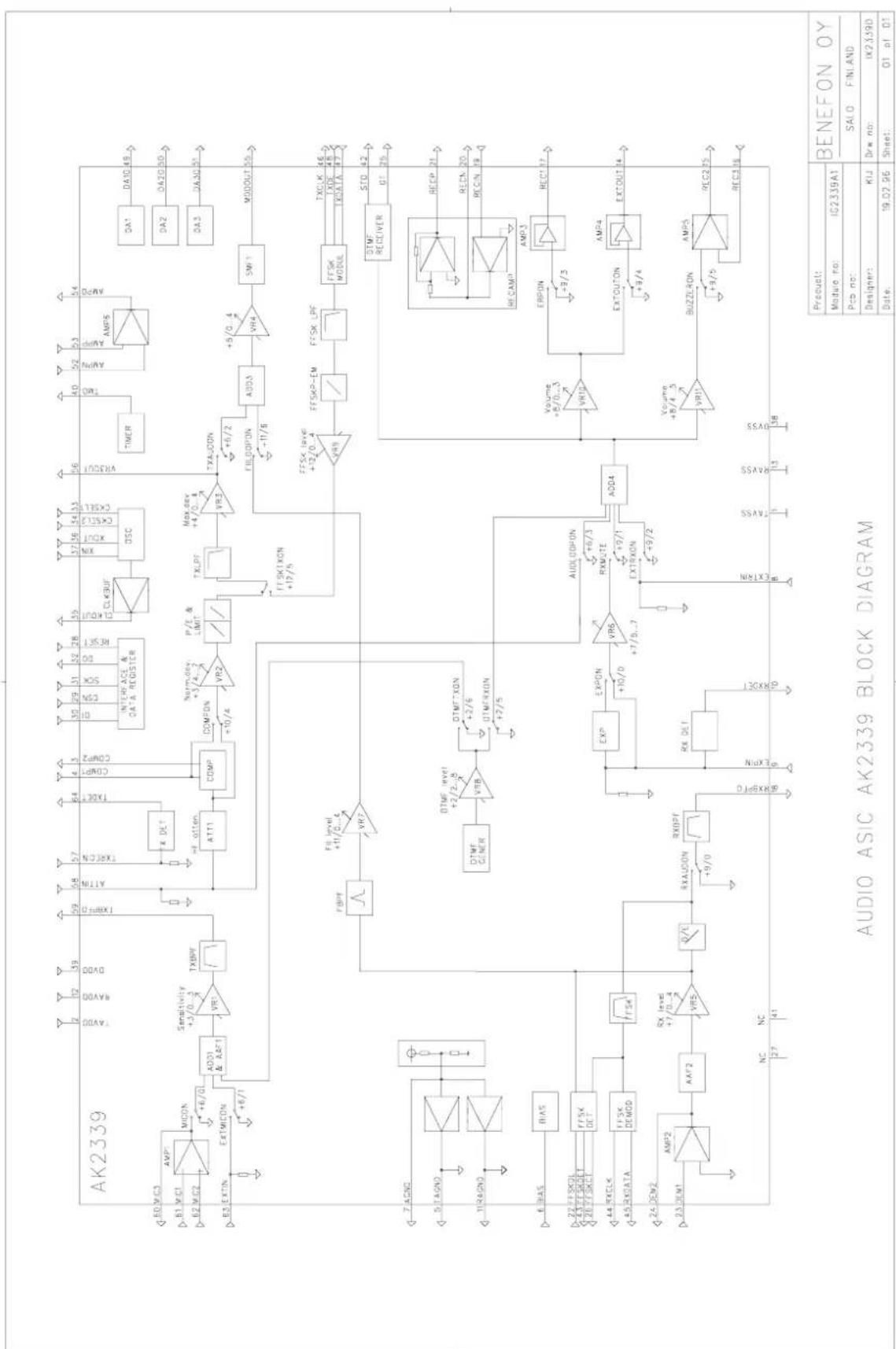
The audio functions are mainly located in a single circuit AK2339. This chip from AKM is controlled by a serialbus. It is possible to shut down parts of the circuit, one block at a time to minimise power consumption.
5.1.5 TX-audio
The input from the microphone is fed to the audio circuit I401 pin 61, which is an operational amplifier (AMP1) inverting input. The operational amplifier gain is set by resistors R403 and R404. The amplifier is connected as a low pass filter. After the amplifier is the microphone switch and then summing junction of MIC input signal, EXTMIC input signal and transmit DTMF signal. VR1 is a programmable amplifier, which sets the microphone signal (sensitivity) to the correct level. After VR1 comes band-pass filter for transmitting the voice signal. TXDET is the transmit voice signal detection circuit which works as a full wave rectifier. Next comes ATT1 which is an attenuate circuit to set the transmit signal level in the HF-mode. COMP is the compressor circuit. Compress the transmitting signal amplitude with square root law. It can be bypassed. The linearity is adjustable by the control register CVR. Next is VR2, normal deviation gain control circuit to set the signal level. The P/E & LIMIT pre-emphasis circuit and limiting circuit, emphasize the higher frequency component of the signal in order to improve the signal-to-noise ratio of modulated signal. This block includes a limiting circuit for signal amplitude in order to confine the maximum deviation of the transmit modulated signal. Before TXLPF is the FFSKTX switch. TXLPF is the low pass filter to reject the higher frequency component on the transmit signal. VR3 is a maximum
deviation gain control circuit to set the transmit signal level. After the VR3 comes switch TXAUDON, which mutes the tx-audio signal using the TXMUTE control. From the switch, the signal is fed to the summing junction (ADD3) of the tx-audio signal and Fii-signal. Next comes VR4 gain control circuit to set. SMF1 is smoothing filter for tx-audio signal. The tx-audio signal is then fed to the V102 connector pin 20.
5.1.6 RX-Audio
The rx-audio signal coming from the receiver through the V103 pin 8 is fed to the audio circuit I401 pin 23. Inside the circuit, the signal is fed to the operational amplifier (AMP2) inverting input. The amplifier gain is set by resistors R431 and R432. The signal is next passed through an anti-aliasign filter. VR5 is a gain control circuit to set the rx-audio signal to the correct level. Next comes de-emphasis (D/E) circuit. Equalize the pre-empassized rx-audio signal. The signal passes from the D/E through the switch RXAUDON. RXBPF is the band-pass filter for the rx-audio signal. RXDET is the rx-audio signal detection circuit. This circuit works as a full wave rectifier. After the RXBPF comes I402 which is the split-switch of audiosignal and then expander circuit (EXP). Expand the rx-audio signal amplitude. It can be bypassed. The linearity is adjustable by the control register EVR. VR6 is a gain control circuit to set the rx-audio signal to the correct level. After VR6 comes the RXMUTE switch, which is operated by the RXMUTE control. ADD4 is the summing junction of the rx-audio signal, external signal (not used), DTMF signal and transmit signal. VR10 is the volume control circuit to set the level of earphone and external earphones. The rx-audio signal is connected through the receiver driver (RECAMP) to the earphone.
5.1.7 FII Signal
The NMT system uses the FII signal to check the radio path quality. This approx. 4kHz signal is split from the rx-audio signal after the VR5 and is filtered through the band-pass filter (FBPF). VR7 sets the FII signal to the correct level. Switch FILOOPON can be operated by the FIION control, to be summed with the tx-audio signal before the VR4.
5.1.8 FFSK Modem
The FFSK data signal from FFSK modulator to be transmitted is passed through the FFSK low-pass filter and pre-emphasis (FFSKP-EM) to the VR9, which adjusts its level. The data signal is switched using switch FFSKTXON.
The received data signal is split from the rx-audio signal after the de-emphasis circuit. The data signal is fed through the FFSK band-pass filter to the FFSK demodulator and FFSK data detector.
FFSK DET block. The block works to judge the FFSK signal existence by comparing the amplitude of the noise reduced FFSK signal and the provided
detection level standard. Once the detector judges a valid FFSK signal, 'H' signal is put out on the FFSKDET pin (pin43). The data detector speed is determined by the external condensator C413.
FFSK DEMOD. To recover 1200bps receive data and clock from the FFSK signal.
The modem is connected to the CPU by series lines, the receiver to a synchronised gate, and transmission is directed to an ASIC series output. The modem provides a 1200 Hz clock signal RXCLK to the processor and TXCLK to ASIC.
5.1.9 The DTMF Generator/Receiver
The DTMF generator provides all sixteen standard DTMF tones, and each individual frequency separately. The generator is used to produce both key and alarm tones and enable numeric message transmission during a call.
Key and alarm tones are taken from the generator to switch DTMFRXON and is summed with the rx-audio signal. Key tones are connected to earphone and external earphones.
When transmitting a numeric message, the DTMF tones produced by the generator are fed through the VR8, which set the DTMF signal level to the switch DTMFTXON, and then the signal is summed with the tx-audio signal.
The DTMF receiver takes in numeric messages sent to the phone. The route to the DTMF receiver splits from the rx-audio signal after the summing junction ADD4.
5.1.10 Signal level detectors
Audio signal level detectors are required for the HF-function to measure the transmitted and received audio signal level, and to study the data signal level. Measurement is done by rectifying the signal, and the resultant DC voltage is read by a phone's prosessor A/D converter. TXDET is at the transmission side detector and RXDET is at the receiver side detector.
5.1.11 Compander/Expander
Compander and expander units are included in audio asic 1405 and can be controlled by registers.
5.1.12 Alarm buzzer
Tones for the internal alarm tones are provided by the DTMF generator. The internal alarm tones path way is DTMF generator, VR8, switch DTMFRXON, summing junction ADD4, VR11, AMP5 and buzzer. The buzzer volume is controlled by the DA3.
5.1.13 The other in audio asic (I401)
OSC is the main oscillator and clock divider for the prosessor.
CLKBUF is clock buffer generate clock out from main clock.
INTERFACE & DATA REGISTER is a 16 bit address/data serial interface circuit.
BIAS is bias current generator for amplifiers.
TIMER is an 8 bit timer (not used).
DA1, DA2, DA3 are 8 bit linear DA converters.
5.1.14 Parts list OA1900
OA1900 Proc./Audio
CODE PART DESCRIPT. VALUE MANUF. TYPE
| OO0522 A200 Matrix display module Vcc 3.3V Alps ????? | |||||
| AE0017 A401 Buzzer 13x11x3mm 1.5V/80mA Primo MB-11A-K | |||||
| AM0063 | A405 | Microphone | Electret condenser-+65-+3dB | Primo | EM134K |
| AE0022 | A406 | Dynamic transducer | 20*3.2mm DC=150ê | AKG | IMXR 2601A0001 |
| AB0036 | B200 | Lithium battery | 3V 39mAh | Rayovac | BR 1225SR2-B |
| CG0101 | C100 | SMD capasitor X7R | 100pF ñ5% | Murata | |
| CG0471 | C101 | SMD capasitor X7R | 470pF ñ10% | Murata | |
| CG0471 | C102 | SMD capasitor X7R | 470pF ñ10% | Murata | |
| CG0471 | C103 | SMD capasitor X7R | 470pF ñ10% | Murata | |
| CG0471 | C104 | SMD capasitor X7R | 470pF ñ10% | Murata | |
| CG0471 | C105 | SMD capasitor X7R | 470pF ñ10% | Murata | |
| CG0471 | C106 | SMD capasitor X7R | 470pF ñ10% | Murata | |
| CG0471 | C107 | SMD capasitor X7R | 470pF ñ10% | Murata | |
| CG0471 | C108 | SMD capasitor X7R | 470pF ñ10% | Murata | |
| DT1840 | C109 | Transient voltage suures | sor 18V/30A | AVX | VC060318A400 |
| DT1840 | C110 | Transient voltage suures | sor 18V/30A | AVX | VC060318A400 |
| DT1840 | C111 | Transient voltage suures | sor 18V/30A | AVX | VC060318A400 |
| DT1840 | C112 | Transient voltage suures | sor 18V/30A | AVX | VC060318A400 |
| CG0471 | C113 | SMD capasitor X7R | 470pF ñ10% | Murata | |
| CG0471 | C114 | SMD capasitor X7R | 470pF ñ10% | Murata | |
| CG0102 | C115 | SMD capasitor X7R | 1nF ñ10% | Murata | |
| CG0121 | C140 | SMD capasitor X7R | 120pF ñ5% | Murata | |
| CG0101 | C142 | SMD capasitor X7R | 100pF ñ5% | Murata | |
| CG0151 | C143 | SMD capasitor X7R | 150pF ñ5% | Murata | |
| CG0102 | C144 | SMD capasitor X7R | 1nF ñ10% | Murata | |
| CG0101 | C145 | SMD capasitor X7R | 100pF ñ5% | Murata | |
| CG0223 | C200 | SMD capasitor X7R | 22nF 20% | Murata | |
| CD0104 | C201 | SMD capasitor | 100 nF 10% 50 V X7R | Philips | |
| CH0105 | C202 | SMD capasitor | 1uF/-20/+80%/16V | TaiyoYuden | EMK212 F105Z00T |
| CH0105 | C203 | SMD capasitor | 1uF/-20/+80%/16V | TaiyoYuden | EMK212 F105Z00T |
| CH0105 | C204 | SMD capasitor | 1uF/-20/+80%/16V | TaiyoYuden | EMK212 F105Z00T |
| CD0104 | C205 | SMD capasitor | 100 nF 10% 50 V X7R | Philips | |
| CD0104 | C206 | SMD capasitor | 100 nF 10% 50 V X7R | Philips | |
| CD0104 | C207 | SMD capasitor | 100 nF 10% 50 V X7R | Philips | |
| CD0104 | C208 | SMD capasitor | 100 nF 10% 50 V X7R | Philips | |
| CU3106 | C211 | SMD tantal | 10uF / 6V +-20% | AVX | TAJA106M006R |
| CG0223 | C212 | SMD capasitor X7R | 22nF 20% | Murata | |
| CG0223 | C218 | SMD capasitor X7R | 22nF 20% | Murata | |
| CU3106 | C221 | SMD tantal | 10uF / 6V +-20% | AVX | TAJA106M006R |
| CH0105 | C223 | SMD capasitor | 1uF/-20/+80%/16V | TaiyoYuden | EMK212 F105Z00T |
| CU3106 | C225 | SMD tantal | 10uF / 6V +-20% | AVX | TAJA106M006R |
| CG0223 | C226 | SMD capasitor X7R | 22nF 20% | Murata | |
| CG0223 | C301 | SMD capasitor X7R | 22nF 20% | Murata | |
| CG0223 | C302 | SMD capasitor X7R | 22nF 20% | Murata | |
| CG0223 | C303 | SMD capasitor X7R | 22nF 20% | Murata | |
| CG0223 | C311 | SMD capasitor X7R | 22nF 20% | Murata | |
| CG0220 | C314 | SMD capasitor NPO | 22pF ñ5% | Murata | |
| CG0220 | C315 | SMD capasitor NPO | 22pF ñ5% | Murata | |
| CG0220 | C316 | SMD capasitor NPO | 22pF ñ5% | Murata | |
| CG0220 | C317 | SMD capasitor NPO | 22pF ñ5% | Murata | |
| CU3106 | C321 | SMD tantal | 10uF / 6V +-20% | AVX | TAJA106M006R |
| CG0223 | C322 | SMD capasitor X7R | 22nF 20% | Murata | |
| CG0102 | C323 | SMD capasitor X7R | 1nF ñ10% | Murata | |
| CG0223 | C324 | SMD capasitor X7R | 22nF 20% | Murata | |
| CG0223 | C325 | SMD capasitor X7R | 22nF 20% | Murata | |
| CODE | PART | DESCRIPT. | VALUE | MANUF. | TYPE |
| CG0223 C326 | SMD capasitor X7R | 22nF 20% | Murata | ||
| CG0103 | C328 | SMD capasitor X7R | 10nF n10% | Murata | ' |
| CU3106 C330 | SMD tantal | 10uF / 6V +-20% | AVX TAJA106M006R | ||
| CG0103 | C341 | SMD capasitor X7R | 10nF n10% | Murata | ' |
| CH0105 C342 | SMD capasitor | 1uF/-20/+80%/16V | TaiyoYuden EMK212 F105Z00T | ||
| CH0105 C343 | SMD capasitor | 1uF/-20/+80%/16V | TaiyoYuden EMK212 F105Z00T | ||
| CG0103 | C344 | SMD capasitor X7R | 10nF n10% | Murata | ' |
| CG0103 | C352 | SMD capasitor X7R | 10nF n10% | Murata | ' |
| CG0223 C361 | SMD capasitor X7R | 22nF 20% | Murata | ||
| CG0103 | C372 | SMD capasitor X7R | 10nF n10% | Murata | ' |
| CG0103 | C374 | SMD capasitor X7R | 10nF n10% | Murata | ' |
| CG0103 | C376 | SMD capasitor X7R | 10nF n10% | Murata | ' |
| CH0105 C401 | SMD capasitor | 1uF/-20/+80%/16V | TaiyoYuden EMK212 F105Z00T | ||
| CG0101 | C402 | SMD capasitor X7R | 100pF n5% | Murata | |
| CG0223 C403 | SMD capasitor X7R | 22nF 20% | Murata | ||
| CG0222 | C404 | SMD capasitor X7R | 2.2nF n10% | Murata | |
| CG0100 | C405 | SMD capasitor NPO | 10pF-+0.25pF | Murata | |
| CG0223 C406 | SMD capasitor X7R | 22nF 20% | Murata | ||
| CG0223 C408 | SMD capasitor X7R | 22nF 20% | Murata | ||
| CH0105 C409 | SMD capasitor | 1uF/-20/+80%/16V | TaiyoYuden EMK212 F105Z00T | ||
| CH0105 C410 | SMD capasitor | 1uF/-20/+80%/16V | TaiyoYuden EMK212 F105Z00T | ||
| CH0105 | C411 | SMD capasitor | 1uF/-20/+80%/16V | TaiyoYuden | EMK212 F105Z00T |
| CF0473 | C413 | SMD capasitor | 47 nF 10% 50 V X7R | Philips | |
| CG0223 C414 | SMD capasitor X7R | 22nF 20% | Murata | ||
| CG0223 C415 | SMD capasitor X7R | 22nF 20% | Murata | ||
| CG0223 C416 | SMD capasitor X7R | 22nF 20% | Murata | ||
| CF0473 | C417 | SMD capasitor | 47 nF 10% 50 V X7R | Philips | |
| CF0473 | C418 | SMD capasitor | 47 nF 10% 50 V X7R | Philips | |
| CG0223 C419 | SMD capasitor X7R | 22nF 20% | Murata | ||
| CG0223 C420 | SMD capasitor X7R | 22nF 20% | Murata | ||
| CH0105 C421 | SMD capasitor | 1uF/-20/+80%/16V | TaiyoYuden EMK212 F105Z00T | ||
| CD0104 | C422 | SMD capasitor | 100 nF 10% 50 V X7R | Philips | |
| CD0104 | C423 | SMD capasitor | 100 nF 10% 50 V X7R | Philips | |
| CH0105 C431 | SMD capasitor | 1uF/-20/+80%/16V | TaiyoYuden EMK212 F105Z00T | ||
| CF0473 | C432 | SMD capasitor | 47 nF 10% 50 V X7R | Philips | |
| CG0223 C433 | SMD capasitor X7R | 22nF 20% | Murata | ||
| CG0471 | C436 | SMD capasitor X7R | 470pF n10% | Murata | |
| CH0105 C437 | SMD capasitor | 1uF/-20/+80%/16V | TaiyoYuden EMK212 F105Z00T | ||
| CG0101 | C438 | SMD capasitor X7R | 100pF n5% | Murata | |
| CG0103 | C439 | SMD capasitor X7R | 10nF n10% | Murata | ' |
| DY0014 | D101 | SMD diode | 1,5A/40V | Shindengen | D1FS4A |
| DS1056 | D102 | SMD diode pair | 70V/100mA common anode | Philips | BAW 56W |
| DZ3339 | D103 | SMD zener | 3V3 5% 500mW | Temic | BZM55C3V3 TR3 |
| DY0054 | D211 | Shottky diode | Philips | BAT 54 | |
| DS1070 | D213 | SMD diode pair | 70V/100mA common cathode | Philips | BAV 70W |
| DS1070 | D214 | SMD diode pair | 70V/100mA common cathode | Philips | BAV 70W |
| DS1070 | D215 | SMD diode pair | 70V/100mA common cathode | Philips | BAV 70W |
| DS1070 | D216 | SMD diode pair | 70V/100mA common cathode | Philips | BAV 70W |
| DLG190 | D221 | SMD led green | 20mcd/20mA | Citizen | CL-190G |
| DLG190 | D222 | SMD led green | 20mcd/20mA | Citizen | CL-190G |
| DLG190 | D225 | SMD led green | 20mcd/20mA | Citizen | CL-190G |
| DLG190 | D226 | SMD led green | 20mcd/20mA | Citizen | CL-190G |
| DLG190 | D227 | SMD led green | 20mcd/20mA | Citizen | CL-190G |
| DLG190 | D228 | SMD led green | 20mcd/20mA | Citizen | CL-190G |
| DLG190 | D229 | SMD led green | 20mcd/20mA | Citizen | CL-190G |
| DLG190 | D230 | SMD led green | 20mcd/20mA | Citizen | CL-190G |
| DLG190 | D231 | SMD led green | 20mcd/20mA | Citizen | CL-190G |
| DLG190 | D233 | SMD led green | 20mcd/20mA | Citizen | CL-190G |
| DLG190 | D234 | SMD led green | 20mcd/20mA | Citizen | CL-190G |
| DLG190 | D235 | SMD led green | 20mcd/20mA | Citizen | CL-190G |
| CODE | PART | DESCRIPT. | VALUE | MANUF. | TYPE | |
| DLG190 D236 | SMD led green | 20mcd/20mA | Citizen | CL-190G | ||
| DLG190 D237 | SMD led green | 20mcd/20mA | Citizen | CL-190G | ||
| DLG190 D238 | SMD led green | 20mcd/20mA | Citizen | CL-190G | ||
| DLG190 D239 | SMD led green | 20mcd/20mA | Citizen | CL-190G | ||
| DLG190 D240 | SMD led green | 20mcd/20mA | Citizen | CL-190G | ||
| DLG190 D241 | SMD led green | 20mcd/20mA | Citizen | CL-190G | ||
| DLG190 D242 | SMD led green | 20mcd/20mA | Citizen | CL-190G | ||
| DLG190 D243 | SMD led green | 20mcd/20mA | Citizen | CL-190G | ||
| DLG190 D244 | SMD led green | 20mcd/20mA | Citizen | CL-190G | ||
| DLG190 D245 | SMD led green | 20mcd/20mA | Citizen | CL-190G | ||
| DLG190 D246 | SMD led green | 20mcd/20mA | Citizen | CL-190G | ||
| DLG190 D247 | SMD led green | 20mcd/20mA | Citizen | CL-190G | ||
| DLG190 D248 | SMD led green | 20mcd/20mA | Citizen | CL-190G | ||
| DS1070 D301 | SMD diode pair | 70V/100mA common cathode | Philips | BAV 70W | ||
| DY0062 D401 | SMD shcottky diode | 40V 20mA | Siemens | BAT 62 | ||
| DS1070 D403 | SMD diode pair | 70V/100mA common cathode | Philips | BAV 70W | ||
| AF1005 | F101 | SMD PTC Fuse | 0.5A | Raychem | miniSMD050-2 | |
| AF4300 | F102 | SMD fuse | 3A | Littlefuse | 0430003.WR | |
| IA0471 | I101 | Current sense ampl. | MAXIM | MAX471ESA-T | ||
| IR5205 | I201 | Voltage regulator | 3.3V/1%/50mA | Micrel | LP2982IM5-3.3 | |
| IR7333 | I202 | Regulator with delay | 3,3V/1.2A | Texas Inst | TPS7333QDR | |
| IA7550 | I301 | Single op.amp. | Toshiba | TA 75S01F-TE85L | ||
| IG3010 | I302 | Digital-Asic | Hitachi | HG71C | ||
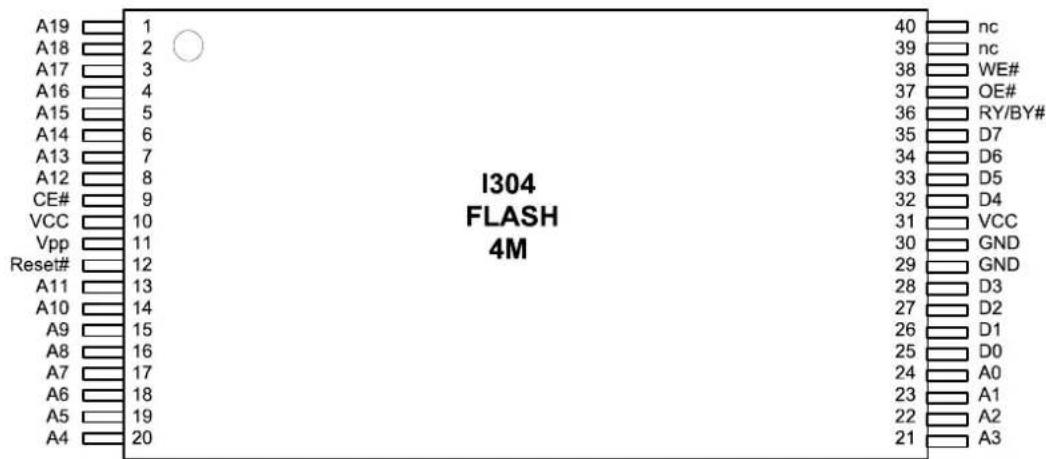
| IM4013 | I303 | Flash memory | 4Mb/150ns/3.3V | AMD | AM29LV004B-150I | |
| IG2048 | I305 | SIS ASIC | Atmel | |||
| IX2339 | I401 | Audio processor | CMOS base band pros | AsahiKasei | AK2339 | |
| IC0454 | I402 | SMD 2x multip./demultip. | Toshiba | TC4W53FU-TE 12L | ||
| LF0062 | L101 | SMD EMI filter | 10nF/2A | Panasonic | ELKE103FA | |
| LF0062 | L102 | SMD EMI filter | 10nF/2A | Panasonic | ELKE103FA | |
| LC3334 | L103 | SMD inductor | 330nH +-10% | TDK | MLF1608DR33K | |
| QS1857 | Q101 | piensignaali yleistransi | PNP 100mA/45V hfe=220...470 | Philips | BC857BW | |
| QS1847 | Q102 | piensignaali yleistransi | NPN 100mA/45V hfe=200...450 | Philips | BC847BW | |
| QS1847 | Q203 | piensignaali yleistransi | NPN 100mA/45V hfe=200...450 | Philips | BC847BW | |
| QF0138 | Q204 | N-channel fet | 50V/0,2A | Motorola | BSS138LT1 | |
| QS1857 | Q205 | piensignaali yleistransi | PNP 100mA/45V hfe=220...470 | Philips | BC857BW | |
| QS1847 | Q206 | piensignaali yleistransi | NPN 100mA/45V hfe=200...450 | Philips | BC847BW | |
| QS1857 | Q301 | piensignaali yleistransi | PNP 100mA/45V hfe=220...470 | Philips | BC857BW | |
| QS1847 | Q302 | piensignaali yleistransi | NPN 100mA/45V hfe=200...450 | Philips | BC847BW | |
| QS1847 | Q303 | piensignaali yleistransi | NPN 100mA/45V hfe=200...450 | Philips | BC847BW | |
| QS1847 | Q304 | piensignaali yleistransi | NPN 100mA/45V hfe=200...450 | Philips | BC847BW | |
| QF0138 | Q403 | N-channel fet | 50V/0,2A | Motorola | BSS138LT1 | |
| RG0101 | R101 | SMD resistor | 100R 5% 0.063W | Kamaya | RMC1/16S | |
| RG0102 | R102 | SMD resistor | 1k0 5% 0.063W | Kamaya | RMC1/16S | |
| RG0101 | R103 | SMD resistor | 100R 5% 0.063W | Kamaya | RMC1/16S | |
| RG0101 | R104 | SMD resistor | 100R 5% 0.063W | Kamaya | RMC1/16S | |
| RG0470 | R105 | SMD resistor | 47R 5% 0.063W | Kamaya | RMC1/16S | |
| RG0101 | R106 | SMD resistor | 100R 5% 0.063W | Kamaya | RMC1/16S | |
| RG0101 | R107 | SMD resistor | 100R 5% 0.063W | Kamaya | RMC1/16S | |
| RG0101 | R108 | SMD resistor | 100R 5% 0.063W | Kamaya | RMC1/16S | |
| RG0102 | R109 | SMD resistor | 1k0 5% 0.063W | Kamaya | RMC1/16S | |
| RG0470 | R110 | SMD resistor | 47R 5% 0.063W | Kamaya | RMC1/16S | |
| RG0470 | R111 | SMD resistor | 47R 5% 0.063W | Kamaya | RMC1/16S | |
| RG0470 | R112 | SMD resistor | 47R 5% 0.063W | Kamaya | RMC1/16S | |
| RG0470 | R113 | SMD resistor | 47R 5% 0.063W | Kamaya | RMC1/16S | |
| RG0470 | R114 | SMD resistor | 47R 5% 0.063W | Kamaya | RMC1/16S | |
| RG0470 | R115 | SMD resistor | 47R 5% 0.063W | Kamaya | RMC1/16S | |
| RG0101 | R116 | SMD resistor | 100R 5% 0.063W | Kamaya | RMC1/16S | |
| RG0101 | R117 | SMD resistor | 100R 5% 0.063W | Kamaya | RMC1/16S | |
| RG0101 | R118 | SMD resistor | 100R 5% 0.063W | Kamaya | RMC1/16S | |
| RG0101 | R119 | SMD resistor | 100R 5% 0.063W | Kamaya | RMC1/16S | |
| CODE PART DESCRIPT. VALUE MANUF. TYPE | ||||
| RG0101 R120 | SMD resistor | 100R 5% 0.063W | Kamaya | RMC1/16S |
| RG0103 R121 | SMD resistor | 10k 5% 0.063W | Kamaya | RMC1/16S |
| RG0101 R122 | SMD resistor | 100R 5% 0.063W | Kamaya | RMC1/16S |
| RG0101 R123 | SMD resistor | 100R 5% 0.063W | Kamaya | RMC1/16S |
| RG0103 R124 | SMD resistor | 10k 5% 0.063W | Kamaya | RMC1/16S |
| RG0103 R125 | SMD resistor | 10k 5% 0.063W | Kamaya | RMC1/16S |
| RG0472 R126 | SMD resistor | 4k7 5% 0.063W | Kamaya | RMC1/16S |
| RG0472 R127 | SMD resistor | 4k7 5% 0.063W | Kamaya | RMC1/16S |
| RG0103 R128 | SMD resistor | 10k 5% 0.063W | Kamaya | RMC1/16S |
| RG0104 R129 | SMD resistor | 100k 5% 0.063W | Kamaya | RMC1/16S |
| RG0104 R130 | SMD resistor | 100k 5% 0.063W | Kamaya | RMC1/16S |
| RG0104 R131 | SMD resistor | 100k 5% 0.063W | Kamaya | RMC1/16S |
| RG0103 R132 | SMD resistor | 10k 5% 0.063W | Kamaya | RMC1/16S |
| RG0101 R133 | SMD resistor | 100R 5% 0.063W | Kamaya | RMC1/16S |
| RG0105 R134 | SMD resistor | 1M0 5% 0.063W | Kamaya | RMC1/16S |
| RG0103 R135 | SMD resistor | 10k 5% 0.063W | Kamaya | RMC1/16S |
| RG0222 R140 | SMD resistor | 2k2 5% 0.063W | Kamaya | RMC1/16S |
| RG0392 R141 | SMD resistor | 3k9 5% 0.063W | Kamaya | RMC1/16S |
| RG0104 R142 | SMD resistor | 100k 5% 0.063W | Kamaya | RMC1/16S |
| RG0471 R143 | SMD resistor | 470R 5% 0.063W | Kamaya | RMC1/16S |
| RG0471 R144 | SMD resistor | 470R 5% 0.063W | Kamaya | RMC1/16S |
| RG0102 R145 | SMD resistor | 1k0 5% 0.063W | Kamaya | RMC1/16S |
| RG0102 R146 | SMD resistor | 1k0 5% 0.063W | Kamaya | RMC1/16S |
| RG0102 R147 | SMD resistor | 1k0 5% 0.063W | Kamaya | RMC1/16S |
| RG0102 R151 | SMD resistor | 1k0 5% 0.063W | Kamaya | RMC1/16S |
| RG0102 R152 | SMD resistor | 1k0 5% 0.063W | Kamaya | RMC1/16S |
| RG0102 R153 | SMD resistor | 1k0 5% 0.063W | Kamaya | RMC1/16S |
| RG0102 R154 | SMD resistor | 1k0 5% 0.063W | Kamaya | RMC1/16S |
| RG0102 R155 | SMD resistor | 1k0 5% 0.063W | Kamaya | RMC1/16S |
| RG0102 R156 | SMD resistor | 1k0 5% 0.063W | Kamaya | RMC1/16S |
| RG0101 R158 | SMD resistor | 100R 5% 0.063W | Kamaya | RMC1/16S |
| RG0102 R159 | SMD resistor | 1k0 5% 0.063W | Kamaya | RMC1/16S |
| RG0102 R160 | SMD resistor | 1k0 5% 0.063W | Kamaya | RMC1/16S |
| RG0102 R161 | SMD resistor | 1k0 5% 0.063W | Kamaya | RMC1/16S |
| RG0102 R162 | SMD resistor | 1k0 5% 0.063W | Kamaya | RMC1/16S |
| RG0101 R163 | SMD resistor | 100R 5% 0.063W | Kamaya | RMC1/16S |
| RG0101 R164 | SMD resistor | 100R 5% 0.063W | Kamaya | RMC1/16S |
| RG0101 R165 | SMD resistor | 100R 5% 0.063W | Kamaya | RMC1/16S |
| RG0101 R166 | SMD resistor | 100R 5% 0.063W | Kamaya | RMC1/16S |
| RG0101 R167 | SMD resistor | 100R 5% 0.063W | Kamaya | RMC1/16S |
| RG0103 R171 | SMD resistor | 10k 5% 0.063W | Kamaya | RMC1/16S |
| RG0103 R172 | SMD resistor | 10k 5% 0.063W | Kamaya | RMC1/16S |
| RG0100 R201 | SMD resistor | 10 R 5% 0.063W | Kamaya | RMC1/16S |
| RG0101 R202 | SMD resistor | 100R 5% 0.063W | Kamaya | RMC1/16S |
| RG0102 R203 | SMD resistor | 1k0 5% 0.063W | Kamaya | RMC1/16S |
| RG0102 R204 | SMD resistor | 1k0 5% 0.063W | Kamaya | RMC1/16S |
| RG0100 R207 | SMD resistor | 10 R 5% 0.063W | Kamaya | RMC1/16S |
| RG0102 R208 | SMD resistor | 1k0 5% 0.063W | Kamaya | RMC1/16S |
| RG0274 R209 | SMD resistor | 270k 5% 0.063W | Kamaya | RMC1/16S |
| RG0334 R210 | SMD resistor | 330k 5% 0.063W | Kamaya | RMC1/16S |
| RG0101 R212 | SMD resistor | 100R 5% 0.063W | Kamaya | RMC1/16S |
| RG0274 R214 | SMD resistor | 270k 5% 0.063W | Kamaya | RMC1/16S |
| RG0274 R215 | SMD resistor | 270k 5% 0.063W | Kamaya | RMC1/16S |
| RG0473 R216 | SMD resistor | 47k 5% 0.063W | Kamaya | RMC1/16S |
| RG0103 R217 | SMD resistor | 10k 5% 0.063W | Kamaya | RMC1/16S |
| RG0392 R218 | SMD resistor | 3k9 5% 0.063W | Kamaya | RMC1/16S |
| RG0473 R219 | SMD resistor | 47k 5% 0.063W | Kamaya | RMC1/16S |
| RG0104 R220 | SMD resistor | 100k 5% 0.063W | Kamaya | RMC1/16S |
| RG0223 R221 | SMD resistor | 22k 5% 0.063W | Kamaya | RMC1/16S |
| RG0105 R222 | SMD resistor | 1M0 5% 0.063W | Kamaya | RMC1/16S |
| CODE | PART | DESCRIPT. | VALUE | MANUF. | TYPE | |
| RG0224 R223 | SMD resistor | 220k 5% 0.063W | Kamaya | RMC1/16S | ||
| RG0103 R225 | SMD resistor | 10k 5% 0.063W | Kamaya | RMC1/16S | ||
| RG0105 R226 | SMD resistor | 1M0 5% 0.063W | Kamaya | RMC1/16S | ||
| RG0222 R232 | SMD resistor | 2k2 5% 0.063W | Kamaya | RMC1/16S | ||
| RG0222 R233 | SMD resistor | 2k2 5% 0.063W | Kamaya | RMC1/16S | ||
| RG0222 R234 | SMD resistor | 2k2 5% 0.063W | Kamaya | RMC1/16S | ||
| RG0222 R235 | SMD resistor | 2k2 5% 0.063W | Kamaya | RMC1/16S | ||
| RG0222 R236 | SMD resistor | 2k2 5% 0.063W | Kamaya | RMC1/16S | ||
| RG0102 R237 | SMD resistor | 1k0 5% 0.063W | Kamaya | RMC1/16S | ||
| RG0222 R238 | SMD resistor | 2k2 5% 0.063W | Kamaya | RMC1/16S | ||
| RG0222 R239 | SMD resistor | 2k2 5% 0.063W | Kamaya | RMC1/16S | ||
| RG0222 R240 | SMD resistor | 2k2 5% 0.063W | Kamaya | RMC1/16S | ||
| RG0103 R241 | SMD resistor | 10k 5% 0.063W | Kamaya | RMC1/16S | ||
| RG0103 R242 | SMD resistor | 10k 5% 0.063W | Kamaya | RMC1/16S | ||
| RG0221 R244 | SMD resistor | 220R 5% 0.063W | Kamaya | RMC1/16S | ||
| RG0221 R245 | SMD resistor | 220R 5% 0.063W | Kamaya | RMC1/16S | ||
| RG0221 R246 | SMD resistor | 220R 5% 0.063W | Kamaya | RMC1/16S | ||
| RG0221 R247 | SMD resistor | 220R 5% 0.063W | Kamaya | RMC1/16S | ||
| RG0104 R301 | SMD resistor | 100k 5% 0.063W | Kamaya | RMC1/16S | ||
| RG0104 R302 | SMD resistor | 100k 5% 0.063W | Kamaya | RMC1/16S | ||
| RG0274 R303 | SMD resistor | 270k 5% 0.063W | Kamaya | RMC1/16S | ||
| RG0104 R304 | SMD resistor | 100k 5% 0.063W | Kamaya | RMC1/16S | ||
| RG0683 R305 | SMD resistor | 68k 5% 0.063W | Kamaya | RMC1/16S | ||
| RG0103 R306 | SMD resistor | 10k 5% 0.063W | Kamaya | RMC1/16S | ||
| RG0104 R307 | SMD resistor | 100k 5% 0.063W | Kamaya | RMC1/16S | ||
| RG0104 R308 | SMD resistor | 100k 5% 0.063W | Kamaya | RMC1/16S | ||
| RG0104 R309 | SMD resistor | 100k 5% 0.063W | Kamaya | RMC1/16S | ||
| RG0102 R310 | SMD resistor | 1k0 5% 0.063W | Kamaya | RMC1/16S | ||
| RG0103 R311 | SMD resistor | 10k 5% 0.063W | Kamaya | RMC1/16S | ||
| RG0103 R312 | SMD resistor | 10k 5% 0.063W | Kamaya | RMC1/16S | ||
| RG0105 R315 | SMD resistor | 1M0 5% 0.063W | Kamaya | RMC1/16S | ||
| RF0106 R316 | SMD resistor | 10 M 5% 0.125 W | Kamaya | |||
| RG0101 R321 | SMD resistor | 100R 5% 0.063W | Kamaya | RMC1/16S | ||
| RG0224 R322 | SMD resistor | 220k 5% 0.063W | Kamaya | RMC1/16S | ||
| RTN154 | R323 | SMD NTC-resistor | 150k 5% B=4100 | Hokuriku | 157-154-45001TP | |
| RG0392 R324 | SMD resistor | 3k9 5% 0.063W | Kamaya | RMC1/16S | ||
| RG0224 R325 | SMD resistor | 220k 5% 0.063W | Kamaya | RMC1/16S | ||
| RG0104 R326 | SMD resistor | 100k 5% 0.063W | Kamaya | RMC1/16S | ||
| RG0104 R327 | SMD resistor | 100k 5% 0.063W | Kamaya | RMC1/16S | ||
| RG0105 R328 | SMD resistor | 1M0 5% 0.063W | Kamaya | RMC1/16S | ||
| RG0105 R329 | SMD resistor | 1M0 5% 0.063W | Kamaya | RMC1/16S | ||
| RG0473 R330 | SMD resistor | 47k 5% 0.063W | Kamaya | RMC1/16S | ||
| RG0000 | R331 | SMD resistor | 0 ohm | |||
| RG0103 R341 | SMD resistor | 10k 5% 0.063W | Kamaya | RMC1/16S | ||
| RG0103 R342 | SMD resistor | 10k 5% 0.063W | Kamaya | RMC1/16S | ||
| RG0103 R343 | SMD resistor | 10k 5% 0.063W | Kamaya | RMC1/16S | ||
| RG0103 R344 | SMD resistor | 10k 5% 0.063W | Kamaya | RMC1/16S | ||
| RG0104 R351 | SMD resistor | 100k 5% 0.063W | Kamaya | RMC1/16S | ||
| RG0104 R352 | SMD resistor | 100k 5% 0.063W | Kamaya | RMC1/16S | ||
| RG0104 R353 | SMD resistor | 100k 5% 0.063W | Kamaya | RMC1/16S | ||
| RG0104 R354 | SMD resistor | 100k 5% 0.063W | Kamaya | RMC1/16S | ||
| RG0104 R355 | SMD resistor | 100k 5% 0.063W | Kamaya | RMC1/16S | ||
| RG0104 R356 | SMD resistor | 100k 5% 0.063W | Kamaya | RMC1/16S | ||
| RG0104 R357 | SMD resistor | 100k 5% 0.063W | Kamaya | RMC1/16S | ||
| RG0100 | R361 | SMD resistor | 10 R 5% 0.063W | Kamaya | RMC1/16S | |
| RG0100 | R362 | SMD resistor | 10 R 5% 0.063W | Kamaya | RMC1/16S | |
| RG0102 R363 | SMD resistor | 1k0 5% 0.063W | Kamaya | RMC1/16S | ||
| RG0102 R364 | SMD resistor | 1k0 5% 0.063W | Kamaya | RMC1/16S | ||
| RG0102 R365 | SMD resistor | 1k0 5% 0.063W | Kamaya | RMC1/16S | ||
| RG0102 R366 | SMD resistor | 1k0 5% 0.063W | Kamaya | RMC1/16S | ||
| RG0102 R367 | SMD resistor | 1k0 5% 0.063W | Kamaya | RMC1/16S | ||
| RG0102 R368 | SMD resistor | 1k0 5% 0.063W | Kamaya | RMC1/16S | ||
| RG0102 R369 | SMD resistor | 1k0 5% 0.063W | Kamaya | RMC1/16S | ||
| RG0392 R371 | SMD resistor | 3k9 5% 0.063W | Kamaya | RMC1/16S | ||
| RG0104 R372 | SMD resistor | 100k 5% 0.063W | Kamaya | RMC1/16S | ||
| RG0122 R373 | SMD resistor | 1k2 5% 0.063W | Kamaya | RMC1/16S | ||
| RG0183 R374 | SMD resistor | 18k 5% 0.063W | Kamaya | RMC1/16S | ||
| RG0471 R375 | SMD resistor | 470R 5% 0.063W | Kamaya | RMC1/16S | ||
| RG0103 R376 | SMD resistor | 10k 5% 0.063W | Kamaya | RMC1/16S | ||
| RG0102 R401 | SMD resistor | 1k0 5% 0.063W | Kamaya | RMC1/16S | ||
| RG0222 R402 | SMD resistor | 2k2 5% 0.063W | Kamaya | RMC1/16S | ||
| RG0153 R403 | SMD resistor | 15k 5% 0.063W | Kamaya | RMC1/16S | ||
| RG0105 R404 | SMD resistor | 1M0 5% 0.063W | Kamaya | RMC1/16S | ||
| RG0153 R405 | SMD resistor | 15k 5% 0.063W | Kamaya | RMC1/16S | ||
| RG0000 R406 | SMD resistor | 0 ohm | ||||
| RG0683 R408 | SMD resistor | 68k 5% 0.063W | Kamaya | RMC1/16S | ||
| RG0563 R415 | SMD resistor | 56k 5% 0.063W | Kamaya | RMC1/16S | ||
| RG0104 R417 | SMD resistor | 100k 5% 0.063W | Kamaya | RMC1/16S | ||
| RG0104 R418 | SMD resistor | 100k 5% 0.063W | Kamaya | RMC1/16S | ||
| RG0103 R430 | SMD resistor | 10k 5% 0.063W | Kamaya | RMC1/16S | ||
| RG0563 R431 | SMD resistor | 56k 5% 0.063W | Kamaya | RMC1/16S | ||
| RG0563 R432 | SMD resistor | 56k 5% 0.063W | Kamaya | RMC1/16S | ||
| RG0563 R433 | SMD resistor | 56k 5% 0.063W | Kamaya | RMC1/16S | ||
| RG0000 R440 | SMD resistor | 0 ohm | ||||
| RG0103 R442 | SMD resistor | 10k 5% 0.063W | Kamaya | RMC1/16S | ||
| RG0563 R443 | SMD resistor | 56k 5% 0.063W | Kamaya | RMC1/16S | ||
| RG0223 R444 | SMD resistor | 22k 5% 0.063W | Kamaya | RMC1/16S | ||
| RG0393 R445 | SMD resistor | 39k 5% 0.063W | Kamaya | RMC1/16S | ||
| AS0260 S201 | Keyboard module | PE-laminate | Screentec | |||
| VM0342 | V101 | SMD system connector | 16 pin | AMP | 338269-1 | |
| VW0107 | V102 | Power connector | male 4-pin | Elco | 58-9155-004-000- | |
| VN0019 | V103 | SMD B/B-connector 3mm | 20 pin | Matsushita | AXN420330P | |
| VM0005 | V104 | Terminal srtip | 5 pin | Samtec | ASP-61841-02-M | |
| X48007 | X301 | SMD crystal | 4,8MHz CL=16pF 30ppm | Citezen | CS 20 | |
| X32766 | X302 | SMD crystal | 32.768kHz +-30ppm | MicroCryst | MS1V-TK | |
| PA1900 | Y5 | PCB for OA1900 | ||||
Last
update
11.10.99
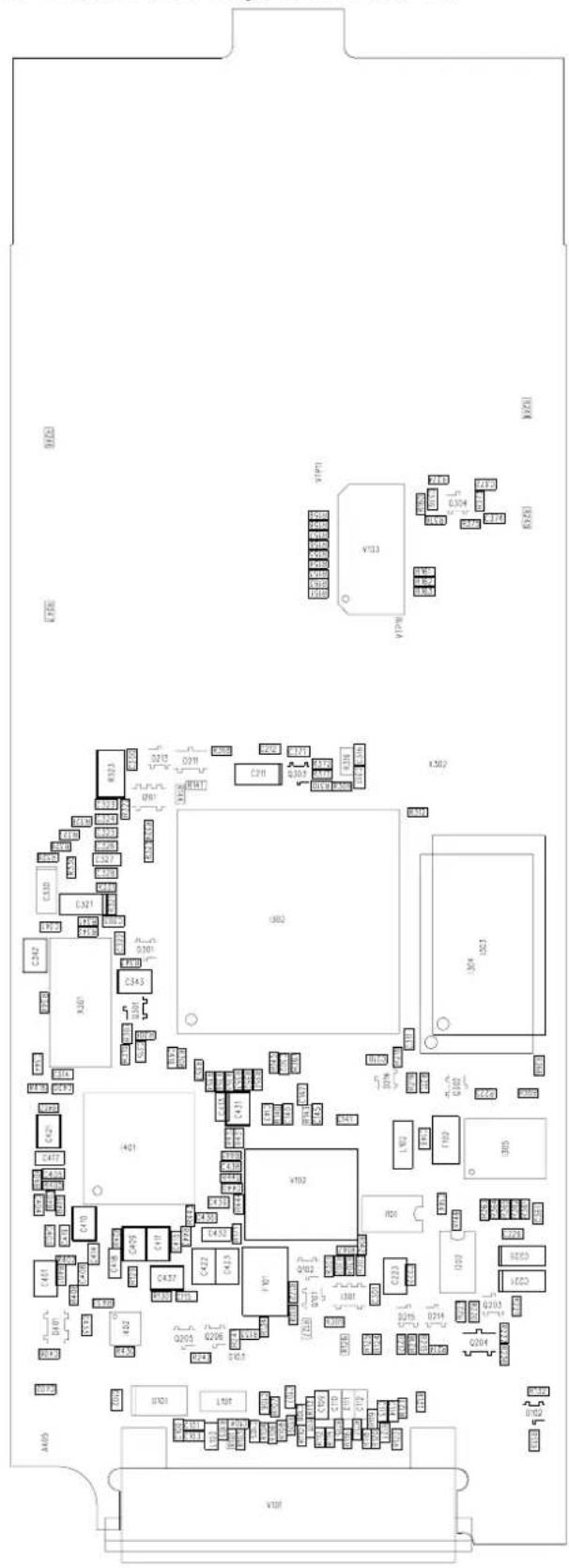
The Top Side Layout PA1900 A3
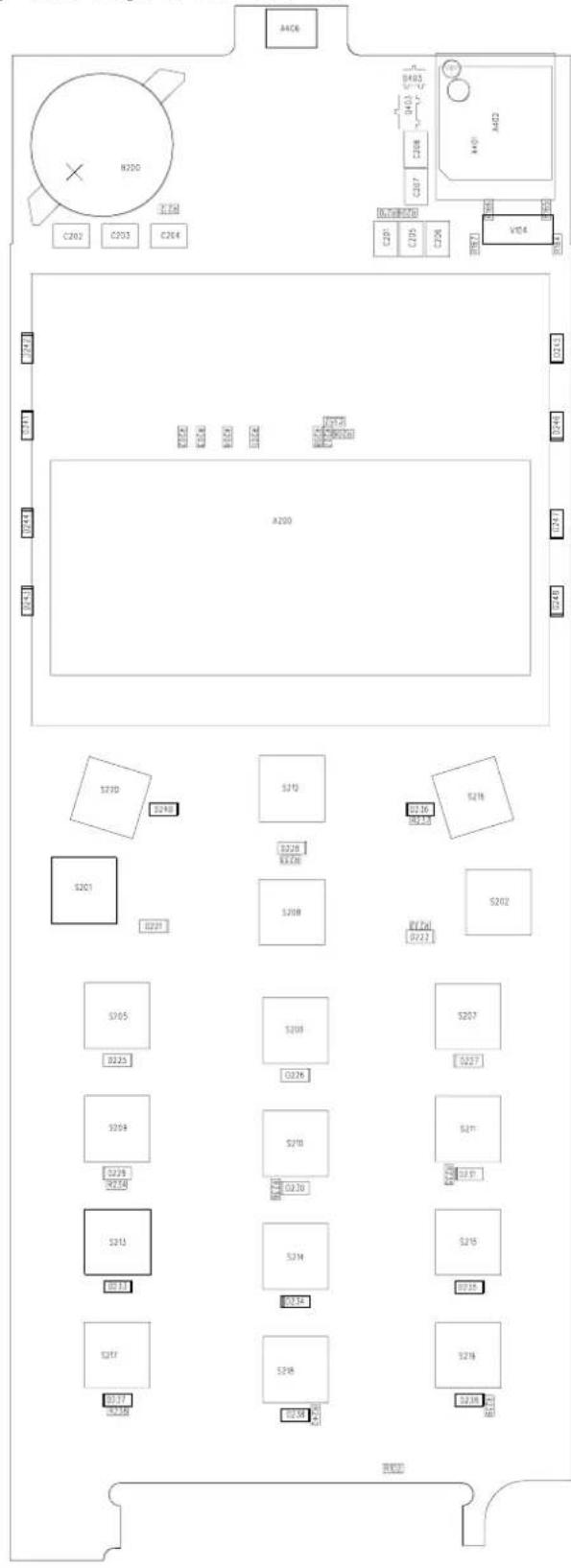
PA1900A3 913
The Bottom Side Layout PA1900 A3
ειε εΑΟΟΕΓΑβ
other
| Label | Pin Number | |-------------|------------| | AUDCLK | 108 | | AUDCSN | 107 | | RXREG | 106 | | SISRXD | 105 | | AUDDIN | 104 | | SCRCs | 103 | | SISSTR | 102 | | LIGHT | 101 | | GND | 100 | | SDA | 99 | | SCL | 98 | | MCLK | 97 | | ISCINT | 96 | | nmi | 95 | | GND | 94 | | sieout | 93 | | sleck | 92 | | GND | 91 | | VRAM | 90 | | ALARM | 89 | | RESET | 88 | | md1 | 87 | | stby | 86 | | OE | 85 | | WE | 84 | | lwr | 83 | | CE | 82 | | RESET | 81 | | ISIGN | 80 | | I2CINT | 79 | | pe2 | 78 | | pe3 | 77 | | pe4 | 76 | | pe5 | 75 | | pe6 | 74 | | SPLITSW | 73 | | GND | 72 | | D00 | 71 | | D01 | 70 | | D02 | 69 | | D03 | 68 | | D04 | 67 | | D05 | 66 | | D06 | 65 | | D07 | 64 | | A00 | 63 | | A01 | 62 | | A02 | 61 | | A03 | 60 | | A04 | 59 | | A05 | 58 | | A06 | 57 | | A07 | 56 | | GND | 55 | | VRAM | 54 | | A08 | 53 | | A09 | 52 | | A10 | 51 | | A11 | 50 | | A12 | 49 | | A13 | 48 | | A14 | 47 | | A15 | 46 | | A16 | 45 | | A17 | 44 | | A18 | 43 | | A19 | 42 | | A20 | 41 | | A21 | 40 | | A22 | 39 | | A23 | 38 | | GND | 37 | | TXDATA | 1 | | TXCLK | 2 | | VRAM | 3 | | RXCLK | 4 | | RXDATA | 5 | | fcnt | 6 | | CADET | 7 | | KBRHOOK | 8 | | PWRSW | 9 | | KEYIN4 | 10 | | KEYIN3 | 11 | | KEYIN2 | 12 | | KEYIN1 | 13 | | KEYIN0 | 14 | | TXBIAS | 15 | | TXREG | 16 | | MC | 17 | | VRAM | 18 | | GND | 19 | | extal | 20 | | xtal | 21 | | GND | 22 | | TXDE | 23 | | SISEN | 24 | | KEYOUT3 | 25 | | KEYOUT2 | 26 | | KEYOUT1 | 27 | | KEYOUT0 | 28 | | SISCLK | 29 | | DAO | 30 | | DCS1 | 31 | | SLE | 32 | | SISRES | 33 | | PWROFF | 34 | | PWRON | 35 | | VSISON | 36 |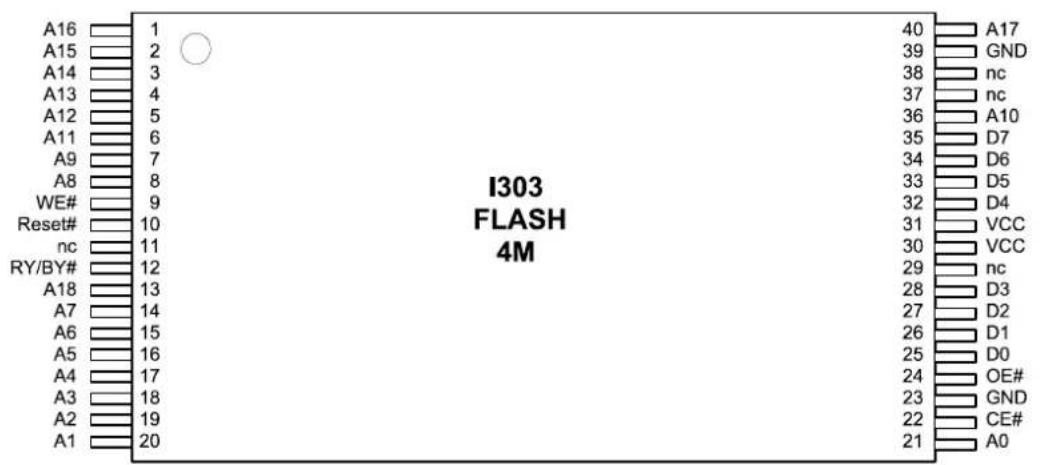
Standard 40-pin TSOP
| Product: | TDP-60-H | BENEFON | |
| Module no: | OA1900 | ||
| Pcb no: | PA1900 | SALO | FINLAND |
| Shromatic ver: | D4 | Date: | 14.01.1999 |
| Designer: | AN | Sheet: | 04 of 04 |
flowchart
graph TD
    A["AK2339"] --> B["ADC"]
    B --> C["AVP1"]
    C --> D["MDDN"]
    D --> E["ADD1 & AQP1"]
    E --> F["VR1"]
    F --> G["TXBPF"]
    G --> H["COMP"]
    H --> I["COMPON"]
    I --> J["VR2"]
    J --> K["TXLPF"]
    K --> L["Max dev +4/0.4"]
    L --> M["VR3"]
    M --> N["TXAUDDN"]
    N --> O["ADD3"]
    O --> P["VR4"]
    P --> Q["SMP1"]
    Q --> R["MODOUT 95"]
    R --> S["FIFLODPON"]
    S --> T["ADD3"]
    T --> U["VR4"]
    U --> V["FIFSK-EM"]
    V --> W["FIFSK-LPF"]
    W --> X["FIFSK-MODUL"]
    X --> Y["TXCLK 46"]
    Y --> Z["FXDE 48"]
    Z --> AA["TXDATA 47"]
    AA --> AB["MODOUT 95"]
    AB --> AC["FFSK level +12/0.4"]
    AC --> AD["FFSK-EM"]
    AD --> AE["FIFSK-EM"]
    AE --> AF["FIFSK-LPF"]
    AF --> AG["MODOUT 95"]
    AG --> AH["FFSK-EM"]
    AH --> AI["FIFSK-EM"]
    AI --> AJ["MODOUT 95"]
    AJ --> AK["FFSK-EM"]
    AK --> AL["FIFSK-EM"]
    AL --> AM["FIFSK-EM"]
    AM --> AN["FIFSK-EM"]
    AN --> AO["FIFSK-EM"]
    AO --> AP["FIFSK-EM"]
    AP --> AQ["FIFSK-EM"]
    AQ --> AR["FIFSK-EM"]
    AR --> AS["FIFSK-EM"]
    AS --> AT["FIFSK-EM"]
    AT --> AU["FIFSK-EM"]
    AU --> AV["FIFSK-EM"]
    AV --> AW["FIFSK-EM"]
    AW --> AX["FIFSK-EM"]
    AX --> AY["FIFSK-EM"]
    AY --> AZ["FIFSK-EM"]
    AZ --> BA["FIFSK-EM"]
    BA --> BB["FIFSK-EM"]
    BB --> BC["FIFSK-EM"]
    BC --> BD["FIFSK-EM"]
    BD --> BE["FIFSK-EM"]
    BE --> BF["FIFSK-EM"]
    BF --> BG["FIFSK-EM"]
    BG --> BH["FIFSK-EM"]
    BH --> BI["FIFSK-EM"]
    BI --> BJ["FIFSK-EM"]
    BJ --> BK["FIFSK-EM"]
    BK --> BL["FIFSK-EM"]
    BL --> BM["FIFSK-EM"]
    BM --> BN["FIFSK-EM"]
    BN --> BO["FIFSK-EM"]
    BO --> BP["FIFSK-EM"]
    BP --> BQ["FIFSK-EM"]
    BQ --> BR["FIFSK-EM"]
    BR --> BS["FIFSK-EM"]
    BS --> BT["FIFSK-EM"]
    BT --> BU["FIFSK-EM"]
    BU --> BV["FIFSK-EM"]
    BV --> BW["FIFSK-EM"]
    BW --> BX["FIFSK-EM"]
    BX --> BY["FIFSK-EM"]
    BY --> BZ["FIFSK-EM"]
    BZ --> CA["FIFSK-EM"]
    CA --> CB["FIFSK-EM"]
    CB --> CC["FIFSK-EM"]
    CC --> CD["FIFSK-EM"]
    CD --> CE["FIFSK-EM"]
    CE --> CF["FIFSK-EM"]
    CF --> CG["FIFSK-EM"]
    CG --> CH["FIFSK-EM"]
    CH --> CI["FIFSK-EM"]
    CI --> CJ["FIFSK-EM"]
    CJ --> CK["FIFSK-EM"]
    CK --> CL["FIFSK-EM"]
    CL --> CM["FIFSK-EM"]
    CM --> CN["FIFSK-EM"]
    CN --> CO["FIFSK-EM"]
    CO --> CP["FIFSK-EM"]
    CP --> CQ["FIFSK-EM"]
    CQ --> CR["FIFSK-EM"]
    CR --> CS["FIFSK-EM"]
    CS --> CT["FIFSK-EM"]
    CT --> CU["FIFSK-EM"]
    CU --> CV["FIFSK-EM"]
    CV --> CW["FIFSK-EM"]
    CW --> CX["FIFSK-EM"]
    CX --> CY["FIFSK-EM"]
    CY --> CZ["FIFSK-EM"]
5.2 RF MODULE
RX Synthesizer
OY1920 Synthesizer
5.2.1 General
The RX synthesizer generates an upper side injection frequency for the receiver. The injection frequency is fed to the receiver's first mixer.
Operating voltage 3.8 VDC
Current consumption 14 mA
Output level to the receiver +1 dBm
Frequency range 540,550...545,025 MHz
5.2.2 Functional Description
The RX injection frequency is generated with a phase locked loop. The VCO produces the injection frequency determined by the control voltage. After the VCO stage comes the amplifier stage Q320. After the amplifier stage, part of the signal is fed to the synthesizer circuits I300 divider. The synthesizer circuit contains a pre-scaler, programmable divider, reference frequency divider, and a phase detector.
The synthesizer circuit produces current pulses at output DO1 as controlled by the phase detector. The current pulses either charge or discharge the loop filter. The VCO control voltage is derived from the loop filter output.
The synthesizer 12.5 kHz reference frequency is made by dividing the 12.85 MHz signal from the temperature compensated oscillator (TCXO). The series-form signal which controls the channel frequency comes from the audio/processor-module via connector V600. SDATA, SCLK and SLE signals are common to both TX- and RX-synthesizers. A positive pulse in the SLE line loads the division ratio (corresponding to the frequency of the channel) fed to the SDATA line, to the synthesizer circuit I300.
5.2.3 Control- and Output-Signals
VRX RX synthesizer operating voltage 3.8 V
SCLK Clock signal for the synthesizer control data
SDATA Synthesizer control data
SLE ENABLE pulse to the synthesizer
RXINJ RX synthesizer output to the receiver +1 dBm
RX_REG Control line for VRX-regulator
TX-Synthesizer
5.2.4 General
The TX synthesizer generates the final modulated transmission frequency, which is fed to the transmitter.
Operating voltage 3.8 VDC
Current consumption <30 mA
Output level to the transmitter +6 dBm
Frequency range 453.000...457.475 MHz
5.2.5 Function Description
The TX frequency is generated with a phase locked loop (PLL). The VCO produces the injection frequency determined by the control voltage, and the VCO also has a modulation input. After the VCO stage come two amplifier stages Q420 and Q430. These ensure separation between the VCO and transmitter, and also boost the injection level sufficiently. Part of the signal is fed from between the amplifier stages to the synthesizer circuit I300 pre-scaler input Fin2. The synthesizer circuit contains a pre-scaler, programmable divider, reference frequency divider, and a phase detector.
The synthesizer circuit produces current pulses at output DO2 as a result of the phase detection. The current pulses either charge or discharge the loop filter condensators. The VCO control voltage is derived from the loop filter output.
The synthesizer 2.5 kHz reference frequency is made by dividing the 12.85 MHz signal from the temperature compensated oscillator (TCXO). The series-form signal which controls the channel frequency comes from the audio/processor-modules via the V600 connector. SDATA and SCLK signals are common to both TX- and RX-synthesizers. A positive pulse in the SLE-line loads the division ratio (corresponding to the TX frequency of the channel) fed to the SDATA line, to the synthesizer circuit I300.
Modulation is fed to the TX synthesizer TX-AUDIO line. The frequency response is corrected by the components R463 - R465, C461 and C462. Modulation sensitivity is set by the resistor R460.
5.2.6 Control- and Output-Signals
VTXS TX synthesizer operating voltage (3.8 V)
TXAUDIO Transmitter audio signal
12M85 12.85 MHz signal to the receiver circuit.
SCLK Clock signal for synthesizer control data
SDATA Synthesizer control data
SLE ENABLE pulse to the synthesizer
TXINJ TX synthesizer output to the transmitter (+6 dBm)
AFC AFC control voltage from AF/LOGIC-board
TXS_REG Control line for VTXS-regulator
Receiver
OY1920 Receiver
5.2.7 General
The module contains all FM-receiver functional blocks.
RF-amplifier=3SK284
-
mixer=double-balanced mixer
-
IF-amplifier=3SK284
FM IF system=SA 607 includes the following blocks:
- mixer
IF limiter
quadrature detector
RSSI (received signal strength indicator)
When the RF signal is received it is brought through the duplex filter to the amplifier stage Q101. The amplified signal is passed through the attenuator to the double-balanced mixer X 102.
The upper side injection frequency is brought from the synthesizer through a small resistive attenuator to the mixer LO pin 1 (LO = local oscillator). The 77.55 MHz intermediate frequency from the mixer output is fed through the IF- filter X102 to the FM IF-circuit I201.
RX injection frequency 540,550...545,025 MHz
Injection-level/impedance +1 dBm / 50 ohm
The second intermediate-frequency local-oscillator-frequency required by the FM IF-circuit is generated by multiplying the 12.85 MHz reference-oscillator frequency by six. The multiplier circuit is made with transistor Q201.
The second intermediate frequency is 450 kHz. The phase-shift required by the quadrature detector is made with the parallel-circuit L203 and C226. The detected AF-signal temperature correction is done in the buffer amplifier stage.
5.2.8 Input- and Output-Signals
RF input from the duplex filter 463,000...467,475 MHz
| RXINJ | RX injection signal to the double balanced mixer |
| 12M85 | 12.85 MHz signal to the multiplier for the 2.mixer |
VRX RX operating voltage 3.8V from the regulator
450 kHz Output from 2. IF to the AFC detector
RXAUDIO Receiver audio output 100mVrms
| RSSI | Received signal strength indicator output0,5...2V |
SENSITIVITY CHECK
channel RF input SINAD psof.
001 -113 dBm ≥20 dB
180 -113 dBm ≥20 dB
Transmitter
OY1920 Transmitter
5.2.9 General
Operating voltage 4.7 ... 6 v
Current consumption mid power max. 1.0 A
low power max. 0.45 A
Input level from the synthesizer +6 dBm
Output level to the duplex filter mid power 33 dBm (2.0W)
low power 24.7 dBm (0.3W)
Frequency range 453,000...457,475 MHz
5.2.10 Function Description
The transmitter unit is comprised of three amplifier stages and two attenuator stages. The pre-amplifier Q600/Q605 and power module I600 form the transmitter amplifier chain. The attenuators surrounding the pre-amplifier are included to enhance the electric separation between the TX synthesizer and the transmitter. C650 enhances power module efficiency.
The operational amplifier I610 and transistors Q610 and Q620 serve as a power regulator circuit, which adjusts the power level so that the voltage from the transmitter power detector (D610) and the control voltage TXPWR from the audio/processor unit are equal. The power-module power-control voltage must not exceed 8 V.
The negative bias voltage for the power amplifier is generated from the 12.85 MHz TCXO signal.
I620 amplifies the signal for the switched power supply Q650/D630 and is then regulated by the zenerdiode D600 to -3.5 V.
I601 serves as voltage regulator for pre-amplifier and for the negative voltage generator.
Q660 serves as the ON/OFF switch for the output power.
When the phone is connected to an external voltage supply, the audio/processor unit raises the transmitter power by approx 1.0 dB using the TXPWR control.
5.2.11 Control- and Output-Signals
VBAT Transmitter operating voltage from the battery-pack (fused)
TXBIAS Power ON/OFF control
TXPWR Power level control signal from the D/A converter 0...3V
TXINJ RF signal from the TX synthesizer +6dBm
TXDUPLEX Transmitter output to the duplex filter
PY1900
The Top Side Layout PY1900A0

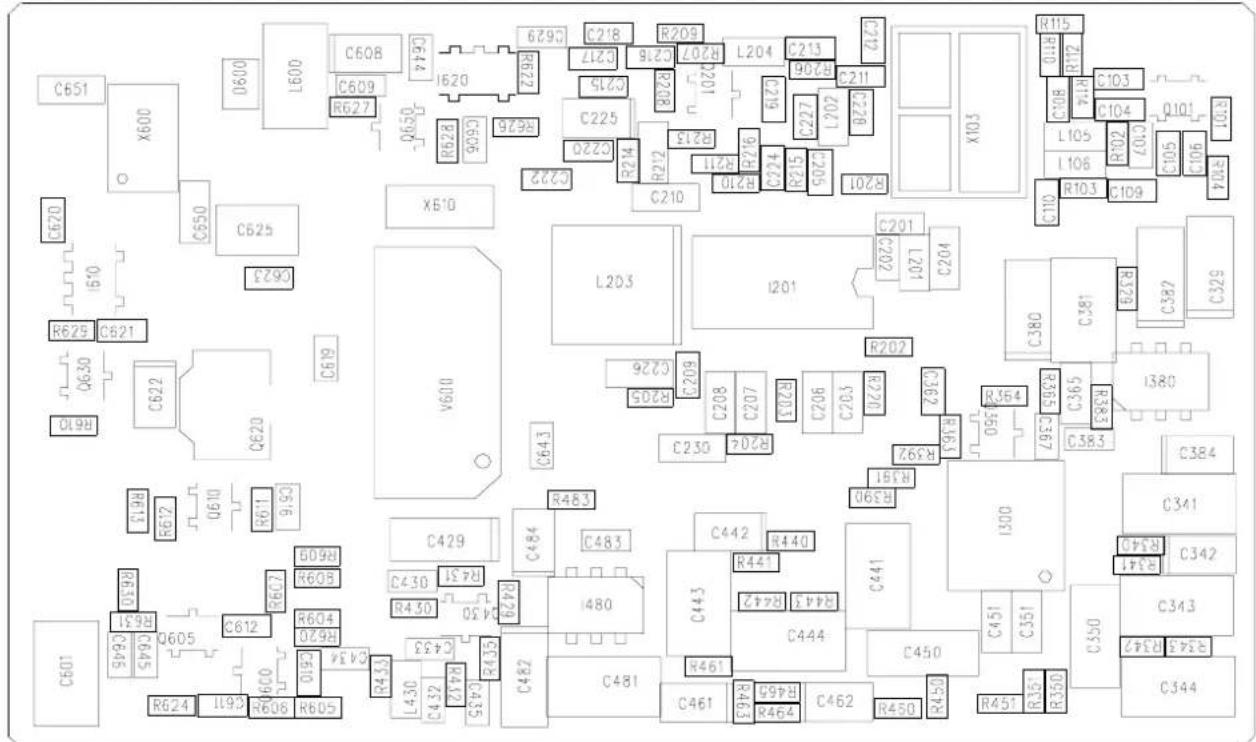
PY1900A0 810
The Bottom Side Layout PY1900A0
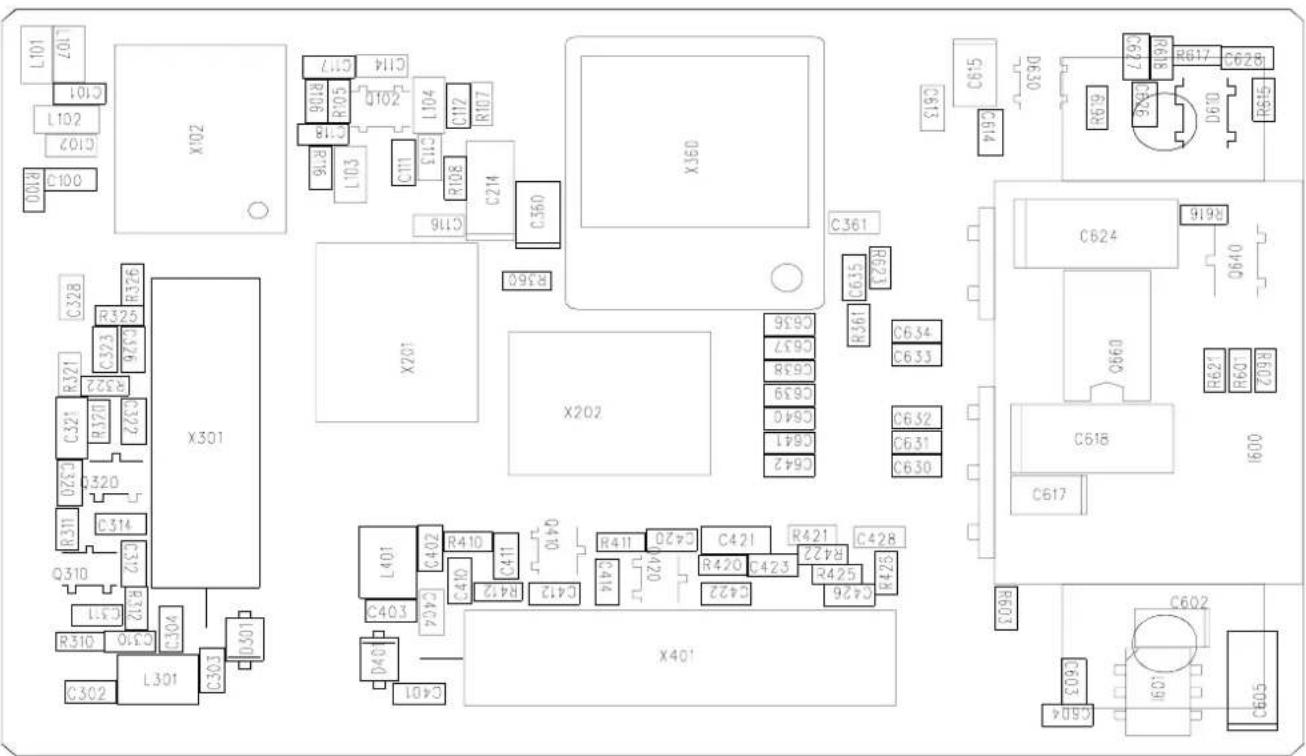
018 0A00E1Y9
5.2.12 Parts list OY1920
OY1920-RF
CODE PART DESCRIPT. VALUE MANUF. TYPE
| CG0102 | C100 | SMD capasitor X7R | 1nF n10% | Murata | |
| CG0330 | C101 | SMD capasitor NPO | 33pF n5% | Murata | |
| CG0569 | C102 | SMD capasitor NPO | 5.6pF n0,25pF | Murata | |
| CG0101 | C103 | SMD capasitor X7R | 100pF n5% | Murata | |
| CG0180 | C104 | SMD capasitor NPO | 18pF n5% | Murata | |
| CG0101 | C105 | SMD capasitor X7R | 100pF n5% | Murata | |
| CG0180 | C106 | SMD capasitor NPO | 18pF n5% | Murata | |
| CG0339 | C107 | SMD capasitor NPO | 3.3pF n0,25pF | Murata | |
| CG0101 | C108 | SMD capasitor X7R | 100pF n5% | Murata | |
| CG0101 | C109 | SMD capasitor X7R | 100pF n5% | Murata | |
| CG0101 | C110 | SMD capasitor X7R | 100pF n5% | Murata | |
| CG0101 | C111 | SMD capasitor X7R | 100pF n5% | Murata | |
| CG0829 | C112 | SMD capasitor NPO | 8.2pF n0,25pF | Murata | |
| CG0102 | C113 | SMD capasitor X7R | 1nF n10% | Murata | |
| CG0279 | C114 | SMD capasitor NPO | 2.7pF n0,25pF | Murata | |
| CG0102 | C116 | SMD capasitor X7R | 1nF n10% | Murata | |
| CG0103 | C117 | SMD capasitor X7R | 10nF n10% | Murata | |
| CG0150 | C118 | SMD capasitor NPO | 15pF n5% | Murata | |
| CG0339 | C201 | SMD capasitor NPO | 3.3pF n0,25pF | Murata | |
| CG0569 | C202 | SMD capasitor NPO | 5.6pF n0,25pF | Murata | |
| CF0223 | C203 | SMD capasitor | 22 nF 10% 50 V X7R | Philips | |
| CF0223 | C204 | SMD capasitor | 22 nF 10% 50 V X7R | Philips | |
| CG0399 | C205 | SMD capasitor NPO | 3.9pF n0,25pF | Murata | |
| CF0223 | C206 | SMD capasitor | 22 nF 10% 50 V X7R | Philips | |
| CF0223 | C207 | SMD capasitor | 22 nF 10% 50 V X7R | Philips | |
| CF0223 | C208 | SMD capasitor | 22 nF 10% 50 V X7R | Philips | |
| CG0100 | C209 | SMD capasitor NPO | 10pF-+0.25pF | Murata | |
| CF0223 | C210 | SMD capasitor | 22 nF 10% 50 V X7R | Philips | |
| CG0103 | C211 | SMD capasitor X7R | 10nF n10% | Murata | |
| CG0103 | C212 | SMD capasitor X7R | 10nF n10% | Murata | |
| CG0102 | C213 | SMD capasitor X7R | 1nF n10% | Murata | |
| CU3106 | C214 | SMD tantal | 10uF / 6V +-20% | AVX | TAJA106M006R |
| CG0102 | C215 | SMD capasitor X7R | 1nF n10% | Murata | |
| CG0103 | C216 | SMD capasitor X7R | 10nF n10% | Murata | |
| CG0150 | C217 | SMD capasitor NPO | 15pF n5% | Murata | |
| CG0101 | C218 | SMD capasitor X7R | 100pF n5% | Murata | |
| CG0150 | C219 | SMD capasitor NPO | 15pF n5% | Murata | |
| CG0103 | C220 | SMD capasitor X7R | 10nF n10% | Murata | |
| CG0103 | C222 | SMD capasitor X7R | 10nF n10% | Murata | |
| CG0331 | C224 | SMD capasitor X7R | 330pF n10% | Murata | |
| CU2105 | C225 | SMD tantal | 1uF/10V | AVX | TAJR105M010R |
| CF3471 | C226 | SMD capasitor | 470pF+-2% 50V NPO | AVX | CM105CG471G50AB |
| CG0399 | C227 | SMD capasitor NPO | 3.9pF n0,25pF | Murata | |
| CG0390 | C228 | SMD capasitor NPO | 39pF n5% | Murata | |
| CF0223 | C230 | SMD capasitor | 22 nF 10% 50 V X7R | Philips | |
| CG0101 | C302 | SMD capasitor X7R | 100pF n5% | Murata | |
| CG0150 | C303 | SMD capasitor NPO | 15pF n5% | Murata | |
| CG0479 | C310 | SMD capasitor NPO | 4.7pF n0,25pF | Murata | |
| CG0150 | C311 | SMD capasitor NPO | 15pF n5% | Murata | |
| CG0120 | C312 | SMD capasitor NPO | 12pF n5% | Murata | |
| CG0180 | C314 | SMD capasitor NPO | 18pF n5% | Murata | |
| CG0101 | C320 | SMD capasitor X7R | 100pF n5% | Murata | |
| CF0223 | C321 | SMD capasitor | 22 nF 10% 50 V X7R | Philips | |
| CG0109 | C322 | SMD capasitor NPO | 1.0pF n0,25pF | Murata | |
| CG0479 | C323 | SMD capasitor NPO | 4.7pF n0,25pF | Murata | |
| CODE | PART | DESCRIPT. | VALUE | MANUF. | TYPE |
| CG0101 | C326 | SMD capasitor X7R | 100pF n5% | Murata | |
| CG0101 | C328 | SMD capasitor X7R | 100pF n5% | Murata | |
| CU3106 C329 | SMD tantal | 10uF / 6V +-20% | AVX TAJA106M006R | ||
| CC0223 C341 | SMD capasitor | 22 nF 10% 50 V X7R | Philips | ||
| CU0334 C342 | SMD tantalium capasitor | 0.33uF/20V/20% | AVX/KYO- | TAJR334M020R | |
| CER | |||||
| CC0103 C343 | SMD capasitor | 10 nF 10% 50V X7R | Philips | ||
| CC0223 C344 | SMD capasitor | 22 nF 10% 50 V X7R | Philips | ||
| CH0105 | C350 | SMD capasitor | 1uF/-20/+80%/16V | TaiyoYuden | EMK212 F105Z00T |
| CF0223 C351 | SMD capasitor | 22 nF 10% 50 V X7R | Philips | ||
| CU2105 | C360 | SMD tantal | 1uF/10V | AVX | TAJR105M010R |
| CG0103 | C361 | SMD capasitor X7R | 10nF n10% | Murata | |
| CG0330 | C362 | SMD capasitor NPO | 33pF n5% | Murata | |
| CF0103 C365 | SMD capasitor | 10 nF 10% 50 V X7R | Philips | ||
| CG0101 | C367 | SMD capasitor X7R | 100pF n5% | Murata | |
| CU0105 | C380 | SMD tantal | 1uF/16V 20% 3.2x1.6mm | Matsushita | ECST1CY 105R |
| CC0104 | C381 | SMD capasitor | 100 nF 10% 50V X7R | Philips | |
| CU3106 C382 | SMD tantal | 10uF / 6V +-20% | AVX TAJA106M006R | ||
| CG0102 | C383 | SMD capasitor X7R | 1nF n10% | Murata | |
| CU2105 | C384 | SMD tantal | 1uF/10V | AVX | TAJR105M010R |
| CG0101 | C401 | SMD capasitor X7R | 100pF n5% | Murata | |
| CG0101 | C402 | SMD capasitor X7R | 100pF n5% | Murata | |
| CG0220 | C403 | SMD capasitor NPO | 22pF n5% | Murata | |
| CG0189 | C404 | SMD capasitor NPO | 1.8pF n0,25pF | Murata | |
| CG0479 | C410 | SMD capasitor NPO | 4.7pF n0,25pF | Murata | |
| CG0150 | C411 | SMD capasitor NPO | 15pF n5% | Murata | |
| CG0120 | C412 | SMD capasitor NPO | 12pF n5% | Murata | |
| CG0390 | C414 | SMD capasitor NPO | 39pF n5% | Murata | |
| CG0101 | C420 | SMD capasitor X7R | 100pF n5% | Murata | |
| CF0223 C421 | SMD capasitor | 22 nF 10% 50 V X7R | Philips | ||
| CG0109 | C422 | SMD capasitor NPO | 1.0pF n0,25pF | Murata | |
| CG0390 | C423 | SMD capasitor NPO | 39pF n5% | Murata | |
| CG0101 | C426 | SMD capasitor X7R | 100pF n5% | Murata | |
| CG0101 | C428 | SMD capasitor X7R | 100pF n5% | Murata | |
| CU3106 C429 | SMD tantal | 10uF / 6V +-20% | AVX TAJA106M006R | ||
| CG0101 | C430 | SMD capasitor X7R | 100pF n5% | Murata | |
| CG0101 | C432 | SMD capasitor X7R | 100pF n5% | Murata | |
| CG0109 | C433 | SMD capasitor NPO | 1.0pF n0,25pF | Murata | |
| CG0569 | C434 | SMD capasitor NPO | 5.6pF n0,25pF | Murata | |
| CG0101 | C435 | SMD capasitor X7R | 100pF n5% | Murata | |
| CC0473 C441 | SMD capasitor | 47 nF 10% 50 V X7R | Philips | ||
| CU2105 | C442 | SMD tantal | 1uF/10V | AVX | TAJR105M010R |
| CC0103 C443 | SMD capasitor | 10 nF 10% 50V X7R | Philips | ||
| CC0223 C444 | SMD capasitor | 22 nF 10% 50 V X7R | Philips | ||
| CH0105 | C450 | SMD capasitor | 1uF/-20/+80%/16V | TaiyoYuden | EMK212 F105Z00T |
| CF0223 C451 | SMD capasitor | 22 nF 10% 50 V X7R | Philips | ||
| CU0334 C461 | SMD tantalium capasitor | 0.33uF/20V/20% | AVX/KYO- | TAJR334M020R | |
| CER | |||||
| CU0334 C462 | SMD tantalium capasitor | 0.33uF/20V/20% | AVX/KYO- | TAJR334M020R | |
| CER | |||||
| CC0104 | C481 | SMD capasitor | 100 nF 10% 50V X7R | Philips | |
| CU3106 C482 | SMD tantal | 10uF / 6V +-20% | AVX TAJA106M006R | ||
| CG0102 | C483 | SMD capasitor X7R | 1nF n10% | Murata | |
| CU0224 C484 | SMD tantal | 0.22uF/20V/10% | AVX/KYO- | TAJR224K020R | |
| CER | |||||
| CC0104 | C601 | SMD capasitor | 100 nF 10% 50V X7R | Philips | |
| CU1105 | C602 | SMD tantal | 1uF/16V | AVX | TAJR105M016R |
| CG0102 | C603 | SMD capasitor X7R | 1nF n10% | Murata | |
| CG0103 | C604 | SMD capasitor X7R | 10nF n10% | Murata | |
| CU3106 C605 | SMD tantal | 10uF / 6V +-20% | AVX TAJA106M006R | ||
| CG0390 | C606 | SMD capasitor NPO | 39pF n5% | Murata | |
| CU2105 C608 | SMD tantal | 1uF/10V | AVX TAJR105M010R | ||
| CG0103 | C609 | SMD capasitor X7R | 10nF n10% | Murata | ' |
| CG0101 | C610 | SMD capasitor X7R | 100pF n5% | Murata | |
| CG0101 | C611 | SMD capasitor X7R | 100pF n5% | Murata | |
| CG0569 | C612 | SMD capasitor NPO | 5.6pF n0,25pF | Murata | |
| CG0221 | C613 | SMD capasitor X7R | 220pF n10% | Murata | |
| CG0103 | C614 | SMD capasitor X7R | 10nF n10% | Murata | ' |
| CU2105 C615 | SMD tantal | 1uF/10V | AVX TAJR105M010R | ||
| CG0103 | C616 | SMD capasitor X7R | 10nF n10% | Murata | ' |
| CU2105 C617 | SMD tantal | 1uF/10V | AVX TAJR105M010R | ||
| CU0225 | C618 | SMD tantal | 2.2uF/16V 20% 4.7x2.6mm | Matsushita | ECST1CB 225R |
| CG0102 | C619 | SMD capasitor X7R | 1nF n10% | Murata | |
| CG0222 | C620 | SMD capasitor X7R | 2.2nF n10% | Murata | |
| CG0332 | C621 | SMD capasitor X7R | 3.3nF n10% | Murata | |
| CU2105 C622 | SMD tantal | 1uF/10V | AVX TAJR105M010R | ||
| CG0102 | C623 | SMD capasitor X7R | 1nF n10% | Murata | |
| CU0225 | C624 | SMD tantal | 2.2uF/16V 20% 4.7x2.6mm | Matsushita | ECST1CB 225R |
| CQ0330 | C625 | SMD MQ capasitor | 33pF 25V 1% | AVX | 06033K330FAWTR |
| CG0101 | C626 | SMD capasitor X7R | 100pF n5% | Murata | |
| CG0101 | C627 | SMD capasitor X7R | 100pF n5% | Murata | |
| CG0101 | C628 | SMD capasitor X7R | 100pF n5% | Murata | |
| CG0101 | C629 | SMD capasitor X7R | 100pF n5% | Murata | |
| CG0103 | C630 | SMD capasitor X7R | 10nF n10% | Murata | ' |
| CG0102 | C631 | SMD capasitor X7R | 1nF n10% | Murata | |
| CG0102 | C632 | SMD capasitor X7R | 1nF n10% | Murata | |
| CG0102 | C633 | SMD capasitor X7R | 1nF n10% | Murata | |
| CG0102 | C634 | SMD capasitor X7R | 1nF n10% | Murata | |
| CG0103 | C635 | SMD capasitor X7R | 10nF n10% | Murata | ' |
| CG0221 | C636 | SMD capasitor X7R | 220pF n10% | Murata | |
| CG0102 | C638 | SMD capasitor X7R | 1nF n10% | Murata | |
| CG0102 | C639 | SMD capasitor X7R | 1nF n10% | Murata | |
| CG0102 | C640 | SMD capasitor X7R | 1nF n10% | Murata | |
| CG0221 | C641 | SMD capasitor X7R | 220pF n10% | Murata | |
| CG0221 | C642 | SMD capasitor X7R | 220pF n10% | Murata | |
| CG0221 | C643 | SMD capasitor X7R | 220pF n10% | Murata | |
| CG0103 | C644 | SMD capasitor X7R | 10nF n10% | Murata | ' |
| CG0220 | C645 | SMD capasitor NPO | 22pF n5% | Murata | |
| CG0103 | C646 | SMD capasitor X7R | 10nF n10% | Murata | ' |
| DC0229 | D301 | SMD silicon tuning diode | 1V/19pF...4V/11pF | Toshiba | 1SV229 |
| DC0229 | D401 | SMD silicon tuning diode | 1V/19pF...4V/11pF | Toshiba | 1SV229 |
| DZ3399 | D600 | SMD zener | 3V9 5% 500mW | Temic | BZM55C3V9 TR3 |
| DY0062 | D610 | SMD shcottky diode | 40V 20mA | Siemens | BAT 62 |
| DY0384 | D630 | SMD shcottky barrier diod | 15V/200mA/VF=0.35V | Toshiba | 1SS384-TE85L |
| IV6070 | I201 | FM IF-system | Philips | SA607DK | |
| IS2335 | I300 | Dual freg.synthesizer | PLL+prescaler 1.2GHz | NationalSe | LMX23352TMX |
| IR1238 | I380 | Regulator | 3.8V/240mA +-2,4% | Toko | TK11238AM |
| IR1238 | I480 | Regulator | 3.8V/240mA +-2,4% | Toko | TK11238AM |
| IW2792 | I600 | RF-power amplifier | 450MHz-485MHz | Iwatsu | HAB279B |
| IR1238 | I601 | Regulator | 3.8V/240mA +-2,4% | Toko | TK11238AM |
| IA7550 | I610 | Single op.amp. | Toshiba | TA 75S01F-TE85L | |
| IC7S00 | I620 | 2-input NAND | SOT-23-5 | NationalSe | NC7S00M5X |
| LC3392 | L101 | SMD inductor | 3n9 -+2% | Panasonic | ELJRE3N9ZF2 |
| LC3123 | L102 | SMD inductor | 12n -+2% | Panasonic | ELJRE12NGF2 |
| LC3334 | L103 | SMD inductor | 330nH +-10% | TDK | MLF1608DR33K |
| LC3334 | L104 | SMD inductor | 330nH +-10% | TDK | MLF1608DR33K |
| LC3223 | L105 | SMD inductor | 22n -+2% | Panasonic | ELJRE22NGF2 |
| LC3472 | L106 | SMD inductor | 4n7 -+2% | Panasonic | ELJRE4N7ZF2 |
| LC3273 | L107 | SMD inductor | 27nH -+2% | Panasonic | ELJRE27NGF2 |
| LC3334 | L201 | SMD inductor | 330nH +-10% | TDK | MLF1608DR33K |
| LC3104 L202 | SMD inductor | 100nH+-10% magnet.shielded | TDK MLF1608DR10KT | ||
| LI0450 L203 | SMD Quad. coil | 450kHz | Sagami 950997404 | ||
| LC3224 L204 | SMD inductor | 220nH+-10% magnet.shielded | TDK MLF1608DR22KT | ||
| LC1224 L301 | SMD inductor | 220 nH/+-10% | Coilcraft 0805CS-221XKBC | ||
| LC1224 L401 | SMD inductor | 220 nH/+-10% | Coilcraft 0805CS-221XKBC | ||
| LC3183 L430 | SMD inductor | 18n -+2% | Panasonic ELJRE18NGF2 | ||
| LC4106 L600 | SMD inductor | 10uH -+10% | TDK MLF3216E100KT | ||
| QF0284 | Q101 | SMD GaAs dual N-channel | Toshiba | 3SK284 | |
| QF0284 | Q102 | SMD GaAs dual N-channel | Toshiba | 3SK284 | |
| QA4867 | Q201 | SMD RF-transistor | NPN G=13dB NF=1.2dB/1GHz | Sanyo | 2SC4867-4 |
| QA4867 | Q310 | SMD RF-transistor | NPN G=13dB NF=1.2dB/1GHz | Sanyo | 2SC4867-4 |
| QA4867 | Q320 | SMD RF-transistor | NPN G=13dB NF=1.2dB/1GHz | Sanyo | 2SC4867-4 |
| QS1847 | Q360 | piensignaali yleistransi | NPN 100mA/45V hfe=200...450 | Philips | BC847BW |
| QA4867 | Q410 | SMD RF-transistor | NPN G=13dB NF=1.2dB/1GHz | Sanyo | 2SC4867-4 |
| QA4867 | Q420 | SMD RF-transistor | NPN G=13dB NF=1.2dB/1GHz | Sanyo | 2SC4867-4 |
| QA4867 | Q430 | SMD RF-transistor | NPN G=13dB NF=1.2dB/1GHz | Sanyo | 2SC4867-4 |
| QA4867 | Q600 | SMD RF-transistor | NPN G=13dB NF=1.2dB/1GHz | Sanyo | 2SC4867-4 |
| QA4867 | Q605 | SMD RF-transistor | NPN G=13dB NF=1.2dB/1GHz | Sanyo | 2SC4867-4 |
| QS1847 | Q610 | piensignaali yleistransi | NPN 100mA/45V hfe=200...450 | Philips | BC847BW |
| QS0031 | Q620 | SMD transistor | PNP 1A/25V | Sanyo | 2SB1119S-TD |
| QS1847 | Q630 | piensignaali yleistransi | NPN 100mA/45V hfe=200...450 | Philips | BC847BW |
| QF7002 | Q640 | SMD n-channel FET | 60V 0.115A Rds7.5 | Siliconix | 2N7002-T1 |
| QAA193 | Q650 | SMD RF-transistor | 6GHz/300mW F=1.9dB | Philips | BFR93AW |
| QF9430 | Q660 | SMD p-channel MOSFET | 20V/4,8A/Rds=0.06 | Siliconix | Si9430DY |
| RG0103 | R100 | SMD resistor | 10k 5% 0.063W | Kamaya | RMC1/16S |
| RG0102 | R101 | SMD resistor | 1k0 5% 0.063W | Kamaya | RMC1/16S |
| RG0102 | R102 | SMD resistor | 1k0 5% 0.063W | Kamaya | RMC1/16S |
| RG0100 | R103 | SMD resistor | 10 R 5% 0.063W | Kamaya | RMC1/16S |
| RG0101 | R104 | SMD resistor | 100R 5% 0.063W | Kamaya | RMC1/16S |
| RG0102 | R105 | SMD resistor | 1k0 5% 0.063W | Kamaya | RMC1/16S |
| RG0471 | R106 | SMD resistor | 470R 5% 0.063W | Kamaya | RMC1/16S |
| RG0472 | R107 | SMD resistor | 4k7 5% 0.063W | Kamaya | RMC1/16S |
| RG0220 | R108 | SMD resistor | 22R 5% 0.063W | Kamaya | RMC1/16S |
| RG0100 | R110 | SMD resistor | 10 R 5% 0.063W | Kamaya | RMC1/16S |
| RG0180 | R112 | SMD resistor | 18R 5% 0.063W | Kamaya | RMC1/16S |
| RG0271 | R114 | SMD resistor | 270R 5% 0.063W | Kamaya | RMC1/16S |
| RG0271 | R115 | SMD resistor | 270R 5% 0.063W | Kamaya | RMC1/16S |
| RG0100 | R116 | SMD resistor | 10 R 5% 0.063W | Kamaya | RMC1/16S |
| RG0472 | R201 | SMD resistor | 4k7 5% 0.063W | Kamaya | RMC1/16S |
| RG0102 | R202 | SMD resistor | 1k0 5% 0.063W | Kamaya | RMC1/16S |
| RG0222 | R203 | SMD resistor | 2k2 5% 0.063W | Kamaya | RMC1/16S |
| RG0332 | R204 | SMD resistor | 3k3 5% 0.063W | Kamaya | RMC1/16S |
| RG0273 | R205 | SMD resistor | 27k 5% 0.063W | Kamaya | RMC1/16S |
| RG0100 | R206 | SMD resistor | 10 R 5% 0.063W | Kamaya | RMC1/16S |
| RG0472 | R207 | SMD resistor | 4k7 5% 0.063W | Kamaya | RMC1/16S |
| RG0220 | R208 | SMD resistor | 22R 5% 0.063W | Kamaya | RMC1/16S |
| RG0473 | R209 | SMD resistor | 47k 5% 0.063W | Kamaya | RMC1/16S |
| RG0393 | R210 | SMD resistor | 39k 5% 0.063W | Kamaya | RMC1/16S |
| RG0683 | R211 | SMD resistor | 68k 5% 0.063W | Kamaya | RMC1/16S |
| RTN157 | R212 | (RNT157)NTC resistor | 22k 5% B=3750 | Ohizumi | 157-223-65001 |
| RG0682 | R213 | SMD resistor | 6k8 5% 0.063W | Kamaya | RMC1/16S |
| RG0102 | R214 | SMD resistor | 1k0 5% 0.063W | Kamaya | RMC1/16S |
| RG0683 | R215 | SMD resistor | 68k 5% 0.063W | Kamaya | RMC1/16S |
| RG0473 | R216 | SMD resistor | 47k 5% 0.063W | Kamaya | RMC1/16S |
| RG0272 | R220 | SMD resistor | 2k7 5% 0.063W | Kamaya | RMC1/16S |
| RG0822 | R310 | SMD resistor | 8k2 5% 0.063W | Kamaya | RMC1/16S |
| RG0222 | R311 | SMD resistor | 2k2 5% 0.063W | Kamaya | RMC1/16S |
| RG0101 | R312 | SMD resistor | 100R 5% 0.063W | Kamaya | RMC1/16S |
| RG0220 | R320 | SMD resistor | 22R 5% 0.063W | Kamaya | RMC1/16S |
| RG0472 | R321 | SMD resistor | 4k7 5% 0.063W | Kamaya | RMC1/16S |
| CODE PART DESCRIPT. VALUE MANUF. TYPE | ||||
| RG0152 R322 | SMD resistor | 1k5 5% 0.063W | Kamaya | RMC1/16S |
| RG0151 R325 | SMD resistor | 150R 5% 0.063W | Kamaya | RMC1/16S |
| RG0151 R326 | SMD resistor | 150R 5% 0.063W | Kamaya | RMC1/16S |
| RG0150 R329 | SMD resistor | 15R 5% 0.063W | Kamaya | RMC1/16S |
| RG0272 R340 | SMD resistor | 2k7 5% 0.063W | Kamaya | RMC1/16S |
| RG0152 R341 | SMD resistor | 1k5 5% 0.063W | Kamaya | RMC1/16S |
| RG0152 R342 | SMD resistor | 1k5 5% 0.063W | Kamaya | RMC1/16S |
| RG0100 R343 | SMD resistor | 10 R 5% 0.063W | Kamaya | RMC1/16S |
| RG0470 R350 | SMD resistor | 47R 5% 0.063W | Kamaya | RMC1/16S |
| RG0470 R351 | SMD resistor | 47R 5% 0.063W | Kamaya | RMC1/16S |
| RG0150 R360 | SMD resistor | 15R 5% 0.063W | Kamaya | RMC1/16S |
| RG0103 R361 | SMD resistor | 10k 5% 0.063W | Kamaya | RMC1/16S |
| RG0473 R363 | SMD resistor | 47k 5% 0.063W | Kamaya | RMC1/16S |
| RG0104 R364 | SMD resistor | 100k 5% 0.063W | Kamaya | RMC1/16S |
| RG0103 R365 | SMD resistor | 10k 5% 0.063W | Kamaya | RMC1/16S |
| RG0473 R383 | SMD resistor | 47k 5% 0.063W | Kamaya | RMC1/16S |
| RG0472 R390 | SMD resistor | 4k7 5% 0.063W | Kamaya | RMC1/16S |
| RG0472 R391 | SMD resistor | 4k7 5% 0.063W | Kamaya | RMC1/16S |
| RG0472 R392 | SMD resistor | 4k7 5% 0.063W | Kamaya | RMC1/16S |
| RG0822 R410 | SMD resistor | 8k2 5% 0.063W | Kamaya | RMC1/16S |
| RG0222 R411 | SMD resistor | 2k2 5% 0.063W | Kamaya | RMC1/16S |
| RG0151 R412 | SMD resistor | 150R 5% 0.063W | Kamaya | RMC1/16S |
| RG0220 R420 | SMD resistor | 22R 5% 0.063W | Kamaya | RMC1/16S |
| RG0472 R421 | SMD resistor | 4k7 5% 0.063W | Kamaya | RMC1/16S |
| RG0152 R422 | SMD resistor | 1k5 5% 0.063W | Kamaya | RMC1/16S |
| RG0101 R425 | SMD resistor | 100R 5% 0.063W | Kamaya | RMC1/16S |
| RG0101 R426 | SMD resistor | 100R 5% 0.063W | Kamaya | RMC1/16S |
| RG0150 R429 | SMD resistor | 15R 5% 0.063W | Kamaya | RMC1/16S |
| RG0220 R430 | SMD resistor | 22R 5% 0.063W | Kamaya | RMC1/16S |
| RG0152 R431 | SMD resistor | 1k5 5% 0.063W | Kamaya | RMC1/16S |
| RG0150 R432 | SMD resistor | 15R 5% 0.063W | Kamaya | RMC1/16S |
| RG0221 R433 | SMD resistor | 220R 5% 0.063W | Kamaya | RMC1/16S |
| RG0472 R435 | SMD resistor | 4k7 5% 0.063W | Kamaya | RMC1/16S |
| RG0152 R440 | SMD resistor | 1k5 5% 0.063W | Kamaya | RMC1/16S |
| RG0472 R441 | SMD resistor | 4k7 5% 0.063W | Kamaya | RMC1/16S |
| RG0472 R442 | SMD resistor | 4k7 5% 0.063W | Kamaya | RMC1/16S |
| RG0100 R443 | SMD resistor | 10 R 5% 0.063W | Kamaya | RMC1/16S |
| RG0470 R450 | SMD resistor | 47R 5% 0.063W | Kamaya | RMC1/16S |
| RG0470 R451 | SMD resistor | 47R 5% 0.063W | Kamaya | RMC1/16S |
| RG0151 R460 | SMD resistor | 150R 5% 0.063W | Kamaya | RMC1/16S |
| RG0823 R461 | SMD resistor | 82k 5% 0.063W | Kamaya | RMC1/16S |
| RG0183 R463 | SMD resistor | 18k 5% 0.063W | Kamaya | RMC1/16S |
| RG0103 R464 | SMD resistor | 10k 5% 0.063W | Kamaya | RMC1/16S |
| RG0472 R465 | SMD resistor | 4k7 5% 0.063W | Kamaya | RMC1/16S |
| RG0473 R483 | SMD resistor | 47k 5% 0.063W | Kamaya | RMC1/16S |
| RG0103 R601 | SMD resistor | 10k 5% 0.063W | Kamaya | RMC1/16S |
| RG0224 R602 | SMD resistor | 220k 5% 0.063W | Kamaya | RMC1/16S |
| RG0473 R603 | SMD resistor | 47k 5% 0.063W | Kamaya | RMC1/16S |
| RG0101 R604 | SMD resistor | 100R 5% 0.063W | Kamaya | RMC1/16S |
| RG0821 R605 | SMD resistor | 820R 5% 0.063W | Kamaya | RMC1/16S |
| RG0272 R606 | SMD resistor | 2k7 5% 0.063W | Kamaya | RMC1/16S |
| RG0391 R607 | SMD resistor | 390R 5% 0.063W | Kamaya | RMC1/16S |
| RG0100 R608 | SMD resistor | 10 R 5% 0.063W | Kamaya | RMC1/16S |
| RG0391 R609 | SMD resistor | 390R 5% 0.063W | Kamaya | RMC1/16S |
| RG0224 R610 | SMD resistor | 220k 5% 0.063W | Kamaya | RMC1/16S |
| RG0102 R611 | SMD resistor | 1k0 5% 0.063W | Kamaya | RMC1/16S |
| RG0102 R612 | SMD resistor | 1k0 5% 0.063W | Kamaya | RMC1/16S |
| RG0271 R613 | SMD resistor | 270R 5% 0.063W | Kamaya | RMC1/16S |
| RG0103 R615 | SMD resistor | 10k 5% 0.063W | Kamaya | RMC1/16S |
| RG0184 R616 | SMD resistor | 180k 5% 0.063W | Kamaya | RMC1/16S |
| CODE | PART | DESCRIPT. | VALUE | MANUF. | TYPE | |
| RG0104 R617 | SMD resistor | 100k 5% 0.063W | Kamaya | RMC1/16S | ||
| RG0103 R618 | SMD resistor | 10k 5% 0.063W | Kamaya | RMC1/16S | ||
| RG0151 R619 | SMD resistor | 150R 5% 0.063W | Kamaya | RMC1/16S | ||
| RG0220 R620 | SMD resistor | 22R 5% 0.063W | Kamaya | RMC1/16S | ||
| RG0224 R621 | SMD resistor | 220k 5% 0.063W | Kamaya | RMC1/16S | ||
| RG0105 R622 | SMD resistor | 1M0 5% 0.063W | Kamaya | RMC1/16S | ||
| RG0101 R623 | SMD resistor | 100R 5% 0.063W | Kamaya | RMC1/16S | ||
| RG0220 R624 | SMD resistor | 22R 5% 0.063W | Kamaya | RMC1/16S | ||
| RG0220 R626 | SMD resistor | 22R 5% 0.063W | Kamaya | RMC1/16S | ||
| RG0220 R627 | SMD resistor | 22R 5% 0.063W | Kamaya | RMC1/16S | ||
| RG0102 R628 | SMD resistor | 1k0 5% 0.063W | Kamaya | RMC1/16S | ||
| RG0332 R629 | SMD resistor | 3k3 5% 0.063W | Kamaya | RMC1/16S | ||
| RG0102 R630 | SMD resistor | 1k0 5% 0.063W | Kamaya | RMC1/16S | ||
| RG0102 R631 | SMD resistor | 1k0 5% 0.063W | Kamaya | RMC1/16S | ||
| VM0019 V600 | SMD B/B-connector 3mm | 20 pin | Matsushita AXN320038P | |||
| OD1920 X100 | Duplexer Nordic | Rx 465MHz Tx 455MHz Solitra NBS46106 | ||||
| XM0006 | X102 | Dual balanced mixer | 450 MHz | MiniCircui | RMS-1LL | |
| XF7755 | X103 | Crystal filter | 77,55MHz | Toyocom | TN4-6516 | |
| XC3450 | X201 | Ceramic IF-filter | 450Khz | Murata | CFUCG450E | |
| XC4450 | X202 | Ceramic IF-filter | 450kHz | Murata | CFUCG450F | |
| XR1650 | X301 | Ceramic coaxial resonato | 650MHz 4x4x13mm Q>250 | Siemens | B69614-G0655-B42 | |
| XO4128 | X360 | VCTCXO Nord. | 12.85 MHz / 3V | TEW | TTC01V | |
| XR1550 | X401 | Ceramic coaxial resonato | 550MHz 4x4x14,5mm Q>250 | Siemens | B69614-G0550-BA4 | |
| XI0005 | X600 | Directional coupler | NMT450 | MKT Taisei | DCS3120-09 | |
| LF0062 | X610 | SMD EMI filter | 10nF/2A | Panasonic | ELKE103FA | |
| PY1900 | YPCB2 | PCB for OY1900 | ||||
| MD1900 | YST40 | Tx-VCO cover | 9,3x22,1mm | SMC Ltd. | 972388 | |
| MD1901 | YST40 | Rx-VCO cover | 9,3x20,1mm | SMC Ltd | 972389 | |
| MD1902 | YTX1 | Tx-hybrid spiral sheet m | etal | SMC Ltd | 972412 | |
| MD1902 | YTX2 | Tx-hybrid spiral sheet m | etal | SMC Ltd | 972412 | |
Last
update
11.10.99
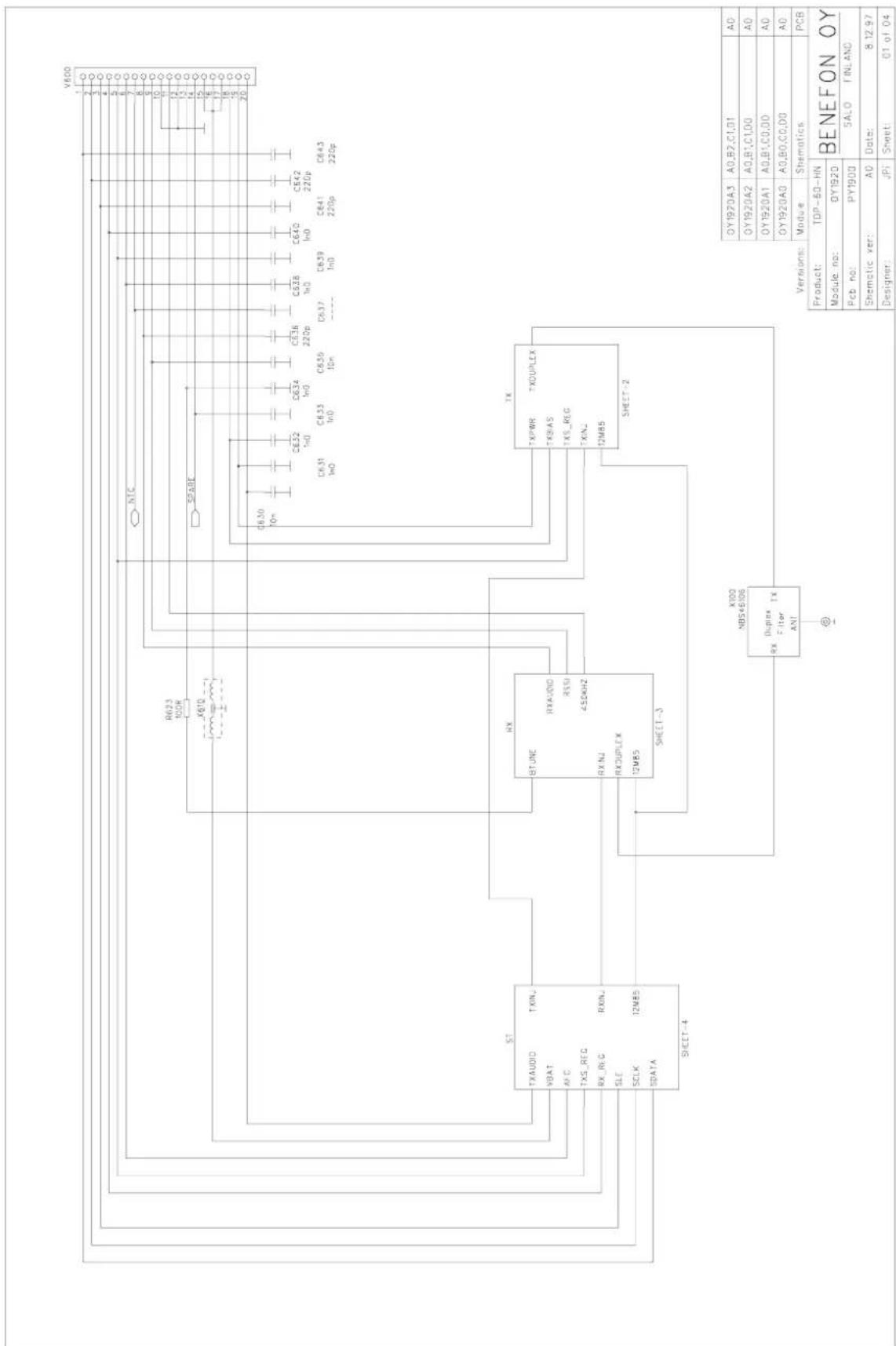
flowchart
graph TD
    subgraph_Module_A["OY1920A3"]
        A0["A0,B2,C1,01"] --> B0["BENEFON OY"]
        C0["A0,B1,C1,00"] --> D0["BENEFON OY"]
        E0["A0,B1,C0,00"] --> F0["BENEFON OY"]
        G0["A0,B0,C0,00"] --> H0["BENEFON OY"]
        I0["Module"] --> J0["Shematics"] --> K0["PCB"]
    end

    subgraph_Module_B["OY1920A2"]
        A1["A0,B1,C1,00"] --> B1["BENEFON OY"]
        C1["A0,B1,C0,00"] --> D1["BENEFON OY"]
        E1["A0,B1,C0,00"] --> F1["BENEFON OY"]
        G1["A0,B1,C0,00"] --> H1["BENEFON OY"]
        I1["A0,B1,C0,00"] --> J1["BENEFON OY"]

    subgraph_Module_C["OY1920A1"]
        A2["A0,B1,C0,00"] --> B2["BENEFON OY"]
        C2["A0,B1,C0,00"] --> D2["BENEFON OY"]
        E2["A0,B1,C0,00"] --> F2["BENEFON OY"]

    subgraph_Module_D["OY1920A0"]
        A3["A0,B1,C0,00"] --> B3["BENEFON OY"]
        C3["A0,B1,C0,00"] --> D3["BENEFON OY"]

    end

    subgraph_Module_E["OY1920A4"]
        A4["A0,B2,C1,01"] --> B4["BENEFON OY"]
        C4["A0,B2,C1,00"] --> D4["BENEFON OY"]

    end

    subgraph_Module_F["OY1920A5"]
        A5["A0,B2,C1,01"] --> B5["BENEFON OY"]
        C5["A0,B2,C1,00"] --> D5["BENEFON OY"]

    end

    subgraph_Module_G["OY1920A6"]
        A6["A0,B2,C1,01"] --> B6["BENEFON OY"]
        C6["A0,B2,C1,00"] --> D6["BENEFON OY"]

    end

    subgraph_Module_H["OY1920A7"]
        A7["A0,B2,C1,01"] --> B8["BENEFON OY"]
        C8["A0,B2,C1,00"] --> D8["BENEFON OY"]

    end

    subgraph_Module_I["OY1920A8"]
        A9["A0,B2,C1,01"] --> B9["BENEFON OY"]
        C9["A0,B2,C1,00"] --> D9["BENEFON OY"]

    end

    subgraph_Module_J["OY1920A9"]
        A10["A0,B2,C1,01"] --> B10["BENEFON OY"]
        C10["A0,B2,C1,00"] --> D10["BENEFON OY"]

    end

    subgraph_Module_K["OY1920A10"]
        A11["A0,B2,C1,01"] --> B12["BENEFON OY"]
        C12["A0,B2,C1,00"] --> D12["BENEFON OY"]

    end

    subgraph_Module_L["OY1920A11"]
        A12["A0,B2,C1,01"] --> B13["BENEFON OY"]
        C13["A0,B2,C1,00"] --> D13["BENEFON OY"]

    end

    subgraph_Module_M["OY1920A12"]
        A13["A0,B2,C1,01"] --> B14["BENEFON OY"]
        C14["A0,B2,C1,00"] --> D14["BENEFON OY"]

    end

    subgraph_Module_N["OY1920A13"]
        A14["A0,B2,C1,01"] --> B15["BENEFON OY"]
        C15["A0,B2,C1,00"] --> D15["BENEFON OY"]

    end

    subgraph_Module_O["OY1920A14"]
        A15["A0,B2,C1,01"] --> B16["BENEFON OY"]
        C16["A0,B2,C1,00"] --> D16["BENEFON OY"]

    end

    subgraph_Module_P["OY1920A15"]
        A16["A0,B2,C1,01"] --> B17["BENEFON OY"]
        C17["A0,B2,C1,00"] --> D17["BENEFON OY"]

    end

    subgraph_Module_S["OY1920A16"]
        A17["A0,B2,C1,01"] --> B18["BENEFON OY"]
        C18["A0,B2,C1,00"] --> D18["BENEFON OY"]

    end

    subgraph_Module_T["OY1920A17"]
        A18["A0,B2,C1,01"] --> B19["BENEFON OY"]
        C19["A0,B2,C1,00"] --> D19["BENEFON OY"]

    end

    subgraph_Module_U["OY1920A18"]
        A19["A0,B2,C1,01"] --> B20["BENEFON OY"]
        C20["A0,B2,C1,00"] --> D20["BENEFON OY"]

    end

    subgraph_Module_V["OY1920A19"]
        A20["A0,B2,C1,01"] --> B21["BENEFON OY"]
        C21["A0,B2,C1,00"] --> D21["BENEFON OY"]

    end

    subgraph_Module_W["OY1920A20"]
        A21["A0,B2,C1,01"] --> B22["BENEFON OY"]
        C22["A0,B2,C1,00"] --> D22["BENEFON OY"]

    end

    subgraph_Module_Z["OY1920A21"]
        A22["A0,B2,C1,01"] --> B23["BENEFON OY"]
        C23["A0,B2,C1,00"] --> D23["BENEFON OY"]

    end
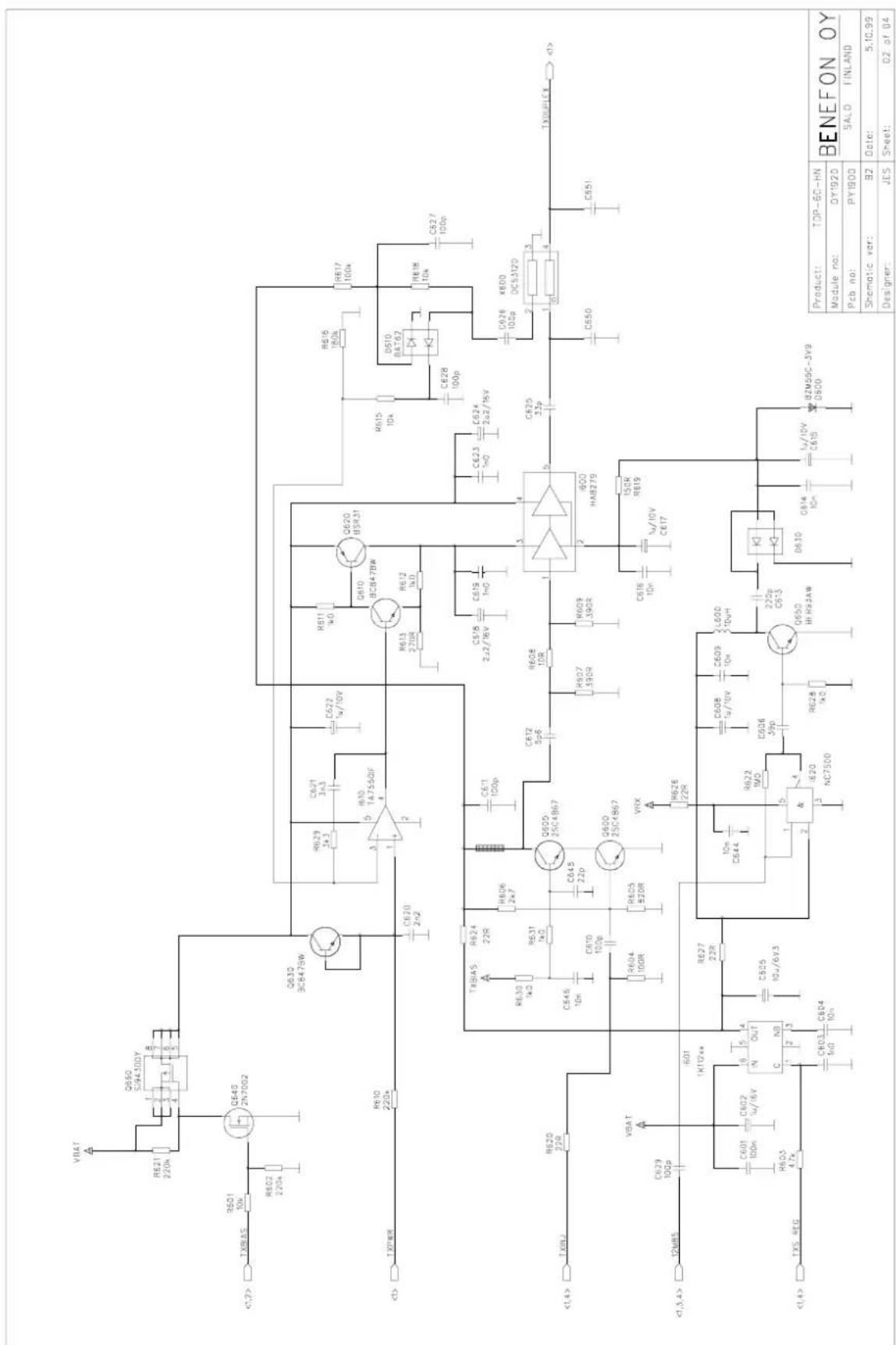
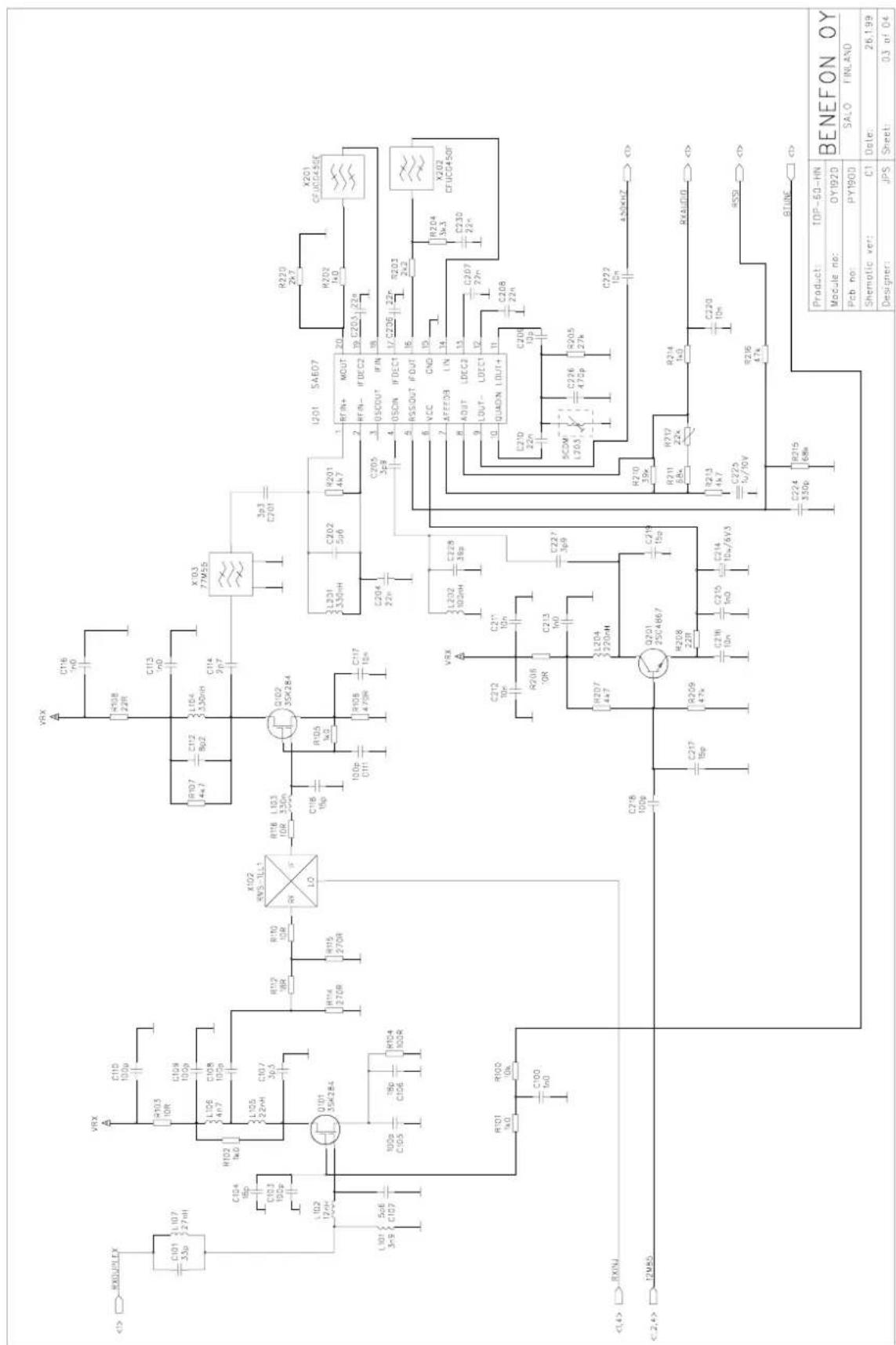
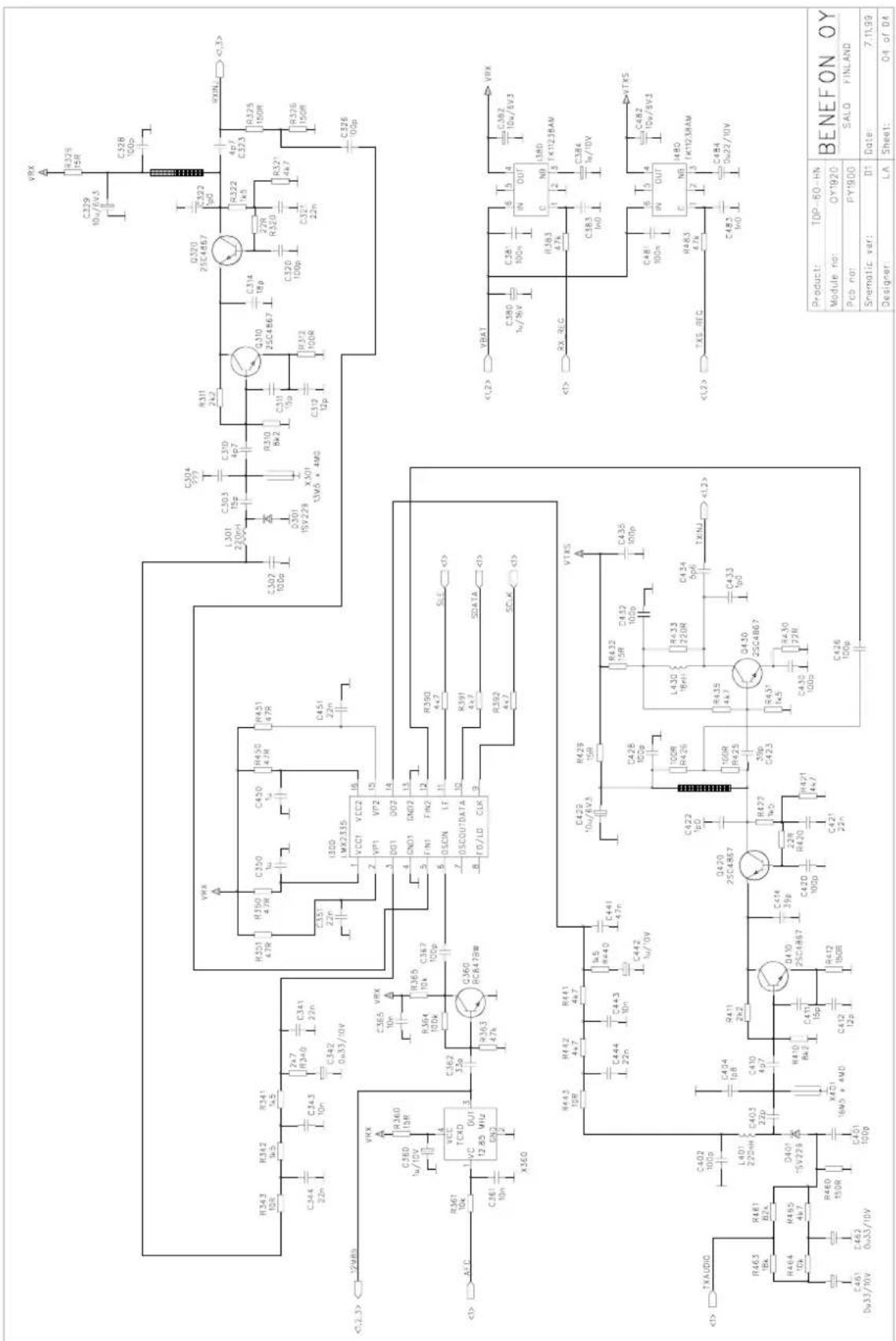
6.0 CAR ASSEMBLY KIT

CAR ASSEMBLY KIT
6.1 CARBOX UDH-60
YO1951
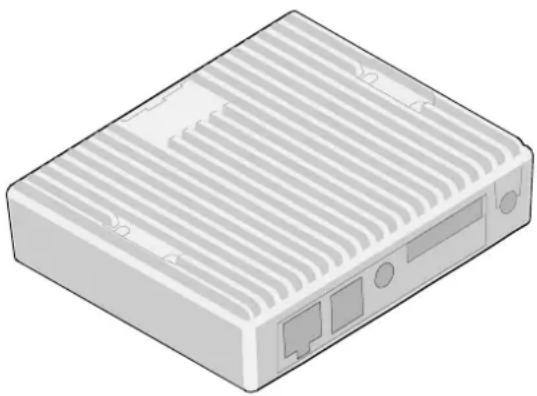
natural_image
Illustration of a gray rectangular electronic device with ventilation slots and ports (no text or symbols)6.1.1 Including attached functions
- power supply filter
- voltage regulators
- processor controlled battery charger
- controls for external relays (AL, MUTE)
- handsfree amplifiers
- PC/AUX-connector
- handset connector
- integrated branching unit
6.1.2 Connector descriptions
6.1.2.1 EXTVB V100
1 M U T E car radio mute max. 500 mA
2 G N D speaker ground
3 GND ground
4 AL external alarm control max 500 mA
5 HF_SPKR HF-speaker 4 ohm 1.5 W
6 V B A operating voltage 10.8 - 18 V max 3A
6.1.2.2 HANDSET V102:
1 HS_ERP Audio signal for earphone + HOOK-signal
2 E G N D
3 MGND
4 HS_MIC HS Microphone signal to carbox
6.1.2.3 EXTMIC V103
1 GND ground
2 NC not connected
3 HFMIC HF Microphone signal to carbox
4 GND ground
5 NC not connected
6.1.2.4 PC/AUX V104
1 NC not connected
2 NC not connected
3 9V PC 9V 500 mA
4 NC not connected
5 AUX_MIC audio in 200 mV RMS
6 GND ground
7 GND ground
8 AUX_ERP audio out 100 mV RMS
9 CADET external target +3.3 V
10 I2CINT I²C interrupt
11 SCL I²C clock
12 SDA I²C data
13 TXD RS 232
14 RXD RS 232
15 EXTIO extra-IO
16 NC not connected
6.1.2.5 BOX V105
1 V_CHARGE battery charging current max. 1.1A / 8V
2 V_CHARGE battery charging current
3 V-BAT battery voltage
4 NC not connected
5 EXTMIC external microphone signal 200 mV RMS
6 P_GND ground
7 GND ground
8 EXTERP external ERP-signal 100 mV RMS
9 CADET external target +3.3 V
10 I2CINT I²C interrupt
11 SCL I²C clock
12 SDA I²C data
13 TXD RS 232
14 RXD RS 232
15 EXTIO extra-IO
16 CHGCONT charging control from the processor
6.1.2.6 Operation
Operating voltage is fed to pin EXTVB/6. L100/C104 filters the power supply and D100 limits any voltage peaks. When the radio telephone is placed in its handset, a voltage is fed through the BOX/3 pin which triggers Q201 and Q200 open.
The regulator I200 feeds +9V to the audio stage and PC-connector pin 3 and I210 feeds +3.3 V to other functions. External relay drivers Q231 and Q241 are controlled by I²C I/O-expander I220.
The HF microphone gets its bias voltage through resistors R330 and R331. I330 serves as the microphone amplifier and as a low-pass filter with a border frequency of 3.3 kHz.
The analog switch I320 connects the HF microphone or HS microphone signal to the EXTMIC-line.
The analog switch I322, controlled by AUX_MODE selects either microphone (HS or HF) or external signal source AUX_MIC to be connected to EXTMIC signal pin.
The analog switch I430 connects audio signal to handset earphone or HF-speaker.
The analog switch I431 connects audio signal to connector PC/AUX/8 or to HS erp / HF spkr.
When audio power amplifiers I410 and I460 are not in use, they are in mute-mode.
6.1.3 Parts list OW1951
OW1951
CODE PART DESCRIPT. VALUE MANUF. TYPE
| CD0101 C100 | SMD capasitor | 100 pF 5% 50 V NP0 | Philips | |||
| CD0222 C101 | SMD capasitor | 2.2 nF 5% 50 V NP0 | Philips | |||
| CD0223 C102 | SMD capasitor | 22 nF 10% 50 V X7R | Philips | |||
| CD0223 C103 | SMD capasitor | 22 nF 10% 50 V X7R | Philips | |||
| CE0109 | C104 | Al-elko | 1000uF/40V 12.5x30mm | Philips | 2222 021 17102 | |
| CD0222 C105 | SMD capasitor | 2.2 nF 5% 50 V NP0 | Philips | |||
| CD0222 C106 | SMD capasitor | 2.2 nF 5% 50 V NP0 | Philips | |||
| CD0102 | C110 | SMD capasitor | 1 nF 5 % NP0 | Philips | ||
| CD0102 | C111 | SMD capasitor | 1 nF 5 % NP0 | Philips | ||
| CD0471 | C112 | SMD capasitor | 470 pF 5% 50 V NP0 | Philips | ||
| CD0101 C120 | SMD capasitor | 100 pF 5% 50 V NP0 | Philips | |||
| CD0101 C121 | SMD capasitor | 100 pF 5% 50 V NP0 | Philips | |||
| CD0101 C122 | SMD capasitor | 100 pF 5% 50 V NP0 | Philips | |||
| CD0101 C123 | SMD capasitor | 100 pF 5% 50 V NP0 | Philips | |||
| CD0101 C124 | SMD capasitor | 100 pF 5% 50 V NP0 | Philips | |||
| CD0101 C125 | SMD capasitor | 100 pF 5% 50 V NP0 | Philips | |||
| CD0101 C130 | SMD capasitor | 100 pF 5% 50 V NP0 | Philips | |||
| CD0101 C131 | SMD capasitor | 100 pF 5% 50 V NP0 | Philips | |||
| CD0101 C132 | SMD capasitor | 100 pF 5% 50 V NP0 | Philips | |||
| CD0101 C133 | SMD capasitor | 100 pF 5% 50 V NP0 | Philips | |||
| CD0101 C134 | SMD capasitor | 100 pF 5% 50 V NP0 | Philips | |||
| CD0101 C135 | SMD capasitor | 100 pF 5% 50 V NP0 | Philips | |||
| CD0101 C136 | SMD capasitor | 100 pF 5% 50 V NP0 | Philips | |||
| CD0101 C137 | SMD capasitor | 100 pF 5% 50 V NP0 | Philips | |||
| CD0101 C138 | SMD capasitor | 100 pF 5% 50 V NP0 | Philips | |||
| CD0101 C139 | SMD capasitor | 100 pF 5% 50 V NP0 | Philips | |||
| CD0101 C140 | SMD capasitor | 100 pF 5% 50 V NP0 | Philips | |||
| CD0101 C141 | SMD capasitor | 100 pF 5% 50 V NP0 | Philips | |||
| CD0223 C200 | SMD capasitor | 22 nF 10% 50 V X7R | Philips | |||
| CD0223 C201 | SMD capasitor | 22 nF 10% 50 V X7R | Philips | |||
| CU1106 | C202 | SMD tantal | 10uF/16V | AVX | TAJB106M016R | |
| CD0104 | C203 | SMD capasitor | 100 nF 10% 50 V X7R | Philips | ||
| CD0104 | C204 | SMD capasitor | 100 nF 10% 50 V X7R | Philips | ||
| CD0223 C205 | SMD capasitor | 22 nF 10% 50 V X7R | Philips | |||
| CD0123 | C206 | SMD capasitor | 12nF 10% 50V X7R | Philips | ||
| CD0473 C207 | SMD capasitor | 47 nF 10% 50 V X7R | Philips | |||
| CD0473 C208 | SMD capasitor | 47 nF 10% 50 V X7R | Philips | |||
| CD0223 C210 | SMD capasitor | 22 nF 10% 50 V X7R | Philips | |||
| CU1106 | C211 | SMD tantal | 10uF/16V | AVX | TAJB106M016R | |
| CD0103 C212 | SMD capasitor | 10 nF 10% 50 V X7R | Philips | |||
| CU1106 | C213 | SMD tantal | 10uF/16V | AVX | TAJB106M016R | |
| CD0223 C220 | SMD capasitor | 22 nF 10% 50 V X7R | Philips | |||
| CD0222 C230 | SMD capasitor | 2.2 nF 5% 50 V NP0 | Philips | |||
| CD0222 C240 | SMD capasitor | 2.2 nF 5% 50 V NP0 | Philips | |||
| CU0105 | C300 | SMD tantal | 1uF/16V 20% 3.2x1.6mm | Matsushita | ECST1CY 105R | |
| CD0223 C301 | SMD capasitor | 22 nF 10% 50 V X7R | Philips | |||
| CD0222 C302 | SMD capasitor | 2.2 nF 5% 50 V NP0 | Philips | |||
| CD0223 C303 | SMD capasitor | 22 nF 10% 50 V X7R | Philips | |||
| CD0680 C304 | SMD capasitor | 68 pF 5% 50 V NP0 | Philips | |||
| CD0471 C305 | SMD capasitor | 470 pF 5% 50 V NP0 | Philips | |||
| CD0270 | C306 | SMD capasitor | 27pF 5% 50V NPO | Philips | ||
| CD0270 | C307 | SMD capasitor | 27pF 5% 50V NPO | Philips | ||
| CD0101 C320 | SMD capasitor | 100 pF 5% 50 V NP0 | Philips | |||
| CD0223 C321 | SMD capasitor | 22 nF 10% 50 V X7R | Philips | |||
| CH0105 | C322 | SMD capasitor | 1uF/-20/+80%/16V | TaiyoYuden | EMK212 F105Z00T | |
| CODE | PART | DESCRPT. | VALUE | MANUF. | TYPE | |
| CD0471 C323 | SMD capasitor | 470 pF 5% 50 V NP0 | Philips | |||
| CD0270 C324 | SMD capasitor | 27pF 5% 50V NPO | Philips | |||
| CD0270 C325 | SMD capasitor | 27pF 5% 50V NPO | Philips | |||
| CD0270 C326 | SMD capasitor | 27pF 5% 50V NPO | Philips | |||
| CD0270 C327 | SMD capasitor | 27pF 5% 50V NPO | Philips | |||
| CD0270 C328 | SMD capasitor | 27pF 5% 50V NPO | Philips | |||
| CU0105 C330 | SMD tantal | 1uF/16V 20% 3.2x1.6mm | Matsushita ECST1CY 105R | |||
| CD0104 C331 | SMD capasitor | 100 nF 10% 50 V X7R | Philips | |||
| CD0222 C332 | SMD capasitor | 2.2 nF 5% 50 V NP0 | Philips | |||
| CD0680 C333 | SMD capasitor | 68 pF 5% 50 V NP0 | Philips | |||
| CD0223 C334 | SMD capasitor | 22 nF 10% 50 V X7R | Philips | |||
| CD0221 C335 | SMD capasitor | 220 pF 5% 50 V NP0 | Philips | |||
| CD0270 C336 | SMD capasitor | 27pF 5% 50V NPO | Philips | |||
| CD0270 C337 | SMD capasitor | 27pF 5% 50V NPO | Philips | |||
| CU0105 C340 | SMD tantal | 1uF/16V 20% 3.2x1.6mm | Matsushita ECST1CY 105R | |||
| CD0223 C401 | SMD capasitor | 22 nF 10% 50 V X7R | Philips | |||
| CD0471 C402 | SMD capasitor | 470 pF 5% 50 V NP0 | Philips | |||
| CD0221 C405 | SMD capasitor | 220 pF 5% 50 V NP0 | Philips | |||
| CU0226 | C411 | SMD tantal | 22uF/16V 10% 7.3x4.3mm | Kyocera | TAJD226K016R | |
| CU0226 | C413 | SMD tantal | 22uF/16V 10% 7.3x4.3mm | Kyocera | TAJD226K016R | |
| CD0104 C414 | SMD capasitor | 100 nF 10% 50 V X7R | Philips | |||
| CE0476 | C415 | Al elko | 47 uF/25 V 7x7mm | Philips | 2222 097 56479 | |
| CD0104 C416 | SMD capasitor | 100 nF 10% 50 V X7R | Philips | |||
| CU1106 | C417 | SMD tantal | 10uF/16V | AVX | TAJB106M016R | |
| CU0225 | C418 | SMD tantal | 2.2uF/16V 20% 4.7x2.6mm | Matsushita | ECST1CB 225R | |
| CH0105 | C419 | SMD capasitor | 1uF/-20/+80%/16V | TaiyoYuden | EMK212 F105Z00T | |
| CH0105 | C420 | SMD capasitor | 1uF/-20/+80%/16V | TaiyoYuden | EMK212 F105Z00T | |
| CH0105 | C421 | SMD capasitor | 1uF/-20/+80%/16V | TaiyoYuden | EMK212 F105Z00T | |
| CD0221 C422 | SMD capasitor | 220 pF 5% 50 V NP0 | Philips | |||
| CD0103 C423 | SMD capasitor | 10 nF 10% 50 V X7R | Philips | |||
| CD0222 C424 | SMD capasitor | 2.2 nF 5% 50 V NP0 | Philips | |||
| CH0105 | C430 | SMD capasitor | 1uF/-20/+80%/16V | TaiyoYuden | EMK212 F105Z00T | |
| CH0105 | C431 | SMD capasitor | 1uF/-20/+80%/16V | TaiyoYuden | EMK212 F105Z00T | |
| CD0270 C432 | SMD capasitor | 27pF 5% 50V NPO | Philips | |||
| CD0270 C433 | SMD capasitor | 27pF 5% 50V NPO | Philips | |||
| CD0101 C440 | SMD capasitor | 100 pF 5% 50 V NP0 | Philips | |||
| CD0104 C441 | SMD capasitor | 100 nF 10% 50 V X7R | Philips | |||
| CD0220 C443 | SMD capasitor | 22 pF 5% 50 V NP0 | Philips | |||
| CD0220 C444 | SMD capasitor | 22 pF 5% 50 V NP0 | Philips | |||
| CH0105 | C460 | SMD capasitor | 1uF/-20/+80%/16V | TaiyoYuden | EMK212 F105Z00T | |
| CH0105 | C461 | SMD capasitor | 1uF/-20/+80%/16V | TaiyoYuden | EMK212 F105Z00T | |
| CU0225 | C462 | SMD tantal | 2.2uF/16V 20% 4.7x2.6mm | Matsushita | ECST1CB 225R | |
| CU1106 | C463 | SMD tantal | 10uF/16V | AVX | TAJB106M016R | |
| CD0104 C464 | SMD capasitor | 100 nF 10% 50 V X7R | Philips | |||
| CE0337 | C465 | Al elko | 330uF/16V 20% 15x8mm | Philips | 222213555331 | |
| CE0476 | C466 | Al elko | 47 uF/25 V 7x7mm | Philips | 2222 097 56479 | |
| CE0337 | C467 | Al elko | 330uF/16V 20% 15x8mm | Philips | 222213555331 | |
| CD0104 C468 | SMD capasitor | 100 nF 10% 50 V X7R | Philips | |||
| CD0103 C469 | SMD capasitor | 10 nF 10% 50 V X7R | Philips | |||
| CD0103 C470 | SMD capasitor | 10 nF 10% 50 V X7R | Philips | |||
| CD0103 C471 | SMD capasitor | 10 nF 10% 50 V X7R | Philips | |||
| CD0471 C473 | SMD capasitor | 470 pF 5% 50 V NP0 | Philips | |||
| CU0105 C480 | SMD tantal | 1uF/16V 20% 3.2x1.6mm | Matsushita ECST1CY 105R | |||
| CE3106 | C501 | Al-elko | 10uF/63V -+20% 11x5mm | Panasonic | ECEA1JU100 | |
| CD0101 C510 | SMD capasitor | 100 pF 5% 50 V NP0 | Philips | |||
| CD0471 | C511 | SMD capasitor | 470 pF 5% 50 V NP0 | Philips | ||
| CD0104 C512 | SMD capasitor | 100 nF 10% 50 V X7R | Philips | |||
| CD0104 C513 | SMD capasitor | 100 nF 10% 50 V X7R | Philips | |||
| CP0155 | C514 | Polyester cap | 1.5uF 20% 50V | Roeredstei | MKT 1826-515/05 | |
| CP0155 | C515 | Polyester cap | 1.5uF 20% 50V | Roeredstei | MKT 1826-515/05 | |
| CD0101 C516 | SMD capasitor | 100 pF 5% 50 V NP0 | Philips | |||
| CE0476 C520 | Al elko | 47 uF/25 V 7x7mm | Philips 2222 097 56479 | |||
| CD0101 C521 | SMD capasitor | 100 pF 5% 50 V NP0 | Philips | |||
| CD0104 C522 | SMD capasitor | 100 nF 10% 50 V X7R | Philips | |||
| CP0155 C530 | Polyester cap | 1.5uF 20% 50V | Roeredstei MKT 1826-515/05 | |||
| CE3106 C531 | Al-elko | 10uF/63V -+20% 11x5mm | Panasonic ECEA1JU100 | |||
| CE0127 | C534 | Al elko | 120uF/16V 6.3x11,5 | NCC | SXE16VB120MJF11 | |
| CE0476 C535 | Al elko | 47 uF/25 V 7x7mm | Philips 2222 097 56479 | |||
| CD0103 C540 | SMD capasitor | 10 nF 10% 50 V X7R | Philips | |||
| CD0101 C541 | SMD capasitor | 100 pF 5% 50 V NP0 | Philips | |||
| CD0103 C550 | SMD capasitor | 10 nF 10% 50 V X7R | Philips | |||
| CD0101 C551 | SMD capasitor | 100 pF 5% 50 V NP0 | Philips | |||
| CE3106 C560 | Al-elko | 10uF/63V -+20% 11x5mm | Panasonic ECEA1JU100 | |||
| CD0103 C561 | SMD capasitor | 10 nF 10% 50 V X7R | Philips | |||
| CH0105 | C580 | SMD capasitor | 1uF/-20/+80%/16V | TaiyoYuden | EMK212 F105Z00T | |
| DT0033 | D100 | SMD Transient filter | 33V/1500W | SGS-Thomso | SM15T33A | |
| DZ0180 | D200 | SMD zener | 18V 5% 300mW | Philips | BZX84C18 | |
| DT0033 | D230 | SMD Transient filter | 33V/1500W | SGS-Thomso | SM15T33A | |
| DT0033 | D240 | SMD Transient filter | 33V/1500W | SGS-Thomso | SM15T33A | |
| DS0056 | D510 | SMD diode pair | 70V/100mA common anode | Philips | BAW 56 | |
| DY0045 | D530 | Shottky diode | 45V/10A | I&R | 10TQ045 | |
| DS0056 | D531 | SMD diode pair | 70V/100mA common anode | Philips | BAW 56 | |
| DT0008 | D533 | SMD Trans zorb | 8V/44A/600W | Motorola | 1SMB8.0AT3 | |
| DS0099 | D560 | SMD diode | 70 V 200 mA | Philips | BAV 99 | |
| DS0099 | D570 | SMD diode | 70 V 200 mA | Philips | BAV 99 | |
| DS0056 | D580 | SMD diode pair | 70V/100mA common anode | Philips | BAW 56 | |
| IR1317 | I200 | Adjustable regulator | 1.2-37V 1.5A | National S | LM317AT | |
| IR2952 | I210 | Regulator | 100mA 5V adj. 0.5% | Micrel | MIC2951-02BM | |
| 000000 | I211 | *** EI KOODATTU VARAS-TOON *** | ||||
| II8574 | I220 | 8 bit I/O | I2C | Philips | PCF8574T | |
| IA7550 | I300 | Single op.amp. | Toshiba | TA 75S01F-TE85L | ||
| IC0453 | I320 | SMD 2x multip./demultip. | Toshiba | TC4W53F-TE 12L | ||
| IA7550 | I321 | Single op.amp. | Toshiba | TA 75S01F-TE85L | ||
| IC0453 | I322 | SMD 2x multip./demultip. | Toshiba | TC4W53F-TE 12L | ||
| IA7550 | I330 | Single op.amp. | Toshiba | TA 75S01F-TE85L | ||
| IA1905 | I410 | Audio power amplifier | 5W/20V/4ohm | SGS-Thomso | TDA1905 | |
| IC0453 | I430 | SMD 2x multip./demultip. | Toshiba | TC4W53F-TE 12L | ||
| IC0453 | I431 | SMD 2x multip./demultip. | Toshiba | TC4W53F-TE 12L | ||
| IA7550 | I440 | Single op.amp. | Toshiba | TA 75S01F-TE85L | ||
| IA1905 | I460 | Audio power amplifier | 5W/20V/4ohm | SGS-Thomso | TDA1905 | |
| IX0555 | I520 | Timer | Pipolar | Philips | SA555D | |
| IO0172 | I521 | Optocoupler | Siemens | CNY17-2 | ||
| IA2902 | I540 | Low power quar op-amp. | NationalSe | LM2902M | ||
| LA3117 | L100 | Inductor | 110uH 3A R=0.07ohm | Fuji | SL03B111BE | |
| LF0102 | L400 | SMD EMIFIL | Murata | BLM21A102FPT | ||
| LF0102 | L440 | SMD EMIFIL | Murata | BLM21A102FPT | ||
| LF0101 | L460 | SMD line filter | TaiyoYuden | FBM3216HS101T | ||
| LF0101 | L461 | SMD line filter | TaiyoYuden | FBM3216HS101T | ||
| LF0101 | L462 | SMD line filter | TaiyoYuden | FBM3216HS101T | ||
| LA1391 | L501 | Choke horizontal | 90uH +-10% | Trafocomp | TJ1391 | |
| LA1391 | L530 | Choke horizontal | 90uH +-10% | Trafocomp | TJ1391 | |
| QF9024 | Q200 | SMD p-channel FET | 60V 9A Rds=0.28 | I&R | IRFR9024TR | |
| QF7002 | Q201 | SMD n-channel FET | 60V 0.115A Rds7.5 | Siliconix | 2N7002-T1 | |
| QSB858 | Q230 | SMD transistor | PNP 0.1A/30V F<10dB | Philips | BC 858 B | |
| QS1054 | Q231 | SMD transistor | NPN 1.5A/45V | Philips | BCP 54 | |
| CODE | PART | DESCRIPT. | VALUE | MANUF. | TYPE | |
| QSB858 Q240 | SMD transistor | PNP 0.1A/30V F<10dB | Philips | BC 858 B | ||
| QS1054 Q241 | SMD transistor | NPN 1.5A/45V | Philips | BCP 54 | ||
| QSB848 Q400 | SMD transistor | NPN 0.1A/30V F=2dB | Philips | BC 848 B | ||
| QF7002 Q401 | SMD n-channel FET | 60V 0.115A Rds7.5 | Siliconix | 2N7002-T1 | ||
| QSB848 Q402 | SMD transistor | NPN 0.1A/30V F=2dB | Philips | BC 848 B | ||
| QSB848 Q450 | SMD transistor | NPN 0.1A/30V F=2dB | Philips | BC 848 B | ||
| QSB848 Q510 | SMD transistor | NPN 0.1A/30V F=2dB | Philips | BC 848 B | ||
| QSB858 Q511 | SMD transistor | PNP 0.1A/30V F<10dB | Philips | BC 858 B | ||
| QF7002 Q512 | SMD n-channel FET | 60V 0.115A Rds7.5 | Siliconix | 2N7002-T1 | ||
| QF0124 | Q513 | N-channel fet | 55V/17A Rds=0.07 | I&R | IRFZ24N | |
| QF0124 | Q514 | N-channel fet | 55V/17A Rds=0.07 | I&R | IRFZ24N | |
| QSB848 Q560 | SMD transistor | NPN 0.1A/30V F=2dB | Philips | BC 848 B | ||
| QSB848 Q561 | SMD transistor | NPN 0.1A/30V F=2dB | Philips | BC 848 B | ||
| QSB858 Q570 | SMD transistor | PNP 0.1A/30V F<10dB | Philips | BC 858 B | ||
| QSB858 Q571 | SMD transistor | PNP 0.1A/30V F<10dB | Philips | BC 858 B | ||
| RD0101 | R100 | SMD resistor | 100 R 5% 0.125 W | Kamaya | ||
| RD0101 | R101 | SMD resistor | 100 R 5% 0.125 W | Kamaya | ||
| RD0224 | R200 | SMD resistor | 220 k 5% 0.125 W | Kamaya | ||
| RD0103 | R201 | SMD resistor | 10 k 5% 0.125 W | Kamaya | ||
| RD0104 | R202 | SMD resistor | 100 k 5% 0.125 W | Kamaya | ||
| RD0103 | R203 | SMD resistor | 10 k 5% 0.125 W | Kamaya | ||
| RD0152 | R204 | SMD resistor | 1.5 k 5% 0.125 W | Kamaya | ||
| RD1241 | R205 | SMD resistor | 240R 1% 0.125 W | Kamaya | RGC 1/10 | |
| RD0103 | R210 | SMD resistor | 10 k 5% 0.125 W | Kamaya | ||
| RD1123 | R211 | SMD resistor | 12 k 1% 0.125 W | KOA | ||
| RD1682 | R212 | SMD resistor | 6.8 k 1% 0.125 W | KOA | ||
| RD0101 | R220 | SMD resistor | 100 R 5% 0.125 W | Kamaya | ||
| RD0101 | R221 | SMD resistor | 100 R 5% 0.125 W | Kamaya | ||
| RD0472 | R230 | SMD resistor | 4.7 k 5% 0.125 W | Kamaya | ||
| RD0561 | R231 | SMD resistor | 560 R 5% 0.125 W | Kamaya | ||
| RD0103 | R232 | SMD resistor | 10 k 5% 0.125 W | Kamaya | ||
| RD0472 | R240 | SMD resistor | 4.7 k 5% 0.125 W | Kamaya | ||
| RD0561 | R241 | SMD resistor | 560 R 5% 0.125 W | Kamaya | ||
| RD0103 | R242 | SMD resistor | 10 k 5% 0.125 W | Kamaya | ||
| RD0222 | R300 | SMD resistor | 2.2 k 5% 0.125 W | Kamaya | ||
| RD0102 | R301 | SMD resistor | 1 k 5% 0.125 W | Kamaya | ||
| RD0223 | R302 | SMD resistor | 22 k 5% 0.125 W | Kamaya | ||
| RD0224 | R303 | SMD resistor | 220 k 5% 0.125 W | Kamaya | ||
| RD0153 | R304 | SMD resistor | 15 k 5% 0.125 W | Kamaya | ||
| RD0103 | R305 | SMD resistor | 10 k 5% 0.125 W | Kamaya | ||
| RD0103 | R306 | SMD resistor | 10 k 5% 0.125 W | Kamaya | ||
| RD0333 | R307 | SMD resistor | 33 k 5% 0.125 W | Kamaya | ||
| RD0224 | R320 | SMD resistor | 220 k 5% 0.125 W | Kamaya | ||
| RD0103 | R321 | SMD resistor | 10 k 5% 0.125 W | Kamaya | ||
| RD0224 | R322 | SMD resistor | 220 k 5% 0.125 W | Kamaya | ||
| RD0103 | R323 | SMD resistor | 10 k 5% 0.125 W | Kamaya | ||
| RD0102 | R324 | SMD resistor | 1 k 5% 0.125 W | Kamaya | ||
| RD0222 | R330 | SMD resistor | 2.2 k 5% 0.125 W | Kamaya | ||
| RD0102 | R331 | SMD resistor | 1 k 5% 0.125 W | Kamaya | ||
| RD0183 | R332 | SMD resistor | 18 k 5% 0.125 W | Kamaya | ||
| RD0224 | R333 | SMD resistor | 220 k 5% 0.125 W | Kamaya | ||
| RD0153 | R334 | SMD resistor | 15 k 5% 0.125 W | Kamaya | ||
| RD0103 | R335 | SMD resistor | 10 k 5% 0.125 W | Kamaya | ||
| RD0103 | R336 | SMD resistor | 10 k 5% 0.125 W | Kamaya | ||
| RD0333 | R337 | SMD resistor | 33 k 5% 0.125 W | Kamaya | ||
| RD0104 | R340 | SMD resistor | 100 k 5% 0.125 W | Kamaya | ||
| RD0473 | R341 | SMD resistor | 47 k 5% 0.125 W | Kamaya | ||
| RD0473 | R400 | SMD resistor | 47 k 5% 0.125 W | Kamaya | ||
| RD0104 | R401 | SMD resistor | 100 k 5% 0.125 W | Kamaya | ||
| RD0563 | R402 | SMD resistor | 56 k 5% 0.125 W | Kamaya | ||
| CODE | PART | DESCRPT. | VALUE | MANUF. | TYPE | |
| RD0563 R403 | SMD resistor | 56 k 5% 0.125 W | Kamaya | |||
| RD0333 R404 | SMD resistor | 33 k 5% 0.125 W | Kamaya | |||
| RD0103 R405 | SMD resistor | 10 k 5% 0.125 W | Kamaya | |||
| RD0222 R407 | SMD resistor | 2.2 k 5% 0.125 W | Kamaya | |||
| LF0102 R408 | SMD EMIFIL | Murata BLM21A102FPT | ||||
| LF0102 R409 | SMD EMIFIL | Murata BLM21A102FPT | ||||
| RD0101 R410 | SMD resistor | 100 R 5% 0.125 W | Kamaya | |||
| RD0103 R411 | SMD resistor | 10 k 5% 0.125 W | Kamaya | |||
| RD0339 R412 | SMD resistor | 3.3 R 5% 0.125 W | Kamaya | |||
| RD0561 R413 | SMD resistor | 560 R 5% 0.125 W | Kamaya | |||
| RD0102 R414 | SMD resistor | 1 k 5% 0.125 W | Kamaya | |||
| RD0273 R415 | SMD resistor | 27 k 5% 0.125 W | Kamaya | |||
| RD0104 R416 | SMD resistor | 100 k 5% 0.125 W | Kamaya | |||
| RD0333 R430 | SMD resistor | 33 k 5% 0.125 W | Kamaya | |||
| RD0333 R431 | SMD resistor | 33 k 5% 0.125 W | Kamaya | |||
| RD0333 R432 | SMD resistor | 33 k 5% 0.125 W | Kamaya | |||
| RD0104 R440 | SMD resistor | 100 k 5% 0.125 W | Kamaya | |||
| RD0104 R441 | SMD resistor | 100 k 5% 0.125 W | Kamaya | |||
| RD0473 R442 | SMD resistor | 47 k 5% 0.125 W | Kamaya | |||
| RD0103 R443 | SMD resistor | 10 k 5% 0.125 W | Kamaya | |||
| RD0473 R450 | SMD resistor | 47 k 5% 0.125 W | Kamaya | |||
| RD0103 R451 | SMD resistor | 10 k 5% 0.125 W | Kamaya | |||
| RD0223 R460 | SMD resistor | 22 k 5% 0.125 W | Kamaya | |||
| RD0102 R461 | SMD resistor | 1 k 5% 0.125 W | Kamaya | |||
| RD0223 R462 | SMD resistor | 22 k 5% 0.125 W | Kamaya | |||
| RD0101 R463 | SMD resistor | 100 R 5% 0.125 W | Kamaya | |||
| RD0103 R464 | SMD resistor | 10 k 5% 0.125 W | Kamaya | |||
| RD0561 R465 | SMD resistor | 560 R 5% 0.125 W | Kamaya | |||
| RD0339 R466 | SMD resistor | 3.3 R 5% 0.125 W | Kamaya | |||
| RD0104 R480 | SMD resistor | 100 k 5% 0.125 W | Kamaya | |||
| RD0473 R481 | SMD resistor | 47 k 5% 0.125 W | Kamaya | |||
| AF1101 | R501 | SMT chip fuse | 1A/32V | Bussmann | TR3216FF-1A | |
| RD0332 R510 | SMD resistor | 3.3 k 5% 0.125 W | Kamaya | |||
| RD0103 R511 | SMD resistor | 10 k 5% 0.125 W | Kamaya | |||
| RD0683 R520 | SMD resistor | 68 k 5% 0.125 W | Kamaya | |||
| RD0560 R530 | SMD resistor | 56 R 5% 0.125 W | Kamaya | |||
| RD0471 R540 | SMD resistor | 470 R 5% 0.125 W | Kamaya | |||
| RD0103 R541 | SMD resistor | 10 k 5% 0.125 W | Kamaya | |||
| RD0223 R542 | SMD resistor | 22 k 5% 0.125 W | Kamaya | |||
| RD0333 R543 | SMD resistor | 33 k 5% 0.125 W | Kamaya | |||
| RC0189 R544 | SMD resistor | 1R8 5% 0.125 W | Kamaya | |||
| RC0189 R545 | SMD resistor | 1R8 5% 0.125 W | Kamaya | |||
| RC0189 R546 | SMD resistor | 1R8 5% 0.125 W | Kamaya | |||
| RD0333 R547 | SMD resistor | 33 k 5% 0.125 W | Kamaya | |||
| RD0185 | R548 | SMD resistor | 1.8 M 5% 0.125 W | Kamaya | ||
| RD0104 R549 | SMD resistor | 100 k 5% 0.125 W | Kamaya | |||
| RD0333 R550 | SMD resistor | 33 k 5% 0.125 W | Kamaya | |||
| RD0473 R551 | SMD resistor | 47 k 5% 0.125 W | Kamaya | |||
| RD0333 R552 | SMD resistor | 33 k 5% 0.125 W | Kamaya | |||
| RD0393 R553 | SMD resistor | 39 k 5% 0.125 W | Kamaya | |||
| RD0333 R554 | SMD resistor | 33 k 5% 0.125 W | Kamaya | |||
| RD0105 | R555 | SMD resistor | 1 M 5% 0.125 W | Kamaya | ||
| RD0103 R556 | SMD resistor | 10 k 5% 0.125 W | Kamaya | |||
| RD0185 | R557 | SMD resistor | 1.8 M 5% 0.125 W | Kamaya | ||
| RD0104 R560 | SMD resistor | 100 k 5% 0.125 W | Kamaya | |||
| RD0333 R561 | SMD resistor | 33 k 5% 0.125 W | Kamaya | |||
| RD0223 R562 | SMD resistor | 22 k 5% 0.125 W | Kamaya | |||
| RD0103 R570 | SMD resistor | 10 k 5% 0.125 W | Kamaya | |||
| RD0103 R571 | SMD resistor | 10 k 5% 0.125 W | Kamaya | |||
| RD0185 | R572 | SMD resistor | 1.8 M 5% 0.125 W | Kamaya | ||
| CODE | PART | DESCRIPT. | VALUE | MANUF. | TYPE | |
| RD0333 R573 | SMD resistor | 33 k 5% 0.125 W | Kamaya | |||
| RD0103 R574 | SMD resistor | 10 k 5% 0.125 W | Kamaya | |||
| RD0103 R575 | SMD resistor | 10 k 5% 0.125 W | Kamaya | |||
| RD0153 R576 | SMD resistor | 15 k 5% 0.125 W | Kamaya | |||
| RD0224 R577 | SMD resistor | 220 k 5% 0.125 W | Kamaya | |||
| RD0104 R578 | SMD resistor | 100 k 5% 0.125 W | Kamaya | |||
| RD0102 R579 | SMD resistor | 1 k 5% 0.125 W | Kamaya | |||
| RD0104 R580 | SMD resistor | 100 k 5% 0.125 W | Kamaya | |||
| RD0564 R581 | SMD resistor | 560 k 5% 0.125 W | Kamaya | |||
| RD0104 R582 | SMD resistor | 100 k 5% 0.125 W | Kamaya | |||
| RD0564 R583 | SMD resistor | 560 k 5% 0.125 W | Kamaya | |||
| RD0102 R584 | SMD resistor | 1 k 5% 0.125 W | Kamaya | |||
| RD0332 R585 | SMD resistor | 3.3 k 5% 0.125 W | Kamaya | |||
| RD0221 R586 | SMD resistor | 220 R 5% 0.125 W | Kamaya | |||
| LT0005 T530 | Transformer | |||||
| VW0106 | V100 | Connector | male 6-pin | Molex | 5569-06-A1 | |
| VN0003 | V102 | Modular jack | 4-pin | AMP | 215875-1 | |
| VN0005 | V103 | Stereo jack | 3.5mm | Zupami | 3.5 EJW-C386 | |
| VM0342 | V104 | SMD system connector | 16 pin | AMP | 338269-1 | |
| VM0116 | V105 | Contact strip angle | 2x8 | NB-electr. | H4-6-16G | |
| LF0061 | X100 | SMD EMI suppression filt | 4700pF/2A 1.6x6.8mm | Murata | NFM61R30T472 | |
| LF0061 | X101 | SMD EMI suppression filt | 4700pF/2A 1.6x6.8mm | Murata | NFM61R30T472 | |
Last
update
05.03.98
The Top Side Layout PW1951A1
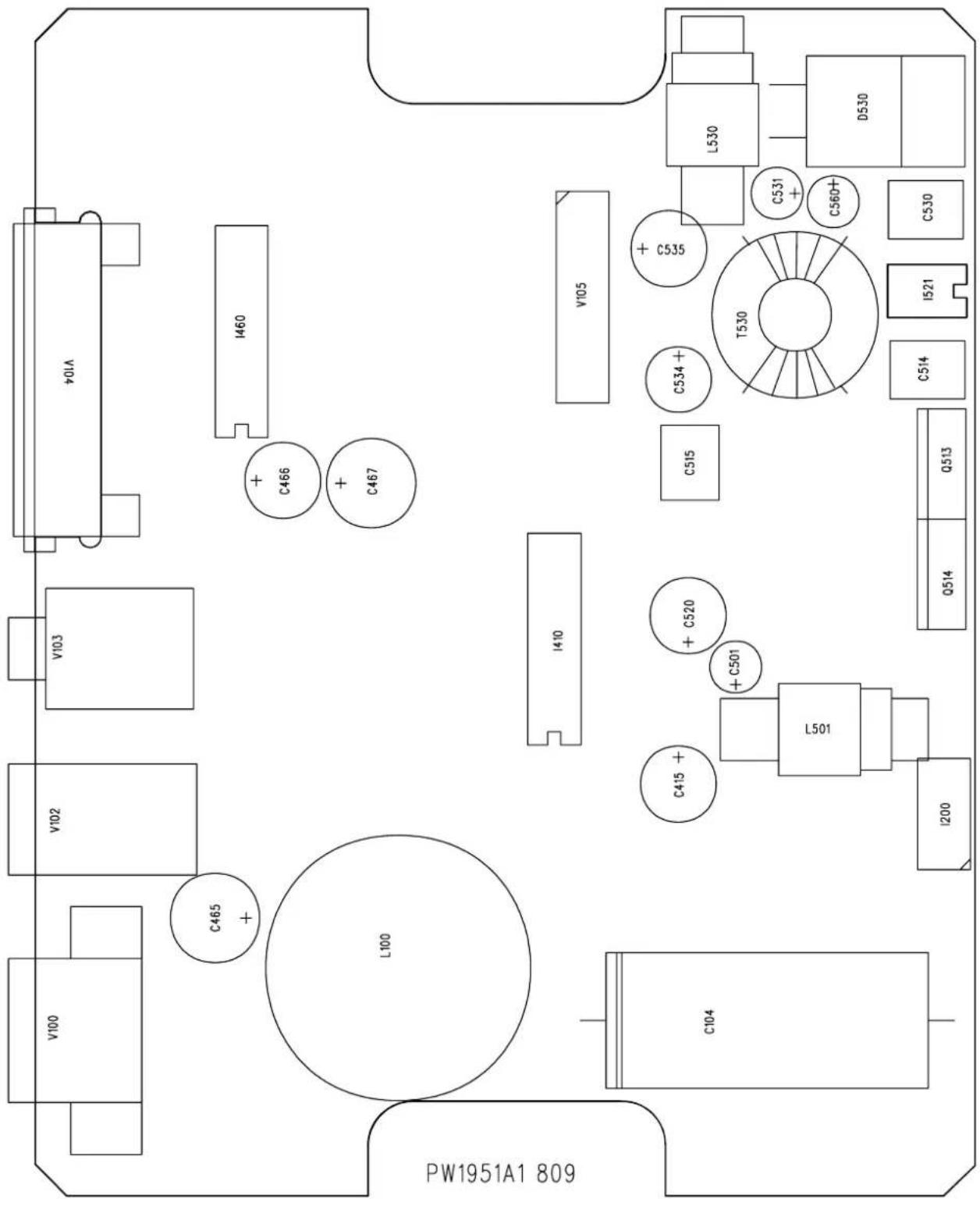
The Bottom Side Layout PW1951A1
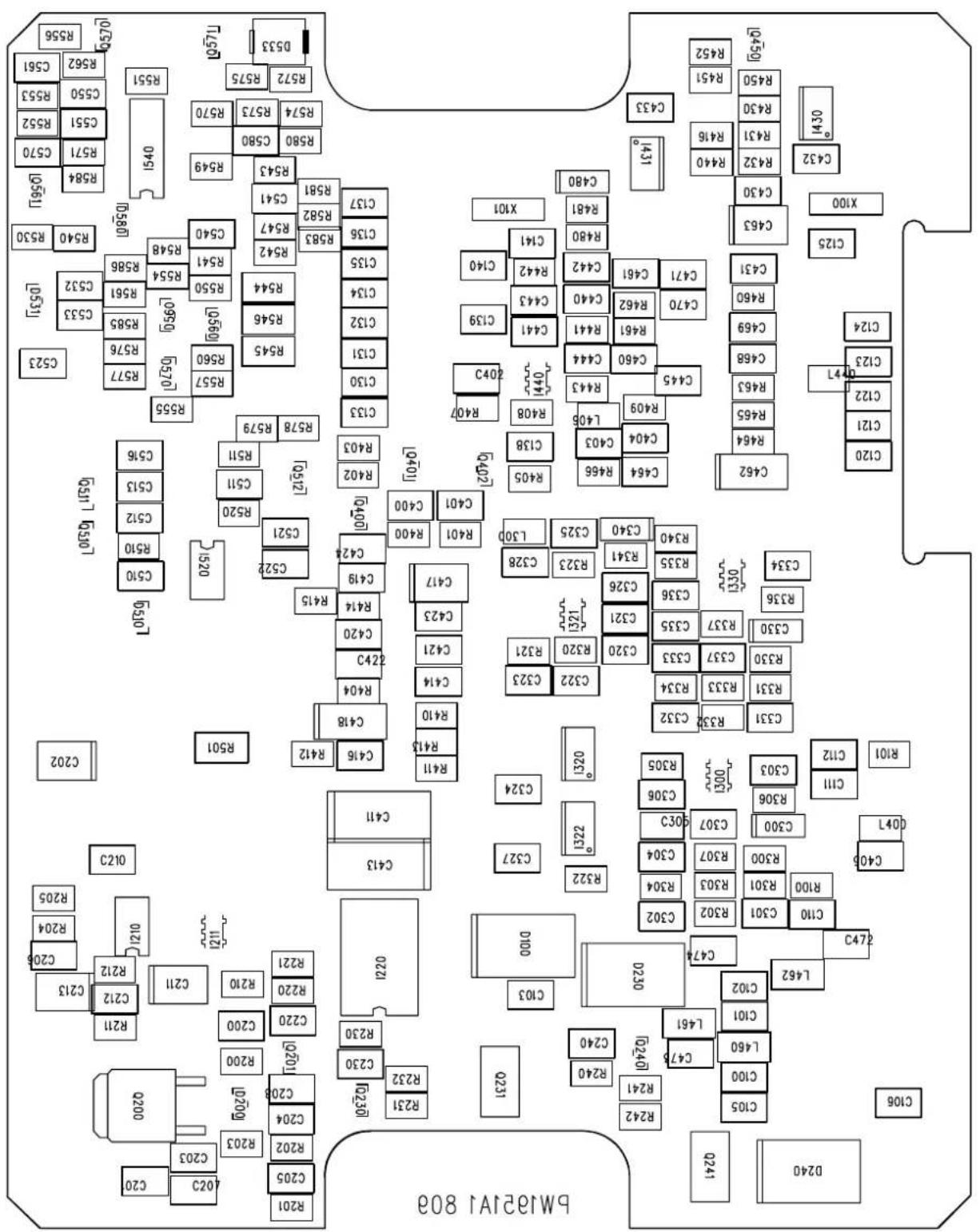
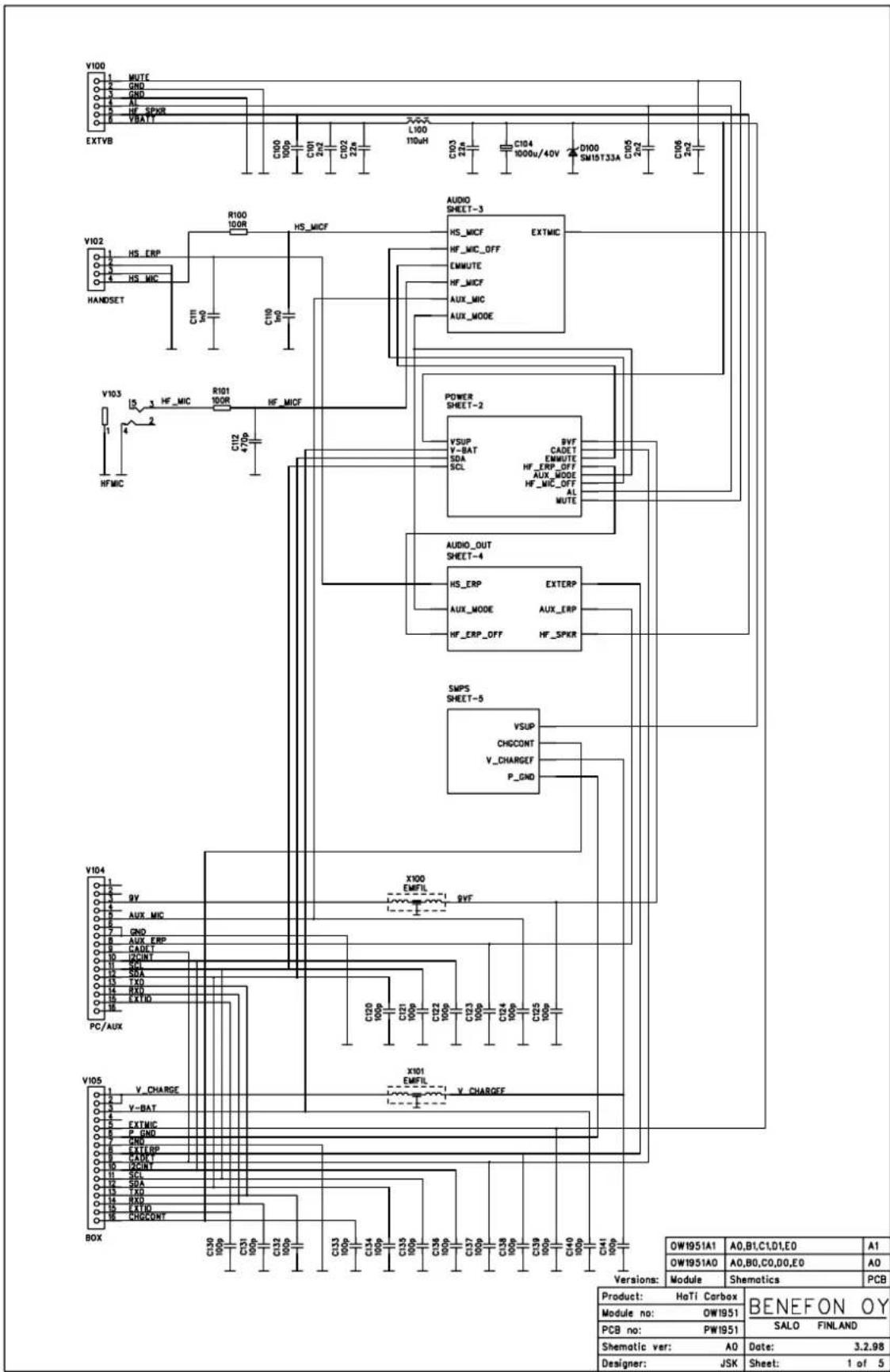
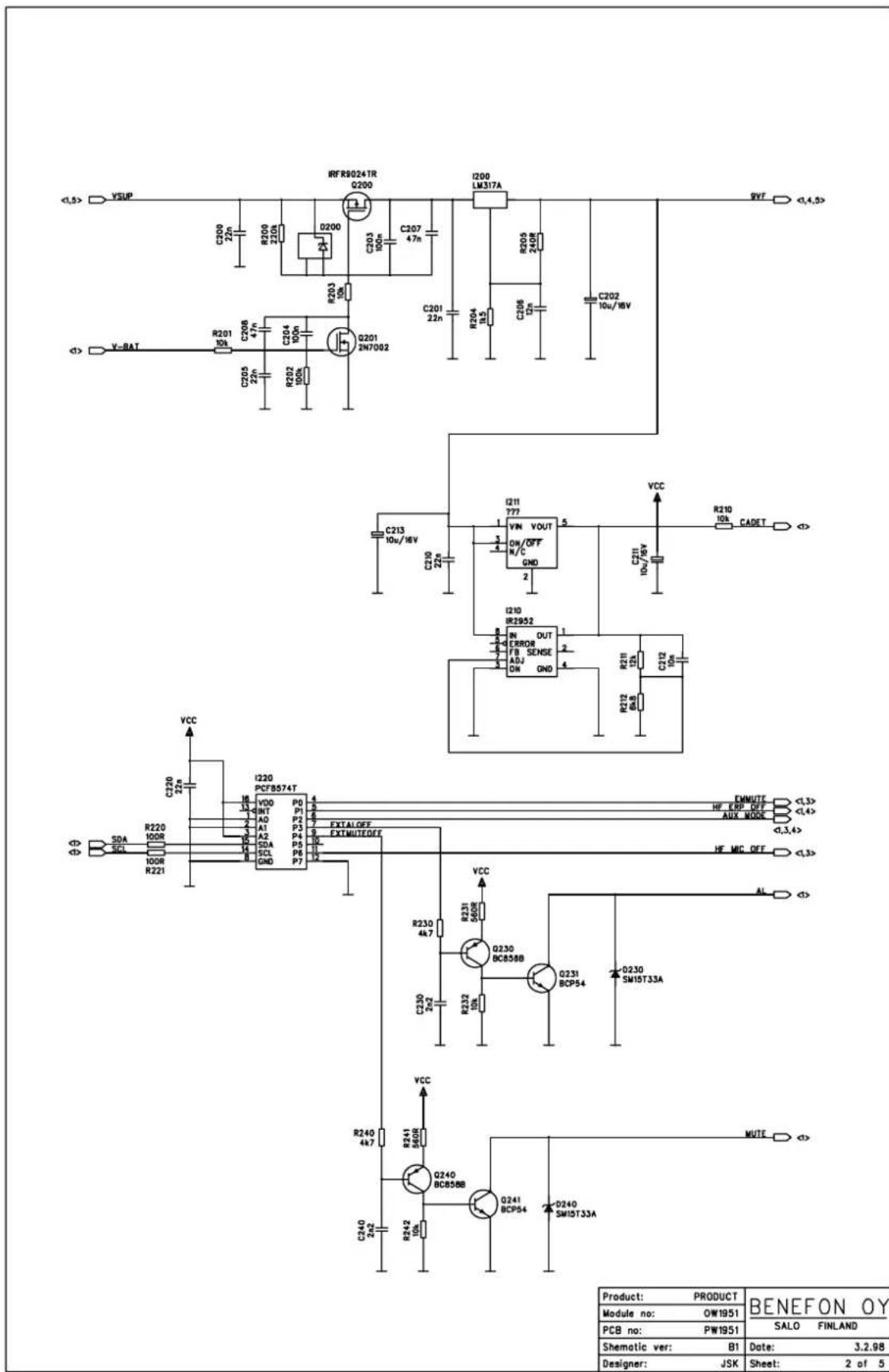
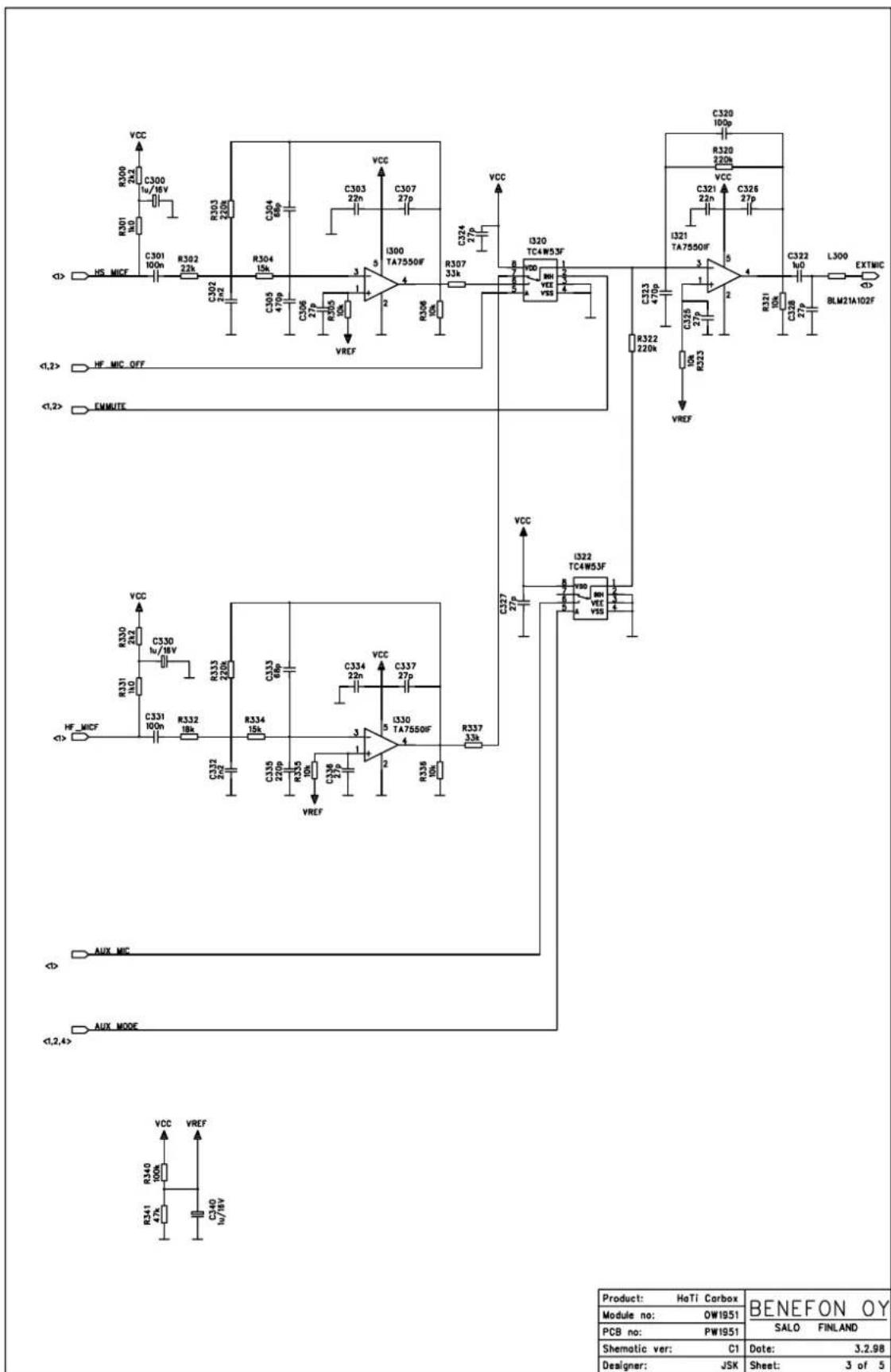
| Product: | HaTi Carbox | BENEFON OY | |
| Module no: | OW1951 | SALO | FINLAND |
| PCB no: | PW1951 | ||
| Shematic ver: | C1 | Date: | 3.2.98 |
| Designer: | JSK | Sheet: | 3 of 5 |
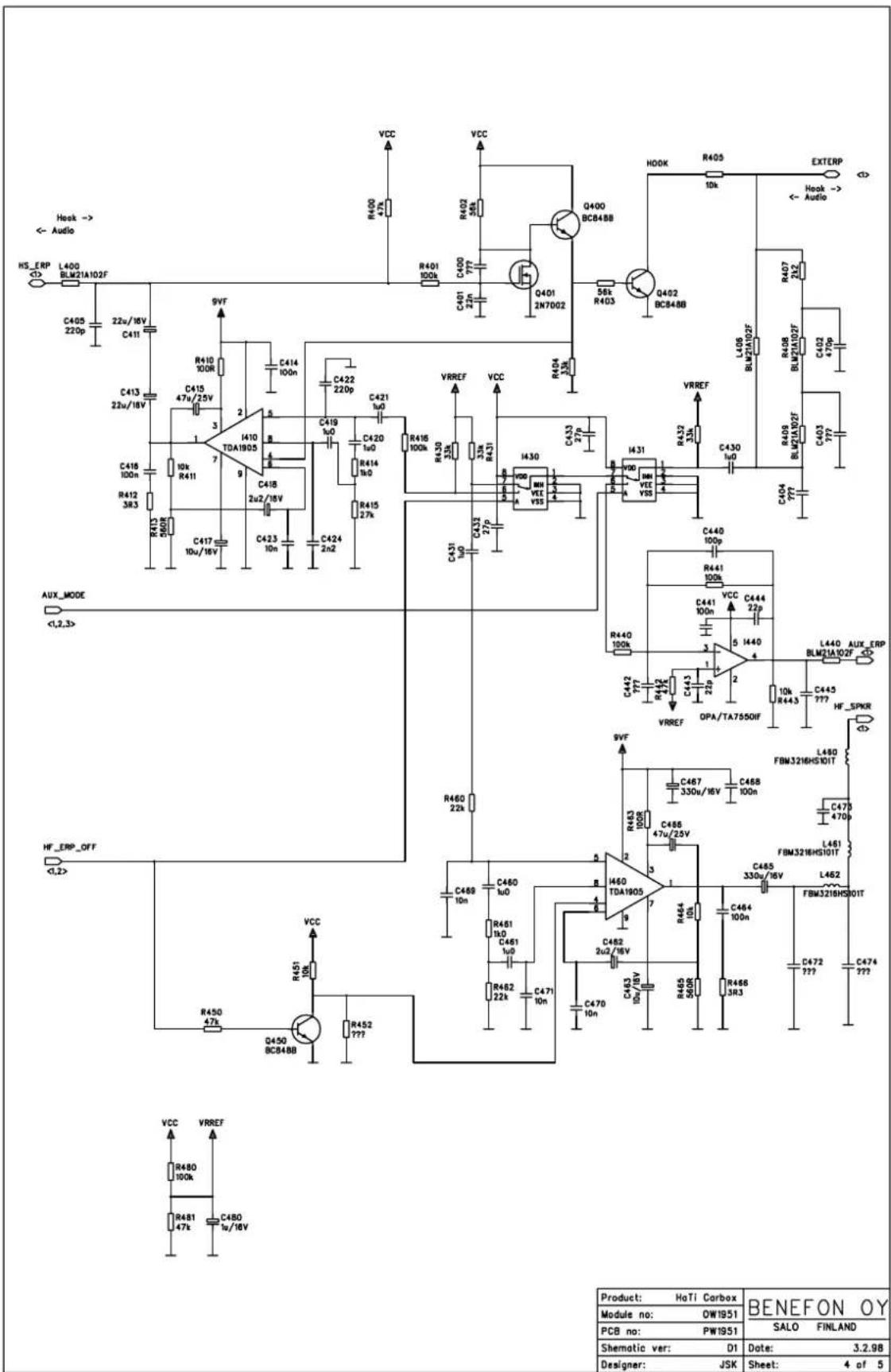
| Product: | HaTi Carbox | BENEFON OY | |
| Module no: | OW1951 | SALO | FINLAND |
| PCB no: | PW1951 | ||
| Shematic ver: | D1 | Date: | 3.2.98 |
| Designer: | JSK | Sheet: | 4 of 5 |
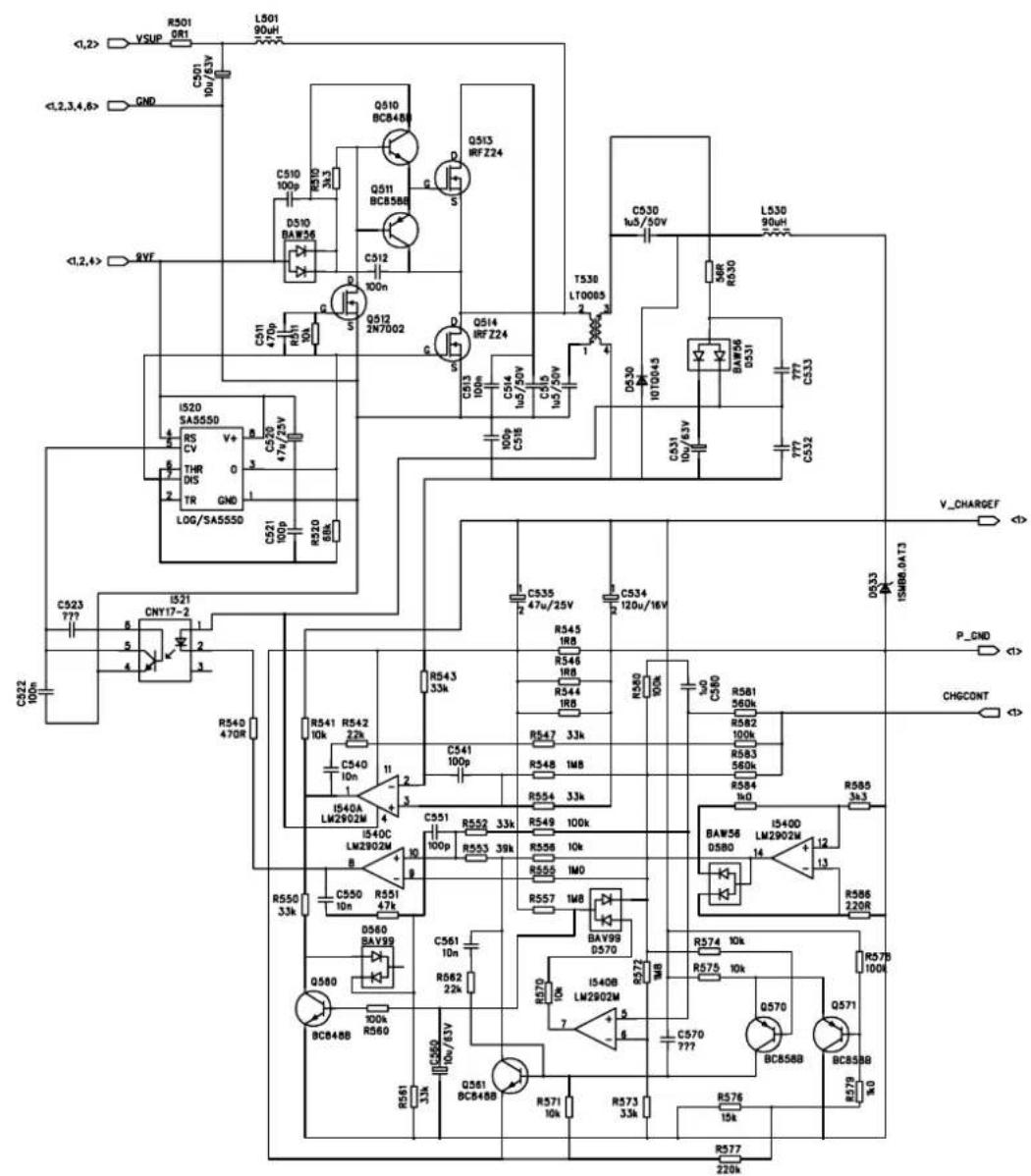
| Product: | HaTi Corbox | BENEFON OY | |
| Module no: | OW1951 | ||
| PCB no: | PW1951 | SALO | FINLAND |
| Shematic ver: | EO | Date: | 28.10.97 |
| Designer: | IP | Sheet: | 5 of 5 |
YO1951 / Mechanics
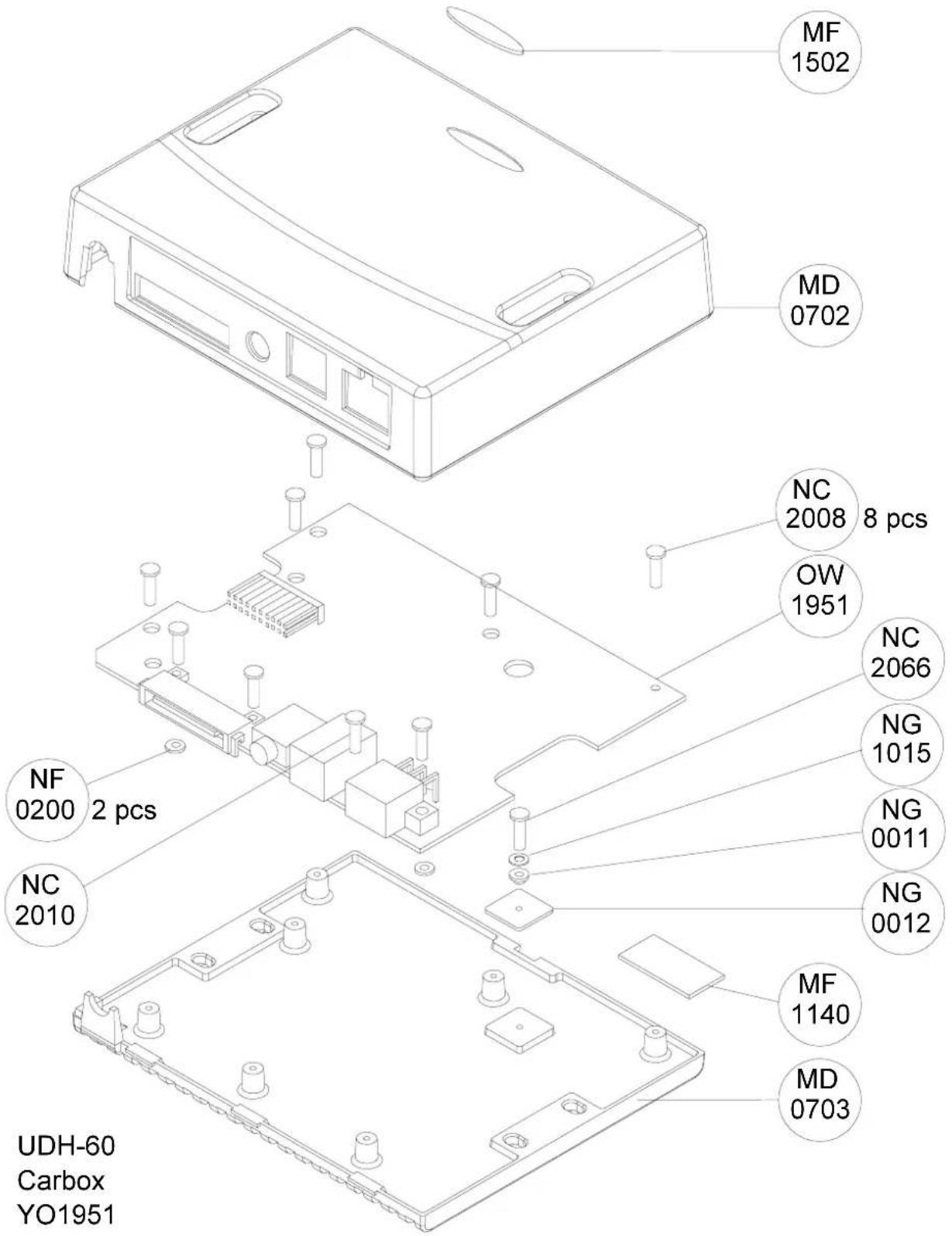
6.2 EXTERNAL HANDSET WITH CRADLE HDS-50
6.2.1 External Handset (not serviceable)
6.2.1.1 Mechanics
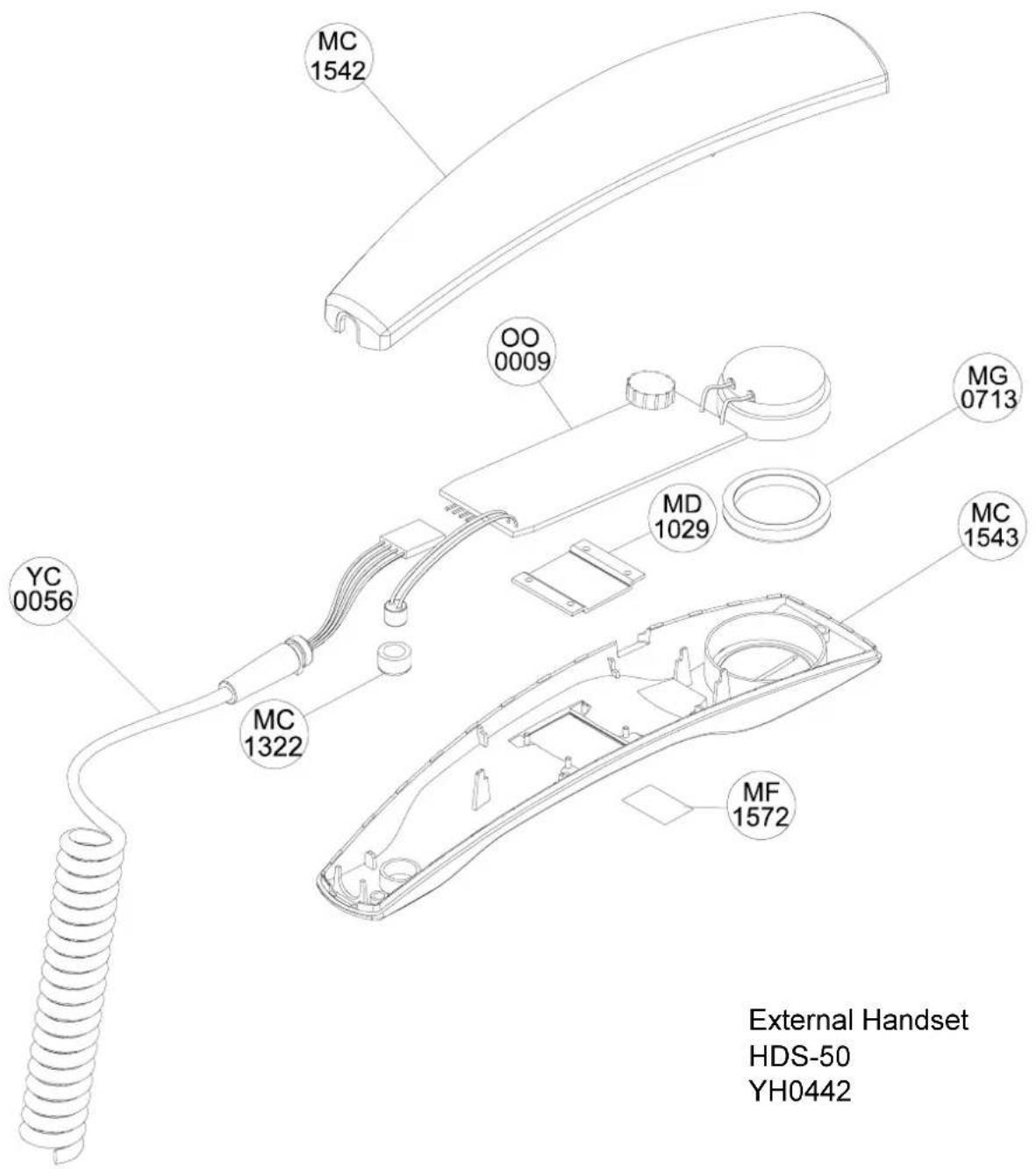
6.2.1.2 Cable
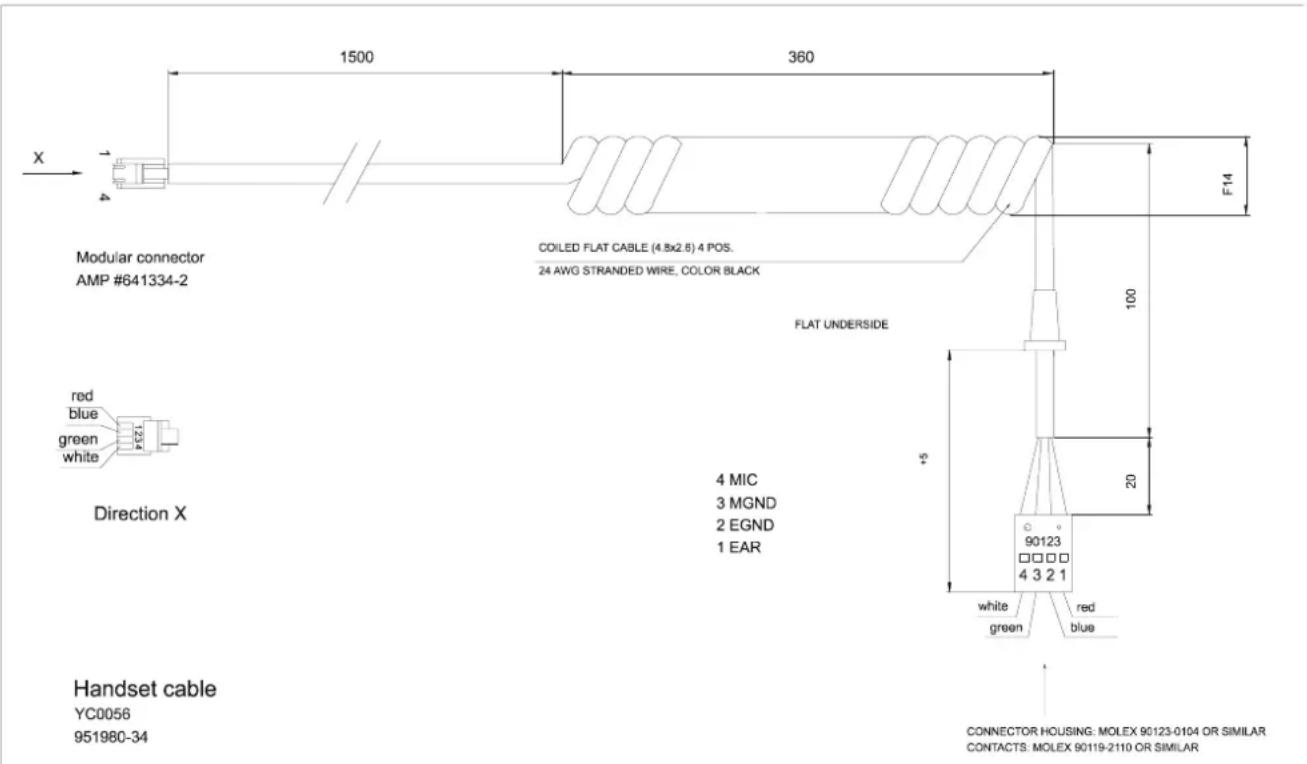
Outer Sheath Material: Coloured PVC
Colour:
Black, BS 6748
TYPE TM2 and
BT M140C
Finnish: Matt
Length: Total: 5 ±0,2 m
Coiled length: 3 ±0,2 m
Number of conductors: 4
Size: AWG 26 stranded wire
Resistance: < 100 mohm/m
Number of strands Multiwire (30 x 0.08 mm PCW)
Insulation material: Coloured polypropylene
Strain relief: Shall be firmly attached to the cable
6.2.2 General
The external handset is designed for use together with the hands-free car kit. The external handset includes a microphone, an earphone and a reed switch. The handset kit contains a handset with a cable and a modular connector, a cradle, and mounting devices. A reed element shall be used to switch the audio signals to the handset when the handset is hooked off.
6.2.3 Connector XIN Signals
1 ERP earphone input, HOOK state
2 GND ground
3 GND ground
4 MIC microphone output
6.2.4 Microphone
Sensitivity: -43 dB ± 6 dB
Vendor and part no: Hosiden KUC2023 or KUB2023
RF decoupling capacitor: 33 pF; Size: 0805; Mounted on the microphone element.
6.2.5 Speaker
Sensitivity 95 dB ± 5 dB
Vendor and part no: Hosiden KDR0928-IE-0030
Impedance: min 120 ohm
Resistance (DC): max 3 kohm
6.2.6 Hook
The hook operation is done by use of a reed switch. Hook operation is connected to the handset earphone terminal.
The operation is as follows:
ON_HOOK HIGH DC IMPEDANCE (SWITCH OPEN) LOW DC IMPEDANCE (SWITCH CLOSED), 2.2 KOHM RESIS- OFF_HOOK TANCE
6.2.7 Parts list OO0009
CODE PART DESCRIPT. VALUE MANUF. TYPE
| CU0475 C106 SMD tantal | 4.7uF/16V 20% 4.7X2.6MM | Matsushita ECST1CB 475R | |||
| CD0221 | C108 | SMD capasitor | 220 pF 5% 50 V NP0 | Philips | |
| CD0221 | C110 | SMD capasitor | 220 pF 5% 50 V NP0 | Philips | |
| CD0221 | C112 | SMD capasitor | 220 pF 5% 50 V NP0 | Philips | |
| CD0221 | C114 | SMD capasitor | 220 pF 5% 50 V NP0 | Philips | |
| PO0009 M100 | PCB for OO0900 | ||||
| RP0222 | R100 | Edge control pot. | 2.2k 0.1W LOG. | Ruwido | 0037-006 2k2 log |
| RD0222 | R102 | SMD resistor | 2.2 k 5% 0.125 W | Kamaya | |
| AR0016 | S102 | Reed-relay | Hamlin | 59160-031 | |
| AE0018 | XERP | Assembled earphone unit | 150ohm/94-+3dB/60mW | Hoside | KDR0928-1E-0300 |
| AM2024 | XMIC | Assembled microphone unit | Electret condenser -43-+4dB | Hoside | KUB2023-030444SB |
| VM0204 | XIN Contact strip angle | 1 x 4 | |||
Last
update
16.05.97
The Top Side Layout PO0009A1 (Schematic OO0009A1)
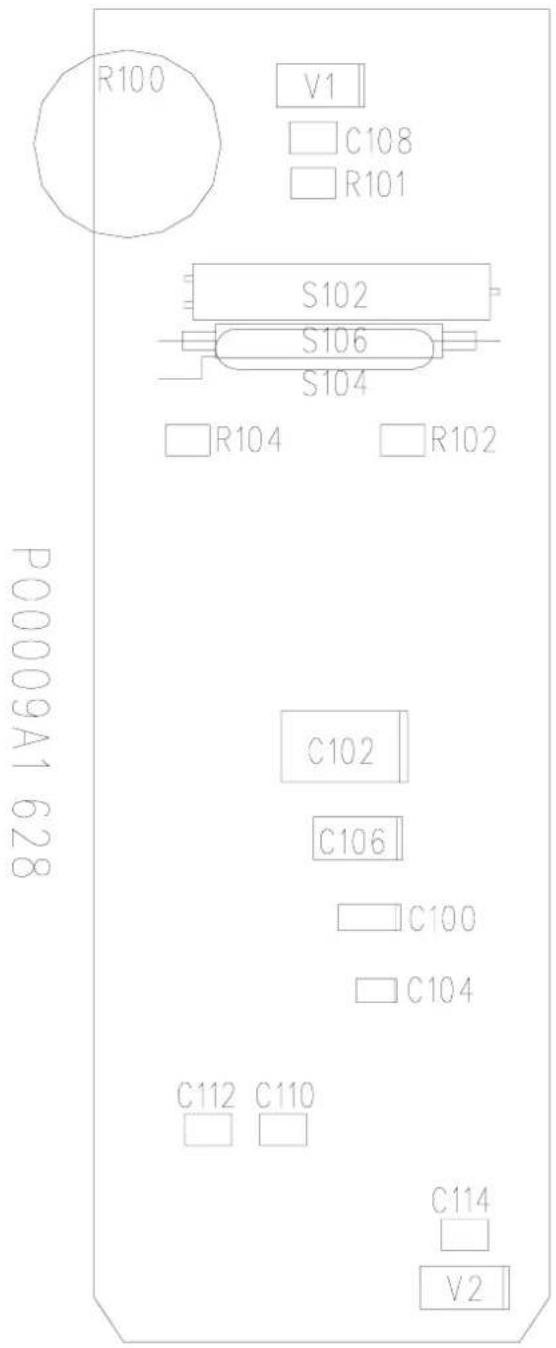
The Bottom Side Layout PO0009A1 (Schematic OO0009A1)
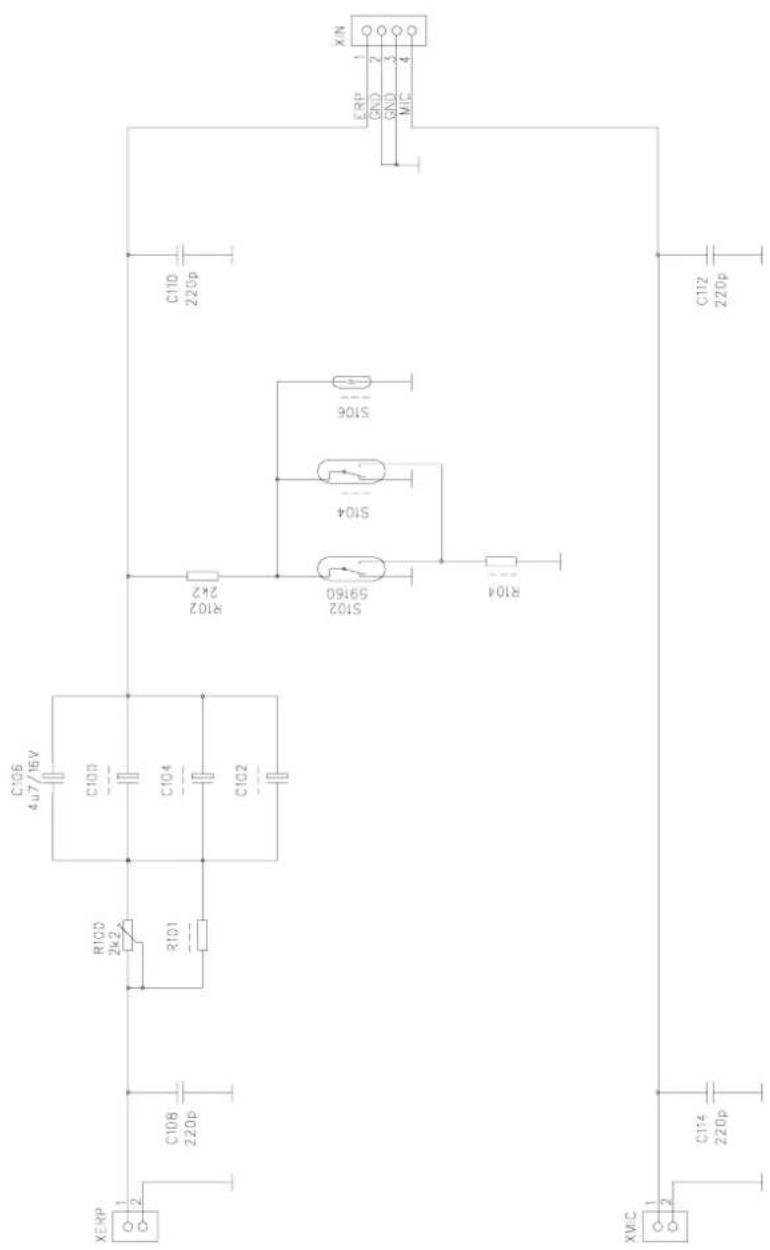
| Product: HLS-41, HDS-50, HXS-40 | BENEFON OY | ||
| Module no: | 000009P1 | ||
| Feb no: | P00009 | SALO | FINLAND |
| Designer: | VN | Drw no: | 000009A1 |
| Date: | 19.06.96 | Sheet: | 01 of 01 |
6.2.8 Cradle
6.2.8.1 Mechanics
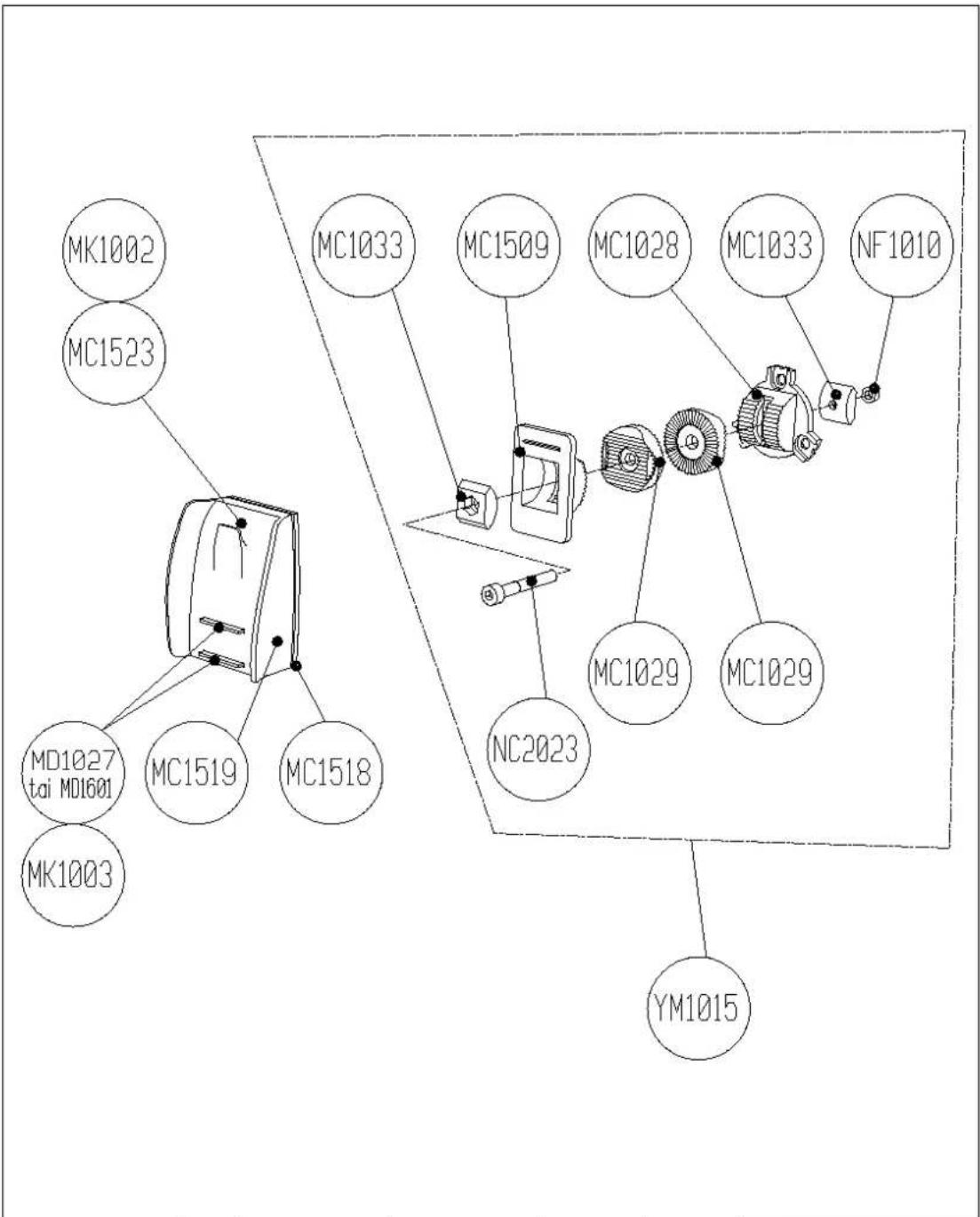
| UNMARKED TOLERANCES | Project KURKI | Product | Scale | Designer/Date KH/20.01.94 | ||
| Dimensions | Tolerance | |||||
| >0.5 ≤6 | ± 0.1 | Benefon code | File \KURKI\KIIN.DWG | |||
| >6 ≤30 | ± 0.2 | |||||
| >30 ≤120 | ± 0.3 | Name HSH-40 | Drawing number | |||
| >120 ≤315 | ± 0.5 | |||||
| >315 ≤1000 | ± 0.8 | |||||
7.0 BENEBOOST
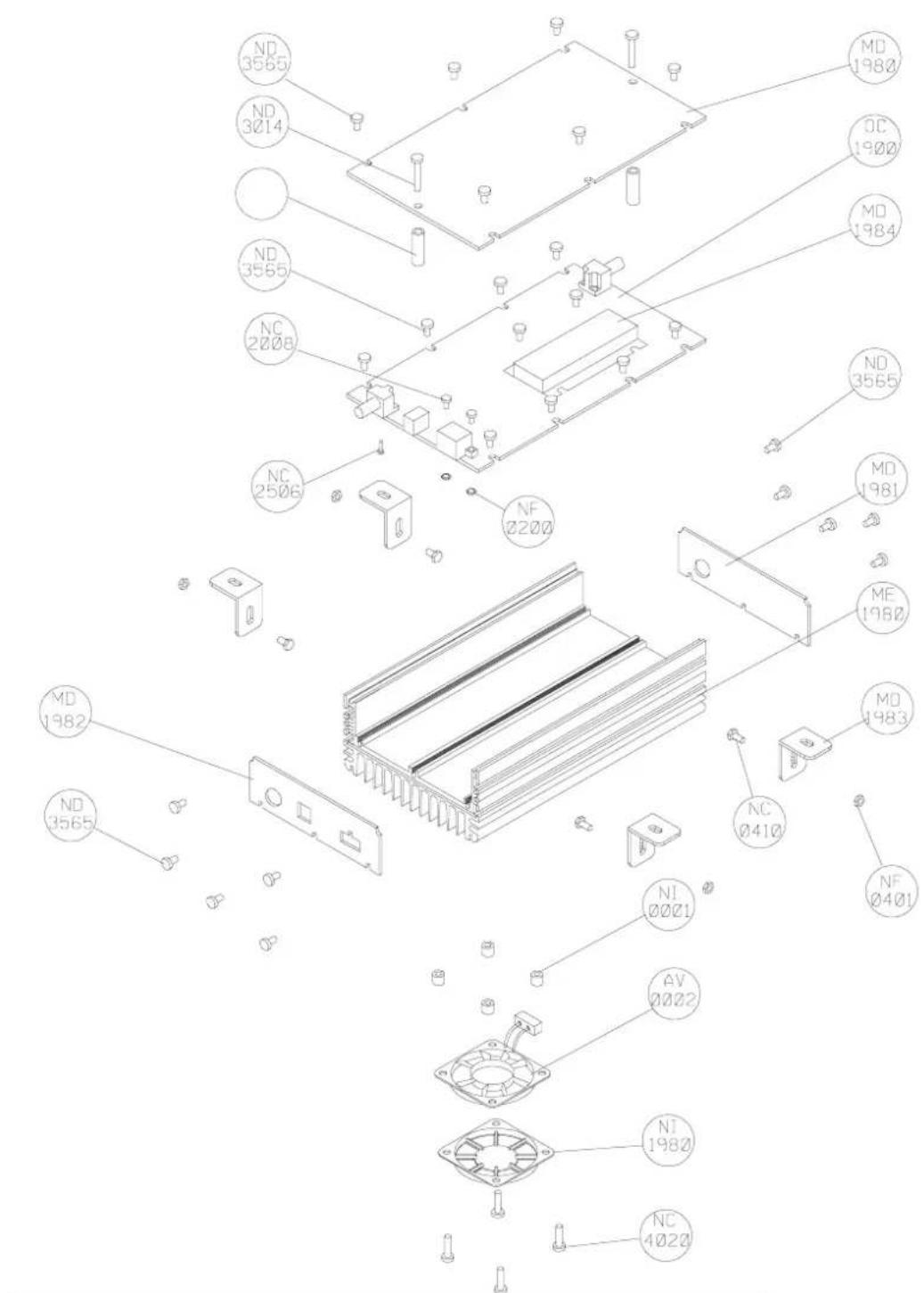
| Booster | |||
| Code | Country | Frequency band | Capacity |
| YO 1902 | Malaysia | 452.000-456.475MHz | 15 W |
| YO 1910 | Nordic, Bulgaria | 453.000-457.475MHz | 15 W |
| YO 1903 | Hungary | 455.230-459.990MHz | 15 W |
| YO 1904 | Slovenia, Croatia | 411.675-415.850MHz | 15 W |
| YO 1908 | Thailand, Indonesia | 479.000-483.480MHz | 15 W |
| YO 1909 | Poland | 452.000-457.475MHz | 7 W |
7.0.1 TECHNICAL INFORMATION
Car amplifier for Benefon Spica/Titan NMT 450i HP
weight: 1190g
size (l x w x h): 190x110x60 mm
high power: 15 W
supply voltage: 10.8 - 15.6 V
power consumption
- charging off: app. 130 mA BeneBoost + car kit
- charging on: <1000 mA BeneBoost + car kit
- conversation mode, high power: <5000 mA BeneBoost + car kit
antenna connectors: TNC
cooling: DC fan
7.1 Functional description
The BeneBoost car amplifier increases the power of Benefon Spica or Titan to max. 15 watts. It also includes a front end amplifier for the received signal. When attached to the phone holder, Benefon Spica or Titan takes control over the booster module, switching the power on and changing the output power to appropriate level.
7.1.1 Transmitting section and power control
The signal from Benefon Spica or Titan is fed via connector V5 to a duplex filter X1, which combines TX and RX chains at the phone end of the booster. When connected to the booster via the car kit, the phone transmits at a low power level (150mW). This signal is then amplified at a transistor Q2 and a power hybrid I1 before a duplex filter X2, which combines the TX and RX chains at the antenna end of the booster.
The signal from a directional coupler is rectified with a biased schottky diode D1 and filtered in a RC filter before a gain control consisting of dual OP-amp. I3 and transistors Q3 and Q9. Control lines TX1, TX0 and HITEMP are used to change the power level of the booster output. In the case that the output level is 15 W and the booster has been overheated, the HITEMP control drops output power 3 dB down. The transistor Q6 enables/disables the power output with a TXON control. 15 W Power is set with R31. A table below shows states of control lines and corresponding output power levels.
| Power OFF PL1 150 mW PL2 1.5 W PL3 15W PL3 7W | ||||||
| TX0 | x | LOW | HIGH | LOW | ||
| TX1 | x | LOW | LOW | HIGH | HIGH | |
| HITEMP | x | HIGH | HIGH | LOW | ||
| TXON | HIGH | LOW | LOW | LOW | LOW | |
7.1.2 Front end amplifier
Between duplex filters X1 and X2 is a one transistor stage Q7 which amplifies a RX signal to a proper level to the phone. It compensates losses generated in the duplex filters and RF cables. The amplifier is operational as long as the phone is fixed in the phone holder.
7.1.3 DC power and control logic
DC power from the vehicle's battery is fed to connector V2. The specified voltage range is 10.8 V to 15.6 V. A 3.3 V regulator I5 gets a power directly. After the phone is placed in the phone holder, a risen voltage level at I2C bus is detected by diode pair D5 and FET Q8 which activates the regulator. A booster detection control BODET rises up and an I2C remote I/O IC I6 will be ready to communicate with the phone.
7.1.4 Testpoint levels
Voltage levels at testpoints are measured in middle channel and using 13.6 V power supply voltage. Levels will vary because of component tolerances.
| Testpoint | low power | mid. power | high power - 3 dB | high power | unit |
| TP1 | 3.5 | 3.5 | 3.5 | 3.5 | V |
| TP2 | 9.6 | 9.6 | 9.6 | 9.6 | V |
| TP3 | 13.6 | 13.5 | 13.5 | 13.4 | V |
| TP4 | 13.6 | 13.5 | 13.5 | 13.4 | V |
| V6 | 0.25 | 0.74 | 1.68 | 2.48 | V |
| V7 | 129 | 142 | 167 | 190 | mV |
| V8 | 0.49 | 0.51 | 0.53 | 0.56 | V |
| V9 | 4.88 | 5.41 | 6.21 | 6.94 | V |
| V10 | 0.7 | 0.7 | 0.7 | 0.7 | V |
| V11 | 0.7 | 0.7 | 0.7 | 0.3 | V |
| V12 | 0 | 0.7 | 0 | 0 | V |
| V13 | 0 | 0 | 0.7 | 0.7 | V |
| V14 | 0 | 0 | 0 | 0.7 | V |
| V15 | 5.17 | 5.70 | 6.50 | 7.23 | V |
| V16 | 13.6 | 13.5 | 13.5 | 13.4 | V |
7.1.5 Part lists OC1910
OC1910
CODE PART DESCRIPT. VALUE MANUF. TYPE
| CF0101 C1 | SMD capasitor | 100 pF 5% 50 V NP0 | Philips | ||
| CF0101 C10 | SMD capasitor | 100 pF 5% 50 V NP0 | Philips | ||
| CF0101 C11 | SMD capasitor | 100 pF 5% 50 V NP0 | Philips | ||
| CF0102 C12 | SMD capasitor | 1 nF 5 % NP0 | Philips | ||
| CF0101 C13 | SMD capasitor | 100 pF 5% 50 V NP0 | Philips | ||
| CF0101 C14 | SMD capasitor | 100 pF 5% 50 V NP0 | Philips | ||
| CF0101 C15 | SMD capasitor | 100 pF 5% 50 V NP0 | Philips | ||
| CF0102 C16 | SMD capasitor | 1 nF 5 % NP0 | Philips | ||
| CF0101 C17 | SMD capasitor | 100 pF 5% 50 V NP0 | Philips | ||
| CH0105 | C18 | SMD capasitor | 1uF/-20/+80%/16V | TaiyoYuden | EMK212 F105Z00T |
| CF0101 C19 | SMD capasitor | 100 pF 5% 50 V NP0 | Philips | ||
| CF0101 C2 | SMD capasitor | 100 pF 5% 50 V NP0 | Philips | ||
| CF0101 C20 | SMD capasitor | 100 pF 5% 50 V NP0 | Philips | ||
| CF0222 | C21 | SMD capasitor | 2.2 nF 5% 50 V NP0 | Philips | |
| CF0331 C22 | SMD capasitor | 330 pF 5% 50 V NP0 | Philips | ||
| CH0105 | C23 | SMD capasitor | 1uF/-20/+80%/16V | TaiyoYuden | EMK212 F105Z00T |
| CH0105 | C24 | SMD capasitor | 1uF/-20/+80%/16V | TaiyoYuden | EMK212 F105Z00T |
| CF0689 | C26 | SMD capasitor | 6.8 pF/0.25pF 50 V NP0 | Philips | |
| CH0105 | C27 | SMD capasitor | 1uF/-20/+80%/16V | TaiyoYuden | EMK212 F105Z00T |
| CF0470 | C28 | SMD capasitor | 47 pF 5% 50 V NP0 | Philips | |
| CF0101 C3 | SMD capasitor | 100 pF 5% 50 V NP0 | Philips | ||
| CE0476 | C33 | Al elko | 47 uF/25 V 7x7mm | Philips | 2222 097 56479 |
| CF0103 C34 | SMD capasitor | 10 nF 10% 50 V X7R | Philips | ||
| CF0103 C35 | SMD capasitor | 10 nF 10% 50 V X7R | Philips | ||
| CU4106 | C36 | SMD tantal | 10uF/25V 20% | AVX | TAJC106M025R |
| CU2475 | C38 | SMD tantal | 4.7uF/16V 20% 3.5x2.8 | AVX | TAJB475M016R |
| CU1105 | C39 | SMD tantal | 1uF/16V | AVX | TAJR105M016R |
| CF0101 C4 | SMD capasitor | 100 pF 5% 50 V NP0 | Philips | ||
| CH0105 | C40 | SMD capasitor | 1uF/-20/+80%/16V | TaiyoYuden | EMK212 F105Z00T |
| CF0101 C41 | SMD capasitor | 100 pF 5% 50 V NP0 | Philips | ||
| CH0105 | C42 | SMD capasitor | 1uF/-20/+80%/16V | TaiyoYuden | EMK212 F105Z00T |
| CF0101 C43 | SMD capasitor | 100 pF 5% 50 V NP0 | Philips | ||
| CH0105 | C44 | SMD capasitor | 1uF/-20/+80%/16V | TaiyoYuden | EMK212 F105Z00T |
| CF0101 C46 | SMD capasitor | 100 pF 5% 50 V NP0 | Philips | ||
| CF0101 C5 | SMD capasitor | 100 pF 5% 50 V NP0 | Philips | ||
| CH0105 | C52 | SMD capasitor | 1uF/-20/+80%/16V | TaiyoYuden | EMK212 F105Z00T |
| CH0105 | C53 | SMD capasitor | 1uF/-20/+80%/16V | TaiyoYuden | EMK212 F105Z00T |
| CF0102 C54 | SMD capasitor | 1 nF 5 % NP0 | Philips | ||
| CH0105 | C55 | SMD capasitor | 1uF/-20/+80%/16V | TaiyoYuden | EMK212 F105Z00T |
| 000000 C56 | *** EI KOODATTU VARAS-TOON *** | ||||
| CF0101 C6 | SMD capasitor | 100 pF 5% 50 V NP0 | Philips | ||
| CF0399 | C7 | SMD capasitor | 3.9pF 0.25 50V NP0 | Philips | |
| CH0105 | C8 | SMD capasitor | 1uF/-20/+80%/16V | TaiyoYuden | EMK212 F105Z00T |
| CF0102 C9 | SMD capasitor | 1 nF 5 % NP0 | Philips | ||
| DY0074 | D1 | Shottky diode | Philips | BAT 74 | |
| DZ0569 | D2 | SMD zener | 5V6 5% 300mW | Philips | BZX84C5V6 |
| DS0070 | D3 | SMD diode pair | 70V/100mA common cathode | Philips | BAV 70 |
| DZ0180 | D4 | SMD zener | 18V 5% 300mW | Philips | BZX84C18 |
| DS1070 | D5 | SMD diode pair | 70V/100mA common cathode | Philips | BAV 70W |
| DS0070 | D6 | SMD diode pair | 70V/100mA common cathode | Philips | BAV 70 |
| DS0070 | D7 | SMD diode pair | 70V/100mA common cathode | Philips | BAV 70 |
| DY0014 | D8 | SMD diode | 1,5A/40V | Shindengen | D1FS4A |
| DT1518 | D9 | SMD Transient filter | 18 /1500W | SGS-Thomso | SM15T18A |
| IW7729 | I1 | RF-power amplifier | 450-470MHz,12.5V 15W | Mitsubishi | M57729H |
| CODE | PART | DESCRIPT. | VALUE | MANUF. | TYPE |
| IR2952 I2 | Regulator | 100mA 5V adj. 0.5% | Micrel MIC2951-02BM | ||
| IA0272 I3 | 2 x op.amp. | LinCMOS Low noise,power | Texas TLC27M2ID | ||
| IX0623 I4 | Temperature sensor | TelCom TC623CEOA | |||
| IR2952 I5 | Regulator | 100mA 5V adj. 0.5% | Micrel MIC2951-02BM | ||
| II8574 | I6 | 8 bit I/O | I2C | Philips | PCF8574T |
| LC3822 | L1 | SMD inductor | 8n2 -+2% | Panasonic | ELJRE8N2ZF2 |
| LC2154 | L2 | SMD inductor | 150 nH/+-10% | TDK | MLF2012DR15KT |
| LF0396 | L3 | Inductor | 39 uH | Philips | |
| LF0396 | L4 | Inductor | 39 uH | Philips | |
| LC2154 | L5 | SMD inductor | 150 nH/+-10% | TDK | MLF2012DR15KT |
| LC2104 | L6 | SMD inductor | 100 nH/+-10% | TDK | MLF2012DR10KT |
| QS0848 | Q1 | SMD transistor | NPN 0.1A/30V hFE 110-800 | Philips | BC848BW, 115 |
| QS0848 | Q10 | SMD transistor | NPN 0.1A/30V hFE 110-800 | Philips | BC848BW, 115 |
| QS0031 | Q11 | SMD transistor | PNP 1A/25V | Sanyo | 2SB1119S-TD |
| QS0848 | Q12 | SMD transistor | NPN 0.1A/30V hFE 110-800 | Philips | BC848BW, 115 |
| QS0848 | Q13 | SMD transistor | NPN 0.1A/30V hFE 110-800 | Philips | BC848BW, 115 |
| QS0848 | Q14 | SMD transistor | NPN 0.1A/30V hFE 110-800 | Philips | BC848BW, 115 |
| QS0858 | Q15 | SMD transistor | PNP 0.1A/30V hFE 125-800 | Philips | BC858BW |
| QS0848 | Q16 | SMD transistor | NPN 0.1A/30V hFE 110-800 | Philips | BC848BW, 115 |
| QA0035 | Q2 | SMD RF-transistor | NPN Wideband 1GHz | Philips | BFG-35 |
| QS0848 | Q3 | SMD transistor | NPN 0.1A/30V hFE 110-800 | Philips | BC848BW, 115 |
| QS0848 | Q4 | SMD transistor | NPN 0.1A/30V hFE 110-800 | Philips | BC848BW, 115 |
| QS0848 | Q5 | SMD transistor | NPN 0.1A/30V hFE 110-800 | Philips | BC848BW, 115 |
| QS0848 | Q6 | SMD transistor | NPN 0.1A/30V hFE 110-800 | Philips | BC848BW, 115 |
| QA4869 | Q7 | SMD RF-transistor | NPN G=15dB NF=1.2dB/1GHz | Sanyo | 2SC4869-5-TG |
| QF7002 | Q8 | SMD n-channel FET | 60V 0.115A Rds7.5 | Siliconix | 2N7002-T1 |
| QP0132 | Q9 | SMD power transistor | PNP -3A/45V | Philips | BDP32 |
| RF0473 | R1 | SMD resistor | 47 k 5% 0.125 W | Kamaya | |
| RF0271 | R10 | SMD resistor | 270 R 5% 0.125 W | Kamaya | |
| RF0271 | R11 | SMD resistor | 270 R 5% 0.125 W | Kamaya | |
| RF0820 | R12 | SMD resistor | 82 R 5% 0.125 W | Kamaya | |
| RF0473 | R13 | SMD resistor | 47 k 5% 0.125 W | Kamaya | |
| RF0153 | R14 | SMD resistor | 15 k 5% 0.125 W | Kamaya | |
| RF0102 | R15 | SMD resistor | 1 k 5% 0.125 W | Kamaya | |
| RF0103 | R16 | SMD resistor | 10 k 5% 0.125 W | Kamaya | |
| RF0222 | R17 | SMD resistor | 2.2 k 5% 0.125 W | Kamaya | |
| RC0100 | R18 | SMD resistor | 10 R 5% 0.125 W | Kamaya | |
| RC0100 | R19 | SMD resistor | 10 R 5% 0.125 W | Kamaya | |
| RF0821 | R2 | SMD resistor | 820 R 5% 0.125 W | Kamaya | |
| RC0100 | R20 | SMD resistor | 10 R 5% 0.125 W | Kamaya | |
| RF0221 | R21 | SMD resistor | 220 R 5% 0.125 W | Kamaya | |
| RF0222 | R22 | SMD resistor | 2.2 k 5% 0.125 W | Kamaya | |
| RF0391 | R23 | SMD resistor | 390 R 5% 0.125 W | Kamaya | |
| RF0331 | R24 | SMD resistor | 330 R 5% 0.125 W | Kamaya | |
| RF0223 | R25 | SMD resistor | 22 k 5% 0.125 W | Kamaya | |
| RF0223 | R26 | SMD resistor | 22 k 5% 0.125 W | Kamaya | |
| RF0223 | R27 | SMD resistor | 22 k 5% 0.125 W | Kamaya | |
| RF0223 | R28 | SMD resistor | 22 k 5% 0.125 W | Kamaya | |
| RF0103 | R29 | SMD resistor | 10 k 5% 0.125 W | Kamaya | |
| RF0151 | R3 | SMD resistor | 150 R 5% 0.125 W | Kamaya | |
| RF0103 | R30 | SMD resistor | 10 k 5% 0.125 W | Kamaya | |
| RI1103 | R31 | SMD trimmer resistor | 10k 20% | Teikuku | TMC 4 K |
| RF0184 | R32 | SMD resistor | 180 k 5% 0.125 W | Kamaya | |
| RF0823 | R33 | SMD resistor | 82 k 5% 0.125 W | Kamaya | |
| RF0474 | R34 | SMD resistor | 470 k 5% 0.125 W | Kamaya | |
| RF0474 | R35 | SMD resistor | 470 k 5% 0.125 W | Kamaya | |
| RF0104 | R36 | SMD resistor | 100 k 5% 0.125 W | Kamaya | |
| RF0104 | R37 | SMD resistor | 100 k 5% 0.125 W | Kamaya | |
| RF0103 | R38 | SMD resistor | 10 k 5% 0.125 W | Kamaya | |
| RF0474 | R39 | SMD resistor | 470 k 5% 0.125 W | Kamaya | |
| RF0472 R4 | SMD resistor | 4.7 k 5% 0.125 W | Kamaya | ||
| RF0270 R40 | SMD resistor | 27 R 5% 0.125 W | Kamaya | ||
| RF0104 R41 | SMD resistor | 100 k 5% 0.125 W | Kamaya | ||
| RF0331 R42 | SMD resistor | 330 R 5% 0.125 W | Kamaya | ||
| RF0103 R43 | SMD resistor | 10 k 5% 0.125 W | Kamaya | ||
| RF0103 R44 | SMD resistor | 10 k 5% 0.125 W | Kamaya | ||
| RF0562 R45 | SMD resistor | 5.6 k 5% 0.125 W | Kamaya | ||
| RF0152 R46 | SMD resistor | 1.5 k 5% 0.125 W | Kamaya | ||
| RF0103 R47 | SMD resistor | 10 k 5% 0.125 W | Kamaya | ||
| RF0103 R48 | SMD resistor | 10 k 5% 0.125 W | Kamaya | ||
| RF0103 R49 | SMD resistor | 10 k 5% 0.125 W | Kamaya | ||
| RF0103 R5 | SMD resistor | 10 k 5% 0.125 W | Kamaya | ||
| RF0101 R50 | SMD resistor | 100 R 5% 0.125 W | Kamaya | ||
| RF0223 R51 | SMD resistor | 22 k 5% 0.125 W | Kamaya | ||
| RF0103 R52 | SMD resistor | 10 k 5% 0.125 W | Kamaya | ||
| RF0470 R53 | SMD resistor | 47 R 5% 0.125 W | Kamaya | ||
| RF0470 R54 | SMD resistor | 47 R 5% 0.125 W | Kamaya | ||
| RF0470 R55 | SMD resistor | 47 R 5% 0.125 W | Kamaya | ||
| RF0470 R56 | SMD resistor | 47 R 5% 0.125 W | Kamaya | ||
| RF0104 R57 | SMD resistor | 100 k 5% 0.125 W | Kamaya | ||
| RF0103 R58 | SMD resistor | 10 k 5% 0.125 W | Kamaya | ||
| RF0103 R59 | SMD resistor | 10 k 5% 0.125 W | Kamaya | ||
| RF0391 R6 | SMD resistor | 390 R 5% 0.125 W | Kamaya | ||
| RF0103 R60 | SMD resistor | 10 k 5% 0.125 W | Kamaya | ||
| RF0102 R61 | SMD resistor | 1 k 5% 0.125 W | Kamaya | ||
| RF1124 R62 | SMD resistor | 120 k 1% 0.125 W | KOA | ||
| RF1154 R63 | SMD resistor | 150 k 1% 0.125 W | KOA | ||
| RF0000 | R64 | SMD resistor | 0 R | Kamaya | |
| 000000 R65 | *** EI KOODATTU VARAS-TOON *** | ||||
| RF0103 | R66 | SMD resistor | 10 k 5% 0.125 W | Kamaya | |
| RF0104 R67 | SMD resistor | 100 k 5% 0.125 W | Kamaya | ||
| RF0102 | R68 | SMD resistor | 1 k 5% 0.125 W | Kamaya | |
| RF0154 R69 | SMD resistor | 150 k 5% 0.125 W | Kamaya | ||
| RF0391 | R7 | SMD resistor | 390 R 5% 0.125 W | Kamaya | |
| RF0105 | R70 | SMD resistor | 1 M 5% 0.125 W | Kamaya | |
| RF0103 | R73 | SMD resistor | 10 k 5% 0.125 W | Kamaya | |
| RF0100 | R8 | SMD resistor | 10 R 5% 0.125 W | Kamaya | |
| RF0180 | R9 | SMD resistor | 18 R 5% 0.125 W | Kamaya | |
| AR0005 | S2 | Relay | 12V/10A 19x15,4x15,5mm | Good Sky E | RW-SH-112D |
| VW0106 | V2 | Connector | male 6-pin | Molex | 5569-06-A1 |
| VN7876 | V3 | USB-connector | 4 pin RF-shielded | AMP | 787616-1 |
| VR1121 | V4 | RF-connector | TNC for PCB board | IMS connec | 1121.02.2620.00 |
| VR1121 | V5 | RF-connector | TNC for PCB board | IMS connec | 1121.02.2620.00 |
| OD0062 | X1 | Duplexer PL/BG | 452.000-457.475MHz/3W | LK-Product | X4-B8/NP1 |
| OD0063 | X2 | Duplexer PL/BG | 452.000-457.475MHz/25W | LK-Product | Q4-A9/NP1 |
| LF0062 | X4 | SMD EMI filter | 10nF/2A | Panasonic | ELKE103FA |
Last
update
01.03.99
The Top Side Layout PC1900A3
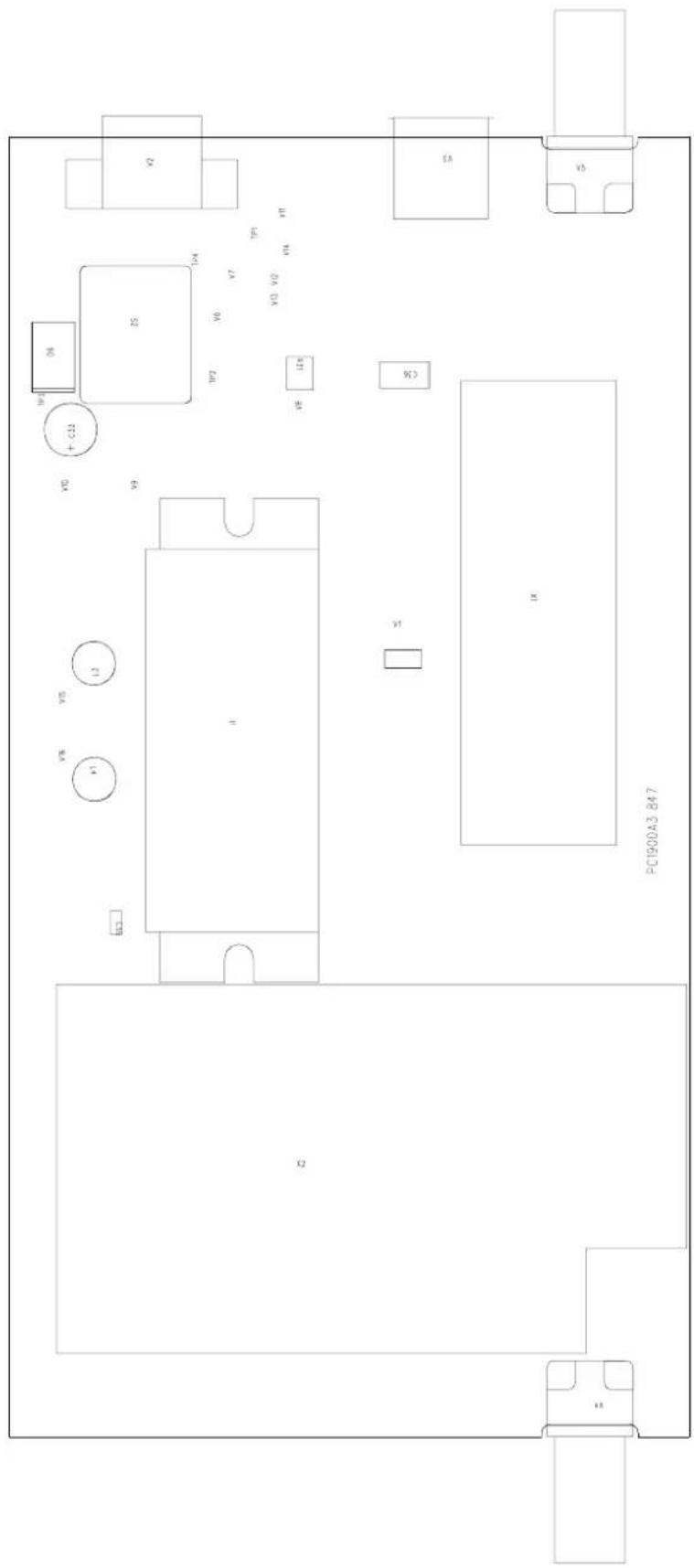
The Bottom Side Layout PC1900A3
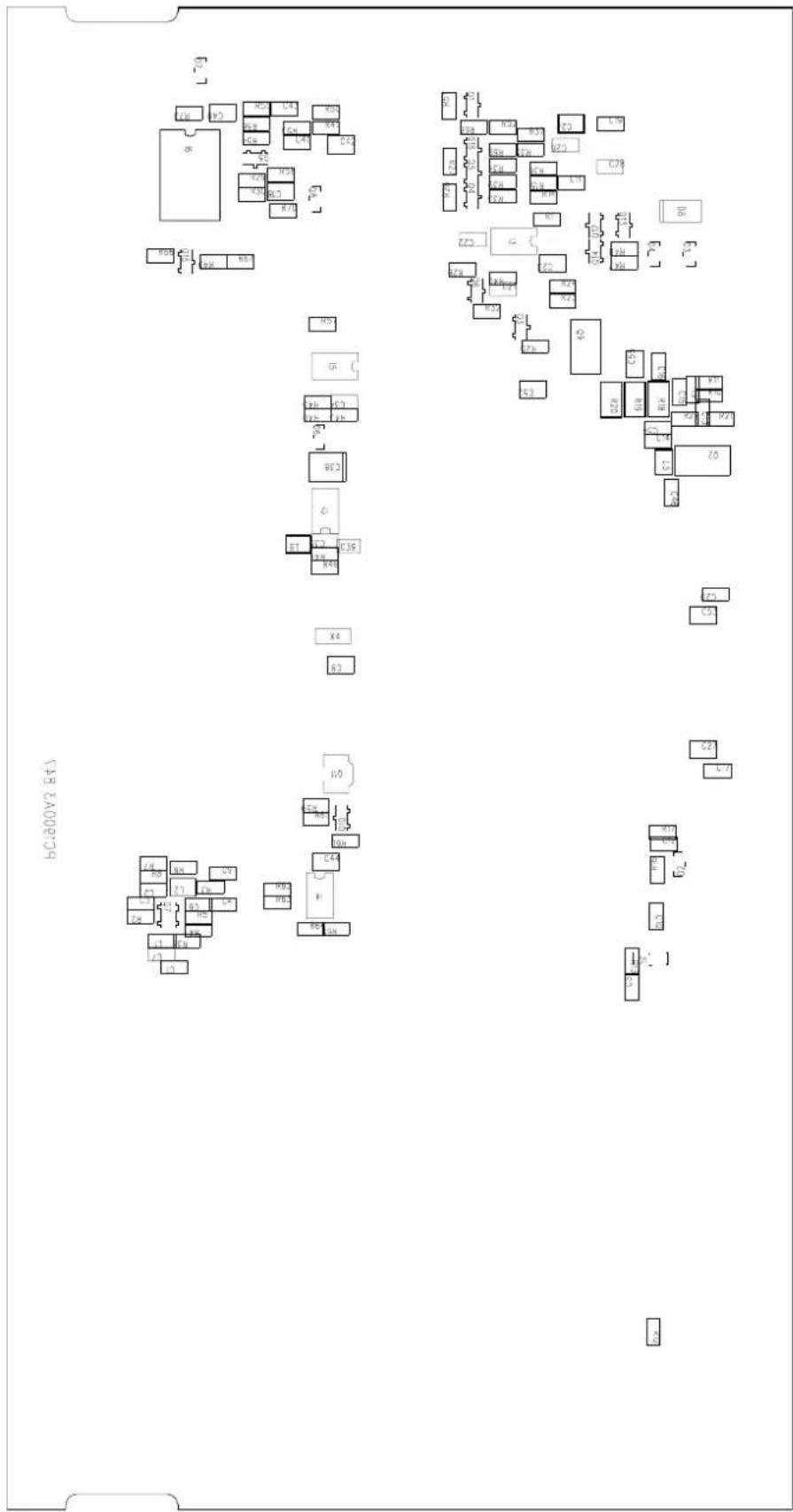
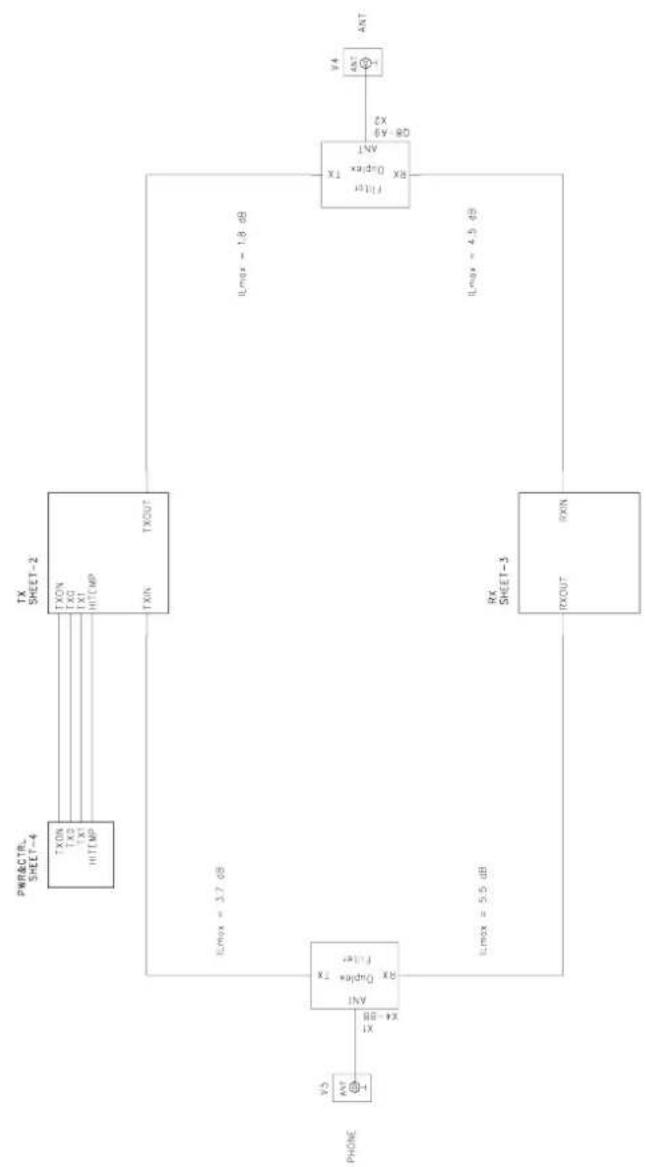
flowchart
graph TD
    A["PHONE"] -->|V3 ANT + X1 X4 - dB| B["Anti Rx Duplex TX filter"]
    B --> C["RX SHEET-3"]
    C --> D["RXOUT RXIN"]
    D --> E["Filter RX Duplex TX ANT"]
    E --> F["V4 ANT"]
    F --> G["Ant"]
    B -->|ILmax = 5.5 dB| C
    C -->|ILmax = 1.8 dB| E
    B -->|ILmax = 3.7 dB| H["PWR&CTRL SHEET-4"]
    H --> I["TX SHEET-2"]
    I --> J["TXIN TXOUT"]
    J --> K["TXIN TXOUT"]
    K --> L["TXIN TXOUT"]
    L --> M["TXIN TXOUT"]
    M --> N["TXIN TXOUT"]
    N --> O["TXIN TXOUT"]
    O --> P["TXIN TXOUT"]
| Versions: | OC1902A2 | A1,B2,C1,D2 | A3 | |
| Module | Schematics | PCB | ||
| Product: | TOB-60-N/B | BENEFON OY | ||
| Module no: | OC1910 | SALO FINLAND | ||
| Pcb no: | PC1900 | |||
| Schematic ver: | A1 | Date: 23.12.97 | ||
| Designer: | Jul. | Sheet: 1 of 4 | ||
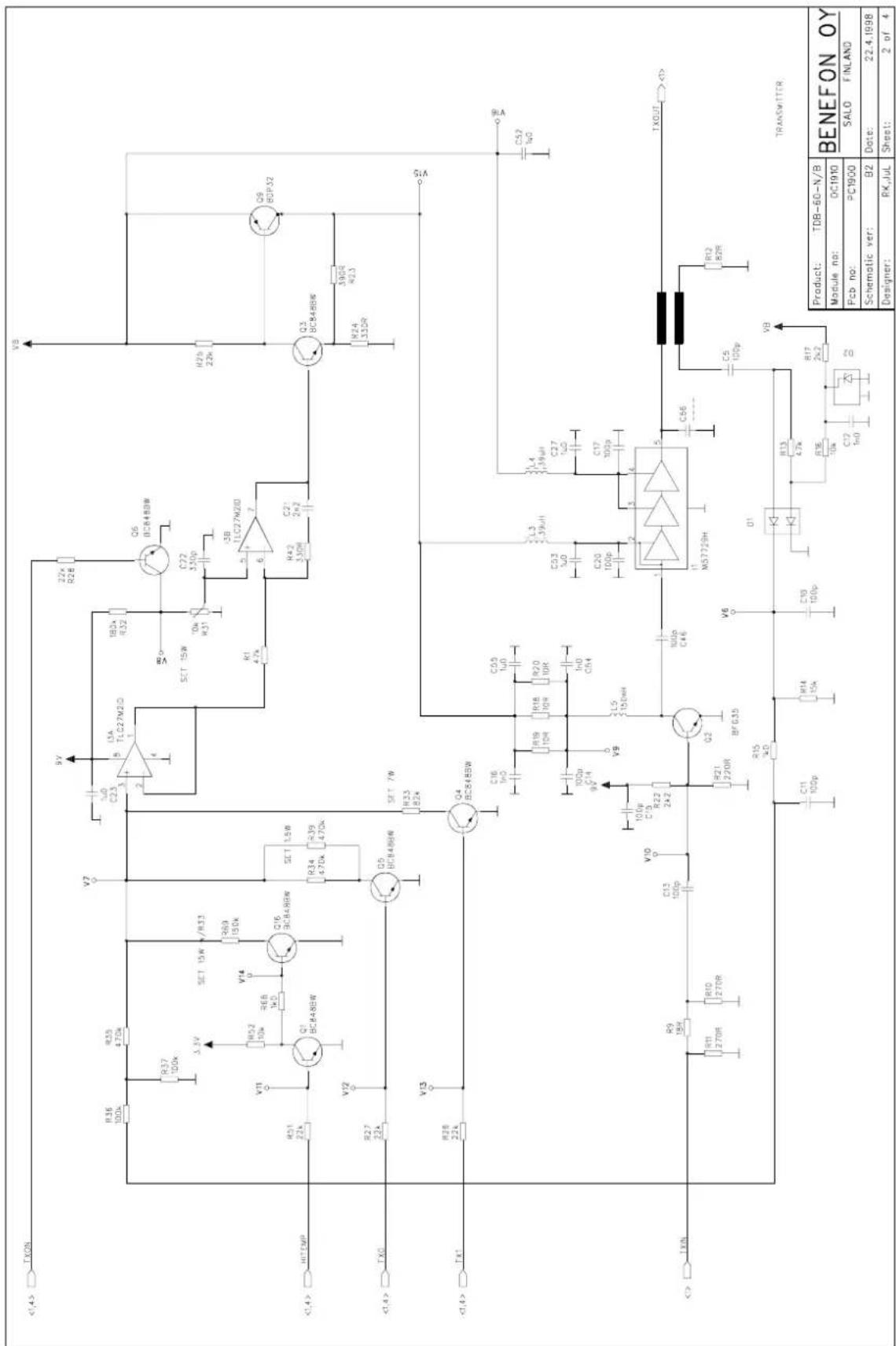
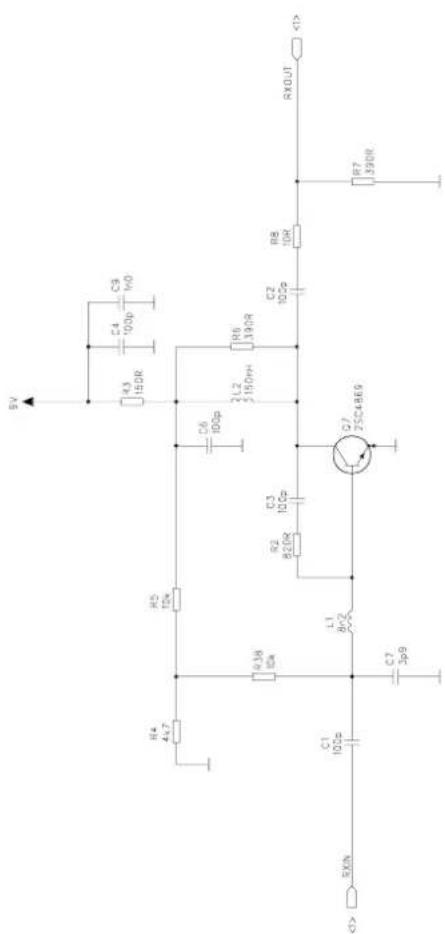
FRONT-END
| Product: | TDB-60-N/B | BENEFON OY | |
| Module no: | OC1910 | ||
| Pcb no: | PC1900 | SALO | FINLAND |
| Schematic var: | C1 | Date: | 23.12.97 |
| Designer: | MT.Jul. | Sheet: | 3 of 4 |
![PWR SUPPLY V2 6 VRATT 5 4 3 2 2 1 1 0 CND C26 SpB C28 47p C19 100p C24 1u0 D3 DIF S4A DB D9 ICTE-18 Q12 BC84BBW Q15 BC84BBW Q16 BC85BBW 3.3V R4B 10k R47 10k R48 10k R49 10k R67 100k Q14 BC84BBW Q15 BC84BBW 3.3V R5B 10k Q8 2N7002 3.3V D40 1u0 D41 100k C18 1u0 C19 100k C20 1u0 C21 1u0 C22 1u0 C23 1u0 C24 1u0 C25 1u0 C26 1u0 C27 1u0 C28 1u0 C29 1u0 C30 1u0 C31 1u0 C32 1u0 C33 47u/25V TP4 TP3 D6 R4D 27R R57 100k IN ERROR SENSE ADJ DN CNO 1 2 4 5 6 7/16V 8 V REGULATOR 9 V REGULATOR 12 OUT 1 2 4 R43 10x C34 10n C58 4w7/16V TP1 TP2 L5 100pH IN ERROR SENSE ADJ DN CNO 4 R44 10x C35 10n C39 4w/16V TXON TXI INTEMP TXO4 XII XIII TXIV TXV TXW TXW = TXW = TXW = TXW = TXW = TXW = TXW = TXW = TXW = TXW = TXW = TXW = TXW = TXW = TXW = TXW = TXW = TXW = TXW = TXW = TXW = TXW = TXW = TXW = TXW = TXW - TXW - TXW - TXW - TXW - TXW - TXW - TXW - TXW - TXW - TXW - TXW - TXW - TXW - TXW - TXW - TXW - TXW - TXW - TXW - TXW - TXW - TXW - TXW - TXW - TXW = TXW = TXW = TXW = TXW = TXW = TXW = TXW = TXW = TXW = TXW = TXW = TXW = TXW = TXW = TXW = TXW = TXW = TXW = TXW = TXW = TXW = TXW = TXW = TXW - TXW - TXW - TXW - TXW - TXW - TXW - TXW - TXW - TXW - TXW - TXW = TXW = TXW = TXW = TXW = TXW = TXW = TXW = TXW = TXW = TXW = TXW = TXW = TXW - [TC 623] TC 623 R58 7 8 9 R64 0.9 R65 5 R66 6 R67 7 R68 8 R69 9 R70 0.9 R72 7 R73 8 R74 9 R75 0.9 R76 7 R77 8 R78 9 R79 0.9 R80 7 R82 8 R83 9 R84 0.9 R85 7 R86 8 R87 9 R88 0.9 R89 7 R90 8 R92 9 R93 0.9 R94 7 R95 8 R96 9 R97 0.9 R98 7 R99 8 R9A 9 A B C D E F G H I T H M S T T T T T T T T T T T T T T T T T T T T T T T T T T T T T T T T T T T T T T T T T T T T T T T T T T T T T T T T T T T T T T T T T T T T T T T T T T T T T T T T T T T T T T T T T T T T T T T T T T T](/content/2026/06/1233788/images/83455fe37e57daa94ba3b5fd5d5c045a6ad1bcd2fbe8bf970a605a11bb8b10ad.jpg)
8.0 OTHER ACCESSORIES

OTHER ACCESSORIES
8.1 PORTABLE HANDS FREE KIT EHD-60
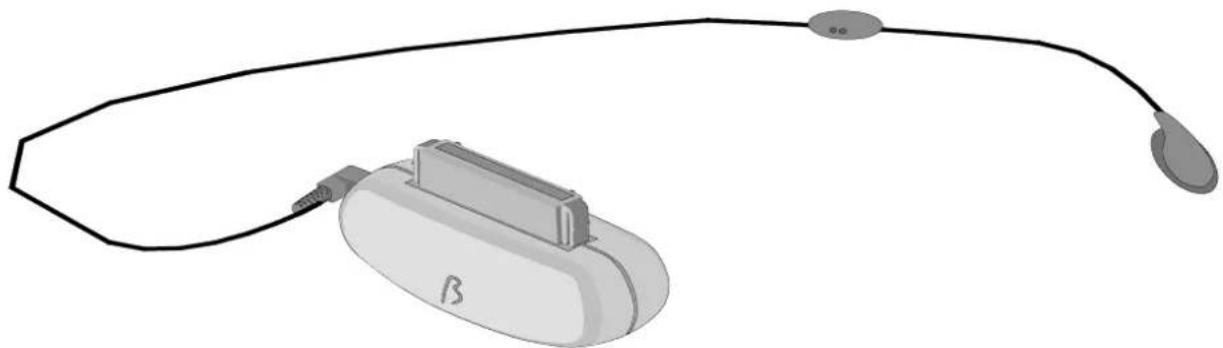
natural_image
Illustration of a computer mouse with a cable and ear, labeled 'B' (no text or symbols on the device itself)The Benefon portable hands free kit is designed to make the use of a mobile phone easier in various working situations. When you plug the portable hands free kit into your phone you can make and answer phone calls and use your hands at the same time.
The portable hands free kit consists of an earpiece/microphone part and an adapter (EHD-60).
8.1.1 SPECIFICATION FOR HEADSET ADAPTER OO0313
8.1.1.1 Including attached functions
- power supply filtering
- voltage regulator
- handsfree amplifiers
- cellular phone connector
- earphone connector
8.1.2 Connector descriptions
8.1.2.1 Earphone connector V101:
1 GND ground
2 MIC audiosignal from microphone
3 ERP audiosignal to earphone
4 N C
8.1.2.2 Cellular phone connector V100
1 N C
2 N C
3 VBATT battery voltage
4 N C
5 EXTMIC microphone signal
6 GND ground
7 GND ground
8 EXTERP earphone signal
9 CADET not used
10 NC
11 NC
12 NC
13 NC
14 NC
15 EXTIO external I/O
16 NC
8.1.3 Operation
Operating voltage is fed to pin VBATT (V100.3). It is regulated to 3.3 V (VB) with I101.
Reference voltage VB/2 is produced with voltagedivider R120 and R 121.
Bias voltage to microphone is fed through R100, R101 and R102.
Audiosignal from microphone is amplified and filtered by amplifiers I100A and I100B. Audiosignal to earphone is amplified by amplifiers I100C and I100D.
Detection of headset adapter is done by pulling pin V100/15 (EXTIO) to ground with resistor R151.
8.1.4 Parts list OO0313
CODE PART DESCRIPT. VALUE MANUF. TYPE
| CU3106 C100 SMD tantal 10uF / 6V +-20% AVX TAJA106M006R | |||||
| CU3106 C101 SMD tantal 10uF / 6V +-20% AVX TAJA106M006R | |||||
| CF0473 | C103 | SMD capasitor | 47 nF 10% 50 V X7R | Philips | |
| CF0270 | C104 | SMD capasitor | 27pF 5% 50V NPO | Philips | |
| CF0270 | C105 | SMD capasitor | 27pF 5% 50V NPO | Philips | |
| CF0330 | C106 | SMD capasitor | 33 pF 5% 50 V NP0 | Philips | |
| CF0223 | C107 | SMD capasitor | 22 nF 10% 50 V X7R | Philips | |
| CF0101 | C108 | SMD capasitor | 100 pF 5% 50 V NP0 | Philips | |
| CF0473 | C110 | SMD capasitor | 47 nF 10% 50 V X7R | Philips | |
| CF0270 | C111 | SMD capasitor | 27pF 5% 50V NPO | Philips | |
| CF0270 | C112 | SMD capasitor | 27pF 5% 50V NPO | Philips | |
| CF0330 | C113 | SMD capasitor | 33 pF 5% 50 V NP0 | Philips | |
| CF0473 | C114 | SMD capasitor | 47 nF 10% 50 V X7R | Philips | |
| CU3106 C120 SMD tantal 10uF / 6V +-20% AVX TAJA106M006R | |||||
| CF0101 | C121 | SMD capasitor | 100 pF 5% 50 V NP0 | Philips | |
| CU3106 C122 SMD tantal 10uF / 6V +-20% AVX TAJA106M006R | |||||
| CU3475 | C123 | SMD tantal | 4.7uF/10V 20% | AVX | TAJA475M010R |
| CF0101 | C124 | SMD capasitor | 100 pF 5% 50 V NP0 | Philips | |
| CU3106 C130 SMD tantal 10uF / 6V +-20% AVX TAJA106M006R | |||||
| CF0101 | C131 | SMD capasitor | 100 pF 5% 50 V NP0 | Philips | |
| CF0270 | C132 | SMD capasitor | 27pF 5% 50V NPO | Philips | |
| CF0270 | C133 | SMD capasitor | 27pF 5% 50V NPO | Philips | |
| CF0473 | C134 | SMD capasitor | 47 nF 10% 50 V X7R | Philips | |
| CF0270 | C140 | SMD capasitor | 27pF 5% 50V NPO | Philips | |
| CF0270 | C141 | SMD capasitor | 27pF 5% 50V NPO | Philips | |
| CF0270 | C142 | SMD capasitor | 27pF 5% 50V NPO | Philips | |
| CF0473 | C143 | SMD capasitor | 47 nF 10% 50 V X7R | Philips | |
| CF0101 | C150 | SMD capasitor | 100 pF 5% 50 V NP0 | Philips | |
| CF0270 | C151 | SMD capasitor | 27pF 5% 50V NPO | Philips | |
| CF0270 | C152 | SMD capasitor | 27pF 5% 50V NPO | Philips | |
| CF0270 | C160 | SMD capasitor | 27pF 5% 50V NPO | Philips | |
| CF0270 | C161 | SMD capasitor | 27pF 5% 50V NPO | Philips | |
| IA6484 | I100 | Quad op.amp. | CMOS Rail-to-rail I/O | NationalSe | LMC6484IM |
| IR2986 | I101 | Regulator | 3.3V 200mA | NationalSe | LP2986AIMMX-3.3 |
| LF0102 | L124 | SMD EMIFIL | Murata | BLM21A102FPT | |
| LF0102 | L126 | SMD EMIFIL | Murata | BLM21A102FPT | |
| LF0102 | L160 | SMD EMIFIL | Murata | BLM21A102FPT | |
| LF0102 | L161 | SMD EMIFIL | Murata | BLM21A102FPT | |
| LF0102 | L162 | SMD EMIFIL | Murata | BLM21A102FPT | |
| RF0471 | R100 | SMD resistor | 470 R 5% 0.125 W | Kamaya | |
| RF0471 | R101 | SMD resistor | 470 R 5% 0.125 W | Kamaya | |
| RF0222 | R102 | SMD resistor | 2.2 k 5% 0.125 W | Kamaya | |
| RF0103 | R103 | SMD resistor | 10 k 5% 0.125 W | Kamaya | |
| RF0822 | R104 | SMD resistor | 8.2 k 5% 0.125 W | Kamaya | |
| RF0683 | R105 | SMD resistor | 68 k 5% 0.125 W | Kamaya | |
| RF0103 | R110 | SMD resistor | 10 k 5% 0.125 W | Kamaya | |
| RF0103 | R111 | SMD resistor | 10 k 5% 0.125 W | Kamaya | |
| RF0104 | R112 | SMD resistor | 100 k 5% 0.125 W | Kamaya | |
| RF0222 | R113 | SMD resistor | 2.2 k 5% 0.125 W | Kamaya | |
| RF0222 | R120 | SMD resistor | 2.2 k 5% 0.125 W | Kamaya | |
| RF0222 | R121 | SMD resistor | 2.2 k 5% 0.125 W | Kamaya | |
| RF0100 | R123 | SMD resistor | 10 R 5% 0.125 W | Kamaya | |
| RD0102 | R125 | SMD resistor | 1 k 5% 0.125 W | Kamaya | |
| RD0102 | R127 | SMD resistor | 1 k 5% 0.125 W | Kamaya | |
| RF0101 | R130 | SMD resistor | 100 R 5% 0.125 W | Kamaya | |
| RF0103 | R131 | SMD resistor | 10 k 5% 0.125 W | Kamaya | |
| RF0472 | R132 | SMD resistor | 4.7 k 5% 0.125 W | Kamaya | |
CODE PART DESCRIPT.
RF0103 R133 SMD resistor 10 k 5% 0.125 W
RF0103 R140 SMD resistor 10 k 5% 0.125 W
RF0472 R141 SMD resistor 4.7 k 5% 0.125 W
RF0103 R142 SMD resistor 10 k 5% 0.125 W
RF0103 R151 SMD resistor 10 k 5% 0.125 W
VN0342 V100 SMD system connector 16 pin
VN0009 V101 Stereo jack 2,5mm miniature
VALUE
MANUF.
TYPE
Kamaya
Kamaya
Kamaya
Kamaya
Kamaya
AMP 338271-1
Hosiden HSJ1603-010020
Last
update
18.03.98
The Top Side Layout PO0313
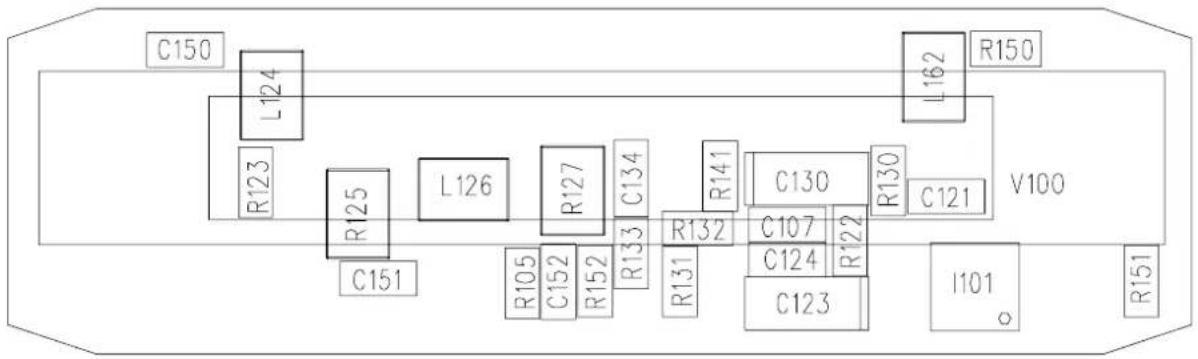
P00313A1 803
The Bottom Side Layout PO0313
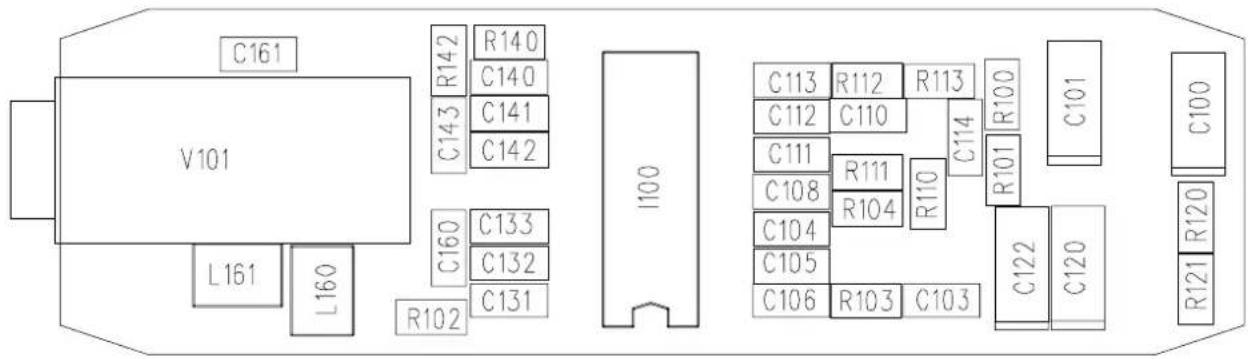
EO8 1A51E009
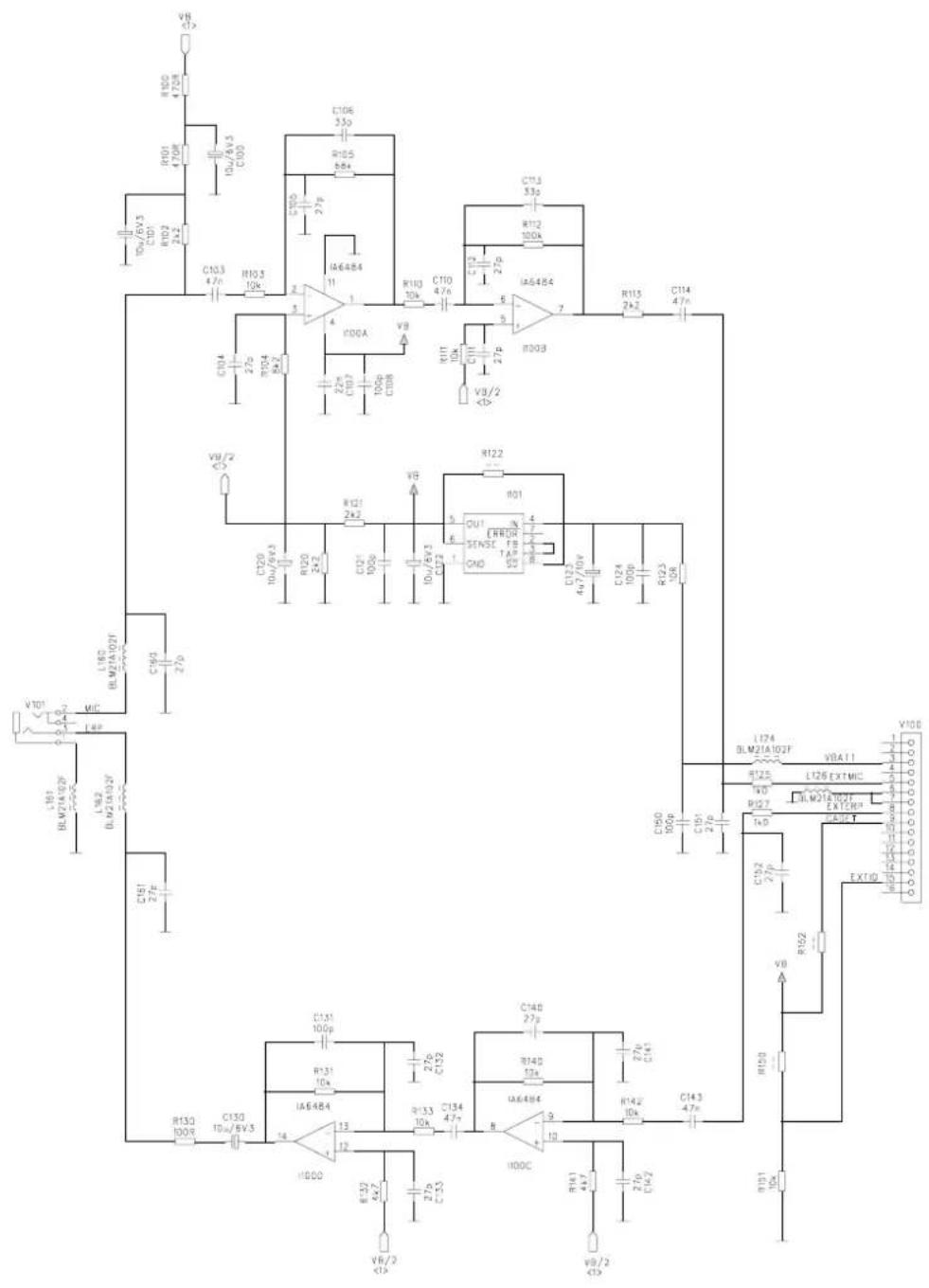
| P00313A2 | A2 | A1 |
| P00313A1 | A1 | A1 |
| Macate | Schematics | PCB |
| Product: | Headset Adapter | BENEFON OY | |
| Module no: | 000313 | SALO | FINLAND |
| PCB no: | P00313 | ||
| Schematic var: | A2 | Date: | 17.3.1998 |
| Designer: | JH | Sheet: | 1 of 1 |