SR40/HC - Mikrofoni Earthworks - Ilmainen käyttöohje ja opas
Löydä laitteen käyttöohje ilmaiseksi SR40/HC Earthworks PDF-muodossa.


Käyttäjien kysymyksiä aiheesta SR40/HC Earthworks
0 kysymys tästä laitteesta. Vastaa tuntemiisi tai esitä omasi.
Esitä uusi kysymys tästä laitteesta
Lataa ohjeet laitteellesi Mikrofoni PDF-muodossa ilmaiseksi! Löydä käyttöohjeesi SR40/HC - Earthworks ja ota elektroninen laitteesi takaisin hallintaan. Tällä sivulla julkaistaan kaikki laitteidesi käyttöön tarvittavat asiakirjat. SR40/HC merkiltä Earthworks.
KÄYTTÖOHJE SR40/HC Earthworks
Product Registration
To help you get the most out of your Earthworks purchase, please take a moment and register your product with us online at earthworksaudio.com/register.
Service & Repair
If you have any problems with your Earthworks products, please contact our Service & Repair Department.
Email: returns@earthworksaudio.com
Telephone: (603) 654-2433, ext. 119

SR40
Multi-Purpose Cardioid High Definition Microphone ^TM
User's Guide
Description
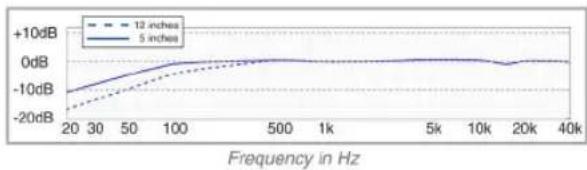
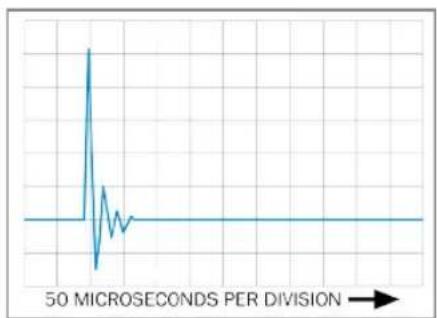
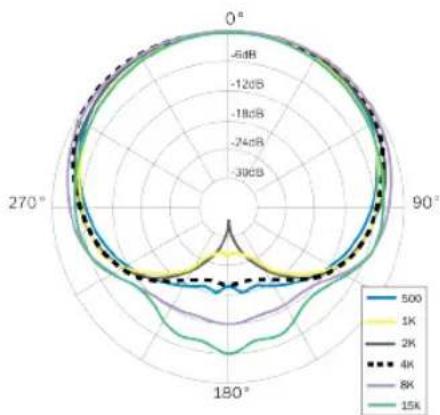
The Earthworks SR40 is a directional pre-polarized condenser microphone with a first-order cardioid pickup pattern directly coupled to a dedicated wideband, low output impedance transformerless preamplifier. The SR40 requires a standard 24-48V Phantom Power supply. It features a frequency response from 20Hz to 40kHz, fast impulse response, very low handling noise, uniform polar pattern, and high SPL handling. The SR40 provides excellent uncolored rejection of sounds arriving off-axis.
Each SR40 microphone is delivered with its own calibration chart providing its individually measured frequency response curve. A mounting clip is included with the microphone.
Applications
The Earthworks SR40 is easy to operate. Connect the microphone to a microphone preamplifier supplying 24-48V phantom power using a standard XLR microphone cable. Please allow up to one minute for the microphone to settle. Plugging in the microphone "hot" (phantom power already present at the input) will not damage the microphone, and is actually preferred for faster settling. It is normal for any phantom powered mic to cause a "pop" in the audio or recording system when plugged in or powered up. Make sure to mute the signal to speakers or headphones when phantom power is first applied to the microphone.
The excellent performance characteristics of the SR40 allow it to be utilized for a very wide range of applications. In the studio or on stage the SR40 is an ideal choice for a variety of instruments including sax, flute, trumpet, guitar, piano, and percussion. It is superior for vocals or choir because it doesn't spotlight; rather, it uniformly picks up an entire section. The SR40 is popular among concert tapers because of its open uncolored sound and among jazz enthusiasts for its ability to capture explosive performances while retaining the subtle nuances of artistic expression.
This microphone has no removable parts.
Care of Microphone
The Earthworks SR40 microphone is a precision instrument designed and built to provide years of top performance. Follow these simple rules to help to protect your investment in the SR40:
- Avoid touching the front protective screen.
- Never attempt to disassemble the microphone – it cannot be opened.
- Avoid extreme heat and condensing humidity. Allow the microphone to warm up in the case when bringing it in from the cold weather.
- Rough handling may damage the microphone even if no visible marks are left.
- When not in use keep the SR40 in its case.
Specifications
Frequency response: 20Hz to 40kHz
Polar Pattern: Cardioid
Sensitivity: 20mV/Pa (-34dBV/Pa)
Power Requirements: 24-48V Phantom, 10mA
Peak Acoustic Input: 139dB SPL
Output: XLR-3
Output Impedance: 65Ω, balanced between pins 2 & 3
Minimum Load: 600Ω btw. pins 2 & 3
Noise: 16dB, A equivalent
Dimensions L x D: 229 x 22 mm (9 x .860 in.)
Weight: 225g (.5lb)
Specifications are subject to change without notice.
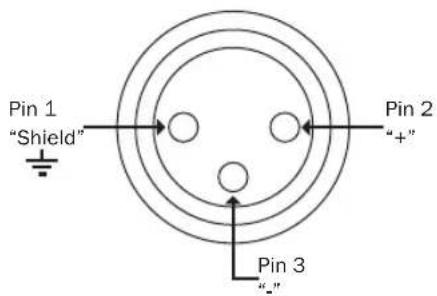
XLR Output Connector Assignment of SR40
line
| Frequency in Hz | 12 inches | 5 inches | | --------------- | --------- | -------- | | 20 | -15dB | -10dB | | 30 | -12dB | -8dB | | 50 | -8dB | -5dB | | 100 | -5dB | -2dB | | 500 | -2dB | 0dB | | 1k | 0dB | 0dB | | 5k | 0dB | 0dB | | 10k | 0dB | 0dB | | 20k | 0dB | 0dB | | 40k | 0dB | 0dB |Frequency Response of SR40 (typical)
line
| Time (Microseconds) | Value | | ------------------- | ----- | | 0 | 0 | | 10 | 100 | | 20 | -100 | | 30 | 50 | | 40 | 0 | | 50 | 0 |Impulse Response of SR40 (typical)
radar
| Angle | 500dB | 1KdB | 2KdB | 4KdB | 8KdB | 15KdB | |---|---|---|---|---|---|---| | 0° | -6dB | -6dB | -6dB | -6dB | -6dB | -6dB | | 90° | -6dB | -6dB | -6dB | -6dB | -6dB | -6dB | | 180° | -30dB | -30dB | -30dB | -30dB | -30dB | -30dB | | 270° | -6dB | -6dB | -6dB | -6dB | -6dB | -6dB |Polar Response of SR40 (typical)