BO212MAN - Cooker BOMPANI - Free user manual and instructions
Find the device manual for free BO212MAN BOMPANI in PDF.


User questions about BO212MAN BOMPANI
0 question about this device. Answer the ones you know or ask your own.
Ask a new question about this device
Download the instructions for your Cooker in PDF format for free! Find your manual BO212MAN - BOMPANI and take your electronic device back in hand. On this page are published all the documents necessary for the use of your device. BO212MAN by BOMPANI.
USER MANUAL BO212MAN BOMPANI
INSTRUCTIONS FOR THE INSTALLATION AND USE OF BUILT-IN HOT PLATES

INSTRUCTIONS POUR L'INSTALLATION ET L'UTILISATION DES TABLES DE CUISSON AU GAZ
ИНСТРУКЦА NO YCTAHOBKE И NGПОЛьЗОВАнЮ ГАЗОБыX ВСТРANBAEMыX NOBEPEXHOCTEД

We invite you to read this instruction booklet carefully, before installing and using the equipment. It is very important that you keep this booklet together with the equipment for any future consultation.
If this equipment should be sold or transferred to another person, make sure that the new user receives the booklet, so that he can learn how to operate the appliance and read the corresponding notice.
This is a Class 3 appliance.
This appliance complies with the following Directives:
EEC 2009/142/CE (Gas) EEC 2004/108/CE (Electromagnetic Compatibility)
EEC 2006/95/CE (Low Voltage) EEC 2004/1935/CE (Contact with foods)
- The installation must be carried out by experienced and qualified personnel, in conformity with the regulations in force.
- This equipment has been designed to be used by adults.
- Therefore, make sure that children do not go near the equipment to play with it.
- While the appliance is running, watch the children and make sure they neither stay near the equipment, nor touch the surfaces that have not cooled down completely.
- Before powering the equipment, check that it is properly adjusted for the type of gas at disposal (see the "installation" paragraph).
- Before carrying out the maintenance or cleaning the equipment, cut power supply off and make it cool down.
- Make sure that air circulates around the gas equipment. Insufficient ventilation produces a lack of oxygen.
- In case of an intense or prolonged use of the equipment, it may be necessary to improve aeration, for example by opening a window or increasing the mechanical suction power, if it exists.
- The products of combustion must be discharged outside through a suction hood or an electric fan (see the "installation" paragraph).
- For any possible operation or modification, apply to an authorized Technical Assistance Centre and demand original spare parts.
WARNING:
If the appliance is equipped with a glass cover, the latter may shatter if heated. Turn off all the burners and wait a few minutes before closing the cover.
The product label, with the serial number, is sticked under the hob.
The manufacturer refuses all responsibility for possible damages to things or people, resulting from a wrong installation or from an improper, incorrect or unreasonable use of this equipment.
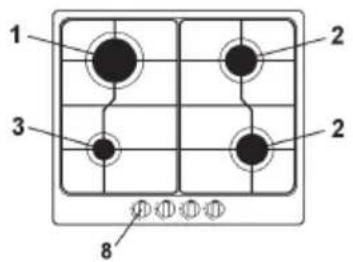
(EE_gas hob = 56.9%) (EE
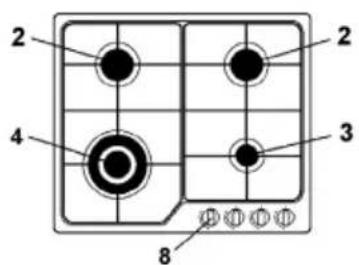
gas hob = 57.4 %)
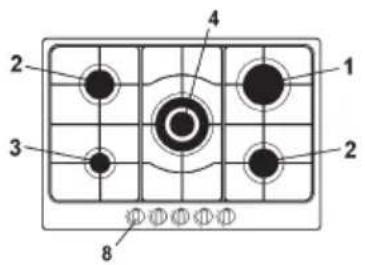
(EE_gas hob = 57.2%) (EE
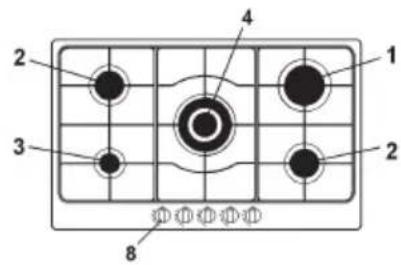
gas hob = 57.2%
1 Rapid burner 3000 W
2 Semi-rapid burner 1750 W
3 Auxiliary burner 1000 W
4 Triple ring burner 3800 W
8 Control knob for burner
TECHNICAL CHARACTERISTIC TABLES
| BURNERS | GAS | NORMAL PRESSURE | NORMAL RATE | IN J E C T O R DIAMETER | TAPE BY PASS DIAMETER | NOMINAL HEAT INPUT (W) | (EE gas hob) | |||
| N° | DESCRIPTIONS mb | g/h L/h 1/100 mm 1/100 m | Max. | Min. (%) | ||||||
| 1 | RAPID | G30 - G31 28 - 30 225 - 85 G20 | - | 42 290 | 3000 950 115Y | Reg. | 3000 | 950 | 56.7 | |
| 2 | SEMI-RAPID | G30 - G31 28 - 30 126 - 65 G20 | - | 31 165 | 1750 600 97Z | Reg. | 1750 | 600 | 57 | |
| 3 | AUXILIARY | G30 - G31 28 - 30 278 - 98 G20 | - | - 99 | 50 72X | Reg. | 1000 1000 | 450 450 | / | |
| 4 | TRIPLE RING | G30 - G31 28 - 30 278 - 98 G20 | - | 60 367 | 3800 2100 135K | Reg. | 3800 | 2100 | 58.1 | |
Short title or reference to the measurement and calculation methods used to establish compliance with the above requirements.
The performance of each individual burner is calculated according to standard EN 30-2-1 + A1:2003 + A2:2005
The total efficiency of the hob is calculated according to the EU Regulation 66/2014 Par. 2.2
The efficiency is calculated only for the burners with a nominal capacity exceeding 1,16 KW ( EN 30-2-1 + A1:2003 + A2:2005; Par. 4.1)
Information which is relevant to the customer to minimize the energy consumption during usage:
Energy Saving Tips: use pots having flat base, Use pots with proper size, use pots with lid, minimize the amount of liquid or fat, when liquid starts boiling reduce the setting.
This product complies with EU Directive 2002/96/EC.
The crossed-out dustbin symbol reported on the appliance indicates that the appliance must be disposed of separately from other domestic refuse at the end of its useful life. It must therefore be delivered to a waste recycling centre specifically for electric and electronic equipment or returned to the retailer at the moment of purchase of a new equivalent appliance.
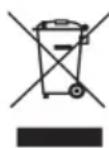
The user is responsible for delivering the appliance to the appropriate collection centre at the end of its useful life, Failure to do so may result in a fine, as provided for by laws governing waste disposal. Differential collection of waste products for eventual recycling, treatment and environmentally friendly disposal helps reduce possible negative effects on the environment and health, and also enables the materials making up the product to be recycled. For more detailed information on the available refuse collection systems, refer to the local Municipal Solid Waste disposal centre or the shop where the product was purchased. Producers and importers are responsible for fulfilling their obligations as regards recycling, treatment and environmentally friendly disposal by directly or indirectly participating in the collection system.
INSTRUCTIONS FOR THE USER

It is necessary that all the operations regarding the installation, adjustment and adaptation to the type of gas available are carried out by qualified personnel, in conformity with the regulations in force.
The specific instructions are described in the booklet section intended for the installer.
USING THE BURNERS
The symbols silk-screen printed on the side of the knob indicate the correspondence between the knob and the burner.
Start-up without valves
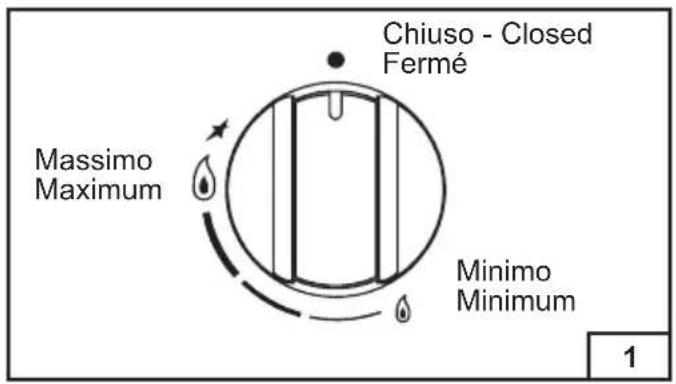
Turn the corresponding knob anticlockwise up to the maximum position (large flame, fig. 1) and press.
Automatic start-up with valves
Turn the corresponding knob anticlockwise up to the maximum position (large flame, fig. 1) and press the knob. Once the burner has been started up, keep the knob pressed for about 6 seconds.
Using the burners
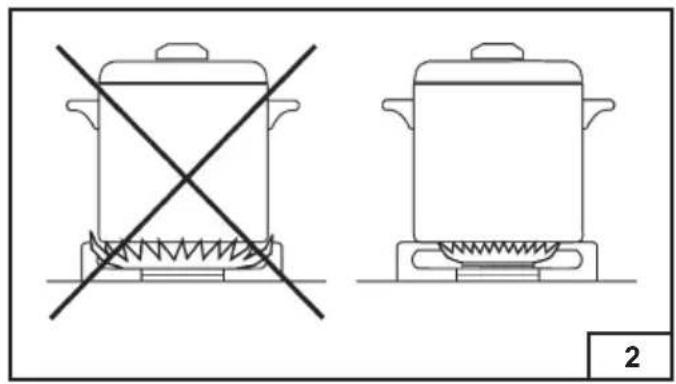
In order to obtain the maximum yield without waste of gas, it is important that the diameter of the pot is suitable for the burner potential (see the following table), so as to avoid that the flame goes out of the pot bottom (fig. 2).
Use the maximum capacity to quickly make the liquids reach the boiling temperature, and the reduced capacity to heat food or maintain boiling. All of the operating positions must be chosen between the maximum and the minimum ones, never between the minimum position and the closing point.
Use the maximum capacity to quickly make the liquids reach the boiling temperature, and the reduced capacity to heat food or maintain boiling. All of the operating positions must be chosen between the maximum and the minimum ones, never between the minimum position and the closing point.
The gas supply can be interrupted by turning the knob clockwise up to the closing position.
If there is no power supply, it is possible to light the burners with matches, setting the knob to the start-up point (large flame, fig. 1).
| BURNERS POWER | VER W Ø of pots | |
| Auxiliary 1000 | 10 - 14 cm | |
| Semi-rapid 1750 | 16 - 18 cm | |
| Rapid 3000 20 | 22 cm | |
| Triple crown 380 | 0 22 - 24 cm |
Notice
- When the equipment is not working, always check that the knobs are in the closing position (see fig.1).
- If the flame should blow out accidentally, the safety valve will automatically stop the gas supply, after a few
seconds. To restore operation, set the knob to the lighting point (large flame, fig. 1) and press.
- While cooking with fat or oil, pay the utmost attention as these substances can catch fire when overheated.
- Do not use sprays near the appliance in operation.
- Do not place unstable or deformed pots on the burner, so as to prevent them from overturning or overflowing.
- Make sure that pot handles are placed properly.
- When the burner is started up, check that the flame is regular and, before taking pots away, always lower the flame or put it out.
CLEANING
Before any operation, disconnect the appliance from the electric grid.
It is advisable to clean the appliance when it is cold.
Enamelled parts
The enamelled parts must be washed with a sponge and soapy water or with a light detergent.
Do not use abrasive or corrosive products.
Do not leave substances, such as lemon or tomato juice, salt water, vinegar, coffee and milk on the enamelled surfaces for a long time.
Stainless steel parts
Stainless steel can be stained if it remains in contact with highly calcareous water or aggressive detergents for an extended period of time.
The stainless steel parts should also be cleaned with soapy water and then dried with a soft cloth.
Burners and racks
These parts can be removed to make cleaning easier.
The burners must be washed with a sponge and soapy water or with a light detergent, wiped well and placed in their housing perfectly. Make sure that the flame-dividing ducts are not clogged.
Check that the feeler of the safety valve and the start-up electrode are always perfectly cleaned, so as to ensure an optimum operation.
Gas taps
The possible lubrication of the taps must be carried out by specialized personnel, exclusively.
In case of hardening or malfunctions in the gas taps, apply to the Customer Service.
INSTRUCTIONS FOR THE INSTALLER

IMPORTANT NOTICE:
THE OPERATIONS INDICATED BELOW MUST BE FOLLOWED BY QUALIFIED PERSONNEL EXCLUSIVELY, IN CONFORMITY WITH THE REGULATIONS IN FORCE.
THE MANUFACTURING FIRM REFUSES ALL RESPONSIBILITY FOR DAMAGES TO PEOPLE, ANIMALS OR THINGS, RESULTING FROM THE FAILURE TO COMPLY WITH SUCH PROVISIONS.
INSTALLATION
Installing the top
The appliance is designed to be embedded into heat-resistant pieces of furniture.
The walls of the pieces of furniture must resist a temperature of 75^ besides the room one.
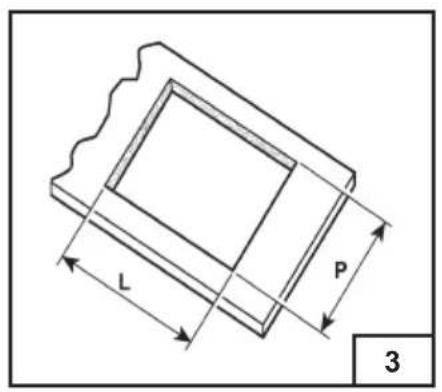
The equipment must not be installed near inflammable materials, such as curtains, cloths, etc. Make a hole in the top of the piece of furniture, with the dimensions indicated in fig. 3, at a distance of at least 50~mm from the appliance border to the adjacent walls.
| MODEL L (mm) | P (mm) | |
| 600 - 750 560 480 | - 490 (*) | |
| 900 820 480 - | 490 (*) |
(*) Necessary size for the installation with cover.
Any possible wall unit over the cook-top must be placed at a distance of at least 760~mm from the top.
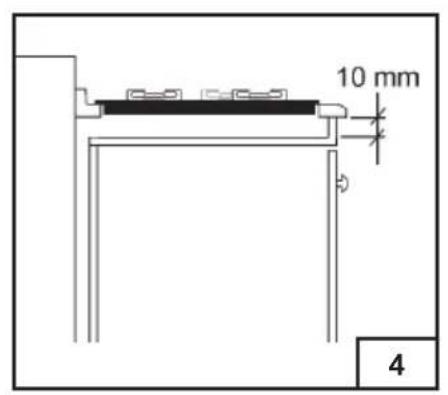
It is advisable to isolate the appliance from the piece of furniture below with a separator, leaving a depression space of at least 10mm (fig. 4).
If the hob is going to be installed on the top of an oven, precautions must be taken to guarantee an installation in accordance with current accident prevention standards. Pay particular attention to the position of the electric cable and gas pipe: they must not touch any hot parts of the oven.
Moreover, if the hob is going to be installed on the top of a built in oven without forced cooling ventilation, proper air vents must be installed to guarantee an adequate ventilation, with the lower air entering with a cross section of at least 200cm^2 and the higher air exiting with a cross section of at least 60cm^2 .
Fastening the top
Every cook-top is equipped with a special washer. A set of hooks is also supplied for mounting the cook-top.
Depending on the type of mounting surface, the suitable type of mounting hook is supplied (hook A or hook B).
For the installation proceed as follows:
- Remove the racks and burners from the top.
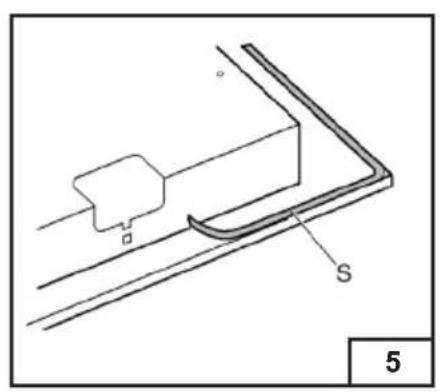
- Turn the appliance upside down and lay the washer S along the external border (fig. 5).
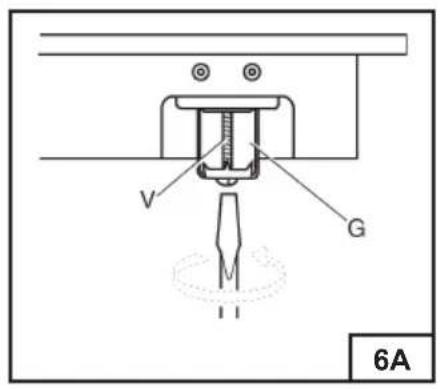
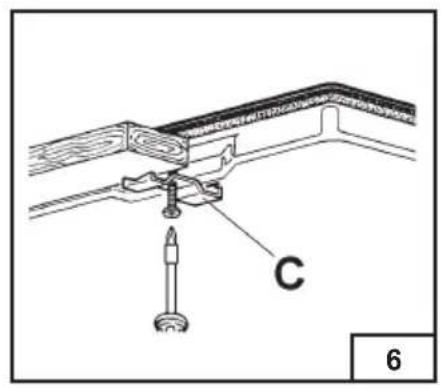
- Introduce and place the cook-top in the hole made in the piece of furniture, then block it with the V screws of the fastening hooks G (fig.6 / 6A).
Installation room
This appliance is not provided with a device for exhausting the products of combustion.
Regarding room ventilation rules where appliance is installed make reference to the legislation, in conformity with the local regulations.
FOR THE U.K. ONLY
The room containing this hotplate should have an air supply in accordance with BS 5440: Part 2: 1989.
- All rooms require an openable window, or equivalent and some rooms will require a permanent vent a well.
- For room volumes up to 5m^3 an air vent of 100cm^2 is required.
- For room volumes between 5m^3 and 10m^3 an air vent of 50cm^2 is required.
- If the room is greater than 5 m² and has a door that opens directly to the outside, then no air vent is required.
If there are other fuel burning appliances in the same room BS 5440: Part 2:1989 should be consulted to determine the air vent requirements.
INSTRUCTIONS FOR THE INSTALLER
Gas connection
Make sure that the appliance is adjusted for the gas type available (see the label under the appliance). Follow the instructions indicated in the chapter "gas transformations and adjustments" for the possible adaptation to different gases.
The appliance must be connected to the gas system by means of stiff metal pipes or flexible steel pipes having continuous walls, in compliance with the regulations in force.
Some models are equipped with both cylindrical A and conical B connectors for gas supply (fig. 7).
Please select the type which is correct for the supply concerned.
The connection must not stress the gas ramp.
Once the installation is over, check the connection seal with a soapy solution.
Electric connection
The connection to the electric grid must be carried out by qualified personnel and in conformity with the regulations in force.
The voltage of the electric system must correspond to the value indicated in the label under the appliance. Make sure that the electric system is provided with an effective ground connection in compliance with the regulations and provisions of the law. Grounding is compulsory.
GAS TRANSFORMATIONS AND ADJUSTMENTS
Replacing the nozzles
If the equipment is adjusted for a type of gas that is different from the one available, it is necessary to replace the burner nozzles.
The choice of the nozzles to replace must be made according to the table of the "technical characteristics" as enclosed.
Act as follows:
- Remove the racks and burners.
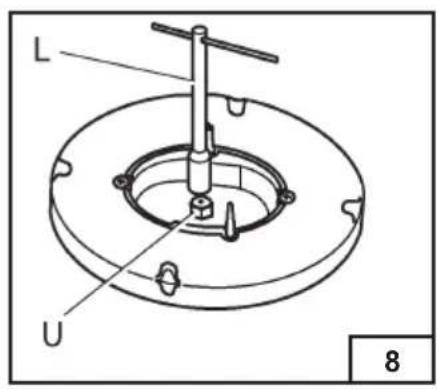
- By means of a straight spanner L, unscrew the nozzle U (fig.8) and substitute it with the corresponding one.
- Tighten the nozzle strongly.
Adjusting the burners
The lowest flame point must always be properly adjusted and the flame must remain on even if there is an abrupt shift from the maximum to the minimum position.
If this is not so, it is necessary to adjust the lowest flame point as follows:
- start the burner up
- turn the tap up to the minimum position (small flame)
- remove the knob from the tap rod
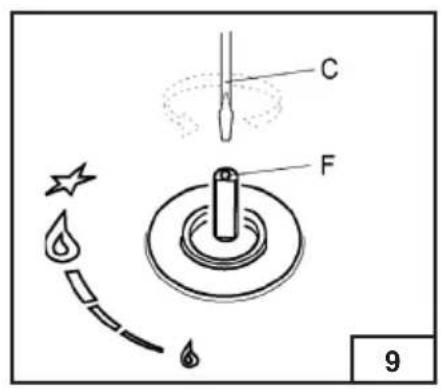
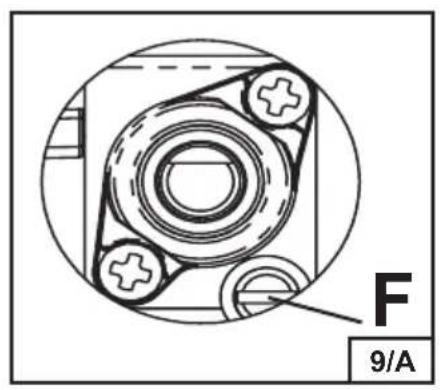
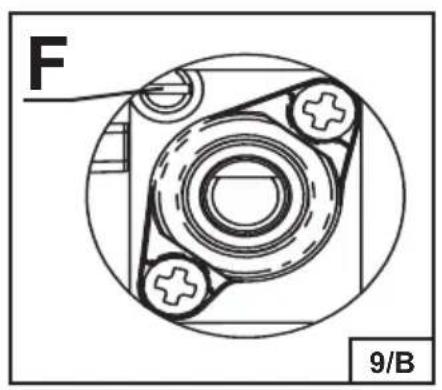
- introduce a flat-tip screwdriver in the hole F of the tap (fig. 9-9/A) and turn the by-pass screw up to a proper adjustment of the lowest flame point.
As regards G30 gas burners, the by-pass screw must be tightened completely.
MAINTENANCE
Replacing the power supply cable
If the power supply cable should be replaced, it is necessary to use a cable with a section of 3 × 0.75 ~mm^2 , type HO5VV-F or H05RR-F, complying with the regulations in force.
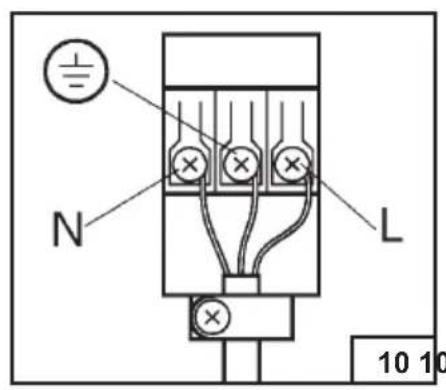
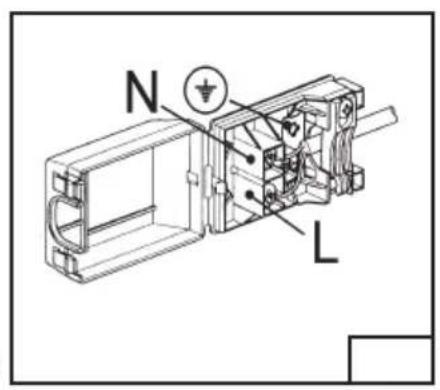
The connection to the terminal board must be effected as shown in fig. 10 - 10/A:
brown cable L (phase)
blue cable N (neutral)
green-yellow cable (ground)

Appareil conforme aux directives:
TABJIUCA TEXHnueCKNX XAPAKTEPNCNTIK
KpaTkoe Ha3BaHne HJN CcblIKn Ha H3MepeHn I MeToOB paChTeA, NcNoJIb3YeMbIX JIyCTaHOBJIeHn COOTBeTCTBn BblweyKa3aHHbIM Tpe6ObaHnM
ПОНЗВОДИТЕЛБНOCТКАЖДОТО OTДЕЛБНО ГОРЕЛКI pACCHTbIBaETcB B COOTBeTCTBи CO CTaHДapTom EN 30-2-1 + A1: 2003 + A2: 2005
O6zra 3oepKTHBHOCTb PJIHTOn paCCHTbIAeTc B COOTBeTCTBn C PerJameHToM EC 66/2014 nap. 2,2
3ΦΦeKTHBHOCTb paccHTbIaETcTToJIbKO dIra TOpENoC HOMHaJIbHOJ MOUHOCTbIO, npeBbIaHOuei 1,16 kBt (EN 30-2-1 + A1: 2003 + A2.: 2005; Homnai 4,1)
HOpMaun, KOTopA NMeT OTHOseHne K KIneHTaM CBecTN K MInHMMy IOTpe6JeHne 3Heprn BO BpeM NcNoJIb3OBaHHN
CobetbI no 3Heproc6epeXeHIO: NcnoB3yIte KAcTpOJI, IMeIoUne PLOCKOE OCHOBAHNE, NcnoB3yIte TropKn C npaBnIbHO rpoa, n TropKn C KpbIkwOJ, yMeHbWntb KOJIueCTBO XNkOCTN ININ Knpa, KOrda XnIDKe 3aknnT yMeHbWntb HAcTPOiKy.
3ToT np6Op COOTBeCTBye TnpeKtBc EC 2002/96/CE
Cneuabhni 3nak, n3obpaqhaoyni nepeepkHybmycopnb KoHTeHep, O3Haayet, TOT np6op dOJxhen 6bIb yTIN3npOBaH OTdEbnHO OT 6bITOBbIX OTXODOB cornaCHO cyueCTByoum Hopmam. Bbl nomoxete n36exKaTB OTPncaTeNbHbIX NocJeDCTBNI DnIg OkpykaohcpeDbI IN 3DOpOBbIO IIOdei, KOToPbIE MOryT 6bITB BBIBaHbI HEnpaBnBHO nepepaBOTKo NO OKOHaHn Cpoka Cnyk6bl.
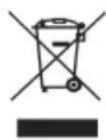
YTNIN3aun npn6opa DOJXHa PON3BOIDTBCB B COOTBeTCTBUN C DeNCTBYUOUM PnpoDOOOPAHBBIM 3aKHOODaTeNBCTBOM IN PpABNJAMN YTNIN3aun OTXODOB.
Iy npuyen H 60lee noDpo6Hou nHpOpMaunno BTOpHOn nepepaOke TOro np6opacne dyet obaaTbca B COOTBeTCTByUooee BeDomCTBO (eapTaMeHT kONornnn OxpaHbIKpykaioue Cpebl), B cnyk6y ouncTk nnB Maar3HHrde Bbl npno6penn np6op.
HCTPYKUNДЯ NOJb3OBATEJI

Bce pa6oTbI NO yCTaHOBke, perylnpOBKe n nepeHaJaKe dJRA COOTBeTCTByUoIeero Tnna ra3a DOJXHBi BblONHrTbcra KBaINΦuNcnpOBaHHbIM nepCOHaJOM B COOTBeTCTBnC DeIcTBYIOUcMn HopMaMn. CneuaJIbHbIe IHcTpkyKcNn npNBedeHbI B pa3dene, PpeDHa3NaueHHom dJy yCTaHOBzNka.
ПОЛб3OBAHNE ГАЗOBыIMN KOHФOPKAMN
CnmboJIbI, n3o6paXeHHbIe pAnOM c pyKamn, 06o3Haayot nx COOTBeTCTBne OnpedeJenHbIM KOHOpKam.
ABTomatnueckn po3xir 6e3 ra3-KoHTpoJra
NobepHytbypyky KOHΦopKn npOTnB YacOBoi CTpeKN Do noJIOKeHnA «MaKcMym» (BbICOKoe nJaMpaPnc.1) HaxKaTb Ha Hee.
ABTomatnueckn po3KnCra3-KoHTpOJIem
NobepHyTb pyky KOHΦopKn npOTNB YacOBo CTpeKN Do noJIOKeHnA «MaKcIMyM» (BbICOKoe nJaMa pnc.1) HaxKaTb Ha Hee.
Nocne toro kak pnaM 3arOpntc, HaxnMaTb pyky npimepHo 6cekyd.
PekomeHdaaun no noJb3ObaHnIO ra3OBbIMN KOHΦopKaMn
YTO6bI Do6ntbcra MaKcImaJIbHOJ 3ΦΦeKTHBHOCTn npiroTOBJeHn I 3KOHOMnn ra3a, peKOMeHN dyeTcA Jkaxdoi KOHΦOpKn IcNoJIb3OBA Tb KAcTpOJN COOTBeTCTByUoJero DnAmEtpa (CM. HIXeCNeDyIOuTyTObniu). PInamr He DonxHo BbIBNaBaTbcra N3-NOd dHa KAcTpOJN (pnc.2).
IcnoJb3ynte MaKcMaJIbHyIO MoUHOCtB IJaMeHN, YTO6bl 6bICTpo BCKINrTHTb KINKOCTb NHOHXKeHHyO MOuHocTb DnI NOOrpeBa NUsi NnI dIa npoDOnKNTeHBOr KINrYeHn.
IonoXeHn pyuKn cneJyET Bb6npaTb MeKdy 《MaKcMymOM》N《MHNmYMOM》.HeJIb3a Bbl6npaTb MEKdy《MaKcMymOM》N《BbIKIOUyeHO》.
YTo6bl npeBaTb noCTyIeHne ra3a, NOBepHnTe pyky no YacobO B CTpeJIke DO NONOKeHnA «BbIKNoyeHO».
B cnyuae otKnHoueHHaNeKtpo3Heprnn MoXHO 3aKnRaTb KOHOpKn npn NOMOuN CnueK, yCTaHOVB pyKy B noJoxKeHne dIy po3Knra nJaMeHN (BbICOKoe nnamr pnc.1).
Ecnn HnB BapOuHn NOBepxHOCTbIO npEDyCMOTpeH MOHTaK BbITaKKn, OHa DOnKHa HaxoNTbcr OT Hee Ha pacCToAHn He MeHee 760 MM.
PekomeHnyetc n30JnpoBaTb BapOuyu NOBepxHocTb OT Me6eN, B KOTopyo OH BCTpaNBaETc, pa3dEnIteNbHOJ NaHeJIbU, OCTaNB MExNy Hei N npnbopom pacCToRHe He MeHee 10 MM (pnc.4).
EcnB Bapouhna NOBepxHOCTb yctaHaBnBaETcBMeCTe C dyXOBKO, CneDyET npHnTb MepblnpedocTopoKHOCTN IOBecNeuHTb CO6nODeHne npabnI 6e3onacHOCTN. Oco6oe BHNMaHne CneDyET ydeNTb TOMy, YTO6bl WHyp nITaHnraRa3OBa Tpy6a He cOpnKacAIncB C rOpYUMN DetalmN Kopnyca dyXOBKn. Kpome TOrO, npnuCTaHOBe BapouHn NOBepxHOCTN HAd DxyOBKO 6e3 npHuDTenbHOn OxNaJdaUoSei BeHTnJaCIN CneDyET npedymOTpeTB BHN3y OTBepCTnA DnA
PnToka Bo3dyxa C ceeHnem He Mehee 200 eM a BBepxv BbIXoHbIe OTBepCTnR C ceeHnem He Mehee 60 cm².
KpenJIeHne BapOuHNo NOBepxHocTn
B komnneke K bapouhoN noBepxHocT npnilaraetc CneuNaHbHa npoknaKa n Ha6Op kPOHtEINHO BnKpENHeHn.
B 3aBncmoctn ot KOHcTpkykunn DnHua nocTabJareTc COOTBeTCTBYIOUuN TnKPOHHTeHa (A nn B).Iy yctahOBKn BapouHOJ NOBepxHocTN BBINOHNHTe CneDyIOUune ONEpaCUN:
- CHHMMTe peWeTkn IN KpbIkwn pacCeKaTeJeN.
- IpepeBepHnTe npnbOp n 3akpeNte no ero KpaM npokJaKy S (pnc.5).
- BCTaBbTe BapOHyIO NOBepXHocTb B OTBepCTne ДЯ BCTpaUNBaHnN N 3akpeNITE BuHTaM N V, BCTaBJIeHHbIMN B KPOHUsTeHbI KpeNNeHnG (pnc.6/6A).
PomeeHne yCTaHOBKn
3TOT npnbop He coeHHe C obOpdyobAHnem dnydaJIeHn npOyKTOB rOpEHn. B nomeueHN, Ie yCTaHaBnBaEtC BapOuHa NOBepxHOCTb, OJnxHa 6bIb npeDyCMOTpeHa cnCTema ydaJIeHn npOyKTOB cropaHn. 3To MoKeT 6bITb nn60 BBtJkKa, Jn6o BeHTnJIaTOp Ha OKHe nIN BEHTnJIaUHOM OTBepCTn, BKIOUaHOUsneCn pIn NCNoJIb3OBaHHn np6opa.
BnomeueHnn, rde yctaHaBnBaetc np6op,doJxeh 6bIb npedyCMOTpe H eCTeBHbI npitOK BO3dyxa dna HopMaIbHOrO ropeHHra3a n dJa BENTINLauu. O6bem BO3dyxa DoJxeh COCTABJIATb He MeHe 20m^3
EcTeCTBHeHHn npitok BO3dyxa DoJKeH npOnCXoNDtB HApPMyU yepe3 BeHTNJraCIOHOHbIe OTBepCTnB CteHe, NIOo NocpeDCTBOM BO3dyxOBOda. Pa3pe7aetc TaKke npImeHHe HENpAMOB BHTNJrAun NOCpeDCTBOM BbITJAKN BO3dyxa n3 NOMeueHn, npJIeraOuux K KyxHe, npN yCNoBN co6nODeHn DeiCTByOuNX HopM.
MHHMaJIbHoeceeHHeBeHTnIaUNoHHoro OTBepCTn DOJXHOcoCTaBnTb200cm².
IPODCOEDINHEHNEKΓA3OBON CETN
IpeaTeM kak npunctyntb K noCoeHHeHnnpnbopa, cneDyeT npOBepntb COOTBeTCTBne
daHHbIX, yka3aHHbIX Ha MapKnpoBOUHOn Ta6JIuYKe C HxJHei CTOpOBy i Ha ynaKOBKe, XapakTePncTnKam r3OBoI CETn. Ipy npOBeEHn DaHHo Onepaunn DonyuSeHHbI K pa6oTaM YCTaHOBUnk DOJXeH CJeDoBaTb yka3aHnA M, npNBeDeHHbIM B pa3dene «PepeHaJaKa nOpa3JIuHbIe TINbI r3a».
IodKnHoueHne ra3a DOJXHO npOn3BODnTbcn npn NOMOu XecTKoM MetaJIINueCKo Tpy6bI nIn npn NOMOu n6KoCtAnbHO Tpy6bIC Hepa3pe3HO CTeHO, XapakTePncNTKoKOTOpbIX COOTBeTCTBYOT DeNCTByUOUM HOpMaM.
B KOMNJIeKTE K HEKOTOpbIM MoJenM NOCTaBnIOTcB Dba nepexoDnHka: OOnH cUINHdPnueckn N OOnH pactpy6hbl (pnc.7). B 3aBncmoctn OT HopM, PnHHaTBx B CtpaHe, rDe yCTaHaBnBaETcR np6Op, CNe dyET bblpaTb COOTBeTCTByOuN INepexoHNK. Pn IOCoEInHeHnn K rA30BOB CETn He CJeDyET OKa3bIBaTb BO3deNCTBne Ha ra30Bbl KOHTyp.
Nocne 3aBepweHn noCoeHNHeHH cJeDyET npOBepntb repMeTNUHOCt b npi NOMOUNMbINbHOro pactbopa. Henb3ry nCNoIb3OBaTb dnn 3TNx ueJeN OTKpbItoe nnamr.
3JIeKTPnueCKOE NODKJIIOUeHNE
3neKtpnueckoe noKnIoueHne doJXHo npOn3BOOnTbcra KBaJIuΦNcIpuOBaHHbIMn CneUaJIncTAMB COOTBeTCTBmC DeIcTByUOUMH HopMaMn.
HanpjaKeHne B cetn DOJXHO COOTBeTCTBOBaTb HapjKeHHIO, yKa3aHHOMy B MapKnipoBOOHo Ta6nueHa DNHlue np6opa.
PpOBepbTe, TTo6bI 3NeKtpo06OpydoBaHne NOMEeHnRA 6blno HAdEJHO 3a3EmJeHO B COOTBcTCTBnC DeNCTByIOUIMN HopMaMn. Pp6Op DoJxeh 6bItb 683aTeIbHO 3a3EmJeH.
Ecn np6op He ochaue H BuNKo, K
UHpy nHTaHn CneDyET NOcOeHNHTb
COOTBETCTByUOuyo DeIcTByUOuHM HopMaM BuNKy.
3NeKTPnueckoe NODKNIOUeHHe MOXHO pON3BeCTn
HENOCpeDCTBeHHO K 3NeKTPnueckoCetN, DJIa Yero
MeJdy np6OpOM I CeTbIO CneDyET yCTaHOBNTb
MHORONIOHCHBI BbIKNUOaTeJIb C MHNMaJIbHbIM
pa3MbkaHnEM KOHTAKTOB 3 MM.
NEPEHAJAKA NOI PA3HbIE TINbI RA3A
3ameHaΦopcyHOK
Ecnn n3roTOBnteIem npnbop HanaKeH dJna NCNOb3OBaHHN OJHO TnNa rA3a,a NCNOJIb3yETcN DpyrO, CneNyET 3aMeHNt bOpcyHKn KOHOpOK. FOpcyHKn CneNyET Bbl6paTb B COOTBeTCTBNV C npNBedeEHNo B NHCtpyKcNn Ta6JNuCei TEXHnuecknx xapaKTEpNCTNK.
IЯ 3aMeHbI fOpcyHOK CneDyET BbINOHNHTb CneDyUOuNe Oepaun:
-
ChrtppeWetKn KpbIuKp pacceKaTeNe.
-
Pn NMOU TOpEBOKJIOna Ha L OTBepHyTb φopcyHky U (pnc. 8) n 3aMeHNtB φopcyHkoN, COOTBeTCTByOuSeI TINy NCIOJb3yeMOro ra3a.
-Kpenko npnikpyTntb opocnyk.
PerynpoBka KOHΦopok
MnHmymdoJxhen6bItbBcerda npaBnIbHO OTperyJnpOBaH, a nJaMa He doJXHo rachYt bDaKe npu pe3KOM nepeKJIooHeHN 13 NOIOKeHn MaKcIMyBM NOIOKeHne MNHMym.
Ecnn 3toro He npocxOHT, Heo6xoIIMO OtperyIupoBaTb MHHMym, BblnoJIHNB CneIyUOJIne onepaun:
-3aKeueb KOHoppky;
-yctahOBuTBpykByBnoOxKeHne《MnHmym》 (MaJIeHbKoe nIamr);
-CHrTbpyKyBeHTnIJI;
- BCTABNTb ⅢIINUEByO OTBepTKy B OTBepCTne F BEHTNIA (pnc.9-9/A) IN NOBepHyTB BNHT baINaca DO IpaBnIBHO NOIOXKeHNA MNHMMyMa.
Ecnncnonb3yetra3G30,BnHT6aunaca doJxeh 6bItb 3akpyeH nonHOCTbIO.
TEKYUCEE OBCJYKMBAHNE
3aMeHa shHypa nHTaHn
B cnyae Heo6xOJIMOCn 3aMeHbI ShHypa nntAHnCneDyET NcNOJIb3OBaTb COOTBeTCTByUOuN DeiCTByUOuM HopMaM Whyp TUna H05VV-F nnH05RR-F CEUEHENEM 3X0,75 MM2.
IopcoeHHeHne K KneMMHOKopo6Ke cneDyET npOn3BOuNTb, KaK nokaHa Ha pnc. 10 n 10/A:
PpOBoD L KOpNueBbI (pa3a)
PpOBoN N cHnH (HOb)
PpOBoDKeITo-3eIeHbI (3eMna)