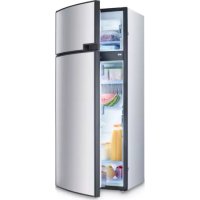
RMD 8505 - Fridge DOMETIC - Free user manual and instructions
Find the device manual for free RMD 8505 DOMETIC in PDF.


| Product type | Absorption refrigerator |
| Brand | Dometic |
| Model | RMD 8505 |
| Total capacity | 160 liters |
| Freezer capacity | 30 liters |
| Weight | 40 kg |
| Power supply | 230 V~ / 50 Hz and 12 V= |
| Gas supply | Liquid gas (propane/butane) |
| Power consumption (230 V~) | 190 W (standard unit) |
| Power consumption (12 V=) | 170 W |
| Gas consumption | 380 g/24 h |
| Climate class | SN |
| Operating mode | Automatic, alternating current, direct current, gas |
| Refrigerant | Ammonia (absorption circuit) |
| Adjustable temperature | 5 levels (1 bar = low, 5 bars = high) |
| Defrosting | Manual (when frost about 3 mm) |
| Interior light | Yes (replacement by after-sales service) |
| Gas protection | Automatic flame protection |
| Child safety | Protection grilles in the compartment |
| Burner cleaning | Recommended at least once a year |
| Optional batteries | 8 x AA 1.5 V (for autonomous gas operation) |
| Included accessories | Ice cube tray, user manual |
Frequently Asked Questions - RMD 8505 DOMETIC
User questions about RMD 8505 DOMETIC
0 question about this device. Answer the ones you know or ask your own.
Ask a new question about this device
Download the instructions for your Fridge in PDF format for free! Find your manual RMD 8505 - DOMETIC and take your electronic device back in hand. On this page are published all the documents necessary for the use of your device. RMD 8505 by DOMETIC.
USER MANUAL RMD 8505 DOMETIC
natural_image
Exterior view of a modern stainless steel refrigerator (no visible text or symbols)RMD8xx1, RMD8xx5
EN
Absorber refrigerator
Operating manual 16
DE
text_image
Technical diagram showing a door lock mechanism with an inset magnified view highlighting the lock structure.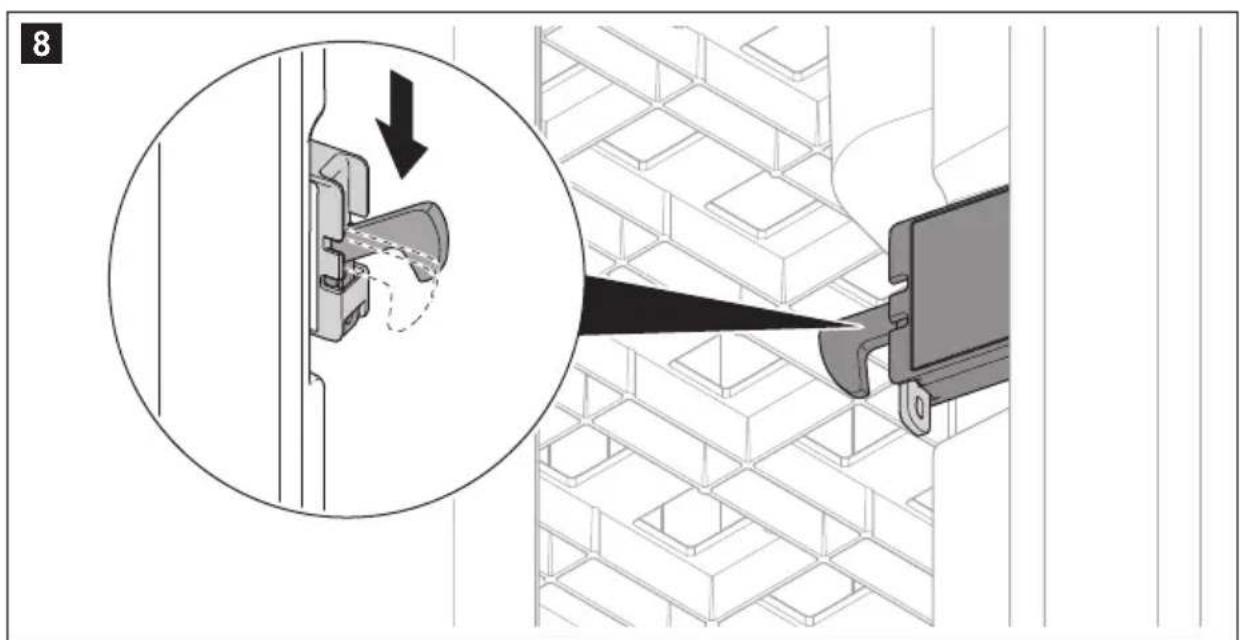
text_image
8
text_image
9 1 2 3 4 5 6 7 8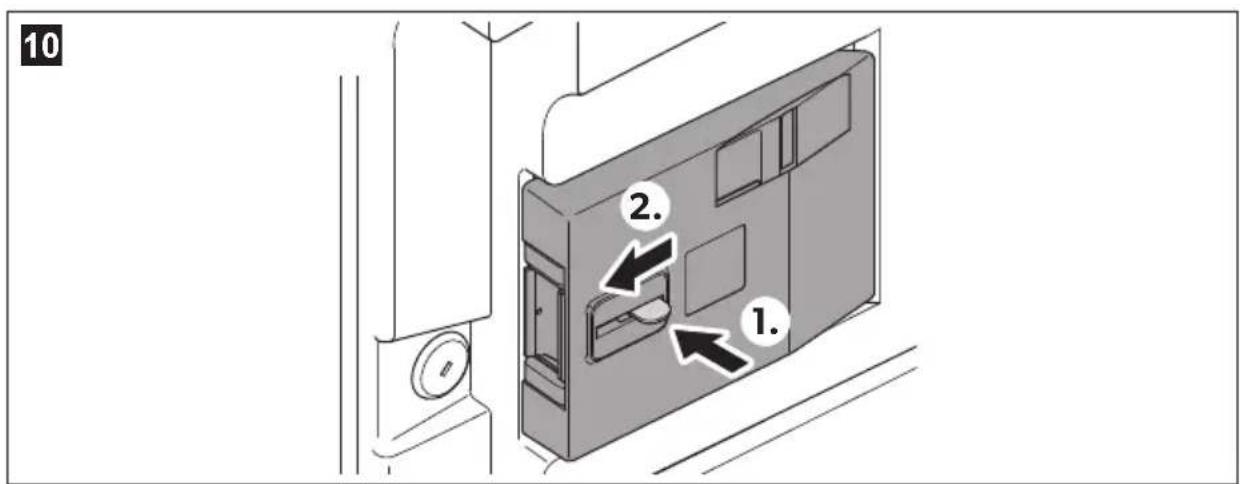
text_image
10 2. 1.
text_image
11 2. 1. 3.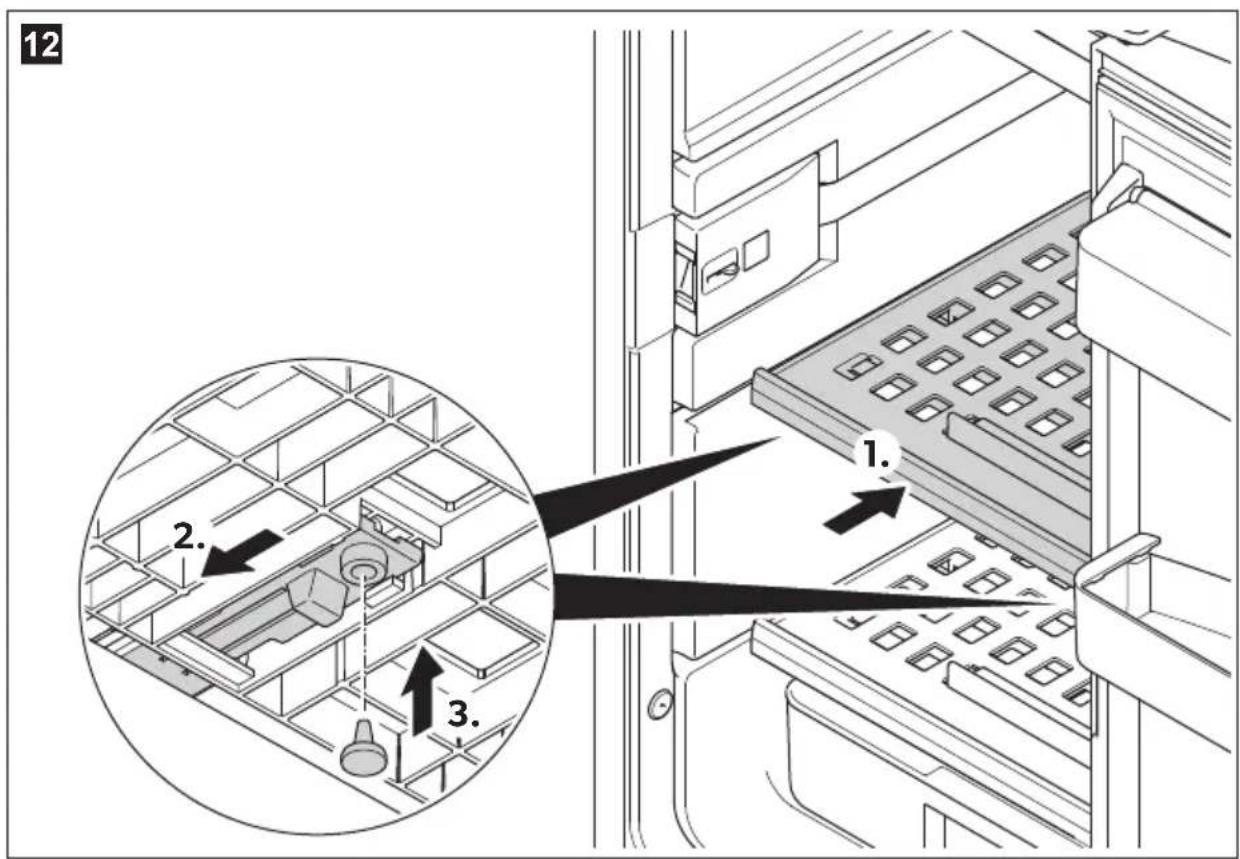
text_image
12 2. 3. 1.13
text_image
Diagram of a solar panel with labeled components and directional arrows indicating airflow or movement.14

text_image
1. 2. 3. 4.
text_image
15 1. 2. 3. 4. 1. 2. 3. 4. 15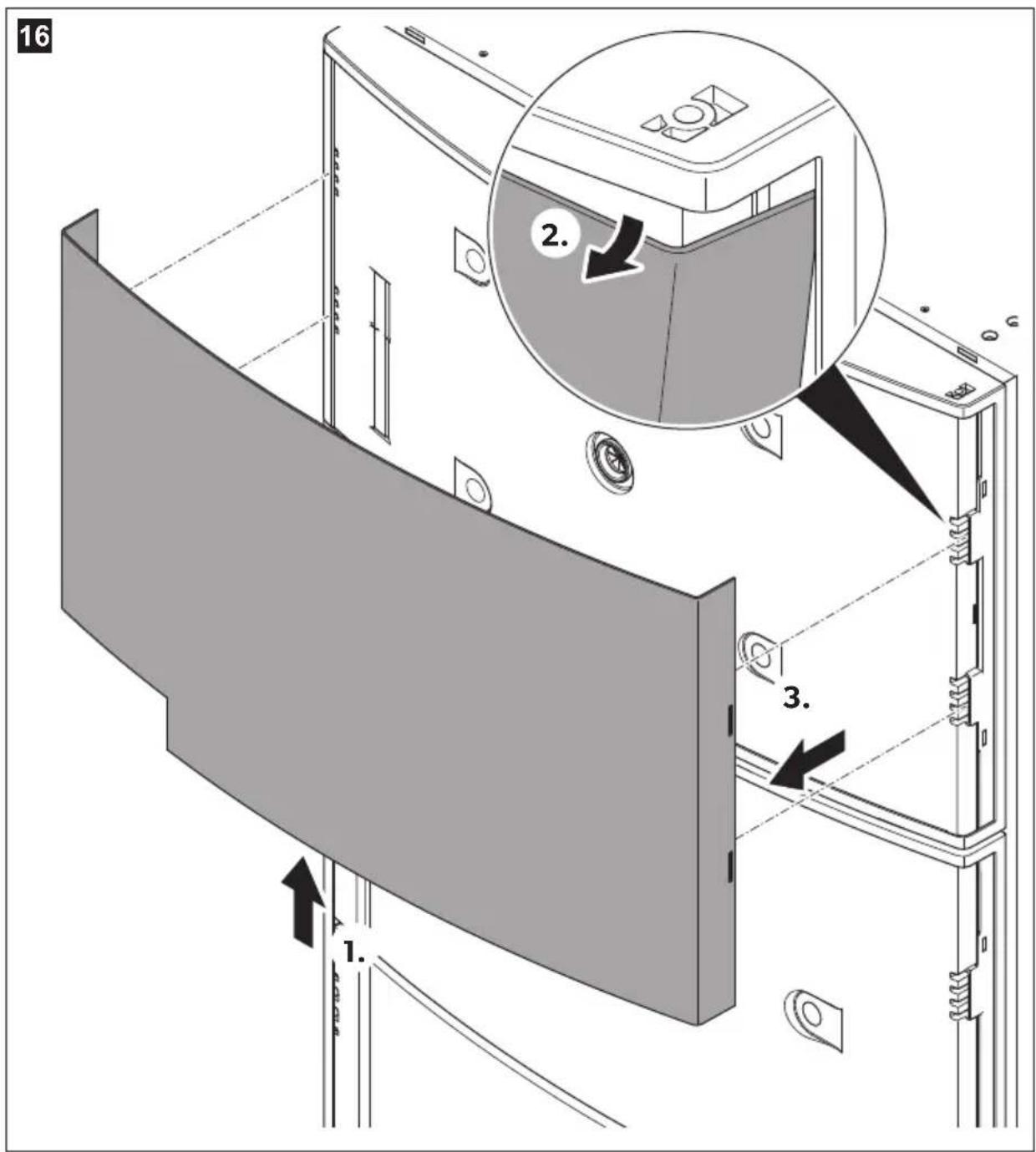
text_image
16 2. 3. 1.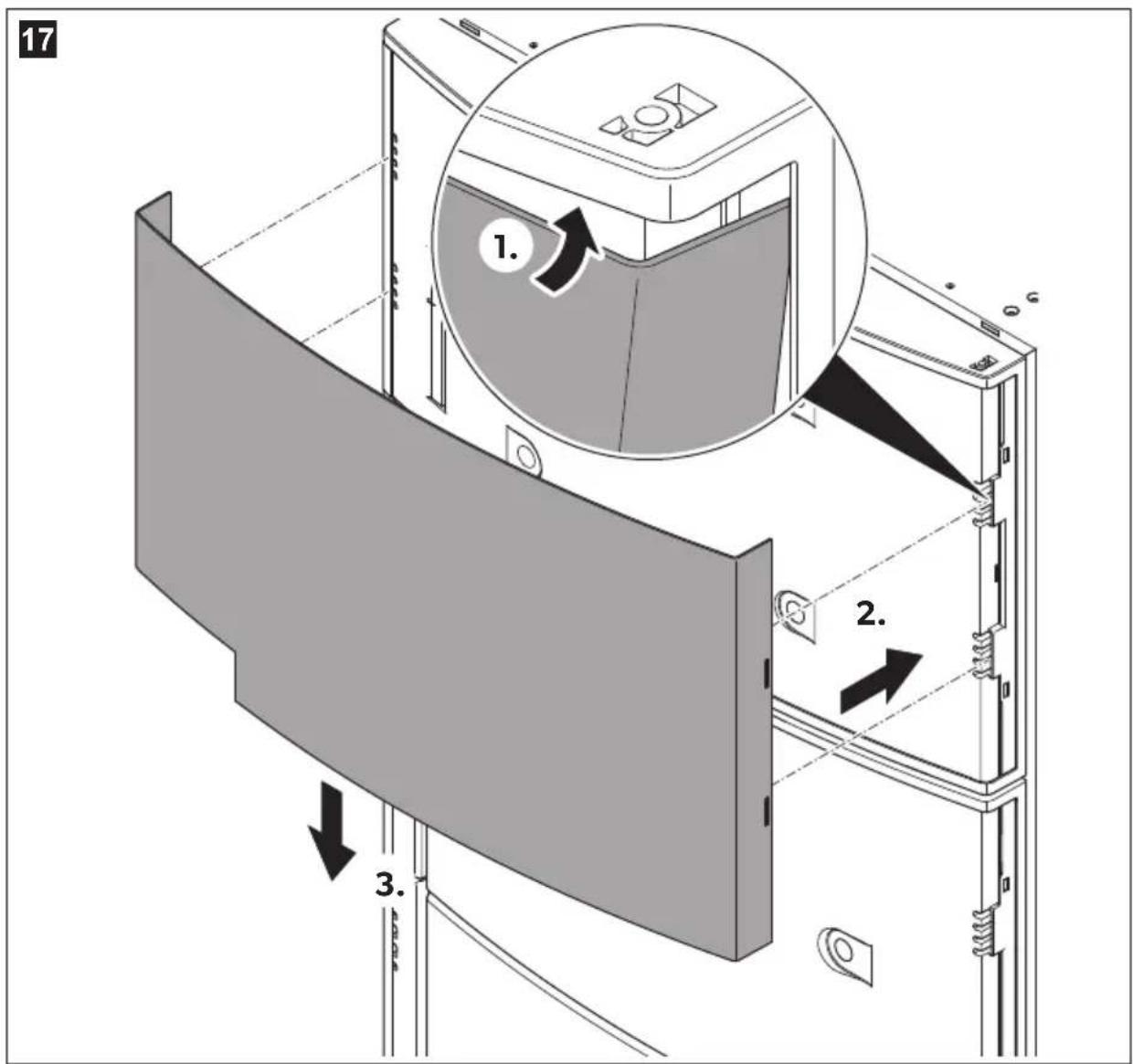
text_image
17 1. 2. 3.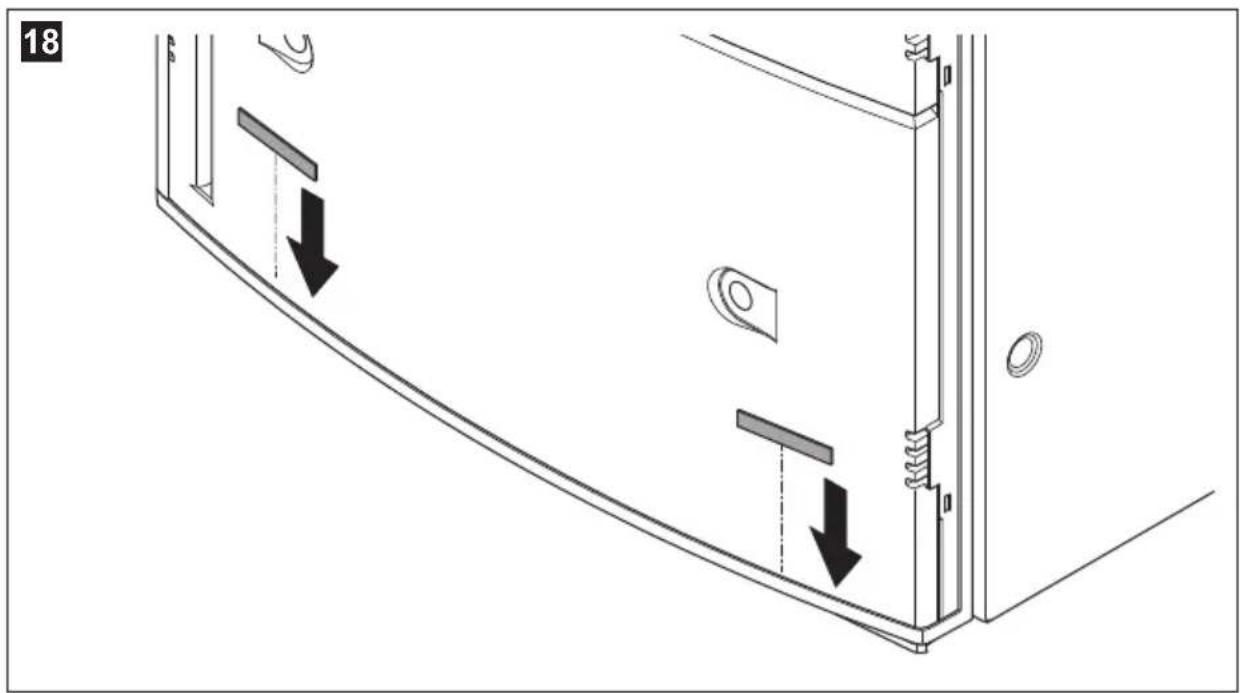
text_image
18
text_image
19 1. 2. 3.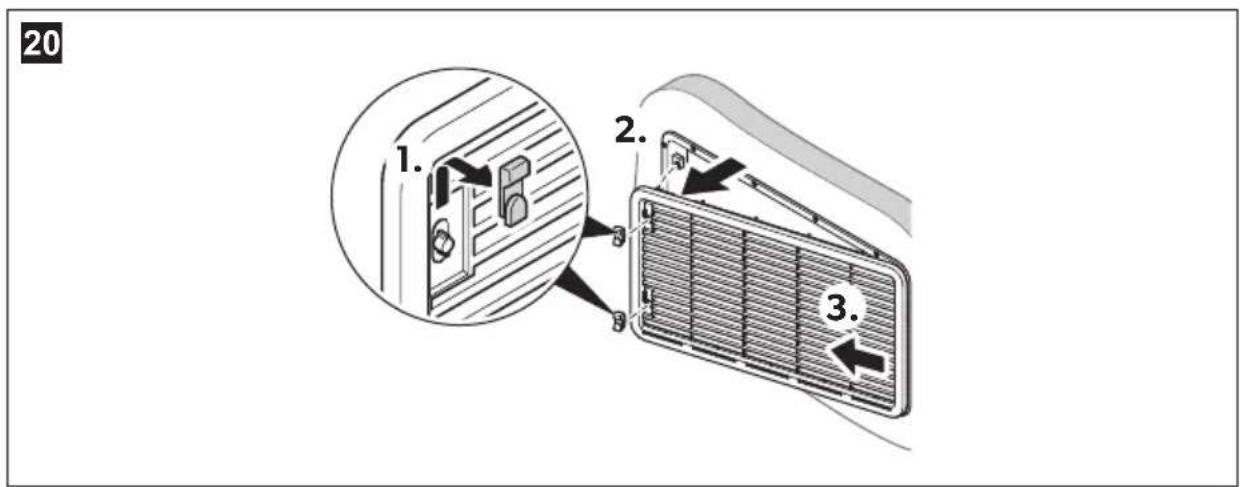
text_image
20 1. 2. 3.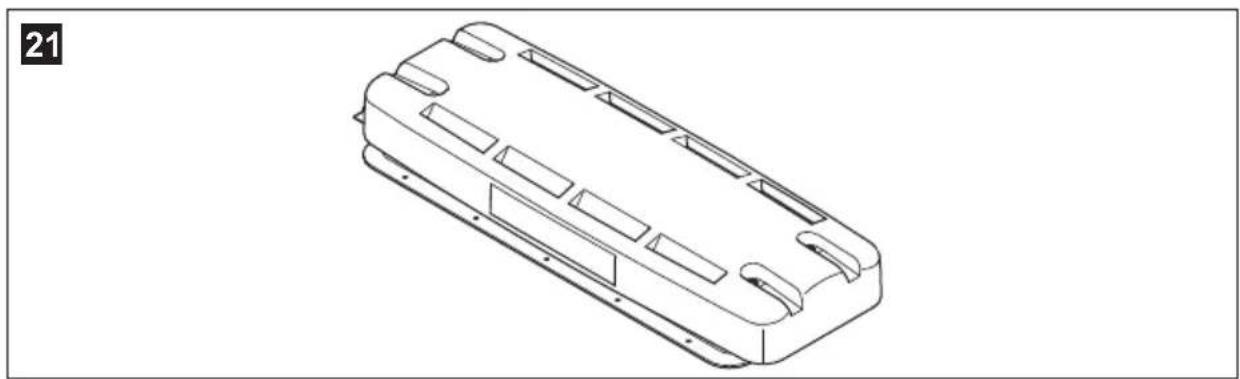
natural_image
Technical line drawing of a mechanical housing component (no text or symbols)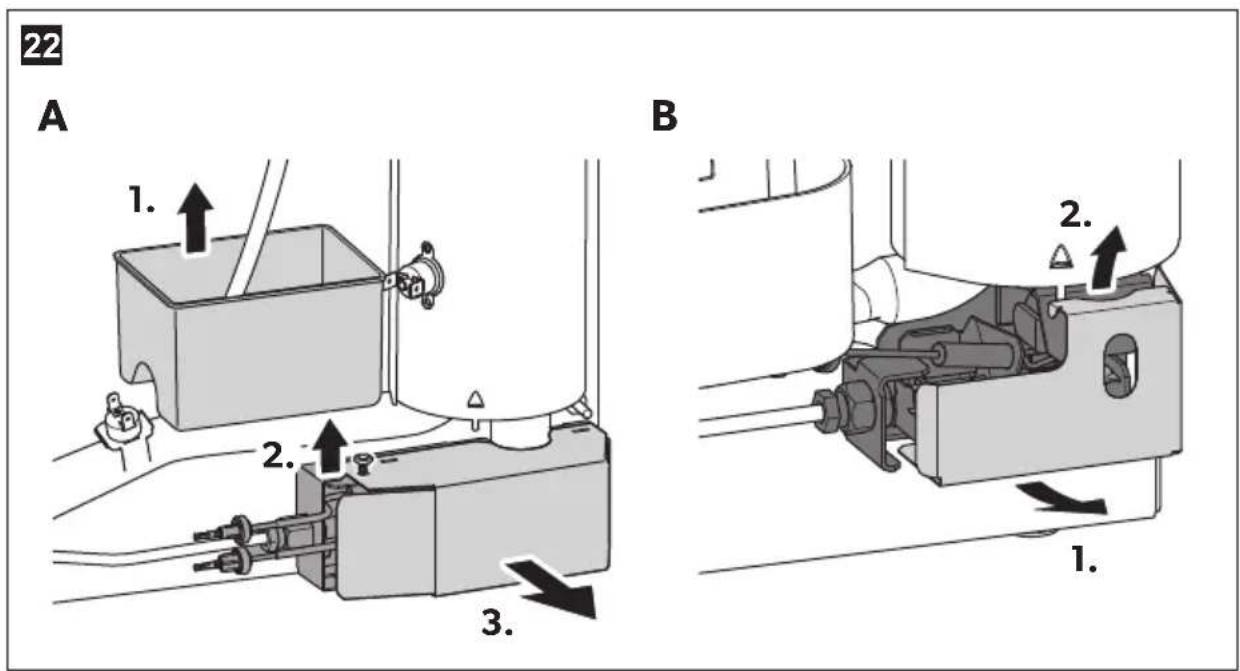
text_image
22 A 1. 2. 3. B 2. 1.23

natural_image
Mechanical assembly diagram showing a spring-loaded component with directional arrow (no text or labels)B
natural_image
Mechanical assembly diagram showing a spring-loaded tool interacting with a mechanical component (no text or symbols visible)24
natural_image
Technical diagram of a mechanical assembly with no visible text or symbolsB
natural_image
Technical line drawing of a mechanical device with a tool inserted, showing internal components and no visible text or symbols.25
RMD8xx1
RMD8xx5
RMD8x01 RMD8x05
RMD8x51
RMD8x55

text_image
1245 mm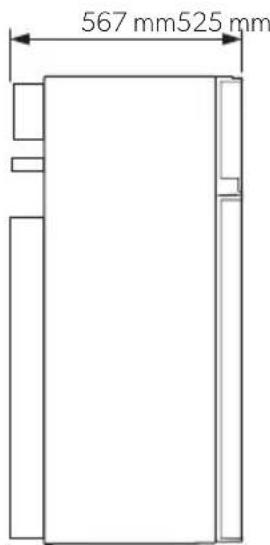
text_image
567 mm525 mm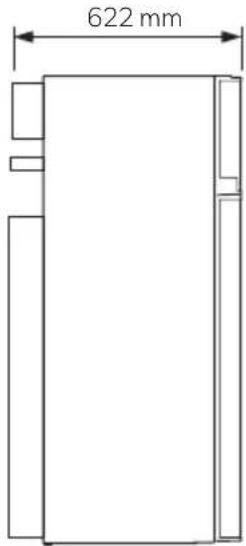
text_image
622 mmPlease read this instruction manual carefully before first use, and store it in a safe place. If you pass on the product to another person, hand over this instruction manual along with it.
Table of contents
1 Explanation of symbols ..... 17
2 Safety instructions....17
3 Scope of delivery 21
4 Accessories....21
5 Intended use 22
6 Technical description 22
7 Using the refrigerator 25
8 Cleaning and maintenance. 35
9 Maintenance 36
10 Troubleshooting 38
11 Warranty ....41
12 Disposal....41
13 Technical data 42
1 Explanation of symbols

WARNING!
Safety instruction: Failure to observe this instruction can cause fatal or serious injury.

CAUTION!
Safety instruction: Failure to observe this instruction can lead to injury.

NOTICE!
Failure to observe this instruction can cause material damage and impair the function of the product.

NOTE
Supplementary information for operating the product.
2 Safety instructions
The manufacturer accepts no liability for damage in the following cases:
- Damage to the product resulting from mechanical influences and excess voltage
• Alterations to the product without express permission from the manufacturer - Use for purposes other than those described in the operating manual
2.1 General safety

WARNING!
- Never open the absorber unit. It is under high pressure and can cause injury if it is opened.
- Do not operate the refrigerator if it is visibly damaged.
- If the power cable for this refrigerator is damaged, it must be replaced by the manufacturer, customer service or a similarly qualified person in order to prevent safety hazards.
- This refrigerator may only be repaired by qualified personnel. Inadequate repairs may cause serious hazards or damage to the refrigerator.
- This refrigerator can be used by children aged 8 years or over, as well as by persons with diminished physical, sensory or mental capacities or a lack of experience and knowledge, providing they are supervised or have been instructed how to use the refrigerator safely and are aware of the resulting risks.
- Cleaning and user maintenance must not carried out by unsupervised children.
- Children must be supervised to ensure that they do not play with the refrigerator.
- Do not store any explosive substances, such as spray cans with propellants, in the refrigerator.

CAUTION!
- Danger of crushing! Do not put your fingers into the hinge.
- Food may only be stored in its original packaging or in suitable containers.

NOTICE!
- Do not open the refrigerant circuit under any circumstances.
-
The refrigerant in the refrigerator circuit is highly flammable. In the event of any damage to the refrigerator circuit (smell of ammonia):
-
Switch off the refrigerator.
-
Avoid naked flames and sparks.
– Air the room well. -
Check that the voltage specification on the type plate is the same as that of the power supply.
- The refrigerator is not suitable for storing substances which are caustic or contain solvents.
- Keep the condensation outlet clean at all times.
- Do not use a high-pressure cleaner near the ventilation grille when cleaning the vehicle.
- Never pull the plug out of the socket by the connection cable.
- The refrigerator lighting may only be replaced by customer service.
- The refrigerator may not be exposed to rain.
2.2 Safe operation

CAUTION!
- Close the refrigerator door before beginning a journey.
- The refrigerator unit at the back of the refrigerator becomes very hot during operation. Protect yourself from coming into contact with hot parts when removing ventilation grilles.
- Only store heavy objects such as bottles or cans in the refrigerator door, in the vegetable drawer or on the bottom shelf.

NOTICE!
Do not use electrical devices inside the refrigerator unless they are recommended by the manufacturer for that purpose.
• Danger of overheating!
Always ensure sufficient ventilation so that the heat generated during operation can dissipate. Make sure that the refrigerator is sufficiently far away from walls and other objects so that the air can circulate.
- Make sure that the ventilation openings are not covered.
- Do not fill the inner container with ice or fluid.
- Protect the refrigerator and the cable against heat and moisture.
- Make sure that foodstuffs do not touch the walls of the cooling area.
2.3 Safety when operating with DC power

NOTICE!
Only select operation with DC power supply (battery mode) if the vehicle engine is running and providing sufficient voltage to the light system, or if you are using a battery monitor.
2.4 Safety when operating with AC power

NOTICE!
- Check that the voltage specification on the type plate is the same as that of the power supply.
- Only use the cable supplied to connect the refrigerator to the AC mains.
- Never pull the plug out of the socket by the connection cable.
2.5 Safety when operating with gas

WARNING!
- Only operate the refrigerator at the pressure shown on the type plate. Only use pressure controllers with a fixed setting which comply with the national regulations (in Europe EN 12864).
- Never store liquid gas cylinders in unventilated areas or below ground level (funnel shaped holes in the ground).
- Keep liquid gas cylinders away from direct sunlight. The temperature may not exceed 50^ .
- Never operate the refrigerator with gas
- at petrol stations
- while driving
- while transporting the caravan or mobile home with a transport vehicle or tow truck
- Never use a naked flame to check the refrigerator for leaks.
- If you smell gas:
- Close the gas supply cock and the valve on the cylinder.
- Open all windows and leave the room.
- Do not press an electric switch.
- Put out any naked flames.
– Have the gas system checked by a specialist.

NOTICE!
Only use propane or butane gas (not natural gas).
3 S c o p e o f d
- Refrigerator
- Ice-cube tray
- Operating manual
• Installation manual (optional)
4 A c c e s s o r i
Available as accessories (not included in the scope of delivery):
Label
Winter cover for the ventilation grille
Egg tray
Cleaning brush for cleaning the burner
Fan kit
All the accessories are available from specialist dealers. If you have any questions, please contact the dealer or your service partner directly.
5 Intended use
The refrigerator is designed for installation in caravans or motor homes. It is only suitable for cooling, freezing and storing foodstuffs. The refrigerator is not intended for the proper storage of medicine.

CAUTION! Health hazard!
Please check if the cooling capacity of the refrigerator is suitable for storing the food you wish to cool.
The refrigerator is designed to be operated on a DC power supply and an AC socket and can be powered by liquid gas (propane or butane). The refrigerator may not be run on natural gas or city gas.

NOTE
To safely operate 12 V consumer units in the caravan, it must be ensured that the towing vehicle provides sufficient voltage. On some vehicles, the battery management system may automatically switch off the consumer unit to protect the battery. Ask your vehicle manufacturer for more information.
6 Technical description
6.1 Description
The refrigerator is an absorption refrigerator. The refrigerator is designed to operate with different types of power and can be run on an AC power supply, a DC power supply or with liquefied gas (propane or butane). The vehicle battery can be used for DC operation. The thermostatic control ensures that the refrigerator temperature is kept constant and as little power as possible is consumed.
The refrigerator is equipped with an automatic flame monitor which automatically interrupts the gas supply after approx. 30 seconds if the flame goes out.
For the RMD8xx1 refrigerators (devices with electronics) there are two optional battery compartments in the electronic control unit housing for internal (autonomous) power supply to the control unit.
The RMD8xx5 refrigerators have an automatic operating mode which selects the most economical power mode connected.
6.2 Components
| No. in fig. 1, page 3 | Description |
| 1 Top tray with flap | |
| 2 Bottom tray with bottle holder | |
| 3 Vegetable compartment | |
| 4 Type plate | |
| 5 Thawed water drainage channel | |
| 6 Secondary evaporator for refrigerator | |
| 7 Controls | |
| 8 Ice compartment | |
Inside the refrigerator, you can see the type plate of the refrigerator. There you can see the model name, product number and serial number. You will need this information whenever you contact the customer service or order spare parts:
| No. in fig. 2, page 3 | Description |
| 1 Model number | |
| 2 Product number | |
| 3 Serial number | |
| 4 Electrical connection value | |
| 5 Gas pressure | |
| 6 Test mark/certification | |
6.3 Control and display elements
The control and display elements of the refrigerator are in the divider between the main and freezer compartments. The refrigerator features the following illuminated control and display elements:
| No. in fig. 3, page 4 | Description |
| 1 ON/OFF button | |
| 2 Operating with AC power supply | |
| 3 Gas operation | |
| 4 Operating with DC power supply | |
| 5 Automatic mode (only RMD8xx5) | |
| 6 Setting the operating time of the freezer compartment frame heater | |
| 7 Setting the temperature | |
| 8 Temperature indication | |
| 9 Indicator for malfunction reset button for gas malfunction | |
| 10 - LED | |
| Turns red in the event of a fault.Turns blue when the refrigerator is in operation. |
Depending on the side of the door hinge, the LED can be to the left or right of the controls.
Refrigerators for autonomous (gas) operation have two battery compartments in the control panel which are located on the left and right of the controls (fig. 4, page 4).
When the appliance is using the internal batteries, all the LED indicators with the exception of the display are off. The display flashes once every 15 seconds. When a button is pressed, the display lights up.
7 Using the refrigerator

NOTICE!
- Make sure that you only put items in the refrigerator which may be kept at the selected temperature.
- Food may only be stored in its original packaging or in suitable containers.

NOTE
-
Before starting your new refrigerator for the first time, you should clean it inside and outside with a damp cloth for hygienic reasons.
• The cooling performance can be affected by: -
The ambient temperature (e.g. when the vehicle is exposed to direct sunlight)
- The quantity of food to be cooled
-
How often you open the door
-
When using the refrigerator for the first time, there may be a mild odour which will disappear after a few hours. Air the living space well.
- Park the vehicle so that it is level, especially when starting up and filling the refrigerator before setting off on a journey.
• The refrigerator unit operates silently. - Approximately one hour after switching on, the freezer compartment of the refrigerator should be cold. The refrigerator reaches its operating temperature after a few hours.
- Battery management systems switch off the power supply to the refrigerator as soon as the vehicle engine is switched off for longer than 30 minutes. The refrigerator requires a constant DC power supply to operate. If your vehicle has a battery management system, deactivate it.
▶Open the doors of the main compartment and the freezer compartment to use the controls.
7.1 Tips for using the refrigerator optimally
When the temperature in the interior of the refrigerator exceeds +4 °C, the shelf life of goods that spoil quickly cannot be guaranteed. To attain an optimal cooling capacity in the interior of the refrigerator, observe the following information:
- Do not store goods in the refrigerator for the first 12 hours of operation.
- Protect the interior of the vehicle from warming up excessively (e.g. sunshades in the windows, air conditioner).
- Protect the refrigerator from direct sunlight (e.g. sunshades in the windows).
- Voltage fluctuations can have a negative effective on the cooling capacity. Check the temperature in the interior of the refrigerator regularly
- when using DC current during the journey
- when using AC current at the site of use
7.2 Energy saving tips
- Choose a well ventilated location which is protected from direct sunlight.
- Allow warm food to cool down first before keeping it cool in the refrigerator.
- Do not open the refrigerator more often than necessary.
- Do not leave the doors open for longer than necessary.
- Defrost your refrigerator as soon as a layer of ice forms.
- Avoid unnecessarily low temperature settings.
- Arrange the food in the refrigerator so that air can circulate inside.
- Leave a distance of about 10 mm between the contents and secondary evaporator.
7.3 Switching on the refrigerator
▶ Ensure that the gas supply is turned on (only when using gas mode).
▶Press and hold the button for two seconds.
√ The refrigerator starts with the last type of power selected.
Operating with AC power supply
▶Press the button.
Operating with DC power supply

NOTE
Only select operation with DC power supply (battery mode) if the vehicle engine is running and providing sufficient voltage to the light system, or if you are using a battery monitor.
▶Press the button.
Autonomous gas operation (optional, only RMD85x1 and RMD85x5)
If the vehicle's own 12 V DC battery power supply is unavailable or if the power supply is cut off while the appliance is in operation, the electronic control unit automatically switches over to the internal battery power (if batteries are inserted).
The refrigerator can then only be operated in gas mode.
Gas operation

WARNING! Fire hazard!
Never operate the refrigerator with gas at petrol stations.

NOTE
- When operating with LPG, the burner must be cleaned frequently (two or three times a year).
- Ignition problems may occur at altitudes above 1000 m. Switch to a different energy source.
▶Press the button.
√The burner is ignited automatically.
Automatic operation (RMDX8xx5 only)

NOTE
- To avoid unintentionally switching to gas operation while refuelling, the automatic mode starts the gas operation only once the engine has been off for 15 minutes.
- Turn off the refrigerator or set it to a different operation mode, if refuelling lasts longer than 15 minutes.
- At altitudes above 1000 m, ignition delays may occur. Change to a different type of energy when the ignition is not possible.
In automatic mode, the refrigerator selects the most favourable operating mode available itself.
Priority Operating Mode
1 Solar (DC power)
2 AC power
3 DC power
4 Gas
▶Press the button.
7.4 Inserting/changing the batteries (only RMD85x1)
▶Switch off the refrigerator.
▶ Press on the outside of each battery compartment (1. in fig. 5, page 4).
√The battery compartment cover opens somewhat on the opposite side.
Remove the battery compartment cover (2. in fig. 5, page 4).
▶Remove the discharged batteries.
▶Replace the whole set of batteries.
▶Observe the polarity.
When the refrigerator will be out of use for a longer period, remove the batteries from the battery compartment.
▶ Put the battery compartment cover back onto the battery compartment.
▶Please return used batteries to your dealer or take them to a recycling point.
7.5 Opening the refrigerator door/freezer compartment door

CAUTION!
Always close and lock the refrigerator before starting the journey.
▶ Press the lock button and pull the door up at the same time (fig. 6, page 4).
Fixing the locking catch in place
When the vehicle is parked, you can fix the locking catch in place. This makes it easier to open the door.
▶ Push the bolt under the locking catch upwards until it clicks into place (fig. 7, page 5).
√The door can be opened by pulling it.
Releasing the locking catch
▶ Push the locking catch downwards (fig. 8, page 5).
√ The door can only be opened by pressing the lock button (fig. 6, page 4).
7.6 Locking the refrigerator door/freezer compartment door
▶ Release the locking catch, if applicable (fig. 8, page 5).
▶Press the door shut until you hear it clearly click.
√The door is now closed and locked.
7.7 Selecting the temperature

NOTE
At ambient temperatures of +15 °C – +25 °C, select the centre position (three bars). The unit operates in the optimum power range.
▶ Set the required temperature with the button. You can see the set temperature in the display □□□□
- One bar = lowest cooling capacity
- Five bars = highest cooling capacity
7.8 Notes on storing food

CAUTION!
Only store heavy objects such as bottles or cans in the refrigerator door, in the lower storage tray or on the bottom shelf.
The refrigerator compartments are recommended for the following types of food:
| No. in fig. 9, page 6 | Food |
| 1 Frozen food | |
| 2 Cooked foods | |
| 3 Dairy products, prepared food, thawing products | |
| 4 Meat, fish | |
| 5 Salad, vegetables, fruit | |
| 6 Drinks in bottles or cartons | |
| 7 Dressing, ketchup, jam | |
| 8 Eggs, butter | |
Please observe the following instructions for storing items:

NOTE
- Do not keep carbonated drinks in the ice compartment.
- The ice compartment is suitable for making ice cubes and for keeping frozen food short-term. It is not suitable for long-term food storage.
- If the refrigerator is exposed to a room temperature of below +10 °C for a prolonged period of time, an even temperature of the ice compartment cannot be guaranteed. This can lead to a potential increase in the freezer compartment temperature and stored goods will defrost.
- Pack raw and cooked items separately.
- Observe the expiry date on the packaging.
- Do not leave refrigerated items outside the refrigerator for too long.
- Clean the inside of the refrigerator at regular intervals.
7.9 Switching off the refrigerator
Proceed as follows:
▶Press and hold the button for three seconds.
√The display goes out and the refrigerator is switched off completely.

NOTE
If you do not use the refrigerator for a prolonged period of time:
- Unlock the locking mechanism of the door lock by pressing it inwards and sliding it forwards (fig. 10, page 6). When the door is then closed, there is a wide gap. This prevents mould from forming.
- Remove the batteries from the battery compartment.
▶Shut off the valve in the vehicle and the gas supply to the gas cylinder.
7.10 Positioning the shelves

WARNING! Children beware!
Two shelves are fixed in place to prevent children from climbing inside the refrigerator.
- Only remove the shelves for cleaning purposes.
- Afterwards, refit the shelves in the same position and lock them in place.
Removing the shelves (fig. 11, page 7)
▶ Only fixed shelves: Undo the locking pins with a screwdriver.
▶Press the two locks under the shelf inwards to release the shelf.
▶ Pull out the shelf.
▶Only fixed shelves: Replace the locking pins again.
Inserting the shelves (fig. 12, page 7)
▶Insert the shelf into the required position.
▶Press the locks under the shelf outwards to secure the shelf.
▶Only fixed shelves: Replace the locking pins again.
7.11 Defrosting the refrigerator

NOTICE!
Never use mechanical tools or blow dryers to remove ice or to loosen objects stuck to the device.

NOTE
Over time, frost builds up on the cooling fins inside the refrigerator. If this layer of frost is about 3 mm thick, you should defrost the refrigerator.
▶Disconnect the voltage and gas supply.
▶ Empty the refrigerator.
▶ Put a cloth in the ice compartment and the refrigerator to absorb any excess water.
▶Leave the door open.
√The thawed water of the main refrigerator runs into a condensation container on the back of the refrigerator where it evaporates.
▶Wipe both compartments dry with a cloth.
7.12 Operating with low ambient temperatures

NOTICE!
Do not attach the top winter cover (not in scope of delivery) while operating with gas. This prevents heat from building up and the fumes from the refrigerator can be extracted properly.

NOTE
- Cold air can restrict the performance of the unit. Attach the winter covers if you experience a reduced cooling capacity at low ambient temperatures. This protects the unit from excessively cold air that might otherwise restrict its performance.
- Attach the winter covers when the vehicle is cleaned from the outside or not used for a prolonged period of time.
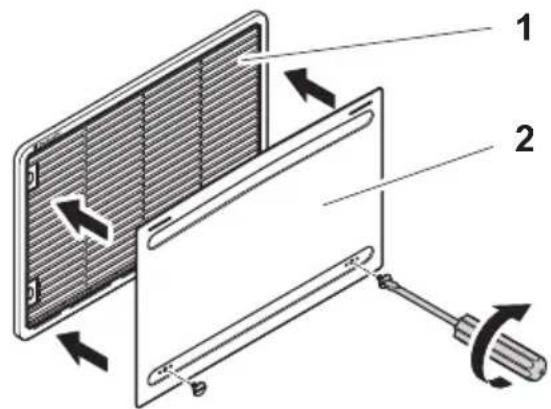
Proceed as follows (fig. 13, page 8):
▶ Regularly check that the ventilation grille (1) is not obstructed by leaves, snow, or similar.
▶ Attach the winter cover (2) to the lower grille.
▶ Only for direct/alternating current operation, not for gas operation:
Attach the winter cover (2) to the upper grille.
7.13 Operation at high ambient temperatures
At high outside temperatures in combination with high levels of humidity, condensation may form on the freezer compartment frame. The freezer compartment is fitted with a frame heater (12 V==/3.5 W). Switch the frame heater on to prevent condensation from forming on the frame of the freezer compartment.
The frame heater is switched on continuously in the following operating modes (no display):
- AC operation
•Automatic operation (only RMD8xx5, RMD8xx6)

NOTICE!
Do not switch the frame heater to permanent operation when the refrigerator is being operated with gas. This could discharge the on-board battery.
Proceed as follows to switch on the frame heater:
▶Press the button to set the frame heater as follows:
- Press the button once for a 2-hour setting; the temperature display shows one bar
- Press the button twice for a 5-hour setting; the temperature display shows two bars
- Press the button a third time for continuous operation; the temperature display shows three bars
- Press the button a fourth time to switch it off; the temperature display goes off
7.14 Replacing the door panel

NOTICE! Risk of damage!
The door panel must not be replaced when the refrigerator is upright.
Removing the decorative trim with frame
Proceed as follows (fig. 14, page 8):
Remove the door trim carefully. It is only clipped in and held in place by small hooks.
▶ Pull the old panel away from the door trim still installed.
▶Push the old panel upwards as far as the stop.
▶ Pull the old panel out of the door.
Removing the decorative trim without frame
Proceed as follows (fig. 16, page 10):
▶Push the old panel upwards as far as the stop.
▶ Pull the old panel out of the door.
Installing the decorative trim with frame
Proceed as follows (fig. 15, page 9):
▶Push the new panel upwards in the door as far as the stop.
▶Push the new panel downwards into the door.
▶Pull the new panel into the door trim still installed.
▶ insert the door trim again.
√The door trim is secure once it clicks into place.
Installing the decorative trim without frame
Freezer compartment door (fig. 17, page 11):
▶ Push the new panel upwards in the door as far as the stop. Make sure that the new panel fits the door at the left and right, and that it clicks into place.
▶Push the new panel downwards into the door.
Refrigerator door:
▶ Push two spacers downwards into the door, if necessary (fig. 18, page 11).
▶ Push the new panel upwards in the door as far as the stop. Make sure that the new panel fits the door at the left and right, and that it clicks into place (fig. 19, page 12).
▶ Push the new panel downwards into the door (fig. 19, page 12).
8 Cleaning and maintenance

WARNING!
Always disconnect the refrigerator from the mains before you clean and service it.

NOTICE! Risk of damage!
- Do not use sharp cleaning agents or hard objects for cleaning.
- Never use hard or sharp objects or blow dryers to remove ice or to loosen objects stuck to the device.
- Do not use any mechanical tools or any other tools to speed up the defrosting process.
▶ Clean the refrigerator regularly and as soon as it becomes dirty with a damp cloth.
▶Wipe the refrigerator dry with a cloth after cleaning.
▶Check the condensate drain regularly.
Clean the condensate drain when necessary. If it is blocked the condensate collects on the bottom of the refrigerator.
▶ Ensure that the ventilation grille in the outer wall of the motor home or caravan (fig. 20, page 13) and the roof vent (fig. 21, page 13) of the refrigerator are free of dust and contamination. This ensures that during operation, the generated heat can be dissipated, the refrigerator is not damaged and the cooling capacity is not compromised.
9 Maintenance

WARNING!
Working on gas and electrical installations may only be performed by qualified technicians.

NOTE
The manufacturer recommends that the burner be cleaned after an extended period, at least once a year (chapter "Cleaning the gas burner" on page 36). If you need further assistance, please contact customer service.
▶Have the gas system and connected flues inspected before initial operation and then every two years by an authorised professional to ensure they comply with national safety requirements (in Europe, this is EN 1949).
Clean the gas burner after prolonged exposure to gas, at least once a year (chapter "Cleaning the gas burner" on page 36). When using autogas (tank or refillable cylinders), the service interval is reduced to twice or four times a year, depending on the level of contamination. Contamination in the gas burner becomes noticeable with poor ignition process or deflagrations.
▶Keep a record of any maintenance performed in the vehicle.
9.1 Cleaning the gas burner

WARNING!
- Close the gas valve to the refrigerator before cleaning the gas burner.
- Allow the burner to cool down before cleaning it.
- Do not modify the gas equipment. The gas burner can be cleaned without removing the gas equipment.

NOTE
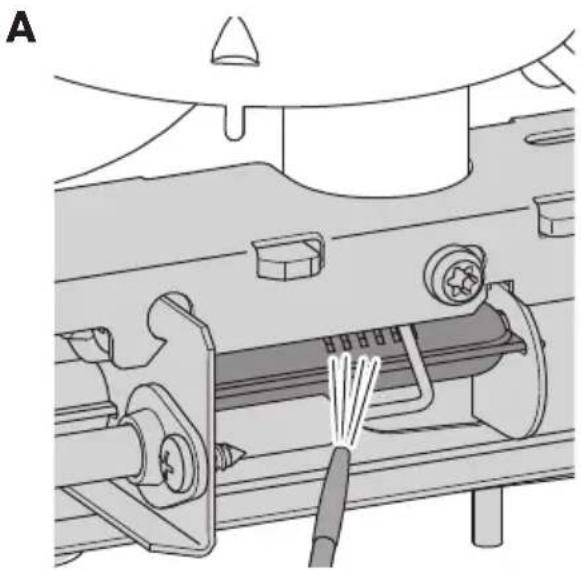
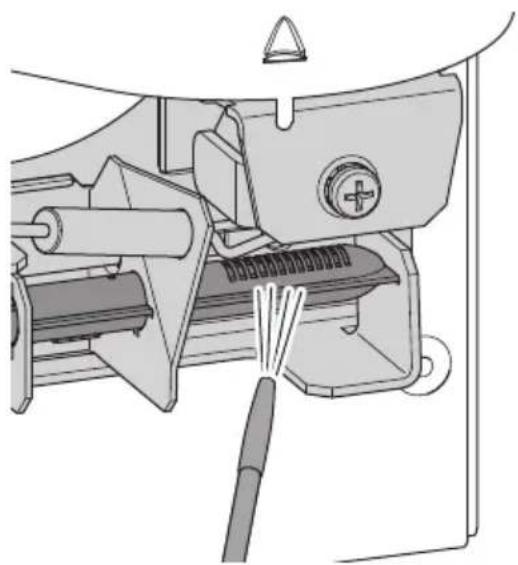
fig. 22, page 13 Up to fig. 24, page 14: The RMD 85xx series can be equipped with a standard unit (B) or a high-performance unit (A).
▶ Remove the ventilation grille (fig. 20, page 13).
▶Only with high-performance unit:
Remove the condensation container (fig. 22, page 13, A).
▶Only with high-performance unit:
Loosen the screw on the gas burner cover (fig. 22, page 13, A).
▶Press the catch below the burner cover inwards, and pull off the burner cover (fig. 22, page 13, A or B).
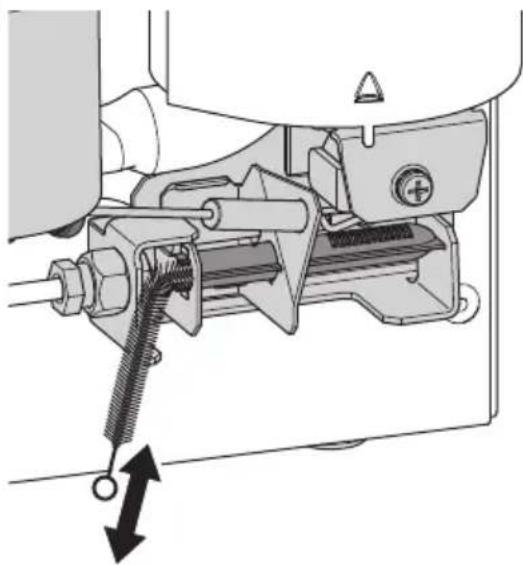
▶Clean the burner pipe of coarse impurities using a suitable cleaning brush with soft bristles (fig. 23, page 14, A or B).
▶ Blow out the burner pipe with compressed air through the slots in the burner pipe (fig. 24, page 14, A or B).
▶ Attach the burner cover.
√The burner cover is fixed in place when it audibly clicks into place.
▶Only with high-performance unit:
Screw the burner cover in place (fig. 22, page 13, A).
▶Only with high-performance unit:
Insert the condensation container.
▶ Attach the ventilation grille.
10 Troubleshooting
| Fault Possible cause Suggested remedy | ||
| With AC operation: The refrigerator does not work. | The fuse in the AC mains is defective. | Replace the fuse. |
| The vehicle is not connected to the AC mains. | Connect the vehicle to the AC mains. | |
| The AC heating element is defective. | Contact the authorised customer service. | |
| With DC operation: The refrigerator does not work. | The fuse in the DC supply is defective. | Replace the fuse. |
| The vehicle fuse has blown. | Replace the vehicle fuse in the DC socket (usually 15 A) (Please refer to the operating manual of your vehicle). | |
| The vehicle battery is discharged. | Test the battery and charge it. | |
| The ignition is not turned on. | Switch on the ignition. | |
| The DC heating element is defective. | Contact the authorised customer service. | |
| With gas operation: The refrigerator does not work. | The gas cylinder is empty. | Replace the gas cylinder. |
| The gas valve is closed. Twist the valve open. | ||
| Air is in the supply line. Switch the refrigerator off and on again. Repeat the procedure three or four times if necessary. If necessary, switch on the cooker if necessary and repeat the process on the refrigerator. | ||
Fault Possible cause Suggested remedy
| In automatic mode: The refrigerator is being operated with gas although it is connected to the AC mains. | The mains voltage is too low. | The refrigerator changes to AC power supply automatically as soon as the mains voltage is sufficient again. |
| The refrigerator does not cool sufficiently. | The ventilation around the cooling unit is not sufficient. | Check that the ventilation grille is not obstructed. |
| The evaporator is iced up. | Check whether the refrigerator door is properly closed. Check whether the seal of the refrigerator is seated correctly everywhere and is not damaged. Defrost the refrigerator. | |
| The temperature is set too high. | Set a lower temperature. | |
| The ambient temperature is too high. | Remove the ventilation grille for a while so that warm air can escape quicker. | |
| Too much food at once was placed in the refrigerator. | Remove an item. | |
| Too much warm food at once was placed in the refrigerator. | Remove the warm food and leave it to cool down before putting it in again. | |
| The refrigerator has not been operating for very long. | Check the temperature again after four or five hours. |
Displays for faults and beeps
Faults are indicated by the flashing of individual buttons on the control panel, a beep or a combination of both.
| Display Fault Suggested remedy | ||
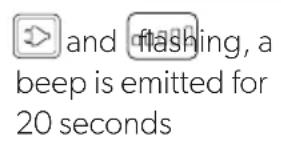 | The AC heater element or the cooling unit is defective. | Contact the authorised customer service. |
 | The DC heater element or the cooling unit is defective. | |
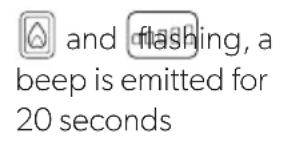 | The burner or the cooling unit is defective. | |
 | The temperature sensor has no contact or is defective. | |
With AC operation: 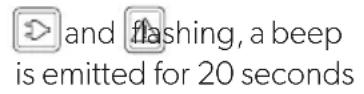 | The power supply is not available or insufficient. | Check the AC power cable, the power supply and the fuse. |
With DC operation:  | The power supply is not available or insufficient. | Check the DC power cable, the vehicle battery and the fuse. |
With gas and automatic operation: 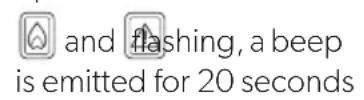 | The burner flame is not ignited. | Check the gas supply (gas cylinder, gas valve).Press the Button once the fault is rectified. |
| Beep is emitted for 15 seconds at intervals of two minutes | The interior light is switched on. | Check whether the refrigerator door is properly closed.Close the refrigerator door. |
| In battery operation: Signal sounds every 15 s | Low voltage detection (internal battery) | Replace the batteries. |
Display Fault Suggested remedy
| In battery operation:Automatic change-over from external to internal power supply does not function(loss of vehicle 12 V power supply for electronic control unit) | Refrigerator does not work; Gas mode operation not possible even though batteries inserted. | Vehicle power supply was disconnected while starting gas mode.Note: Automatic switching does not occur during ignition.Switch the refrigerator off and on again. |
11 Warranty
The statutory warranty period applies. If the product is defective, please contact the manufacturer's branch in your country (see the back of the instruction manual for the addresses) or your retailer.
For repair and guarantee processing, please include the following documents when you send in the device:
• A copy of the receipt with purchasing date
- A reason for the claim or description of the fault
12 Disposal

WARNING! Children beware!
Before disposing of your old refrigerator:
- Remove all doors.
• Dismantle the drawers. - Leave the shelves in the refrigerator so that children cannot climb inside.
Place the packaging material in the appropriate recycling waste bins wherever possible.
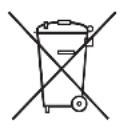
If you wish to finally dispose of the product, ask your local recycling centre or specialist dealer for details about how to do this in accordance with the applicable disposal regulations.

Protect the environment!
Do not dispose of any batteries with general household waste.
Return defective or used batteries to your retailer or dispose of them at collection points.
13 Technical data
| RMD8501, RMD8505 RMD8551, RMD8555 | ||
| Connection voltage: | 230 V~/50 Hz12 V--- | |
| Capacity - total: 160 | 190 | | ||
| Capacity - freezer compartment: | 30 | 35 | | |
| Power consumption (high-performance unit): | 250 W (230 V~)170 W (12 V---) | |
| Power consumption (standard unit): | 190 W (230 V~)170 W (12 V---) | |
| Energy consumption (high-performance unit): | 4.2 kWh/24 h (230 V~) | |
| Energy consumption (standard unit): | 3.2 kWh/24 h (230 V~) | |
| Gas consumption (high-performance unit): | 420 g/24 h | |
| Gas consumption (standard unit): | 380 g/24 h | |
| Climate class: SN SN | ||
| Noise emission: 0 dB(A) | ||
| Batteries (optional only for RMD 85x1, RMD 85x5): | 8 x AA 1.5 V | |
| Dimensions H x W x D: | fig. 25, page 15 | |
| Weight: | 40 kg | 41.5 kg |
| Inspection/certification: |   10R-047358 10R-047358 | |
6 Description technique
6.1 Description
WAARSCHUWING! Brandgevaar!
Dometic Australia Pty. Ltd.
1 John Duncan Court
Varsity Lakes QLD 4227
1800 212121
+61 7 55076001
Mail: sales@dometic.com.au
AUSTRIA
Dometic Austria GmbH
Neudorferstraße 108
A-2353 Guntramsdorf
+43 2236 908070
+43 2236 90807060
Mail: info@dometic.at
BENELUX
Dometic Branch Office Belgium
Zincstraat 3
B-1500 Halle
+32 2 3598040
+32 2 3598050
Mail: info@dometic.be
BRAZIL
Dometic DO Brasil LTDA
Avenida Paulista 1754, conj. 111
SP 01310-920 Sao Paulo
+551132513352
+551132513362
Dometic Group Asia Pacific
Suites 2207-11 · 22/F · Tower 1
The Gateway · 25 Canton Road,
Tsim Sha Tsui · Kowloon
+852 2 4611386
+852 2 4665553
Mail: info@waeco.com.hk
HUNGARY
Dometic Zrt. Sales Office
Kerékgyártó u. 5.
H-1147 Budapest
+3614684400
+3614684401
Domettic Italy S.r.l.
Via Virgilio, 3
I-47122 Forli (FC)
+39 0543 754901
+390543754983
Mail: vendite@dometic.it
JAPAN
Dometic KK
Maekawa-Shibaura, Bldg. 2
2-13-9 Shibaura Minato-ku
Tokyo 108-0023
+81 3 5445 3333
+81354453339
Mail: info@dometic.jp
MEXICO
Circuito Médicos No. 6 Local 1
Colonia Ciudad Satélite
CP 53100 Naucalpan de Juárez
Estado de México
+52 55 5374 4108
+52 55 5393 4683
Mail: info@dometic.com.mx
NETHERLANDS
Dometic Benelux B.V.
Ecustraat 3
NL-4879 NP Etten-Leur
+31 76 5029000
+31 76 5029019
Mail: info@dometic.nl
NEW ZEALAND
Dometic New Zealand Ltd.
PO Box 12011
Penrose
Auckland 1642
+6496221490
+6496221573
Mail: customerservices@dometic.co.nz
NORWAY
Dometic Norway AS
∅sterøyveien 46
N-3232 Sandefjord
+47 33428450
+47 33428459
Mail: firmapost@dometic.no
POLAND
Dometic Poland Sp. z o.o.
Ul. Puławska 435A
PL-02-801 Warszawa
+48 22 414 3200
+48 22 414 3201
Mail: info@dometic.pl
PORTUGAL
Dometic Spain, S.L.
Komsomolskaya square 6-1
RU-107140 Moscow
+7 495 780 79 39
+7 495 916 56 53
Mail: info@dometic.ru
SINGAPORE
Dometic Pte Ltd
18 Boon Lay Way 06-140 Trade Hub 21
Singapore 609966
+65 6795 3177
+65 6862 6620
Mail: dometic@dometic.com.sg
SLOVAKIA
Dometic Slovakia s.r.o. Sales Office Bratislava
Nádražná 34/A
900 28 Ivánka pri Dunaji
+421 2 45 529 680
Mail: bratislava@dometic.com
SOUTH AFRICA
Dometic (Pty) Ltd.
Regional Office
South Africa & Sub-Saharan Africa
2 Avalon Road
West Lake View Ext 11
Modderfontein 1645
Johannesburg
+27114504978
+27114504976
Mail: info@dometic.co.za
SPAIN
Dometic Spain S.L.
Avda. Sierra del Guadarrama, 16
E-28691 Villanueva de la Cañada
Madrid
+34 91 833 60 89
+34 900 100 245
Mail: info@dometic.es
SWEDEN
Dometic Scandinavia AB
Gustaf Melins gata 7
Dometic Switzerland AG
Riedackerstrasse 7a
CH-8153 Rümlang
+41 44 8187171
+41 44 8187191
Mail: info@dometic.ch
UNITED ARAB EMIRATES
Dometic Middle East FZCO
P. O. Box 17860
S-D 6, Jebel Ali Freezone
Dubai
+97148833858
+97148833868
Mail: info@dometic.ae
UNITED KINGDOM
Dometic UK Ltd.
Dometic House, The Brewery
Blandford St. Mary
Dorset DT11 9LS
+44 344 626 0133
+44 344 626 0143
Mail: customerservices@dometic.co.uk
USA
Dometic RV Division
1120 North Main Street
Elkhart, IN 46515
+1574-264-2131