K8S8X - Motherboard ASROCK - Free user manual and instructions
Find the device manual for free K8S8X ASROCK in PDF.


User questions about K8S8X ASROCK
0 question about this device. Answer the ones you know or ask your own.
Ask a new question about this device
Download the instructions for your Motherboard in PDF format for free! Find your manual K8S8X - ASROCK and take your electronic device back in hand. On this page are published all the documents necessary for the use of your device. K8S8X by ASROCK.
USER MANUAL K8S8X ASROCK
Copyright©2004 ASRock INC. All rights reserved.
Copyright Notice:
No part of this manual may be reproduced, transcribed, transmitted, or translated in any language, in any form or by any means, except duplication of documentation by the purchaser for backup purpose, without written consent of ASRock Inc.
Products and corporate names appearing in this manual may or may not be registered trademarks or copyrights of their respective companies, and are used only for identification or explanation and to the owners' benefit, without intent to infringe.
Disclaimer:
Specifications and information contained in this manual are furnished for informational use only and subject to change without notice, and should not be constructed as a commitment by ASRock. ASRock assumes no responsibility for any errors or omissions that may appear in this manual.
With respect to the contents of this manual, ASRock does not provide warranty of any kind, either expressed or implied, including but not limited to the implied warranties or conditions of merchantability or fitness for a particular purpose.
In no event shall ASRock, its directors, officers, employees, or agents be liable for any indirect, special, incidental, or consequential damages (including damages for loss of profits, loss of business, loss of data, interruption of business and the like), even if ASRock has been advised of the possibility of such damages arising from any defect or error in the manual or product.

This device complies with Part 15 of the FCC Rules. Operation is subject to the following two conditions:
(1) this device may not cause harmful interference, and
(2) this device must accept any interference received, including interference that may cause undesired operation.
ASRock Website: http://www.asrock.com
Contents
1 Introduction 5
1.1 Package Contents .... 5
1.2 Specifications 6
1.3 Motherboard Layout 8
1.4 ASRock I/O Plus™ 9
2 Installation.... 10
Pre-installation Precautions 10
2.1 CPU Installation 11
2.2 Installation of CPU Fan and Heatsink.... 11
2.3 Installation of Memory Modules (DIMM) 12
2.4 Expansion Slots (PCI and AGP Slots) 13
2.5 Jumpers Setup 14
2.6 Onboard Headers and Connectors 15
2.7 Serial ATA (SATA) Hard Disks Installation 18
2.8 Making An SATA Driver Diskette 19
3 BIOS SETUP UTILITY.... 20
3.1 Introduction 20
3.1.1 BIOS Menu Bar 20
3.1.2 Navigation Keys 21
3.2 Main Screen 21
3.3 Advanced Screen 22
3.3.1 CPU Configuration 22
3.3.2 IDE Configuration 23
3.3.3 Floppy Configuration 25
3.3.4 Super IO Configuration 25
3.3.5 Hardware Health Configuration 26
3.3.6 ACPI Configuration 27
3.3.7 USB Configuration 28
3.4 PCIPnP Screen 29
3.5 Boot Screen 29
3.5.1 Boot Setting Configuration 30
3.5.2 Boot Device Priority 30
3.6 Security Screen 31
3.7 Chipset Screen 31
3.7.1 North Bridge Configuration 32
3.7.1.1 Memory Configuration 32
3.7.2 South Bridge Configuration 33
3.7.3 AGP Configuration 34
3.7.4 HyperTransport Configuration 35
3.8 Exit Screen 36
4 Software Support 37
4.1 Install Operating System 37
4.2 Support CD Information 37
4.2.1 Running Support CD 37
4.2.2 Drivers Menu 37
4.2.3 Utilities Menu 37
4.2.4 ASRock "PC-DIY Live Demo" Program 37
4.2.5 Contact Information 37
Chapter 1 Introduction
Thank you for purchasing ASRock K8S8X motherboard, a reliable motherboard produced under ASRock's consistently stringent quality control. It delivers excellent performance with robust design conforming to ASRock's commitment to quality and endurance.
In this manual, chapter 1 and 2 contain introduction of the motherboard and step-by-step guide to the hardware installation. Chapter 3 and 4 contain the configuration guide to BIOS setup and information of the Support CD.

Because the motherboard specifications and the BIOS software might be updated, the content of this manual will be subject to change without notice. In case any modifications of this manual occur, the updated version will be available on ASRock website without further notice. You may find the latest memory and CPU support lists on ASRock website as well. ASRock website http://www.asrock.com
1.1 Package Contents
ASRock K8S8X Motherboard
(ATX Form Factor: 12.0-in x 8.5-in, 30.5 cm x 21.6 cm)
ASRock K8S8X Quick Installation Guide
ASRock K8S8X Support CD
One 80-conductor Ultra ATA 66/100/133 IDE Ribbon Cable
One Ribbon Cable for a 3.5-in Floppy Drive
One Serial ATA (SATA) Data Cables
One Serial ATA (SATA) HDD Power Cable (Optional)
One ASRock I/O Plus™ Shield
1.2 Specifications
Platform: ATX Form Factor (12.0-in x 8.5-in, 30.5 cm x 21.6 cm)
CPU: 754-Pin Socket supporting AMD Athlon ™ 64 processor
Chipsets: North Bridge:
SiS 755 chipset, FSB @ 800 MHz / 1.6 GT/s
South Bridge:
SiS 964 chipset,
supports USB 2.0, ATA 133, SATA 1.5Gb/s
Memory: 2 DDR DIMM slots: DDR1 and DDR2
supports PC3200 (DDR400) / PC2700 (DDR333) /
PC2100 (DDR266) / PC1600 (DDR200), Max. 2GB
IDE: IDE1: ATA 133 / Ultra DMA Mode 6
IDE2: ATA 133 / Ultra DMA Mode 6
Supports up to 4 IDE devices
Serial ATA: 2 SATA connectors
Supports up to 2 SATA devices at 1.5Gb/s data transfer rate
Floppy Port: Supports up to 2 floppy disk drives
Audio: 5.1 channels AC'97 Audio
LAN: Speed: 802.3u (10/100 Ethernet), supports Wake-On-LAN
Hardware Monitor: CPU temperature sensing;
Chassis temperature sensing;
CPU overheat shutdown to protect CPU life
(ASRock U-COP)(see CAUTION 1);
PCI slots: 5 slots with PCI Specification 2.2
AGP slot: 1 AGP slot, supports 1.5V, 8X/4X AGP card (see CAUTION 2)
USB 2.0: 8 USB 2.0 ports:
includes 6 default USB 2.0 ports on the I/O panel,
plus one header to support 2 additional USB 2.0 ports
(see CAUTION 3)
ASRock I/O Plus™: 1 PS/2 mouse port, 1 PS/2 keyboard port;
1 serial port: COM1;
1 parallel port: ECP/EPP support;
6 default USB 2.0 ports;
1 RJ 45 port;
Audio Jack: Line In / Line Out / Microphone
BIOS: AMI legal BIOS;
Supports "Plug and Play";
ACPI 1.1 compliance wake up events;
Supports "Plug and Play";
Supports jumperfree;
SMBIOS 2.3.1 support;
CPU frequency stepless control
(only for advanced users' reference, see CAUTION 4)
OS: Microsoft
^® Windows ^® 98 SE / ME / 2000 / XP compliant
(see CAUTION 5)
CAUTION!
- While CPU overheat is detected, the system will automatically shutdown. Please check if the CPU fan on the motherboard functions properly before you resume the system. To improve heat dissipation, remember to spray thermal grease between the CPU and the heatsink when you install the PC system.
- Do NOT use a 3.3V AGP card on the AGP slot of this motherboard! It may cause permanent damage!
- Power Management for USB 2.0 works fine under Microsoft ^ Windows ^ XP SP1 / 2000 SP4. It may not work properly under Microsoft ^ Windows ^ 98/ME. Please refer to Microsoft ^ official document at http://www.microsoft.com/whdc/hwdev/bus/USB/USB2support.mspx
- Although this motherboard offers stepless control, it is not recommended to perform over-clocking. Frequencies other than the recommended CPU bus frequencies may cause the instability of the system or damage the CPU.
- Because the current 64 bit Operating System and drivers are not formally released yet, the 64 bit drivers included in the ASRock support CD-ROM under "XP64DRV_beta" folder are in their beta versions (i.e. test versions) and for test purpose only. When the official 64 bit drivers are available, ASRock Inc. will put those official 64 bit drivers onto our support web site http://www.asrock.com/ without notice.
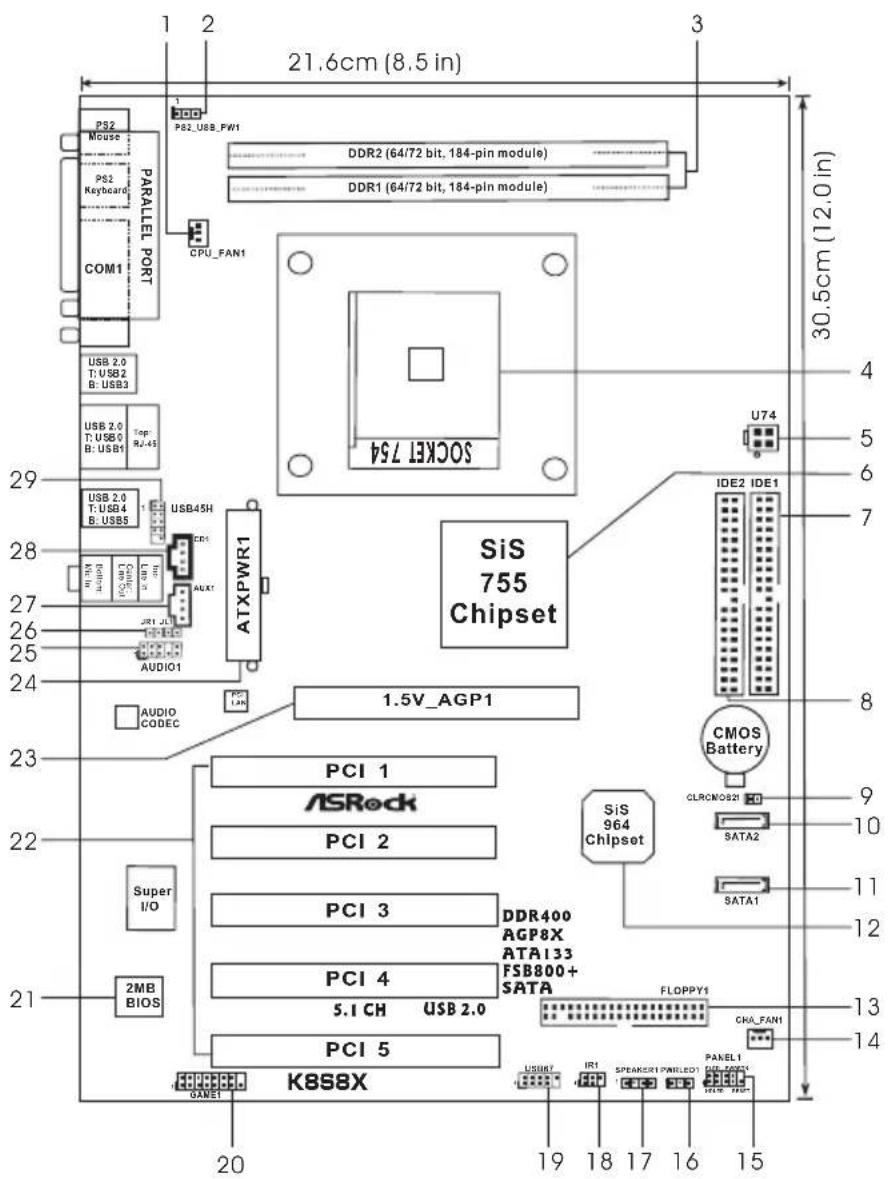
1.3 Motherboard Layout
text_image
21.6cm (8.5 in) 30.5cm (12.0 in) 21 2 2 3 4 5 6 7 8 9 10 11 12 13 14 20 19 18 17 16 15 29 28 27 26 25 24 21 P52 Mouse PS2 Keyboard COM1 PARALLEL PORT USB 2.0 T: USB2 B: USB3 USB 2.0 T: USB0 B: USB1 Top RJ-45 USB 2.0 T: USB4 B: USB5 USB45H CPU_FAN1 ATXPWR1 AUDIO1 SiS 755 Chipset U74 IDE2 IDE1 CMOS Battery CLROMOS21 SATA2 SATA1 PCI 1 ASRock PCI 2 Super I/O PCI 3 DDR400 AGP8X ATA133 FSB800+ SATA PCI 4 5.1 CH USB 2.0 PCI 5 FLOPPY1 CHA_FAN1 K8S8X GAINET 2MB BIOS1 CPU Fan Connector (CPU_FAN1) 16 Power LED Header (PWRLED1)
2 PS2_USB_PW1 Jumper 17 Chassis Speaker Header (SPEAKER 1)
3 184-pin DDR DIMM Slots (DDR1-2) 18 Infrared Module Header (IR1)
4 CPU Socket 19 USB 2.0 Header (USB67, Blue)
5 ATX 12V Connector (U74) 20 Game Port Header (GAME1)
6 North Bridge Controller 21 Flash Memory
7 Primary IDE Connector (IDE1, Blue) 22 PCI Slots (PCI1-5)
8 Secondary IDE Connector (IDE2, Black)
9 Clear CMOS Jumper (CLRCMOS2)
10 Secondary Serial ATA Connector (SATA2)
11 Primary Serial ATA Connector (SATA1)
12 South Bridge Controller
13 Floppy Connector (FLOPPY1)
14 Chassis Fan Connector (CHA_FAN1)
15 System Panel Header (PANEL1)
23 AGP Slot (1.5V_AGP1)
24 ATX Power Connector (ATXPWR1)
25 Front Panel Audio Header (AUDIO1)
26 JR1 Jumper / JL1 Jumper
27 Internal Audio Connector: AUX1 (White)
28 Internal Audio Connector: CD1 (Black)
29 Shared USB 2.0 Header (USB45H, Blue)
1.4 ASRock I/O Plus™

text_image
1 2 3 4 5 6 7 8 9 10 111 Parallel Port 7 USB 2.0 Ports (USB01)
2 RJ-45 Port 8 USB 2.0 Ports (USB23)
3 Line In (Light Blue) 9 Serial Port: COM1
4 Line Out (Lime) 10 PS/2 Keyboard Port (Purple)
5 Microphone In (Pink) 11 PS/2 Mouse Port (Green)
6 Shared USB 2.0 Ports (USB45)
Chapter 2 Installation
K8S8X is an ATX form factor (12.0-in x 8.5-in, 30.5 cm x 21.6 cm) motherboard. Before you install the motherboard, study the configuration of your chassis to ensure that the motherboard fits into it.
Pre-installation Precautions
Take note of the following precautions before you install motherboard components or change any motherboard settings.
- Unplug the power cord from the wall socket before touching any component.
- To avoid damaging the motherboard components due to static electricity, NEVER place your motherboard directly on the carpet or the like. Also remember to use a grounded wrist strap or touch a safety grounded object before you handle components.
- Hold components by the edges and do not touch the ICs.
- Whenever you uninstall any component, place it on a grounded anti-static pad or in the bag that comes with the component.

Before you install or remove any component, ensure that the power is switched off or the power cord is detached from the power supply. Failure to do so may cause severe damage to the motherboard, peripherals, and/or components.
2.1 CPU Installation
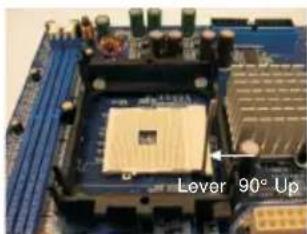
Step 1. Unlock the socket by lifting the lever up to a 90 ° angle.
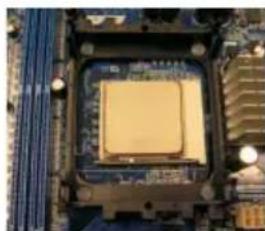
Step 2. Position the CPU directly above the socket such that the CPU corner with the golden triangle matches the socket corner with a small triangle.
Step 3. Carefully insert the CPU into the socket until it fits in place.

The CPU fits only in one correct orientation. DO NOT force the CPU into the socket to avoid bending of the pins.
Step 4. When the CPU is in place, press it firmly on the socket while you push down the socket lever to secure the CPU. The lever clicks on the side tab to indicate that it is locked.
text_image
Lever 90° UpSTEP 1:
Lift Up The Socket Lever

text_image
Socket Corner CPU Golden TriangleSTEP 2 / STEP 3:
Match The CPU Golden Triangle
To The Socket Corner
natural_image
Close-up of a computer motherboard showing CPU socket and motherboard (no visible text or symbols)STEP 4:
Push Down And Lock
The Socket Lever
2.2 Installation of CPU Fan and Heatsink
This motherboard adopts 754-pin CPU socket to support AMD Athlon™ 64 CPU. It requires larger heatsink and cooling fan to dissipate heat. You also need to spray thermal grease between the CPU and the heatsink to improve heat dissipation. Make sure that the CPU and the heatsink are securely fastened and in good contact with each other. Then connect the CPU fan to the CPU FAN connector (CPU_FAN1, see page 8, No. 1). For proper installation, please kindly refer to the instruction manuals of the CPU fan and the heatsink.
2.3 Installation of Memory Modules (DIMM)
K8S8X motherboard provides two 184-pin DDR (Double Data Rate) DIMM slots.

Please make sure to disconnect power supply before adding or removing DIMMs or the system components.
Step 1. Unlock a DIMM slot by pressing the retaining clips outward.
Step 2. Align a DIMM on the slot such that the notch on the DIMM matches the break on the slot.

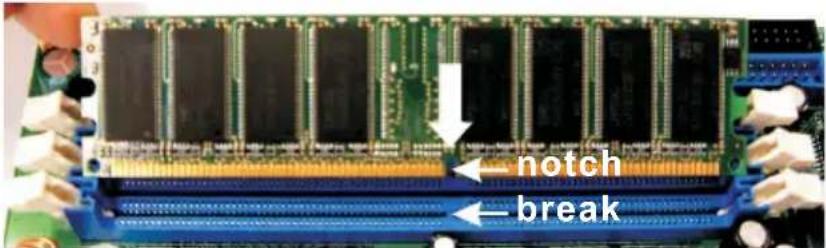
text_image
notch break

text_image
notch break
The DIMM only fits in one correct orientation. It will cause permanent damage to the motherboard and the DIMM if you force the DIMM into the slot at incorrect orientation.
Step 3. Firmly insert the DIMM into the slot until the retaining clips at both ends fully snap back in place and the DIMM is properly seated.
2.4 Expansion Slots (PCI and AGP Slots)
There are 5 PCI slots and 1 AGP slot on K8S8X motherboard.
PCI slots: PCI slots are used to install expansion cards that have the 32-bit PCI interface.
AGP slot: The AGP slot is used to install an AGP card.

Please do NOT use a 3.3V AGP card on the AGP slot of this motherboard! It may cause permanent damage! For the voltage information of your AGP card, please check with the AGP card vendors.
Installing an expansion card
Step 1. Before installing the expansion card, please make sure that the power supply is switched off or the power cord is unplugged. Please read the documentation of the expansion card and make necessary hardware settings for the card before you start the installation.
Step 2. Remove the system unit cover (if your motherboard is already installed in a chassis).
Step 3. Remove the bracket facing the slot that you intend to use. Keep the screws for later use.
Step 4. Align the card connector with the slot and press firmly until the card is completely seated on the slot.
Step 5. Fasten the card to the chassis with screws.
Step 6. Replace the system cover.
2.5 Jumpers Setup
The illustration shows how jumpers are setup. When the jumper cap is placed on pins, the jumper is "Short". If no jumper cap is placed on pins, the jumper is "Open". The illustration shows a 3-pin jumper whose pin1 and pin2 are "Short" when jumper cap is placed on these 2 pins.
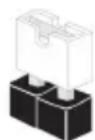
Short
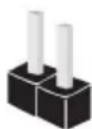
Open
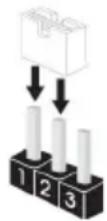
Jumper Setting
PS2_USB_PWR1 Short pin21 pin3 to enable2_3
(see p.8, No. 2) +5VSB (standby) for PS/2 or +5V +5VSB
USB wake up events.
Note: To select +5VSB, it requires 2 Amp and higher standby current provided by power supply.
JR1 / JL1 Jumper
(see p.8, No. 26)
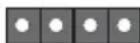
JR1 JL1
Note: If the jumpers JL1 and JR1 are short, both the front panel and the rear panel audio connectors can work.
Clear CMOS Jumper
(CLRCMOS2)
(see p.8, No. 9)

Note: CLRCMOS2 allows you to clear the data in CMOS. The data in CMOS includes system setup information such as system password, date, time, and system setup parameters. To clear and reset the system parameters to default setup, please turn off the computer and unplug the power cord, then use a jumper cap to short the pins on CLRCMOS2 for 3 seconds. Please remember to remove the jumper cap after clearing the CMOS. If you need to clear the CMOS when you just finish updating the BIOS, you must boot up the system first, and then shut it down before you do the clear-CMOS action.
2.6 Onboard Headers and Connectors

Onboard headers and connectors are NOT jumpers. Do NOT place jumper caps over these headers and connectors. Placing jumper caps over the headers and connectors will cause permanent damage of the motherboard!
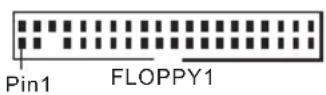
FDD Connector
(33-pin FLOPPY1)
(see p.8, No. 13)

text_image
the red-striped side to Pin1Note: Make sure the red-striped side of the cable is plugged into Pin1 side of the connector.
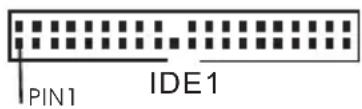
Primary IDE Connector (Blue) Secondary IDE Connector (Black)
(39-pin IDE1, see p.8, No. 7) (39-pin IDE2, see p.8, No. 8)
text_image
PIN1 IDE1
connect the blue end to the motherboard

connect the black end to the IDE devices
80-conductor ATA 66/100/133 cable
Note: If you use only one IDE device on this motherboard, please set the IDE device as "Master". Please refer to the instruction of your IDE device vendor for the details. Besides, to optimize compatibility and performance, please connect your hard disk drive to the primary IDE connector (IDE1, blue) and CD-ROM to the secondary IDE connector (IDE2, black).
Serial ATA Connectors These two Serial ATA (SATA)
(SATA2: see p.8, No. 10) connectors support SATA data
(SATA1: see p.8, No. 11) cables for internal storage
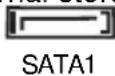
devices. The current SATA interface allows up to 1.5 Gb/s data transfer rate.
Serial ATA (SATA) Either end of the SATA data cable
Data Cable can be connected to the SATA
hard disk or the SATA connector on the motherboard.
Serial ATA (SATA) Please connect the black end of
Power Cable SATA power cable to the power
(Optional) connection to the SALVEH Then
power connector
connect to the powersupply
connect the white end of SATA power cable to the power connector of the power supply.
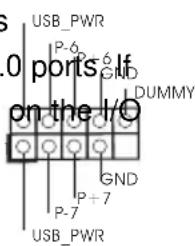
USB 2.0 Header ASRock I/O Plus
(9-pin USB67) dates 6 default USB 2.0
(see p.8, No. 19) those USB 2.0 ports
text_image
USB_PWR 0 ports If on the I/O P-6 6 GND DUMMY GND P+7 P-7 USB_PWR^TM accommo-
panel are not sufficient, this USB 2.0 header is available to support 2 additional USB 2.0 ports.
Shared USB 2.0 Header This USB45 connector is shared
(9-pin USB45H) with the USB 2.0 ports 4.5 on
(see p.8, No. 29) ASRock I/O Plus

^TM . When using
the front panel USB ports by attaching the front panel USB cable to this connector (USB45), the USB ports 4,5 on ASRock I/O Plus™ will not be able to function.
Infrared Module Header This header supports an optional
(5-pin IR1) wireless transmitting and
(see p.8, No. 18) receiving infrared mol

Internal Audio Connectors These connectors allow you
(4-pin CD1, 4-pin AUX1) to receive stereo audio input
(CD1: see p.8, No. 28)
(AUX1: see p.8, No. 27)
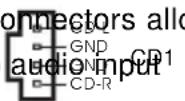

from sound sources such as a CD-ROM, DVD-ROM, TV tuner card, or MPEG card.
Front Panel Audio Header
(9-pin AUDIO1)
(see p.8, No. 25) convenient connecti

text_image
GND +5VA BACKOUT-R BACKOUT-L on and GND AUD-OUT-L AUD-OUT-R MIC MIC-POWERThis is an interface for the front panel audio cable that allows
control of audio devices.
System Panel Header This header accommodates
(9-pin PANEL1) several system front panel
(see p.8, No. 15) functions.

Chassis Speaker Header Please connect the chassis
(4-pin SPEAKER 1) speaker to this header. |SPEAKER DUMMY
(see p.8, No. 17)
Chassis Fan Connector Please connect the chassis fan
(3-pin CHA_FAN1) cable to this connector and
(see p.8, No. 14) match the black wire to the
ground pin.
CPU Fan Connector Please connect the CPU fan
(3-pin CPU_FAN1) cable to this connector and
(see p.8, No. 1) match the black wire to the
ground pin.
Game Connector Connect a Game cable to this
(15-pin GAME1)
(see p.8, No. 20) bracket is installed.
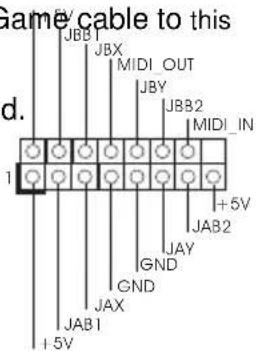
text_image
Game cable to this d. JBB1 JBX MIDI OUT JBY JBB2 MIDI_IN +5V JA82 JAY GND CND JAX JAB1 +5Vconnector if the Game port
Power LED Connector Please connect a 3-pin power
(3-pin PWRLED1)
(see p.8, No. 16)
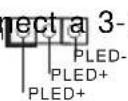
LED cable to this connector.
ATX Power Connector
(20-pin ATXPWR1)
(see p.8, No. 24)
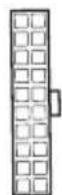
Please connect an ATX power supply to this connector.
ATX 12V Connector
(4-pin U74)
(see p.8, No. 5)

Please connect an ATX 12V power supply to this connector.
2.7 Serial ATA (SATA) Hard Disks Installation
This motherboard adopts SiS 964 southbridge chipset that supports Serial ATA (SATA) hard disks and RAID functions. You may install SATA hard disks on this motherboard for internal storage devices. This section will guide you to install the SATA hard disks.
STEP1: Install the SATA hard disks into the drive bays of your chassis.
STEP2: Connect one end of the SATA data cable to the motherboard's primary SATA connector (SATA1).
STEP 3: Connect the other end of the SATA data cable to the primary SATA hard disk.
STEP 4: Connect the SATA power cable to the SATA hard disk. If you just want to install only one SATA HDD, the installation process is complete at this step. If you want to install two SATA HDDs or you want to use RAID function, please continue to do the following steps.
STEP 5: Connect one end of the second SATA data cable to the motherboard's secondary SATA connector (SATA2).
STEP 6: Connect the other end of the SATA data cable to the secondary SATA hard disk.
STEP7: Connect the SATA power cable to the SATA hard disk.
2.8 Hot Plug and Hot Swap Functions for SATA HDDs
K8S8X motherboard supports Hot Plug function for SATA Devices. Usually, each power wire will provide 2 power connectors for HDDs. We suggest you to connect SATA HDDs to different power wires to prevent intervention.
As to Hot Swap support, please refer to the updates of later version driver that supports Hot Swap function on our website www.asrock.com

NOTE
What is Hot Plug Function?
If the SATA HDDs are NOT set for RAID configuration, it is called "Hot Plug" for the action to insert and remove the SATA HDDs while the system is still power-on and in working condition.
However, please note that it cannot perform Hot Plug if the OS has been installed into the SATA HDD.
What is Hot Swap Function?
If SATA HDDs are built as RAID1 then it is called "Hot Swap" for the action to insert and remove the SATA HDDs while the system is still power-on and in working condition.
2.9 Making An SATA Driver Diskette
If you want to install Windows 2000 or Windows XP on your SATA HDDs, you will need to make an SATA driver diskette before you start the OS installation.
STEP 1: Insert the ASRock Support CD into your optical drive to boot your system. (Do NOT insert any floppy diskette into the floppy drive at this moment!)
STEP2: During POST at the beginning of system boot-up, press
STEP 3: When you see the message on the screen, "Do you want to generate Serial ATA driver diskette [YN]?", press
STEP 4: Then you will see these messages, Please insert a diskette into the floppy drive. WARNING! Formatting the floppy diskette will lose ALL data in it! Start to format and copy files [YN]?
Please insert a floppy diskette into the floppy drive, and press
Once you have the SATA driver diskette ready, you may start to install Windows 2000 / Windows XP on your system directly without setting the RAID configuration on your system, or you may start to use "SiS RAID BIOS Setting Utility" to set RAID 0 / RAID 1 / JBOD configuration before you install the OS. Before you start to configure the RAID function, you need to check the installation guide in the Support CD for proper configuration. Please refer to the document in the Support CD, "Guide to SATA Hard Disks Installation and RAID Configuration", which is located in the folder at the following path:
.. \ RAID BIOS Setting Utility
You may also set the RAID configuration by using "SiS RAID Utility for Windows" in Windows environment. Please refer to the document in the Support CD, "Guide to SiS RAID Utility for Windows", which is located in the folder at the following path:
.. \ RAID Utility for Windows
Chapter 3 BIOS SETUP UTILITY
3.1 Introduction
This section explains how to use the BIOS SETUP UTILITY to configure your system. The Flash Memory on the motherboard stores the BIOS SETUP UTILITY. You may run the BIOS SETUP UTILITY when you start up the computer. Please press
If you wish to enter the BIOS SETUP UTILITY after POST, restart the system by pressing

Because the BIOS software is constantly being updated, the following BIOS setup screens and descriptions are for reference purpose only, and they may not exactly match what you see on your screen.
3.1.1 BIOS Menu Bar
The top of the screen has a menu bar with the following selections:
Main To set up the system time/date information
Advanced To set up the advanced BIOS features
PCIPnP To set up the PCI features
Boot To set up the default system device to locate and load the Operating System
Security To set up the security features
Chipset To set up the chipset features
Exit To exit the current screen or the BIOS SETUP UTILITY
Use <←> key or <→> key to choose among the selections on the menu bar, and then press
3.1.2 Navigation Keys
Please check the following table for the function description of each navigation key.
Navigation Key(s) Function Description
↑ / Moves cursor left or right to select Screens
← / Moves cursor up or down to select items
+ / - To change option for the selected items
3.2 Main Screen
When you enter the BIOS SETUP UTILITY, the Main screen will appear and display the system overview

text_image
BIOS SETUP UTILITY Main Advanced PCI PnP Boot Security Chipset Exit System Overview System Time [ :90:09] System Date [Tue 11/25/2003] BIOS Version : K8S8X BIOS P1.0 Processor Type : AMD Athlon(tm)64 Processor 3200+ Processor Speed : 2000 MHz L1 Cache Size : 128KB L2 Cache Size : 1024KB Total Memory : 256MB DIMM 1 : 256MB/166MHz (DDR333) DIMM 2 : None Use [Enter], [TAB] or [SHIFT-TAB] to select a field. Use [+] or [-] to configure system Time. -- Select Screen 11 Select Item +- Change Field Tab Select Field F1 General Help F9 Load Defaults F10 Save and Exit ESC Exit v02.54 (C) Copyright 1985-2003, American Megatrends, Inc.System Time [Hour:Minute:Second]
Use this item to specify the system time.
System Date [Day Month/Date/Year]
Use this item to specify the system date.
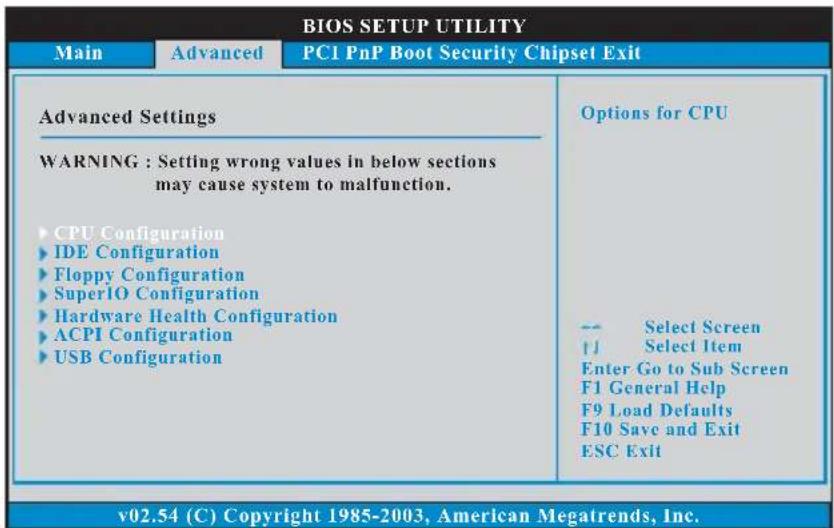
3.3 Advanced Screen
In this section, you may set the configurations for the following items: CPU Configuration, IDE Configuration, Floppy Configuration, SuperIO Configuration, Hardware Health Configuration, ACPI Configuration, and USB Configuration.
text_image
BIOS SETUP UTILITY Main Advanced PCI PnP Boot Security Chipset Exit Advanced Settings Options for CPU WARNING : Setting wrong values in below sections may cause system to malfunction. ►CPU Configuration ►IDE Configuration ►Floppy Configuration ►SuperIO Configuration ►Hardware Health Configuration ►ACPI Configuration ►USB Configuration -- Select Screen ↑ Select Item Enter Go to Sub Screen F1 General Help F9 Load Defaults F10 Save and Exit ESC Exit v02.54 (C) Copyright 1985-2003, American Megatrends, Inc.
Setting wrong values in this section may cause the system to malfunction.
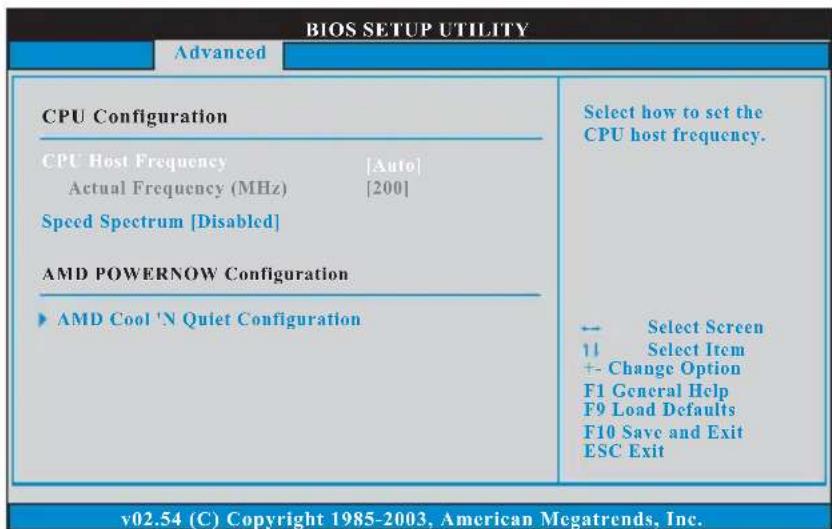
3.3.1 CPU Configuration
text_image
BIOS SETUP UTILITY Advanced CPU Configuration CPU Host Frequency [Auto] Actual Frequency (MHz) [200] Speed Spectrum [Disabled] AMD POWERNOW Configuration ▶ AMD Cool 'N Qulet Configuration Select how to set the CPU host frequency. ← Select Screen 11 Select Item +- Change Option F1 General Help F9 Load Defaults F10 Save and Exit ESC Exit v02.54 (C) Copyright 1985-2003, American Megatrends, Inc.CPU Host Frequency
This item shows current CPU host frequency of the installed motherboard.
Spread Spectrum
This item should always be [Disabled] for better system stability.
AMD POWERNOW Configuration
Use this item to enable or disable the "AMD Cool 'N Quiet Configuration" feature.
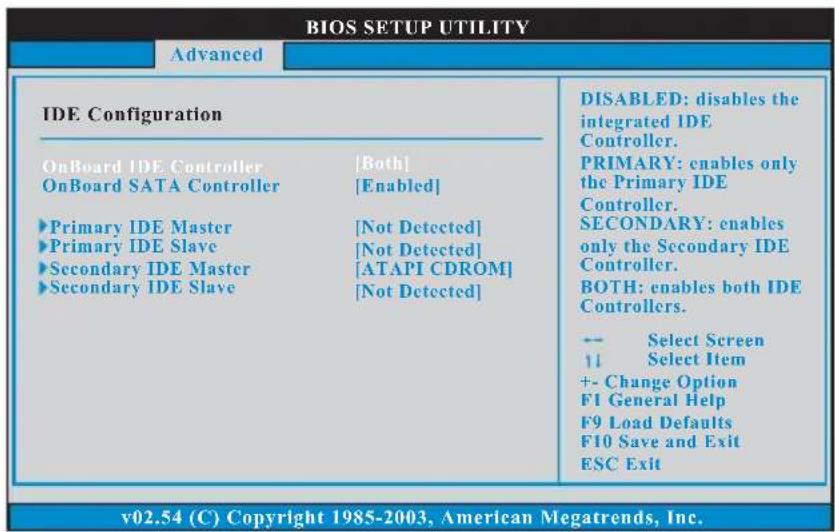
3.3.2 IDE Configuration
text_image
BIOS SETUP UTILITY Advanced IDE Configuration OnBoard IDE Controller [Both] OnBoard SATA Controller [Enabled] ►Primary IDE Master [Not Detected] ►Primary IDE Slave [Not Detected] ►Secondary IDE Master [ATAPI CDROM] ►Secondary IDE Slave [Not Detected] DISABLED: disables the integrated IDE Controller. PRIMARY: enables only the Primary IDE Controller. SECONDARY: enables only the Secondary IDE Controller. BOTH: enables both IDE Controllers. -- Select Screen 11 Select Item +- Change Option F1 General Help F9 Load Defaults F10 Save and Exit ESC Exit v02.54 (C) Copyright 1985-2003, American Megatrends, Inc.OnBoard IDE Controller
You may enable either the primary IDE channel or the secondary IDE channel. Or you may enable both the primary and the secondary IDE channels by selecting [Both]. Set to [Disabled] will disable the both. Configuration options: [Disabled], [Primary], [Secondary], [Both].
OnBoard SATA Controller
Use this item to enable or disable the "OnBoard SATA Controller" feature.
IDE Device Configuration
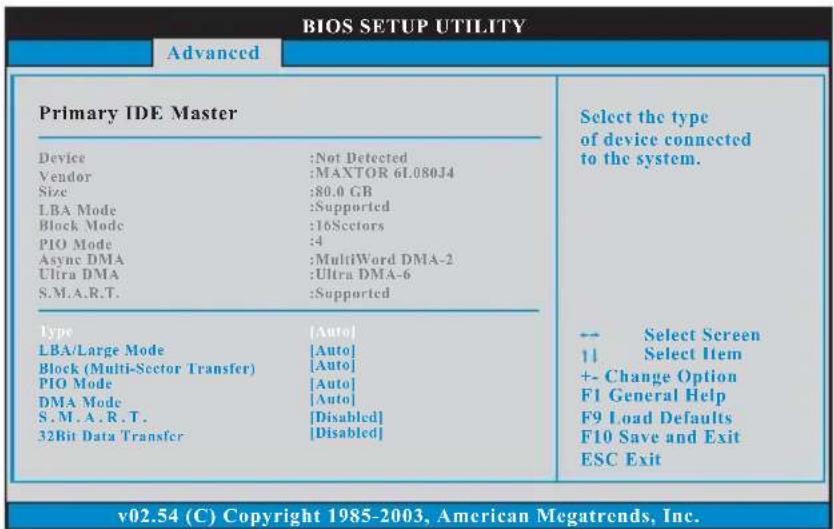
You may set the IDE configuration for the device that you specify. We will use the "Primary IDE Master" as the example in the following instruction, which can be applied to the configurations of "Primary IDE Slave", "Secondary IDE Master", and "Secondary IDE Slave" as well.
text_image
BIOS SETUP UTILITY Advanced Primary IDE Master Device :Not Detected Vendor :MAXTOR 6L080J4 Size :80.0 GB LBA Mode :Supported Block Mode :16Sectors PIO Mode :4 Async DMA :MultiWord DMA-2 Ultra DMA :Ultra DMA-6 S.M.A.R.T. :Supported type [Auto] LBA/Large Mode [Auto] Block (Multi-Sector Transfer) [Auto] PIO Mode [Auto] DMA Mode [Auto] S.M.A.R.T. [Disabled] 32Bit Data Transfer [Disabled] Select the type of device connected to the system. -- Select Screen 11 Select Item +- Change Option F1 General Help F9 Load Defaults F10 Save and Exit ESC Exit v02.54 (C) Copyright 1985-2003, American Megatrends, Inc.TYPE
Use this item to configure the type of the IDE device that you specify. Configuration options: [Not Installed], [Auto], [CD/DVD], and [ARMD].
[Not Installed]: Select [Not Installed] to disable the use of IDE device.
[Auto]: Select [Auto] to automatically detect the hard disk drive.

After selecting the hard disk information into BIOS, use a disk utility, such as FDISK, to partition and format the new IDE hard disk drives. This is necessary so that you can write or read data from the hard disk. Make sure to set the partition of the Primary IDE hard disk drives to active.
[CD/DVD]: This is used for IDE CD/DVD drives.
[ARMD]: This is used for IDE ARMD (ATAPI Removable Media Device), such as MO.
LBA/Large Mode
Use this item to select the LBA/Large mode for a hard disk > 512 MB under DOS and Windows; for Netware and UNIX user, select [Disabled] to disable the LBA/Large mode.
Block (Multi-Sector Transfer)
The default value of this item is [Auto]. If this feature is enabled, it will enhance hard disk performance by reading or writing more data during each transfer.
PIO Mode
Use this item to set the PIO mode to enhance hard disk performance by optimizing the hard disk timing.
DMA Mode
DMA capability allows the improved transfer-speed and data-integrity for compatible IDE devices.
S.M.A.R.T.
Use this item to enable or disable the S.M.A.R.T. (Self-Monitoring, Analysis, and Reporting Technology) feature. Configuration options: [Disabled], [Auto], [Enabled].
32 Bit Data Transfer
Use this item to enable 32-bit access to maximize the IDE hard disk data transfer rate.
3.3.3 Floppy Configuration
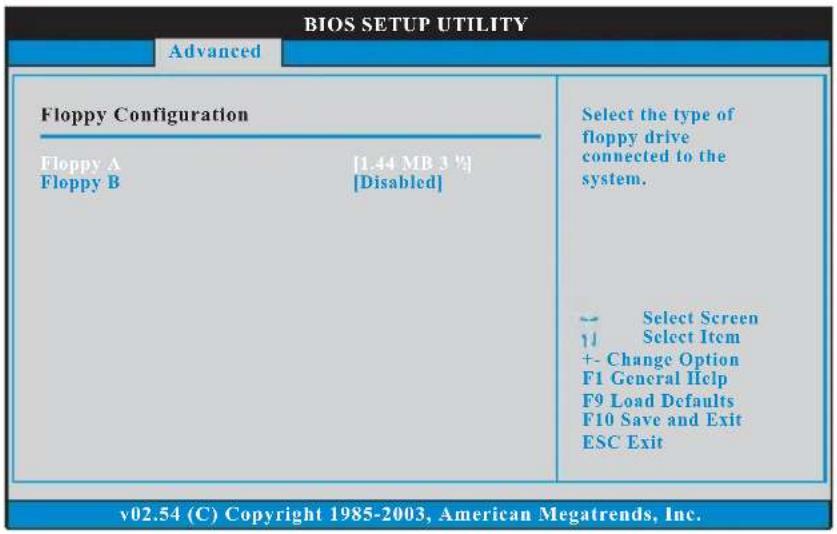
In this section, you may configure the type of your floppy drive.
text_image
BIOS SETUP UTILITY Advanced Floppy Configuration Floppy A [1.44 MB 3 %] Floppy B [Disabled] Select the type of floppy drive connected to the system. ~ Select Screen 11 Select Item + - Change Option F1 General Help F9 Load Defaults F10 Save and Exit ESC Exit v02.54 (C) Copyright 1985-2003, American Megatrends, Inc.3.3.4 Super IO Configuration
text_image
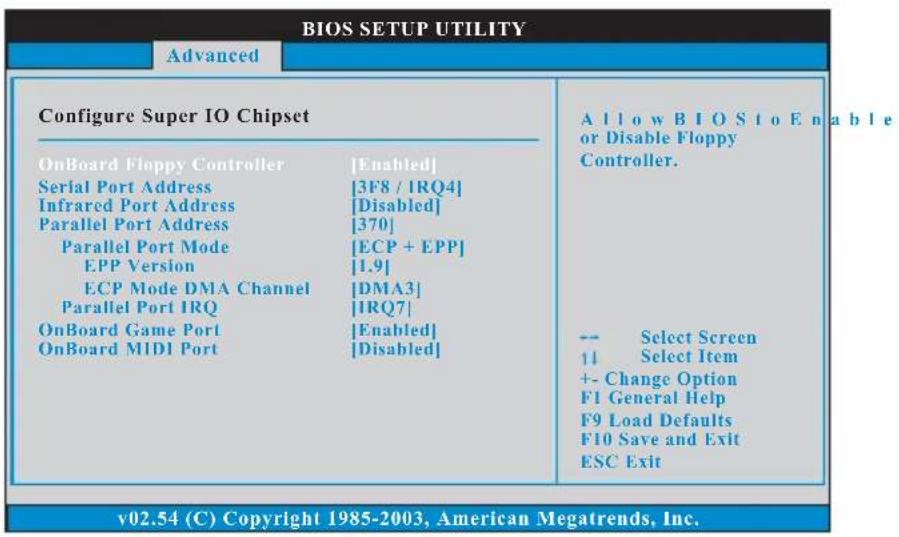
BIOS SETUP UTILITY Advanced Configure Super IO Chipset OnBoard Floppy Controller [Enabled] Serial Port Address [3F8 / 1RQ4] Infrared Port Address [Disabled] Parallel Port Address [370] Parallel Port Mode [ECP + EPP] EPP Version [1.9] ECP Mode DMA Channel [DMA3] Parallel Port IRQ [1RQ7] OnBoard Game Port [Enabled] OnBoard MIDI Port [Disabled] Allow BIOS to Enable or Disable Floppy Controller. -- Select Screen 11 Select Item +- Change Option F1 General Help F9 Load Defaults F10 Save and Exit ESC Exit v02.54 (C) Copyright 1985-2003, American Megatrends, Inc.OnBoard Floppy Controller
Use this item to enable or disable floppy drive controller.
Serial Port Address
Use this item to set the address for the onboard serial port or disable it.
Configuration options: [Disabled], [3F8 / IRQ4], [2F8 / IRQ3], [3E8 / IRQ4], [2E8 / IRQ3].
Infrared Port Address
Use this item to set the address for the onboard infrared port or disable it.
Configuration options: [Disabled], [2F8 / IRQ3], and [2E8 / IRQ3].
Parallel Port Address
Use this item to set the address for the onboard parallel port or disable it. Configuration options: [Disabled], [378], and [278].
Parallel Port Mode
Use this item to set the operation mode of the parallel port. The default value is [ECP+EPP]. If this option is set to [ECP+EPP], it will show the EPP version in the following item, "EPP Version". Configuration options: [Normal], [Bi-Directional], and [ECP+EPP].
EPP Version
Use this item to set the EPP version. Configuration options: [1.9] and [1.7].
ECP Mode DMA Channel
Use this item to set the ECP mode DMA channel. Configuration options: [DMA0], [DMA1], and [DMA3].
Parallel Port IRQ
Use this item to set the IRQ for the parallel port. Configuration options: [IRQ5] and [IRQ7].
OnBoard Game Port
Use this item to enable the Game Port or disable it.
OnBoard MIDI Port
Use this time to select the address for the MIDI Port or disable it. Configuration options: [Disabled], [300], and [330].
3.3.5 Hardware Health Configuration
In this section, it allows you to monitor the status of the hardware on your system, including the parameters of the CPU temperature, motherboard temperature, CPU fan speed, chassis fan speed, and the critical voltage.
| Hardware Health Event Monitoring | |
| CPU Temperature : 54C/129F M/B Temperature : 35C/95F | |
| CPU Fan Speed : 2463 RPM Chassis Fan Speed : N/A | |
| Vcore : 1.629V +3.30V : 3.306V +5.00V : 5.067V +12.00V : 11.890V | -- Select Screen 11 Select Item F1 General Help F9 Load Defaults F10 Save and Exit ESC Exit |
3.3.6 ACPI Configuration
text_image
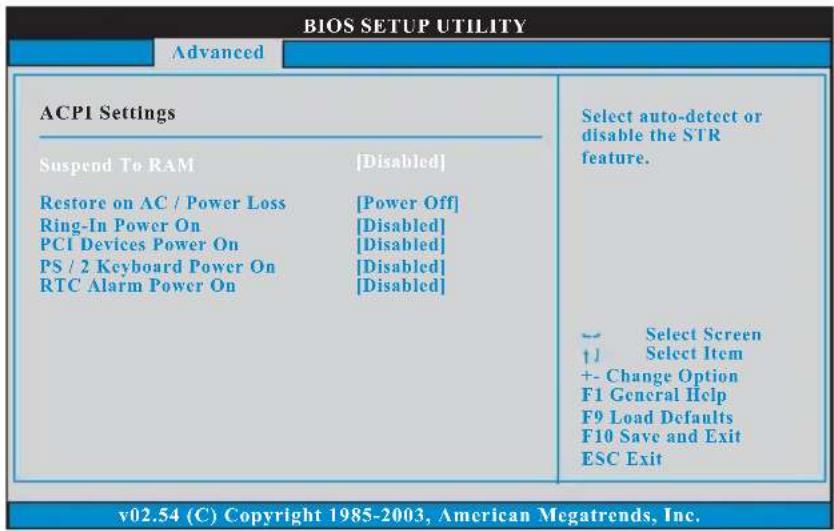
BIOS SETUP UTILITY Advanced ACPI Settings Suspend To RAM [Disabled] Restore on AC / Power Loss [Power Off] Ring-In Power On [Disabled] PCI Devices Power On [Disabled] PS / 2 Keyboard Power On [Disabled] RTC Alarm Power On [Disabled] Select auto-detect or disable the STR feature. ~ Select Screen ↑ Select Item +- Change Option F1 General Help F9 Load Defaults F10 Save and Exit ESC Exit v02.54 (C) Copyright 1985-2003, American Megatrends, Inc.Suspend to RAM
Use this item to select whether to auto-detect or disable the Suspend-to-RAM feature. Select [Auto] will enable this feature if the OS supports it.
Restore on AC/Power Loss
Use this item to set the power state after an unexpected AC/power loss. If [Power Off] is selected, the AC/power remains off when the power recovers. If [Power On] is selected, the AC/power resumes and the system starts to boot up when the power recovers.
Ring-In Power On
Use this item to enable or disable Ring-In signals to turn on the system from the power-soft-off mode.
PCI Devices Power On
Use this item to enable or disable PCI devices to turn on the system from the power-soft-off mode.
PS/2 Keyboard Power On
Use this item to enable or disable PS/2 keyboard to turn on the system from the power-soft-off mode.
RTC Alarm Power On
Use this item to enable or disable RTC (Real Time Clock) to power on the system.
3.3.7 USB Configuration
| BIOS SETUP UTILITY | |
| Advanced | |
| USB Configuration USB Devices Enabled: None USB Controller [Enabled] USB 2.0 Support [Enabled] Legacy USB Support [Disabled] | To enable or disable the onboard USB controllers. -- Select Screen †1 Select Item + - Change Option F1 General Help F9 Load Defaults F10 Save and Exit ESC Exit |
| v02.54 (C) Copyright 1985-2003, American Megatrends, Inc. | |
USB Controller
Use this item to enable or disable the use of USB controller.
USB 2.0 Support
Use this item to enable or disable the USB 2.0 support.
Legacy USB Support
Use this item to enable or disable the support to emulate legacy I/O devices such as mouse, keyboard,... etc. Or you may select [Auto] so that the system will start to auto-detect; if there is no USB device connected, "Auto" option will disable the legacy USB support.
3.4 PCIPnP Screen
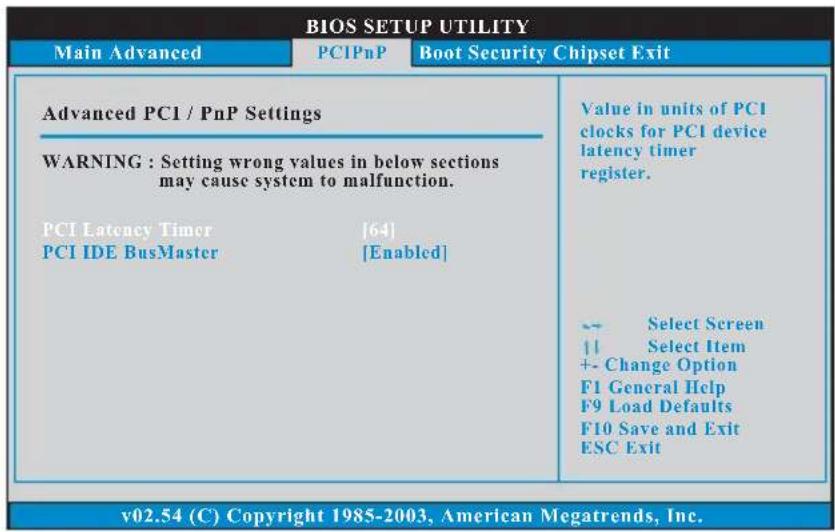
In this section, you may configure the PCI Latency Timer and the PCI IDE Bus Master.
text_image
BIOS SETUP UTILITY Main Advanced PCIPnP Boot Security Chipset Exit Advanced PCI / PnP Settings WARNING : Setting wrong values in below sections may cause system to malfunction. PCI Latency Timer [64] PCI IDE BusMaster [Enabled] Value in units of PCI clocks for PCI device latency timer register. ← Select Screen || Select Item +- Change Option F1 General Help F9 Load Defaults F10 Save and Exit ESC Exit v02.54 (C) Copyright 1985-2003, American Megatrends, Inc.
Setting wrong values in this section may cause the system to malfunction.
PCI Latency Timer
The default value is 64. It is recommended to keep the default value unless the installed PCI expansion cards' specifications require other settings.
PCI IDE BusMaster
Use this item to enable or disable the PCI IDE BusMaster feature.
3.5 Boot Screen
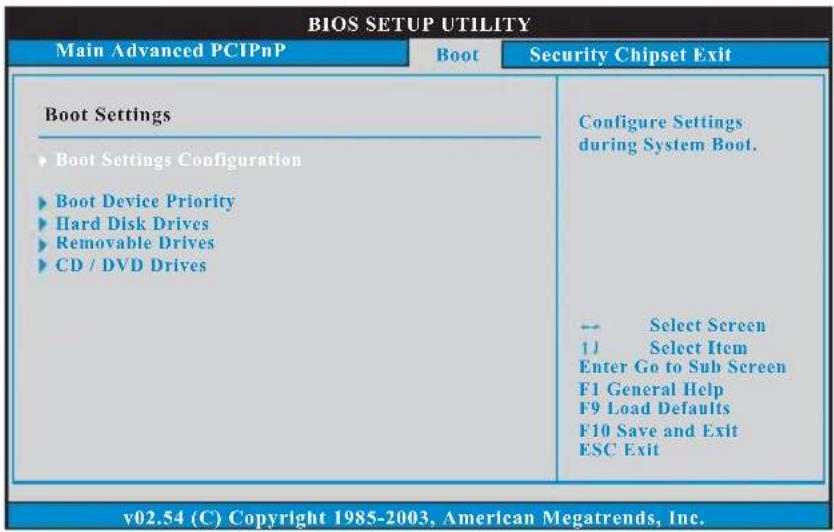
In this section, it will display the available devices on your system for you to configure the boot settings and the boot priority.
text_image
BIOS SETUP UTILITY Main Advanced PCIPnP Boot Security Chipset Exit Boot Settings ► Boot Settings Configuration ► Boot Device Priority ► Hard Disk Drives ► Removable Drives ► CD / DVD Drives Configure Settings during System Boot. -- Select Screen 1) Select Item Enter Go to Sub Screen F1 General Help F9 Load Defaults F10 Save and Exit ESC Exit v02.54 (C) Copyright 1985-2003, American Megatrends, Inc.3.5.1 Boot Settings Configuration
text_image
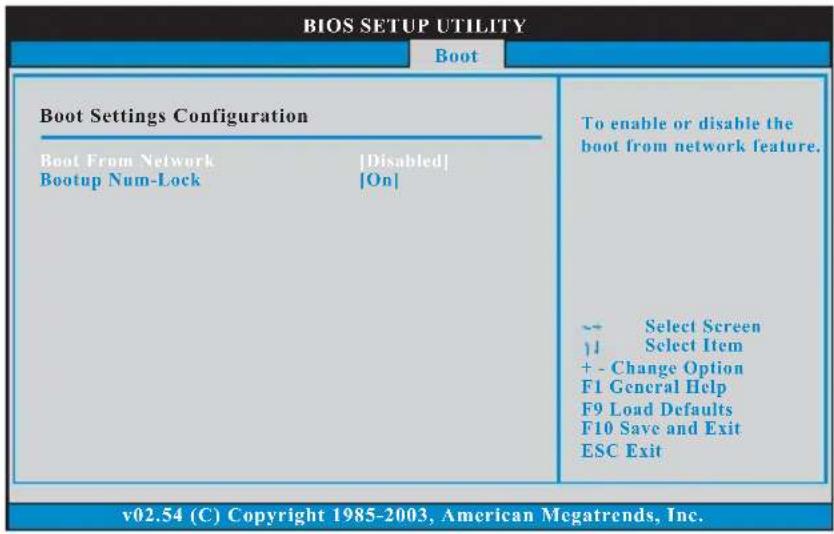
BIOS SETUP UTILITY Boot Boot Settings Configuration Boot From Network |Disabled| Bootup Num-Lock |On| To enable or disable the boot from network feature. -- Select Screen 1 Select Item + - Change Option F1 General Help F9 Load Defaults F10 Save and Exit ESC Exit v02.54 (C) Copyright 1985-2003, American Megatrends, Inc.Boot From Network
Use this item to enable or disable the Boot From Network feature.
Boot Up Num-Lock
If this item is set to [On], it will automatically activate the Numeric Lock function after boot-up.
3.5.2 Boot Device Priority
In this section, you may specify the boot sequence from the available devices in your system.
| BIOS SETUP UTILITY | |
| Boot | |
| Boot Device Priority | Specifics the boot sequence from the available devices. |
| 1st Boot Device [1st FLOPPY DRIVE] 2nd Boot Device [HDD; PM-MAXTOR 6L08] 3rd Boot Device [CD/DVD] | A device enclosed in parenthesis has been disabled in the corresponding type menu. |
| -- Select Screen ↑ Select Item + - Change Option F1 General Help F9 Load Defaults F10 Save and Exit ESC Exit | |
| v02.54 (C) Copyright 1985-2003, American Megatrends, Inc. | |
Likewise, you may also specify the boot sequence from the available devices for the hard disk drives, the removable drives, and the CD/DVD drives.
3.6 Security Screen
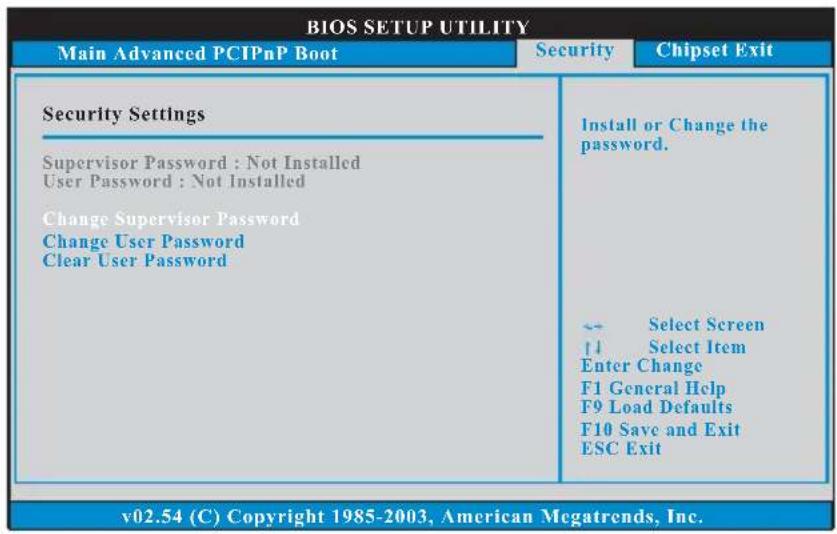
In this section, you may set or change the supervisor/user password for the system in this section. For the user password, you may also clear it.
text_image
BIOS SETUP UTILITY Main Advanced PCIPnP Boot Security Chipset Exit Security Settings Install or Change the password. Supervisor Password : Not Installed User Password : Not Installed Change Supervisor Password Change User Password Clear User Password ← Select Screen F1 Select Item Enter Change F1 General Help F9 Load Defaults F10 Save and Exit ESC Exit v02.54 (C) Copyright 1985-2003, American Megatrends, Inc.3.7 Chipset Screen
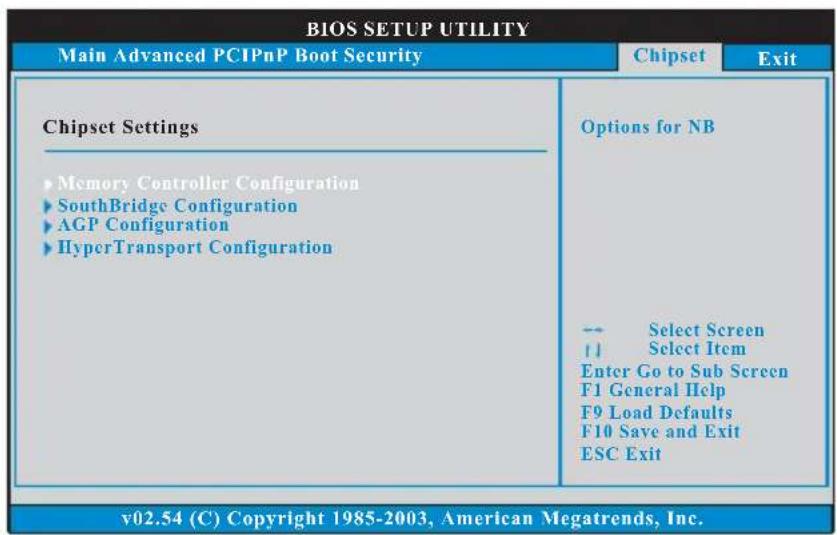
In this section, you may set the configurations for the memory controller, south bridge, AGP, and the HyperTransport feature.
text_image
BIOS SETUP UTILITY Main Advanced PCIPnP Boot Security Chipset Exit Chipset Settings ► Memory Controller Configuration ► SouthBridge Configuration ► AGP Configuration ► HyperTransport Configuration Options for NB -- Select Screen || Select Item Enter Go to Sub Screen F1 General Help F9 Load Defaults F10 Save and Exit ESC Exit v02.54 (C) Copyright 1985-2003, American Megatrends, Inc.3.7.1 Memory Controller Configuration
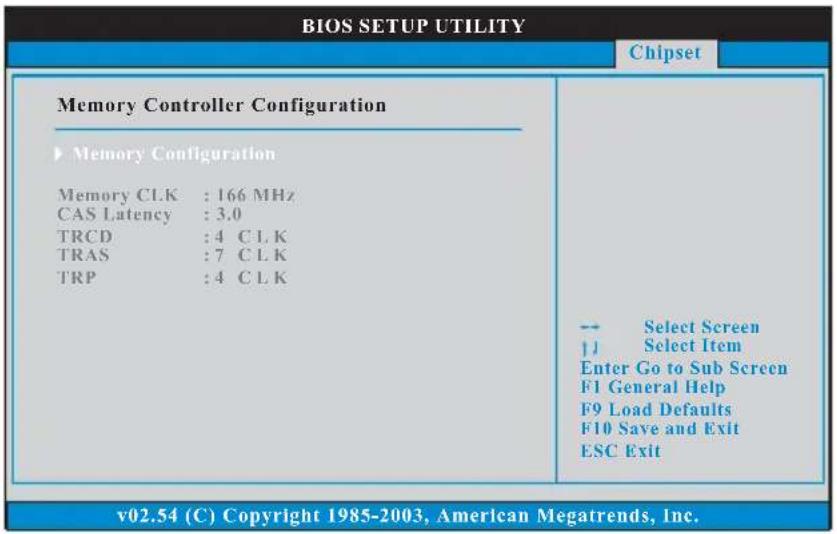
In this section, it will display the status of memory clock, CAS Latency, TRCD, TRAS, and TRP. You may also set the memory configuration in the sub-screen under this section.
text_image
BIOS SETUP UTILITY Chipset Memory Controller Configuration ► Memory Configuration Memory CLK : 166 MHz CAS Latency : 3.0 TRCD : 4 CL K TRAS : 7 CL K TRP : 4 CL K → Select Screen ↑ Select Item Enter Go to Sub Screen F1 General Help F9 Load Defaults F10 Save and Exit ESC Exit v02.54 (C) Copyright 1985-2003, American Megatrends, Inc.3.7.1.1 Memory Configuration

text_image
BIOSETUP UTILITY Chipset Memory Configuration Memory Clock [Auto] Bank Interleaving [Auto] Node Interleaving [Disabled] Burst Length [8 Beats] CAS Latency (CL) [Auto] TRCD [Auto] TRAS [Auto] TRP [Auto] Memory Clock can be set by the code using AUTO, or you can set one of the standard values. Select Screen 11 Select Item + - Change Option F1 General Help F9 Load Defaults F10 Save and Exit ESC Exit v02.54 (C) Copyright 1985-2003, American Megatrends, Inc.Memory Clock
This item can be set by the code using [Auto]. You can set one of the standard values as listed: [100 MHz (DDR200)], [133 MHz (DDR266)], [166 MHz (DDR333)], [200 MHz (DDR400)].
Bank Interleaving
Interleaving allows memory accesses to be spread out over banks on the same node, or across nodes, decreasing access contention.
Node Interleaving
Interleaving allows memory accesses to be spread out over banks on the same node, or across nodes, decreasing access contention.
Burst Length
Burst length can be set to 8 or 4 beats. 64 Bit Dq must use the 4 beats.
CAS Latency (CL)
Use this item to adjust the means of memory accessing. Configuration options: [Auto], [2.0], [3.0], and [2.5].
TRCD
Use this to adjust TRCD values. Configuration options: [Auto], [2CLK], [3CLK], [4CLK], [5CLK], and [6CLK].
TRAS
Use this to adjust TRAS values. Configuration options: [Auto], [5CLK], [6CLK], [7CLK], [8CLK], [9CLK], [10CLK], [11CLK], and [12CLK].
TRP
Use this to adjust TRP values. Configuration options: [Auto], [2CLK], [3CLK], [4CLK], [5CLK], and [6CLK].
3.7.2 South Bridge Configuration
text_image
BIOS SETUP UTILITY Chipset SouthBridge Chipset Configuration Onboard Ac97 Audio [Auto] Onboard LAN [Enabled] Enable / Disable onboard Audio device. ~ Select Screen 11 Select Item + - Change Option F1 General Help F9 Load Defaults F10 Save and Exit ESC Exit v02.54 (C) Copyright 1985-2003, American Megatrends, Inc.OnBoard AC'97 Audio
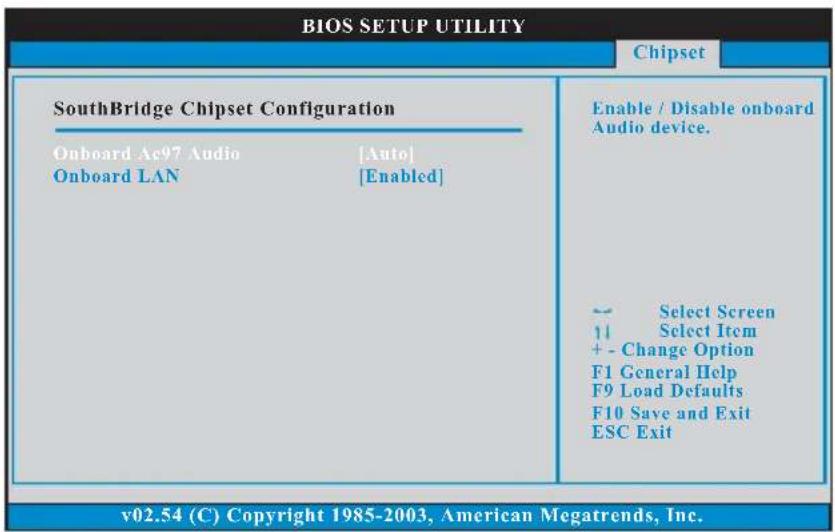
Select [Disabled], [Auto] or [Enabled] for the onboard AC'97 Audio feature.
OnBoard LAN
Use this item to enable or disable the onboard LAN device.
3.7.3 AGP Configuration
text_image
BIOS SETUP UTILITY Chipset AGP Chipset Configuration AGP Aperture Size [64 MB] AGP Data Rate [8X] AGP Fast Write [Disabled] Primary Graphics Adapter [PCI] Aperture size defines a Window into system memory for the AGP video controller. It does not consume real system memory. -- Select Screen ↑1 Select Item + - Change Option F1 General Help F9 Load Defaults F10 Save and Exit ESC Exit v02.54 (C) Copyright 1985-2003, American Megatrends, Inc.AGP Aperture Size
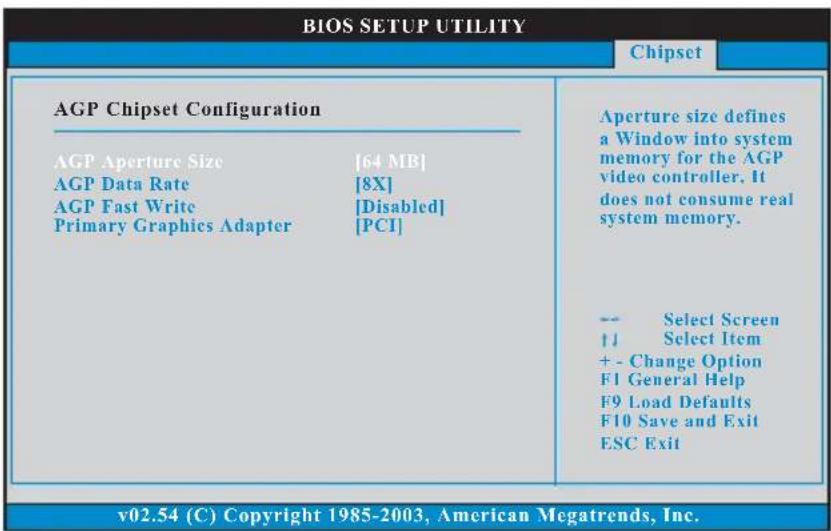
It refers to a section of the PCI memory address range used for graphics memory. It is recommended to leave this field at the default value unless the installed AGP card's specifications requires other sizes.
AGP Data Rate
You may select between [8X] or [4X] for an AGP 3.0 card.
AGP Fast Write
Use this item to enable or disable the feature of AGP fast write protocol support.
Primary Graphics Adapter
This item will switch the PCI Bus scanning order while searching for video card. It allows you to select the type of Primary VGA in case of multiple video controllers.
3.7.4 HyperTransport Configuration
text_image
BIOS SETUP UTILITY Chipset HyperTransport Configuration Options $ BIT HT Width [Auto] HT Speed [800 Mhz] HT Tristate Enable [Disabled] CRC Flood Enable [Disabled] -- Select Screen 11 Select Item + - Change Option F1 General Help F9 Load Defaults F10 Save and Exit ESC Exit v02.54 (C) Copyright 1985-2003, American Megatrends, Inc.HT Width
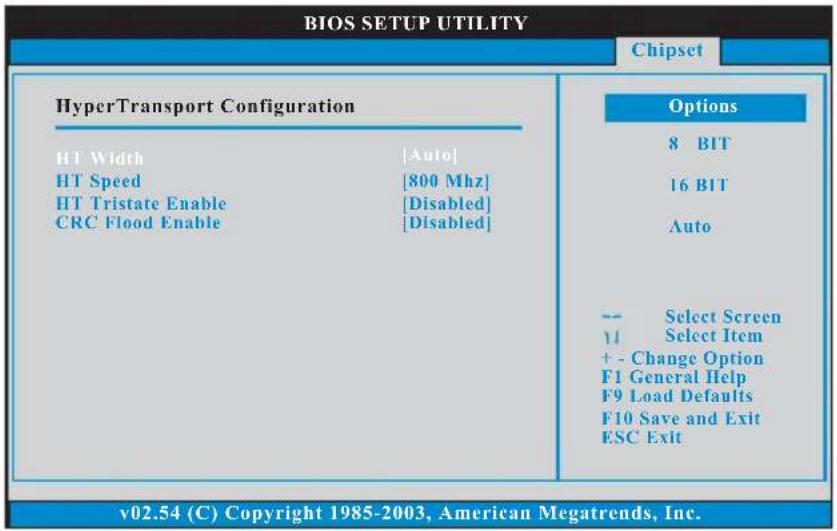
Use this item to set the HT width as [8 BIT], [16 BIT], or [Auto].
HT Speed
Use this item to set the HT speed as [200 MHz], [400 MHz], [600 MHz], or [800 MHz].
HT Tristate Enable
Use this item to enable or disable link tristate during the disconnected state of an LDTSTOP.
CRC Flood Enable
Use this item to enable or disable generation of sync packets on CRC error.
3.8 Exit Screen
| BIOS SETUP UTILITY Main Advanced PCIPnP Boot Security Chipset | |
| Exit Options | Exit system setup after saving the changes. F10 key can be used for this operation. -- Select Screen 1↓ Select Item Enter Go to Sub Screen F1 General Help F9 Load Defaults F10 Save and Exit ESC Exit |
| v02.54 (C) Copyright 1985-2003, American Megatrends, Inc. | |
Save Changes and Exit
When you select this option, it will pop-out the following message, "Save configuration changes and exit setup?" Select [OK] to save the changes and exit the BIOS SETUP UTILITY.
Discard Changes and Exit
When you select this option, it will pop-out the following message, "Discard changes and exit setup?" Select [OK] to exit the BIOS SETUP UTILITY without saving any changes.
Discard Changes
When you select this option, it will pop-out the following message, "Discard changes?" Select [OK] to discard all changes.
Load Optimal Defaults
When you select this option, it will pop-out the following message, "Load optimal defaults?" Select [OK] to load the default values for all the setup configurations.
Chapter 4 Software Support
4.1 Install Operating System
This motherboard supports various Microsoft ^® Windows ^® operating systems:
98 SE / ME / 2000 / XP. Because motherboard settings and hardware options vary, use the setup procedures in this chapter for general reference only. Refer to your OS documentation for more information.
4.2 Support CD Information
The Support CD that came with the motherboard contains necessary drivers and useful utilities that enhance the motherboard features.
4.2.1 Running The Support CD
To begin using the support CD, insert the CD into your CD-ROM drive. The CD automatically displays the Main Menu if "AUTORUN" is enabled in your computer. If the Main Menu did not appear automatically, locate and double click on the file "ASSETUP.EXE" from the BIN folder in the Support CD to display the menus.
4.2.2 Drivers Menu
The Drivers Menu shows the available devices drivers if the system detects installed devices. Please install the necessary drivers to activate the devices.
4.2.3 Utilities Menu
The Utilities Menu shows the applications software that the motherboard supports. Click on a specific item then follow the installation wizard to install it.
4.2.4 ASRock PC-DIY Live Demo Program
ASRock presents you a multimedia PC-DIY live demo, which shows you how to install your own PC system step by step. You can find the file through the following path:
..\MPEGAV\AVSEQ01.DAT
To see this demo program, you can run Microsoft® Media Player® to play the file.
4.2.5 Contact Information
If you need to contact ASRock or want to know more about ASRock, welcome to visit ASRock's website at http://www.asrock.com; or you may contact your dealer for further information.