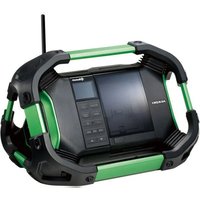
UR 18DSL2 - Radio HITACHI - Free user manual and instructions
Find the device manual for free UR 18DSL2 HITACHI in PDF.


| Product type | Portable radio |
| Brand | Hitachi |
| Model | UR 18DSL2 |
| Dimensions (approx.) | 250 x 150 x 200 mm |
| Weight (approx.) | 2.5 kg |
| Power supply | 18V lithium-ion battery (compatible with Hitachi 18V range) or AC adapter |
| Radio reception | AM / FM |
| Auxiliary input | 3.5mm jack |
| Bluetooth | Built-in for wireless audio streaming |
| Speaker | Built-in wideband speaker |
| Carrying handle | Built-in for easy portability |
| Maintenance and cleaning | Clean with a soft, dry cloth. Do not use solvents. |
| Safety | Use only recommended Hitachi batteries and chargers. Do not expose to moisture. |
| Spare parts and repairability | Parts available from the manufacturer or authorized service centers. |
| General information | Made in China. Warranty: refer to the manual. |
Frequently Asked Questions - UR 18DSL2 HITACHI
User questions about UR 18DSL2 HITACHI
0 question about this device. Answer the ones you know or ask your own.
Ask a new question about this device
Download the instructions for your Radio in PDF format for free! Find your manual UR 18DSL2 - HITACHI and take your electronic device back in hand. On this page are published all the documents necessary for the use of your device. UR 18DSL2 by HITACHI.
USER MANUAL UR 18DSL2 HITACHI
natural_image
Illustration of a Hitachi HAC device with control panel and buttons (no text or symbols on the device itself)SAFETY INSTRUCTIONS AND INSTRUCTION MANUAL
WARNING
IMPROPER OR UNSAFE use of this radio can result in death or serious bodily injury!
This manual contains important information about product safety. Please read and understand this manual BEFORE operating the radio. Please keep this manual available for other users and owners before they use the radio.
This manual should be stored in safe place.
INSTRUCTIONS DE SECURITE ET MODE D'EMPLOI
⚠ AVERTISSEMENT
IMPORTANT SAFETY INSTRUCTIONS .....3
IMPORTANT SAFETY INFORMATION .....3
MEANINGS OF SIGNAL WORDS AND SYMBOLS .....3
SAFETY......4
GENERAL SAFETY RULES ....5
SPECIFIC SAFETY RULES ....5
IMPORTANT SAFETY INSTRUCTIONS FOR BATTERY CHARGER ....6
IMPORTANT SAFETY INSTRUCTIONS FOR USE OF THE BATTERY AND BATTERY CHARGER .....6
PROTECTING YOUR HEARING ....8
PRECAUTIONS WHEN CONNECTING TO EXTERNAL EQUIPMENT....8
DISPOSAL OF THE EXHAUSTED BATTERY.....8
FUNCTIONAL DESCRIPTION ......10
NAME OF PARTS 10
SPECIFICATIONS....12
MAIN FUNCTIONS ....12
ASSEMBLY AND OPERATION....13
BEFORE USE 13
LISTENING TO THE RADIO .....14
USING THE TIMER FUNCTION .....15
LISTENING TO THE PORTABLE MUSIC PLAYER....16
OTHER FUNCTIONS ....17
MAINTENANCE AND INSPECTION....18
ACCESSORIES ....19
STANDARD ACCESSOIRES ....19
OPTIONAL ACCESSORIES ....19
PARTS LIST......56
TABLE DES MATIÈRES
Français
Page Page
IMPORTANTES INSTRUCTIONS DE SÉCURITÉ .....20
INFORMATIONS IMPORTANTES DE SÉCURITÉ ....20
SIGNIFICATION DES MOTS D'AVERTISSEMENT ET SYMBOLES....20
SECURITE 21
REGLES GENERALE DE SECURITE .....22
RÈGLES DE SÉCURITÉ SPÉCIFIQUES ....22
CONSIGNES DE SÉCURITÉ IMPORATANTES POUR LE CHARGEUR DE BATTERIE .....23
CONSIGNES DE SÉCURITÉ IMPORTANTES POUR L'UTILISATION DE LA BATTERIE ET DU CHARGEUR DE BATTERIE....24
PROTEGER VOTRE AUDITION .....25
IMPORTANT SAFETY INSTRUCTIONS
1) Read these instructions.
2) Keep these instructions.
3) Heed all warnings.
4) Follow all instructions.
5) Do not use this apparatus near water.
6) Clean only with dry cloth.
7) Do not block any ventilation openings. Install in accordance with the manufacturer's instructions.
8) Do not install near any heat sources such as radiators, heat registers, stoves, or other apparatus (including amplifiers) that produce heat.
9) Protect the power cord from being walked on or pinched particularly at plugs, convenience receptacles, and the point where they exit from the apparatus.
10) Only use attachments/accessories specified by the manufacturer.
11) Unplug this apparatus during lightning storms or when unused for long periods of time.
12) Refer all servicing to qualified service personnel. Servicing is required when the apparatus has been damaged in any way, such as power-supply cord or plug is damaged, liquid has been spilled or objects have fallen into the apparatus, the apparatus has been exposed to rain or moisture, does not operate normally, or has been dropped.
IMPORTANT SAFETY INFORMATION
Read and understand all of the safety precautions, warnings and operating instructions in the Instruction Manual before operating or maintaining this tool.
Most accidents that result from tool operation and maintenance are caused by the failure to observe basic safety rules or precautions. An accident can often be avoided by recognizing a potentially hazardous situation before it occurs, and by observing appropriate safety procedures.
Basic safety precautions are outlined in the “SAFETY” section of this Instruction Manual and in the sections which contain the operation and maintenance instructions.
Hazards that must be avoided to prevent bodily injury or machine damage are identified by WARNINGS on the tool and in this Instruction Manual.
NEVER use this tool in a manner that has not been specifically recommended by HITACHI.
MEANINGS OF SIGNAL WORDS AND SYMBOLS
WARNING indicates a potentially hazardous situations which, if ignored, could result in death or serious injury.
CAUTION indicates a potentially hazardous situations which, if not avoided, may result in minor or moderate injury, or may cause machine damage.
NOTE emphasizes essential information.

This mark is intended to alert the user to the presence of uninsulated “dangerous voltage” within the product’s enclosure that may be of sufficient magnitude to constitute a risk of electric shock to persons.

This mark is intended to alert the user to the presence of important operating and maintenance (servicing) instructions in the literature accompanying the product.
SAFETY
When using an electrical appliance, basic precautions should always be followed, including the following:
READ ALL INSTRUCTIONS BEFORE USING (THIS APPLIANCE)
WARNING
To reduce the risk of fi re, electric shock, or injury:
- Use indoors only.
- Use only the specified power supply voltage.
- Do not allow to be used as a toy. Close attention is necessary when used by or near children.
- Use only as described in this manual.
- Use only manufacturer's recommended attachments.
- Do not handle appliance with wet hands.
- Do not touch the power plug (AC adapter) with wet hands.
- Do not use the radio in the bathroom or shower.
- To reduce the risk of fire or electric shock, do not expose this radio to rain or moisture.
- Radio shall not be exposed to dripping or splashing and no objects fi lled with liquids, such as vases, shall be placed on radio.
- Do not operate radio in explosive atmospheres, such as in the presence of fl ammable or combustible liquids, gasses or dust.
- Never use when the temperature is below 23^ F ( -5^ C) or above 104^ F ( 40^ C).
- Do not put any object into openings.
- Avoid damaging the AC adapter cord. Do not modify, forcibly bend, twist or pull the cord, place heavy objects on it or place it near heating appliances.
- When not in use, remove the power plug (AC adapter) from the electric socket and from the radio. Failure to do so may lead to electric shock or fi re.
- Remove the AC adapter from the outlet during thunderstorms.
-
Do not touch the FM antenna during thunderstorms.
-
Do not disassemble or modify the radio.
Inspections and repairs should be performed by the store where purchased or by a Hitachi power tool service center. - Insert the power plug (AC adapter) securely as far as it will go.
Dust or dirt between the power plug and the electric socket may lead to fire. Remove the power plug periodically and wipe off any dust or dirt with a dry cloth. - Do not let any unspecified objects or water get inside the radio body.
With the exception of the AC adapter and the rechargeable battery, if any metal or flammable object or water gets inside the back door, it may lead to electric shock or fire.
Take care to prevent iron powder from the bass reflex speakers, dust or water getting into the radio. - Do not sit or stand on the radio.
- Do not place the radio on an unstable surface or in a high place. Do not hang the radio from the handle or guard bar.
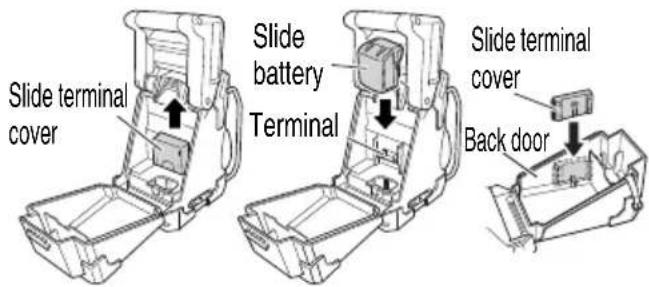
- When no slide battery is loaded, attach the slide terminal cover to the terminal to prevent cuts and other injuries that may result from touching the terminal area.
- Handle the backup batteries with care.
Incorrect handling of the batteries may result in rupture or leakage, leading to fire, injury or pollution of the surrounding area. Be sure to observe the following precautions.
– Use only the specified batteries - Do not heat or disassemble the batteries
- Do not throw the batteries into fire or water
- Do not charge the batteries
- Make sure the batteries are correctly oriented and avoid short-circuiting
- Do not reuse batteries or use different types of battery
- Remove the batteries when the radio is not in use
In the event of leakage from the batteries, wipe the battery case clean.
Should any battery fluid get on your body, wash it off carefully.
- If is displayed when you turn the power on with the rechargeable battery inserted, the battery power is low.
Power the radio from the AC adapter or insert a charged battery.
GENERAL SAFETY RULES
SAVE THESE INSTRUCTIONS
1) Work area safety
a) Keep work area clean and well lit.
Cluttered or dark areas invite accidents.
b) Do not operate radio in explosive atmospheres, such as in the presence of fl ammable liquids, gases or dust.
2) Electrical safety
a) Avoid body contact with earthed or grounded surfaces such as pipes, radiators, ranges and refrigerators.
There is an increased risk of electric shock if your body is earthed or grounded.
b) Do not expose radio to wet conditions.
Water entering a radio will increase the risk of electric shock.
3) Battery powered radio use and care
a) Recharge only with the charger specified by the manufacturer.
A charger that is suitable for one type of battery pack may create a risk of fire when used with another battery pack.
b) Use radio only with specifically designated battery packs.
Use of any other battery packs may create a risk of injury and fire.
c) When battery pack is not in use, keep it away from other metal objects like paper clips, coins, keys, nails, screws, or other small metal objects that can make a connection from one terminal to another.
Shorting the battery terminals together may cause burns or a fire.
d) Under abusive conditions, liquid may be ejected from the battery, avoid contact. If contact accidentally occurs, fl ush with water. If liquid contacts eyes, additionally seek medical help.
Liquid ejected from the battery may cause irritation or burns.
4) Service
a) Have your radio serviced by a qualified repair person using only identical replacement parts.
This will ensure that the safety of the radio is maintained.
b) If appliance is not working as it should, has been dropped, damaged, left outdoors, or dropped into water, return it to a service center.
SPECIFIC SAFETY RULES
- Do not use in locations where inflammable materials such as lacquer, paint, benzene, thinner or gasoline are present.
Explosion or fires might result.
- If you notice the unit is operating poorly or making abnormal noises, immediately stop using and shut off the power switch. Request an inspection and repair from the dealer where you purchased the unit or a Hitachi Authorized Service Center.
Continuing to use while operating abnormally might cause injuries.
-
If the unit is mistakenly dropped or strikes another object, make a thorough check of the unit for cracks, breakage or deformation, etc. Injuries might occur if the unit has cracks, breakage or deformation.
-
Do not use near objects generating high heat such as stoves.
-
Handle radio correctly.
Operate the blower according to the instructions provided herein. Do not drop or throw the blower.
- Keep all screws, bolts and covers tightly in place.
Keep all screws, bolts, and plates tightly mounted.
Check their condition periodically.
- NEVER use a radio which is defective or operating abnormally.
If the radio appears to be operating unusually, making strange noises, or otherwise appears
defective, stop using it immediately and arrange for repairs by a Hitachi authorized service center.
8. Carefully handle radio.
Should a radio be dropped or struck against hard materials inadvertently, it may be deformed, cracked, or damaged.
9. Do not wipe plastic parts with solvent.
Solvents such as gasoline, thinner benzine, carbon tetrachloride, and alcohol may damage and crack plastic parts. Do not wipe them with such solvents.
Wipe plastic parts with a soft cloth lightly dampened with soapy water and dry thoroughly.
IMPORTANT SAFETY INSTRUCTIONS FOR BATTERY CHARGER
WARNING
Death or serious bodily injury could result from improper or unsafe use of battery chargers. To avoid these risks, follow these basic safety instructions:
READ ALL INSTRUCTIONS
- This manual contains important safety and operating instructions for battery charger Model UC18YRSL and UC18YRL.
- Before using battery charger, read all instructions and cautionary markings on (1) battery charger, (2) battery, and (3) product using battery.
- Plug of battery charger must match the outlet.
Never modify the plug in any way.
Unmodified plugs and matching outlets will reduce risk of electric shock.
- Do not abuse the cord. Never use the cord for carrying, pulling or unplugging the battery charger.
Keep cord away from heat, oil, sharp edges or moving parts.
Damaged or entangled cords increase the risk of electric shock.
- To reduce risk of injury, charge HITACHI rechargeable battery type, BSL1830 and EBM1830. Other type of batteries may burst causing personal injury and damage.
- When charging slide battery BSL1830, always use charger UC18YRSL. When charging battery EBM1830, always use charger UC18YRL.
-
Do not expose battery charger to rain or snow.
-
Use of an attachment not recommended or sold by the battery charger manufacturer may result in a risk of fire, electric shock, or injury to persons.
- To reduce risk of damage to electric plug and cord, pull by plug when disconnecting battery charger.
- Make sure cord is located so that it will not be stepped on, tripped over, or otherwise subjected to damage or stress.
- Do not operate battery charger with damaged cord or plug-replace them immediately.
- Do not operate battery charger if it has received a sharp blow, been dropped, or otherwise damaged in any way; take it to a qualified serviceman.
- Do not disassemble battery charger; take it to a qualified serviceman when service or repair is required. Incorrect reassembly may result in a risk of electric shock or fire.
- To reduce risk of electric shock, unplug charger from receptacle before attempting any maintenance or cleaning. Removing the battery will not reduce this risk.
IMPORTANT SAFETY INSTRUCTIONS FOR USE OF THE BATTERY AND BATTERY CHARGER
You must charge the battery before you can use the radio. Before using the model UC18YRSL and UC18YRL battery charger, be sure to read all instructions and cautionary statements on it, the battery and in this manual.
CAUTION
USE ONLY HITACHI BATTERY TYPES, BSL1830 AND EBM1830. OTHER TYPES OF BATTERIES MAY BURST AND CAUSE INJURY!
Danger of explosion if battery is incorrectly replaced.
Replace only with the same or equivalent type.
Follow these instructions to avoid the risk of injury:
WARNING
Improper use of the battery or battery charger can lead to serious injury. To avoid these injuries:
- NEVER disassemble the battery.
- NEVER incinerate the battery, even if it is damaged or is completely worn out. The battery can explode in a fire.
- NEVER short-circuit the battery.
- NEVER insert any objects into the battery charger's air vents. Electric shock or damage to the battery charger may result.
- NEVER charge outdoors. Keep the battery away from direct sunlight and use only where there is low humidity and good ventilation. Batteries (battery pack or batteries installed) shall not be exposed to excessive heat such as sunshine, fire or the like.
- NEVER charge when the temperature is below 32^ F ( 0^ C) or above 104^ F ( 40^ C).
- NEVER insert foreign objects into the hole for the battery or the battery charger.
- NEVER store the battery or battery charger in places where the temperature may reach or exceed 104^ F ( 40^ C).
- ALWAYS operate charger on standard household electrical power (120 volts). Using the charger on any other voltage may overheat and damage the charger.
- ALWAYS wait at least 15 minutes between charges to avoid overheating the charger.
- ALWAYS disconnect the power cord from its receptacle when the charger is not in use.
- The manufacturer's specified charging instructions shall be included for secondary batteries. Primary batteries shall include instructions indicating that the batteries shall not be charged.
Furthermore, please heed the following warning and caution.
WARNING
In order to prevent any battery leakage, heat generation, smoke emission, explosion and ignition beforehand, please be sure to heed the following precautions.
- Do not incinerate this appliance even if it is severely damaged. The batteries can explode in a fire.
- Do not pierce battery with a sharp object such as a nail, strike with a hammer, step on, throw or subject the battery to severe physical shock.
-
Do not use an apparently damaged or deformed battery.
-
Do not use the battery in reverse polarity.
- Do not connect directly to an electrical outlets or car cigarette lighter sockets.
- Do not use the battery for a purpose other than those specified.
- If the battery charging fails to complete even when a specified recharging time has elapsed, immediately stop further recharging.
- Do not put or subject the battery to high temperatures or high pressure such as into a microwave oven, dryer, or high pressure container.
- Keep away from fire immediately when leakage or foul odor are detected.
- Do not use in a location where strong static electricity generates.
- If there is battery leakage, foul odor, heat generated, discolored or deformed, or in any way appears abnormal during use, recharging or storage, immediately remove it from the equipment or battery charger, and stop use.
- Caution-Risk of fire and burns.
The battery used in this device may present a risk of fire or chemical burn if mistreated. Do no disassemble, crush, heat above 104^ F ( 40^ C), or incinerate. Follow manufacturer's instructions. Replace battery with HITACHI battery type, BSL1830 and EBM1830 only. Use of another battery may present a risk of fire or explosion. - Dispose of used battery promptly.
Keep away from children. Do not crush disassemble and do not dispose of in fire.
CAUTION
- If liquid leaking from the battery gets into your eyes, do not rub your eyes and wash them well with fresh clean water such as tap water and contact a doctor immediately.
If left untreated, the liquid may cause eye-problems. - If liquid leaks onto your skin or clothes, wash well with clean water such as tap water immediately. There is a possibility that this can cause skin irritation.
- If you find rust, foul odor, overheating, discolor, deformation, and/or other irregularities when using the battery for the first time, do not use and return it to your supplier or vendor.
PROTECTING YOUR HEARING
Continuous exposure to loud noise may result in permanent hearing loss. The louder the volume, the shorter the time in which hearing loss may occur.
If you listen to large volume sound over a long period of time, your ears will become accustomed to it. This creates the illusion that the volume level is appropriate, despite the fact that it may be damaging your hearing.
Observe the following to prevent hearing loss.

CAUTION
- Reduce the volume before switching on the radio.
Sudden, loud volume output may result in damage to the speakers or cause hearing loss.
- Do not turn the volume up too high when using headphones or earphones.
Remove one side of the headphones, and adjust the volume so that the sound output from the removed headphone is about the same as the level heard in normal conversation.
- Make sure you give your ears a rest by taking regular breaks and not listening for long periods of time.
Even when set at safe volume levels, listening continuously over long periods of time may cause hearing loss.
- Be careful not to increase the volume as your hearing adapts to the sound output.
Beware of being accustomed to a certain volume level. Adjust the volume to a safe level before your ears become accustomed to loud volumes.
-
Keep the volume low enough so that you can hear the sound of others speaking as well as the noise from your surroundings.
-
Do not increase the volume for the purpose of blocking out the noise from your surroundings.
-
If your ears begin to ring, if you feel any discomfort, or if conversation seems faint or indistinct, discontinue listening to music and have your ears examined by a doctor.
Procedure for Setting Appropriate Volume Levels
- Turn the volume to the minimum level before switching on the power.
- Slowly increase the volume so that the contents can be heard comfortably and clearly without any distortion.
- Keep the volume low enough so that you can hear people talking as well as the noise from your surroundings.
- Use the radio at a suitable volume and for an appropriate length of time that does not fatigue your ears.
PRECAUTIONS WHEN CONNECTING TO EXTERNAL EQUIPMENT
Unexpected problems may result in the loss or corruption of data stored in smartphones and other peripheral equipment connected to the radio. With this possibility in mind, a backup of the data should always be made in advance.
Note that Hitachi Koki cannot be held responsible for the corruption or loss of data stored within smartphones and other peripheral equipment connected to the radio, nor any damage to the equipment itself.
DISPOSAL OF THE EXHAUSTED BATTERY

WARNING
Do not dispose of the exhausted battery. The battery must explode if it is incinerated. The product that you have purchased contains a rechargeable battery. The battery is recyclable. At the end of it's useful life, under various state and local laws, it may be illegal to dispose of this battery into the municipal waste stream. Check with your local solid waste offi cials for details in your area for recycling options or proper disposal.
SAVE THESE INSTRUCTIONS AND MAKE THEM AVAILABLE TO OTHER USERS AND OWNERS OF THIS RADIO!
FUNCTIONAL DESCRIPTION
NOTE
The information contained in this Instruction Manual is designed to assist you in the safe operation and maintenance of the radio.
NEVER operate, or attempt any maintenance on the radio unless you have first read and understood all safety instructions contained in this manual.
Some illustrations in this Instruction Manual may show details or attachments that differ from those on your own radio.
NAME OF PARTS


text_image
① POWER MEMORY 1 2 3 4 5 VOL TUNING ⑫ ⑯ ⑲ ⑰ ⑱ ⑳ ⑳ ② ⑦ ⑧ ⑩ ⑪ ⑫ ⑬ ⑭ ⑮ ⑯ ⑰ ⑱ ⑲ ⑳ ⑴ ⑤ ⑥ SLEEP SET BAND FMND ALARM SET SEARCH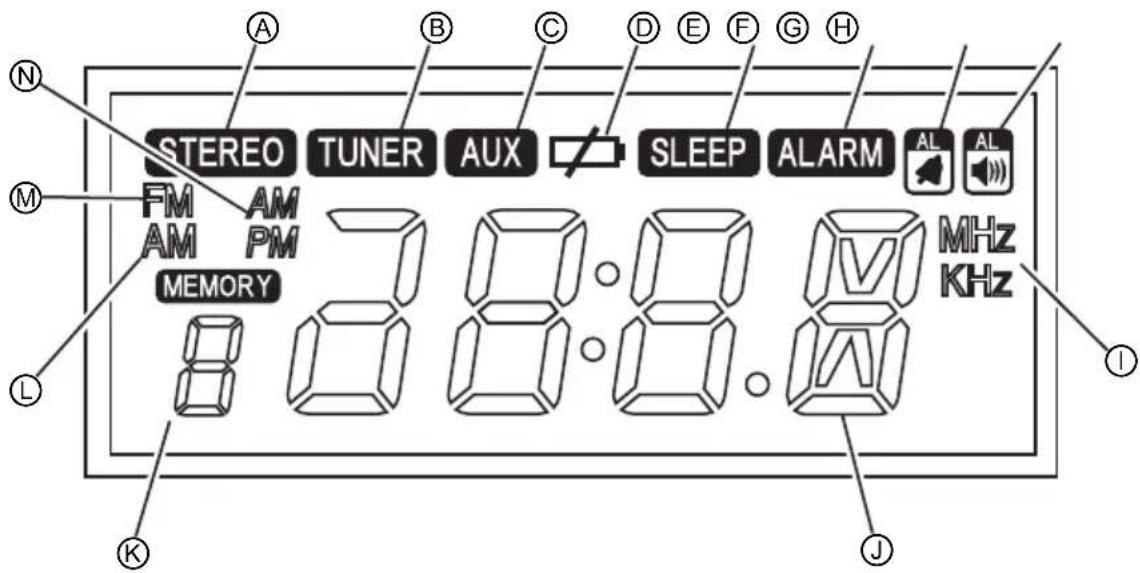
text_image
STEREO TUNER AUX SLEEP ALARM AL FM AM AM PM MEMORY 8.0.0.0.0.0 MHz KHz N M L K J| 1 | FM antenna | 14 | Cushion Sheet | D | Battery exhausted indicator |
| 2 | Handle | 15 | Power button | E | Sleep timer indicator |
| 3 | Back door | 16 | Sleep timer / Clock button | F | Alarm indicator |
| 4 | Speaker | 17 | Band selector button | G | Buzzer alarm indicator |
| 5 | Buckle | 18 | FM mode / Alarm button | H | Radio alarm indicator |
| 6 | Storage case for external devices | 19 | Memory button (1 - 5) | I | Frequency |
| 7 | Headphone jack | 20 | Search button (Clock (-) button) | J | Clock |
| 8 | AC adapter jack | 21 | Search button (Clock (+) button) | K | Memory indicator |
| 9 | Guard bar | 22 | Volume dial | L | AM broadcast indicator |
| 10 | Bass refl ex | 23 | Select dial | M | FM broadcast indicator |
| 11 | AUX input terminal | A | Stereo indicator | N | Time indicator (AM / PM) |
| 12 | USB Charging jack (5 V 1 A) | B | Tuner indicator | ||
| 13 | Belt | C | AUX indicator |
SPECIFICATIONS
| Model UR18DSL2 | |||
| Frequency band | FM: 87.5 to 108 MHzAM: 520 to 1710 KHz | ||
| Antenna | FM: Rubber antennaAM: Ferrite bar antenna (built-in) | ||
| Speaker 3" (76 mm) (8 Ω) × 2 | |||
| Input terminal AUX IN (3.5 mm dia.) | |||
| Output terminal | Headphone jack (3.5 mm dia.)USB Charging jack (5 V 1 A) | ||
| Maximum available output 18 V: 5 W × 2 | |||
| Power supply | Slide battery: DC 18 VPlug-in battery: DC 18 VBackup batteries: DC 4.5 V, three AA batteriesHousehold power supply: AC 120 V (using provided AC adapter) | ||
| Maximum exterior dimensionsLength × width × height(with antenna retracted) | 11" × 7 - 1/4" × 12"(278 mm × 184 mm × 303 mm) | ||
| Maximum dimensions ofstorable external devicesLength × Width × Height | 5 - 1/2" × 2 - 7/8" × 5/8"(141 mm × 72 mm × 16 mm) | ||
| Weight 7.9 lbs. (3.6 kg) | |||
| Standard accessories AC adapter (DC 12 V 1 A), three AA batteries, Cushion sheet | |||
| Usablebatteries(Optionalaccessories) | Model BSL1830 (Slide battery) EBM1830 (Plug-in battery) | ||
| Type Lithium – ion battery | |||
| Voltage DC 18V | |||
| Charging &dischargingfrequency | about 1,300 | ||
| Usable charger(Optional accessories) | UC18YRSL UC18YRL | ||
NOTE
Rechargeable battery
Do not use any battery other than an 18V rechargeable battery with this radio.
SERVICE TIME PER BATTERY CHARGE
| Battery capacity Service time* | |
| 3.0 Ah Approx. | 17 hours |
* The service time is approximate (at 2W × 2 output). It varies depending on the type of battery, charging condition and conditions of use.
MAIN FUNCTIONS
● Manual/Auto select
● Save (Memory) (5 AM + 5 FM stations)
● Radio On/Off/Alarm
- Dock for playing audio from smartphones and portable audio players.
● High-quality stereo speaker + bass refl ex
● Smartphone and cell phone recharging
- Compatibility with Hitachi power tool rechargeable battery and AC adapter
ASSEMBLY AND OPERATION
BEFORE USE
Inserting the backup batteries
Inserting backup batteries lets you save the clock setting and radio station frequencies.
- Loosen the buckle and open the back door. The backup battery box is inside. (Fig. 1)
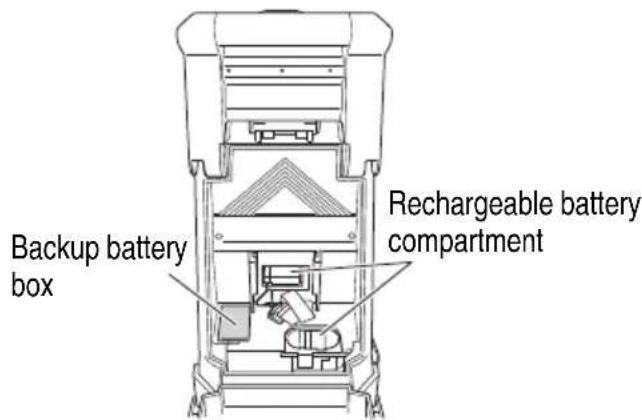
text_image
Backup battery box Rechargeable battery compartmentFig. 1
- Open the battery box and insert the three AA batteries provided, making sure they are oriented as illustrated.

CAUTION
● Make sure that the batteries are correctly oriented.
- Replace all the batteries at the same time. Do not use old batteries and new batteries at the same time.
- Do not discard the batteries with household garbage or throw them into fire.
Attaching the AC Adapter
The provided AC adapter can be used to power the radio from an electric socket.
Pull back the rubber cover and connect the AC adapter to the AC adapter terminal. Next, insert the AC adapter power plug into the electric socket. (Fig. 2)
The AC adapter can be stored inside the top of the back door. When storing the AC adapter, secure it with an elastic band. (Fig. 3)
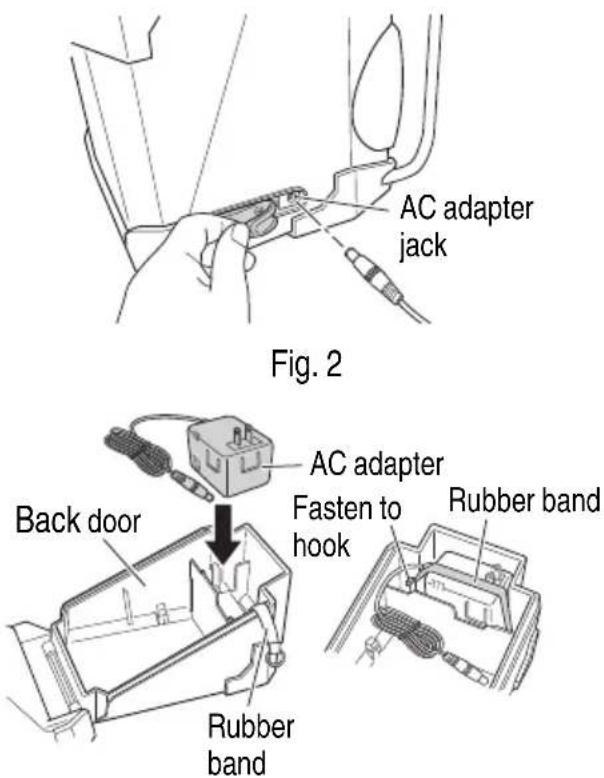
text_image
AC adapter jack Fig. 2 Back door AC adapter Fasten to hook Rubber band Rubber bandFig. 3
NOTE
When the AC adapter and rechargeable battery are used simultaneously, the AC adapter takes priority. No power is used from the battery.
○ The radio has no charging function. The rechargeable battery is not charged when the AC adapter and battery are used simultaneously.
Loading the rechargeable battery

CAUTION
When no slide battery is loaded, attach the slide terminal cover to the terminal to prevent cuts and other injuries that may result from touching the terminal area.
NOTE
○ The following batteries are not compatible with this equipment.
3.6 V, 7.2 V, 10.8 V and 24 V and over
○ When inserting the battery, do not use unnecessary force. If the battery does not go in easily, it is not being inserted correctly.
Check that the battery is correctly oriented and that no foreign object has been trapped.
○ The radio has no charging function. Using the AC adapter and rechargeable battery simultaneously will not charge the battery.
If ☐ is displayed when you turn the power on with the rechargeable battery inserted, the battery power is low.
Power the radio from the AC adapter or insert a charged battery.
Loading a plug-in battery (Fig. 4)
Insert the battery into the space in the radio body as far as it will go before securing with the belt.
If the belt is not the right length, adjust the length of the belt.

text_image
Plug-in battery BeltFig. 4
Loading a slide battery (Fig. 5)
Remove the slide terminal cover.
Match the battery with the grooves in the radio body and insert the battery as far as it will go.
text_image
Slide terminal cover Slide battery Terminal Slide terminal cover Back doorFig. 5
Adjusting the Clock
Adjust the clock with the power turned off.
- Press and hold the sleep timer/clock button for more than 2 seconds. The "hour" indicator blinks.
Pressing the band selector button in this state switches between the 12-hour display and 24-hour display. - Turn the select dial or press the search button to select the "hour".
- Press the sleep timer/clock button again. The "minutes" indicator blinks.
-
Turn the select dial or press the search button to select the "minutes".
-
Press the sleep timer/clock button again to save the clock setting.
NOTE
To save the clock setting, the backup batteries must be installed.
Turn down the volume before pressing the power button.
Failure to do so may result in sudden loud noise and cause damage to the speakers or lead to hearing impairment.
- Press the power button to turn on the radio.
- Press the band select button and select the radio band (FM or AM).
NOTE
The display changes in the order of [FM AM AUX FM] each time the band select button is pressed.
- Select a station using Auto, Manual or Save (Memory).
- If noise occurs or reception is poor, refer to "For Better Reception".
- Turn the volume dial to adjust the volume.
- Press the power button to turn off the radio.
Auto Select
Press the ◀◀ or ▶▶search button to automatically search for stations with strong radio waves.
When a station is detected, the radio plays for 3 seconds.
Press the search button before the next search starts to continue listening to the detected radio station.
Manual Select
Turn the select dial to find the station you want to listen to.
Save (Memory)
Find the station that you want to save.
Press and hold down the memory button (1 to 5) for more than 2 seconds to save the setting.
The MEMORY indicator appears at the bottom left of the display panel and the number of the assigned memory button is displayed below that.
You can save 5 AM and 5 FM stations in the memory buttons 1 to 5.
To select the saved station, press the memory button corresponding to the saved number.
For Better Reception
NOTE
Disconnect the smartphone or cell phone except when charging.
Do not make or receive calls on the smartphone or cell phone in the vicinity of the radio as radio reception may be adversely affected.
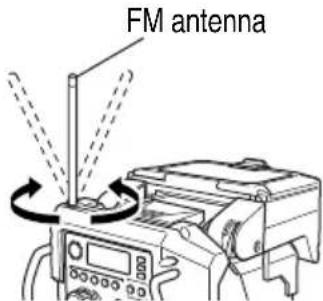
FM (Fig. 6)
Adjust the direction and angle of the antenna to ensure the best reception.
When tuned in to an FM stereo broadcast, STEREO is displayed.
If a lot of noise occurs during an FM stereo broadcast, press the FM mode / Alarm button.
The radio switches to monaural (the STEREO indicator turns off) to reduce the noise. To return to stereo reception, press the FM mode / Alarm button again.
text_image
FM antennaFig. 6
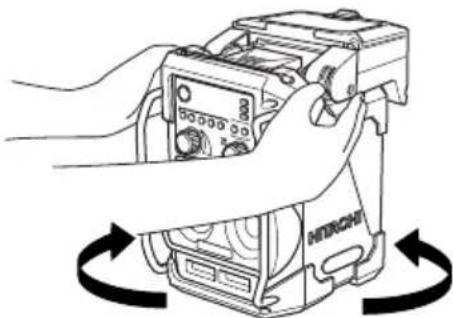
AM (Fig. 7)
The radio has a built-in antenna. Turn the radio around to find the direction with the best reception.
natural_image
Illustration of hands operating a device with rotating arrows indicating rotation (no text or symbols)Fig. 7
Positioning
Reception may be poor when the radio is used inside a vehicle or building. When inside a building, place the radio near the window to ensure better reception. Noise may occur if the radio is placed near an appliance that generates noise. Move the radio away from the source of the noise.
Auto Power Off
The radio turns off automatically after 8 hours.
USING THE TIMER FUNCTION
○ The radio turns on/off at the preset time
○ Use the radio as an alarm clock
Sleep Timer
Setting the sleep timer turns the radio off after the set time has elapsed.
- Pressing the sleep timer / clock button while the power is turned on displays the SLEEP indicator. The time (minutes) indicator changes in order of [90807010 OFF] in 10-minute units each time the button is pressed.
- Press the button repeatedly until the desired time is displayed.
- The radio turns off when the set time has elapsed.
- To cancel the timer, press the sleep timer / clock button until the indicator is set to OFF. The SLEEP indicator goes off and the sleep timer is cancelled.
To check the remaining time
The SLEEP indicator is displayed when the sleep timer has been set.
Press the sleep timer / clock button to check the remaining time on the timer.
Buzzer Alarm / Radio Alarm
NOTE
○ The volume of the buzzer alarm cannot be adjusted.
○ If the rechargeable battery is running low, the radio alarm timer may not work.
Charge the battery before setting the timer or use the AC adapter.
☐ The radio alarm turns on in the station and at the volume selected before the timer was set. Set the volume and time to avoid creating a disturbance when the radio turns on.
When the alarm time is set and the buzzer alarm is selected, the buzzer sounds at the preset time.
When the radio alarm is selected, the radio turns on in the selected radio station at the preset time.
- Set the time with the radio turned off.
-
Press and hold the FM mode / alarm button for more than 2 seconds to switch to alarm mode. The ALARM indicator is displayed.
-
The "hour" indicator blinks. Turn the select dial or press the search button to select the desired "hour".
Press the FM mode / alarm button to set the "hour". The "minutes" indicator blinks. Turn the select dial or press the search button to select the desired "minutes".
- Press the FM mode / alarm button to save the set time.
The ALARM indicator goes off.
-
The display changes in order of [buzzer alarm→radio alarm→no display] each time the FM mode / alarm button is pressed.
-
The power turns on and the buzzer sounds or the radio plays when the preset time is reached.
Buzzer Alarm
To turn off the buzzer alarm, press the FM mode / alarm button. If it is not turned off, the buzzer will continue to sound for 1 minute and then stop.
Radio Alarm
To turn off the radio, press the power button. If it is not turned off, the radio will continue to play for 30 minutes.
To check the alarm
To check the time set on the alarm, press the band selector button with the power turned off.
Connecting an External Device
You can use the radio to listen to a portable music player as MP3 player, smartphone, etc.

CAUTION
- Reduce the volume before switching on the power.
Sudden loud volume output may result in damage to the speakers or cause hearing loss.
- Do not store external devices in the storage case in environments subject to direct sunlight or high temperatures. Failure to observe this may result in damage to the equipment.
- Check the inside of the storage case for sand and other foreign matter before storing external devices in it, and clean out any foreign matter that exists. Failure to observe this may result in the equipment becoming scratched or otherwise damaged.
NOTE
Certain models of smartphones will not emit call tones from their speakers when connected to the radio. Check whether your smartphone emits call tones via the speakers prior to use.
- With the radio and the external device both turned off, connect the audio cord (3.5 mm dia. available at an electric store) of the external device to the AUX input terminal on the inside of the external device storage case on the radio. (Fig. 8)

text_image
AUX IN Audio cord BeltFig. 8
NOTE
There are two types of connection cable available: straight cables and L-shaped cables. Use L-shaped cables when connecting and storing large-scale external devices. (Fig. 9)

natural_image
Technical diagram showing two mechanical or electrical component cross-sections with no visible text or symbolsFig. 9
- Turn on the radio and press the band select button to display [AUX].
NOTE
The display changes in the order of [FM AM AUX FM] each time the band select button is pressed.
- Turn on the external device to start listening.
- Adjust the volume.
NOTE
Volume may not increase if the peripheral equipment's volume output level is low.
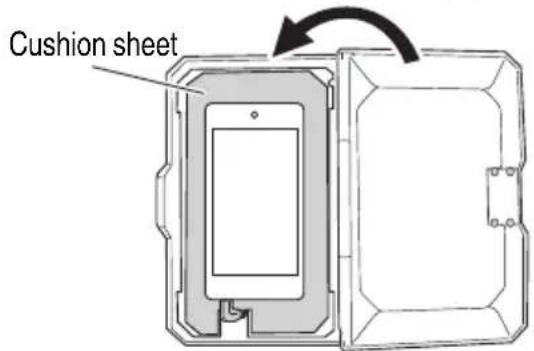
- Store portable audio players inside the external device storage case.
(1) Fix the belt in place. (Fig. 10)

text_image
BeltFig. 10
(2) Protect it with the cushioning sheet. (Fig. 11)
text_image
Cushion sheetFig. 11
There are cases in which the cushioning sheet will not be able to protect external devices depending on their thickness. In this event, fi x them in place with the belt as explained in (1).
- To disconnect the external device, turn off the device and the radio before removing the audio cord.
OTHER FUNCTIONS
Using Headphones
You can use headphones or earphones purchased from an electric store to listen to the radio.
CAUTION
Be sure to turn the volume down before connecting the headphones or earphones.
Failure to do so may result in sudden loud noise and cause hearing impairment.
- Connect the headphones or earphones to the headphone jack on the side of the radio.
- No sound is emitted from the radio speakers when headphones or earphones are connected.
- Adjust the volume.
Charging a Smartphone or Cell Phone
NOTE
When using the rechargeable battery as the power source, make sure that it is adequately charged. If the battery power is low, it may not be possible to charge the cell phone.
○ The charging time varies depends on the type of smartphone or cellphone.
○ Do not use the radio to charge devices other than a smartphone or cell phone.
○ Recharging may not be possible with certain models of smartphones and cell phones.
- Connect a USB charging cable suitable for your smartphone or cell phone (purchased from an electric store) to the USB charging jack inside of the external device storage case. (Fig. 12)

text_image
USB charging jack USB charging cableFig. 12
- Turn on the radio and press the band select button to display [FM] or [AUX].
NOTE
The display changes in the order of [FM AM AUX FM] each time the band select button is pressed.
- Select FM or AUX mode to start charging.
NOTE
You can receive FM signal.
If a lot of noise occurs during an FM stereo broadcast, switch to monaural to reduce the noise. (Refer to "For Better Reception" for switching to the stereo reception.
To turn the voice messages on/off
By factory default setting, the voice message function plays "Welcome to Hitachi Power Tools" when the power is turned on and "Presented by Hitachi Power Tools" when the power is turned off.
To mute the voice messages, press memory button 1 while the power is turned off and display [OFF] on the display panel.
To restore the voice messages, press memory button 1 while the power is turned off and display [ON] on the display panel.
MAINTENANCE AND INSPECTION

WARNING:
When not in use or during inspection and maintenance, be sure to remove the AC plug, rechargeable battery and backup batteries.
Inspecting the mounting screws
Regularly inspect all mounting screws and ensure that they are properly tightened. Should any of the screws be loose, retighten them immediately. Failure to do so could result in serious hazard.
Cleaning on the outside
When the radio is stained, wipe with a soft dry cloth or a cloth moistened with soapy water. Do not use chloric solvents, gasoline or paint thinner, for they melt plastics.
Storing the Radio
Do not store the radio in the following places.
○ Within reach of or easily accessible to children
○ In humid or dusty places
○ In high temperature such as inside a car or exposed to direct sunlight
○ In extremely cold places or directly exposed to cold draughts
○ Where the temperature changes drastically
○ Where it is exposed to smoke or steam such as near a cooking appliance or humidifi er
Service parts list

CAUTION
Repair, modification and inspection of Hitachi Power Tools must be carried out by a Hitachi Authorized Service Center.
This Parts List will be helpful if presented with the tool to the Hitachi Authorized Service Center when requesting repair or other maintenance. In the operation and maintenance of power tools, the safety regulations and standards prescribed in each country must be observed.
MODIFICATIONS:
Hitachi Power Tools are constantly being improved and modified to incorporate the latest technological advancements.
Accordingly, some parts may be changed without prior notice.
ACCESSORIES
WARNING:
ALWAYS use Only authorized HITACHI replacement parts and accessories. NEVER use replacement parts or accessories which are not intended for use with this tool. Contact HITACHI if you are not sure whether it is safe to use a particular replacement part or accessory with your tool.
The use of any other attachment or accessory can be dangerous and could cause injury or mechanical damage.
NOTE: Accessories are subject to change without any obligation on the part of the HITACHI.
STANDARD ACCESSOIRES
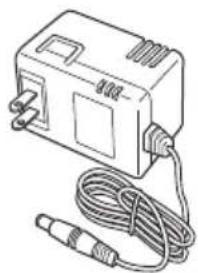
① AC adapter (Code No. 331371) .....1
② AA batteries ....3
③ Cushion sheet (Code No. 336301). ........1
natural_image
Line drawing of a portable electronic device with a coiled cable and connector (no text or symbols)
natural_image
Technical line drawing of a battery pack and its corresponding cylindrical components (no text or symbols)OPTIONAL ACCESSORIES.....sold separately
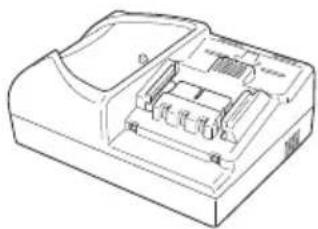
- Slide battery (BSL1830) When charging slide battery (BSL1830), always use charger (UC18YRSL).

- Charger (UC18YRSL) Charging voltage: 14.4 V – 18 V
natural_image
Technical line drawing of a mechanical device casing with internal components (no text or symbols)- Battery (EBM1830) When charging battery (EBM1830), always use charger (UC18YRL).

natural_image
Line drawing of a mechanical component with no visible text or symbols- Charger (UC18YRL) Charging voltage: 7.2 V – 18 V

natural_image
Line drawing of a rectangular electronic device with ports and cables (no text or symbols)NOTE Specifi cations are subject to change without any obligation on the part of the HITACHI.
IMPORTANTES INSTRUCTIONS DE SÉCURITÉ
text_image
Technical diagram of a Hitachi device with numbered parts and an inset close-up showing internal components.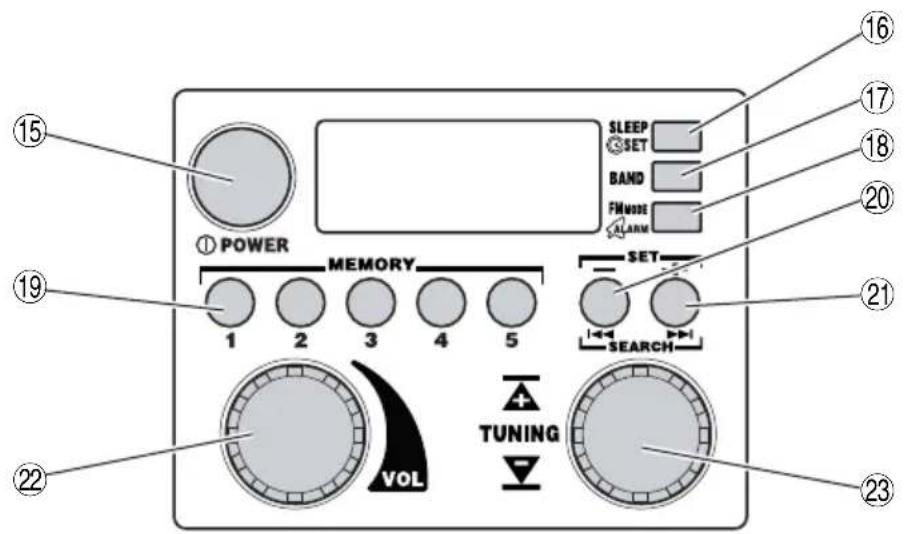
text_image
⑮ POWER 1 2 3 4 5 SLEEP SET BAND FMWIDE ARM ⑲ ⑯ ⑰ ⑱ ⑲ ⑳ ⑳ ②1 ②1 ②2 ②3 TUNING VOL SET SEARCH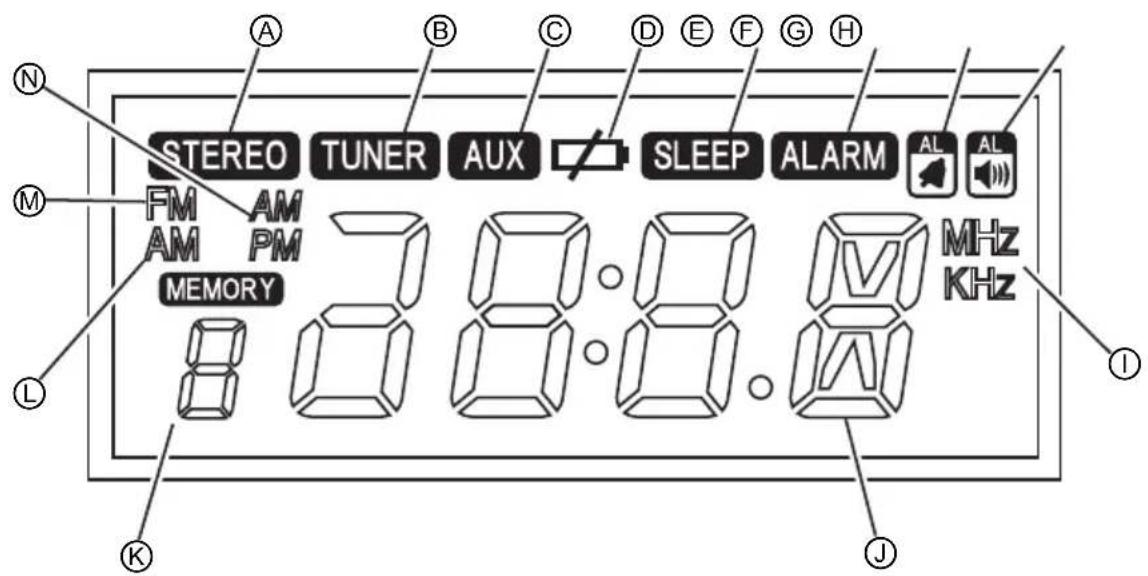
text_image
STEREO TUNER AUX SLEEP ALARM AL FM AM AM PM MEMORY 8.8.8.8.8 MHz KHz N M L K JBatterie rechargeable
text_image
Antenne FMFig. 6
AM (Fig. 7)
natural_image
Illustration of hands operating a NI3001 CNC machine with rotational arrows indicating motion (no text or symbols)Fig. 7
Positionnement
text_image
Technical diagram showing a no-smoking symbol in the first panel and a pipe connection in the second, with Chinese annotations.Fig. 9
natural_image
Line drawing of an electrical device with a coiled cable and two connectors (no text or symbols)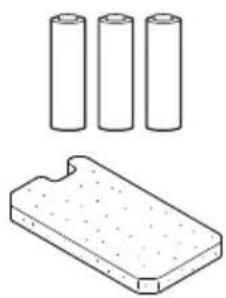
natural_image
Technical line drawing of cylindrical and rectangular components (no text or symbols)natural_image
Technical line drawing of a mechanical component or housing (no text or symbols visible)- Batterie (EBM1830)
natural_image
Line drawing of a rectangular electronic device casing with internal components (no text or symbols)REMARQUE
text_image
① POWER MEMORY 1 2 3 4 5 VOL SLEEP SET BAND FINMODE ARM SET SEARCH TUNING ⑫ ⑯ ⑲ ⑰ ⑳ ⑱ ⑳ ②0 ⑯ ⑲ ⑳ ⑩ ⑪ ⑫ ⑬ ⑭ ⑮ ⑯ ⑰ ⑱ ⑲ ⑳ ⑩ ⑪ ⑫ ⑬ ⑭ ⑮ ⑯ ⑰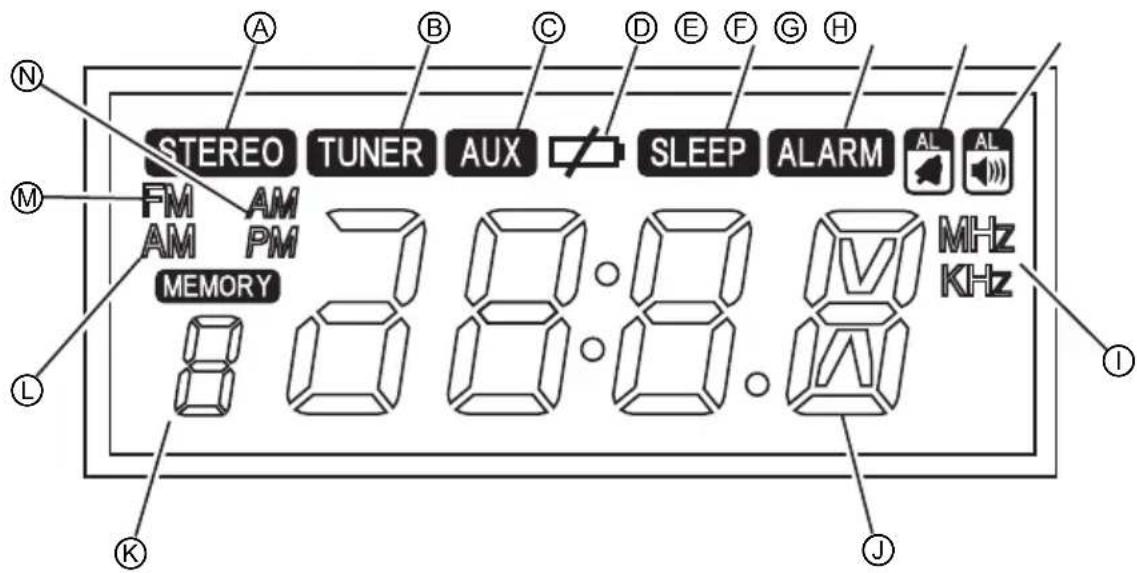
text_image
STEREO TUNER AUX SLEEP ALARM AL FM AM AM PM MEMORY 8.0.0.0.0.0 MHz KHz N M L K Jnatural_image
Illustration of hands operating a device with rotating arrows indicating rotation (no text or symbols)Fig. 7
Colocación
text_image
Technical diagram showing a no-smoking symbol in the first panel and a plug inserted into the second panel, both without labels.Fig. 9
natural_image
Line drawing of a portable electronic device with a coiled cable and connector (no text or symbols)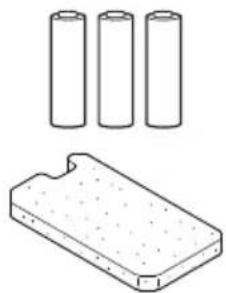
natural_image
Technical illustration of cylindrical components and a 3D block structure (no text or symbols)ACCESORIOS OPCIONALES.....de venta por separado
natural_image
Technical line drawing of a mechanical device casing with internal components (no text or symbols)- Batería (EBM1830)
natural_image
Line drawing of a mechanical device with no visible text or symbols- Cargador (UC18YRL)
natural_image
Line drawing of a rectangular electronic device casing with internal components and mounting holes (no text or symbols)NOTA
natural_image
Line drawing of a quill pen with inkwell (no text or symbols)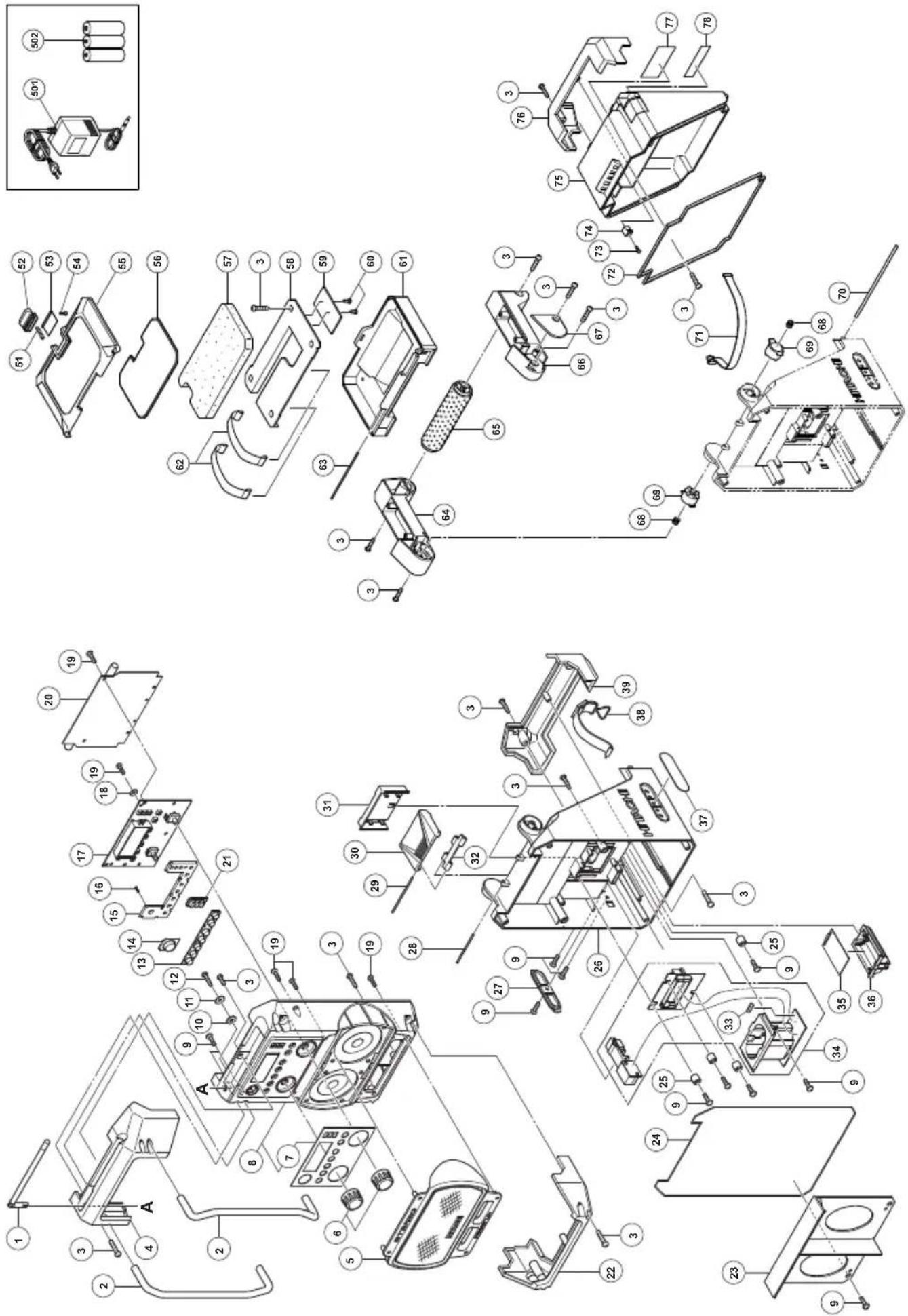
text_image
Exploded view diagram of a device with numbered parts, showing internal components and assembly relationships.| ITEM NO. | PART NAME Q'TY | |
| 62 PHONE BERT | 2 | |
| 63 METAL SHAFT (D) 1 | ||
| 64 HANDLE (L) | 1 | |
| 65 HANDLE | 1 | |
| 66 HANDLE (R) | 1 | |
| 67 HANDLE ARM COVER | 1 | |
| 68 HANDLE BRACKET SPRING | 2 | |
| 69 HANDLE BRACKET | 2 | |
| 70 METAL SHAFT (A) | 1 | |
| 71 ADAPTER BELT | 1 | |
| 72 BACK DOOR PACKING | 1 | |
| 73 MACHINE SCREW M2.6×8 1 | ||
| 74 HOLDER COVER LOCKER | 1 | |
| 75 BACK DOOR | 1 | |
| 76 TPE COVER (D) | 1 | |
| 77 NAME PLATE | 1 | |
| 78 CAUTION PLATE 1 | ||
| 501 | AC ADAPTER | 1 |
| 502 | AA BATTERY | 3 |
| ITEM NO. | PART NAME Q'TY | |
| 25 | BATTERY BOX WASHER | 4 |
| 26 | BACK HOUSING | 1 |
| 27 | JACK COVER (L) | 1 |
| 28 | METAL SHAFT (C) 1 | |
| 29 | METAL SHAFT (B) | 1 |
| 30 | BUCKLE | 1 |
| 31 | BATTERY HOLDER COVER | 1 |
| 32 | BUCKLE CONNECTOR | 1 |
| 33 | FUSE (250V-2A) | 1 |
| 34 | TERMINAL ASS'Y (INCLUD.33) | 1 |
| 35 | BATTERY DOOR | 1 |
| 36 | AA BATTERY BOX 1 | |
| 37 | JACK COVER (R) | 1 |
| 38 | BATTERY BELT | 1 |
| 39 | TPE COVER (C) | 1 |
| 51 | LOCK SPRING | 1 |
| 52 | LOCK PLATE (A) | 1 |
| 53 | FLAT METAL PLATE | 1 |
| 54 | FLAT SCREW D2×4 | 1 |
| 55 | BOX COVER 1 | |
| 56 | LENS PLATE | 1 |
| 57 | CUSHION SHEET | 1 |
| 58 | BOX PLATE | 1 |
| 59 | USB PUB | 1 |
| 60 | FLANGE SCREW D3×6 | 2 |
| 61 | HANDLE BOX | 1 |
| ITEM NO. | PART NAME Q'TY | |
| 1 RUBBER ANTENNA 1 | ||
| 2 GUARD BAR 2 | ||
| 3 MACHINE SCREW M4×15 23 | ||
| 4 TPE COVER (A) 1 | ||
| 5 SPEAKER COVER 1 | ||
| 6 DIAL 2 | ||
| 7 FUNCTION LABEL 1 | ||
| 8 | FRONT HOUSING ASS'Y (INCLUD.7) | 1 |
| 9 | MACHINE SCREW (W/FLANGE) M3×10 | 15 |
| 10 RUBBER WASHER 4 | ||
| 11 WASHER M4 (BLACK) 4 | ||
| 12 MACHINE SCREW M4×15 4 | ||
| 13 FUNCTION BUTTON 1 | ||
| 14 POWER BUTTON 1 | ||
| 15 BUTTON COVER 1 | ||
| 16 FLAT HD. SCREW M1.7×5 | 13 | |
| 17 CONTROL PCBA (EURO) | 1 | |
| 18 FIBRE WASHER | 5 | |
| 19 | MACHINE SCREW (W/FLANGE) M2.6×10 | 17 |
| 20 FUNCTION PCBA 1 | ||
| 21 MODE BUTTON | 1 | |
| 22 TPE COVER (B) 1 | ||
| 23 SPEAKER BACK COVER | 1 | |
| 24 FRONT O-RING 1 | ||
natural_image
Line drawing of a quill pen with inkwell (no text or symbols)
natural_image
Line drawing of a quill pen with inkwell (no text or symbols)
Please contact HITACHI KOKI U.S.A. LTD. at 1-800-59-TOOLS (toll free), or HITACHI AUTHORIZED POWER TOOL SERVICE CENTER regarding COLLECTION.

Pour le RAMASSAGE, contacter HITACHI KOKI U.S.A. LTD. au 1-800-59-TOOLS (appel gratuit), ou UN SERVICE APRÈS- VENTE D'OUTILS ÉLECTRIQUE AGRÉÉ PAR HITACHI.

Shinagawa Intercity Tower A, 15-1, Konan 2-chome, Minato-ku, Tokyo 108-6020, Japan
Distributed by

Hitachi Koki U.S.A., Ltd.
3950 Steve Reynolds Blvd.
Norcross, GA 30093

Hitachi Koki Canada Corp.
450 Export Blvd. Unit B,
Mississauga ON L5S 2A4