
CMICG250GW - Mikrowelle CORBERO - Kostenlose Bedienungsanleitung
Finden Sie kostenlos die Bedienungsanleitung des Geräts CMICG250GW CORBERO als PDF.


| Produkttyp | Mikrowelle |
| Modell | CMICG250GW |
| Marke | Corbero |
| Abmessungen (HxBxT) | ca. 28,7 x 48,5 x 37,6 cm |
| Gewicht | ca. 12,5 kg |
| Garraumvolumen | 25 l |
| Leistung (Mikrowelle) | 800 W |
| Leistungsstufen | 5 Stufen |
| Anschlussspannung | 230 V / 50 Hz |
| Drehteller | Ja, 25,5 cm Durchmesser |
| Auftauen nach Gewicht | Ja |
| Kurzzeitmesser (Timer) | Ja, bis zu 60 Minuten |
| Kindersicherung | Ja, Sperrfunktion |
| Innenbeleuchtung | Ja |
| Zubehör | Glasdrehteller, Rollring, Bedienungsanleitung |
| Energieverbrauch (Standby) | < 1 W |
| Einbaubar | Nein, freistehend |
| Farbe | Weiß |
Häufig gestellte Fragen - CMICG250GW CORBERO
Benutzerfragen zu CMICG250GW CORBERO
0 Frage zu diesem Gerät. Beantworten Sie die, die Sie kennen, oder stellen Sie Ihre eigene.
Eine neue Frage zu diesem Gerät stellen
Laden Sie die Anleitung für Ihr Mikrowelle kostenlos im PDF-Format! Finden Sie Ihr Handbuch CMICG250GW - CORBERO und nehmen Sie Ihr elektronisches Gerät wieder in die Hand. Auf dieser Seite sind alle Dokumente veröffentlicht, die für die Verwendung Ihres Geräts notwendig sind. CMICG250GW von der Marke CORBERO.
BEDIENUNGSANLEITUNG CMICG250GW CORBERO
Corberō
Horno microondas Manual de usuario
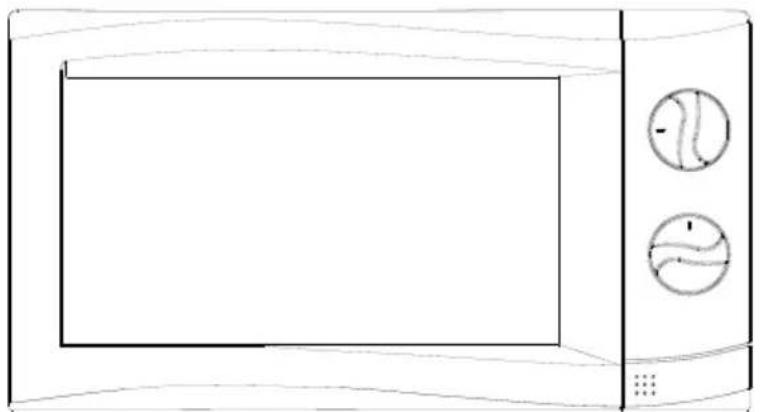
natural_image
Line drawing of a microwave oven with two circular buttons and a blank screen (no text or symbols)MODELO: CMICG250GW
Lea este manual de instrucciones atentamente antes de instalar y utilizar el microondas. Consérvelo para futuras consultas.
PRECAUCIONES PARA EVITAR UNA POSIBLE EXPOSICIÓN A UNA ENERGÍA DE MICROONDAS EXCESIVA
(a) No intente utilizar el microondas con la puerta abierta, ya que podría resultar en una exposición nociva a la energía de microondas. Es importante no romper ni tratar de forzar los elementos de cierre de seguridad.
(b) No coloque ningún objeto entre la cara frontal y la puerta del horno ni permite que se acumule suciedad o restos de limpiador en las superficies de cierre hermético.
(c) No utilice el microondas si está dañado. Es especialmente importante que la puerta del horno cierre correctamente y que no haya daños en:
① La puerta (que no esté torcida),
② Bisagras y cierre (rotos o sueltos)
③ Sello de la puerta y superficies de cierre.
(d) El microondas sólo deberá ser ajustado o reparado por personal técnico cualificado.
CONTENIDOS
| PRECAUCIONES PARA EVITAR UNA POSIBLE EXPOSICIÓN A UNA ENERGÍA DE MICROONDAS EXCESIVA | 1 |
| INSTRUCCIONES IMPORTANTES DE SEGURIDAD | 2 |
| ESPECIFICACIONES | 4 |
| INSTALACIÓN | 4 |
| INTERFERENCIAS DE RADIO | 5 |
| CONEXIÓN A TIERRA | 5 |
| ANTES DE LLAMAR AL SERVICIO TÉCNICO | 5 |
| COCINAR CON EL MICROONDAS | 6 |
| USO DE UTENSILIOS | 6 |
| PARTES Y COMPONENTES | 7 |
| PANEL DE CONTROL | 8 |
| SELECTOR DE POTENCIA O FUNCIÓN | 8 |
| TEMPORIZADOR | 8 |
| COCINAR CON EL MICROONDAS | 8 |
| GRILL | 9 |
| COCCIÓN COMBINADA | 9 |
| FUNCIONAMIENTO | 9 |
| LIMPIEZA Y MANTENIMIENTO | 10 |
INSTRUCCIONES IMPORTANTES DE SEGURIDAD
Durante el uso de aparatos eléctricos deben seguirse una serie de precauciones de seguridad básicas, que incluyen las siguientes:
ATENCIÓN: Para reducir el riesgo de quemaduras, descargas eléctricas, incendios, lesiones a personas o exposición a una energía de microondas excesiva:
- Lea completamente las instrucciones antes de usar este aparato y consérvelas para futuras consultas.
- Use este aparato sólo para su uso previsto, tal como se describe en el manual. No use productos químicos o vapores corrosivos con este electrodoméstico. Este tipo de microondas está específicamente diseñado para calentar, cocinar o deshidratar alimentos. No está diseñado para un uso industrial o de laboratorio.
- No utilice el microondas cuando esté vacío.
- No utilice este electrodoméstico si no funciona correctamente, si está dañado o se ha caído, o si tiene el cable o el enchufe dañados. Si el cable de alimentación está dañado, deberá ser cambiado por el fabricante o por un servicio técnico autorizado para evitar cualquier riesgo.
- ATENCIÓN: Los niños pueden utilizar el microondas sin supervisión sólo cuando se les hayan dado las instrucciones adecuadas para que puedan usarlo de forma segura y comprendan los peligros de un uso incorrecto.
- Atención: Cuando el microondas funcione en el modo combinado, los niños solo deberán usarlo bajo la supervisión de un adulto debido a la alta temperatura que se generará.
- Para reducir el riesgo de incendio en el interior del microondas:
a) Cuando caliente alimentos en recipientes o envases de plástico o papel, mantenga vigilado el horno para evitar cualquier posible ignición.
b) Retire cualquier elemento metálico de las bolsas de papel o de plástico antes de introducirlas en el microondas.
c) Si observase humo, apague o desenchufe el aparato y mantenga la puerta cerrada para que las llamas se sofoquen en su interior.
d) No utilice el interior del microondas para almacenar objetos. No deje productos de papel, utensilios de cocina o alimentos en el interior del microondas cuando no lo esté utilizando.
e) Este horno de microondas está diseñado para calentar alimentos y bebidas. Si lo utiliza para secar ropa o calentar almohadillas térmicas, pantuflas, esponjas, trapos húmedos o similares podría ocasionar lesiones, ignición o un incendio. - ATENCIÓN: No caliente líquidos o determinados alimentos en recipientes cerrados herméticamente, ya que podrían explotar.
- Al calentar bebidas en el microondas puede producirse ebullición repentina retardada, por lo que habrá que manipular con cuidado el recipiente.
- No fría alimentos en el microondas. El aceite caliente puede dañar las piezas y los utensilios del horno e incluso provocar quemaduras en la piel del usuario.
- No deberán calentarse o cocinarse huevos con cáscara en el microondas, ya que podrían explotar incluso después de que haya terminado de calentarlos.
- Perfore los alimentos con piel o cáscaras gruesas como patatas, calabazas enteras, manzanas o
castañas antes de cocinarlas.
-
Remueva bien el contenido de biberones o potitos y compruebe su temperatura antes de administrarlos para evitar quemaduras.
-
Los recipientes pueden calentarse debido al calor transferido por los alimentos calentados. Es posible que se necesiten agarradores o manoplas para manipular los recipientes.
-
Compruebe que los recipientes sean aptos para su uso en un microondas.
-
ATENCIÓN: Es peligroso que personas que no sean técnicos especializados realicen tareas de reparación que impliquen retirar alguna cubierta protectora contra la exposición a la energía de microondas.
-
Este producto es un equipo ISM del Grupo 2 de Clase B. La definición del Grupo 2 incluye todos los equipos ISM (Industrial, Científico y Médico) en los que la energía de radiofrecuencia se genera intencionalmente y/o se utiliza en forma de radiación electromagnética para el tratamiento de materiales y en equipos de erosión por chispa. Los equipos de Clase B son equipos adecuados para su uso en áreas residenciales y en áreas directamente conectadas a una red de baja tensión que alimente a edificios residenciales.
-
Este dispositivo no ha sido diseñado para que lo usen personas (incluidos niños) con facultades físicas, sensoriales o mentales reducidas, o con falta de experiencia y conocimientos, a menos que sea bajo supervisión o siguiendo indicaciones sobre su uso por parte de la persona responsable de su seguridad.
-
Los niños deberán estar bajo supervisión para asegurarse de que no jueguen con el aparato.
-
Este microondas debe ser colocado y utilizado encima de una superficie estable.
-
ATENCIÓN: No instale el microondas por encima de la cocina, una parrilla o cualquier otro aparato que produzca calor. ya que en ese caso podría dañarse y la garantía quedaría anulada.
-
Este microondas no debe colocarse encasillado dentro de un mueble.
-
La puerta o las superficies exteriores pueden calentarse cuando el microondas esté en funcionamiento.
-
Atención: Los componentes accesibles pueden calentarse durante el uso del microondas. Mantener alejados a los niños.
-
Durante su uso, el microondas puede calentarse mucho. Tome precauciones para evitar tocar las resistencias del interior del microondas.
-
Las superficies accesibles del microondas pueden alcanzar altas temperaturas durante su funcionamiento.
-
Este electrodoméstico no debe ser utilizado por niños o por personas con facultades físicas, sensoriales o mentales reducidas, o con falta de experiencia y conocimientos, a menos que sea bajo supervisión o siguiendo indicaciones sobre su uso de forma segura.
-
ATENCIÓN: Si la puerta del horno o las superficies de cierre están dañadas, no deberá utilizarse el horno hasta que haya sido reparado por un técnico especializado.
-
Este aparato no ha sido pensado para ser utilizado con temporizador o con cualquier otro sistema de control remoto externo.
-
Este horno microondas solo debe utilizarse para uso doméstico y no para usos comerciales.
-
Nunca quite los topes de distancia de la parte posterior o de los lados, ya que garantizan una distancia mínima con la pared para una correcta circulación del aire.
-
Fije el plato giratorio antes de mover o cambiar de sitio el aparato para evitar daños.
-
Precaución: Es peligroso intentar reparar el aparato uno mismo, ya que para ello habría que quitar la cubierta que garantiza la protección contra la radiación de microondas. Ello también es aplicable a cambiar el cable de alimentación o la bombilla. En estos casos, lleve el electrodoméstico a nuestro servicio técnico.
-
Este horno microondas ha sido diseñado para descongelar, cocinar y cocer al vapor alimentos únicamente.
-
Use manoplas para retirar la comida calentada.
-
¡Precaución! Al abrir tapas o películas de cierre de envases se producirá salida de vapor caliente.
-
Este electrodoméstico puede ser utilizado por niños de 8 años o más o por personas con facultades físicas, sensoriales o mentales reducidas, o con falta de experiencia y conocimientos, a menos que sea bajo supervisión o siguiendo indicaciones sobre su uso de forma segura y de que comprendan los peligros relacionados. Deberá asegurarse de que los niños no jueguen con el horno. Los niños no deberán realizar tareas de limpieza o mantenimiento del microondas, a no ser que tengan 8 años o más y estén supervisados por un adulto.
-
Si saliera humo del horno, apáguelo o desenchúfelo y no abra su puerta para sofocar así cualquier posible llama en el interior.
ESPECIFICACIONES
| Consumo de energía: | 230 V / 50 Hz, 1.200 W (microondas) |
| 900 W (grill) | |
| Potencia nominal del microondas: | 700 W |
| Frecuencia: | 2.450 MHz |
| Dimensiones externas: | 262 mm (alto) × 452 mm (ancho) × 330mm (largo) |
| Dimensiones del interior: | 198mm (alto) × 315mm (ancho) × 297mm (largo) |
| Capacidad del horno: | 20 litros |
| Uniformidad de cocción: | Sistema de plato giratorio |
| Peso neto: | Aprox. 11,3 kg |
INSTALACIÓN
-
Asegúrese de haber retirado todos los materiales de embalaje del interior de la puerta.
-
ATENCIÓN: Verifique que el horno no presente daños, como puerta desalineada o doblada, sellos de la puerta y superficies de cierre dañados, bisagras o pestillos rotos o sueltos, y abolladuras en el interior o en la puerta. Si hubiera algún daño, no utilice el microondas y contacte con un servicio técnico autorizado.
-
Este microondas debe colocarse sobre una superficie plana y estable que pueda soportar su peso y el de los alimentos más pesados que puedan cocinarse en él.
-
No coloque el microondas donde se genere calor o humedad ni cerca de materiales combustibles.
-
Para un funcionamiento correcto, deberá haber una suficiente circulación de aire a su alrededor. Deje un mínimo de 20 cm de espacio sobre el microondas y de 5 cm a ambos lados. Coloque este microondas con la parte posterior contra una pared. No cubra el electrodoméstico ni bloquee ninguna abertura de ventilación. No quite las patas del microondas.
- No lo utilice sin el plato de vidrio, el soporte giratorio y el eje en sus posiciones correctas.
- Asegúrese de que el cable eléctrico no esté dañado y de que no pase por debajo del microondas ni esté sobre ninguna superficie caliente o afilada.
- El enchufe debe ser fácilmente accesible para que pueda desenchufarse rápidamente en caso de emergencia.
- No utilice este microondas al aire libre.
INTERFERENCIAS DE RADIO
Durante su funcionamiento, el microondas podría provocar interferencias en la recepción de radio, televisión y equipos similares. Si se producen interferencias, se pueden reducir o eliminar tomando las siguientes medidas:
- Limpie la puerta y las superficies de cierre del horno.
- Reoriente la antena receptora de radio o televisión.
- Reubique el microondas con respecto al receptor.
-
Coloque el microondas más lejos del receptor.
-
Enchufe el microondas en una toma de corriente diferente para que el microondas y el receptor estén en ramales eléctricos distintos.
CONEXIÓN A TIERRA
Este aparato tiene que estar conectado a tierra. Este microondas está equipado con un cable eléctrico que incluye una clavija de conexión a tierra en el enchufe. El enchufe debe conectarse a una toma de corriente debidamente instalada y conectada a tierra. En caso de que se produjera un cortocircuito, la conexión a tierra reduciría el riesgo de descarga eléctrica proporcionando una vía de escape a la corriente eléctrica. Se recomienda conectarlo a un circuito de corriente independiente que sólo alimente a este electrodoméstico. Usar demasiada electricidad en un solo enchufe es peligroso y puede provocar un incendio u otros accidentes que causen daños en el microondas.
ATENCIÓN: Un uso incorrecto de la conexión a tierra puede causar descargas eléctricas.
Notas:
- Si tiene dudas sobre la conexión a tierra o las instrucciones eléctricas, consulte a un electricista o a un servicio técnico cualificado.
- Ni el fabricante ni el distribuidor se hacen responsables por daños al microondas o a personas que resulten del incumplimiento de los procedimientos de conexión eléctrica.
Código de colores de los cables:
Verde y amarillo: Tierra
Azul: Neutro
Marrón: Fase
ANTES DE LLAMAR AL SERVICIO TÉCNICO
Si el microondas no funciona:
- Verifique que el microondas esté enchufado de forma correcta. Si no es así, retire el enchufe de la toma de corriente, espere 10 segundos y vuelva a enchufarlo de forma segura.
- Compruebe si hay algún fusible de circuito fundido o si ha saltado el disyuntor principal. Si parece que funcionan correctamente, pruebe la toma de corriente de la pared con otro aparato.
- Verifique que el panel de control y el temporizador estén configurados o programados correctamente.
- Verifique que la puerta esté totalmente cerrada de forma segura. De lo contrario, la energía de microondas no fluiría en el interior del horno.
SI NADA DE LO ANTERIOR SOLUCIONA LA SITUACIÓN, PÓNGASE EN CONTACTO CON UN SERVICIO TÉCNICO AUTORIZADO. NO TRATE DE AJUSTAR O REPARAR EL MICROONDAS USTED MISMO.
COCINAR CON EL MICROONDAS
- Distribuya los alimentos en el plato de forma adecuada. Coloque los trozos más gruesos hacia el exterior del plato.
- Respete siempre los tiempos de cocción. Cocine durante el tiempo más corto indicado y agregue más según sea necesario. Los alimentos cocinados en exceso pueden desprender humo o incluso incendiarse.
- Tape los alimentos mientras los cocine. Las tapas evitan las salpicaduras y ayudan a que los alimentos se cocinen de manera uniforme.
- Dé la vuelta una vez a alimentos tales como pollo o hamburguesas durante la cocción con microondas para acelerar su cocción. Dé la vuelta a los alimentos de mayor tamaño como los asados al menos una vez.
- Remueva los alimentos como las albóndigas en el plato a la mitad de su cocción, tanto de arriba a abajo como desde el centro del plato hacia el exterior.
USO DE UTENSILIOS
- Las microondas no pueden atravesar el metal. Utilice sólo utensilios aptos para hornos microondas. No deben utilizarse recipientes metálicos para alimentos y bebidas durante la cocción en el microondas. Ello no es aplicable en los casos en que el fabricante específica el tamaño y la forma de los recipientes metálicos adecuados para cocinar en el microondas.
- Las microondas no pueden atravesar el metal, por lo que no deben usarse utensilios metálicos o platos con molduras metálicas.
- No utilice productos con papel reciclado cuando cocine con el microondas, ya que pueden contener pequeños fragmentos de metal que pueden causar chispas y/o incendios.
- Se recomienda utilizar platos redondos u ovalados en lugar de cuadrados o rectangulares, ya que
la comida en las esquinas tiende a sobrecalentarse.
- Se pueden usar tiras delgadas de papel de aluminio para evitar la sobrecocción de las áreas más expuestas. Pero tenga cuidado, no use demasiado y deje una distancia de unos 2,5 cm entre lámina y paredes del microondas.
6. La siguiente lista es una guía general para ayudarle a seleccionar los utensilios correctos.
| Utensilios | Cocinar con el microondas | Cocción con grill | Cocción combinada |
| Vidrio resistente al calor | Sí | Sí | Sí |
| Vidrio no resistente al calor | No | No | No |
| Cerámica resistente al calor | Sí | Sí | Sí |
| Platos de plástico aptos para microondas | Sí | No | No |
| Papel de cocina | Sí | No | No |
| Bandeja de metal | No | Sí | No |
| Rejilla metálica | No | Sí | No |
| Papel de aluminio | No | Sí | No |
PARTES Y COMPONENTES
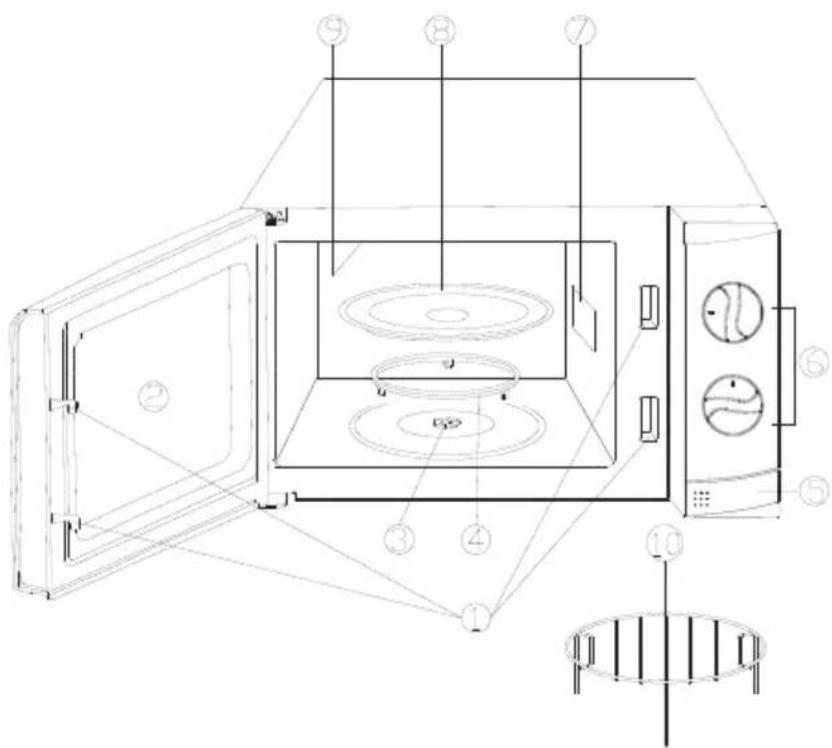
- Cierres de seguridad de la puerta
-
Ventana de la puerta
-
Eje giratorio
- Aro giratorio
- Botón de abertura de la puerta
- Panel de control
- Guía de ondas (No retire la placa de mica que cubre la guía de ondas)
- Plato giratorio de cristal
- Resistencia del grill
- Rejilla metálica
PANEL DE CONTROL

El panel de control consta de dos mandos. Uno es el mando del temporizador y el otro el mando de potencia.
Selector de potencia o función
Utilice este mando para elegir un nivel de potencia de cocción. Este es el primer paso en el uso del microondas.
Temporizador
Permite seleccionar fácilmente el tiempo de cocción deseado y seleccionar periodos de cocción de hasta 30 minutos.
Cocinar con el microondas
Para cocinar sólo con el microondas podrá elegir entre cinco niveles de potencia el que más se adecue al plato que esté cocinando o calentando.
El nivel de potencia aumenta conforme gira el mando en el sentido de las agujas del reloj. Los niveles de potencia se clasifican de la siguiente manera:
| Potencia | Descripción | |
| 1 | 18% | Baja |
| 2 | 36% | Descongelac |
| 3 | 58% | Media |
| 4 | 81% | Media-alta |
| 5 | 100% | Alta |
Si gira el mando de potencia en el sentido de las agujas del reloj hasta pasado el nivel máximo de microondas, llegará a la función de grill, especialmente útil para lonchas finas de carne, filetes, chuletas, pinchos, salchichas o pollo. También es adecuado para preparar bocadillos calientes y platos gratinados.
Cocción combinada
Tal como indica su nombre, esta función de cocción combina la potencia de microondas con la del grill. Este modo se clasifica en tres niveles con diferentes configuraciones de potencia, tal como puede ver en la siguiente tabla. Son particularmente adecuados para ciertos alimentos y técnicas culinarias, así como para mantener crujientes ciertos alimentos.
La siguiente tabla muestra 3 configuraciones de potencia diferentes para los programas combinados.
| Programa | Tiempos de cocción con el microondas | Tiempos de cocción |
| Combi.1 | 30% | 70% |
| Combi.2 | 49% | 51% |
| Combi.3 | 67% | 33% |
FUNCIONAMIENTO
Para configurar un programa de cocción:
- Coloque los alimentos en el microondas y cierre la puerta.
- Gire el selector de potencia para seleccionar el nivel de potencia o la función deseados.
- Use el mando del temporizador para seleccionar el tiempo de cocción deseado.
NOTA:
Tan pronto como se gire el temporizador, el microondas empezará a funcionar.
Cuando seleccione un tiempo inferior a 2 minutos, gírelo primero hasta los 2 minutos y luego gírelo hacia atrás hasta el tiempo deseado.
ATENCIÓN: SIEMPRE GIRE DE NUEVO EL TEMPORIZADOR HASTA LA POSICIÓN CERO si retira los alimentos del microondas antes de que se haya completado el tiempo de cocción o cuando no lo esté utilizando. Para detener el microondas durante el proceso de cocción, presione el botón de abertura de la puerta o abra la puerta por el asa.
LIMPIEZA Y MANTENIMIENTO
- Apague el microondas y desenchúfelo de la toma de corriente antes de limpiarlo.
- Mantenga limpio el interior del microondas. Cuando se produzcan salpicaduras de comida o líquidos en las paredes del microondas, límpielo con un paño húmedo. Se puede usar un detergente suave si el microondas está muy sucio. Evite el uso de aerosoles y otros productos de limpieza agresivos, ya que pueden manchar, rayar o volver opaca la superficie de la puerta.
- Las superficies externas deben limpiarse con un paño húmedo. Para evitar daños en el sistema de
funcionamiento interno del microondas, evite que entre agua en las aberturas de ventilación.
- Limpie la puerta y la ventana por ambos lados, las juntas de la puerta y las partes adyacentes con frecuencia con un paño húmedo para eliminar cualquier suciedad o salpicadura. No utilice limpiadores abrasivos.
- No utilice limpiadores a vapor.
- Evite que se moje el panel de control. Límpielo con un paño suave y húmedo. Al limpiar el panel de control, deje la puerta del microondas abierta para evitar que se ponga en marcha accidentalmente.
- Si se ha acumulado vapor dentro o alrededor de la puerta del microondas, límpielo con un paño suave. Ello puede ocurrir cuando el microondas funcione en condiciones de mucha humedad. Se trata de algo normal.
- En ocasiones será necesario quitar el plato giratorio para su limpieza. Lávelo con agua tibia y jabón o en un lavavajillas.
- El aro giratorio y el suelo del horno deben limpiarse con regularidad para evitar ruidos excesivos. Puede limpiar la superficie inferior del horno con un detergente suave. El aro giratorio se puede lavar con agua tibia y jabón o en un lavavajillas. Cuando retire el aro giratorio del interior del microondas para limpiarlo, asegúrese de volver a colocarlo en la posición correcta.
- Puede eliminar los olores de su microondas calentando durante 5 minutos una taza de agua con el zumo y la piel de un limón en un recipiente hondo apto para microondas. Enjuáguelo bien y séquelo con un paño suave.
- Cuando sea necesario cambiar la bombilla del horno, consulte a un distribuidor para que la cambie.
- Limpie y retire los posibles restos de comida del microondas con regularidad. Si el microondas no se mantiene en un buen estado de limpieza, sus superficies podrían degradarse, lo cual podría afectar su vida útil y crear situaciones de peligro.
- No tire este aparato junto con la basura doméstica; debe llevarlo a un centro de recogida de residuos específicos.
- Cuando utilice por primera vez el horno microondas con la función grill, puede producirse algo de humo y de olor. Se trata de un fenómeno normal; el horno está hecho de acero recubierto con aceite lubricante, y el horno nuevo producirá algo de humo y olor generados al quemarse dicho aceite lubricante. Este fenómeno desaparecerá después de un cierto período de uso.
Microwave Oven Instructions

natural_image
Line drawing of a microwave oven with two circular gauges (no text or symbols)Model: CMICG250GW
Please read these instructions carefully before installing and operating the oven.
Content
SPECIFICATIONS....1
PRECAUTIONS TO AVOID POSSIBLE EXPOSURE TO EXCESSIVE MICROWAVE ENERGY ....2
IMPORTANT SAFETY INSTRUCTIONS ....2
INSTALLATION GUIDE....5
GROUNDING INSTRUCTIONS ....5
RADIO INTERFERENCE 6
BEFORE CALLING FOR SERVICE 6
COOKING TECHNIQUES....7
COOKING UTENSILS GUIDE ....7
PRODUCT DIAGRAM 8
CONTROL PANEL 9
POWER/ACTION SELECTOR....9
TIMER KNOB....9
MICROWAVE COOKING 9
GRILL COOKING....9
COMBINATION COOKING 9
OPERATION INSTRUCTIONS ....10
CLEANING AND CARE....10
Specifications
| Power Consumption | 230V/50Hz,1200W(Microwave); 900W(Grill) |
| Output | 700W |
| Operation Frequency | 2450MHz |
| Outside Dimensions | 262mm(H)×452mm(W)×330mm(D) |
| Oven Cavity Dimensions | 198mm(H)×315mm(W)×297mm(D) |
| Oven Capacity | Compact 20Litres |
| Net Weight | Approx.11.3kg |
Precautions to Avoid Possible Exposure to Excessive Microwave Energy
- Do not attempt to operate this oven with the door open since open-door operation can result in harmful exposure to microwave energy. It is important not to defeat or tamper with the safety interlocks.
- Do not place any object between the oven front face and the door or allow soil or cleaner residue to accumulate on sealing surfaces.
- Do not operate the oven if it is damaged. It is very important that the oven door close properly and that there is no damage to the
a) Door (including any bents),
b) Hinges and latches (broken or loosened),
c) Door seals and sealing surfaces. - The oven should not be adjusted or repaired by anyone except qualified service personnel.
Important Safety Instructions
When using electrical appliance basic safety precautions should be followed, including the following:
WARNING: To reduce the risk of burns, electric shock, fire, injury to persons or exposure to excessive microwave energy:
- Read all instructions before using the appliance and keep for future reference.
- Use this appliance only for its intended use as described in this manual. Do not use corrosive chemicals or vapors in this appliance. This type of oven is specifically designed to heat, cook or dry food. It is not designed for industrial or laboratory use.
- Do not operate the oven when empty.
- Do not operate this appliance if it has a damaged cord or plug, if it is not working properly or if it has been damaged or dropped. If the supply cord is damaged, it must be replaced by the manufacturer or its service agent or a similarly qualified person in order to avoid a hazard
- WARNING: Only allow children to use the oven without supervision when adequate instructions have been given so that the child is able to use the oven in a safe way and understands the hazards of improper use.
- Warning: When the appliance is operated in the combination mode, children should
only use the oven under adult supervision due to the temperatures generated.
- To reduce the risk of fire in the oven cavity:
a) When heating food in plastic or paper container, keep an eye on the oven due to the possibility of ignition;
b) Remove wire twist-ties from paper or plastic bags before placing bag in oven.
c) If smoke is observed, switch off or unplug the appliance and keep the door closed in order to stifle any flames.
d) Do not use the cavity for storage purposes. Do not leave paper products, cooking utensils or food in the cavity when not in use.
e) The microwave oven is intended for heating food and beverages. Drying of clothing and heating of warming pads, slippers, sponges, damp cloth and similar may lead to risk of injury, ignition or fire.
-
WARNING: Liquid or other food must not be heated in sealed containers since they are liable to explode.
-
Microwave heating of beverage can result in delayed eruptive boiling, therefore care has to be taken when handling the container.
-
Do not fry food in the oven. Hot oil can damage oven parts and utensils and even result in skin burns.
-
Eggs in their shell and whole hard-boiled eggs should not be heated in microwave ovens since they may explode even after microwave heating has ended.
-
Pierce foods with heavy skins such as potatoes, whole squashes, apples and chestnuts before cooking.
-
The contents of feeding bottles and baby jars should be stirred or shaken and the temperature should be checked before serving in order to avoid burns.
-
Cooking utensils may become hot because of heat transferred from the heated food. Potholders may be needed to handle the utensil.
-
Utensils should be checked to ensure that they are suitable for use in microwave oven.
-
WARNING: It is hazardous for anyone other than a trained person to carry out any service or repair operation which involves the removal of any cover which gives protection against exposure to microwave energy.
-
This Microwave complies with EN 55011/CISPR 11, in this standard it belong to Class B Group 2 classification. Group 2 equipment: group 2 contains all ISM RF equipment in which radio-frequency energy in the frequency range 9 kHz to 400 GHz is intentionally generated and used or only used locally, in the form of electromagnetic radiation, inductive and/or capacitive coupling, for the treatment of material, for inspection/analysis purposes, or for transfer of electromagnetic energy. Class B equipment is equipment suitable for use in locations in residential
environments and in establishments directly connected to a low voltage power supply network which supplies buildings used for domestic purposes.
-
This appliance is not intended for use by persons (including children) with reduced physical, sensory or mental capabilities, or lack of experience and knowledge, unless they have been given supervision or instruction concerning use of the appliance by a person responsible for their safety.
-
Children should be supervised to ensure that they do not play with the appliance.
-
The microwave oven is only used in freestanding.
-
WARNING: Do not install oven over a range cooktop or other heat-producing appliance. If installed could be damaged and the warranty would be avoid.
-
The microwave oven shall not be placed in a cabinet.
-
The door or the outer surface may get hot when the appliance is operating.
-
Warning: Accessible parts may become hot during use. Young children should be kept away.
-
During use the appliances becomes hot. Care should be taken to avoid touching heating elements inside the oven, for cooking ranged and ovens.
-
The temperature of accessible surfaces may be high when the appliance is operating.
-
Appliance is not to be used by children or persons with reduced physical, sensory or mental capabilities, or lack of experience and knowledge, unless they have been given supervision or instruction.
-
WARNING: If the door or door seals are damaged, the oven must not be operated until it has been repaired by a competent person.
-
The instructions shall state that appliances are not intended to be operated by means of an external timer or separate remote-control system.
-
The microwave oven is for household use only and not for commercial use.
-
Never remove the distance holder in the back or on the sides, as it ensures a minimum distance from the wall for air circulation.
-
Please secure the turntable before you move the appliance to avoid damages.
-
Caution: It is dangerous to repair or maintain the appliance by no other than a specialist because under these circumstances the cover have to be removed which assures protection against microwave radiation. This applies to changing the power cord or the lighting as well. Send the appliance in these cases to our service centre.
-
The microwave oven is intended for defrosting, cooking and steaming of food only.
-
Use gloves if you remove any heated food.
-
Caution! Steam will escape, when opening lids or wrapping foil.
-
This appliance can be used by children aged from 8 years and above and persons with reduced physical, sensory or mental capabilities or lack of experience and
knowledge if they have been given supervision or instruction concerning use of the appliance in a safe way and understand the hazards involved. Children shall not play with the appliance. Cleaning and user maintenance shall not be made by children unless they are aged from 8 years and above and supervised.
- If smoke is emitted, switch off or unplug the appliance and keep the door closed in order to stifle any flames.
Installation Guide
- Make sure that all the packing materials are removed from the inside of the door.
- WARNING: Check the oven for any damage, such as misaligned or bent door, damaged door seals and sealing surface, broken or loose door hinges and latches and dents inside the cavity or on the door. If there is any damage, do not operate the oven and contact qualified service personnel.
- This microwave oven must be placed on a flat, stable surface to hold its weight and the heaviest food likely to be cooked in the oven.
- Do not place the oven where heat, moisture or high humidity are generated, or near combustible materials.
- For correct operation, the oven must have sufficient airflow. Allow minimum 20cm of free space necessary above the top surface of the oven and 5cm at both sides. The microwave oven rear plate must be placed close to the wall. Do not cover or block any openings on the appliance. Do not remove feet.
- Do not operate the oven without glass tray, roller support, and shaft in their proper positions.
- Make sure that the power supply cord is undamaged and does not run under the oven or over any hot or sharp surface.
- The socket must be readily accessible so that it can be easily unplugged in an emergency.
- Do not use the oven outdoors.
Grounding Instructions
This appliance must be grounded. This oven is equipped with a cord having a grounding wire with a grounding plug. It must be plugged into a wall receptacle that is properly installed and grounded. In the event of an electrical short circuit, grounding reduces risk of electric shock by providing an escape wire for the electric current. It is recommended that a separate circuit serving only the oven be provided. Using a high
voltage is dangerous and may result in a fire or other accident causing oven damage.
WARNING--- Improper use of the grounding plug can result in a risk of electric shock.
Note:
- If you have any questions about the grounding or electrical instructions, consult a qualified electrician or service person.
- Neither the manufacturer nor the dealer can accept any liability for damage to the oven or personal injury resulting from failure to observe the electrical connection procedures.
The wires in this cable main are colored in accordance with the following code:
Green and Yellow = EARTH
Blue = NEUTRAL
Brown = LIVE
Radio Interference
Operation of the microwave oven can cause interference to your radio, TV, or similar equipment. When there is interference, it may be reduced or eliminated by taking the following measures:
- Clean door and sealing surface of the oven.
- Reorient the receiving antenna of radio or television.
- Relocate the microwave oven with respect to the receiver.
-
Move the microwave oven away from the receiver.
-
Plug the microwave oven into a different outlet so that microwave oven and receiver are on different branch circuits.
Before Calling For Service
Before asking for service, please check each item below:
- Check to ensure the oven is plugged in securely. If not, remove the plug from the outlet, wait 10 seconds, and plug it in again securely.
- Check for a blown circuit fuse or a tripped main circuit breaker. If these seem to be operating properly, test the outlet with another appliance.
- Check to ensure the control panel is programmed correctly and the timer is set.
- Check to ensure the door is securely closed, engaging the door lock system. If the door is not properly closed, the microwave energy will not flow inside.
IF NONE OF THE ABOVE RECTIFIES THE SITUATION, THEN CONTACT A QUALIFIED TECHNICIAN. DO NOT TRY TO ADJUST OR REPAIR THE OVEN
Cooking Techniques
- Arrange food carefully. Place thickest areas towards outside of dish.
- Watch cooking time. Cook for the shortest amount of time indicated and add more as needed. Food severely overcooked can smoke or ignite.
- Cover foods while cooking. Covers prevent spattering and help foods to cook evenly.
- Turn foods over once during microwave cooking to speed cooking of such foods as chicken and hamburgers. Large items like roasts must be turned over at least once.
- Rearrange foods such as meatballs halfway through cooking both from top to bottom and from the center of the dish to the outside.
Cooking Utensils Guide
- Microwave cannot penetrate metal. Only use utensils that are suitable for use in microwave ovens. Metallic containers for food and beverages are not allowed during microwave cooking. This requirement is not applicable if the manufacturer specifies size and shape of metallic containers suitable for microwave cooking.
- Microwave cannot penetrate metal, so metal utensils or dishes with metallic trim should not be used.
- Do not use recycled paper products when microwave cooking, as they may contain small metal fragments which may cause sparks and/or fires.
- Round /oval dishes rather than square/oblong ones are recommend, as food in corners tends to overcook.
- Narrow strips of aluminum foil may be used to prevent overcooking of exposed areas. But be careful don't use too much and keep a distance of 1 inch (2.54cm) between foil and cavity.
The list below is a general guide to help you select the correct utensils.
| Cookware | Microwave | Grill | Combination |
| Heat-Resistant Glass | Yes | Yes | Yes |
| Non Heat-Resistant Glass | No | No | No |
| Heat-Resistant Ceramics | Yes | Yes | Yes |
| Microwave-Safe Plastic Dish | Yes | No | No |
| Kitchen Paper | Yes | No | No |
| Metal Tray | No | Yes | No |
| Metal Rack | No | Yes | No |
| Aluminum Foil & Foil Containers | No | Yes | No |
Product Diagram
- Door Safety Lock System
- Oven Window
- Shaft
- Roller Ring
- Door Release Button
- Control Panel
- Wave Guide (Please do not remove the mica plate covering the wave guide)
- Glass Tray
- Grill Heater
- Metal Rack

Control Panel
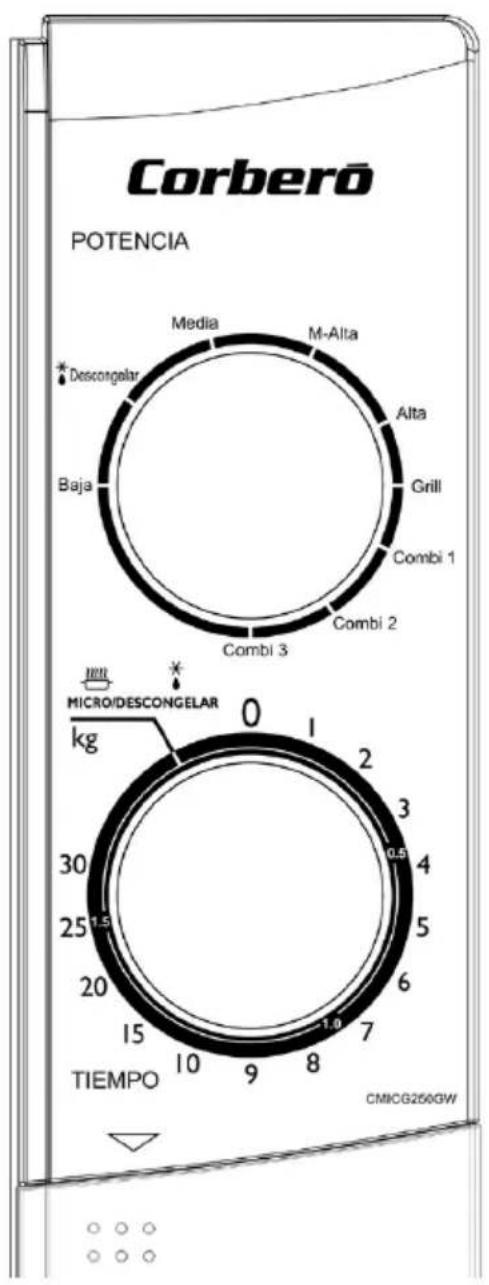
The control panel consists of two function operators. One is a time knob, and the other a power knob.
Power/Action Selector
You use this operator knob to choose a cooking power level. It is the first step to start a cooking session.
Timer Knob
Offer visual timing settings at easy turn of your thumb to select a desired cooking time up to 30 minutes per cooking session.
Microwave Cooking
For pure microwave cooking, there are five power levels from which to choose one as best fit to do the job at hand.
Power level increases with the knob turning clockwise. The power levels can be classified as the following:
| Power Output | Description |
| 100% | HIGH |
| 81% | M.HIGH |
| 58% | MED |
| 36% | DEFROST |
| 18% | LOW |
Grill Cooking
With the knob turning clockwise passing the highest microwave power level, the oven come to the grill cooking function which is particularly useful for thin slices of meat, steaks, chops, kebabs, sausages or pieces of chicken. It is also suitable for cooking hot sandwiches and au grain dishes.
Combination Cooking
By its name, this cooking operation combines microwave power with that of grill
cooking. The operation is categorized into three levels with different combination power settings as you can see from the following table. These are particularly suitable for certain foods and culinary operations. As well as for keeping the much desired crispness of certain foods.
The following table shows 3 different power settings for combination programs.
| Program | Microwave cooking time | Grill cooking time | Suitable for |
| Combi 1 | 30% | 70% | Fish, potatoes, au grain |
| Combi 2 | 49% | 51% | Pudding, omelets, baked potatoes |
| Combi 3 | 67% | 33% | Poultry |
Operation Instructions
To start a cooking session,
- Place food into oven and close the door.
- Turn Power Selector to select a power level.
- Turn Timer knob to set a cooking time.
NOTE: As soon as the timer is turned, oven starts cooking. When selecting time for less than 2 minutes, turn timer past 2 minutes and then return to the correct time.
CAUTION: ALWAYS RETURN TIMER BACK TO ZERO POSITION if food is removed from oven before the set cooking time is complete or when oven is not in use. To stop oven during cooking process, push the door release button or open the door by the handle.
Cleaning and Care
- Turn off the oven and remove the power plug from the wall socket before cleaning.
- Keep the inside of the oven clean. When food splatters or spilled liquids adhere to oven walls, wipe with a damp cloth. Mild detergent may be used if the oven gets very dirty. Avoid the use of spray and other harsh cleaners as they may stain, streak or dull the door surface.
- The outside surfaces should be cleaned with a damp cloth. To prevent damage to the operating parts inside the oven, water should not be allowed to seep into the ventilation openings.
- Wipe the door and window on both sides, the door seals and adjacent parts frequently with a damp cloth to remove any spills or spatters. Do not use abrasive
cleaner.
-
A steam cleaner is not be used.
-
Do not allow the control panel to become wet. Clean with a soft, damp cloth. When cleaning the control panel, leave oven door open to prevent oven from accidentally turning on.
-
If steam accumulates inside or around the outside of the oven door, wipe with a soft cloth. This may occur when the microwave oven is operated under high humidity condition. And it is normal.
-
It is occasionally necessary to remove the glass tray for cleaning. Wash the tray in warm sudsy water or in a dishwasher.
-
The roller ring and oven floor should be cleaned regularly to avoid excessive noise. Simply wipe the bottom surface of the oven with mild detergent. The roller ring may be washed in mild sudsy water or dishwasher. When removing the roller ring from cavity floor for cleaning, be sure to replace in the proper position.
-
Remove odors from your oven by combining a cup of water with the juice and skin of one lemon in a deep microwaveable bowl, microwave for 5 minutes. Wipe thoroughly and dry with a soft cloth.
-
When it becomes necessary to replace the oven light, please consult a dealer to have it replaced.
-
The oven should be cleaned regularly and any food deposits removed. Failure to maintain the oven in a clean condition could lead to deterioration of the surface that could adversely affect the life of the appliance and possibly result in a hazardous.
-
Please do not dispose this appliance into the domestic rubbish bin; it should be disposed to the particular disposal center provided by the municipalities.
-
When the microwave oven with grill function is first used, it may produce slight smoke and smell. This is a normal phenomenon because the oven is made of a steel plate coated with lubricating oil, and the new oven will produce fumes and odor generated by burning the lubricating oil. This phenomenon will disappear after a period of using.
The user manual can also be check and download from our website:
www.corbero-electrodomesticos.com
CERTIFICADO DE GARANTÍA
Imprescindible la presentación de la factura de compra acompañada del presente certificado de garantía.
Riesgos cubiertos.
Este aparato está garantizado contra cualquier defecto de funcionamiento, siempre que se destine a uso doméstico, procediéndose a su reparación dentro del plazo de garantía y sólo por la red de SAT autorizados.
Nuestros electrodomésticos Corberó cuentan con la garantía legal del fabricante que cubre cualquier avería o defecto durante 36 meses, desde su fecha factura de 1 de enero del 2022. En caso de que fuera necesario, nosotros nos ocupamos de cualquier posible incidencia siempre que se deba a un componente defectuoso o fallo de fabricación.
Excepciones de garantía.
- Que la fecha del certificado no coincida con la fecha de venta de la factura original.
- Averías producidas por golpe, por caída o cualquier otra causa de fuerza mayor.
- Si el apa rato ha sido manipulado por personal no autorizado.
- Las averías producidas o derivadas como consecuencia de un uso inadecuado, por defectos de instalación, por introducir modificaciones en el aparato que alteren su funcionamiento.
- Puestas en marcha, mantenimiento, limpiezas, componentes sujetos a desgaste, lámparas, piezas estéticas, oxidaciones, plásticos, gomas, carcasas y cristales.
- Los hornos microondas (a excepción de los integrables) y los hornos sobremesa en el caso de cualquier incidencia de funcionamiento, deben de llevarse al servicio técnico más próximo por parte del cliente. No se recojen ni reparan en el domicilio.
- Garantía termos eléctricos. Garantía de 3 años incluyendo los costes de desplazamiento y mano de obra que correspondan de la reparación del producto, teniendo que tener un mantenimiento una vez cada 12 meses. Especialmente si Ud. ha instalado un aparato a gas, tenga presente como titular de la instalación, la obligatoriedad de realizar una revisión completa de los equipos, (según Real Decreto 238 / 2013, del 5 Abril. RITE. IT3, M. Lo termos eléctricos y calderas que incluyen depósitos acumuladores de agua caliente, para que se aplique la prestación de la Garantía, es obligatorio que el ánodo de magnesio esté operativo y que realice la función de protección adecuadamente. Para ello es recomendable que el ánodo se revise bianualmente por el Servicio Oficial y sea renovado cuando fuera necesario. Periodicidad que deberá ser anual en aquellas zonas con aguas críticas (contenido de CaCO3 superiores a 200mg/L, es decir a partir de 20°fH de dureza). Depósitos sin el correcto estado del ánodo de protección, no tienen la cobertura de la garantía. Independientemente del tipo de depósito o producto, todas las válvulas de sobrepresión de calefacción o a.c.s., deberán ser canalizadas para evitar daños en la vivienda por descargas de agua. La garantía del producto no asume los daños causados por la no canalización del agua derramada por esta válvula.
"ESTAS EXCEPCIONES ANULAN LA GARANTÍA, SIENDO LA REPARACIÓN CON CARGO AL CLIENTE"
Periodo amparado en aparatos según ley de garantías en la venta de bienes de consumo Ley vigente es "RD 7/2021"
Sevicio Técnico Oficial: 911 08 08 08
CERTIFICATE OF GUARANTEE
The presentation of the purchase invoice accompanied by this guarantee certificate is essential.
Covered Risks.
This appliance is guaranteed against any malfunction, provided that it is intended for domestic use, proceeding to its repair within the warranty period and only by the authorized SAT network.
Our Corberó appliances have the manufacturer's legal warranty that covers any breakdown or defect for 36 months, from the invoice date of January 1, 2022. If necessary, we take care of any possible incident whenever it is due to a defective component or manufacturing fault. Warranty Exceptions
Warranty Exceptions
- That the date of the certificate does not coincide with the date of sale of the original invoice.
• Faults produced by blow, by fall or any other cause of force majeure.
• If the device has been manipulated by unauthorized personnel. - Faults produced or derived as a consequence of improper use, installation defects, or modifications to the device that alter its operation.
- Start-up, maintenance, cleaning, components subject to wear, lamps, aesthetic parts, oxidation, plastics, rubbers, housings and crystals.
- Microwave ovens (with the exception of built-in ones) and tabletop ovens in the event of any incident of operation, they must be taken to the nearest technical service by the customer. They are not collected or repaired at home.
Electric thermos guarantee. 3-year warranty including travel and labor costs that correspond to the repair of the product, having to have maintenance once every 12 months. Especially if you have installed a gas appliance, keep in mind as the owner of the installation, the obligation to carry out a complete review of the equipment, (according to Royal Decree 238 / 2013, of April 5. RITE. IT3, M. Lo thermos electrical and boilers that include hot water storage tanks, for the benefit of the Guarantee to apply, it is mandatory that the magnesium anode is operational and that it performs the protection function adequately. For this, it is recommended that the anode be checked biannually by the Official Service and is renewed when necessary Periodicity that must be annual in those areas with critical waters (CaCO3 content greater than 200mg / L , that is, from 20^ of hardness) Deposits without the correct state of the protection anode are not covered by the warranty Regardless of the type of tank or product, all heating or DHW overpressure valves must be channeled to avoid damage and n the house due to water discharges. The product warranty does not cover damages caused by not channeling the water spilled by this valve.
"THESE EXCEPTIONS VOID THE WARRANTY, THE REPAIR BEING CHARGED TO THE CUSTOMER"
Period covered in devices according to the law of guarantees in the sale of consumer goods Current law is "RD 7/2021"
Official Technical Service: 911 08 08 08


- Corberō
- Horno microondas Manual de usuario
- PRECAUCIONES PARA EVITAR UNA POSIBLE EXPOSICIÓN A UNA ENERGÍA DE MICROONDAS EXCESIVA
- CONTENIDOS
- INSTRUCCIONES IMPORTANTES DE SEGURIDAD
- INSTALACIÓN
- INTERFERENCIAS DE RADIO
- CONEXIÓN A TIERRA
- Notas:
- ANTES DE LLAMAR AL SERVICIO TÉCNICO
- COCINAR CON EL MICROONDAS
- USO DE UTENSILIOS
- PANEL DE CONTROL
- Selector de potencia o función
- Temporizador
- Cocción combinada
- FUNCIONAMIENTO
- NOTA:
- LIMPIEZA Y MANTENIMIENTO
- Microwave Oven Instructions
- Content
- Specifications
- Precautions to Avoid Possible Exposure to Excessive Microwave Energy
- Important Safety Instructions
- Installation Guide
- Grounding Instructions
- Note:
- Radio Interference
- Before Calling For Service
- Cooking Techniques
- Cooking Utensils Guide
- Product Diagram
- Control Panel
- Power/Action Selector
- Timer Knob
- Microwave Cooking
- Grill Cooking
- Combination Cooking
- Operation Instructions
- Cleaning and Care
- CERTIFICADO DE GARANTÍA
- Riesgos cubiertos.
- Excepciones de garantía.
- Sevicio Técnico Oficial: 911 08 08 08
- CERTIFICATE OF GUARANTEE
- Covered Risks.
- Warranty Exceptions
- Official Technical Service: 911 08 08 08
Marke : CORBERO
Modell : CMICG250GW
Kategorie : Mikrowelle