T4 - Mikrofon ART - Kostenlose Bedienungsanleitung
Finden Sie kostenlos die Bedienungsanleitung des Geräts T4 ART als PDF.


Benutzerfragen zu T4 ART
0 Frage zu diesem Gerät. Beantworten Sie die, die Sie kennen, oder stellen Sie Ihre eigene.
Eine neue Frage zu diesem Gerät stellen
Laden Sie die Anleitung für Ihr Mikrofon kostenlos im PDF-Format! Finden Sie Ihr Handbuch T4 - ART und nehmen Sie Ihr elektronisches Gerät wieder in die Hand. Auf dieser Seite sind alle Dokumente veröffentlicht, die für die Verwendung Ihres Geräts notwendig sind. T4 von der Marke ART.
BEDIENUNGSANLEITUNG T4 ART
Multi-pattern High Performance Studio Tube Condenser Microphone
The Microphone
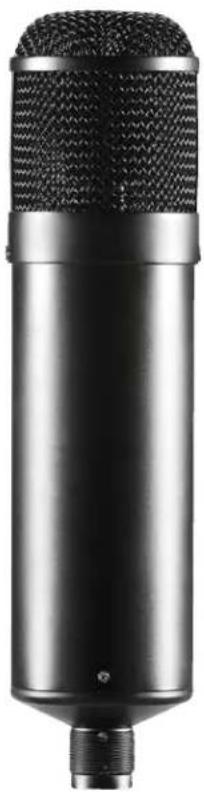
The ART T4 tube condenser microphone is perfect for recording both critical vocals and instruments. The dual 35mm gold diaphragm and hand selected low noise 7025 tube deliver unmatched war mth and tone.
The unique multi-pattern design delivers nine different polar pattern settings including the standard Cardioid, Figure-8 and omnidirectional patterns including gradient stages between each allowing subtle variations in tone and response ensuring you have the ideal sound for virtually any recording application.
The included external heavy-duty cradle mount suspension virtually eliminates vibration and handling noise, while at the same time safely securing the microphone in any position needed during the recording process.
The Power Supply & Controls
The ART T4 has nine available polar patterns, selectable from the front panel of the power supply. Rather than limiting the user to only the three most common patterns (omnidirectional, cardioid, and figure-8 patterns), the ART T4 has three gradient stages between each of those positions.
This allows the artist and recording engineer far more versatility. In vocal applications where an omnidirectional pattern isn't quite 'fat' enough, but cardioid is too narrow, you now have three additional steps to find the right subtle mix between those two standard patterns. With the ART T4 you have the rare opportunity to use the proximity effect of a cardioid, yet still open up the microphone to hear some of the natural early reflections of a good sounding live room.
Care of your ART T4
All large diaphragm condenser microphones are fragile. They do not like to be exposed to any sharp impact that may stretch or knock the element out of alignment including being dropped, tapped, or being blown into. This is especially true of any tube condenser microphone, including the ART T4.
It is always advisable to use a pop filter when recording vocals not only to avoid sibilance (overly accentuated 'S', 'P' and 'B' sounds) but also to keep excessive moisture of f the element.
The outer shell of your mic can be cleaned with a soft damp cloth. Do not use harsh detergents, solvents, or abrasive materials. Never immerse any microphone in water.

natural_image
Black studio microphone with textured grille and metallic shaft (no visible text or symbols)RT T4 Features and Accessories:
Constant Voltage Power Supply Module
9-position multi-pattern selection control on power supply module provides omnidirectional, cardioid and figure-8 patterns with three gradient settings between each position. Constant voltage ensures quiet operation.
Shockmount Cradle Adaptor
Stops noise from transferring through the floor and mic stand to the sensitive microphone capsule.
7-pin XLR shielded Microphone Cable
Provides clean signal from microphone while transferring power to drive capsule and preamp from power supply.
Multi-pattern High Performance Studio Tube Condenser Microphone
Understanding Multiple Polar Patterns
An omni-directional pattern will give your mic the ability to pickup sound from all directions. This is ideal for recording sounds that emanate from multiple directions, or picking up the source material as well as the natural ambiance and reverberation of a room. Omnidirectional patterns also have no proximity effect, or 'bottom end enhancement' as the source gets closer to the microphone. This makes an omnidirectional pattern ideal for use recording choirs, string sections, background vocals or acoustic instruments where a natural 'open' tone quality is preferred.
The cardioid pattern is ideal for single instrument or solo vocal use. This pattern picks up only sound directly in front of the microphone, and sounds from back and sides of the microphone are rejected. The cardioid pattern also has the most pronounced proximity effect, and best off-axis rejection.
Bi-directional or figure 8 will hear sound from both front and back. This is ideal for recording a main sound while still picking up room ambience from behind or duets with two vocalists.
The ART T4 has three gradient patterns between omnidirectional and cardioid, and an additional three gradient patterns between cardioid and figure-8 making for a total of nine available polar patterns. These additional polar patterns allow a subtle combination of proximity effect, off-axis rejection, overall EQ or tonal response.
As a tube condenser microphone, the ART T4 requires its proprietary power supply to operate.
The microphone's chassis is precision-tooled zinc/aluminum alloy with a dent resistant stainless-steel wire-mesh windscreen. The included heavy-duty cradle-mount suspension virtually eliminates vibration and handling noise, while at the same time safely securing the microphone in any position needed during the recording process.
The ART T4 should always be stored in its carrying case when not in use.
Specifications:
Type: Multi-pattern Tube Microphone
Capsule: 35mm Diaphragm Side Address
Polar Pattern: 9-Patterns Including Cardioid,
Figure-8, Omnidirectional
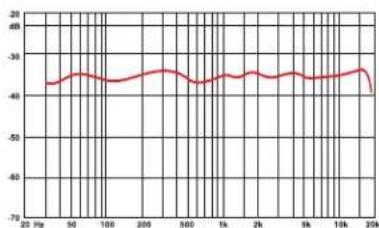
Frequency Response: 20Hz to 20kHz
MAX SPL: 134dB
S/N Ratio: 78dB
Sensitivity: -36dB (+/-2dB)
Self Noise: 18dB A
Impedance: <200 ohms
Recommended Load Impedance: 1000 ohms
Power requirement: Dedicated Power Supply
Included Accessories: Heavy Duty Cradle Mount, 7-pin XLR Cable,
Padded Wood Microphone Case,
Aluminum Carrying Case
Dimensions: 63mm x 252.7mm
Dimensions: 2.5 inches x 10 inches
line
| Frequency (Hz) | Value | |---|---| | 20 Hz | -38 | | 50 Hz | -37 | | 100 Hz | -37 | | 200 Hz | -36 | | 500 Hz | -37 | | 1k Hz | -36 | | 2h Hz | -36 | | 9h Hz | -36 | | 10h Hz | -36 | | 20h Hz | -37 |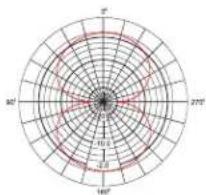
radar
| Direction | Value | | :--- | :--- | | 0° | 10.0 | | 30° | 15.0 | | 60° | 20.0 | | 90° | 25.0 | | 120° | 20.0 | | 150° | 15.0 | | 180° | 10.0 | | 210° | 5.0 | | 240° | 0.0 | | 270° | -5.0 |Figure-8 at 1kHz
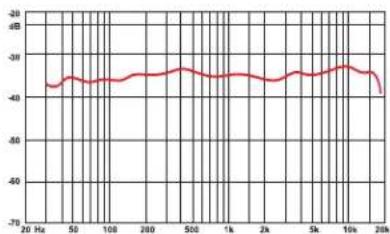
line
| Frequency | Value | |---|---| | 20 Hz | -39 | | 50 | -39 | | 100 | -39 | | 200 | -39 | | 500 | -39 | | 1k | -39 | | 2k | -39 | | 5k | -39 | | 10k | -39 | | 28k | -40 |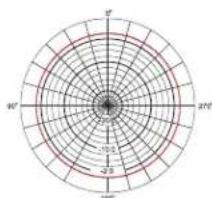
radar
| Direction | Value | | :--- | :--- | | 0° | 3.5 | | 90° | 3.5 | | 180° | 3.5 | | 270° | 3.5 | | 360° | 3.5 | | 450° | 3.5 | | 540° | 3.5 | | 630° | 3.5 | | 720° | 3.5 | | 810° | 3.5 | | 900° | 3.5 | | 990° | 3.5 | | 1080° | 3.5 | | 1170° | 3.5 | | 1260° | 3.5 | | 1350° | 3.5 | | 1440° | 3.5 | | 1530° | 3.5 | | 1620° | 3.5 | | 1710° | 3.5 | | 1800° | 3.5 | | 1890° | 3.5 | | 1980° | 3.5 | | 2070° | 3.5 | | 2160° | 3.5 | | 2250° | 3.5 | | 2340° | 3.5 | | 2430° | 3.5 | | 2520° | 3.5 | | 2610° | 3.5 | | 2700° | 3.5 | | 2790° | 3.5 | | 2880° | 3.5 | | 2970° | 3.5 | | 3060° | 3.5 | | 3150° | 3.5 | | 3240° | 3.5 | | 3330° | 3.5 | | 3420° | 3.5 | | 3510° | 3.5 | | 3600° | 3.5 | | 3690° | 3.5 | | 3780° | 3.5 | | 3870° | 3.5 | | 3960° | 3.5 | | 4050° | 3.5 | | 4140° | 3.5 | | 4230° | 3.5 | | 4320° | 3.5 | | 4410° | 3.5 | | 4500° | 3.5 | | 4590° | 3.5 | | 4680° | 3.5 | | 4770° | 3.5 | | 4860° | 3.5 | | 4950° | 3.5 | | 5040° | 3.5 | | 5130° | 3.5 | | 5220° | 3.5 | | 5310° | 3.5 | | 5400° | 3.5 | | 5490° | 3.5 | | 5580° | 3.5 | | 5670° | 3.5 | | 5760° | 3.5 | | 5850° | 3.5 | | 5940° | 3.5 | | 6030° | 3.5 | | 6120° | 3.5 | | 6210° | 3.5 | | 6300° | 3.5 | | 6390° | 3.5 | | 6480° | 3.5 | | 6570° | 3.5 | | 6660° | 3.5 | | 6750° | 3.5 | | 6840° | 3.5 | | 6930° | 3.5 | | 7020° | 3.5 | | 7110° | 3.5 | | 7200° | 3.5 | | 7290° | 3.5 | | 7380° | 3.5 | | 7470° | 3.5 | | 7560° | 3.5 | | 7650° | 3.5 | | 7740° | 3.5 | | 7830° | 3.5 | | 7920° | 3.5 | | 8010° | 3.5 | | 8100° | 3.5 | | 8190° | 3.5 | | 8280° | 3.5 | | 8370° | 3.5 | | 8460° | 3.5 | | 8550° | 3.5 | | 8640° | 3.5 | | 8730° | 3.5 | | 8820° | 3.5 | | 8910° | 3.5 | | 9000° | 3.5 | | Note: The values in the 'Value' column are estimated based on the provided code format.Omni at 1kHz
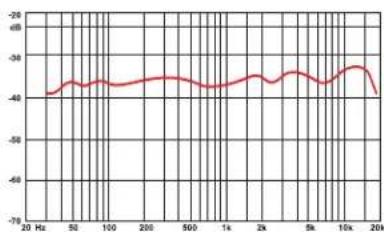
line
| Frequency (Hz) | Amplitude (dB) | |---|---| | 20 | -40 | | 50 | -38 | | 100 | -38 | | 200 | -38 | | 500 | -38 | | 1k | -39 | | 2k | -38 | | 5k | -38 | | 10k | -37 | | 20k | -36 |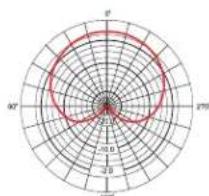
natural_image
Circular radar chart with concentric rings and radial axes, no visible text or symbolsCardioid at 1KHz