CMS-10 - Mikrofon Sanken - Kostenlose Bedienungsanleitung
Finden Sie kostenlos die Bedienungsanleitung des Geräts CMS-10 Sanken als PDF.


Benutzerfragen zu CMS-10 Sanken
0 Frage zu diesem Gerät. Beantworten Sie die, die Sie kennen, oder stellen Sie Ihre eigene.
Eine neue Frage zu diesem Gerät stellen
Laden Sie die Anleitung für Ihr Mikrofon kostenlos im PDF-Format! Finden Sie Ihr Handbuch CMS-10 - Sanken und nehmen Sie Ihr elektronisches Gerät wieder in die Hand. Auf dieser Seite sind alle Dokumente veröffentlicht, die für die Verwendung Ihres Geräts notwendig sind. CMS-10 von der Marke Sanken.
BEDIENUNGSANLEITUNG CMS-10 Sanken
Stereo Mono Switchable Shotgun Microphone for Camera
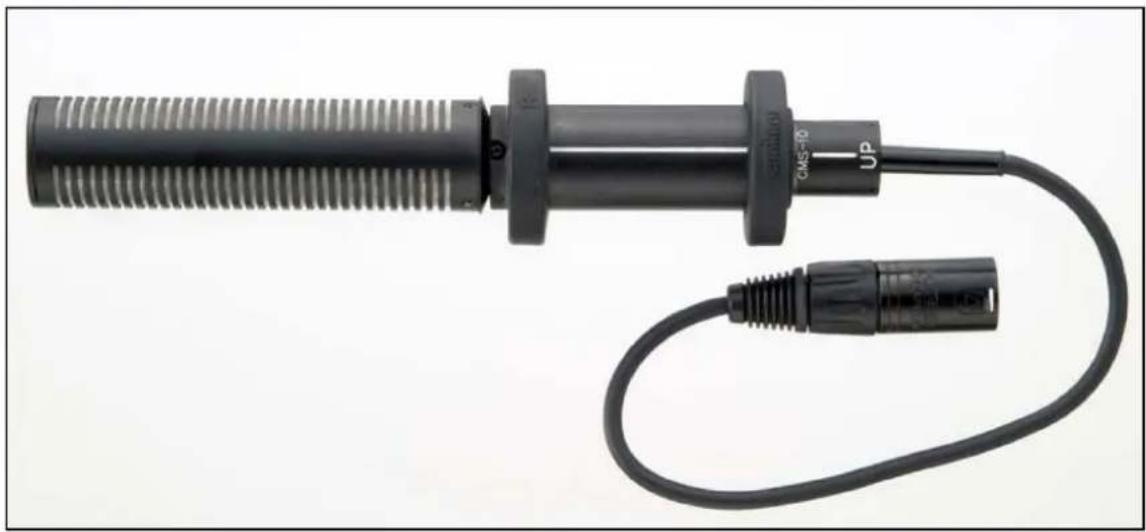
natural_image
Close-up of a black cylindrical device with threaded body and attached cable, labeled 'UP' (no visible text or symbols on the device itself)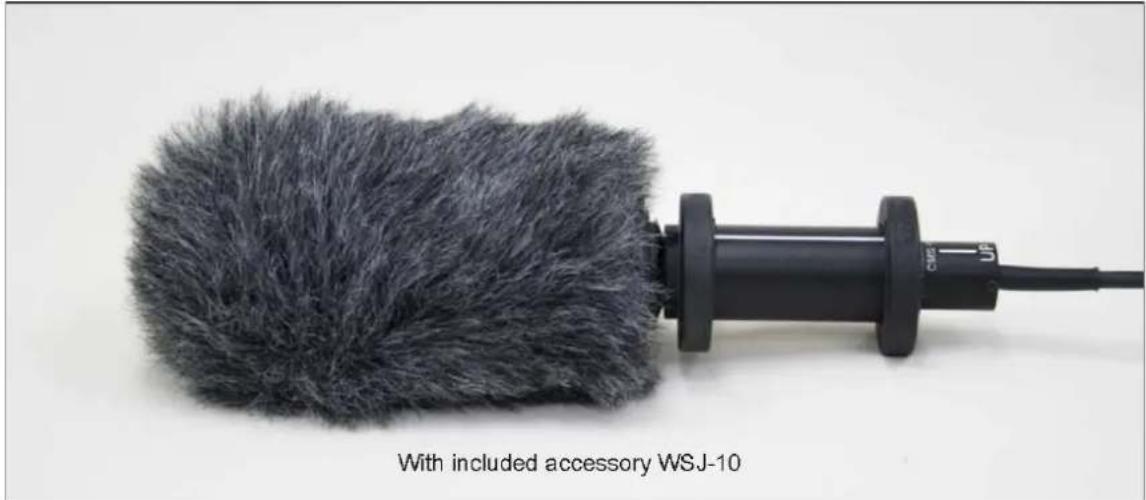
natural_image
Close-up of a black textured object with a white cable, labeled 'With included accessory WSJ-10' (text is minimal and not part of the image content)- Switchable very sharp mono-shotgun and stereo microphone
• Very short length (210.5mm) and light weight (170g)
• Using PPS diaphragms, it maintains high durability and quality even in high humidity environments
• By use of a specially designed suspension holder, it can isolate camera motor noise in camera mount use
• Basic design is M-S, but includes M-S to L-R circuitry, and allows a direct L-R signal
The CMS-10 provides extremely high-resolution audio to match today's advanced picture quality. This versatile microphone is switchable between a very sharp directional Mono and rich Stereo in environmental imaging.
Unlike conventional shotgun microphones, the CMS-10 uses a unique second-order pressure gradient design, enabling precision directional response through multiple cardioid elements in a front-back array. The capsules combine line microphone performance and second-order gradient response in a single compact system.
Stereophonic localization depends primarily on signal accuracy and channel separation in the 400Hz to 3kHz range. Pattern control of the CMS-10 has been optimized in this range. Very low and very high frequency response has been optimized along the frontal axis so that the "target" on-axis sounds are clearly delineated.
Directivity Mono = Super Cardioid
Stereo = Hyper Cardioid (L-R Outputs)
Transducer DC biased condenser
Frequency range 150Hz - 20kHz
Sensitivity (nominal at 1kHz) STEREO 50mV/Pa (-26dB,0dB=1V/Pa)
MONO 32mV/Pa (-30dB,0dB=1V/Pa)
Equivalent noise level (A-weighted) STEREO 20dB-A, MONO 22dB-A
Max SPL (1% THD) 120dB SPL
Output impedance at 1kHz 240Ω
Powering +48±4V phantom X 2ch
Stereo angle 127°
Current consumption less than 4mA / ch
Weight 170g
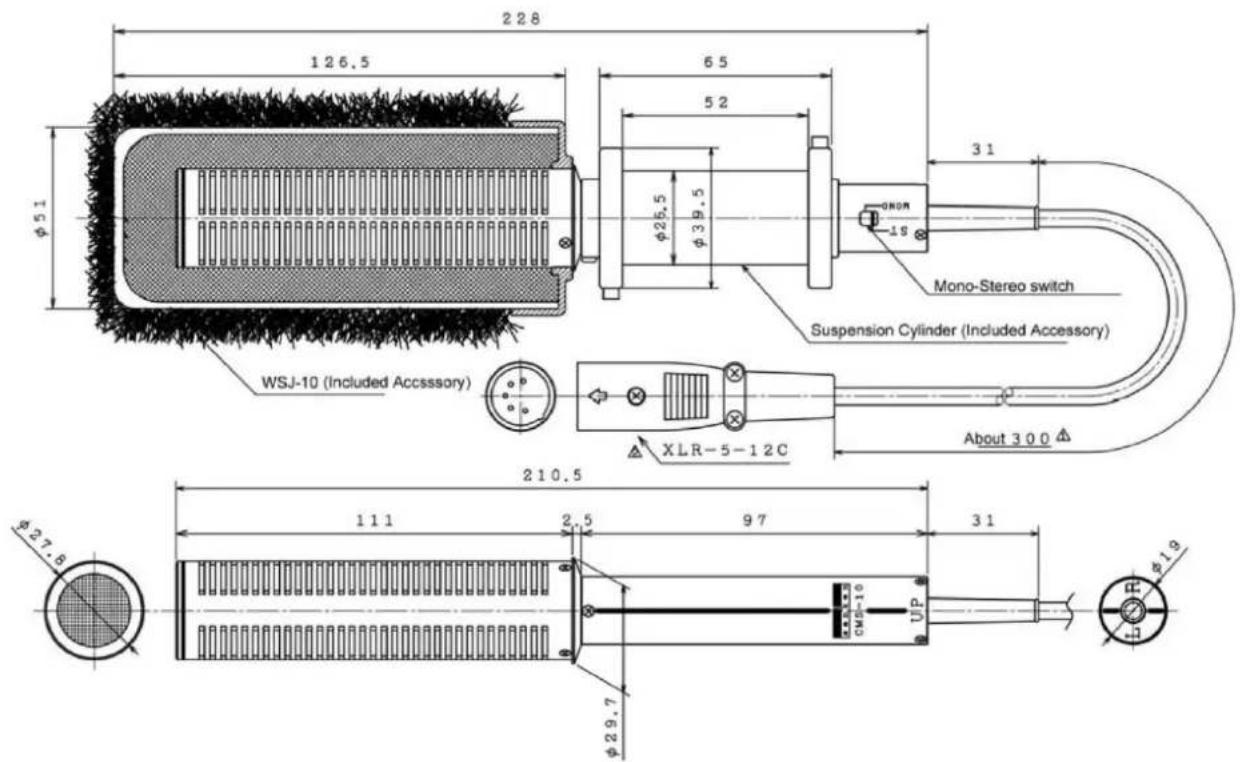
Dimensions 211mm X 27.8mm (metal mesh part diameter)
26.5mm (Suspension cylinder diameter)
19mm (grip diameter)
Surface finish matte black
Connector Cable direct out from the microphone, 30cm, XLR-5M
Included Accessories WSJ-10 Short fur Softie windjammer
Suspension cylinder set
text_image
2 2 8 1 2 6.5 6 5 5 2 φ5 1 φ2 5.5 φ3 9.5 3 1 Mono-Stereo switch Suspension Cylinder (Included Accessory) WSJ-10 (Included Accessory) About 3 0 0 XLR-5-1 2C 2 1 0.5 φ2 7.6 1 1 1 2.5 9 7 3 1 φ2 9.7 UP φ1.9
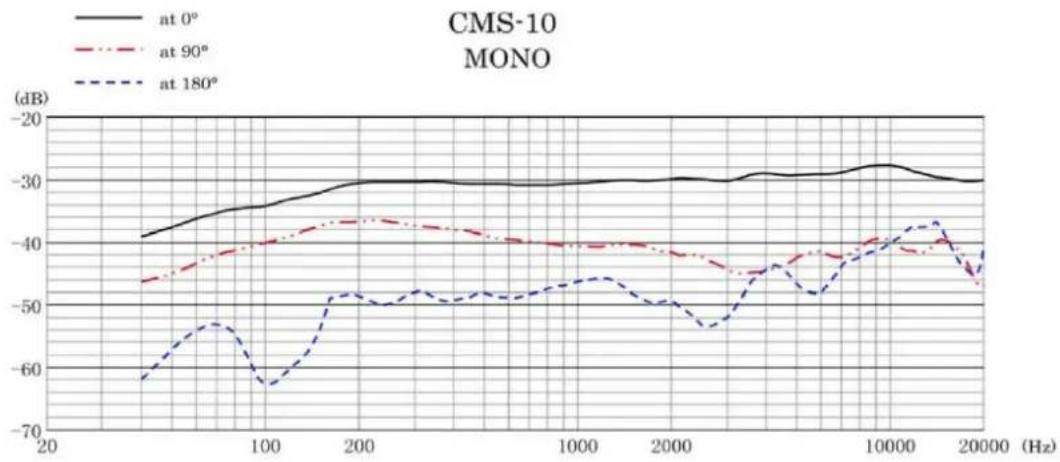
line
| Frequency (Hz) | at 0° (dB) | at 90° (dB) | at 180° (dB) | | -------------- | ---------- | ----------- | ------------ | | 20 | -40 | -45 | -60 | | 100 | -35 | -40 | -55 | | 200 | -30 | -35 | -50 | | 1000 | -30 | -40 | -45 | | 2000 | -30 | -45 | -50 | | 10000 | -30 | -40 | -45 | | 20000 | -30 | -45 | -50 |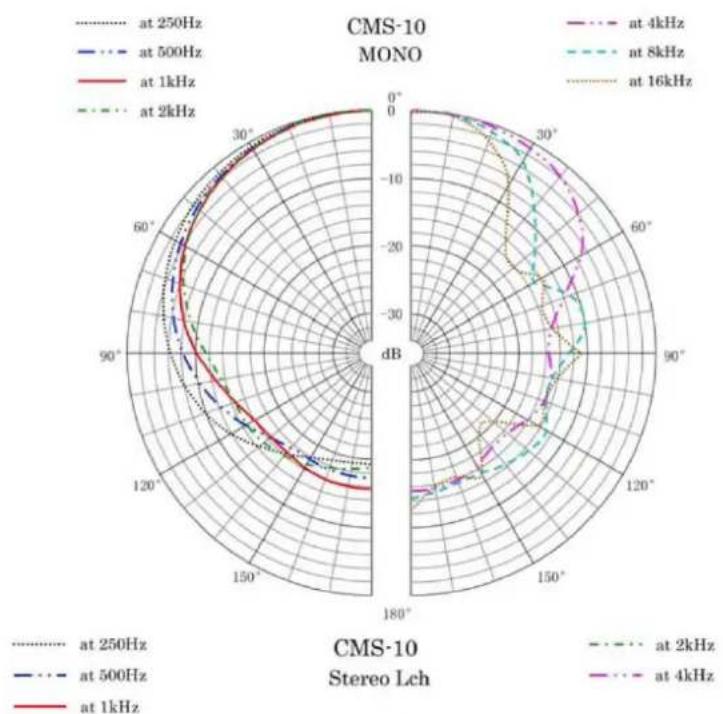
radar
CMS-10 MONO | Frequency | at 250Hz | at 500Hz | at 1kHz | at 2kHz | at 4kHz | at 8kHz | at 16kHz | | :--- | :--- | :--- | :--- | :--- | :--- | :--- | :--- | | at 250Hz | -10.0 | -12.0 | -15.0 | -18.0 | -20.0 | -22.0 | -25.0 | | at 500Hz | -15.0 | -18.0 | -22.0 | -25.0 | -28.0 | -30.0 | -32.0 | | at 1kHz | -20.0 | -24.0 | -28.0 | -32.0 | -35.0 | -38.0 | -40.0 | | at 2kHz | -25.0 | -30.0 | -35.0 | -40.0 | -45.0 | -50.0 | -55.0 | | at 4kHz | -30.0 | -35.0 | -40.0 | -45.0 | -50.0 | -55.0 | -60.0 | | at 8kHz | -35.0 | -40.0 | -45.0 | -50.0 | -55.0 | -60.0 | -65.0 | | at 16kHz | -40.0 | -45.0 | -50.0 | -55.0 | -60.0 | -65.0 | -70.0 | The chart displays a polar plot comparing the frequency response of a single device under different frequencies for both MONO and Stereo Lch conditions. The x-axis represents angular frequency in degrees (ranging from 30° to 180°), and the y-axis represents frequency in decibels (dB). The legend distinguishes between four frequency bands with distinct line styles and colors for each band type. The data shows that as frequency increases, the frequency response shifts rightward and becomes more negative, indicating higher sensitivity or lower distortion at higher frequencies for the Stereo Lch condition compared to the MONO condition.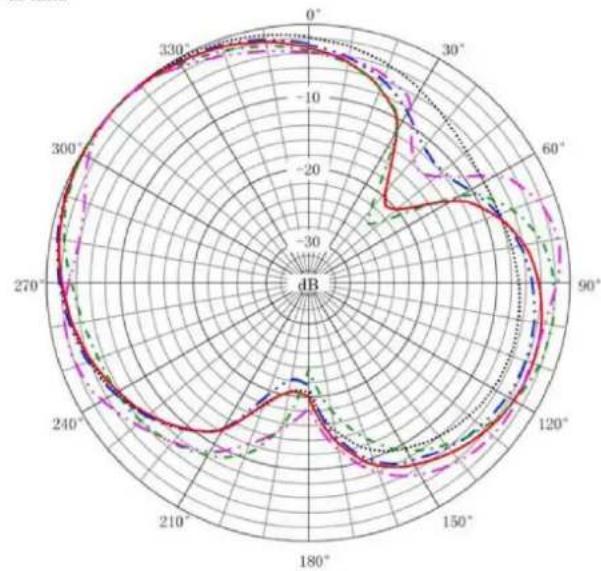
radar
| Angle | Value (dB) | |-------|------------| | 0° | -10 | | 30° | -5 | | 60° | 0 | | 90° | 5 | | 120° | 10 | | 150° | 5 | | 180° | 0 | | 210° | -5 | | 240° | -10 | | 270° | -5 | | 300° | 0 | | 330° | 5 |< Optional accessories >
WSJ-10
Softie windjammer
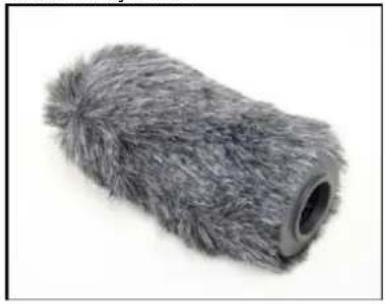
natural_image
Close-up of a gray, spiky cylindrical object with a hollow center, resembling a brush or tape (no text or symbols visible)Suspension
cylinder set
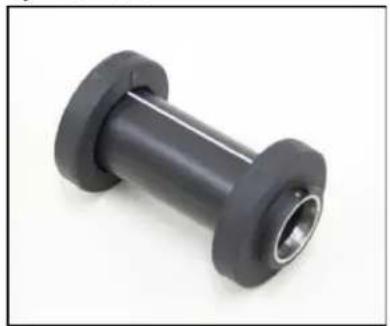
natural_image
Close-up of a black cylindrical mechanical component with flanged ends (no text or symbols visible)Doughnut rubber ring set 2ch
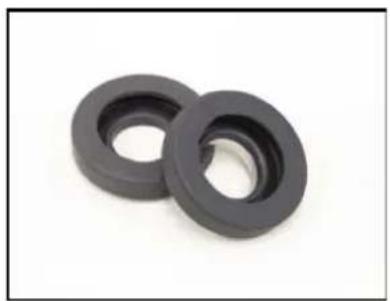
natural_image
Two black rubber rings on a white background (no text or symbols)Specifications are subject to change without notice