
E 912 wh - Mikrofon SENNHEISER - Kostenlose Bedienungsanleitung
Finden Sie kostenlos die Bedienungsanleitung des Geräts E 912 wh SENNHEISER als PDF.


| Produkttyp | Mikrofon |
| Marke | Sennheiser |
| Modell | E 912 wh |
| Wandlerprinzip | Kondensator |
| Richtcharakteristik | Nierencharakteristik |
| Frequenzgang | 40 Hz – 20 kHz |
| Übertragungsbereich | 40 – 20.000 Hz |
| Empfindlichkeit | 31 dB mV/Pa |
| Nennimpedanz | 50 Ohm |
| Min. Abschlussimpedanz | 1 kOhm |
| Phantomspeisung | 48 V ± 4 V |
| Stromaufnahme | 2 mA |
| Anschluss | XLR-3 (weiblich) |
| Gehäuse | Metall, weiße Beschichtung |
| Abmessungen (Ø x L) | 24 x 65 mm |
| Gewicht | 190 g |
| Einsatzbereich | Bühne, Studio, Instrumentenabnahme |
| Reinigung | Mit einem trockenen oder leicht feuchten Tuch abwischen. Keine Lösungsmittel. |
| Sicherheitshinweis | Nur mit zugelassenen Phantomspeisegeräten verwenden. Vor Feuchtigkeit schützen. |
| Ersatzteile | Erhältlich über den autorisierten Sennheiser-Service. |
| Reparatur | Nur durch Fachpersonal. Bei Defekt Service kontaktieren. |
Häufig gestellte Fragen - E 912 wh SENNHEISER
Benutzerfragen zu E 912 wh SENNHEISER
0 Frage zu diesem Gerät. Beantworten Sie die, die Sie kennen, oder stellen Sie Ihre eigene.
Eine neue Frage zu diesem Gerät stellen
Laden Sie die Anleitung für Ihr Mikrofon kostenlos im PDF-Format! Finden Sie Ihr Handbuch E 912 wh - SENNHEISER und nehmen Sie Ihr elektronisches Gerät wieder in die Hand. Auf dieser Seite sind alle Dokumente veröffentlicht, die für die Verwendung Ihres Geräts notwendig sind. E 912 wh von der Marke SENNHEISER.
BEDIENUNGSANLEITUNG E 912 wh SENNHEISER
e912
Bedienungsanleitung
Instructions for use
Notice d'emploi
Istruzoni per l'uso
Instruccione para el uso
Gebruiksaanwijzing
natural_image
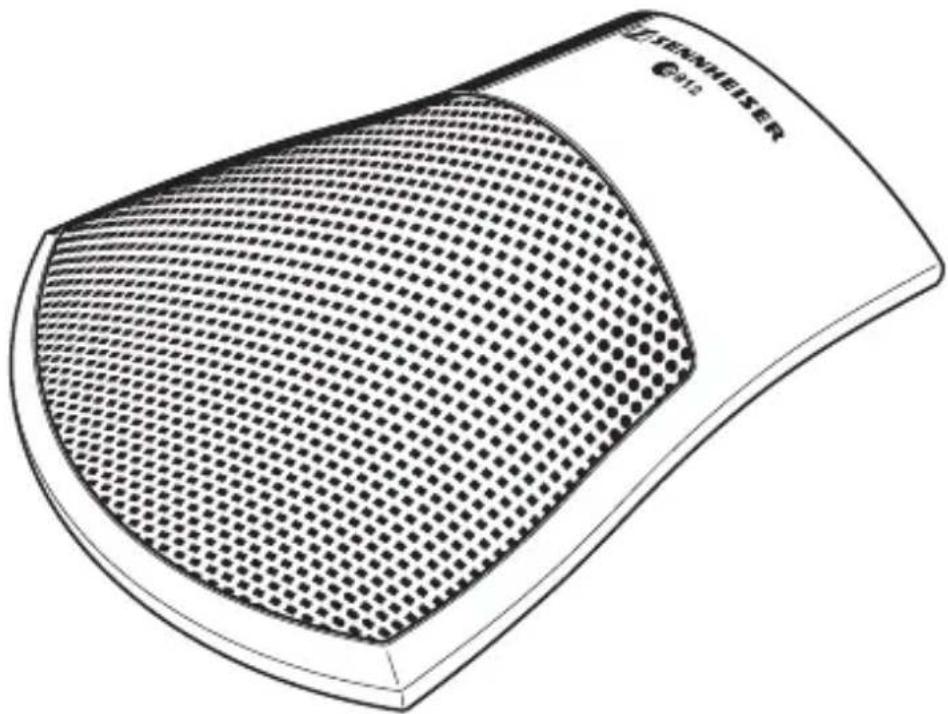
Line drawing of a conical device with a mesh grille and 'TENNIEISER 912' branding (no text or symbols on the device itself)
volution

912
High-quality pre-polarized condenser microphone with half-cardioid pick-up pattern, acoustically optimized for speech, vocal and instrument miking.
The ●12 is suitable for use in grand pianos or on theater and opera stages, conference tables, altars, lecterns, etc. Incidental rear noise is effectively rejected.
The ●912 is available in two color variants:
e 912 WH (white) Cat. No. 500648
e 912 BK (black) Cat. No. 500647
Features
- Frequency response and sensitivity tailored for speech, vocal and instrument miking
• Very unobtrusive due to flat design
• Extremely rugged sound inlet basket
• Rubber damping plate on base - Mounting slots for mounting the micorphone to e.g. table tops
• Gold-plated XLR connector - Integrated electronics (instead of in-line pre-amp)
Delivery includes
• 912 microphone
- Pouch
- Instructions for use
- Warranty Certificate
Positioning the microphone
Boundary microphones make use of the pressure effects at a room boundary and need to be mounted on a flat surface:
Position Resulting sound Commentary
| Altar or lectern: on a sound-reflecting surface | Less room resonance portions or comb filter elements; improved speech intelligibility and greater gain reserves in contrast to free-standing microphones | Unobtrusive due to flat design; no microphones in the field of vision |
| Conference rooms: lying on the table; directed towards the conference participants *) | Less room resonance in contrast to free-standing microphones | Microphones must not be covered by papers, folders or similar objects |
| Theater stages:lying at the edge of the stage and directed towards the stage; as spot microphone of the PA system or for monitoring purposes in the theater cloakrooms | Less room resonance in contrast to freestandingmicrophones; improved speech intelligibility | Excellent rejection of rumble noise; if necessary, place the microphone on a soft pad (e.g. mousepad).If necessary, combine with overhead micro-phones (e.g. Sennheiser ME 36 with MZH 30 B & MZC 30) |
| Grand piano / piano: mounted to the inside cover (= sound-reflecting surface) of the piano or lying in the instrument or on the floor underneath the piano | Very transparent and powerful sound; stereo sound image can be shaped individually, depending on microphone position chosen | Instrument is easy to mike, even when the cover is closed; excellent protection against crosstalk into other microphone channels and reduced volume on stage |
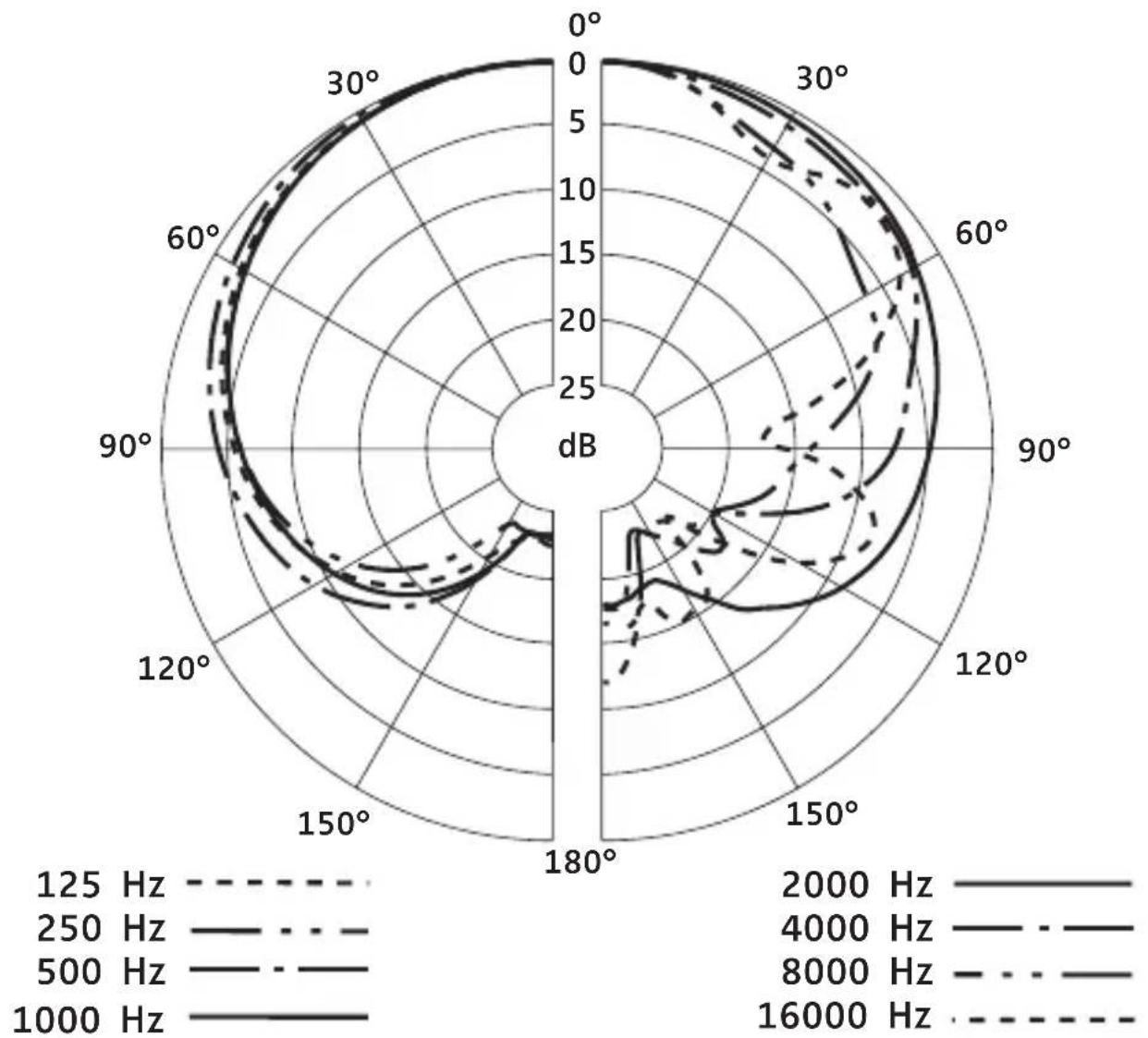
*) The cardioid pick-up pattern has an opening angle of approx. 130°. Try to position the microphone so that the sound source (conference participant, speaker or instrument) is located in this angle area (see polar diagram).
Polar diagram
radar
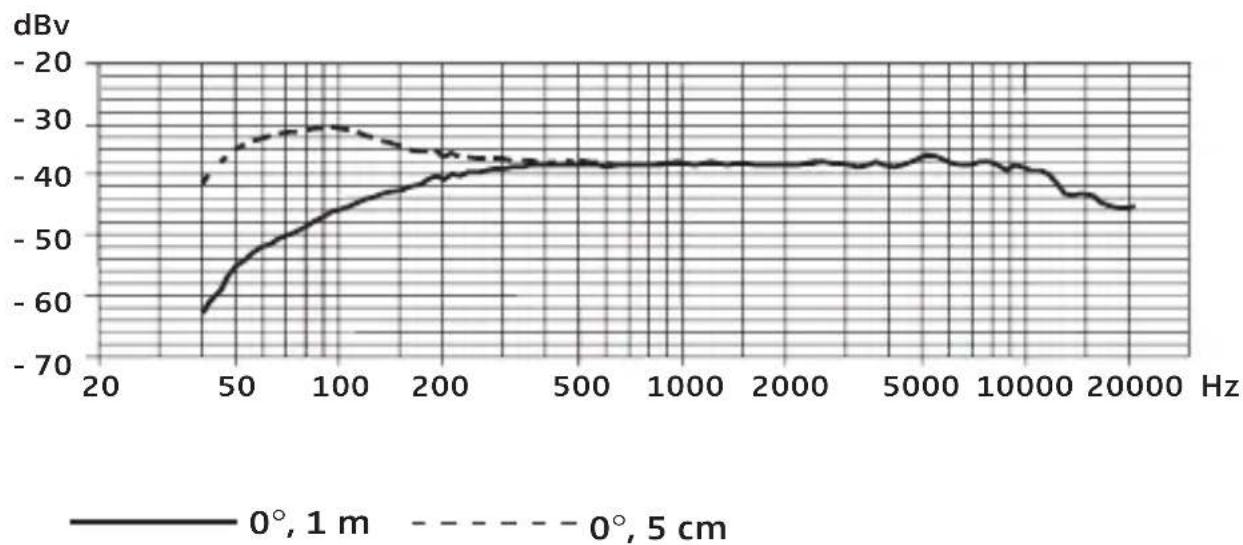
| Frequency | Angle (°) | Value (dB) | |-----------|-----------|------------| | 125 Hz | 0 | ~0 | | 125 Hz | 30 | ~5 | | 125 Hz | 60 | ~10 | | 125 Hz | 90 | ~15 | | 125 Hz | 120 | ~20 | | 125 Hz | 150 | ~25 | | 125 Hz | 180 | ~30 | | 125 Hz | 210 | ~35 | | 125 Hz | 240 | ~40 | | 125 Hz | 270 | ~45 | | 125 Hz | 300 | ~50 | | 125 Hz | 330 | ~55 | | 125 Hz | 360 | ~60 | | 250 Hz | 0 | ~0 | | 250 Hz | 30 | ~5 | | 250 Hz | 60 | ~10 | | 250 Hz | 90 | ~15 | | 250 Hz | 120 | ~20 | | 250 Hz | 150 | ~25 | | 250 Hz | 180 | ~30 | | 250 Hz | 210 | ~35 | | 250 Hz | 240 | ~40 | | 250 Hz | 270 | ~45 | | 250 Hz | 300 | ~50 | | 250 Hz | 330 | ~55 | | 250 Hz | 360 | ~60 | | 500 Hz | 0 | ~0 | | 500 Hz | 30 | ~5 | | 500 Hz | 60 | ~10 | | 500 Hz | 90 | ~15 | | 500 Hz | 120 | ~20 | | 500 Hz | 150 | ~25 | | 500 Hz | 180 | ~30 | | 500 Hz | 210 | ~35 | | 500 Hz | 240 | ~40 | | 500 Hz | 270 | ~45 | | 500 Hz | 300 | ~50 | | 500 Hz | 330 | ~55 | | 500 Hz | 360 | ~60 | | 800 Hz | 0 | ~0 | | 800 Hz | 30 | ~5 | | 800 Hz | 60 | ~10 | | 800 Hz | 90 | ~15 | | 800 Hz | 120 | ~20 | | 800 Hz | 150 | ~25 | | 800 Hz | 180 | ~30 | | 800 Hz | 210 | ~35 | | 800 Hz | 240 | ~40 | | 800 Hz | 270 | ~45 | | 800 Hz | 300 | ~50 | | 800 Hz | 330 | ~55 | | 800 Hz | 360 | ~60 | | 16000 Hz | 0 | ~0 | | 16000 Hz | 30 | ~5 | | 16000 Hz | 60 | ~10 | | 16000 Hz | 90 | ~15 | | 16000 Hz | 120 | ~20 | | 16000 Hz | 150 | ~25 | | 16000 Hz | 180 | ~30 | | 16000 Hz | 210 | ~35 | | 16000 Hz | 240 | ~40 | | 16000 Hz | 270 | ~45 | | 16000 Hz | 300 | ~50 | | 16000 Hz | 330 | ~55 | | 16000 Hz | 360 | ~60 |Frequency response curve
line
| Hz | 0°, 1 m | 0°, 5 cm | |-------|---------|----------| | 20 | -60 | -40 | | 50 | -50 | -35 | | 100 | -45 | -30 | | 200 | -40 | -35 | | 500 | -40 | -38 | | 1000 | -40 | -38 | | 2000 | -40 | -38 | | 5000 | -40 | -38 | | 10000 | -40 | -38 | | 20000 | -45 | -45 |Specifications
Transducer principle pre-polarized
condenser microphone
Frequency response 20–20,000 Hz
Pick-up pattern half-cardioid
Sensitivity
(free field, no load at 1 kHz) 10 mV/Pa
Nominal impedance (at 1 kHz) < 100 Ω
Min. terminating impedance 1 kΩ
Phantom powering 48 V / 1.1 mA
Max. sound pressure level at 1 kHz 136 dB SPL
Connector XLR-3
Weight 550
Dimensions Length: 126.5 mm
Width: 105 mm
Height: 26.5 mm
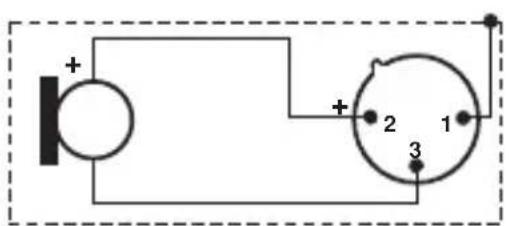
Pin assignment of XLR-3 connector
XLR
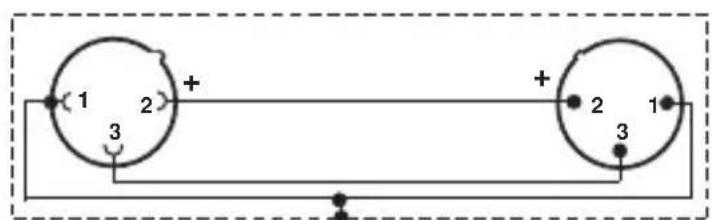
XLRXLR
Overview of microphone applications
| Application\Variant | e901 | e902 | e904 | e905 | e906 | e908B | e908B ew | e908D | e908T ew | e912 | e914 | e935/e945 |
| Vocals x | ||||||||||||
| Choirs | x | x | ||||||||||
| Studio, acoustic instruments | x x x | |||||||||||
| Orchestra | x | |||||||||||
| Trumpet, trombone | x x x | |||||||||||
| Saxophone x x x | ||||||||||||
| Acoustic guitar x | ||||||||||||
| Acoustic bass | x | |||||||||||
| Guitar amplifiers | x | |||||||||||
| Bass amplifiers x | ||||||||||||
| Leslie x x x x | ||||||||||||
| Piano, grand piano x x | ||||||||||||
| Kick drums | x | x | ||||||||||
| Snare drums x x | x x | |||||||||||
| Rack toms x x x | x | x | ||||||||||
| Floor toms x x x | x x | |||||||||||
| Congas x x x | x | |||||||||||
| Cymbals | x | |||||||||||
| Percussion | x | x | x | x | x x | |||||||
| Overhead | ||||||||||||
| Conference table, altar | x | |||||||||||
| Lectern | x | |||||||||||
| Theater stage | x |
Manufacturer declarations
Warranty
2 years
Approval

Sennheiser electronic GmbH & Co. KG declare that this device is in compliance with the applicable CE standards and regulations.
Batteries or rechargeable batteries

Please dispose of batteries or rechargeable batteries as special waste or return them to your specialist dealer.
WEEE Declaration

Please dispose of this product at the end of its operational lifetime by bringing it to your local collection point or recycling centre for such equipment.
Sennheiser electronic GmbH & Co. KG
30900 Wedemark, Germany
Phone +49 (5130) 600 0
Fax +49 (5130) 600 300
www.sennheiser.com
Printed in Germany
Publ. 12/05
511961/A01
Marke : SENNHEISER
Modell : E 912 wh
Kategorie : Mikrofon